“Why is the wine list often completely absent from restaurant reviews?” Eliza Dumais' reflection.
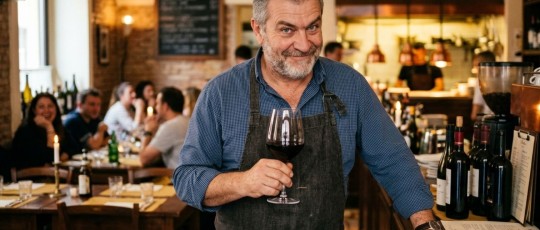
Sitting down at the table today means more than just eating: it means entering a small theater of the impossible, where taste intertwines with the warm light of a room, the rustling of napkins, the rhythm of the staff, and the silent language of crystal glasses. Food naturally takes center stage, but those who have already experienced the art of a good wine program know that there, alongside the dish, another magic is at play: one that completes every bite, reveals hidden notes, and elevates the experience from ordinary to memorable.

Yet, surprisingly, this magic often seems to be overlooked by food critics. This is highlighted by renowned Decanter writer Eliza Dumais, who argues that in major newspapers and influential reviews, the art of wine selection and management appears to be a negligible detail, an accessory to the absolute protagonist, the cuisine. The author cites the case of Smithereens reviewed by the New York Times: a unique wine selection, focused on Riesling, reduced to a single line. Or that of Le Veau D'Or, where even the name of the sommelier—a local legend for his taste and expertise—was misspelled. The sequence repeats itself, sometimes, between orders mentioned without further detail, between praise that bypasses sommeliers and beverage directors, as if their skills were not part of the narrative of a restaurant.
But Decanter also reports Alex Delany's opinion, which perfectly sums up the concept: “Reviewing only certain aspects of a restaurant is unfair to the reader and the diner. It would be like reviewing three quarters of a film.” Yet wine is not a minor issue: it is not made at home like bread or pasta, but it requires the same dedication, a thorough knowledge of the territories, vintages, grape varieties, and their history, a keen intuition about what to keep in the cellar, what to offer by the glass, and how to pair it with each dish, balancing value and pleasure. A well-curated wine list is not craftsmanship, it is organized poetry. Yana Volfson, creator of award-winning programs in Enrique Olvera's kitchens in New York and Los Angeles, calls it a “secret weapon”: "We come in, place a glass in front of you, and pour something that makes you smile. Suddenly, the palate is enriched with nuances, preparing for a bite just tasted or the next one," she tells Decanter. It's no surprise that when a beverage program works so well, it seems invisible, as if to support the food without ever stealing the show: it's a background role, silent and strategic, yet fundamental.
The world of wine is relentlessly elitist. The names of grape varieties, regions, winemaking techniques, and vintages create a complex lexicon that is difficult to master and often impenetrable to those without years of experience in the field. And which critics can truly boast this expertise? Matt Ross, an expert in wine selection, makes it clear: “It takes a lot of experience to read a wine list and identify what is artistic or intentional; few critics have the necessary level of expertise to venture a strong opinion.” The issue also touches on the common experience of guests. Not everyone wants to learn the secrets of a sommelier, but many appreciate knowing if the wine selection is interesting, if it is worth pairing a glass with a dish, or if the person pouring has an authentic sensibility. And when the list is thought out, studied, and calibrated to each culinary offering, the experience gains a level of depth that makes it unforgettable. It is the detail that completes the art of the restaurant, the harmonious background that accompanies the main symphony of the dishes. Critics, with their influence and vast audience, have the ability to guide diners' choices, but their attention to wine often remains marginal, almost residual. Yet beverage directors deserve recognition: they are guardians of nuances, interpreters of territories, creators of unusual combinations, indispensable tools for fully conveying a restaurant's philosophy. When attention is given, the results can transform a review from good to enlightening, highlighting the integration between food and drink that many guests perceive without knowing they do.

In this context, food criticism still has a long way to go. Not to belittle chefs or dishes, but to recognize that the restaurant experience is a complex ecosystem, in which wine is not secondary but complementary, essential for perceiving every layer of flavor, every echo of aroma, every nuance of the chefs' talent. It is not a question of privileging bottles over dishes, but of doing justice to those who work behind the scenes to transform a meal into a total experience. It is time to sing the praises of wine, to value those who choose it, preserve it, and offer it with intuition and grace, to give readers a complete review, capable of conveying the richness of the experience that each of us deserves when we sit down at the table. Because a good meal is not just the dish, it is the combination of the senses that are guided, tickled, and pampered by expert hands, and among these, the hands of the sommelier have the same dignity and magic as those of the chef.