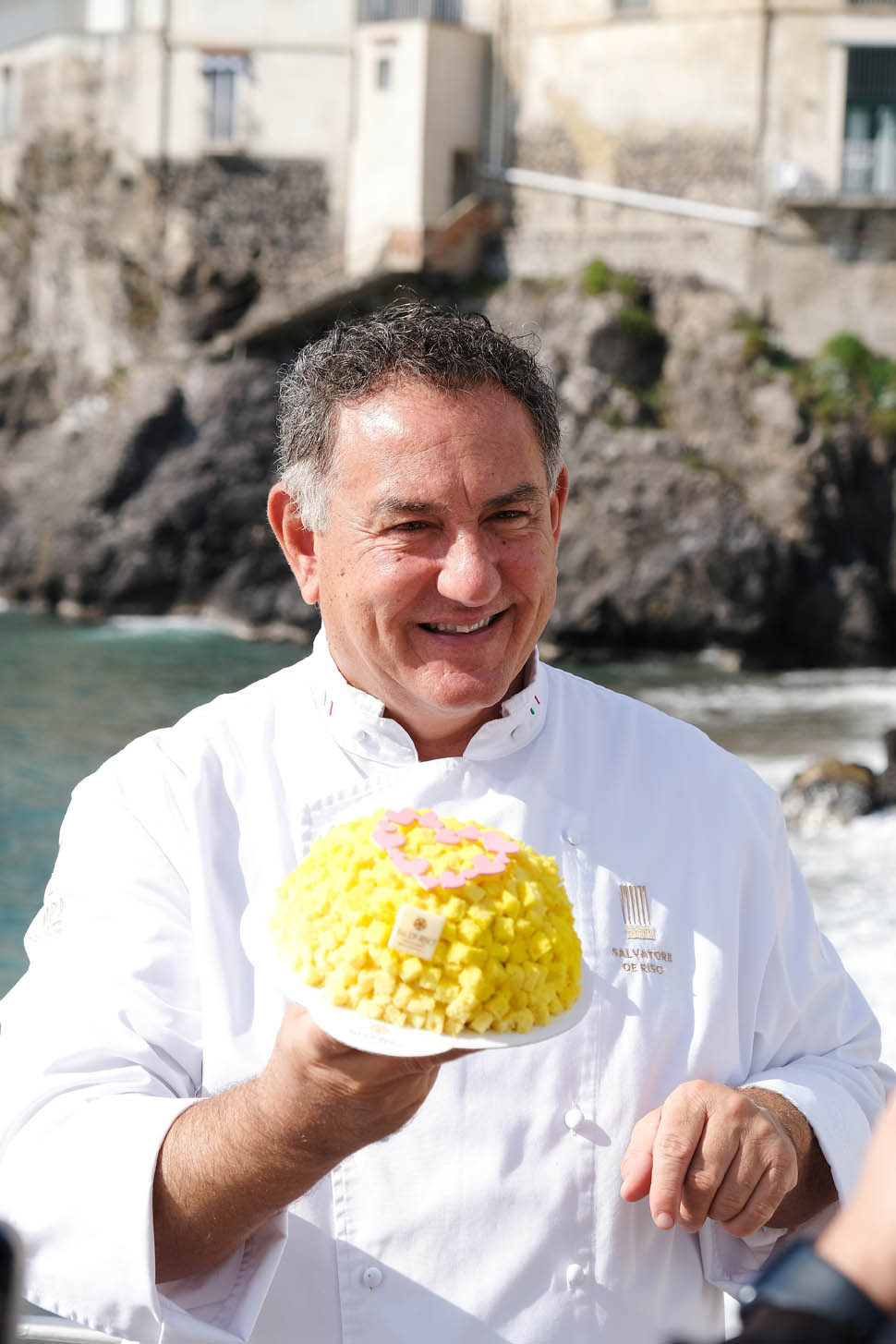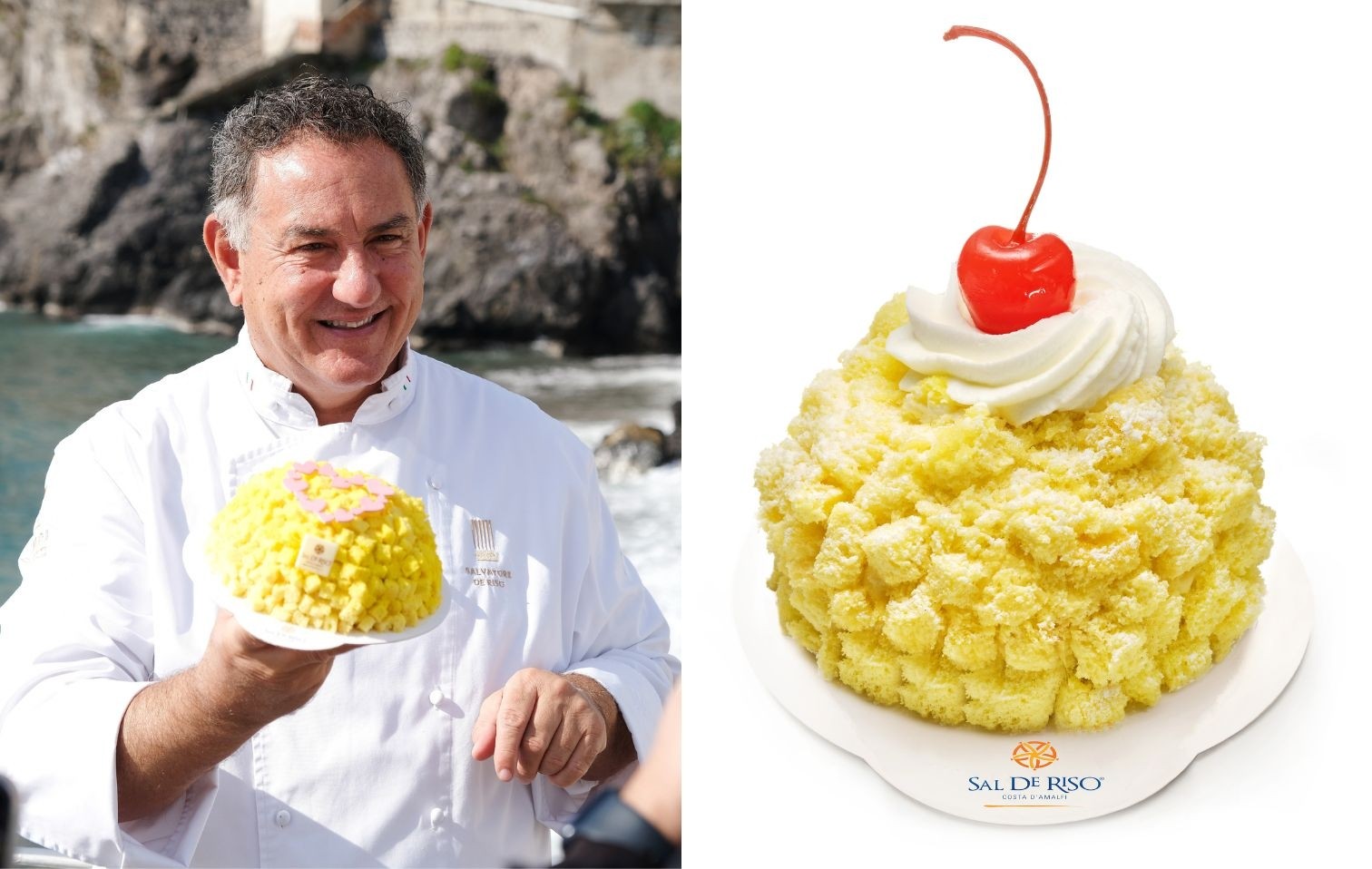
At Sal De Riso, the sunny image of the Amalfi Coast is reflected not only in the famous Delizia al limone, but also in a Mimosa that the master pastry chef has turned into a small masterpiece of confectionery architecture. Here are his secrets for making it.
There is a precise moment, between the end of winter and the first warm days of March, when nature's awakening from its “hibernation” inspires the aesthetics of festive desserts. This is when the Mimosa Cake blooms in pastry shop windows, an extra-soft dome of sponge cake ready to poetically imitate the flowers from which it takes its name. But behind its “vintage dress” lies a technical structure that requires the right balance between the gentle embrace of the cream and the lightness of the pastry, without compromising on the necessary freshness. So here we are, ready to reveal the secrets of one of Italy's finest signature recipes: the interpretation of Maestro Sal De Riso. But first, a little history!
A story of flowers and competitions: the origins of Mimosa
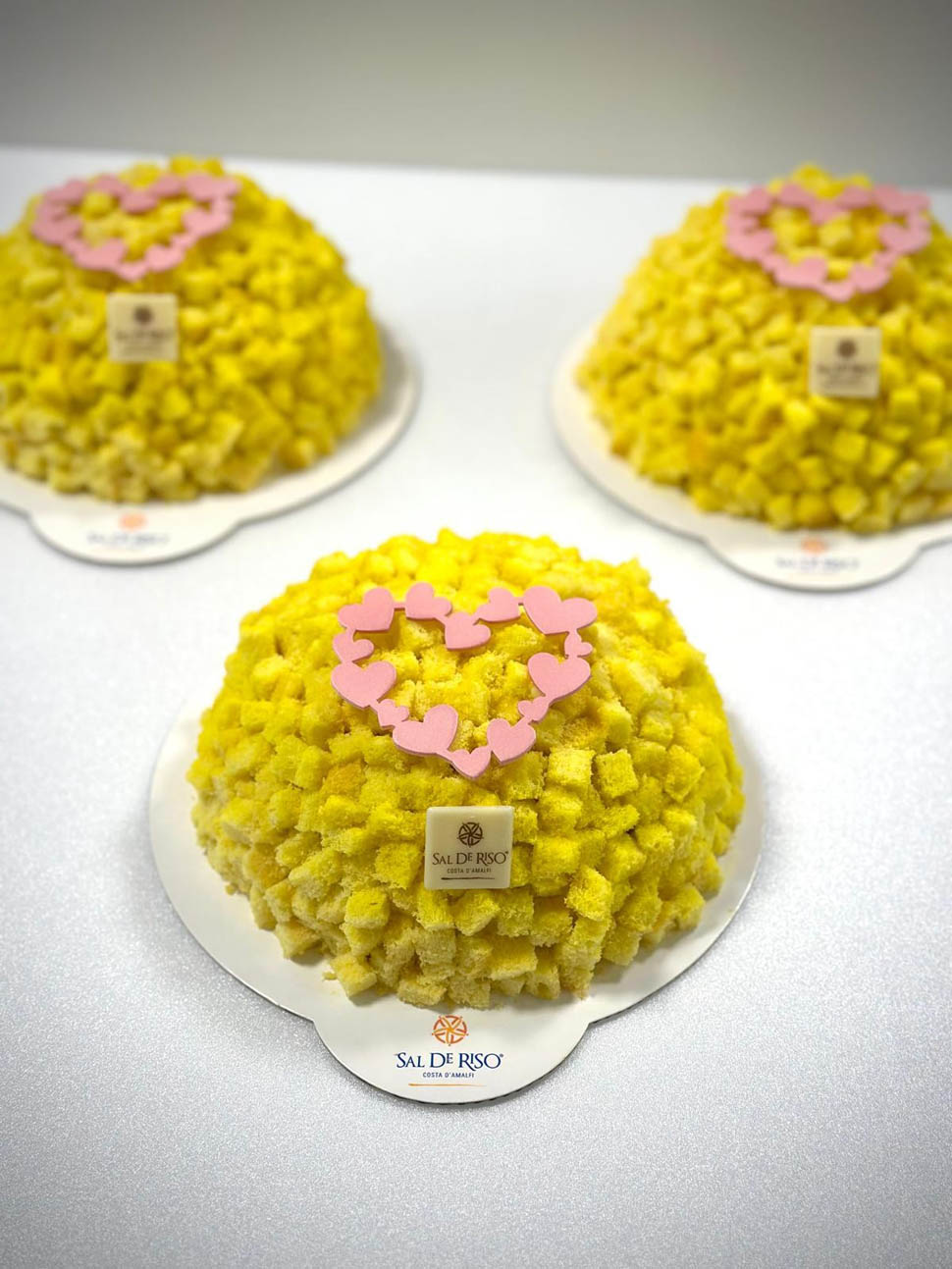
Contrary to what one might think, the straw-colored shell of the Mimosa is not a collage of centuries-old traditions, but was born from a sudden inspiration after World War II. Its creation is attributed to chef Adelmo Renzi, who presented it for the first time in the 1950s in Rieti. However, it was not until 1962, when Renzi took part in a pastry competition in Sanremo, that it really came into its own. He decided to represent the “City of Flowers” with a dessert that evoked its botanical splendor. The success was overwhelming, although the recipe remained shrouded in mystery for a long time, making the cake a canvas on which the greatest pastry chefs later sketched their own personal visions. A curious anecdote: although today the Mimosa is inextricably linked to International Women's Day, Renzi's choice actually had no connection with March 8. It was only later that the link between the flower and the date transformed this dessert into the gastronomic symbol of femininity.
The Sal De Riso revolution, from Minori to worldwide success
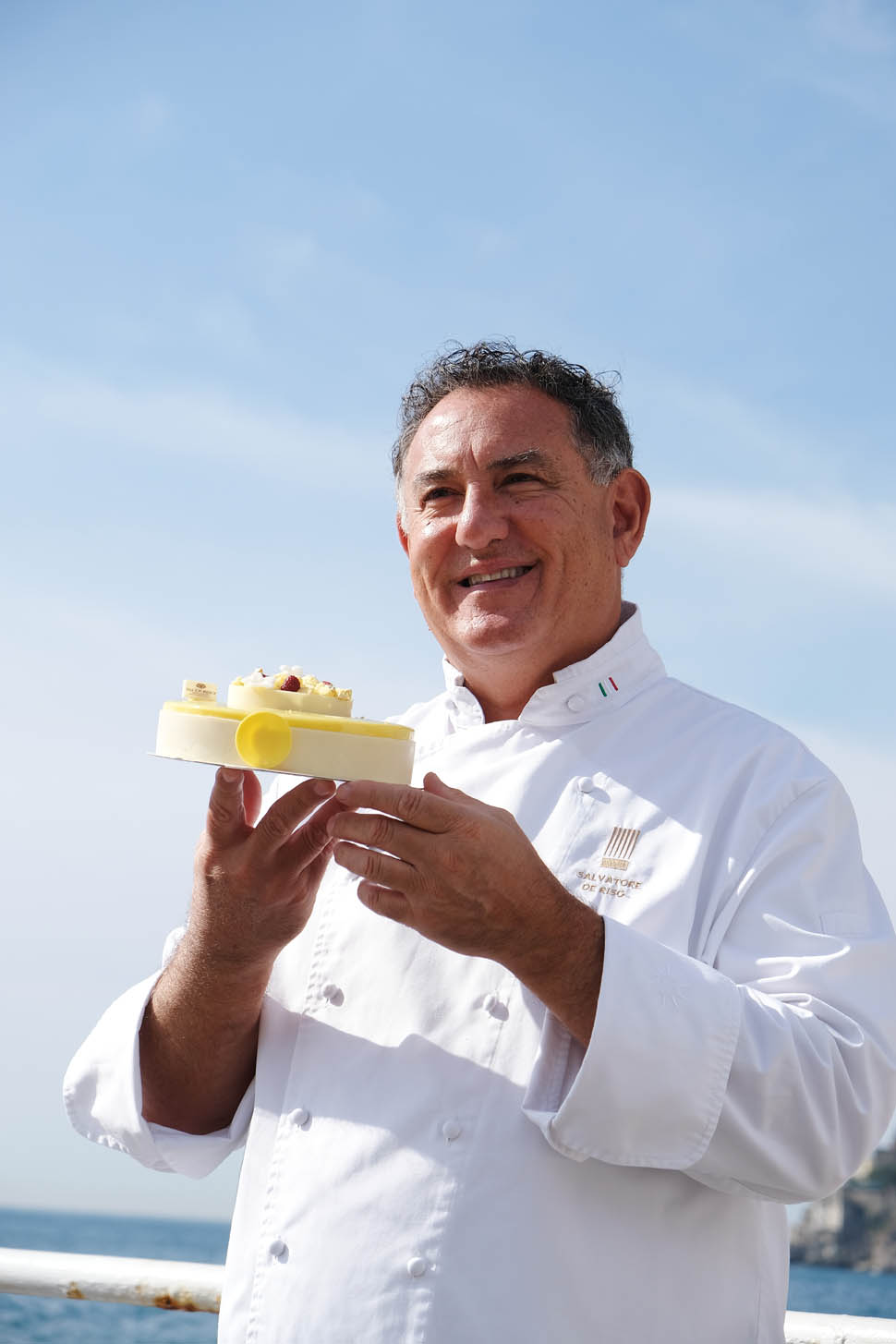
One of the pioneers of “Mediterranean pastry-making” that focuses squarely on the product, Sal De Riso started out in his hometown of Minori, translating local delicacies (from Amalfi Coast IGP lemons to Vesuvius apricots) into “universal creations” that are now exported all over the world. Thus, Sal De Riso Costa d'Amalfi has become a haute patisserie maison with an international reach, from its historic openings in Campania to luxury corners and collaborations across borders. The sunny image of a “Made in Sud” brand is reflected in desserts such as the famous Delizia al Limone, Caprese, Ricotta and Pear Cake, and Limoncello Panettone.
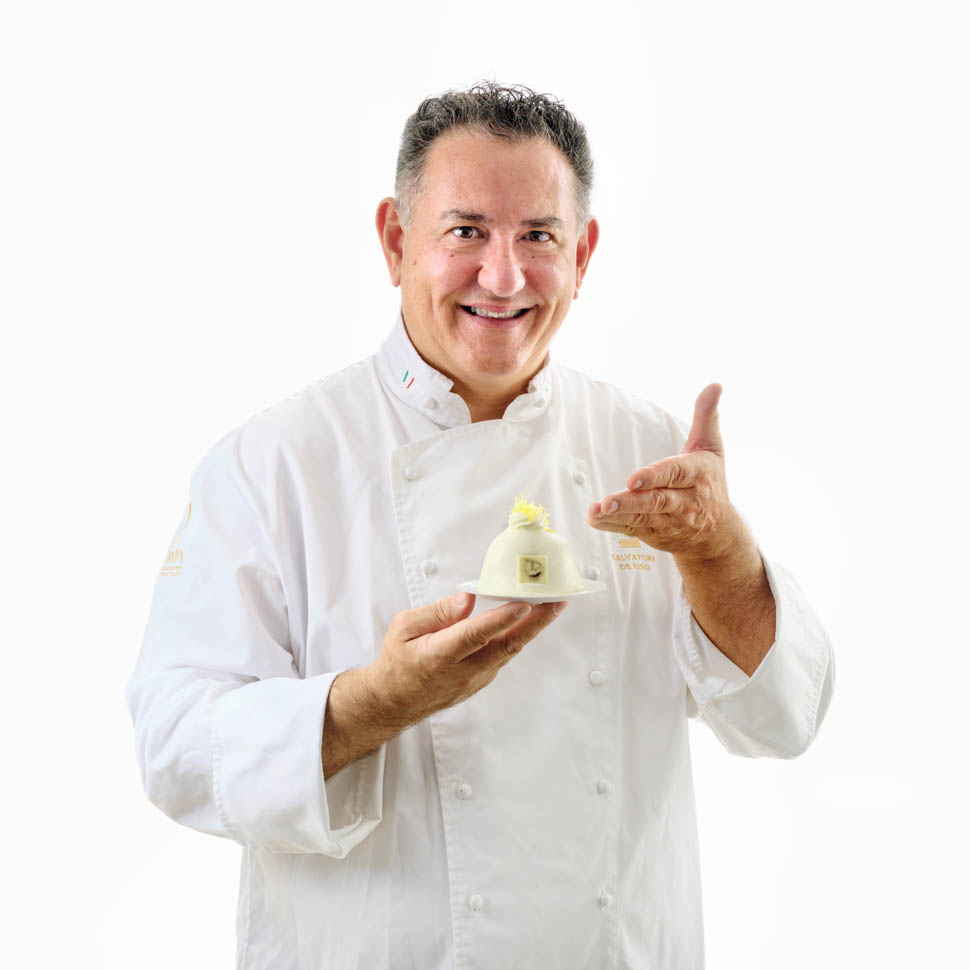
When it came to Mimosa, the great pastry chef focused primarily on balance: the ethereal structure of the sponge cake envelops a citrus filling, preparing the taste buds for more. A ray of sunshine from the Amalfi Coast that truly reaches everywhere!
Sal De Riso's Pastiera recipe
Recipe for an 18 cm diameter cake
Ingredients:
• Sponge cake
• Vanilla Chantilly cream
• Vanilla and Maraschino pineapple cubes
• Strawberries macerated in Maraschino
• Sponge cake cubes
• Vanilla and Maraschino liqueur syrup
FOR THE SPONGE CAKE:
- 220 g whole eggs
- 140 g sugar
- 40 g acacia honey
- 40 g egg yolk
- 100 g 00 flour
- 50 g potato starch
- ½ Bourbon vanilla pod
- 20 g grated Amalfi Coast I.G.P. lemon zest
Beat the whole eggs with the sugar, honey, egg yolk, vanilla bean seeds, and grated lemon zest for about 12-14 minutes using an electric whisk. Separately, sift the flour and potato starch. When the egg and sugar mixture is well beaten, add the sifted flour and starch with a spatula. Gently mix everything together and bake in the oven at 180-190°C for 18-20 minutes.
FOR THE VANILLA AND MARASCHINO SYRUP:
- 70 g water
- 70 g sugar
- 30 g vanilla flavoring (70% alcohol)
- 40 g Maraschino liqueur
Boil the water with the sugar. Cool and add the liqueur.
FOR THE VANILLA AND MARASCHINO PINEAPPLE CUBES:
- 300 g pineapple cubes
- 60 g sugar
- 9 g rice starch
- 1 Bourbon vanilla pod
- 50 g Maraschino liqueur
In a saucepan, season the pineapple cubes with the sugar, starch, and vanilla. Leave to macerate for about 2 hours and cook over low heat for 3 minutes. Add the Maraschino liqueur. Leave to cool at room temperature.
FOR THE MARASCHINO-Macerated STRAWBERRIES:
- 150 g diced strawberries
- 50 g sugar
- 20 g Maraschino liqueur
- 5 g grated Amalfi Coast I.G.P. lemon zest
Cut the strawberries into cubes and season with sugar, Maraschino liqueur, and grated lemon zest. Leave to macerate for 2 hours in the refrigerator, then drain the strawberries and use them to fill the cake.
FOR THE CUSTARD CREAM:
- 175 g milk
- 75 g cream
- 90 g egg yolks
- 75 g sugar
- 17.5 g cornstarch
- 1/2 Bourbon vanilla pod
- 1 g salt
- zest of 1 Amalfi Coast I.G.P. lemon
Boil the milk and cream with the vanilla bean pulp and lemon zest. Mix the egg yolks with the sugar, cornstarch, and salt. Add the boiling milk and cream. Cook the cream and let it cool quickly.
FOR THE VANILLA CHANTILLY CREAM:
- 200 g cream
- 20 g sugar
- 430 g custard
Whip the cream with the sugar and add the custard.
ASSEMBLY OF THE DESSERT:
Remove the skin from the sponge cake and cut out two 18 cm diameter discs. Prepare the vanilla Chantilly cream. Place the first sponge cake disc in an 18 cm diameter mold and soak with the vanilla and Maraschino syrup. Cover with a layer of vanilla Chantilly cream and sprinkle with diced strawberries in Maraschino and diced pineapple in vanilla and Maraschino. Place the second sponge cake disc on top and soak with the syrup.
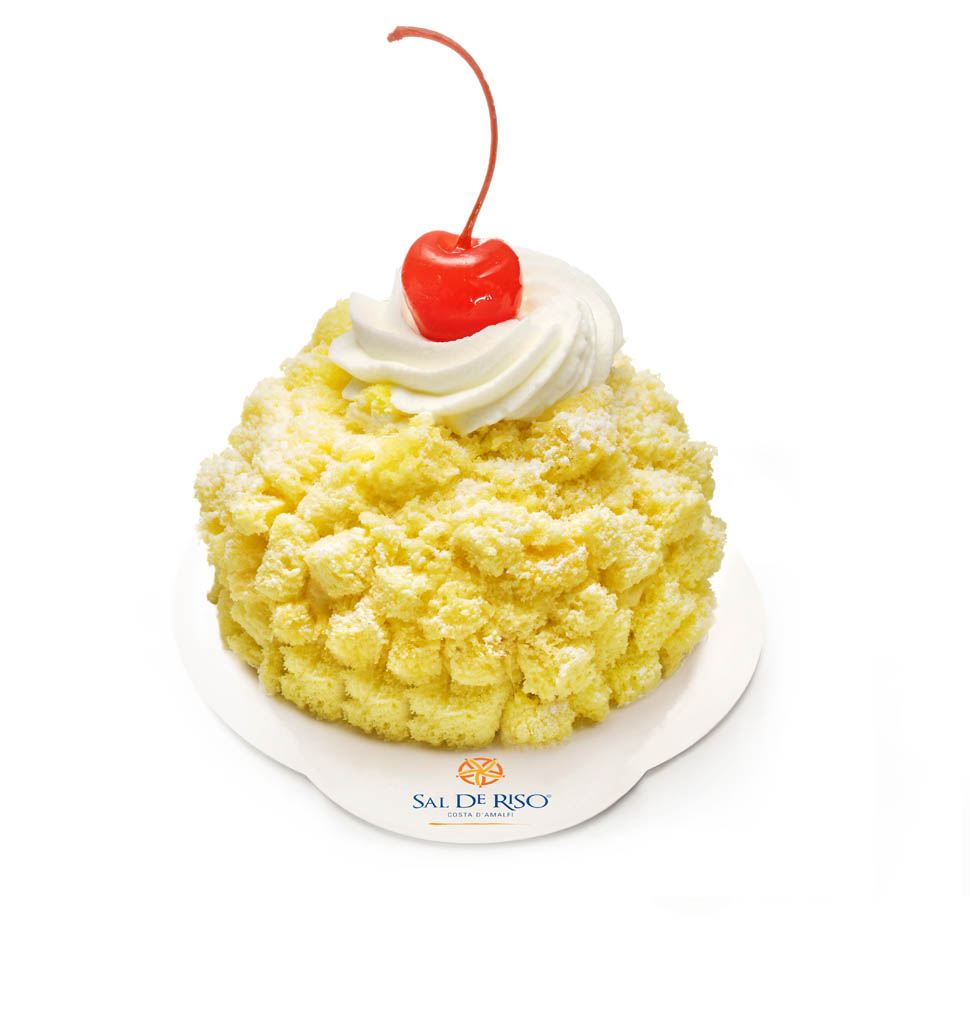
Freeze in a blast chiller for 2 hours or in the freezer for 5 hours. Remove the cake from the mold and cover completely with vanilla Chantilly cream. Decorate the cake with sponge cake cubes.
Finish the Mimosa cake with powdered sugar and a sugar paste decoration.