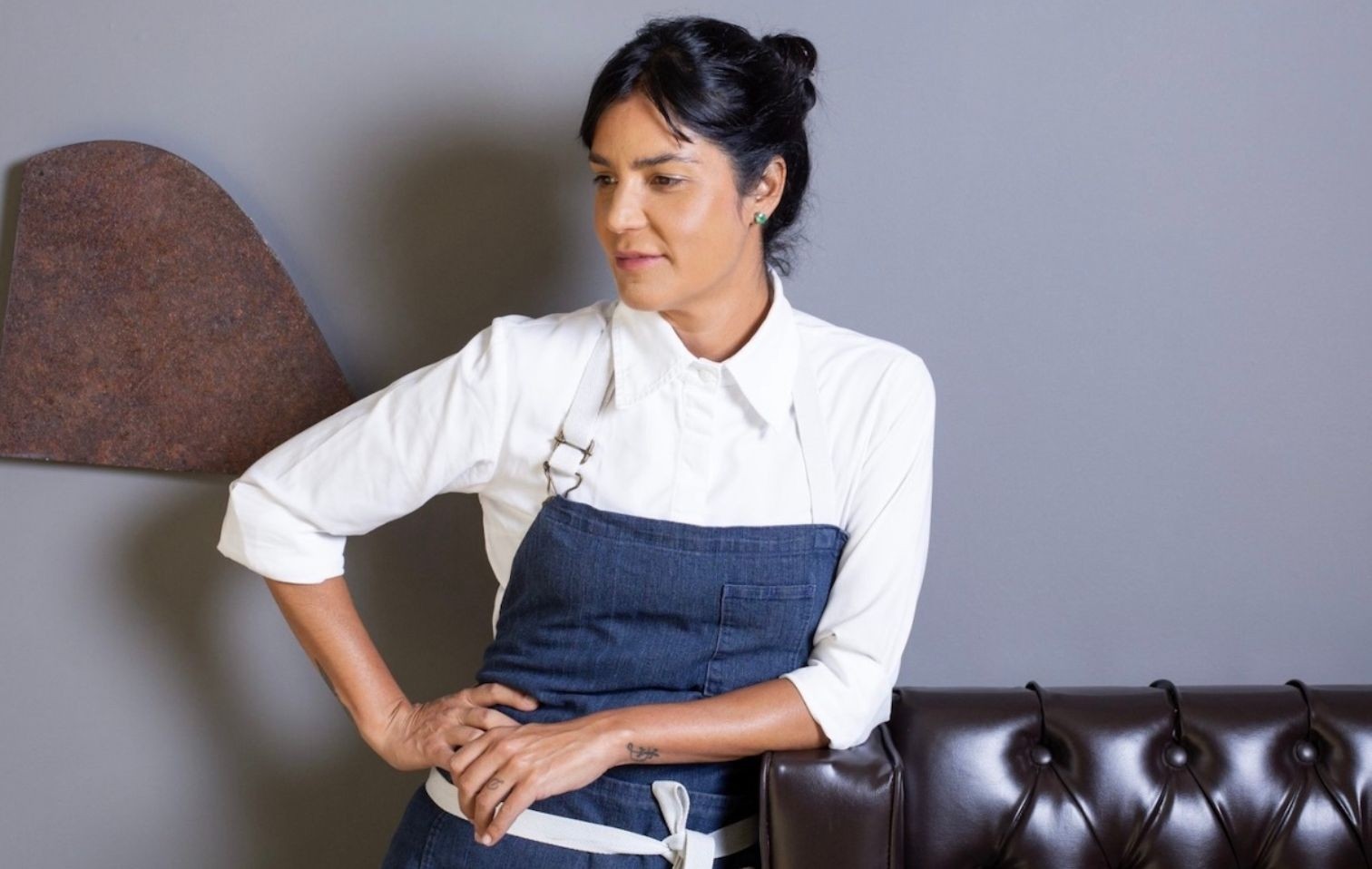
“The kitchen can’t be a place where you spend sixteen hours a day without seeing your family: we can’t talk about sustainability if certain things don’t actually exist within our restaurants. Sustainability is no longer an added value—it’s the starting point.” That’s the view of Manu Buffara, who is always committed to promoting reasonable work schedules for her staff.
The chef
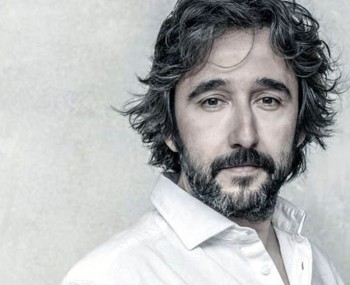
A meal at Manu’s in Curitiba often begins in the soft silence of a tiny dining room—just five tables, dim lighting, and staff moving with the calm confidence of those who have nothing to prove. Then she arrives, Manoella Buffara—known to everyone simply as Manu—and the impression is of someone who has learned to inhabit two worlds simultaneously: the highly polished world of international haute cuisine and the much more down-to-earth, earthy world of human connections, of the people who experience that cuisine outside of restaurants. In Brazil, her name has carried weight for years in the Latin American gastronomic debate, not only for the dishes at the Manu restaurant, but for the way she has chosen to use the fame she has earned. She restores native bee populations in the Paraná region, creates school gardens, leads the Instituto Manu Buffara, and coordinates social projects centered on food and human dignity. The most important is called Mulheres de Bem: women from various professions come together to cook for those living on the streets. Food, education, food security, but above all, human presence.
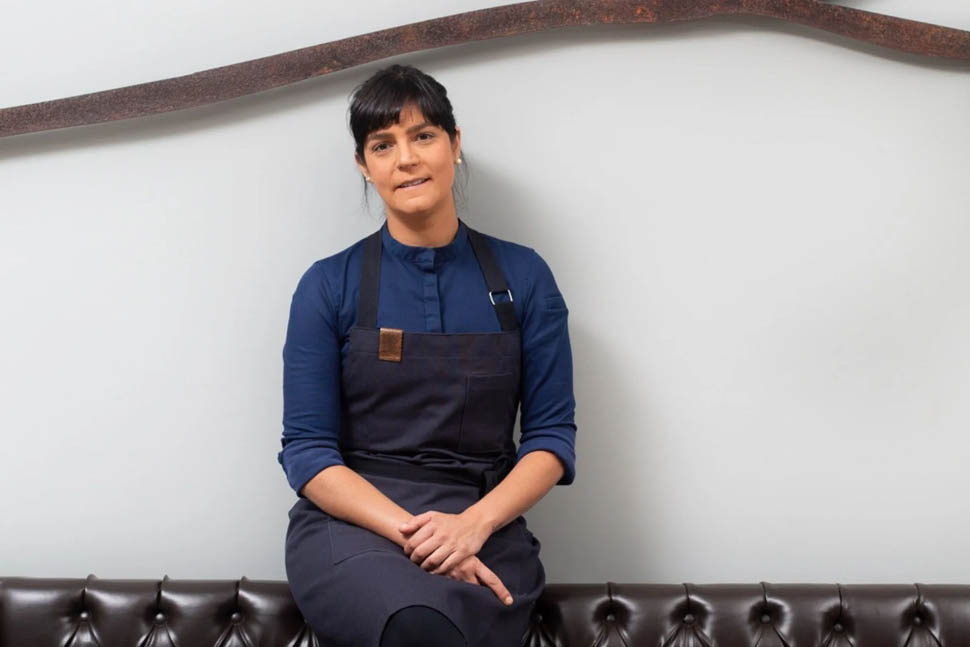
“We’re in a position of influence, and we have to use it,” she told 7Canibales recently, without mincing words. “We can talk about our community, the environment, women, our history. Today, I’m in a privileged position because I’ve received significant recognition. At some point, you have to give something back.” There’s never any sense in her remarks that her activism is just for show. On the contrary, what stands out is precisely the opposite: the almost obsessive practicality with which every idea is brought back to the daily reality of work. This is also why Manu Buffara has become one of the most influential voices when it comes to the conditions of the contemporary restaurant industry. While many chefs continue to defend models based on exhausted staff and endless shifts, she tackles the issue head-on.
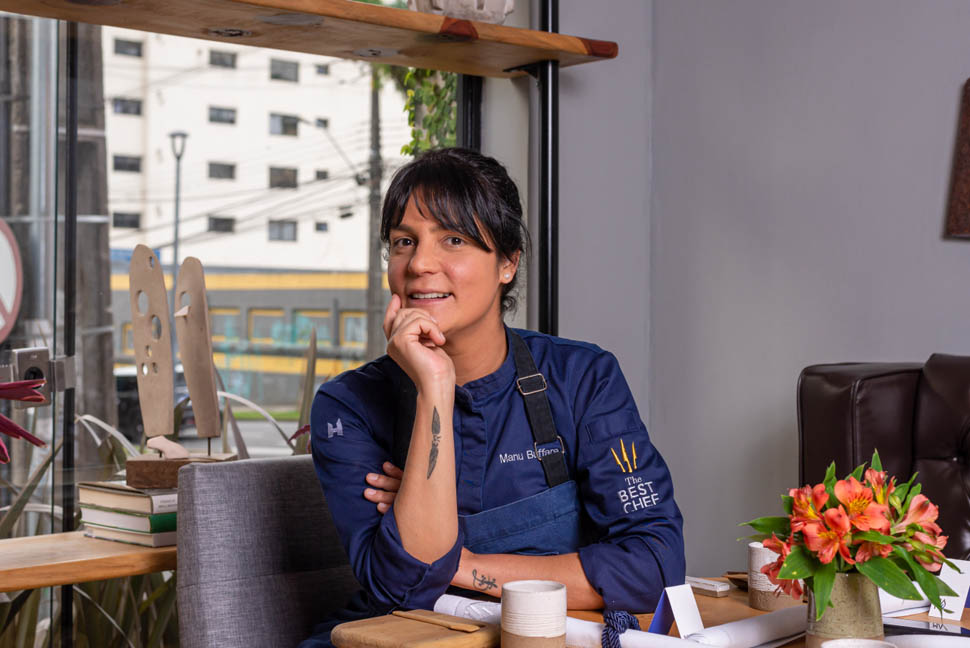
“The kitchen cannot be a place where you spend sixteen hours a day without seeing your family,” she says. “We cannot talk about sustainability if certain things do not truly exist within our restaurants. Sustainability is no longer an added value; it is the starting point.” The phrase she repeats most often, almost as if it were a political statement, is very simple: “The kitchen must be a happy space.” Coming from a chef who runs one of the most celebrated restaurants in Brazil, it sounds almost revolutionary. For years, international fine dining romanticized suffering: toxic kitchens, shouting, ruthless hierarchies, impossible hours. Buffara, instead, decided to dismantle the system piece by piece, starting from her own restaurant. In 2019, she made a decision that many considered economically foolish: closing one extra day, reducing working hours, and removing two tables from the dining room. “To management it seemed crazy,” she says with a smile. At that moment, fourteen people worked in the restaurant to serve only five tables — a structure that appeared hardly profitable. Yet Manu’s reasoning started from a different point: her team had worked with her for more than ten years and deserved a better quality of life. So she began to completely rethink the way the restaurant operated.
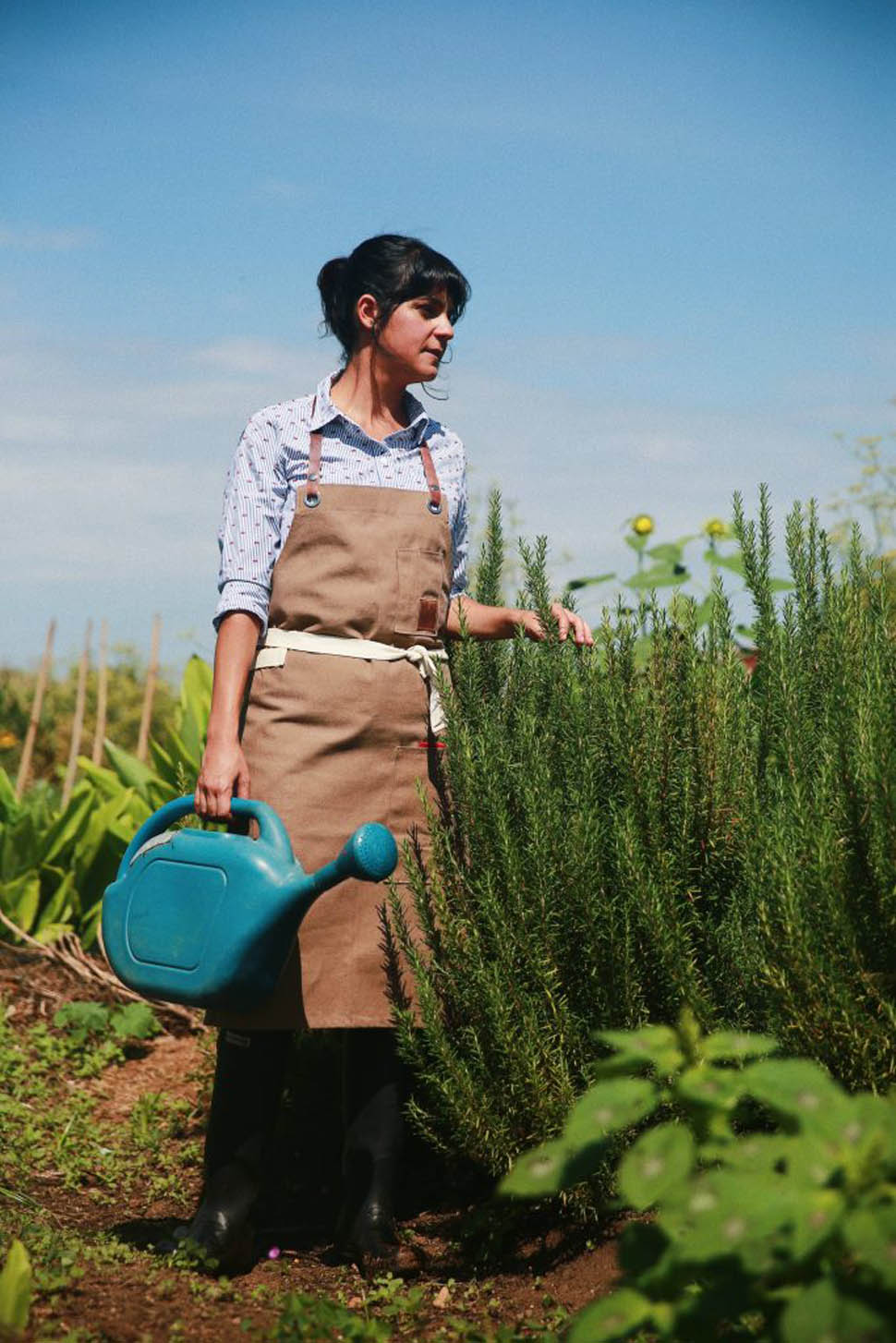
The tasting menu increased slightly in price, but the real change came from logistics and organization. Previously, the restaurant personally reached out to producers scattered throughout the region, with enormous costs tied to transportation and fuel. Today, many of those producers also sell to other businesses in Curitiba and deliver directly themselves. A simple change, seemingly invisible to the customer, that greatly reduced expenses. Then came another insight: creating a second project within the restaurant itself. They called it Manuzita. It operates only on Saturdays through a window open to the street. Sandwiches and natural wines, a quicker and more immediate format, almost neighborhood-style. And today that small space covers the rent and a significant portion of the salaries. “Creativity must also enter economic management,” she explains. A sentence that perhaps describes her approach to gastronomy better than any dish. And yet, despite the media attention and international recognition, Buffara continues to speak about cooking as something deeply domestic. This becomes especially clear when the conversation shifts to her daughters.
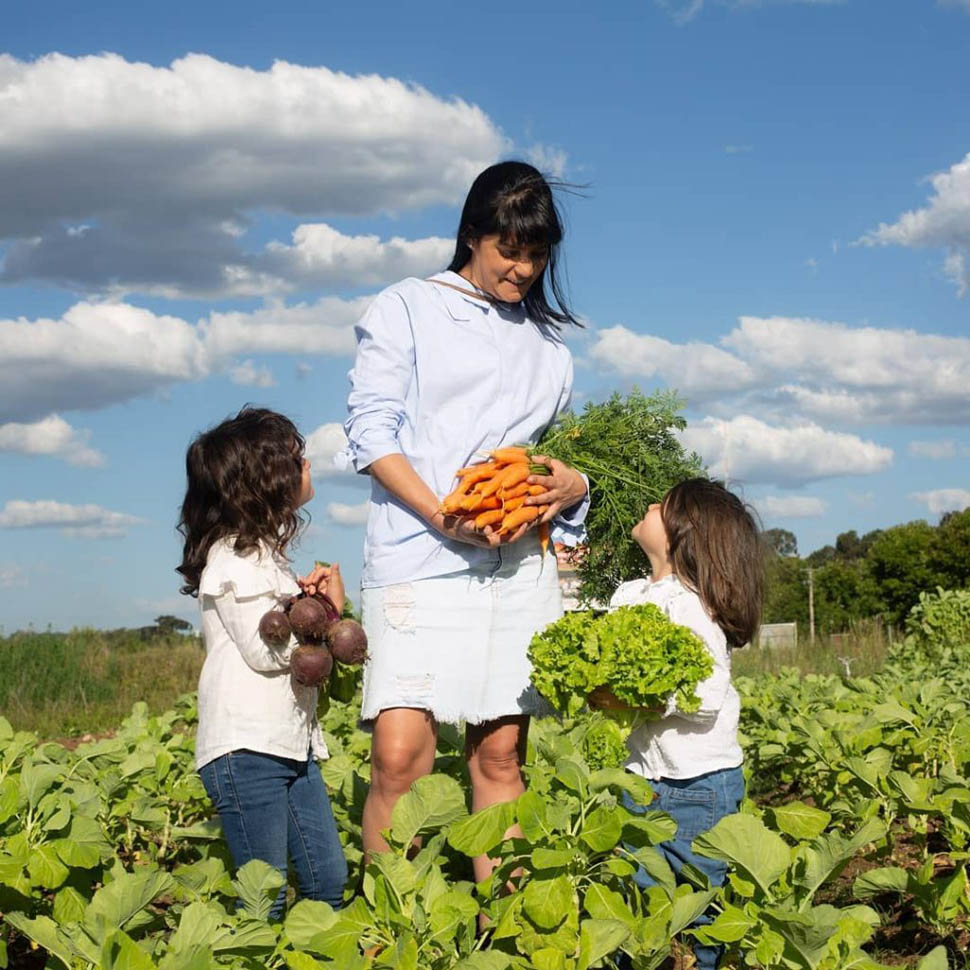
For many women in fine dining, motherhood still remains an almost taboo subject, something to be dealt with quietly for fear of appearing less focused on work. Manu, on the other hand, speaks about it openly, without turning it into a heroic narrative. She completely reorganized her professional life in order to build a sustainable balance. The restaurant opens from Wednesday to Saturday, dinner service only. She often spends her mornings at home. In the evening, she returns around 9:30 p.m. Together with her husband, who is a lawyer, she shares family responsibilities almost like a well-coordinated brigade: from Sunday to Tuesday she mainly takes care of the children, while on the other days he does. A nanny helps them once a week. But above all, her daughters are truly part of her world. She takes them to the gardens, to the restaurant, and to social events. On Saturdays, they even participate in activities with the dining room staff. And it is striking to observe how one of the most influential chefs in Latin America now seems far less interested in the idea of perfection than in that of balance. In her restaurant, fine dining still exists, of course: technique, research, study of ingredients, depth of flavor. But everything seems softened by a sense of humanity that rarely survives in great gastronomic establishments.