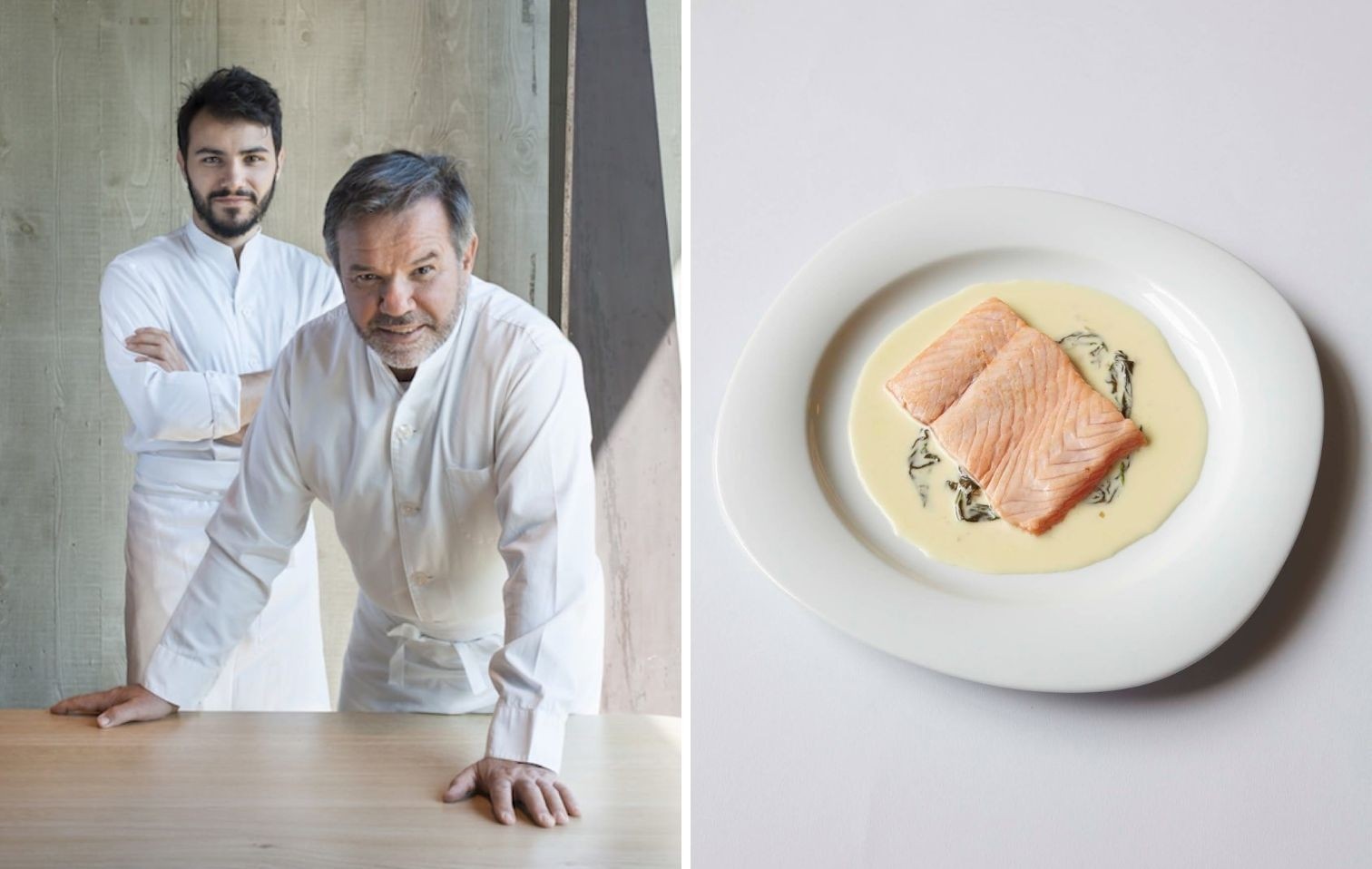
If anyone mentions the return of butter, sauces, and cooking cream among the food trends for 2026, perhaps it's time to dust off one of the oldest recipes in the Troisgros family: the famous salmon escalopes with sorrel and cream. A vintage dish that the French maison never refused to make on request, even though it was later removed from the restaurant menu because it was “too famous” (this was Michel Troisgros' “justification” to his legions of loyal customers).
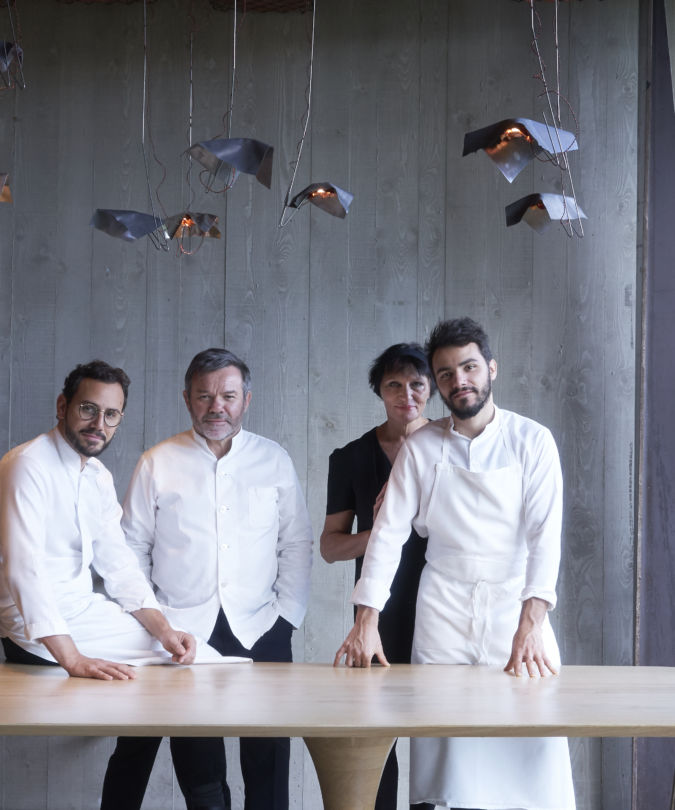
Photo of chefs on cover: Felix Ledru
The genesis of Saumon à l'Oseille: not just cream, but a secret herb
The year is 1963, a year destined to forever mark the boundaries of contemporary gastronomy: in the kitchens of Roanne, the Troisgros family is about to give life to a legend born from the encounter between technical rigor and the generosity of the earth. It all began with a “structural” intuition: Jean and Pierre Troisgros, fresh from observing fish preparation techniques at the famous Maxim's, understood the potential of a bold cut and decided to exploit it to the fullest in their own restaurant. However, while the two brothers perfected the art of flattening salmon into a light and delicate veil, their mother's “rustic” touch intervened, bringing to the stove an exuberant harvest of sorrel straight from the garden. That bright green color and its distinct citrus acidity suddenly disrupt the rules of comforting envelopment, balancing it with herbaceous notes.
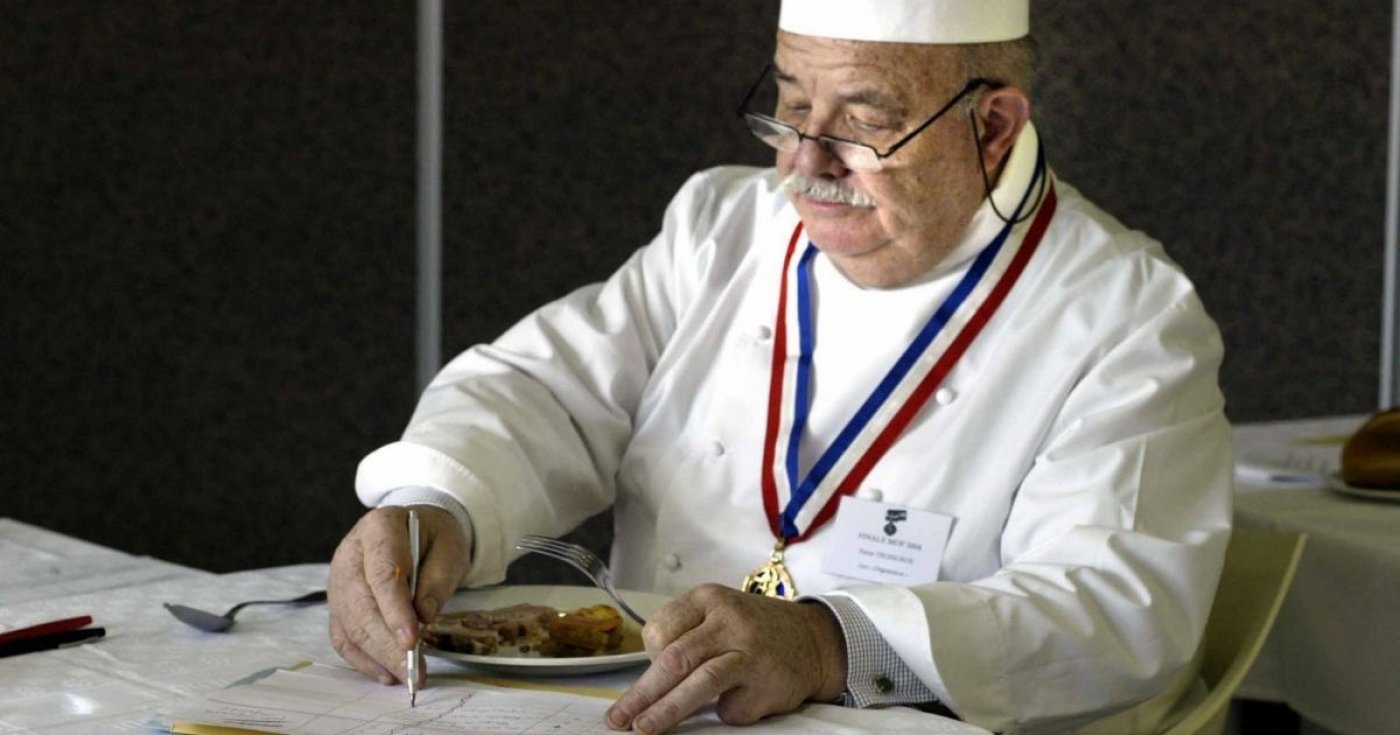
“It all started there,” Michel Troisgros, Pierre's son, recounts today with emotion in Le Monde: “a handful of wood sorrel dressed with an excellent creamy sauce and salmon sliced so thinly that we didn't have a plate big enough to serve it.”
The aesthetic and gustatory revolution
At the time, the impact of the dish was such that it necessitated a complete overhaul of table service. The usual practice was no longer sufficient to contain the majesty of the fish: legend has it that the large, generously sized flat plate and sauce spoon were designed specifically to accommodate it, indispensable tools for ensuring that not a single drop of that perfect emulsion was wasted.
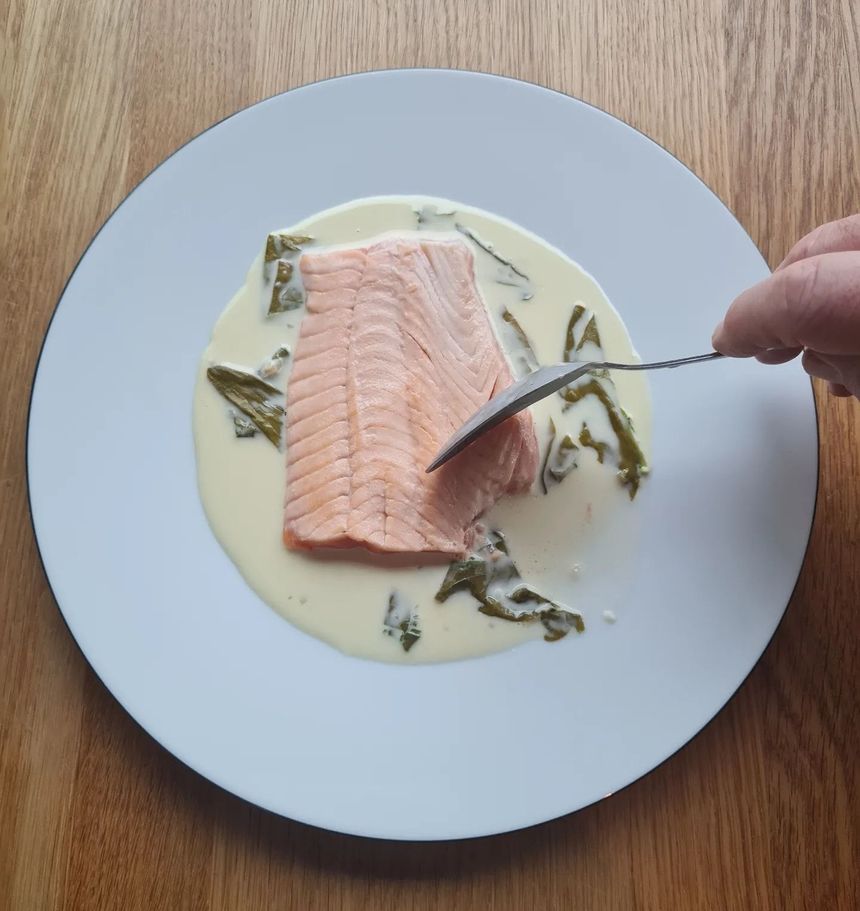
Over time, the link between this creation and the Roanne area has become indissoluble, almost mythological. In fact, it is said that the fame of salmon with sorrel was so overwhelming that it even influenced the urban aesthetic, to the extent that the city's railway station was painted in the same shades of pink and green, as a permanent reminder of a dish that nourished not only the body but also the very identity of an entire region.
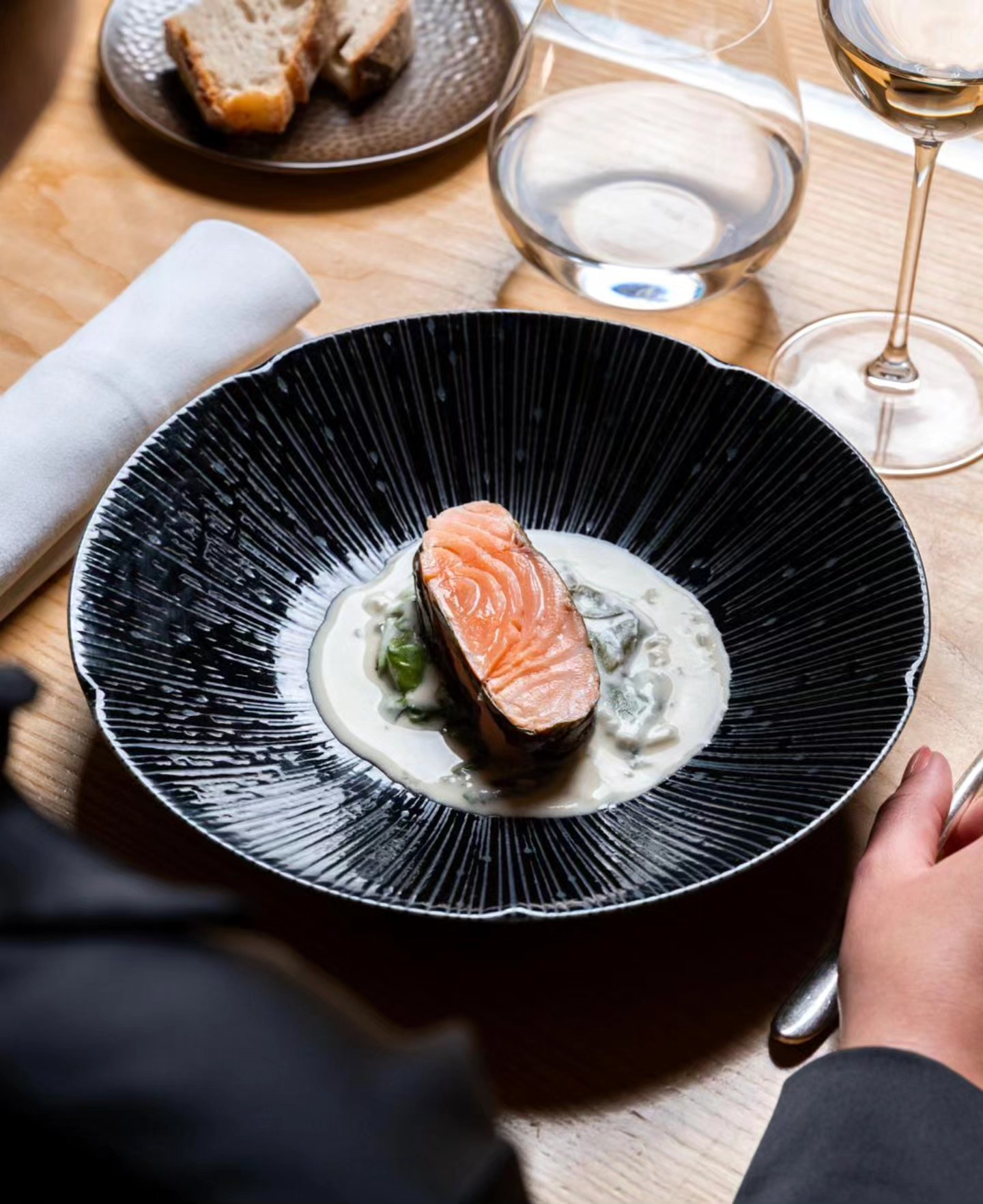
The Troisgros recipe (shown in this video)
FOR 4 PEOPLE
• 900 g fresh salmon
• 80 g fresh sorrel
• 2 shallots
• 4 cl Vermouth
• 8 cl Sancerre
• 32 cl fish stock
• 40 cl cream
• 1/2 lemon
• Salt, pepper
Salmon
Using a flexible knife, cut two fillets from the center of the fish. With tweezers, remove any small bones that you can feel. Cut the fillets in half lengthwise and cut them into four 140-gram escalopes. Place them between two sheets of oiled baking paper and, using a meat mallet, gently flatten them. This will even out the thickness.
Wood sorrel
Remove the stems by pulling them upwards to remove the veins. Wash and tear the larger leaves into 2 or 3 pieces.
For the sauce
Finely chop the shallots. In a pan, combine the fish stock, white wine, vermouth, and chopped shallots. Bring to a boil and reduce until the mixture is almost syrupy and glossy. Add the cream and simmer until the sauce thickens slightly. Add the sorrel, stirring for 10 seconds, then gently swirl the pan (do not use a whisk, as this will break the sorrel leaves). Season with a few drops of lemon juice and salt. Set aside.
Cooking the salmon
Heat a large nonstick skillet. Season the salmon fillets with salt and place them in the pan. Cook for 20 seconds: 10 seconds on one side, 10 seconds on the other. The salmon should be just cooked so that it finishes cooking on the plate.
Plating
While the salmon is in the pan, divide the sauce between 4 large plates. Place the salmon fillets on top. Taste immediately to appreciate the heat and texture.