Since the beginning of her adventure, she has sold around 10,000 boxes capable of preserving the structure and aromas of crêpes: the story of an unemployed woman who reinvented herself at the age of 50.
Cover photo: Ouest-France
The idea
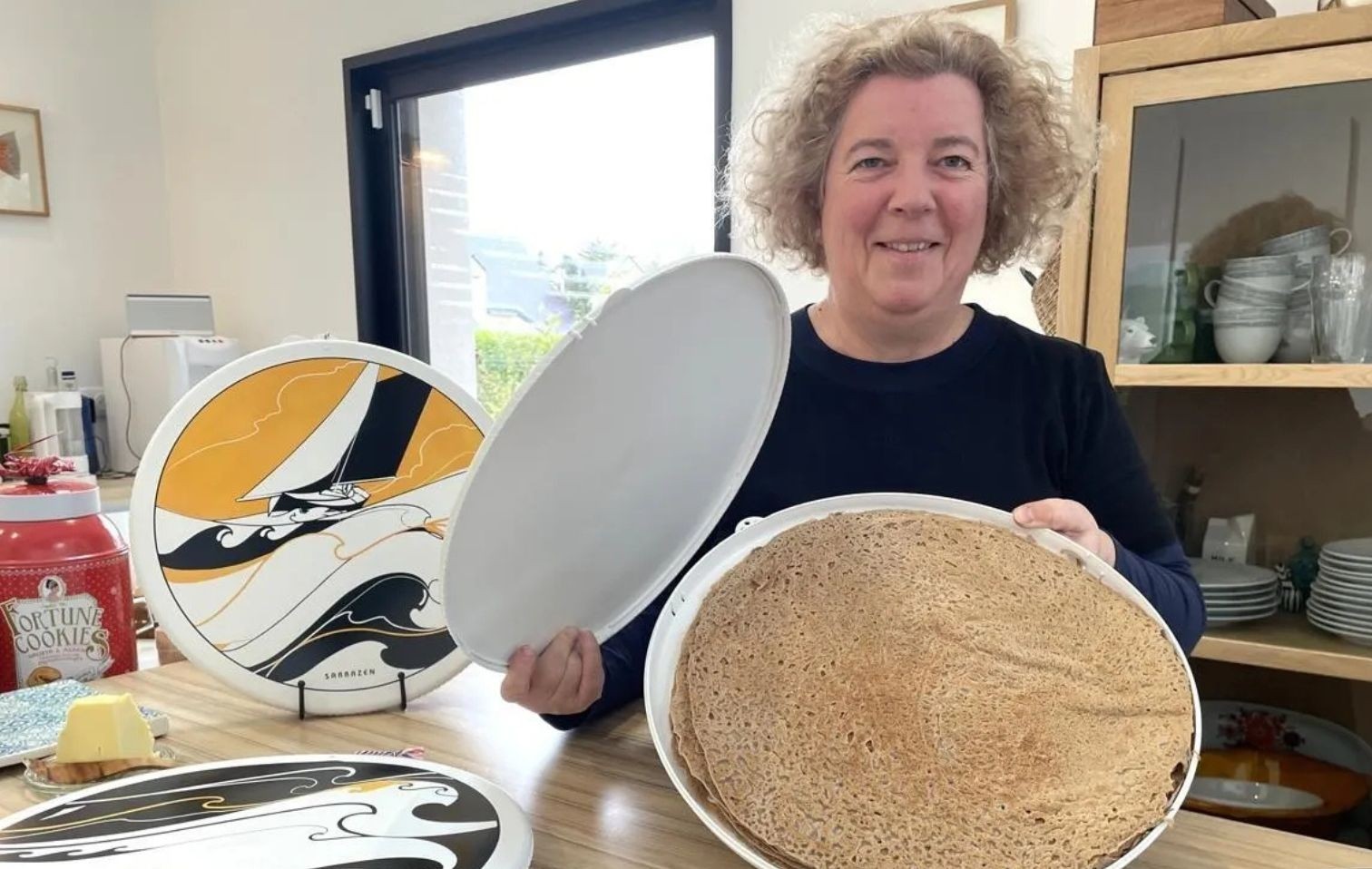
The smell of freshly cooked crêpes has an almost evocative quality. It brings to mind home kitchens, hot pans, and the precise movement with which the batter is spread on the billig, the traditional Breton griddle. But between the moment the crêpe leaves the griddle and the moment it arrives at the table, there is a small practical problem that every lover of this specialty is familiar with: keeping it intact. Too often, it breaks when folded, or loses its softness and dries out during transport. This daily irritation gave rise to an idea that is surprisingly simple and, for this very reason, effective. The insight belongs to Isabelle Rouxel, an entrepreneur from Morbihan, a region of Brittany where crêpes are much more than just food. For those who grow up in these lands, the relationship with buckwheat or wheat batter is almost ritualistic. Rouxel recounts this spontaneously to 20Minutes:“I was tired of seeing them break after folding them or become dry. And I was annoyed by using so much disposable packaging to store them.” This seemingly trivial inconvenience sparked a creative process that, within two years, turned into a business project. The result has an evocative name: Sarrazen. The word refers to buckwheat, the symbolic ingredient of Breton galettes, and identifies a circular box designed specifically to store crêpes and galettes while maintaining their softness, freshness, and aroma. It is a solution that combines domestic functionality and attention to materials, in line with a growing awareness of sustainability.
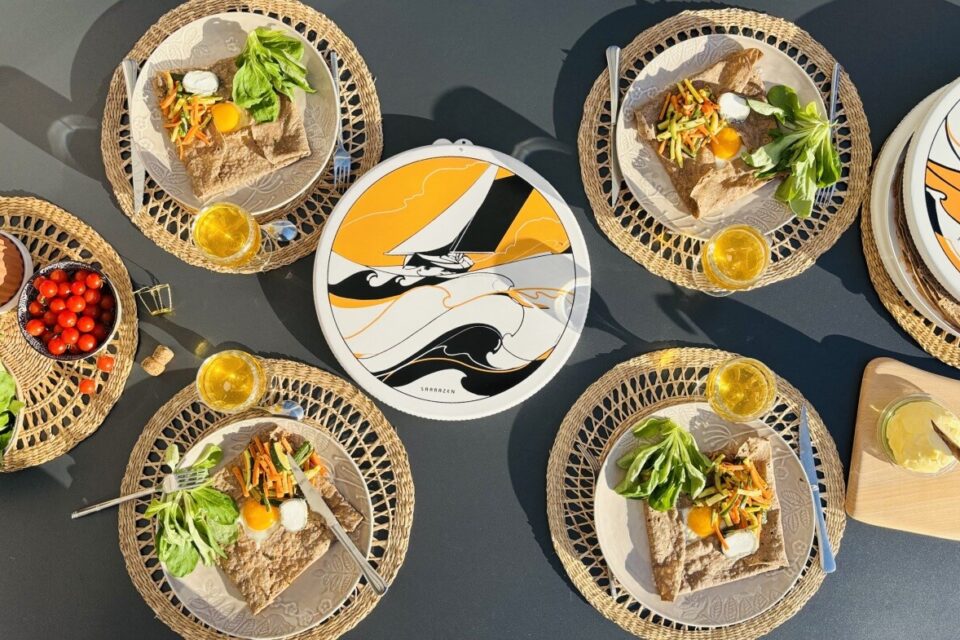
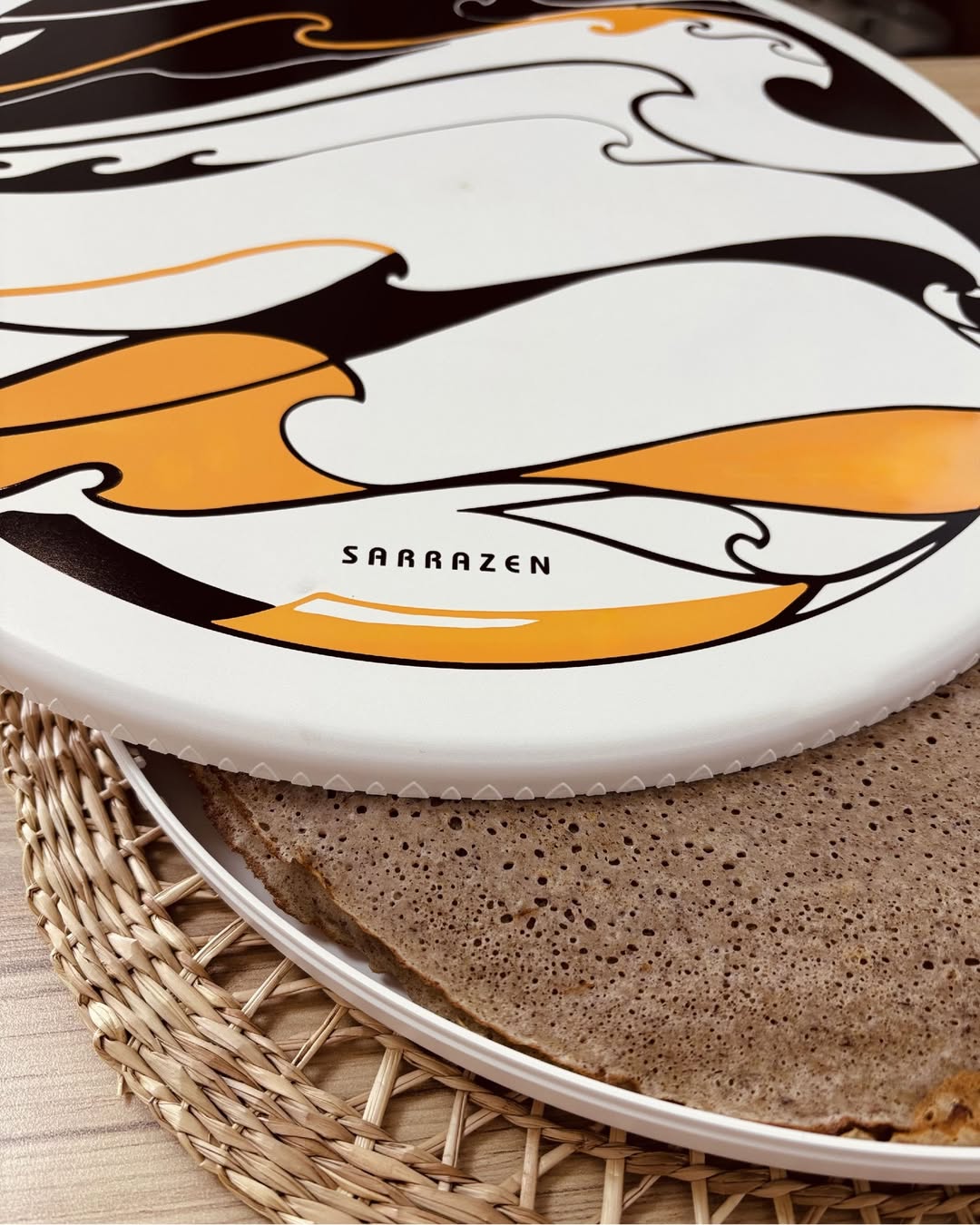
The journey that led to the creation of Sarrazen did not begin in a design studio, but in the everyday life of a passionate consumer. Rouxel spent twenty-five years working for an American group in the industrial maintenance sector. The change came abruptly: her dismissal marked the end of that professional phase and opened up an unexpected opportunity to reinvent herself. “I had to start over,” she says. Instead of immediately returning to the industrial world, she decided to turn a domestic observation into a concrete project. The lack of a suitable container for storing crêpes and galettes became the starting point. The principle behind the object is simple: a circular box with dimensions designed to perfectly fit the Breton specialties prepared on the billig. The chosen diameter—37.4 centimeters—allows the crêpes to be inserted without folding or deforming them, thus preventing them from breaking or losing their texture. To develop the project, Rouxel enlisted the help of two creative figures: a designer and an artist. Together, they worked on the shape and materials, seeking a balance between aesthetics, functionality, and environmental sustainability.
Natural materials and sustainable design
The final result reflects a clear choice: to use completely biosourced and recyclable materials. The box is made from sugar cane, eggshells, wood cellulose, and mineral components. This mixture creates a sturdy yet lightweight container that is suitable for food contact and designed to reduce environmental impact. The decision to favor natural materials also responds to another need: to reduce the amount of single-use plastic used to store crêpes. In domestic settings and small crêperies, the use of disposable films and containers is in fact a very common practice.
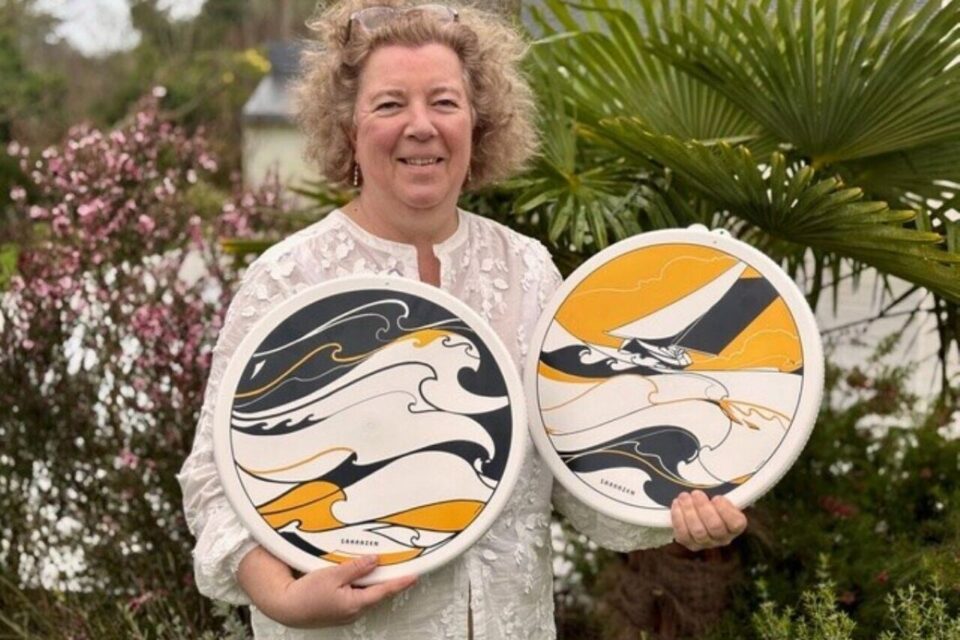
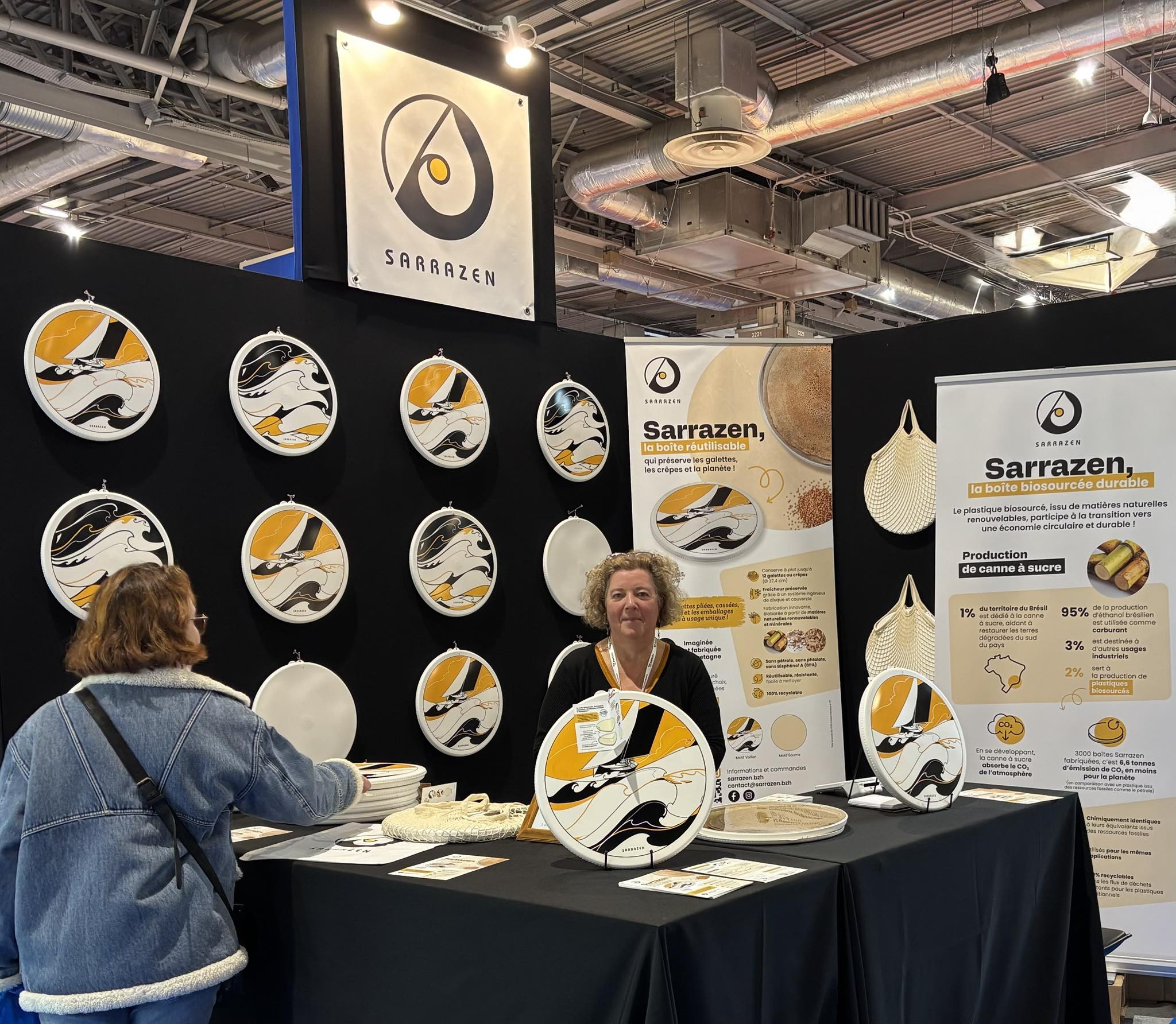
Sarrazen offers a reusable alternative designed specifically for this food. The round structure allows the crêpes to be stacked while protecting them from air and impact, two elements that often compromise their texture. After months of research and development, Rouxel decided to present his project to the public during the Made in France trade show, one of the most important events dedicated to national production. The fair takes place in Paris, at the Porte de Versailles exhibition center, and brings together hundreds of companies and inventors every year. The public's response quickly exceeded all expectations. Rouxel had brought 300 boxes with him, thinking it would be a cautious presentation. In just a few days, the stock was completely sold out. “Many people told me they had been waiting for such an item for a long time,” he says. The success of the debut marked the beginning of unexpected growth. After the exhibition, orders began to arrive from all over France. “Requests are coming in from everywhere,” says Rouxel enthusiastically. From autumn to early 2026, the project experienced surprising growth. Almost 10,000 Sarrazen boxes have already been sold. However, the most significant figure concerns the order book: over 3,000 pieces are still awaiting delivery.
The reason lies in production and shipping times. Manufacturing the item requires a rather long production cycle, and distribution must follow available production capacity. Rouxel estimates an average wait of about eight weeks between order and delivery. He asks customers for patience, explaining that demand has exceeded initial forecasts. This phenomenon is part of a very particular gastronomic context. La Chandeleur, a traditional festival celebrated on February 2 and dedicated to crêpes, is a time of year when these dishes are consumed in large quantities. During this period, demand for crêpe-making tools and accessories increases significantly. The success of the Sarrazen box is not solely due to its functionality. It also reflects the symbolic power of Breton cuisine. Crêpes and galettes are not simply a regional dish, but a culinary tradition deeply rooted in the territory. The act of preparing them on the billig, the cast-iron griddle typical of crêperies, continues to be one of Brittany's most recognizable gastronomic rituals. The fact that an object designed to store them has found such a wide audience suggests how alive this gastronomic culture continues to be.
The Sarrazen project does not stop at the first version of the box. Rouxel has already planned an evolution of the product aimed at an even wider audience. A second model with a diameter of 30 centimeters will be launched in the spring, a size designed to fit the industrial galettes sold in supermarkets. This variant expands the object's potential uses, bringing it closer to those who buy packaged crêpes rather than preparing them at home or in artisan crêperies. The idea that originated in Morbihan continues to grow, following a simple but effective logic: observe a small everyday problem and transform it into an object that improves the gastronomic experience. After all, cooking, even before becoming a spectacle or a high-tech skill, often stems from domestic details. A crêpe that stays soft, a box that protects it on the journey home, and an intuition capable of transforming a regional tradition into a business project that spans the whole of France.