The teaching of a talented chef: “Honoring a classic dish is in itself a conscious act and gives great satisfaction. This is because classics are terribly complex: they don't make you look creative, but they make you good. Today, I no longer feel the need to cook against something: the time for gastronomic rebellion is over. For me, cooking is now about depth.”
The chef and the new format: “Roncoroni Classici Gastronomici”
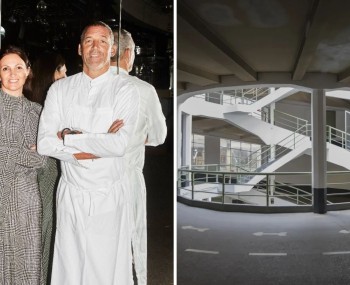
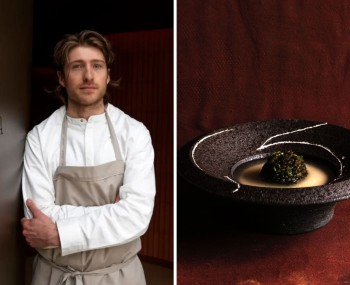
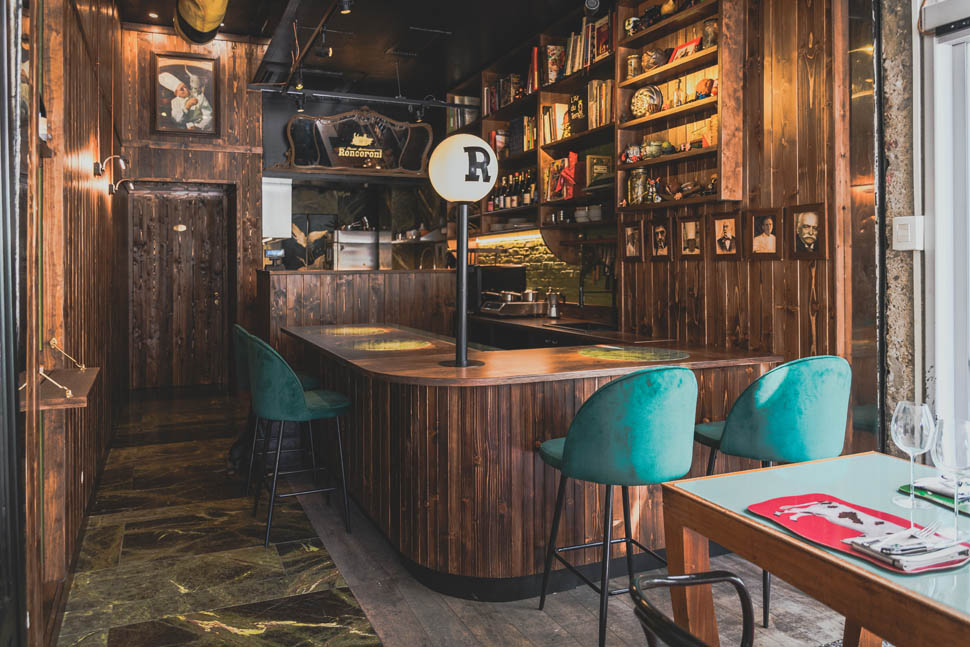
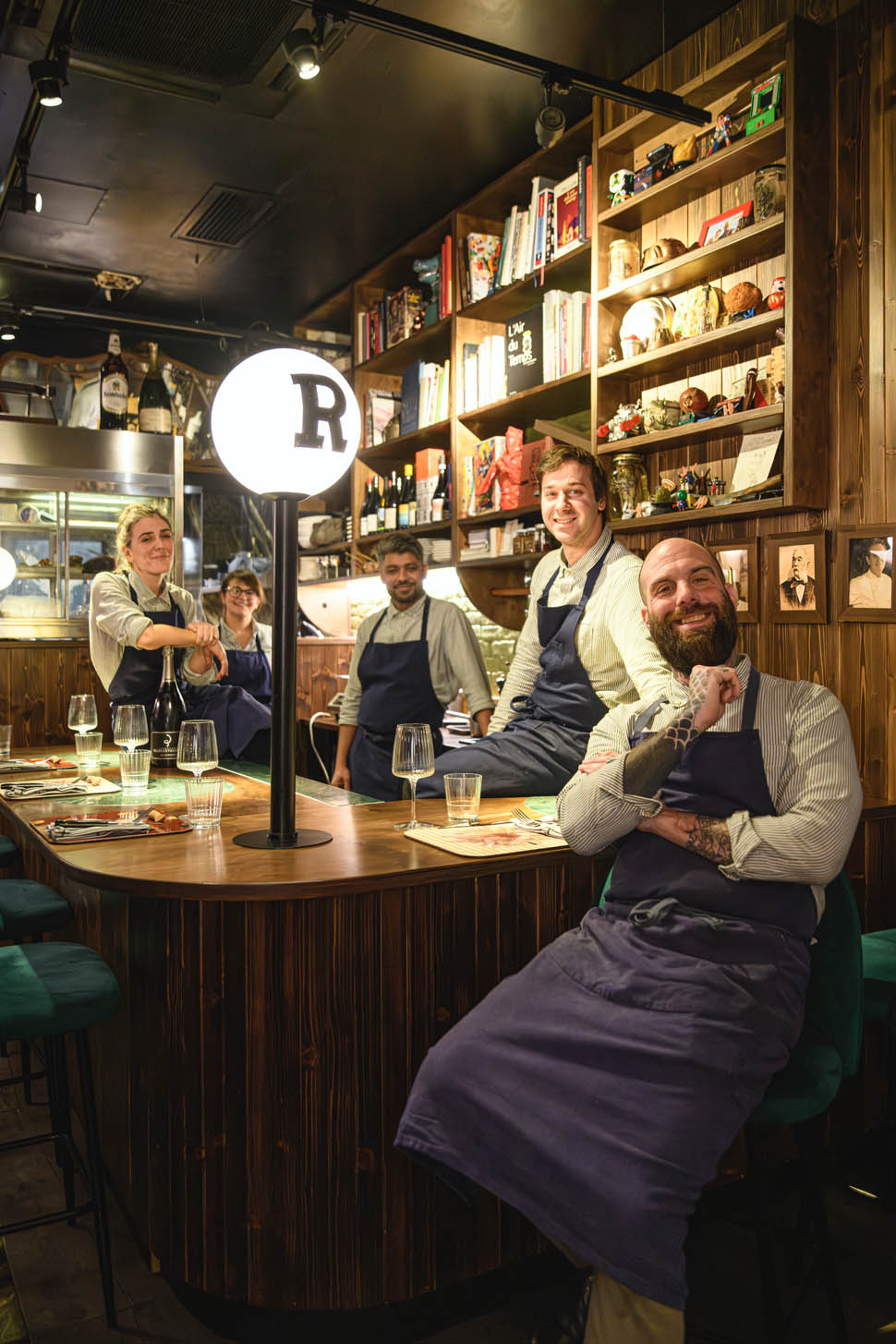
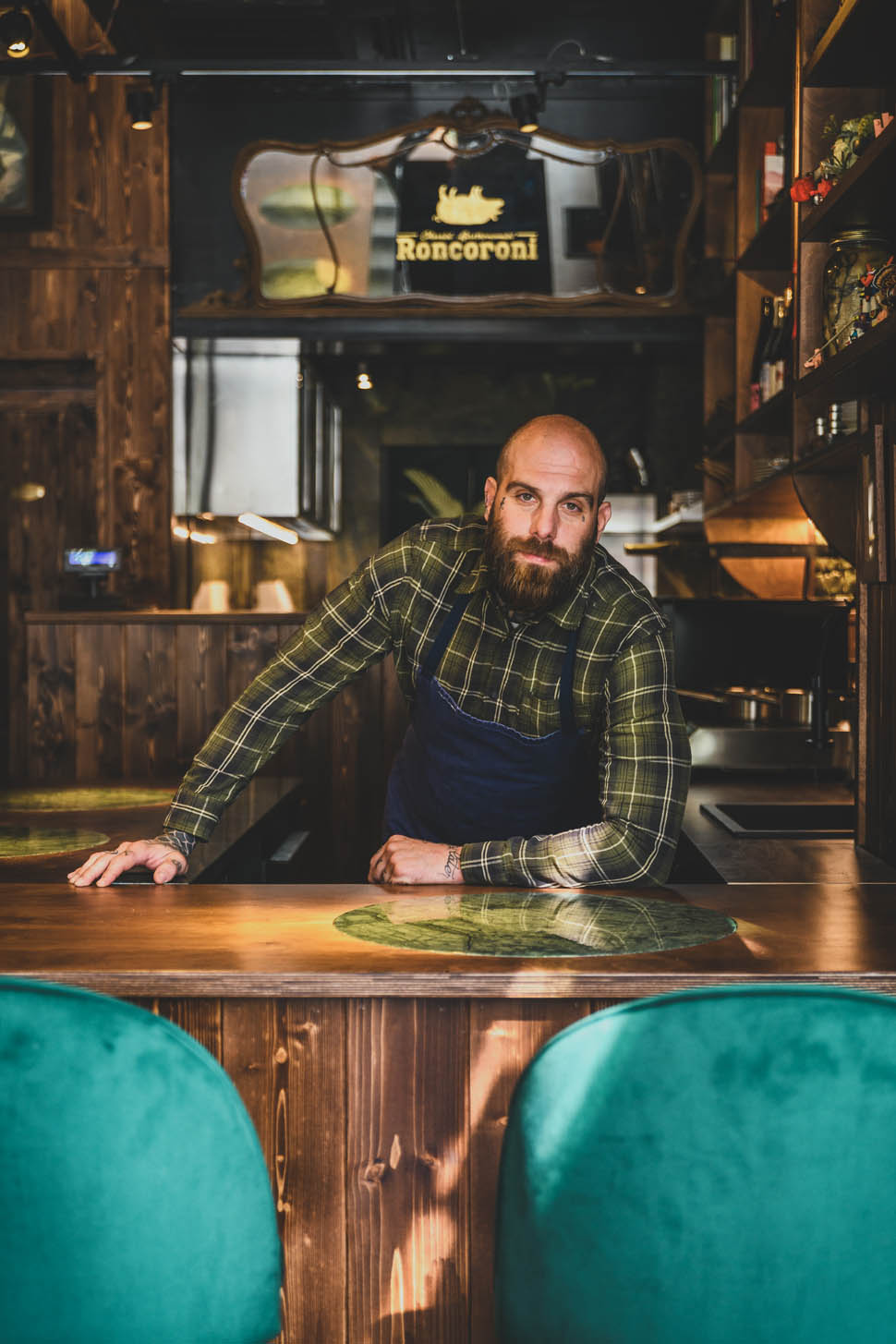
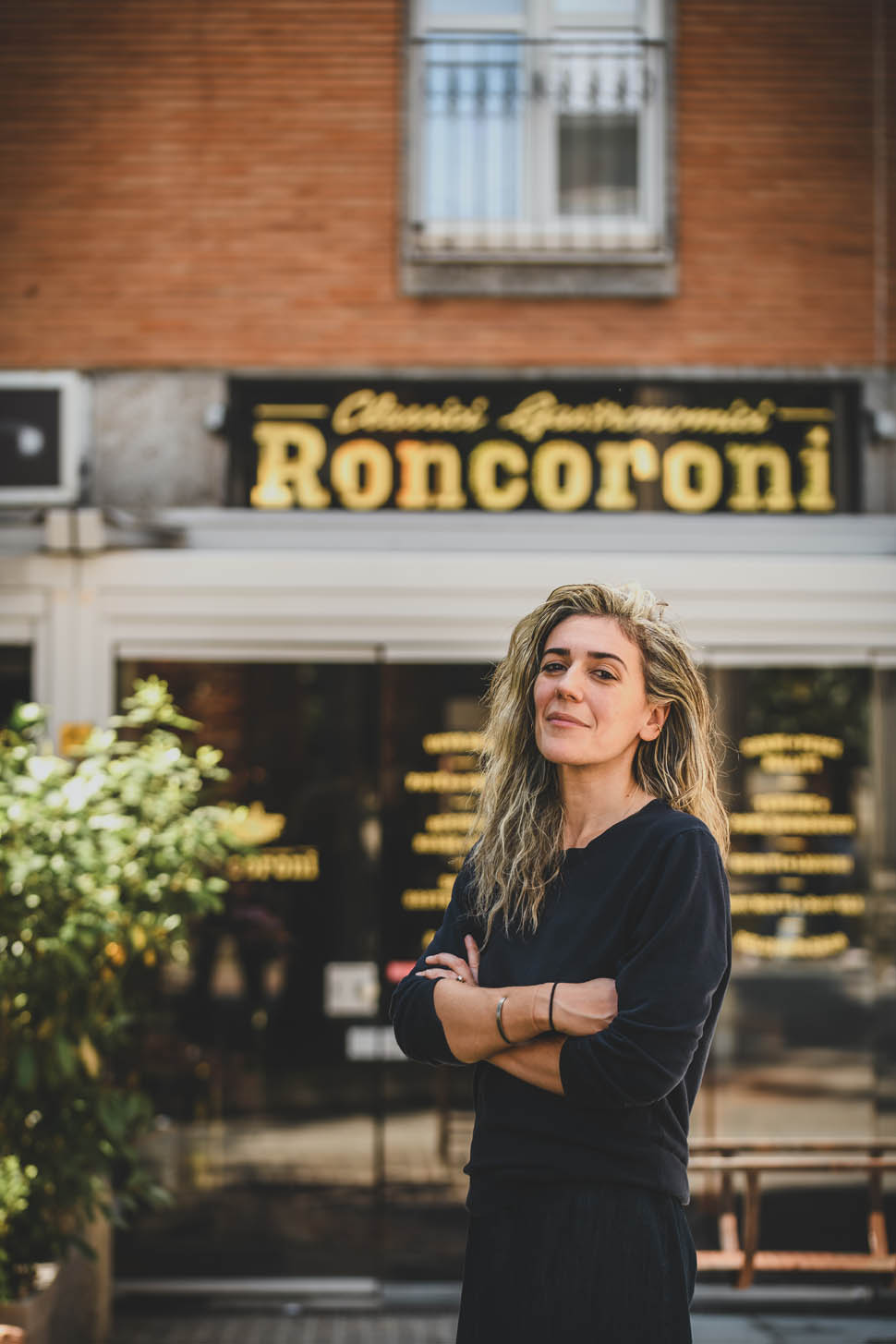
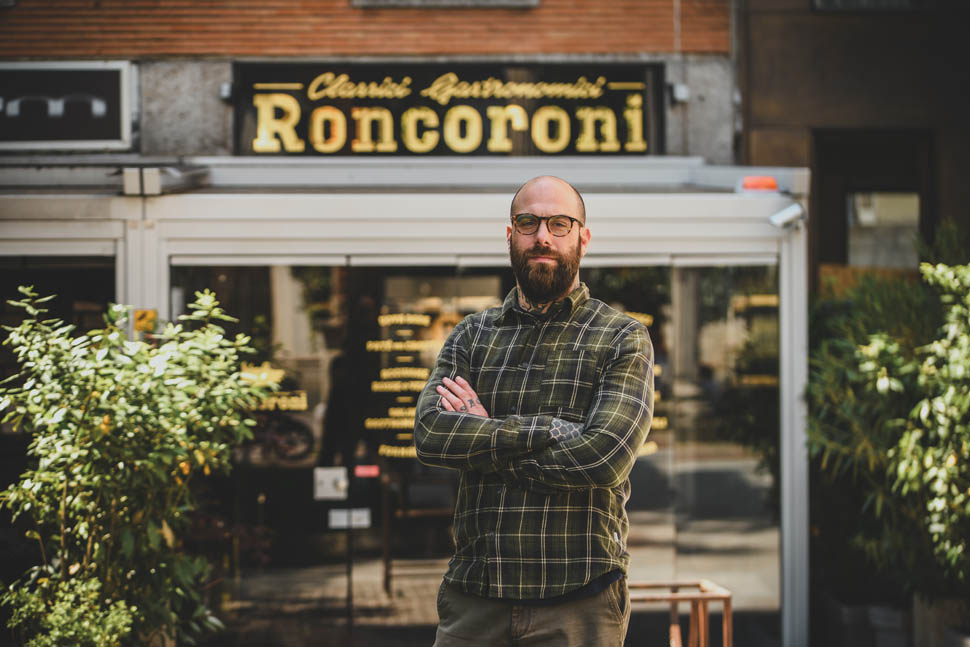
Eugenio Roncoroni has been back in the kitchen for a few months now with a new restaurant in Milan, in addition to PAS – a vegetarian trip, the fast vegetarian project launched in 2022 on a bike that has finally found a permanent home in Corso Italia in Milan. “Roncoroni Classici Gastronomici” is an intimate and succulent project undertaken together with his partner Cristina Giordano, who complements his (fake) tough side with her distinctive smile.
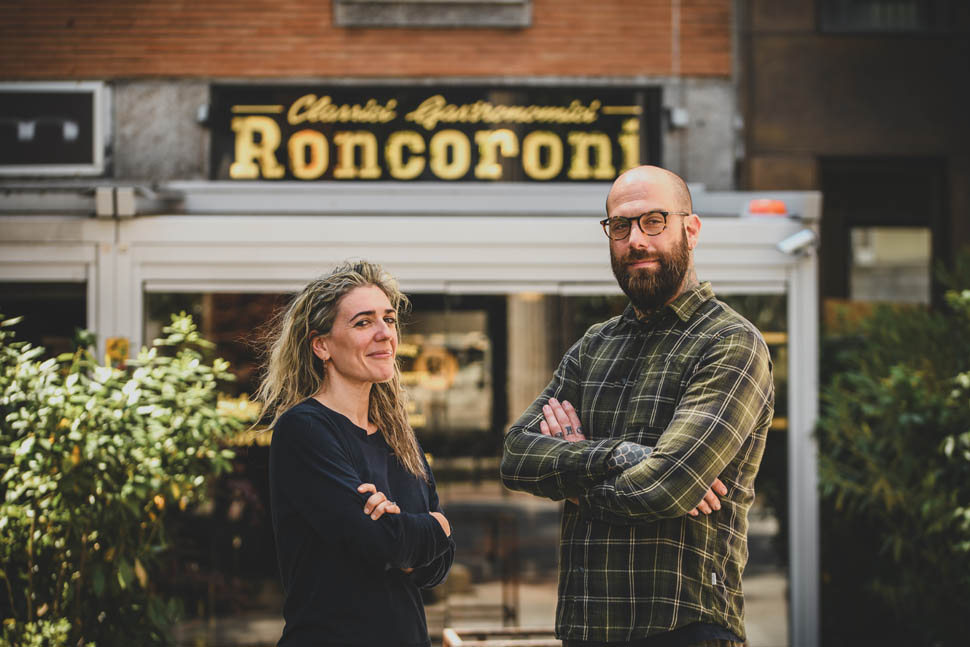
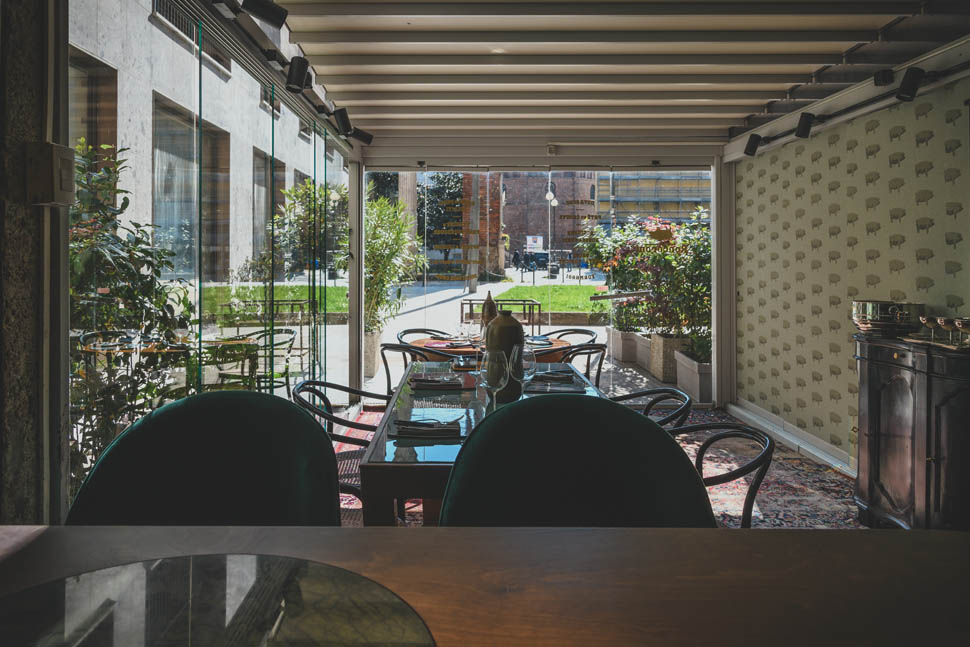
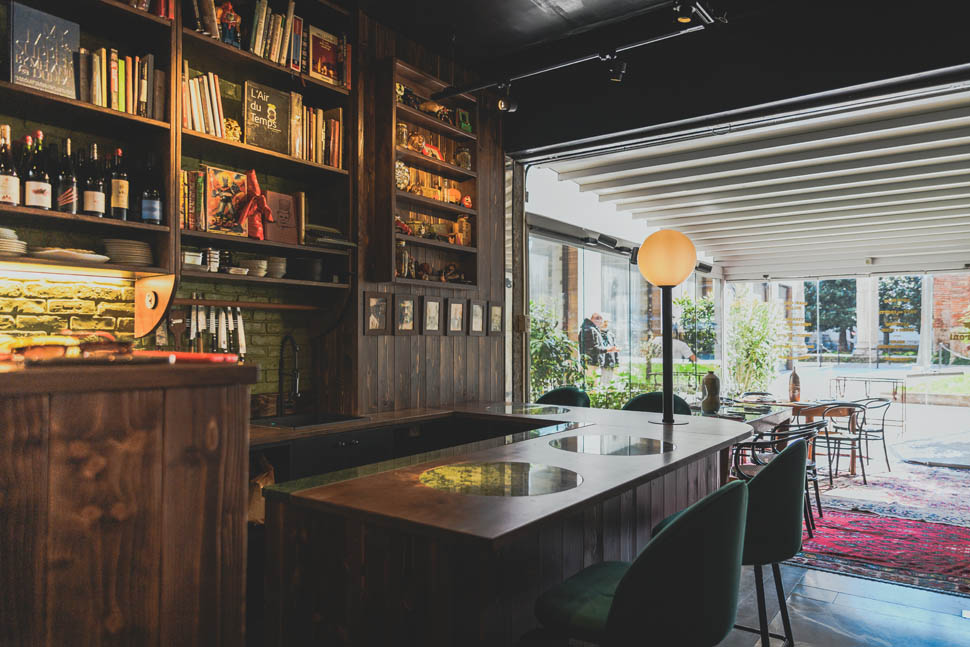
In Milan, where it is increasingly difficult to eat something authentic without redundant and superfluous stories, the intimate restaurant at Colonne di San Lorenzo welcomes those who want substance and flavor, seasoned dishes that take you here and there where Roncoroni has left a little of his soul, to be savored at the tables or at the small counter while chatting with the two who work there. A place that joins the long list of Milanese restaurants, but one that tries to make a difference.
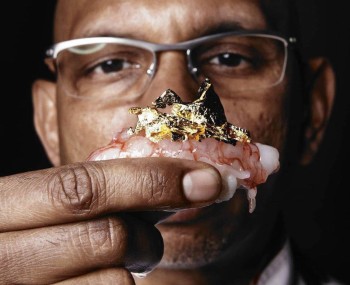
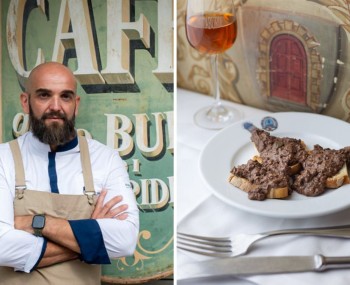
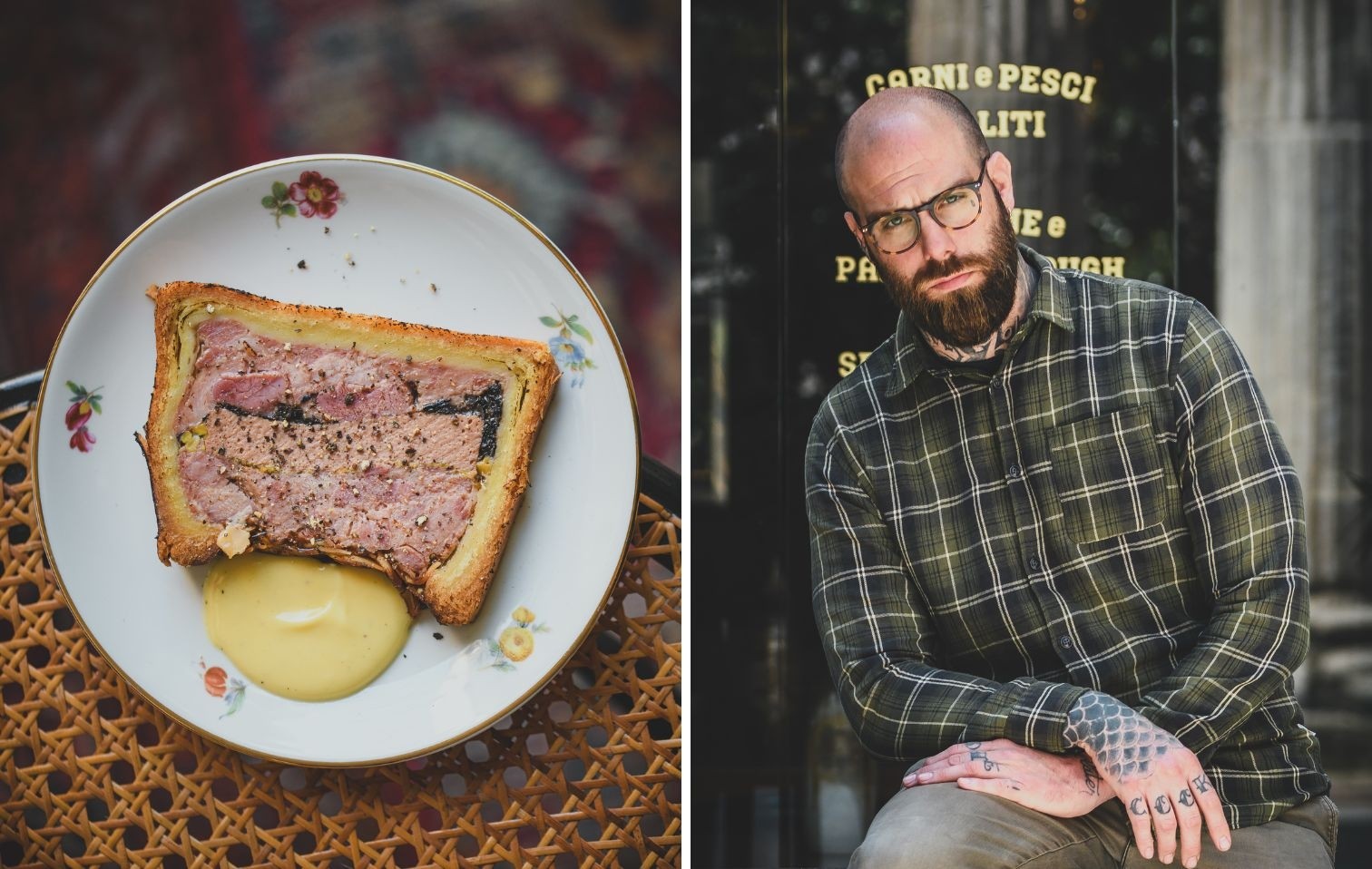
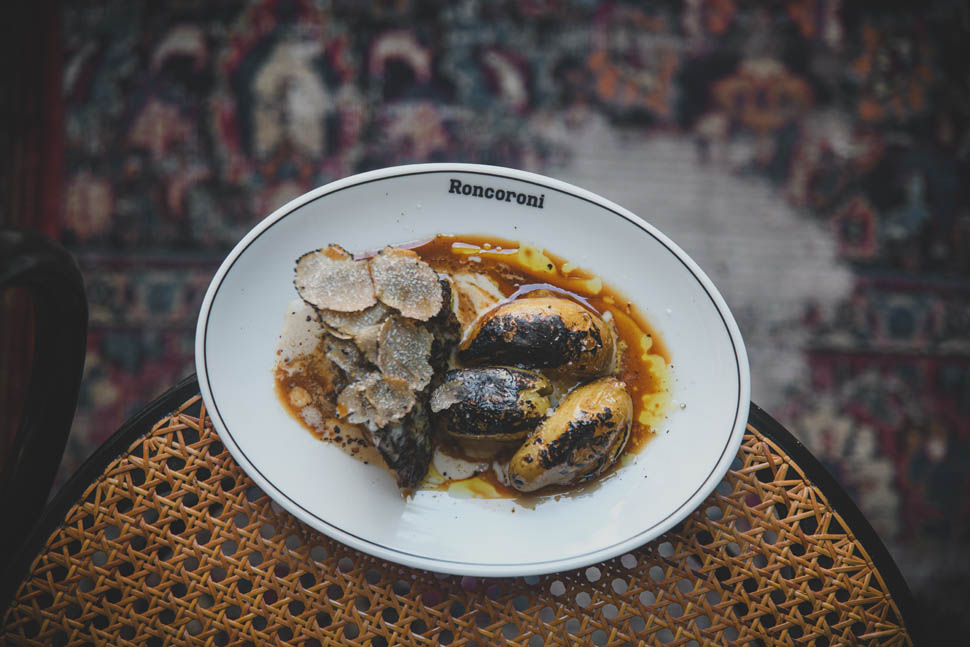
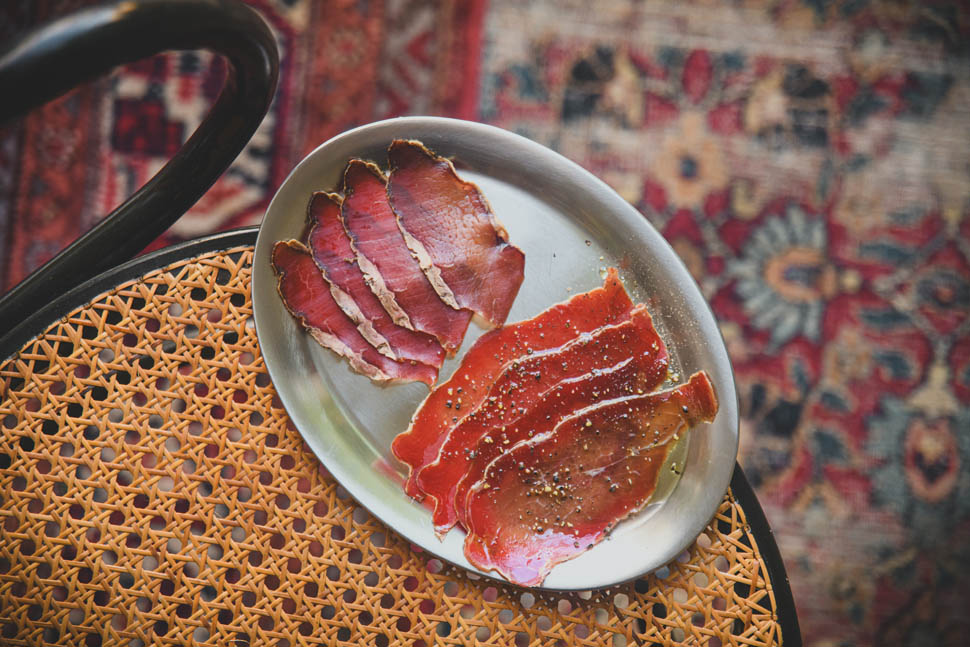
I didn't just go there to enjoy the “seafood organs” that speak of Asia and Mexico, the selection of “extreme bresaola” or the “beef Wellington” and the noble fifth quarter, but to have a chat with both of them.
The interview
At a time when cuisine seems obsessed with the new, choosing to call your restaurant Classici Gastronomici is a statement. Against what, exactly?
“For both of us, it's not a name against anything, exactly, but more a desire to distance ourselves from the hysterical rush to reinvent the wheel: people are always very reluctant to admit that a dish is good as it is.”
Eugenio: “For me, honoring a classic dish is already a conscious act and gives me a lot of satisfaction. Cooking well, with care and respect, is something that really fulfills me. Today, I no longer feel the need to cook against something: the time for gastronomic rebellion is over, because for me, cooking is now about depth.”
Cristina: “We're not taking you on an inner journey, we're simply feeding you well, and it's almost unpopular because being classic can appear to be a lack of ambition—but for me it's exactly the opposite: it means you've come full circle. Here, if you get the dish wrong, it's inedible; you can't hide behind creativity.”
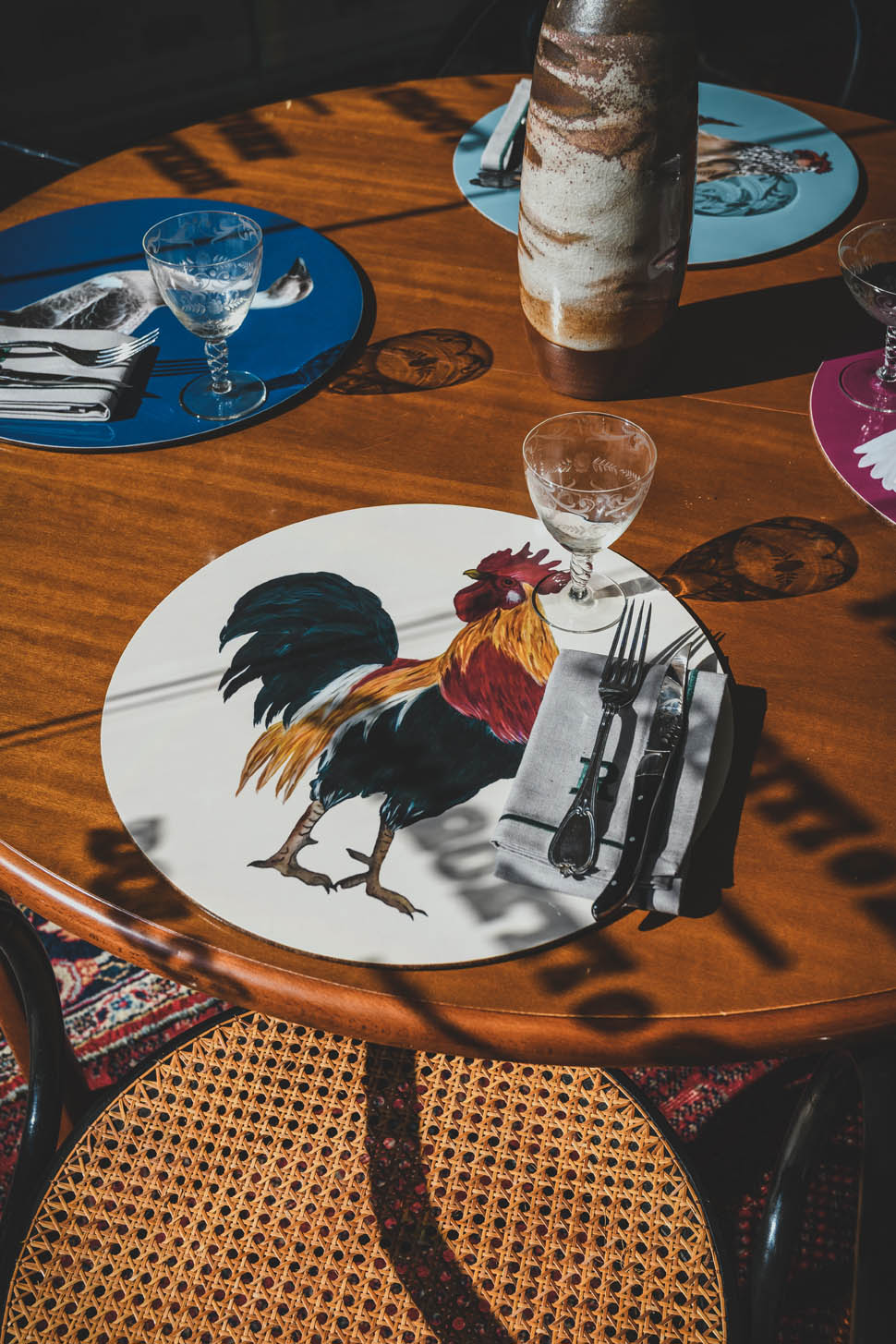
Tradition is often described as an untouchable legacy: but how much of it is a cultural construct, constantly being rewritten?
"For us, tradition is a cultural construct and, like all cultural things, it is constantly being rewritten. In fact, we now understand that many of the traditions we defend as if they were untouchable are much younger than we like to admit. They have become tradition because they have worked, and that's good enough. If we treat cuisine as an untouchable legacy, we will ultimately kill it: the world moves forward through evolution, not immobility.
Classics, in literature as in cuisine, stand the test of time. But do they stand the test because they are still necessary or because no one really questions them?
“First of all, we're not so sure they still hold up for most people. For both of us, when we compare them, they hold up over time, and not because they are simple, but because they are often terribly complex. But as we mentioned before, if you make a mistake, it's immediately obvious. This is the part we like best and perhaps also the most stimulating: classics don't make you look creative, they make you look good.”
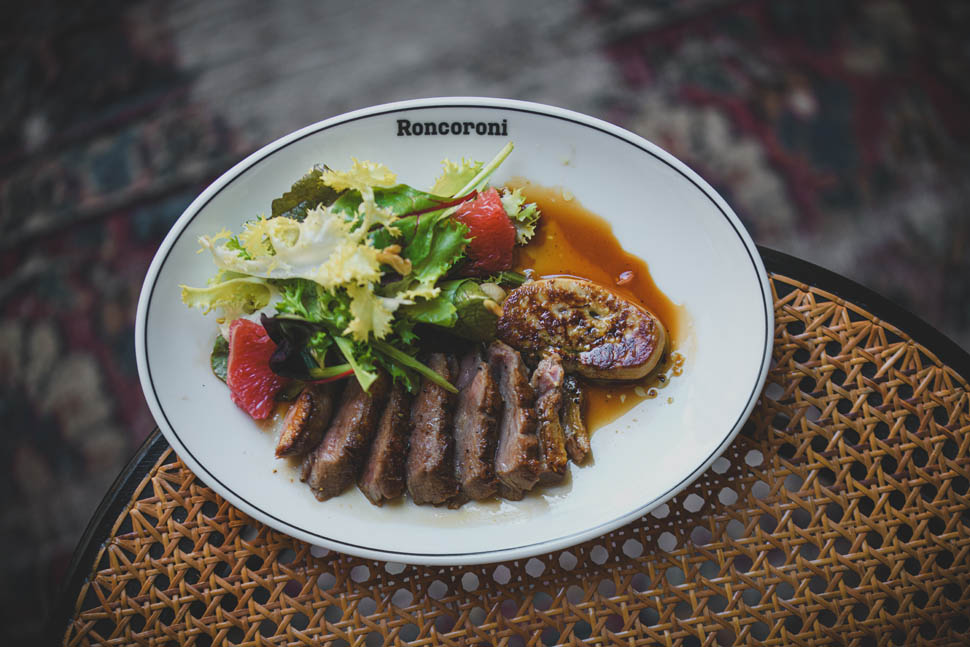
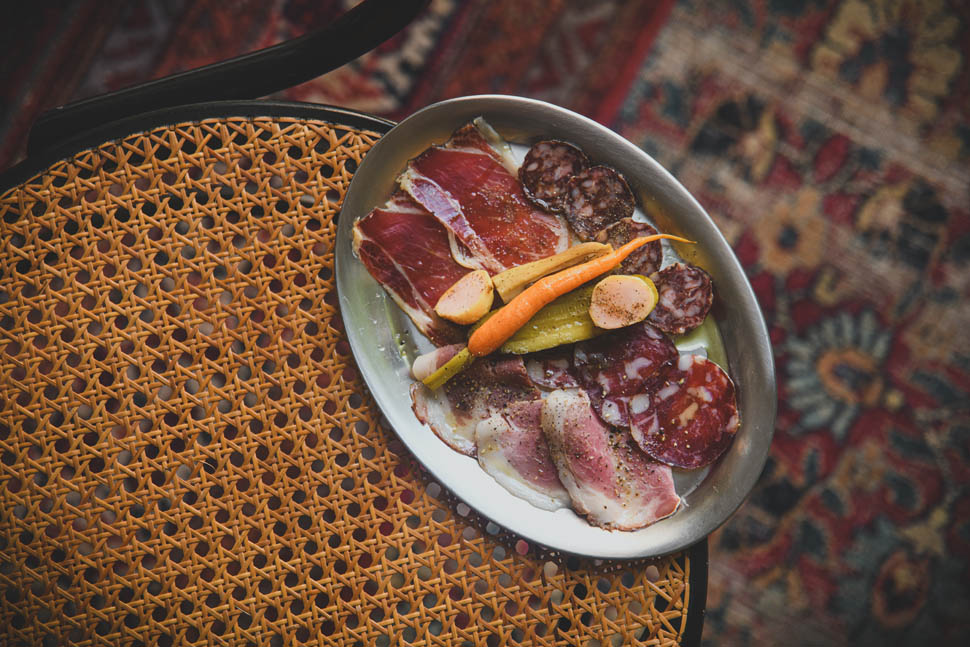
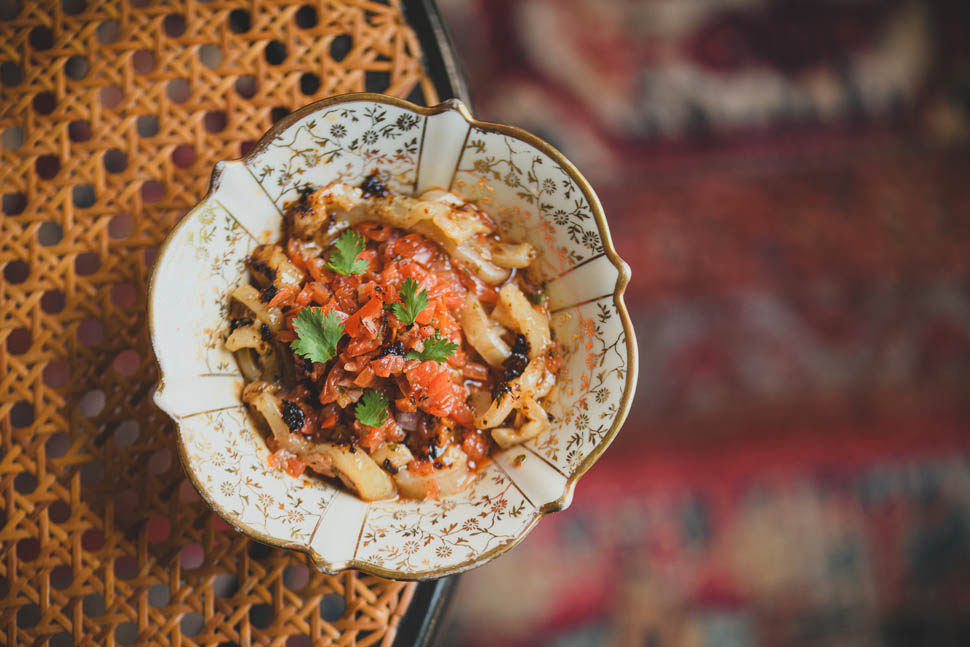
Today, gastronomic innovation often involves aesthetics and storytelling: how much of this really contributes to taste?
"Some of it is functional, and some of it is noise. Aesthetics make sense when they make you want to eat. Storytelling is useful, yes: it can help you understand what you're eating, but forced storytelling that's a little too long, pompous, and often full of words is just an elegant way to cover up a problem. Today, we are so saturated with images and stories that even when a dish is really good, it seems as if that alone is no longer enough."
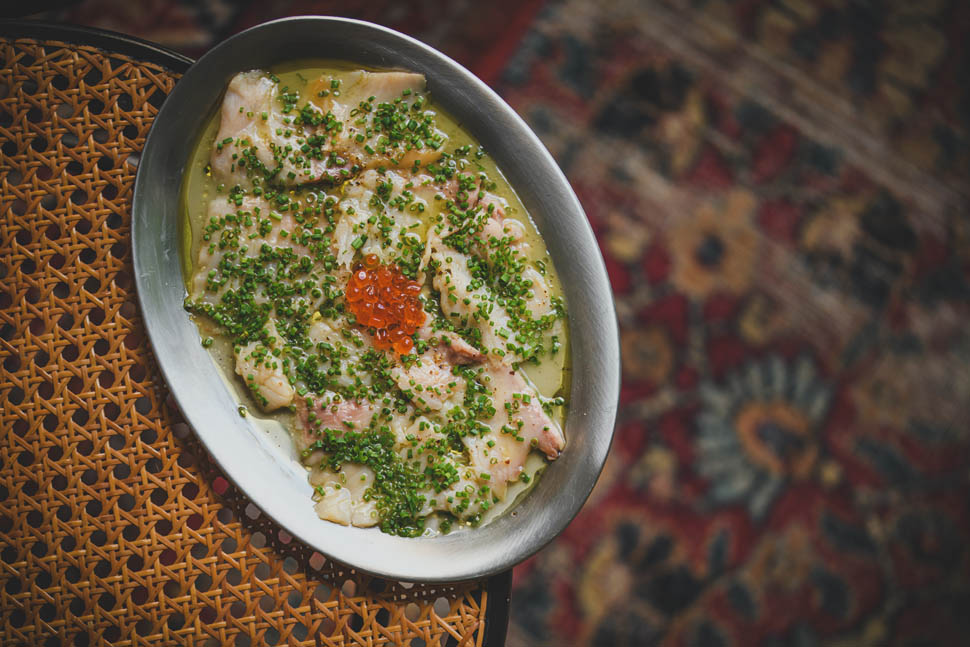
Eugenio: “Over time, I've realized that aesthetics can be sacrificed; it's no longer so important to me. Often, the dishes I cook today may seem ugly, partly because I deliberately no longer start with colors, contrasts, or color choices designed to be ‘beautiful’. The way I experience cooking, I no longer sacrifice taste for aesthetics.”
Some would describe your cuisine as “reassuring”: is this a reductive term or an underestimated quality in the current gastronomic debate?
Eugenio: "I'm always pleased when people describe my cuisine as reassuring. Today, when I look for truly solid cuisine, what I want to convey is the depth of a dish that hits the mark, without the need for artifice. For me, this is solidity. Because “reassuring” does not mean predictable or simple. It means recognizable, capable of focusing on a flavor and letting it speak clearly. And above all, reassuring is not the opposite of courageous."
How important do you think the context of the dining room, service, and storytelling are today, compared to the substance of the dish?
“For us, it matters, of course, but only if it remains the backdrop to the dish. The dining room and service should accompany, not take center stage. They should help you feel good and listen better to what you are eating.”
Cristina: “It's sad to think of storytelling as a necessity, because it means we have to be convinced to taste something. But I learned from Eugenio that I don't need words to excite people with a dish. I understood this thanks to him, who taught me that the best words in cooking are those that are not needed.”
Is Italian cuisine still fertile ground for research, or is it at risk of living off its past glories?
"According to both of them, you can best appreciate the difference when you compare it with many Asian cuisines: for them, tradition is used as a working method, as a discipline. We Italians, on the other hand, sometimes experience it more as an identity to be defended. And while on the one hand it is part of our identity—because it means celebrating our memory—on the other hand it risks limiting us. In some cases, it can make us seem less credible than we are. And this is also why we often struggle to appear solid when we try to export innovation beyond our borders. The problem is not Italianness itself, but the mentality: it only becomes a limitation if you experience it as a boundary."
Is there a classic dish that you feel the need to defend rather than reinterpret today?
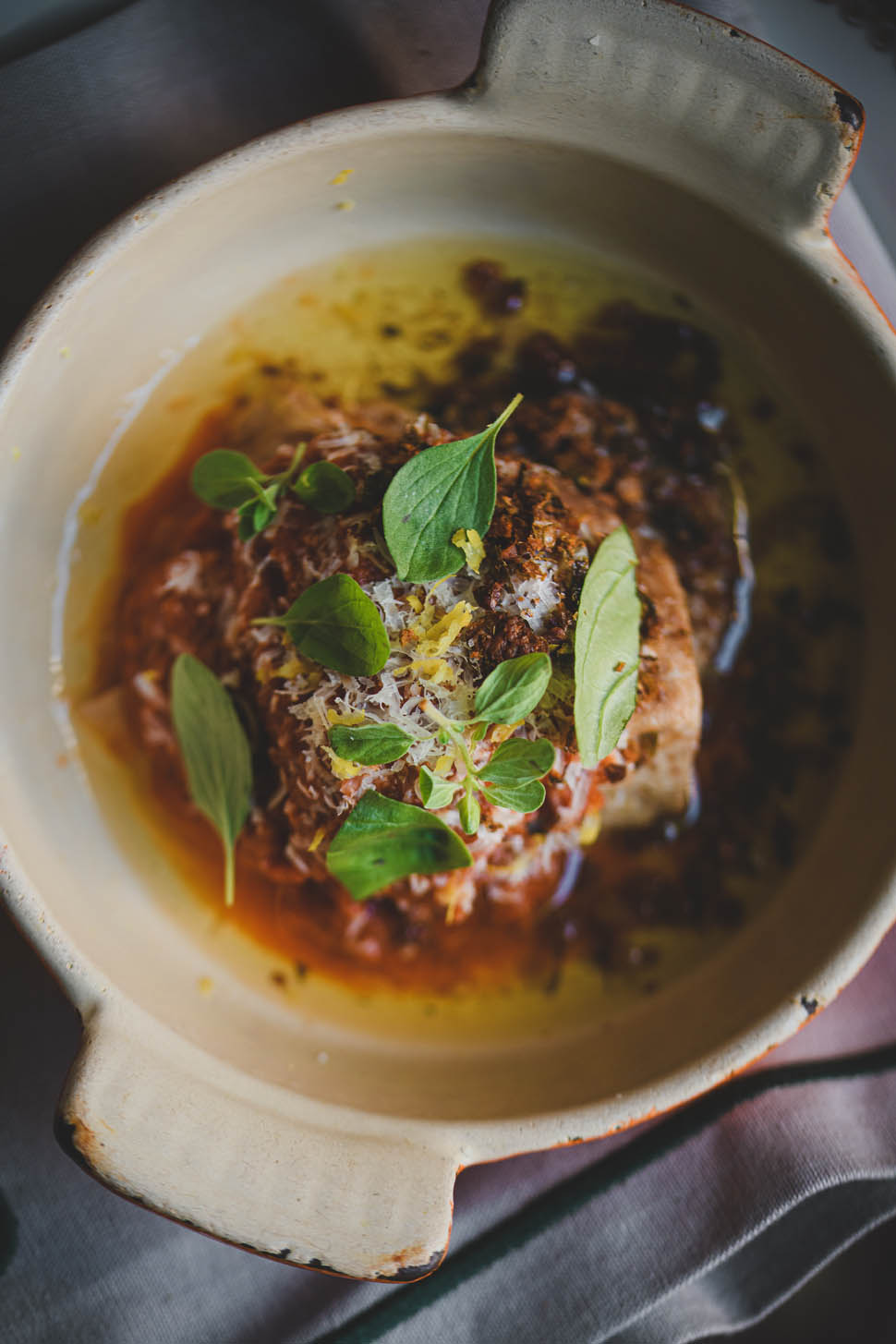
"We answer without hesitation. Sauces, without a doubt. If there is anything to defend in classic cuisine, it is them.
And we say this without being purists: we often don't like ‘clean cuisine’ that is dry and linear. We always feel that something is missing. Because sauce is a serious matter. In our view, sauce does not accompany the dish: it signs it. And then the saucier in the old brigades has always been a fascinating figure, silent but with enormous power over the dish."
Cristina: “It's also one of the things I appreciate most about Eugenio's cuisine: that depth, never shouted, but which makes every dish unique. And within the ‘Roncoroni Classici, Gastronomici’ there is all this freedom.”
Eugenio, how much of your American past appears on the menu?
“For me, American cuisine is full of influences: Asian, Mexican, and many other cultures. Today, however, I celebrate this internationality less and focus more on European cuisine. I still have some references that tie me to my culture, but the strongest influences now remain those of classic European cuisine.”
Which dish do you enjoy the most and like to serve?
“It's hard to answer because we change often and never have just one dish. But we know very well what type of cuisine gives us the most satisfaction. We are now in love with our game, offal, extreme bresaola, and every dessert. We are happy with all the things we don't try to domesticate. We will be happy with all the dishes we make that are a little forgotten.”
And finally, Eugenio, will you be making your famous hamburger again or not?
“Not for the time being.”
Roncoroni | Classici Gastronomici
via De Amicis 4, Milan
entrance on the San Lorenzo side
Monday - Saturday: 6:30 p.m. - midnight
+ 39 02 32575 1