“There is no such thing as traditional cuisine, there is only local cuisine”: the story of a village trattoria that has managed to live in the present by starting with raw ingredients.
*Content with promotional purposes
Photo credits: CineFoood
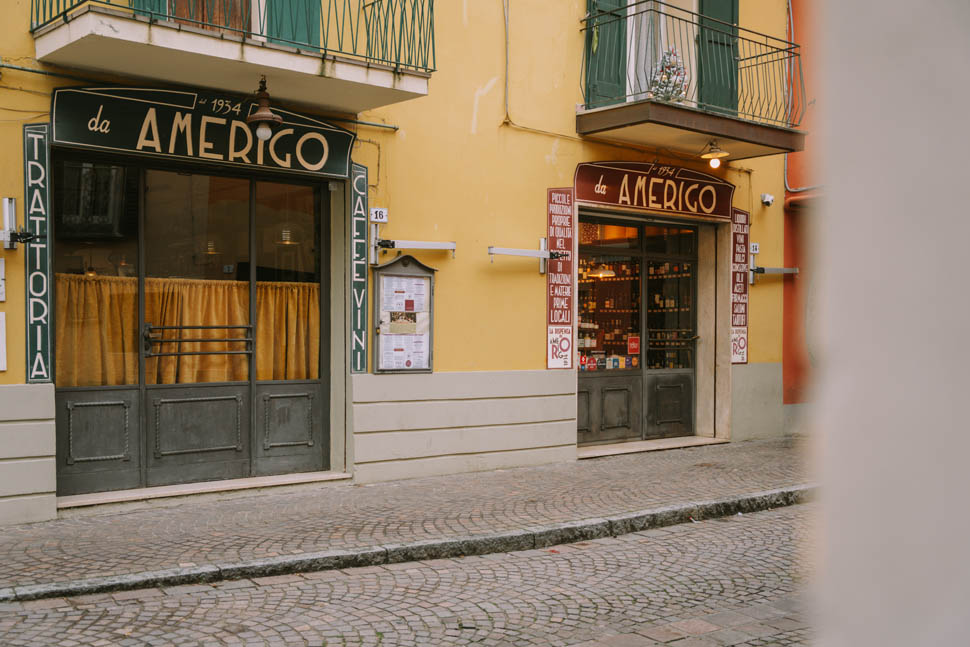
In Savigno, nestled in the hills of the Modena Apennines, Trattoria Amerigo 1934 is certainly, as the date in its name suggests, a historic restaurant, but above all, it is a place that has chosen to remain faithful to a concept of cuisine deeply rooted in the territory, time, and people who inhabit it. Founded in 1934, Amerigo is now run by Alberto Bettini, who took over the family business in the late 1980s, transforming a village bar-trattoria into a trattoria tout court, conscious and radical in its choices.
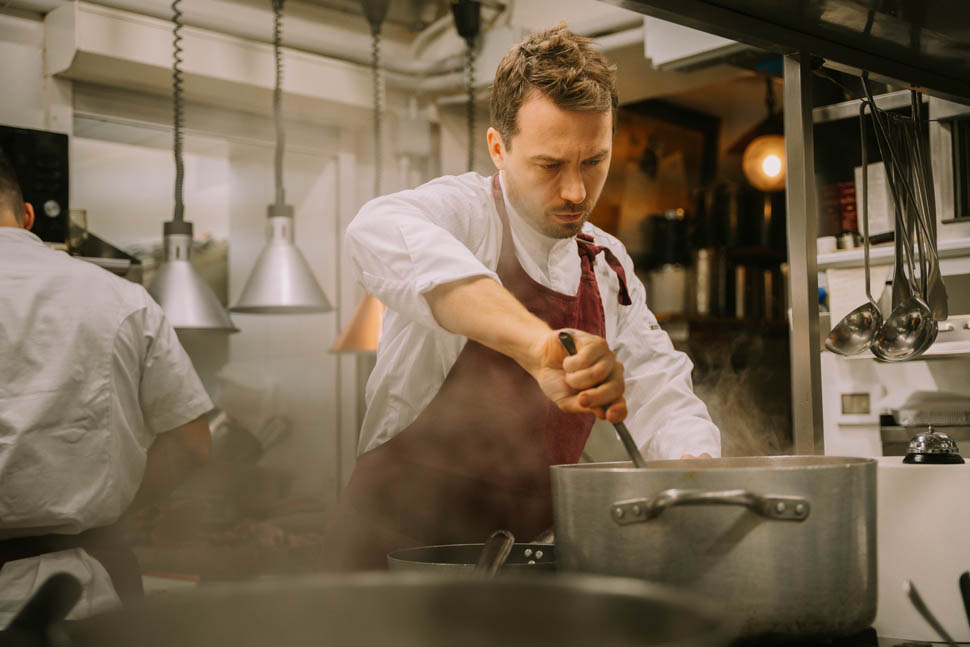
When Bettini took over the restaurant in 1988, his first task was not so much on paper as outside the kitchen: rebuilding a local agricultural supply chain that had gradually become distorted over the years. The 1960s and 1970s will be remembered as the years of accelerated farming, vegetables that looked good but didn't taste good, and a countryside that had lost its depth and flavor. This gave rise to the Amerigo project: not a nostalgic endeavor, but a cuisine that views raw ingredients as the story of a place.
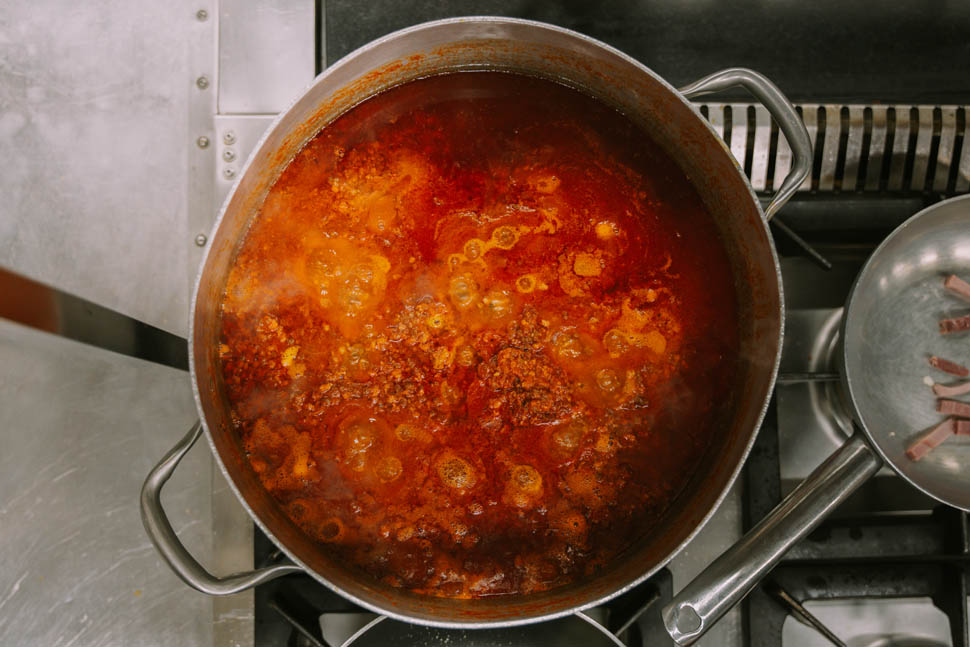
Here, the word “tradition” is dismantled and then rebuilt: there is no such thing as an immutable tradition, but rather a local cuisine that changes with each generation. The trattoria thus becomes a privileged observatory of Bolognese gastronomic culture, where classic dishes coexist with new layers, always starting with local and recognizable ingredients. In this journey, Parmigiano Reggiano takes on a central role, not as an icon or, worse, as a stereotype, but as an everyday, structural ingredient, capable of expressing itself in its differences in production, milk, and the hand of the cheesemaker.
The dining rooms, the menu, and cuisine that expresses the essence of the ingredients
Entering Amerigo also means physically walking through its history. The four dining rooms of the trattoria are not simply service areas, but rooms that tell the story of the town and its times. There is the room that once housed the only television in Savigno, a gathering place when television was in its infancy and watching it was a shared event. There is the room decorated by Gino Pellegrino, an artist who also worked in Hollywood, who left a mark of his art here, and then other spaces, different in atmosphere and size, chosen by regular guests who now have their own room.
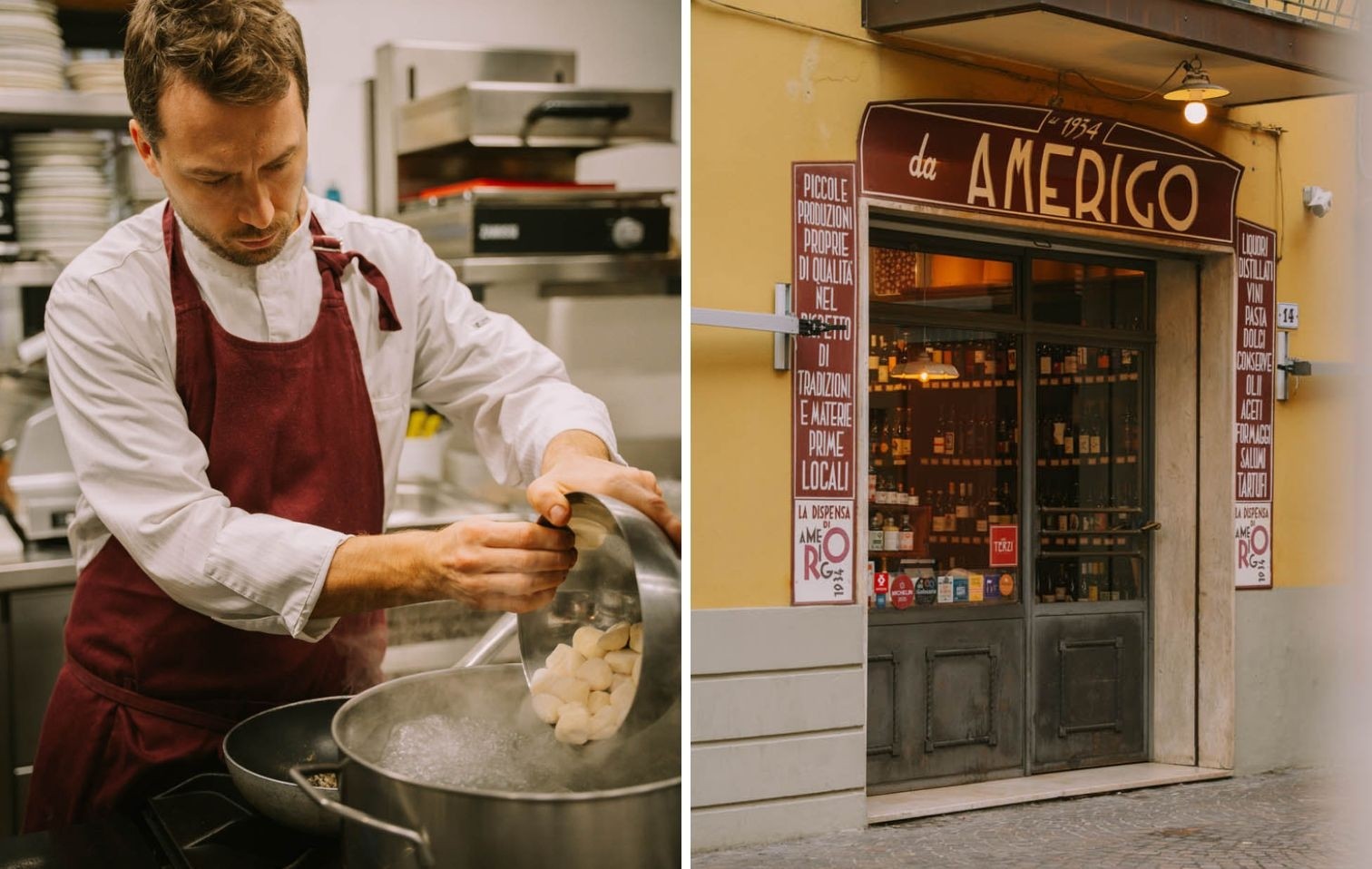
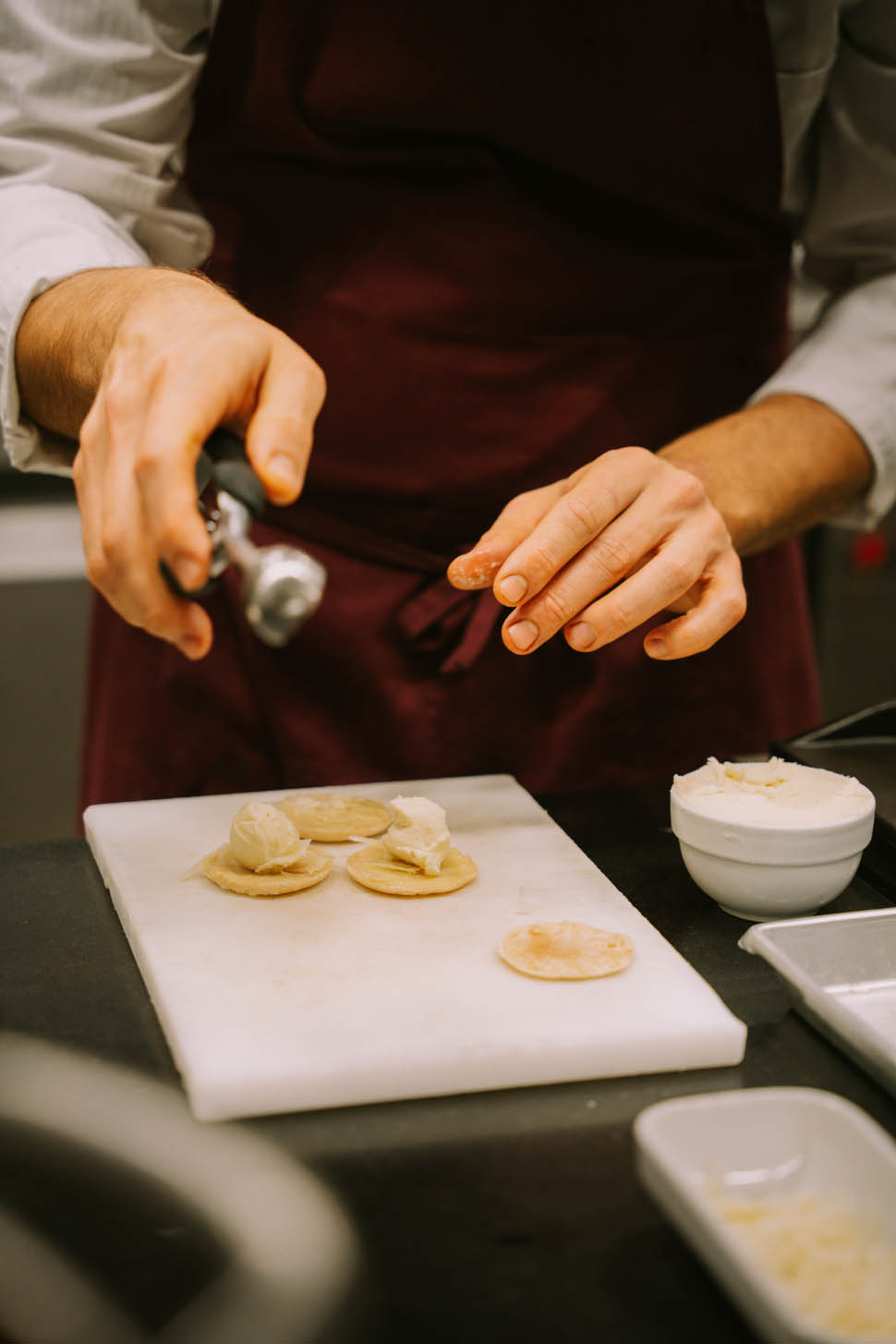
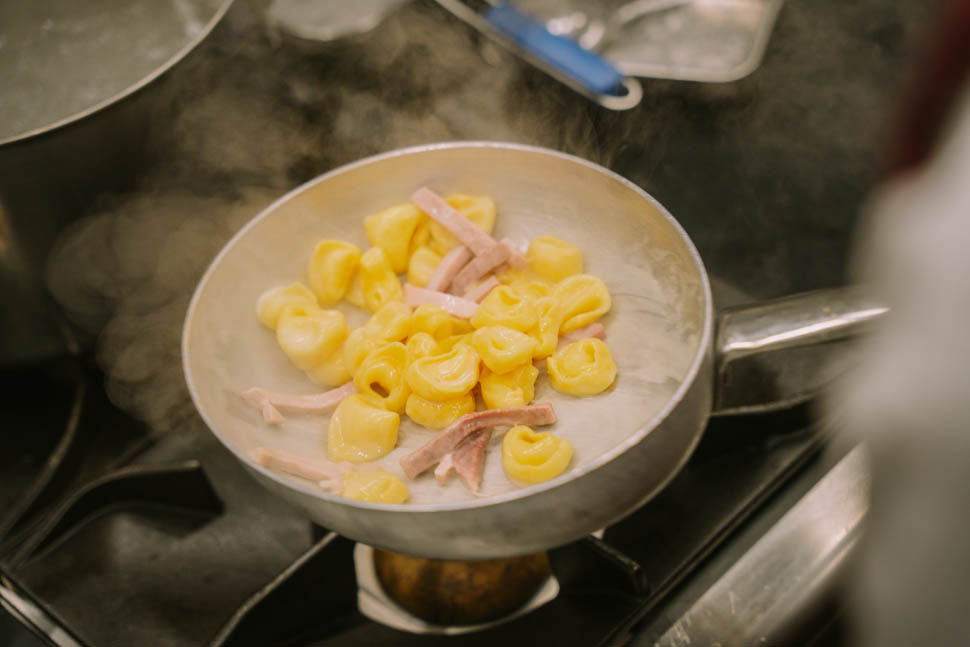
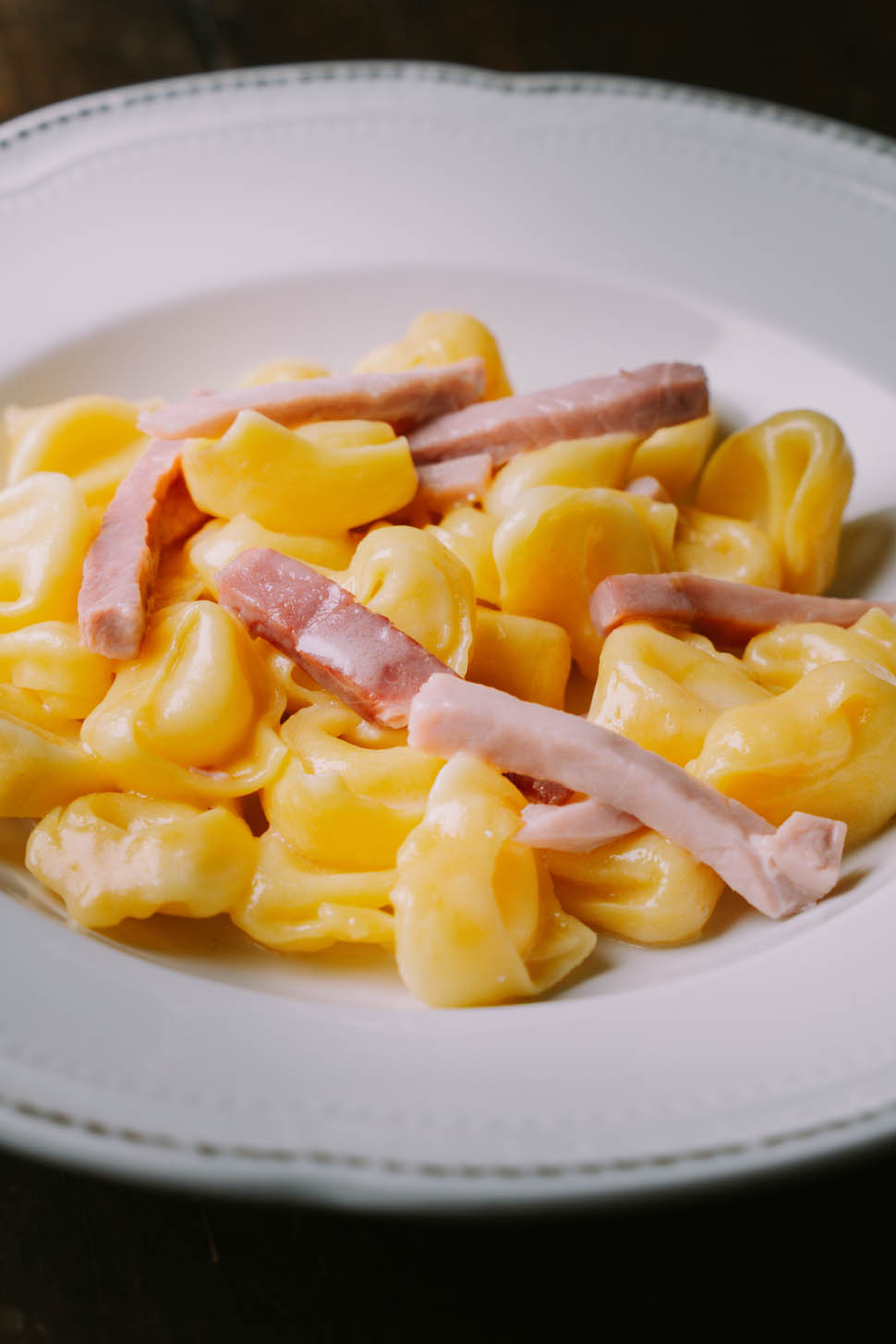
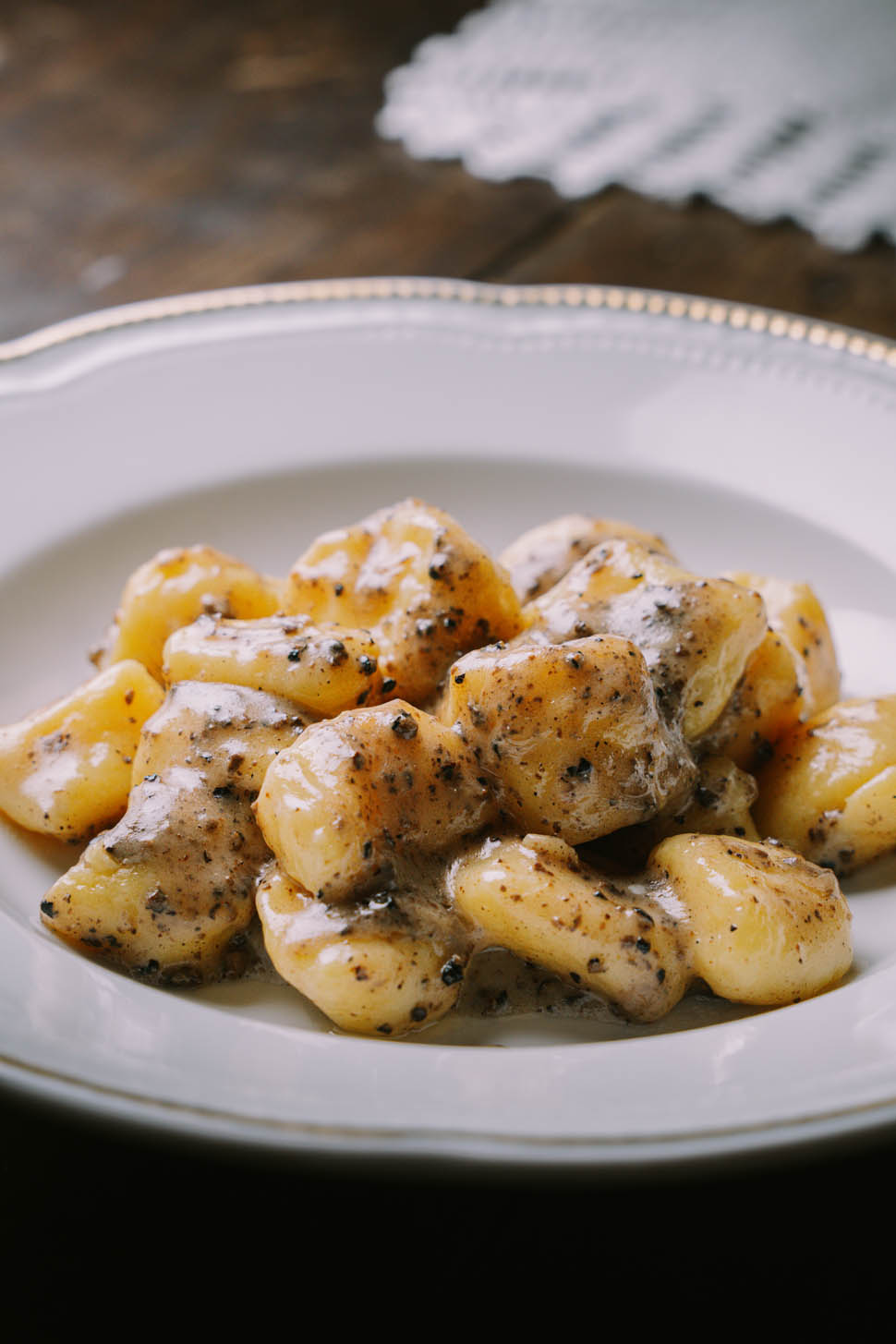
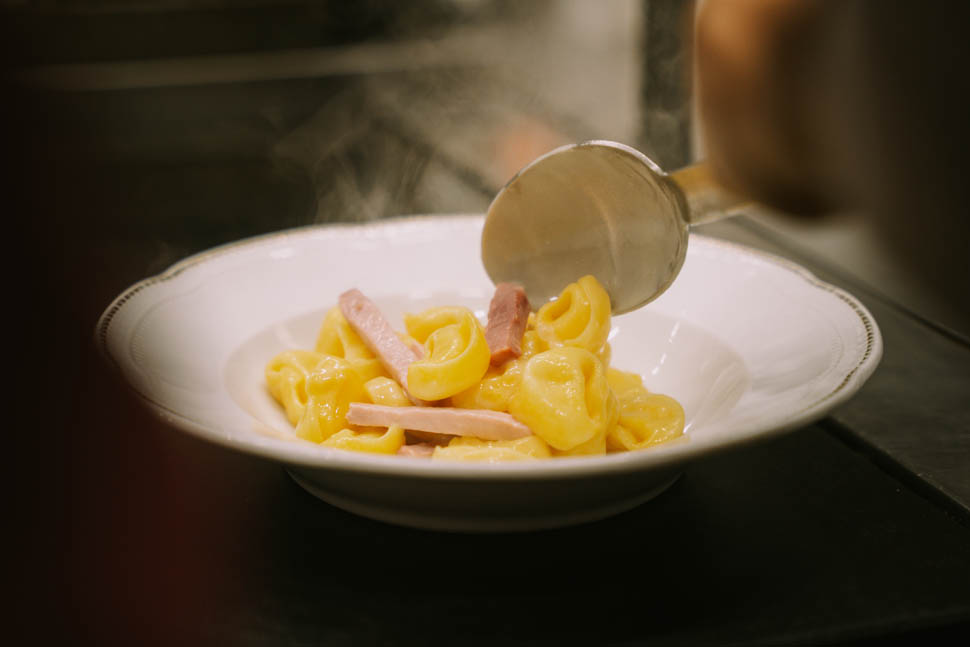
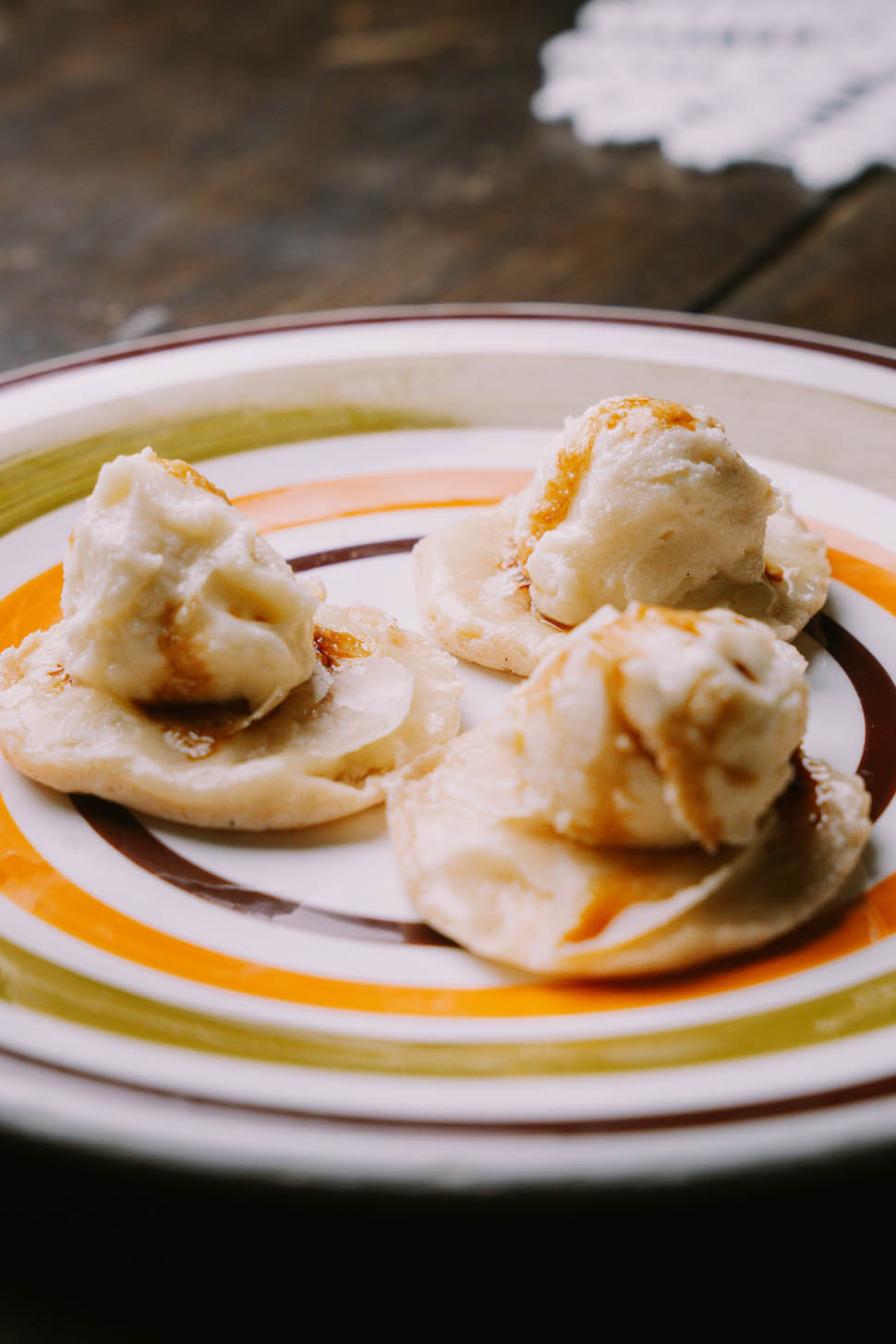
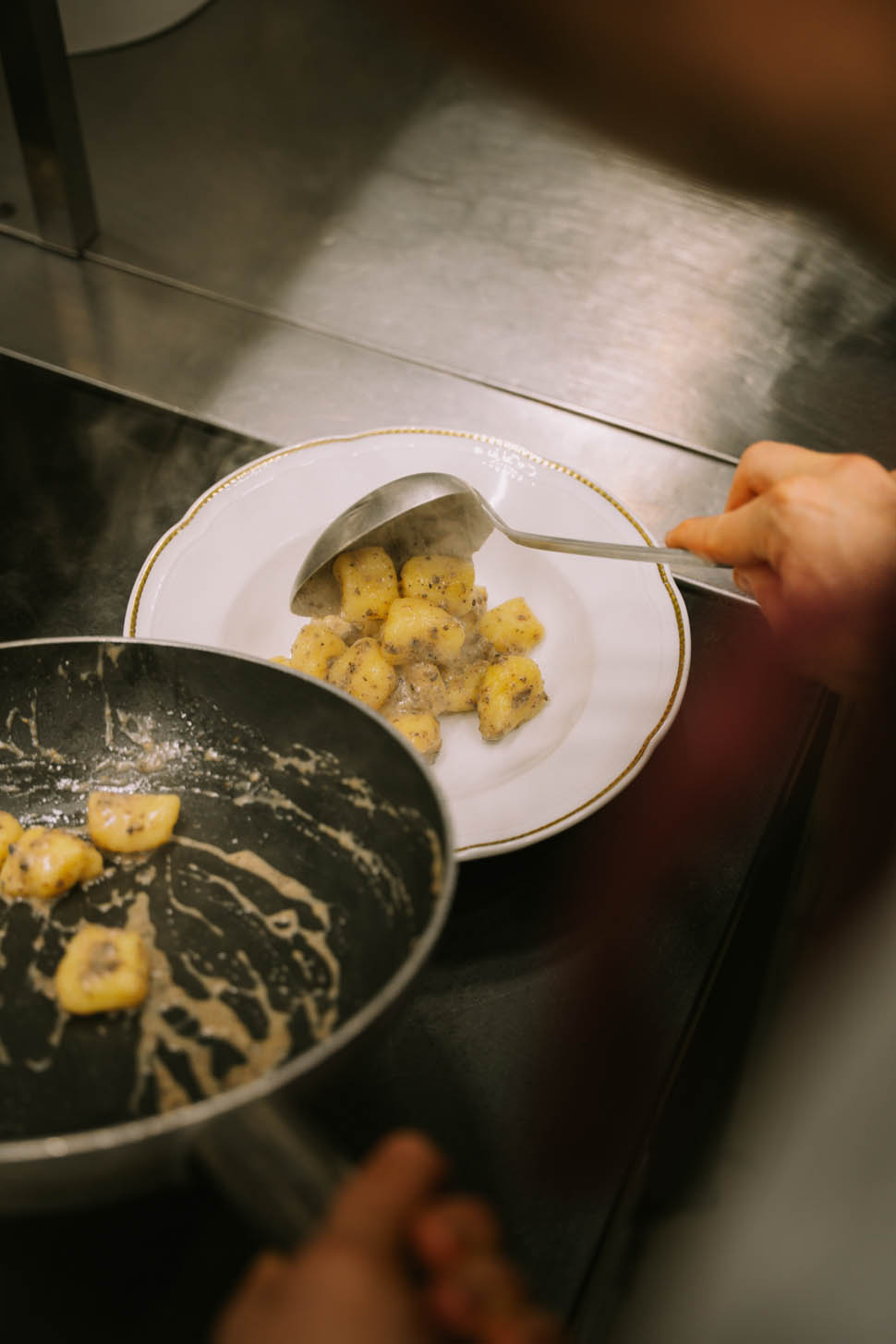
The menu clearly reflects Alberto's vision of the region, with ingredients selected and refined over decades of work and travel, “which open the mind and ennoble the palate,” he tells us. The cuisine is the result of a patient search for suppliers, relationships built over time, and a deep understanding of the ingredients used in preparation. This is how dishes such as tigelle with Parmigiano Reggiano ice cream and aged traditional balsamic vinegar, tortelli stuffed with Parmigiano Reggiano and wood-fired Mora ham, potato gnocchi with scorzone truffles, and the cheese platter, which includes Parmigiano Reggiano as its central and defining element, take shape.
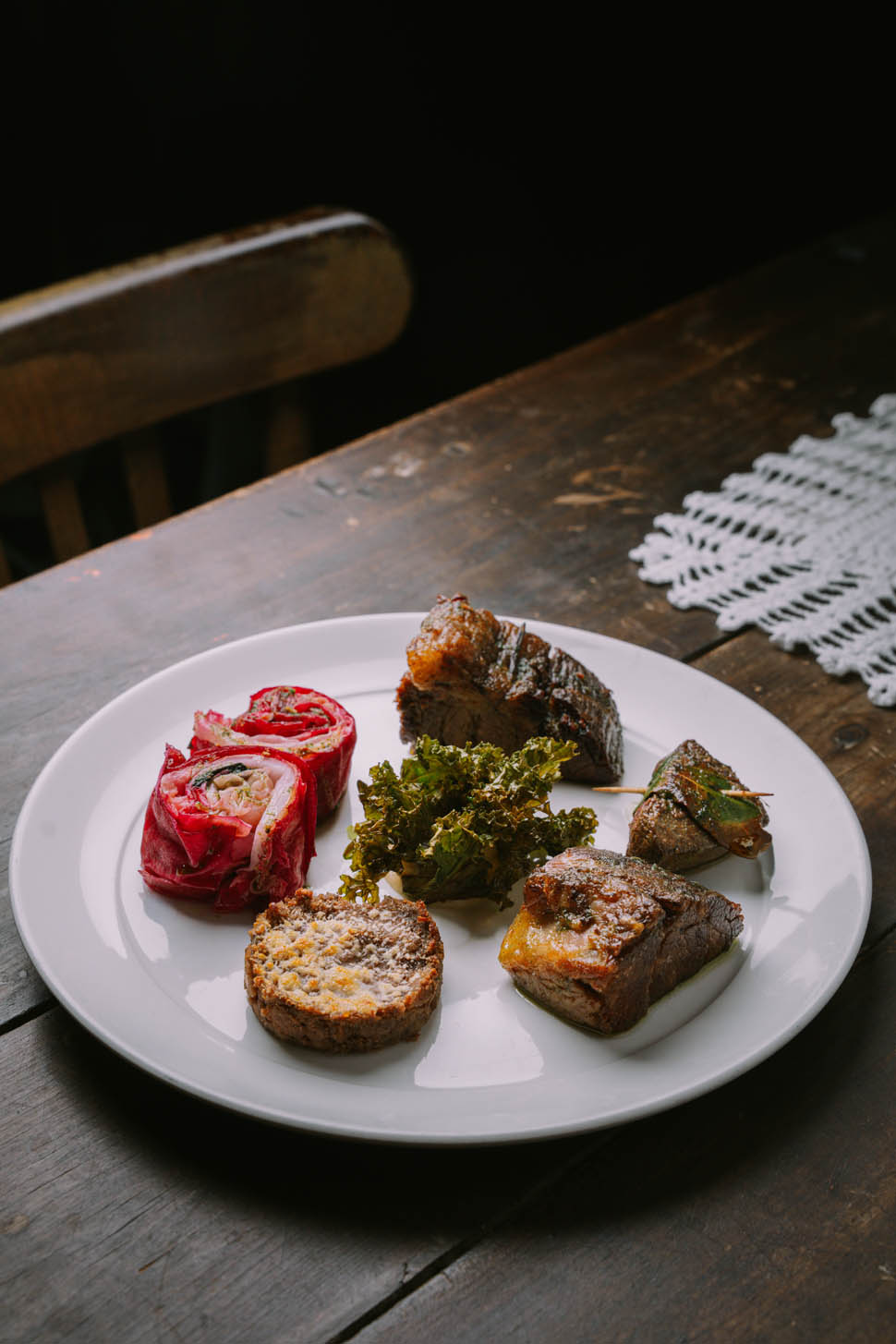
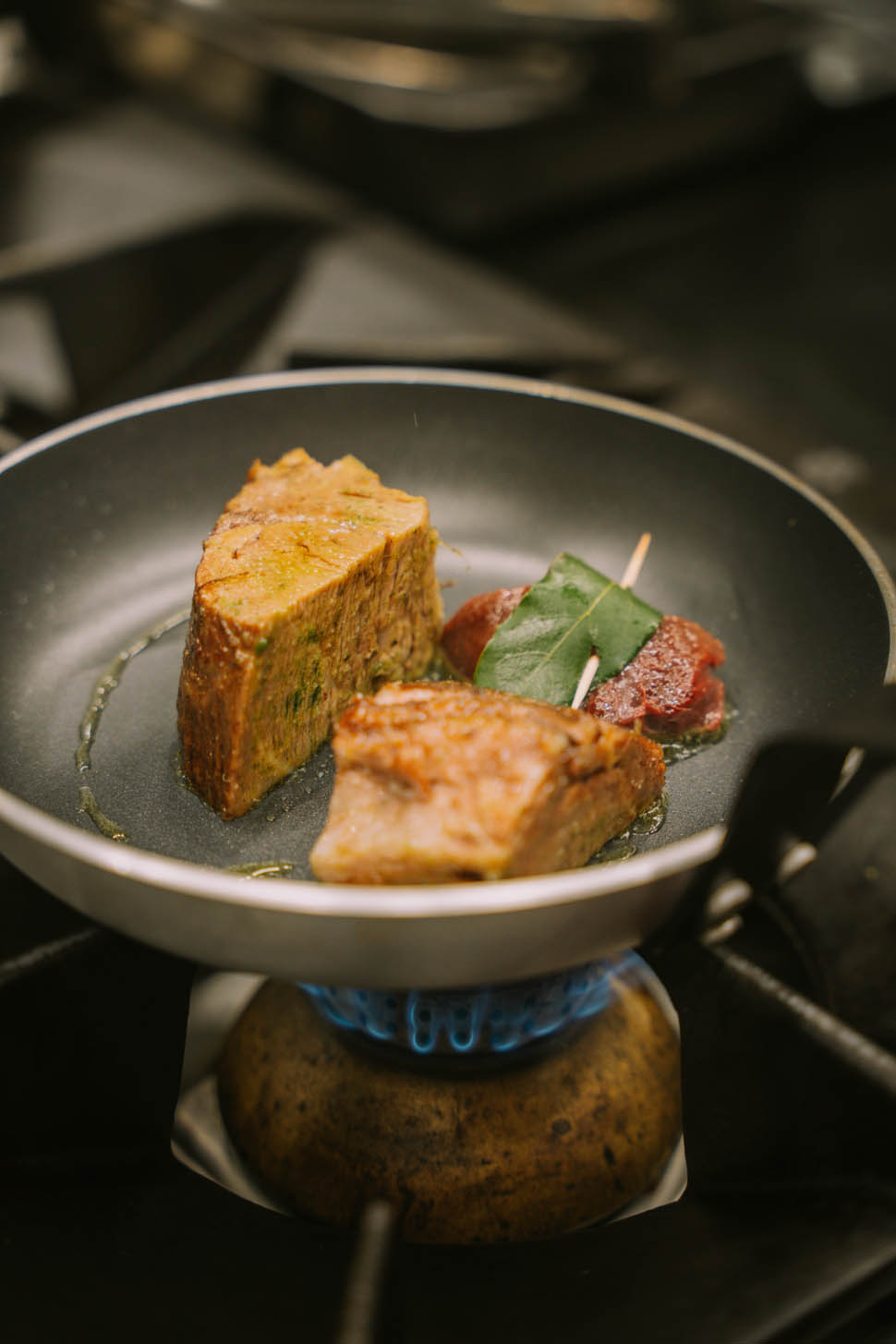
Alongside the starters, there are dishes that showcase a rich and flavorful cuisine, such as rabbit with traditional Modena balsamic vinegar with mashed potatoes and rustic salad, or roast wild Mora pork capocollo, accompanied by cabbage mille-feuille and local apple mustard purée. None of these dishes strive to be modern or nostalgic, but simply right, because they are made from ingredients that are known, respected, and valued.
Amerigo's voice: Alberto Bettini's story
Amerigo is a trattoria that tells the story of yesterday and today. Can we introduce it that way?
Yes, my parents closed it in 1987 and I took it over in 1988, after a few months of renovating the premises. Before, it was a bar and trattoria, then it became just a trattoria. I got rid of the bar because I wasn't interested in it: with a village bar, you work, but it wasn't what I wanted to do. We started again as a simple trattoria and then, over the years, I worked on rebuilding a network of local suppliers that my parents had partly lost. There were many farmers around, but many of them were now working industrially: rabbits and chickens raised with unsuitable feed, vegetables grown with chemicals. They were trying to do things quickly, producing large animals and vegetables that looked good rather than tasting good. I realized that there was little of interest left in the countryside compared to what had been destroyed in the 1960s, 1970s, and 1980s. So we started from there.
So your cuisine has become one based primarily on local ingredients?
Yes, increasingly so over the years. Today it's much easier because there are more conscious producers, but that has been our real work. We offer classic dishes as well as newer ones, always created using local ingredients, but also with combinations that perhaps weren't considered before.
You often say that traditional cuisine doesn't exist...
For me, “traditional cuisine” means nothing. The dishes my grandmother made were different from those of thousands of other grandmothers. There is no such thing as traditional cuisine, there is local cuisine. Local cuisine changes with each generation. We make the classic local cuisine of our generation, in a place that provides us with the ingredients we need to do what we want to do.
People often talk about the supply chain, but what does that really mean?
These things should be seen rather than described. Saying “I ate this ham, I ate that” means nothing. Words are just words. That's why I'm not interested in making grand speeches: either you see the supply chain or it doesn't exist.
So you don't like talking about the dishes you serve?
I hate cookbooks. I can't stand them. I can't stand people asking me for recipes. I give them all away, but I always say, “Look, they're useless.” The ingredients are different, the technique is different, the place is different, the conditions change from year to year. Cooking classes, pasta-making classes that everyone wants to take in these places, all those things, often for foreigners, are just clichés. Describing a dish as you bring it to the table is useless. It goes in one ear and out the other. If a question arises after eating it, then you can talk and understand.
And how do customers feel about this approach?
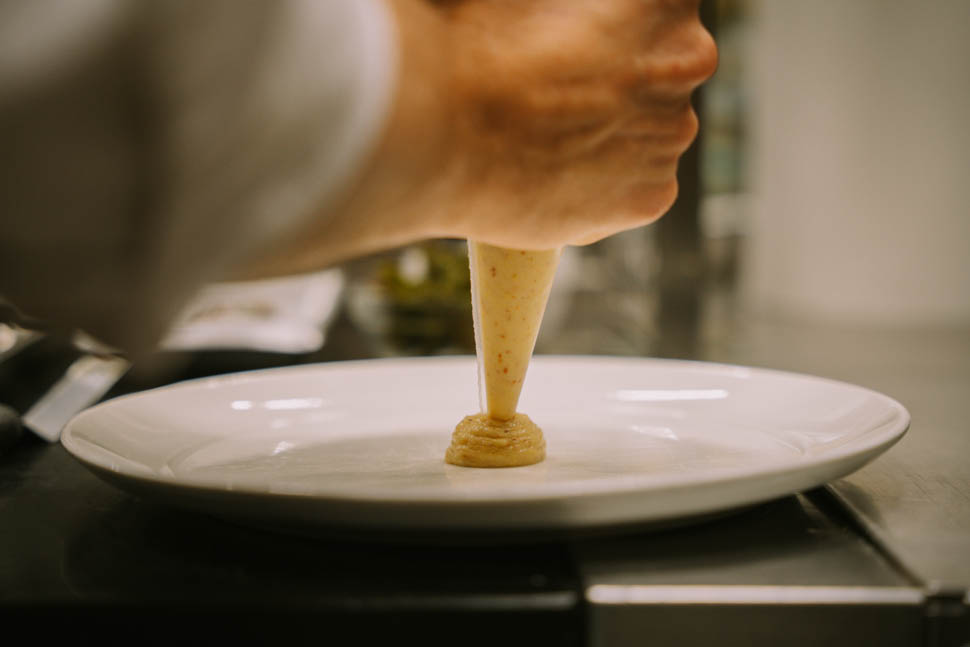
Those who understand it come back. Those who don't understand it are not our ideal customers. Of course, if someone is curious, we explain. But not obsessively. After 91 years, you build up a customer base that understands. We are full every day, all year round, for all services. This means that people are quite happy. Then there are those who come looking for a formal Michelin star, a certain type of service, a certain type of presentation, and they are taken aback, perhaps even disappointed. Our technique is not obvious, it is hidden. We are not interested in the means, we are interested in the end.
Let's talk about Parmigiano Reggiano. It is in 90% of your dishes, but it is not all the same. Can you tell us about it?
Parmigiano Reggiano changes over time, it changes from cheesemaker to cheesemaker. It is very important to value the place, the aging process, and the method. I buy as close to home as possible, as I do with everything, because I believe that this is how you tell the story of an area. I mainly buy Parmigiano Reggiano from Bianca Modenese.
Why this choice?
First and foremost, for the zero kilometer factor. I want my suppliers to be nearby. Then, of course, there is the quality of the milk and the skill of the cheesemaker. Parmigiano Reggiano is present in three-quarters of our dishes, consciously or unconsciously.
Do the ages of the cheese vary in your dishes?
Yes, we start with tosone (editor's note: fresh cheese made from Parmigiano Reggiano when it is still soft, just after being molded), which is very young, and we go up to much longer ages. Sometimes we can go up to five years to finish a dish, but we usually stop at 32–36 months.
Beyond that, for us it becomes more of a tasting experience in its pure form.
How do you obtain different aromas and flavors in Parmigiano Reggiano if the production protocol is the same?
In my opinion, there are two main factors. The first is the type of farming and the breed, which depend on the wishes of the dairy and the area from which it obtains its milk. The second is the cheesemaker. The cheesemaker is like a chef: the hand changes everything. I have seen extraordinary dairies deteriorate with a change of cheesemaker. The problem is that you evaluate the cheesemaker after two years; you don't immediately notice his signature. It is a very hard job, very unstable. That's where the game is played.
What does the cheesemaker really do?
He chooses the timing. Half a minute more or less can make all the difference. If the milk is of the highest quality, the level always rises. But with the same milk, it is the cheesemaker's skill that makes the difference. Then there are many other factors: mountains, hills, plains. But skill is decisive.
Does it require experience or intelligence?
It requires a great deal of intelligence. Emotional intelligence, but also intellectual intelligence. A cheesemaker must not only repeat the gesture, which can also work, but understand why they are doing what they are doing. It is hard, tiring work, and not everyone wants to do it. This has greatly discouraged people from pursuing this path.
Amerigo today: a 91-year-old contemporary trattoria
Trattoria Amerigo 1934 continues to be what it has always been: a place where the cuisine is rooted in the territory and never forgets to evolve. Here, the technique is hidden, the story is told through taste, and the raw ingredients speak louder than words. Parmigiano Reggiano, aged for a minimum of 12 months or longer, features throughout the menu, as does the local cuisine of the “Bettini generation,” which is constantly renewing itself without losing its roots.
The Amerigo experience is deeply consistent. And perhaps this is the secret of its freshness after ninety years.
Contacts & info
Amerigo 1934
Via Marconi, 14-16 – Valsamoggia loc. Savigno (BO)
Phone 051 6708326
Website: https://amerigo1934.com/