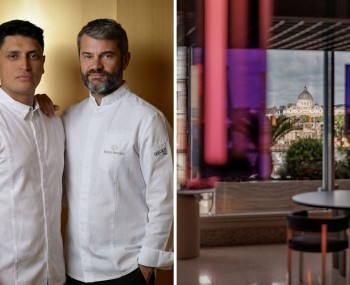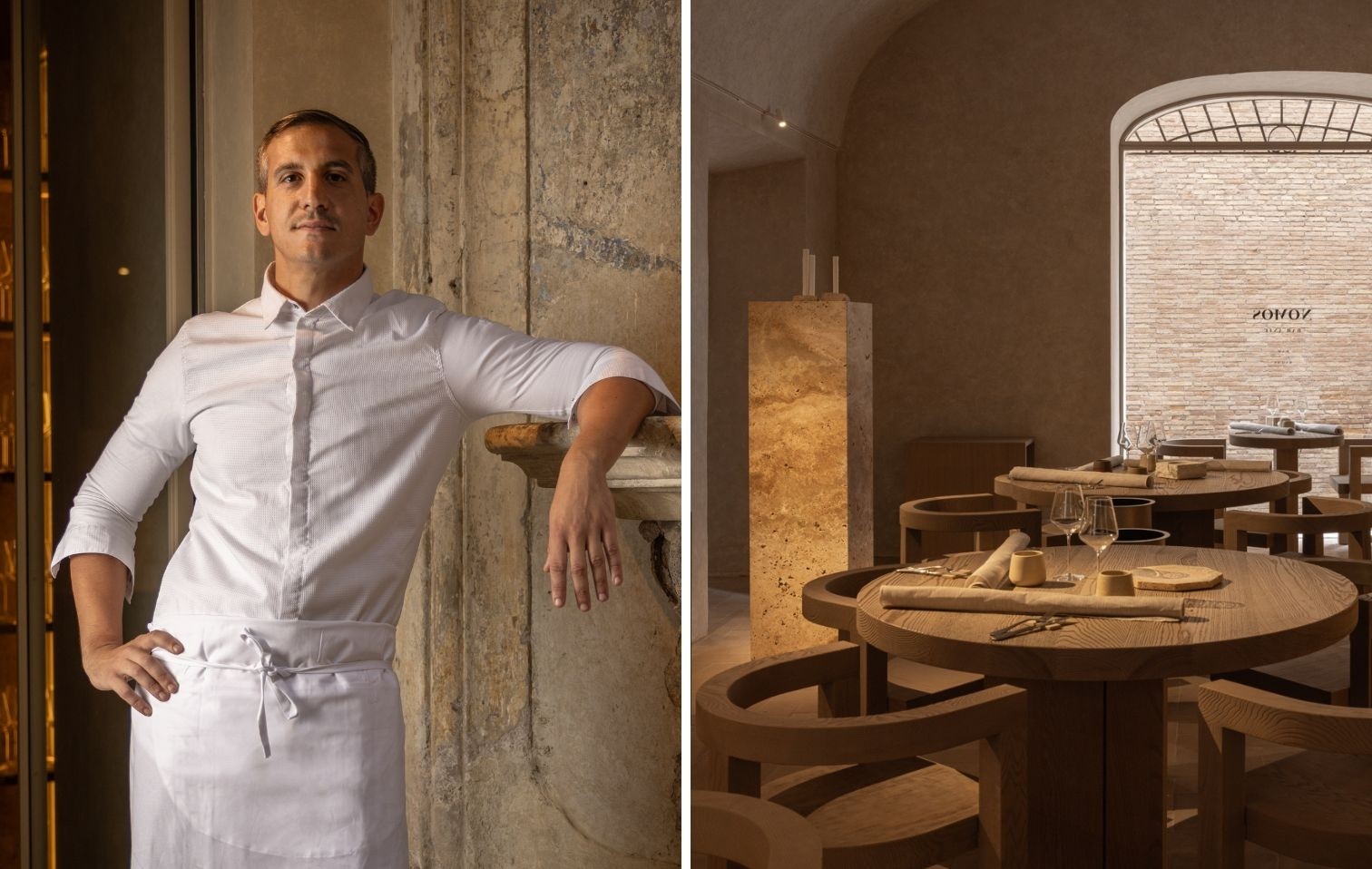
Don't expect predictable flavors: the former sous chef at Pagliaccio brings unexpected acidity—often sharp—or spicy twists to the forefront of well-presented vegetables. But the real surprise is being able to enjoy yourself from start to finish in such a rarefied atmosphere, inside the ancient Franciscan monastery that now houses Nomos.
Photos by Dario Borruto
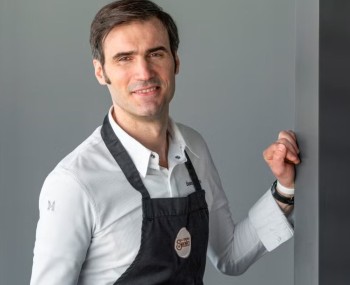
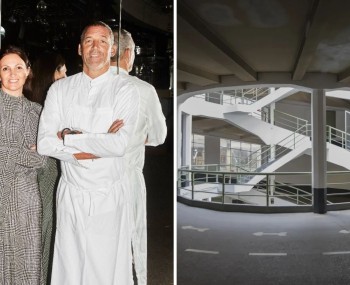
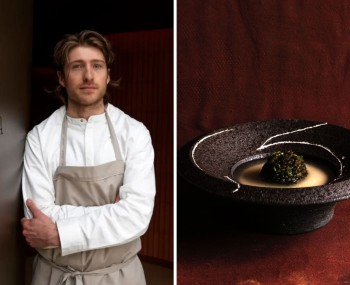
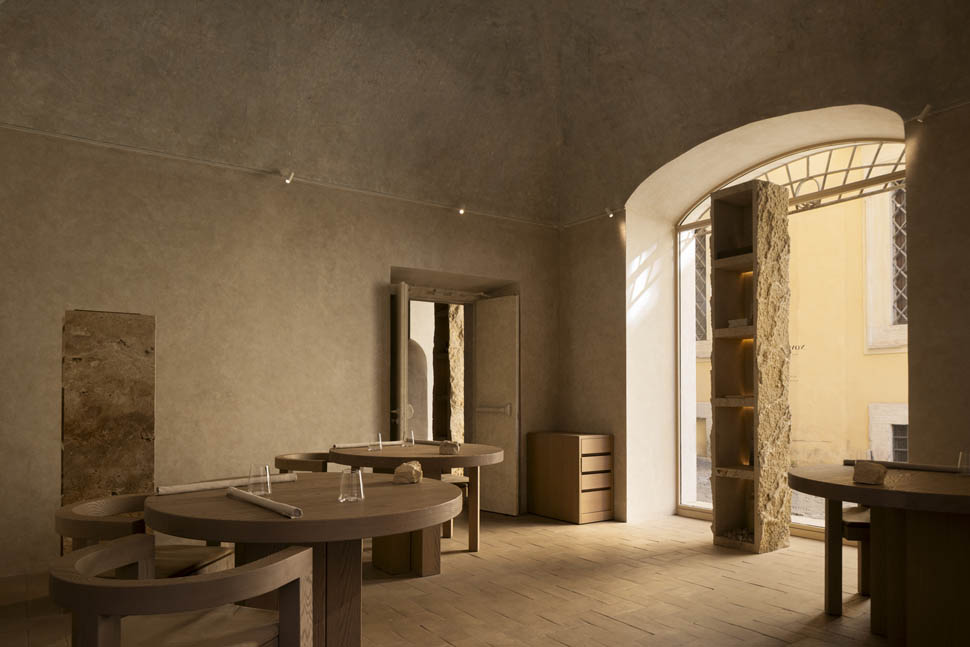
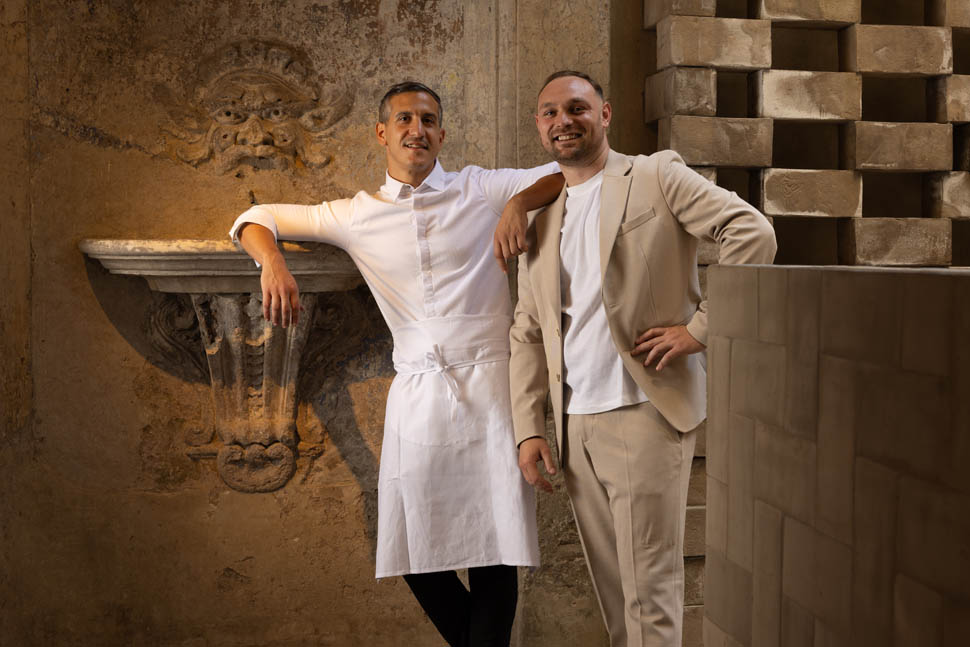
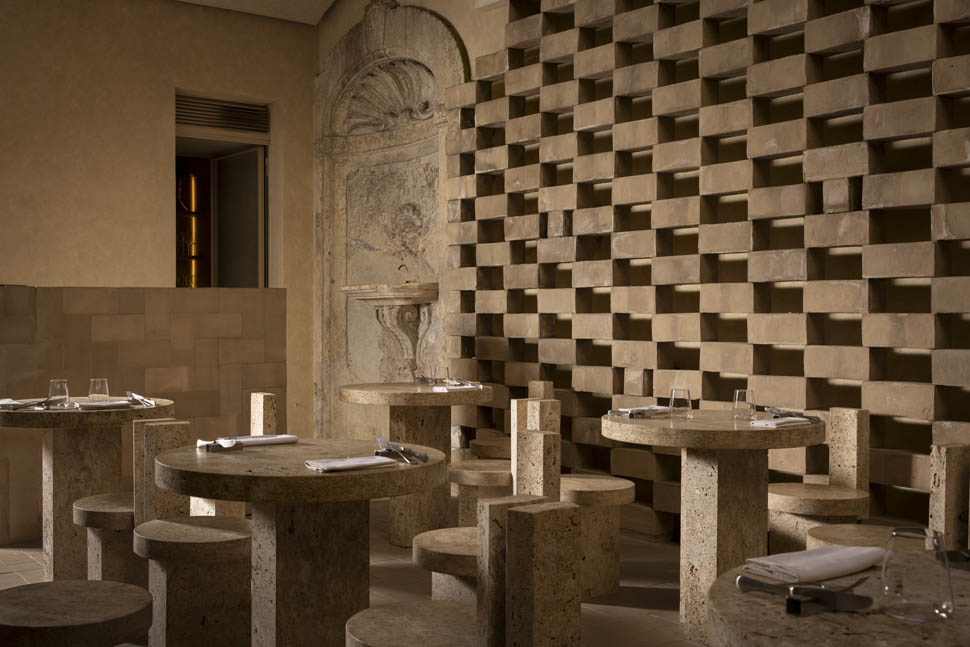
No, you won't find anything like this in Rome. At least, not at the time of writing, remembering this dinner as one of the most unusual of 2025. The team parading in monk's robes, the sharp monochrome on the walls and the saturation of the dishes resting on the bare stone: at the Nomos Hotel, you eat in a former Franciscan convent which, instead of projecting ancestral fragments onto the table, blends asceticism and enjoyment into a single block; everything is a little solemn, nothing retro. Even if you want to gloss over the hotel's design—and the minimalist profiles sketched by artist Henri Timi—the real news is that Giulio Zoli, former sous chef to Anthony Genovese for six years running and now head of the entire restaurant project, has recently moved to the in-house gourmet restaurant (Nomos Ante, ed.).
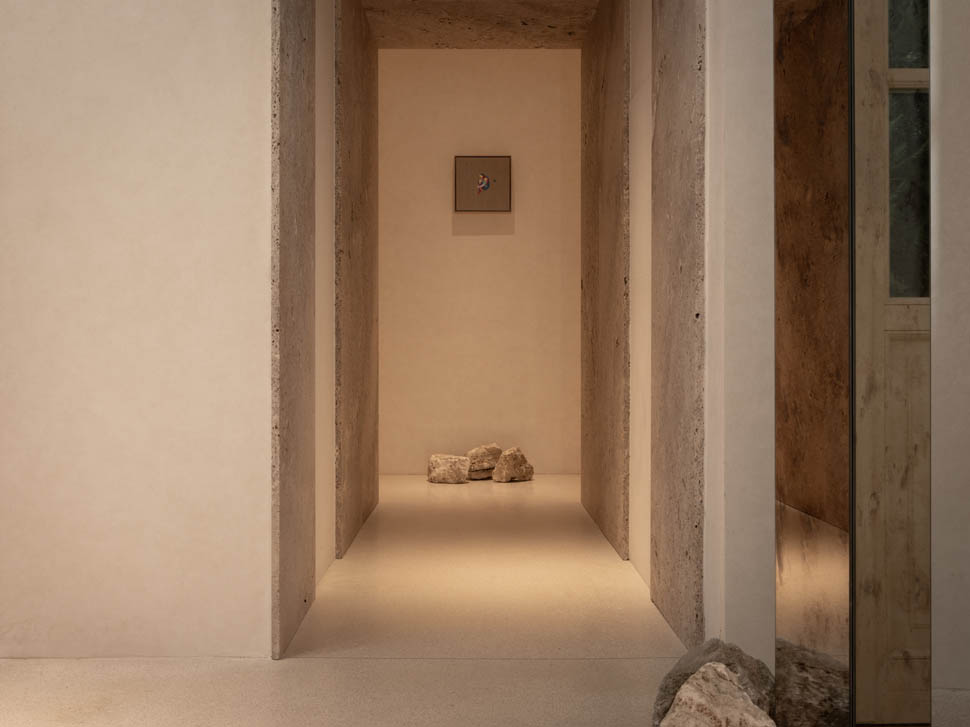

A standard-bearer born in 1990, backed by a double chessboard—the visual one of the adjacent Nomos Bar, which complements the evening performance with a menu spread across various daily meals, and the human one of a practically flawless team just a breath away from its debut. What you will already guess from the name, if you are hungry for etymology, will be a clear premise of balance: Nomos draws from the archives of the cross-border gastronomic database, reinforcing local memory with that of travel. Thus, each recipe lands in France, drinks from Asian sources, and returns to wallow in Capitoline classicism, incorporating the lessons of the great foreign names imprinted on Zoli's CV, from Alléno to Atala. Yet, when eating, one never has the impression of losing one's way among forced pairings: in the first three months of activity, the chef has demonstrated his ability to intertwine Nomos and Nostos, rigorous training and basic belonging.
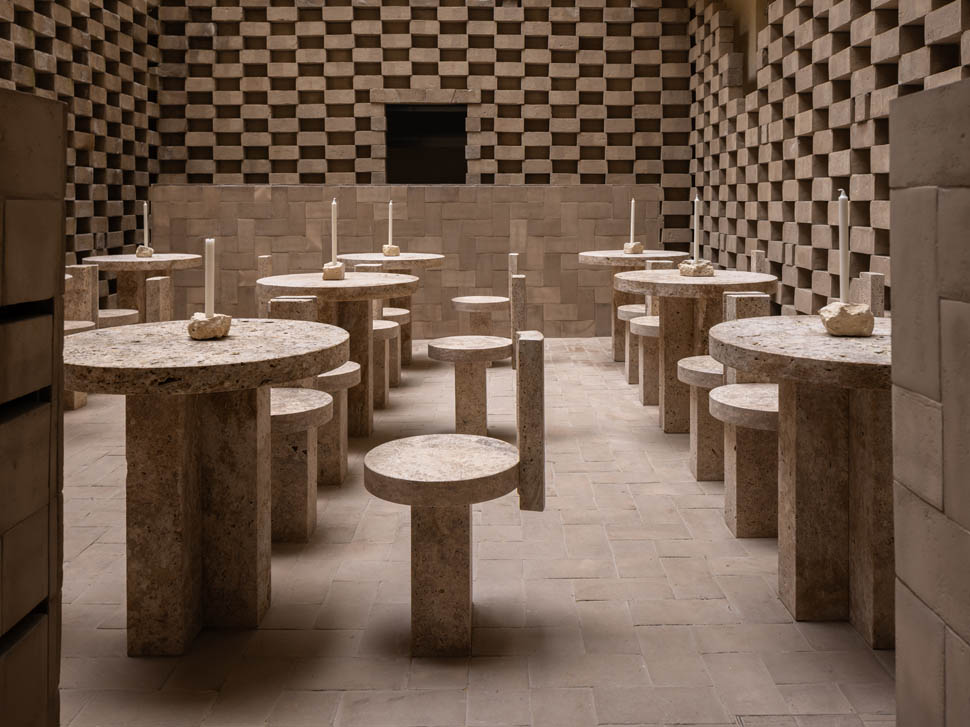

Nomos Ante: the experience
If staying at the Nomos Hotel is like switching off from a constantly hyperactive city (we are still only ten minutes from Campo de' Fiori), dinner at Nomos Ante goes hand in hand with this, but releases a special energy in the succession of individual courses. This is thanks to restaurant manager and sommelier Antonio Cannoniero, who is ready to spice up the story with anecdotes that make even the less immediate bites familiar.

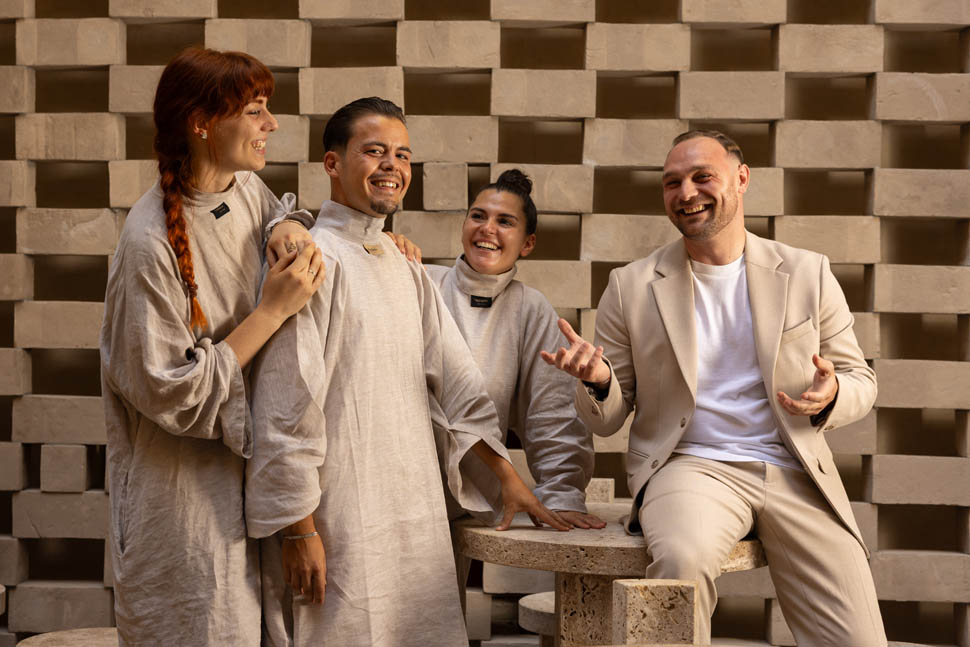
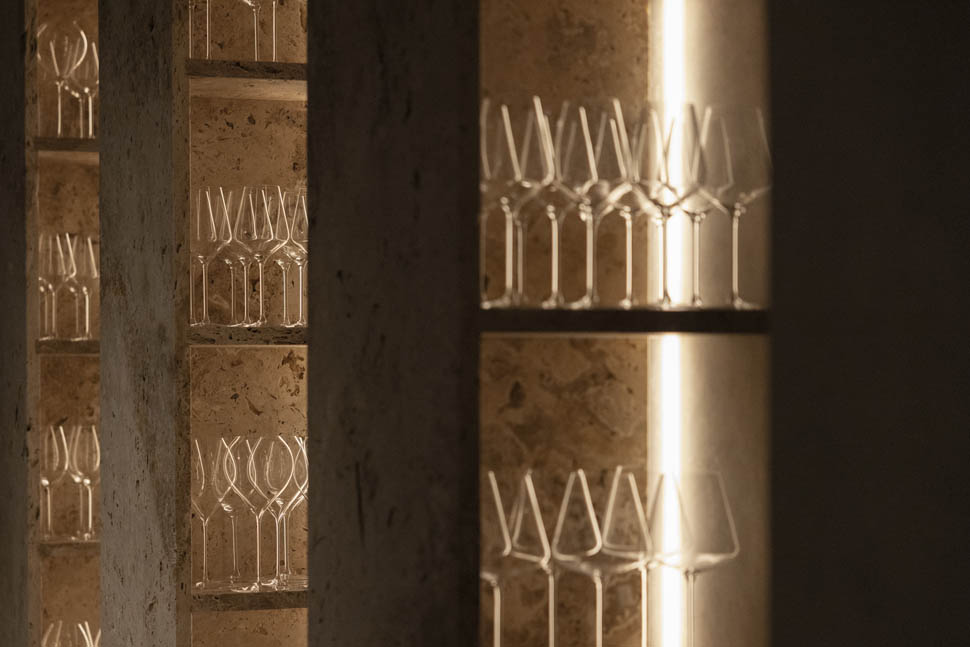
Thus, the “lunar” setting encourages guests to focus on the here and now, gradually appreciating the team's gestures, the moments of suspense designed to mark the various international stages, and the bottles chosen from a constantly evolving wine cellar, which currently boasts 200 labels. On the one hand, 60% of the labels are Italian, read “between the lines” to shed light on the winemaker beyond the brand; on the other hand, 40% of the bottles are from around the world, made intriguing by the deliberate focus on Burgundy.


The pace of service keeps diners on their toes, whizzing silently between the nine wooden tables scattered around the dining room, with a fair number of pit stops to finish preparations in the home stretch. This is also evident in the role of the sauces as “organic sparks” in Zoli's itineraries, as well as the side dishes designed to squeeze every last drop of juice from the ingredients. Otherwise, don't expect a linear journey: at times, an unexpected acidity will emerge—often sharp—or a spicy twist among the folds of the vegetable. And the real surprise is that you can enjoy yourself from the epilogue to the closing credits in such a rarefied atmosphere.

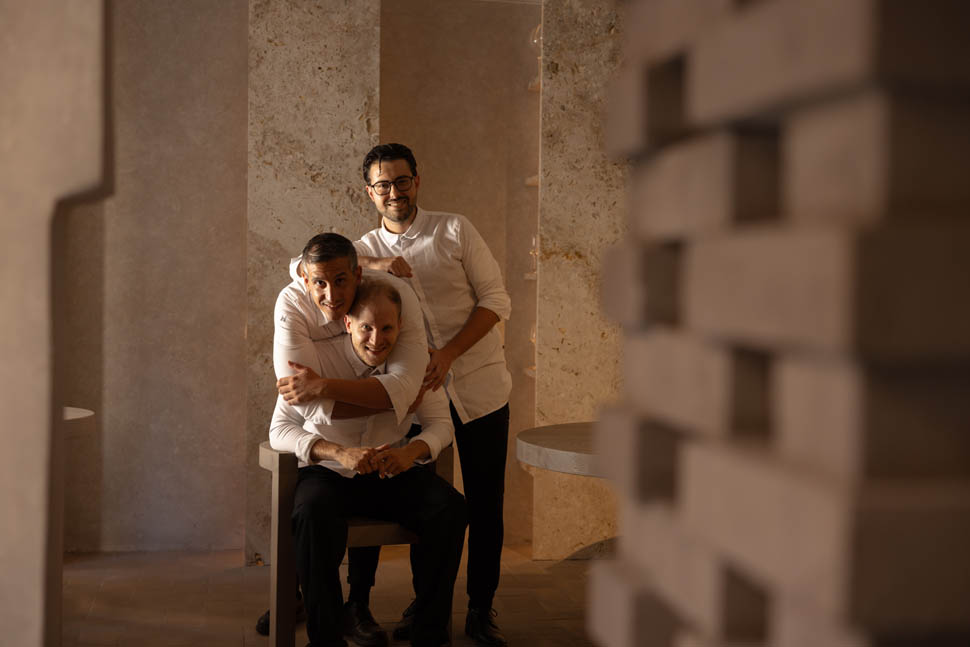
Nomos Ante welcomes you: a trip around the world from the capital to France and on to the East
Among the snacks to break the fast, the star of the show is a Tarte Tatin in which potatoes and daikon replace the usual apples, resulting in a mini savory tart, sprinkled for the occasion with a totally green jus: light but decisive in its double reversal of ideas. This is followed by the Winter Tarte with persimmon and chestnut jelly and a Pumpkin Cube that turns the amuse-bouche hourglass upside down in a matter of seconds: first the sweet and sour sensation, then the lively kick of jalapeño jam, with the heat rising up the taste buds, leaving a clean finish.

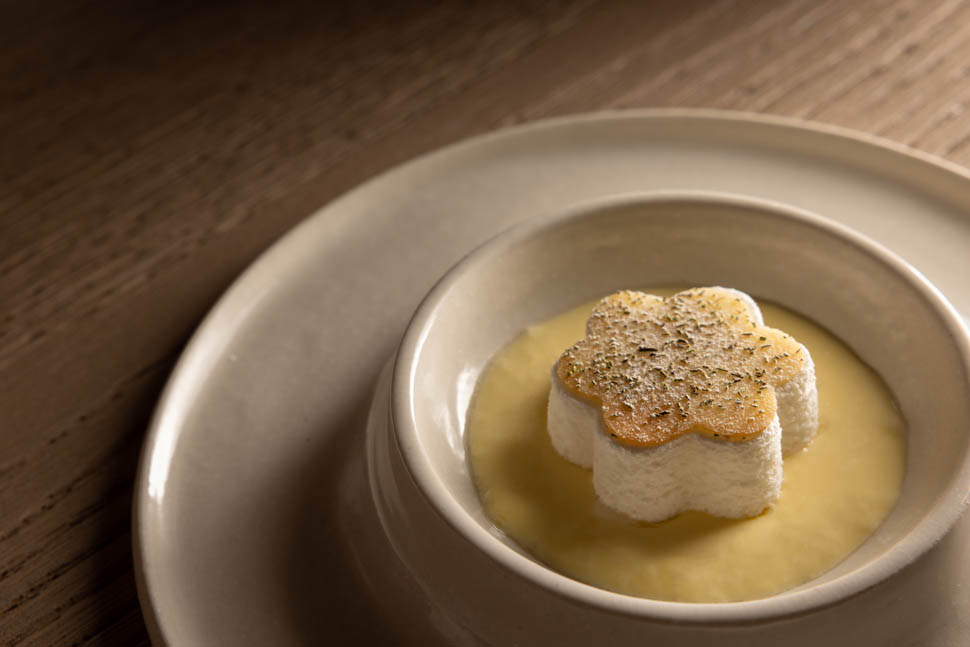
A little thermal game designed to heat up the evening with various offerings from the kitchen, as we continue with Chawanmushi broccoli and arzilla, a Japanese delicacy that warms you up against the cold backdrop of the Rione Regola district. The Romanesco broccoli flan is complemented by arzilla plin and trout eggs: in essence, with the same gesture, you are dipping your spoon into the Japanese steamed pudding and stirring the cult soup of true Roman cuisine. Two is better than one.
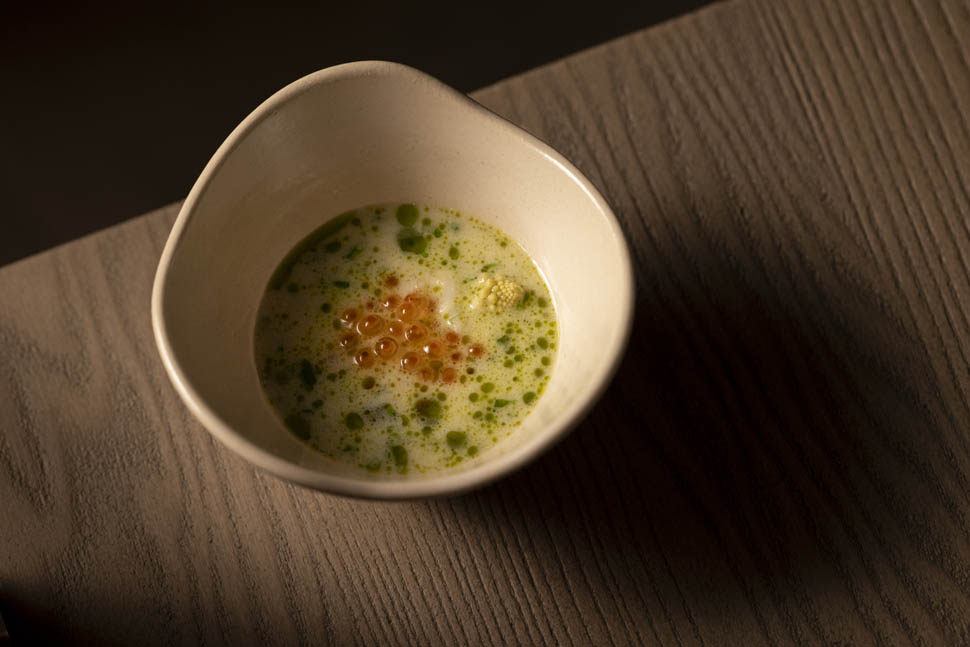
The dishes
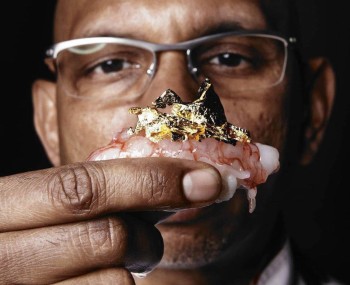
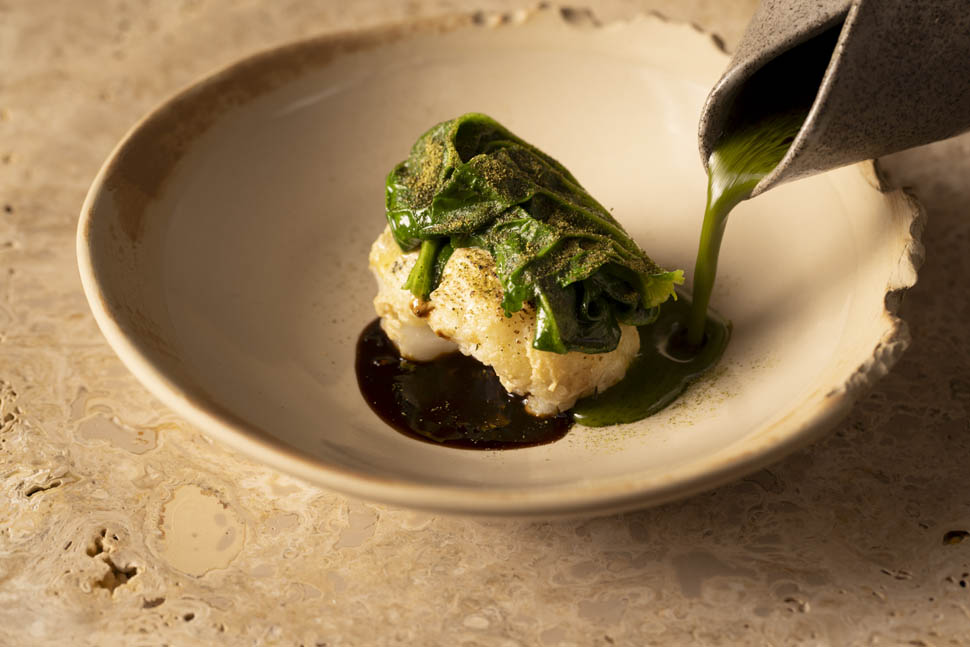
“Versatility” is the keyword for the options lined up by Zoli; it is no coincidence that the menu accompanies the two main tastings—Métron and Télos— to allow guests to choose from a selection of seasonal dishes on the menu. The real highlight comes with the arrival of the scallop, artichokes, and Roman-style emulsion, the first bastion of no waste: the mollusk's beards become the inspiration for a white seafood tripe, while the soubise sauce is infused with guanciale and a slightly bitter artichoke cream is discovered at the bottom. Stoffa da saucier and natali laziali sum up the chef's ability to combine seemingly disparate elements: many glimpses in a single postcard, which flies away with an impalpable sprinkling of matcha tea.

On the leavened front, the loaf from Luca Pezzetta's Microforno adds points, without prejudice to the high-hydration focaccia with a sharp cut of Solina, yellow and red confit datterini tomatoes, ending finally (small spoiler) with the puff pastries of the main courses and the Sicilian brioches from the pastry shop. If you have always been a little wary of plain cauliflower, the chef may change your mind with what we consider to be one of Nomos's signature dishes: cauliflower cooked in a pan and sautéed on yakitori, seasoned with satay, a voluptuous oriental peanut-based sauce. The intensity is heightened by the herbaceous notes of the green mole, the shiso-sautéed spinach, and the cauliflower itself, which is converted into a sauce. Surprisingly, it is a complete and multifaceted dish, from the smokiness of the grill to the umami of the satay.
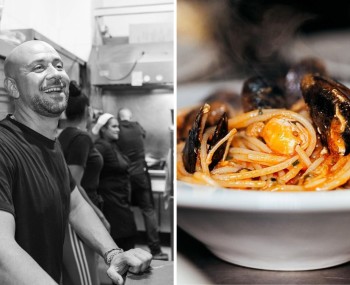
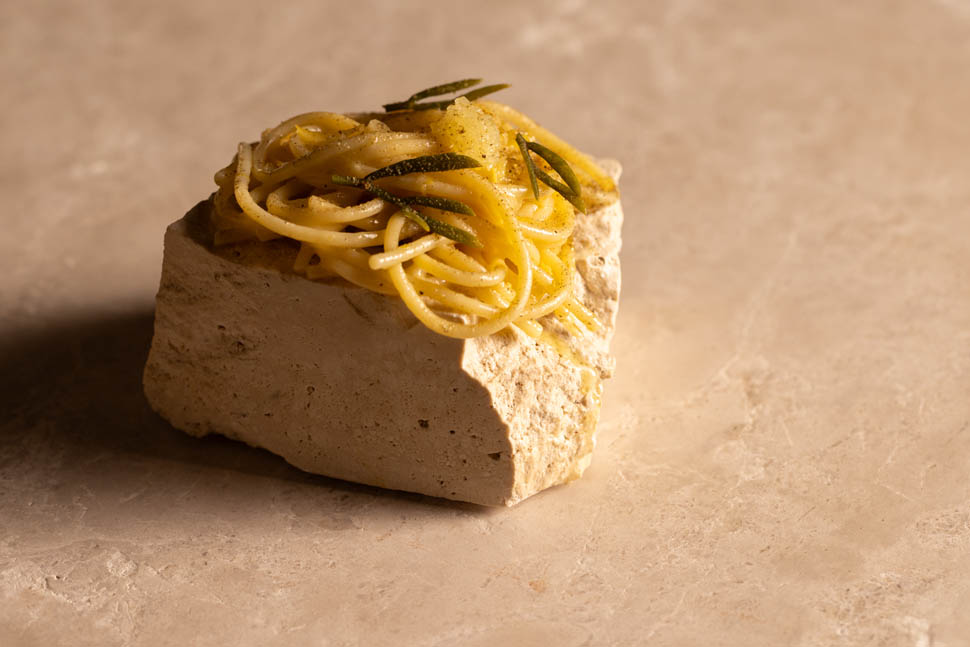
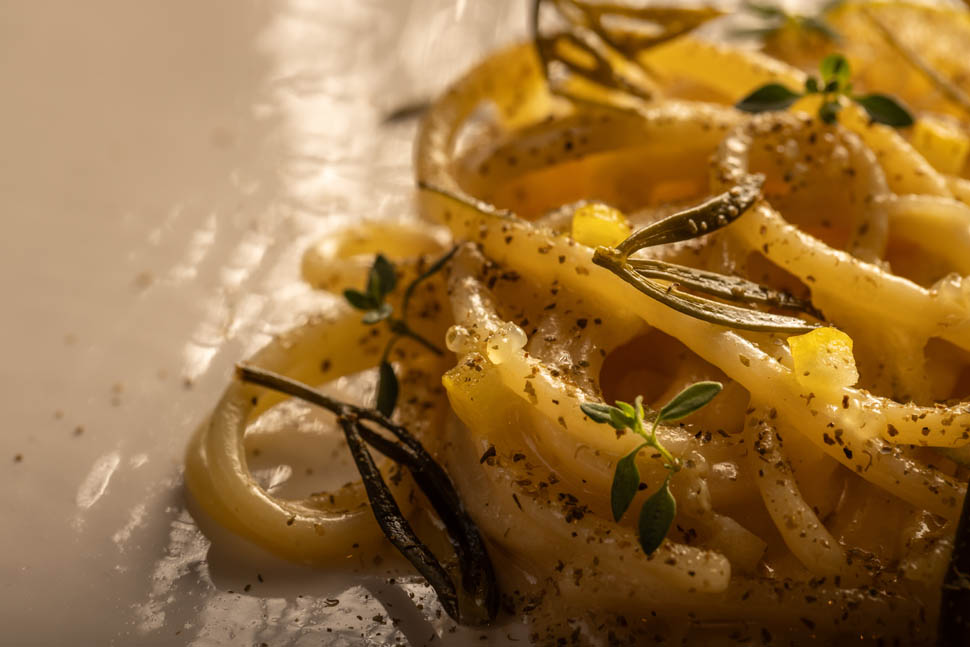
Spaghetto Citrus is a rush of tartness, finished with candied citrus fruits and lemon caviar. The goal? “To break up the roundness of the Monograno Felicetti pasta immersed in a provola cheese extraction and then creamed in Assam butter (an oriental tea with smoky notes, ed.),” explains Zoli. Yet, for this writer, the memory to take home is all in the filling of a rabbit tortellino, where farmyard jus meets the depth of peaty whiskey; hazelnut milk and maple leaves seal the memory of an unusual fresh autumn pasta.
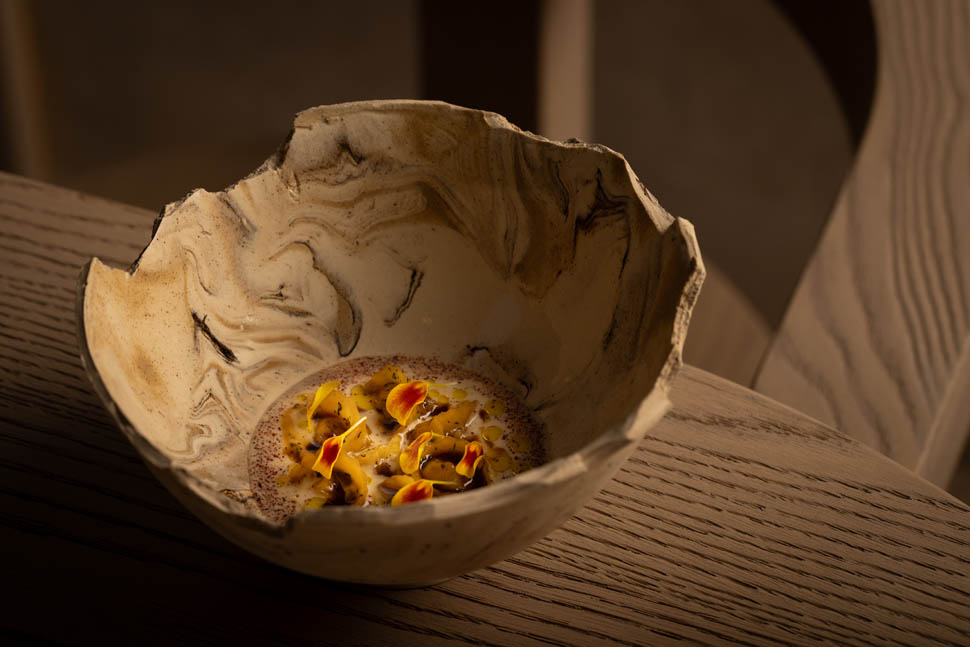
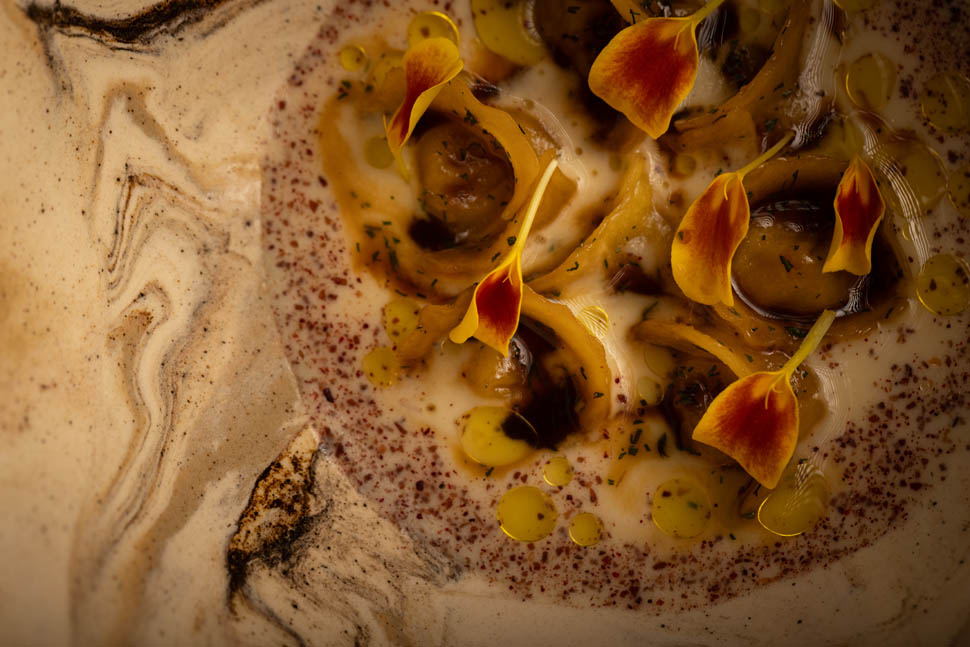
The vegetable returns to the fray in Cicoria&cicoria, with Bottoni stuffed with the typical side dish sautéed in a pan (which in this case becomes a “first course,” suddenly jumping to center stage) and pure chicory extract. However, the wild vegetable hides a barbecued oyster: a salty kick that shifts the taste from the fields to the coast.
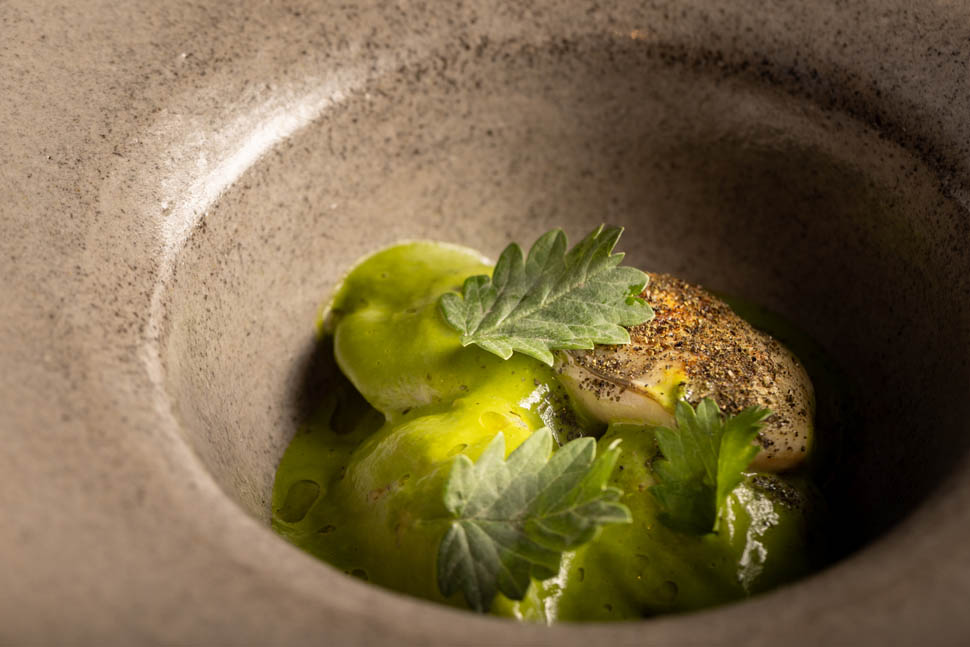
The meat test is carried out with lamb and radicchio, the latter left to marinate in a solution of port, Madeira, and various spices; first the persistence of the lamb, then the soft landing offered by black garlic to soften the protein. To refresh the palate, freshly peeled grapefruit with shiso leaves from the nearby The Circle farm: vigor and precision in five minutes of chewing.
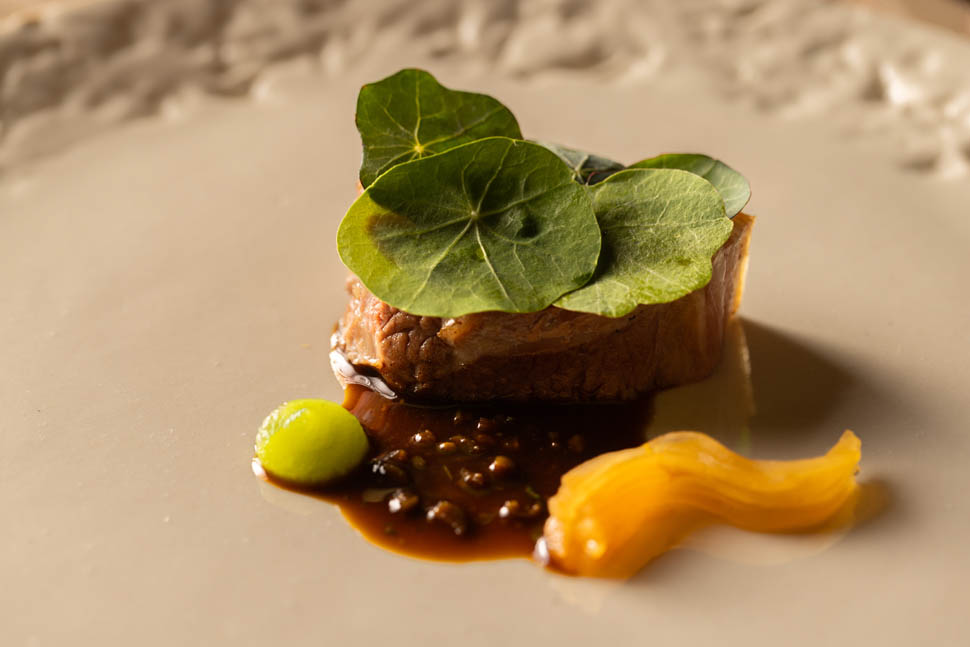
The dessert arrives punctually to chase away the savory flavors, offering a finale that seeks not so much a pyrotechnic explosion of taste as a burst of instant pleasure. And it is a pastry that reclaims its spontaneity, bucking the (often exaggerated) trend of wielding the weapon of “not-so-sweet desserts” everywhere. We liked the frozen citrus Île Flottante, yuzu custard, and rosemary gavottes, with their pleasant richness mixed with a hint of citrus; the Sicilian brioche was also enjoyable, served with mulberry granita and aromatic fennel cream.

The Nomos Bar and staying at the hotel
An impartial recommendation for those who have the opportunity to combine dinner with a hotel stay: refrain from eating upon waking up, so as to ensure you can fully enjoy the Maritozzini alla panna, Panbrioche covered with homemade citrus marmalade, soft rolls with chocolate chips and, if available, Cinnamon Rolls with delicate hints of cinnamon. At the opposite end of the spectrum from the sugary breakfast, the savory breakfast has been the talk of the town in recent months, served as standard with single portions of Fagioli all'uccelletto, grilled sandwiches, and Mediterranean salad. Incredible but true, you can even order tagliolini with tomato and basil at 9 a.m. (!). However, the absence of the traditional buffet is not the only original feature of “Good Morning Nomos”, as guests are given the opportunity to choose exactly where to sit—in the same rooms as the previous evening or, if they wish, at the Nomos Bar: Nomos Ante's eclecticism continues here in a “vibrant” way with a catalog of pop recipes, creating a certain contrast between the dishes and the sharp graphics of the inner courtyard.
So reserve a table for lunch and treat yourself to fried cod with seaweed mayo, a Nomos Burger with romaine lettuce, or a characteristic Tonnarello cacio&pepe. Then it's time to retreat to your suite, where the simplicity of the raw materials contrasts with the stone minibar and bathrooms modeled on ancient imperial-style thermal baths. A different kind of relaxation, tone on tone, that redefines luxury through subtraction. No, you won't find anything like this in Rome today.


Contacts
Nomos Hotel- Nomos Ante- Nomos Bar
Hotel Nomos, Via di S. Paolo alla Regola, 3, 00186 Roma RM
Phone: 06 8410 2388