12 dishes from 12 restaurants that have left an indelible mark on taste: here are Marco Colognese's best tastes of 2025.
Another year has passed and the world of food, beyond a few high-profile proclamations about trends, has changed little; or, worse, has remained where it is. The necessary reflection therefore concerns a change that is as necessary as it is slow to manifest itself, which consists in breaking the shell of a blissful and now unsustainable self-referentiality. Looking at rankings and articles, it is clear that professionals are not moving away from a now sadly familiar phenomenon: considering the number of restaurants in our country, the same names recur constantly and inexorably. Not that, let's be clear, the greats of Italian cuisine are no longer such, they have written and continue to write history, but we must also think about giving space to those who are not certified by awards that are functional to a world that is rapidly imploding. The moral of the story is that we end up talking about practically only a hundred professionals: talented, beautiful, super-communicative, but always too few. Because, outside of a modestly sized container with limited topics, which is the scope of gastronomic communication today, there is an unoccupied space that could broaden interest a little beyond these boundaries, allowing the potential audience to gradually appreciate Bottura, Cannavacciuolo, Romito, and Crippa, to name but a few, getting to know them through preparatory, more affordable experiences. Furthermore, we need to create a real culture that is not just a collection of slogans, without the risk of ending up with the usual false and misleading stereotypes that destroy the concept of haute cuisine. Therefore, the audience for our small universe that we want to expand must first be sought out and then helped to understand its cultural value.
My gastronomic travels this year took me to interesting destinations in Italy and abroad, three hundred places of taste that are not particularly significant in terms of number, but at least guarantee that this review is the result of a wide-ranging and, above all, varied experience, worthy of being recounted. With a point of view that demonstrates a minimum of experience in order to have a minimum value. In Marseille, I truly understood one of the most interesting developments in fine dining thanks to the relaxed service and vibrant cuisine of Alexandre Mazzia at his AM; I discovered how wonderful Cantabria is and, while dining at Jesús Sánchez's Cenador de Amós, I experienced a fascinating, high expression of it. In Berlin, an amazing city, one of my dinners of the year was at Coda with René Frank, a dessert menu that went far beyond the concept of dessert; the other was also in Germany, but in Munich, at Tohru in der Schreiberei (which was awarded three stars shortly afterwards). In Austria, I had two other magnificent dinners, one in Vienna at Doubek, with its fiery cuisine, and the other in Pannonia, in the beautiful setting of Taubenkobel.
Again, in the Algarve, at Hans Neuner's restaurant Ocean, with a sublime wine list and Portuguese bottles and a breathtaking view of the Atlantic. How wonderful it was to meet Andrea Selvaggini, a Roman from Oslo, with his Savage. Finally, Ana Roš and Hiša Franko: year after year, she never disappoints, but above all, her cuisine is unstoppable. In Italy, in Rome, I found Daniele Lippi at Acquolina in amazing form, as was the sparkling Anthony Genovese at Pagliaccio; I still don't understand why the two stars haven't arrived at that gastronomic and hospitality gem that is Imàgo all'Hassler with Andrea Antonini, but I am delighted for the first one awarded to that formidable chef Heros De Agostinis at Ineo; in any case, the capital has reserved other great pleasures for me, with Davide Pulejo and at Idylio with Francesco Apreda.
Finally, confirmation with Uma and wonderful news with Giulio Zoli at Nomos Ante. In Naples, I found Domenico Candela in great form at George. Fantastic dinners also in Tuscany, from two brilliant over-60s with the spirit of young people, Da Arnolfo in Colle Val D'Elsa and Valeria Piccini, queen of taste, in Montemerano. In less-traveled Italy, the most beautiful experiences were at Retroscena in Porto San Giorgio, with that young genius Richard Abou Zaki, at Stefano Ciotti's Nostrano in Pesaro, and with the legendary Enrico Mazzaroni under the Sibyl, at Mater in the Casentino forests with Filippo Baroni and Marta Bidi; not to mention Pashà, run by Antonello Magistà, a master of hospitality, in his splendid new location in Polignano with the young Michele Spadaro. And then there were two more amazing experiences on the lake, on different shores, at Sereno in Torno with Raffaele Lenzi and at Mistral in Bellagio with the magnificent Ettore Bocchia.
And finally, the city I love most in the world, Venice. Confirmed by the talented Giuseppe Ricci at Gio's del St Regis and the Gregori-Pometti duo at Wisteria, the skilled hand of Carmine Amarante at VeRo in Cà di Dio, the cuisine of Salvatore Paladino and the signature of Paulo Airaudo at Lorenzo al Giardino Segreto in the NH Palazzo dei Dogi, as well as the creativity of Daniele Zennaro at Giubagiò, a place to discover, as is Palazzina My Venice, run by an old acquaintance of high standing, Andrea Coppetta Calzavara. Returning to the premise of this article, instead of writing about notable signature dishes, I have chosen to describe 12 dishes from as many restaurants, all without Michelin stars, that have left an indelible mark on my taste buds. Here they are.
1 Artichoke preserved in Brunello vinegar, almonds, sesame, and chimichurri – Mirko Cairone, Il Passaggio By Capanna in Montalcino (SI)
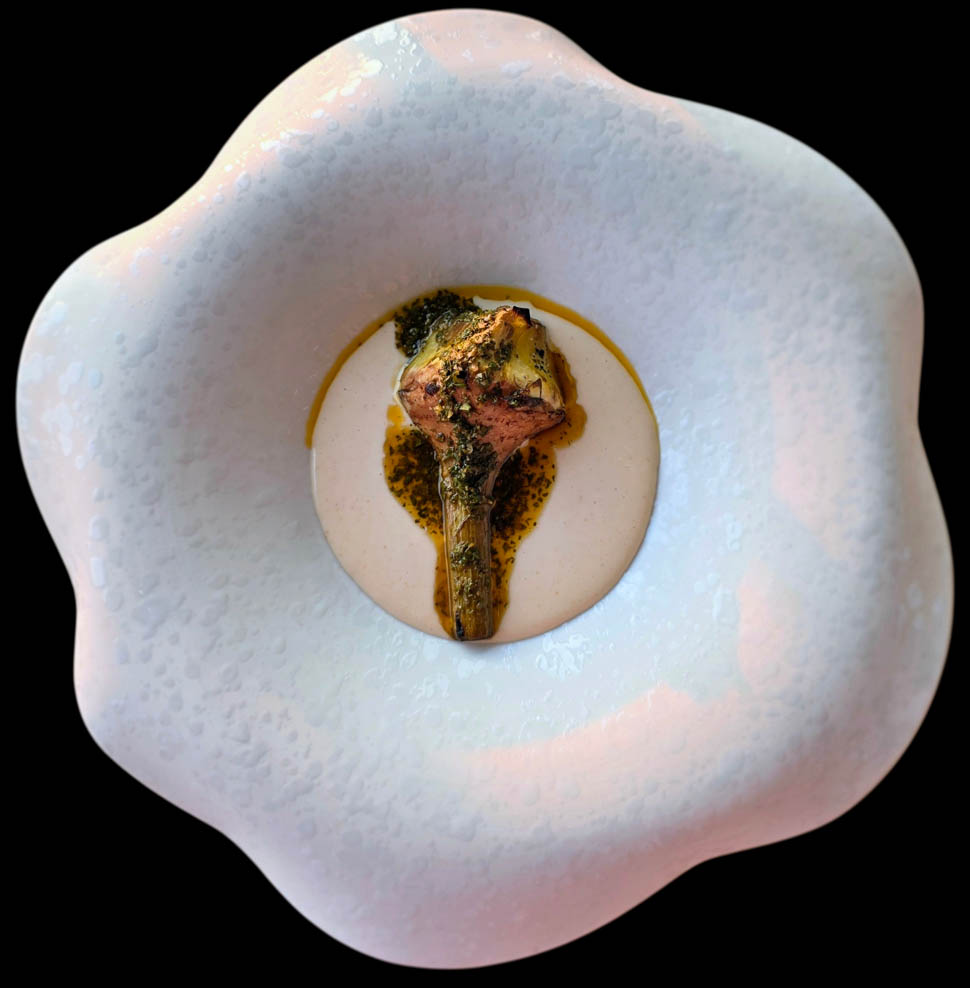
Montalcino, the hills of Val D'Orcia. In a fairytale setting, Capanna, a winery and one of the founding members of the Brunello Consortium, owned by the Cencioni family since 1957, created Capanna Suites in 2019, a beautiful hospitality project with eleven suites and a luxury farmhouse with a stunning panoramic dining room, biodynamic vegetable garden, and exclusively local suppliers. Mirko Cairone, from Campania, who arrived here in March 2025, is in charge. The evening menu (the cuisine is more casual at lunchtime) is an enjoyable journey through contemporary flavors, with very well-managed acidity and bitterness. The artichoke preserved in Brunello di Montalcino vinegar with oxidized almond and sesame cream and aromatic herb chimichurri is worth mentioning. The artichokes are preserved in wine and barbecued before serving, giving them a smoky flavor and accentuating their bitterness. They are accompanied by an almond sauce with a mixture of oxidized and fermented almonds. The dish is finished with a chimichurri made with aromatic herbs from the garden. A bite with a big impact.
2 Sinfonia d'Estate – Antonio Di Leo, Ca' Del Profeta in Montaldo Scarampi (AT)
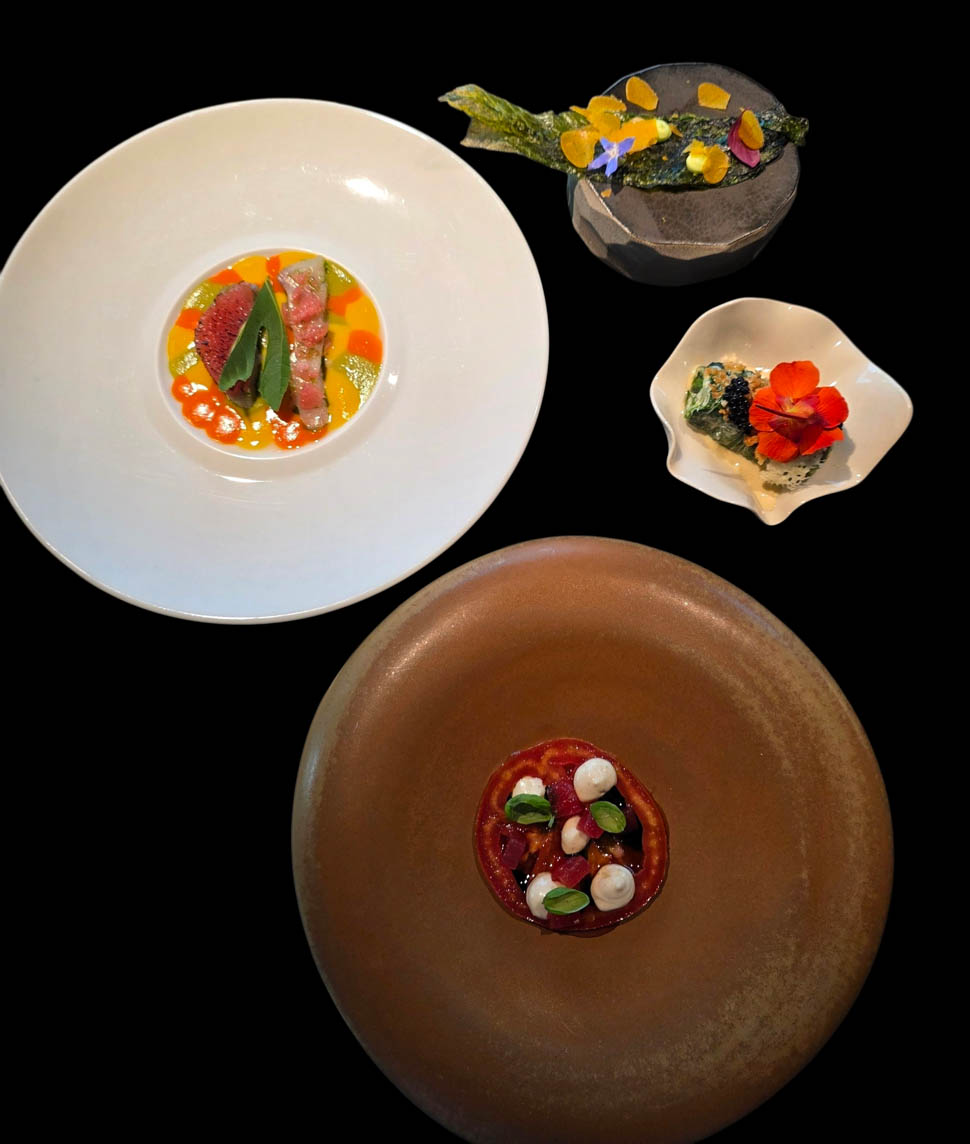
Among the hills of Monferrato, equally beautiful though less well known than the Langhe, nestled among the vineyards, stands what was supposed to be the home of a great soccer player, Brazilian Anderson Hernanes, known as “the Prophet,” after his retirement from the game. In reality, the place remains his, but it has been transformed into a beautiful relais with a gourmet restaurant. It all began with the advice of Christian Milone, who brought Antonio Di Leo on board and involved him in the project, eventually leaving him in charge. The Turin chef's style is instinctive and technical, but above all rich in great insights into taste, with dishes that amaze with their freshness and immediacy, in perfect harmony with their complexity. Sinfonia d'estate (Summer Symphony) is one such dish, a triptych of three different elements that Antonio describes to us: "I started with tomatoes and liked the idea of prolonging their freshness by sweetening their acidity with watermelon; however, using only that seemed really trivial, so I put it in osmosis with tomato water; the freshness is enhanced by an almond cream and basil oil. The second part is a Caesar salad with salty elements. The lettuce is barbecued and then regenerated in the oven, giving it slightly smoky notes; it is topped with a dressing of mayonnaise, anchovies, mullet roe (not bottarga), herb-scented bread, and Grana Padano cheese shavings. On the side, there is a wafer of crystallized lettuce with clarified butter, lovage mayonnaise, and a generous sprinkling of bottarga at the table. Finally, the peperonata, with Carmagnola peppers. We separate the red from the yellow and green and prepare them all as if they were a normal peperonata, but with a very distinct acidic note. We blend the various sauces, filter them, and compose a mosaic of colors on the plate (very beautiful, ed.). On top, we place a carpaccio of yellowtail marinated in fig leaf oil, cut very thickly as if it were sashimi; ventresca and back, on the second a slice of grapefruit peeled and seared with a blowtorch, on the first a grapefruit that I freeze, then divide all its micro-seeds and place them on top. The accompanying fig leaf has an explosive flavor, with notes of dried fruit that soften the acidity." A small, delicious masterpiece of taste.
3 Ù Ciambot -Tubettoni Valdoro in raw and cooked rockfish soup – Domenico Di Tondo, Terradimare in Trani
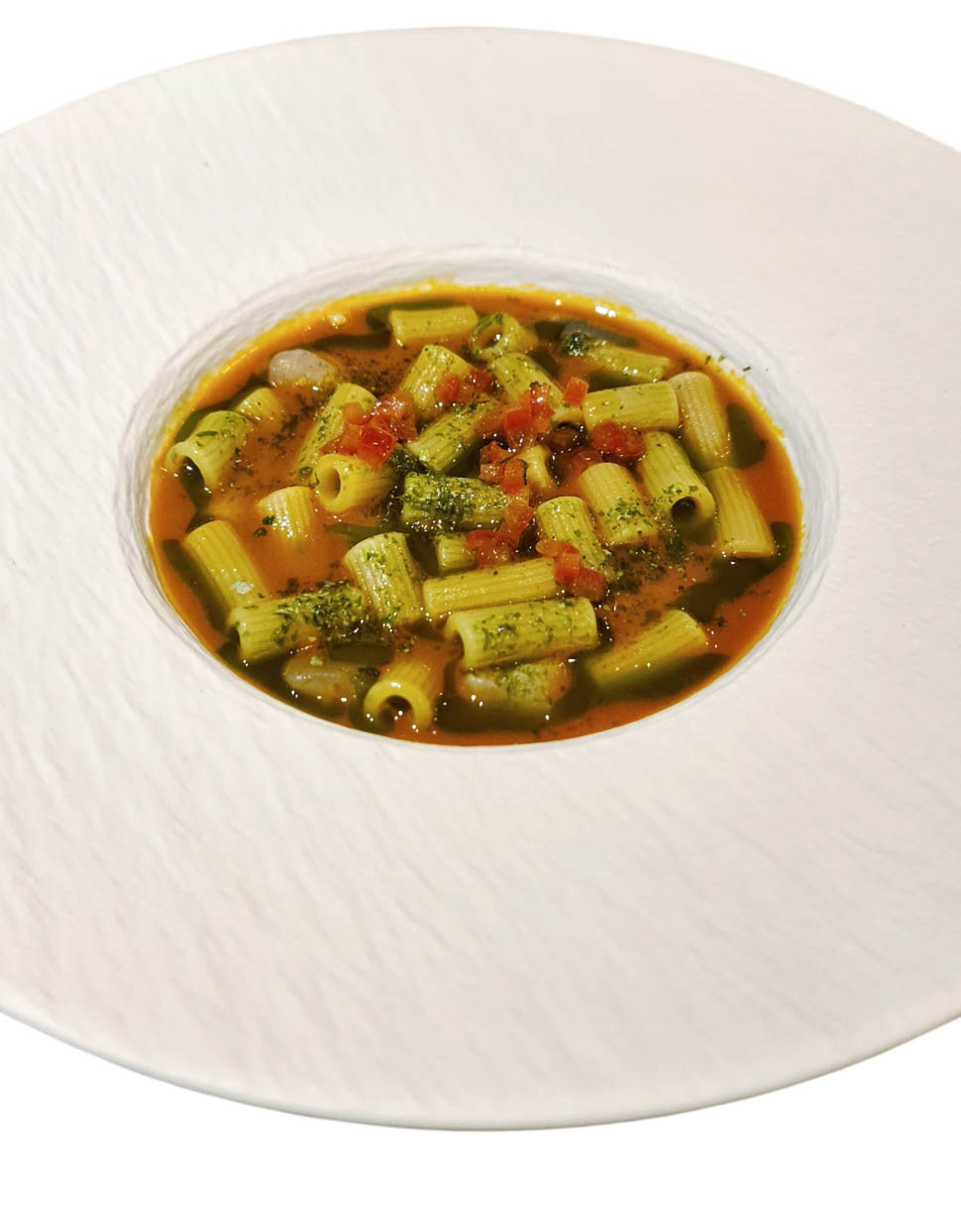
Terradimare is located less than a hundred meters from the picturesque port of Trani. Created by chef Domenico Di Tondo and his sister Deborah, who returned to Puglia after important experiences at Il Luogo di Aimo e Nadia for him and in luxury establishments for her, assisted by Domenico's partner Anna De Cillis, who takes care of the wine list, the restaurant is a welcoming destination where you can enjoy cuisine that combines local traditions, learned techniques, and the right dose of creativity, all in collaboration with small local producers and fishermen. Taste is central to all the dishes, among which I was surprised by the intensity of this wonderful fish soup typical of Trani. "We start with a base of garlic, celery, onion, and carrots, as well as all the shellfish available on the market according to the season, such as white shrimp, mantis shrimp, and mazzancolle shrimp. Once roasted, fish broth is added, then rockfish such as scorpion fish and tub gurnard, whatever we can find: we don't clean them and leave them with their entrails, hence the need for super-fresh fish. We cook it for a couple of hours, then reduce it, filter it all, and use this broth as the base for the dish, in which we cook the pasta." When it's time to serve, all the fish and shellfish are roughly diced, and the tubettoni pasta is placed on top with its hot broth, which will cook the fish. Then, continues Domenico, “we will have different textures depending on the species. To finish, we replace the parsley with sea lettuce powder and fresh oil.” A dish that is literally mouthwatering.
4 Pasta and beans, Doge's oyster sauce, and late radicchio – Tocia! Cuisine and community, Ittiturismo al Casone da Sandro, South Lagoon
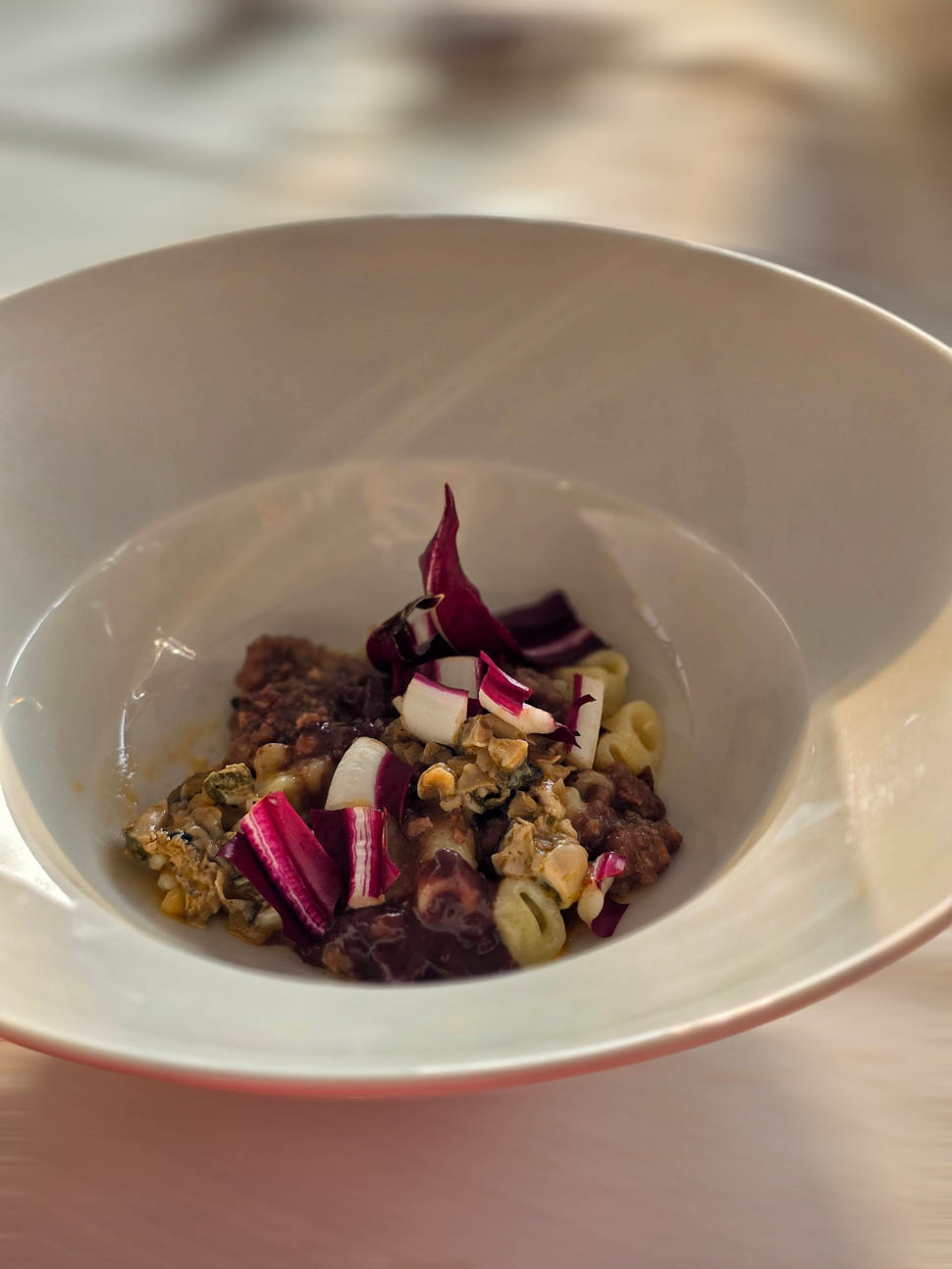
If the visit to Casone da Sandro on a romantic misty day was the most touching experience of the year in terms of scenery, it was no less so from a gastronomic point of view. This wonderful place is a large stilt house in the southern lagoon of Venice off the coast of Chioggia and Pellestrina, and can only be reached by water in half an hour: here, Blu Oltremare, a cooperative associated with Legacoop Veneto, has created the first lagoon farm with Ostrica del Doge. The oysters, which are of excellent quality, with firm flesh and a well-balanced sweet and savory flavor, are processed by hand. A peculiarity within a peculiarity is the cuisine: where, given the less than ideal conditions in terms of equipment, one would expect a makeshift simplicity, a small miracle has been achieved thanks to the Tocia! -Cucina e comunità (Kitchen and Community), a group that deserves a story of its own, where gastronomy, culture, and territory converge, founded by Marco Bravetti, a former chef in fine dining restaurants that were too restrictive for a personality like his. Tocia, with Casone da Sandro and Blu Oltremare, has started a collaboration that offers around twenty people the chance to have lunch at a convivial table with chefs who take turns and dishes and ideas that change from day to day. A high-level gastronomic laboratory that treated us to a dish with a formidable taste, such as pasta and beans, Laguna oyster sauce, and late radicchio. The mixed pasta is creamed in white with pork fat and oyster water, seasoned with a ragout of ground beans that have been seasoned after being blanched with miso and seaweed. Again, white oyster sauce and infused oysters to cook them as little as possible in the sauce: white wine, bay leaves and onion, garlic with a white marinara sauce, parsley, and raw radicchio. As Bravetti defined it: ‘the misery and nobility of Laguna’.
5 Gnocchetti with wild herbs, candied lemon, and cave-aged Marzolina cheese – Luca Ludovici, Contatto in Frascati (RM)
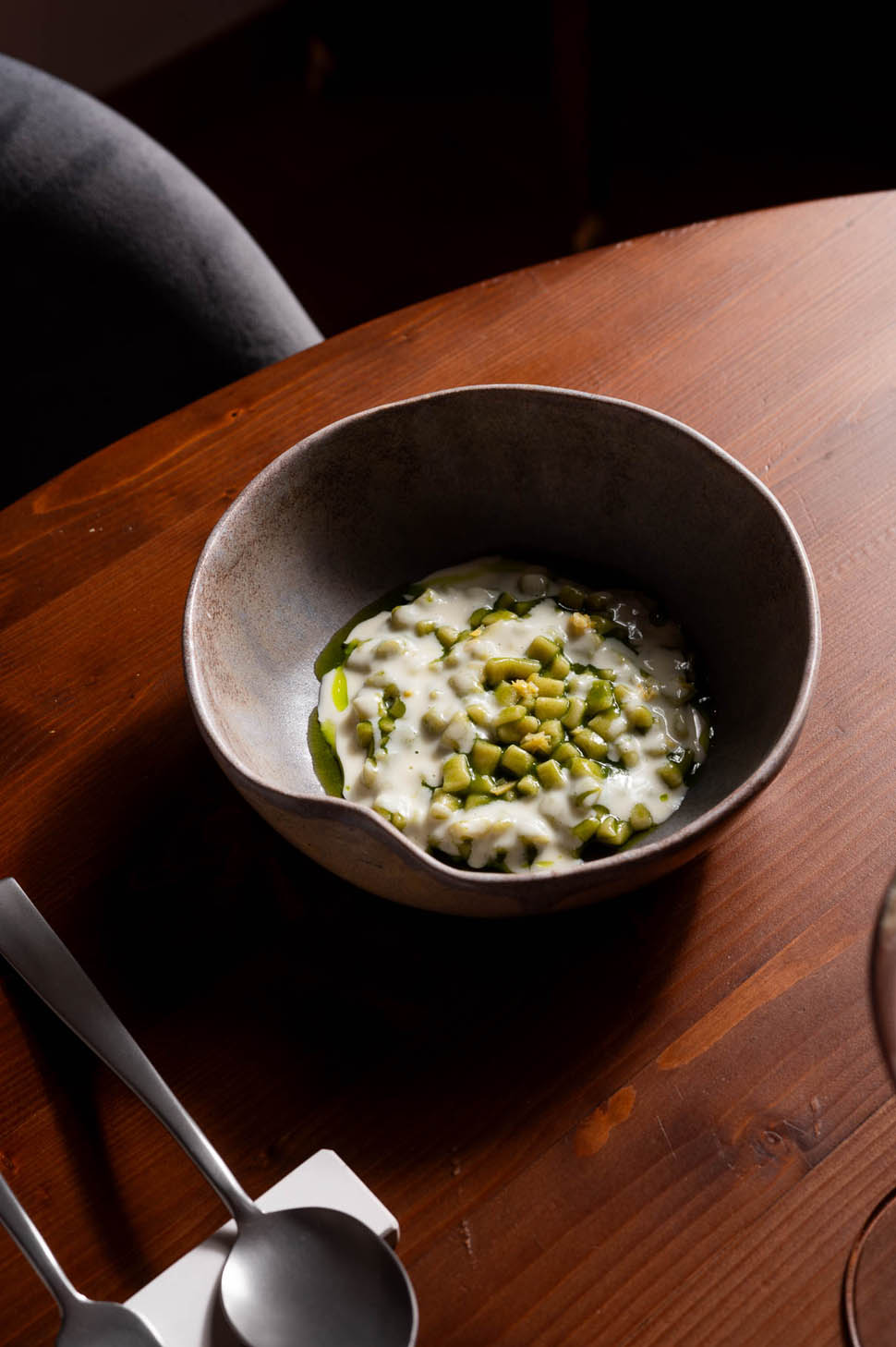
The setting of ConTatto in Frascati is truly evocative. Luca Ludovici and Lorena Cavana fell in love with a tuff cave beneath the restaurant, once used for wine production and then as an air-raid shelter, transforming it over time into a sort of conservation and aging laboratory thanks to its ideal humidity and temperature, as well as the presence of noble molds. Here they serve amuse-bouches and talk about their natural pantry project, which involves aging cheese, cured meats, rice, and chocolate, as well as making preserves, fermented foods, and anything else that can evolve in the cave with interesting results. She is originally from Emilia and trained as a lawyer, he is a highly experienced chef, with Alajmo and Le Gavroche in London and then the Osteria di Birra del Borgo among his stops. In Frascati, they have found an ideal habitat for a cuisine that offers great satisfaction, such as gnocchetti with wild herbs, candied lemon, and Marzolina cheese aged in the cave. The gnocchetti, with their nice firm texture, are made from a mixture of water and flour and are typical of Fiuggi, where they are called ‘sassolini’ (little stones). They are served with a cream of wild herbs that varies according to the season. Luca says: “It's a dish that I almost always have on the menu because it represents me very well and reminds me of my childhood.” There is also a cream made from Marzolina, a typical Ciociaria cheese from the Slow Food Presidium, which is aged in caves for two months, acquiring a slightly blue-veined flavor. Finally, candied lemons are added, which are left in the cave for at least four months: this is a salted candying, in all respects. The dish is finished with an herb oil that usually includes some of the herbs already present in the cream. Sincere, pure goodness.
6 Spiced grilled lamb, almonds, za'atar and sumac, Ronald Bukri, Coro in Orvieto (TR)
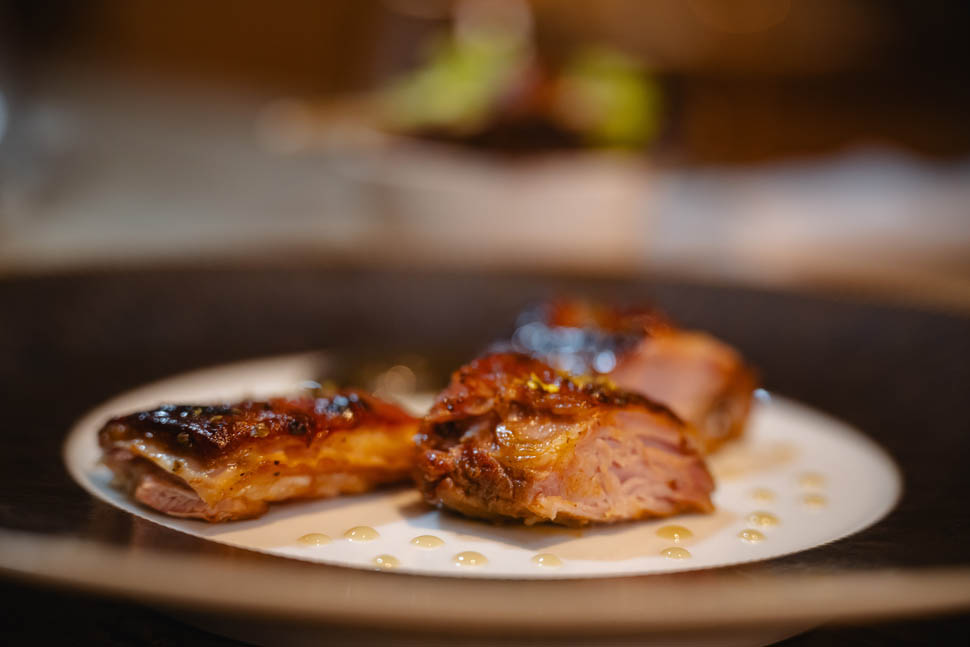
Coro is a truly unique place: located in a deconsecrated church dating back to the 1500s, just a stone's throw from the city's imposing cathedral, it is the only Italian restaurant to have been included in the Prix Versailles 2025 ranking of the 16 most beautiful restaurants in the world. The setting, with its cross vaults, original frescoes, and tuff walls, was designed by architect Giuliano Andrea Dell'Uva and is worth a visit in its own right. Chef Ronald Bukri and maître d' Francesco Perali have created a welcoming atmosphere of the highest standard, with contemporary cuisine rich in flavor and refined, delicious nuances. The lamb is wonderful, served in different cuts: leg, shoulder, loin, and belly. All are first marinated in different ways and then cooked on the grill, each with its own distinct texture that makes the dish even more interesting. The soft, melt-in-the-mouth belly, the slightly tougher, flavorful shoulder, and the intensity of the leg are appreciated in an engaging crescendo of flavors. The sauces are excellent, starting with one made from ‘olives with olives’ because, as Ronald explains: "I dry the black olives and then blend them with olive oil to capture everything that is in the olive. The other sauce, which adds a touch of freshness, is an extract of green pepper in brine: it is a very fresh spice that cuts through the fat of the lamb." After being grilled, the meat is glazed with the animal's own fat, melted and clarified with steam, to ensure that it is always crispy on the outside and tender on the inside. “Then I season it, in this case with a few spices that also recall my Albanian origins, although in reality it's more of an influence of what I like about the Middle East.” My meat dish of the year.
7 Minestrone Verdiano: vegetables in various textures with cassoeula consommé, Francesco Potenza, Don Carlos at the Grand Hotel et De Milan, Milan
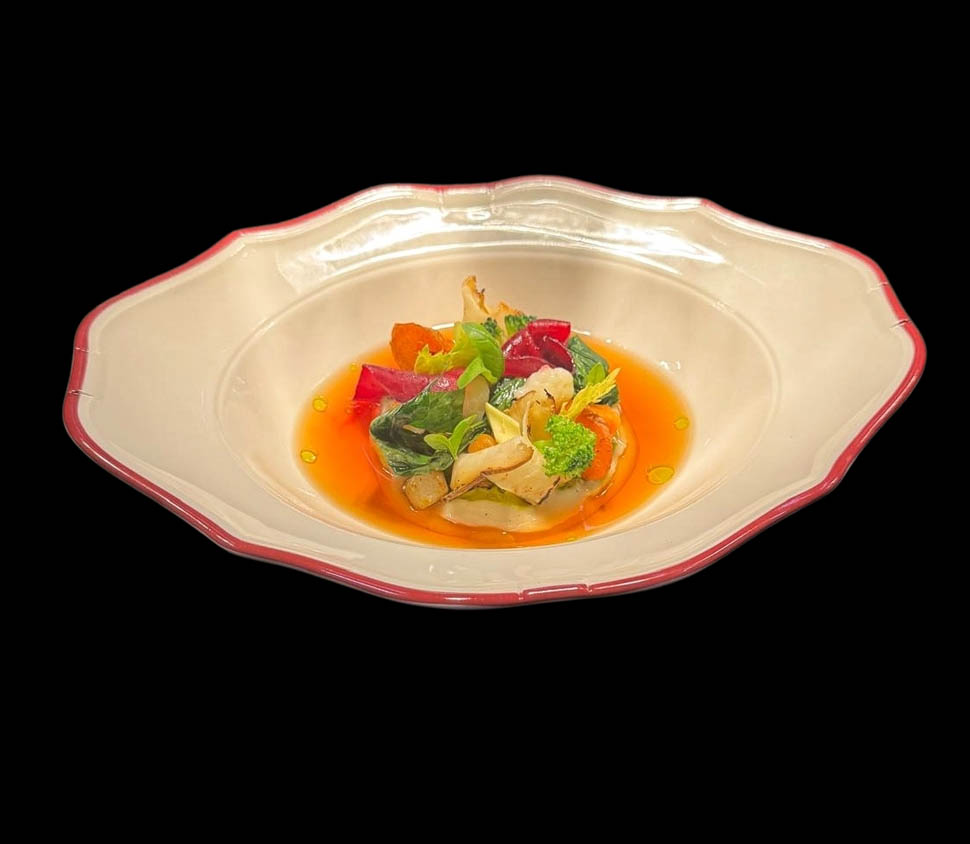
A place from another era in an elegant historic hotel in Milan, just a stone's throw from La Scala Theater, the Don Carlos restaurant is named in honor of the great composer Giuseppe Verdi, who stayed at this hotel for twenty-seven years, making it his home. A space that transports you into the world of opera, with candlesticks, velvet, soft lighting, and walls adorned with themed works, including portraits and sketches of costumes and sets. Not to mention the extensive wine cellar within the ancient defensive walls of the city. Executive chef Francesco Potenza and the watchful eye of Gennaro Esposito have created a high-profile classic cuisine that impresses with its intensity and depth. The dish was created to pay homage to two classics: minestrone and cassoeula, a typical Milanese dish. It is made up of many exquisite nuances of flavor, with a cream of wilted vegetable minestrone, as Potenza tells us: "It is made by quickly sautéing zucchini, Roman cabbage, potatoes, cauliflower, and onion, then placing them in a hermetically sealed pot and cooking them in the oven at 120°C for about an hour to concentrate the flavors. Finally, we add a basil infusion. We then pass the vegetables through a Pacojet to obtain a smooth cream. When serving, we sauté potatoes, carrots, pumpkin, zucchini, and a stalk of Swiss chard in a pan and combine them with this cream, julienned basil, and spelt cooked in vegetable broth, which forms the base of the dish, concentrated and delicate at the same time." To embellish the dish, the chef adds the sweetness of Controne beans, puréed and crispy. Then there will be vegetables in different textures: smoked (celeriac, Jerusalem artichoke, Hokkaido pumpkin), blanched (cauliflower and broccoli), and raw (celery hearts). A vinaigrette made from oil, minestrone juice, and raspberry vinegar will be added to the bouquet of vegetables. The cassoeula will be transformed into a consommé: "We toast the pork cheek and sausage in a pot, then add savoy cabbage and golden apple and pour white wine over them once they have wilted. We add a little star anise and cover with water: we simmer until the mixture has lost half of its liquid, then we pass it through a fine chinois and let it reduce slowly until the right flavor is achieved. Leave to settle and clarify: the cassoeula consommé will be served in a brick in the dining room." A tasty idea of great refinement.
8 Arroz de Cabidela – Renato Cunha, Ferrugem - Casa Ana Monteiro in Portela (Portugal)
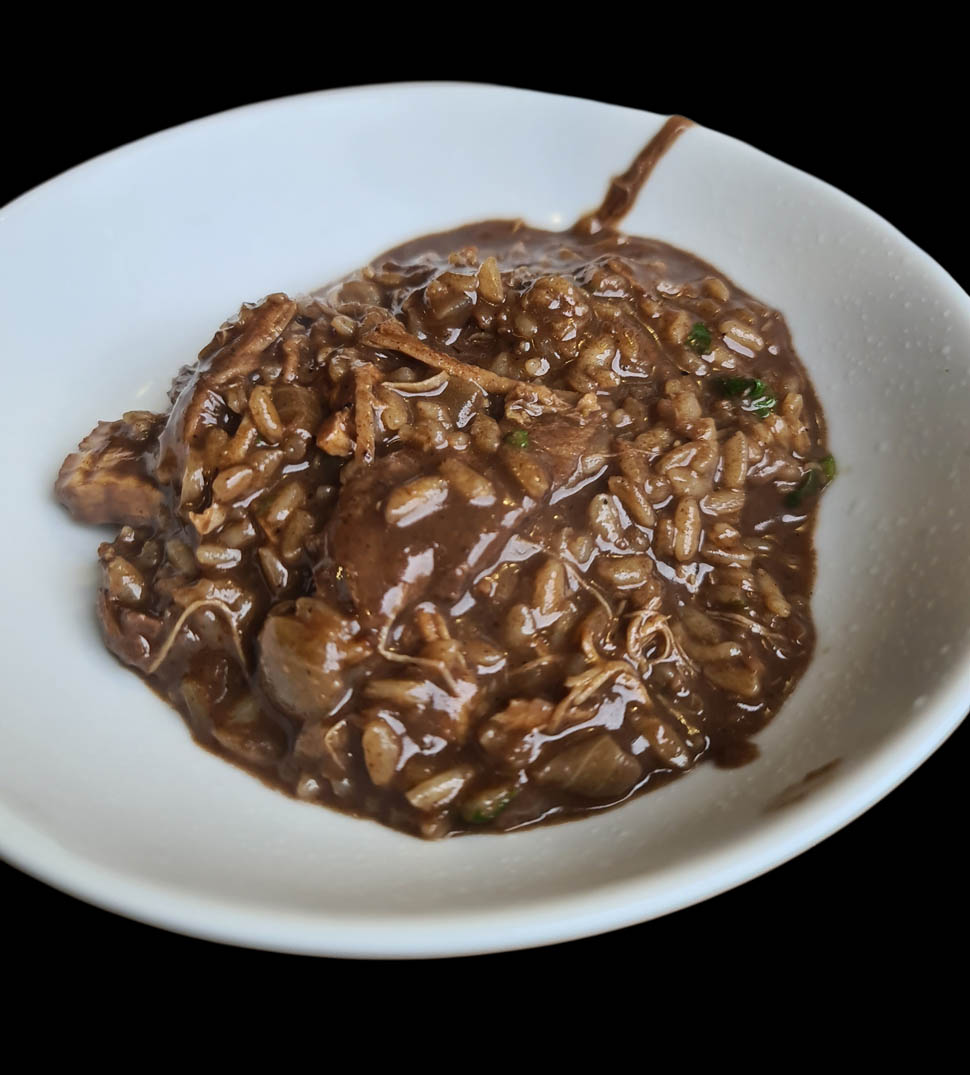
About fifty kilometers from Porto, in Portela, is Ferrugem, the beautiful restaurant owned by Renato Cunha, a great connoisseur of tradition who uses mainly ingredients from the Minho region in his dishes. Very close to the restaurant is Casa Ana Monteiro, a rustic and charming place where events are organized in which the chef cooks over a fire, in typical cast iron pots or on the grill. It is a spectacle to be enjoyed even in the rain, as happened to us, with Cunha busy cooking a wonderful traditional dish with a strong flavor. Arroz de Cabidela is a dish usually made with chicken or pork; in our case, chicken was used. It is rice with chicken enriched with the animal's blood and vinegar. The blood is collected at the time of slaughter and preserved with vinegar or wine to prevent coagulation. Cooking, in large cast iron pots placed directly on the fire, is slow and careful, first the meat and then the rice. When the rice is almost ready, the blood is added. The dish, for trained palates, is intense and, in its own way, very elegant, with deep, iron notes mitigated by the acidity of the vinegar. It goes without saying that it is based on extremely rigorous control of the raw ingredients, starting with a chicken that has been raised properly. Cunha works with precision, achieving wonderful harmony and a memorable dish.
9 Walk in the Murgia – Eduardo Estatico, Artema al Vetera Matera in Matera
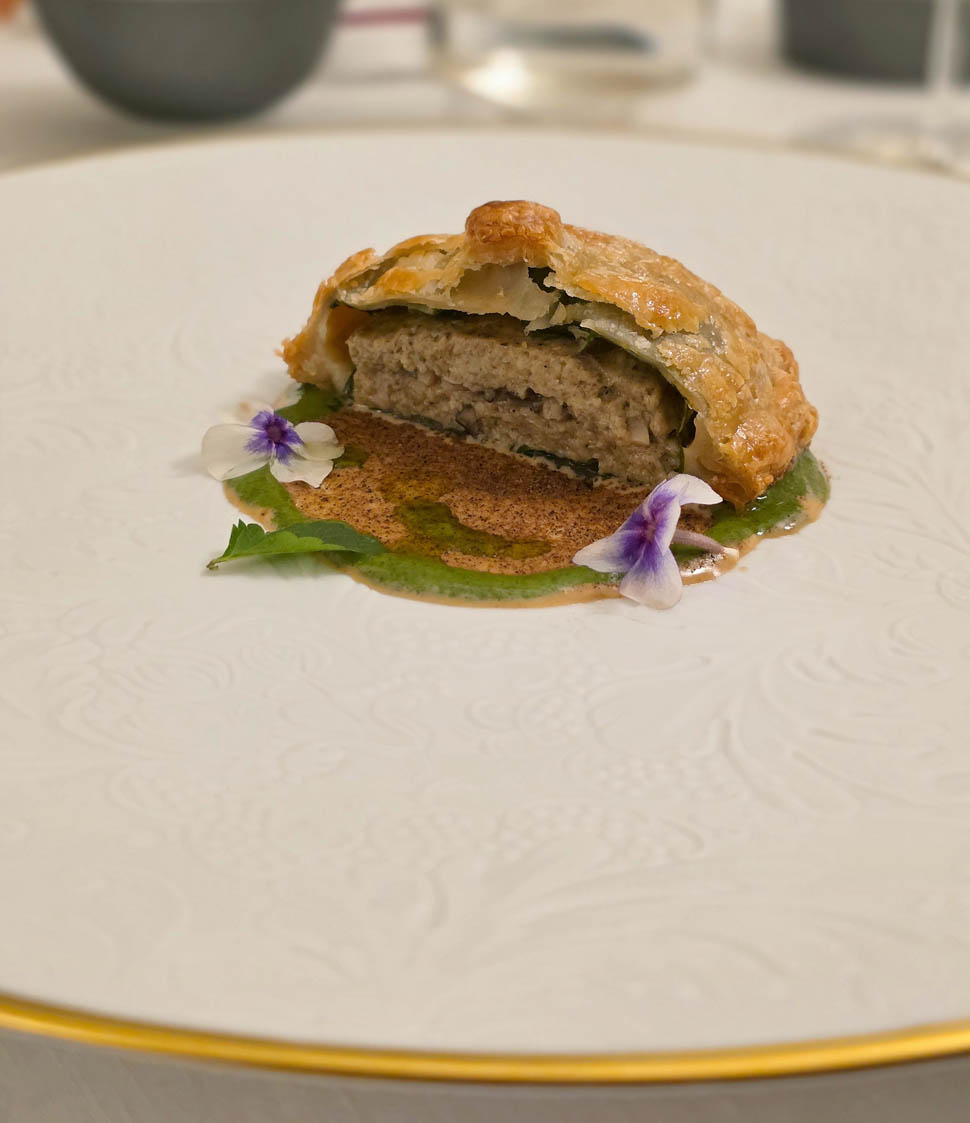
When we think of the many enchanting places in our country, we cannot help but think of Matera, a city of atavistic, mysterious, and in some ways solemn beauty. The long, painstaking, and philological restoration work carried out to create the stunning Vetera Matera hotel, a five-star establishment affiliated with Relais & Chateaux, also involved the splendid rooms carved out of the rock of its gourmet restaurant, Artema. Entrusted to the expert hands of Eduardo Estatico from Campania, it is a place of taste that has only just opened but is sure to make a name for itself. The chef has created two menus with modern dishes that are technically very advanced and at the same time focused on immediate taste: “My cuisine is Neapolitan in origin and spans Basilicata from the Tyrrhenian Sea to the Ionian Sea, the hills of Lucania and nearby Puglia.” We were particularly impressed by one dish, Passeggiata nella Murgia (Walk in the Murgia), whose protagonists are cardoncelli mushrooms, presented in two courses. The main course is a savory pie based on the idea of a Wellington fillet. The pastry is homemade with Normandy butter. A royale is made with cardoncelli mushroom trimmings and scraps, added to Podolico caciocavallo cheese and eggs. Lemon balm leaves are added for freshness. Everything is wrapped in the pastry, then baked and enriched with tobacco-flavored cream, which provides a nice contrasting spiciness. The second course is a soup with roasted mushrooms. It starts with a clarified broth with the addition of a cardoncelli mushroom extract obtained with OCOO. This is combined with a broth made from leftover trimmings, clarified in the traditional way. Miso and yakitori-roasted mushrooms are added to the soup, then seasoned with a vinaigrette made with Dijon mustard, honey, chili pepper, and Champagne vinegar. A dish of beautiful intensity.
10 Grilled risotto with tomato water, basil, Fiore Sardo cheese, and fig leaf oil, La Gardiana at Veridia Resort, Chia (CA)
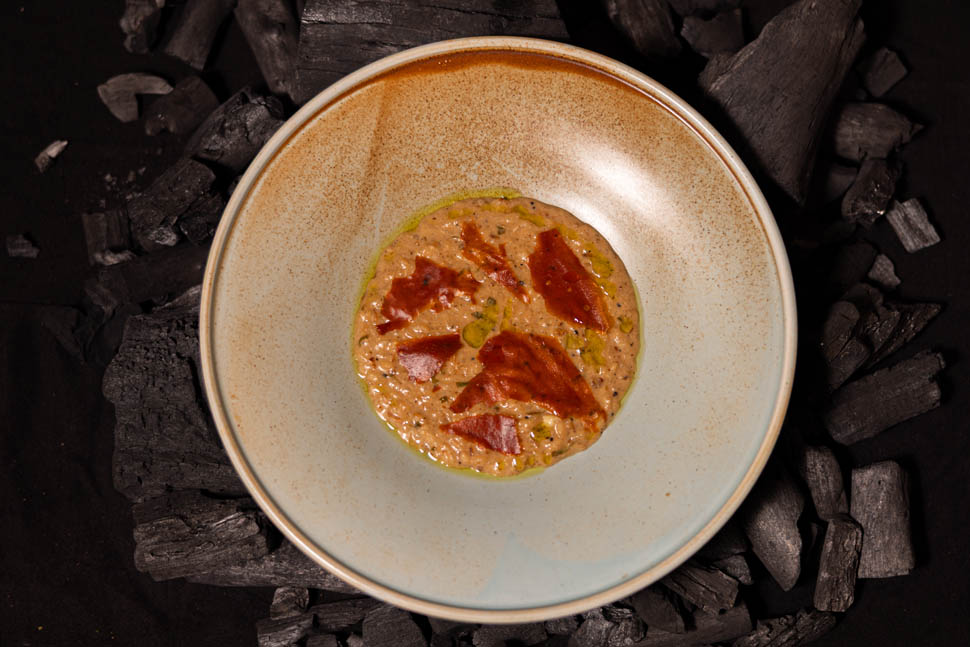
Veridia Resort is a hotel built around six residences and located in Chia, a true paradise on earth. Less than an hour from Cagliari, it is a hidden gem surrounded by greenery. The promontory on which it stands offers a wonderful view of the bay with its private beach and the ancient Saracen Tower. In addition to an amazing breakfast, the resort offers several dining options overseen by the talented Francesco Costantini: La Gardiana – Josper Restaurant has a name that says it all. With outdoor tables, grills in plain view, and a high-profile wine list, you can have a lot of fun here, especially if you love fire-cooked food and smoky flavors. In our case, we enjoyed the grilled risotto with tomato water, basil, Fiore Sardo cheese, and fig leaf oil. The cooking method is unusual: Carnaroli rice from Falchi (a women-run farm in northern Sardinia) is first boiled and then toasted over charcoal. After toasting, it is treated like raw rice, cooked in tomato water and creamed with butter and Fiore Sardo cheese. In addition to its own very pleasant texture, the rice has an intense, smoky flavor, with notes of freshness and acidity from the tomato, together with the fragrant intensity of fig leaf oil.
11 100% Aspinger, Stephan Zippl at 1908 in Soprabolzano (BZ)
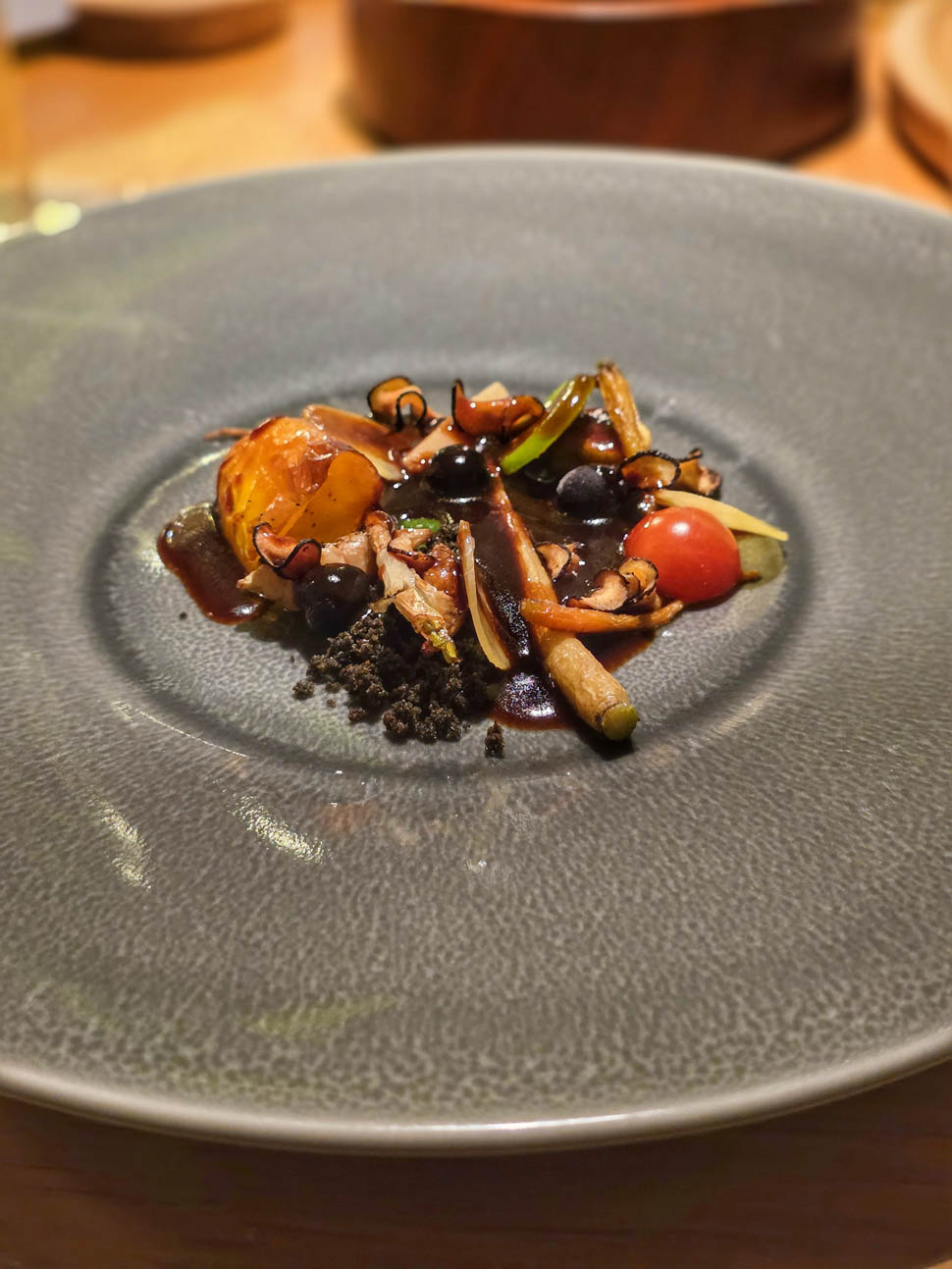
One of the most inexplicable mysteries of our gastronomic Barnum is the loss of the star at 1908 Soprabolzano in the penultimate edition of the ‘red guide’. In fact, the restaurant run by Stephan Zippl, inside the magnificent, historic Parkhotel Holzner, has never served such excellent food. We have dined there twice this year. Not a single flaw, each dish better than the last, service with great precision and at the same time with the right informality and a genuine smile on the lips. The green star has remained, confirming a constant commitment to promoting local or zero-mile products, as does RE:VIER, the philosophy that inspires his cuisine, from Revier (kingdom, territory in German) and vier, the number four, which is represented in the dishes by the pillars of sweetness, acidity, spiciness, and crunchiness. In one of the most enjoyable dinners of the year, we were struck by the ‘100% Aspinger’ dish dedicated to Maso Aspinger, a splendid pioneering laboratory of agricultural biodiversity created by Harald Gasser and Petra Ottavi. A dish that reveals a hand capable of transforming plant matter into a harmony of flavors and textures, including intensely flavored baby vegetables, aronia berries, a vegetable jus of rare concentration, and bitter herbs. A true place of taste to be rediscovered.
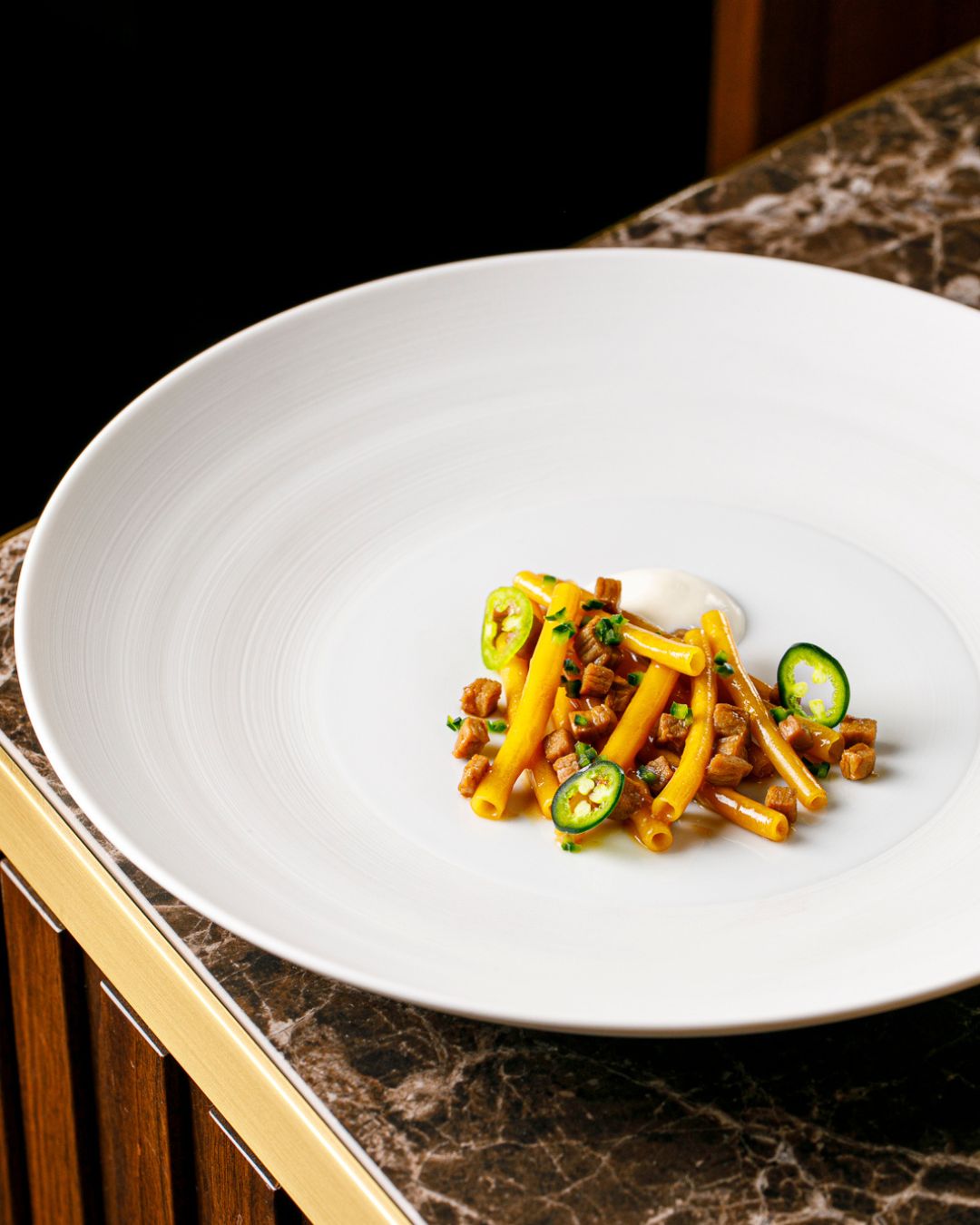
12 Tubetti with beurre blanc, ventricina oil, and savory bread - Genya Malafronte, Legàmi, Morro d'Oro (TE)
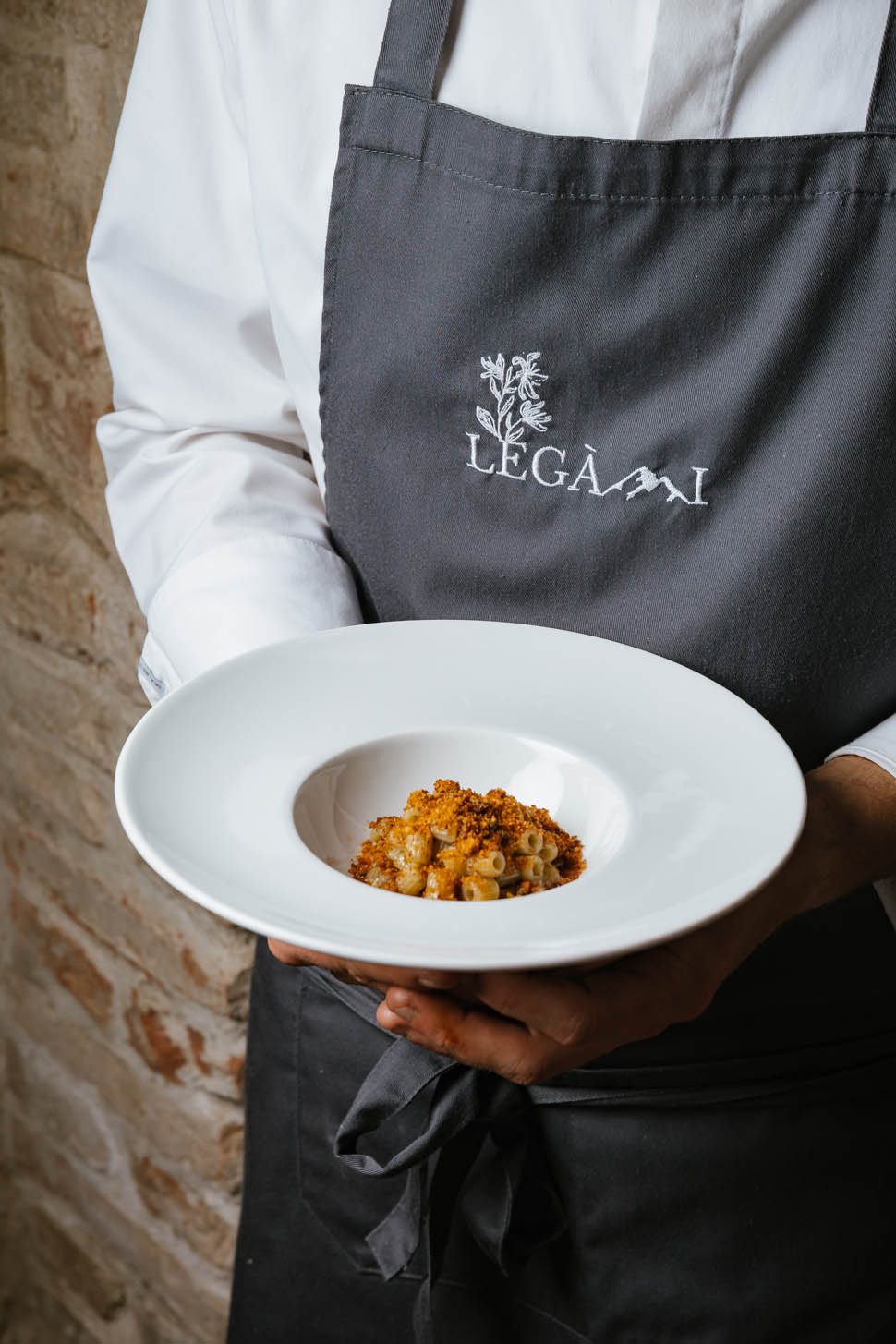
Last but not least, the restaurant owned by the family of a promising young Italian chef. Legàmi is located inside Torrenera, a small country house in Morro d'Oro in the Teramo area. It is very close to the sea but has an incredible view of the Abruzzo mountains, from the Gran Sasso to the Maiella range, all the way to the Monti Gemelli. Genya Malafronte, born in 1998, was born in Ukraine and moved to Italy at the age of 9. Her father Nicola is a professor at a hotel management school, and her uncle is a chef. Her destiny was therefore sealed: Genya first worked with Davide Pezzuto at the nearby D.One and, after a break in the mountains, she arrived in Rome to work with Heinz Beck at La Pergola, where she remained for five years. A project in Giulianova and finally the adventure with his family. His father works in the dining room and his mother, Nataliya Churkina, a Russian former electronic engineer, assists Genya in the kitchen and, as a profound connoisseur of botany, takes care of the vegetable garden and garden. His young sister Annalara, a budding tennis talent, helps in the dining room when needed. Genya's training is important, allowing him to express himself with original dishes, rich in personality and with the immediacy needed to touch the hearts of those who eat them. One example above all, from a very interesting menu, is the tubetti with beurre blanc, ventricina oil, and savory bread, a dish of unique delicacy: "It's a pasta that is usually underestimated, but for me it has great potential; it is first cooked in plenty of water, drained in advance and then finished on the grill: the tubetti are glazed with a citrus-flavored fat, a suet that is melted with plenty of onion, lemon and orange peel and various herbs, thyme, rosemary and a little sage. It is brushed onto the tubetti until they are almost crispy again. It is finished with ventricina and bread." A promise that will be kept.