Cooking solo for 10 seats, he climbs to the top of the New York Times rankings, achieving the highest acclaim since Le Bernardin. Yamada’s milestone, where sushi meets tailor-made dining.
The News
New York doesn’t hand out its highest accolades lightly, especially when it’s the New York Times doing the judging—a publication that occupies a unique emotional and cultural territory in the city’s culinary scene. A “four-star” review is not merely a mark of excellence; it resembles more an astronomical event, so rare that the newspaper’s own editors compare it to the cyclical return of comets. After Le Bernardin, awarded once again in 2023, the constellation of four stars seemed destined to remain unchanged. Then, suddenly, a new name etched its mark in the sky of New York dining: Yamada, a tiny kaiseki restaurant hidden in Chinatown.
The news carries even greater significance when seen in the context of a crucial generational shift. The accolade comes shortly after the departure of Pete Wells, the long-standing New York Times critic who for twelve years chronicled—and in part shaped—the city’s culinary taste, leaving his post in 2024. The first four-star review of the post-Wells era was penned by Ligaya Mishan, a journalist known for combining analytical rigor with narrative sensitivity, who, after months of repeated visits, chose to award Yamada the highest possible rating. A decision that immediately sparked debate and refocused attention on a cuisine as ancient as it is delicate, far removed from the theatrics of high-end fine dining.
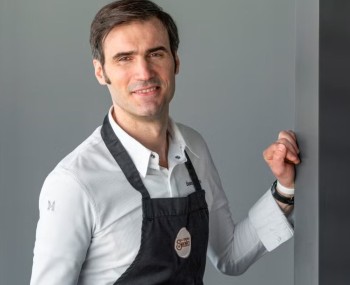
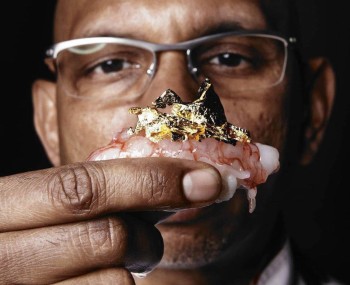
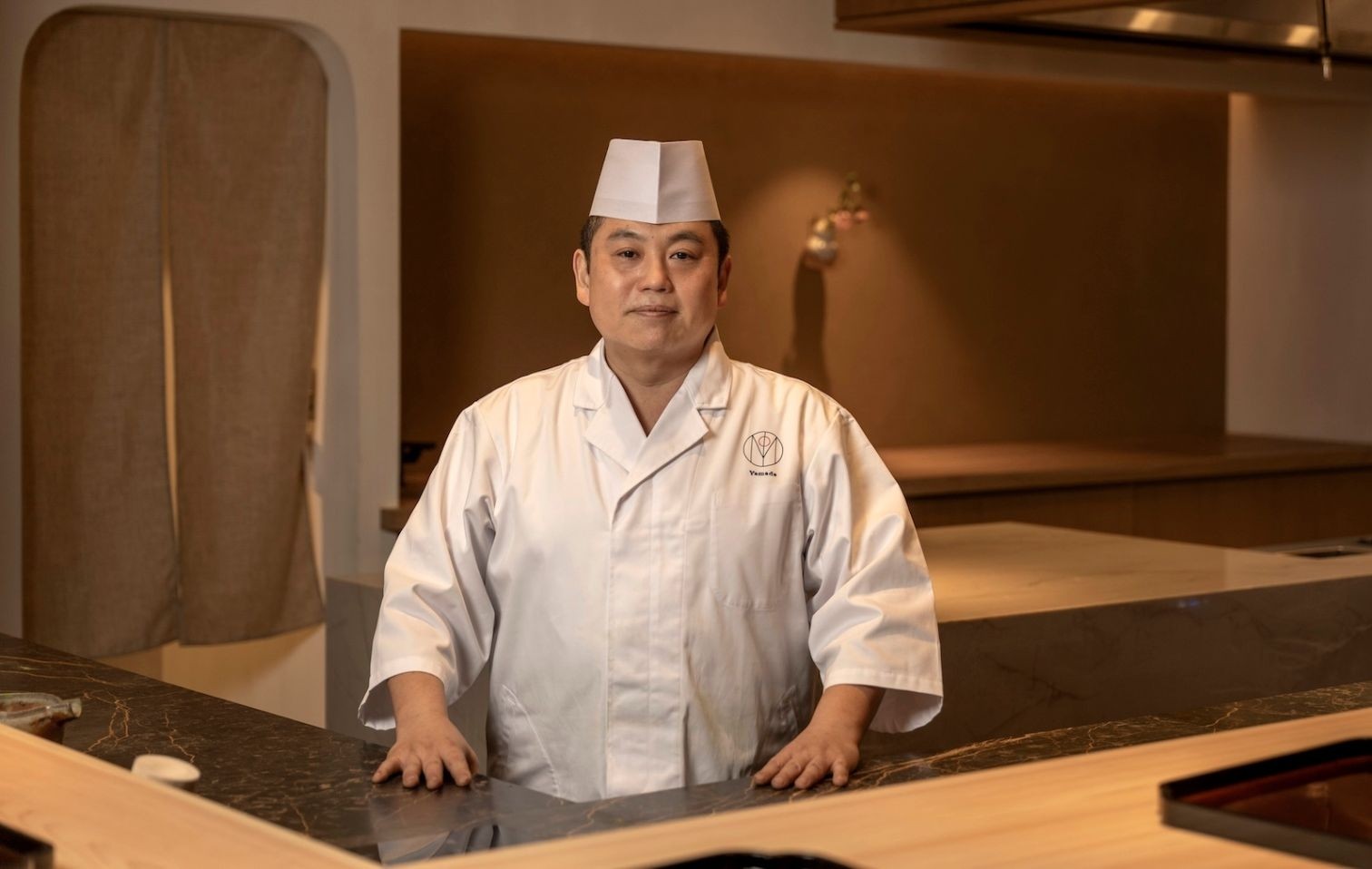
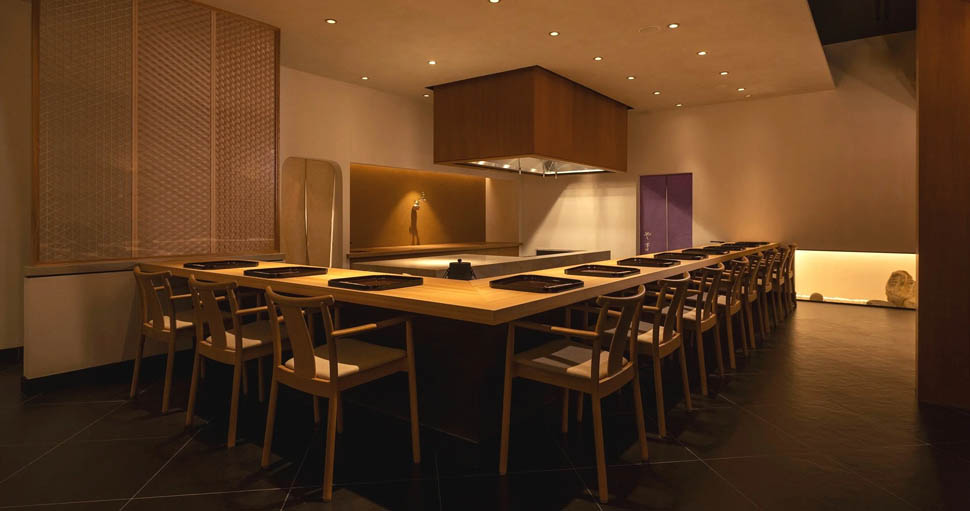
The entrance to Yamada promises nothing solemn. Access is through the Canal Arcade, a shopping gallery in the heart of Chinatown—a place more for passing through than for arriving. Yet behind a discreet threshold lies a parallel universe: a ten-seat kaiseki counter, simple and intimate, where every gesture carries the weight of a ritual. At the center of the scene, unfiltered and unmediated, works Isao Yamada, chef and master, who personally prepares each course of the ten-course tasting menu. No hidden kitchen, no superfluous theatrics: the dialogue is direct, almost intimate, between the chef and those who watch.
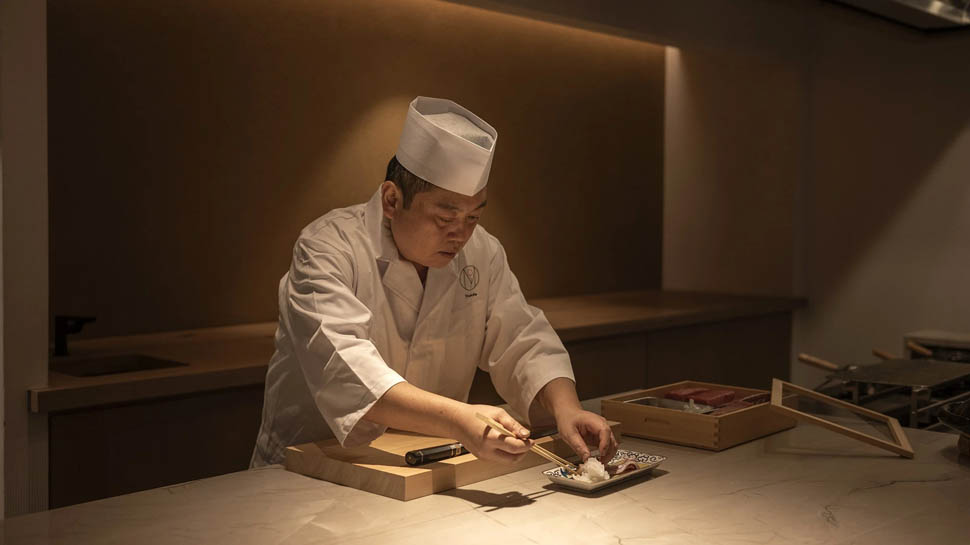
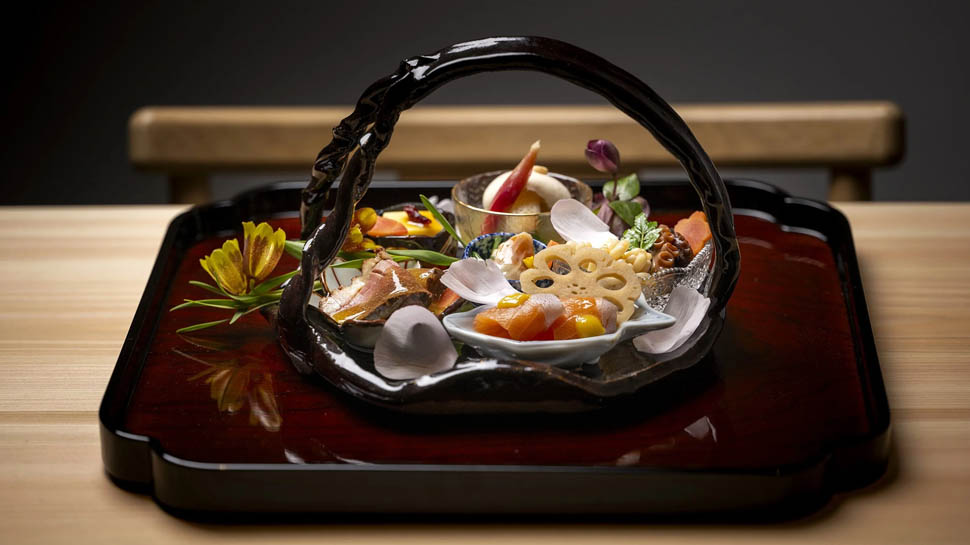
According to the New York Times, the experience offered by Yamada feels more like a revelation than a dinner in the Western sense—a deep immersion into “the subtle art of a rare form of Japanese cuisine.” The description hits the mark, because kaiseki is not meant to impress, but to accompany. Regarded as the highest expression of Japanese culinary tradition, kaiseki has its roots in the tea ceremony, evolving over time into a sequence of small dishes that together tell a precise, carefully measured, almost meditative seasonal story. Each ingredient is chosen at its peak moment, the shun, and every composition respects principles of harmony, balance, and attention that transcend taste to reach a philosophical dimension.
Isao Yamada embodies this tradition with a fidelity that is far from rigid. Professionally trained in Japan, he spent years apprenticing before opening his first kaiseki restaurant in Fukuoka in 2000, building a solid reputation within a notoriously demanding environment. The decisive step toward the West came through his encounter with David Bouley, a key figure in New York’s dining scene, who invited him to move to the United States to lead Brushstroke. There, Yamada earned a Michelin star and notable recognition from the New York Times, proving that a cuisine deeply rooted in tradition could engage an international audience without losing its identity.
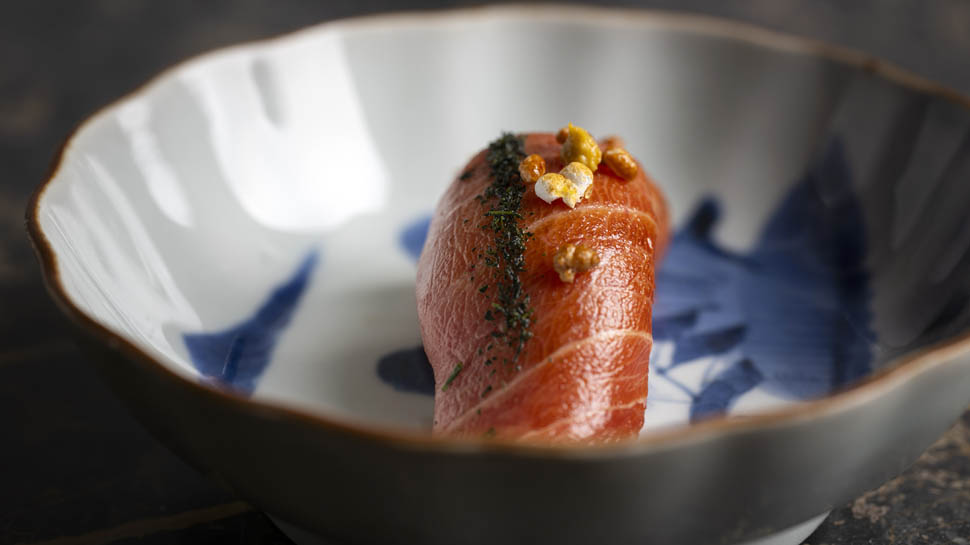
With Yamada, the restaurant that now bears his name, the chef seems to have chosen an even more personal path. The reduced format, absence of compromises, and absolute centrality of the artisanal gesture restore kaiseki to its original dimension—one of slow time and attentive listening. Ligaya Mishan emphasizes that the menu does not function as a mere succession of dishes but as a poetic dramaturgy, where each course prepares the next, creating a coherent flow that unfolds without abrupt interruptions. Seasonality is not an abstract concept but a tangible presence, expressed in colors, temperatures, and textures.
The recognition from the New York Times therefore carries a significance that goes beyond a single restaurant. In a city often associated with excess, speed, and competition, the decision to reward a place so intimate, almost ascetic, represents a statement of intent. The fact that this choice comes from the first major critic of the post-Wells era suggests a shift in perspective, a renewed focus on experiences that demand participation and mindfulness.
Yet Yamada deliberately remains understated, far from the spotlight and the logic of expansion. Ten seats, a single menu, the chef’s constant presence: elements that make each service unique and transform a meal into an almost private experience.
In this sense, Yamada’s success is also a testament to trust. Trust in the audience, called to listen and engage; trust in a tradition that does not need to be explained at all costs; trust in a culinary language that moves through subtraction and precision. Isao Yamada’s cuisine does not seek to adapt—it invites those who sit at the counter to step toward it, accepting its rules and its rhythm. With this review, the New York Times seems to have recognized not only technical excellence but also the cultural strength of this choice.

Within the unassuming walls of a Chinatown shopping arcade, Yamada asserts itself as one of the most significant places in the contemporary culinary landscape, demonstrating how the utmost refinement can coexist with the utmost formal simplicity. A destination that tells the story of New York not through noise, but through silence, focus, and the measured beauty of a gesture repeated with complete awareness.