Al Madrigale in Tivoli, located in the town's beautiful historic center, has enjoyed and continues to enjoy a success story.
The chef and the team
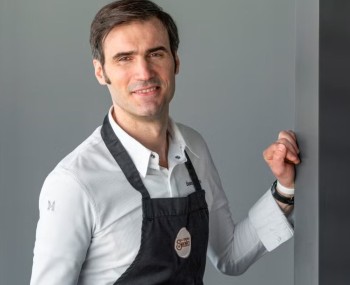
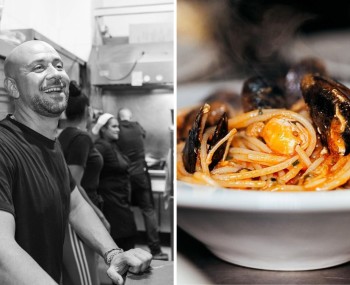
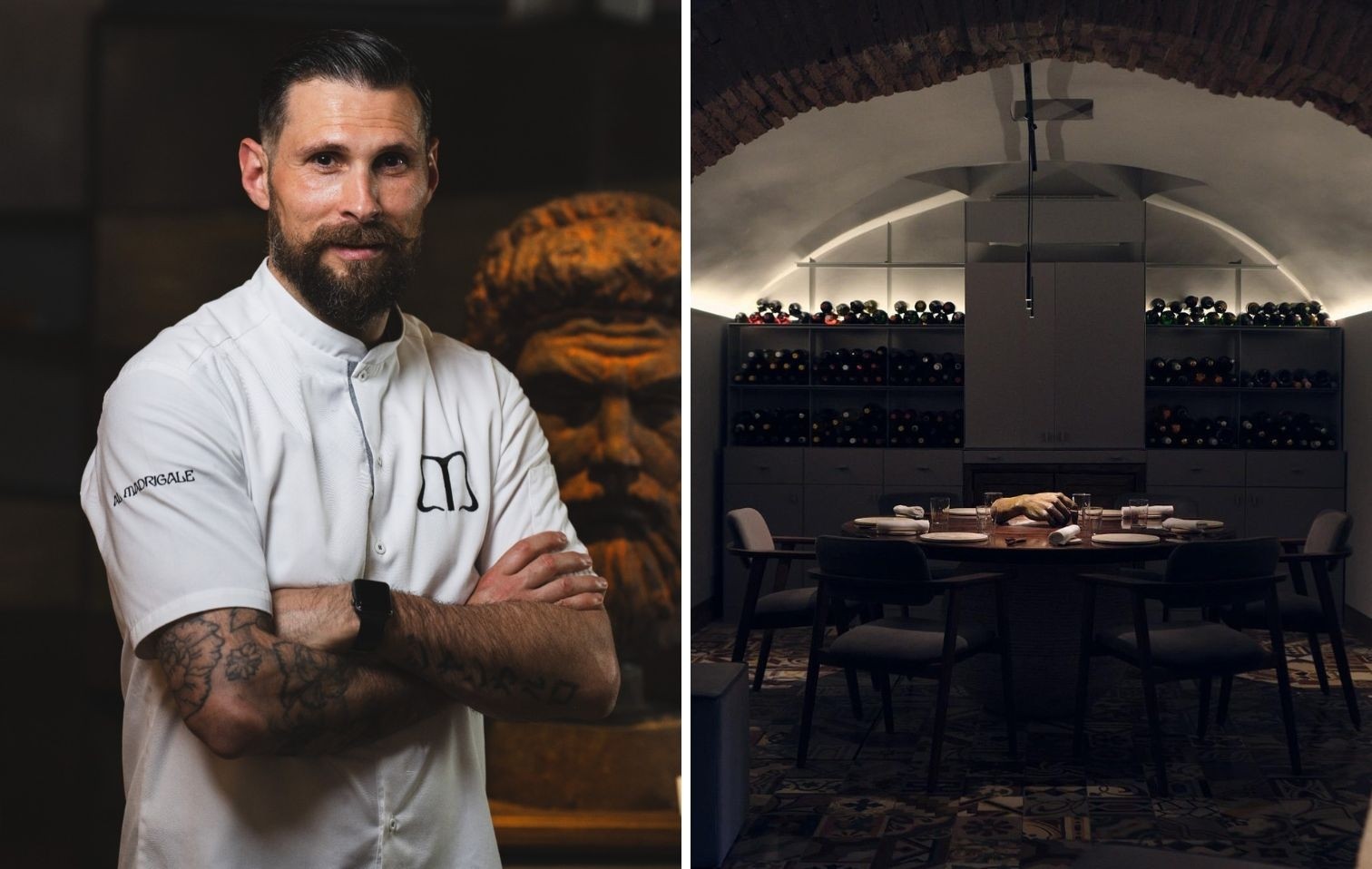
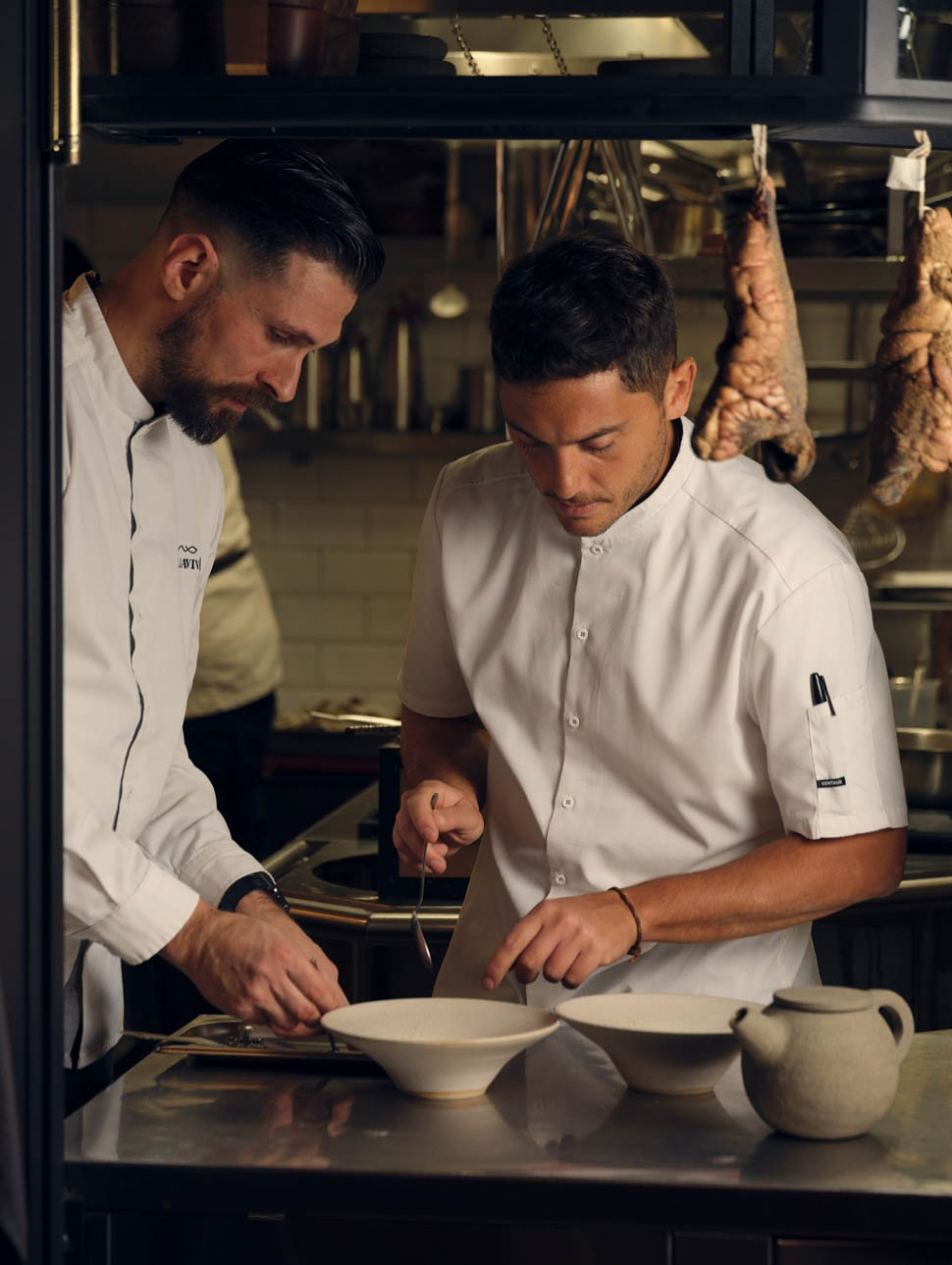
Opened on January 24, the restaurant created by Andrea La Caita after Li Somari, with Gian Marco Bianchi in the kitchen and supervised by Daniele Lippi and Benito Cascone (respectively chef and restaurant manager of Acquolina, two Michelin stars in Rome), has already been awarded its first macaron. And it happened in record time, on November 19, with a double surprise. Just before taking the stage in Parma to don the most coveted jacket for any chef, Bianchi had in fact just walked the same steps to be named with Al Madrigale as revelation of the year.
Full recognition, from a demanding and never generous guide, of the concept of ‘new rural cuisine’, which represents the most honest and truthful approach to a territory rich in products and authentic content to be narrated through dishes: “It is important for us to give an identity without the concept of rural cuisine becoming a slogan or ghettoizing, but rather a stimulus to further grow what this land has to offer.” When asked how he felt about the news of the Rossa's choice, Gian Marco, born in 1985, tells us: "Let's say I had a bit of a stressful week, because this recognition is important. I'm not speaking for myself, it's not a personal thing, fortunately this is a team effort: in my working experience, I've never seen a chef achieve his goals alone. It's impossible, you need to be supported by people who share your passion. I'm not talking so much about creative ideas, those can be the chef's alone, but in the end you need people to help you put them on the plate in a coherent way."
Gian Marco Bianchi's career path is atypical compared to that of many of his colleagues. He attended a scientific high school and then enrolled in law school, only to realize after a couple of years that this was not the right path for him: “My family came from completely different working backgrounds. I took a few exams and got good results, but I don't think I'm suited to theory. I'm more suited to practical work, using my hands, manipulating something that then gives me the visual result of satisfaction.” Bianchi lost his father in an accident when he was 17: “I played soccer, I also had this passion that could have become a profession because I was quite good at it. After what happened, I stopped for a few years, then started again, but I no longer had the same desire. Today, I really miss the locker room, I miss that friendly and playful atmosphere.”
If you think about it, it's easy to associate the idea of a team with that of a brigade. Gian Marco lived in the countryside and often had to stop at his grandmother's house to eat after school: "She wasn't a great cook, and I often wanted something different, so I would walk two kilometers and go home to make something for myself. So I invited a friend, then another, and I cooked these caponatas that I don't know how I came up with, and they kept saying, ‘Wow, this is so good! ’ They gave me a kind of motivation, a reason to cultivate this passion.“At 25, Gian Marco was still playing soccer and coaching children: ”I was able to earn some money, but I no longer had much of a future in sports. My mother wasn't pressuring me to get a job, and I couldn't find a path, so I decided to try to see if my passion for cooking could become a serious job.“ So he got his first experience in ”battle-ready" restaurants, to understand the rhythms, the schedules, everything that went on in the kitchen. Because I didn't even know what the Michelin guide was. I was a real novice, I didn't go into it for that reason, nor because I watched Masterchef. I liked cooking, but I didn't know if I was capable of it.“ However, working in a ‘battlefield’ kitchen was a revelation: ”I liked the adrenaline rush of serving."
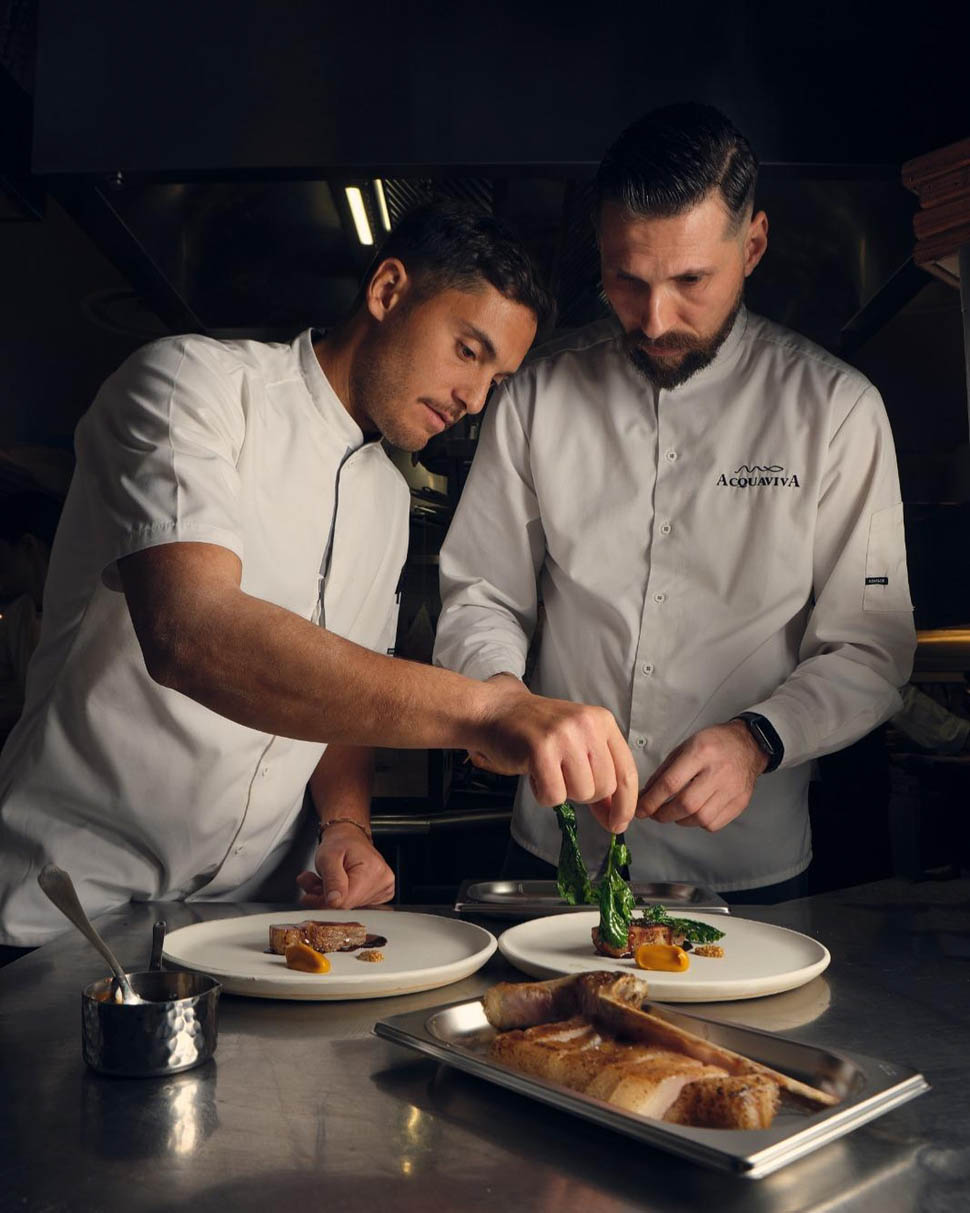
From then on, he began to gain experience in a restaurant in Rome's Ostiense district, which was advised by Anthony Genovese: “There I saw fine dining for the first time, where there was a focus on preparation, ingredients, and even storage methods. It was a different kind of restaurant from what I had experienced before.” He then moved on to Convivio Troiani: “I entered what was, in my opinion, the most important experience because I feel like a son of Angelo Troiani, because even now I think like him about many things, such as attention to waste and the economic management of the restaurant.” In other words, what true sustainability should be. “Today we talk about certain things that Angelo was already doing 15 years ago.” From Troiani, he moved to Acquolina, when Giulio Terrinoni was leaving and needed people ready to step in. In the kitchen, he learned to cut up half carcasses and work on cuts: "You became a butcher, a job that not everyone does. It was also mentally stimulating because we had to create dishes that used the whole animal. Daniele (Lippi) was already in the kitchen, which is why I have such a close relationship with him today, one that began many years ago and is also a relationship of friendship, esteem, and respect. In my opinion, Daniele is one of the best in Italy."
Bianchi is someone who moves around to learn, as we see at Maaemo in Oslo: "My first experience in a large kitchen brigade was wonderful, even if places like these are perhaps too specialized. They give you great ideas, the chance to understand many working methods, product processing, special combinations, lots of mental stimulation, but before you go there you need to have the basics, otherwise you become the ‘little chef’ with tweezers; then they say ‘make me chicken cacciatore’ and you don't know how to do it. You have to know how to do both things." From Norway, we find him in Val Badia, first with Nicola Laera at Stua de Michil and then with Matteo Metullio at La Siriola, until the restaurant closed. From there he went overseas, to Alinea in Chicago and Eleven Madison Park in New York. Back in Europe, he worked with Yannick Alléno in Paris and then with Andreas Caminada at Schloss Schauenstein in Switzerland: “The team was very small, with a really healthy atmosphere, a strong group of people who worked very well together.”
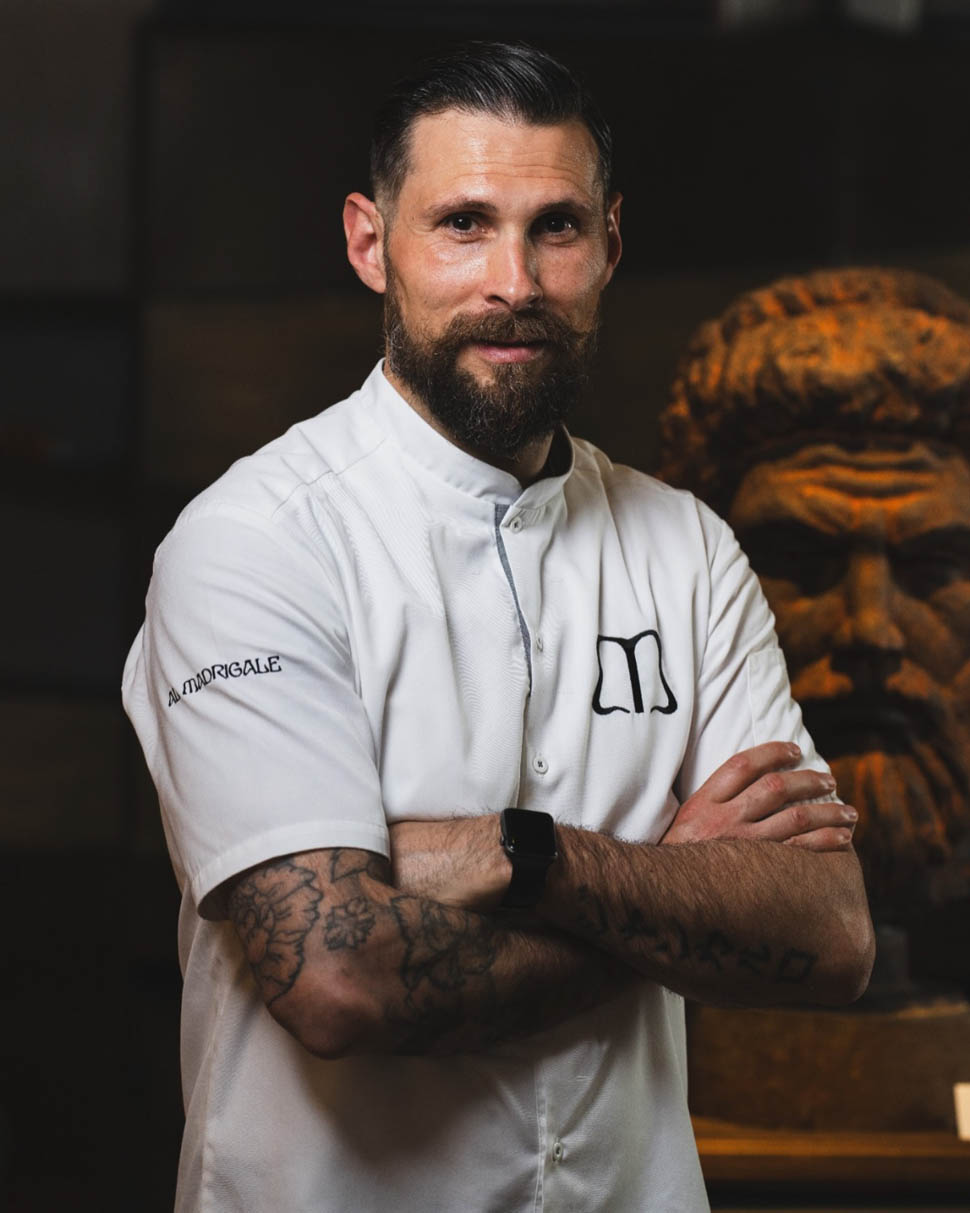
A couple of months at Norbert Niederkofler's court, then another stint at Acquolina as sous chef, and Bianchi is ready to spread his wings in Tivoli: "I think Daniele always understood that I could achieve my goals on my own, so he always gave me the freedom to go and see for myself. It's not easy to find worthwhile projects; I've had many doors slammed in my face, including promises that people never kept. When the opportunity arose to discuss this with Andrea La Caita and the Primerano family, I thought about it for a while; I'm from the area, I live 20 km from Tivoli, and the culinary concept was mine, so it was very easy for me to think things through. So I said to myself, ‘maybe this is the right thing to do,’ and that's how this journey began."
The restaurant and the dishes
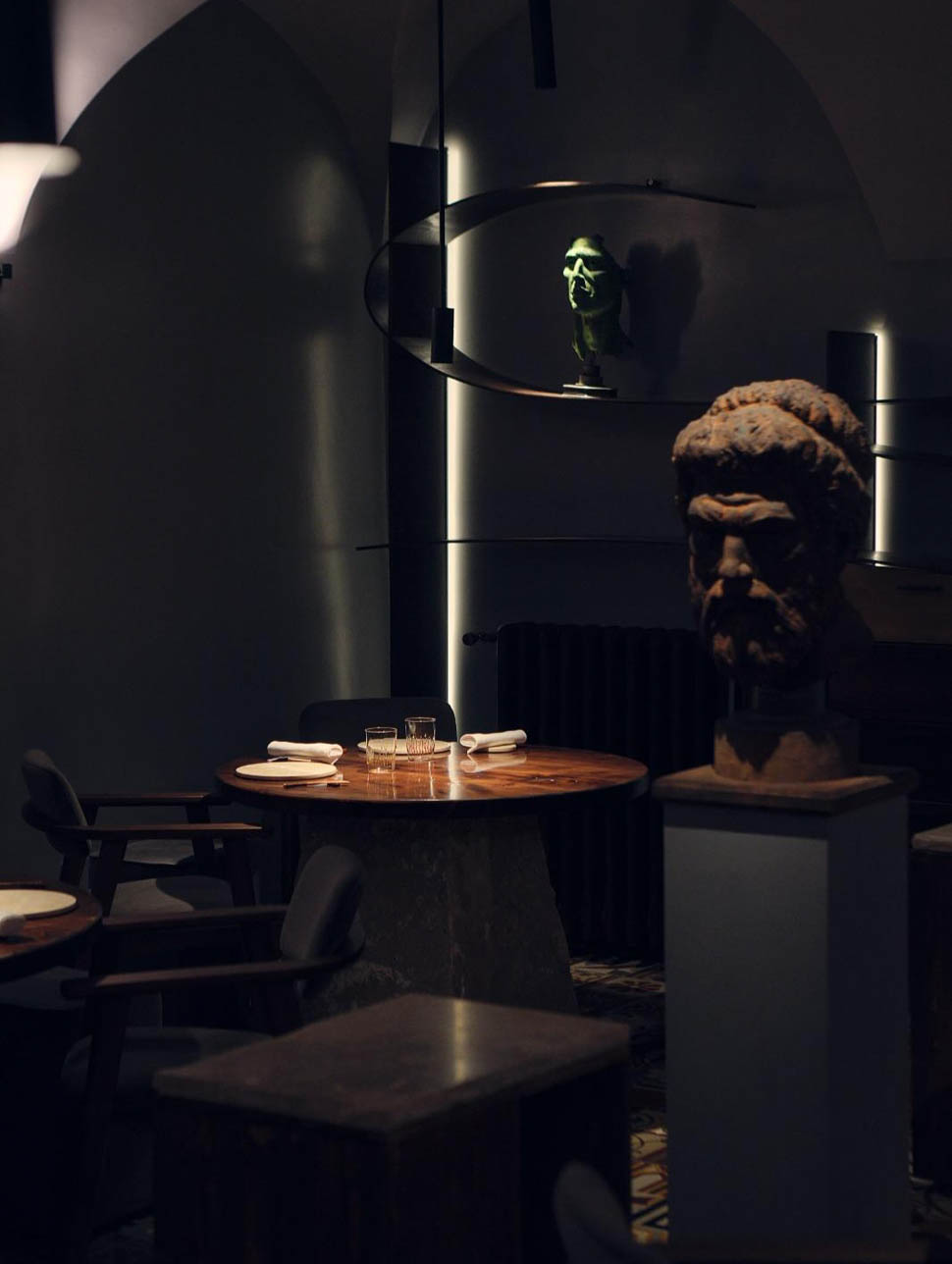
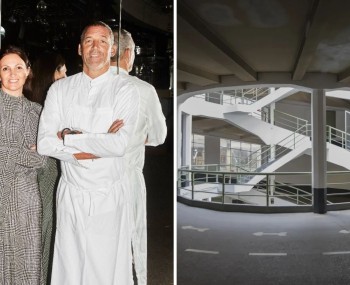
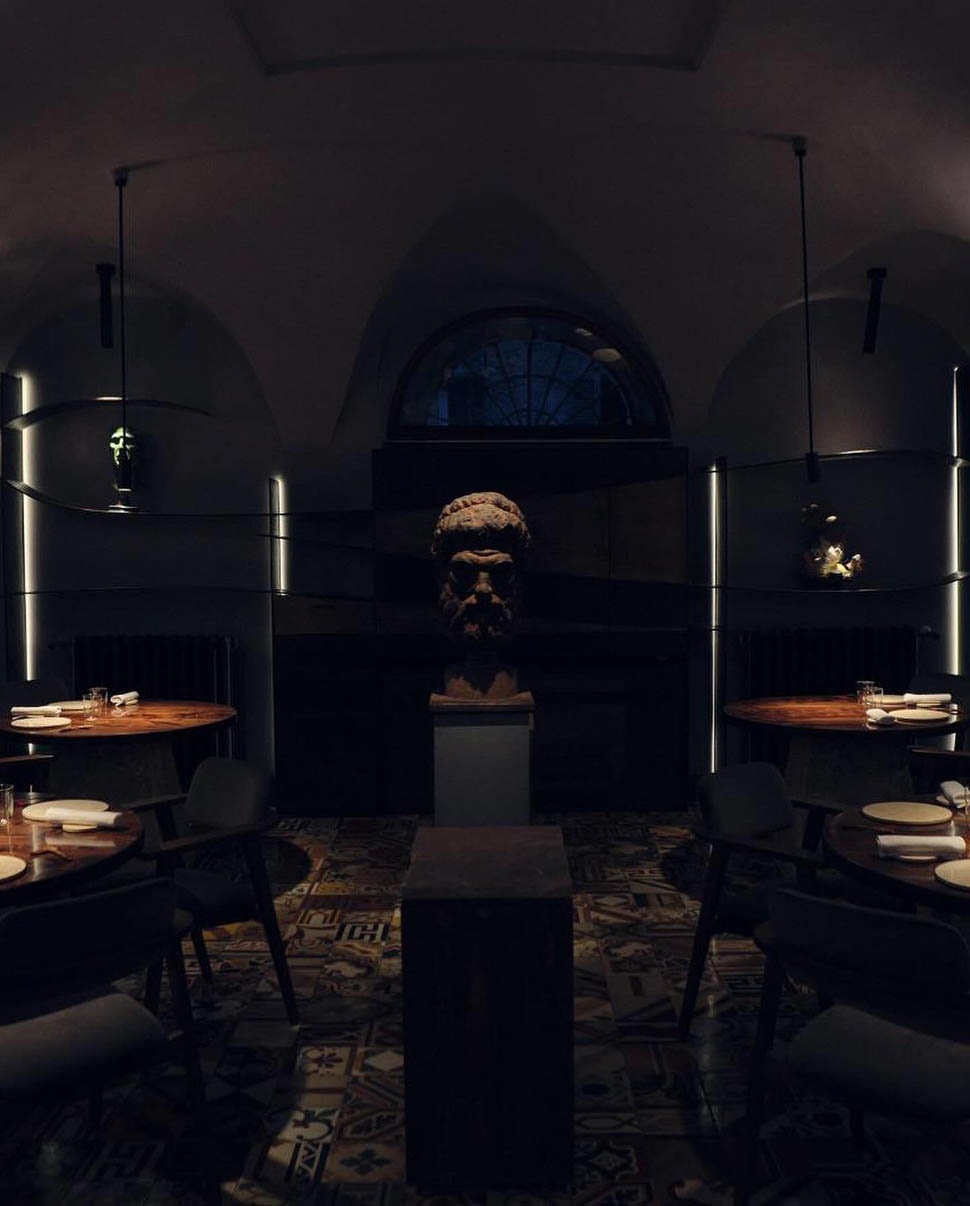
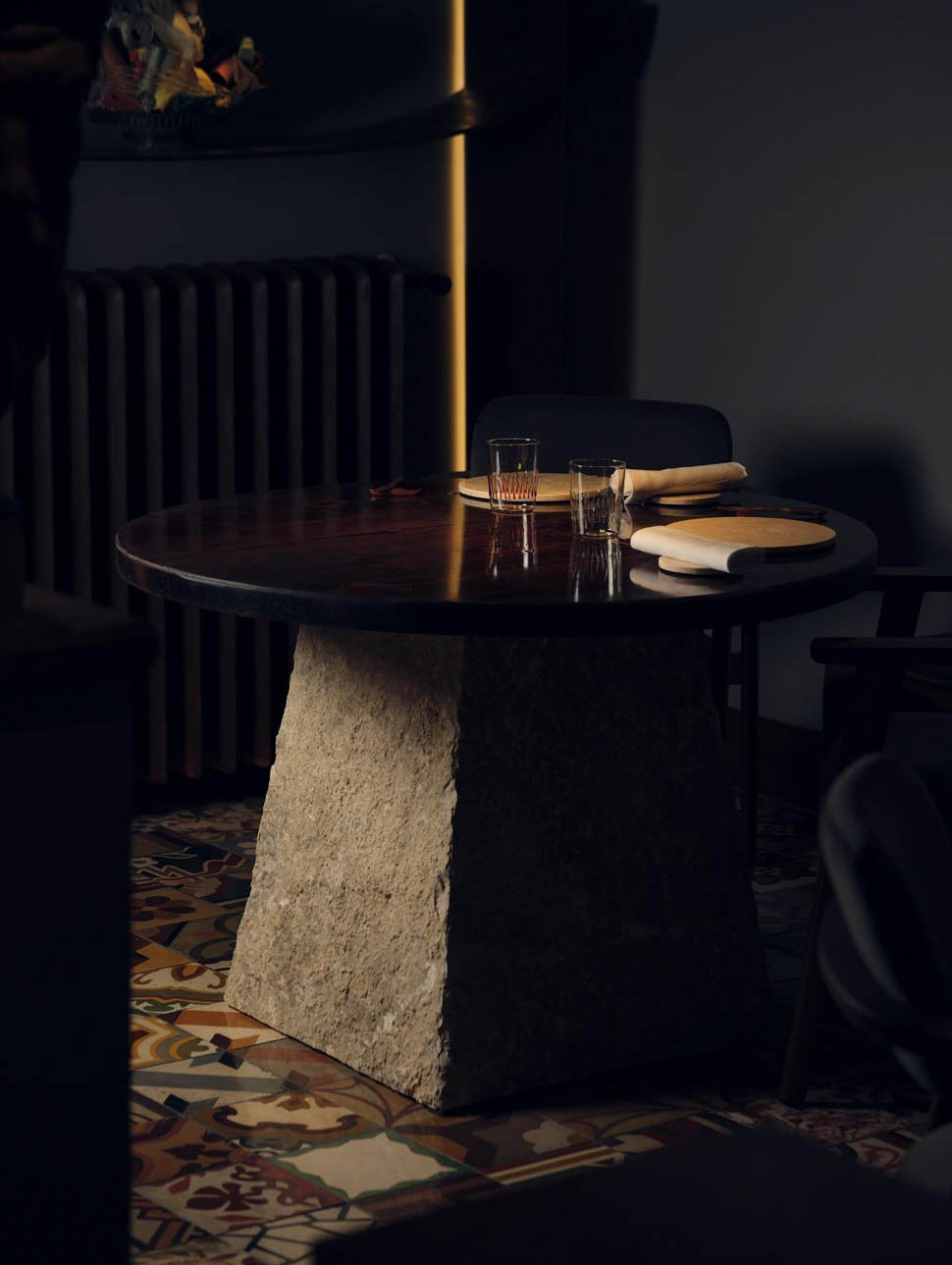
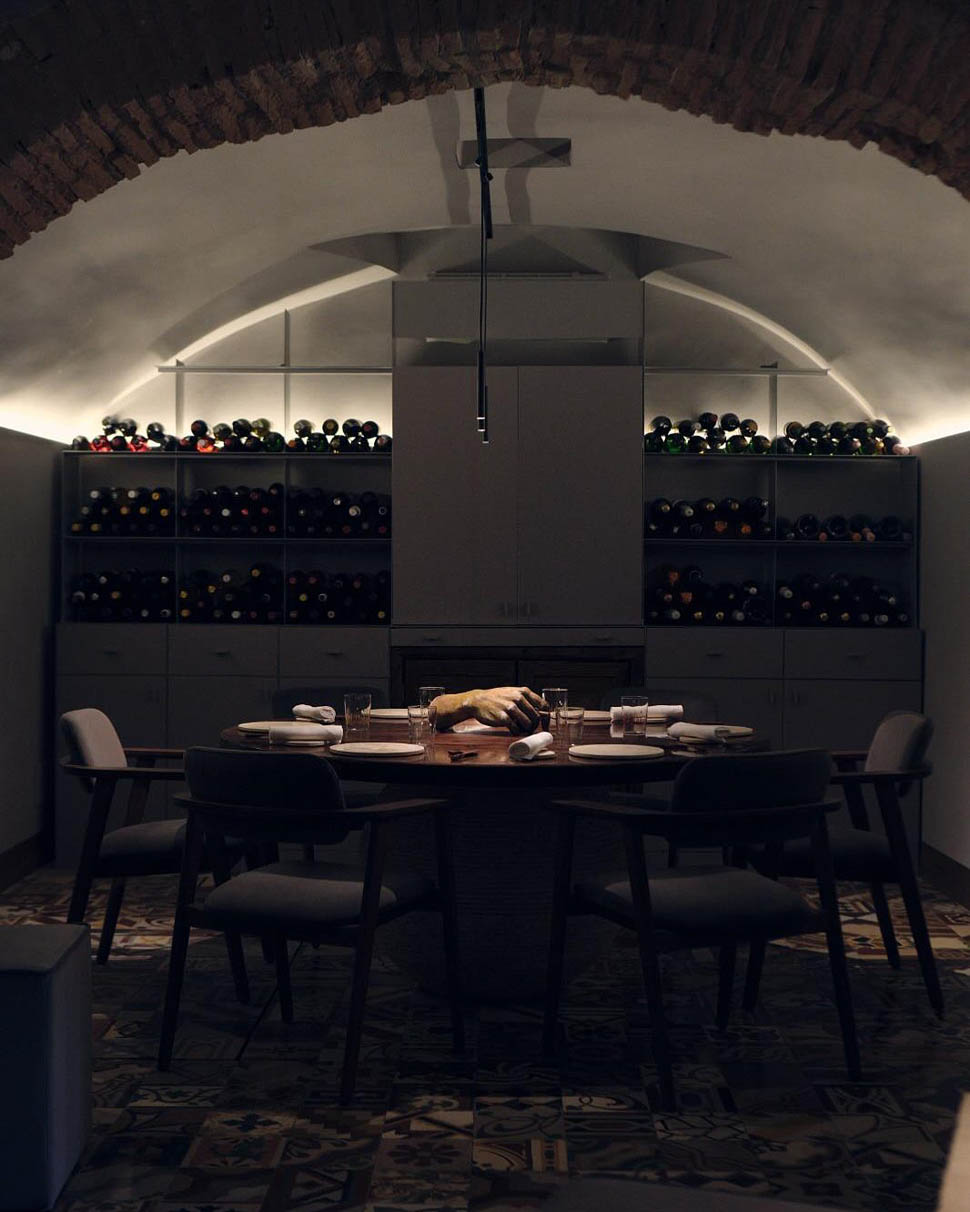
The setting of Al Madrigale is evocative, with charming dim lighting, recycled iron and marble furnishings, and contemporary artwork. Guests are seated at their tables on the second floor, reached via a spiral staircase, after enjoying some excellent appetizers at the entrance and stopping at the open kitchen. They then arrive in a spectacular dining room with a few well-spaced tables and a central sculpture. The maître d' is Danilo Alessi, while Lorenzo Genga is in charge of the original wine list. He tells us: “Our selection is still evolving; our goal is to highlight the regions linked to transhumance, especially those in central Italy, starting from Tuscany and ending in Lucania, with winemakers who produce using an artisanal approach. We favor small businesses with a strong identity that speak of their land.”
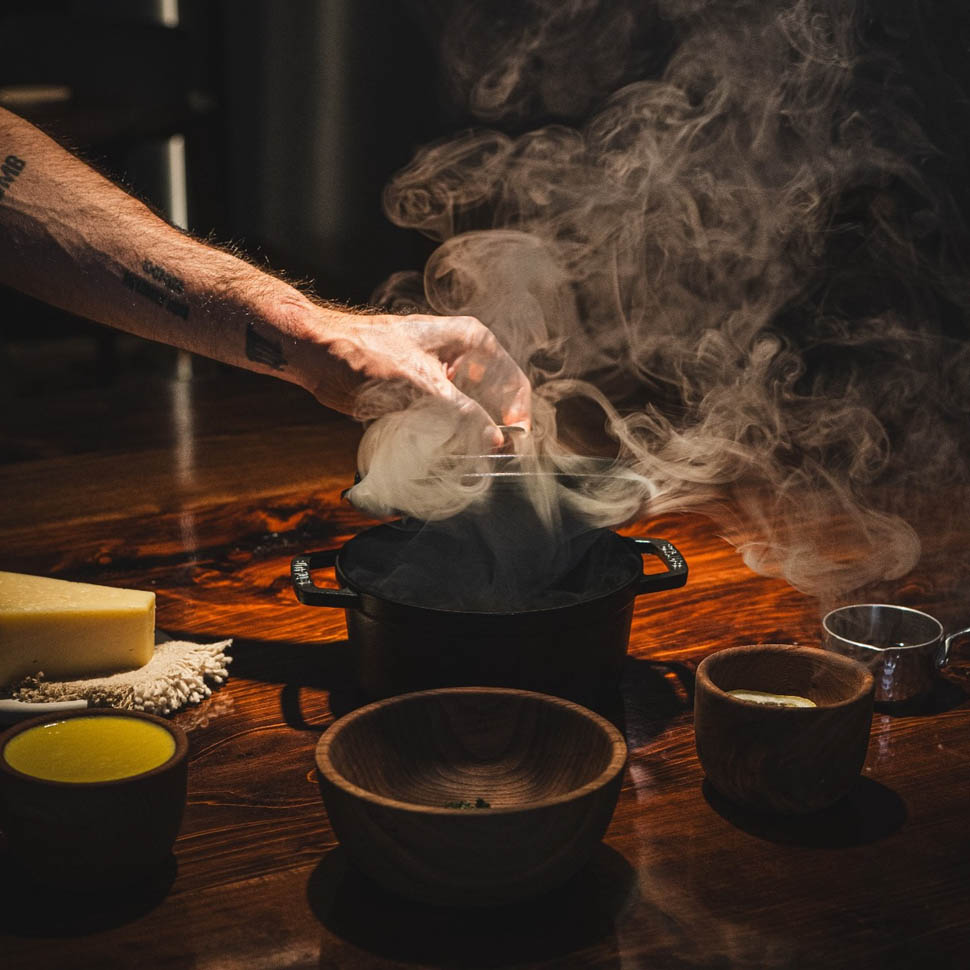
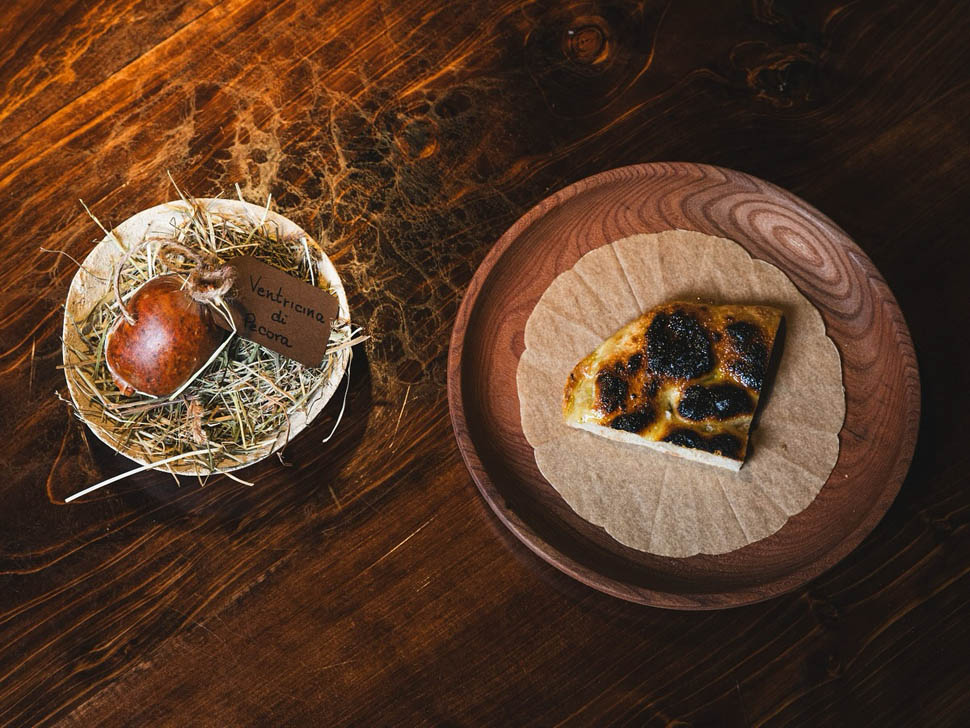
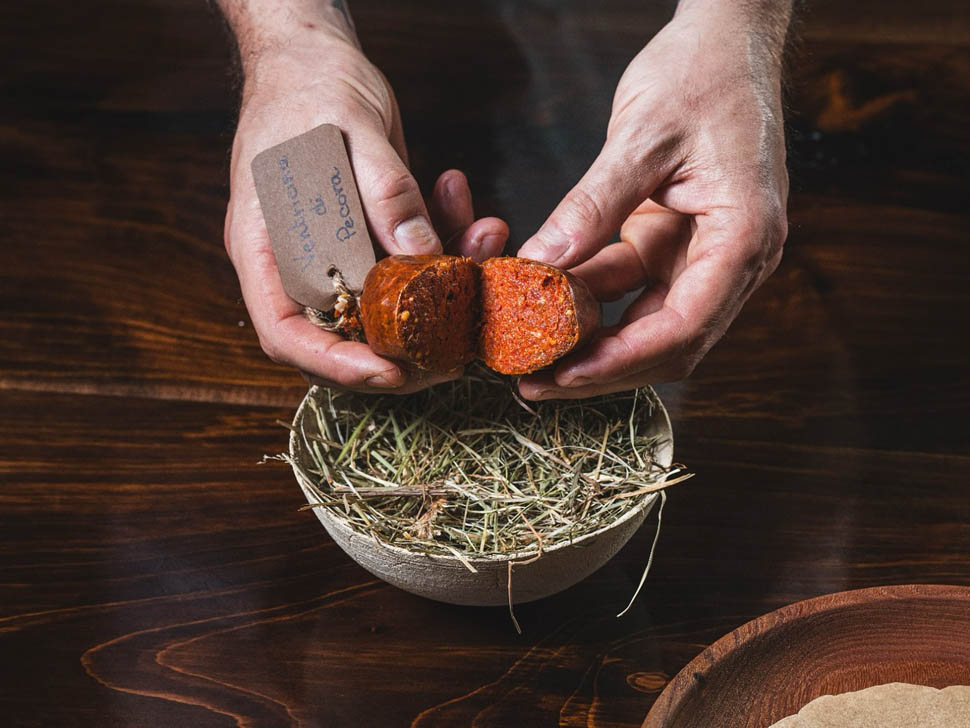
The pairings, offered with both à la carte dishes and the two tasting menus Misera/mente and Migra/azione, are decidedly original and successful. ‘New rural cuisine’ is a definition that fits perfectly with a style that accurately outlines the gastronomic identity of this place of taste and its link with the concept of transhumance of flocks and herds. We are at Al Madrigale and there is no room for confusion: the personality is clear and evident, starting with the ventricina with grilled focaccia, a real delicacy. This typical Abruzzo salami, usually made from pork, is made with sheep meat and served with a focaccia made from ancient grains, sourdough and 24 hours of leavening, regenerated with steam and then finished on the barbecue.
In sturgeon lard, the fish is processed until it has the same consistency as its Colonnata counterpart, first marinated in a balanced salt mixture for 24 hours and then breaded in a mixture of the same spices. It is served with blackberries in a sweet and sour solution and pickled elderberries. At the table, it is finished with a sauce made from moldy rye bread: stale rye bread is inoculated with ‘Aspergillus oryzae’ and left to lacto-ferment for three days. The resulting sauce is irresistibly flavorful, with particularly intense umami notes: the idea is to make full use of the bread. The name ‘egg in Purgatory’ has its roots in popular Catholicism and is a kind of metaphor, with the egg white representing souls and the yolk symbolizing the flames of purification in the Purgatory of the Divine Comedy, where souls await salvation.

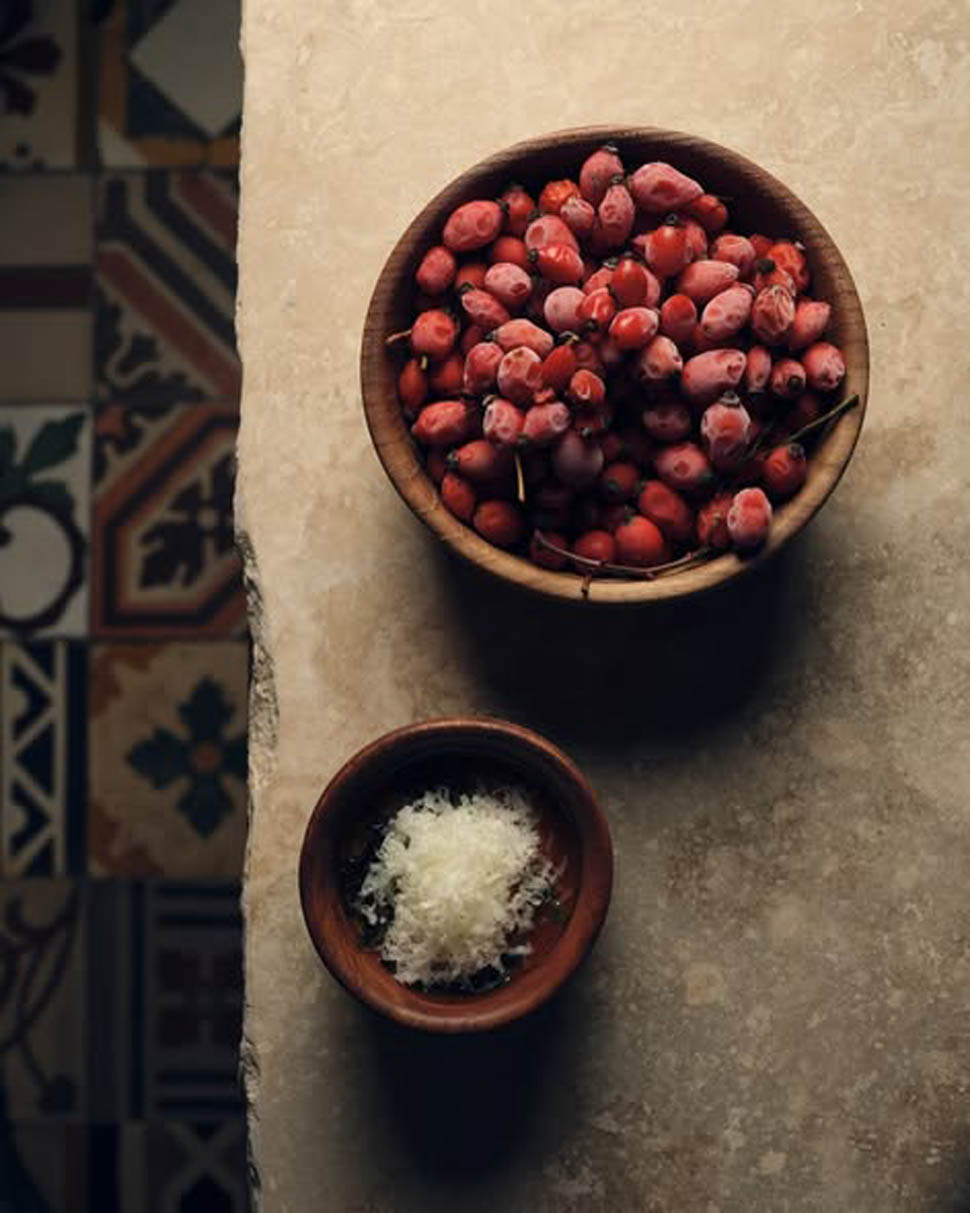
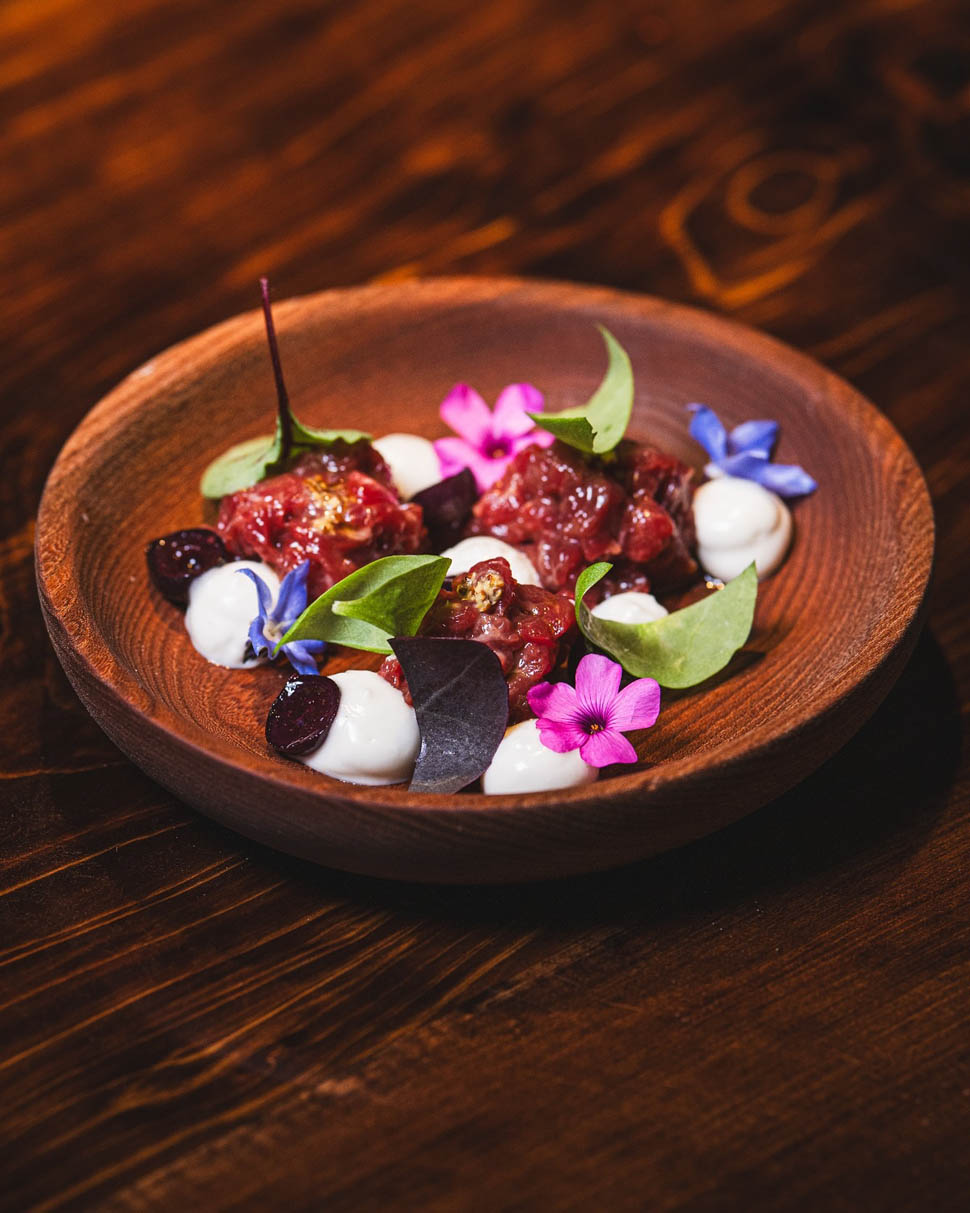
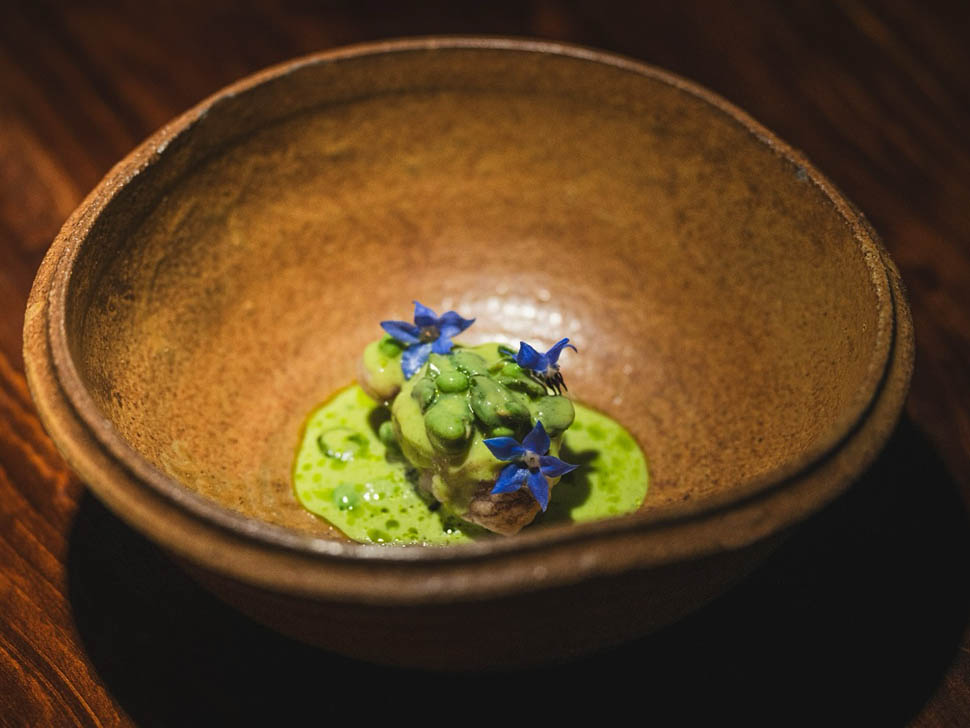
Also known as uovo alla contadina (farmer's egg), it was often prepared to use up leftover sauce from other dishes: Sunday ragù or pasta sauce and eggs were cooked directly in the sauce, without the need for other seasonings. Here it is served with a sauce made from rose hips, which are very common along the sheep tracks: sweet and sour, they are reminiscent of tomatoes; the dish is finished with a sprinkling of mature sheep's milk ricotta. Land transhumance meets sea transhumance in ‘sheep and oysters’: it is not widely known that oysters are subject to transhumance; here, those from the Po delta are used. The minced sheep is seasoned with shallots, mustard seeds, black pepper, and anchovy sauce, and the dish is completed with frozen strawberries and wild herbs, resulting in a wonderful harmony and iodine sweetness.
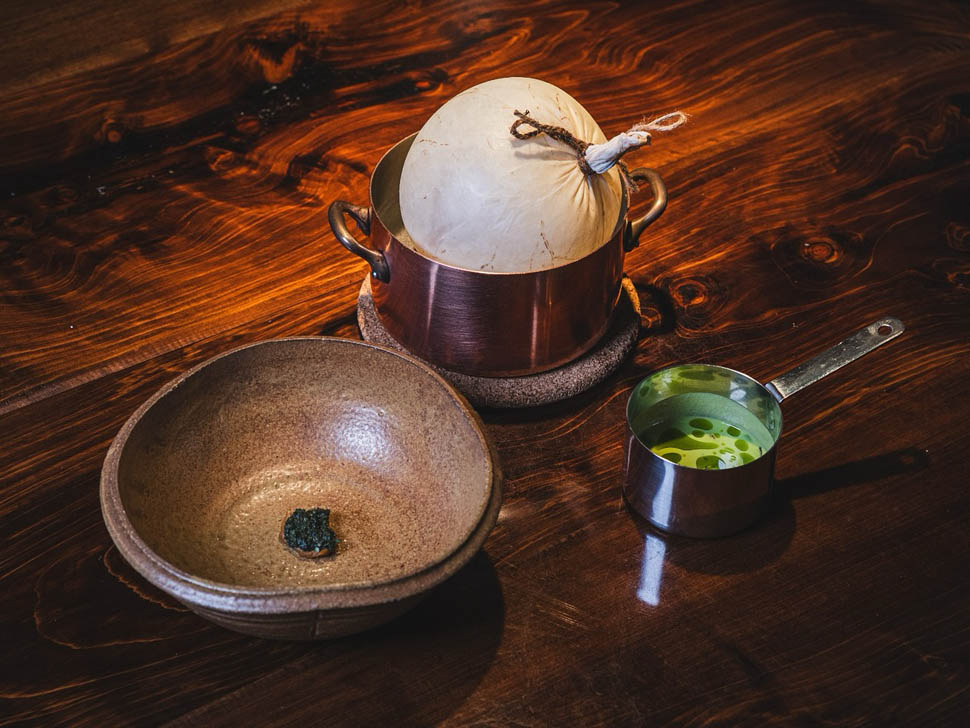
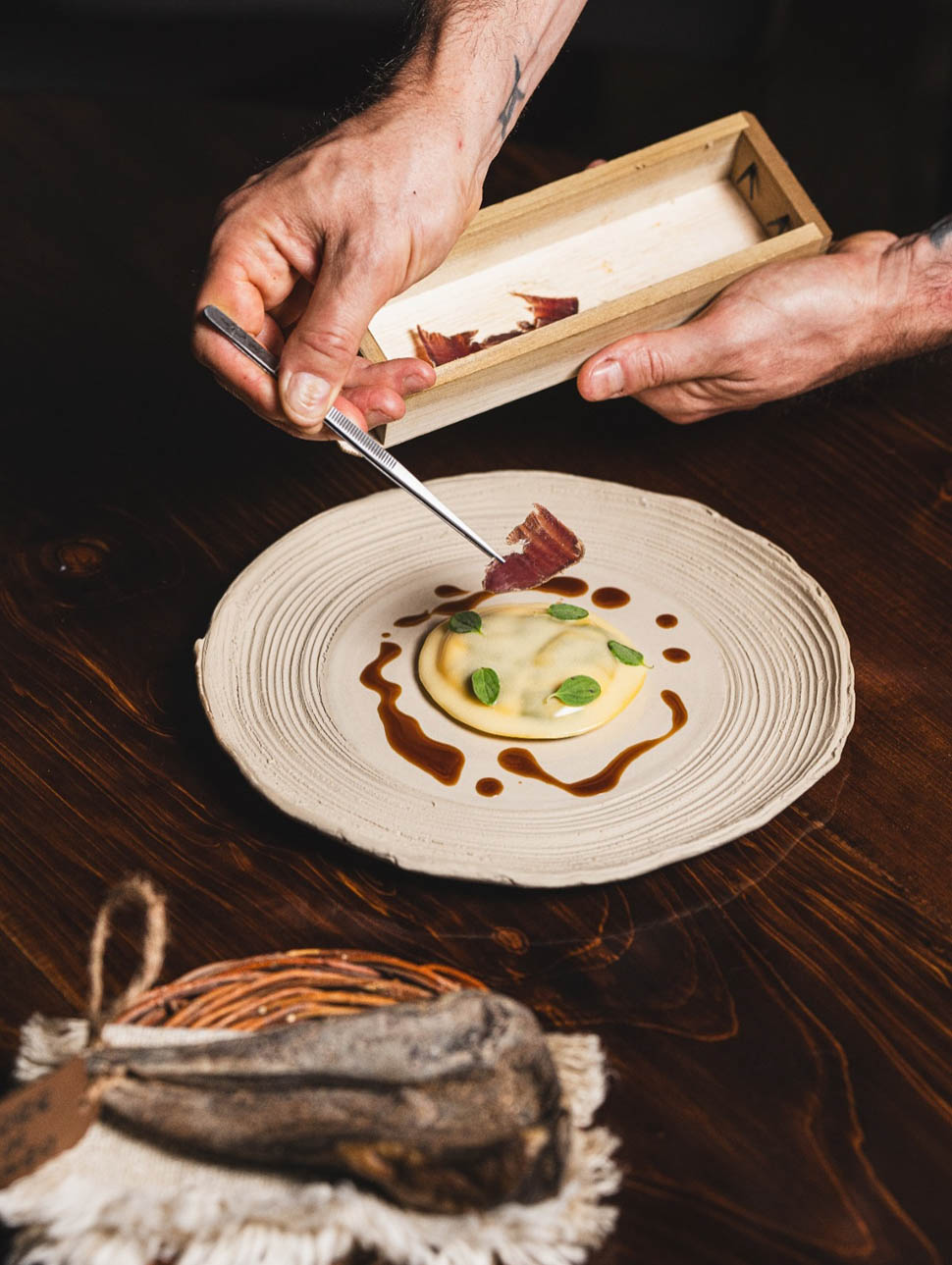
Exquisite in texture and flavor, animella and lupini: the former is fried in clarified butter and then finished on the grill; it is served with pickled elderflowers and sea fennel (spaccasasso). A sauce made from smoked and natural lupini beans is served at the table. The ‘raviolo del pastore’ is a pastoral take on the classic ricotta and spinach ravioli. Sheep's milk ricotta and wild herbs, gathered by the kitchen staff, are used: their bitterness and herbaceous notes are reminiscent of spinach. The dish is finished with sheep's milk stock and dried meat obtained from the curing of a beef heart. As Bianchi recounts: “Dried meat was one of the few foods that, given its easy preservation, shepherds could take with them during transhumance.”
All this just to describe a few of the dishes, because here at Al Madrigale, the combination of taste and technique is a perfect example of gastronomic harmony in step with the times. A paradigmatic place.
Contacts
Al Madrigale
Via Ponte Gregoriano, 1, 00019 Tivoli RM
Phone: 0774 011261