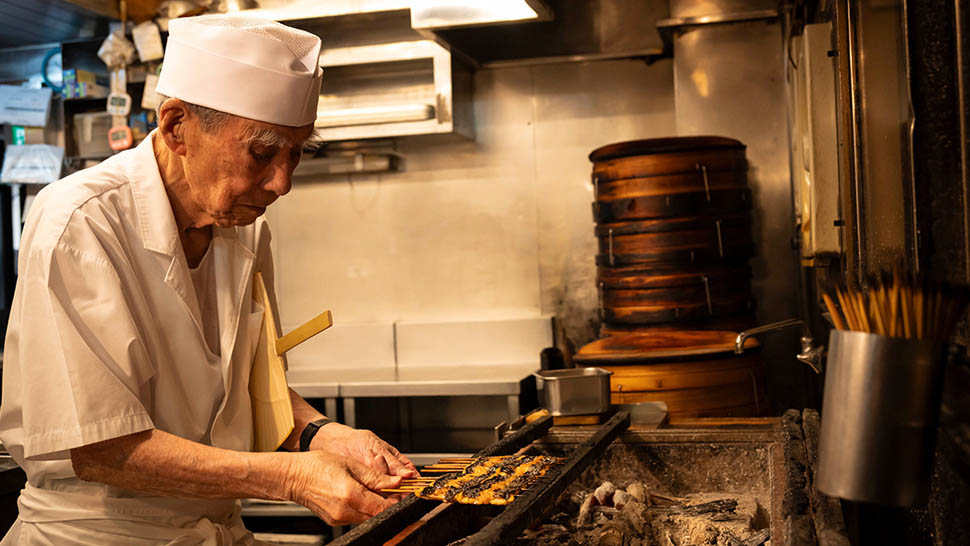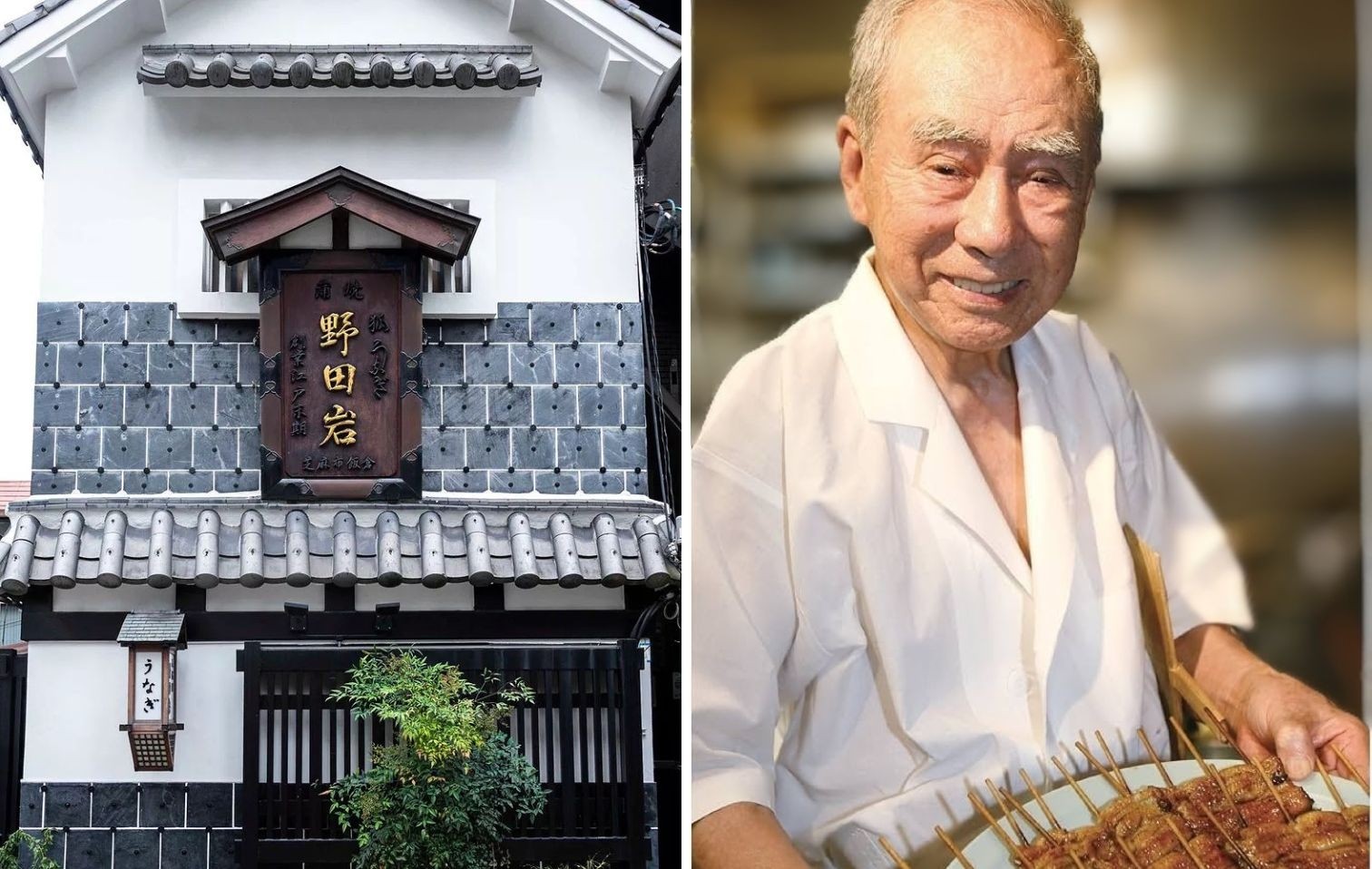
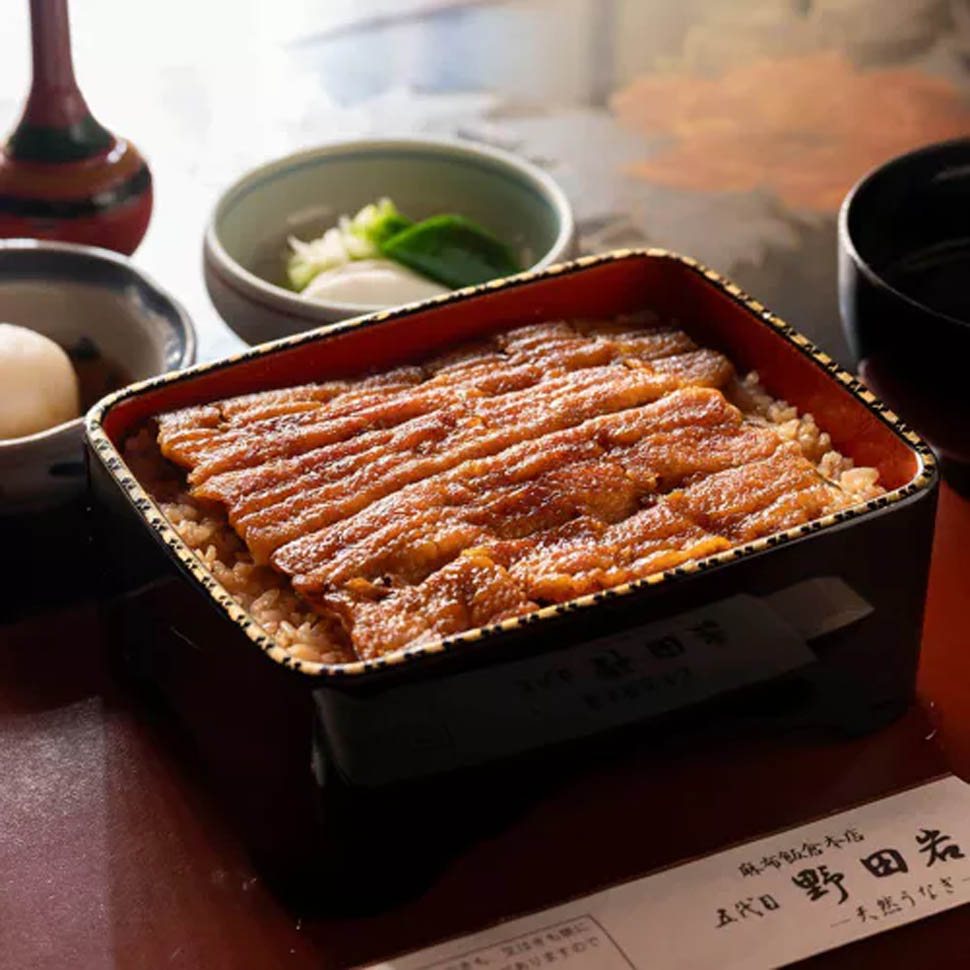
In Japan, there are professions that are not chosen: they are inherited as a destiny. For Kanemoto Kenjiro, fifth generation owner of the Nodaiwa Azabu-Iikura Honten restaurant, cooking has always been much more than a job: it is a way of life. At 97 years old, the master of unagi—freshwater eel—continues to work every day behind the grill, preserving a tradition that has its roots in the Edo period but has never stopped evolving.
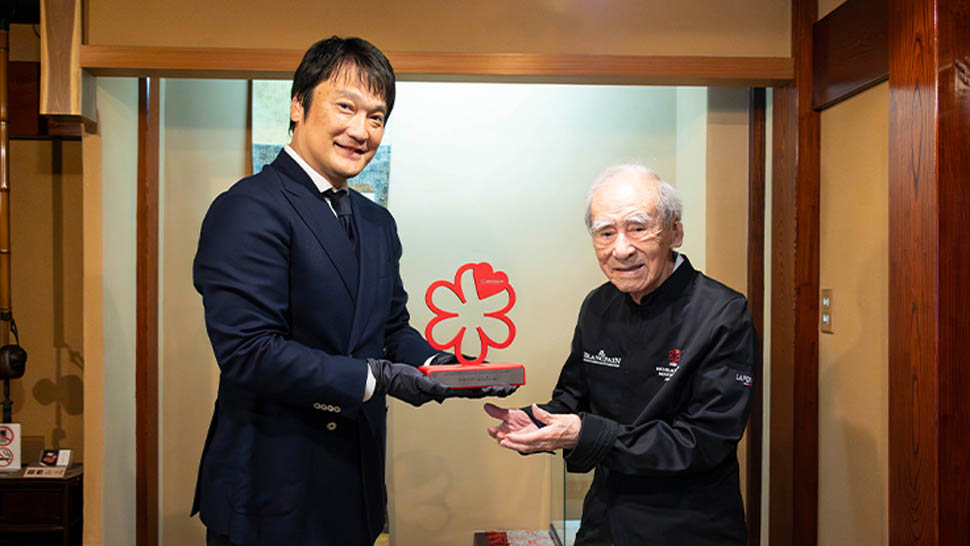
His extraordinary career has been recognized with the MICHELIN Mentor Chef Award, an honor that celebrates chefs who inspire, train, and nurture new generations. Because Kanemoto is not just a master chef: he is a mentor for life.
The two voices of destiny: rigor and humility
His story is shaped by two souls, the legacy of a father and mother who were polar opposites. From his father, Kanemoto learned the absolute discipline of the artisan: the meticulous selection of fish, the precision of every movement, respect for the raw ingredients. From his mother, on the other hand, he received the wisdom of the merchant, the humility of those who do not boast about their name, and the awareness that “a restaurant that does not nurture its people is destined to disappear”, as reported on La Rossa's website in a special feature dedicated to the chef. These two teachings—rigor and flexibility—have become the pillars of his philosophy. For him, tradition is not a cage but a form of freedom, a language that is renewed only when it is passed on with awareness.
A tradition reborn
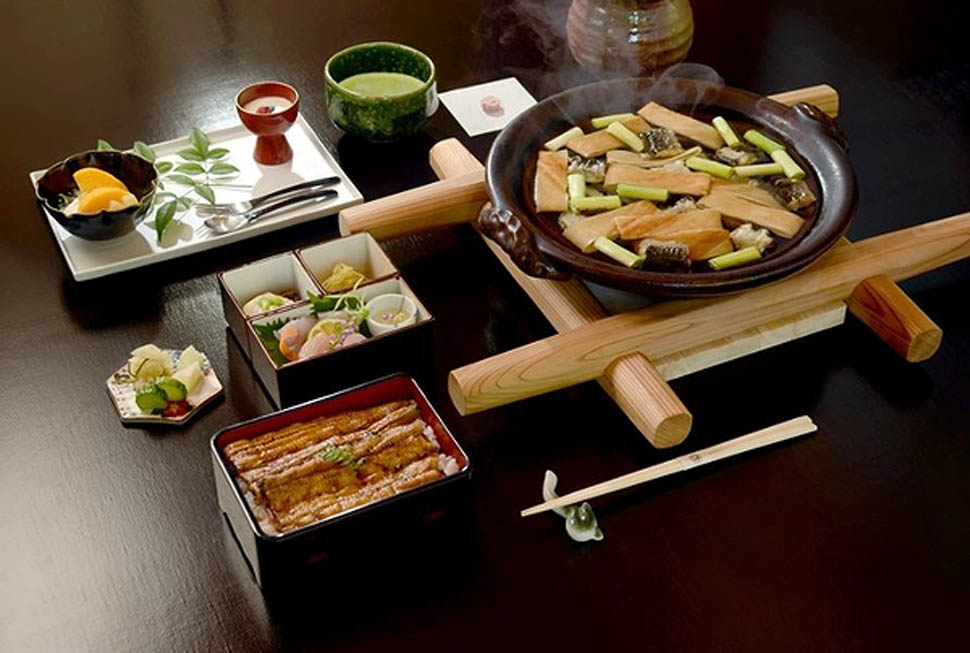
In Kanemoto's kitchen, loyalty to tradition coexists with timeless curiosity. In the 1970s, when Japan was beginning to modernize, he decided to take unagi outside his restaurant, creating the first retort pouches of grilled eel—a pioneering idea for the time. But his innovative spirit did not stop there: he invented a “shirayaki” (natural grilled eel) with caviar and chilled white wine, a surprising combination that still wins over customers today with its elegance.
Japan and France: two worlds, one passion
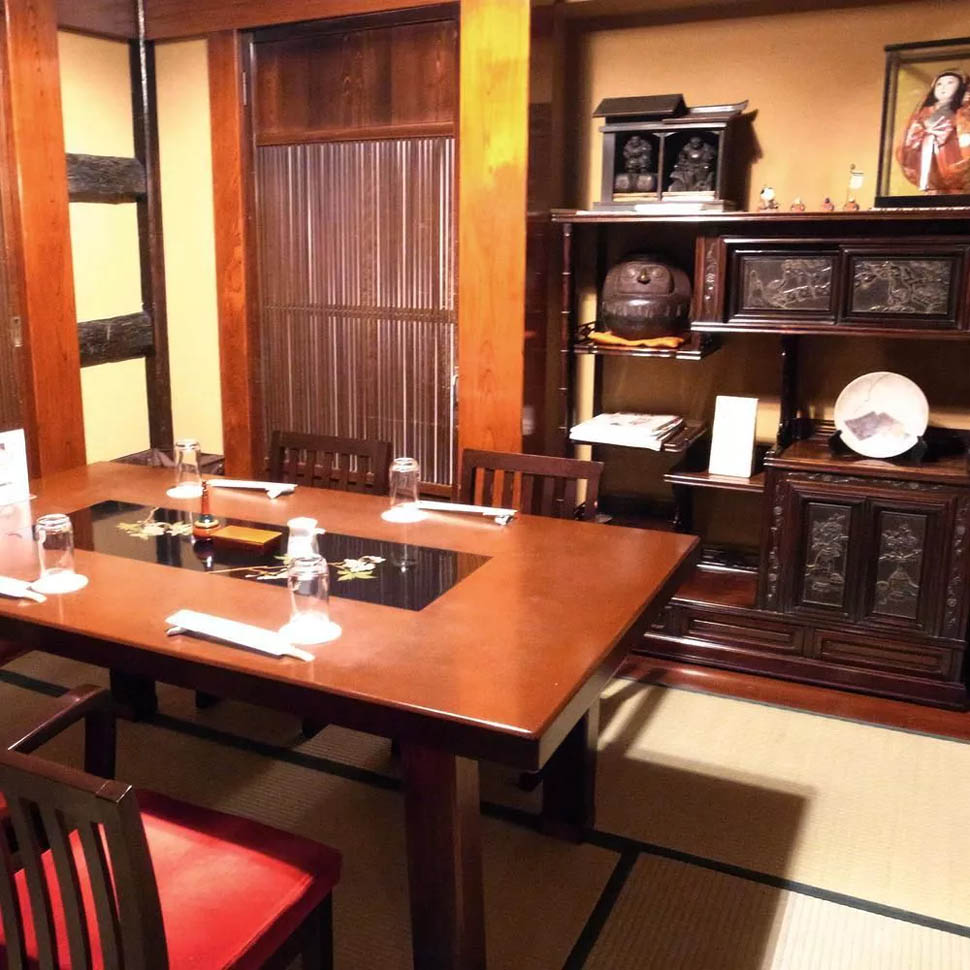
Few people know that the master of unagi is also a tireless traveler. Throughout his life, Kanemoto has visited France more than a hundred times, venturing beyond Paris to discover legendary wine cellars, bistros, and restaurants such as Cheval Blanc and Pierre Gagnaire. Over time, France became his “second home.” From those trips, he brought back a valuable lesson: cuisine is not only about the food, but also about the service and atmosphere. It is a lesson he has delicately applied to the world of unagi, bringing a sense of harmony and hospitality to his restaurant that today defines the Nodaiwa experience. And when he wasn't in the kitchen, he sought other peaks to climb, literally: at the age of 80, he climbed the Matterhorn and the Himalayas, driven by a curiosity that knows no age.
The art of training people
“A restaurant cannot survive unless it trains people.” This is the credo that guides Kanemoto every day, as he still stands in the kitchen watching the apprentices at the grill.
Following the ancient Japanese proverb “three years to skewer, eight to cut, a lifetime to grill”, he teaches that mastery cannot be improvised. He trains young people from the basics, with patience, because he believes that only those who learn from the beginning can one day carry on an authentic legacy. In this way, Nodaiwa is not just a kitchen, but a school of life, where each person grows as part of a family united by respect and passion.
A timeless master
In the silence of the kitchen, his presence embodies the strength of rigor and the gentleness of a mentor, the perfect balance between tradition and humanity. At 97, he continues to convey his philosophy with the same energy as a young apprentice: the belief that a restaurant is not just about food, but about people. His serene gaze and steady hands reveal two centuries of history and a universal lesson: that great cuisine is, first and foremost, an act of love and continuity.