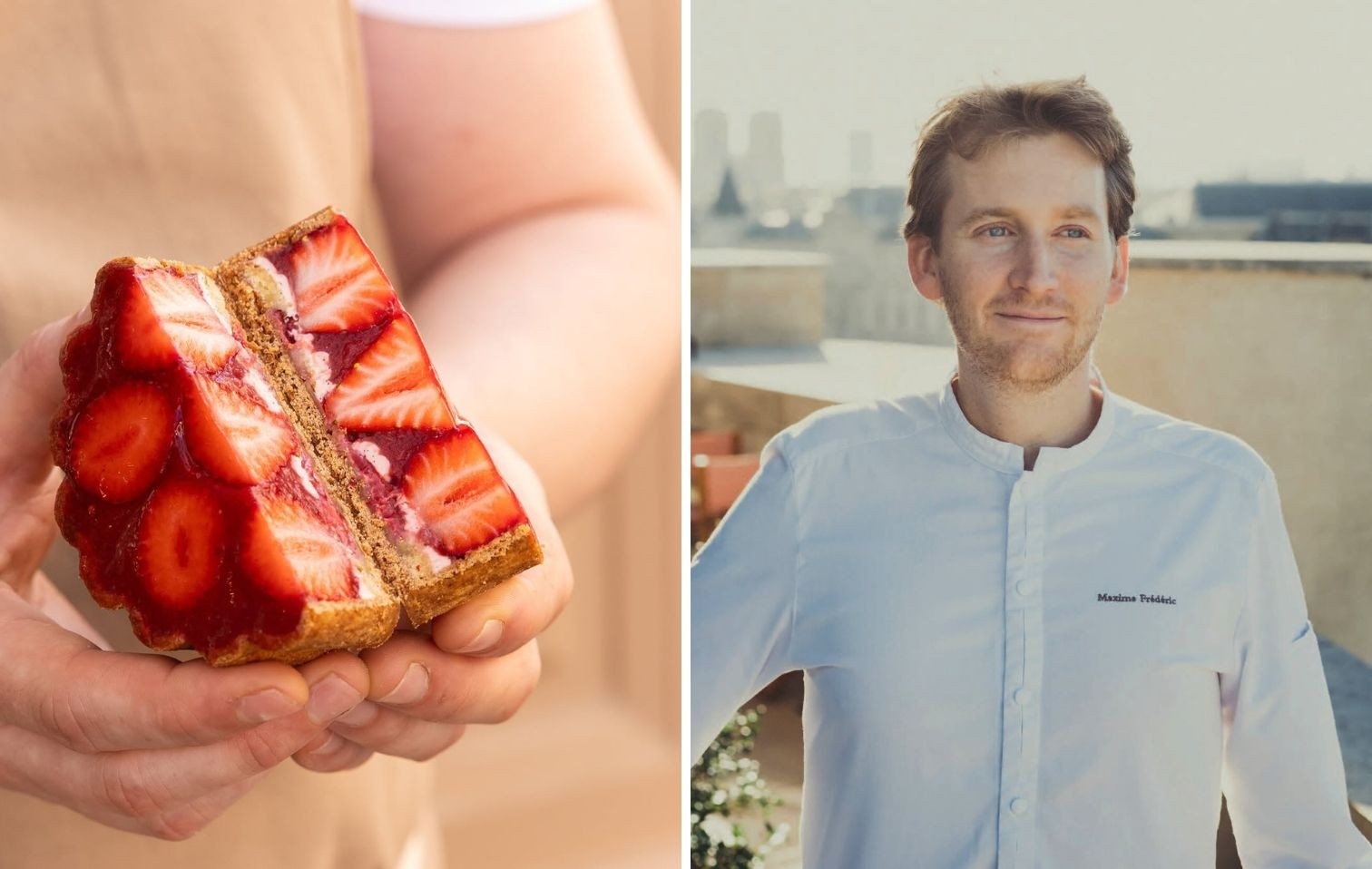
From his grandparents' farm in Normandy to the Michelin-starred kitchens of Cheval Blanc Paris, Maxime Frédéric has transformed essential ingredients such as milk, butter, and sugar into creations that combine memory, rigor, and everyday poetry.
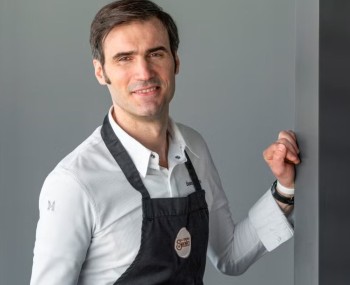
Not all great chefs are born in Michelin-starred kitchens. Some find their calling amid the scent of freshly cleaned stables and the warm steam of freshly milked milk. This is the case of Maxime Frédéric, voted Best Pastry Chef in the World 2025 (an award sponsored by Sosa) as reported by theworlds50best, who tells his story as if it were a long leavening process: slow, natural, and tenacious, until it turns into fragrant bread ready to nourish others.
The beginnings
His childhood in Normandy was set on his grandparents' farm, populated by dairy cows and improvised cakes that were made without any particular reason: homemade yogurt, apple pie, chocolate cake. There was no need for a special occasion: “We would sit on the counter, our feet dangling in the sink, and mix the dough without worrying about the mess. I think that's where the spark that led me to become a baker, pastry chef, and chocolatier came from,” recalls Frédéric.
Milk, a daily staple of his childhood, was the first ingredient to shape his culinary identity. He used it to make teurgoule, a traditional rice pudding slowly baked in the oven and flavored with cinnamon, a typical dessert from his homeland. It's not hard to see, in this simplicity, the root of his obsession: transforming essential ingredients into extraordinary experiences.
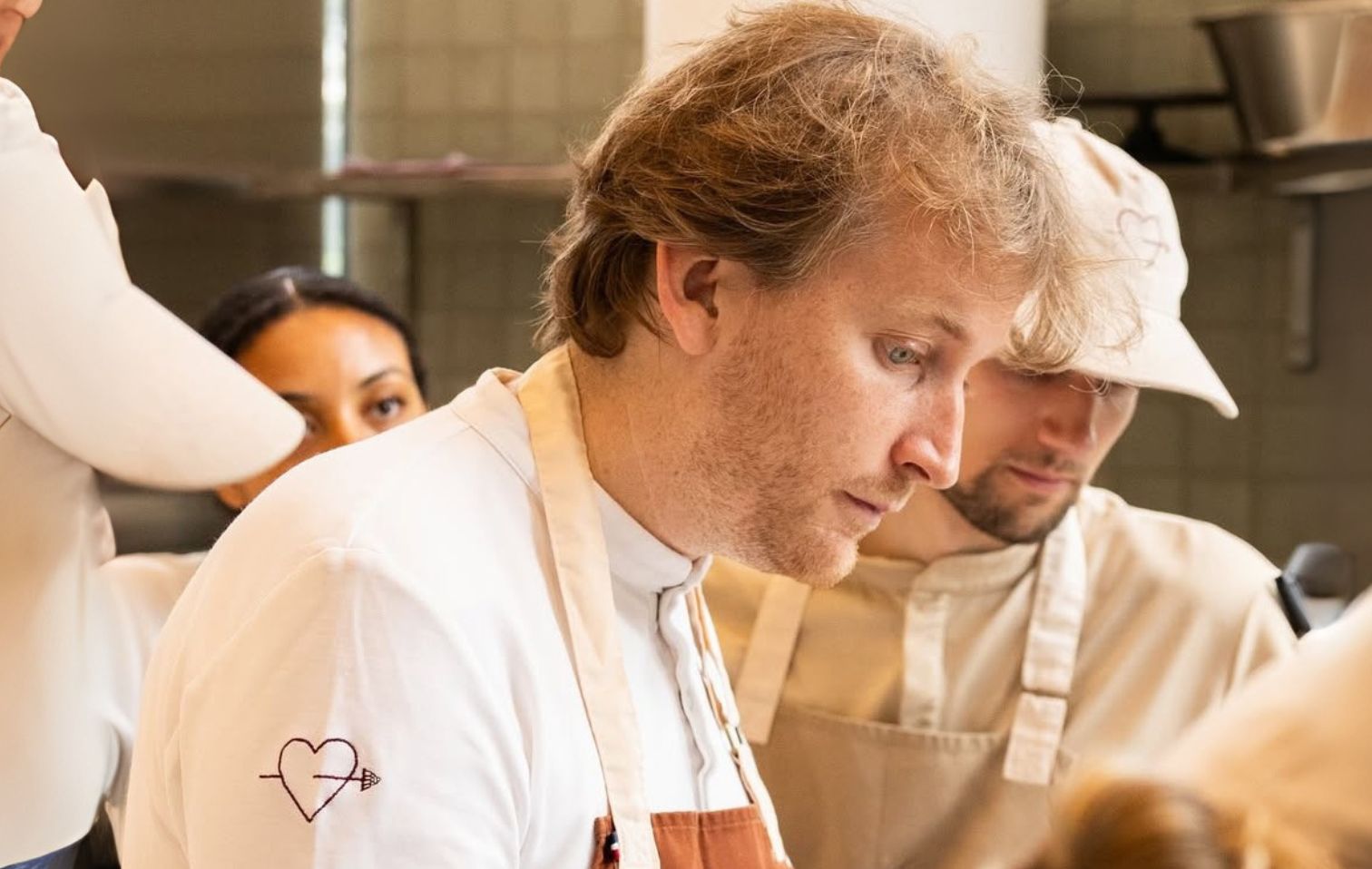
If milk was his first teacher, television completed the job. Maxime was fascinated by French cooking shows—from Bon Appétit Bien Sûr with Joël Robuchon to the Gourmet TV channel—which showed him a world far removed from the Normandy countryside: a world of large teams of chefs, luxurious kitchens, and boundless creativity. No one in his family was in the trade, “they were all farmers,” he says. Yet, in middle school, he announced to his parents: “I want to become a boulanger-pâtissier.” He didn't yet know exactly what that entailed, but he dreamed of a world made of yeast, sugar, and collaboration, attracted by the magic of creating infinity from three universal ingredients: flour, eggs, and sugar.
His career
After obtaining his CAP diploma in pastry making, he moved from a small village bakery to the capital. In Paris, Le Meurice awaited him, where he became Cédric Grolet's right-hand man for four years. He was then appointed head pastry chef at the George V and, six years ago, joined the team at Cheval Blanc Paris, working alongside Arnaud Donckele. “Yet,” he admits, “it still feels like the beginning.”
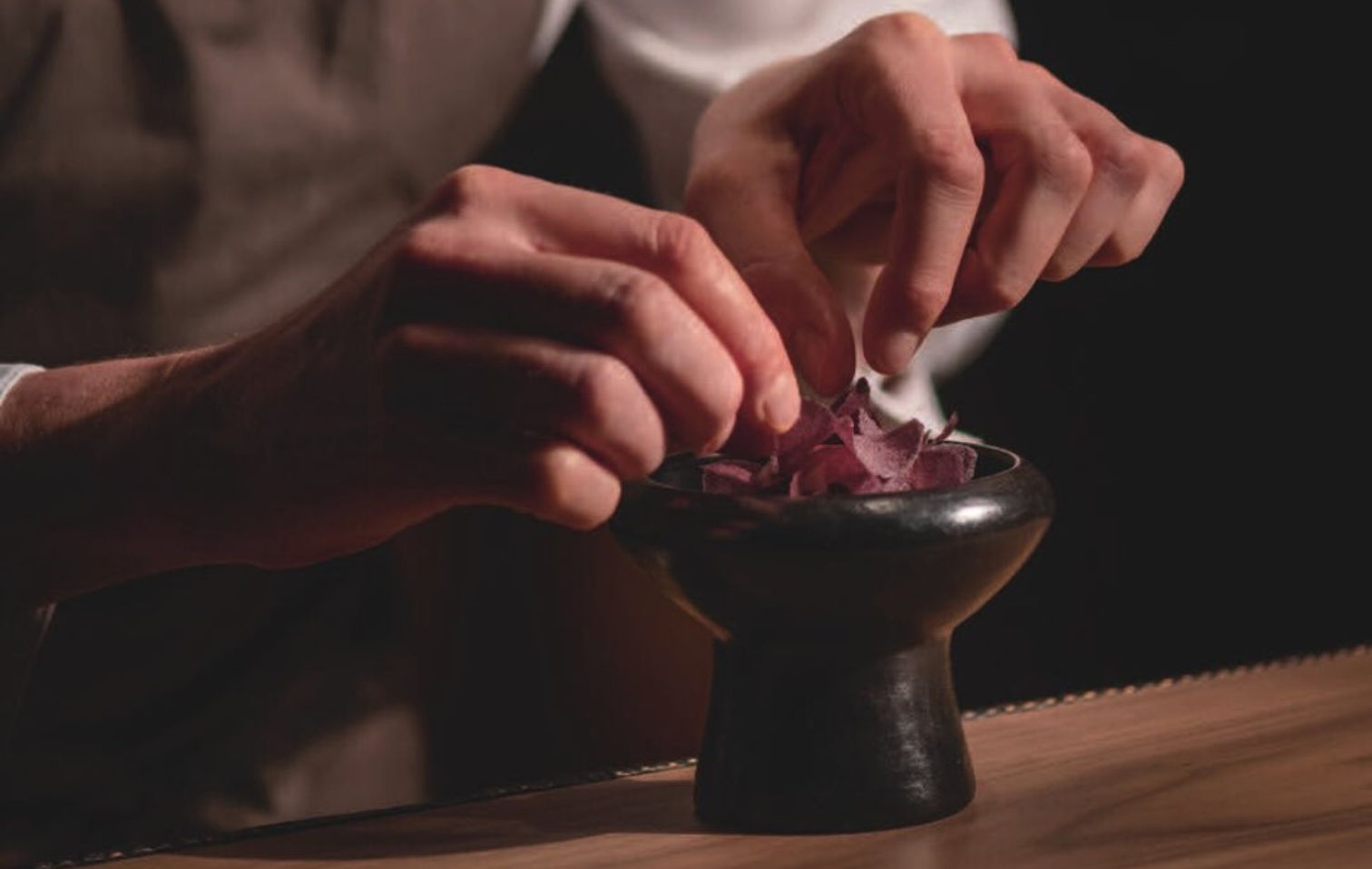
Frédéric's career is marked by creations that are true personal stories. His vacherin—a meringue decorated with petals arranged to form a rose—is a direct tribute to his grandmother Rosa, who loved to mold flowers out of chocolate and sugar. That dessert, created as his first “signature” experiment, still appears on the menu at Plénitude today. Each petal is more than just a decoration: it is a memory transformed into something edible.
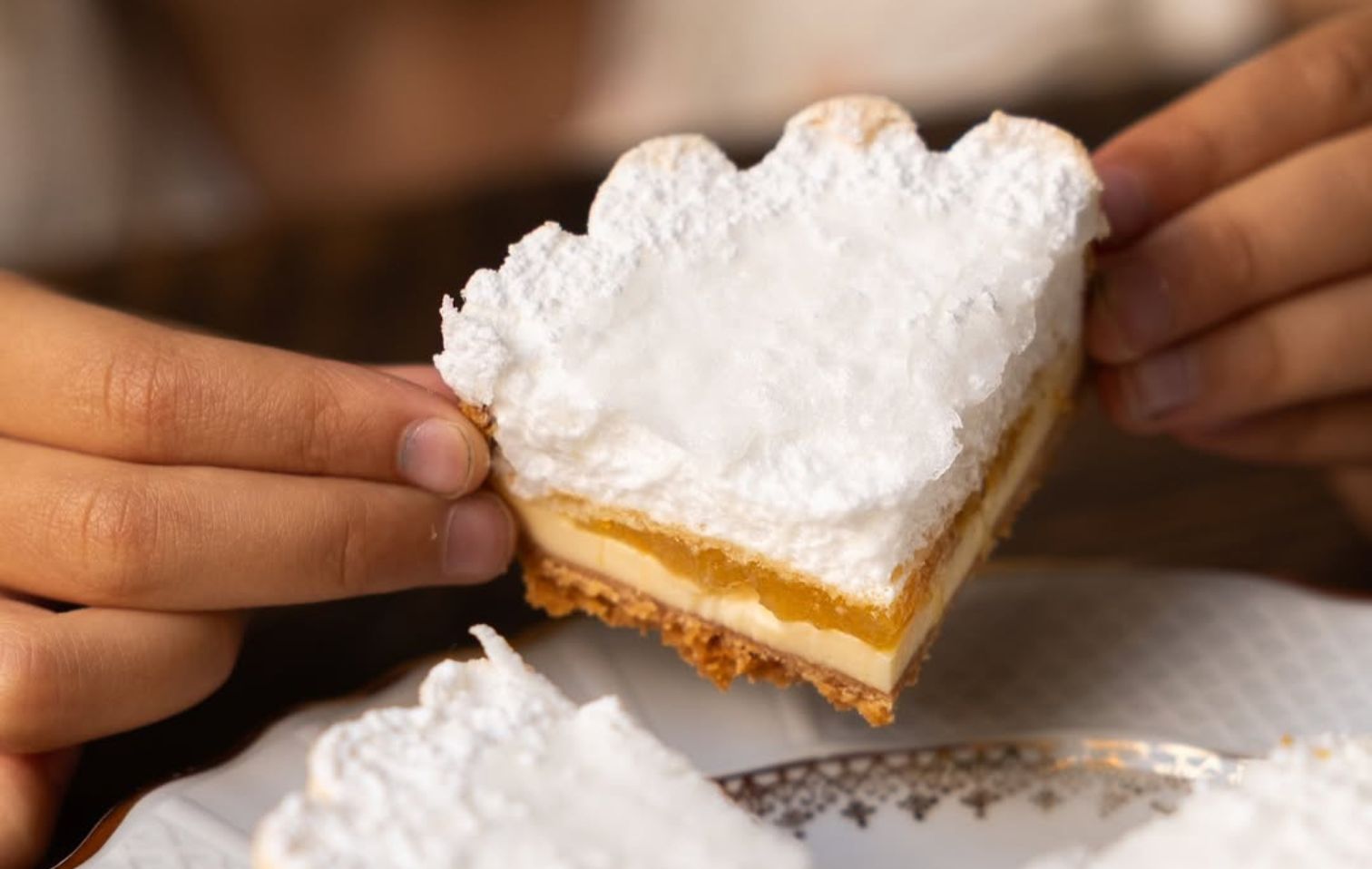
However, his consecration came with another, much more rigorous dessert: the millefeuille of Le Tout-Paris. Three years of obsessive experimentation were needed to achieve what is now considered an absolute benchmark. Butter, sugar, pasta sheets, and cream: nothing more, nothing less. Yet the essential, worked to its purest form, becomes sublime. “It's indulgent but light, and you can really taste the butter and sugar,” explains Frédéric. A sweet oxymoron: complex in its simplicity.
His philosophy
His approach to pastry-making is not limited to offering modern twists on traditional desserts. Frédéric prefers to take apart and rebuild from scratch the great classics – Paris-Brest, Saint-Honoré, Charlotte, profiteroles – to bring them back to their essence, stripped of all frills. Not “reinterpretations,” therefore, but gastronomic remasters, as if the desserts were musical scores to be brought back to their clearest sound. It is this meticulous work that makes his signature recognizable.
While the Cheval Blanc restaurants are his creative arena – four establishments, from Plénitude to Langosteria – the Pleincœur project in the Batignolles district of Paris reveals another side of Frédéric: that of the village baker. Together with his wife Claire and five trusted friends, he has opened a neighborhood bakery where bread, croissants, and baguettes share space with artisanal chocolates and coffee imported directly from the family farm in Bolivia. The eggs, on the other hand, come once again from Normandy. Bread and memory, grains and roots: Maxime's personal geography can already be read in the shopping list.
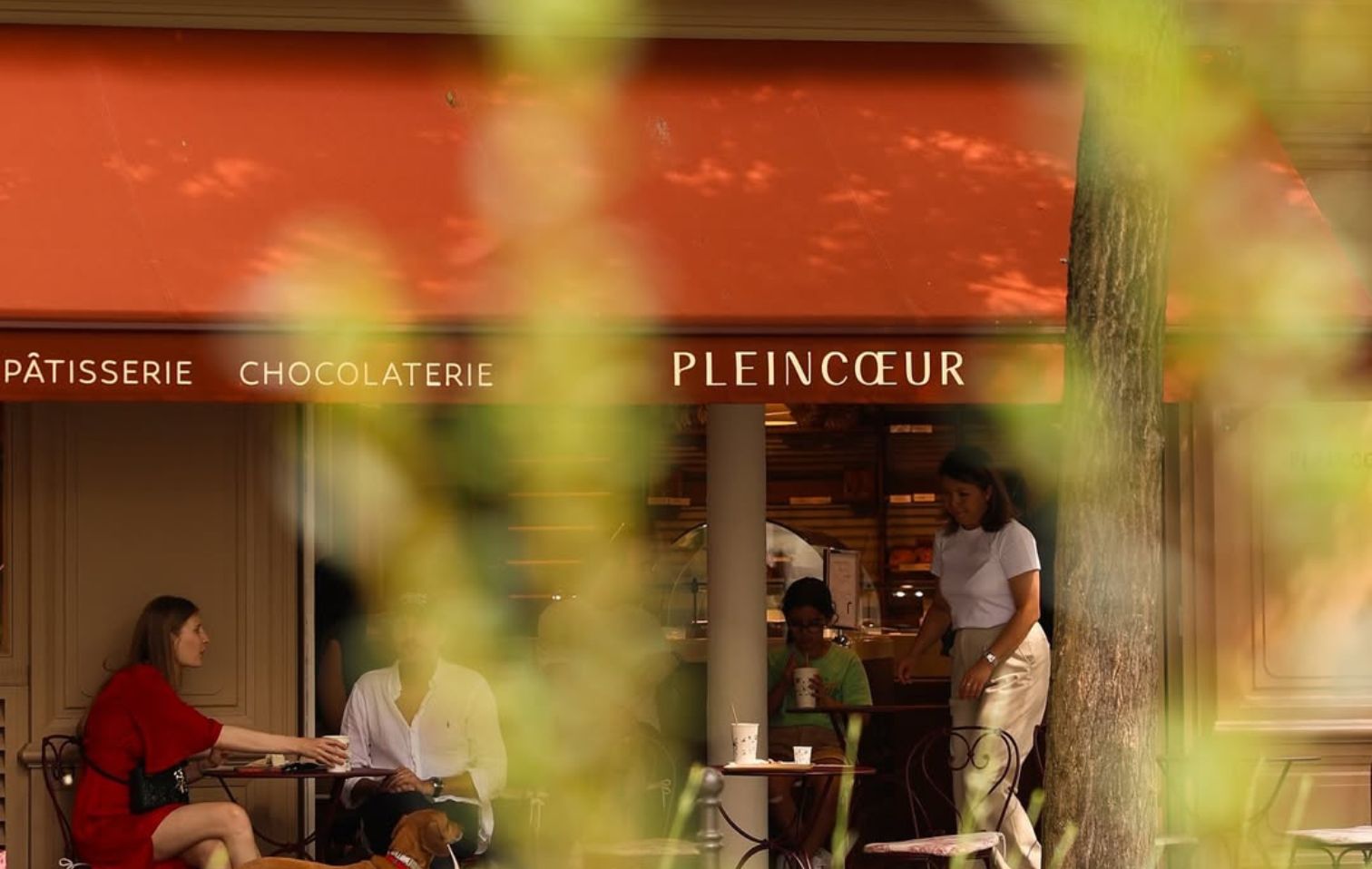
He recently opened a new workshop dedicated to hazelnuts and cocoa grown on his own land, with the idea of offering masterclasses in the near future. Not just haute patisserie, then, but accessible craftsmanship, designed to feed a community and not just the elite who dine in Michelin-starred restaurants.
Today, as he prepares the new galettes des rois and bûches de Noël for next Christmas, Frédéric confesses that his happiness does not depend on the context: “Whether I'm plating a dessert at Plénitude or baking a baguette at Pleincœur, I love it just the same. It's about making people happy, through the everyday joy of bread or the special pleasure of a dessert linked to an important moment.”
So the boy who kneaded rice pudding in Normandy has become a global reference point, but without ever ceasing to think like a village baker: with hands that work the ingredients and a sensitivity that transforms the ordinary into the extraordinary. Because, ultimately, for him, that is what true pastry-making is: an act of everyday poetry, written with sugar, flour, and memory.