“As a child, I enjoyed a real mix of culinary influences. My father cooked chicken curry, while my mother loved stews. One of the main roles of food in Persian culture is not sustenance, but connection. Eating is not just about nourishment, but about being together.”
The chef
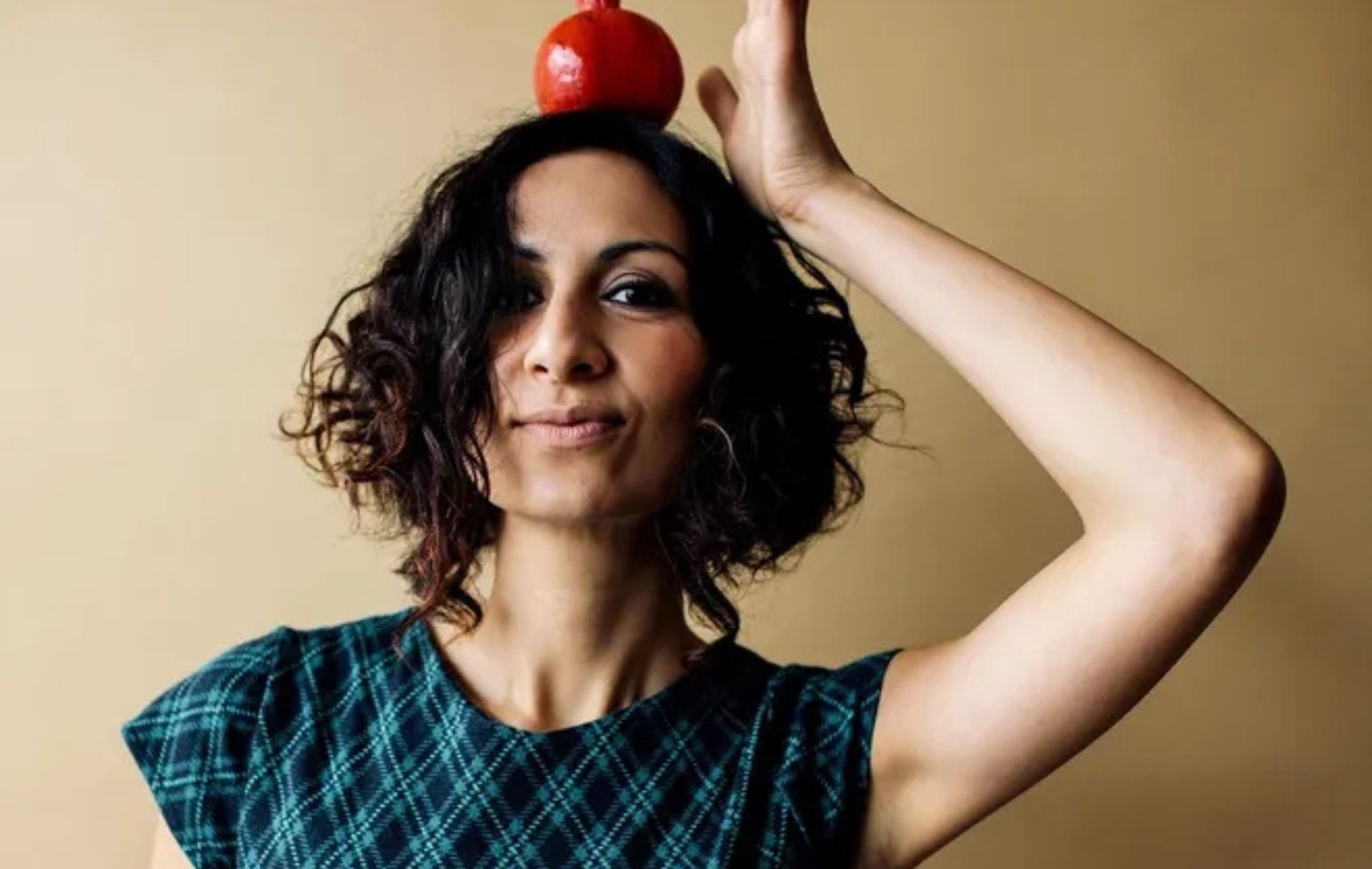
With roots in her mother's Iran and her father's Pakistan, and raised in the United Kingdom, Yasmin Khan is an internationally recognized voice for her cookbooks and, above all, for her artistry in portraying the Middle East and its people through food, flavors, stories, and traditions. This ability and desire developed early on in her career, when she was a human rights lawyer. For Yasmin, food is much more than the sum of its ingredients: it is a bridge that connects worlds, traditions, and people, and is the common thread running through Sabzi, her latest publication. Through some 80 recipes, she takes readers on a journey to discover a vibrant vegetarian cuisine, fragrant with spices and rich in the Middle Eastern flavors that nourished and colored her childhood. “I feel a great passion for sharing the positive and personal ties I have with the Middle East, such a beautiful region, but one that, unfortunately, only makes the news for the wrong reasons. It's so heartbreaking,” she tells The Independent.

Yasmin's grandparents were farmers in a region of northwestern Iran, where she learned the importance of raw ingredients and how to handle them with respect. In Sabzi, Jasmin encourages us to bring dishes full of personality to the table, where vegetables take center stage thanks to spices and aromas that transform every course. Her inspiration comes from the summers she spent with her grandparents in Iran: "From them, I learned to deeply respect every product of the earth. From my father, on the other hand, I inherited a passion for spicy soups and fragrant curries, dishes that blended with Persian ones in a continuous gastronomic dialogue.“ The title Sabzi, which means ‘herb’ or ”vegetable" in Persian, is a statement of intent: cooking vegetables can be creative and satisfying if you master the right ingredients. Among her tips is to enrich condiments and marinades with pomegranate molasses, which adds a deep sweetness, or to flavor grains and salads with sumac for a fresh, slightly citrusy touch.
“As a child, I enjoyed a real mix of culinary influences. My father used to make dal or chicken curry, while my mother loved stews. One of the main roles of food in Persian culture is not sustenance, but connection. Eating is not just about nourishment, but about being together," she continues. In the pages of her book, she recounts long tablecloths spread out on the floor in Iran, with relatives and friends sitting cross-legged and sharing every course. Today, as a mother, those moments are repeated in a new form: dinner with her daughter is an opportunity to slow down, savor, and pass on a heritage of gestures and flavors. Her recipes tell another truth: that of a region rich in gastronomic culture, colors, and conviviality. “Food has the power to bring people together, to make them talk even when everything else seems to divide them.”