After more than thirty years, dinner at La Pergola at the top of the Cavalieri Rome hotel remains the best thing that can happen to you in the capital in terms of gastronomy. The Bavarian chef is increasingly focused on cuisine that helps combat aging, but the sense of flavor remains intact.
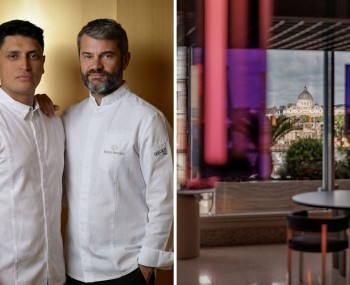
Rome has been at his feet for more than thirty years, spent watching the Eternal City flow by, seemingly placid, but from up here, from the top of Monte Mario hill, the illusion holds. Heinz Beck, the immortal, is a case study in himself—he who, with his cuisine, has for years set his mind on slowing down aging, and his academic titles, which he cares so damn much about, are a very serious matter—an example of longevity at the helm of a great kitchen, not too common in our country for a chef who is not a patron.
The chef and the restaurant
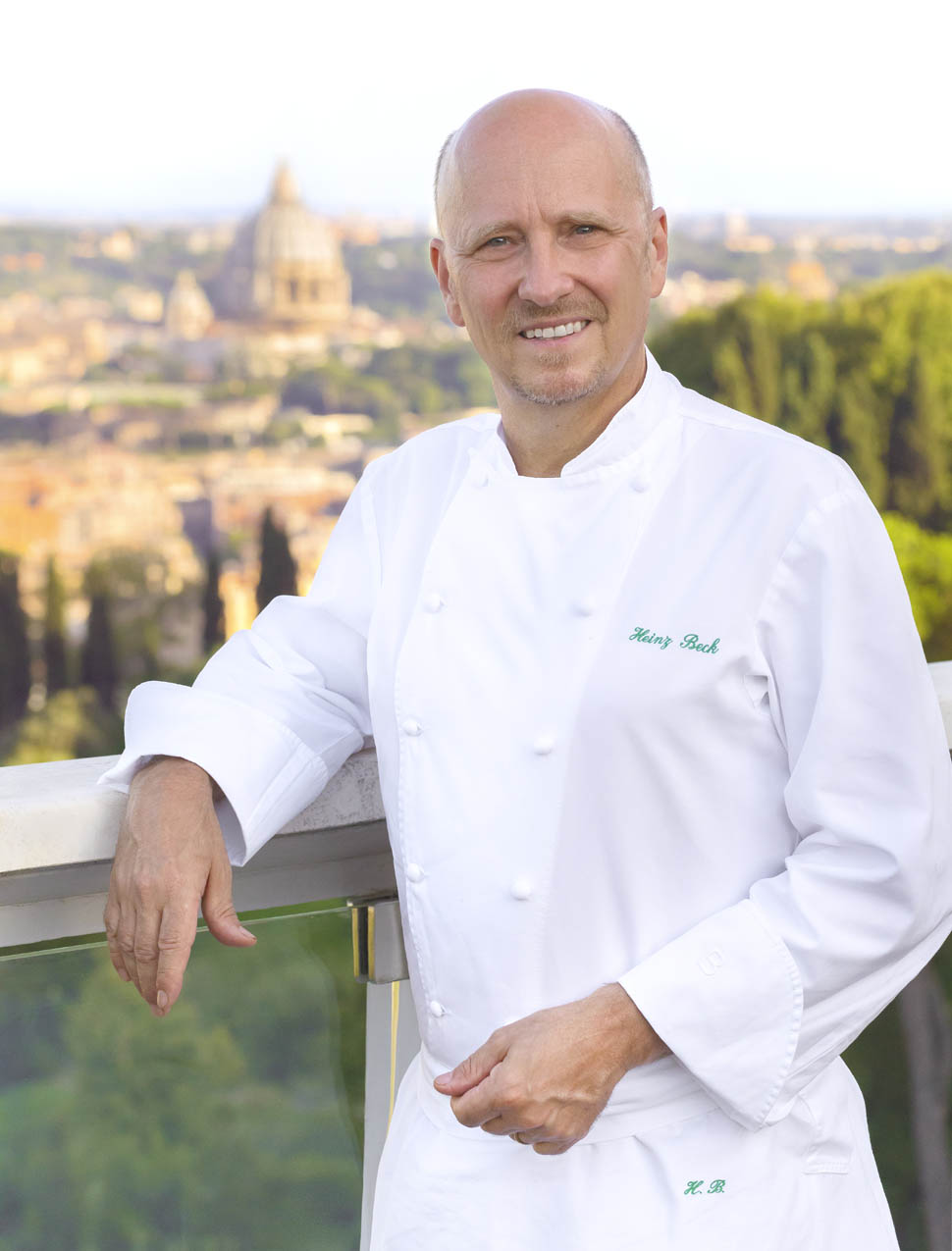
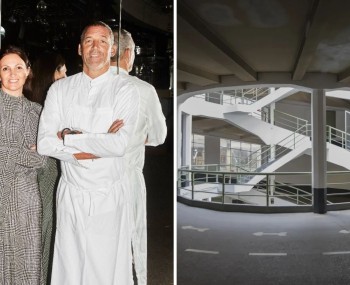
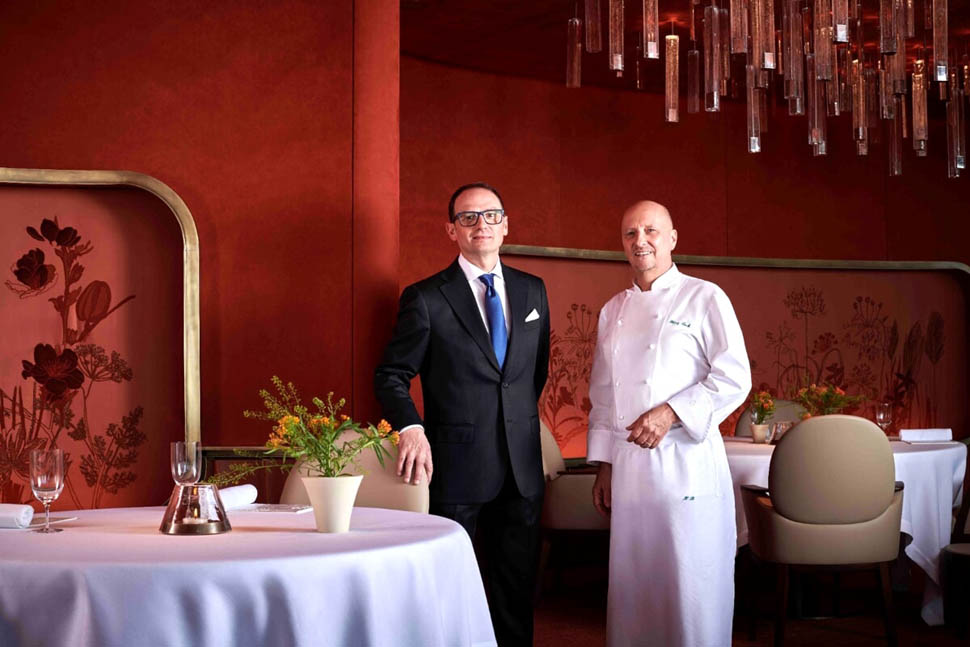
Heinz Beck from Friedrichshafen, “the Bavarian of Rome,” spent half his life at the helm of the Pergola restaurant at the Rome Cavalieri Waldorf Astoria, 31 of the 62 years he will turn in November. yet he still speaks Italian that is, let's say, not quite up to three-star standard, even if he occasionally says things like “quei figli di mignotta” (those sons of whores) when referring to his children, but you can tell it's just a game for a nerd who wants to sound punk. He arrived in Rome in 1994 after traveling around half of Europe and set up shop at the top of Monte Mario, at the top of the most beautiful hotel in Rome on the inside and the ugliest on the outside.
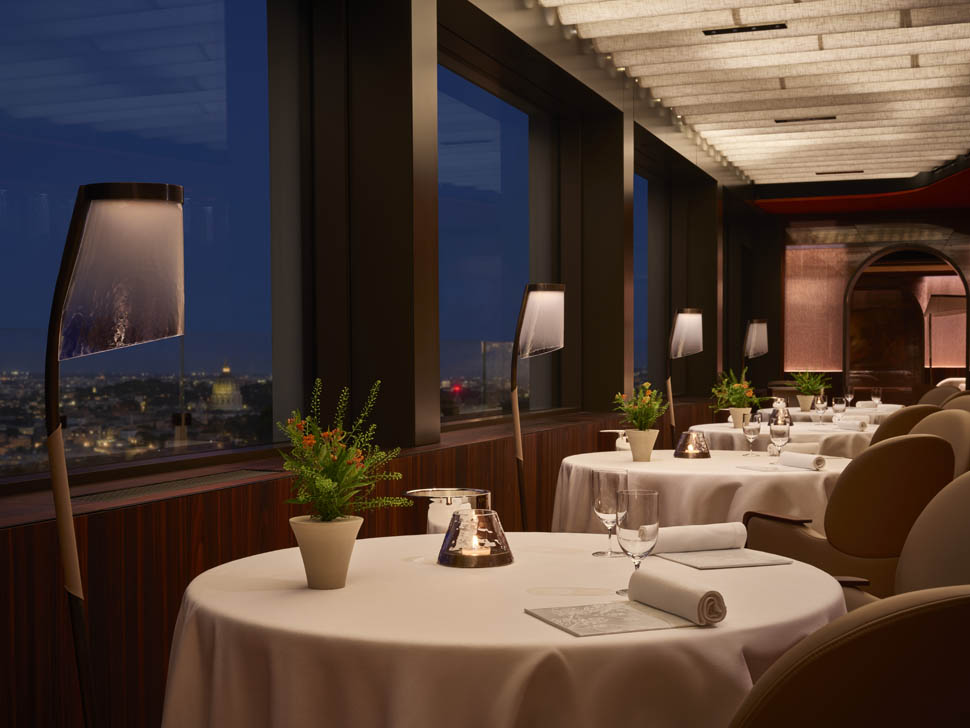
I remember him in 2001, with one star or maybe two, when for some reason I can't remember he came to visit me in the editorial office decked out in Giallorossi colors. Roma had just won the Scudetto, and he said he was a fan of Francesco Totti, but maybe he was just pretending to make me happy, to make us all happy. In any case, a few years later, in 2005, he also won his Scudetto at La Pergola, giving Rome three Michelin stars, something unthinkable considering the level of haute cuisine in the capital at any time in the 1990s and early 2000s. And the city followed him, while keeping a respectful distance, and now its gastronomic scene is one of the most vibrant in Italy. Anthony Genovese, his squire for years with his two stars for twenty years, and Domenico Stile, Daniele Lippi, and Andrea Antonini, the “young Turks” of Roman cuisine, recognize him if not as a master, then certainly as an example.
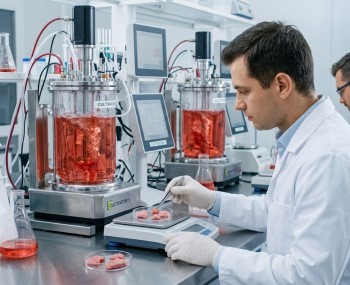
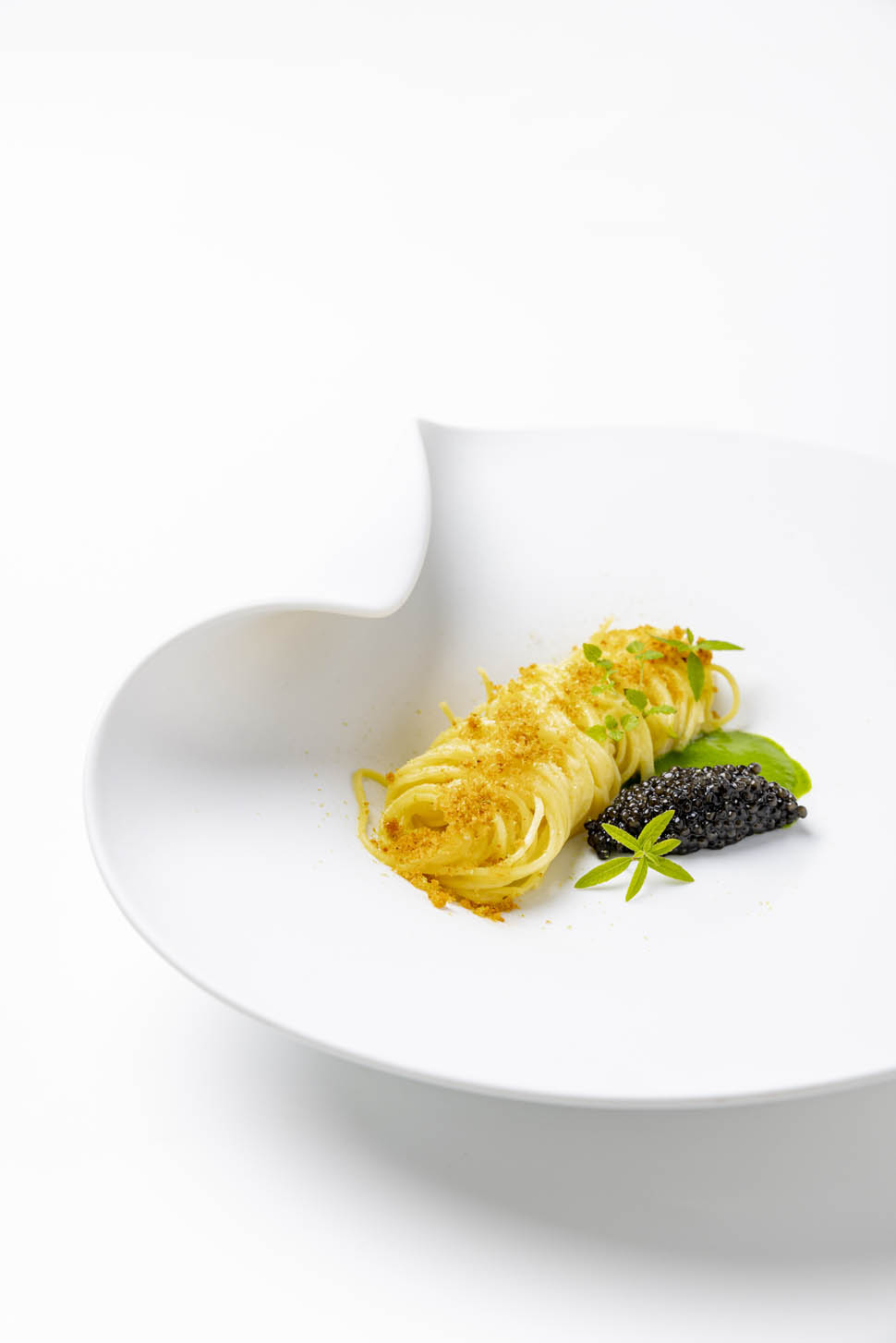
Beck's cuisine has always been classic and hyper-technical, but it has never stopped evolving, keeping pace with the changes in Heinz himself and the world around him. Every year, dozens of new dishes are created ("but we have to keep a couple of the old ones,' he says, and these always include Fagottelli La Pergola, a delicious tribute to picture-postcard Rome), which over the years have gradually shifted towards a use of technology that is never intimidating or ostentatious, but aimed at putting to good use the research that Heinz conducts in collaboration with medical and university staff for a cuisine-medicine approach. We are what we eat, aren't we? La Pergola's kitchen resembles a medical laboratory in some respects, with an ultrasonic tank that purifies and naturalizes certain ingredients before they are processed in the kitchen. Beck's obsession is above all the fight against oxidative stress. “We all,” he explains, clearly overestimating me, “suffer from chronic tissue inflammation, a factor that accounts for 80 percent of cancer cells. We try to keep this inflammation low with food. We are pioneers in this field; there was no research on the subject, not even reference values...”
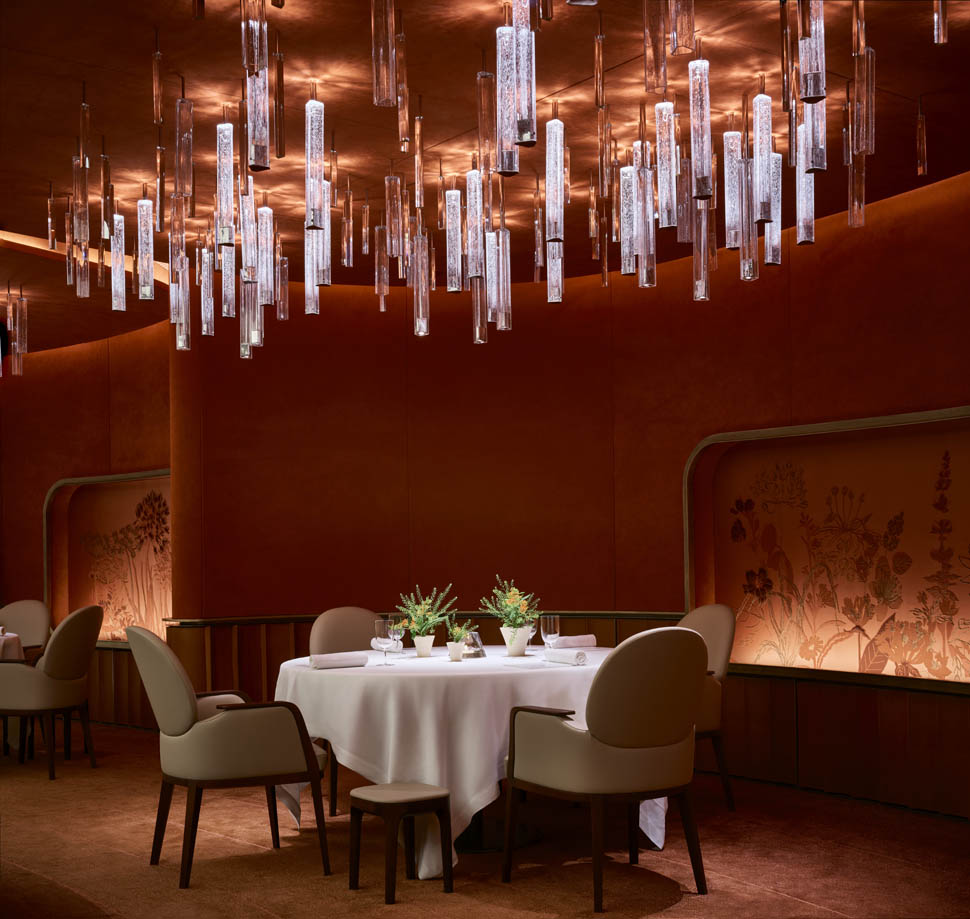
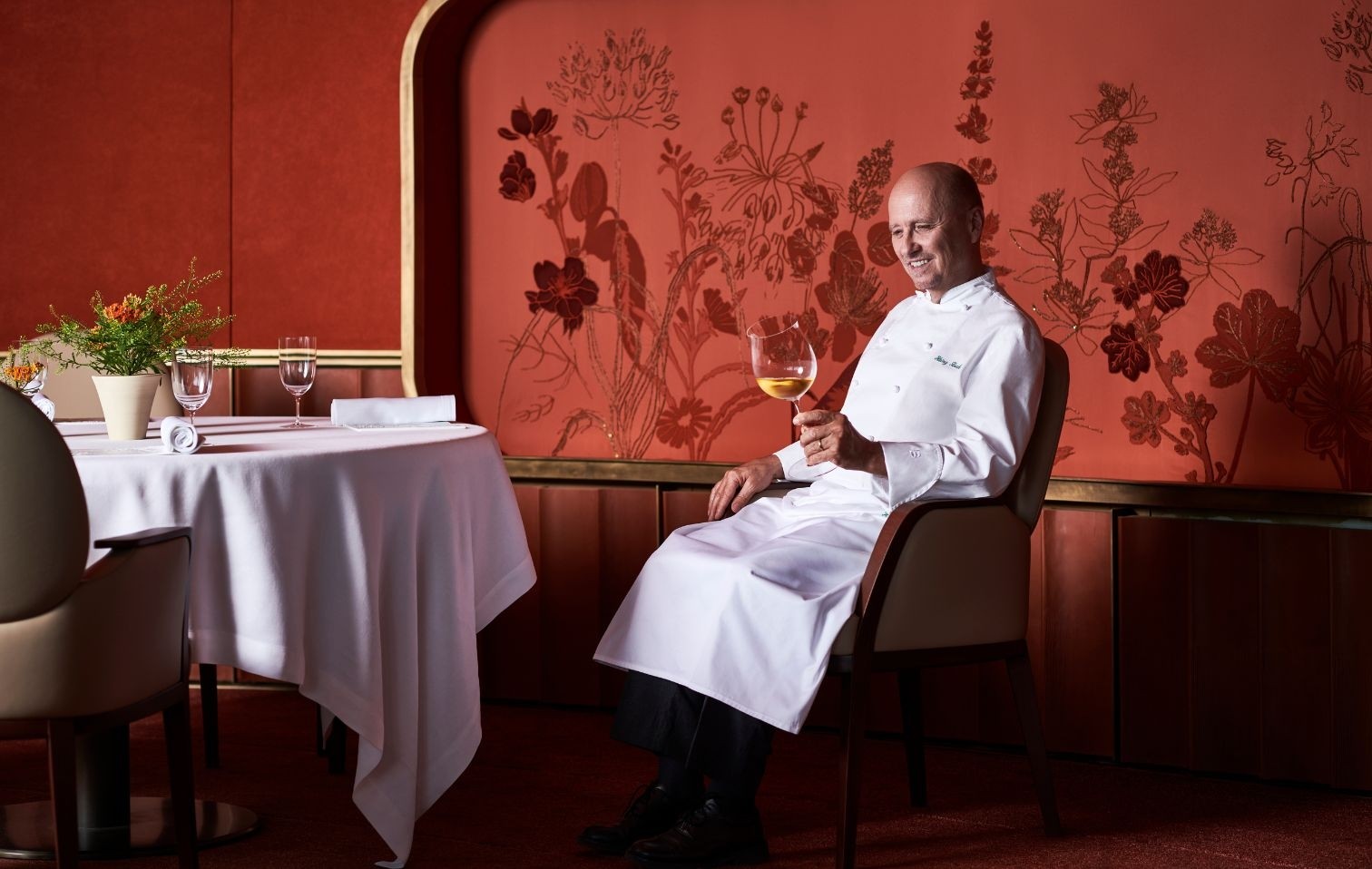
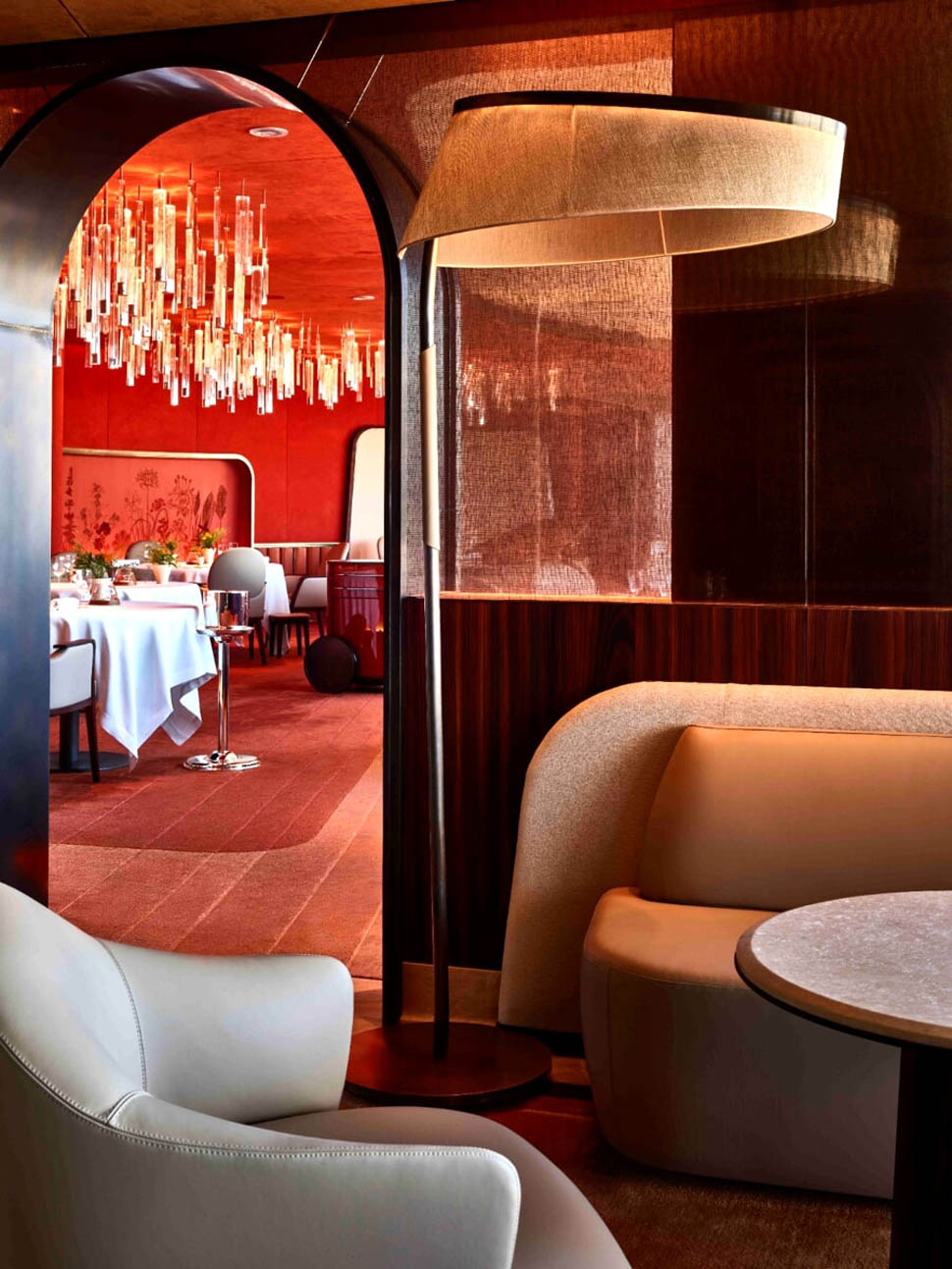
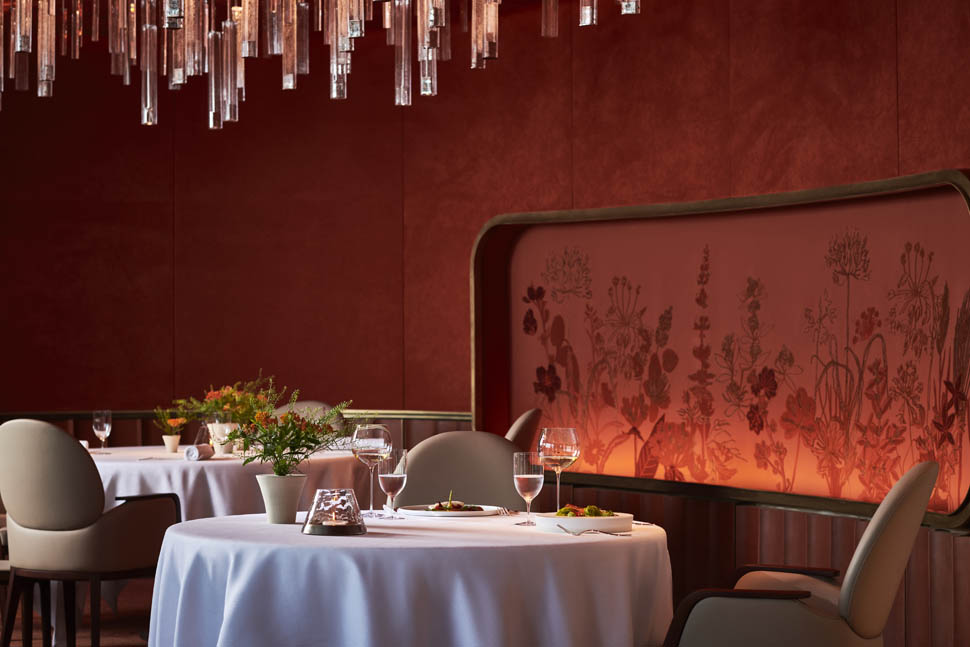
But the food at La Pergola is anything but hospital fare. Dr. Beck's miracle is that there is a Mr. Heinz who, every time I visit, presents me with sparkling, opulent, healthy cuisine that is, admittedly, compelling (I will notice this with pleasure the next day) and bursting with a surprising Mediterranean flavor for someone who comes from Lake Constance. His latest tasting menu, the second “release” since the restaurant reopened just over a year ago after many months of renovation by the Parisian studio Jouin-Manku, which has re-electrified the restaurant while remaining true to its classic style, proved to me that Beck is still Beck and deserves to be where he is, at the top of Rome and at the top of every ranking.
The dishes
The stretching is entrusted to an aperitif that Beck himself prepares at the table when he can, working on a trolley and explaining what he is doing as he does it: here is a Calamaretto with all its innards barbecued for just thirty seconds and accompanied by a crumble of puffed potatoes, dehydrated olives, rehydrated zibibbo raisins (“we like to rehydrate what is dehydrated and dehydrate what is hydrated,” he jokes) and a chicory oil whose preparation is a manifesto of the Beck method: "We sauté the chicory with oil and garlic, then remove the garlic and put it in a vacuum bag, add unheated extra virgin olive oil, immerse it in an ultrasonic tank, for 25 minutes at 25 degrees, remove everything, blend it and put it in a high-speed centrifuge, the same one we use at the university for blood plasma, and divide the liquid by specific weight. The oil, which is lighter, rises to the surface and carries with it the flavor and all the micronutrients, vitamins, polyphenols, and antioxidants."
The magic trolley also brings us potato chips flavored with oat cream and red fruit ketchup (“My name is Heinz, how could I not make my own ketchup?”); marinated char with herbs, spices, and coffee, ricotta made not with animal rennet but with sea water and honey from medicinal herbs from the Marche region, baked in a Josper oven with organic charcoal that Beck has made by a craftsman in Abruzzo ("a wonderful charcoal, aromatic, but above all chemical-free“) and, after being stored for three days in beeswax, served with herbs from regenerative agriculture and bergamot aroma. Then another piece of magic, a strawberry barbecued on a black elderberry gel. ”What's missing?“ he asks me. ”The cream!" I reply. And there it is, the cream, clarified with strawberry vinegar and stripped of its proteins and fat. What remains is a liquid that has nothing of cream except its floral flavor, made more vibrant by the hint of acidity provided by the strawberry vinegar. Finally, the barbecued beef diaphragm, served on polenta concia flavored with plum molasses, made in a non-traditional way to avoid over-caramelization of the sugars that cover the aromas.
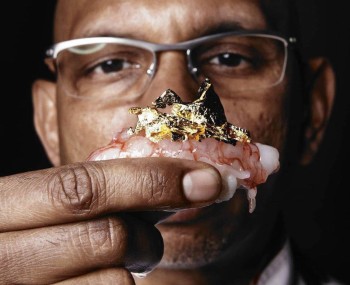
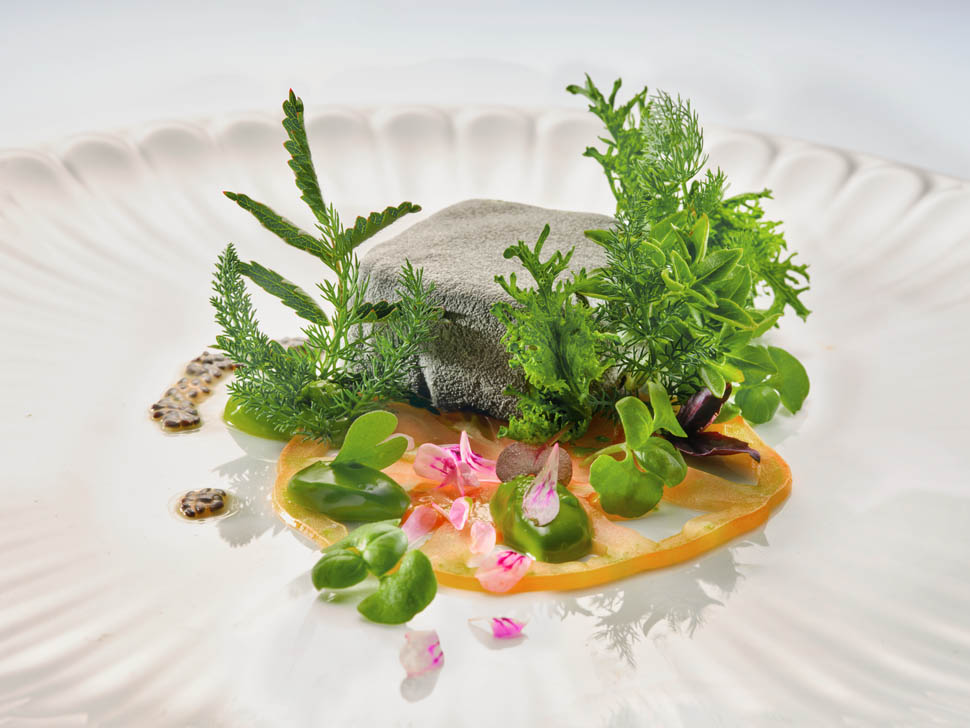
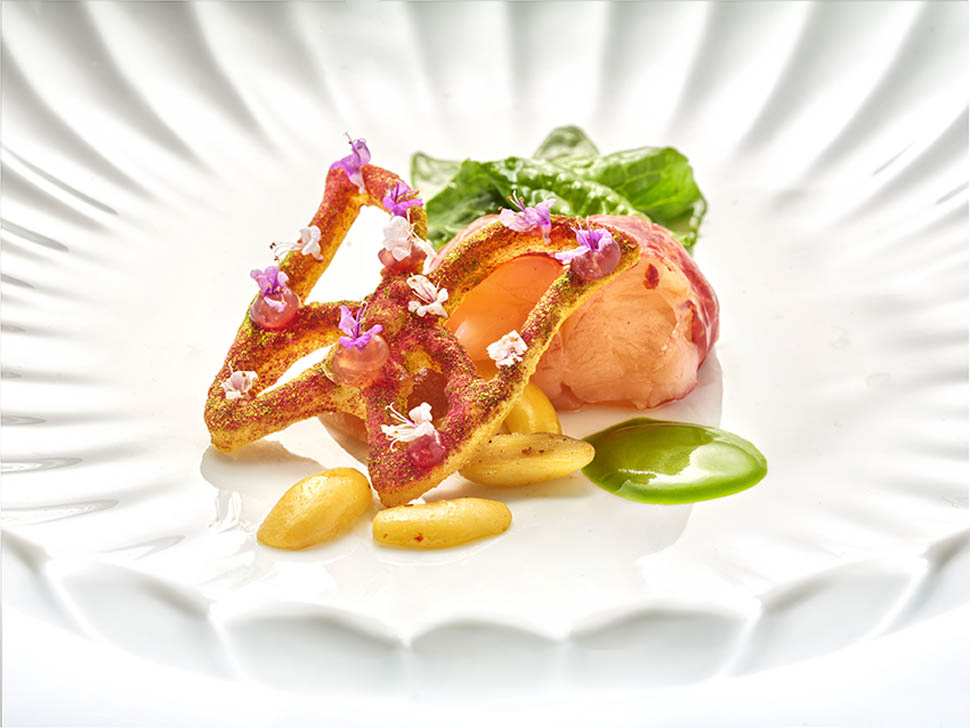
All this is just the prologue, even though ideas have already piled up into a glorious heap. Dinner gets underway with the first appetizer, marinated amberjack with eggplant, an almond emulsion, and a reduction of peppers and lovage, a dish of great balance, followed by the second course, Adriatic red prawn wrapped in lemongrass, which serves the dual purpose of imparting a citrus scent and protecting the surface of the prawn when seared, served with chopped green beans and snow peas, candied lemon gel, crispy vegetable chips, and a green sauce made from mint extract. The third appetizer is very interesting, the Salanova, a type of lettuce that, according to Beck, “has very tough leaves and a very low yield.” For this reason, the chef marinates it with anise, fennel, and balsamic herbs and, after passing it through an ultrasonic tank, transforms it into a sort of tree trunk complete with Grifola frondosa, a mushroom that grows on bark in uncontaminated environments. A final resinous touch is provided by a grating of Himalayan cedar fruit. More reassuring is theAstice that follows, a medallion served with fresh spinach cream, cucumber, licorice, and a butterfly created with crispy bread and beetroot powder.
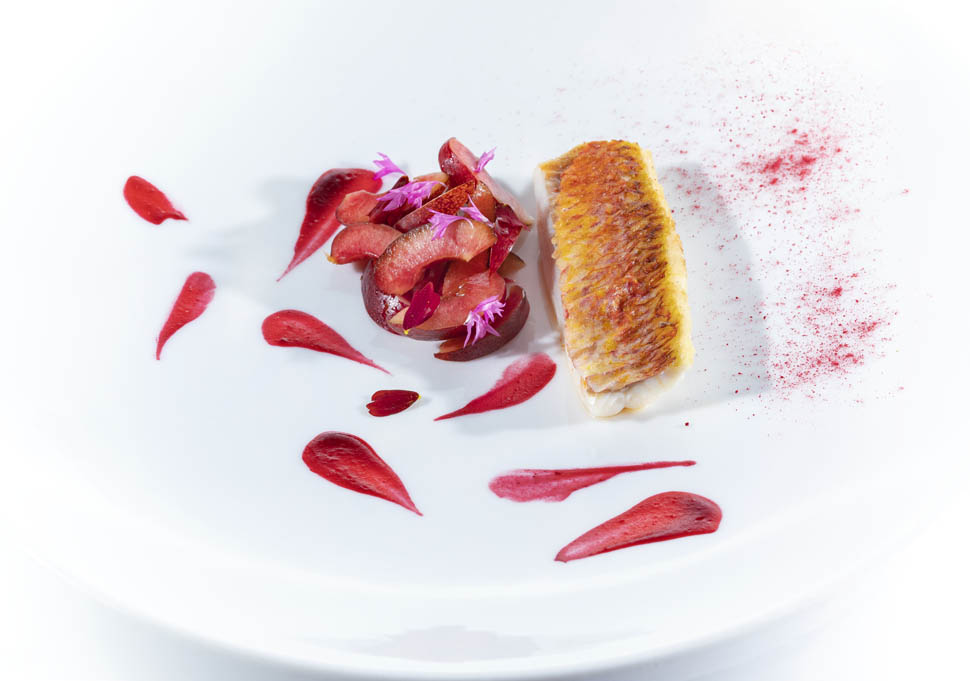
Then one of the best dishes of the evening arrives at the table, a Risotto alla scapece with saffron, scampi carpaccio, and zucchini. This is followed by red mullet accompanied by verbena-scented cherries, scorzonera with a vegetable ash crust, and a Turkish rose and cherry compote. We get to the heart of the matter with glazed sweetbreads with their sauce, burnt wheat tarallo with an ultrasonic extract of the raw part of the tender greens and a spring onion oil emulsion, a remarkable interpretation of the most noble of offal, which has a tradition all its own in Rome. And finally, Agnello sulla via Appia (Lamb on the Appian Way), a narrative dish that aims to reproduce the route taken by flocks of sheep on the Regina Viarum: the lamb loin is accompanied by a reproduction of the classic sampietrino, the paving stone made from a composition of legumes (lentils, black-eyed peas, chickpeas) that undergo germination to make them more bioavailable to our bodies. All this is served on a lentil purée with a bouquet of balsamic herbs to reproduce the wild grass that grew on the edge of the Appia, and a clarified lamb stock.
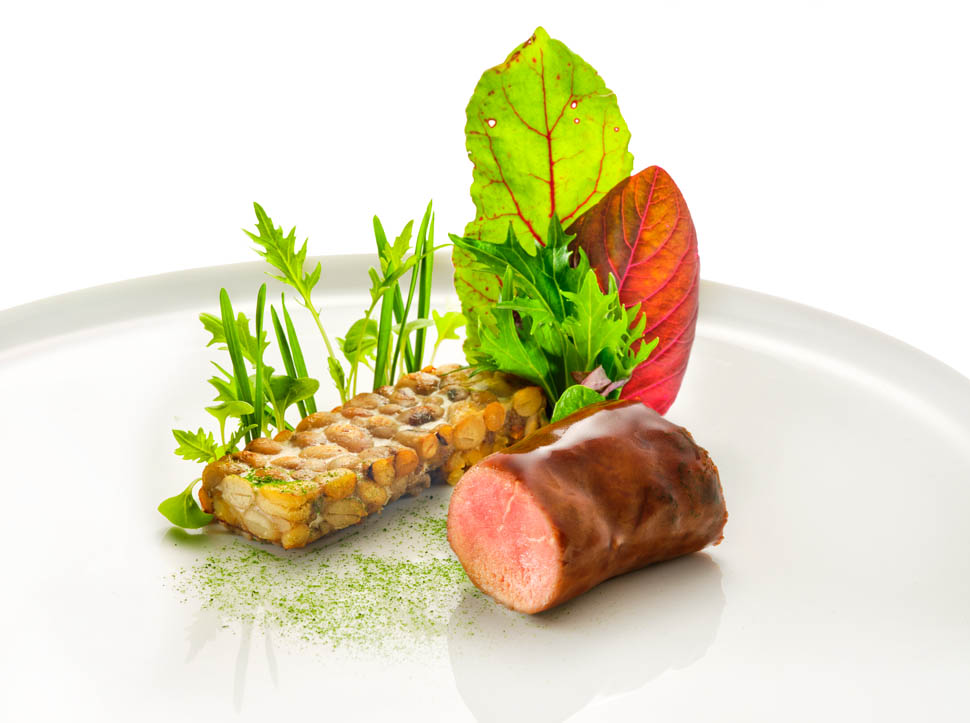
Then there are the desserts: a light yogurt mousse with tarragon, sorbet and wild strawberry granita, followed by the Italian breakfast, which combines white chocolate, crunchy hazelnuts and coffee gel to mimic a morning latte with biscuits. And yes, then there is the legendary Pergola treasure chest, each drawer concealing jellies, small cream puffs, biscuits, and pralines. The sumptuous wine cellar has 70,000 bottles, chosen over the years by sommelier Marco Reitano, who, with his empathy colored by Roman irony, is in a league of his own. But it is also worth browsing the water list, certainly the most comprehensive in Italy with around fifty references. The maître d', Simone Pinoli, is liturgical. The staff is the strength of La Pergola, and Beck cherishes them. “The other day I made them some non-alcoholic sangria, it was delicious.” He looks at the young waiter Davide and asks him point-blank: “How was it?”“Good, but alcohol-free,” he replies. “Next time I'll give you a glass of milk.” And this time it's Mr. Heinz speaking, not Dr. Beck.
CONTACTS
La Pergola del Cavalieri Rome, a Waldorf Astoria Hotel
via Alberto Cadlolo, 101 - Roma.
Phone. 0635092152.
Open only for dinner from Tuesday to Saturday.