To what extent can hospitality coexist with the pressure to make a profit?
The news
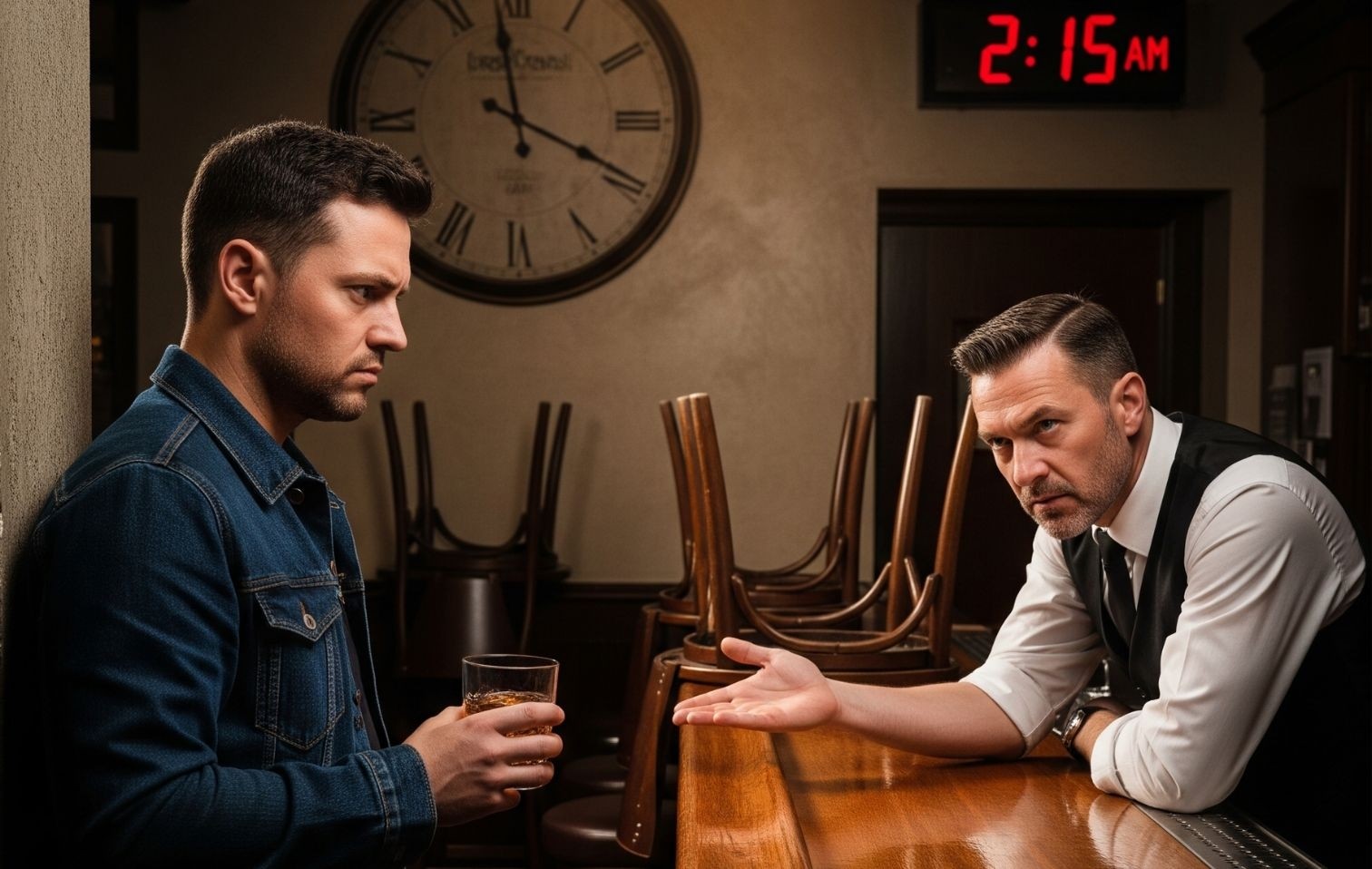
Fifty minutes. Not a second more. That's how long you have to enjoy a drink on the terrace of a bar in Málaga. Then, either you order something else or you get up and leave. It's written in black and white on a sign that has gone viral, sparking more controversy than an offside goal. It's not a joke, it's not an art performance, nor is it the beginning of a dystopian story. It's the rule posted on one of the tables of an Andalusian bar, photographed and reposted by the popular profile X (formerly Twitter) @soycamarero, managed by Jesús Soriano, a waiter and the ironic—and often exasperated—voice of those working in the hospitality industry. The photo of the sign went viral in Spain in a matter of hours, sparking a debate that was immediately heated with comments, sarcasm, insults, and bitter reflections.
For some, it is a desperate attempt to keep a place afloat that has been overwhelmed by hit-and-run tourism and the scourge of “Wi-Fi customers”: those who sit down at a table with a cold espresso and stay there for four hours. For others, it is an idea that smacks of a veiled threat and ruins the atmosphere of a place that should be synonymous with pleasure, slowness, and freedom. But what does that invisible timer now looming over an innocent glass of wine or a mid-afternoon cappuccino really mean? Bars and restaurants, after all, have always been the unofficial living rooms of the Mediterranean. Places where time expands, conversations unfold, and no one rushes you. Or at least, that's how it was until yesterday. But today—between rising operating costs, the difficulty of finding staff, and the race to monetize every square inch—even a chair in the sun has a price. And time is no longer a gift, but an implicit tax. Fifty minutes: that's the invisible boundary between your freedom to stay and the bar's need to “turn over tables.” Once that limit is passed, the subtext is clear: either you order something else, or you are unnecessarily occupying a space that could be more profitable. “If you saw that sign, would you sit down or walk past?” asks Jesús Soriano on his profile, reposting the image to his followers. The response? An explosion of opinions, jokes, and more or less scathing judgments.
“I would pass by, even if I only had to stop for 30 minutes,” writes one user, “I know there are people who have a coffee and stay for three hours, but putting a timer on a drink seems a bit too much to me.” Some talk of commercial drift, others invoke the sanctity of the Spanish “tapeo,” that social ritual that is consumed slowly, without haste, over glasses and tapas. Others, more understanding, see the rule as a necessary weapon to defend themselves from those who abuse hospitality: “I understand perfectly,” writes another comment, “too many people order very little and stay for hours working with the Wi-Fi. And the staff work their fingers to the bone for nothing.” The sore point, in fact, is not only between the customer and the manager, but also—and perhaps above all—between the manager and the staff. The hospitality sector in Spain, as in many other parts of Europe, is in the midst of a structural crisis: low wages, endless shifts, high turnover, and little social recognition. Yet every day, waiters and waitresses have to deal with an increasingly demanding, sometimes arrogant, and often disrespectful clientele.
The Soy Camarero profile was born right here: from the desire to give a voice to those who work with a tray in their hands and are too often forced to bite their tongues. Jesús Soriano, the waiter behind the account, collects reports, anecdotes, and images that recount—with sarcasm and indignation—everyday life in Spanish bars and restaurants. Between customers who leave dirty diapers on the table, receipts with offensive tips, and absurd orders, Soy Camarero's narrative is often tragicomic, but also revealing. And the famous “50 minutes per drink” sign is just the latest episode in a theater where roles are blurred: who serves and who consumes, who pays and who suffers, who judges and who endures. The question that remains is this: to what extent can hospitality coexist with the pressure to make a profit? When a coffee becomes a temporary contract, when a bar is no longer a place to hang out but just a retail outlet with a clock, what do we lose? The Málaga sign, in its apparent banality, captures a profound change: the transformation of the bar experience into a timed interaction, where socializing is subordinate to profit margins. It is not just a matter of making money, but of redefining the unwritten rules of conviviality. And the risk is that, in an attempt to protect the economic balance, we end up emptying the very thing that makes a bar... a bar.