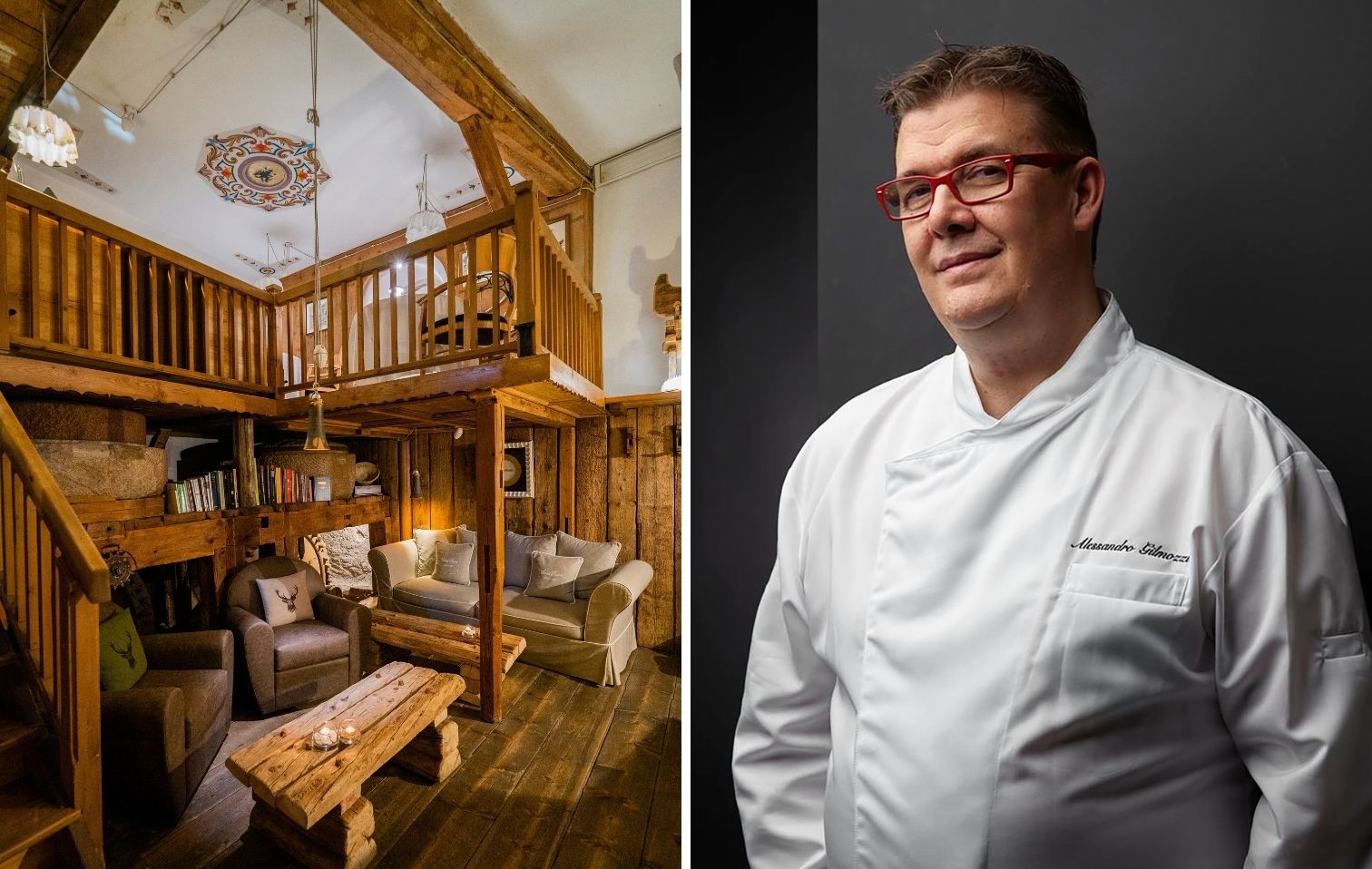
Cavalese, in the heart of Val di Fiemme, is one of those places that preserve and recount the passage of time. Here, the rhythm is that of the seasons, of the wind that moves the clouds over the Dolomites, of the woods that breathe slowly. In this landscape, where nature still rules, stands El Molin, a restaurant awarded a Michelin Star and a Green Star, which comes to life in the body of an ancient mill and in the soul of a chef-artisan: Alessandro Gilmozzi.
The chef who speaks the language of the mountains
More than just a place of work, the mountains are a vocabulary for Gilmozzi, a grammar that shapes his thinking, his style, and his cooking. “To say that the mountains are important to me is an understatement—they are my life,” he says. His connection to the land is neither nostalgic nor folkloric: it is a constant dialogue, made up of listening, experimentation, and dedication. The son of a large family that has always been active in the hospitality industry, he grew up among laid tables and wood workshops, initially attracted more by sculpture than cooking. His choice of art school is a sign of an identity that is still reflected in every dish today: plastic, essential, sculptural. But it is in the kitchen that he finds his definitive voice, in contact with great professionals and, above all, with the raw materials of his mountains.
Cooking the territory: respect, research, rigor
Gilmozzi's career has been marked by a dual tension: on the one hand, a deep respect for Alpine traditions, and on the other, a constant drive toward experimentation. “Tradition is the starting point: it preserves values, identity, and seasonality. But it's not enough. To bring it to life, you need study, discussion, and technology,” he says. His work is supported by a network of over 40 local collaborators—farmers, butchers, hunters, and cheese makers—who make a short, concrete, and sustainable supply chain possible.
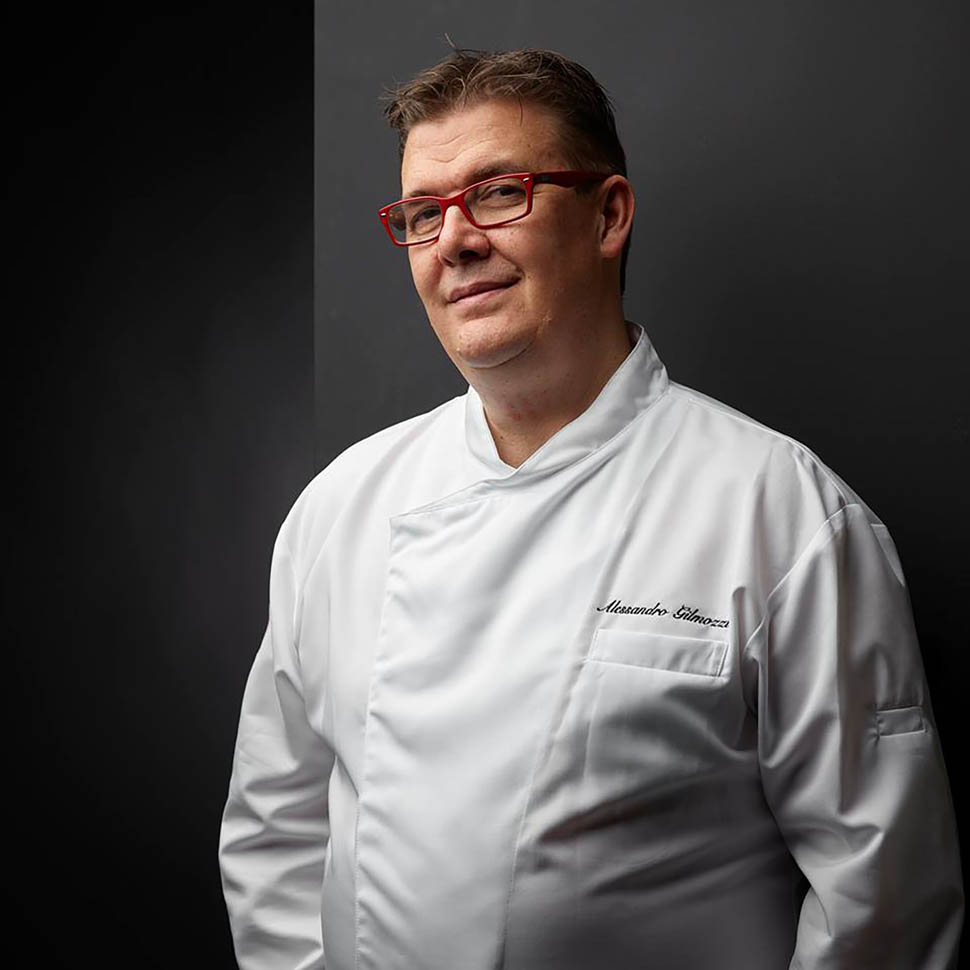
For over thirty years, he has pursued what could be described as a “botanical” approach, where each ingredient is dissected, analyzed, and understood down to its most intimate potential. “Even bark can tell a story if you know how to listen to it,” he says. And while wood, stone, and fire are the ancestral foundations of his cuisine, steel and technology are its current tools, in a lucid and respectful coexistence between past and future.
El Molin: a story of rebirth
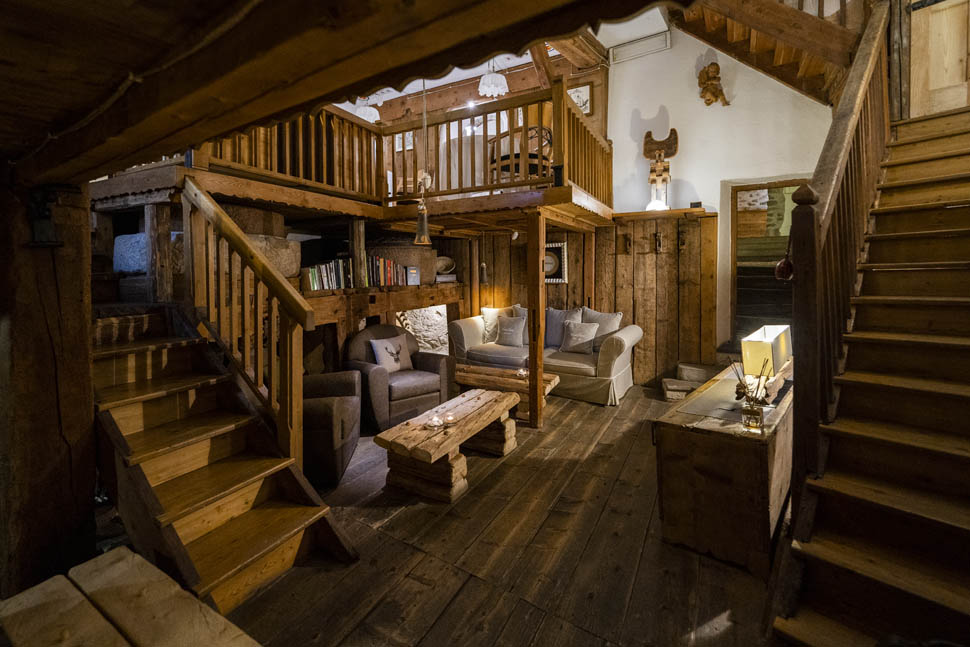
The restaurant is located in one of the historic mills of the Val di Fiemme, the last survivor of the many that once served the Magnifica Comunità. “When I first entered the old mill, I immediately felt that it was the right place. Not just for cooking, but for bringing something back to life,” says the chef.
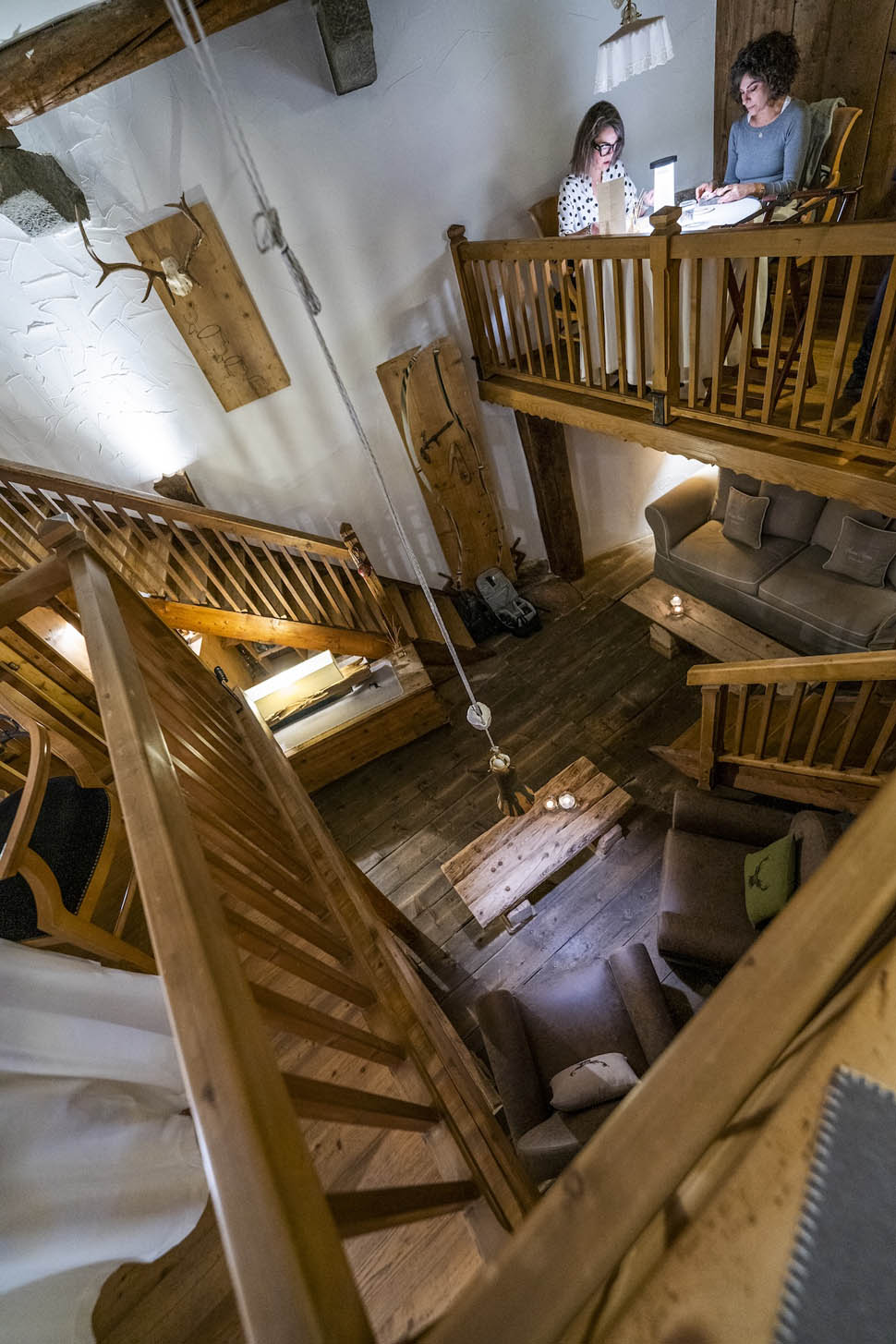
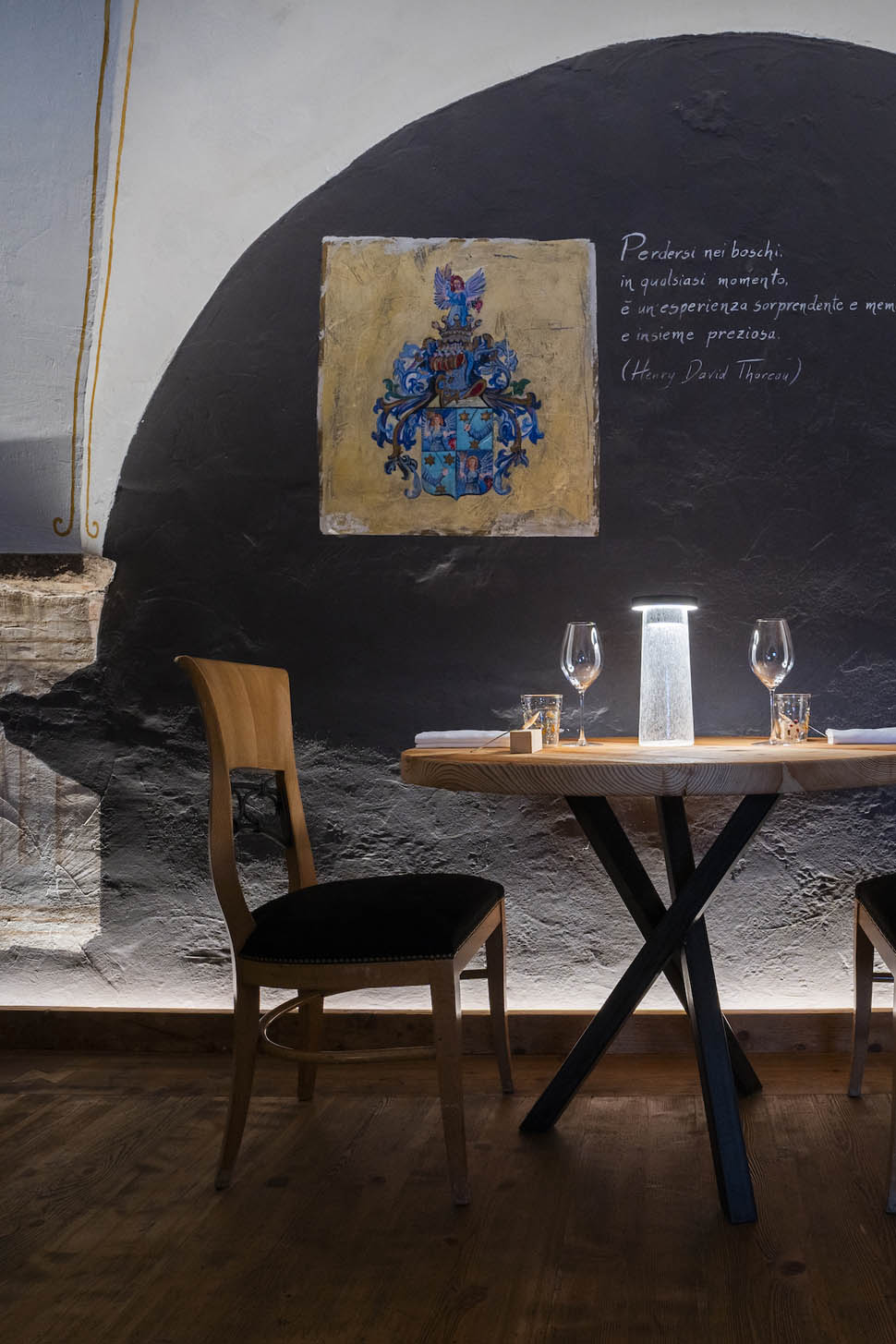
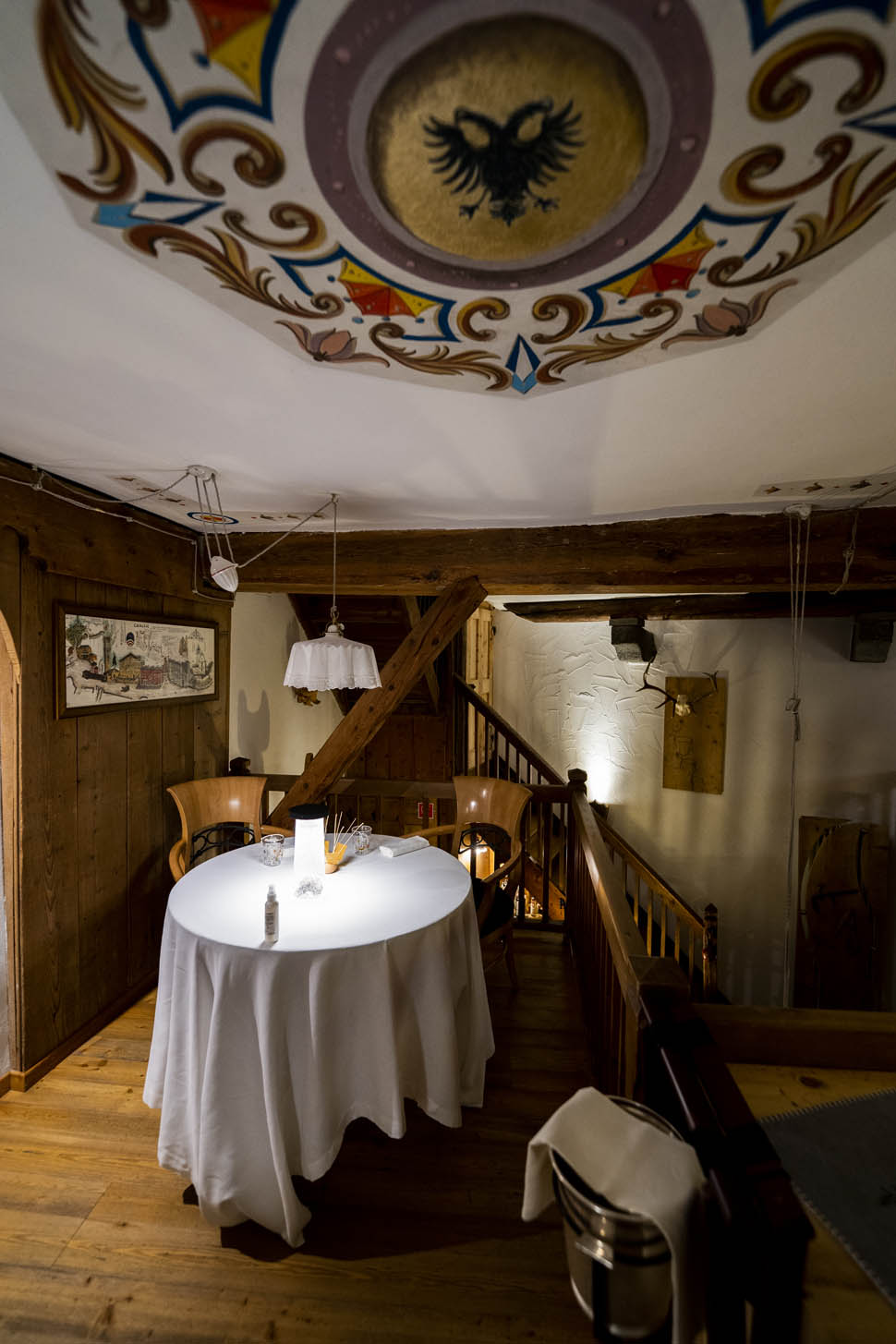
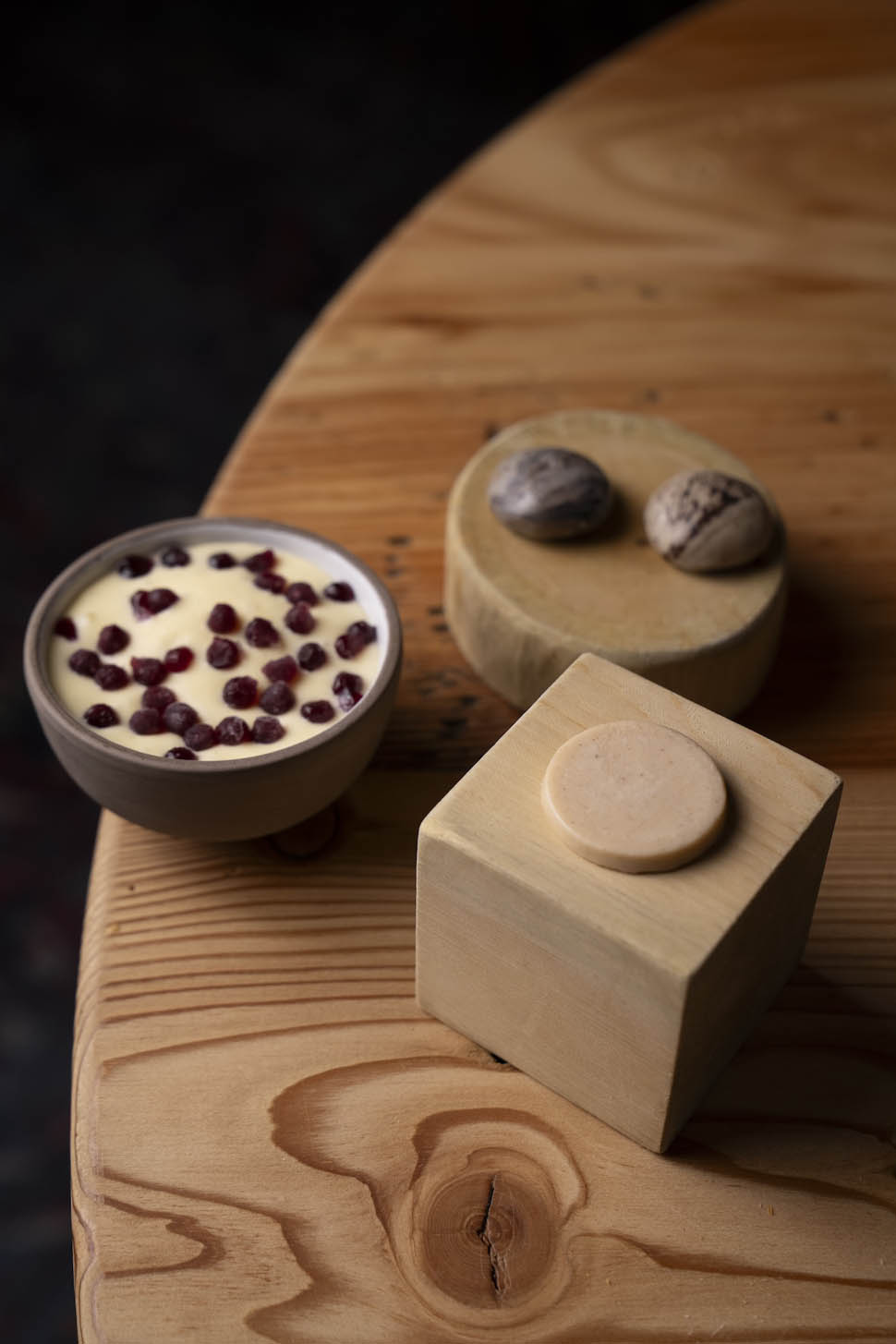
The interior, restored in Swiss pine – a local wood known for its beneficial properties – is dotted with sculptures and utensils carved by Gilmozzi himself. The cutlery, foraging knives, furnishings: every detail contributes to a coherent idea of hospitality, where materials become stories.
The 35.0 menu: thirteen dishes, a thousand nuances
In the 35.0 tasting menu, divided into thirteen courses, the chef's vision is composed with strength and delicacy. It is a menu that does not seek surprise for its own sake, but balance, rhythm, and the truth of each ingredient. It begins with Le miniature Wild, a series of small bites that prepare the senses for immersion. Next, L'olio e la montagna (The oil and the mountain) introduces the territory and its flavors with a symbolic gesture. La Bottatrice/Siluro brings together two often overlooked freshwater fish, with highly elegant results.
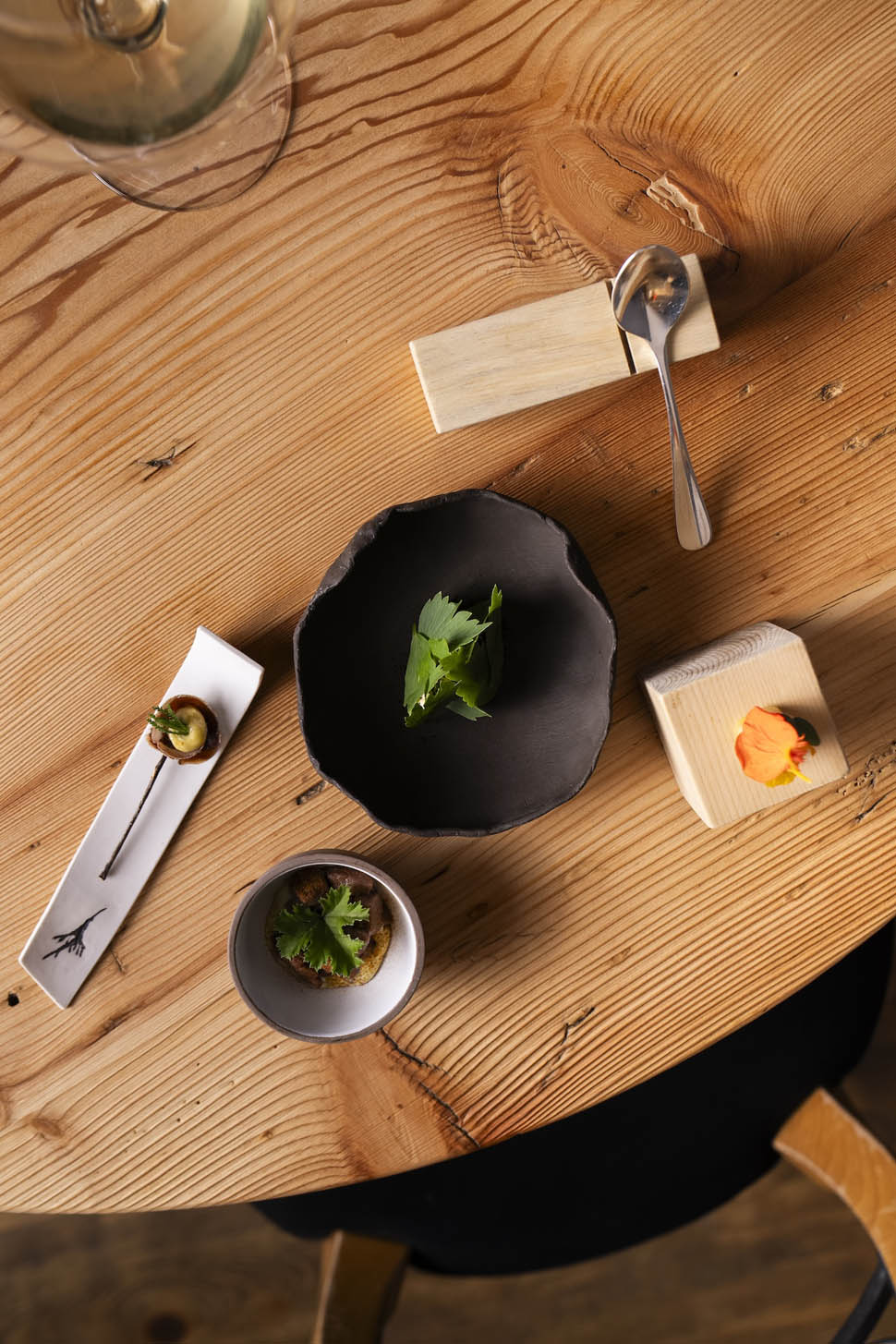
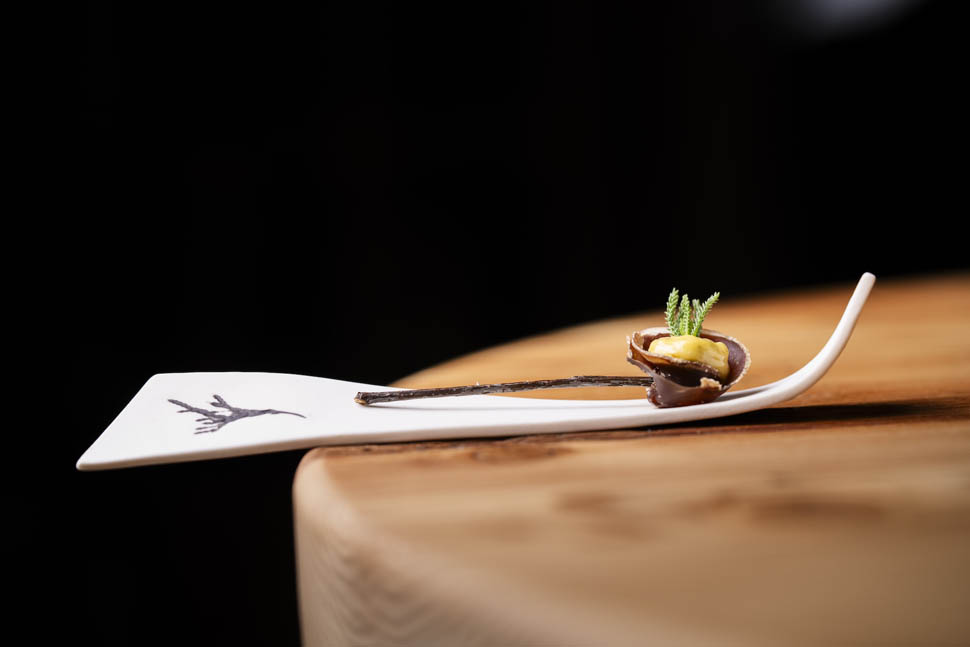
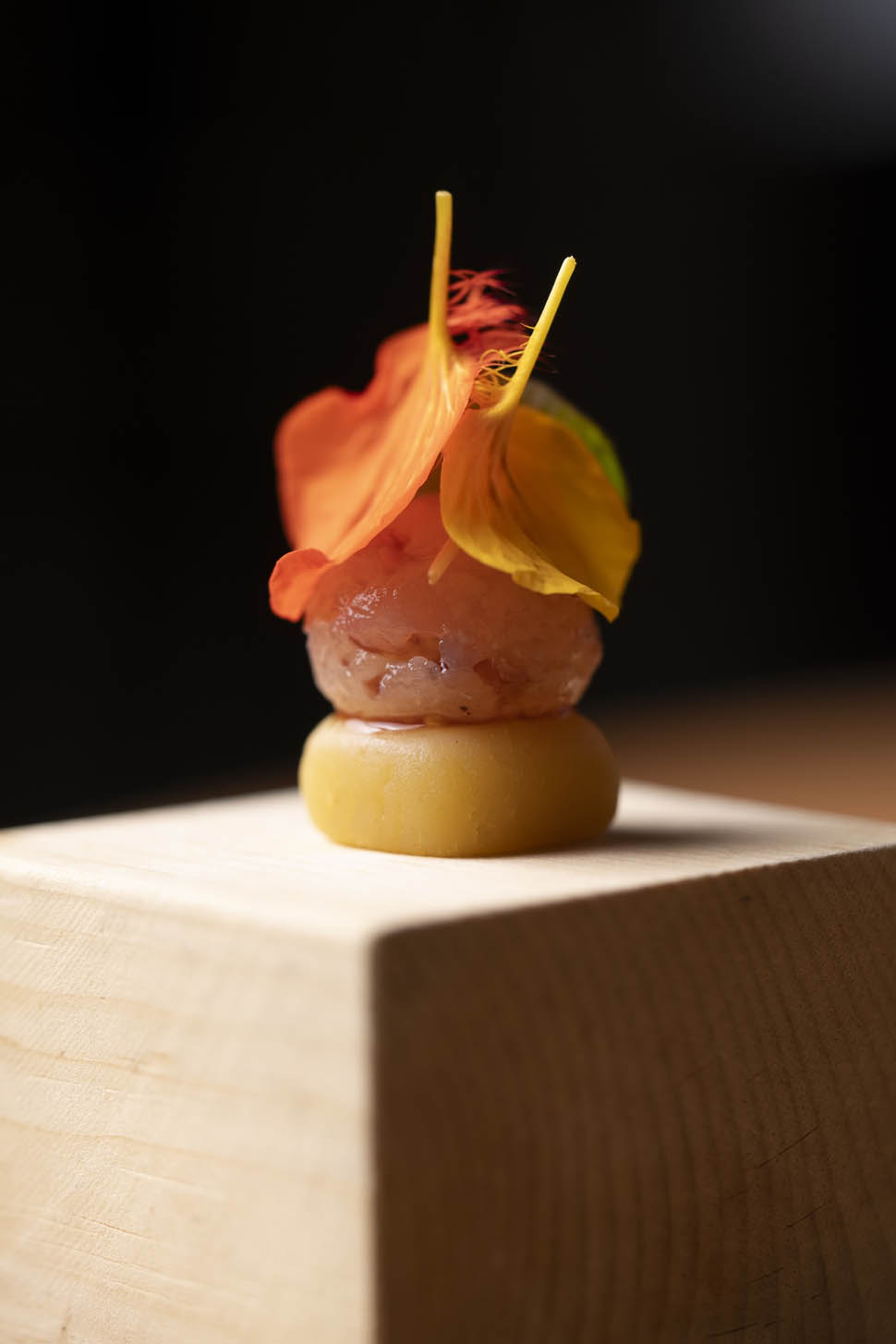
This is followed by Tagliatelle with mountain aromas, an olfactory tribute to alpine herbs, and Gnocchetti with wild garlic, snails, rosehip, and candied lemon, a structured and floral dish, balanced between acidity, richness, and freshness. Risotto all'Oltre Alpe, with verbena, juniper, and sweet and sour pine buds, evokes a silent, vertical, intense mountain.
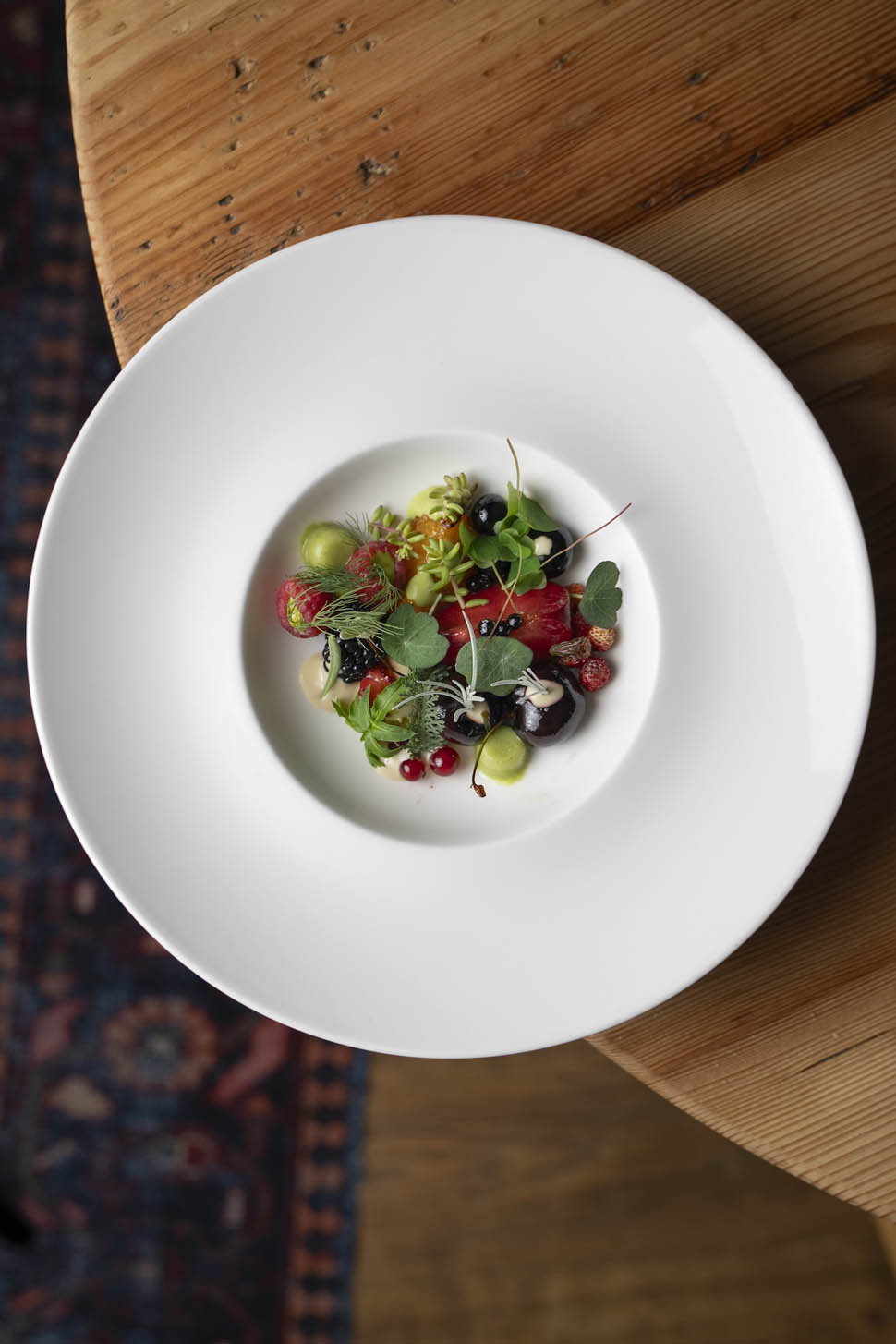
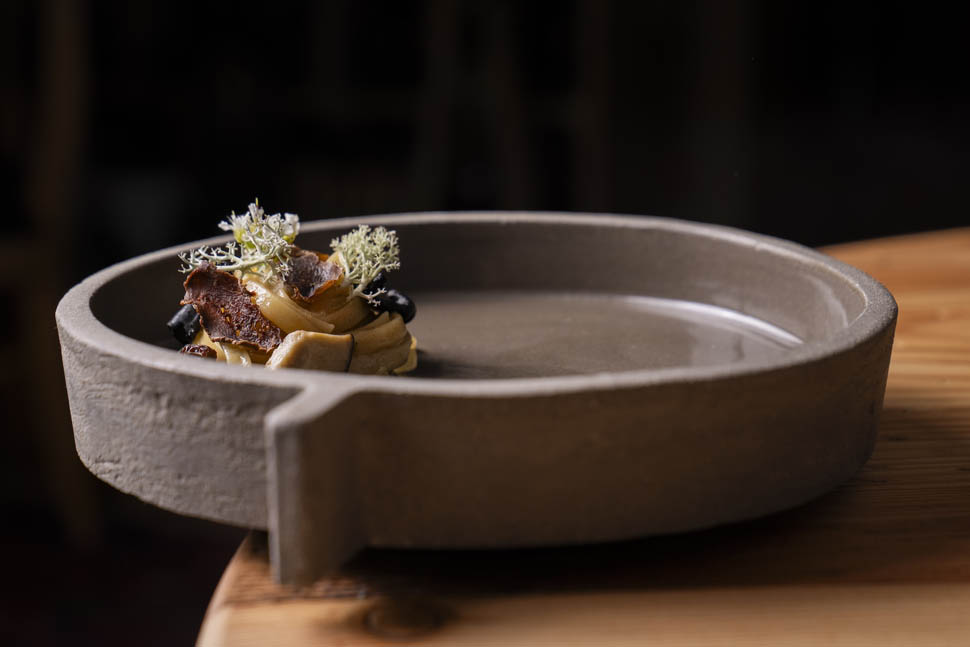
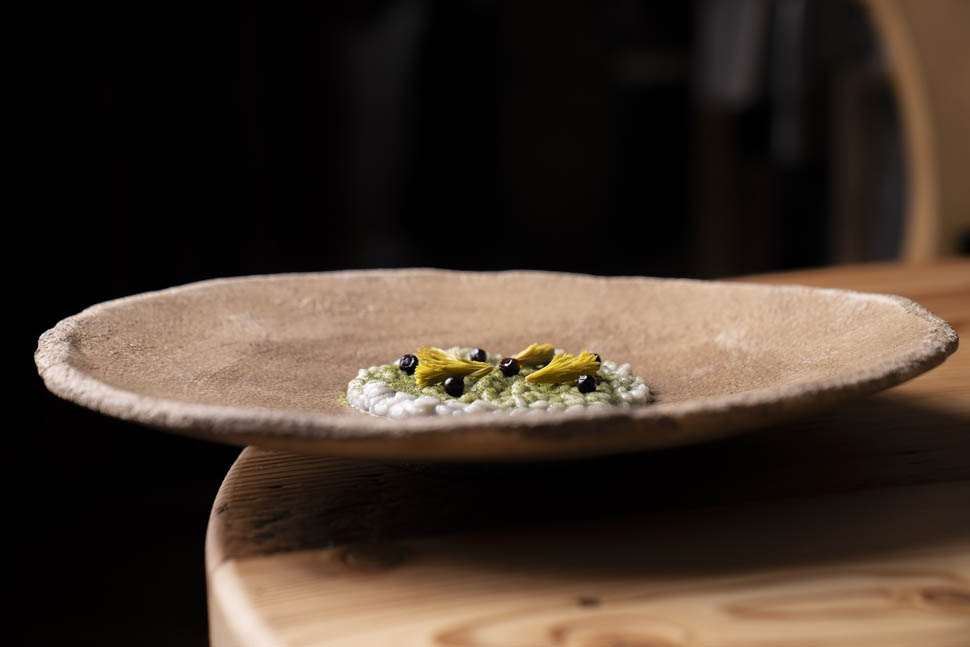
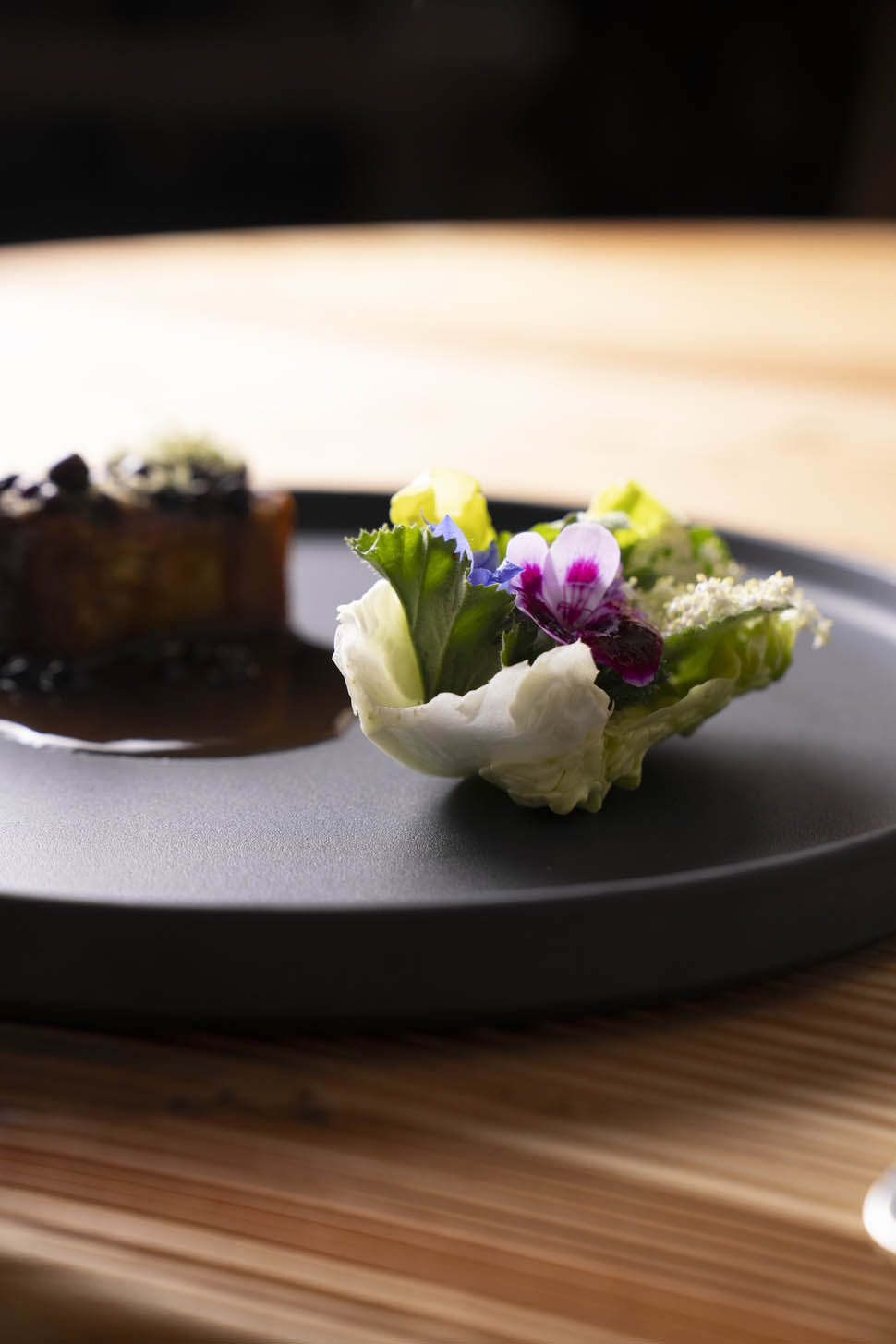
Bread, butter, and oil break down all rhetoric and restore depth to simple gestures. The char with fermented milk and resin is smoked and evocative, while the red potato with root vegetable mayonnaise and the white-haired pork with elderberry and wild Misticanza translate the concept of comfort food into a contemporary Alpine key.
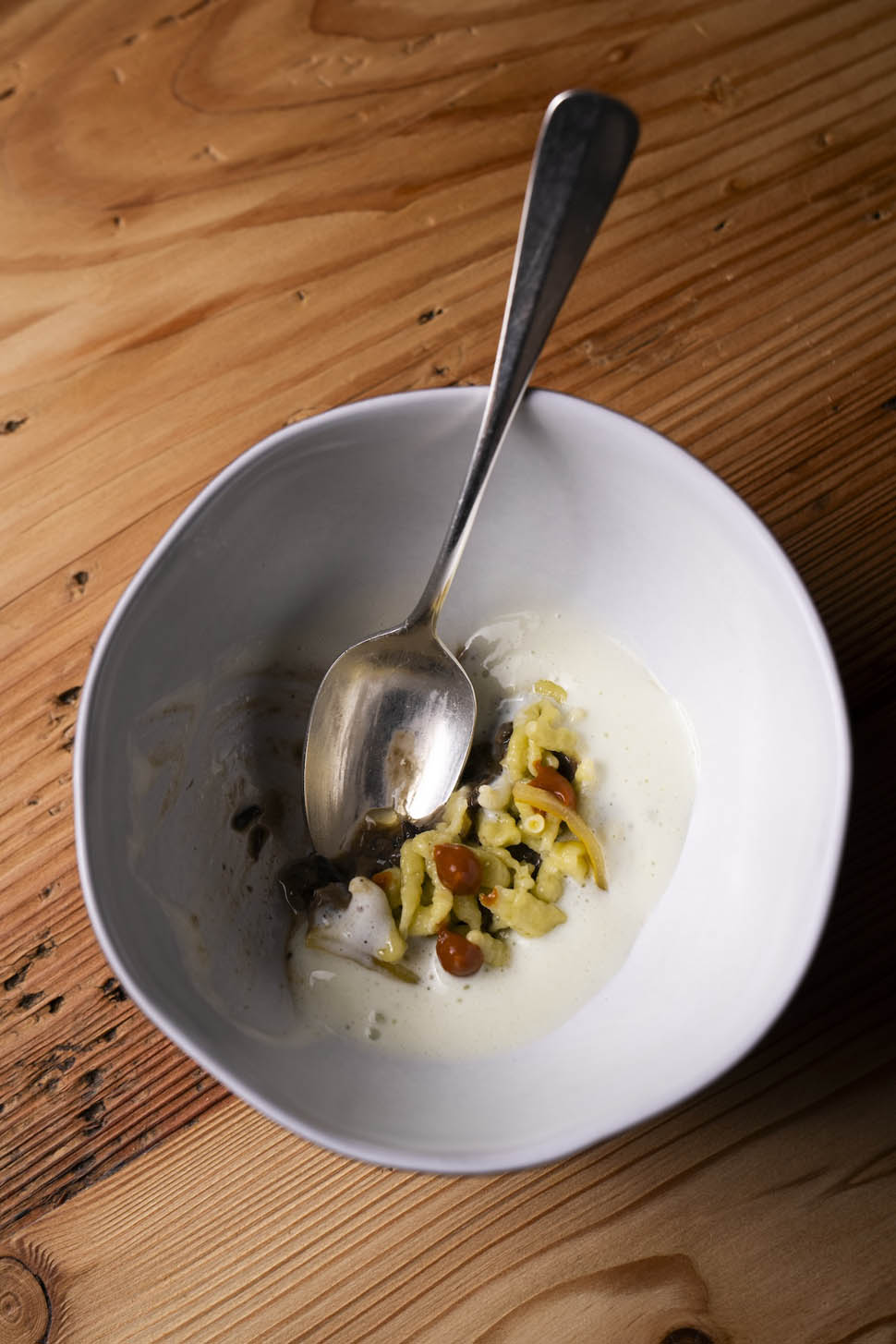
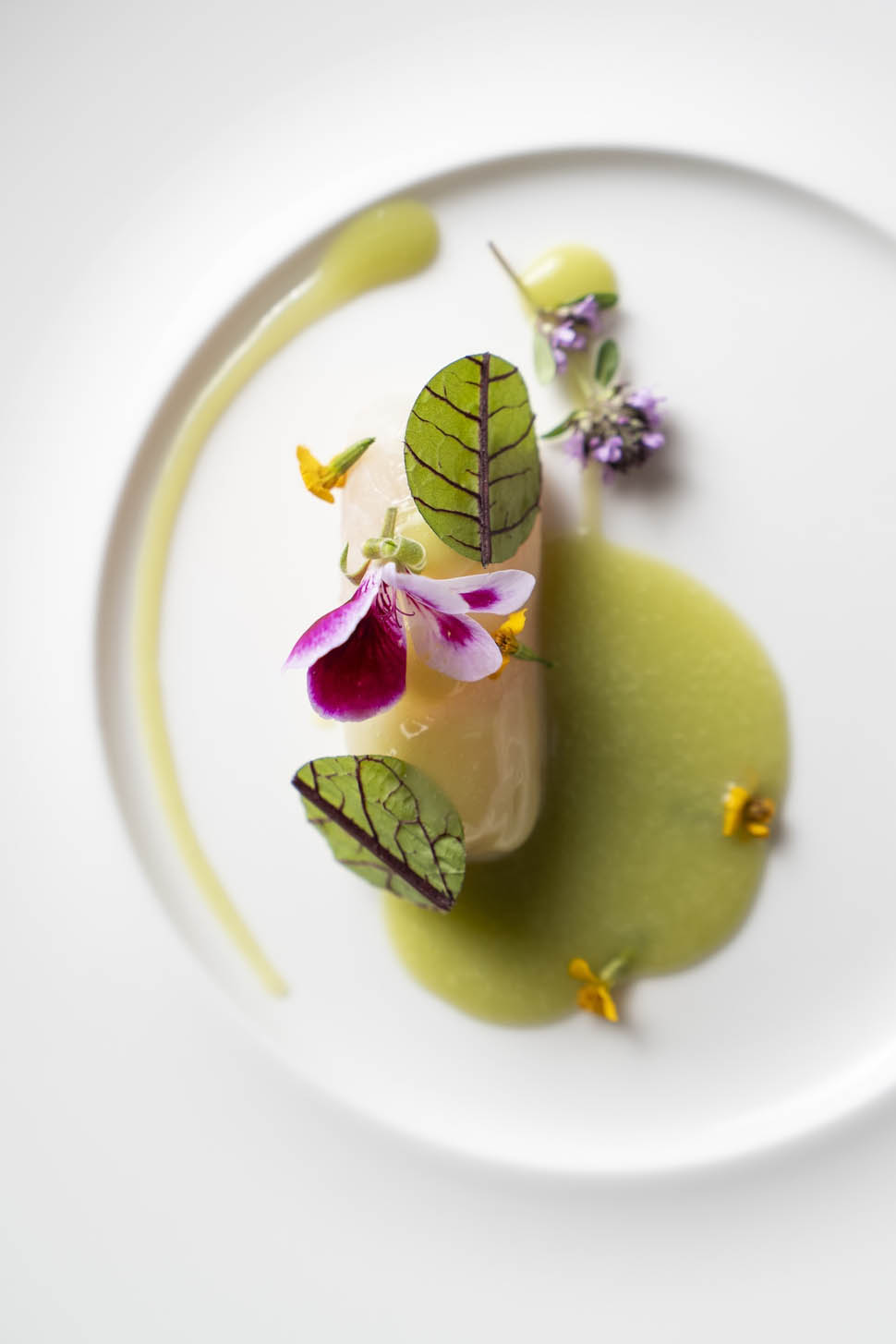
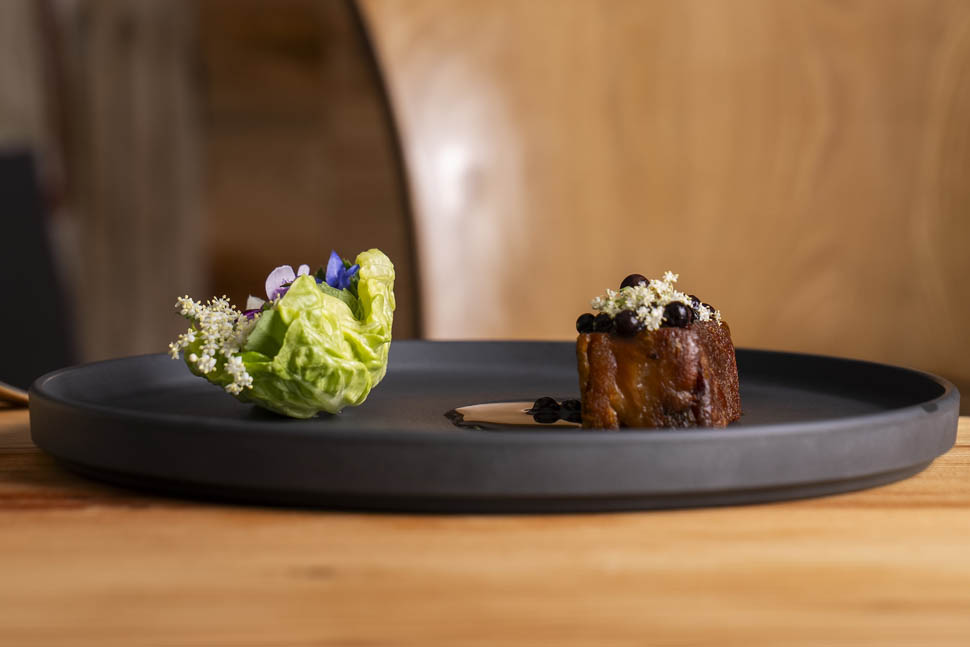
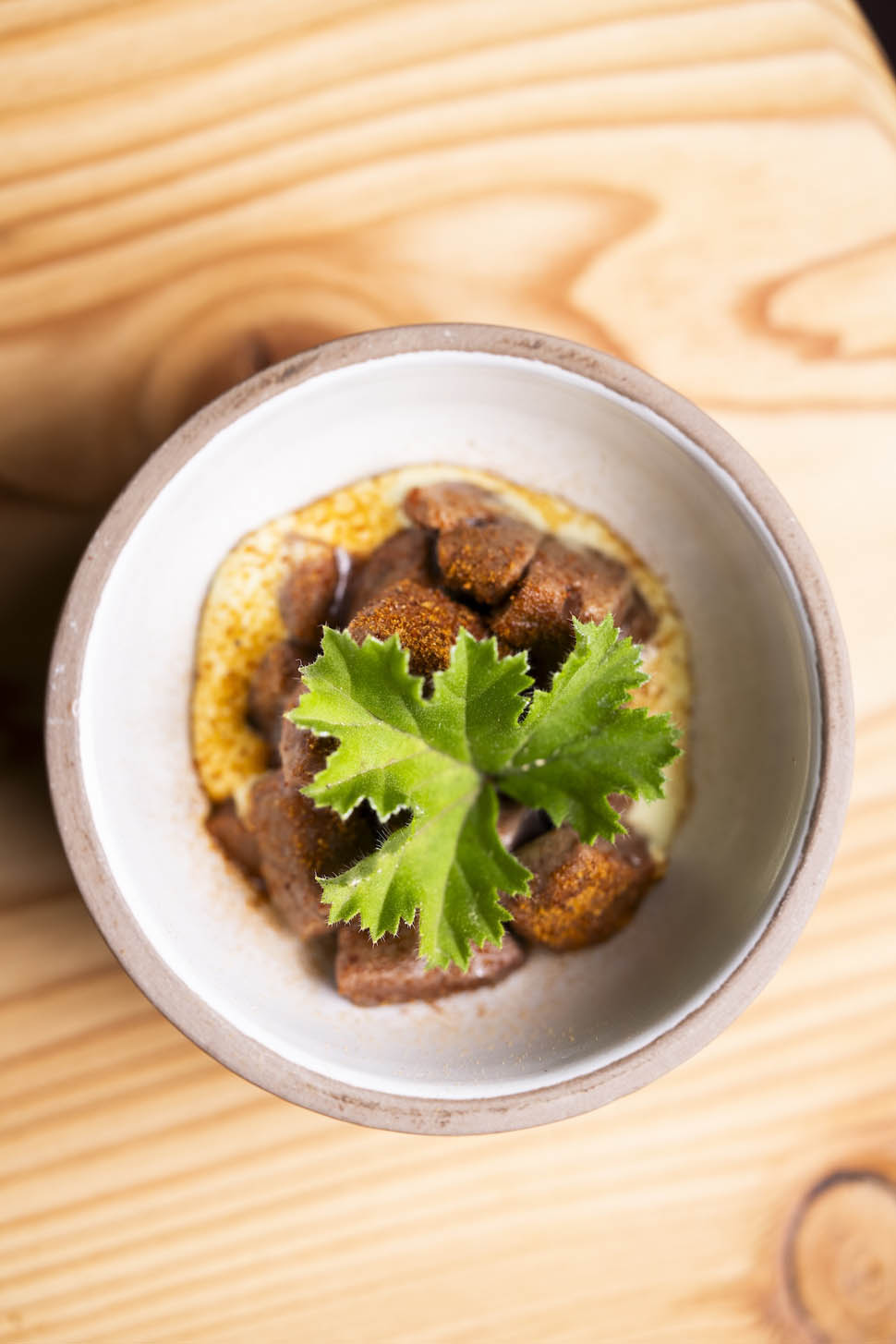
The deer tongue with wild rose and gentian is the narrative highlight of the menu, a dish that moves the soul. The journey ends with mountain fruits and Wild Miniature desserts, echoing the first flavors, but now mature and complete.
The artist-artisan of the kitchen
Gilmozzi's creative flair does not stop at the plate. His sculptural skill emerges in every step: “When I was little, I wanted to be a sculptor. Drawing, graphics, composition: everything has remained and everything goes into the kitchen.” It is a visual, geometric way of thinking that never gives in to excess but seeks the essentiality of form. On the plate, every element has a precise function, its own weight, its own direction. It is not just aesthetics, but discipline: “The ruler is the tool that represents me most. It gives me linearity, precision, cleanliness. It makes you go straight, whether it's ten centimeters or ten kilometers.”
Silence, numbers, and nature: hidden harmony
Silence in a mountain kitchen is not emptiness: it is substance. “It is fundamental to my creative process. Only in silence can I truly perceive the territory,” he explains. This sense of deep listening is also reflected in the numerical choices on the menu: 8 or 13 courses, golden numbers, harmonious, inspired by the Fibonacci sequence. “We studied them thoroughly so that they would not impact the customer's perception. They already exist in nature, so the mind accepts them naturally.” Here, as in the dishes, everything comes together: logic, beauty, spontaneity.
The kitchen as landscape
Alessandro Gilmozzi is not just a chef who loves his homeland. He is a storyteller of landscapes, someone who has learned to translate the jagged peaks, the breath of the woods, and the song of silence into a cuisine that does not need to shout to be noticed. Today, in his role as President of the Italian association Ambasciatori del Gusto, he takes this vision beyond the borders of the Val di Fiemme, becoming a spokesperson for a gastronomic culture based on identity, sustainability, and memory. “Alone I go fast, but with my team I go further,” he says. It is the mantra of those who know that innovation is not disruption, but continuity. Of those who walk in the snow without leaving loud footprints, but only precise marks, like those traced by a ruler.
CONTACTS
El Molin
Via Muratori, 2, 38033 Cavalese TN
Phone: 0462 34007