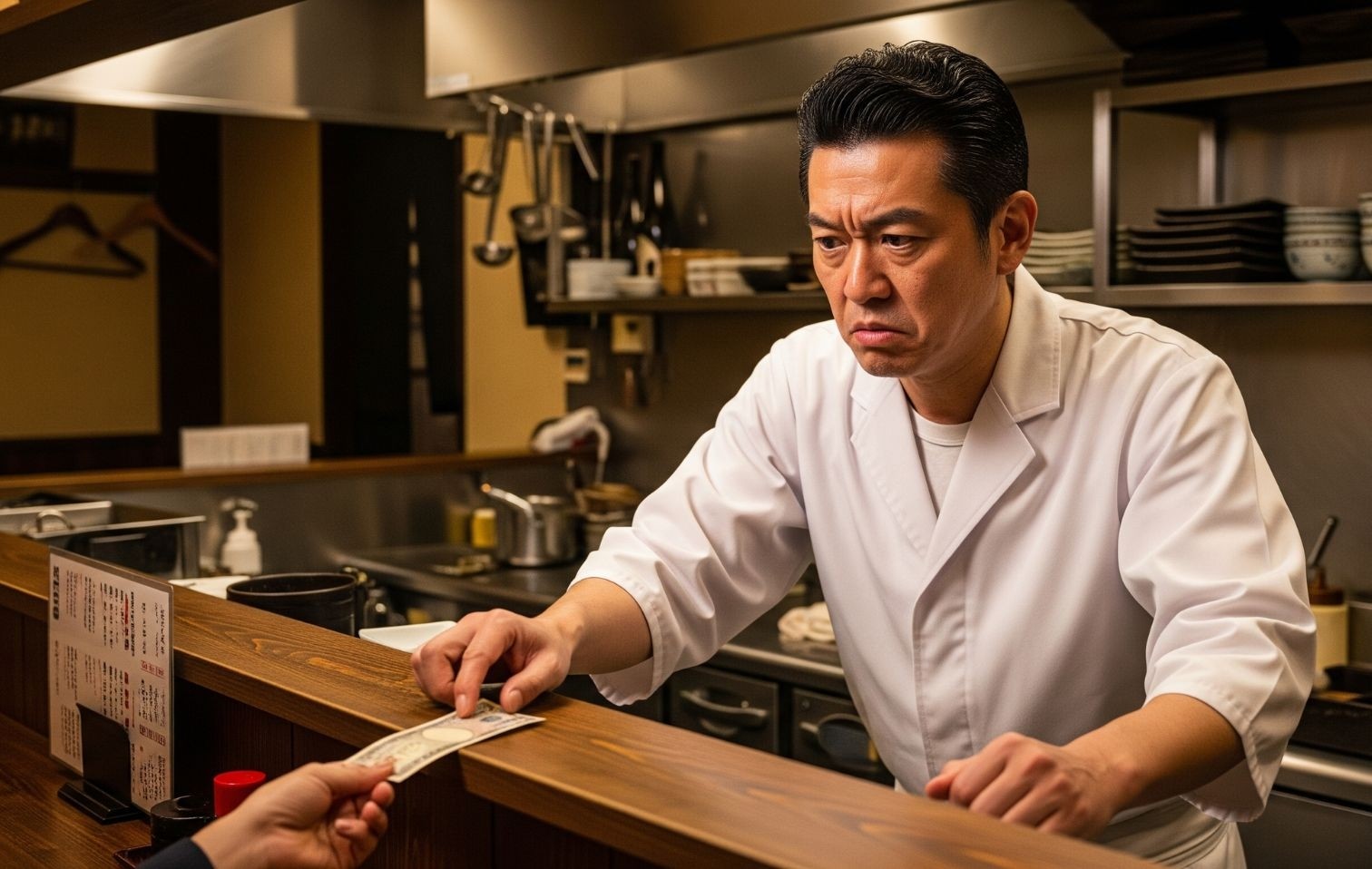
Moving eastward, the script changes radically. In Japan, South Korea, and China, tipping can be perceived as offensive: here, quality of service is part of personal honor and professionalism, not something to be rewarded with coins.
Some expressions of gratitude cannot be put into words, but are left lightly beside the coffee cup, slipped silently under the napkin, or shine in the shadow of a tip left on a hotel bedside table. A gesture that in some corners of the world is a grateful caress, elsewhere a gaffe dressed in gold. When it becomes a thank you, money speaks all languages—but with accents and nuances that only those with an ear for cultural etiquette can pick up on. Tipping around the world is an art form that requires tact, discretion, and geographical awareness. And if you're not paying attention, it's easy to stumble over good manners.
How tipping varies across Europe: where it is an established custom and how it works
Imagine yourself in a Roman trattoria, where the bread is crusty, the tablecloths are checkered, and the “coperto” – that almost poetic item at the bottom of the bill – already tells you part of the story. In Italy, tipping is never compulsory, but if the service warms your heart, 5-10% is a well-appreciated sign of gratitude. Next door, Spain, Portugal, and Greece move to the same Mediterranean rhythm: here, a few euros left on the table say that you felt at home. In Croatia, where hospitality is almost a liturgy, you can go up to 15% if the bill does not include a service charge. Turkey, on the other hand, considers tipping almost a natural extension of payment. In restaurants, hotels, or taxis, the custom is to round up or leave a fixed 10%. It is a gesture that speaks the language of custom and respect.

In refined French composure, despite the famous service compris, it is still customary to leave 5-10% as a personal gesture, often casually left on the table. A touch of savoir-faire, rather than an obligation. In Belgium, the Netherlands, and Luxembourg, service is almost always included in the bill: those who wish to leave something extra may do so, but without expecting teary eyes in return. Elsewhere, the measure changes: in British pubs, for example, tipping is not expected—you order at the bar, pay, and say goodbye. But in restaurants in London or Dublin, where service is not already included, tips of between 10 and 15% are customary. Scandinavia, on the other hand, likes to keep things simple: in Sweden and Denmark, you round up to the nearest dollar, and that's it. Be careful, however, in the more remote areas of Finland, where tipping is virtually unknown and may be viewed with suspicion. In Germany, Austria, and Switzerland, the rule of understated kindness also applies: no obligation, but 5–10% is welcome if the service deserves it.
The Americas: where a waiter's smile has a price
In the United States and Canada, tipping is not just customary: it is an integral part of the salary. Staff wages, especially in the restaurant industry, are calculated on the assumption that customers will leave a 15–20% (or more) tip at the end of the meal. Here, saying thank you comes at a price—and refusing to tip can sound more like an insult than an oversight. Even when the bill includes a service charge, the tip is expected as the final note of a harmony that would otherwise remain incomplete. In hotels, taxis, bars, and even for room service, the wallet remains open: the system requires it, the culture supports it.

Asia: empty-handed but with a full heart: where tipping is considered offensive
Moving eastward, the script changes radically. In Japan and China, tipping can be perceived as offensive: here, quality of service is part of personal honor and professionalism, not something to be rewarded with coins. “Doing well” is a silent duty, not an opportunity to receive extra rewards. Offering money, beyond certain specific hotel or international tourist contexts, can be seen as an attempt to “buy” something that, culturally, is not for sale. In Singapore, we discover that tipping is even prohibited at the airport, and if left at a restaurant, it will be refused. In South Korea, on the other hand, the population associates it with restaurants in red-light districts, and the only people who willingly accept it are taxi drivers. Thailand is an exception, especially in areas frequented by tourists: here, 5-10% is accepted and appreciated. But be careful, etiquette dictates discretion: no waving banknotes in plain sight, no small change that could seem like a half-hearted gesture. Less than ten baht can be more offensive than kind.

Oceania and Africa: lands of moderation and measured generosity
In Australia and New Zealand, tipping is not a necessity, but an optional gesture of appreciation. No one expects it, but leaving 5-10% with a smile can make a difference in how you are remembered. In many African countries, however, tipping is an integral part of the daily economic fabric. Not only in restaurants and hotels, but also for simple gestures: opening a door, carrying a suitcase, giving directions. In Egypt and Morocco, for example, tourists' generosity is often taken for granted. And on luxury safaris in South Africa, Kenya, or Tanzania, rangers and guides expect between $10 and $20 per day as recognition for their work.
A coin worth respect
Money, as we know, has a thousand meanings. But when it comes to tipping, it becomes a silent language of respect, style, and awareness. It's not a question of how much, but how and where. It can warm the heart of a waiter in New York or hurt the pride of a chef in Kyoto. After all, finding out before you go is a form of kindness towards those who work to make us feel welcome. Because true good taste is not only found on the menu, but also in the way we thank those who make that menu memorable. And that ‘thank you’ doesn't always have to come from your wallet.