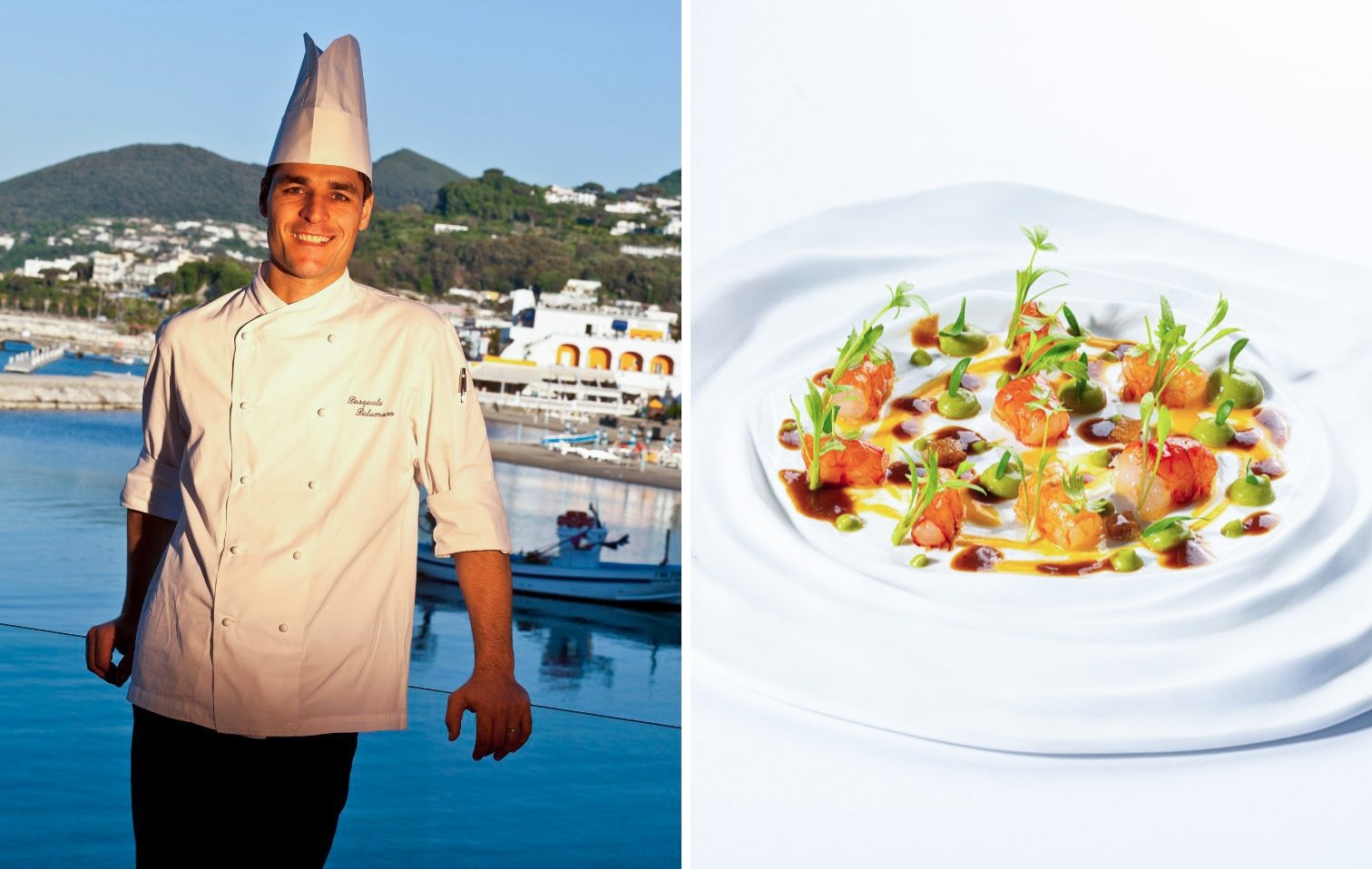
Located within the five-star Regina Isabella hotel, the fine-dining restaurant Indaco showcases the Mediterranean through “humble” fish, sea vegetables, and menus inspired by Ischia’s ancient name.
*Content with promotional purposes
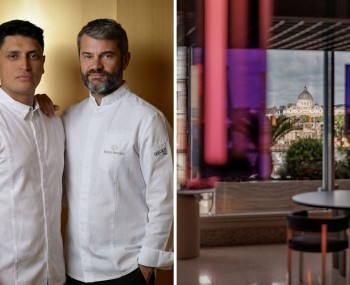
Indigo is the color of the sky above this part of Ischia, just a stone’s throw (literally) from the sea, where the restaurant bearing this deep, intense color showcases its seafood cuisine under the guidance of chef Pasquale Palamaro. In the quiet bay of Lacco Ameno, among rocky outcrops and small private beaches surrounded by a Mediterranean pine forest, the Hotel Regina Isabella stands as one of the iconic symbols of high-end Italian hospitality. Founded in the 1950s by publisher and film producer Angelo Rizzoli, this five-star hotel has helped shape the elegant image of the island of Ischia, with a concept of hospitality centered on wellness, beauty, and the quality of the experience. The hours are marked by the rhythm of the sea and a hospitality deeply rooted in the concept of la dolce vita.
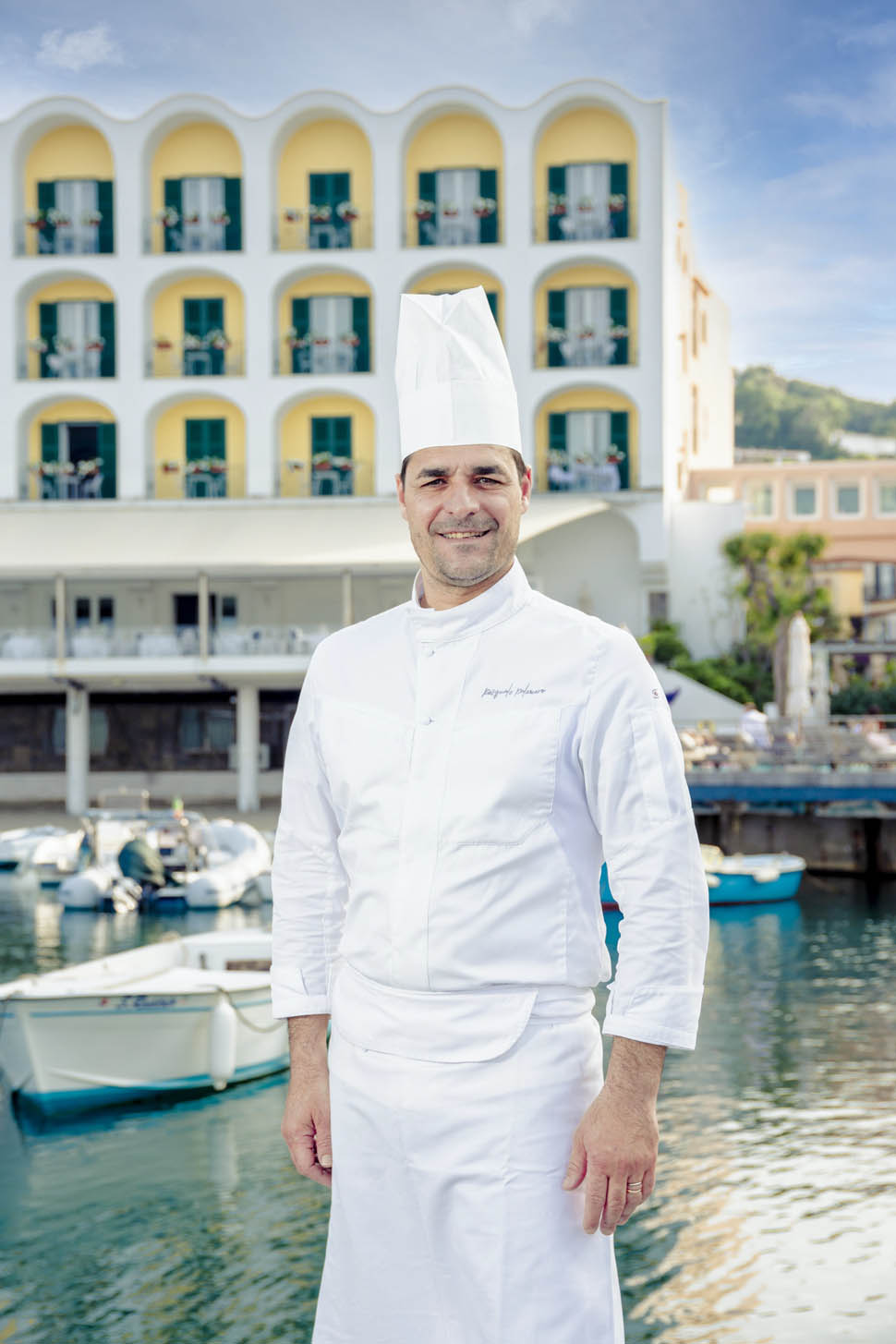
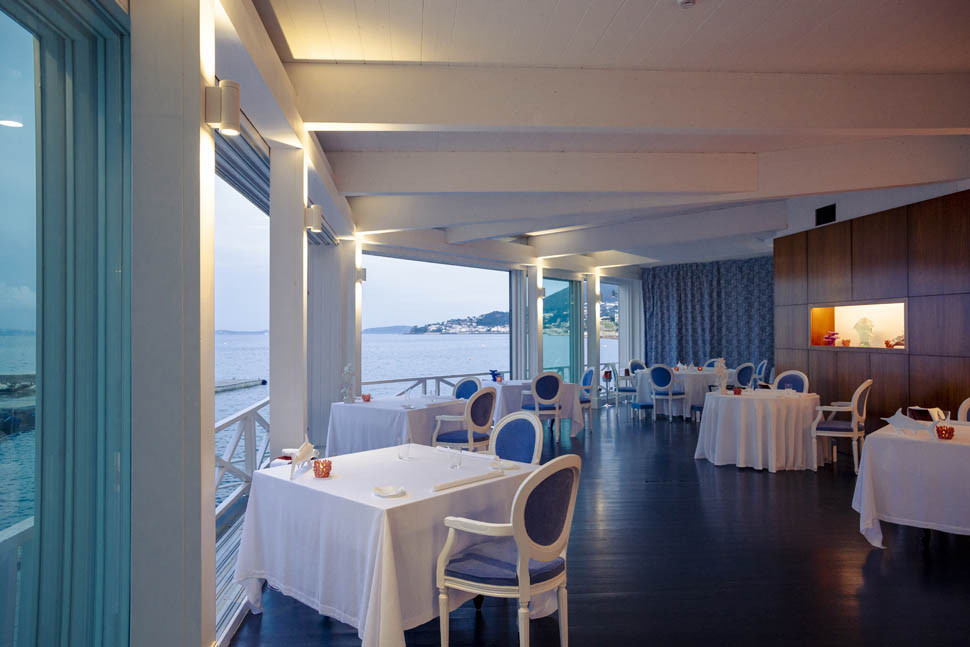
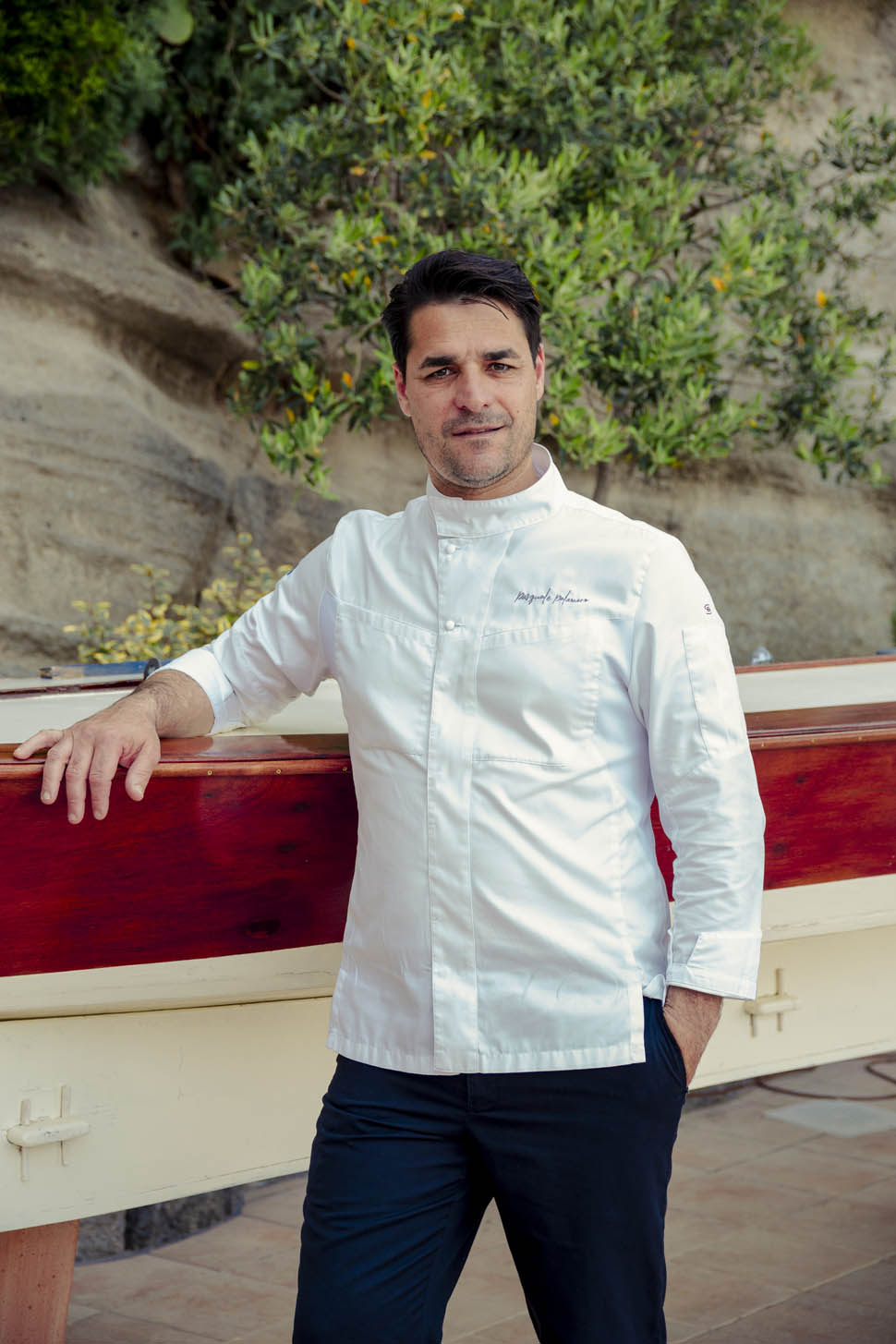
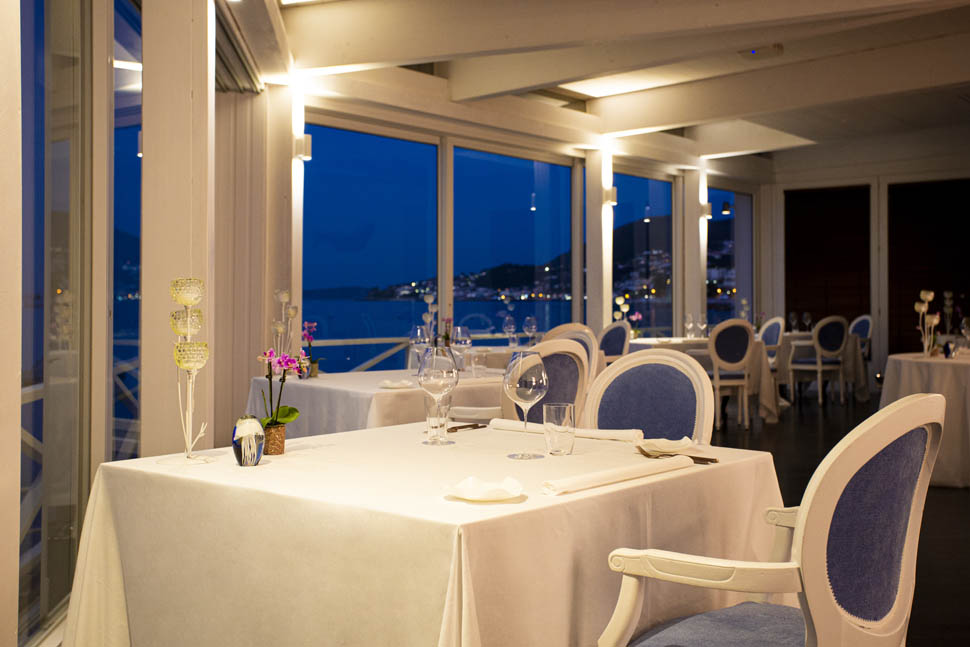
Inside the hotel is Indaco, a fine-dining restaurant overlooking the water, situated in a small dock where the twilight takes on deep blue hues that inspired the name of this culinary destination. Since 2009, the kitchen has been led by Pasquale Palamaro, a native of Ischia born in 1978, who has held a Michelin star since 2013. The culinary offering focuses on the sea, interpreted through local seafood, locally sourced produce, and a constant exploration of lesser-known species, often excluded from mainstream commercial channels. Palamaro’s professional journey includes working alongside legendary figures in Italian gastronomy, and his culinary narrative draws from the local terroir while embracing contemporary influences, all while maintaining a strong connection to the island’s identity.
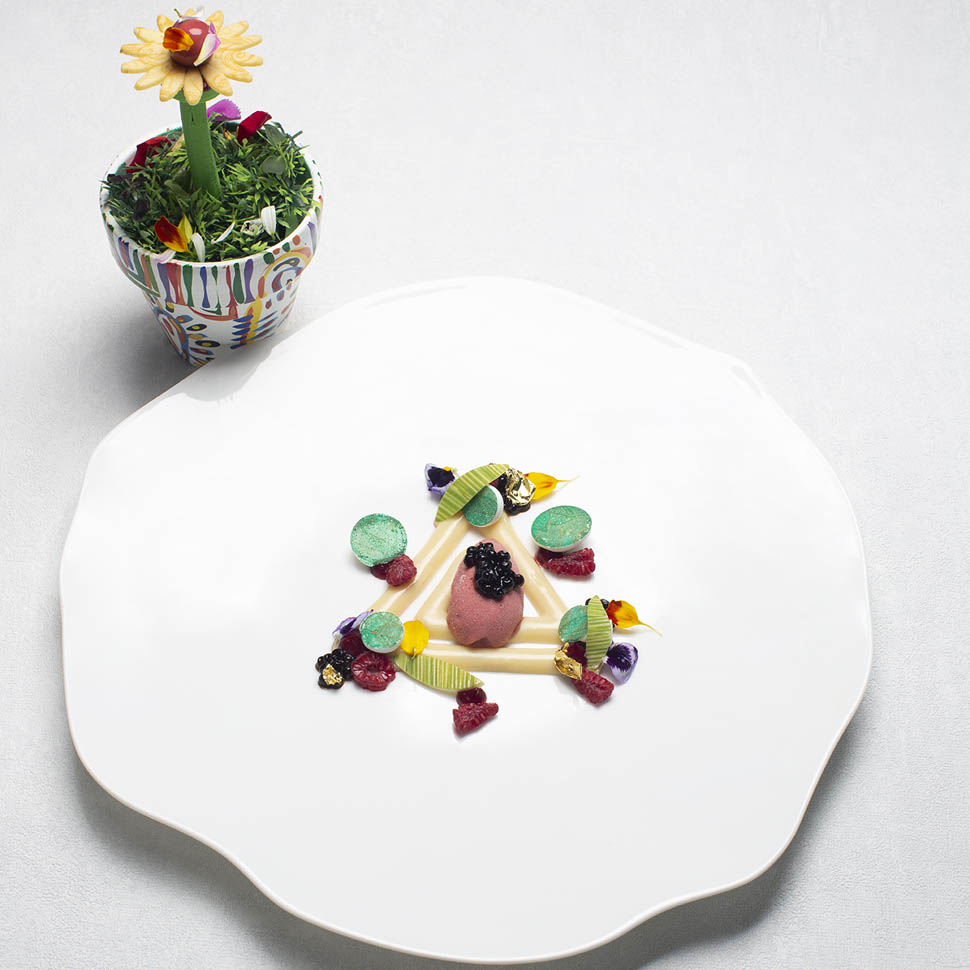
This season’s tasting menus are named Inarime, the ancient name of Ischia dating back over two thousand years. The main menu intertwines the sea and the land, while Inarime Lab serves as a space for creative experimentation that incorporates ingredients and inspirations from diverse contexts. Rounding out the offering is Inarime Vegetale, a menu that connects marine and terrestrial vegetables, drawing parallels such as sea lettuce and land lettuce, sea asparagus and land asparagus. This work highlights the dialogue between different yet closely complementary ecosystems.
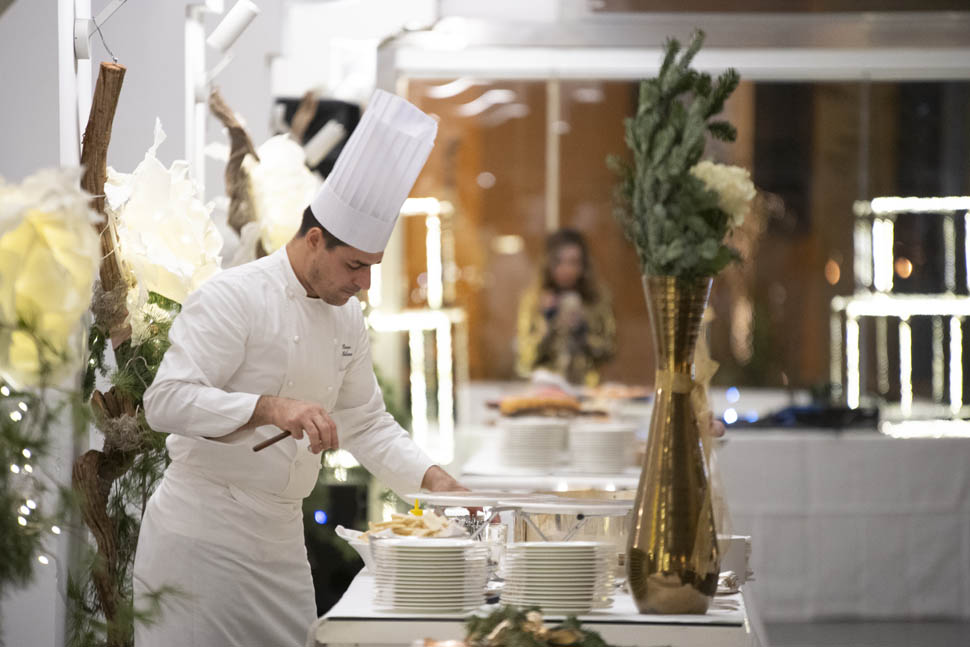
The connection to the sea is also evident in the collaboration with local fishermen, a choice that allows us to highlight species often considered marginal by the market. This is a cultural stance even before it is a gastronomic one, aiming to restore complexity to marine biodiversity and promote a broader understanding of the Mediterranean’s resources.
A Chat with Chef Pasquale Palamaro
Why Indaco?
Indaco was founded in 2009 and named after one of the least common colors, but here we have a phenomenon called the Blue Aurora. The restaurant doesn’t face the sunset, but it has this characteristic where, in the summer, the sky turns completely blue at twilight. This shade between blue and purple is precisely the color indigo. Today Indaco offers a seafood-only menu, because we’re on an island, because we’re just 30 centimeters from the water, and because it’s my culinary philosophy—so I try to work with products from local fishermen, seeking to highlight lesser-known fish that are rarely found on the fish market stalls, as well as the entire world of seaweed. We offer three tasting menus.
What does Indaco’s menu tell us?
This year’s menu theme is Inarime, the original name of the island of Ischia dating back over 2,000 years.
So, by delving into our origins, we’ve developed three tasting menus. The first, “Between Land and Sea,” is a fusion of local seafood and all the produce of our land—a harmonious blend. Then there’s Inarime Lab, an extremely creative menu where we have fun with ingredients from around the world and unusual pairings. A true creative laboratory where we set no limits. And then there’s Inarime Vegetale, where this year we’ve opened a small window onto the plant world—both from the sea and the land—always in harmony. There’s sea lettuce and land lettuce, sea asparagus and land asparagus. We’re doing some work to bring together the vegetables of the sea and those of the land. The three tasting menus each have seven courses; these 21 dishes can also be ordered à la carte. We earned our Michelin star in 2013 and have jealously guarded it for 13 years.
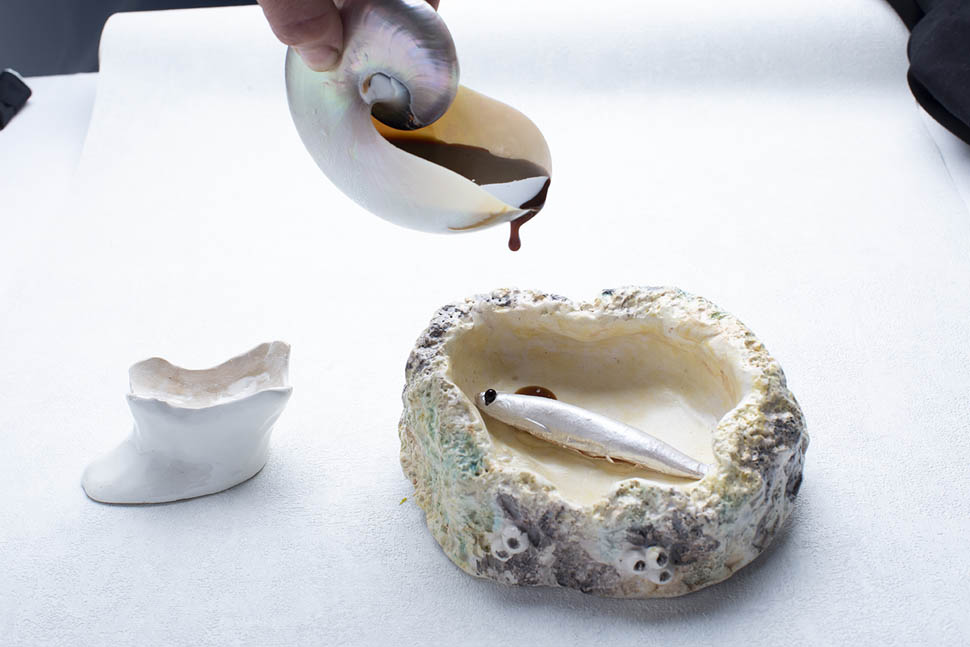
What does it mean to cook seafood today?
There’s plenty of fish, but there’s also the problem of overfishing. Large fishing vessels are decimating fish stocks at a rate the market can’t sustain, and this has two negative consequences. The first is that the product is sold off at rock-bottom prices; because so much has been caught, it has to be sold cheaply, which means the same product caught by a small-scale fisherman becomes uncompetitive. The second negative effect is that the same things are always offered—the same raw ingredients. I work with eight local fishermen who do their work every day. And so I try to make the most of just about everything they bring ashore. In the common imagination, fish means sea bass, salmon, tuna, swordfish—those four things—but that’s not the case. There are many fish that are improperly labeled as “poor fish” simply because they aren’t valued. We should give a little more space to these species, to these fishermen.
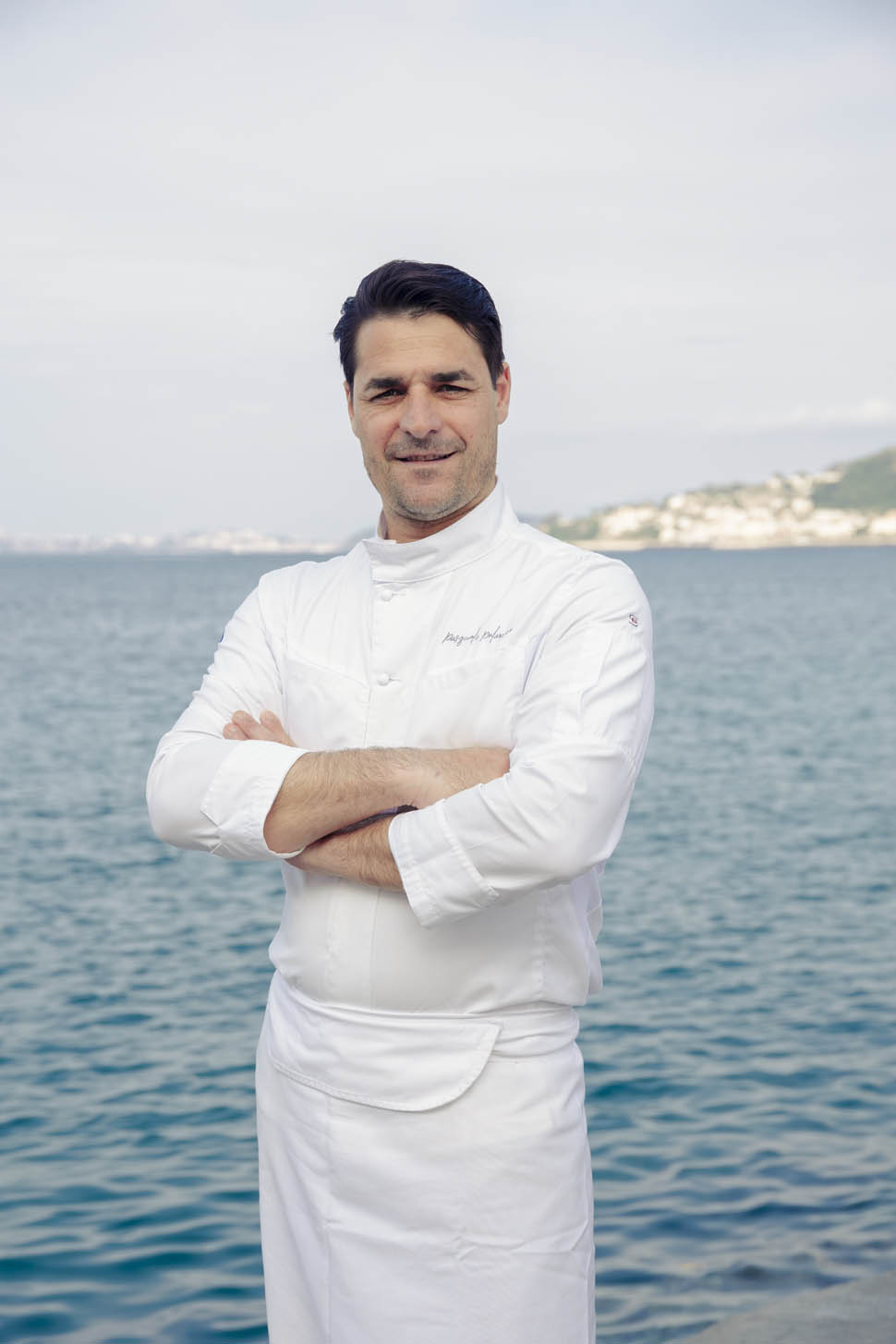
Being a restaurateur—even before being a chef who cooks for pleasure and to bring joy to others—must also be a commitment. A chef must be a connoisseur; they must educate and provide information to people, because otherwise, for the average person, the fish from our sea will always and only be sea bass. With Indaco’s concept, we want to bring joy, but we also want to provide information and foster culture; we want people to understand that there is more to it, and surely the products they learn about from us may eventually find their way onto their dinner tables at home.
Let’s talk about microgreens. How do they feature in your cooking?
I’ve known Koppert Cress for many years. With the Ischia Safari* project, I wanted to share a more in-depth understanding of these products; I went to the Netherlands to visit the company and was impressed because I saw that behind those small plants lies work done with rigor, seriousness, and passion, as well as concrete actions to protect the environment.
I started working with these herbs and am increasingly incorporating them into my dishes. They’re often seen as mere decoration or garnish, but that’s not the case at all—there are herbs whose flavor and aroma can make them the main component of a dish.
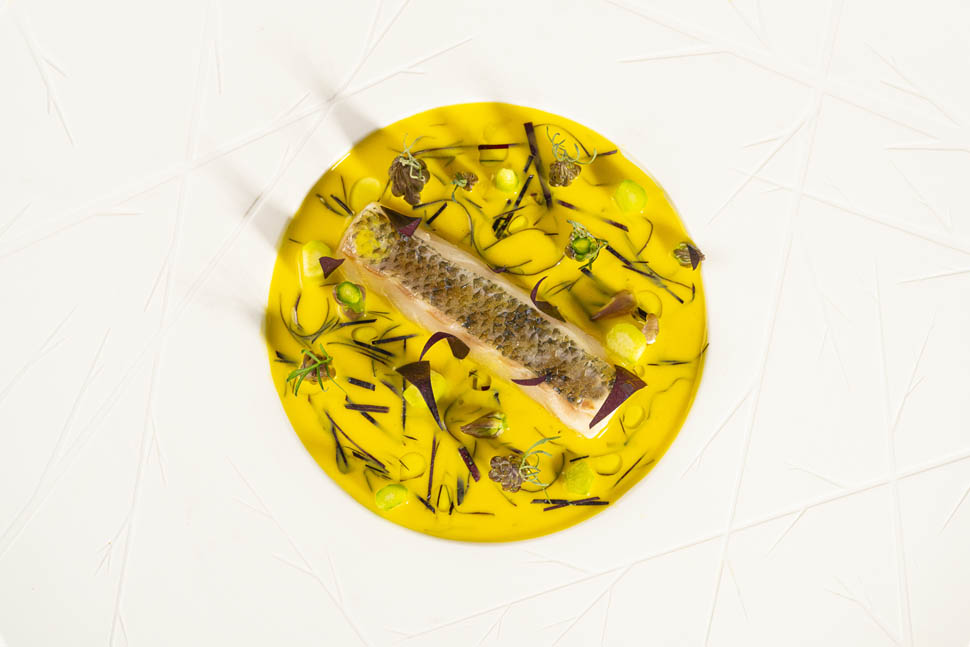
Is there one that’s particularly intriguing you right now?
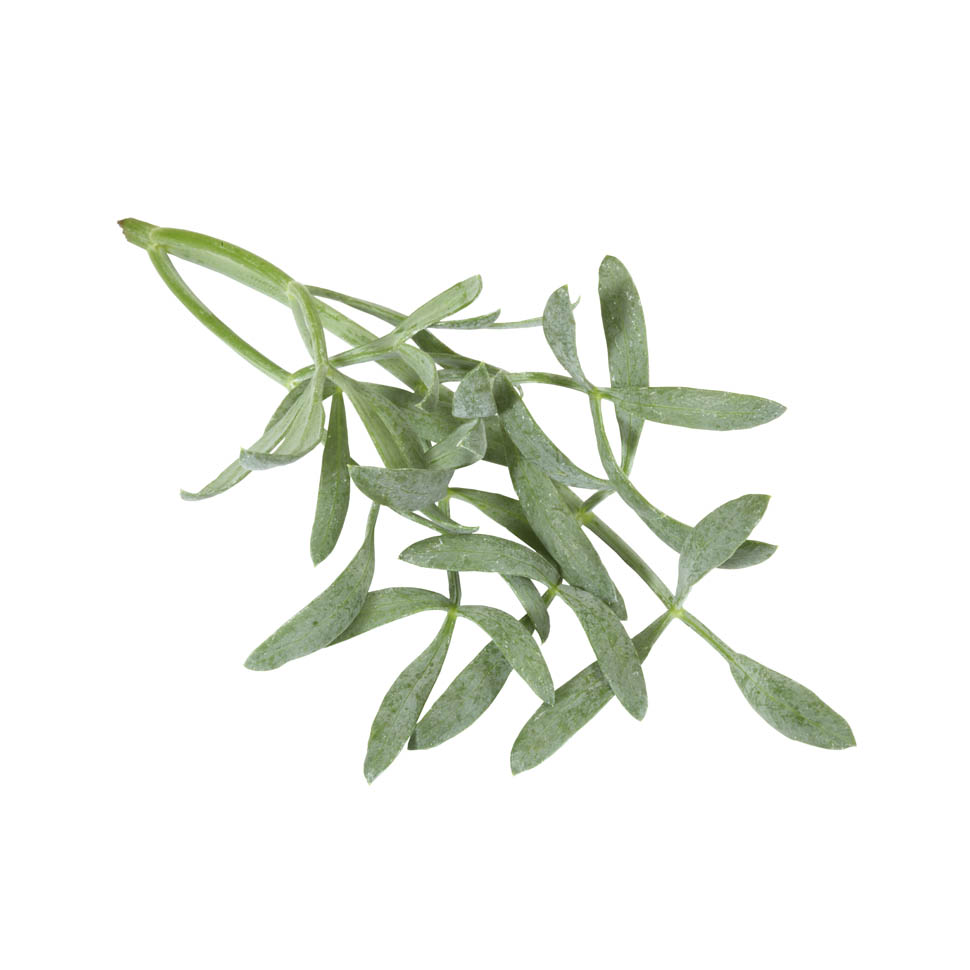
Sea fennel. I made a pesto similar to the Ligurian style, with pine nuts, oil, and Parmesan, and I serve it with red shrimp. It has a citrusy aftertaste, reminiscent of fennel, but with added acidity and a savory, briny note. It’s very interesting. If you like, you can even use it to dress pasta. Then there are many flowers and sprouts that I like; wild celery sprouts—Motti Cress—are extraordinary. Take a fresh fish and simply boil it, then stuff it with these wild celery sprouts, and you’ve created an exceptional dish. It’s not just for decoration; it’s the pairing itself that works.
You’ve been at the helm of Indaco’s kitchen for over 15 years—where do you find the inspiration to keep this project so vibrant?
Perhaps the strongest bond I have with Indaco stems from the fact that I saw it come to life. I’ve been here since day one; I’ve witnessed every step of its evolution. There’s such a strong connection that it helps me get through all the tough times. Difficult moments are everywhere, but if there’s a strong bond, if there’s a meaningful relationship, all the difficult moments are always overcome, and you move forward. I don’t believe there’s such a thing as the right place in the world;the right place is where you face the good things and enjoy them, then face the difficult moments and overcome them. For me, Indaco is the right place.
Is there a dish of yours that holds special meaning for you?
There are two. One is called “Scampi for Breakfast” and the other “Sea Spines.”
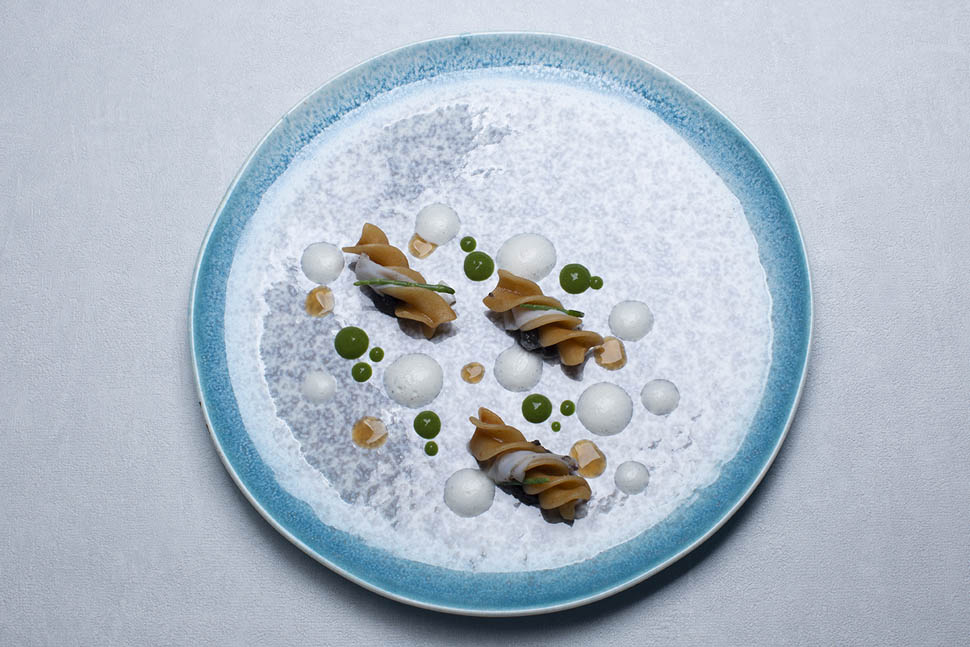
“Sea Spines” was born out of nostalgia. The sea adjacent to the restaurant is rich in Posidonia (an aquatic plant endemic to the Mediterranean Sea, essential to the marine ecosystem. It is not a seaweed; it produces a lot of oxygen—up to 20 liters a day—protects the coastline from erosion, and supports high biodiversity, ed.), which is the only marine plant that produces oxygen and is essential to marine life. Around 2012, this stretch of sea became a protected area, where fishing, anchoring, and other activities are no longer permitted. This also meant we could no longer serve sea urchins, and clearly both I and my customers missed them. One day I said to myself, “I want to create a dish that looks like a sea urchin but has nothing to do with sea urchins.” And so “Aculei di mare” was born: a yellowtail tartare with basil and lemon, encased in a paper-thin layer of squid ink that’s fried to order for just a few seconds. Visually, it resembles a sea urchin, and the contrast of textures and temperatures is very popular.
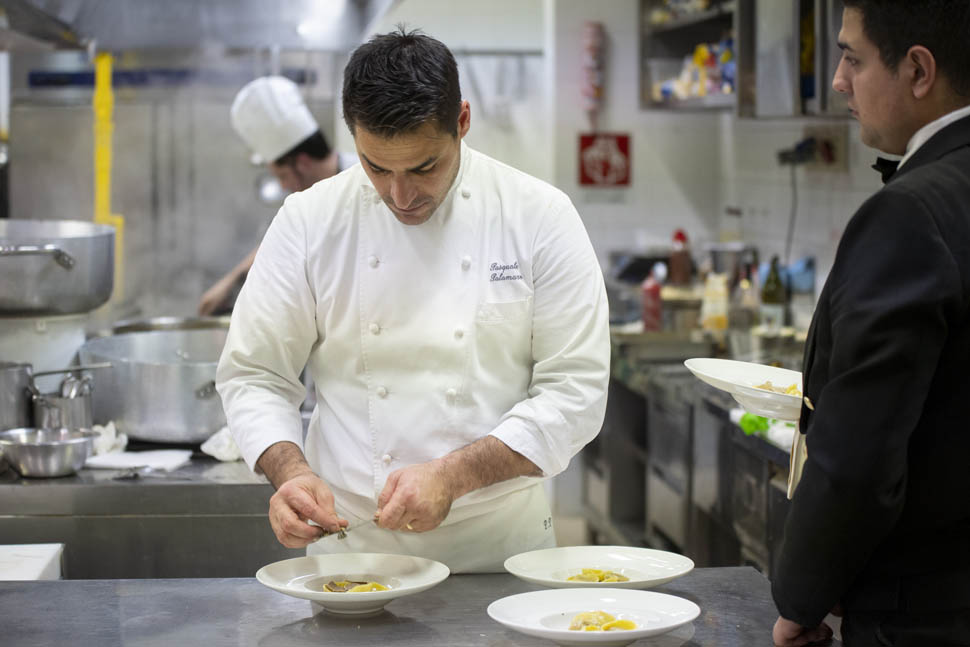
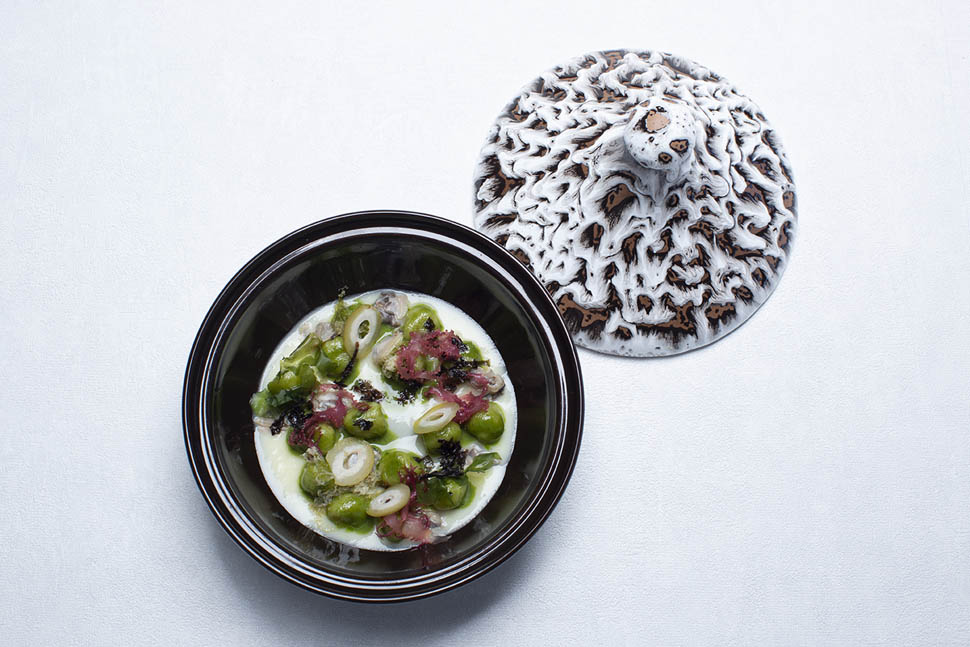
The other dish is called “Scampi for Breakfast.” I'm a huge coffee drinker—I probably have about 10 cups a day (cheers!)—and I start off with a double espresso every morning. I’m also lucky enough to have the pier right next to the restaurant where some fishermen dock to unload their catch after a night out fishing. One day, just like every morning, it was around 9:00 a.m. and I’d already had my double espresso. The shellfish fisherman, whose name is Ciccio, arrived, and I went out to meet him as usual. Ciccio hadn’t had a great catch that day; he’d caught very few scampi, no more than two kilos. So, to cheer him up a bit, I started raving about those super-fresh scampi, cleaned one, and ate a bit of it raw just to show off to the customers who were swimming nearby. The sensation of the bitter coffee still lingering in my mouth, combined with the fresh, sweet scampi, gave me absolute pleasure. “Mamma mia, this coffee-scampi pairing is so good, I want to create a dish”. So I started working on it. I was missing an element that would bring out the sweetness of the scampi even more, and I found it in beets, because sugar is made from beets—an essential part of an Italian breakfast. I needed a fatty component, but to avoid using the usual ricotta or cheese, I made an almond emulsion.
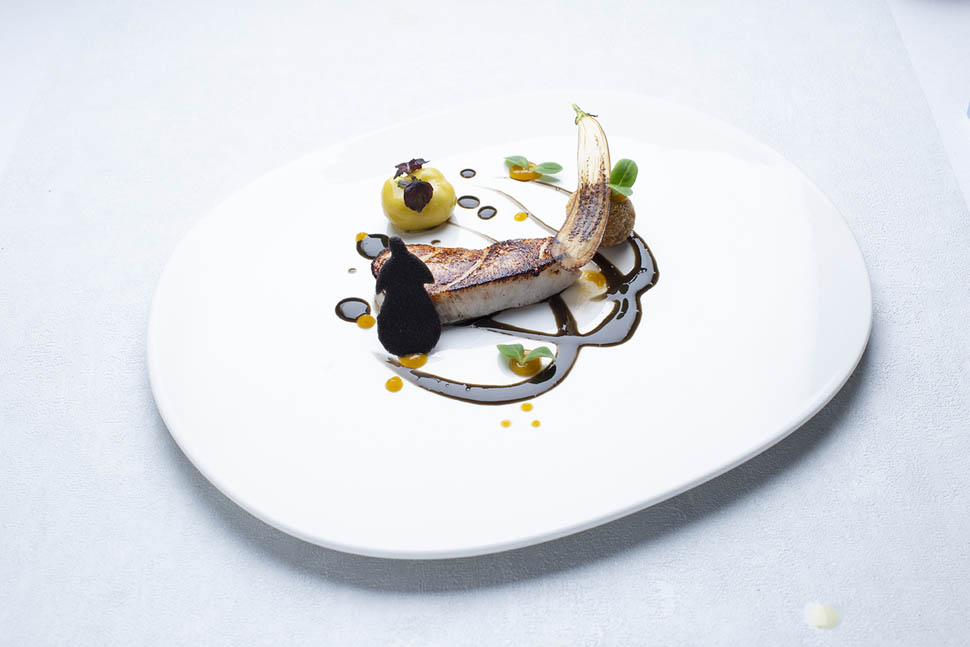
Many of my dishes have a story behind them; I always say that it is the food that eats me, not me who eats the food. I let myself be carried away when I feel pleasure from the food I put in my mouth, and that’s where it all begins.
*Ischia Safari is an annual non-profit culinary event organized by the cultural association Ischia Saperi e Sapori – Cultural and Artistic Center. The founding members are Nino Di Costanzo, Pasquale Palamaro, Giancarlo Carriero, Marco Castagna, Paolo Fulceri Camerini, and Marianna Schiano. Ischia Safari aims to support the restaurant industry by using the proceeds to provide training opportunities for deserving students in the field.
A recipe from Indaco: tips from Chef Pasquale Palamaro
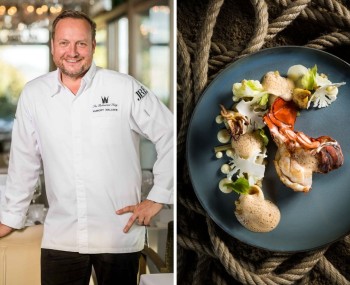
Raw and cooked sea fennel, purple shrimp, carrot vichy, and kikuna leaves
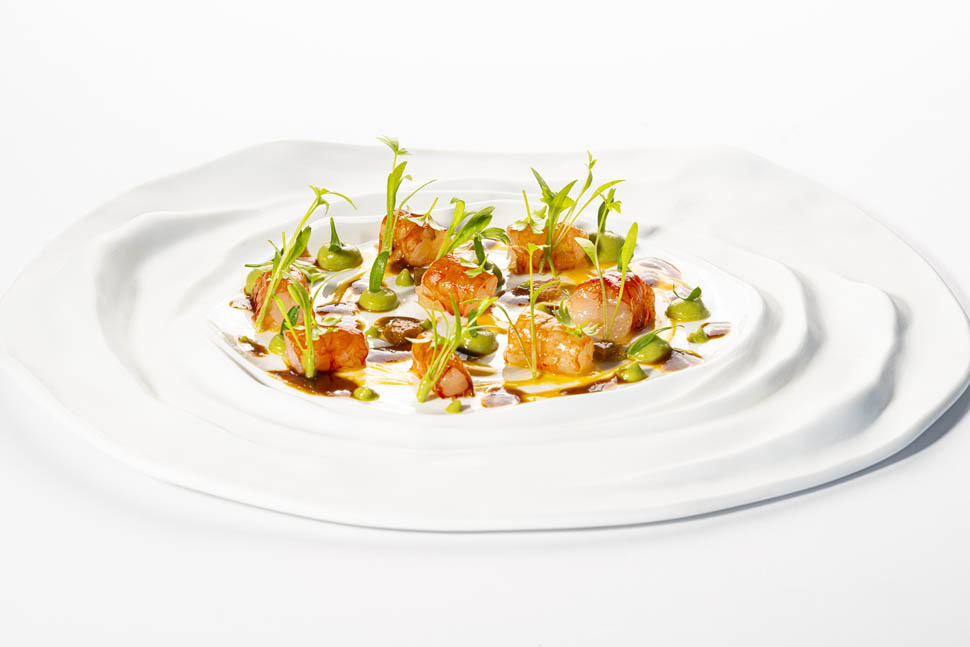
For the sea fennel pesto:
- 40 g pine nuts
- 100 g sea fennel
- 100 g sunflower oil
- 20 g extra virgin olive oil
- baking soda, as needed
- 30 g 24-month aged Parmesan
Instructions
In a small pot of boiling water, blanch 20% of the sea fennel with baking soda; cool in an ice bath, then place all the well-chilled ingredients in a blender and blend until you obtain a bright green, glossy pesto.
For the fresh sea fennel:
4 sprigs of fresh sea fennel, well washed and dried
For the purple shrimp
- 4 fresh purple shrimp
- 20 g butter
- White pepper
- Fine salt, to taste
- 4 bamboo skewers
Method
Peel the shrimp and remove the intestines; skewer each shrimp through the center with a bamboo skewer, then use a potato masher to crush the heads, extracting all the juice. Emulsify with softened butter, vacuum-seal the shrimp with the shrimp-flavored butter, and cook at 50°C for 5 minutes in a water bath. Remove the shrimp from the bag and place them on the plate.
For the carrot vichy
- 100 ml carrot juice
- lemon juice
- wine vinegar
- 200 ml vegetable oil
Method
Using a juicer, extract the juice from the carrots to obtain 300 ml; place the juice on the stove and reduce to 100 ml. Cool, place the reduction in a blender, add all the other ingredients, and blend at medium speed, slowly drizzling in the oil until you obtain a smooth, glossy sauce.
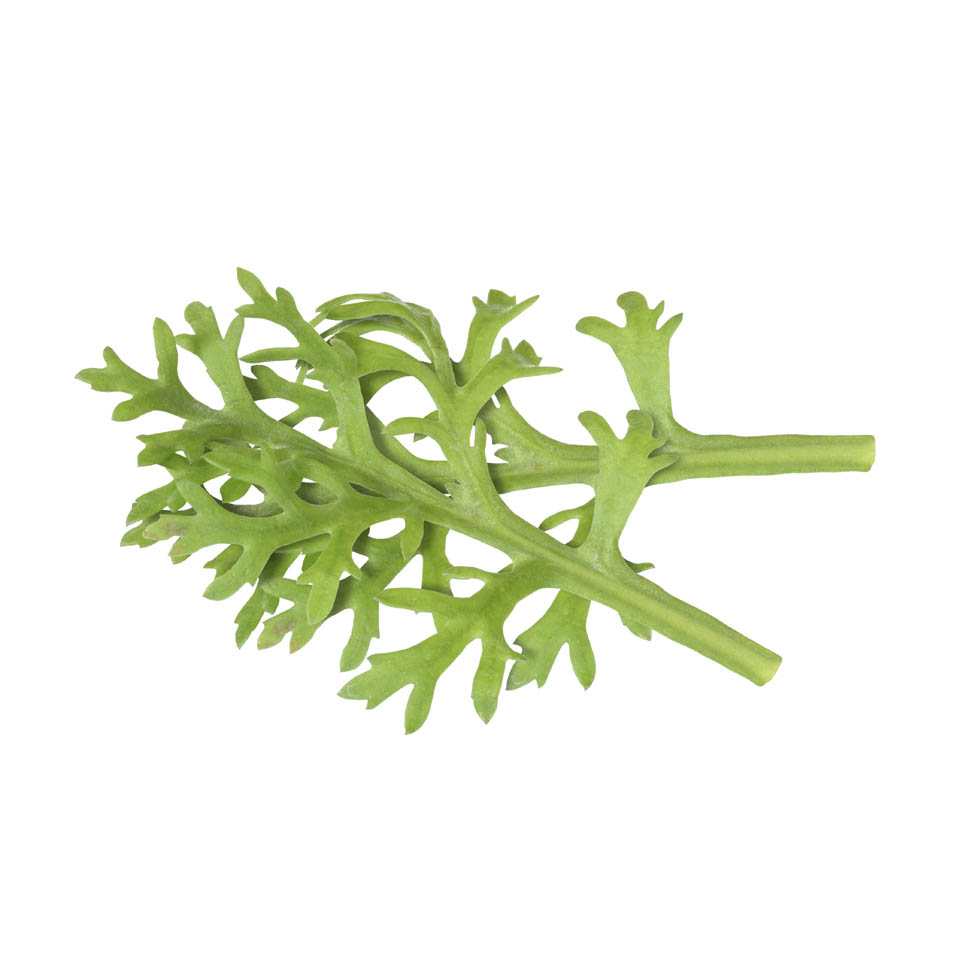
For the kikuna leaves
- 4 kikuna leaf sprouts, washed and dried
Contact and Info
Indaco Restaurant at Regina Isabella Resort & Spa
Piazza Santa Restituta, Lacco Ameno (NA)
Tel. 081 994322
Website: https://www.reginaisabella.com