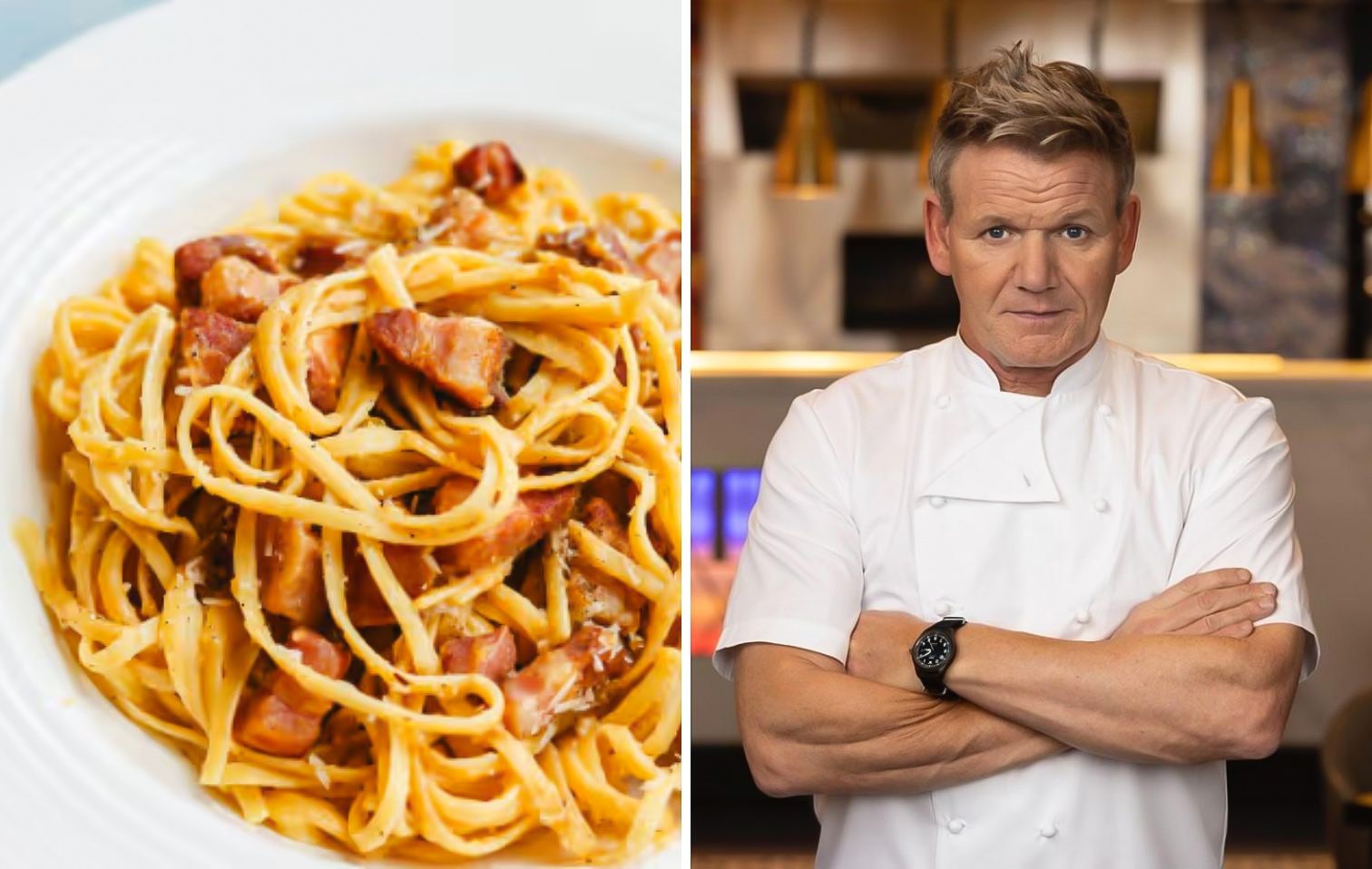
The first and most obvious change is the use of smoked pancetta (or bacon) instead of guanciale. But Gordon Ramsay’s carbonara goes far beyond just this twist on the cured meat. Here’s how to recreate it with tips from the top chef!
Pasta alla carbonara is not merely a dish of Italian culinary tradition; it is, in every sense, a “sacred” monument. Its origins, caught between the folklore of the Apennine charcoal burners and the post-World War II encounter with Anglo-American military rations (eggs and bacon), bear witness to the genius of a cuisine born of scarcity, capable of transforming itself into a feast for the palate. Few dishes spark such heated and visceral debates over the purity of their ingredients: guanciale, strictly cured and artisanal; Pecorino Romano, with its pungent savory flavor; egg yolks alone, measured to the milligram; and that black pepper, freshly ground, which somehow seems to evoke coal dust. However, when Italian cuisine crosses national borders, it encounters the sensibilities of great international interpreters—figures capable of reinterpreting its codes through the lens of accessibility and global taste. Among these, the multi-starred Gordon Ramsay inevitably stands out. Renowned for his technical rigor rooted in classical French tradition and a culinary philosophy that prioritizes intense flavors and speed of execution, Ramsay approaches Italian classics with a distinctly Anglo-Saxon pragmatism, stripping the recipe of regional dogmatism to present it to the domestic audience in its most immediate and satisfying form.

Ramsay’s Take
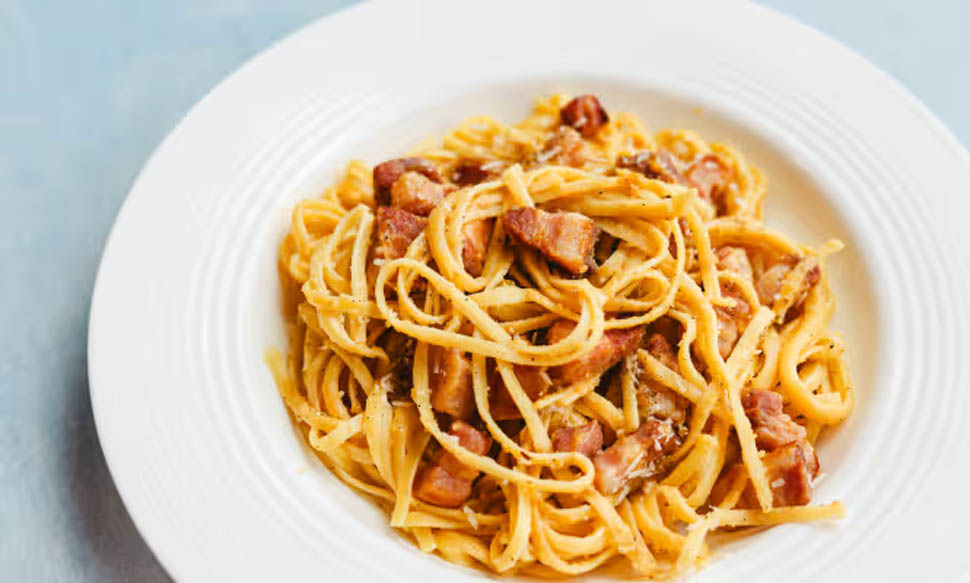
The Gordon Ramsay Academy’s version deliberately departs from the Roman classic through a few thoughtful substitutions, designed to enhance the dish’s appeal and make the ingredients easier to source. The first and most obvious change is the use of smoked pancetta (or bacon) in place of guanciale. While the latter imparts a rich, unctuous fat and an unmistakable spicy note to the dish, the pancetta introduces a more versatile smoky dimension and a crisp texture that perfectly complements tastes from across the Channel and across the Atlantic, while keeping the promise of a savory and alluring structure intact. A second key element of identity is the choice of cheese. Where tradition calls for the austere, mineral character of Pecorino Romano, Ramsay’s recipe opts for the silky elegance of Parmigiano Reggiano. This substitution softens the dish’s more aggressive edges, giving the cream an incredibly smooth texture and an underlying sweetness that balances the meat’s smokiness. Finally, the handling of the eggs: the inclusion of two whole eggs alongside the standard four egg yolks provides an ideal proportion of egg white to keep the sauce fluid and light, avoiding the risk of an overly thick or pasty mixture. The result is a perfect signature comfort food: a quick, accessible carbonara, yet treated with due respect for textures and the balance of flavors.
Gordon Ramsay’s Carbonara recipe as featured by the Gordon Ramsay Academy
Serves 2
Ingredients
- 200 g linguine or spaghetti
- 200 g smoked pancetta or bacon, diced
- 6 eggs
- 200 g grated Parmesan cheese, plus more for serving
- Sea salt and freshly ground black pepper
Cooking Instructions
Bring a large pot of salted water to a boil and cook the pasta according to the package instructions.
Meanwhile, heat a large skillet over medium-high heat, add the pancetta, and cook for 7–10 minutes, stirring occasionally, until cooked through, crispy, and golden brown around the edges.
Crack 4 eggs, reserving the yolks in a bowl or large pitcher. You can save the egg whites for another recipe or freeze them. Crack the remaining 2 whole eggs into the yolks and whisk everything together with the Parmesan and plenty of black pepper.
Scoop out a little of the pasta cooking water and stir it into the egg mixture to thin the sauce. Check that the pasta is cooked and turn off the heat.
Pour the sauce and the cooked pasta into the pan along with the cooked pancetta. If the sauce is too thick, add a little of the pasta cooking water.
Serve in bowls (this recipe makes 2 generous servings) and garnish generously with more grated Parmesan and freshly ground black pepper.