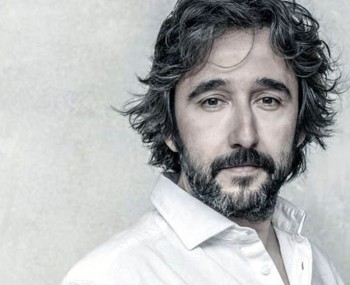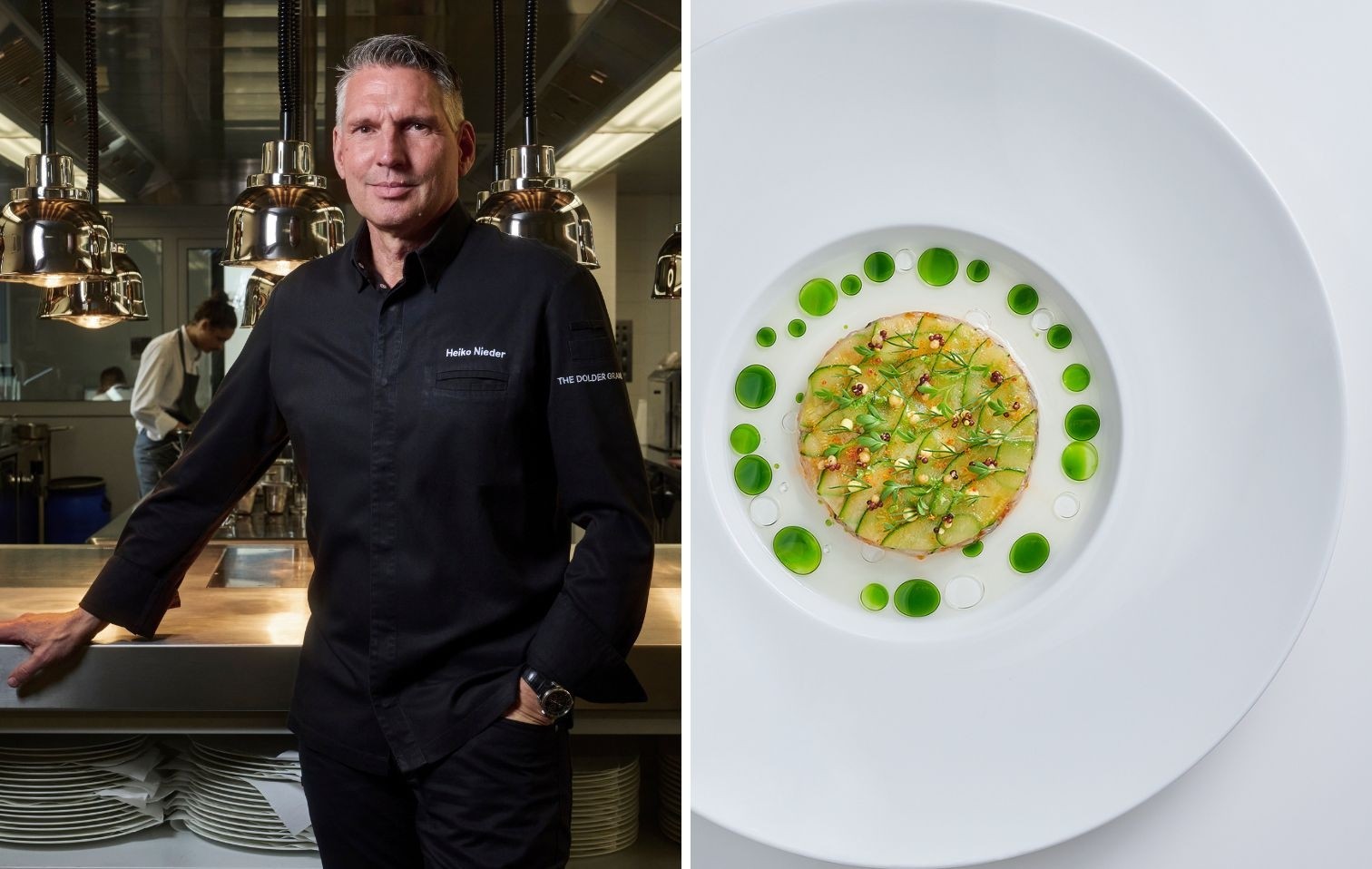
“I love ingredients from all over the world; I enjoy discovering new things and being surprised. But the most important thing is to surprise my guests. I want to make them happy—and make my team happy, too.”
Photo Credit: David Egui
The Location
Zurich is a small world waiting to be discovered: often described as a financial capital—efficient and discreet—this beautiful Swiss city boasts an artistic scene that should not be underestimated, with over 50 museums and more than 100 galleries, one of the highest densities in Europe. The Kunsthaus Zürich plays a central role as one of the country’s leading art museums, recently expanded through a project designed by David Chipperfield. It was in Zurich, at the Cabaret Voltaire in 1916, that Dadaism was born—an artistic and literary protest movement against World War I, one of the most radical of the 20th century. And even today, the city boasts a vibrant contemporary scene, featuring both historic institutions and independent spaces.
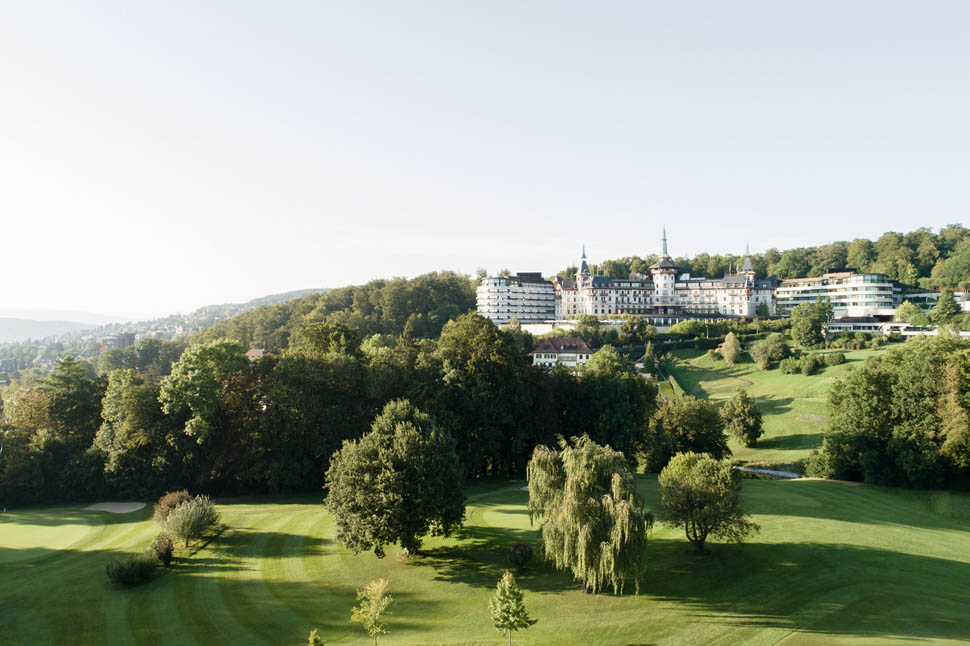
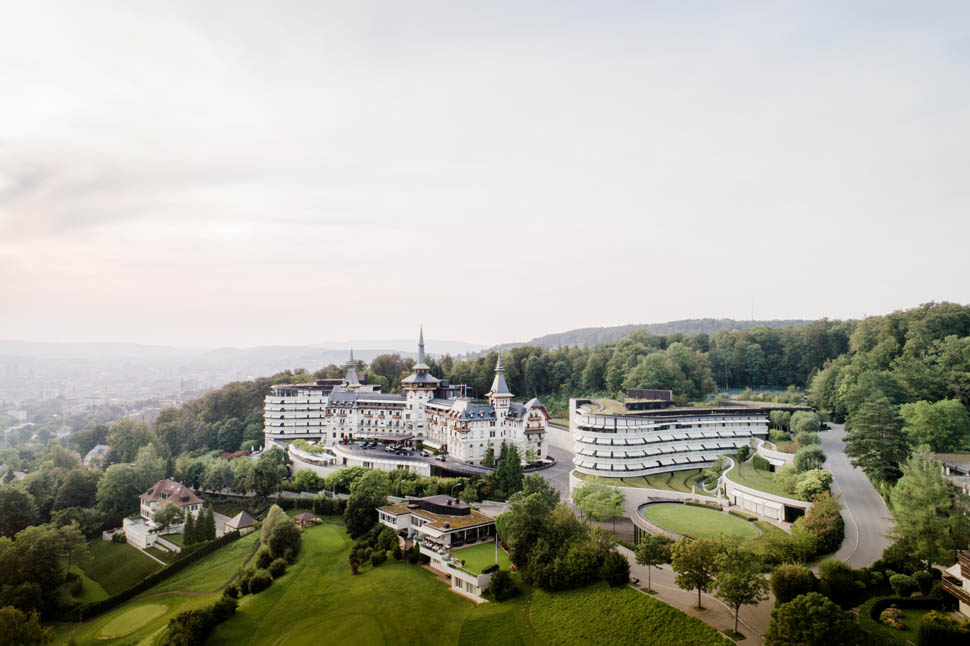
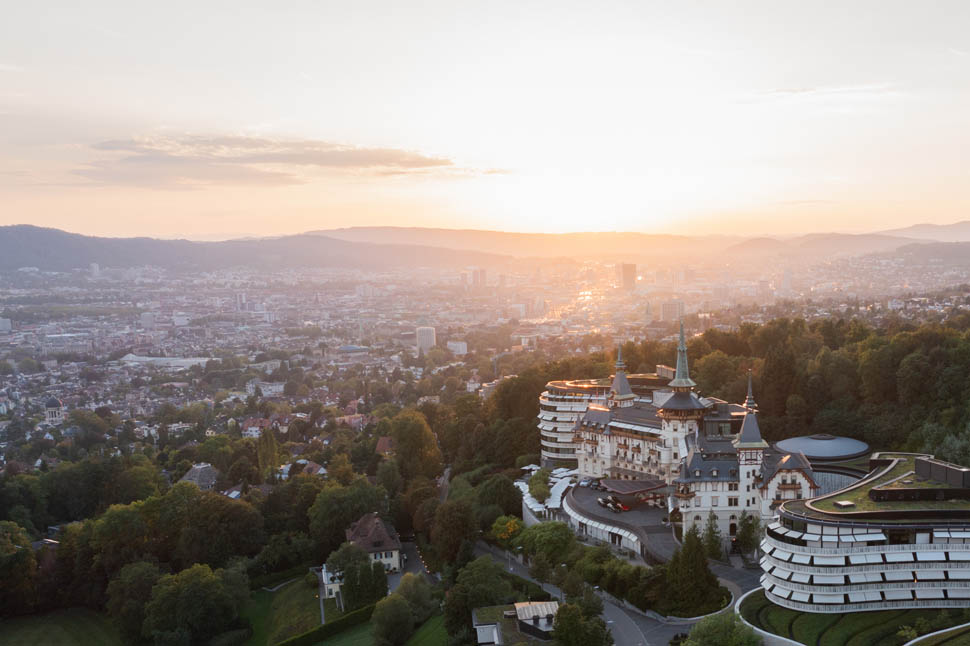
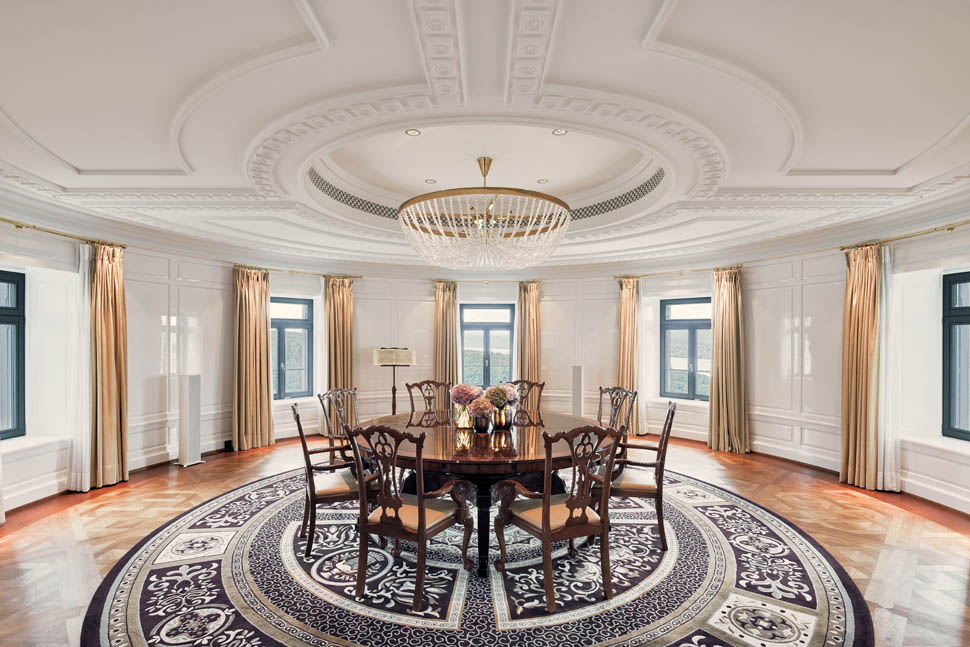
A setting in which art is not merely an accessory but a fundamental component of identity, creating a dialogue with the architecture in public spaces and intertwining with hospitality of the highest caliber. A prime example of this is The Dolder Grand, a hotel where this theme is an integral part of an experience that leaves nothing to be desired. The historic building and its contemporary extensions overlook the city from above, offering a view that is simply breathtaking on clear days. Having recently celebrated its 125-year history—having opened as the Kurhaus, a Belle Époque-style spa hotel, in 1899—The Dolder Grand underwent a rebirth in 2008 with a major renovation designed by Norman Foster.
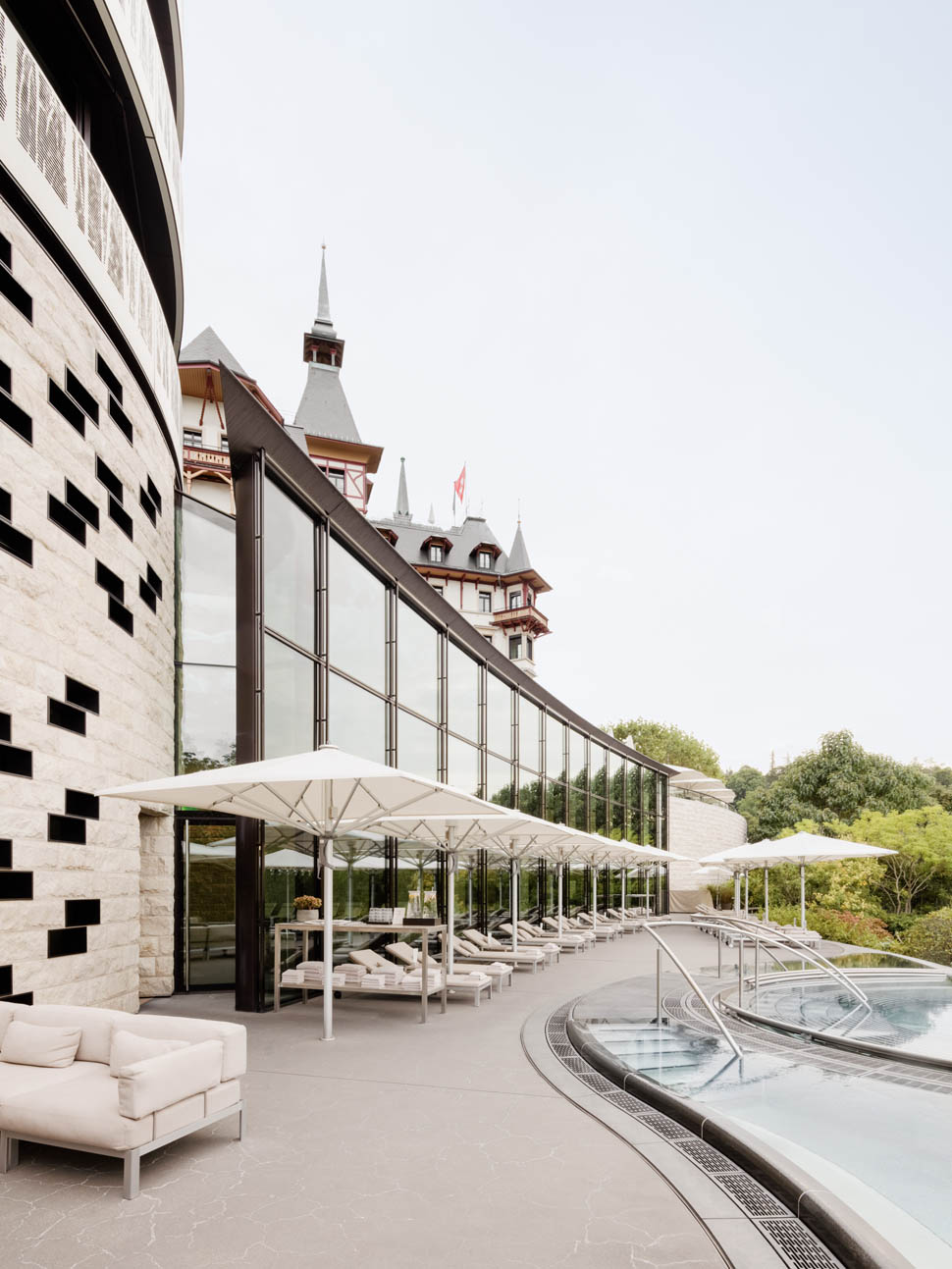
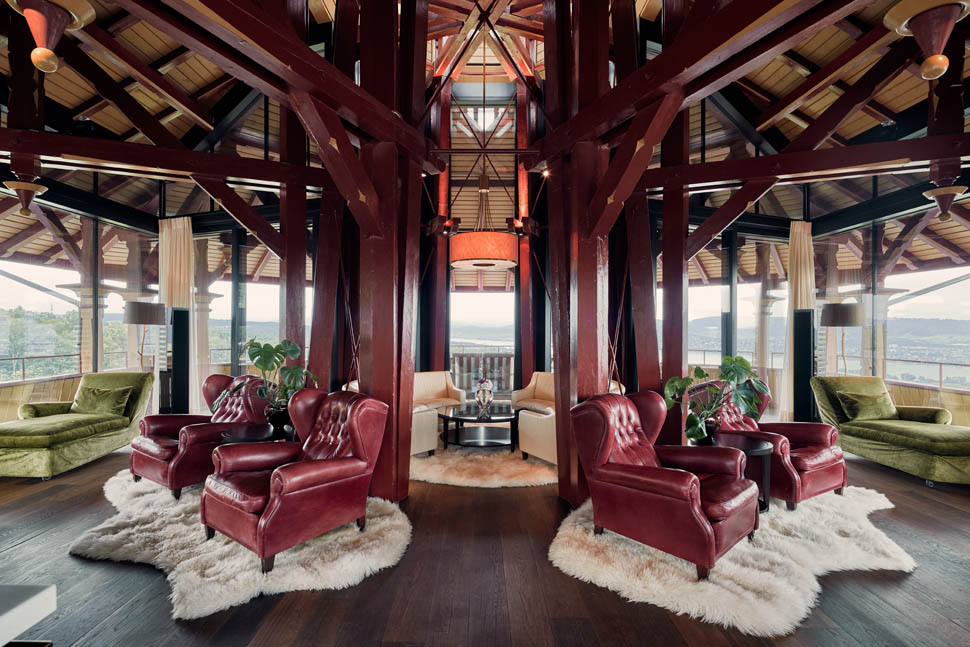
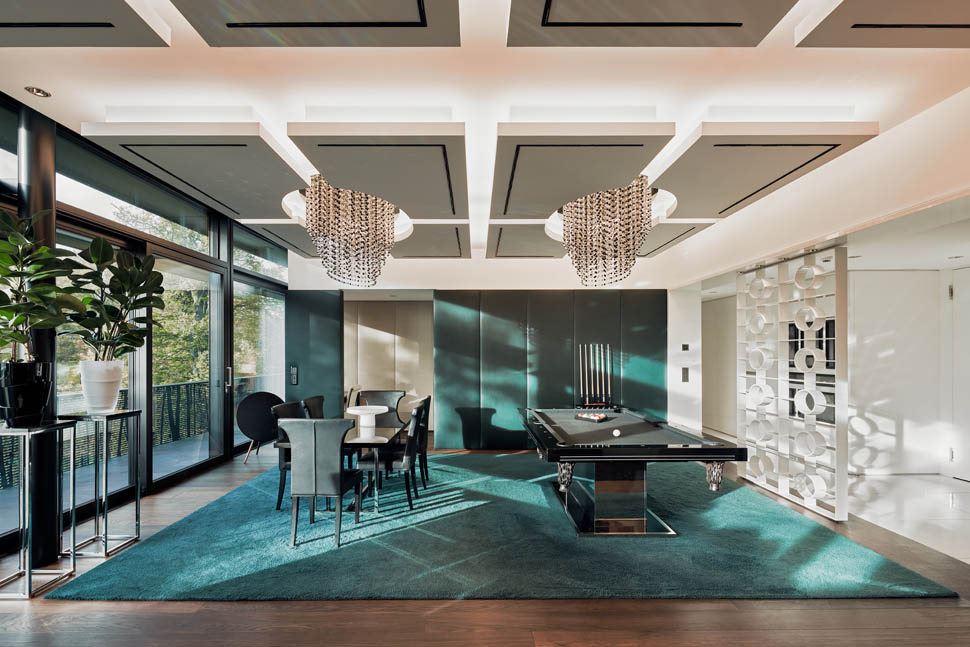
Its hallways are, in fact, also art galleries, featuring a collection of over a hundred works that the Schwarzenbach family has placed throughout the hotel, each with a QR code that allows guests to learn more about its history. In the lobby stands *The Weary Traveler*, a sculpture of what appears to be an exhausted man lying on the floor—so lifelike that I mistook it for a real person. In reality, the hotel features works by artists such as Dalí, Murakami, Miró, and Keith Haring; in the immense 4,000-square-meter spa, there is a Botero. Certainly, every corner of this hotel holds a surprise, even more so for an eye attuned to the allure of modern art.
The Culinary Offerings and the Chef
While the Dolder Grand is renowned for its exceptional hospitality—including that of the well-stocked Canvas Bar & Lounge—the same can be said of its cuisine, which is served across several dining venues, all living up to the hotel’s reputation. Take Saltz, a more casual restaurant designed by Rolf Sachs, where the menu ranges from Swiss specialties to ASLY Oriental Cuisine, an intriguing concept curated by Lebanese chef Firas El-Borji featuring dishes from his heritage. Then there’s Blooms, a summer restaurant serving dishes featuring fresh vegetables, flowers, and herbs straight from the hotel’s garden. Finally, there is Mikuriya, a very exclusive Japanese omakase, and a delightful winter venue like Chalet Krug, where you can enjoy a proper fondue paired with a premier champagne: you’ll find yourself seated with a maximum of eight people in a small, luxurious wooden chalet in the Dolder’s gardens, fully equipped. The fondue recipe is decidedly signature, created by Heiko Nieder in collaboration with the renowned Swiss cheese affineur Rolf Beeler: an irresistible blend of Gruyère, Vacherin Fribourgeois, Mimolette, and spices.
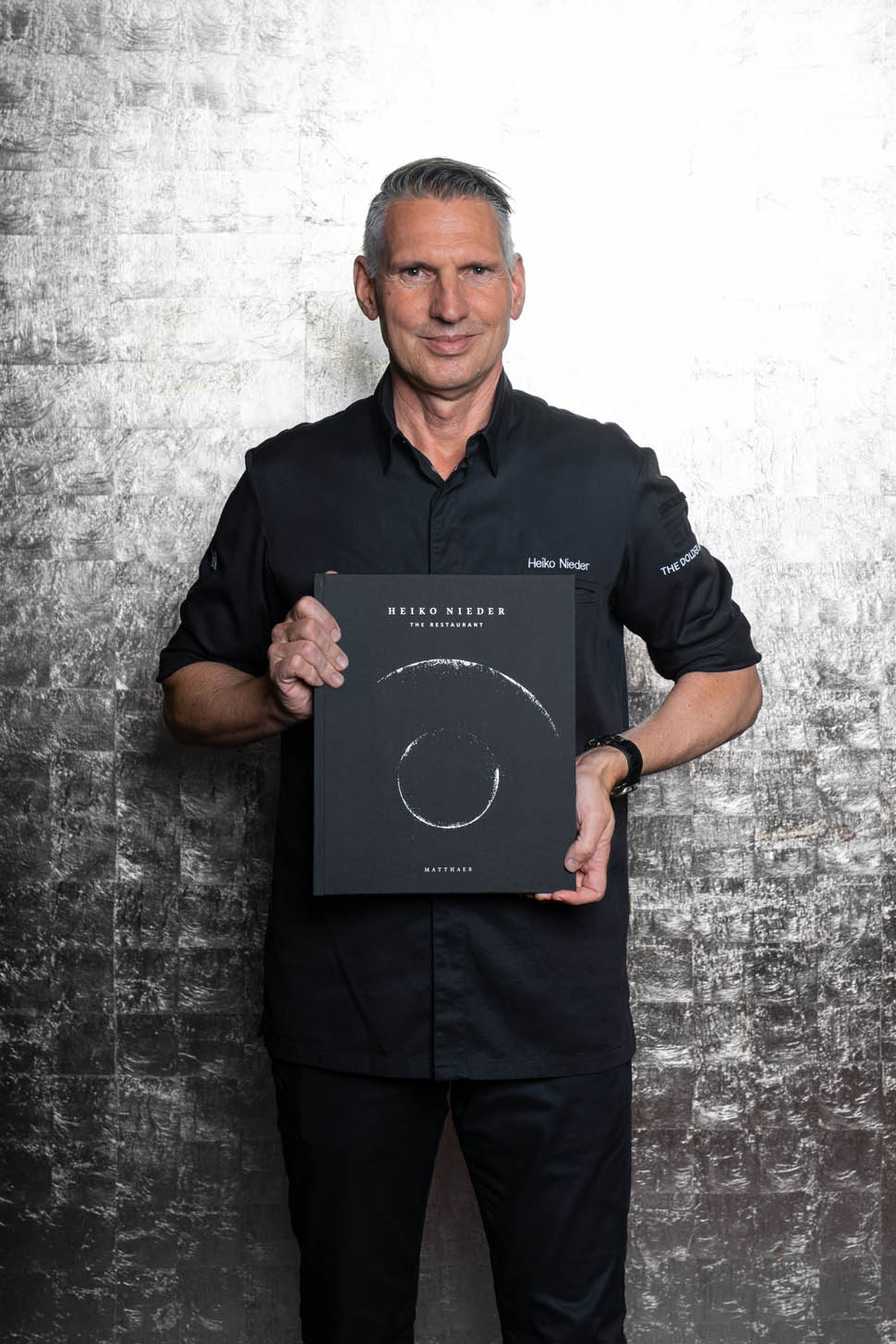
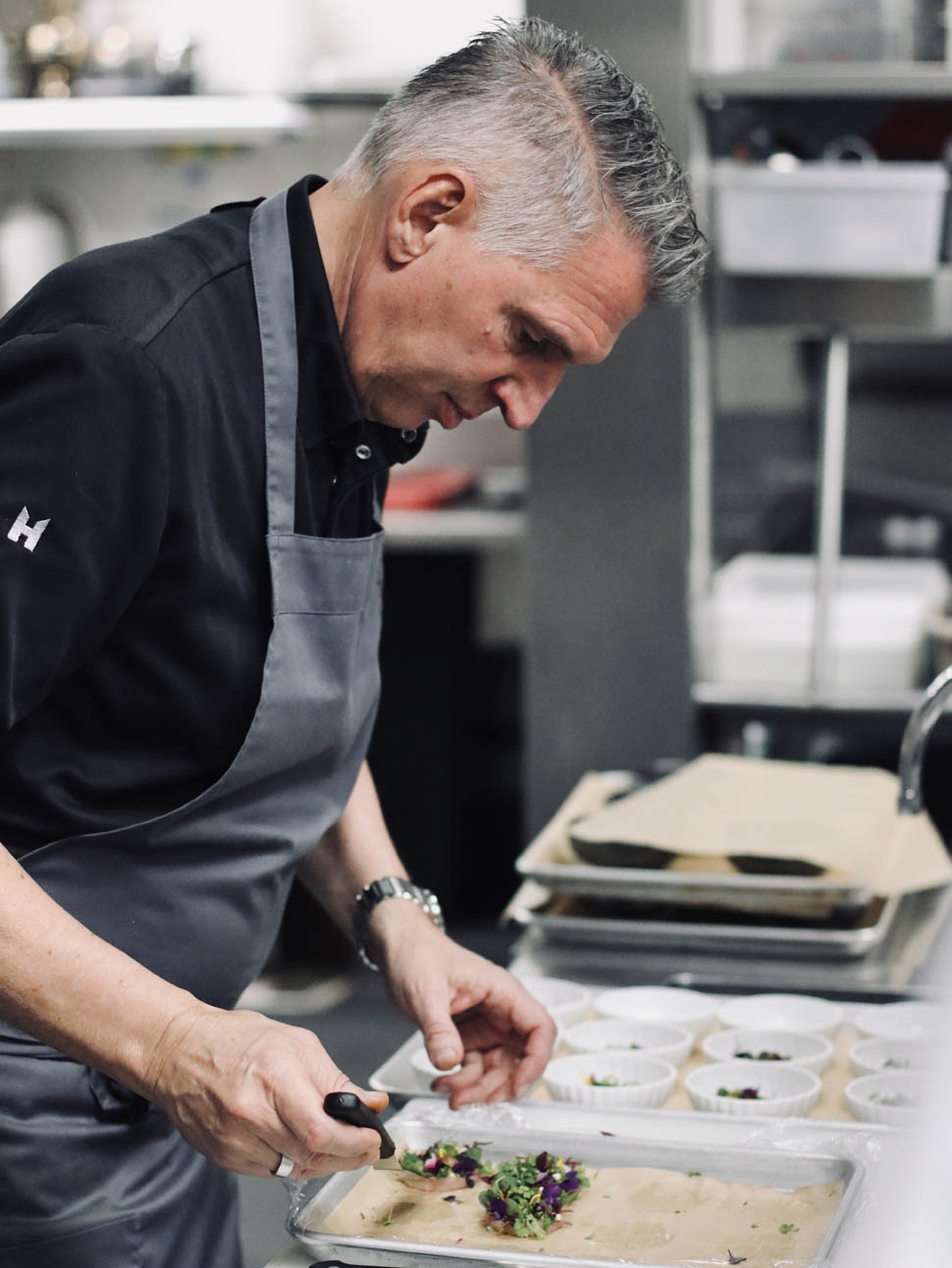
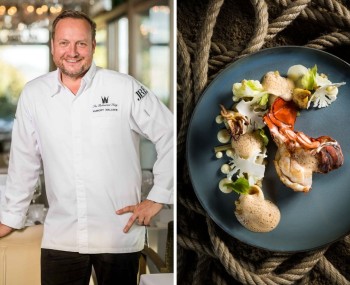
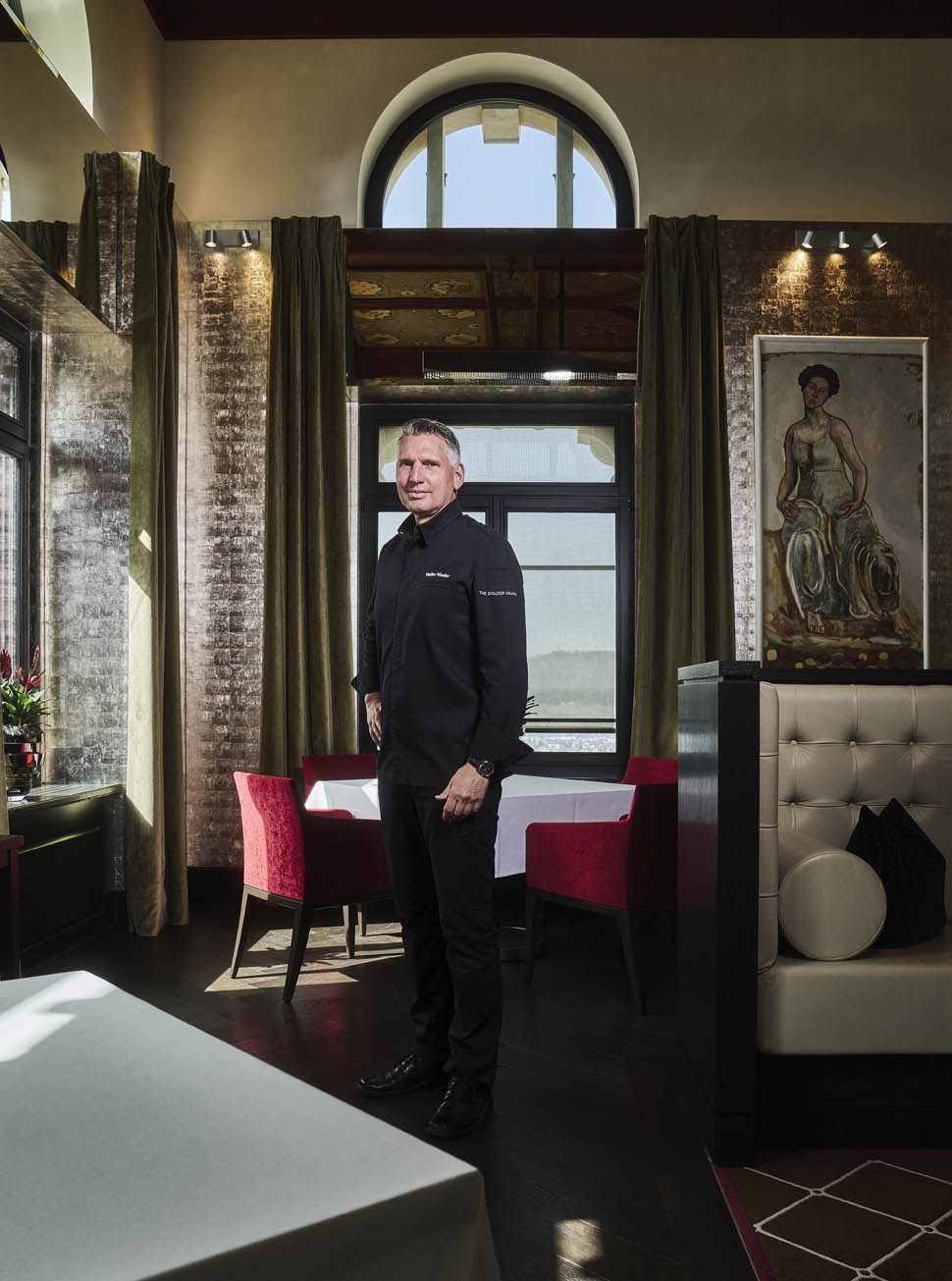
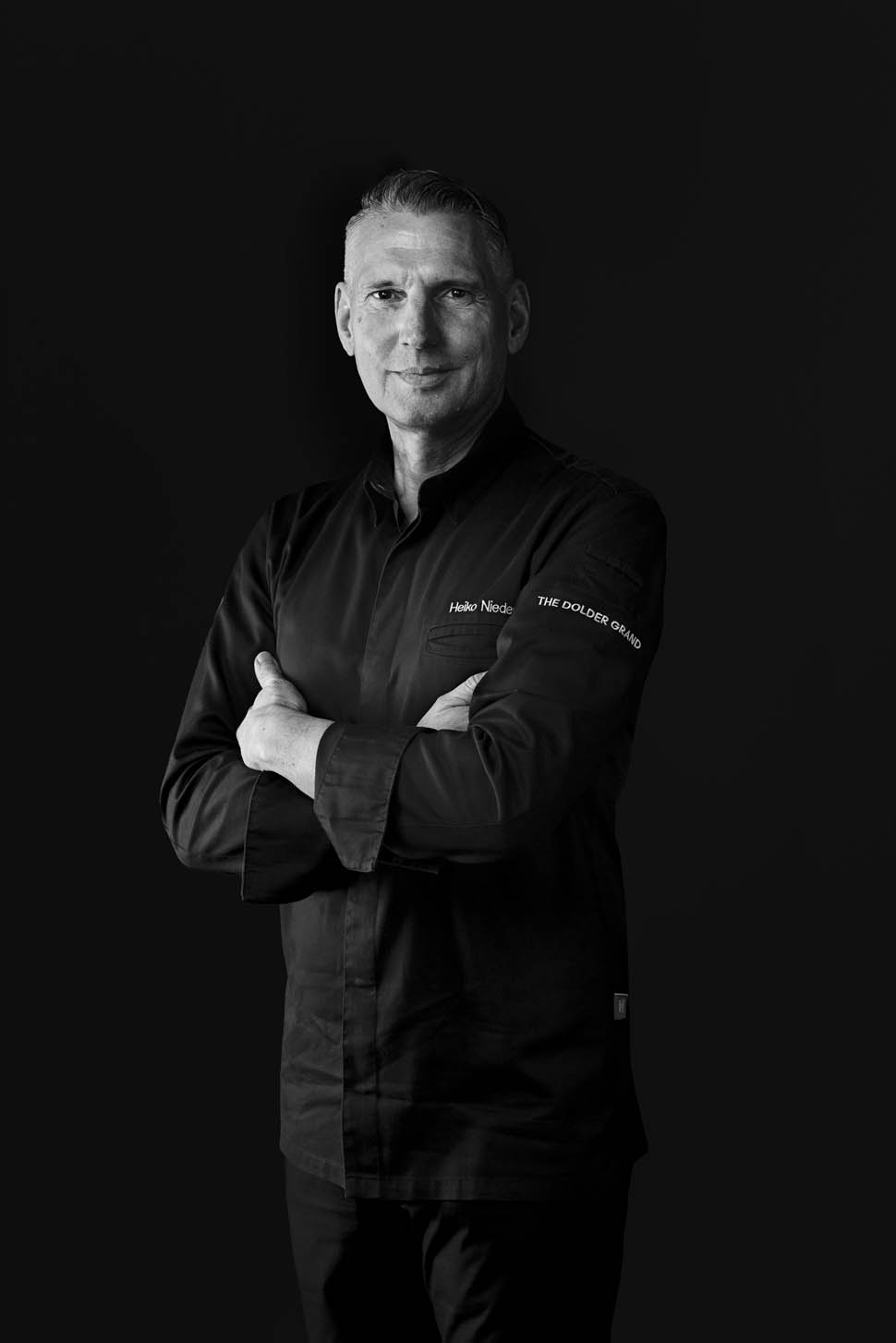
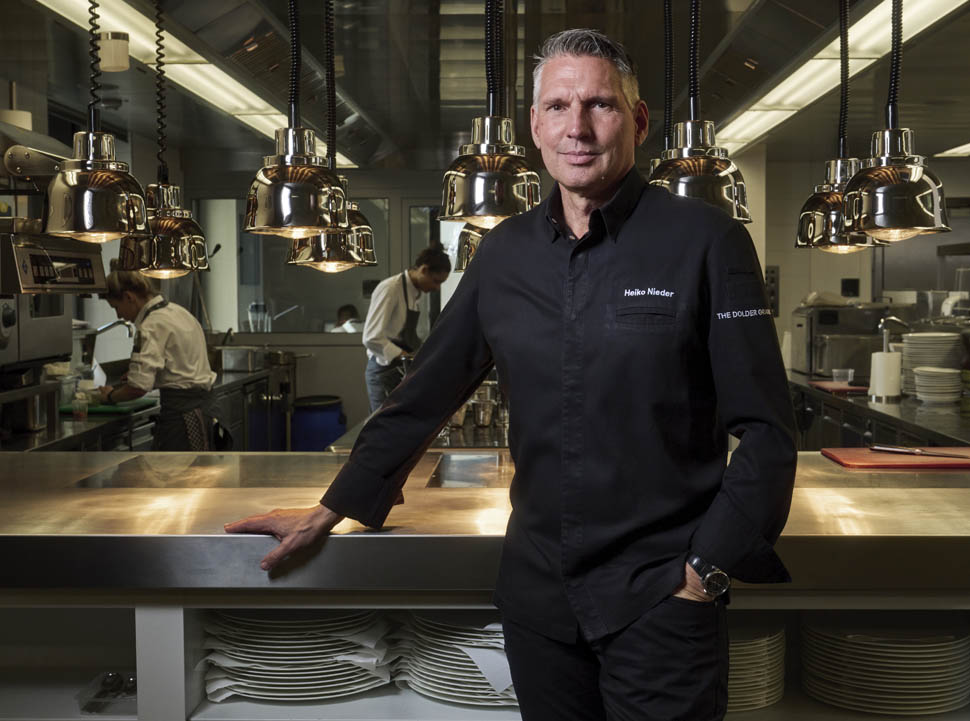
But who is Heiko Nieder, a German from Hamburg born in 1972, who has served as executive chef at the Dolder Grand since 2008 and oversees these kitchens? His domain is The Restaurant, a two-Michelin-starred establishment, an exquisitely elegant dining room featuring a striking glass wine cube at its center that houses approximately 1,500 bottles and 800 labels, red velvet armchairs, immaculate tablecloths, and, of course, works of art, including the magnificent Dalí at the entrance. The chef’s career is marked by several key experiences, beginning with his training at the prestigious Hotel Vier Jahreszeiten in Hamburg, one of the classic institutions of German fine dining. From there, he moved to Le Canard, in the same city, under Josef Viehhauser, before moving in 1995 to Zur Traube, under Dieter L. Kaufmann, and then to Vau in Berlin, one of Germany’s most influential restaurants of that era. He became head chef at L’Orquivit in Bonn, where he earned his first star in 2005. Heiko tells us: “Each of my experiences and every chef I’ve worked with has given me something, but I think Berlin was a turning point, because for the first time I had a lot of space to myself, I discovered so much, I had the time, and I had the chance to express myself.” Speaking about himself as a professional, he continues: “First and foremost, I love to eat. I love ingredients from all over the world; I love discovering and being surprised. But the most important thing is to surprise my guests. I want to make them happy and, in the same way, make my team happy. In the end, they should feel comfortable working with me, and our guests should take home an unforgettable memory. Every day I want to be better; tomorrow I have to be better than today.”
In fact, Nieder has a team with a remarkably long tenure: “I have many chefs who’ve been working with me for a long time; one in particular has been with me for over twenty years, and a young woman for over eight—the average tenure is very high.” Although he then confesses to being quite of a control freak in his creative process: “It’s all in my head; I have an excellent team, but I’m a bit selfish. When I think of a menu, I have in mind which ingredients I’d like to use; I have an idea of the dish, of the result. I start writing it down, and then everything is clear before me. We’re at 98%, then we start cooking, doing tests, and then adapting, correcting, and fine-tuning it all together.” We had the chance to try his brand-new Chef’s Table, a project that took quite some time to realize exactly as Nieder had envisioned it: not just a simple table placed inside the kitchen but a small, exclusive viewing area overlooking the kitchen team at work. It opened on March 11, 2026, and is an extremely elegant raised area with an illuminated stone countertop that curves in a semicircle,so that each of the maximum five guests can have a complete view of the pass and the cooking stations. Nieder explains: “I’ve learned to think and rethink to create a perfect product; I started working on this table four or five years ago. It’s been a long process, but it’s better to take the time to achieve an excellent result in the end. There’s always something you have to tweak a bit, but you have to take the time needed to do it right.”
The musical metaphor the chef uses to describe his cuisine is truly beautiful, and we loved it: “Modern, light, with unusual flavor combinations and comforting. It’s a bit like music—there are powerful songs, but also ballads and love songs. A menu needs variety, because you can’t have the same dramatic intensity in every dish; you need stories.” These words reflect a harmony that carefully balances and animates every element, allowing each dish to carry a distinct character while maintaining a common thread of elegance and precision. This includes wine pairings crafted with meticulous care: “We have excellent pairings that have been carefully developed to achieve perfect harmony: the wine must not ‘overpower’ the dish, and conversely, the dish must not ‘overpower’ the wine.” Harmony comes into play in every detail, including the tableware: “All our guests are very special, and this is a special place. We have many exclusive details. While in other restaurants you might serve food on a stone, here it’s impossible—you can’t do it; it doesn’t make sense.” Andthat’s why the focus is on an elegance that serves as a common thread, both on and off the plate.
The Dishes
Our menu begins with sunflower seed bread with miso butter—absolutely delicious—which leads into the aperitif: Périgord truffle with celeriac and coconut, bursting with freshness. Next comes the crispy potato in brick pastry with Belper Knolle and pepper: green pepper powder, cream cheese, green pepper sticks, and parsley cress. Next, a bun with eggplant, egg, and sesame: braised eggplant with hoisin sauce, tamago served warm, braising sauce gel, togarashi, and a salad of sesame oil pearls. The amuse-bouche sequence begins with a ‘Salade Niçoise’ featuring braised tuna cream, tuna tartare salad with tomato brunoise, yellow bell pepper, blanched red onion, and black olives, chopped capers, green bean rounds, diced lettuce, fine frisée, and potato brunoise.
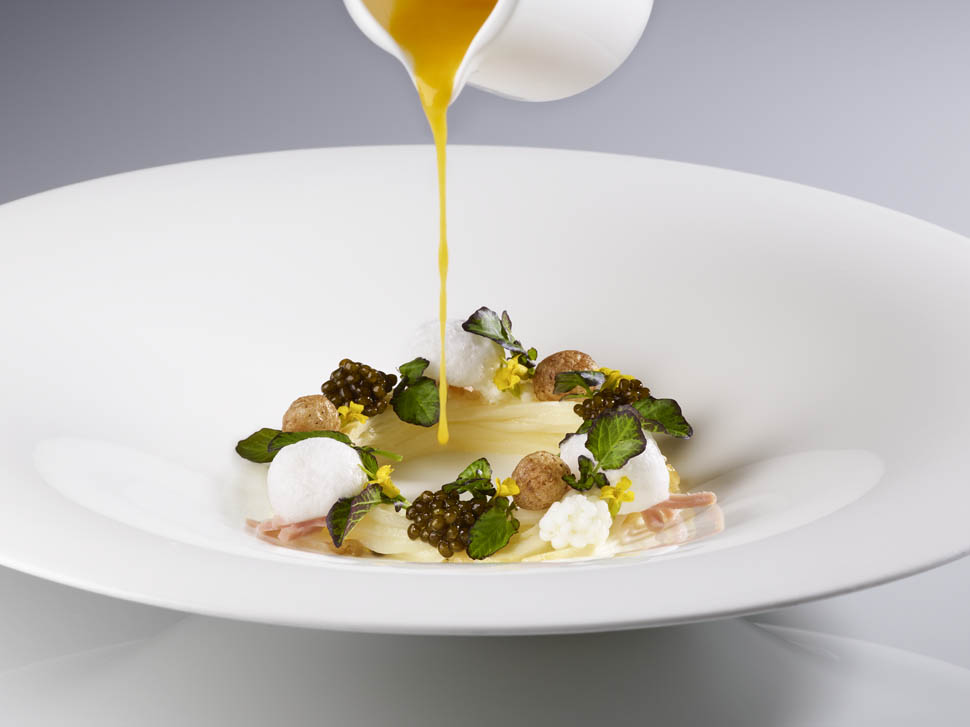
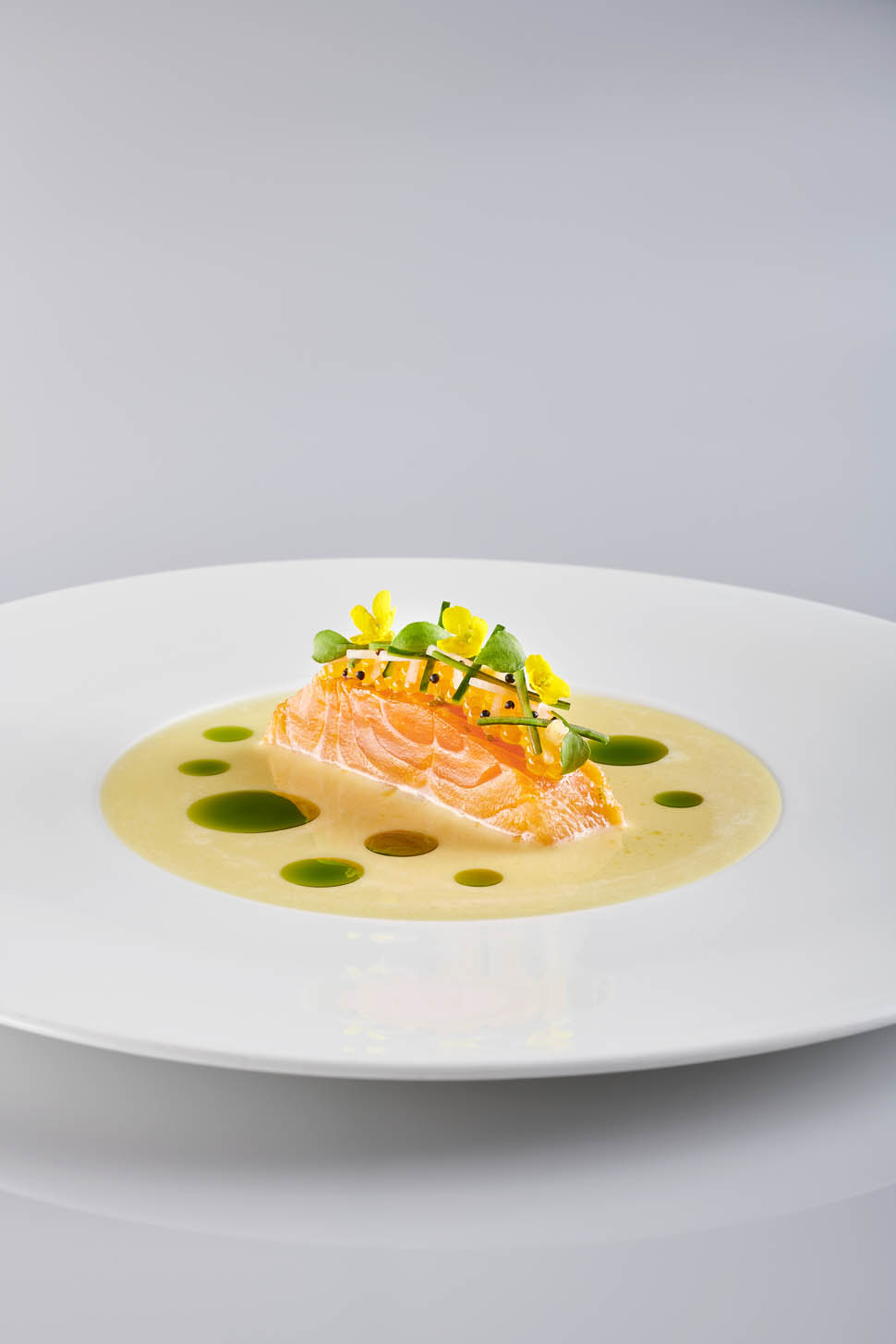
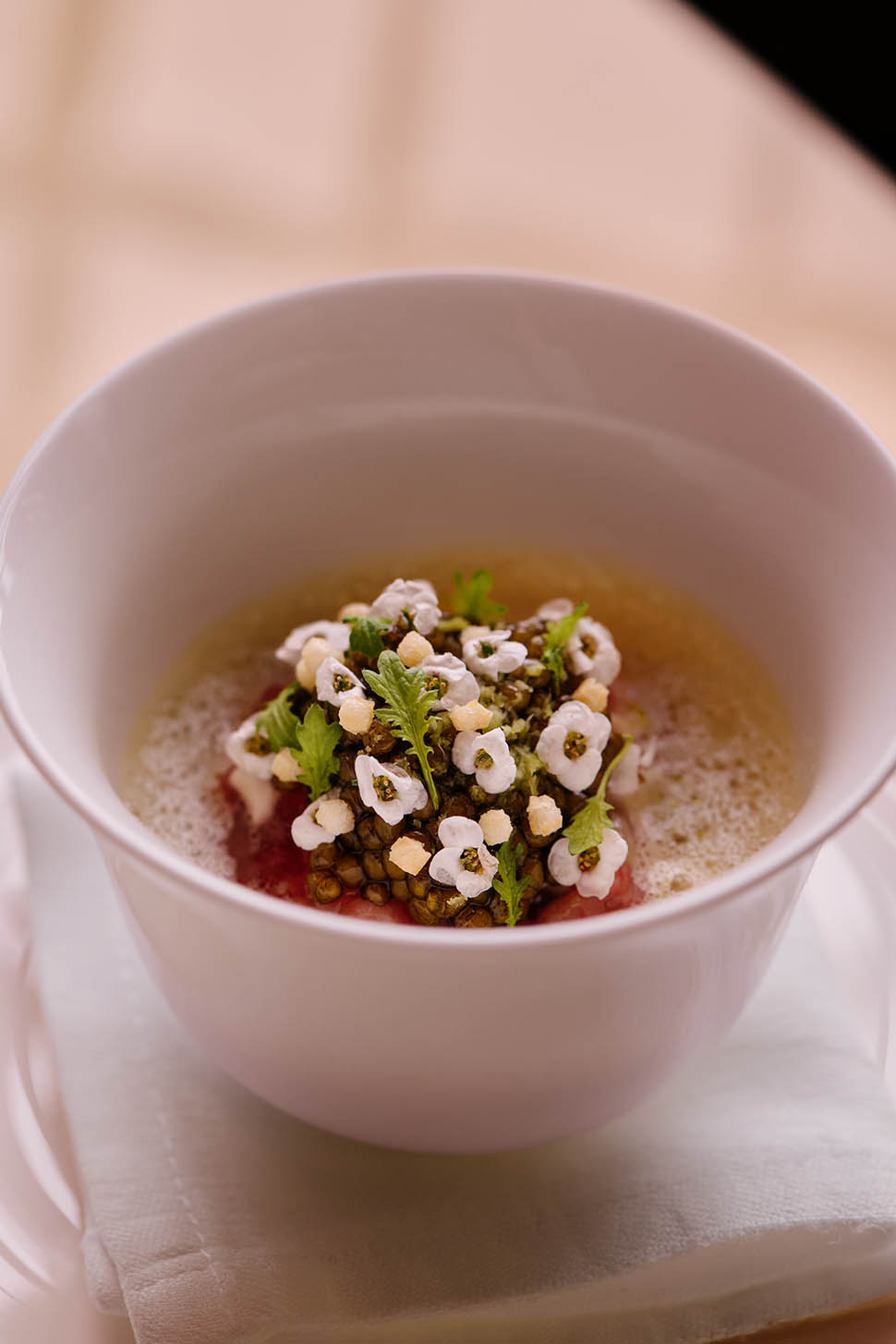
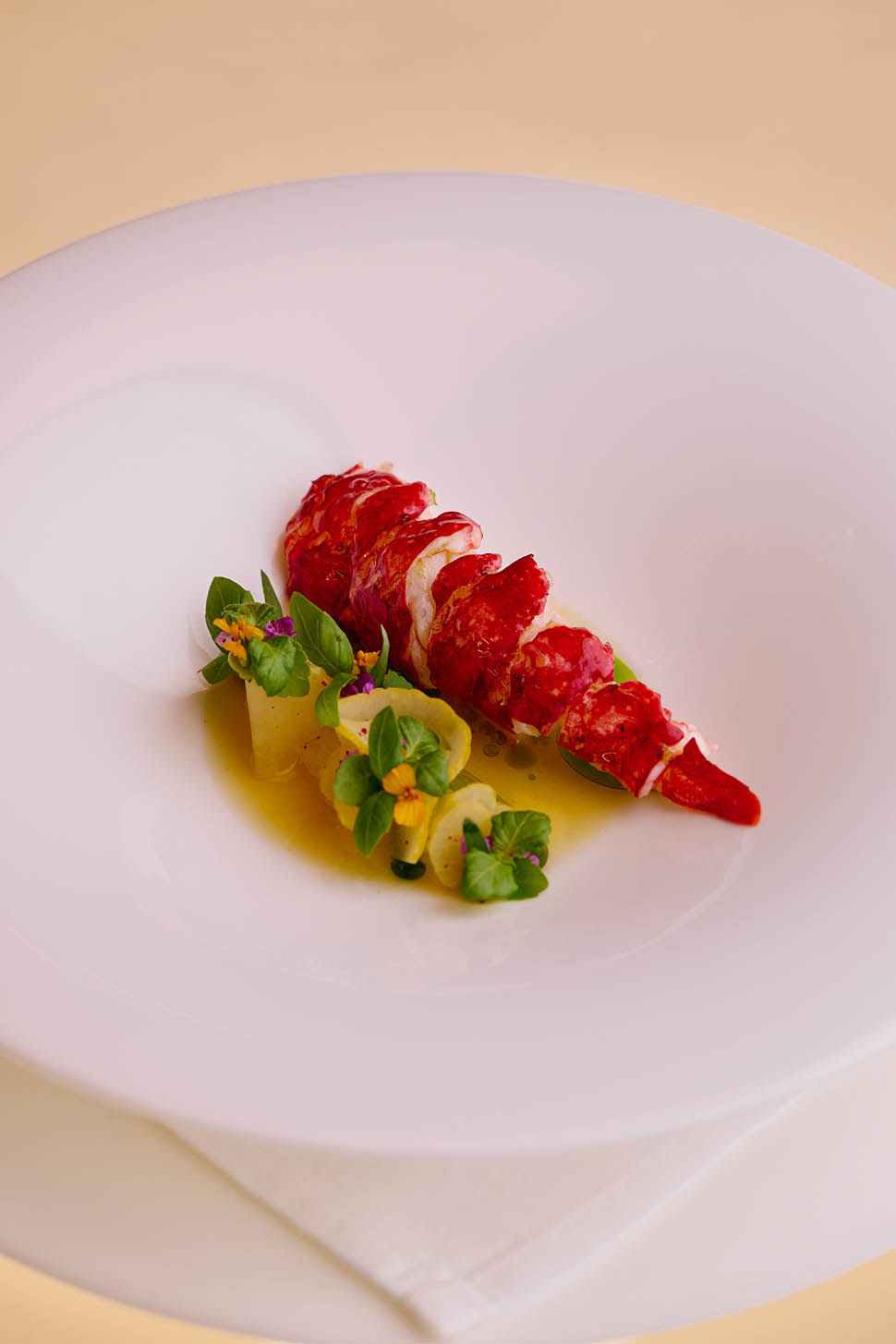
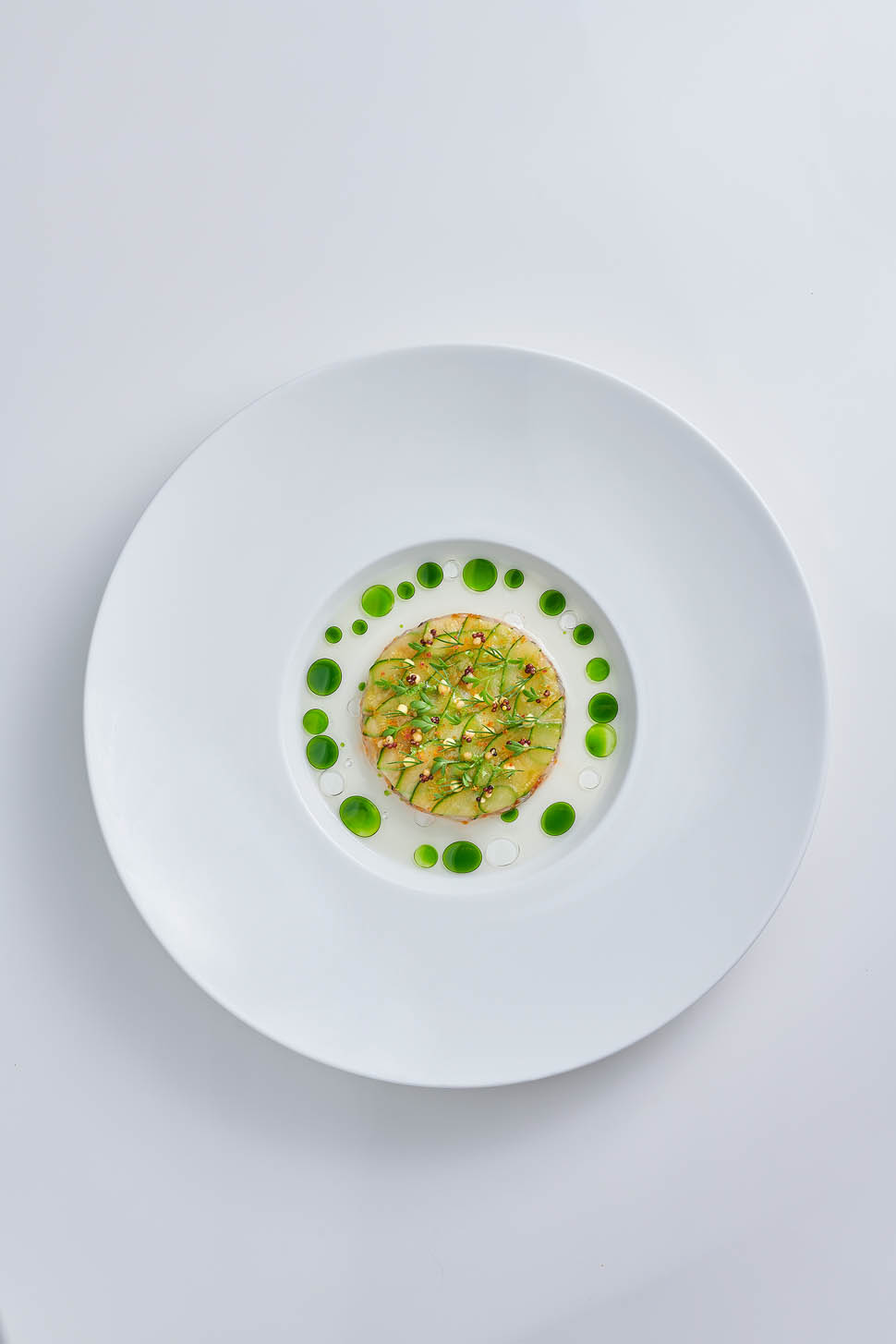
The Crab Cake made with king crab, mountain potatoes, horseradish, and fish roe is truly remarkable. A wonderful combination: Wagyu tartare with Gillardeau oysters, caviar, and wasabi: chawanmushi, poached oysters, soy glaze, caviar, dashi velouté with wasabi oil, wasabi leaf oil, freshly grated wasabi, watercress, white alyssum, and arare pearls. The menu begins with the exquisite Breton lobster, cooked and marinated with pomelo segments, sushi-style ginger sticks, lime zest, anise flowers, tarragon, basil cress, avocado purée, Espelette pepper, herb oil, and yuzu oil, along with shiso flowers and cress.
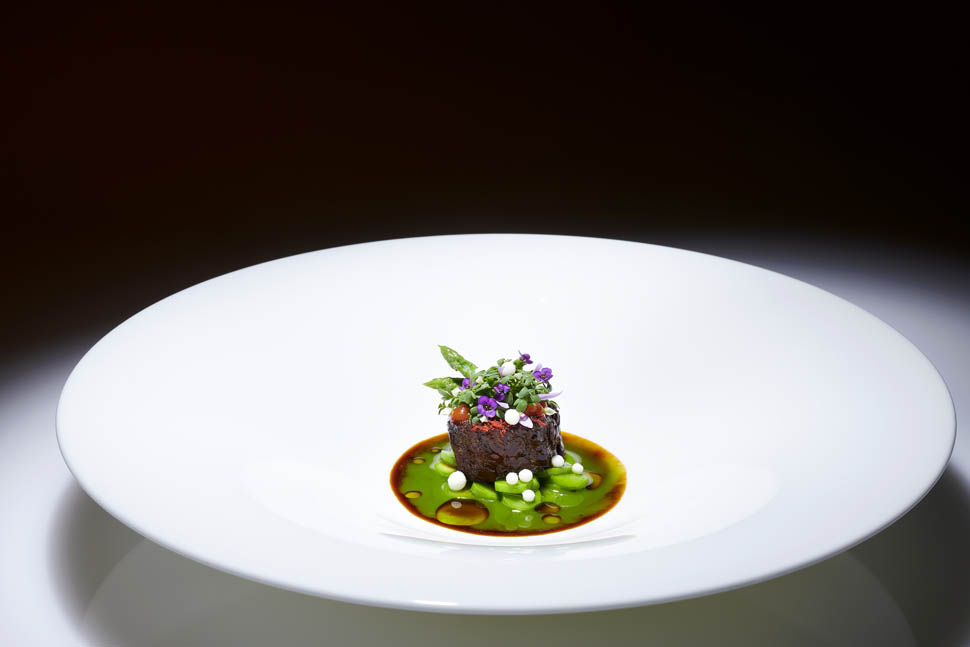
Tender and flavorful, the steamed hake, served with caviar and sauerkraut-infused beurre blanc ice cream, is accompanied by smoked bacon oil, caviar, a delicate sauerkraut salad, yellow marigold, dill, a juice gel, sauerkraut mayonnaise, and dill powder. Next up is the line-caught sea bass marinated in salt and nori seaweed powder, with a soy glaze, and scallops with a green tomato seed vinaigrette, reduced chicken stock, and herb-infused oil; also edamame foam, kohlrabi sliced and marinated in sushi vinegar, and mustard nitrogen pearls. Delicious is the cured beef brisket and foie gras with Asian spices, braised and pressed savoy cabbage, and Périgord truffle, served with a bread wafer, parsley juice gel, marigold, Hippo tops, watercress, and parsley gel, foie gras nitrogen pearls, fried potato cubes, and watercress oil dressing.
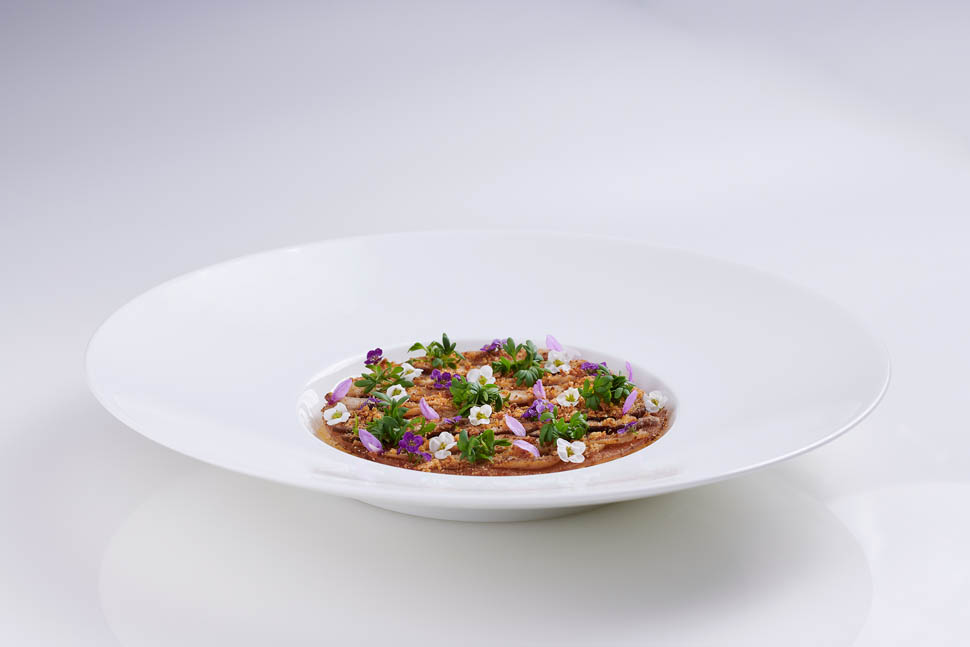
Juicy and masterfully cooked: pigeon with red cabbage, beets, pomegranate, and licorice. Bone-in pigeon breast, pigeon jus and red cabbage, pigeon ragù, rice paper roll with beet juice, red cabbage salad, pomegranate seeds, pomegranate balsamic gel, licorice gel, mini croutons, cornflowers, parsley cress and scarlet cress, beet powder, potato foam.
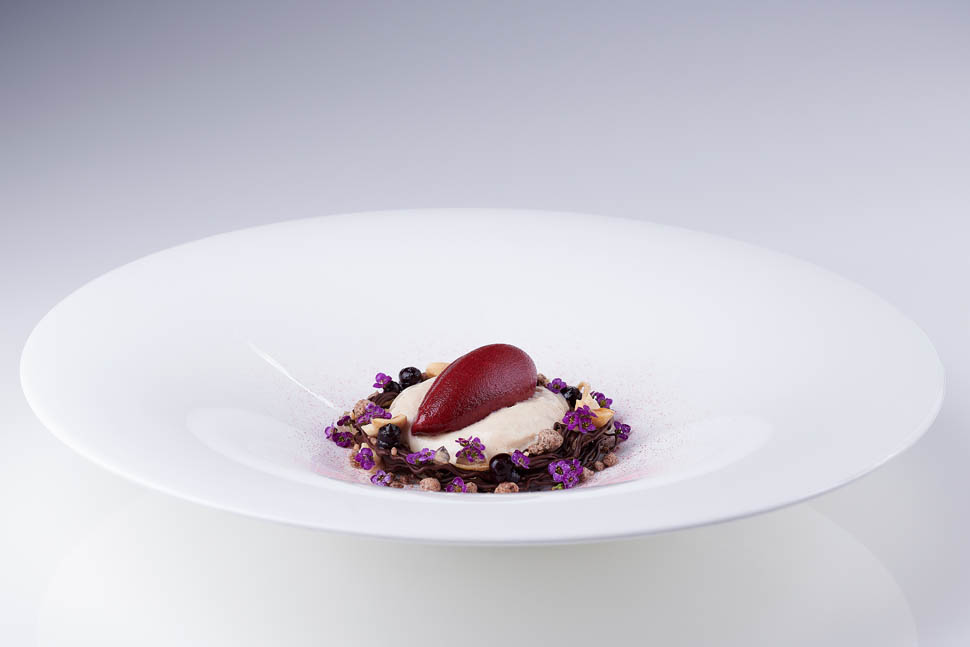
The pre-dessert is a refreshing mascarpone yogurt with vanilla, cinnamon, pumpkin juice foam and rooibos tea, sorbet, mandarin segments, cubes of braised pumpkin, toasted pumpkin seeds with white chocolate, cereal pops, orange zest, and marigold. The ‘Schwarzwälder Kirsch’: is absolutely delicious—chocolate namelaka, skim milk mousse with kirsch, cherry sorbet, marinated dried cherries, chocolate nests, purple alyssum, cherry powder, cacao nibs, and cherry gel.
A real treat: the mini brioche with olive oil, hazelnut cream, and dried raspberries, served with a raspberry gel made with raspberry vinegar and olive oil. Also, the dark chocolate sphere coated in pistachio, paired with a semifreddo of caramelized pistachios and chocolate, and an orange liqueur gel. You can also enjoy the brick pastry cannolo with white chocolate and yuzu powder, ricotta and yuzu mousse, and a compote made from the same citrus fruit and ají amarillo. The “Affogato” is a brick pastry tartlet with a vanilla ice cream sphere and chocolate glaze, chocolate espresso gel, and gold. The meal ends on a high note with a selection of irresistible pralines, among which we particularly loved those with miso-salted caramel, lemongrass and ginger, apricot kernel, and sea salt. An unforgettable experience.
The Dolder Grand
Address: Kurhausstrasse 65, 8032 Zurich, Switzerland
Phone: +41 44 456 60 00