From a gesture of love to an icon: Alfredo alla Scrofa, the story of a place that symbolizes Roman cuisine and a recipe that continues to tell the story of the Eternal City.
*Promotional content
Photo credit: CineFood
The History
Alfredo alla Scrofa is not merely a historic restaurant in Rome. It is a place that, for over a century, has told the story of the city through its dishes—its customs and its evolution. Founded 112 years ago, it retains a distinct identity: traditional Italian cuisine with deep Roman roots, while also embracing contemporary trends in its menu. Alfredo’s identity spans a century. It is that of a restaurant that remains committed to the classics without ignoring the present. The dishes stay true to their original roots, yet are presented in a way that aligns with what today’s diners expect: delicious, recognizable, and beautifully presented.
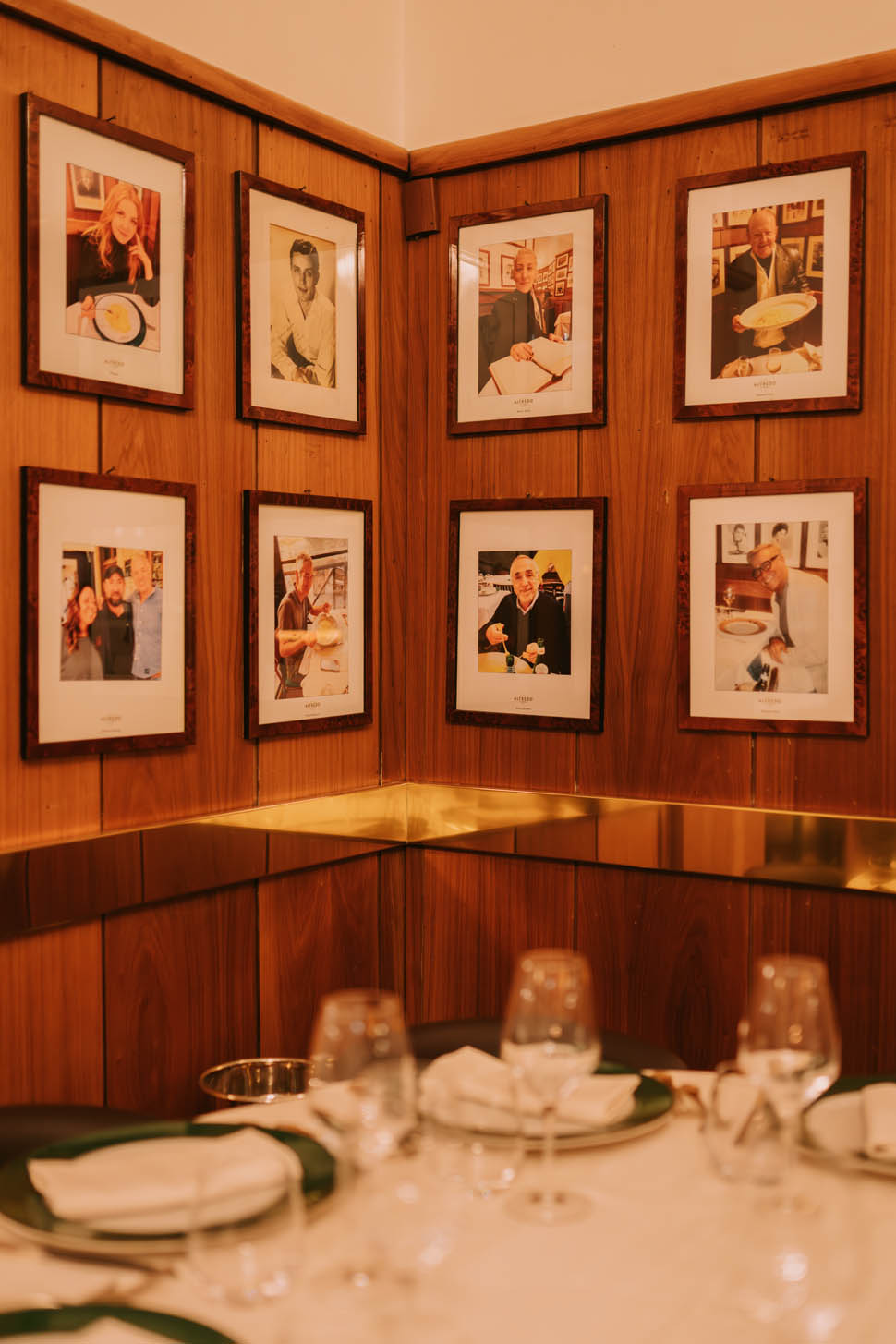
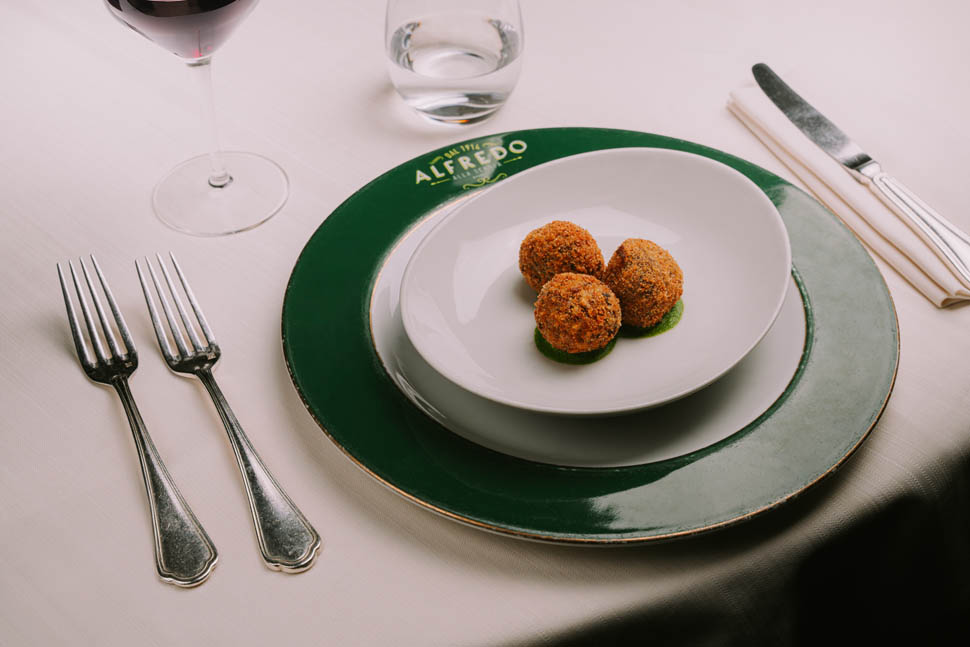
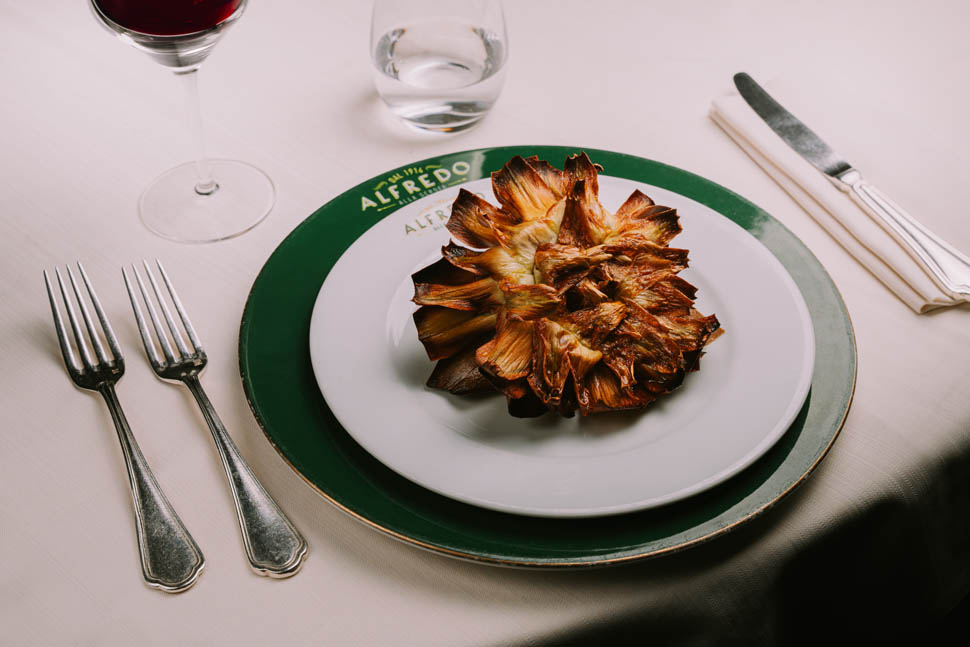
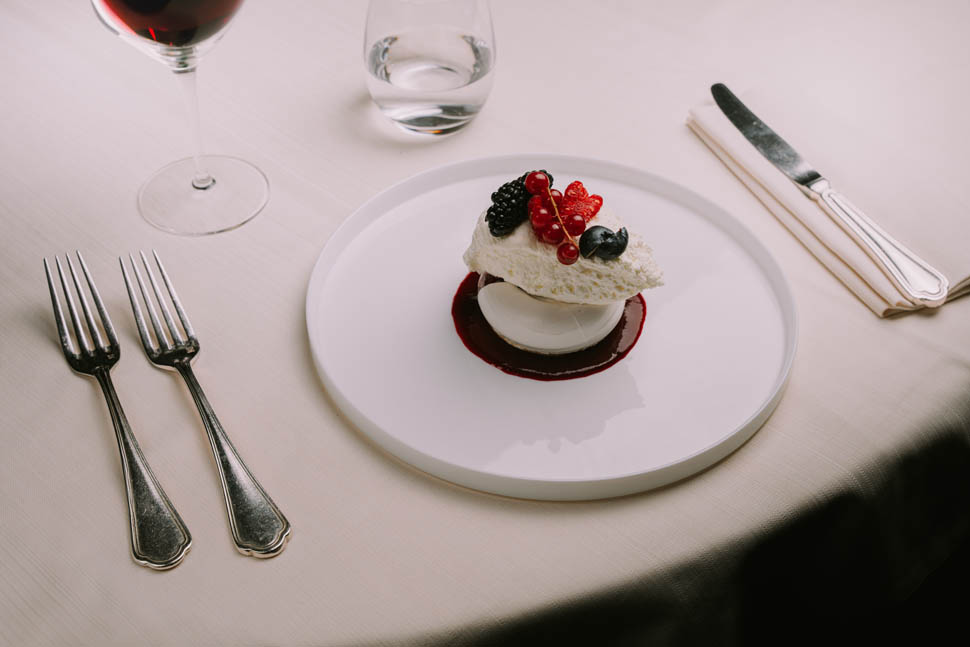
The name itself tells a story. In the past, signs used to indicate the owner and the location: Alfredo “alla Scrofa” because it was located on Via della Scrofa, as is the case with many other Roman restaurants. But over time, Alfredo has become something more. It is not just a place to eat, but a part of the city’s culture. Those who enter here are not just entering a restaurant: they are entering a place that has been shaped by eras, personalities, trends, tourism, and Roman culture. A fixture in the city’s way of life. And at the heart of this attraction has always been a dish: Fettuccine Alfredo.
Fettuccine Alfredo: from a gesture of love to a universal symbol
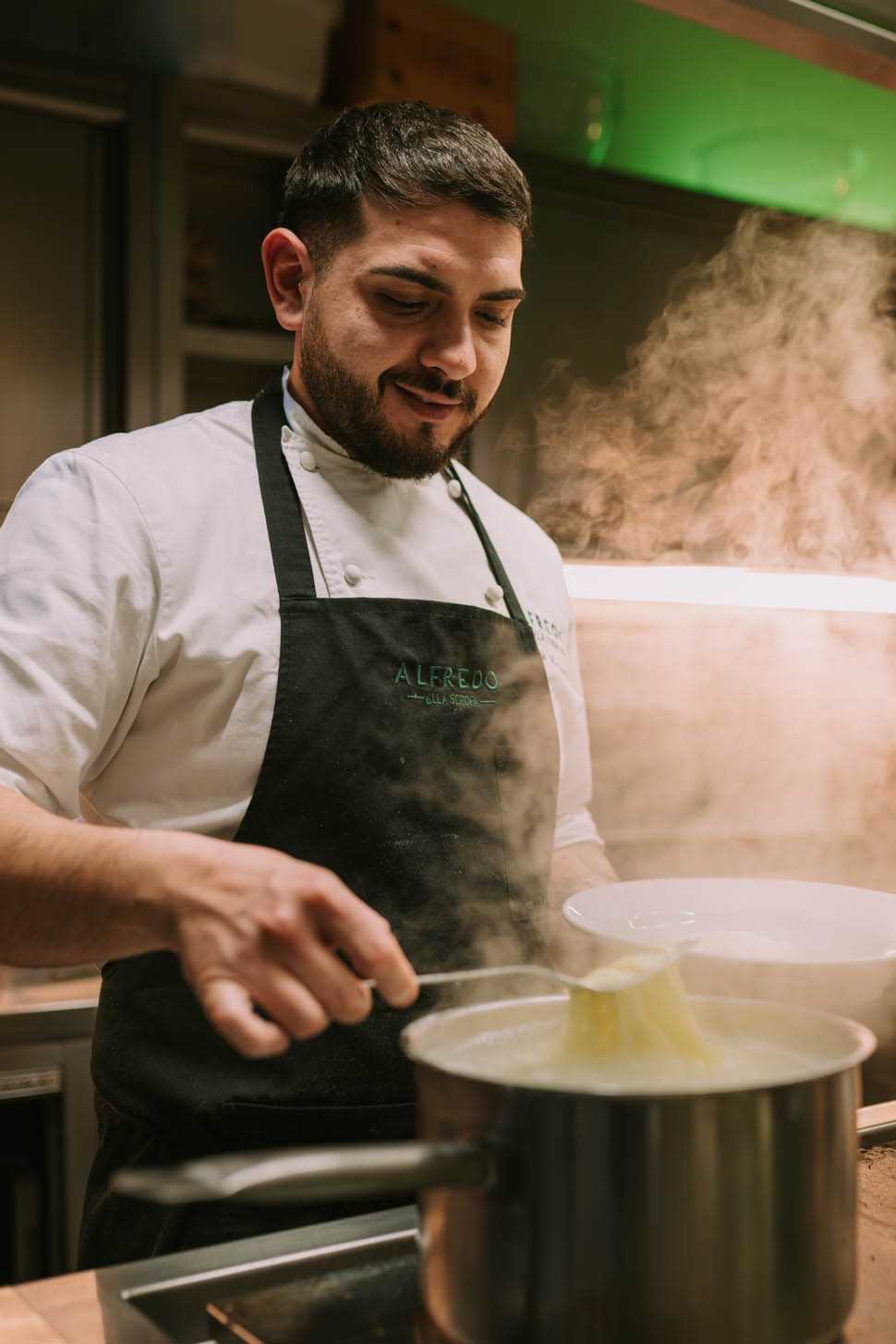
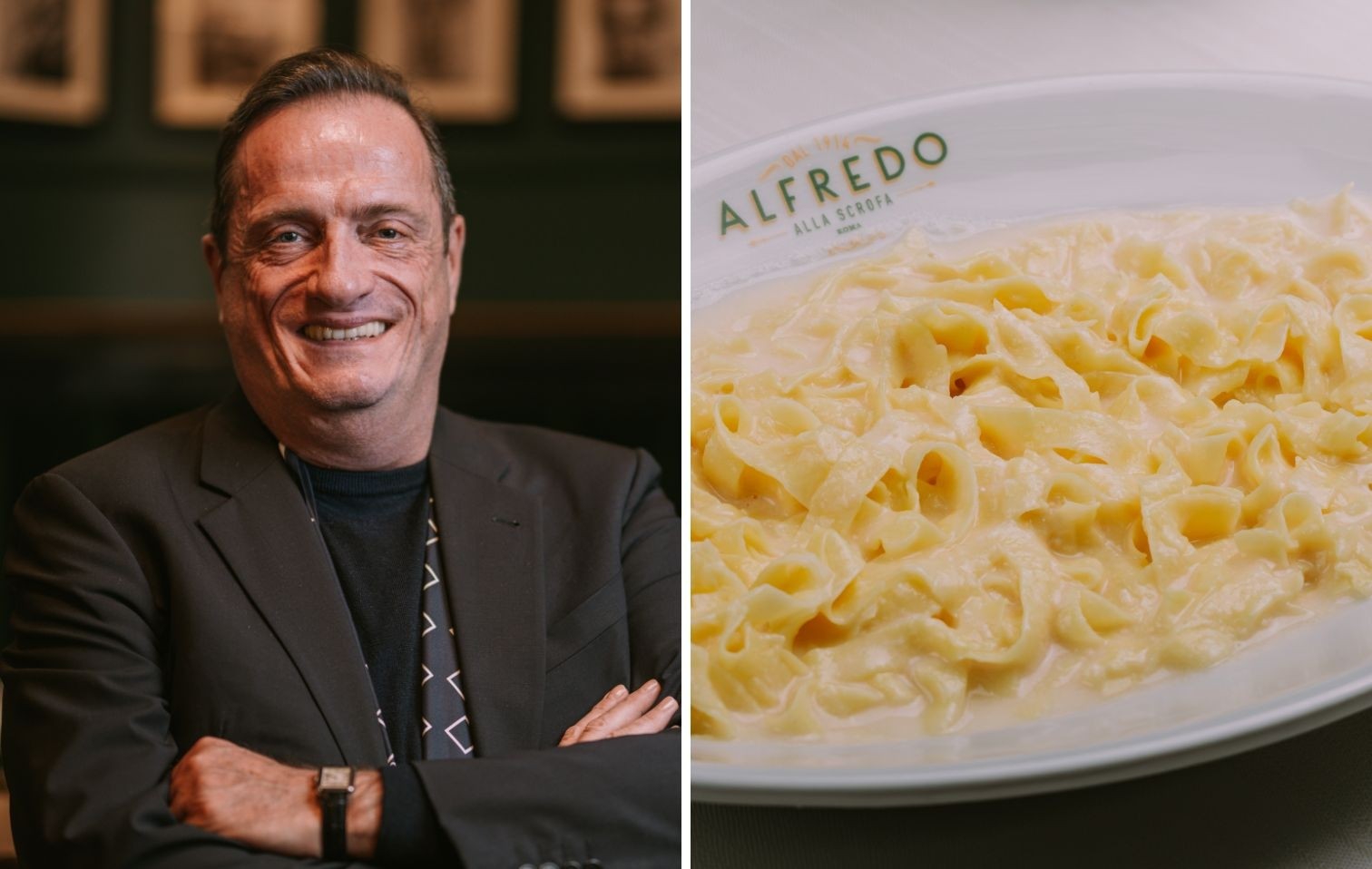
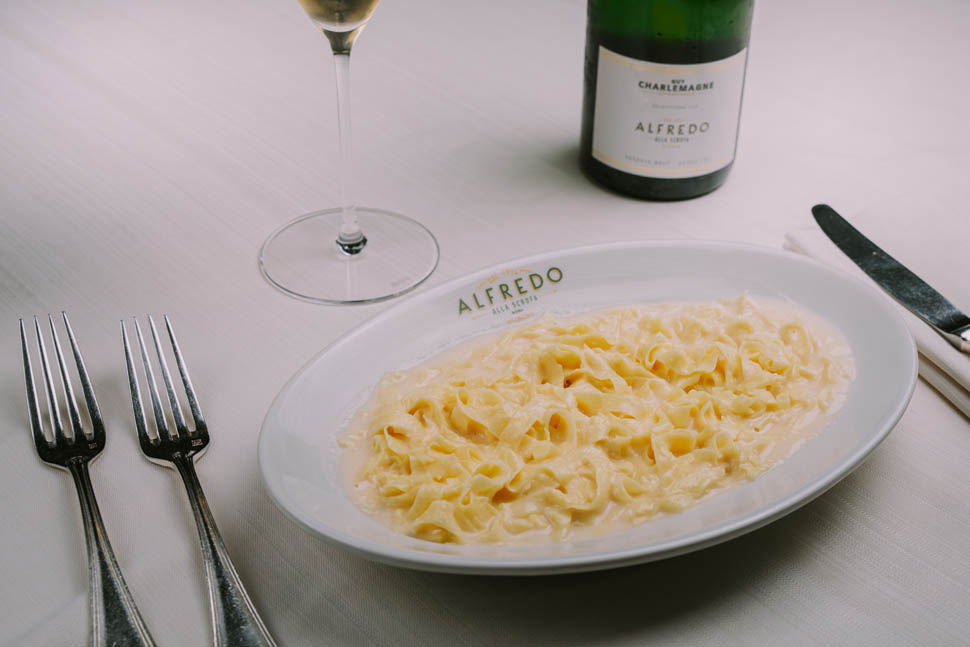
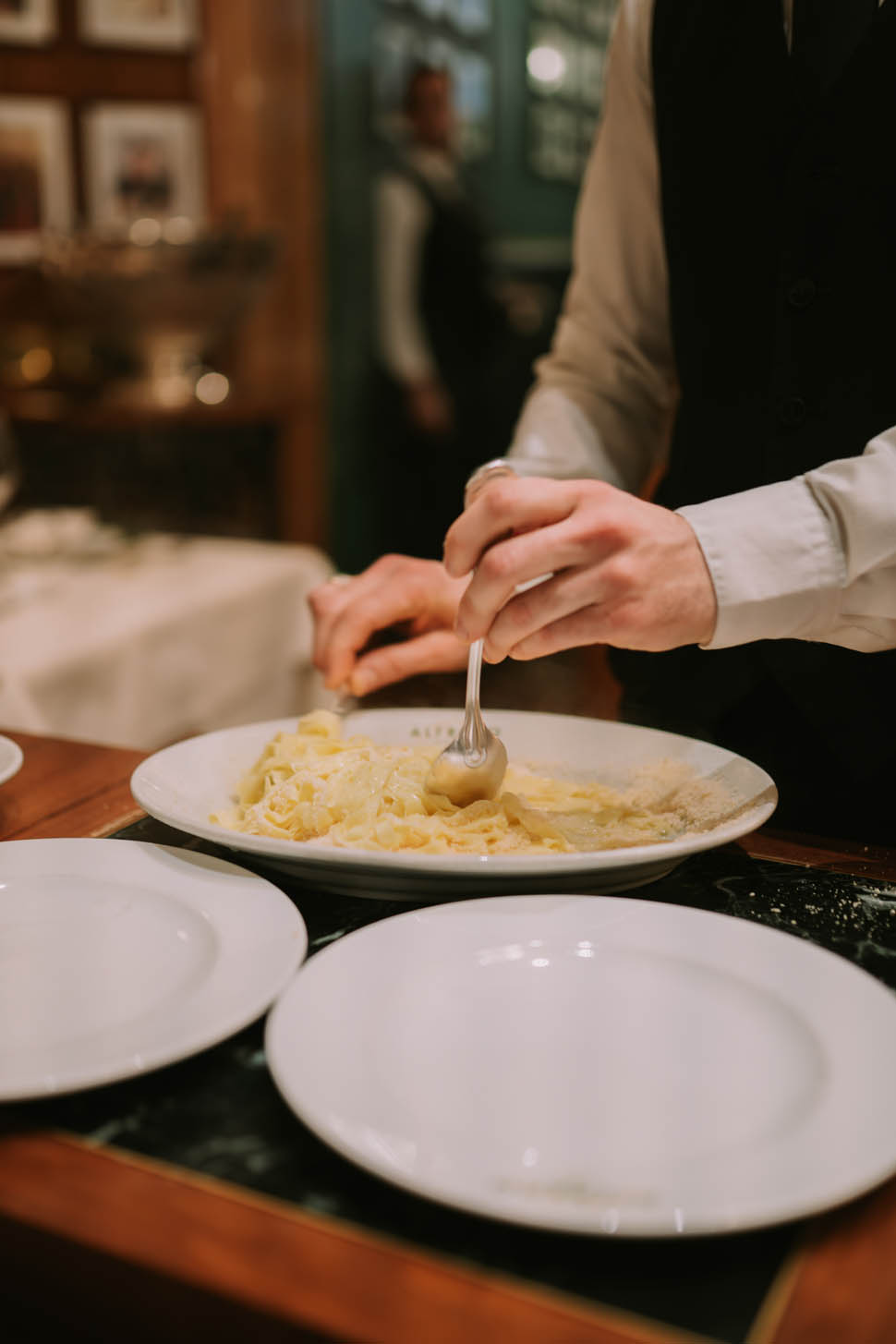
The story of Fettuccine Alfredo began with a simple act of domestic kindness. Alfredo created this dish for his wife, Ines, shortly after she gave birth, when she was having trouble eating. His intention was simple: to prepare a comforting dish that was easy to eat and restorative. The combination of fresh pasta, butter, and Parmigiano Reggiano created a magical blend that, over time, has become legendary. The secret lies not only in the very short list of ingredients, but in the creaming process. It is that step that transforms a dish of pasta with butter and Parmigiano Reggiano into something entirely different. The creaming, done right at the table, creates a creamy sauce that coats the pasta and transforms the dining experience. Even today, even the most skeptical Italian who thinks they’re facing a simple plain pasta dish realizes, upon tasting it, that it’s not just that. The pasta is egg-based and rolled very thin. This choice requires important technical care: because it’s thin, it tends to break easily. It’s cooked in water that simmers gently, not in a violent boil. It cooks for about 30 seconds.
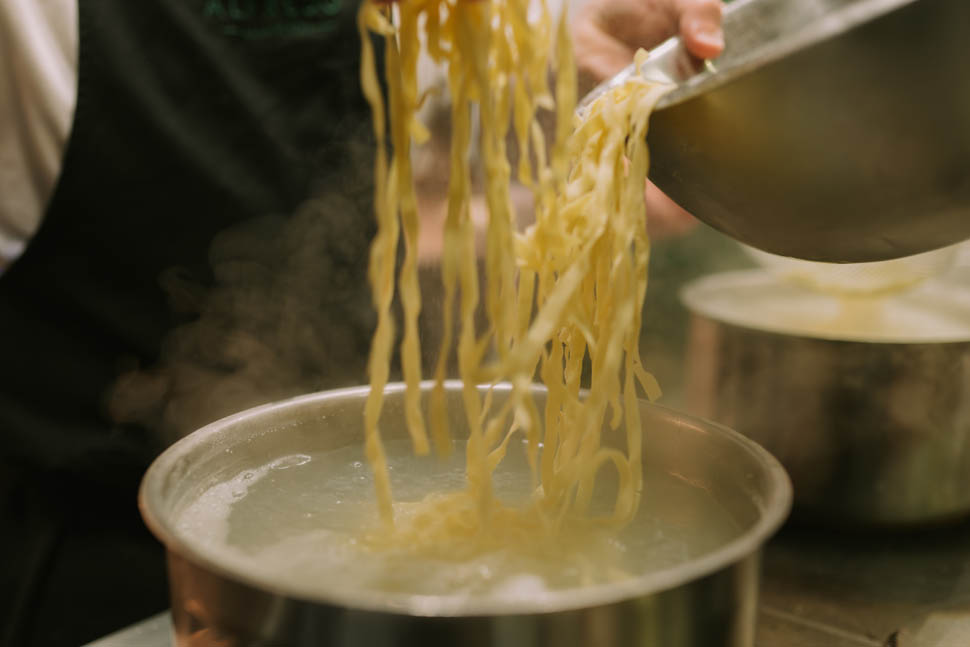
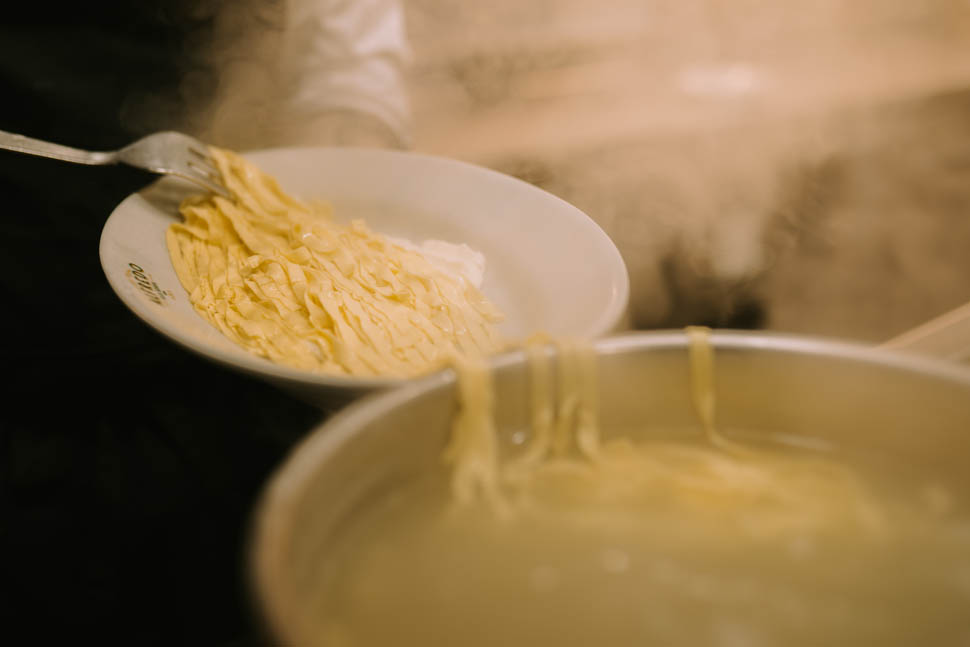
The chef lifts it with a large fork, “combs” it, transfers it to the plate, and brings it out to the dining room. The dish is finished right in front of the customer with butter and Parmigiano Reggiano. It’s a gesture that works visually today, in an era where everything is visual communication, but one that originated here long before social media. The ingredients are few but essential: the butter and Parmigiano Reggiano come from cows raised outdoors, fed a natural diet. The Parmigiano Reggiano is 24 months old, grated and sifted several times until a very fine powder is obtained—essential for creating the cream and preventing the cheese from “tearing” during the creaming process.
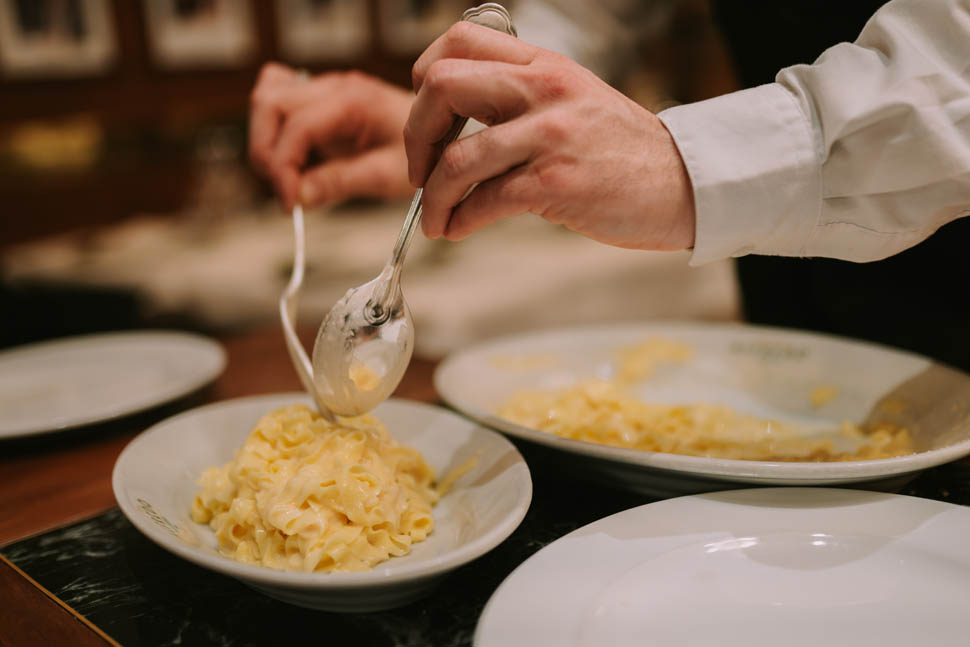
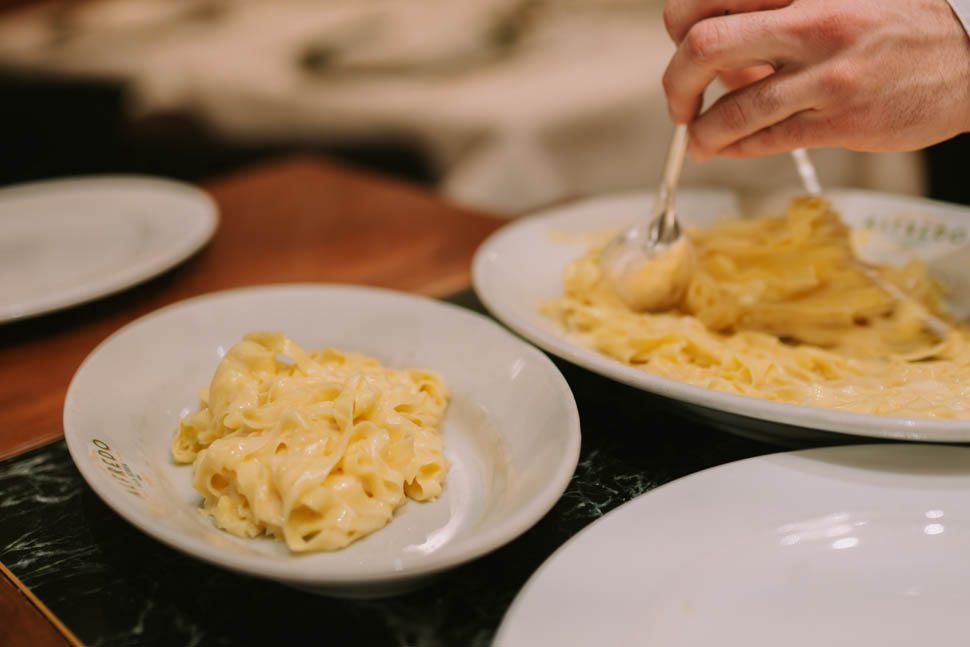
Once, by mistake, pecorino was used. The result wasn’t the same: the cream didn’t form, and the sauce didn’t bind properly. This is technical proof that Parmigiano Reggiano isn’t a cheese that can always be substituted. Such an iconic dish must remain identical in its preparation and identity. But it must evolve in how it’s communicated. Today, the preparation process works in its favor because it is visual, but the substance remains unchanged.

Parmigiano Reggiano: More Than Just a Cheese
Fettuccine Alfredo wouldn’t exist without Parmigiano Reggiano. For Alfredo alla Scrofa, it’s not a secondary ingredient, but a foundational element. It’s part of the dish’s structure, not a final addition. It must be processed and measured with precision. Grating and repeated sifting are necessary to achieve a very fine powder. Without this texture, the result would not be the same. Alfredo alla Scrofa lived through years when the very existence of Fettuccine Alfredo was called into question in Italy, almost as if it were a dish “too famous” in the United States to be accepted. Yet it is an Italian recipe, born in Rome, that has traveled the world.
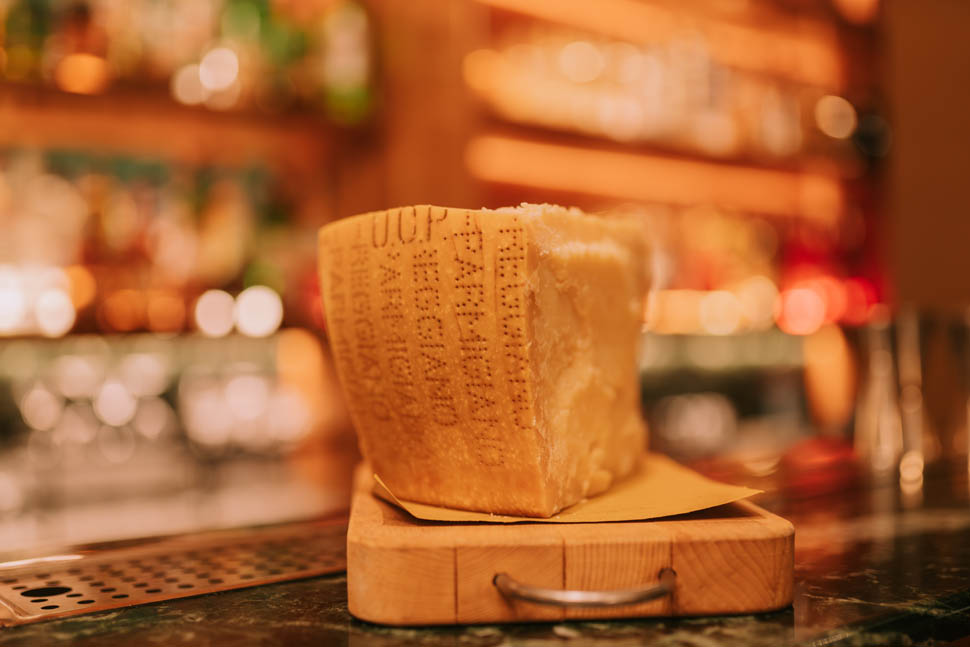
For the restaurant, Parmigiano Reggiano is a “stroke of genius,” says Carlo Paragona – Restaurant Manager, to use a modern term: a product that goes beyond taste and engages the senses. When combined with butter, it creates a soft, sweet, enveloping cream, different from what you would get with pecorino or other aged cheeses. Pecorino already has its own strong identity in cacio e pepe. Parmigiano Reggiano, combined with butter, creates a texture and balance that are the foundation of the dish’s success.
Tourist food or good food? The topic of tourism is central when discussing Alfredo alla Scrofa. Tourists aren’t necessarily a negative category. We’re all tourists when we travel. Some people eat well and some eat poorly, just as is the case among Romans, Milanese, or any other group. Many visitors plan their trip to Rome knowing they want to eat Fettuccine Alfredo. Some can’t even get inside, but they stop to take a photo in front of the restaurant, just as one would in front of a monument. This is a sign that the restaurant is part of the city’s culture.
Tourist cuisine becomes second-rate when quality is compromised just to turn a profit. But when an iconic dish is executed properly, with carefully selected ingredients and respect for its history, it remains a great dish regardless of skepticism. We all do this when we travel: we seek out the dishes that symbolize a city; we want to eat what represents that place. It’s not a superficial attitude; it’s a way to connect with a culture. Alfredo alla Scrofa proves that a dish can be tourist-oriented and yet authentic and reflective of its identity. The difference lies in how it’s prepared, championed, and presented.
Contact and Info
Alfredo alla Scrofa
Via della Scrofa, 104/a – Rome
Tel. 06 6880 6163
Website: https://alfredoallascrofa.com/