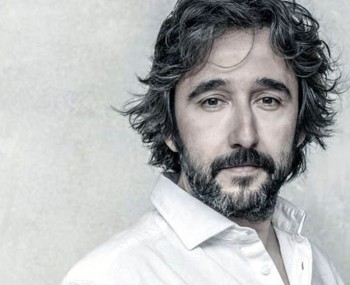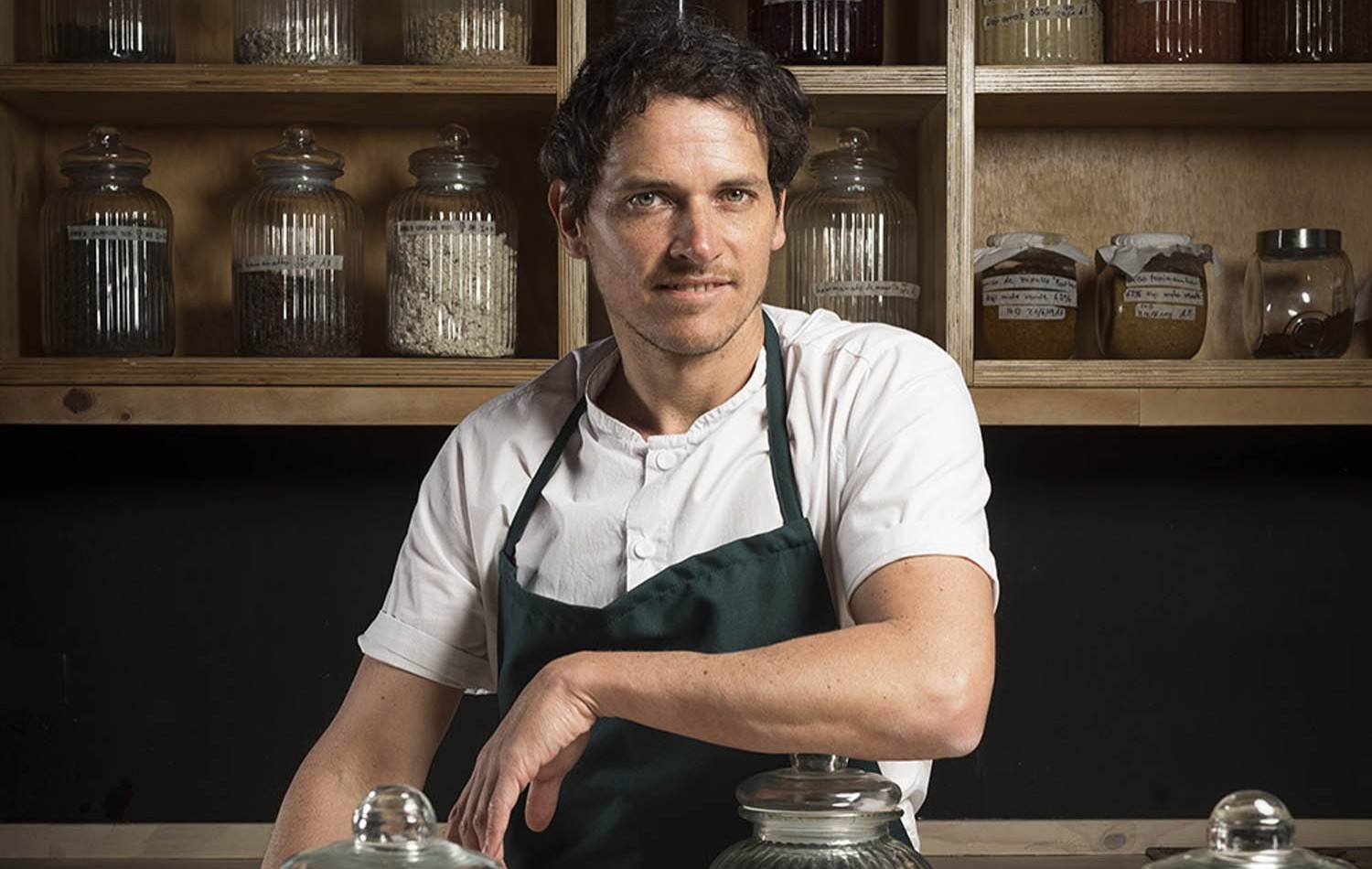
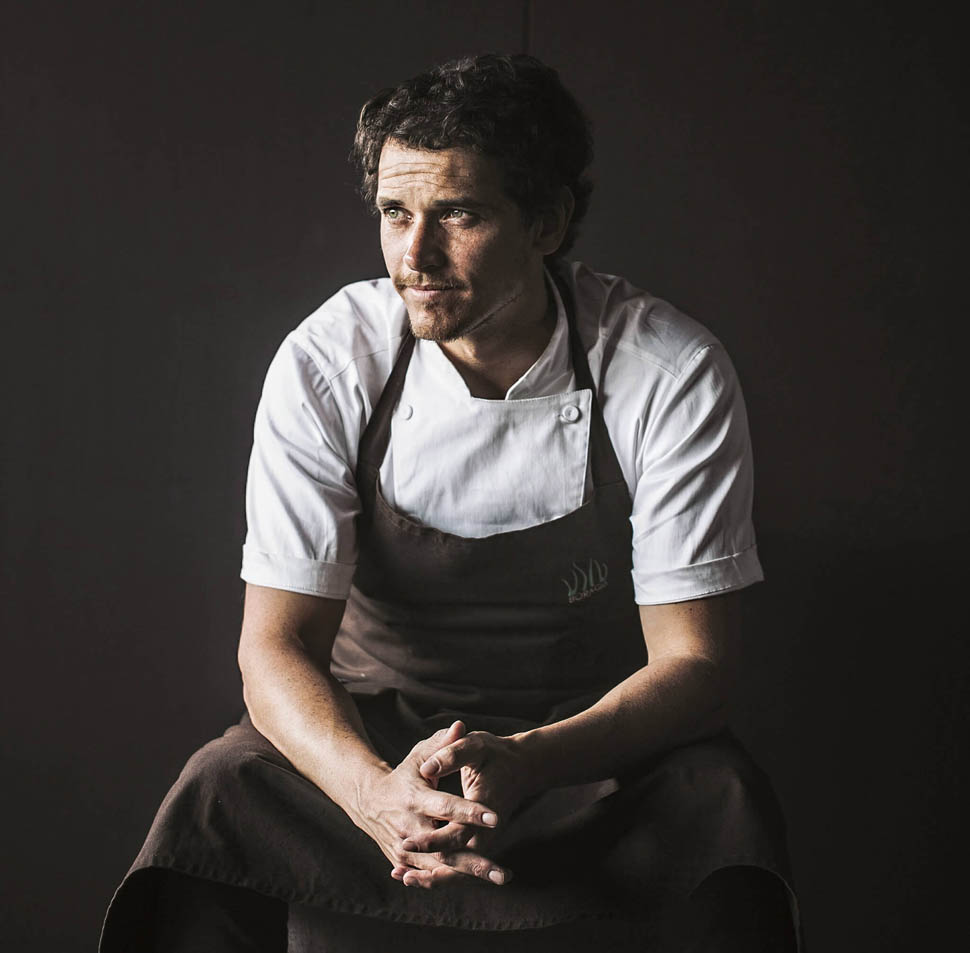
A restaurant can grow like a living organism, or it can remain true to a single root and explore it so deeply that it becomes unrecognizable to others. Rodolfo Guzmán has chosen the latter path. While many chefs pursue new openings, replicable concepts, and ever-expanding geographical reach, he continues to focus on a single spot on the map: Boragó, in Santiago, Chile. A choice that resembles a statement more than a sacrifice, and that conveys a clear vision of contemporary cuisine: the industry should not be devalued, but supported.
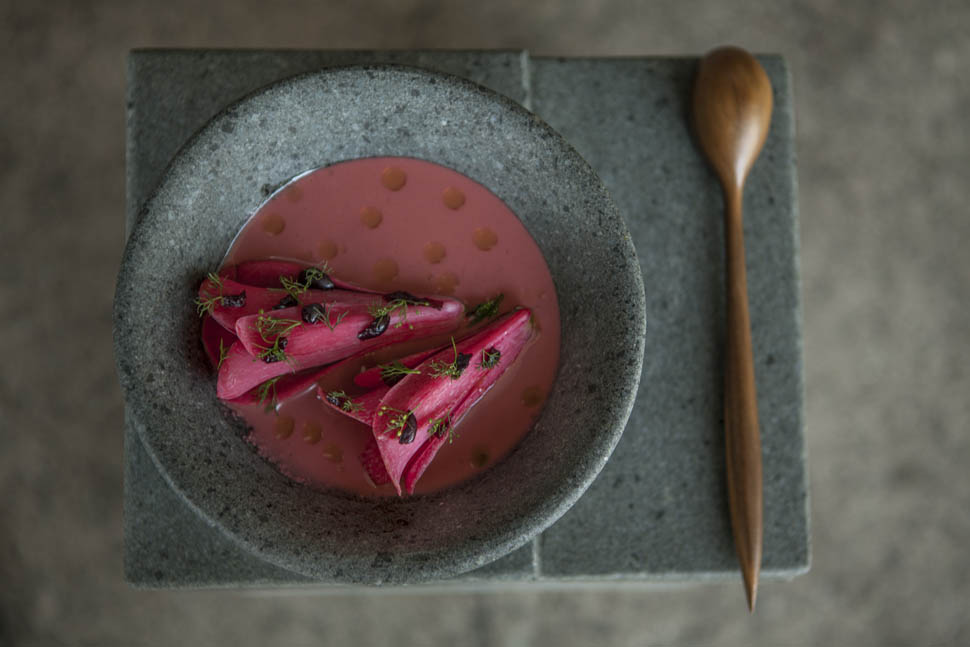
Guzmán, now one of Latin America’s most influential figures, has built his career not by taking on numerous projects, but by delving deeply into his craft. Boragó, which made its debut on the Latin America’s 50 Best Restaurants list in 2013, marked a turning point at a time when Chilean cuisine was struggling to gain international recognition, overshadowed by more established culinary scenes such as those of Peru and Argentina. Since then, the restaurant has solidified its identity, winning the Sustainable Restaurant Award in 2018 and ranking 23rd in the 2025 global rankings. What makes this journey even more intriguing is the decision not to expand the brand. Guzmán chose instead to invest in a research center, the CIB, dedicated to studying native Chilean ingredients. A laboratory exploring the untapped potential of a vast and complex territory, where ingredients gathered from forests and mountains engage in a dialogue with a cuisine that seems to translate the landscape into gastronomic language.
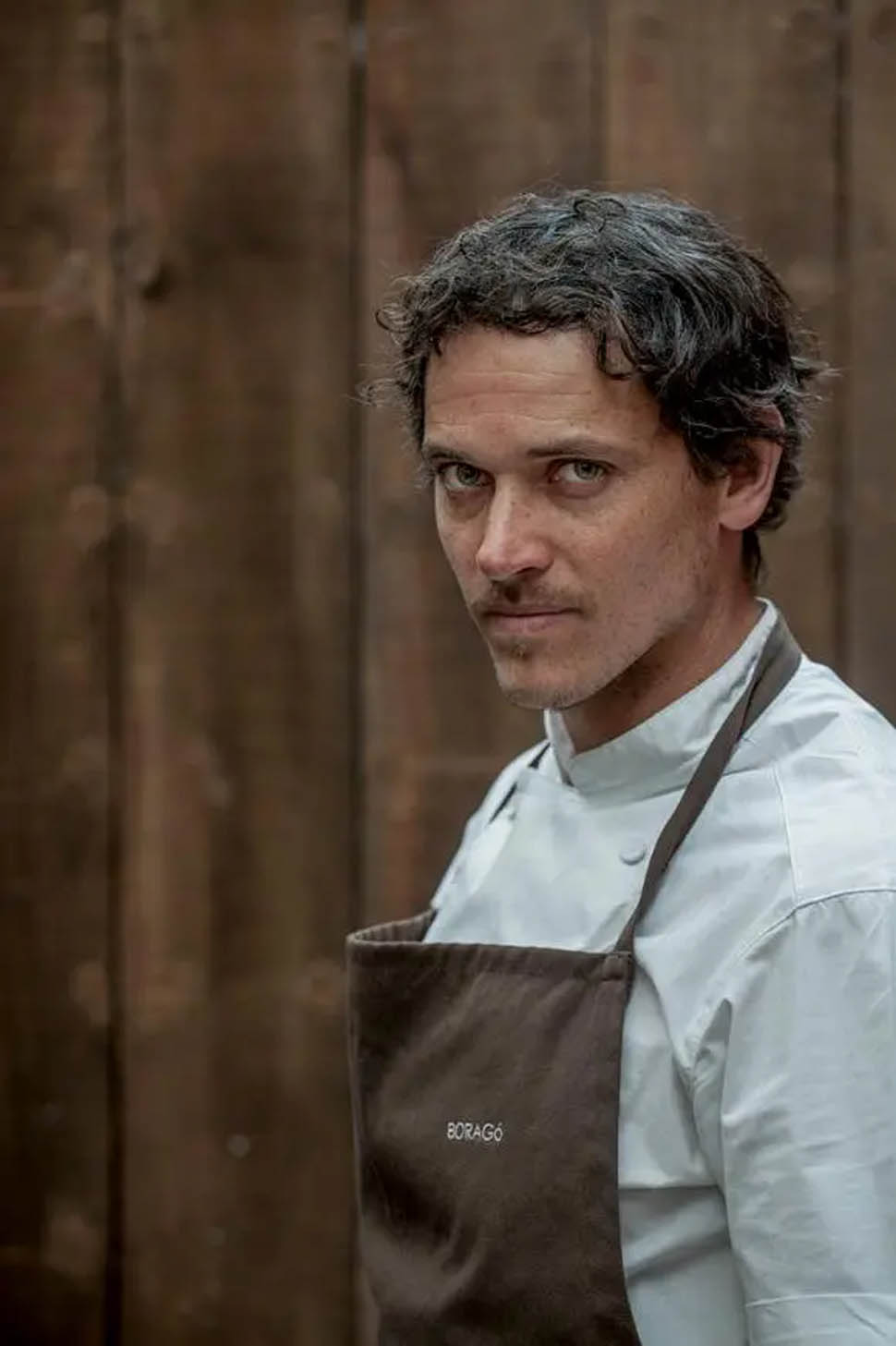
In 2025, he also received the Icon Award at Latin America’s 50 Best Restaurants, an honor he accepted with a certain degree of disbelief: “I really didn’t expect it. I still have a hard time believing I won it. It’s a very special award,” 50Best quotes him as saying. A statement that conveys an image far removed from the rhetoric of success, closer to a form of quiet self-awareness. The roots of this vision lie in familiar ground. Guzmán recounts that his first major influence was his father, described as “an atomic bomb of creativity”. A powerful, almost explosive image that conveys the idea of an environment where inventiveness was not an exercise but a daily reality, even in the absence of resources. Childhood, in this sense, is not portrayed as a limitation, but as a spontaneous laboratory. Professional training comes later, through experiences that mark a change of pace. Entering the kitchen is a shock, a transition that requires discipline and dedication. Guzmán avoids dramatic tones, but emphasizes the need for constant commitment, comparable to that required in other performance-based fields, from art to music. “Life itself is a tough teacher, especially if you don’t pay attention,” he observes, summarizing a philosophy that seems to run through his entire career. But, above all, by refusing to define the restaurant industry as an impossible sector. “Working in a professional kitchen? To say it’s a difficult experience wouldn’t be entirely accurate. It requires dedication like any other trade”
His perspective on influences extends beyond the kitchen. Among his inspirations are figures from the world of sports, such as the Chilean tennis player Marcelo Ríos, who could bring an entire country to a standstill during his matches.Guzmán admires his focus and mindset—qualities he also finds in the daily work of a chef. From this perspective, cooking becomes a form of performance, where repetition does not diminish the tension but renews it. On the gastronomic front, influences intertwine between Europe and Latin America. His experience with Andrés Madrigal in 2003, and later with Luis Andoni Aduriz at Mugaritz, marked a turning point: it was during that period that a deeper connection with food was forged. Of Madrigal, he recalls his generosity; of Aduriz, the ability to imagine beyond conventional boundaries. Two distinct yet complementary qualities that help define his approach. Among the chefs who have most influenced him, Guzmán cites Michel Bras, a legendary figure in French cuisine, and above all Bittor Arguinzoniz, the soul of Asador Etxebarri. What strikes him most about the latter is his passion and mastery in handling fire, an element that becomes almost a language. Alongside more famous names, there is also room for Gennaro Esposito, whose interpretation of pasta has changed the way he views this ingredient. A choice that reveals a personal criterion: a chef’s worth is not measured by fame, but by the ability to leave a mark, to shift a perspective.
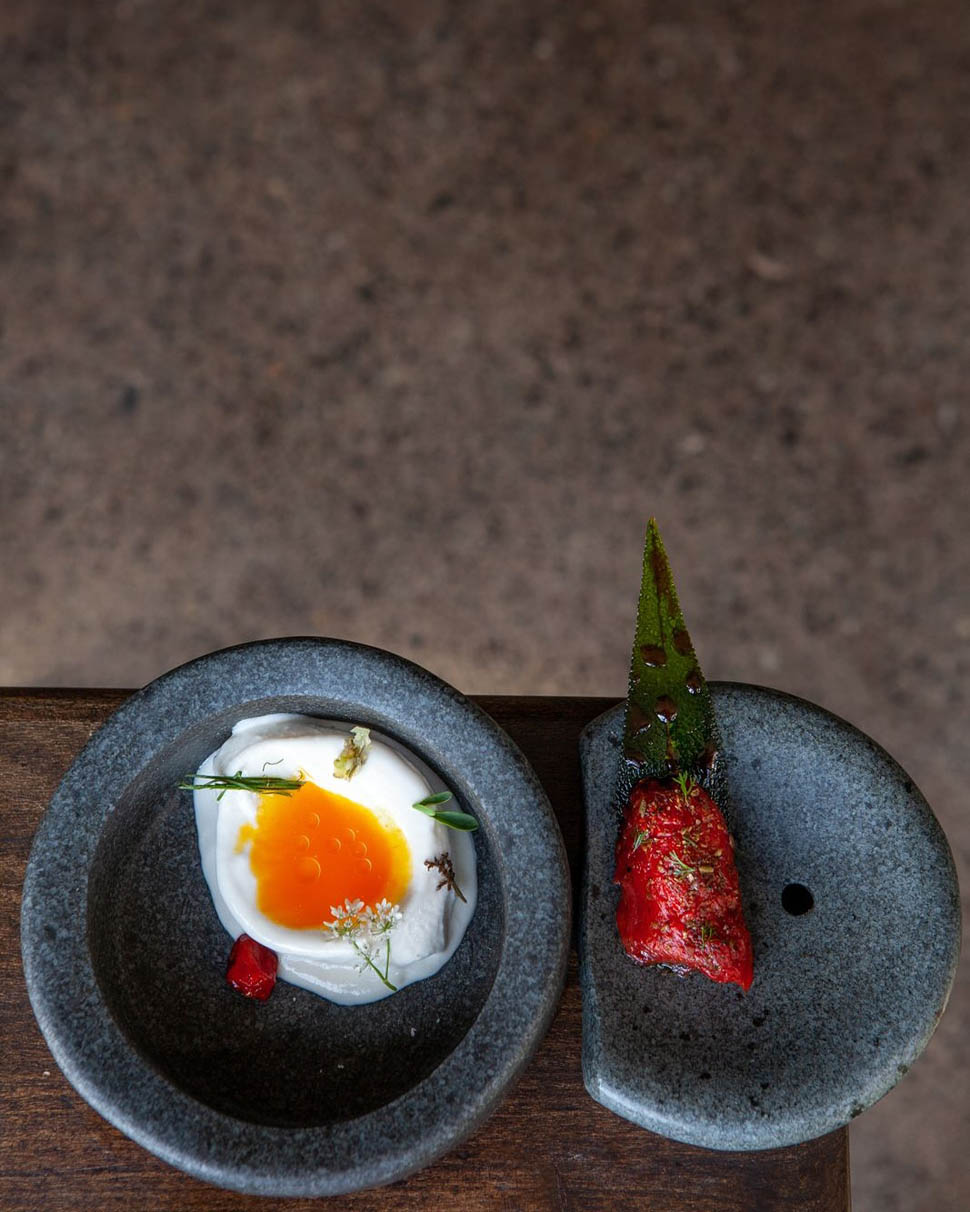
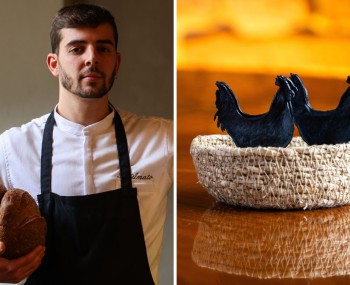
Within this framework, Boragó does not present itself as the product of a single vision, but rather as a convergence of multiple influences. Guzmán rejects the idea of the lone hero and emphasizes a more collective approach. “There are no invisible heroes at Boragó,” he states, explaining how the restaurant’s work depends on a network of people spread throughout Chile: foragers, producers, and local communities that supply ingredients often difficult to find. A supply chain built over time, based on stable relationships and mutual trust that goes beyond mere commercial exchange. The notion of “invisible heroes” expands further when Guzmán speaks of his own life. It is not limited to people, but includes experiences, fears, failures, even the landscape. Childhood, emotional scars, the city, the neighborhood: everything contributes to shaping a perspective. An approach that transforms cooking into a complex reflection, where every dish becomes the result of a layering of elements, visible and otherwise.