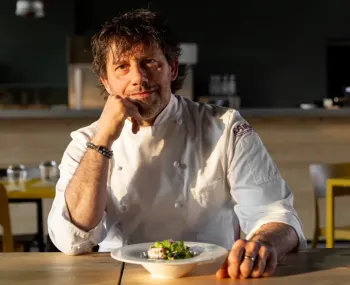
“You won’t find any savory desserts at my place—it wouldn’t make sense. Desserts are sweet by definition, and they have to contain sugar, as long as it’s not cloying. Alternatives? Sometimes I use isomalt; it helps me create things that I enjoy.” This is Jordi Roca’s perspective, as he rejects the trend toward “less-sweet desserts”: “Ultimately, salt is off-limits, just like coffee, sugar, and alcohol. Of course, when you come to enjoy an evening at El Celler, you can’t constantly worry about what’s right or wrong. You’d end up completely stressed out, wouldn’t you?”
The Sugar Rebel: Jordi Roca and the Art of Surprising the Palate
Forget the rigid formulas of traditional pastry-making, the symmetrical display cases, and the clinical calorie counts. Entering the world of Jordi Roca, the brilliant “postrero” (dessert creator) of the legendary El Celler de Can Roca, means taking a quantum leap where the rules of culinary physics are constantly being rewritten. For Jordi, dessert is not the end of a meal, but the beginning of a sensory revolution. A revolution that was born almost by chance, amid the smoke of a Cuban cigar and the scent of bergamot.
A Matter of Labels: “Pastry Chef”? To Whom?
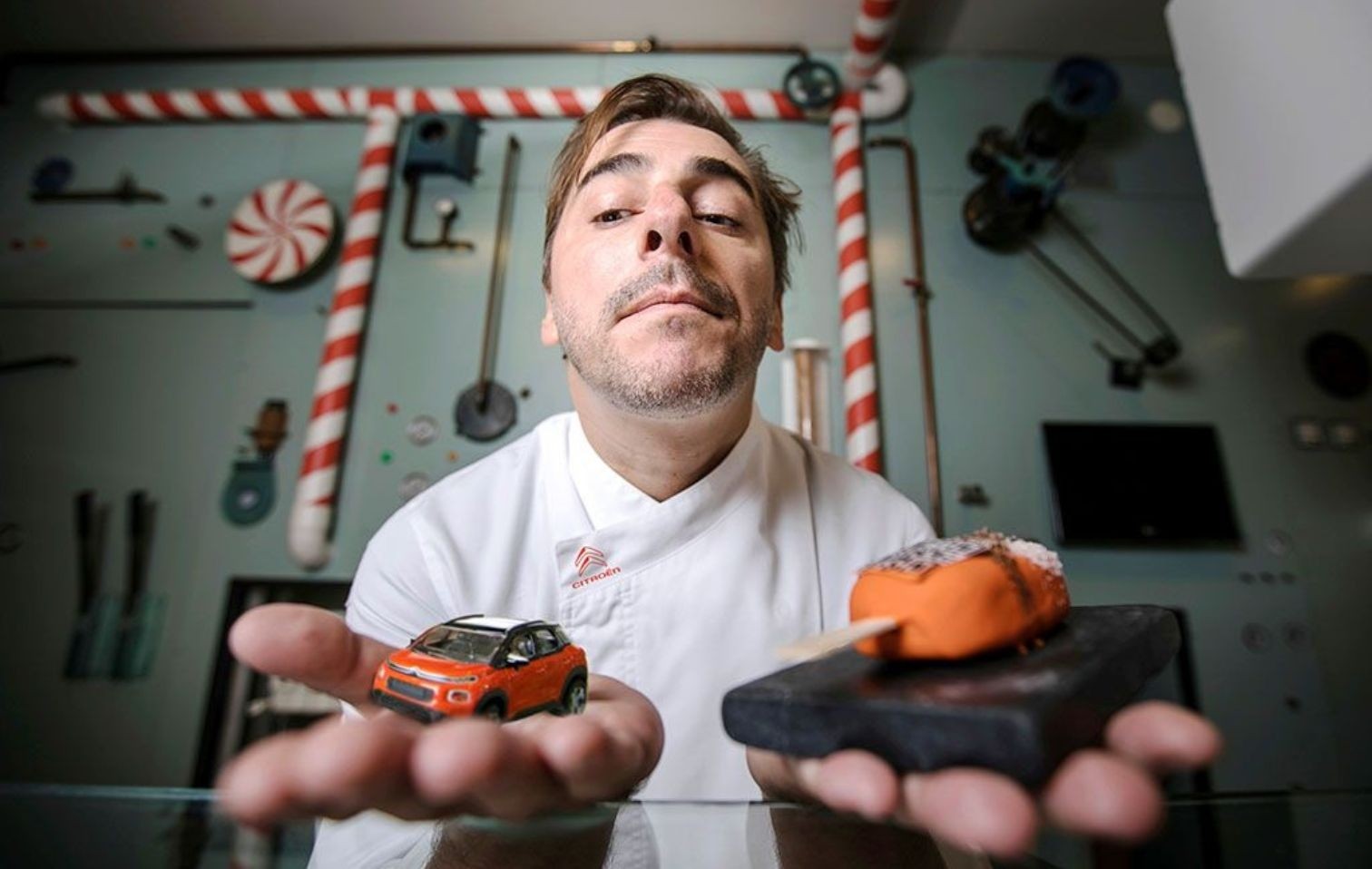
There is a fundamental misunderstanding that Jordi is keen to clear up right away. Don’t just call him a pastry chef. “If a pastry chef is defined as such because they make cakes, then, by the same logic, I, who make desserts, am a pastry chef. However, I want to make a distinction between a pastry chef and someone who makes desserts in a restaurant. They are two different professions,” he told 7Canibales.
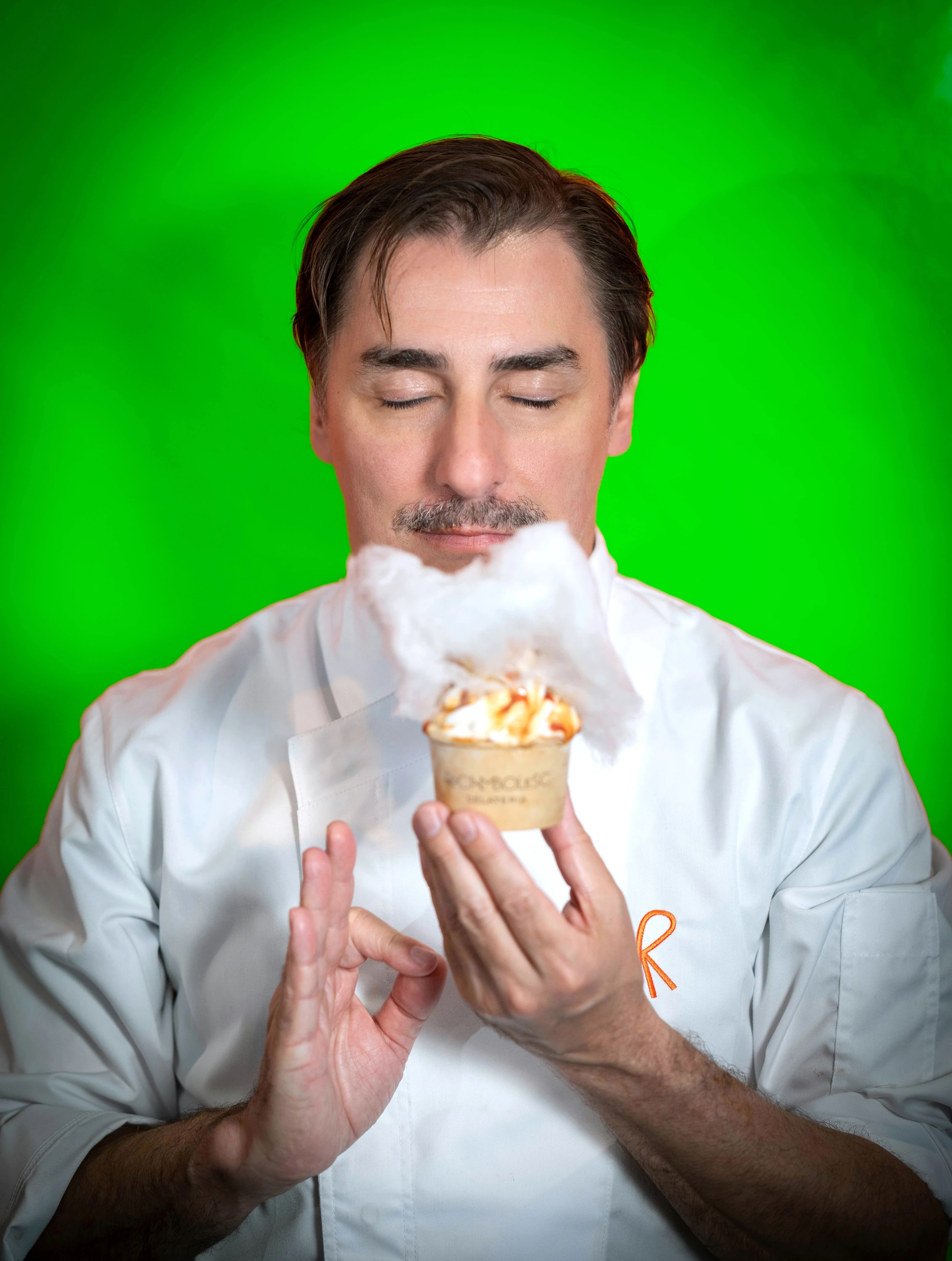
The difference? It’s all a matter of time and space. Pastries sold in shops require millimeter-precise, structural integrity because they have to be transported, withstand handling, and sit for a while. Restaurant desserts, on the other hand, are ephemeral works of art: they are born and die on the plate, created to be consumed instantly, the moment they’re served. It’s a live performance. And if you ask him if he’ll ever open a traditional pastry shop, he shakes his head with a smile: his boldest pop venture is RRRocambolesc, an unconventional ice cream shop he runs with his better half, the talented Mexican pastry chef Alejandra Rivas.
No health freaks here, we’re just sweet tooths
In an era obsessed with “sugar-free” and calorie counting, Jordi Roca asserts the sacrosanct right to guilt-free pleasure. Sure, the sugar in his desserts is balanced, toned down to avoid that cloying aftertaste at the end of a meal, but don’t call him a health nut. When he uses technical sugars like isomalt, it’s for the texture, to let the imagination run wild—not to stick to a diet.
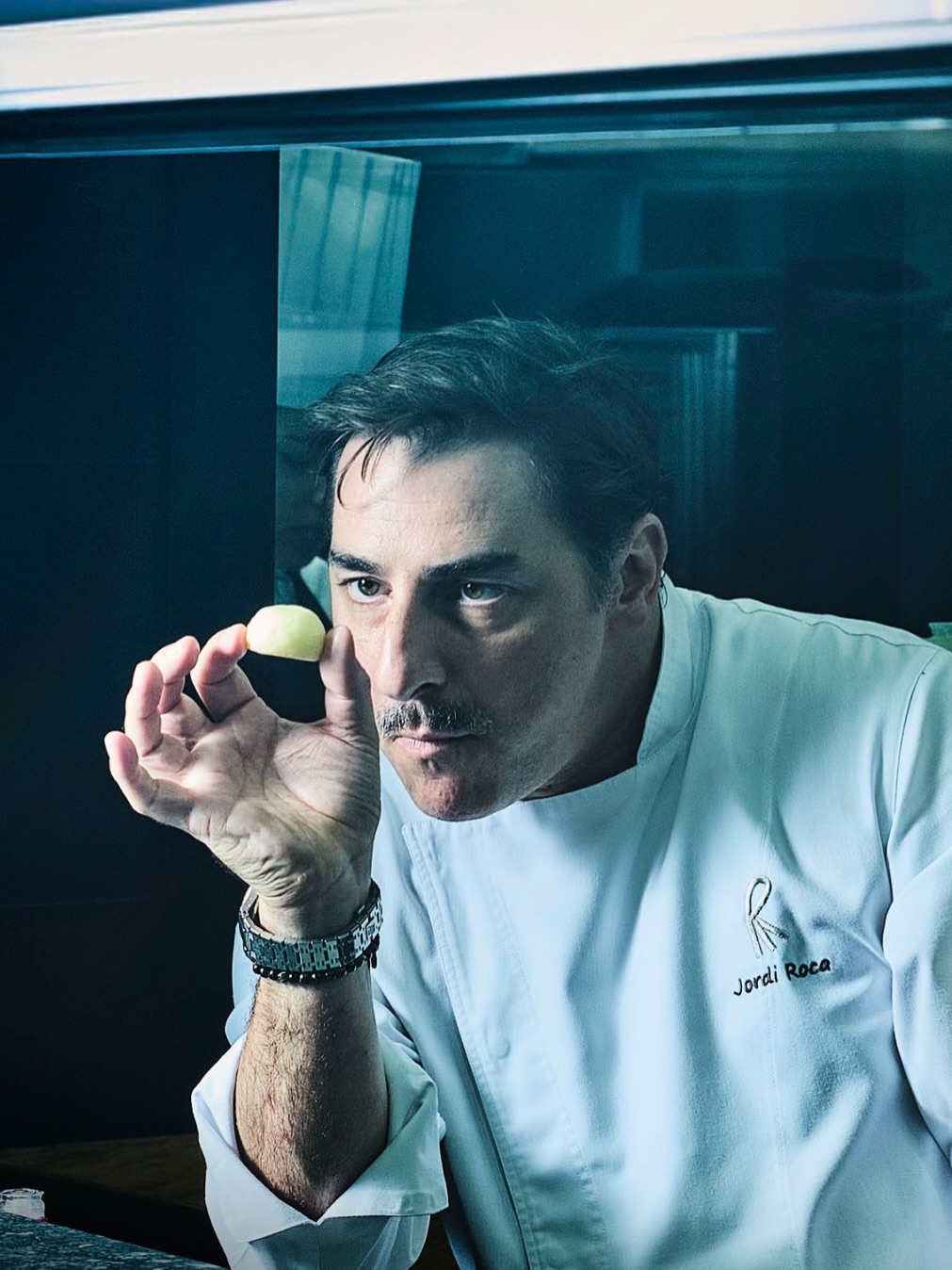
“You won’t find any savory desserts here—it wouldn’t make sense. Desserts are sweet by definition, and they need to contain sugar, as long as it’s not cloying. Ultimately, salt is out of the question, just like coffee, sugar, and alcohol. Of course, when you come to enjoy an evening at El Celler, you can’t constantly worry about what’s right or wrong. You’d end up completely stressed out, wouldn’t you?” In short, when you sit down at El Celler, the only rule is to let go, without worrying about what’s “right or wrong.” Especially because, between an edible Messi goal and a playful provocation, food must remain a shared joy.
Creative evolution: from scents to pure chocolate
Jordi’s career is a journey through conceptual seasons, similar to Picasso’s artistic periods. There was the era of scents, born from his visceral love for bergamot, in which he recreated famous fragrances (such as Calvin Klein’s Eternity) on the plate. Then, the process reversed: “The perfume phase lasted 6–7 years, and in the end, having to repeat the concept of smelling a perfume and reproducing it on the palate using non-scented ingredients to make a dessert eventually wore me out... So I did the opposite: I played at being a perfumer. And that really stimulated me creatively.”
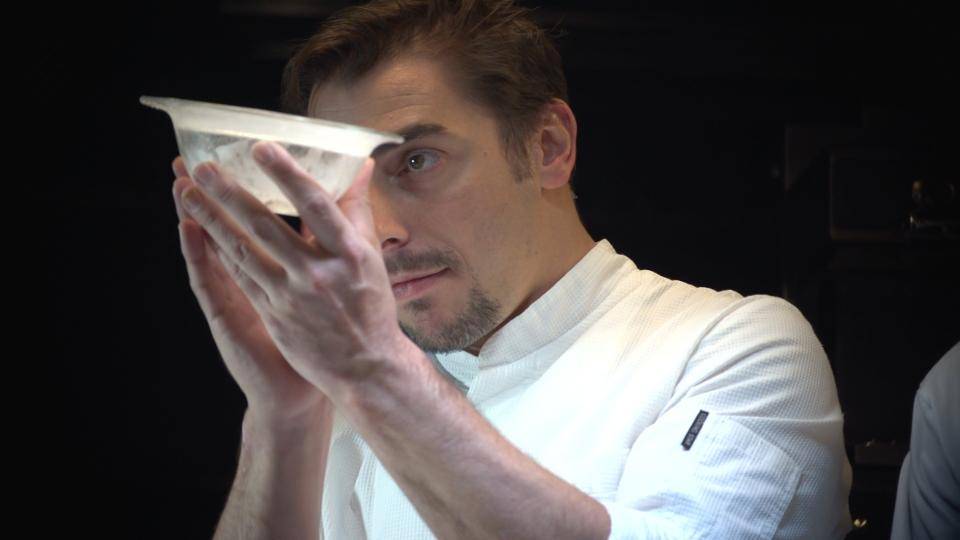
That experiment gave rise to Nuvola di Limone, his liquid fragrance. After the scents came the colors (the “Green” dish, the milky white), the provocation of smoke (the famous Partagás cigar smoke ice cream), and pure Anarchy—a dish created to demonstrate that, sometimes, the absence of meaning is the meaning itself. Today, Jordi has entered a new phase: that of native chocolate, an almost anthropological quest aimed at letting the raw material, the plantation, and the roasting speak for themselves, unfiltered.
The strength of the clan
The ultimate secret to the success of the youngest of the Roca brothers lies precisely in their blood ties. Jordi admits he started in the dining room and kitchen almost by chance, “to have a more active social life,” and that he was struck by inspiration on the path to dessert thanks to his mentor Damian Allsop. But his true compass remains Joan and Pitu. Everything that has emerged at Can Roca is the result of constant dialogue, a perfect alchemy between Joan’s analytical wisdom, Pitu’s poetic eccentricity, and Jordi’s rebellious madness. A team effort that transforms a seemingly absurd idea into pure gastronomic avant-garde. And for the future? The idea of exporting the magic of RRRocambolesc to Madrid, Paris, or New York is there, but we’ll take it slow. First, we need to convince the older brothers, one step at a time, while always keeping intact that playful spirit that made Jordi Roca the enfant terrible of the global dessert scene.