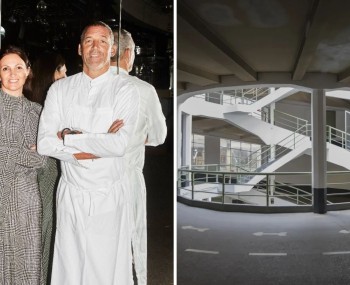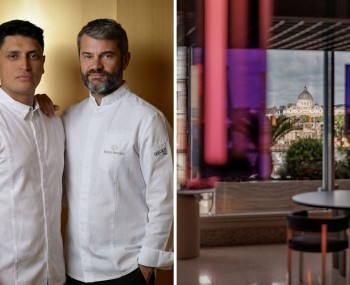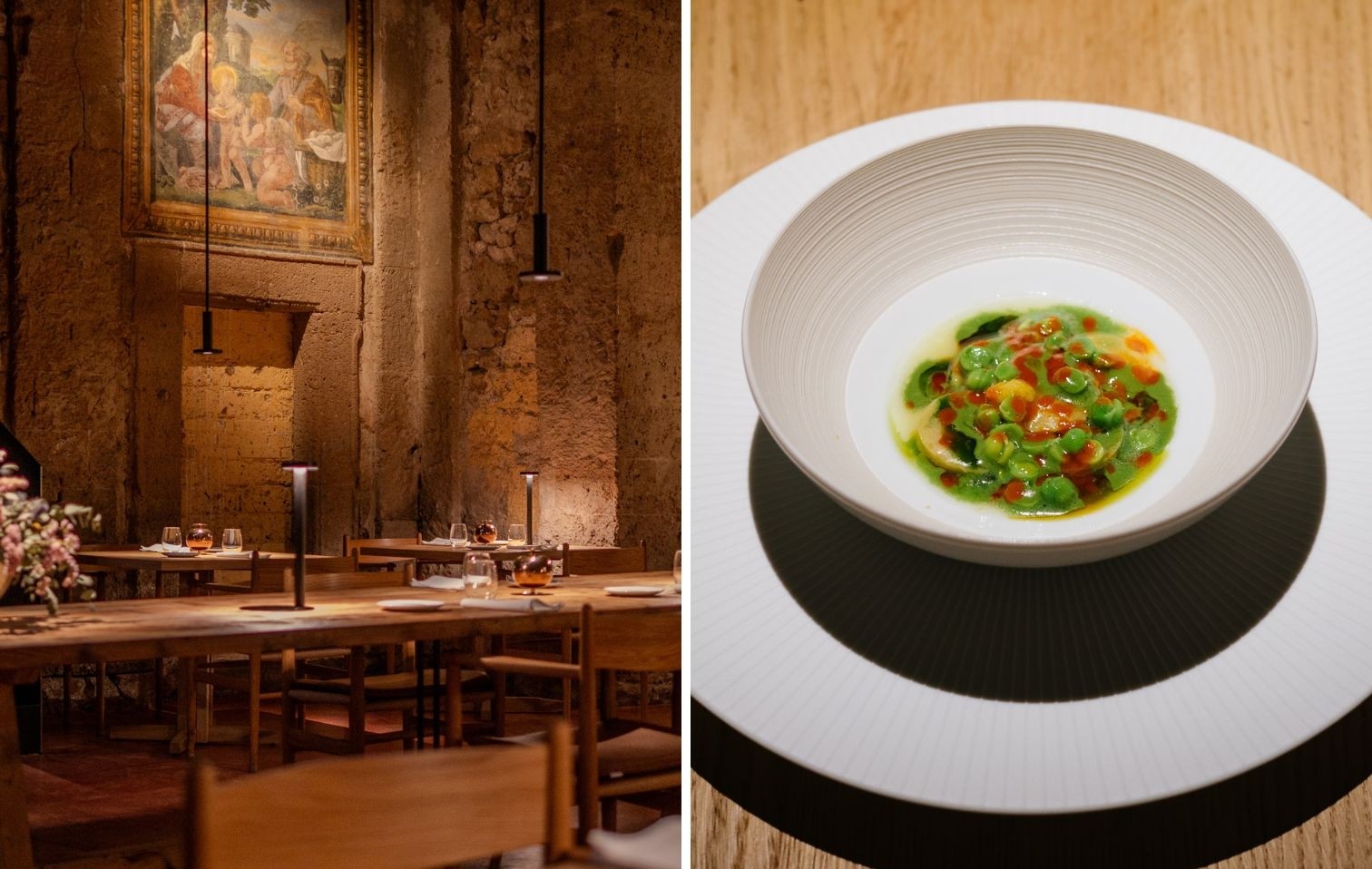
In the former 15th-century church of San Giuseppe, chefs Ronald Bukri and Francesco Perali offer an experience that combines sacred architecture, contemporary cuisine, and Umbrian identity. A unique place, selected by the Prix Versailles as one of the 16 most fascinating restaurants in the world.
Photo credits: Lorenzo Noccioli
“The church of Combray was a building that occupied, so to speak, a four-dimensional space, the fourth dimension being that of time... which seemed to conquer and surpass not only a few meters, but successive eras from which it emerged victorious.” With these luminous words, Marcel Proust describes the place of worship in Illiers-Combray, the holiday town of his childhood.
An image that also perfectly suits the former 15th-century church of San Giuseppe in Orvieto, now home to the restaurant Coro: a building that, just like Proust's, has crossed the centuries with its grace intact, emerging victorious from the challenge of time.
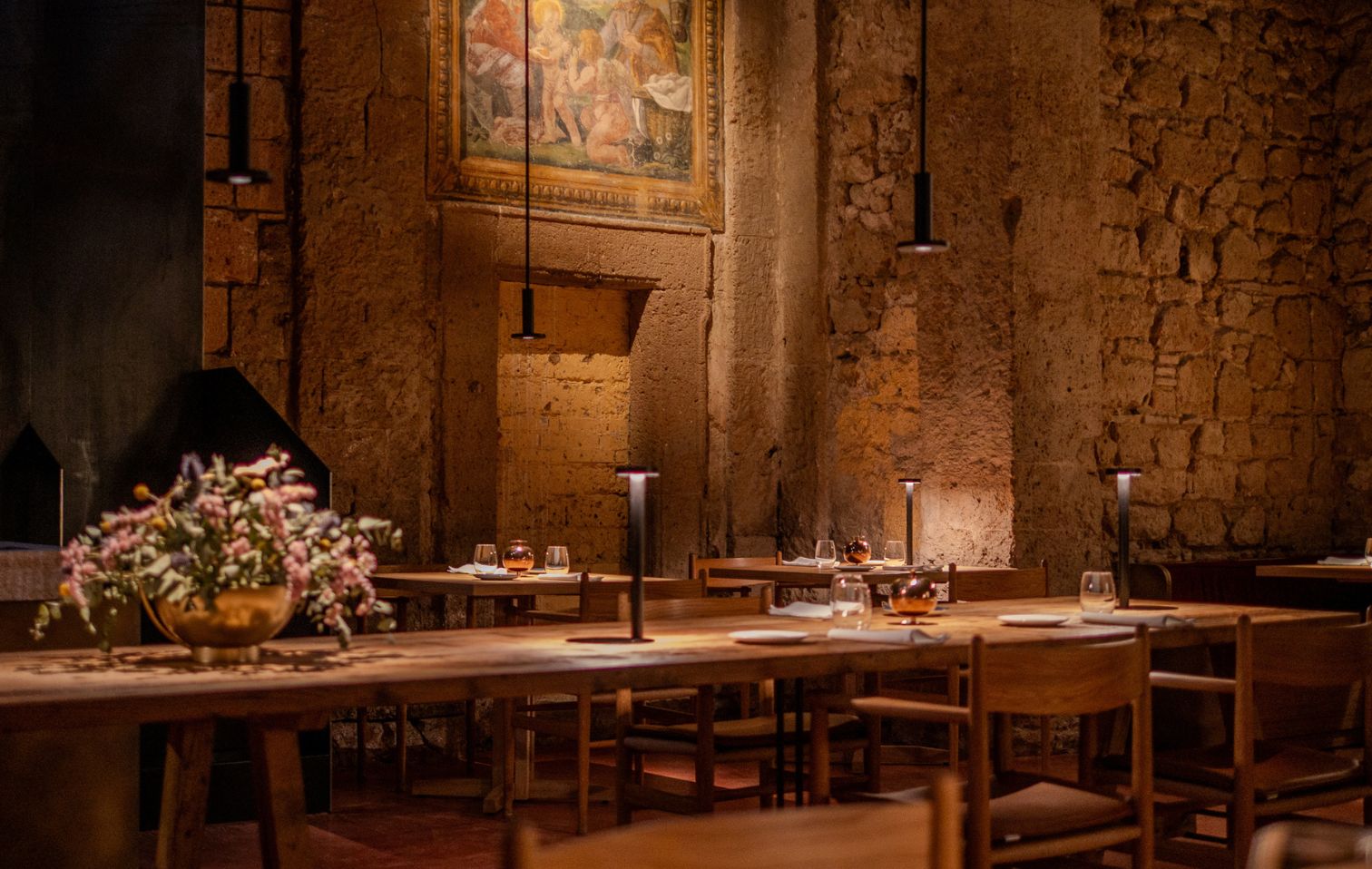
A five-minute walk from the masterpiece that is the cathedral of this small Umbrian village, Coro is an austere, imposing, and magnetic space which, after centuries devoted to contemplation, now hosts a different but no less sacred ritual: that of conviviality. The architect behind the transformation is Giuliano Andrea Dell'Uva, who worked with a respectful touch, restoring vitality to a place shrouded in a timeless dimension. He recomposed the verticality of the space, which reaches a height of nine meters, creating a dialogue between tuff walls, cross vaults, traces of the ancient altar, and elements of contemporary art and minimalist furnishings, in a crossroads of refined aesthetics that coexist in a secular sacredness.
The restaurant
The restaurant is located inside Palazzo Petrvs, a boutique hotel with nine suites of refined simplicity, born from the vision of Raffaele Tysserand, an entrepreneur determined to restore the city's centrality, who entrusted chef Ronald Bukri and maître d' Francesco Perali with the management of the restaurant.
At first glance, it is not surprising that this place was selected as one of the sixteen most fascinating restaurants in the world by the Prix Versailles 2025, an international award sponsored by UNESCO and the United Nations, which rewards architectural projects that combine identity, sustainability, and urban aesthetics. It is the only Italian establishment on the list and stands as a rare testament to how a place can be regenerated by becoming an integral part of the gastronomic experience, rather than simply
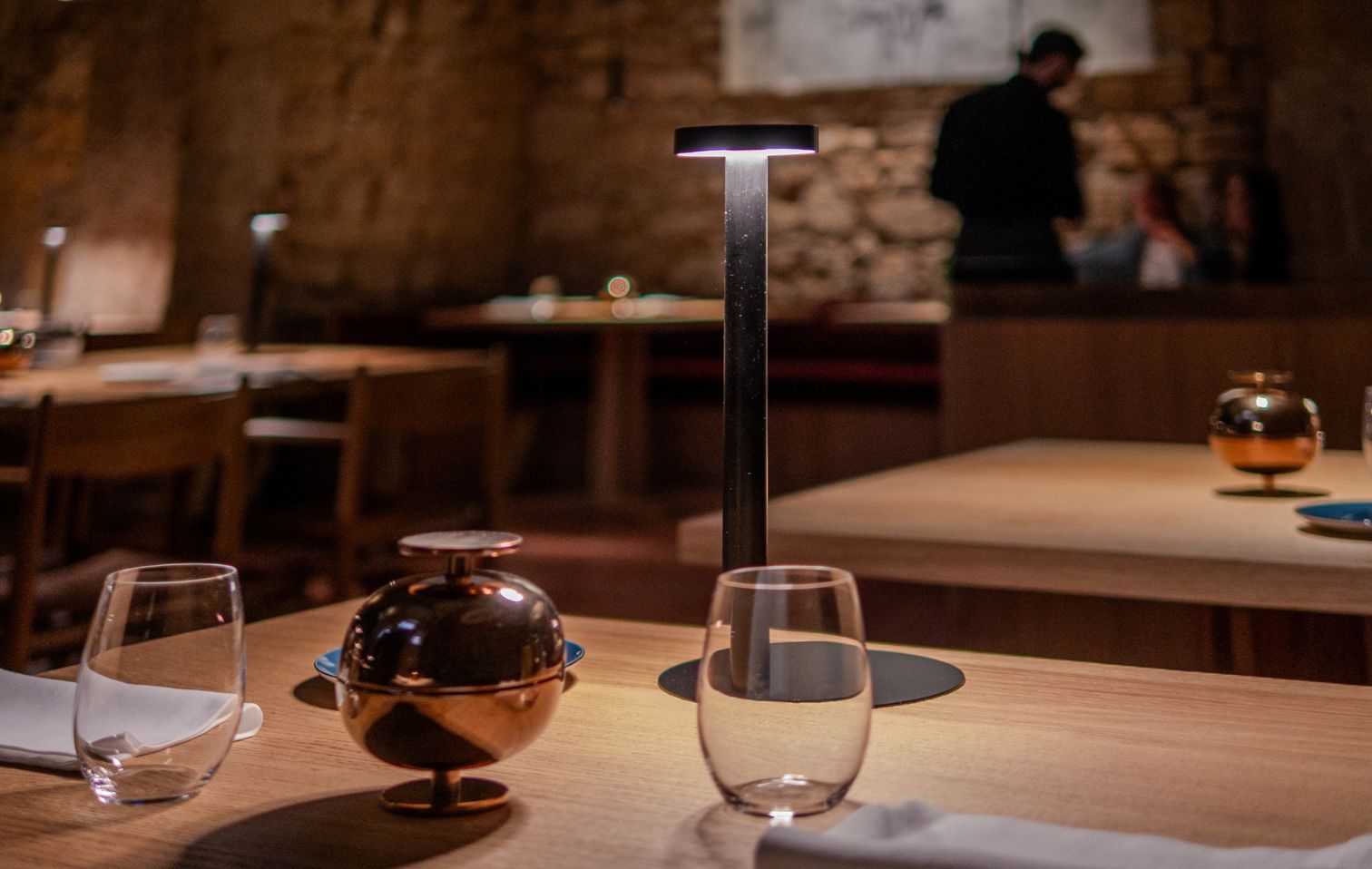
The name comes from the fusion of the last and first syllables of FrancesCO and ROnald, and also recalls the ancient ecclesiastical choir at the entrance, embracing a principle of harmony that animates the entire project. There are about thirty seats, including a raised room with a dozen seats, accessible via a staircase reminiscent of an ancient pulpit; in the center, a large convivial table, symbolizing the sociality that the kitchen wants to rediscover.
The team
If the setting excites, it is the table that completes the promise. Chef Bukri—born in Durres in 1987 and raised in Empoli—brings with him a career that has matured in some of the most important haute cuisine establishments: Arnolfo in Colle Val d'Elsa, Sketch in London, Guillaume at Bennelong in Sydney, as well as stints with Paolo Lopriore, Igles Corelli at Atman, and Terry Giacomello at Inkiostro in Parma. In 2017-18, he headed the kitchen at Osticcio in Montalcino, where he reunited with Francesco Perali, whom he had met previously, and in 2024, the two opened their own restaurant in Orvieto. His cuisine combines technical precision, refined comfort, and a sense of proportion that does not indulge in virtuosity for its own sake, but seeks the all-round pleasure of those who sit in the dining room.
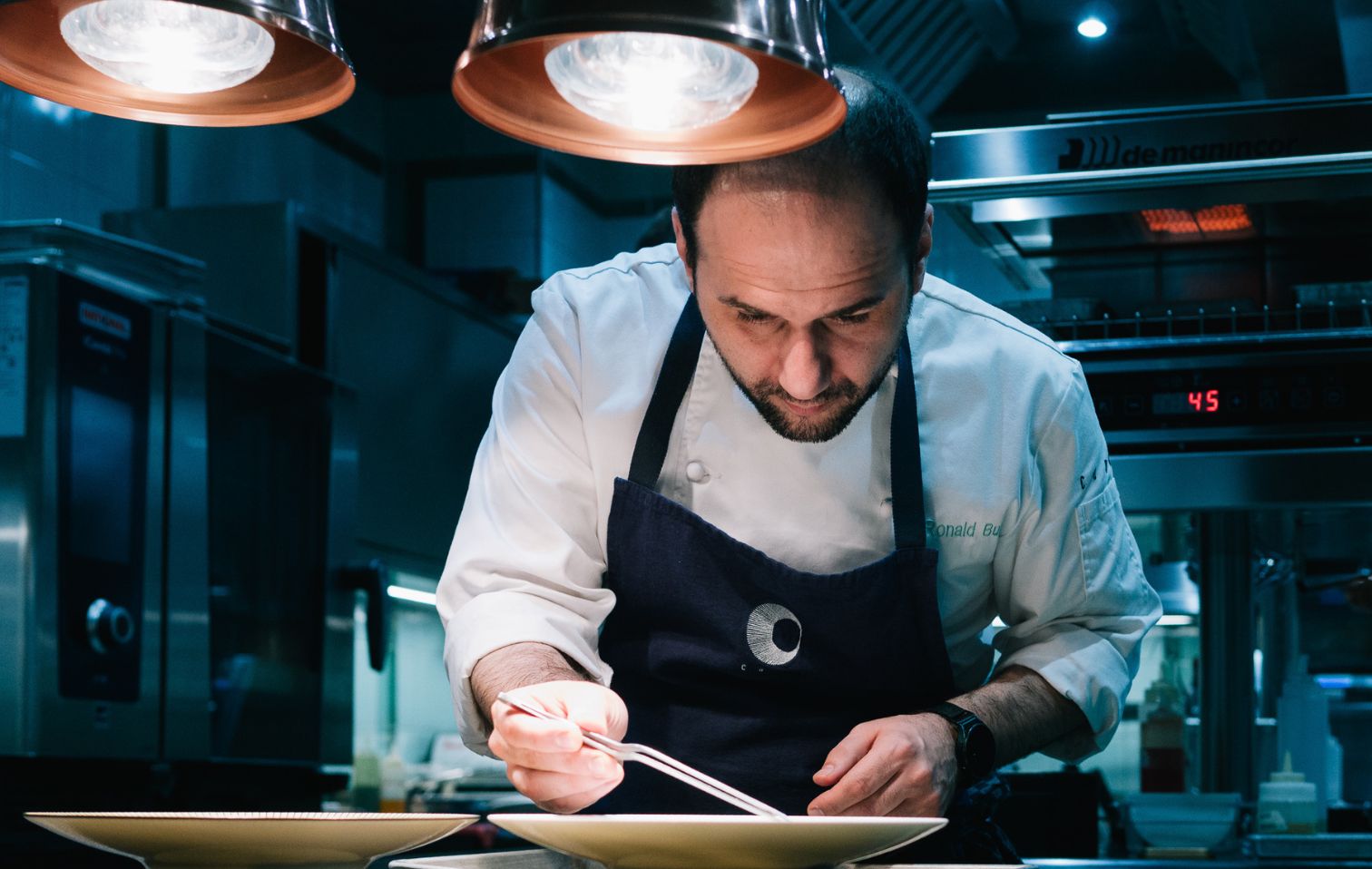
Where Francesco, classically trained, with a degree in economics and consolidated experience in Umbria and Tuscany, directs the service with a relaxed rhythm and modern naturalness. This is also evident in the uniforms worn by the waiters, which are contemporary casual-chic, symbolizing a relaxed luxury. Valentina De Angelis, sommelier, has created a wine list focused on Orvieto winemakers and distinctive products, immediately conveying a direct connection with this land and her solid training, which began with university studies and became a vocation.
Coro is a place where the distinction between form and function is overcome because the environment becomes an integral part of the experience and not simply a container for a gastronomic offering.
The dining room
The dining room has a total of about thirty seats. On one side, there is a staircase leading to a platform, which is not a pulpit for sermons, but a private room for a dozen people who want more privacy.
Starting your dinner with a drink at the Gocce bar, adjacent to the hotel lobby, is definitely a good idea. Francesco Cocco, the bar manager, has created a cocktail menu that satisfies with simplicity, such as the Gold Rush, where Orvietan, a local bitter liqueur made with twenty-five herbs, jasmine tea gin, and chamomile syrup come together to release an aroma that captivates the palate.
The dishes
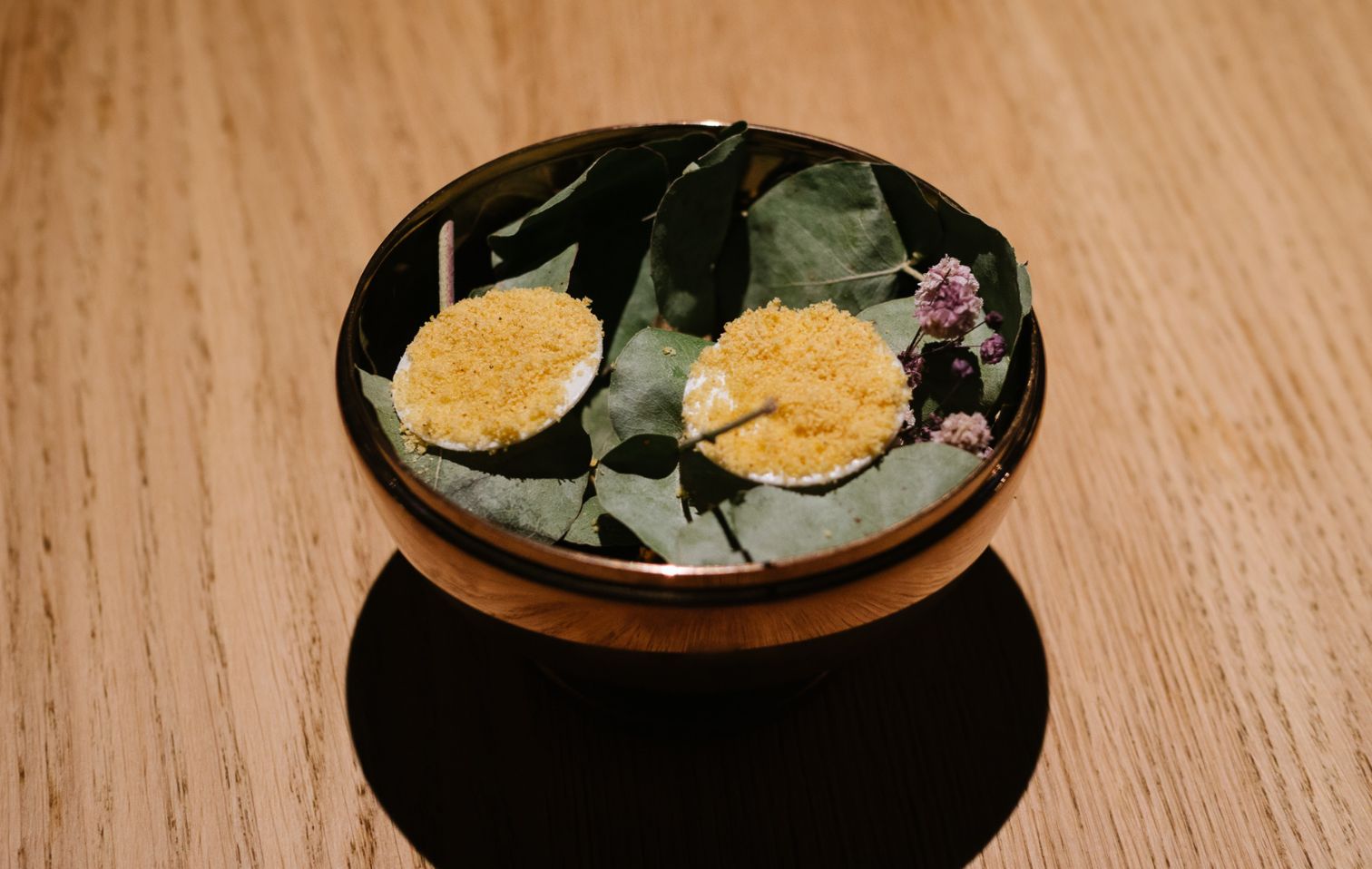
In addition to flowers, there is an object on the table that unmistakably resembles a pyx and in fact contains two wafers, with corn flour and a mix of spices, not a sacrilegious echo, but a benevolent allusion to the liturgy that has characterized this place over the centuries. Above all, it is a fitting introduction to the multifaceted welcome that comes with bread made from local semi-wholemeal flour, mixed seed crackers, burrolio (oil emulsified with beeswax) and powders made from recycled plant parts.
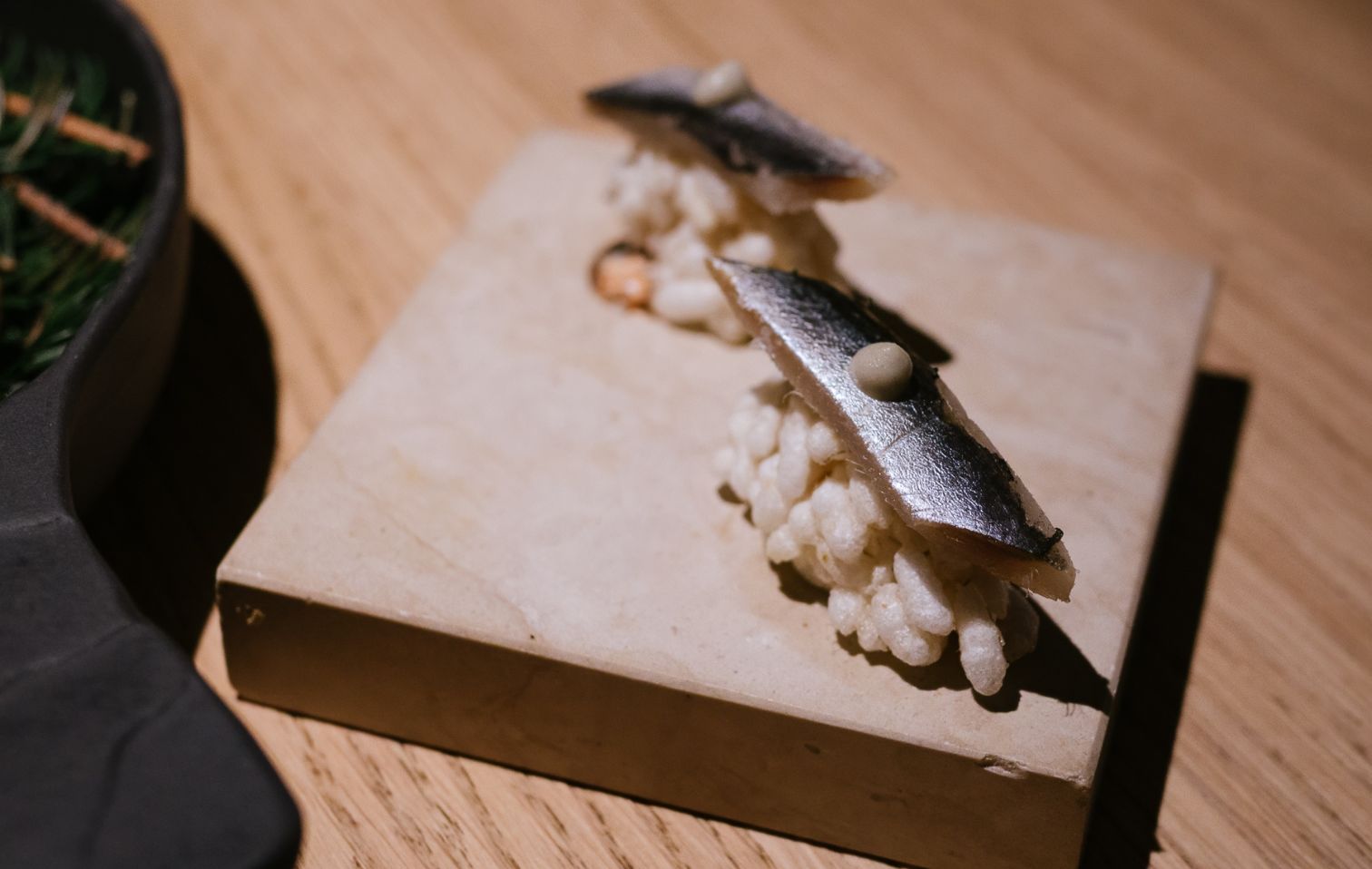
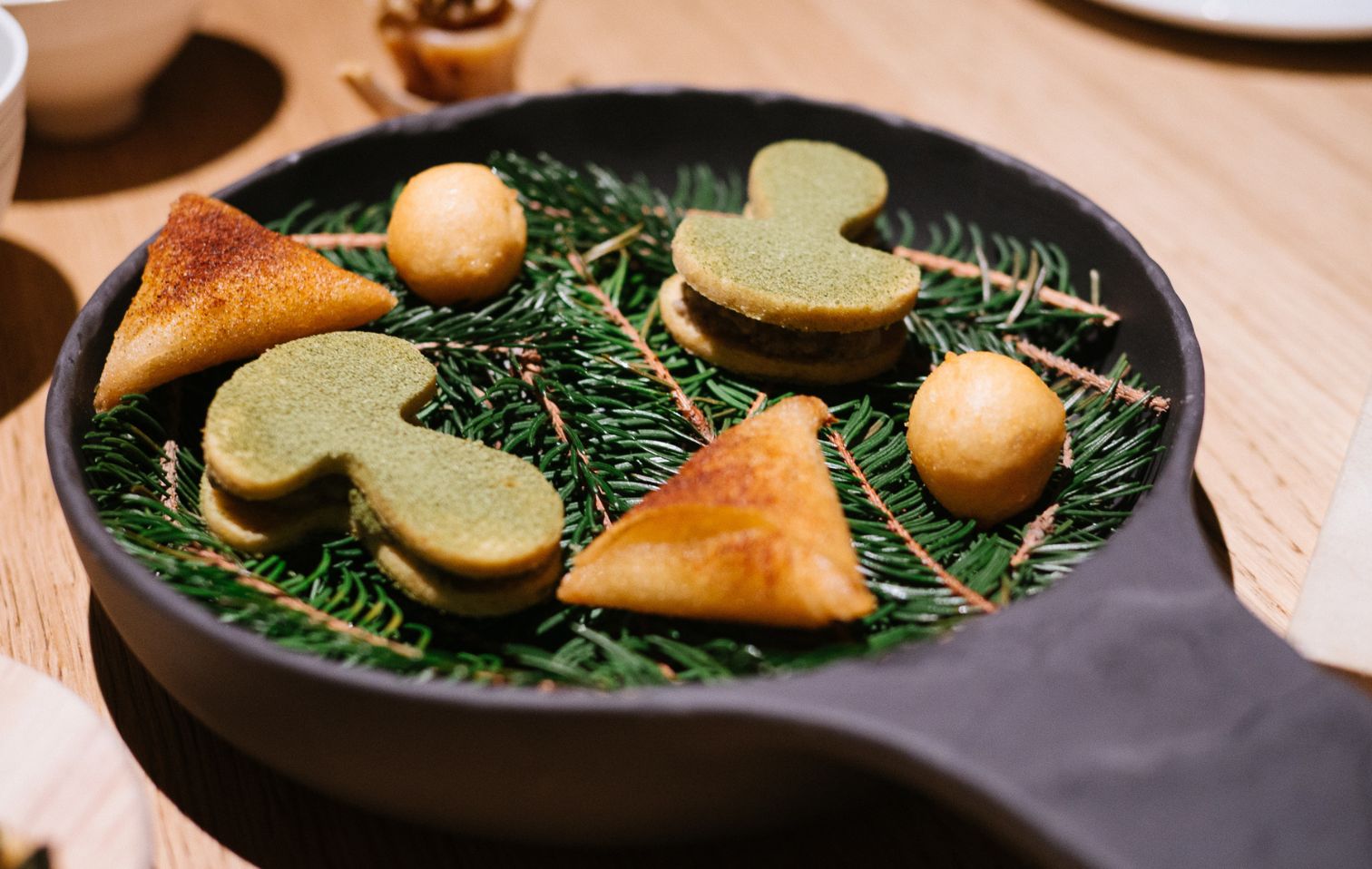
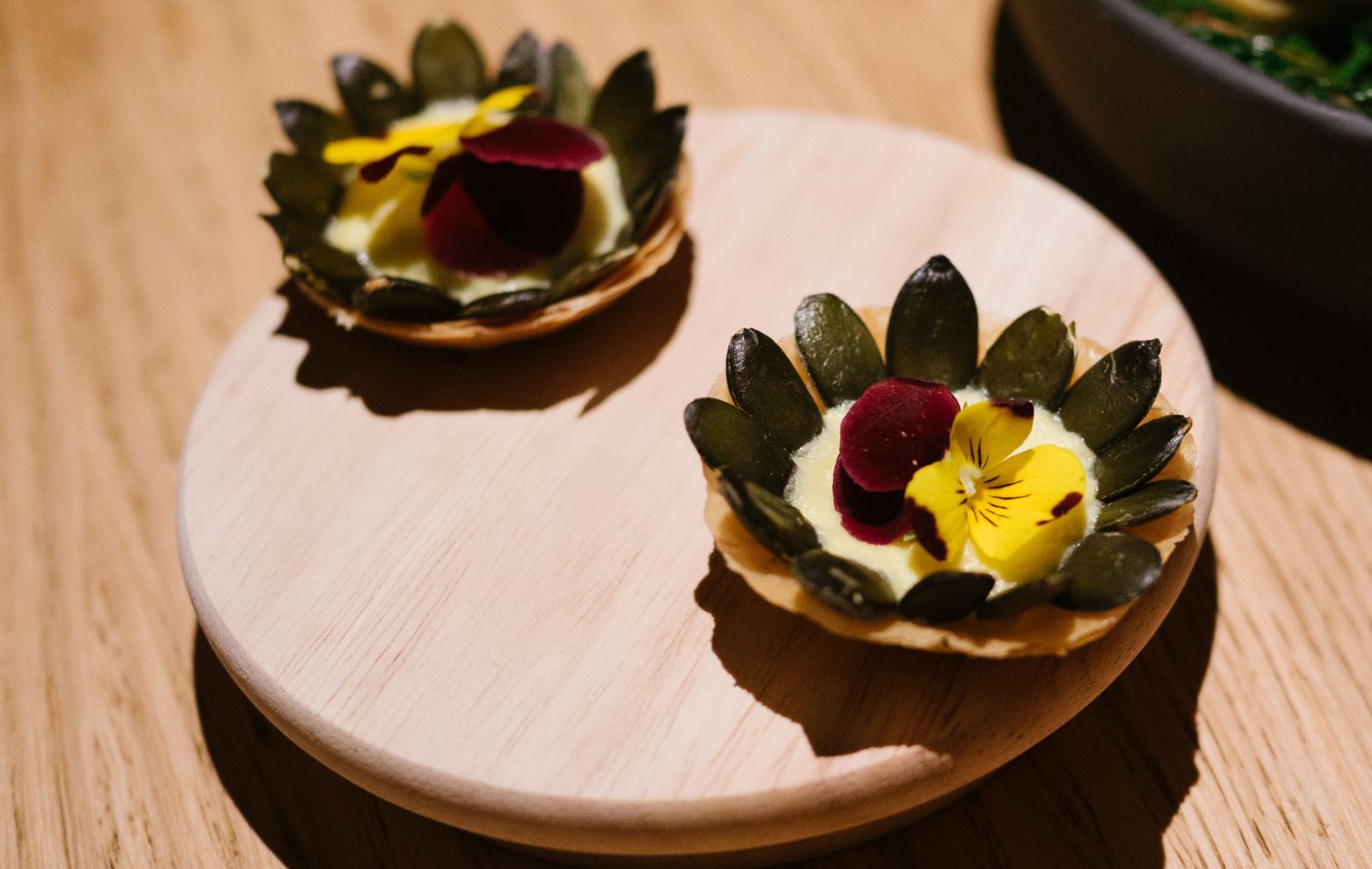
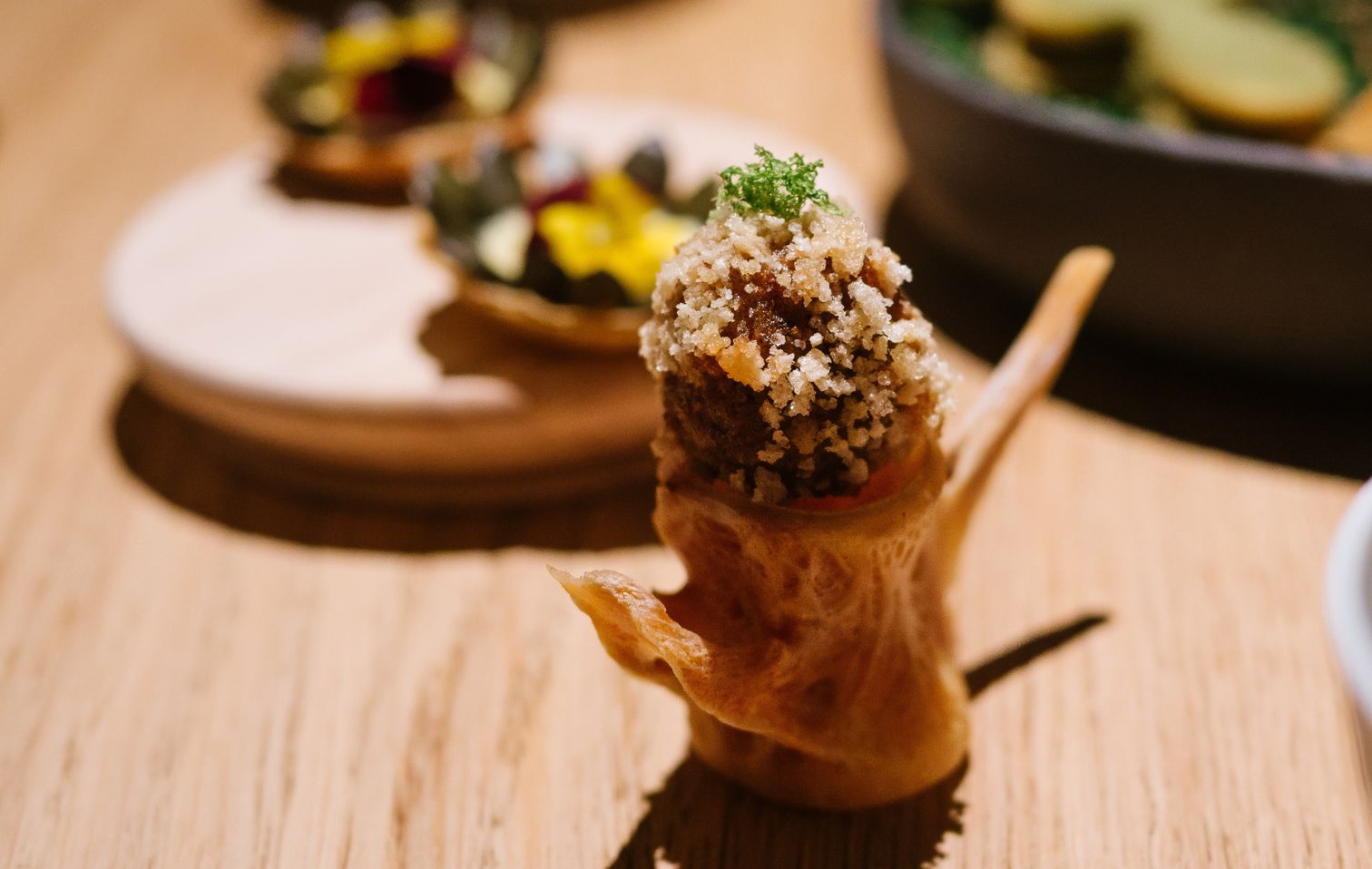
A selection of snacks that tickles all the taste buds, with the acidity of lime in the amberjack meatballs, the earthiness of the beetroot gazpacho, pink pepper oil; the fake sushi with puffed rice, marinated anchovies, green curry sauce; or the mushroom brisée, cream and mushroom powder, lettuce. The sweetness of the mini sunflower made from corn foam and pumpkin seeds; the umami of the 36-month Parmigiano pralines and pepper chutney, like the samosas stuffed with potatoes and red curry powder; to arrive at the bitter taste of the artichoke cream and crispy Jerusalem artichoke.
The glass is filled with Barberani's Orvieto Classico Superiore 2018, a Trebbiano and Grechetto blend with an intensity and persistence imparted by Botrytis, the noble rot that develops on a selection of grapes left on the vine.
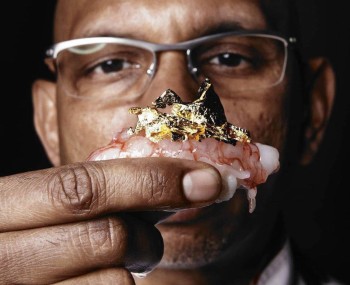
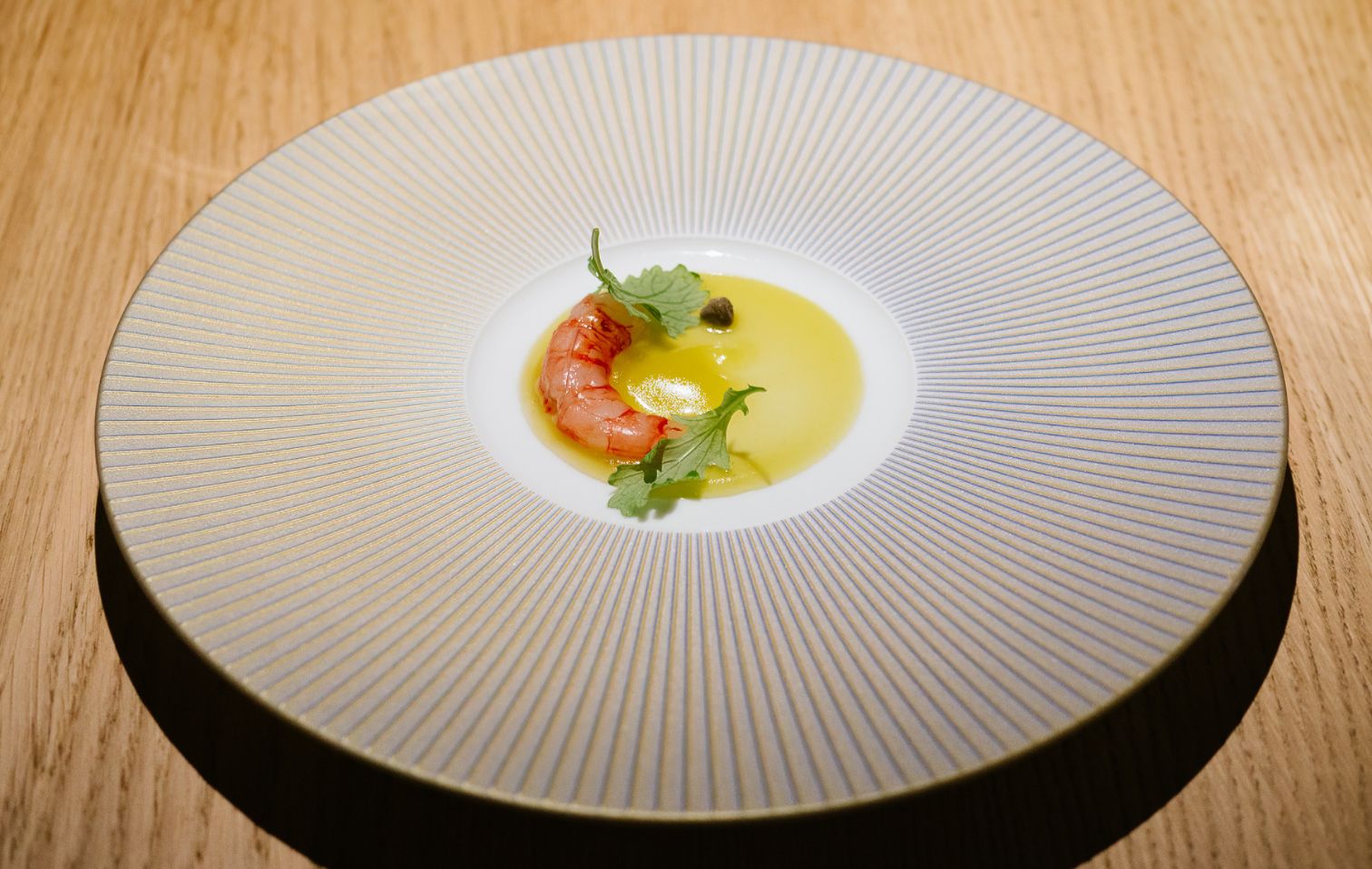
It is an emulsion of honey, oil, and lime to simulate mayonnaise, where honey replaces eggs to provide creaminess, in which to dip the red shrimp from Porto Santo Spirito, with capers from Pantelleria and shallots.
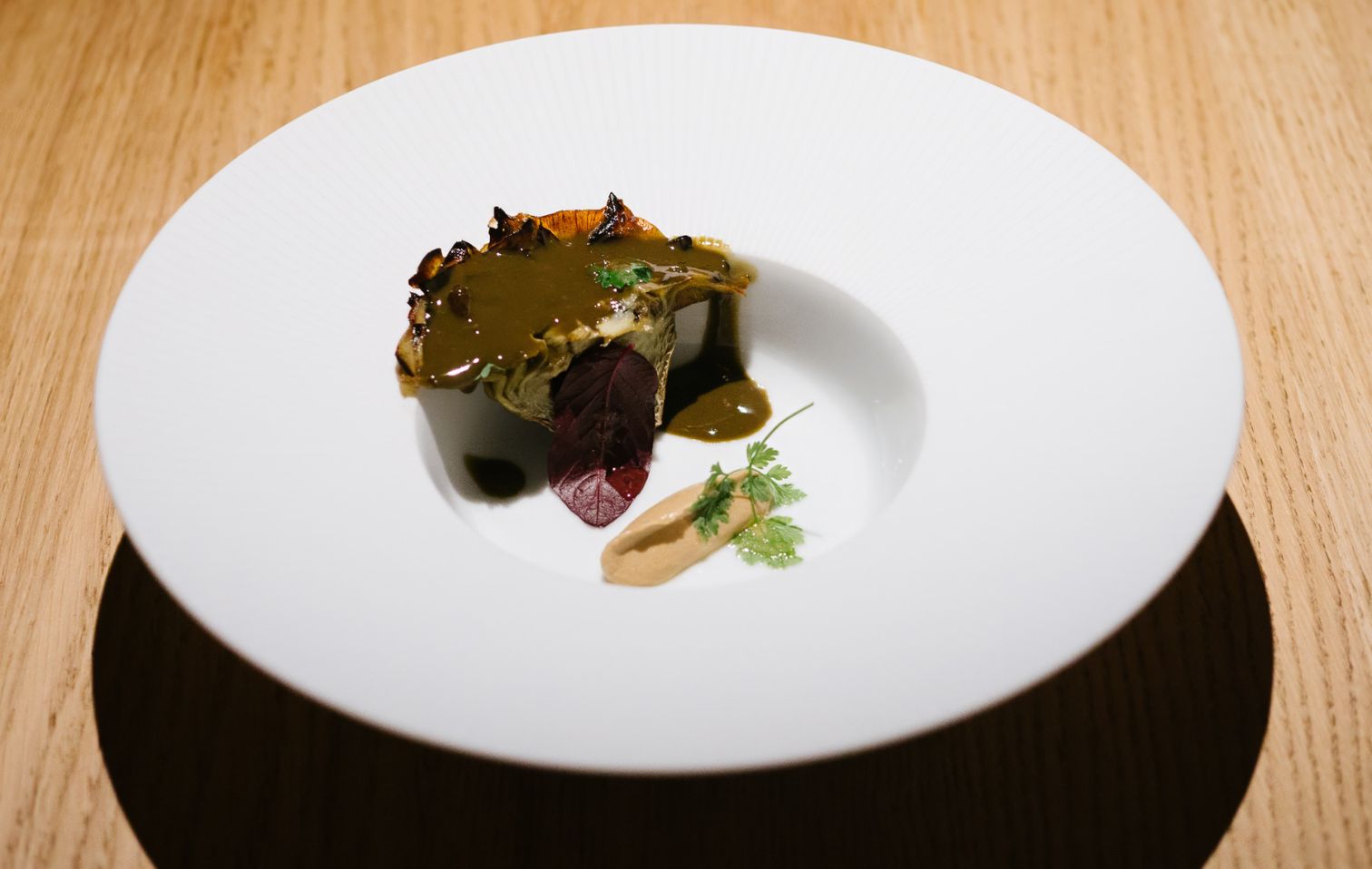
The most beloved bitter flavor in the plant kingdom, that of the artichoke, here cooked in oil and then grilled, is softened by the nutty note of sunflower seed hummus, with aniseed raisins to prolong its aroma, and a bitter extract of artichoke leaves to determine the flavor that should dominate.
A French alpine butter coats the Gerardo Di Nola spaghetti, with the 36-month Parmigiano cheese emphasizing the richness and comfort, to which the smoked paprika adds the finishing touch, and the unexpected, tart note of lemon.
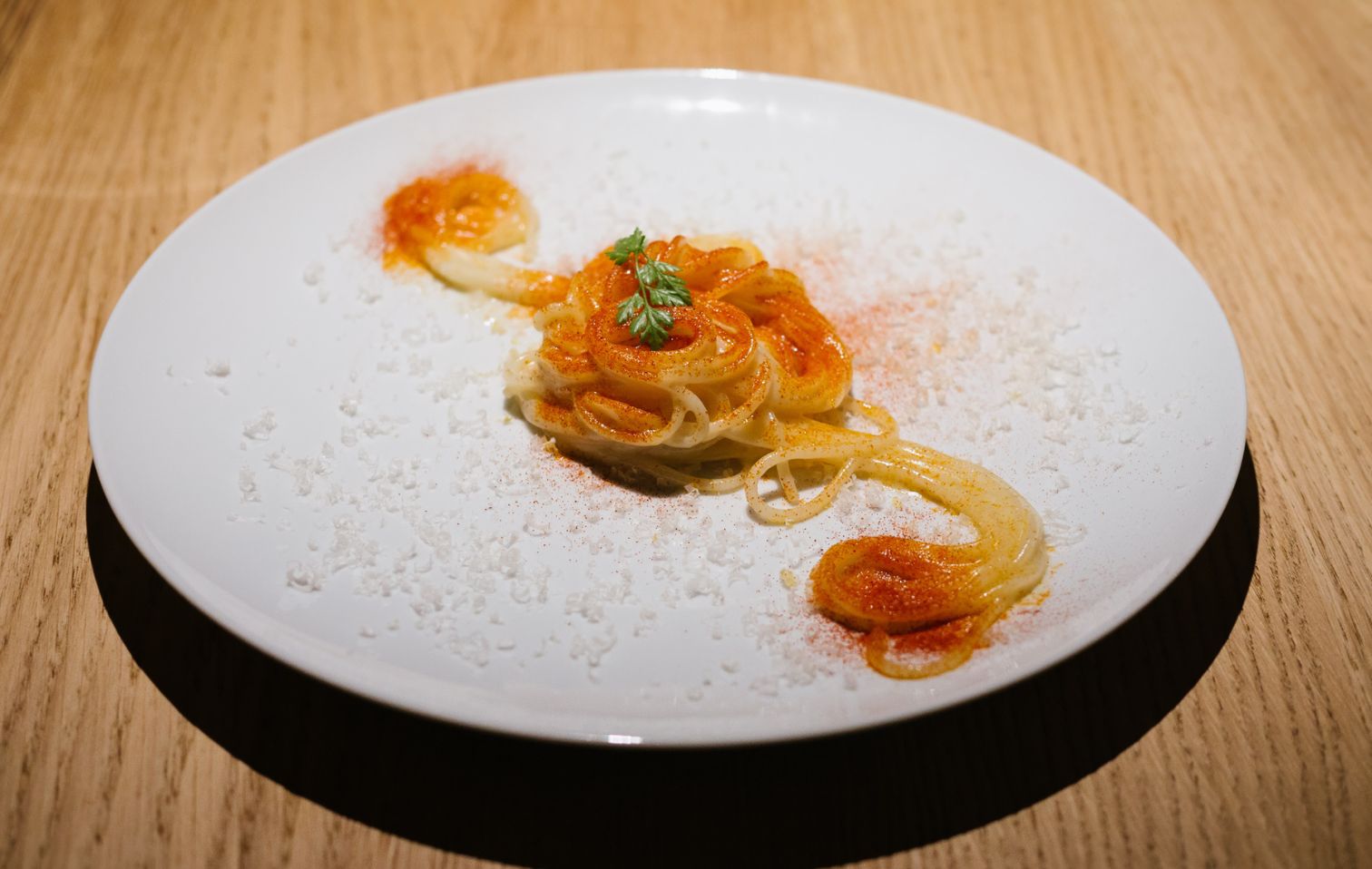
Valentina entrusts the liquid side to Spifferi Danielli 2022, an orange wine made from Trebbiano and Grechetto grapes with a portion of Moscato macerated on the skins for three months.
Surprising for the balance of all the nuances, the bottoni stuffed with chicken giblets, umami tout court enclosed in puff pastry, blend with the freshness of a bergamot cream and the light smoky breeze of butter-sautéed and smoked peas. With a few drops of bitter herb extract.
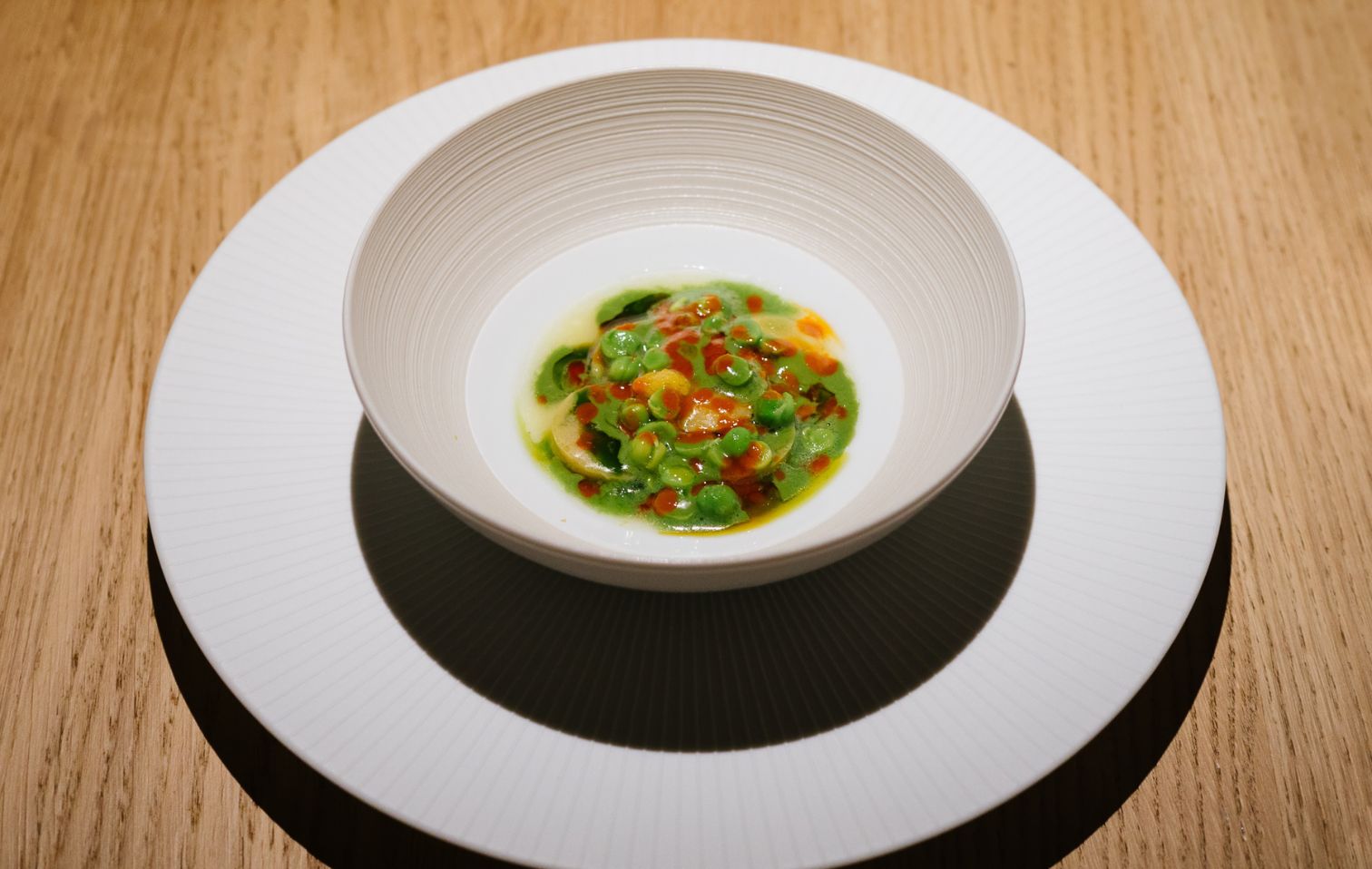
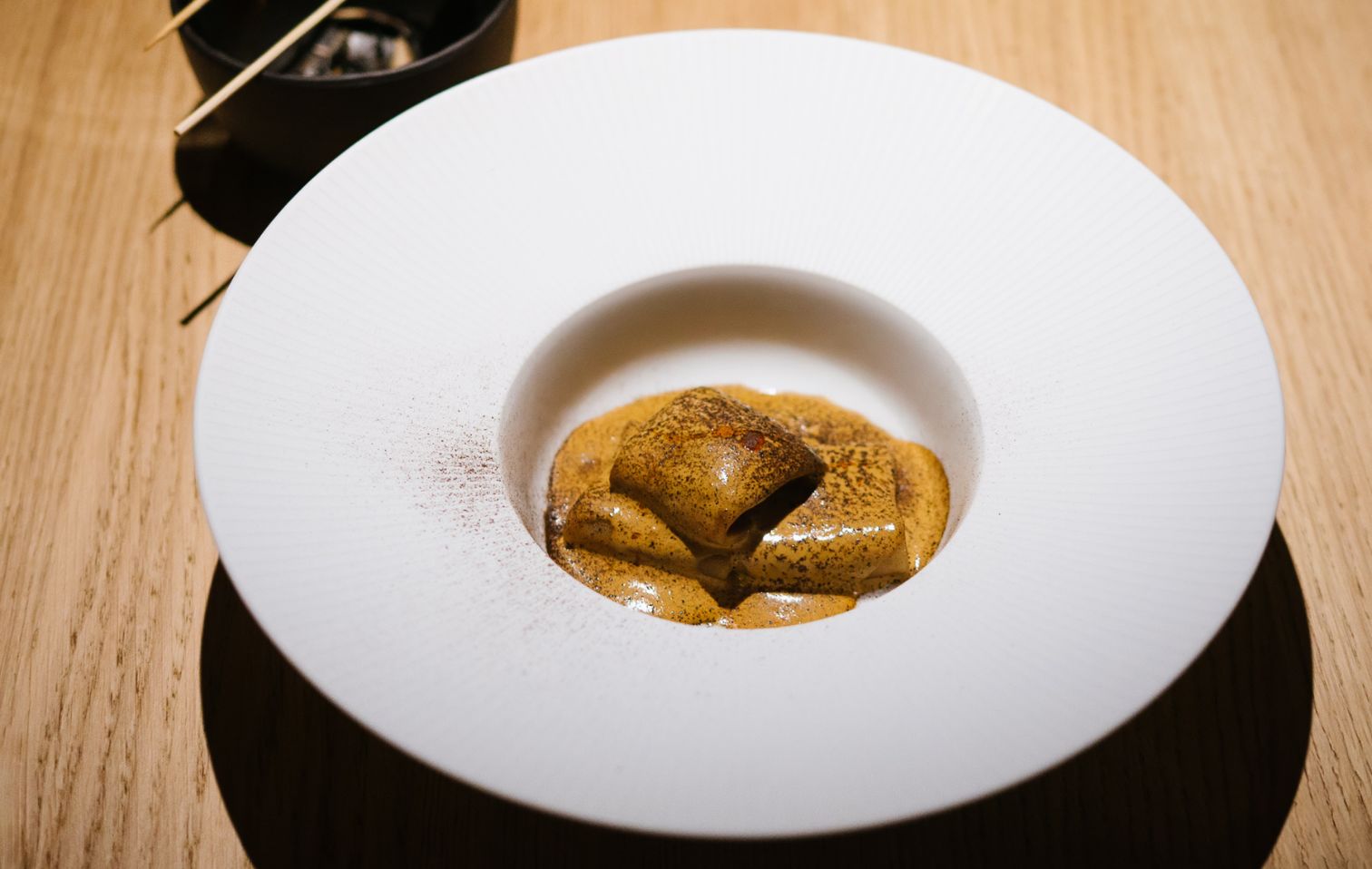
Gerardo Di Nola also provides the paccheri pasta, wrapped in a sauce made from creamy, sweet Onano lentils and fermented black lemon powder. This complements the sweet, salty flavor of the sauce made from grilled mussels, almost like a zabaglione. Served on the side is a mini skewer of grilled mussels, smoked with olive leaves.
The marinated capocollo cooked on the grill confirms that chef Bukri deliberately avoids cooking juices, replacing them with sauces. In this case, lacto-fermented carrot, which lightens and refreshes the dish. It is accompanied by bitter herbs, grated pecorino cheese, and a koji carrot.
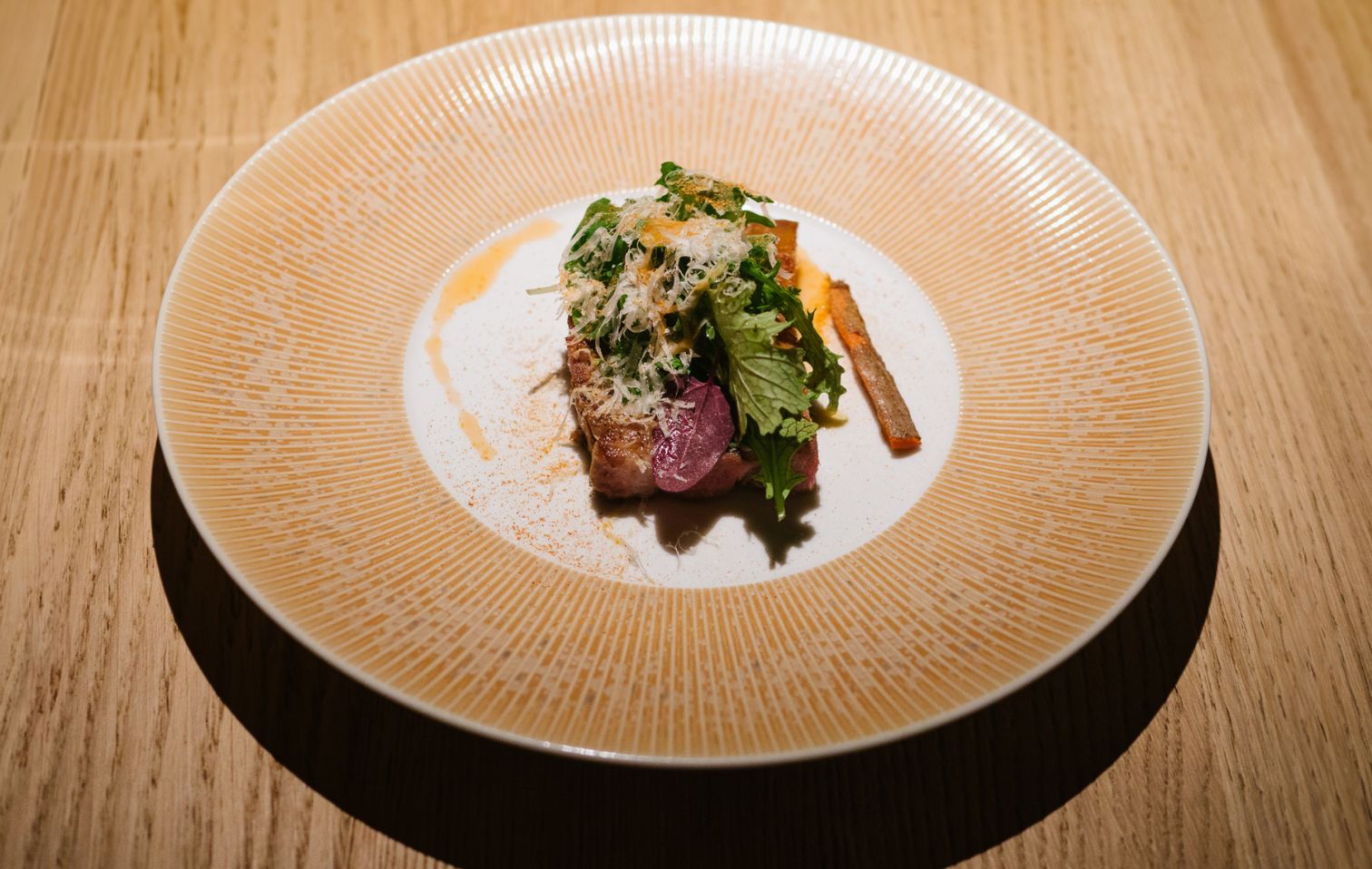
The bold purple color of Il Rosso 2021 from Decugnano Dei Barbi - Syrah, Cabernet Sauvignon, Montepulciano - takes over the glass and perfectly complements the meat dish.
A hint of bitterness is also expected in the prologue to the sweet part of the menu, with a sprinkle of neroli on the citrus soup, grapefruit sorbet, and a meringue to enliven the bite.
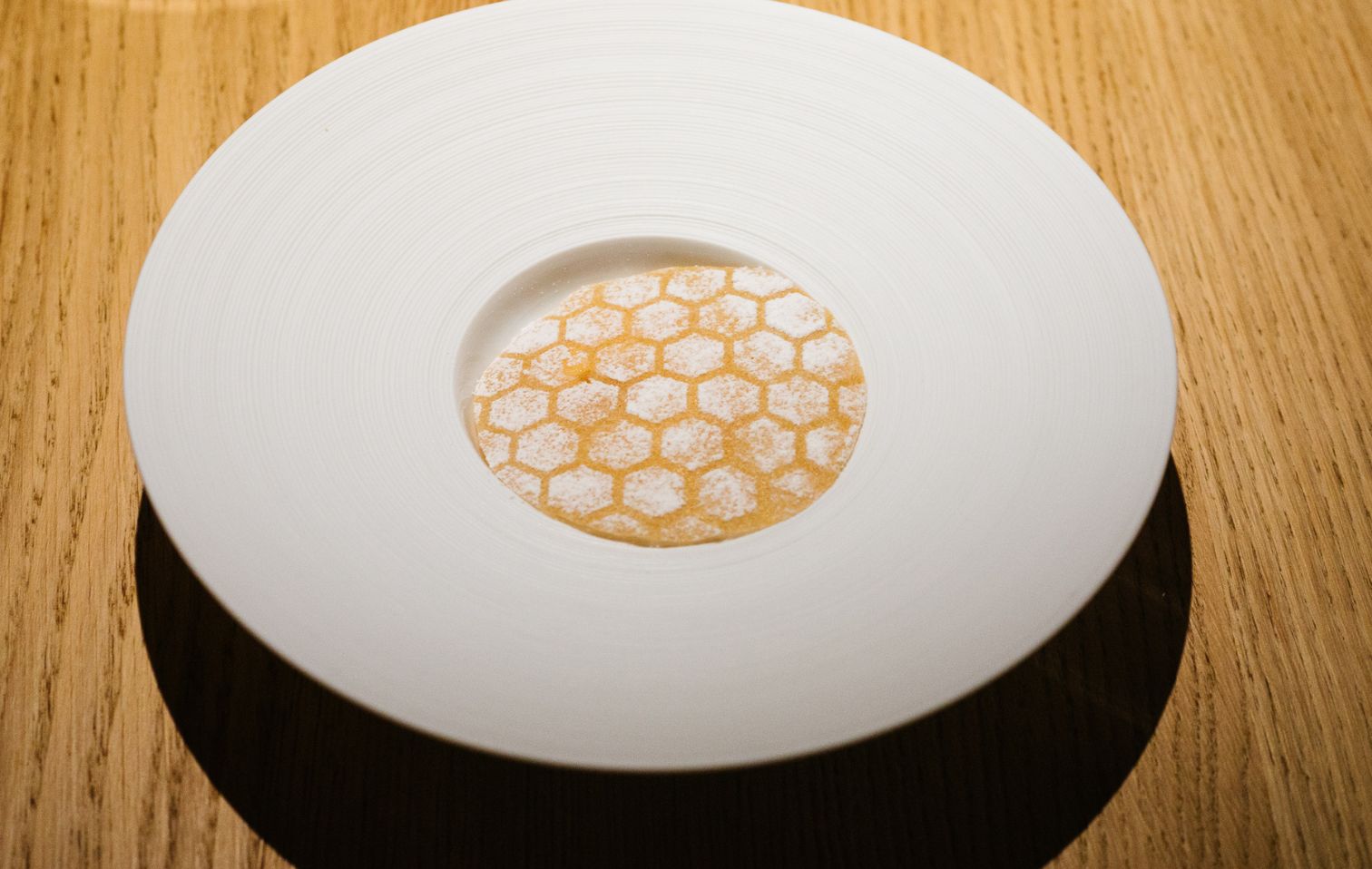
An apology for beekeeping is the crème anglaise with local honey, extremely light, with fresh pollen, finger lime, and a wafer topping decorated with honeycomb hexagons.
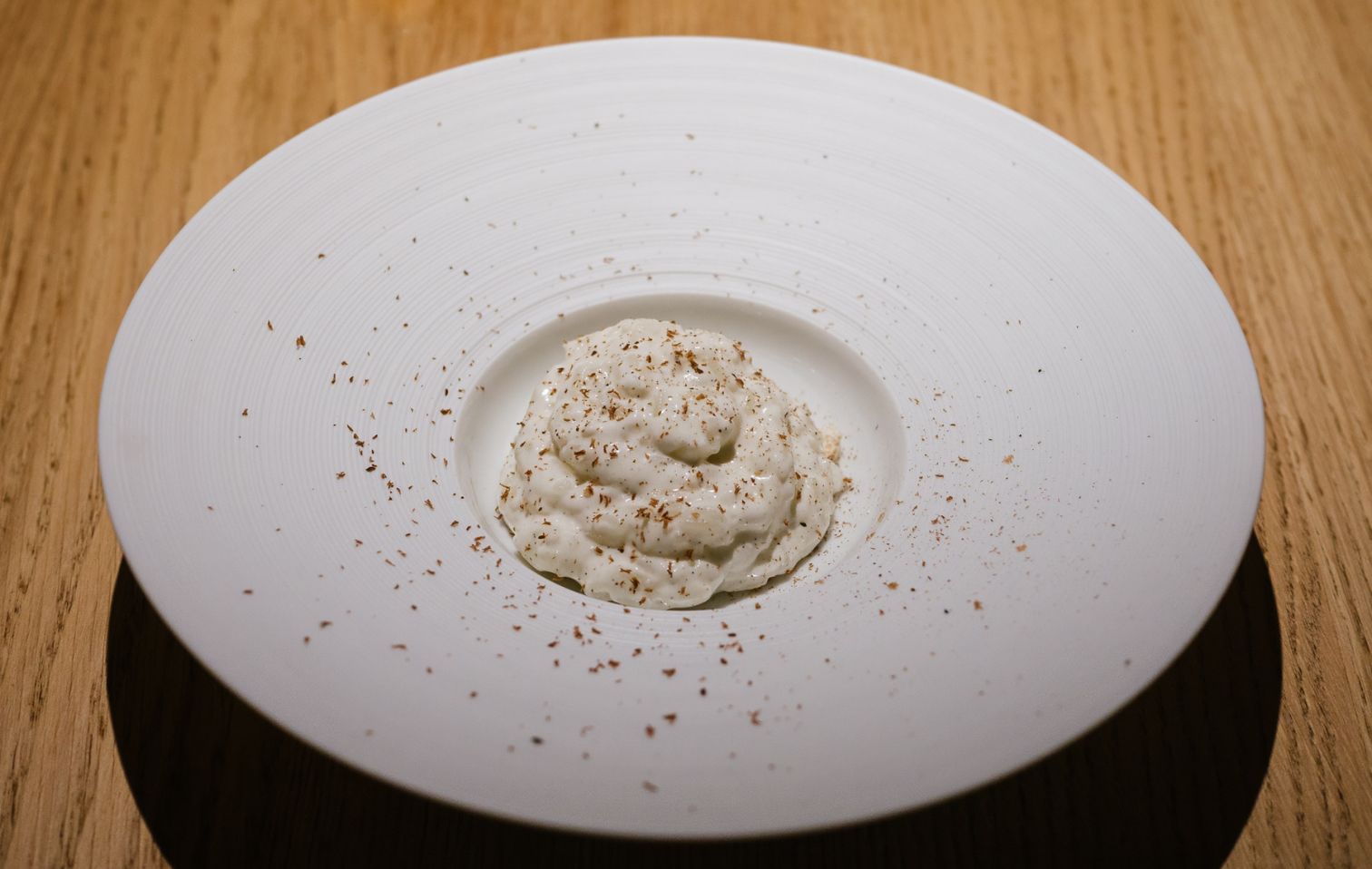
Risolatte immediately brings to mind the most familiar tradition of desserts, which Ronald modernizes by hiding a coffee kombucha granita inside and covering it with grated tonka bean.
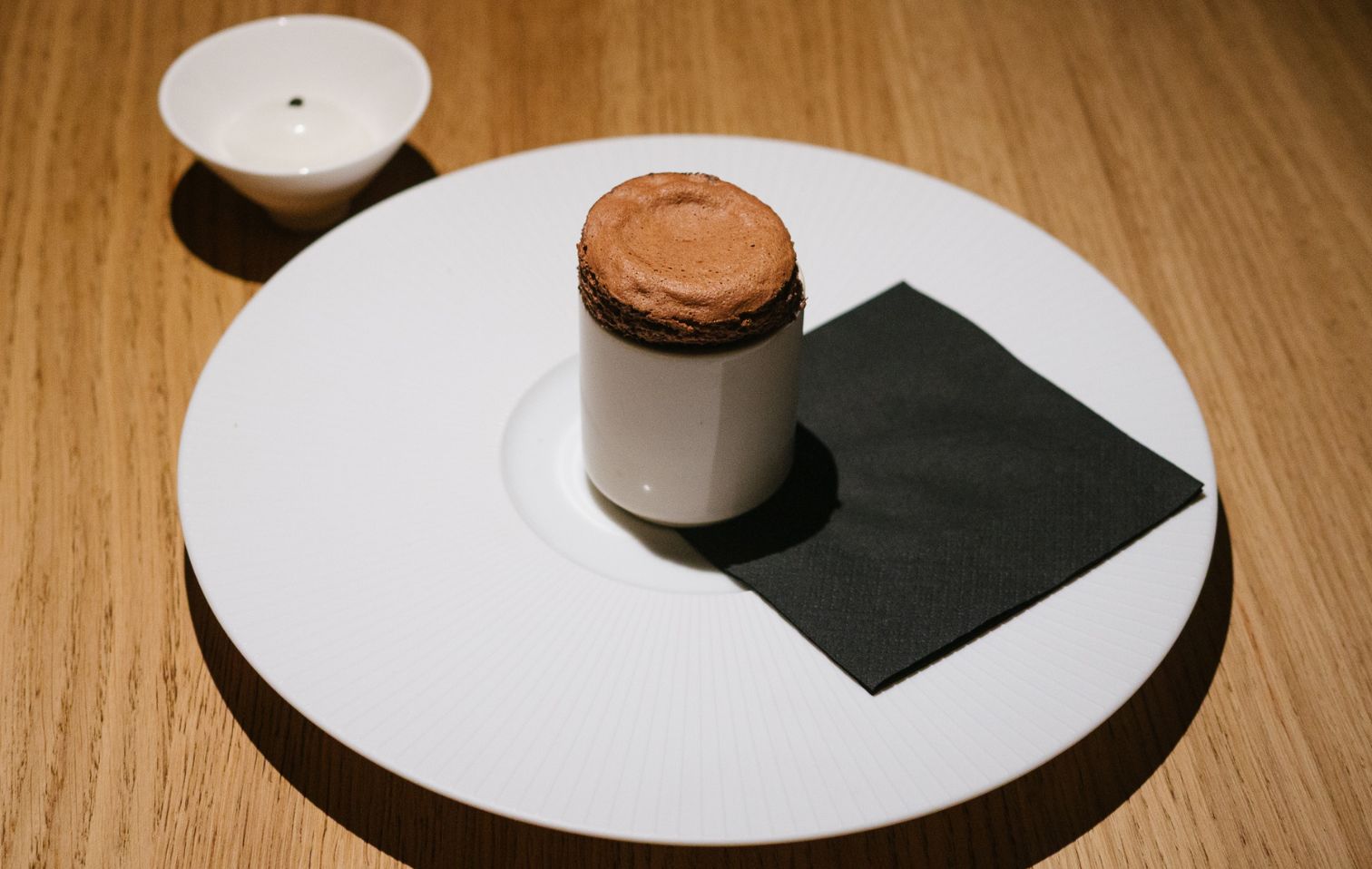
A textbook chocolate soufflé offers a play on opposites, containing a candied Cellina olive that has been grilled, then cocoa that turns everything bitter, to be tempered with a smoked yogurt and caper ice cream, to be inserted inside.
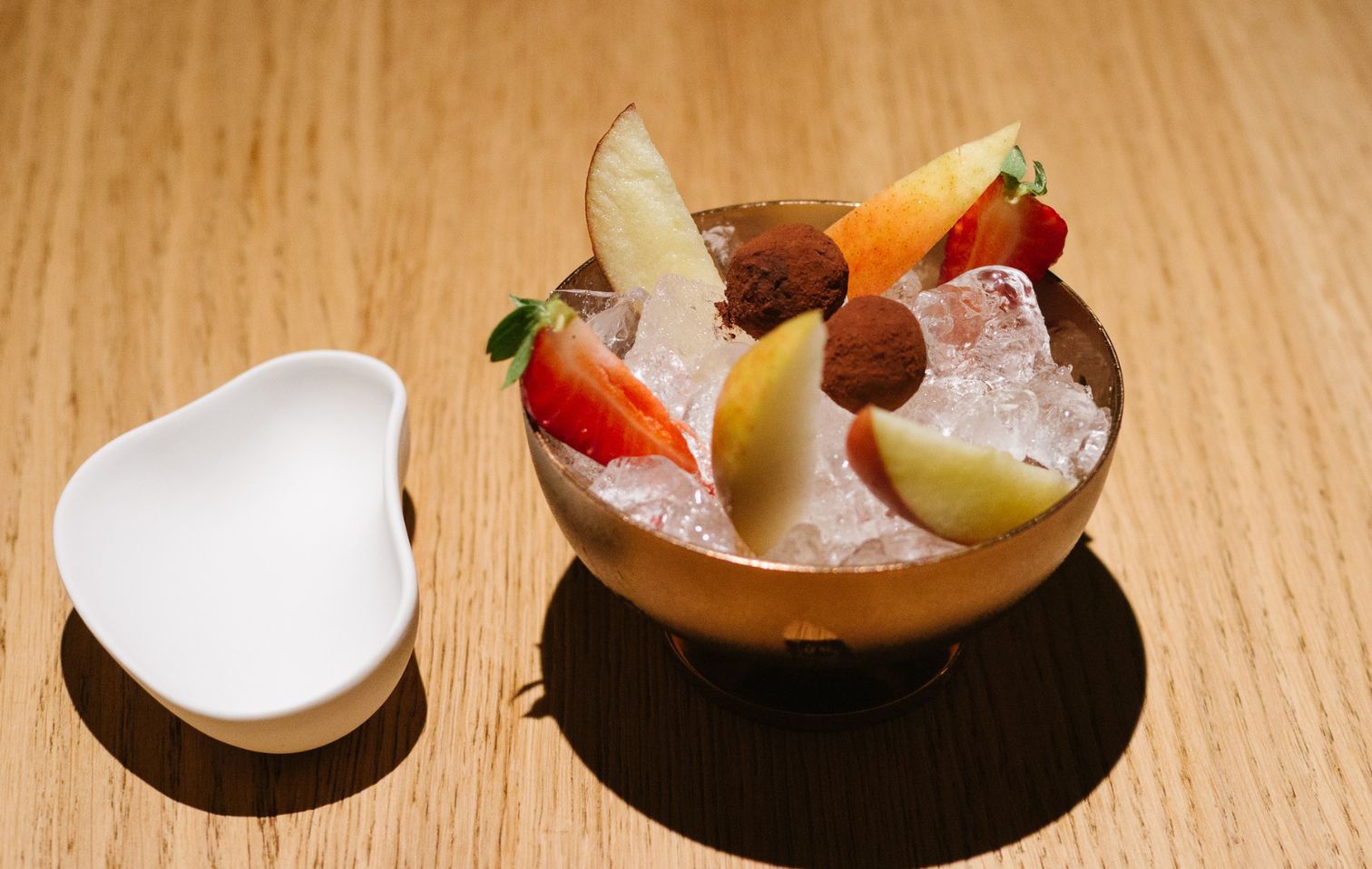
The decision to replace the sometimes exhausting final mignardises with portions of fresh fruit and a tartufino was greatly appreciated.
Contact
Coro
Via dei Gualtieri, 1, 05018 Orvieto, Terni
Phone: 0763 967231