In Milan, taste becomes high fashion thanks to the collaboration between Nobu and Armani and the cuisine of the talented Antonio D'Angelo. But Japanese philosophy is also set to conquer Rome. Everything you need to know, from the Milanese restaurant to the new opening.
On the cover of Dekostop, a photo of Nobu Matsuhisa with the brand's co-founder, Robert De Niro, and the recently opened hotel in Rome.
The arrival in Rome: from project to reality
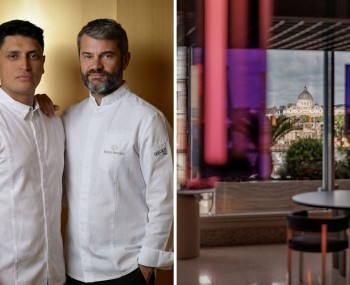
2025 marks an important date for the brand: with the opening of the Nobu Hotel & Restaurant Roma, the capital finally welcomes the Nobu philosophy to its heart (Via Veneto), combining cuisine, hospitality, and design. The hotel is housed in the former Grand Hotel on Via Veneto, carefully transformed by the international design studio, which blends Japanese minimalism with Roman elegance. On the evening of the inauguration, the traditional “Sake Ceremony” (a good luck ritual for every new opening of the brand) consecrated Nobu's entry into the Roman culinary scene. From today, Rome will not only have an elite restaurant: it will have a complete experience—restaurant, hotel, spa, rooftop—where you can experience the Nobu lifestyle. The ambition is clear: not only to replicate, but to adapt the spirit to a new city, with respect for tradition and an international outlook.

For those who know Milan, for those who already experience its lights and flavors: this opening means finding yourself in a familiar yet different setting, ready to surprise even the most accustomed palates. I imagine a Roman evening, with warm lights, the aroma of miso, the clinking of flutes, and a sushi counter that stands out like a stage: you wake up in another city, but you are enveloped by the same philosophy, by the same harmony between food and hospitality. A dream that becomes a concrete promise.

Nobu Milano. The spaces, the atmosphere: international elegance and tailor-made hospitality
Sitting down at Nobu Milano is like settling into the living room of a refined traveler who has collected memories and scents from every corner of the world—but always with attention to detail. The spacious dining room, the clearly visible sushi counter, and the carefully designed lighting suggest relaxation and composure: each table becomes a stage, each dish an act. When Rome opens its doors, the effect will be even more striking: the design studio has promised interiors that speak of subtle elegance, refined materials, carefully designed spaces, and a balance between privacy and sophistication. This is one of Nobu's strengths: no need for fanfare. Harmony is what is needed. Where every light, every table, every dish is designed to make the act of eating an experience to be savored with all the senses.


The cuisine: tradition, technique, and a touch of rebellion
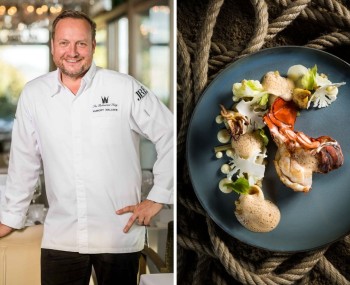
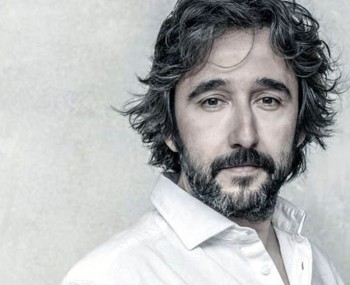
The cuisine at Nobu Milano—as well as that which Nobu intends to offer in Rome—is firmly rooted in Chef Matsuhisa's vision, but interprets the concept with a Mediterranean and contemporary sensibility. At the helm of Nobu Milano is Executive Chef Antonio D'Angelo, who has been shaping the restaurant's cuisine for years, combining respect for Chef Nobu Matsuhisa's tradition with a Mediterranean and contemporary sensibility.

His approach is clear: use high-quality ingredients, both local and carefully imported, and focus on dishes that strike a balance between flavor, texture, aesthetics, and international taste. The aim is to offer a gastronomic experience that, while remaining faithful to the “Nobu” style, is adapted to the Milanese and Italian context: not a slavish reproduction, but a conscious reinterpretation. Over the years, Nobu Milano has become a laboratory for signature dishes and tasting menus, where Japanese tradition blends with global influences to create a taste experience that surprises without betraying its roots.

“Cooking is never about ostentation, but balance. It is the perfect harmony between deep respect for the ingredients — fish, meat, shellfish — and the freedom to be daring,” says chef D'Angelo. “Delicate manipulations, bold combinations, calibrated contrasts. Every bite is a dialogue between textures, temperatures, and aromas.” And when the chef himself—as happened from June 4 to 6, 2025—returns to his “Milanese home” to offer an exclusive dinner and present new dishes, there is a clear desire to renew himself without forgetting his roots. “From our direct experience with Nobu-san this summer, we have brought even more cosmopolitan but distinctly Japanese influences to the restaurant. In particular, we have used Japanese techniques to create dishes that reflect times, cultures, and seasons.”

The Nobu Milano menu: a journey of flavors, contrasts, and surprises
I had the pleasure of sampling some of the new dishes on the 2025 menu, and the experience was like the famous tailor-made suit I mentioned at the beginning, tailor-made to satisfy high standards. The dinner began with a series of “snacks” that looked like little paintings of flavor: a cream puff with marinated mackerel, an osmotized apple with wasabi — a start that teases, intrigues, and prepares the palate like a slow awakening of sensations. Then eel cooked with mirin and soy sauce and shiso leaves, refined and slightly smoked; an oyster battered with mayonnaise enriched with burnt lemon peel powder and kombu seaweed — an intersection between sea and forest, between iodine and smooth smoke. The first strong act was wagyu bresaola, accompanied by daikon amazu, chimichurri oil, and fresh herbs: a dish that whispers power and delicacy at the same time — soft meat, the light sweetness of daikon, a vegetal touch that cleanses the palate and invites the next bite, in a game of references and contrasts.

Then, a turbot treated in the “umami-jime” style: cured ham skin wrapped around the meat, shiso leaves, apple and carrot foam — a complex, almost architectural construction, in which each element has its place to enhance the delicacy of the fish with tertiary flavors, undergrowth aromas, and a touch of fruity acidity. And the anamazuke mackerel: marinated, lightly coated in potato starch, celery, caramelized onion — a dish that brings with it memories of the sea, traditional marinades, smoke, and earth, with its sauce almost like a caress that balances the saltiness and minerality. One of the most daring moments? A “cacio e pepe” ramen with razor clams: yes, you read that right.

A bold attempt to blend Italian tradition with Nobu's philosophy, a dish that challenges preconceptions (and palates), as subtle as velvet but as decisive as a call to action. That broth had it all: flavor, smoothness, creativity. Perhaps not for everyone, but definitely for those who are ready to take a chance. I definitely recommend it. At the center of the menu—the pièce de résistance—was the classic, unmissable Black Cod Miso. Fished, marinated, patiently prepared, cooked to perfection. There is almost no need to describe it: the aroma alone — the sweetness of the caramelized miso, the almost buttery texture of the cod — is enough to understand that this dish is an icon, an act of love for the ingredients and for the history of the restaurant itself.


The selection of sushi and sashimi, essential but meticulously prepared, alternates between moments of rigor and moments of surprise: nigiri, uramaki, seasonal raw fish, each treated with respect, but with that touch of modernity that avoids dogma. The “New Style Sashimi,” for example, with dry miso and yuzu, or the reinterpreted raw fish dishes, demonstrate that Nobu is not afraid of evolution, as long as it is guided by consistency and taste. And for those who want to be guided, the Omakase, Nobu's signature tasting menu, is an experience to be enjoyed: six or seven courses, chosen by the staff, balanced, designed to offer a journey through textures, temperatures, aromas, and consistencies.


The meaning of being “Nobu”: cuisine as storytelling, taste as nostalgia
What really strikes you when sitting at one of the tables at Nobu Milano — or thinking about what it will be like in Rome — is the restaurant's ability to speak two languages: on the one hand, an almost ritualistic respect for Japanese tradition, and on the other, the curiosity of those who know how to look ahead, mix things up, and experiment. When you taste a dish like Black Cod Miso, or turbot with ham skin and shiso, or snacks that mix sea, smoke, and earth, you get the feeling of a bridge: a bridge between cultures, eras, territories, and palates. It's not just food: it's geography, memory, emotion.

That's why Nobu is never predictable: because every dinner can be different, every menu can tell you a different story. And for those who accept the invitation, the experience becomes personal: a reflection on time, taste, and matter. Nobu Milano is not just a restaurant. It is an experience that speaks of the sea, smoke, contrasts, and balance. It is a journey through cultures, ingredients, and stories. It is a home that, every time you return, makes you feel like a guest and a protagonist at the same time.

And if Nobu is capable of being reborn in Rome, bringing with it the spirit that made it famous—with iconic dishes, tasting menus, attentive hospitality, and understated elegance—then it is reasonable to dream that signature Japanese cuisine can continue to grow, change, and surprise. Because in the end, food—when treated with care, respect, and creativity—is not just nourishment. It is memory. It is discovery. It is emotion. Like a dress sewn especially for you.
Contacts
Nobu Milano- Armani Hotel Milano
Via Gastone Pisoni, 1, 20121 Milano MI
Phone: 02 6231 2645
Via Vittorio Veneto, 155, 00187 Roma RM