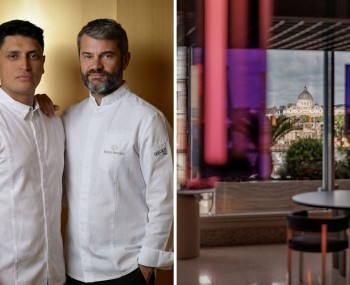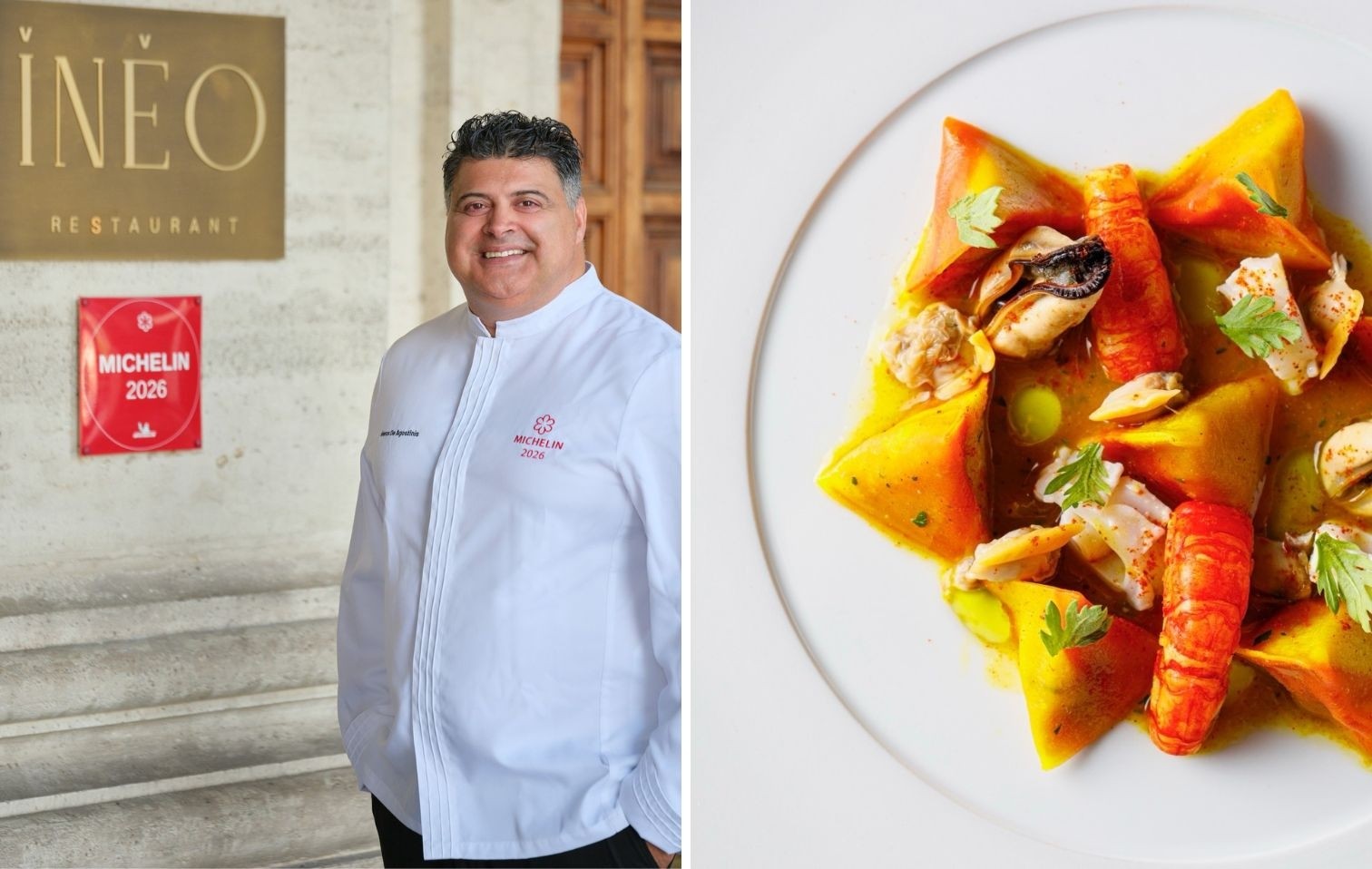
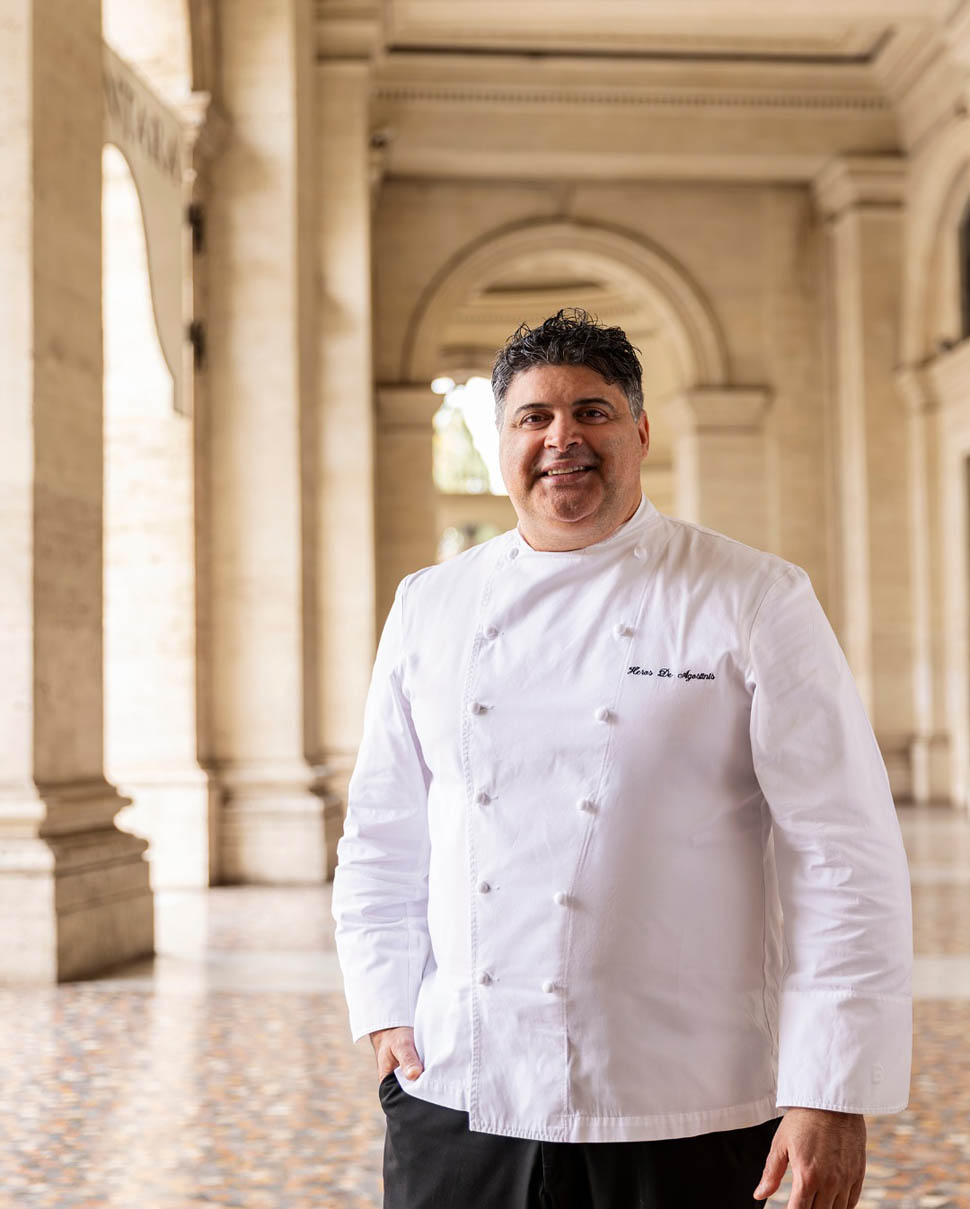
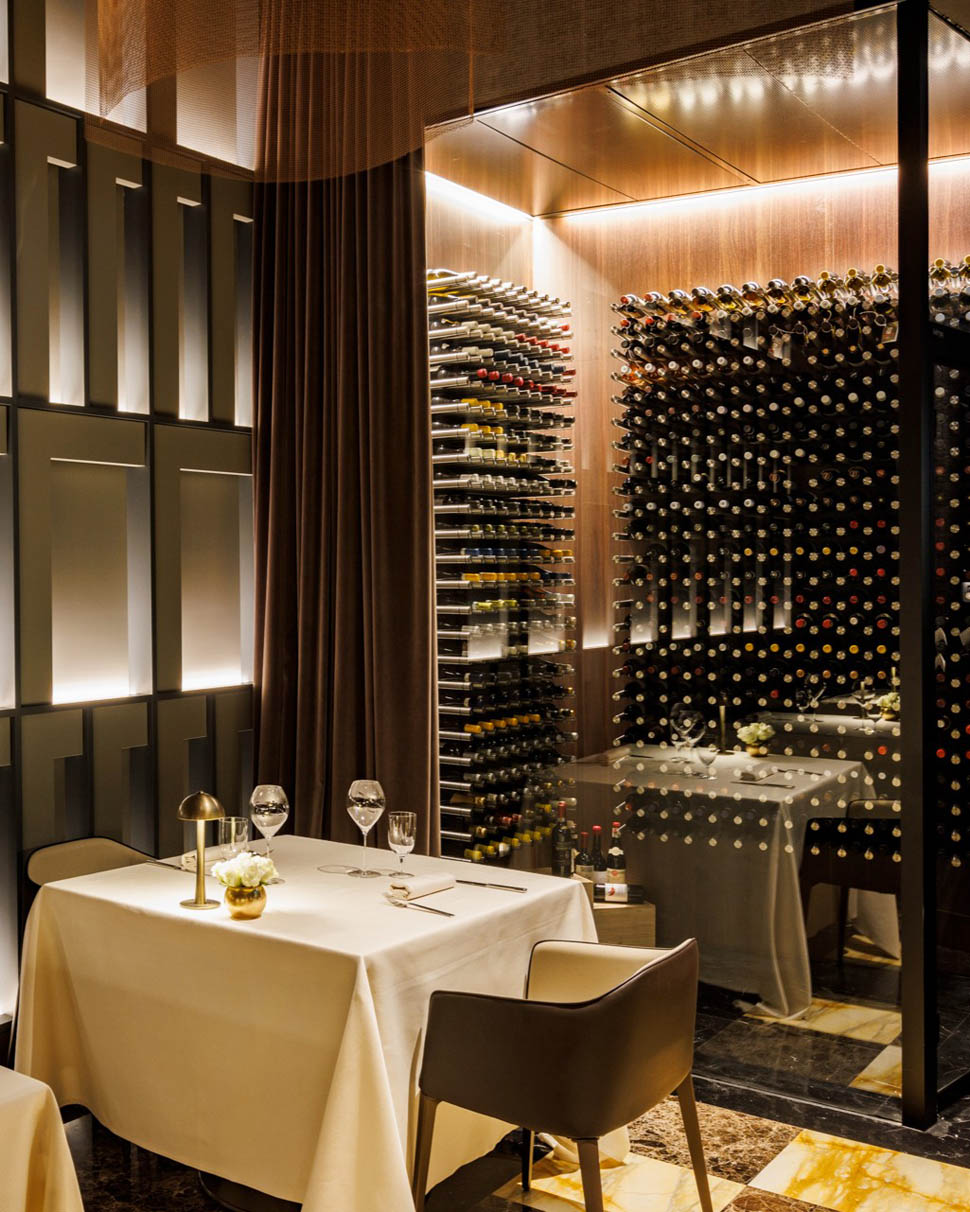
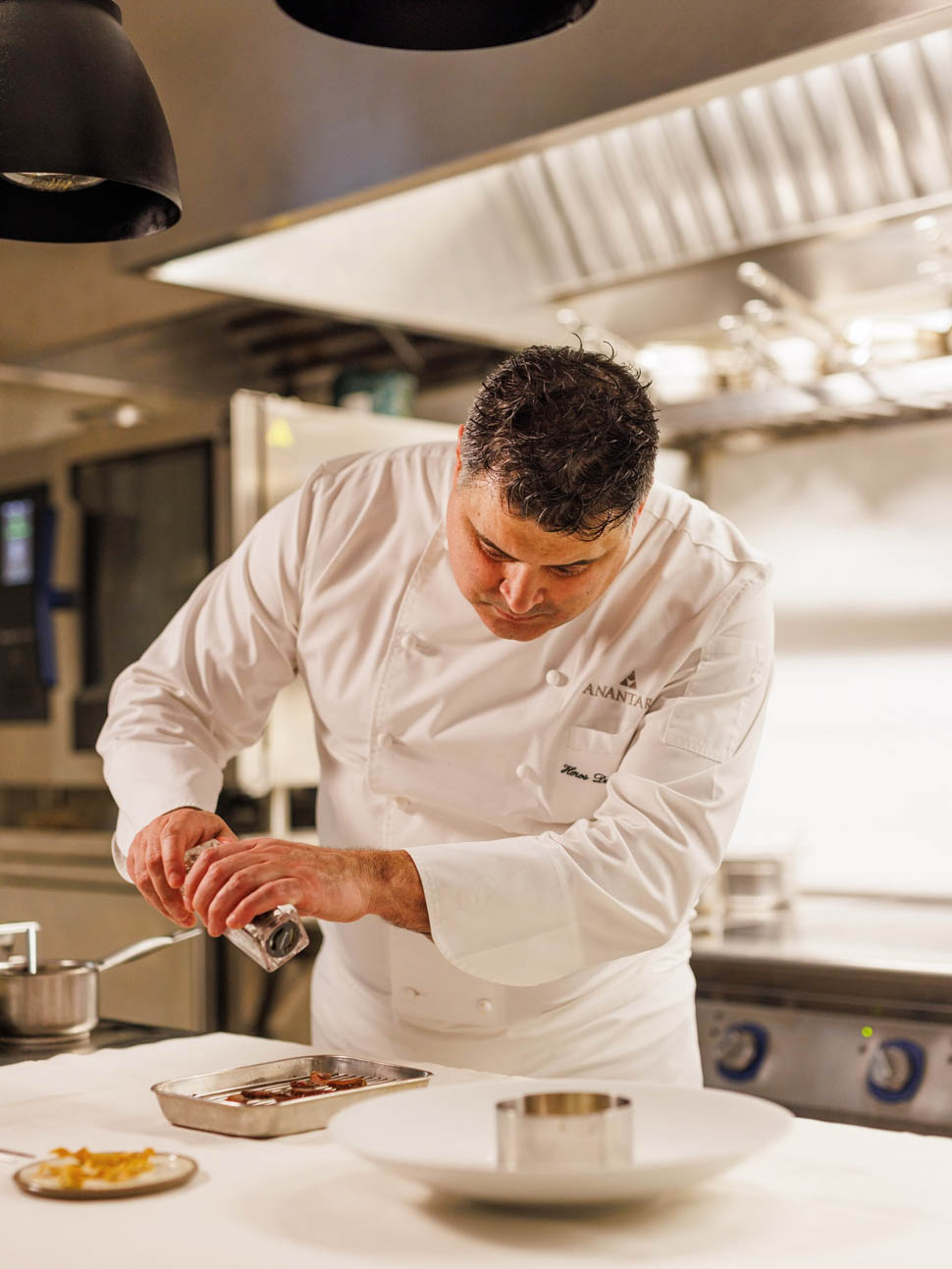
Three years after opening in that “curtain of white marble” known as Palazzo Naiadi, Ineo has transcended the very meaning of its name (from the Latin “to begin”) to create a unique dining experience in Rome. With the evolution of its live dining experience, the subtlety of its spices, and pairings that keep pace with the menu’s cosmopolitan flair, Heros De Agostinis fills the dining room of his fine-dining restaurant in Piazza della Repubblica. He demonstrates that attention to detail pays off in the effort to bring the public closer to haute cuisine.
It’s a Wednesday, but it feels like a Saturday. At Ineo, every table is full, and—if I were to guess the guests’ ages at a glance—no one in the dining room is the same age as their tablemates: the Asian woman in her thirties who photographs every dish, the older couple excited about their anniversary dinner, and the group of foodies in their fifties looking forward to repeating the tasting experience a month from now.
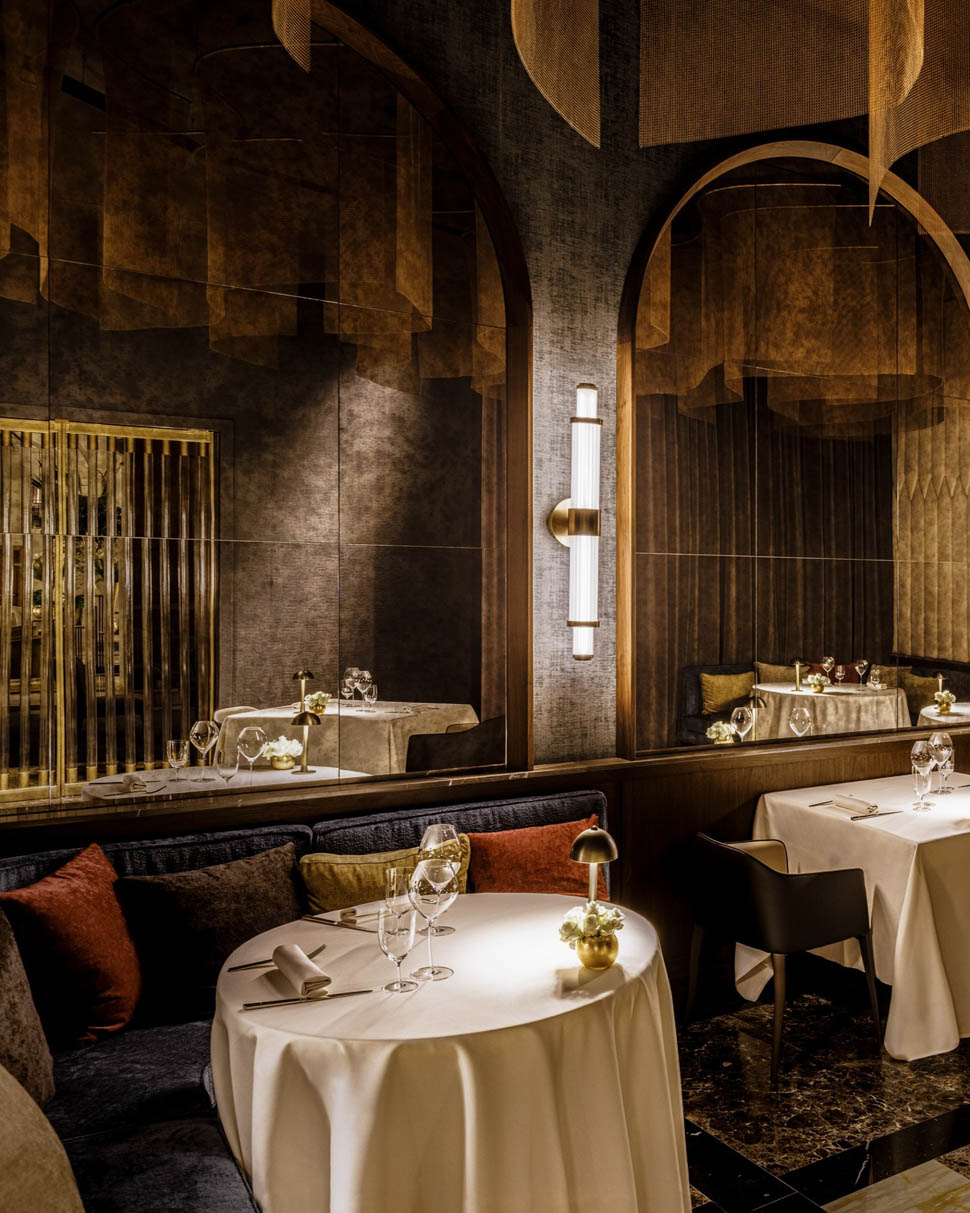
If you ask Heros De Agostinis how it’s possible to fill the seats at a fine-dining restaurant on a weekday, the answer is hard to summarize. That’s because, more often than not, it’s not enough to simply step on the gas and pursue ever-higher levels of culinary refinement; rather, you need to ensure, day by day, that the dining experience flows seamlessly from the kitchen to the bread cart, not to mention the array of wine glasses ready to keep pace with a menu rich in spices.
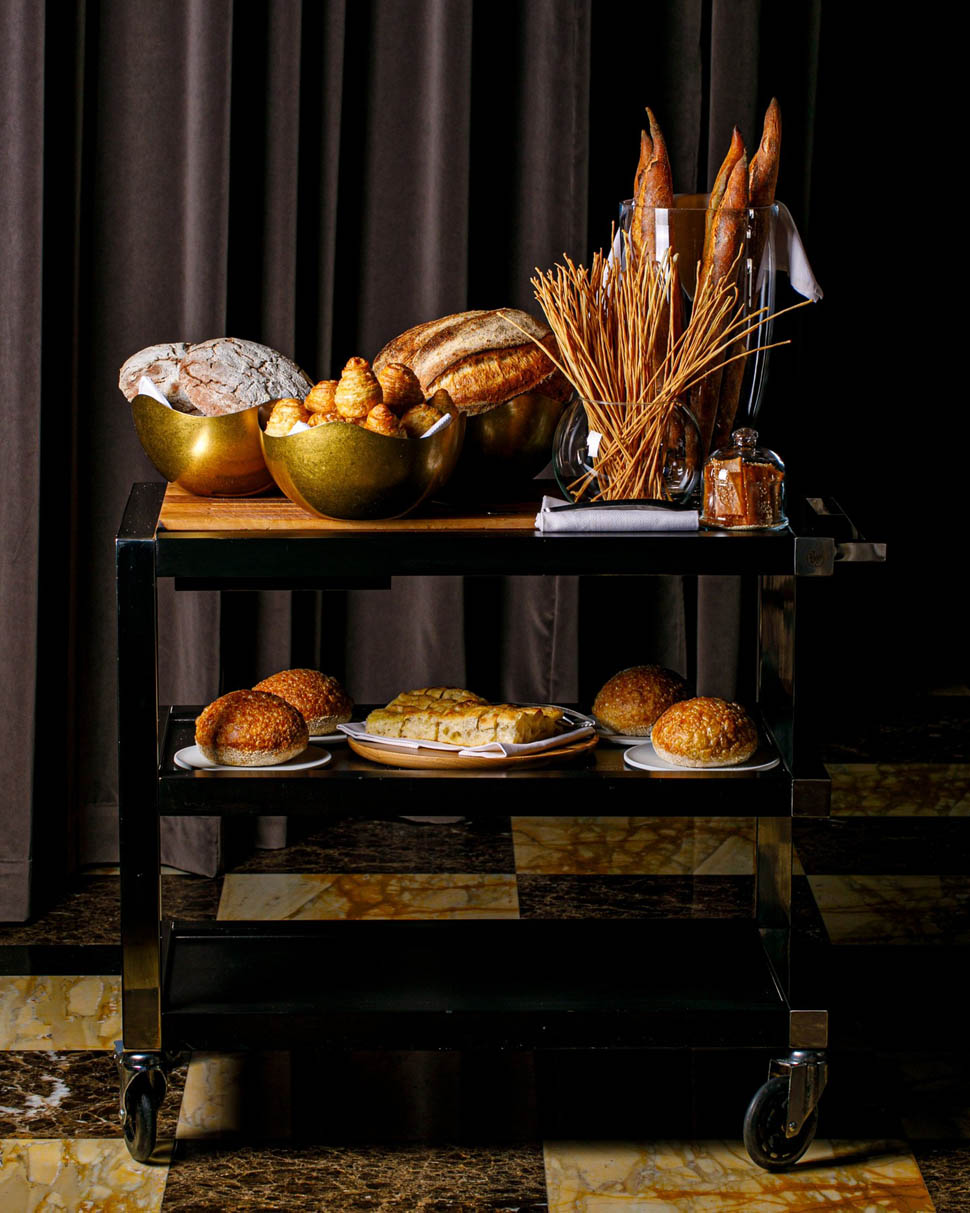
One thing is certain: “We get a lot of walk-in customers here, in addition to those staying at the hotel. We’re talking about both Romans who are loyal to the brand and an international crowd curious to explore the city’s culinary scene. I could call it ‘travel cuisine,’ given the global nature of the culinary journey we’ve created. Yet, I prefer to think that today’s success stems from a series of thoughtful efforts we’ve made over time”. For example, a whole assortment of leavened baked goods to choose from, instead of a single loaf cut into wedges; a tasting journey that begins on Sundays at the market stalls in Rome and ends in the pantries of Middle Eastern grocery stores; and last but not least, the ability to create a dessert with unexpected savory touches, as a counterpoint to the cloying sweetness of modern sweets.
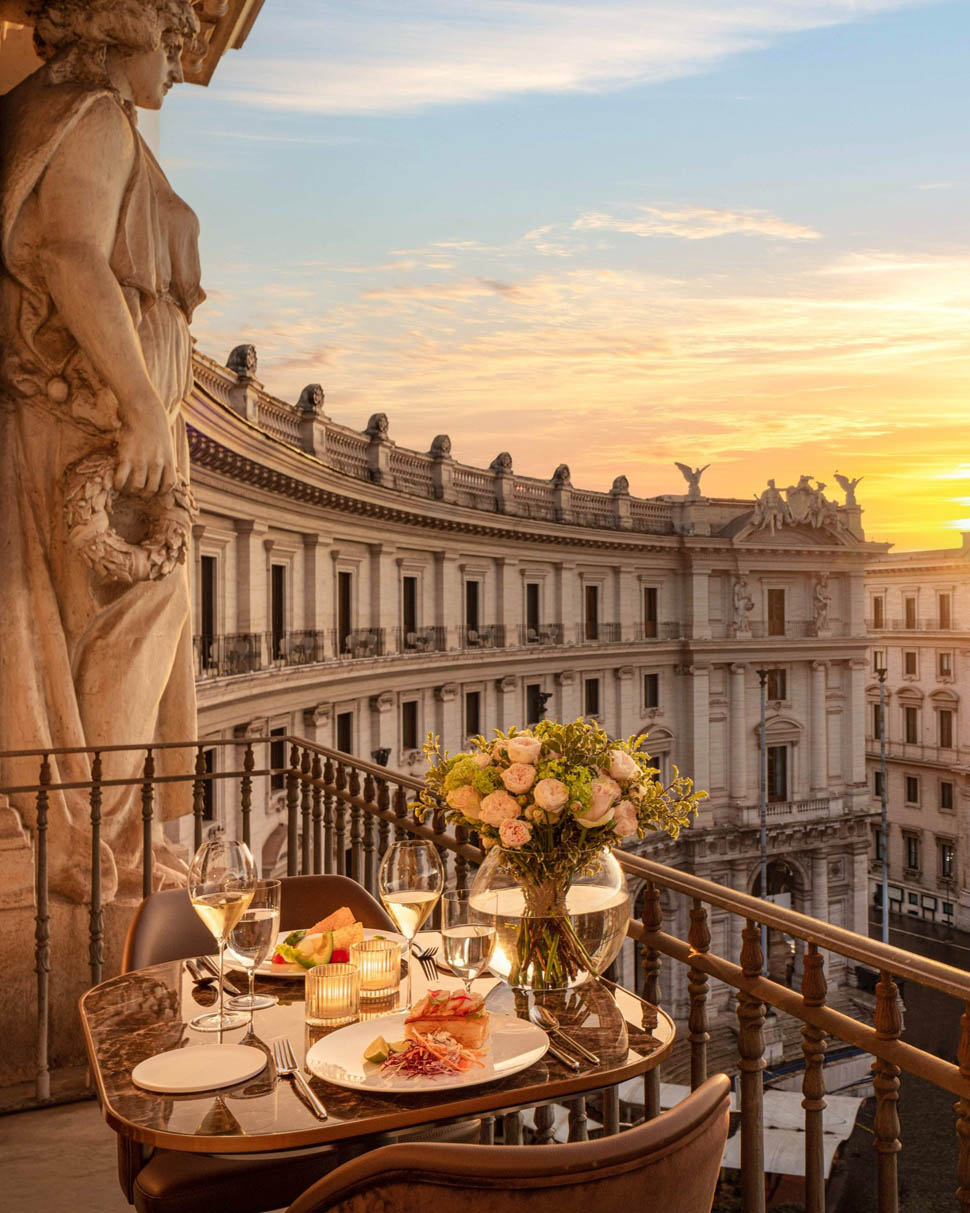
Outside, a curtain of white marble that for centuries has revealed the hidden treasures of Piazza della Repubblica; at the Anantara Palazzo Naiadi, in fact, the neoclassical architecture “floats” above the submerged remnants of the ancient Baths of Diocletian,B so that once inside, guests can walk across glass-bottomed floors revealing the original 3rd-century A.D. foundations and mosaics.
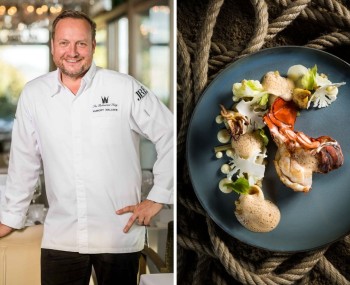
This is how Ineo came to be, sheltered by an architectural gem that might otherwise have cast a shadow over any concept aligned with the standard of a typical hotel restaurant. Instead, the chef has skillfully blended his globetrotting experiences (from The Ritz-Carlton in Bahrain to collaborations with Veyrat and Robuchon) with his partnership with three-Michelin-starred Heinz Beck, returning to where it all began and bringing to Rome a kind of dining experience you’ll be hard-pressed to find in similar establishments.
Ineo: Travel the World Through a Dinner Without Leaving Rome
What could be more Roman than chicken with peppers? And what appetizer works better than a Caesar salad against summer jet lag? Now, take the quintessential white meat and imagine it deconstructed into a climax of bites that speak in diverse languages: Heros De Agostinis’s amuse-bouche demonstrates just how much this farmyard fowl can develop its own distinct expressive autonomy, avoiding the “seen it all, eaten it all” effect.
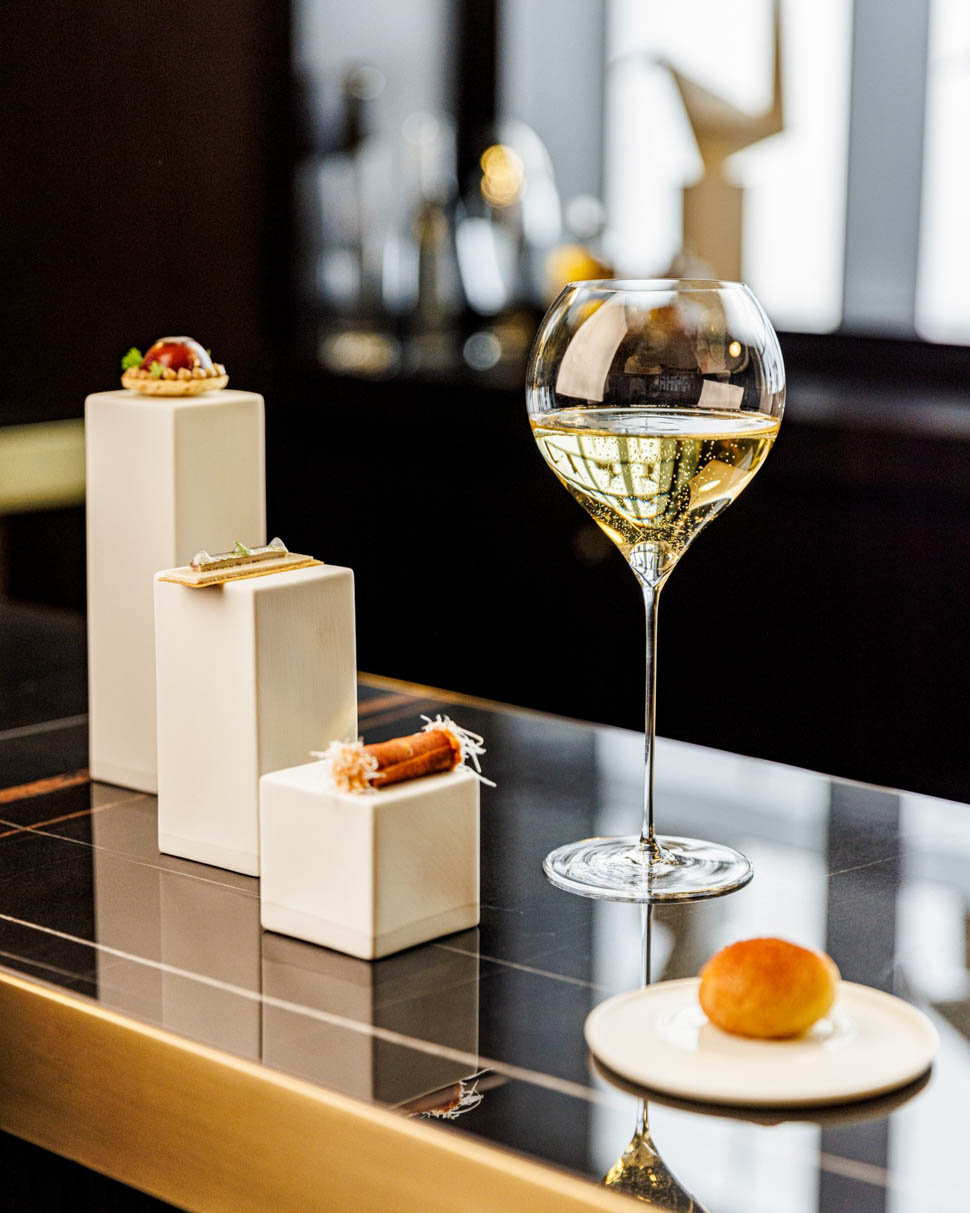
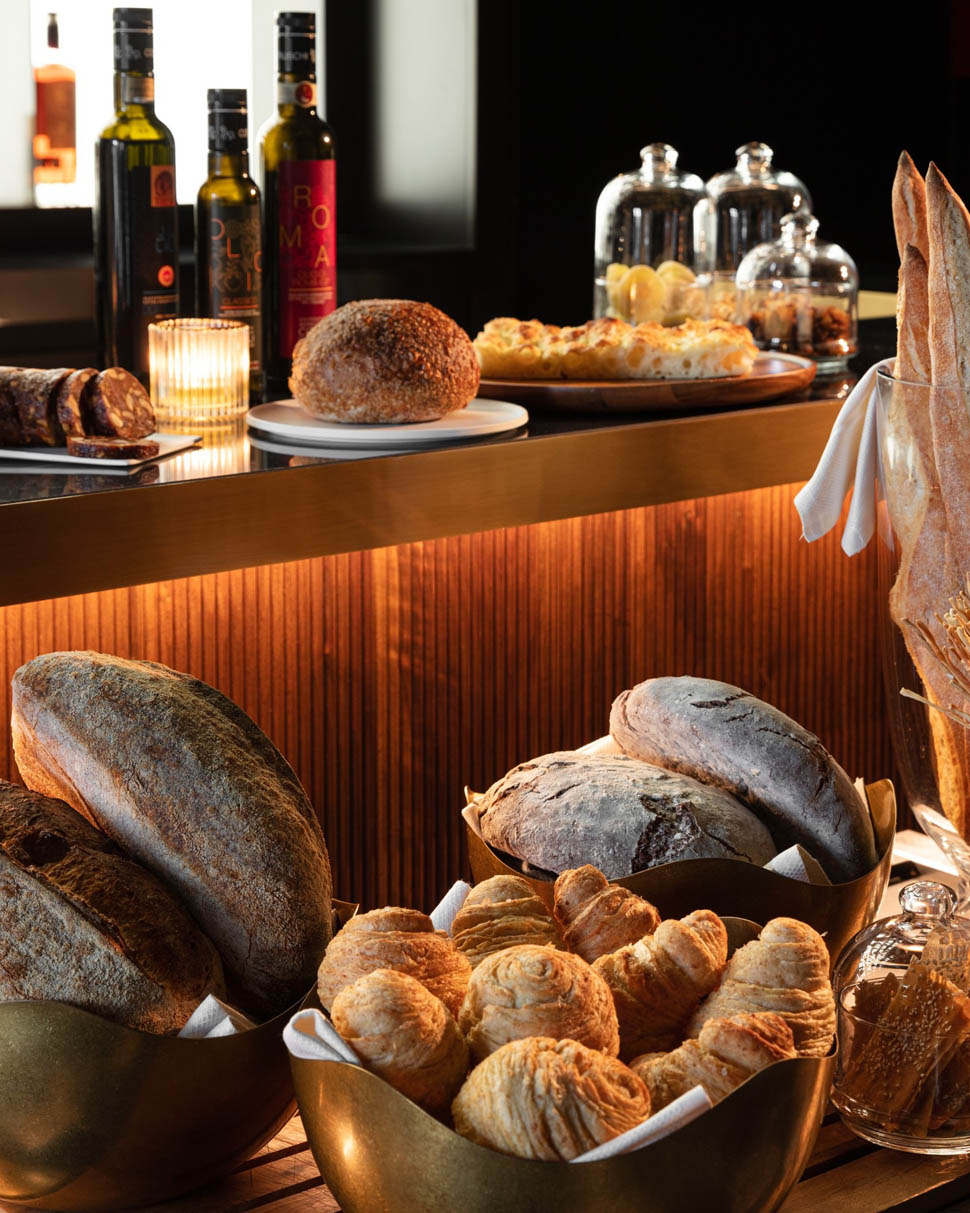
“My grandmother used to buy chickens at the Esquilino market, so I chose to honor her memory through this seemingly basic ingredient, drawing inspiration from five different recipes.” And so, the Indian Pani Puri features local chicken alla cacciatora, with a splash of white wine vinegar and lively notes of Taggiasca olive powder, capers, and rosemary; the Caesar salad becomes a tartlet with dried potatoes, Caesar dressing, Parmigiano, and green lettuce gel, paving the way for a mini taco with corn tostada, chicken, and Mexican pico de gallo (the addition of cilantro, used with a steady hand by the chef, is key); close on its heels is the chicken with peppers served as a foam atop a soy meringue and chicken jelly, concluding the tour with the Currywurst (German chicken sausages, ed.), carrot chips, ketchup, and curry powder. Salted vegetable butter from western France guides the choice of bread, presented live on a cart brimming with baked goods. We particularly appreciated the new addition: loaf bread made with chickpea, buckwheat, and whole-wheat flour, destined to “duel” with the country bread made from Solina wheat from the Marche region (slightly savory, and made interesting by the contrast between the crisp crust and the tender crumb).
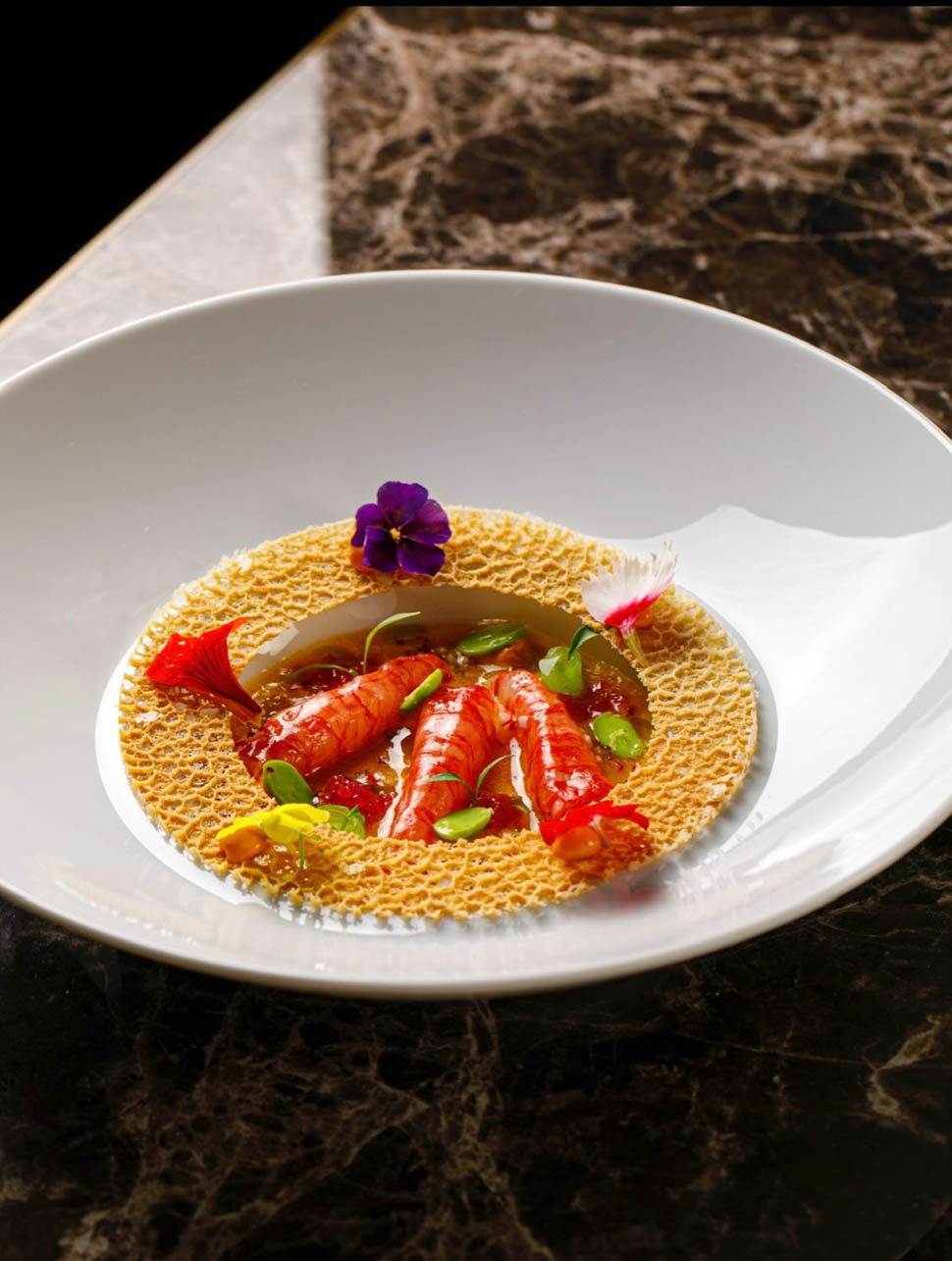
The baptism by fire, however, comes in the form of three appetizers, each featuring a different variety of chili pepper: call it a gamble if you will, but the chef captures (and harmonizes) the natural potential of each flavor enhancer. First and foremost, the Summer Vegetable Variation rests peacefully on a creamy bed of Aji amarillo, a Peruvian variety with fruity notes, lightly touched by the fragrance of coriander oil. In contrast, the introduction of the Habanero (tropical and with a more assertive heat) cuts through the roundness of the beet in the Sicilian red shrimp tartare with Osietra caviar and summer turnip petals. The chili pepper pairs, this time, with a watermelon gazpacho that “cleanses the palate” alongside a granita made with raspberry vinegar.
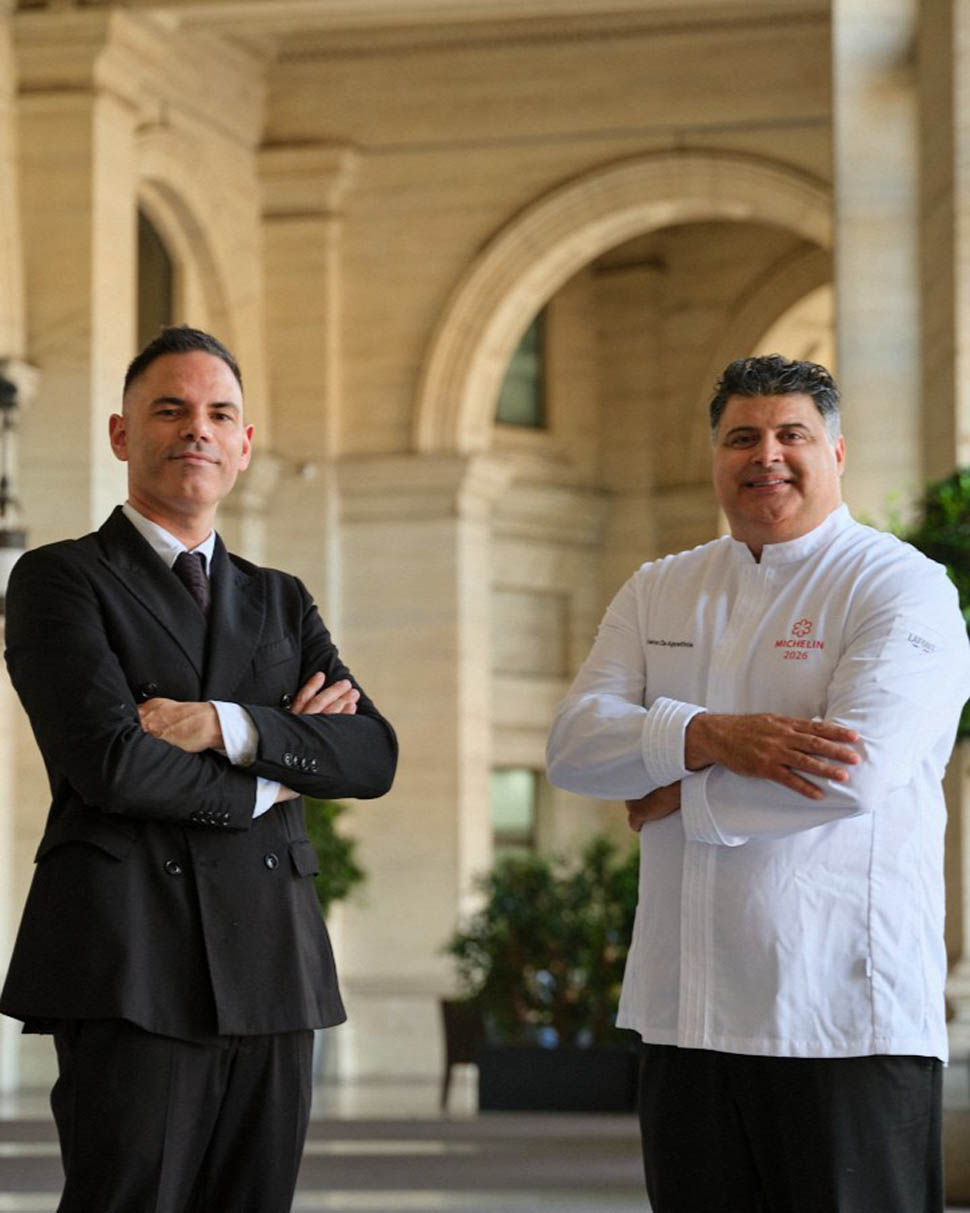
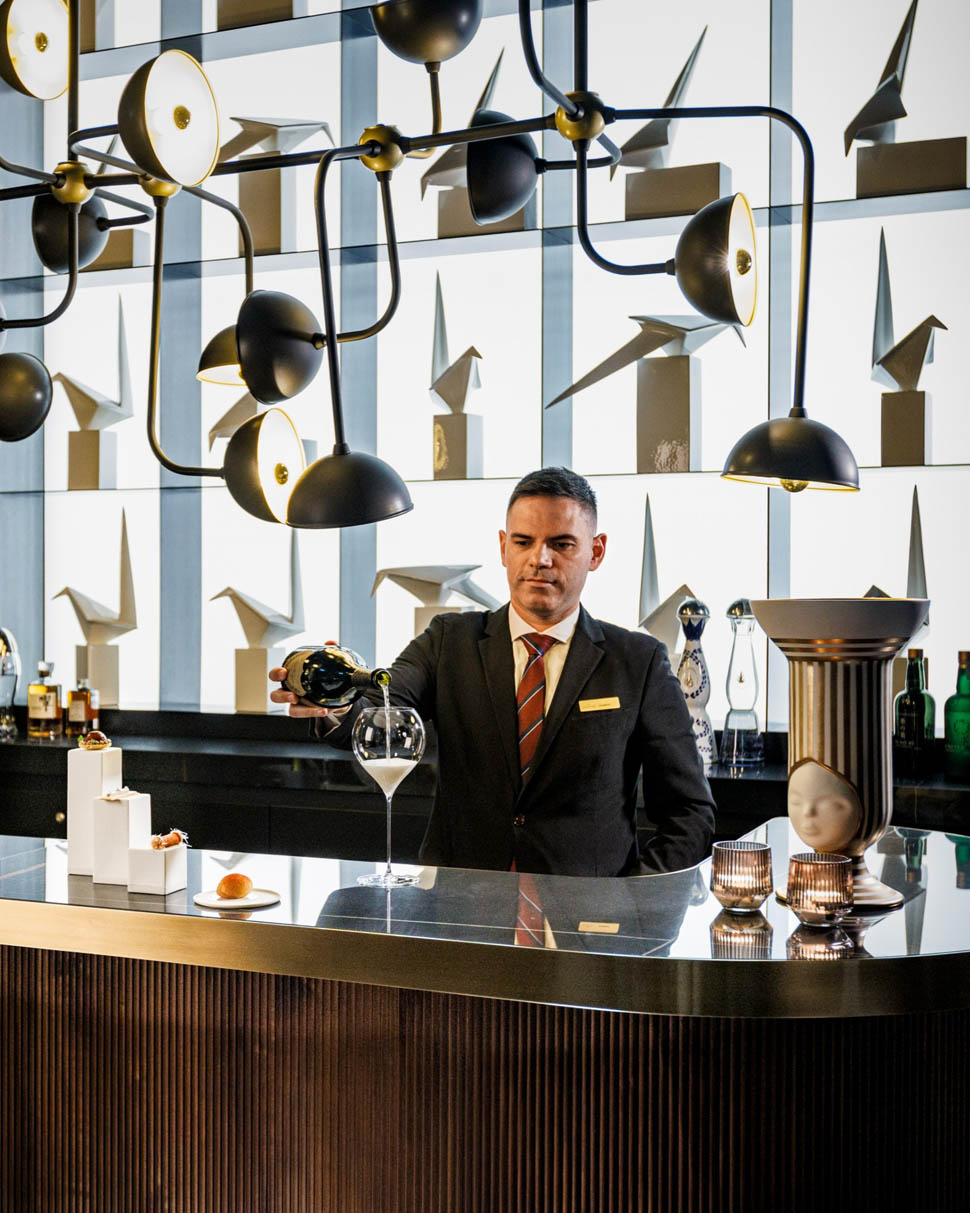
Last but not least, the Atlantic bluefin tuna gains depth thanks to a granita made with jalapeño, carrots, and cucumber, surprisingly accented by the smoky notes of the Mexican chili pepper. And the pairing? It follows the same path, given the skill of Restaurant Manager and sommelier Federico Spagnolo in respecting the spicy character of the successive courses. We saw this, for example, with the Soave Classico Monte Carbonare Suavia 2023, a white wine with great minerality and persistence: on the nose, white-fleshed fruit emerges, elegantly complementing the Aji Amarillo in the Vegetable Variation.
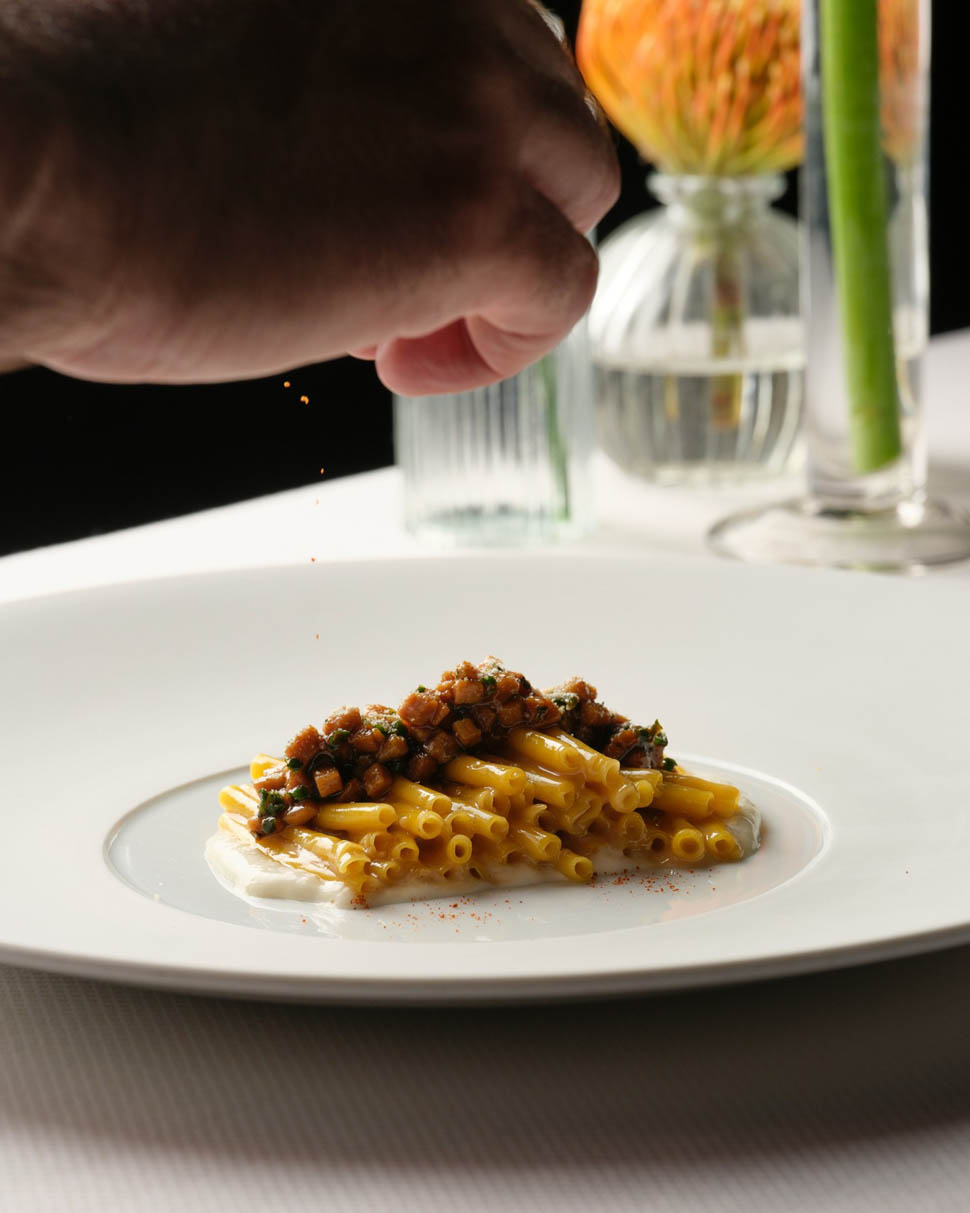
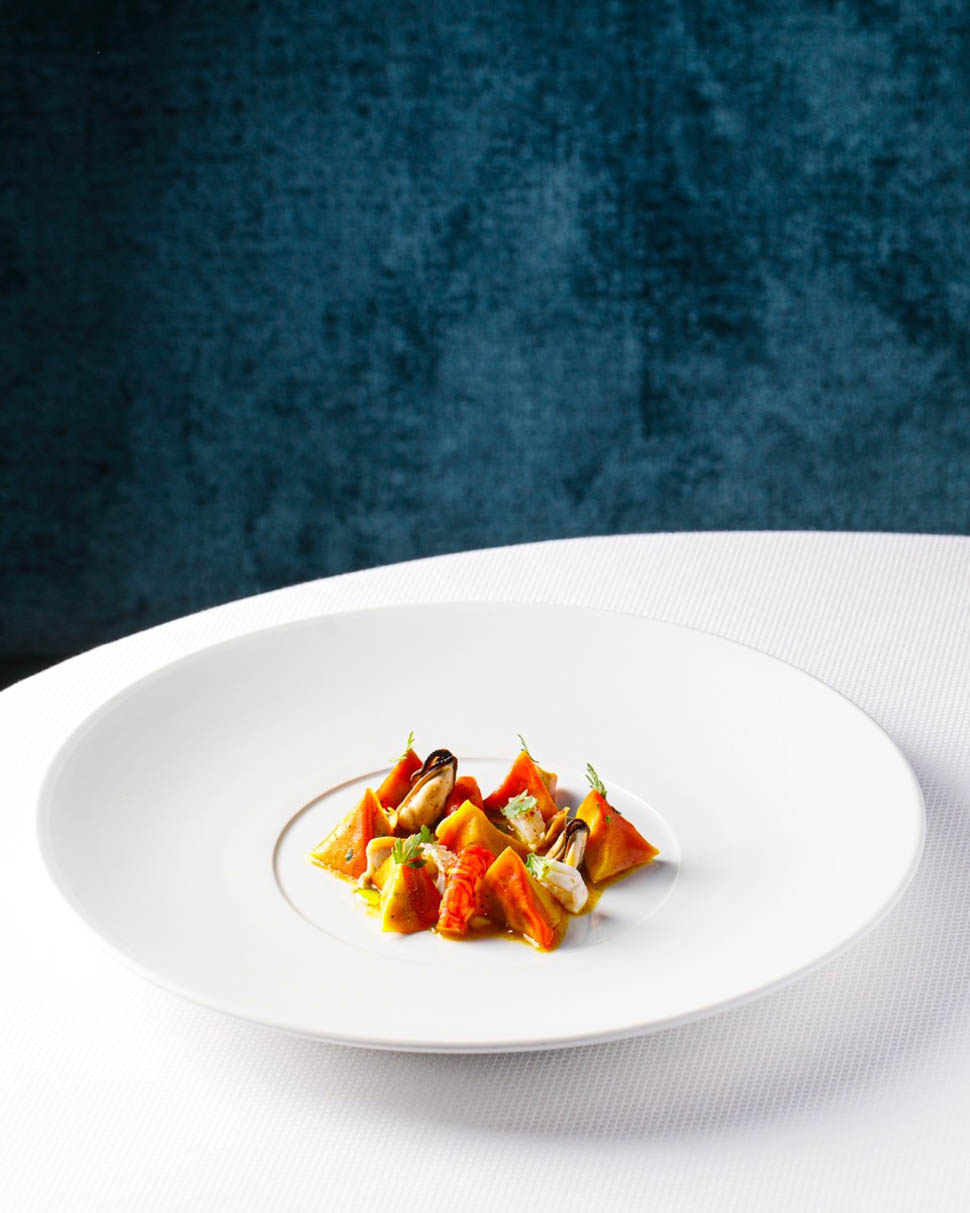
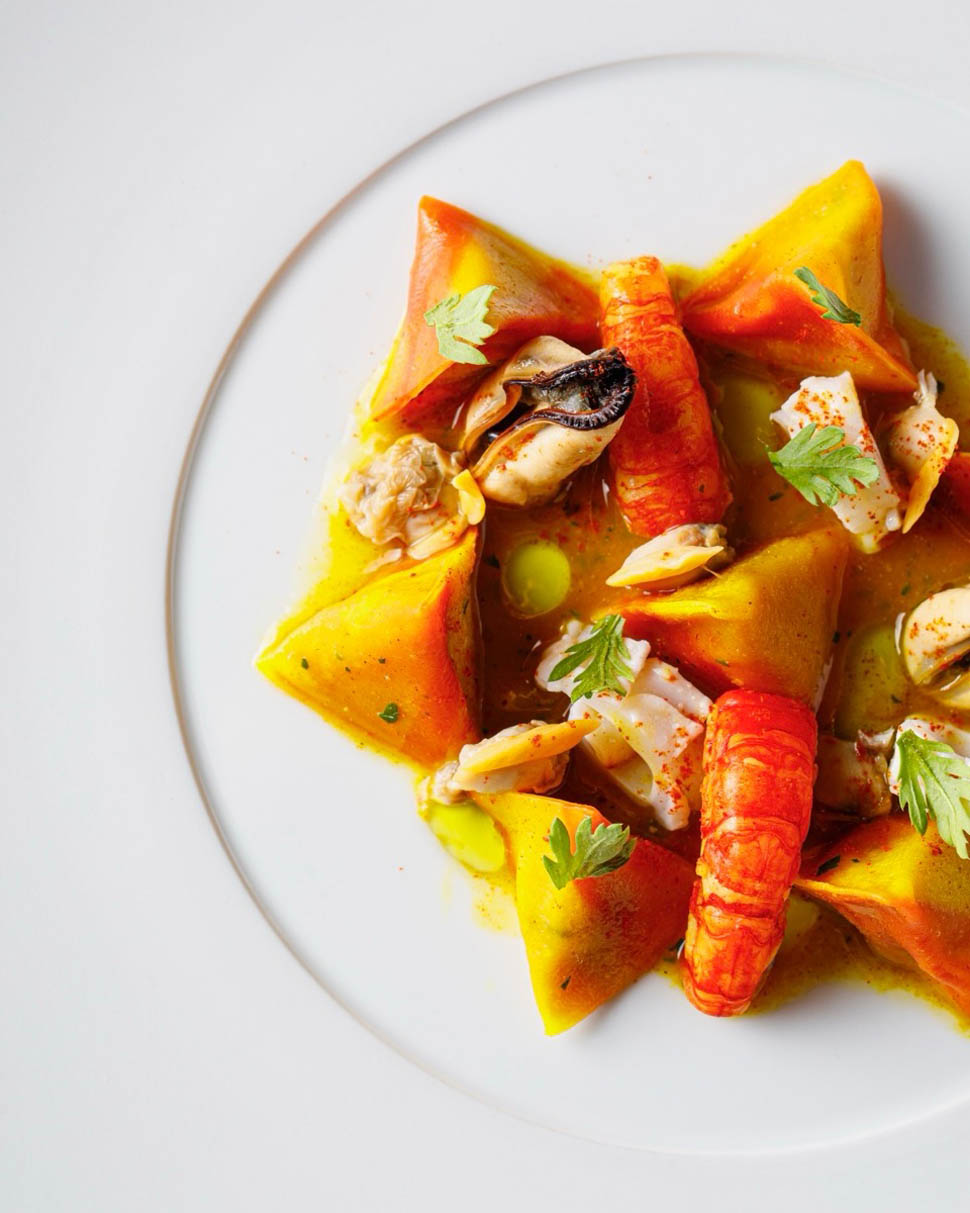
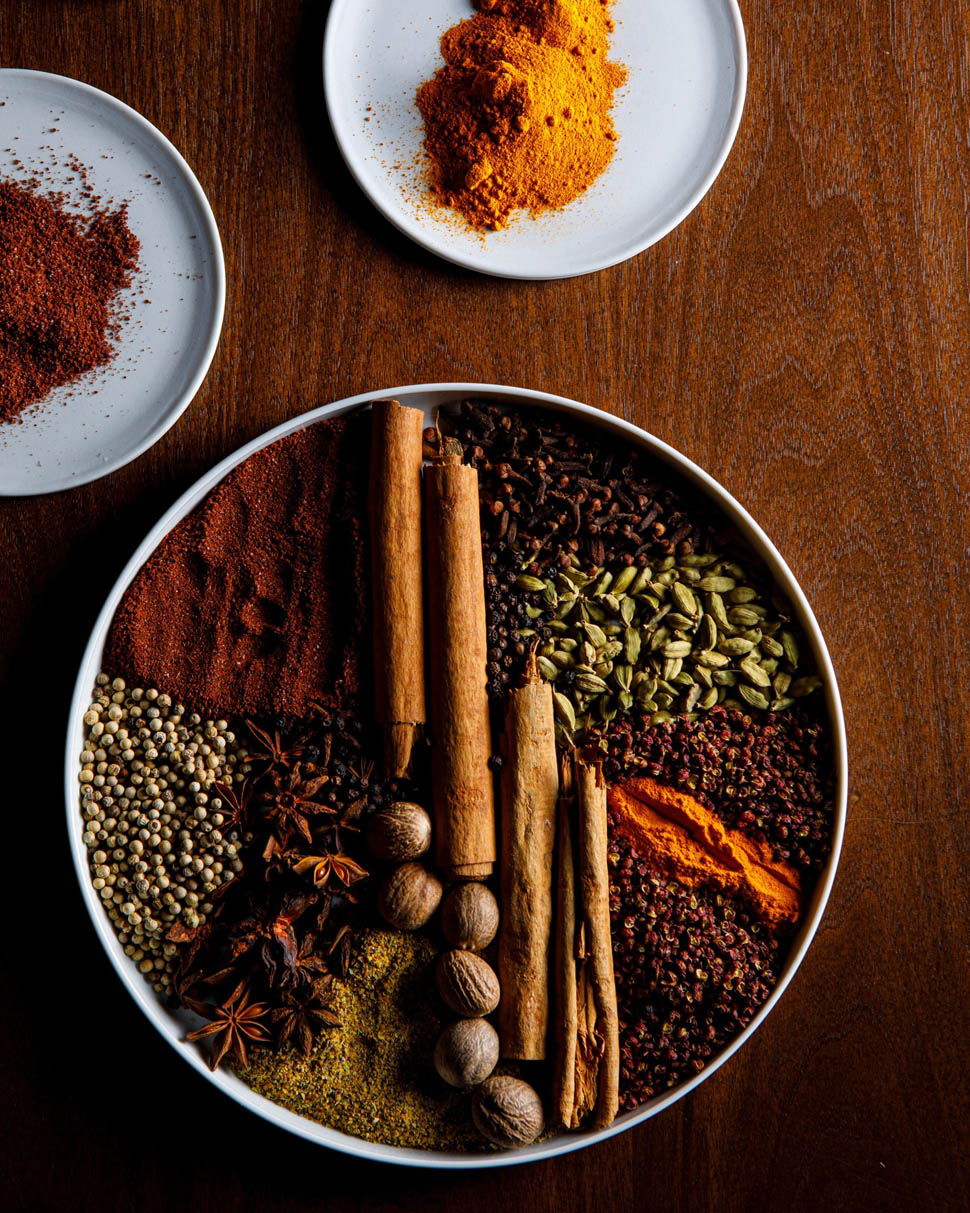
When it comes to pasta, the focus is on the artisanal craftsmanship that has always defined De Agostinis’ style: while the Maccheroncino al ferretto remains the undisputed signature dish on the menu (here’s the recipe the chef shared with us a few months ago!), today the Raviolini Berlingots stuffed with Muhammara (literally “burnt,” thanks to the filling of roasted red pepper paste, pomegranate syrup, walnuts, and herb-seasoned toasted bread) are vying for the same title. Seafood serves as a topping, but the dish’s bold character draws its strength from the chef’s signature baharat—a blend of Arabic spices made with cumin, coriander, sweet paprika, and chili pepper.
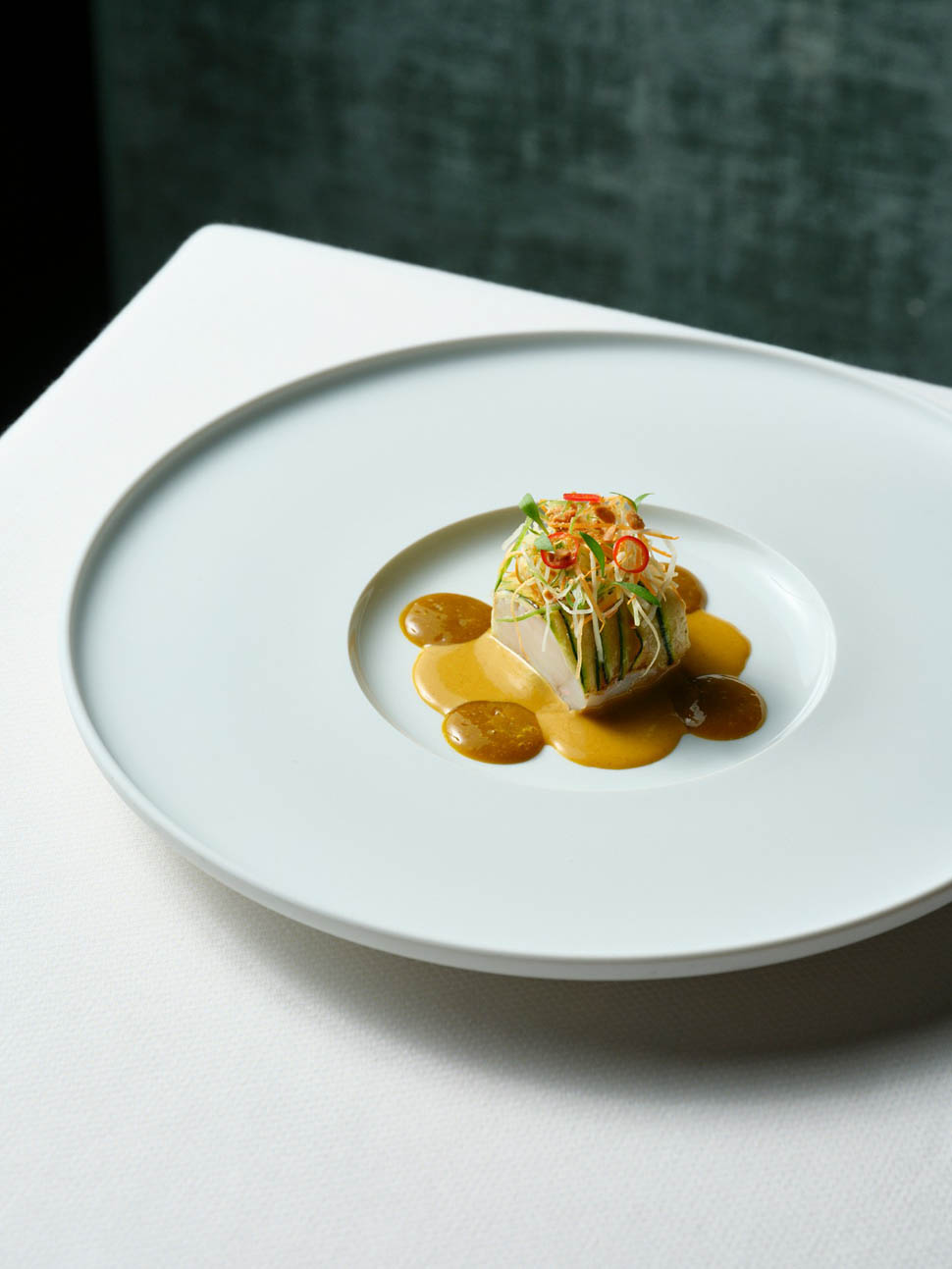
In keeping with this theme, the chef skillfully weaves in the vegetables featured in the seafood and rustic main courses: first with the mango brunoise and Thai salad flavored with peanuts served with curry-spiced St. Peter’s fish (the tartness matching the aromas, creating a beautifully lingering finish); then, with the Lebanese babaganoush made with eggplant and tahini to finish off the lamb saddle. “I also wanted to add some variety to the protein by incorporating yogurt—which is very popular in Anatolian culture—alongside cucumbers and berberè,” the chef notes.
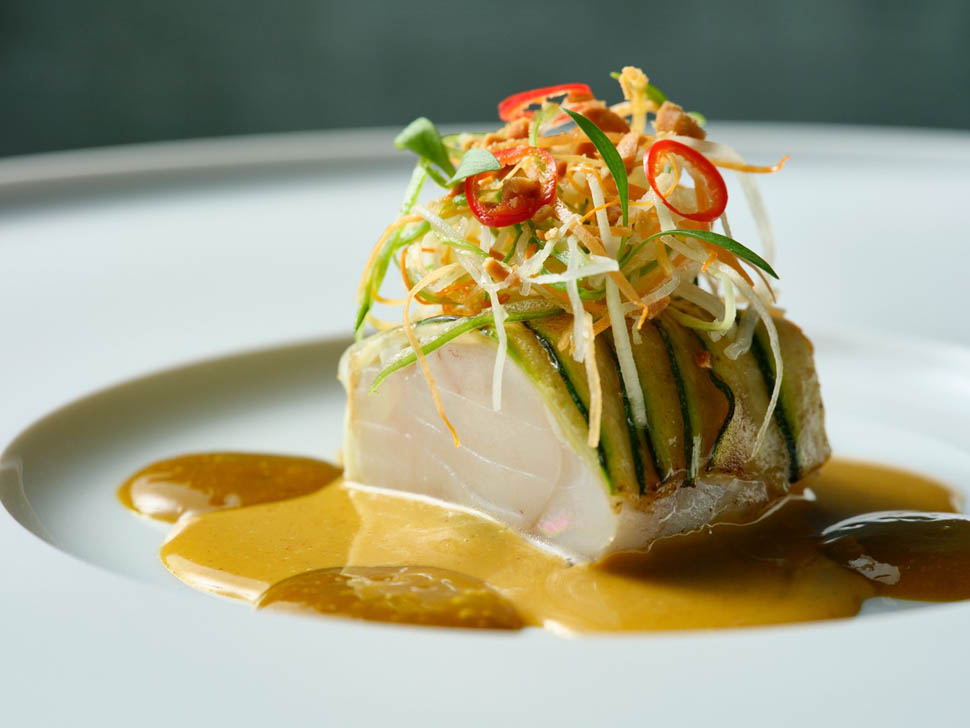
A “dairy theme” that continues into the delightful dessert featuring labneh (a creamy cheese of Lebanese origin, here seasoned with salt and mint), complemented by the exotic notes of brunoise-cut pineapple in syrup and flavored with vanilla, plus cinnamon foam. The sensation? That of a tropical ice cream enjoyed with your feet in the water, with a salty kick that spreads across your cheeks.
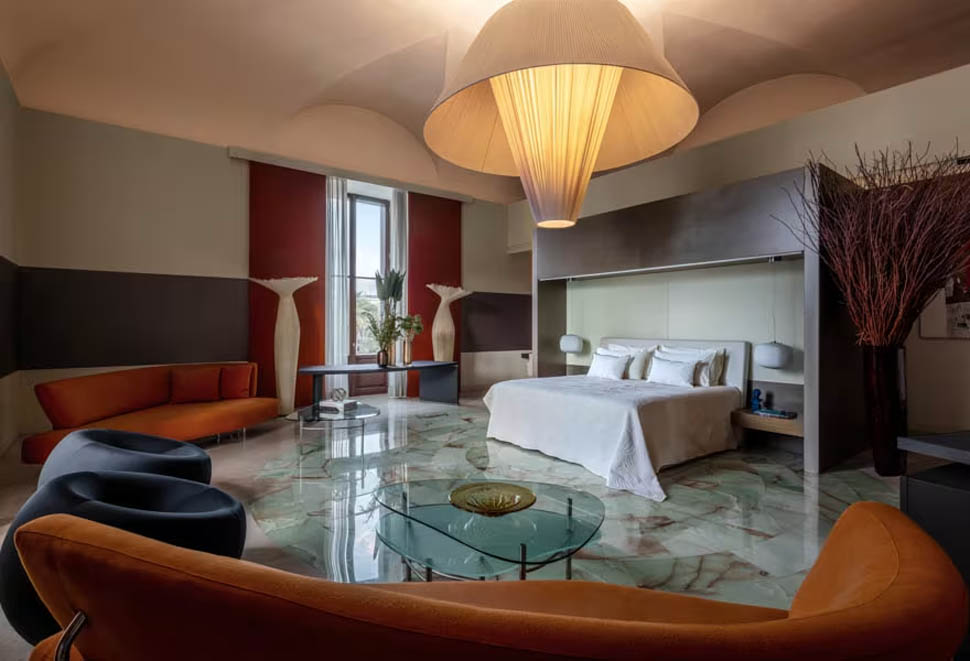
Palazzo Anantara, from the cake in the suite to the Diocletian Ritual at the spa: a must-visit destination on the wish list of discerning travelers
To paint a complete picture of the hotel, it’s worth highlighting the thoughtful touches reserved for guests in the suites overlooking the Fountain of the Naiads: the welcome kit includes not only a single-serving cake delivered to the room to give guests a taste of the hotel’s “in-house” pastries, but also a complete set consisting of a water bottle, a fan, wipes, band-aids, and a planner (at least, this is the gift designed for the summer months), in addition to a bag featuring the group’s logo and accessories reserved for the wellness center.
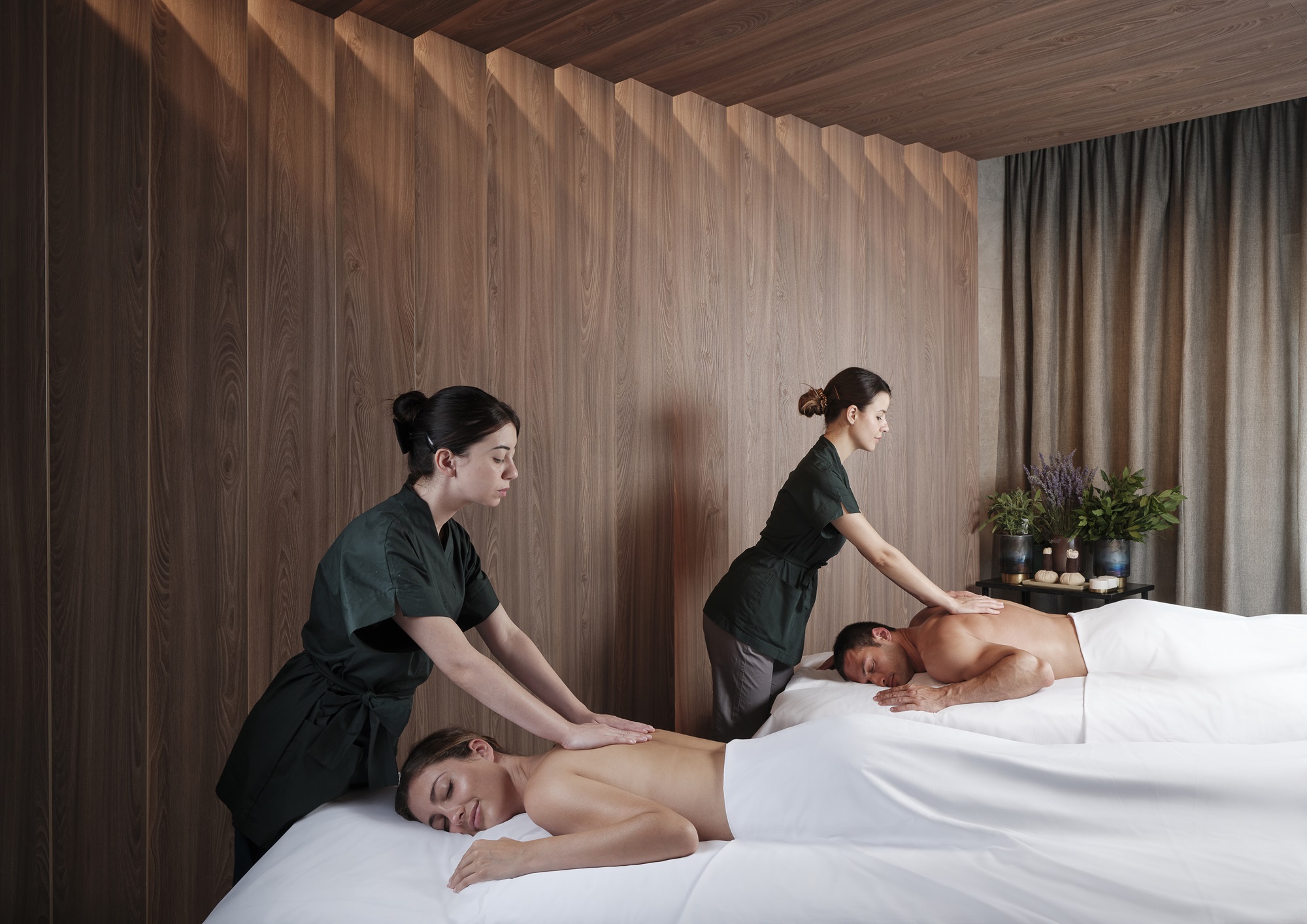
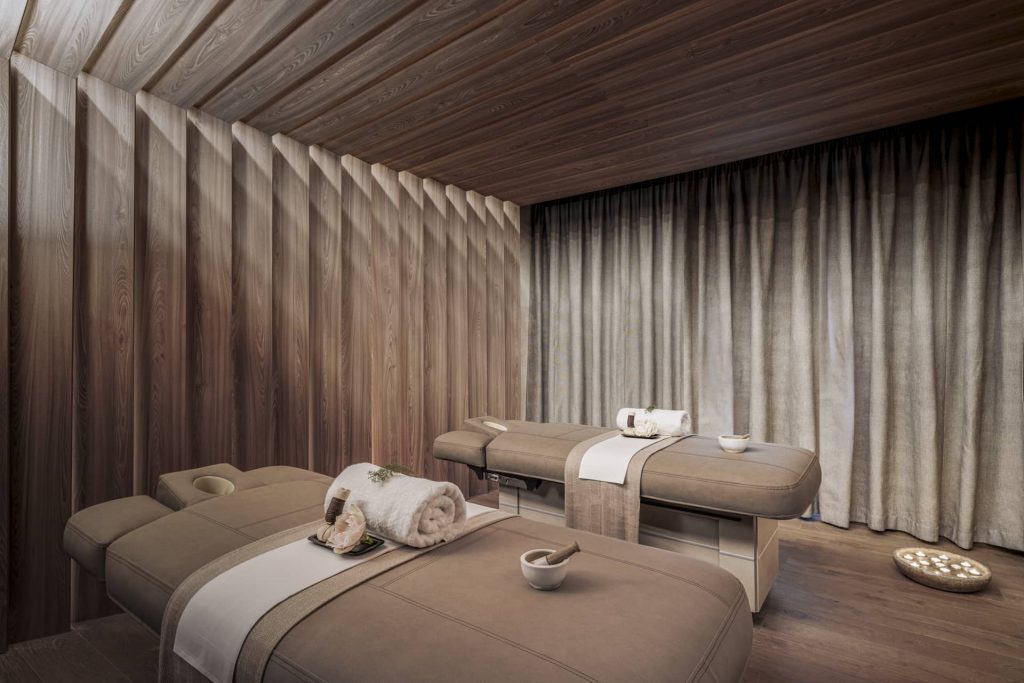
By the way, be sure to set aside at least one afternoon to try out the rejuvenating treatments at the spa, which combines Ayurvedic techniques and Far Eastern methods with innovative holistic therapies. Among its facilities, the Couples’ Suite stands out—a private retreat equipped with a personal infrared sauna, a sensory shower, and an intimate relaxation area. For massage enthusiasts, on the other hand, it will be a pleasure to spend some vacation time on the Diocletian Ritual, a sort of “wellness ceremony” that combines olive oil, honey, salt mud, and medicinal herbs (bay leaf, sage, and lavender) to thoroughly detoxify the body.
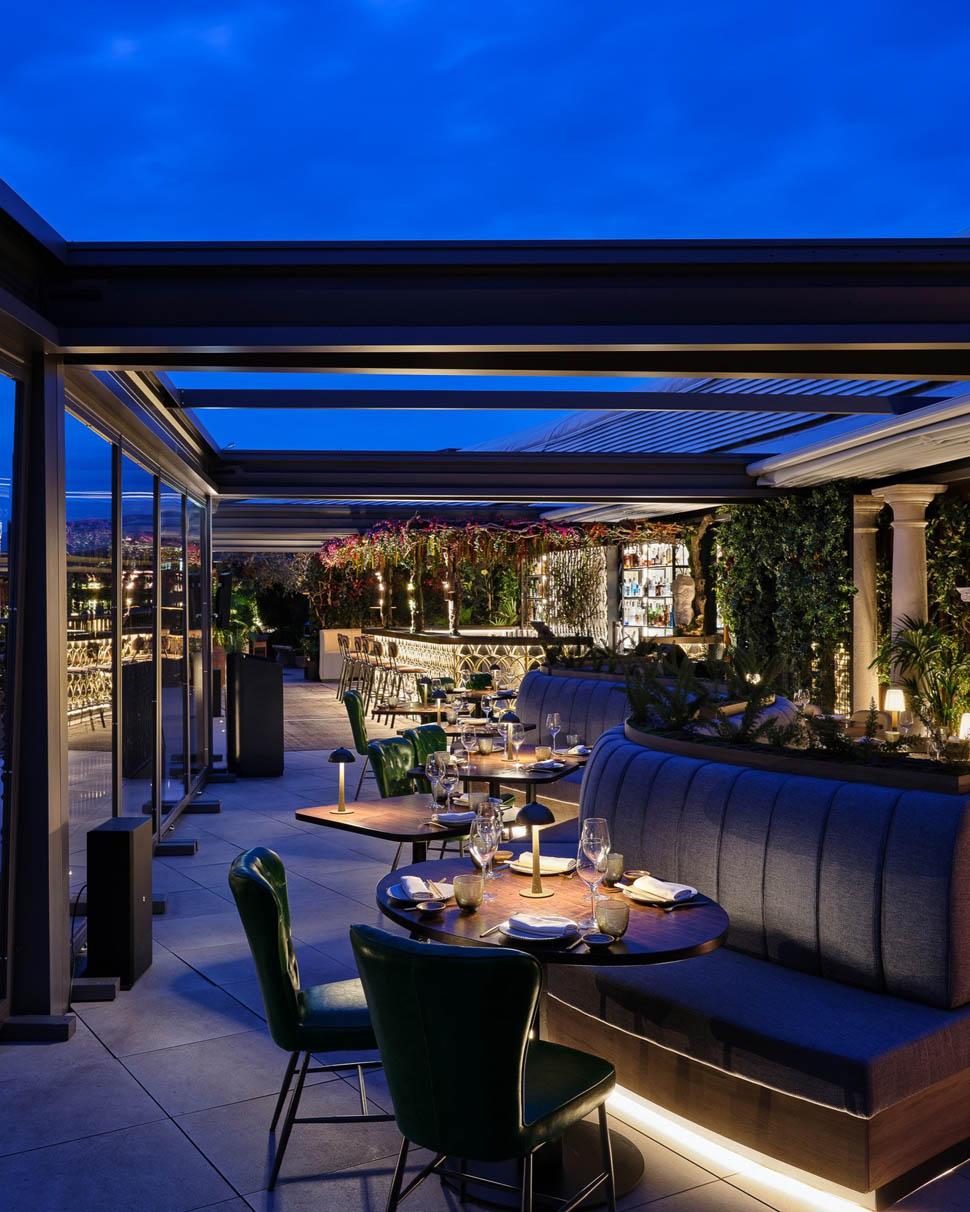
On the glamorous “rooftop” of Piazza della Repubblica: Aperitivo at Seen by Olivier
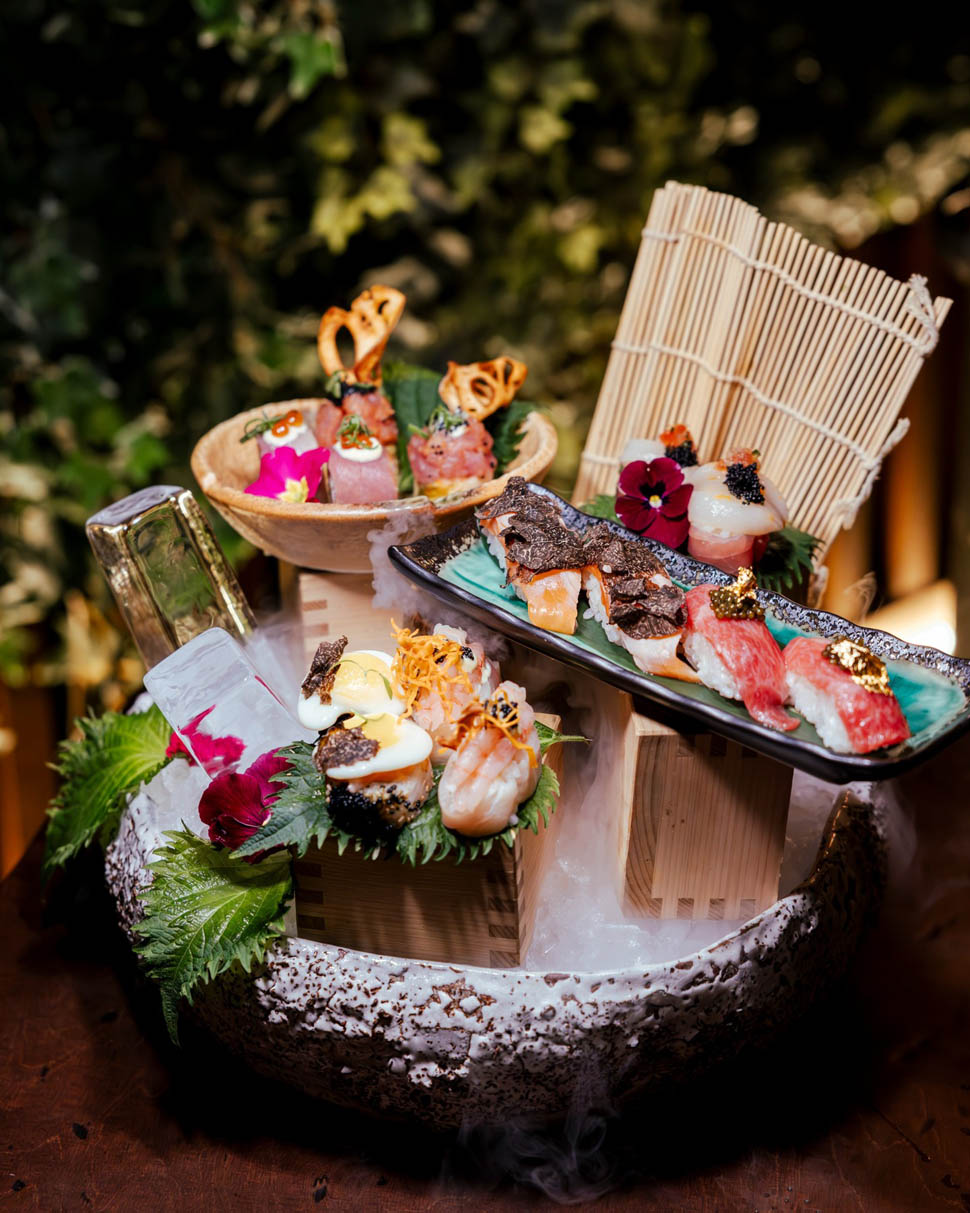
As soon as 6 p.m. strikes, Rome’s nightlife reaches for the sky at Seen by Olivier, a venue that breaks away from menus focused solely on sushi to venture a bit further into Asian-Mediterranean cuisine. At the heart of the experience is a lineup of cocktails with subtle botanical notes, often enhanced with kombucha or fermented fruit (try the guava-based ones and the reimagined Paloma!). These drinks find their perfect match in Olivier da Costa’s finger foods—from tacos to gyoza with a rich meat base—before gliding into the evening with premium meats—such as the Iberian pork pluma—and whimsical desserts like the excellent cheese-and-lime tart. Because, after all, above the millennia-old exedra lies a Rome that unites all nations in the same cosmopolitan square.
Contact
Anantara Palazzo Naiadi - Ineo
Piazza della Repubblica, 48-49 00185 Rome, Italy
Tel. +39 06 489 381
ineo.palazzonaiadi@anantara-hotels.com