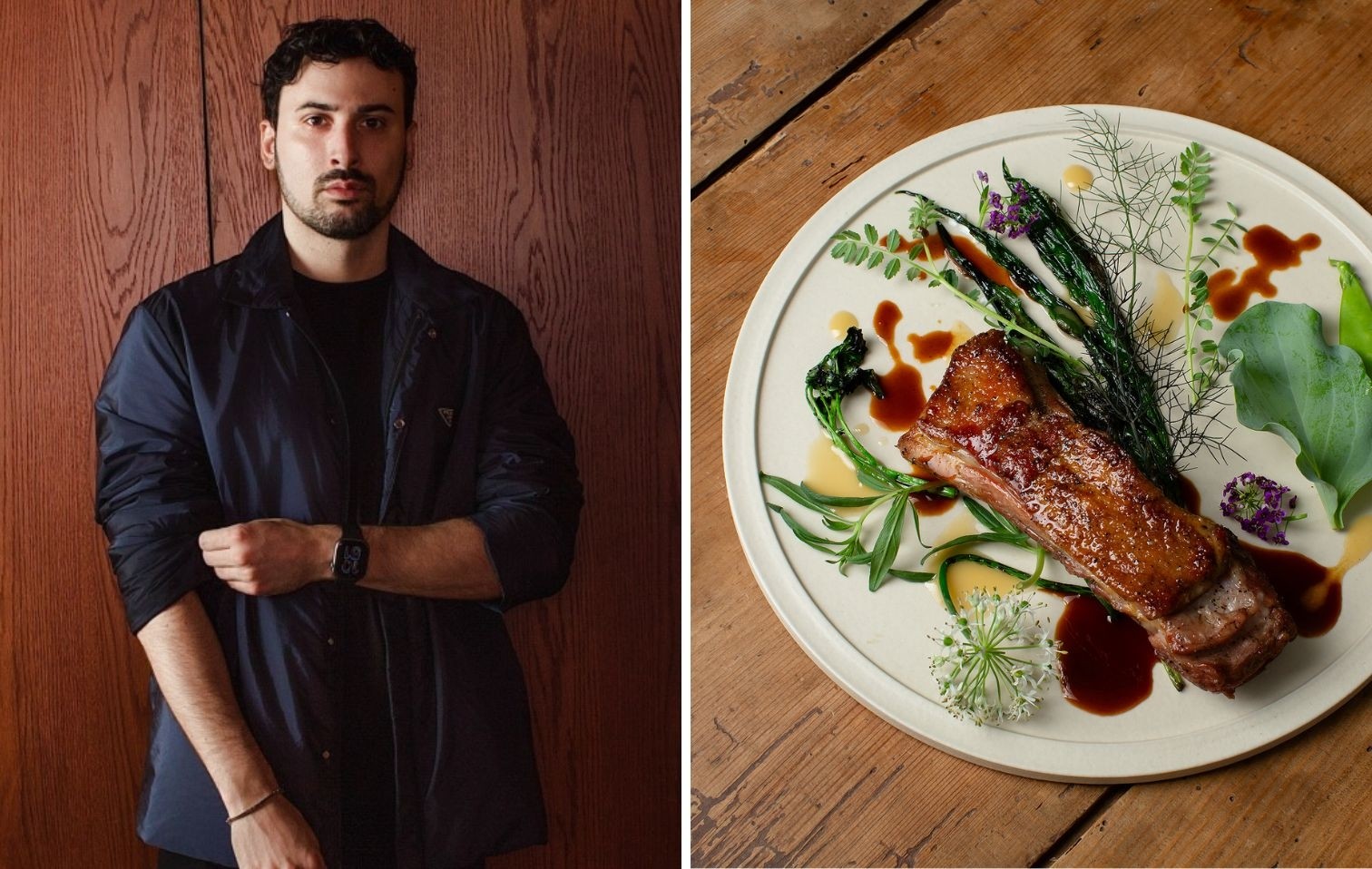
In Singapore, where the fine-dining scene often leans toward the spectacular, Somma builds its identity on a form of contemporary luxury redefined by simplicity and restraint.
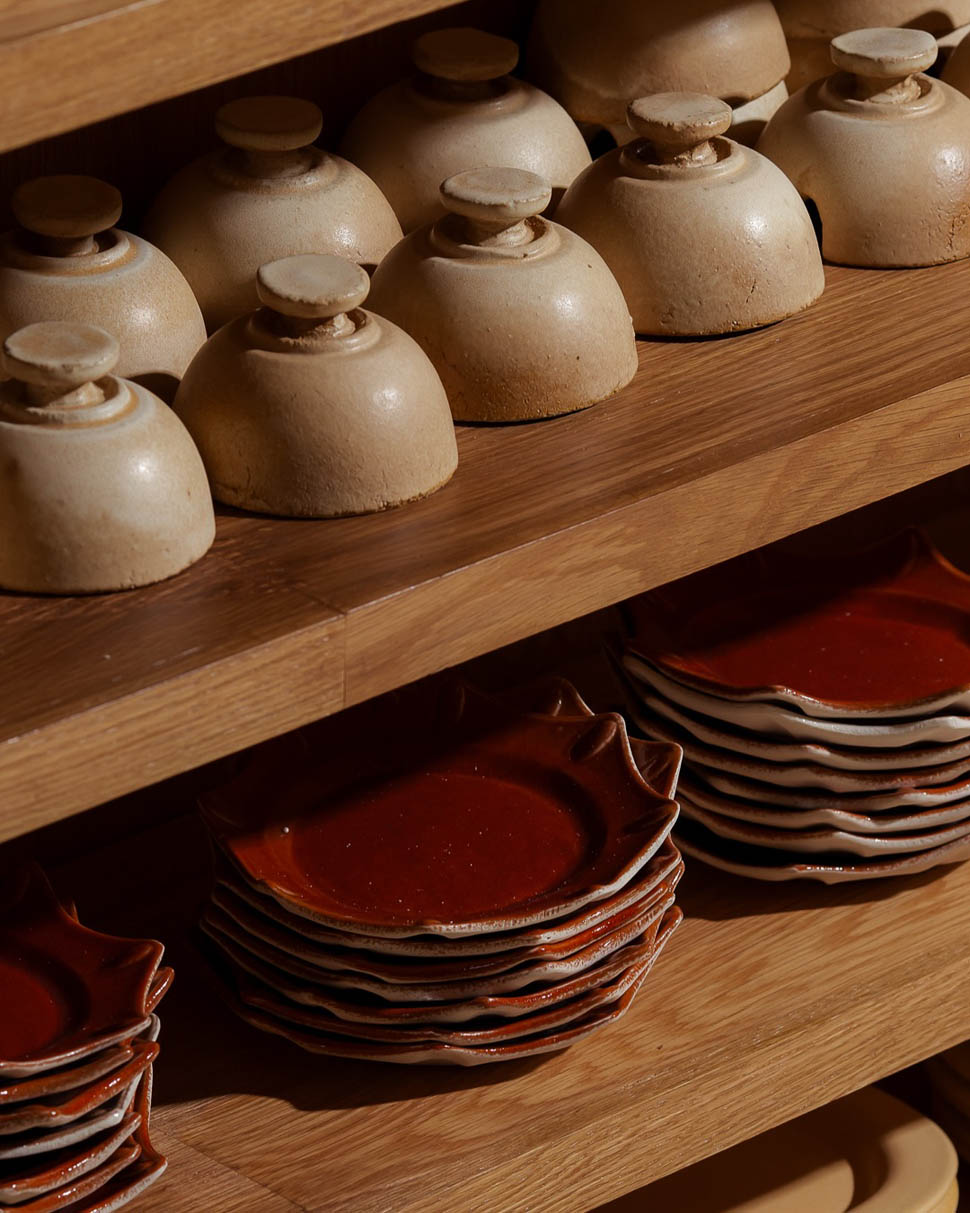
Founded by chef Mirko Febbrile within the New Bahru complex, in the spaces that once housed the Nan Chiau School library, the restaurant conveys the agricultural identity of Southern Italy through an architectural and gastronomic approach that eschews all forms of folklorism. Through the transformation of the space—reimagined as an installation thanks to a collaboration with the botanical design studio This Humid House—the environment becomes a physical transposition of the Apulian landscape: dried corn stalks evoke wheat fields, while the main dining room features suspended structures inspired by the hues of clay and sand, complemented by elements reminiscent of traditional drying racks and Mediterranean flora.
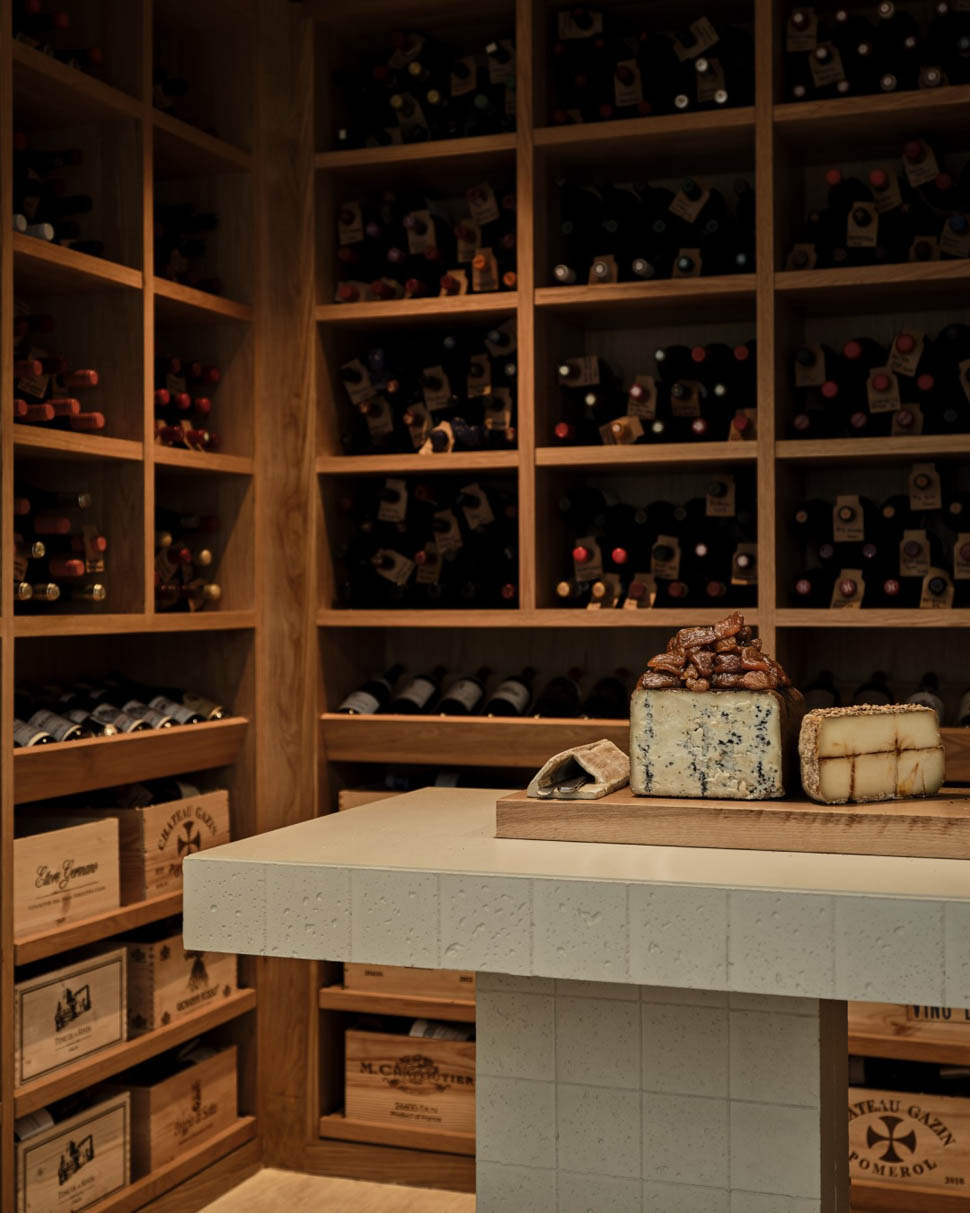
From a gastronomic perspective, Somma has evolved since its inception to align with the rhythms of the land, launching three distinct chapters: Solterra, the first, followed by the current Vendemmia, which will eventually give way to Folklore. The cuisine embodies a concept of sustainability understood as a revival of rural wisdom, centered on respect for the seasons and the elimination of waste. This vision is also reflected in a new flexibility in dining options, marked by the introduction of Saturday lunch, designed to offer a more immediate and casual take on the dining experience. Its recent inclusion in the global 50 Best Discovery selection demonstrates how a hyper-local narrative, when conducted with consistency and rigor, can establish itself with authority in the global fine dining discourse. In our conversation, Mirko Febbrile delves into the origins of this evolution, from the transformation of the space to the research on agricultural heritage, all the way to the construction of a refined Italian identity capable of engaging with a cosmopolitan audience.
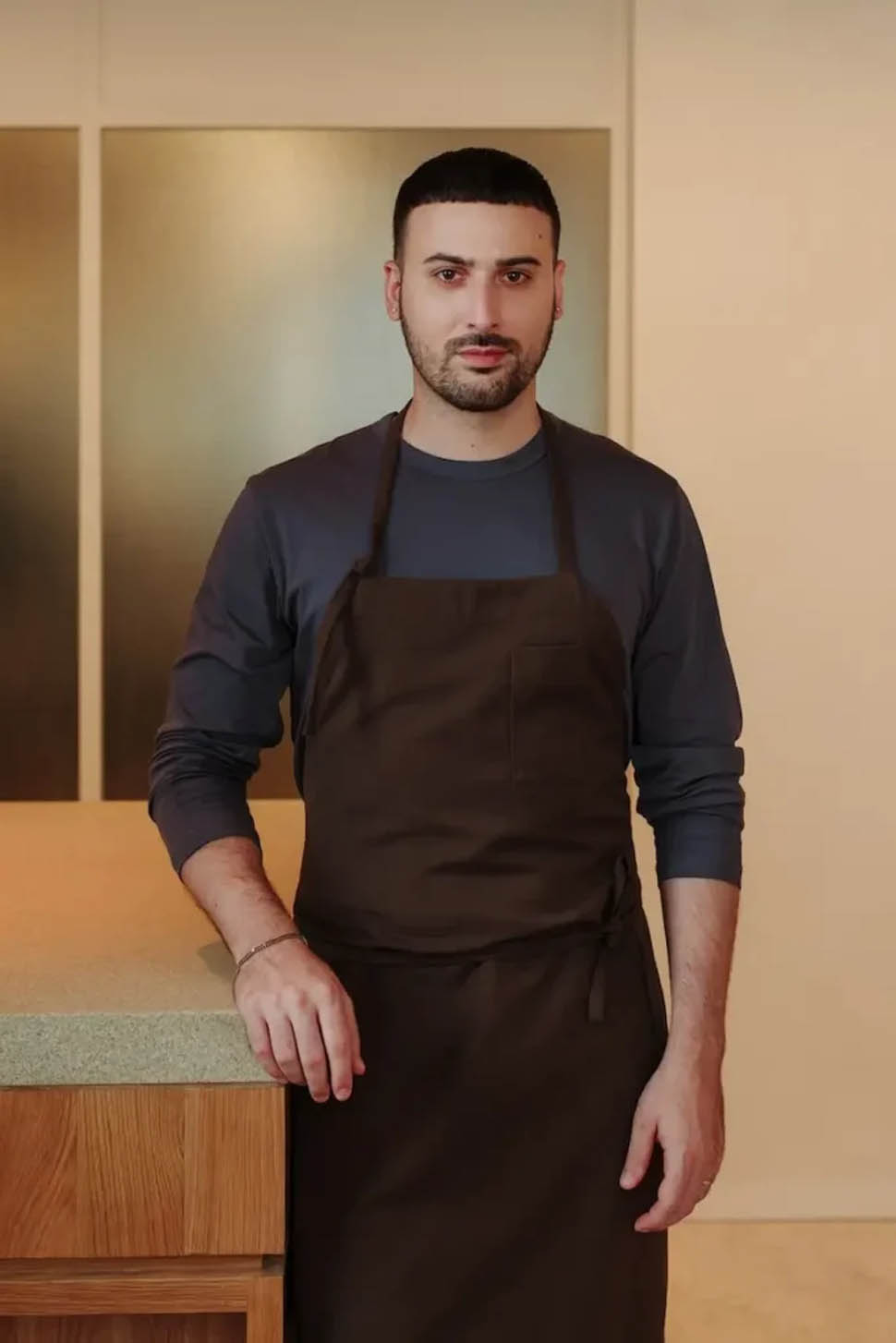
You’ve described *Somma* as “the sum—precisely—of your memories.” With this new direction, the narrative shifts to the Apulian countryside. What prompted this shift toward such a pronounced sense of seasonality?
Somma remains, as always, the sum of my memories, butat a certain point I felt the need to reconnect with my homeland, Puglia—which, as I recall, is not made up solely of recipes, but above all of seasons—the season of tomatoes, of wheat, of wild herbs, of olives, and of the grape harvest. And in this deeply agricultural culture, the season dictated the work, the harvest times, what to preserve for the coming months, and often even when people gathered together. Talking about seasonality means talking about life as well, not just products. From this comes a cycle of three seasons—Solterra, Vendemmia, and Folklore—three ways of observing Puglia. Solterra speaks of the sun and the soil, of the driest and brightest part of summer. Vendemmia, on the other hand, begins in the fall, with the earth’s abundance and the transformation of ripe fruits through harvesting and fermentation. Folklore will explore traditions, rituals, and the collective memory that emerges around the table. We do not aim to reproduce Apulian cuisine literally, but rather to draw from its culture to create something contemporary.
“Vendemmia” is the second chapter in a cycle that began with “Solterra.” How much research and experimentation goes into the transition from one menu to the next before it’s unveiled to diners?
By the time a menu reaches our guests, we’ve already been discussing and testing it for at least four months. With the R&D team, led by Loris Caporizzi and Jeanette Ow, we start with research: we study the region, the techniques, and the ingredients, but also memories, books, producers, and traditions that are at risk of disappearing. Then comes the longest part: tasting, making mistakes, discarding, and starting over. We’re never simply looking for a series of new dishes; rather, we’re trying to understand what the essence of that season should be. The grape harvest doesn’t mean putting grapes in every course; we’re interested in what the harvest represents: ripening, fermentation, must, and reductions. But above all, we’re interested in the collective act of harvesting—the ritual and the sharing. And we try to translate all of that onto the plate. We begin building the menu from these concepts. For me, research works when, in the end, the effort is no longer visible and the dish arrives at the table with effortless grace.
The approach to upcycling is becoming increasingly extreme—is it harder to create haute cuisine by stripping down an ingredient rather than working with prestigious raw materials?
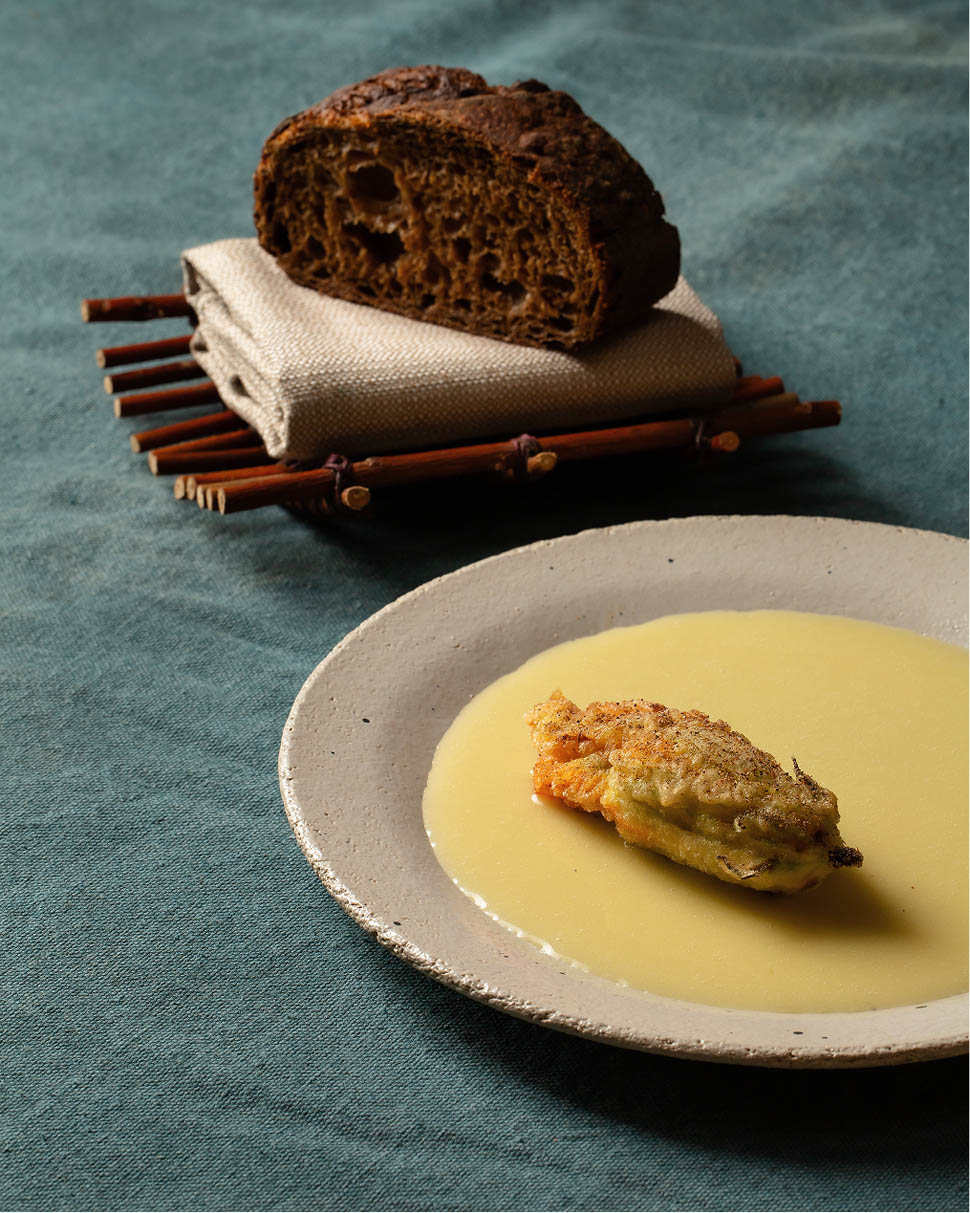
I think it’s much harder. An expensive ingredient can make an immediate impression. Making a carrot, a grain, a peel, or a part normally considered secondary memorable requires much deeper understanding. It’s something I feel is very closely tied to the culture of Southern Italy, which stems from the intelligent use of resources. Today we use terms like zero waste, upcycling, or sustainability, but in peasant kitchens, many of these practices already existed out of necessity and knowledge. Stale bread wasn’t waste; it became “cialledda” and “pancotto.” The double-baking of products like “taralli” and “frise” is also linked to shelf life. Whatever the land yielded in abundance at a given time was dried, fermented, or preserved to last through the seasons. What I find interesting today is reclaiming that wisdom—not necessarily those specific recipes—and bringing it into contemporary cuisine. Even at Somma, this revival is first and foremost driven by gastronomic reasons and makes the dish better. That’s why, for me, luxury isn’t defined solely by the economic value of the raw ingredients—even though we do use top-quality products—but there’s another kind of luxury in the time, knowledge, and work required to extract something extraordinary from a seemingly simple ingredient.
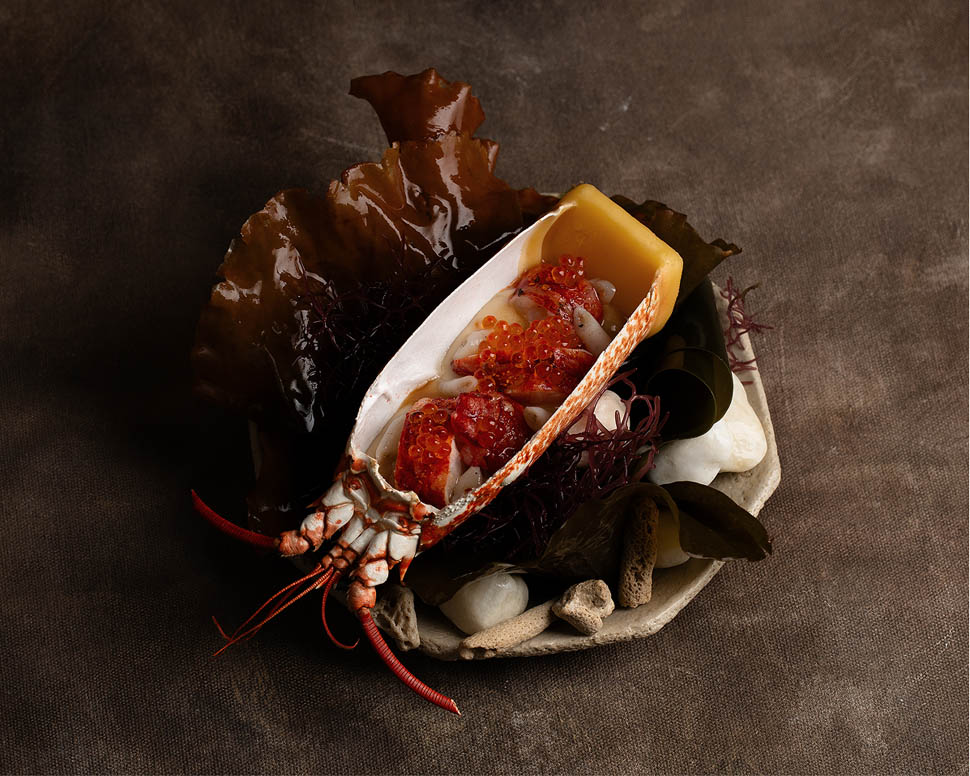
Southern traditions (toasted wheat, scapece, lard) and global elements (koji, kosho). How do you balance Asian influences without losing the Apulian essence?
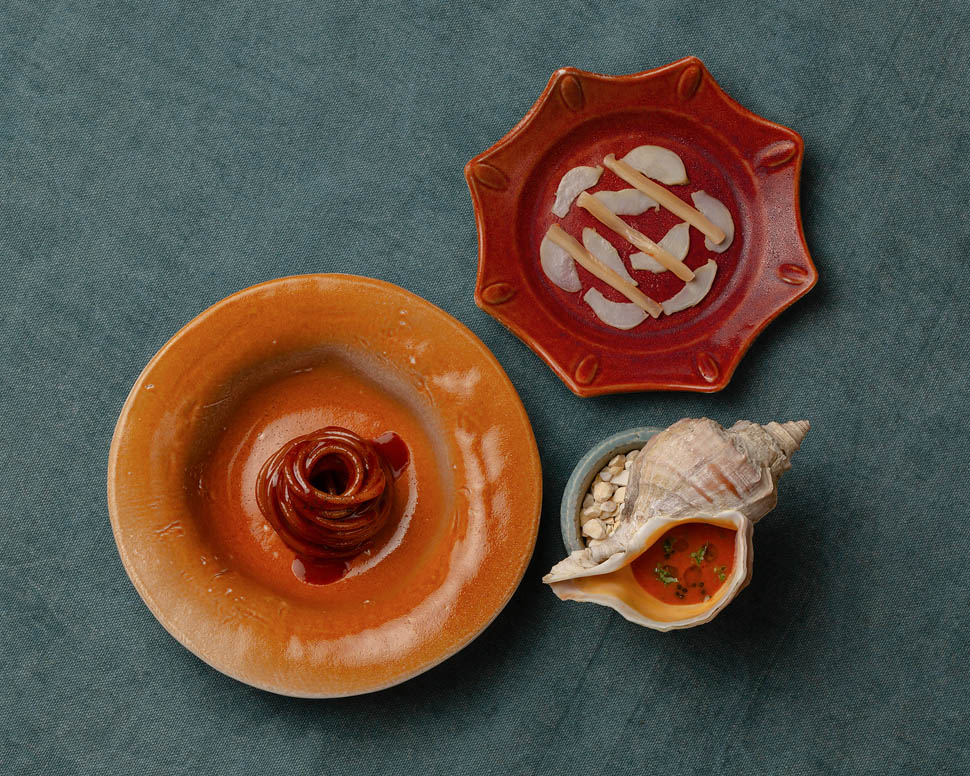
Every culture has had to learn to manage time, the seasons, abundance, and scarcity. This has given rise to various techniques for fermenting, drying, salting, acidifying, and preserving. Scapece, for example, originated as a preservation technique that relies on acidity. Koji belongs to a different culture—I would never put them on the same technical level—but both illustrate that cooking also means learning to manage time and transformation. That’s where Asia becomes interesting for our work. We use koji because it can help us bring out the sweetness and umami of a vegetable, or add more depth to a grain. With kosho, we can apply the principle of fermentation to the citrus fruits, chili peppers, aromas, acidity, and bitterness of our Mediterranean region. I use techniques I learned in Asia to look at ingredients and flavors I’ve known all my life with fresh eyes. I’ve lived here for eleven years; it’s inevitable that Asia has influenced my way of cooking, but without making me lose my “center.” Puglia gave me the grammar; the rest of the world expanded my vocabulary, but the sentence must continue to have our accent.
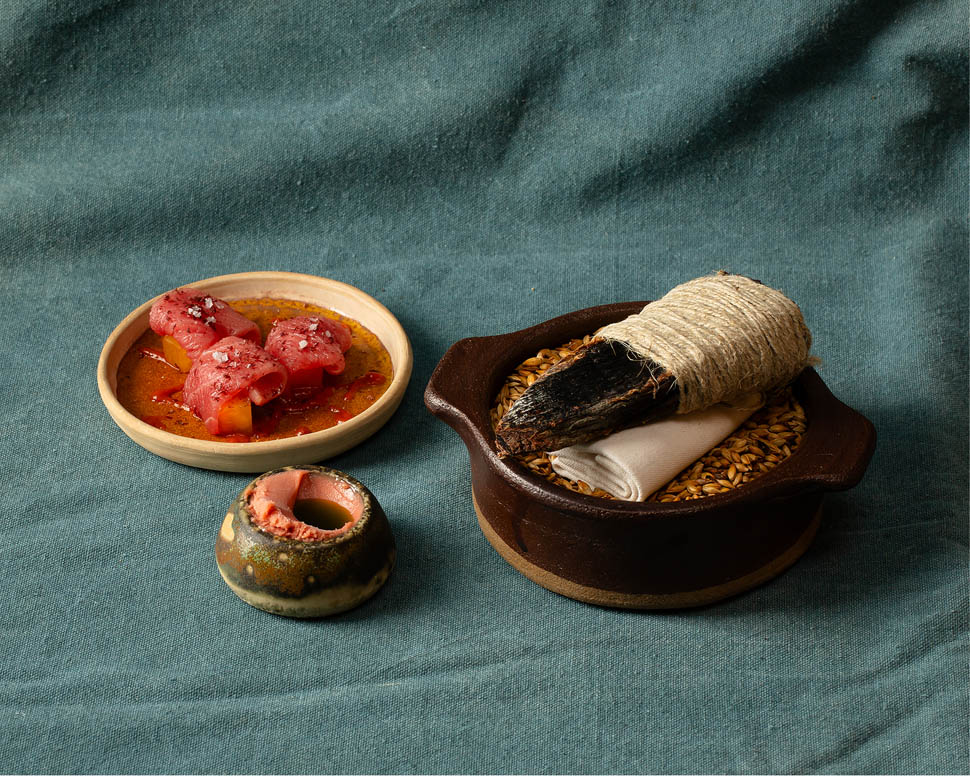
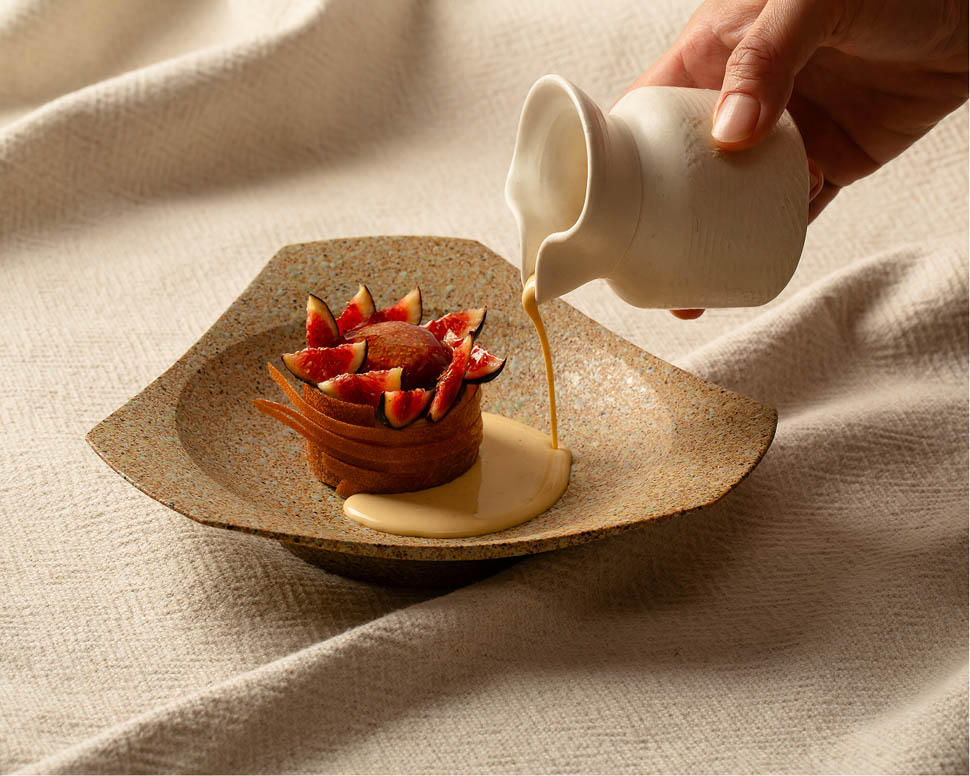
You’ve introduced a Saturday lunch with more flexible options—where did that idea come from?
One of the best things about the South is that great food isn’t necessarily reserved for special occasions. In fact, the meals I remember most often weren’t formal at all. The significance doesn’t come from the economic value of the ingredients or the formality of the service, but from the time spent together and the act of hospitality. Saturdays allow us to showcase a different side of Somma—one that’s more casual and comforting, yet with the same precision in the kitchen. For me, making a restaurant more accessible means creating another gateway for people to get to know it.
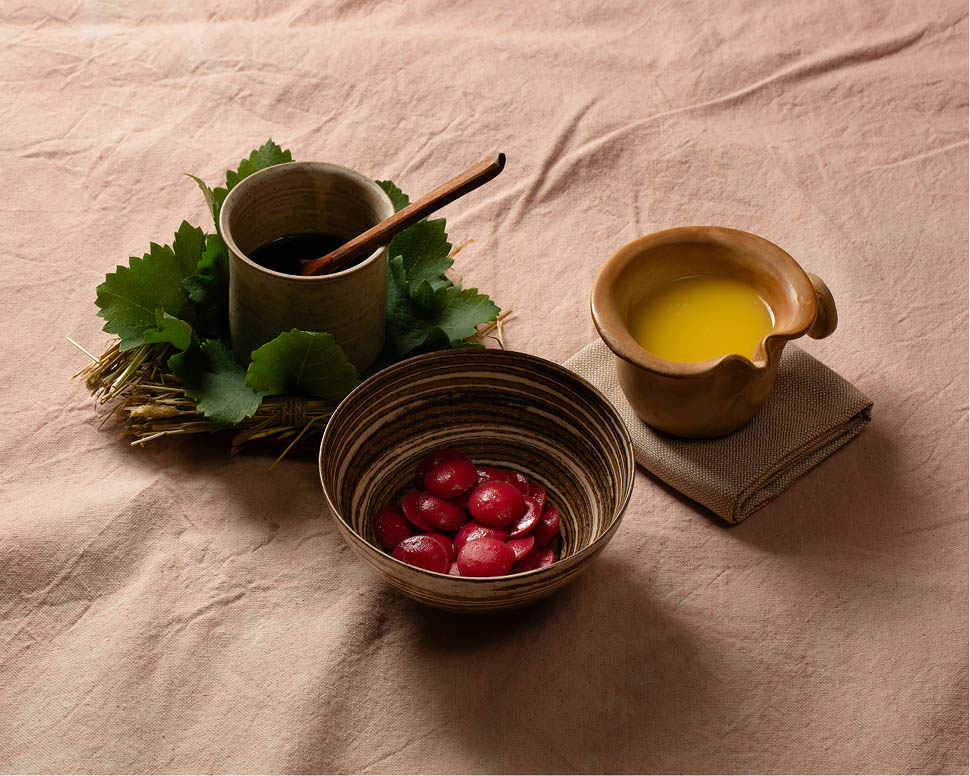
The dining room has also evolved—it’s almost a sculptural installation made of corn stalks, red earth, and drying racks. How does this new design influence the guest experience and service?
I wanted guests to sense the season even before tasting the first course, which is why we work with real materials—corn stalks, earth, and dried elements. These aren’t mere decorations; they’re part of a story that continues on the plate. A wheat field, a vineyard, an olive grove, or a dry-stone wall don’t just tell the story of a place; they tell the story of the relationship people have built with that land. Bringing some of those materials into Somma means giving guests the keys to enter the landscape from which our cuisine is born. Even the service involves fewer encyclopedic explanations and more of an ability to read the table. There must be depth, but without imposing it, because we can share the story behind a dish with those who want to delve deeper, or simply let someone eat and enjoy themselves.
With its inclusion in the global 50 Best Discovery selection, Somma officially enters the conversation of international fine dining. How important is this recognition in establishing a vision of contemporary Italian identity abroad that moves beyond stereotypes?
It matters a great deal, especially because it demonstrates that Italian cuisine can be presented beyond clichés, without oversimplifying it. After all, what we call “Italian cuisine” is the sum of countless local cuisines—a diversity that is likely one of its greatest assets. And it is this complexity that I’m interested in sharing outside of Italy, starting with Puglia, through the lens of the chef I’ve become while living in Asia—but without nostalgia. Being recognized by an international platform like 50 Best Discovery means we don’t have to simplify our identity to make it understandable to the world.
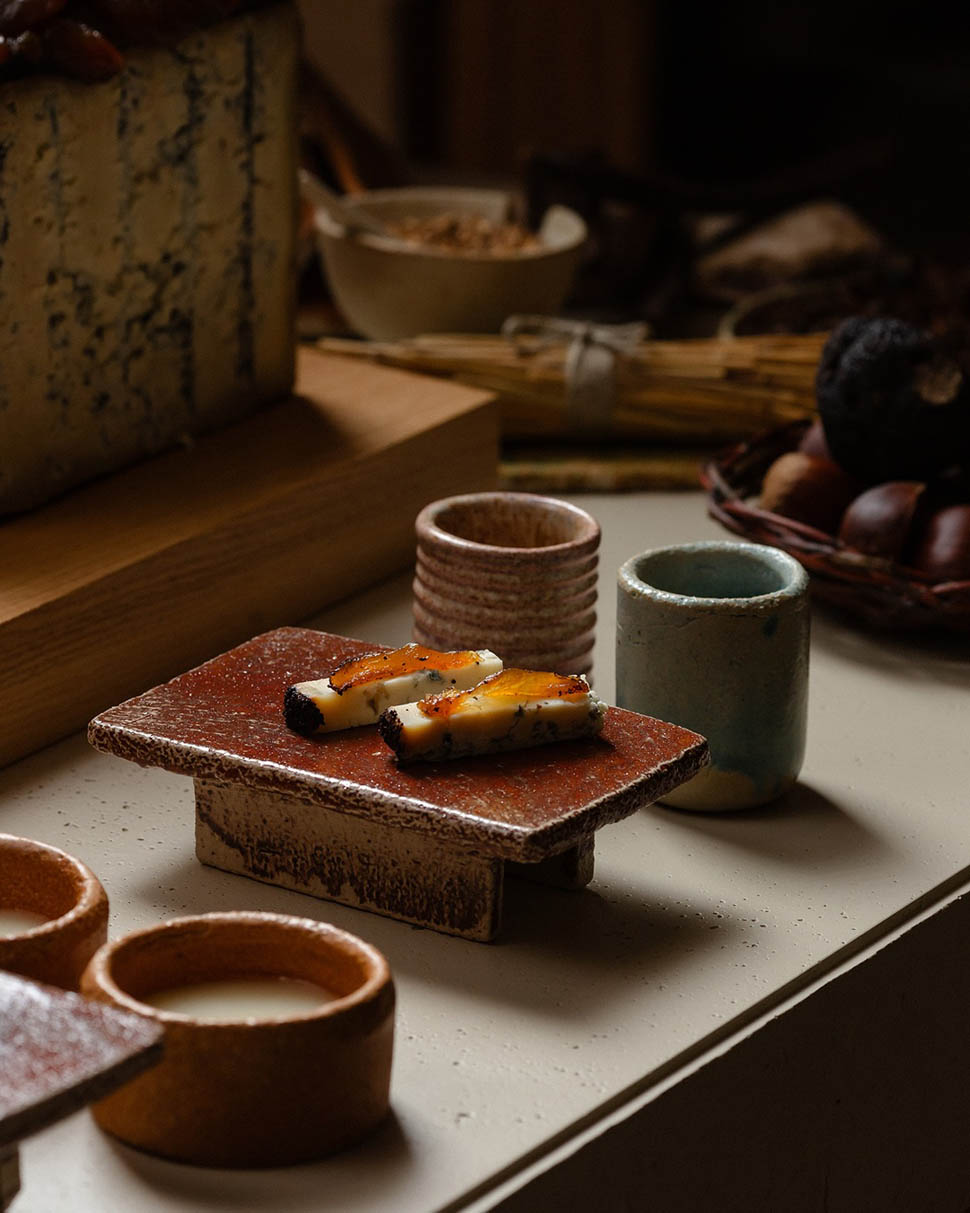
In a hyper-competitive market like Singapore, how challenging is it to maintain the project’s identity and consistency?
It’s one of the most complex challenges in a fast-paced market; the risk is chasing trends rather than your own vision. For us, consistency doesn’t mean standing still, but rather a continuous evolution of techniques and menus guided by a clear vision. The preparations may change, but that common thread that makes us instantly recognizable remains intact. Paradoxically, it is precisely our distance from Puglia that has helped us focus on our true essence. When you distance yourself from a culture, you begin to shift from memory to curiosity, to exploration. Today, I’m not interested in recreating Puglia in Singapore. I’m interested in understanding what Puglia can become after passing through eleven years of my life in Asia.
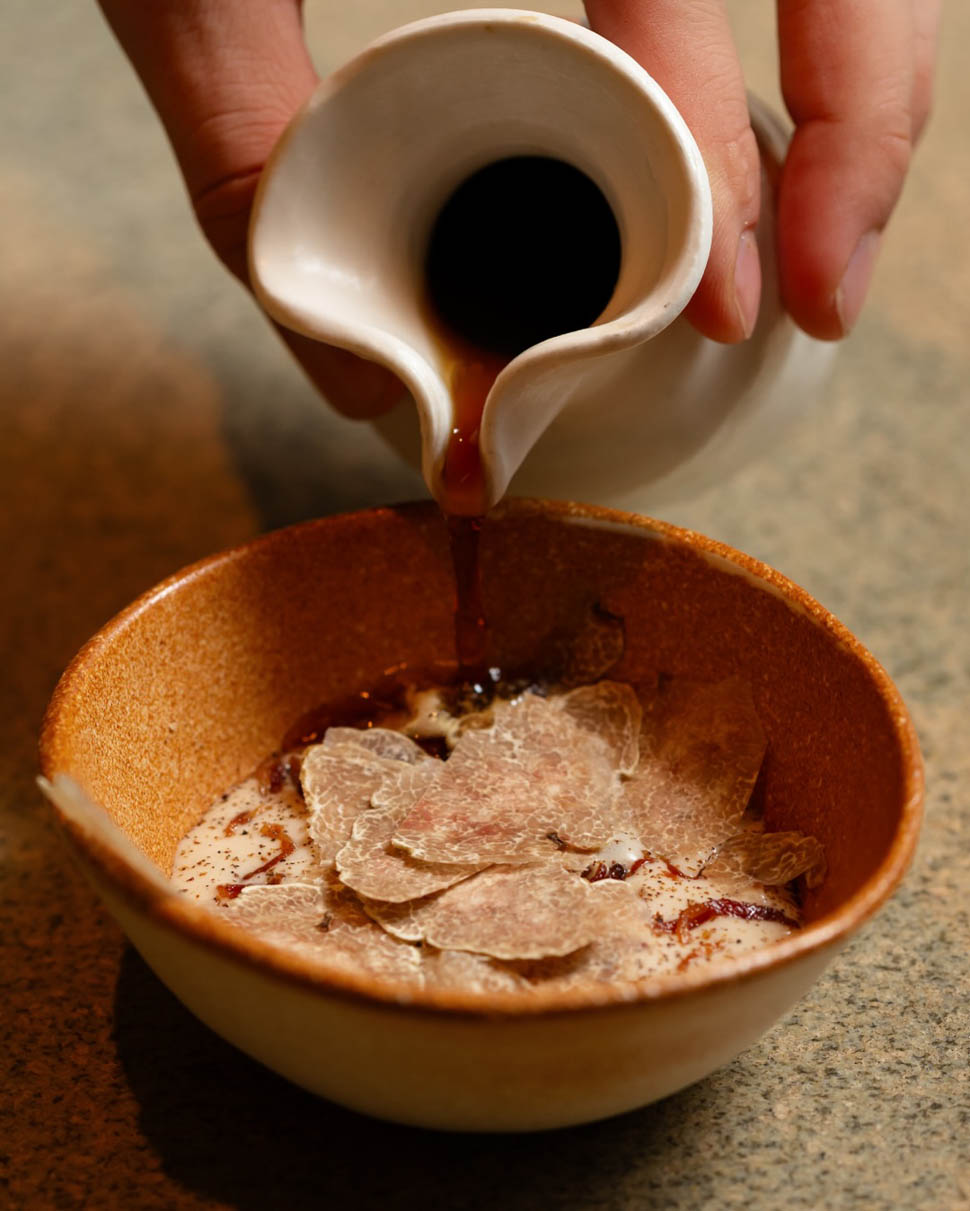
Somma Restaurant
46 Kim Yam Rd, New Bahru, #04-02 School Block, Singapore 239351
Phone: +65 9756 1590