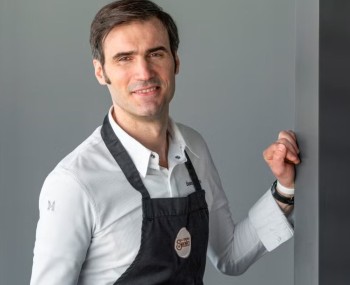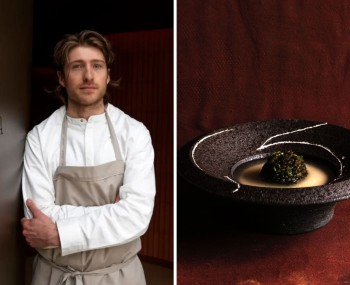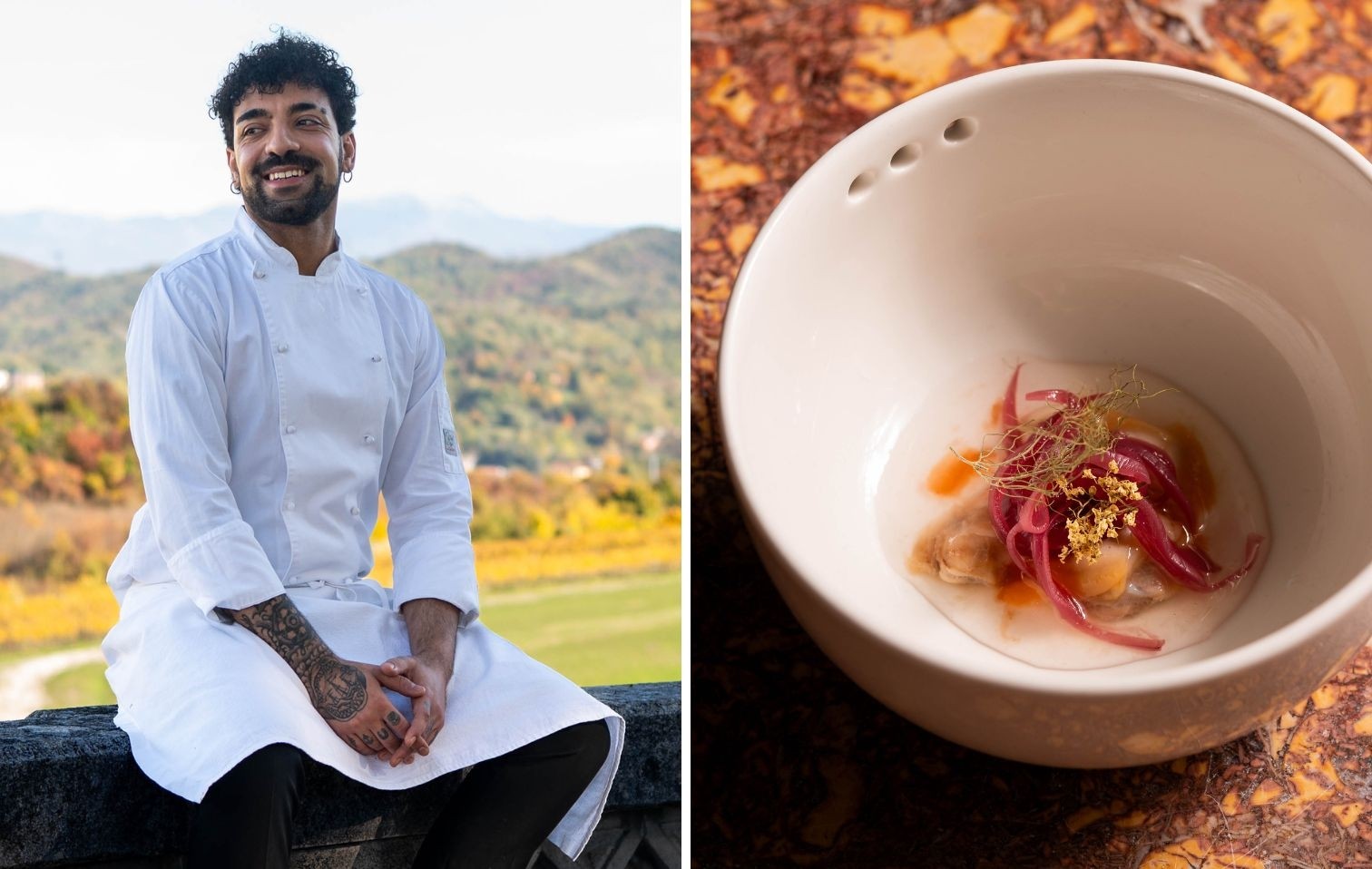
Nestled in the hills of Gavi and surrounded by vineyards, Villa La Bollina is one of the most charming destinations in the Alto Monferrato region. Originally built as a noble residence and now transformed into a charming retreat, the estate combines hospitality, wine, and fine dining in an elegant setting. It is here that Tracce, the culinary project led by young chef Davide Giovinazzo, is based.
Born in 1994, a native of Bologna with Dominican heritage on his mother’s side, Giovinazzo belongs to that generation of chefs who want to express themselves through food. His career has taken him through some of the most prestigious kitchens, from Nobu in London to Kadeau, with stops at Kokkeriet, Madonnina del Pescatore, and Osteria Povero Diavolo; yet what shines through in his dishes today is not so much a desire to reference his accumulated experiences as it is a determination to forge his own personal culinary language. His cuisine draws on his dual heritage and uses fine dining as a tool to tell a personal story woven from places, memories, and—why not?—even a touch of redemption.
Villa La Bollina and the Tracce Project
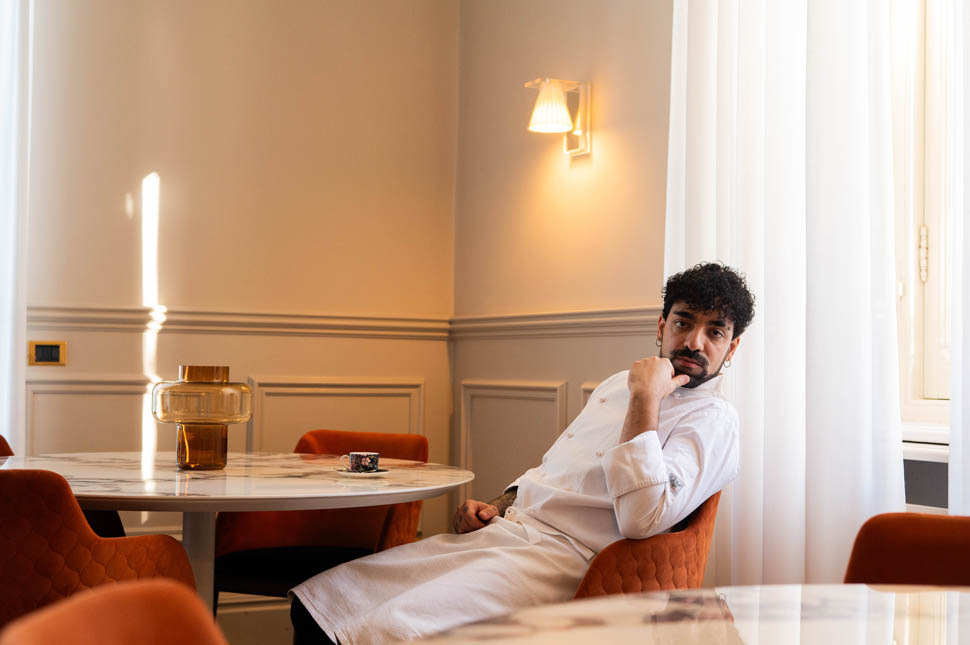
The restaurant occupies the villa’s most elegant spaces. High ceilings, large windows, marble tables, and a spacious terrace that, on sunny days, opens out onto the estate’s vineyards.
Tracce represents the most ambitious part of this story—a place where cuisine, wine, and the local territory are everyday stories to be shared with guests. The presence of the Bollina Winery, with its vineyards surrounding the estate, further strengthens this connection between the landscape and the dining experience.
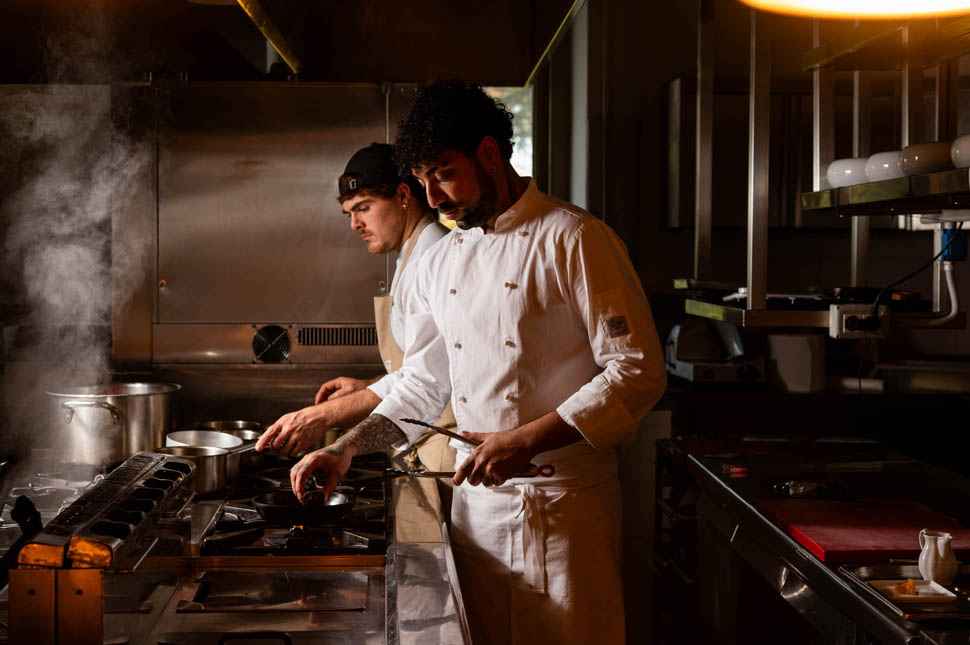
The “Origini” tasting menu is the heart of the experience. Thirteen courses—which the chef prefers to call “moments”—unfold like an autobiographical narrative. His Italian and Caribbean roots serve as the starting point for a cuisine that spans vegetables, seafood, meat, and desserts, using fruit as the common thread throughout the entire journey.
The Cuisine of Davide Giovinazzo
Giovinazzo’s dishes tell the story of his life’s journey; his is an emotional cuisine that does not lack technical skill or experimentation. Many dishes are born from personal memories, family influences, or fragments of his own life story. It is not autobiographical cuisine in the most literal sense of the term, but it is clear that his personal narrative represents one of the chef’s main sources of inspiration for his dishes.
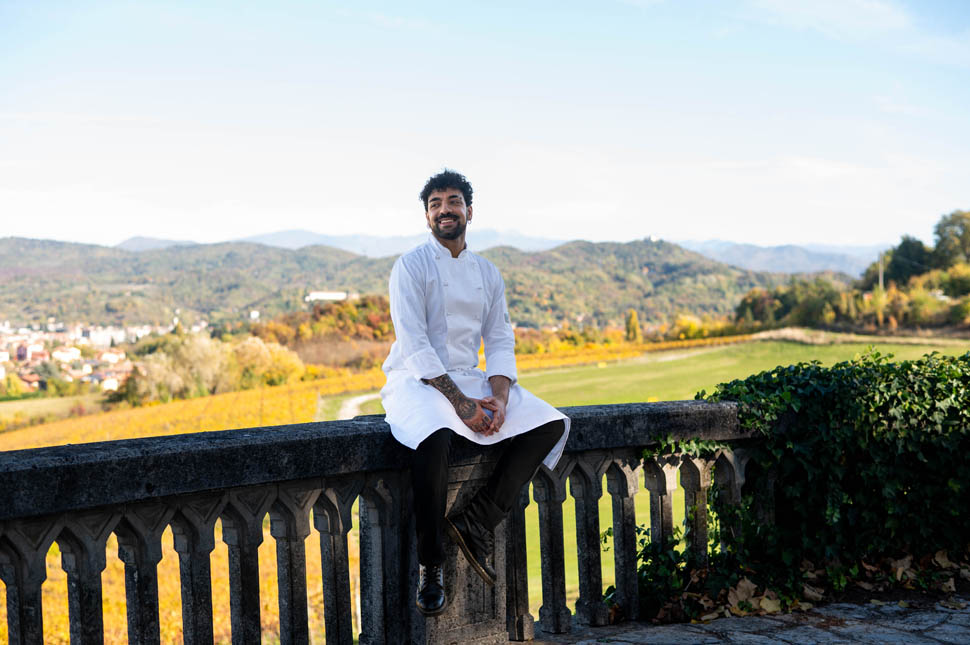
His Bolognese roots are inextricably linked to those of the Dominican Order. This connection is particularly evident in his use of fruit, an ingredient that runs throughout the entire tasting menu. It’s not simply a matter of incorporating tropical elements into Italian dishes. What’s interesting is the way the fruit is treated and conceptualized.
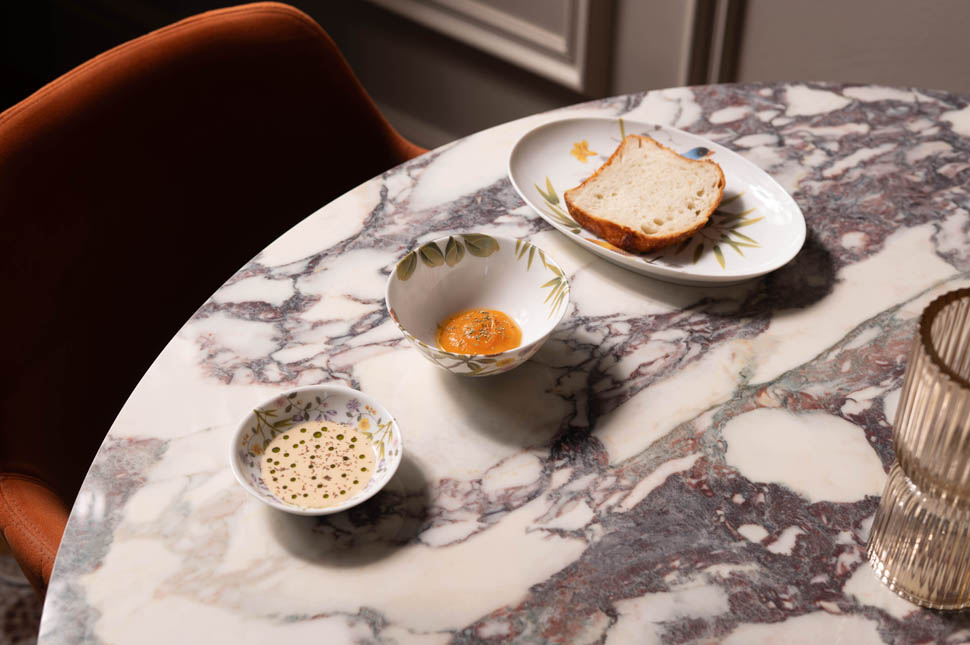
It is probably here that the Caribbean aspect of his culinary identity comes through most strongly. In Italy, we are accustomed to using fruit primarily as a complementary element. In Giovinazzo’s cuisine, however, it often takes on a central role and blends with the other ingredients with a naturalness more characteristic of Caribbean culinary culture than of Italian cuisine. This is evident right from the amuse-bouches, where fermented papaya becomes the “Caribbean scarpetta,” and continues throughout the various courses of the menu, culminating in the dessert dedicated to Mamajuana—a drink symbolic of the Dominican Republic, reinterpreted with rum, honey, red wine, herbs foraged nearby by the kitchen team, and spices. The tasting journey moves through distinct and highly recognizable flavors. Each dish takes a specific direction and follows it through to the end. When acidity is the focal point, it dominates the experience. When a dish focuses on toasting, smoking, or the sweetness of fruit, those sensations become the absolute stars of the tasting.
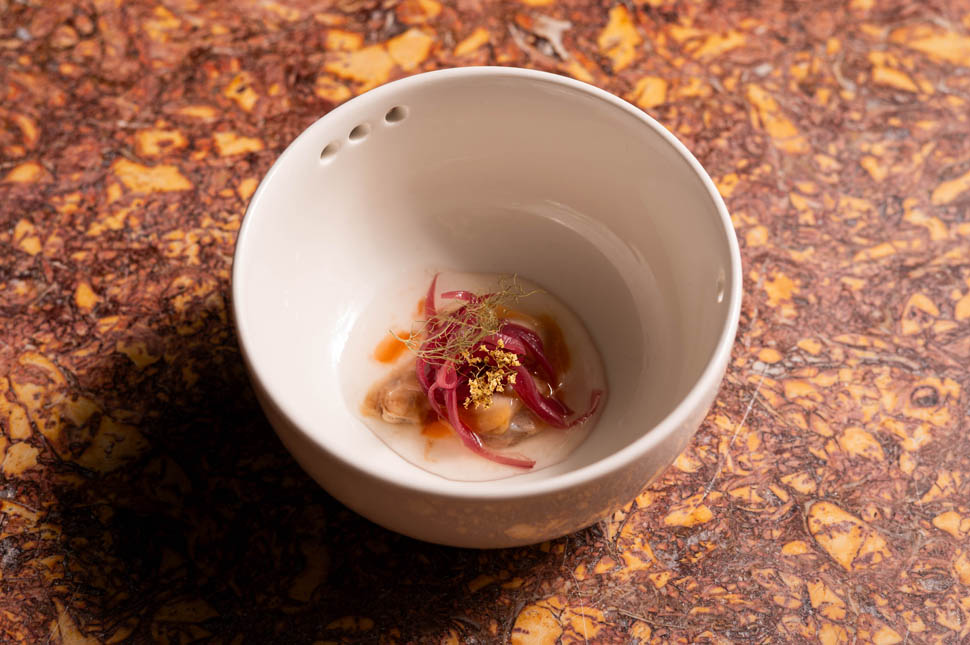
This choice makes the dishes instantly recognizable and conveys the image of a young chef who is already aware of his own identity. Where his cuisine will likely evolve in the coming years is through subtraction—not because it lacks balance, but because maturity often serves to further refine the message and simplify it. And when this happens, as in the highly successful rice, cod, and almonds, the result is particularly compelling.
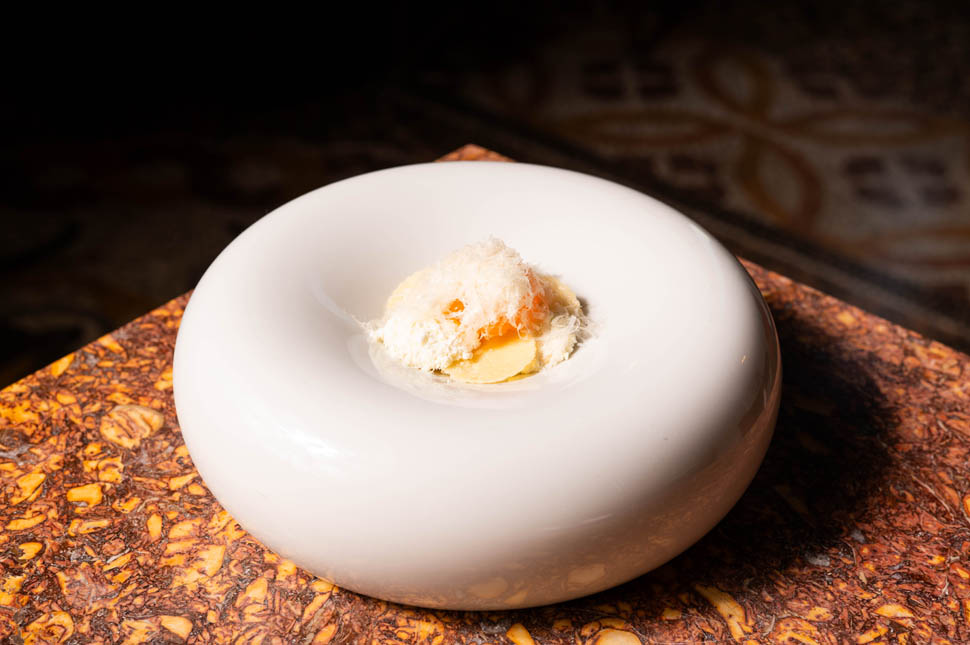
It’s not a risotto, but a sort of “risolatte”; the almond milk creates a well-balanced aromatic depth, and the cod—simply boiled, as in the home-style tradition that inspired the dish—retains a perfectly juicy and intact texture, inviting a satisfying chew. The almond milk wafers add a slightly crunchy element that rounds out the dish. It is one of the most compelling courses of the meal because it demonstrates just how effective Giovinazzo can be when he allows a few elements to speak clearly for themselves. The references to Bolognese culinary culture are also very well executed; they emerge in various parts of the menu without becoming caricatures. Bologna is a constant presence, a culinary memory that continues to accompany the chef even within a narrative deeply influenced by other traditions.
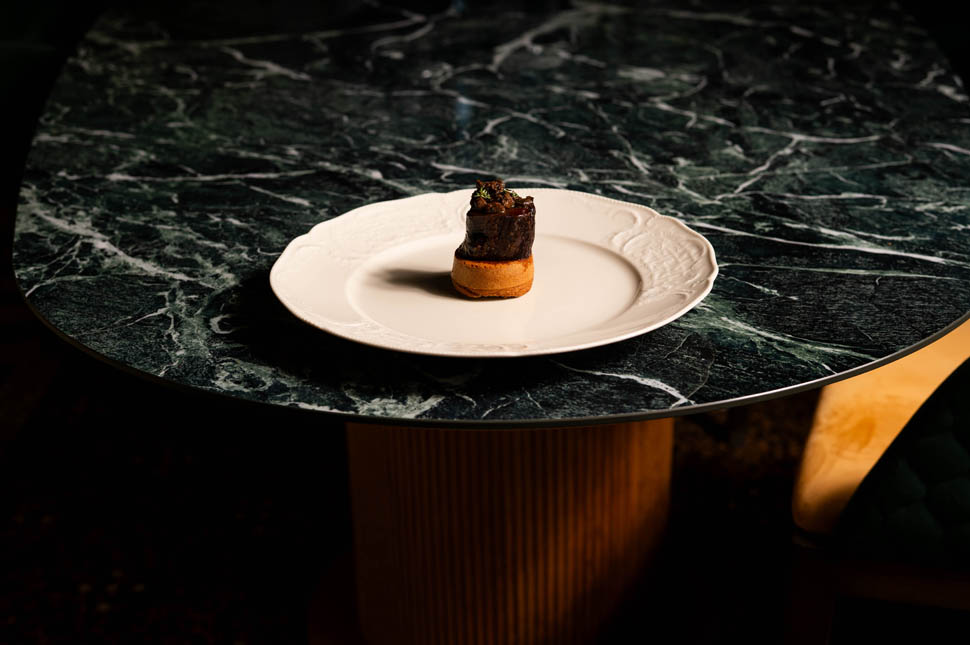
These influences are also evident in deer, banana, and coffee, a dish built around the use of scraps and the balance between very intense roasted notes, tropical sweetness, and game. What remains at the end of the tasting is, above all, the feeling of being in the presence of a young but extremely skilled chef, driven by an almost visceral passion for haute cuisine. Some aspects of his cuisine are still evolving, but the direction seems clear. Rather than chasing trends or established styles, Giovinazzo seems interested in developing his own distinct, personal, and recognizable voice. A quality that, in the contemporary culinary landscape, is often worth more than perfection (or the pursuit of it).
Contact and Info
Tracce Restaurant at Villa La Bollina
Via Monterotondo, 60 – Serravalle Scrivia (AL)
Website: https://www.hotelvillalabollina.com