As you reach the summit of the hill on which Le Cattedrali Relais stands, the view reveals a structure that is now perfectly integrated into the landscape. Two years after its opening, the 18-hectare estate in the Asti Monferrato region—a UNESCO World Heritage Site—has established itself as a well-established destination, which we’ll explore with you, from hospitality to fine dining.
Photo essay: Lorenzo Noccioli
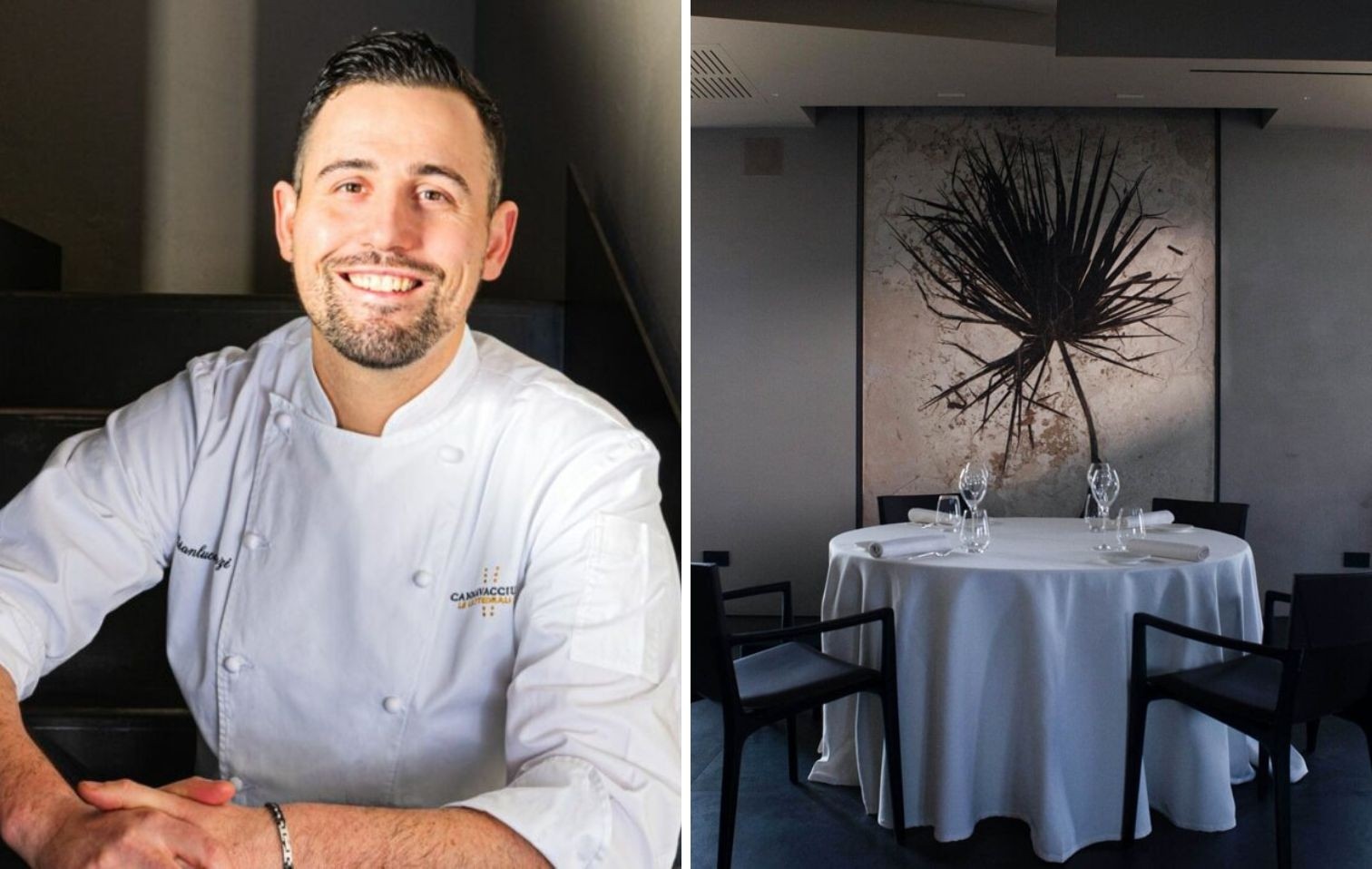
Official portraits of the facility
Amid the splashes of color in the botanical garden—from which the kitchen staff sources ingredients daily for the evening service—the dialogue between the surrounding nature and contemporary architecture has found its own underlying balance. Between the rows of plants, you can catch a glimpse of the chef’s hat of a commis busy harvesting tomatoes for the evening service, when those tomatoes will become the undisputed stars of a dish on the menu.
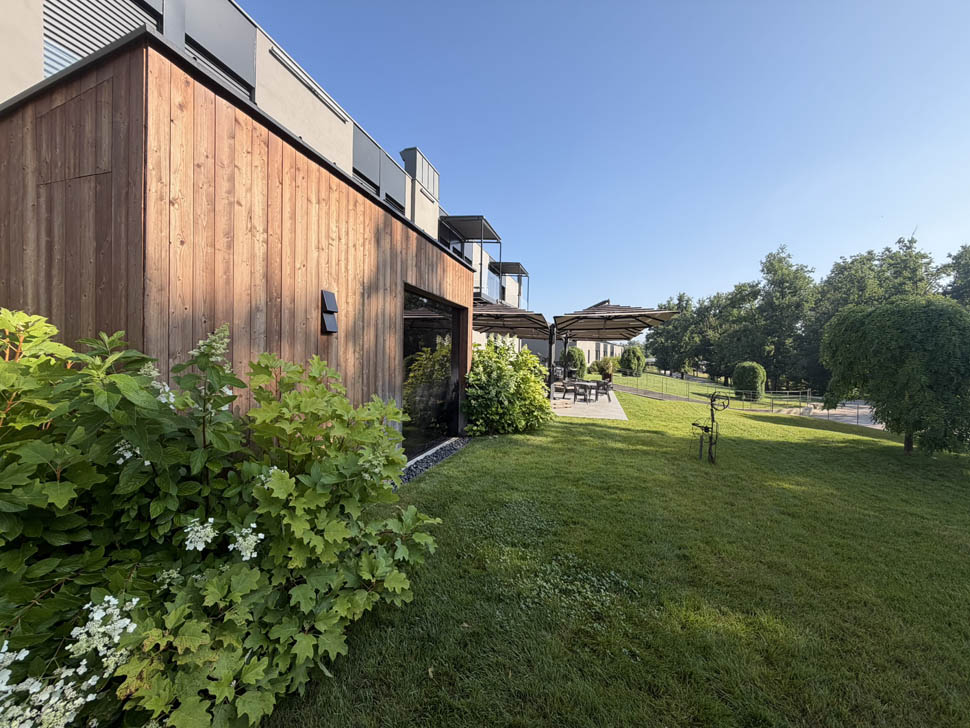
The area is situated within the Andona Valley, Botto Valley, and Val Grande Nature Reserve, a region shaped by the legacy of the Asti Basin—when, at least two million years ago, the Pliocene Sea covered the plain. This historical and geological context serves as the foundation for the conceptual design of the relais, which was created through the initiative of entrepreneur Livio Negro (president of the Asti Paleontological Park and the CR Asti Foundation) in partnership with LAQUA Collection by Antonino Cannavacciuolo and Cinzia Primatesta.
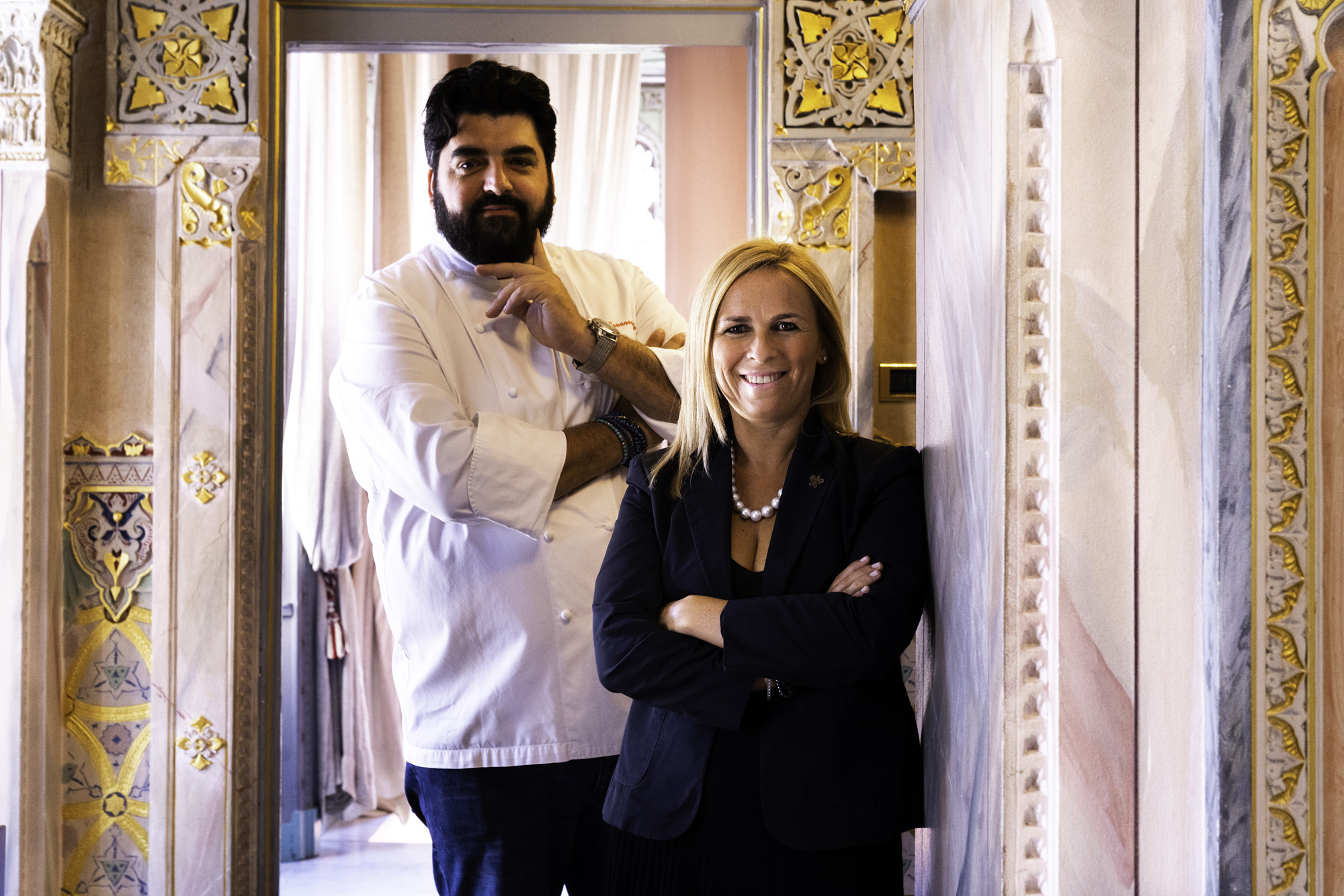
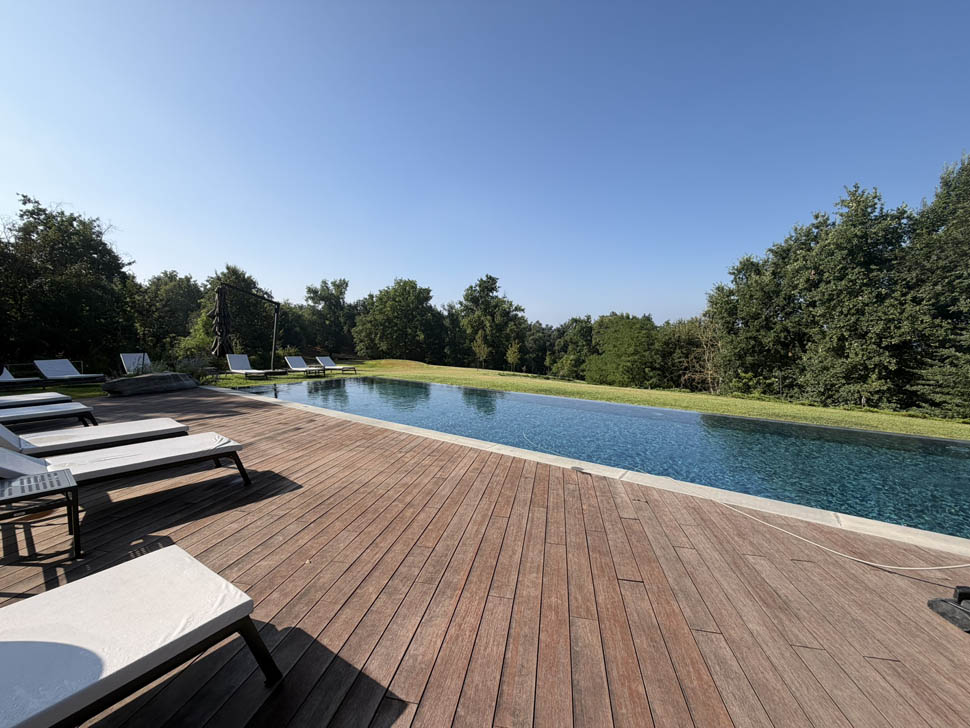
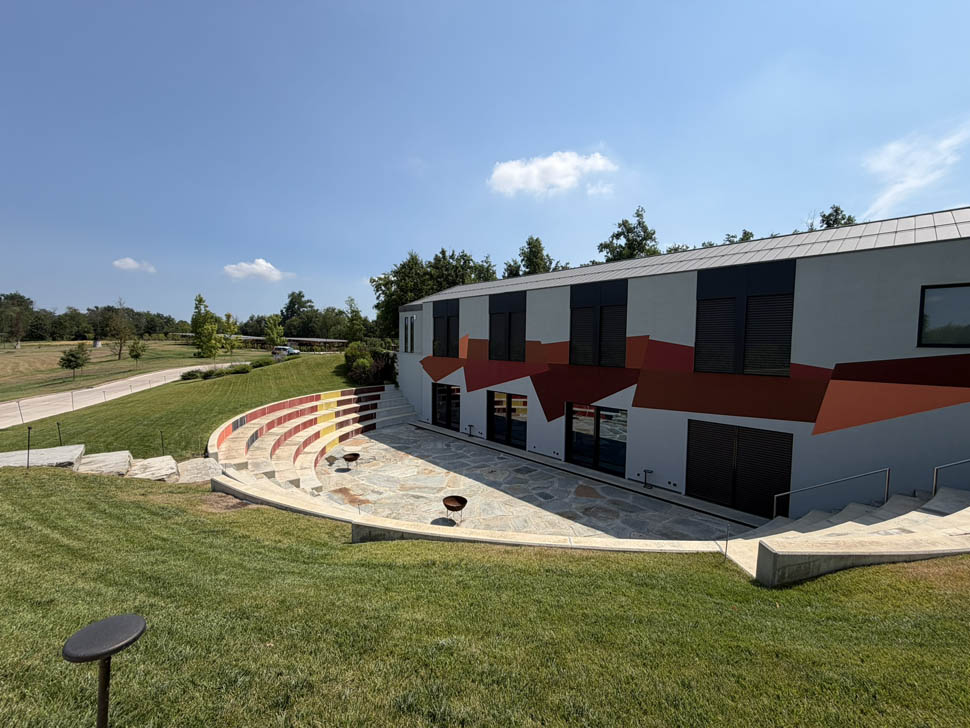
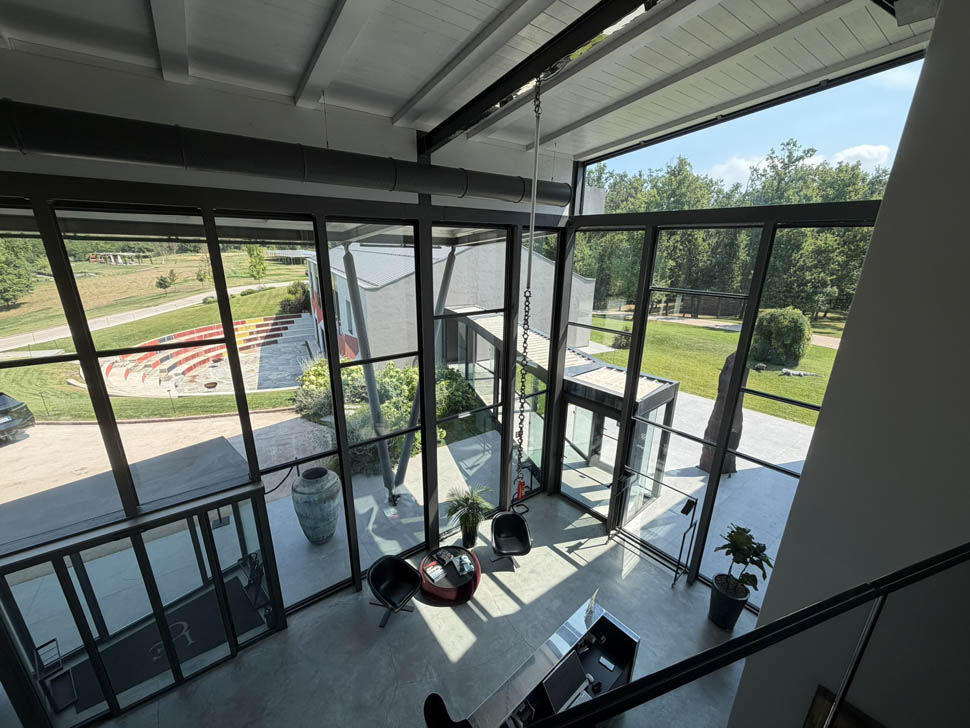
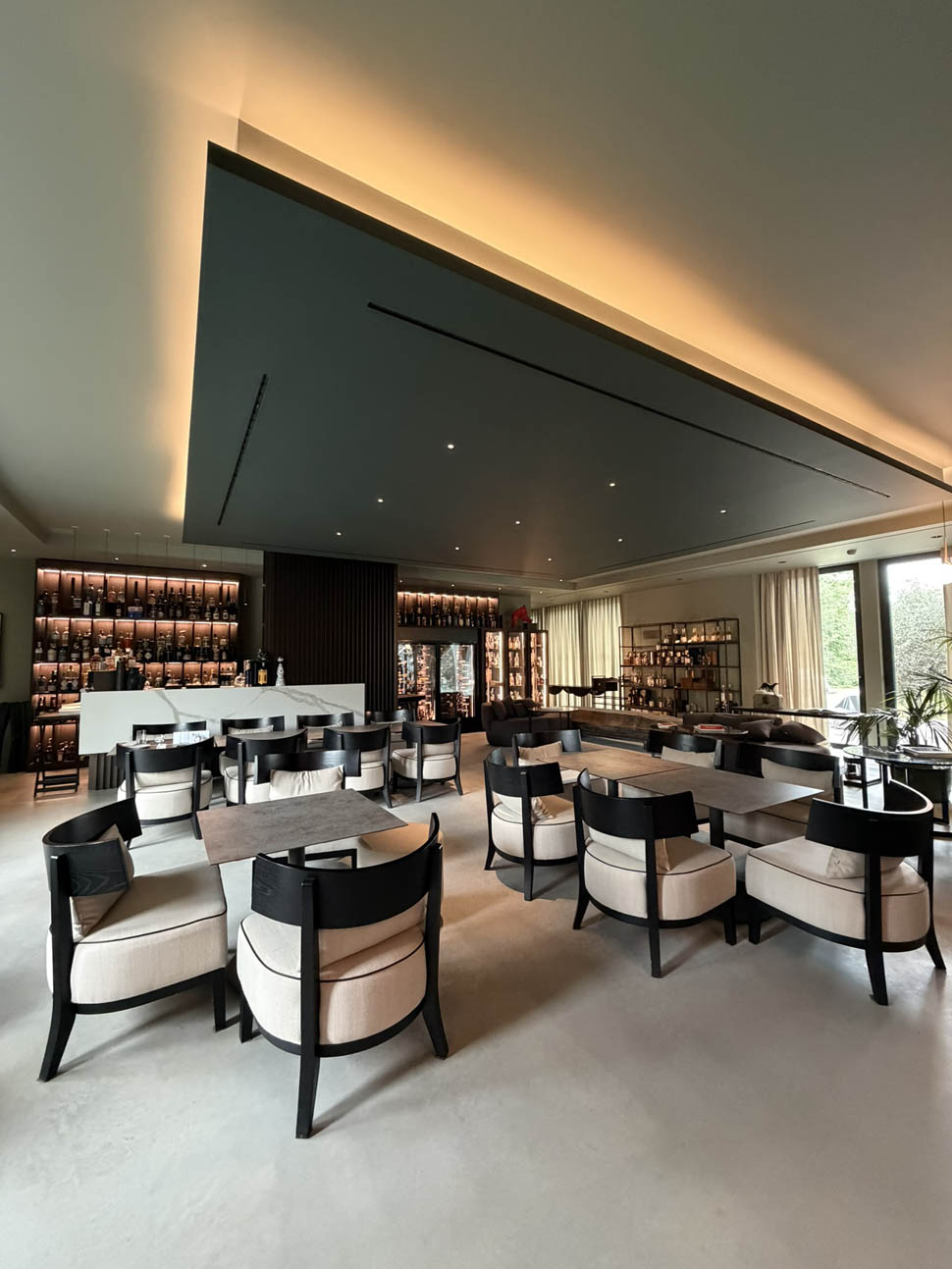
The three structures—which combine a rural and avant-garde aesthetic—that make up the complex are distinguished by the color scheme created by artist David Tremlett, whose geometric design in shades of terracotta and red characterizes the façade and the outdoor amphitheater. Inside the thirteen suites, the incorporation of historic pieces of international design harmonizes with the spatial layout of the rooms. A cultural ethos permeates the allure of this place and is reflected in the Amphitheater and the exhibition spaces that house the Massimo Cotto Collection. An archive of over thirty thousand music recordings, paintings, and autographed memorabilia that documents decades of history in the performing arts and contemporary art.
Antonino Cannavacciuolo’s restaurant concept, featuring a talented chef: Gianluca Renzi
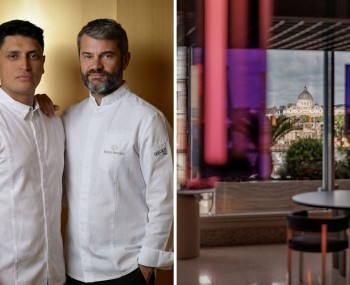
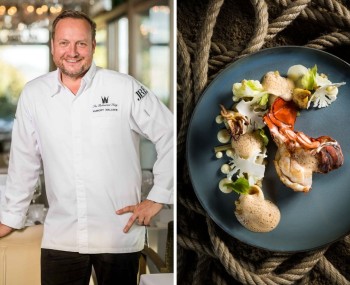
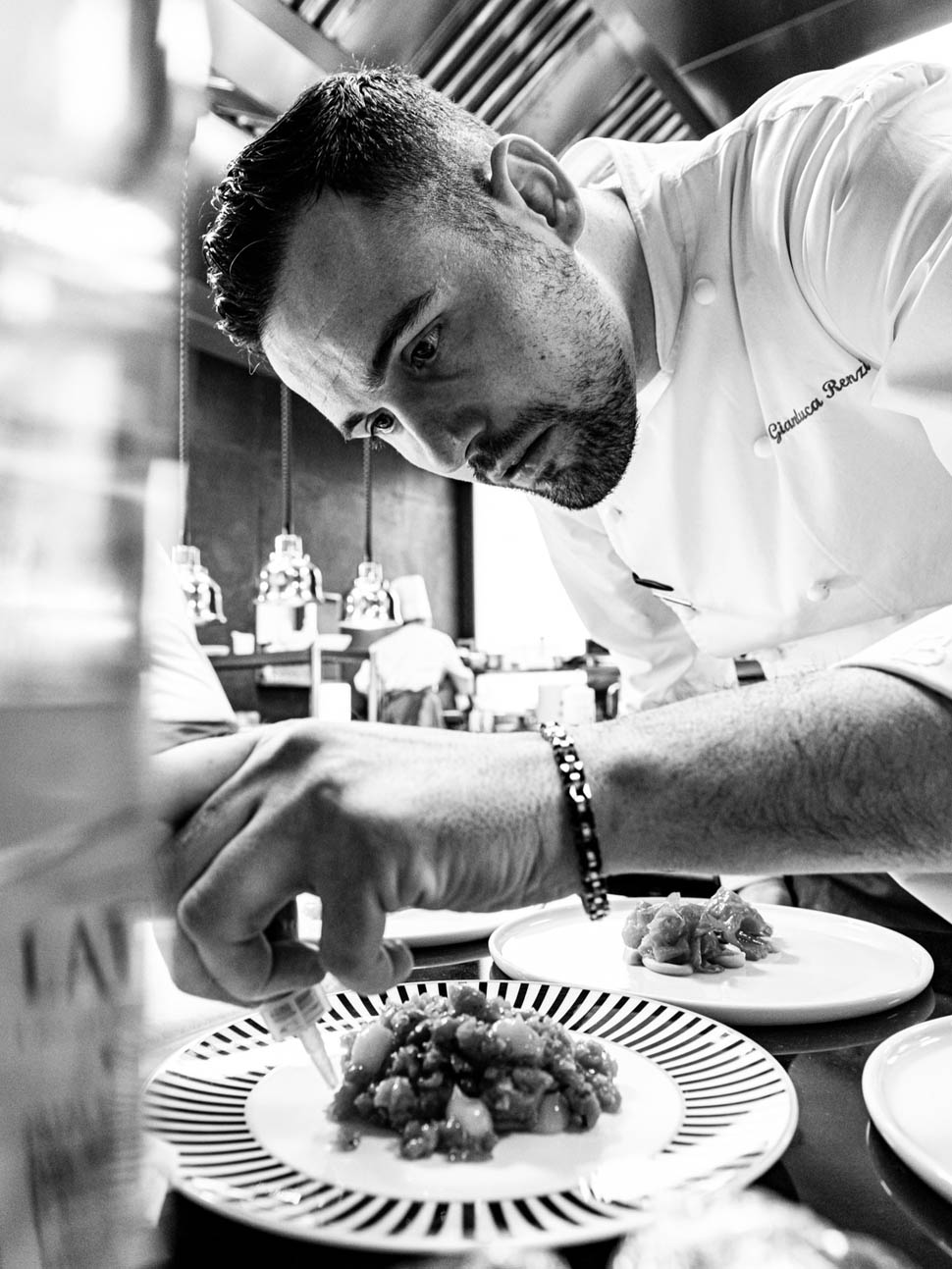
This is the backdrop against which the cuisine has evolved under the guidance of Roman executive chef Gianluca Renzi, whose vision led the restaurant to earn a Michelin star just nine months after its opening. With a solid decade-long training background alongside Heinz Beck, a setting in which he honed the technical foundation he later applied at Castello di Fighine and I Portici in Bologna, Renzi has developed a culinary style that goes beyond mere references to the Piedmontese repertoire to unfold into a mature, well-balanced approach centered on simplicity and precision in bringing out flavors.
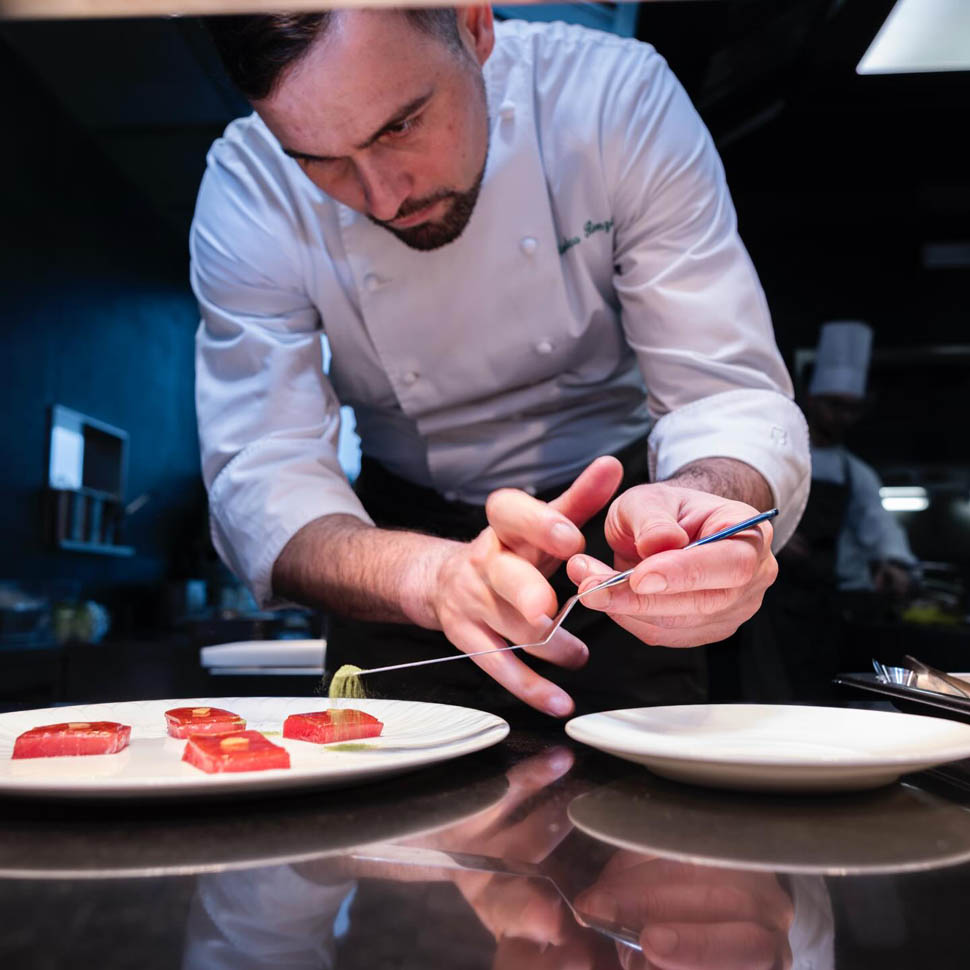
The chef’s signature style is rooted in a remarkable ability to contextualize; local ingredients—often sourced directly from the estate’s large vegetable garden or the nearby chestnut and ash woodlands—are reimagined through cooking techniques of extreme precision and flavors of striking clarity. Vegetables do not serve merely as a side dish but often become the backbone of the dish, integrating the nuances of Asti’s micro-seasonality into a composition that is classic in its rigor and execution.
Rounding out the dining experience is the management of the monumental wine cellar, which houses approximately 2,500 labels totaling 16,000 bottles. The wine list reflects a dual character: on the one hand, the historical depth of the region, featuring complete vertical tastings of the great Barbera crus (starting with the 1980 and 1990 vintages) and special-format bottles of Barolo and Barbaresco; on the other hand, a rigorous selection of international wines, including those from the Triple A circuit and an extensive section dedicated to wines from across the Alps.
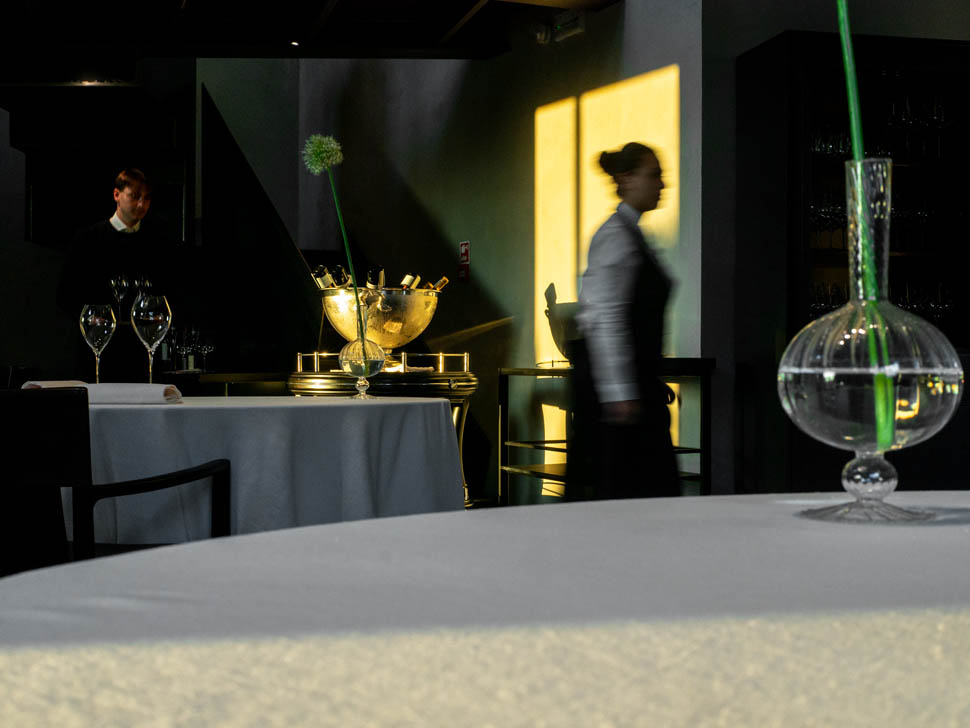
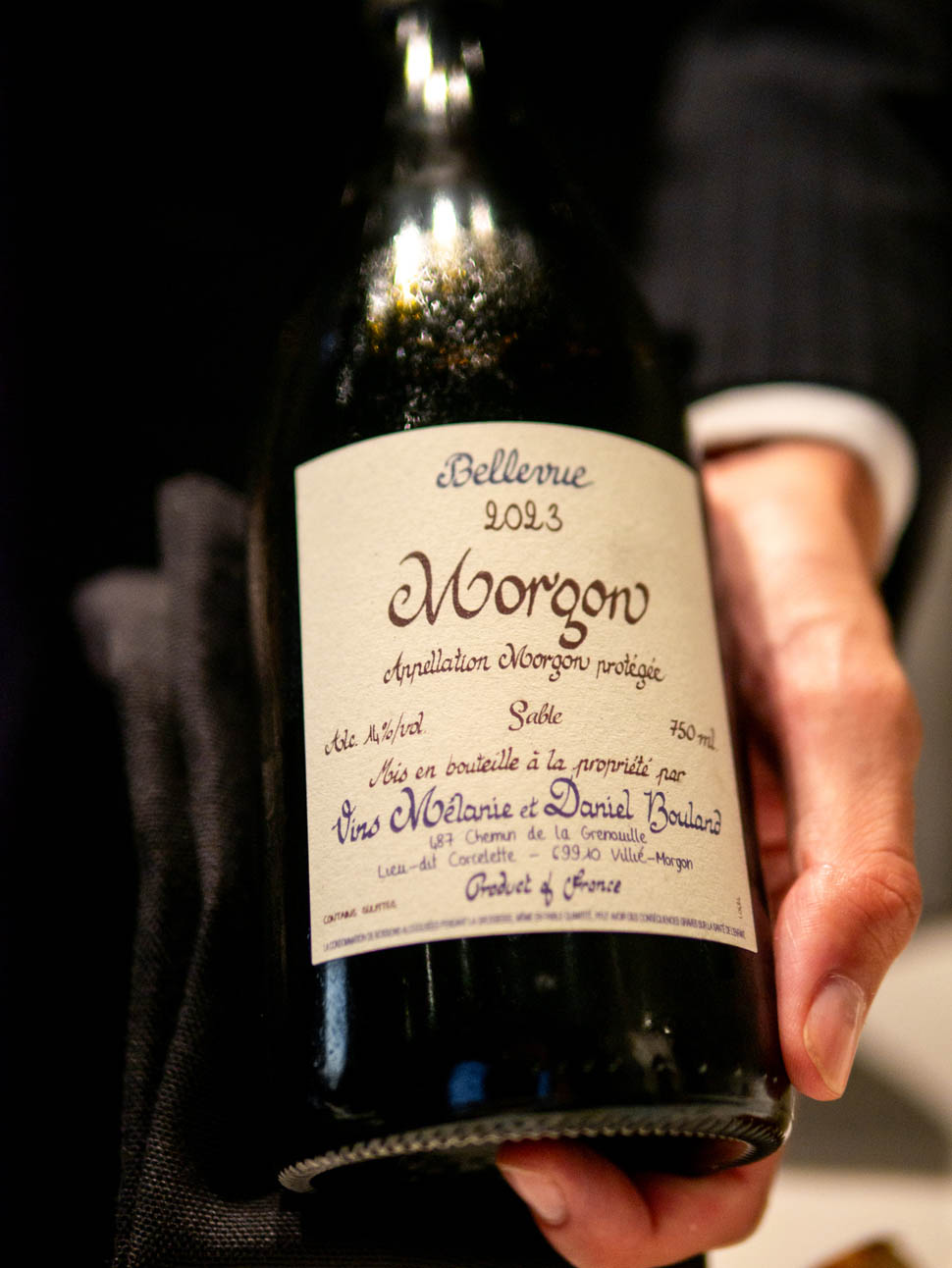
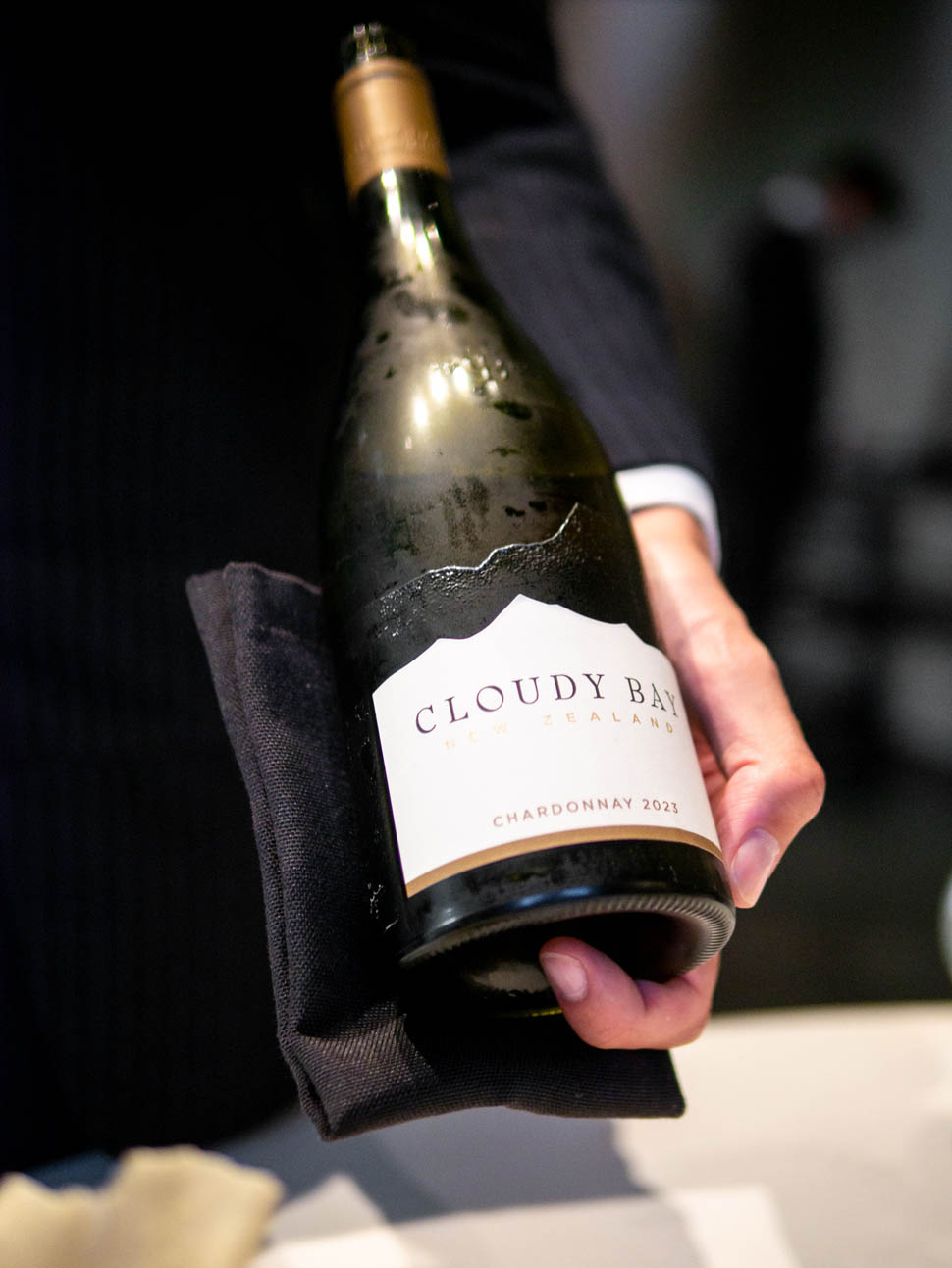
The dining room service is coordinated by maître d’ Alessia Chignoli, who was previously honored as Emerging Dining Room Professional of 2023. The table service follows a formal style without being stiff or overly formal; it is a technically mature approach that prioritizes precision in every gesture, a thorough knowledge of the wine list and the dishes, and a measured, empathetic interaction with guests.
The Dishes
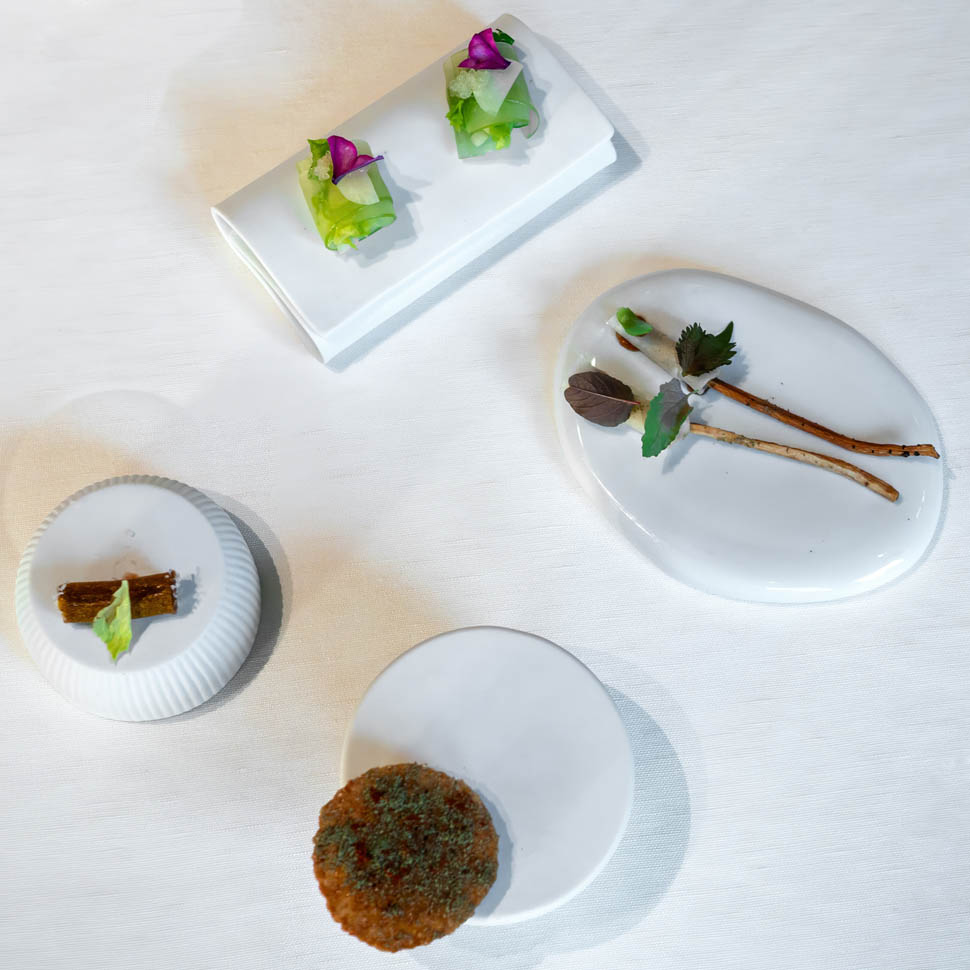
The opening course is a delight that draws directly from Roman culinary tradition, achieved by reducing the portion size while offering an unprecedented concentration of flavor. The chicken alla cacciatora encloses its own juices within a crisp, spiced pastry made from its own skin; the coda alla vaccinara, softened by pecorino cheese, serves as the filling for a carrot and cocoa cannolo, while the spiced and smoked celeriac wraps around a root vegetable, mimicking the appearance of a cured meat. The palate is immediately revitalized by the zing of baby lettuce encased in a green apple roll with fermented Jerusalem artichoke and arugula gel, before rediscovering freshness in the giardiniera transformed into a summer gazpacho with watermelon and strawberries.
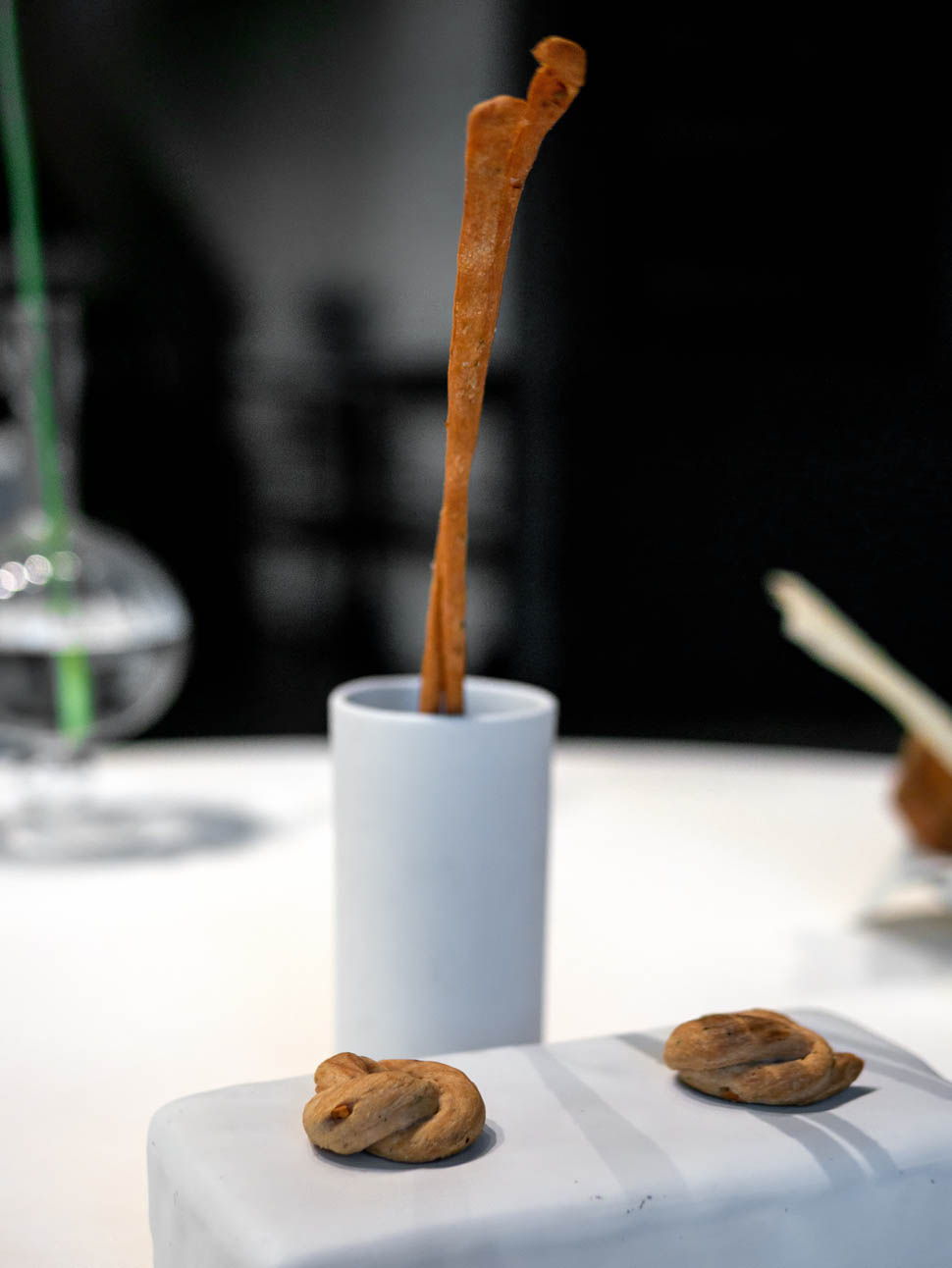
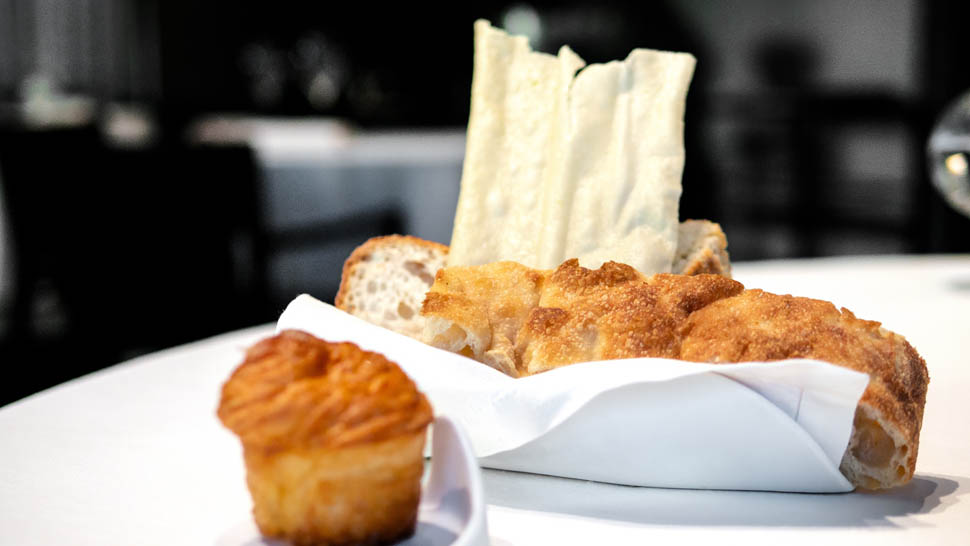
Baking also plays a very specific narrative role, ranging from softer, more hydrated doughs—such as sourdough bread, ciabatta with green olives, and Roman-style pan pizza—to butter-layered bread, all the way to schiaccia. The latter—a crisp, paper-thin flatbread historically used to test the oven’s temperature—is enhanced by the herbaceous notes of Marfuga monocultivar olive oil (Leccino and Moraiolo) or paired with a whipped butter reminiscent of Piedmontese styles. Rounding out the basket are the crumbly taralli enriched with Piedmontese hazelnuts and pizzaiola-style breadsticks, scented with tomato water and oregano.
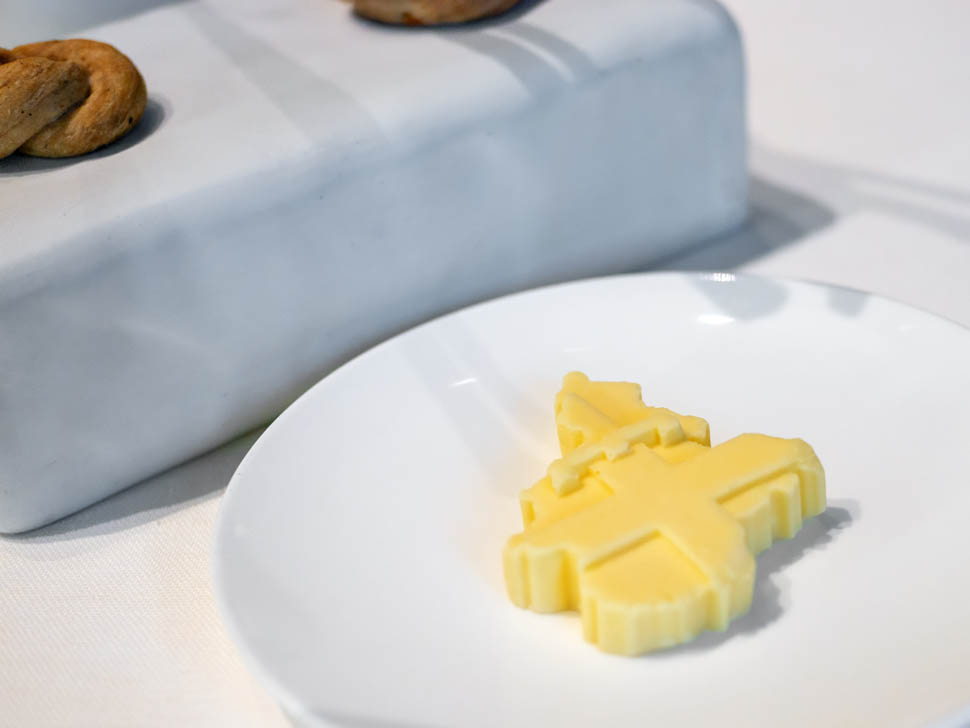
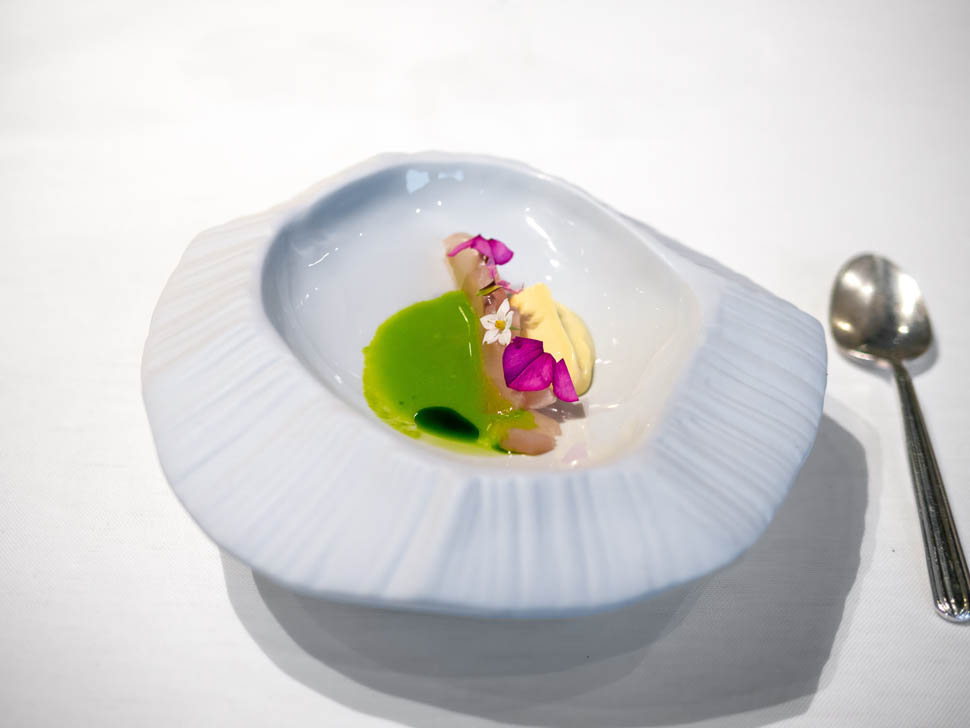
The culinary journey begins with Mediterranean yellowtail, cooked simply after being rubbed with oil and salt to preserve its tenderness and juiciness; it finds a silky balance in the beurre blanc infused with yuzu and lime, punctuated by the tangy note of a reduction reminiscent of Peruvian ceviche and the subtle acidity of agretti.
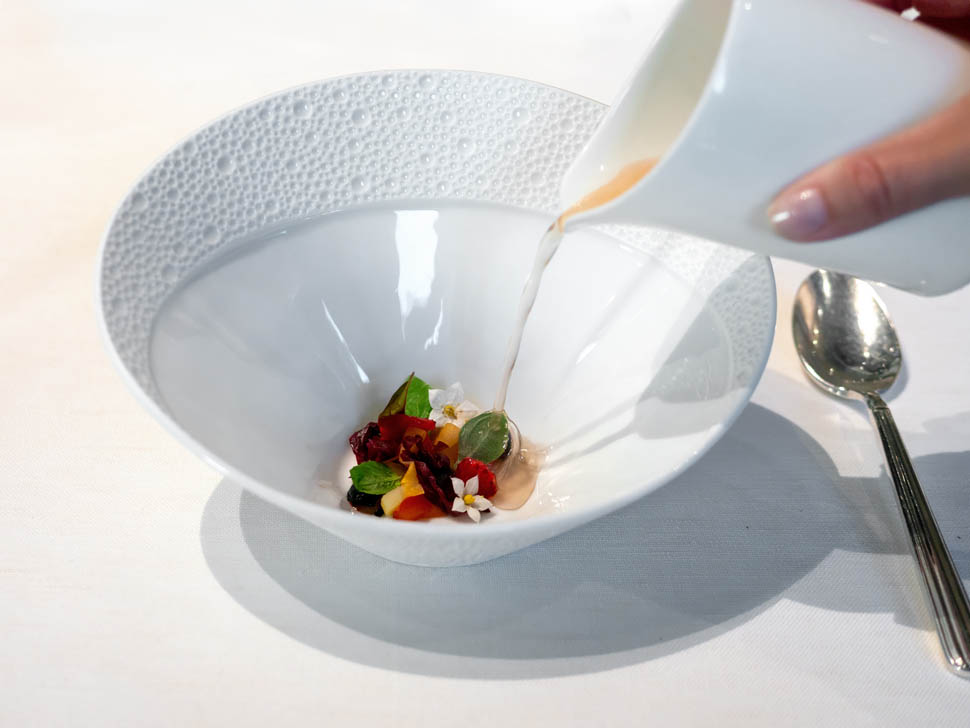
Next comes the dish that tells the story of the estate itself and its seasonal rhythms. “There’s a moment when the tomatoes from the garden all ripen at once,” says Renzi, “and that’s where the challenge began: to transform that explosion of harvest into a single dish, processing it through seven different steps to achieve seven distinct textures and flavor nuances.” The result is a sunny yet profound composition: a chutney lightly smoked by a concentrated reduction; a ponzu-style sauce made from recycled scraps; a clear gel; a fresh sauce; a sorbet; “tomato snow” made from tomatoes cooked in a vacuum-sealed jar, which retains the balsamic aroma of the stem; a lively extract born from a light fermentation; and, finally, basil.
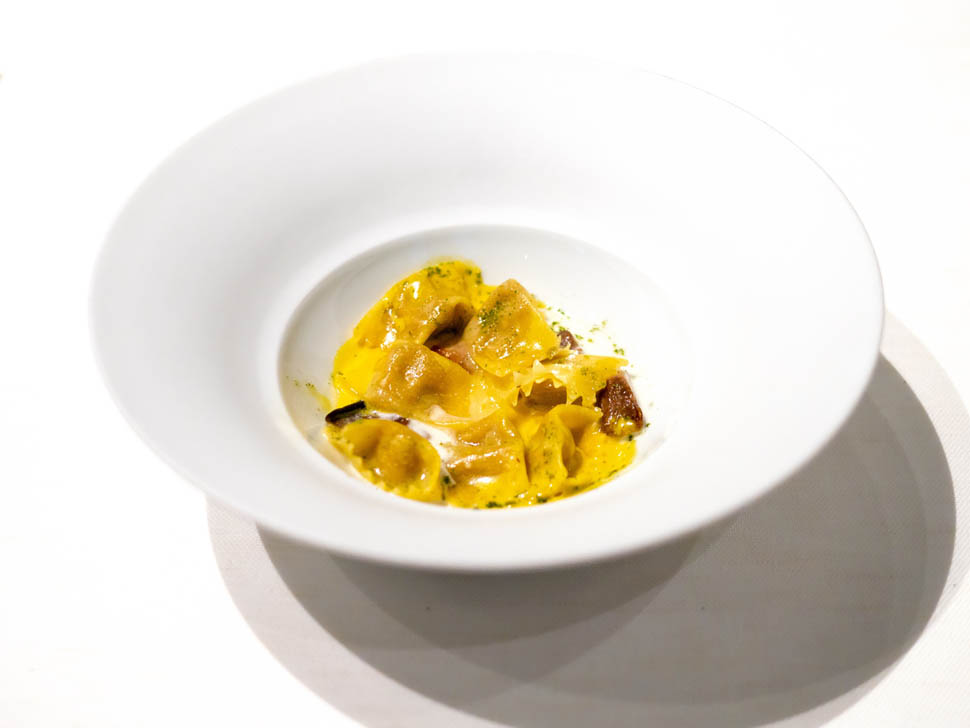
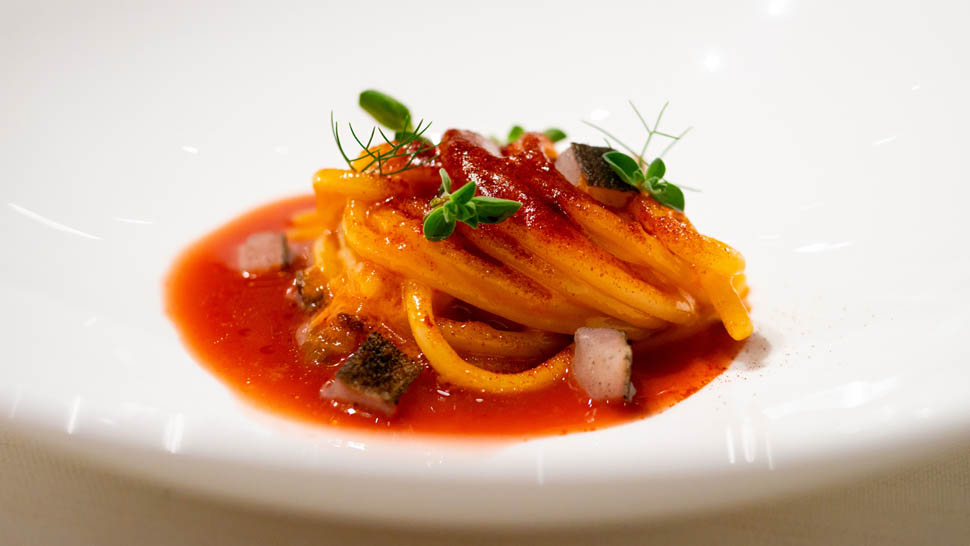
In the first pasta course, the classic Saluzzo white chicken plin are enveloped in a creamy saffron and Gorgonzola sauce, balanced by the earthy notes of seared mushrooms and their cooking liquid. The meal shifts gears with the spaghetti, cooked directly in water extracted from oven-roasted Carmagnola peppers. The pasta takes on a vivid color and natural sweetness, contrasted by the astringency of oxidized rhubarb, the aroma of smoked paprika, and the succulent texture of marinated char cubes, whose skin has been seared with a blowtorch to bring out their natural fat.
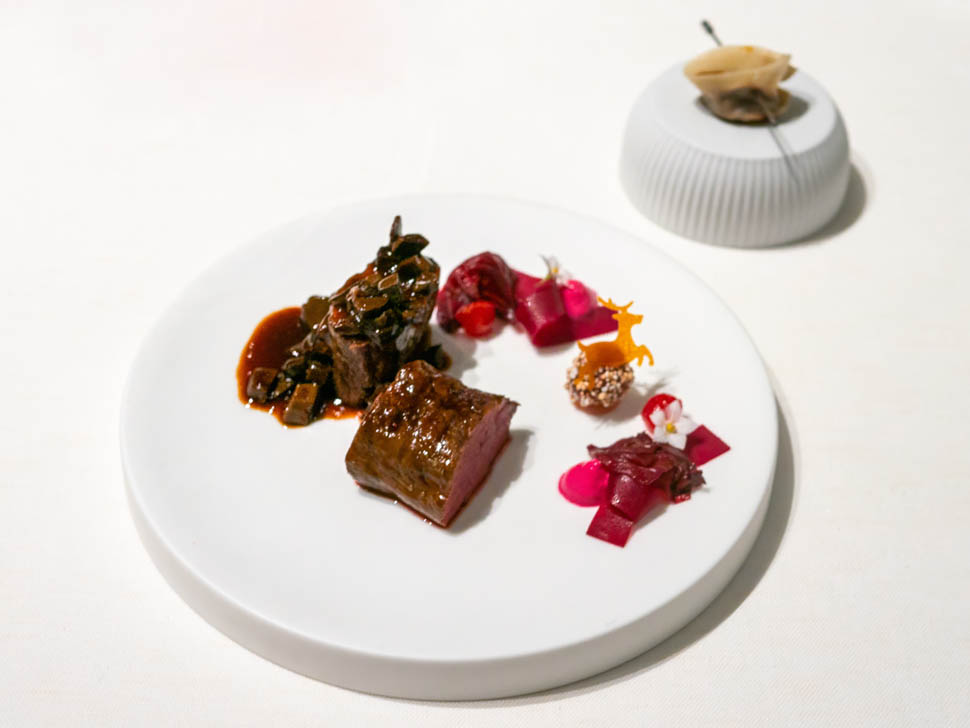
The hyperbolic roe deer loin comes from the company Le carni del bosco di Monterenzio; it is cooked with millimeter-precise timing—eight minutes per side—to keep the meat melt-in-your-mouth tender yet still firm and juicy. It is served with the cooking juices from the offal, a salad of radicchio and turnips pickled in vinegar, dried wild strawberries, and sumac; alongside it, the shoulder cut is enclosed within a ravioli.
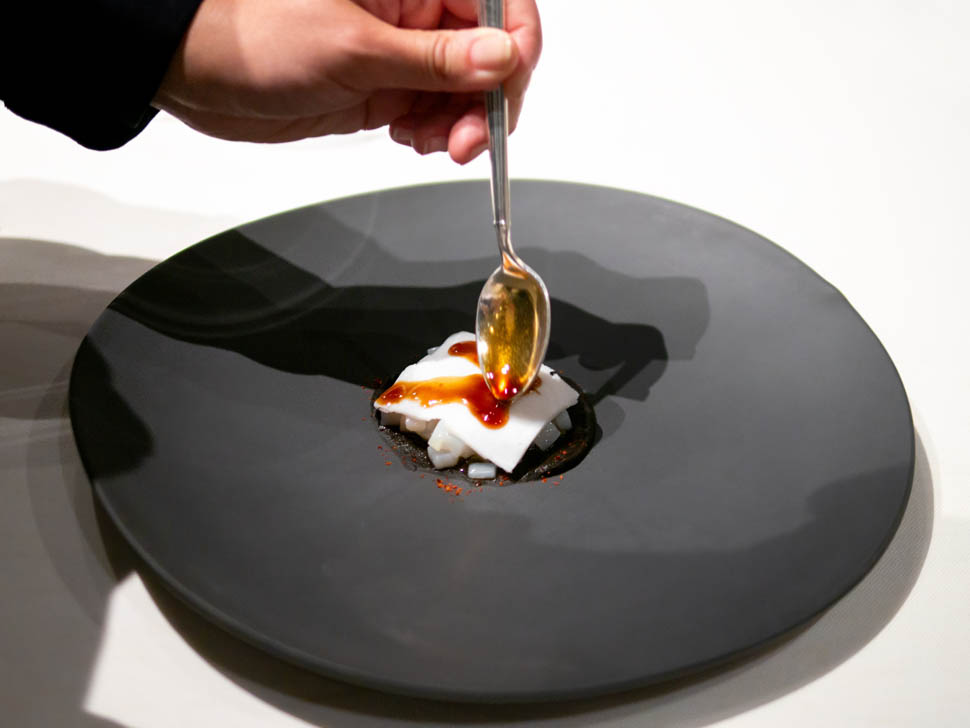
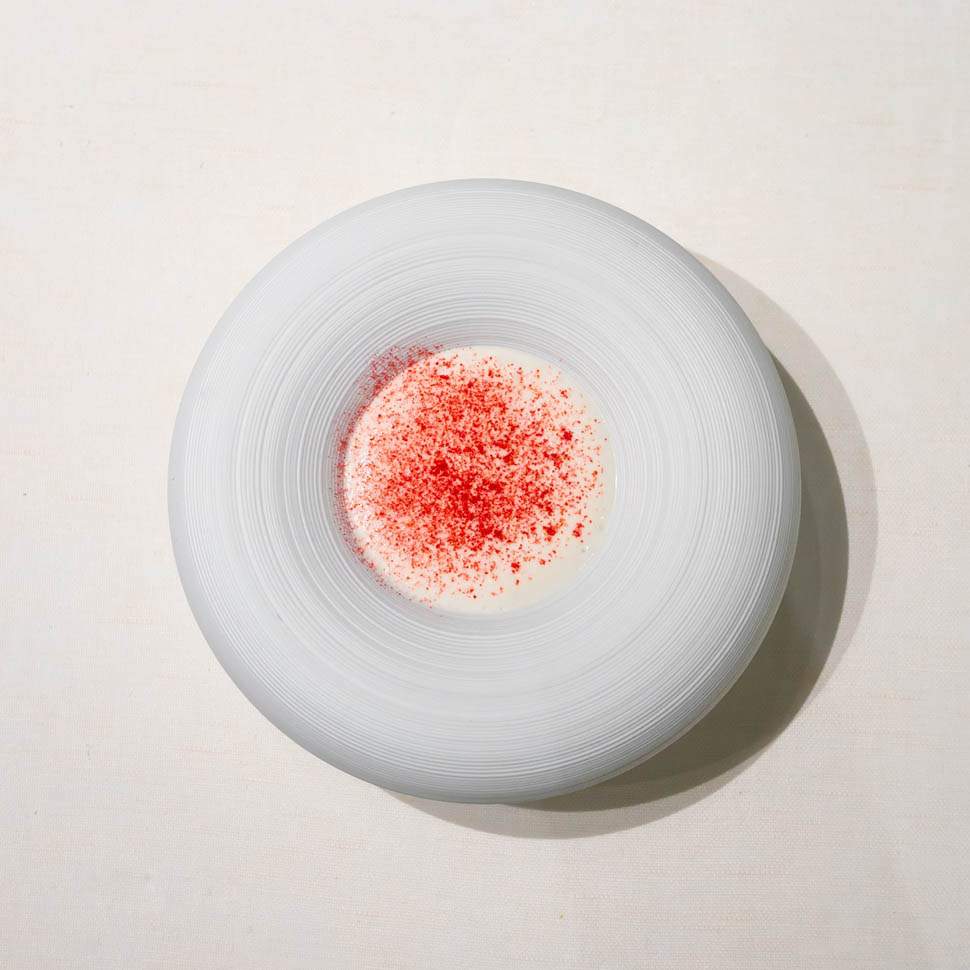
The focus shifts back to the sea with the char-grilled squid sheet, with its subtle smokiness, which serves as a base for a delicate raw squid tartare, enlivened by the herbaceous touch of chimichurri and the richness of a Luciana-style reduction. The transition to the sweet part of the dinner avoids any jarring acidity; to guide the palate toward sweetness, the pre-dessert hides beneath a milk foam the childhood memory of bread, butter, and jam, offering a bite of primal indulgence.
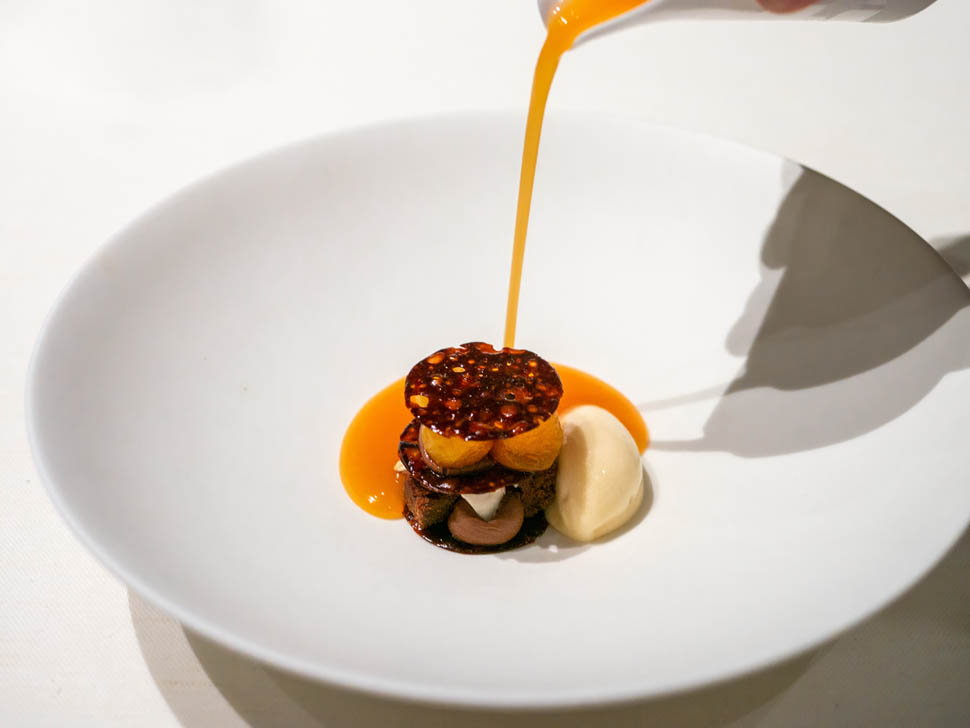
A heartfelt tribute to the Piedmontese tradition of Persi Pien, the baked stuffed peaches with cocoa and amaretti. Renzi’s version deconstructs the recipe into a play of textures and temperature contrasts. Yellow peach gelato, a fresh peach extract, and a bitter cocoa tuile come together to form a delicate mille-feuille, featuring a slice of peach poached in amaretto, amaretto jelly, crunchy amaretti cookies, and a dark chocolate cream.
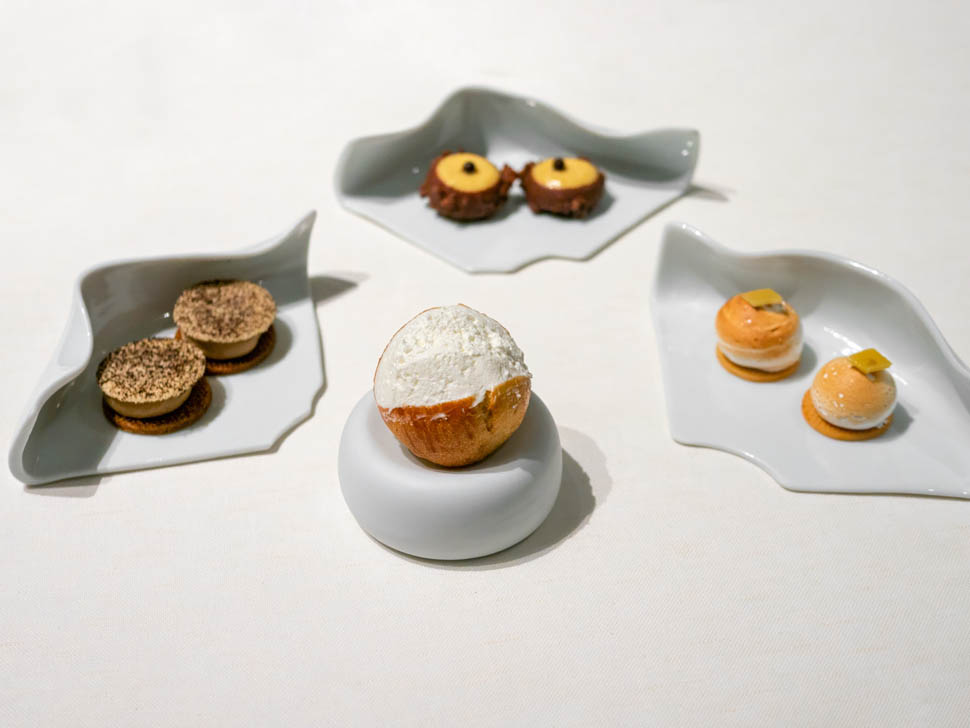
In the dining room, sommelier Francesco Passaretti brings the service to life with a carefree, witty, and never pedantic style, drawing from a truly exceptional wine cellar, and rounds out the wine pairing with a genuine local gem. The Clemenza, an organic Moscato Bianco passito. A wine born from Mrs. Rosalba Borello Vallarino Gancia’s passion for two vineyards situated below the Tower of Viatosto in Asti. After tasting the first vintage from 2022, the relais decided to acquire the entire production, making Le Cattedrali the only place where it can be tasted. The selection of small pastries revisits comfort food classics in miniature form, from the soft, delicate texture of the mini maritozzo to the contrast between the crunchy almond wafer and the coffee cream filling of the biscuit, including the Piedmontese touch of the bonèt, blending amaretto and dark chocolate, all the way to the citrusy note of the tarte au citron, enlivened by hints of Italian meringue.
Contact
Le Cattedrali
LE CATTEDRALI RELAIS 5*L by LAQUA COLLECTION
Fraz. Valleandona n. 1/B, 14100 Asti (AT) – Italy
T.+39 0141 1858888