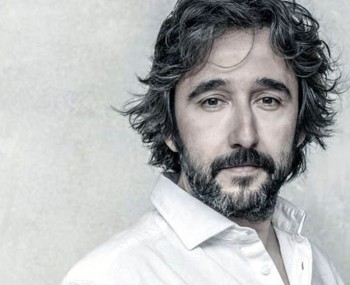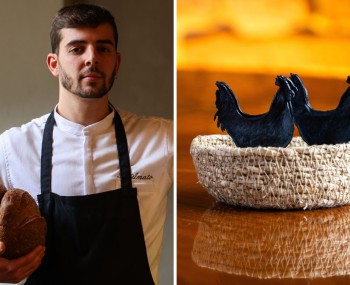
In an old barn in the Val di Merse, just a few kilometers from Siena, the chef—a former member of the Italian national team—and his wife, Michela Bigio, are reinventing the region’s cuisine, blending international techniques with Tuscan ingredients.
*Content with promotional purposes
About a dozen kilometers from Siena, from the grounds of La Sosta del Cavaliere, you can admire the unmistakable skyline of this magnificent Tuscan city. We are located in the countryside of the Val di Merse, just a stone’s throw from Torri, a charming little medieval village in the municipality of Sovicille—a place that still retains the understated charm of a less-traveled Tuscany. Right here, very close to the ancient residence that belonged to Pope Pius II—Enea Silvio Piccolomini—in the 15th century, lies the restaurant, a fine-dining establishment opened in 2013 following the renovation of an old barn. The name pays homage to the knights who, according to tradition, used to stop here during their travels.
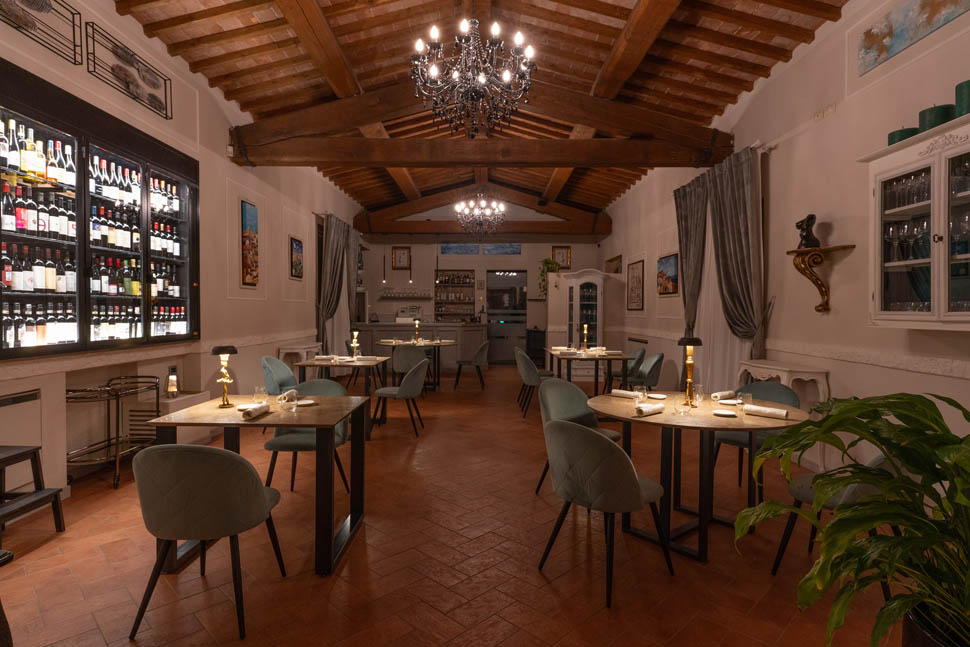
The Story of Leonardo and Michela
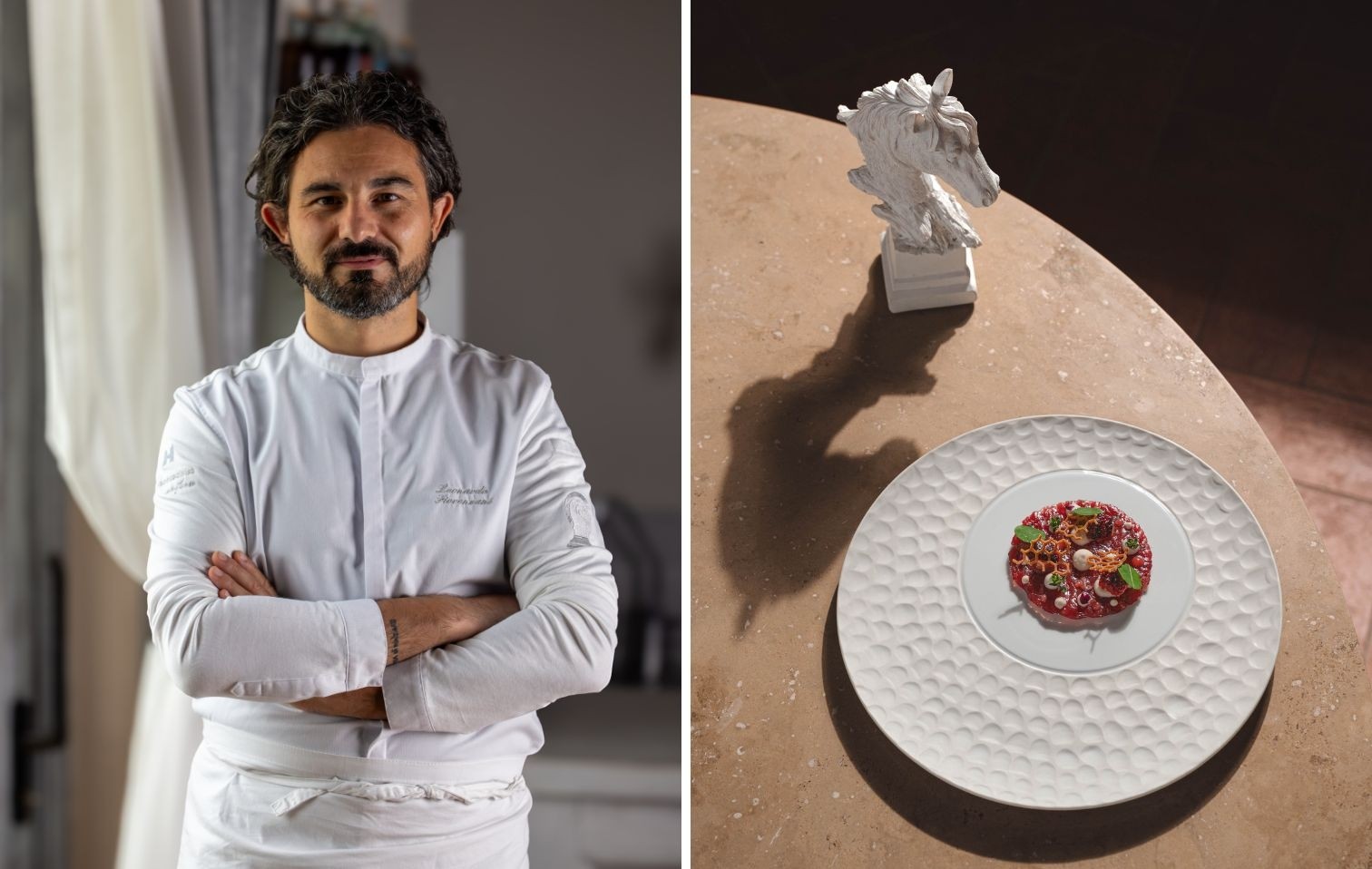
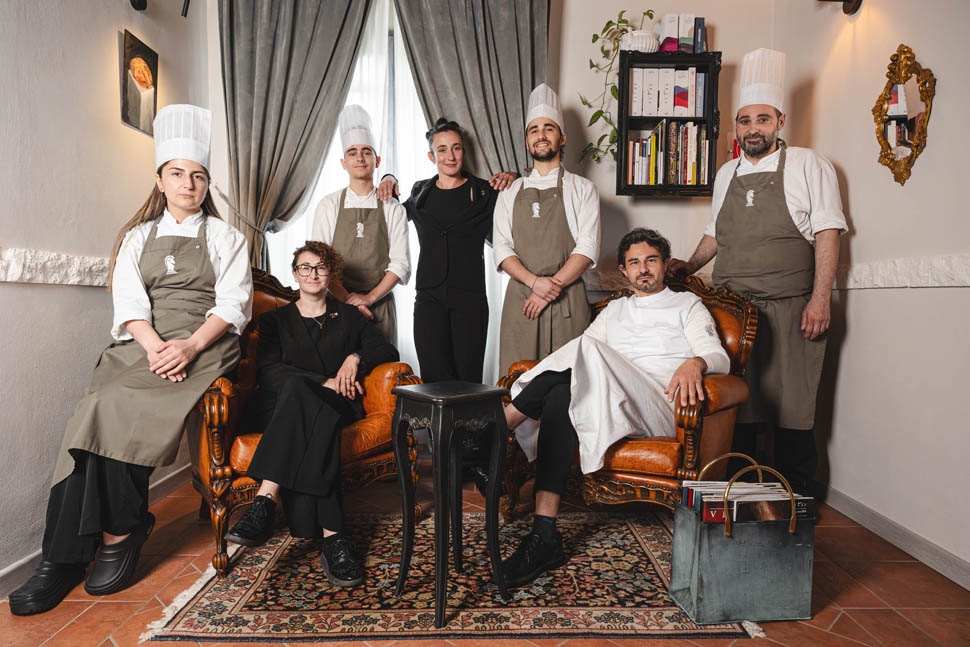
The restaurant’s current identity, however, is much more recent. It was after the pandemic, in 2021, that Leonardo Fiorenzani and Michela Bigio decided to take their business in a completely new direction, choosing to offer signature cuisine in a region where tradition continues to dominate the culinary scene. Theirs was therefore a decidedly bold choice, but it has succeeded in creating one of the most interesting restaurants in the area.
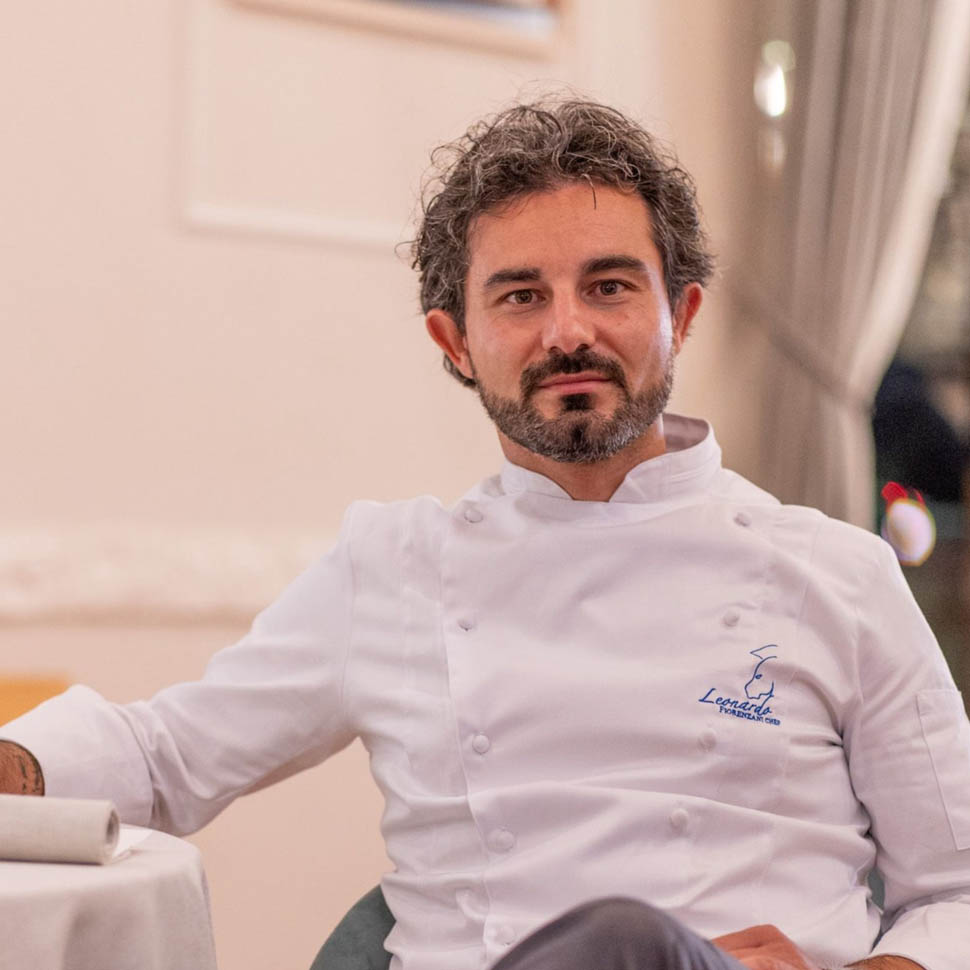
Behind this evolution lies, above all, Leonardo’s story—a series of events that go a long way toward explaining his approach to cooking. As a child, after his parents separated, he lived with his grandparents in the countryside: “My parents separated when I was six and a half, and I went to live with my grandparents. I’d get up early and see my grandmother; she taught me how to do a lot of things, and for me, it was a blessing. By the time I was nine, I was already cooking for everyone.” Yet cooking still didn’t seem destined to become his profession, because his life took a different turn—toward track and field, specifically the javelin throw. He went on to win Italian titles, make the national team, compete in the European Championships, and earn a spot on the team for his first senior World Championships—before a serious arm tendon injury brutally cut his career short. “Track and field taught me one fundamental thing: nobody gives you anything for free. I still carry that mindset with me every day”.
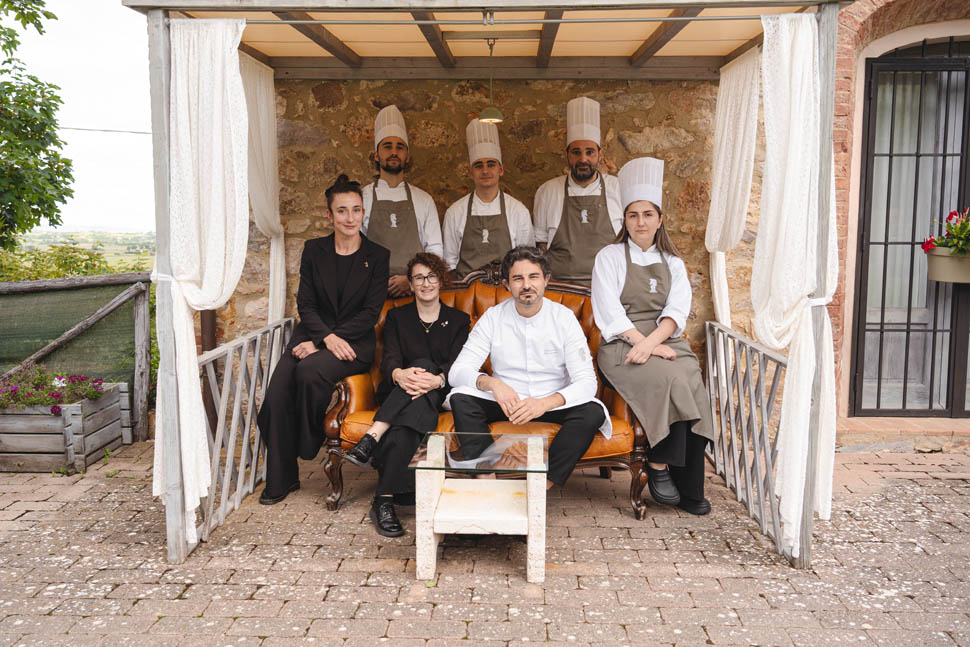
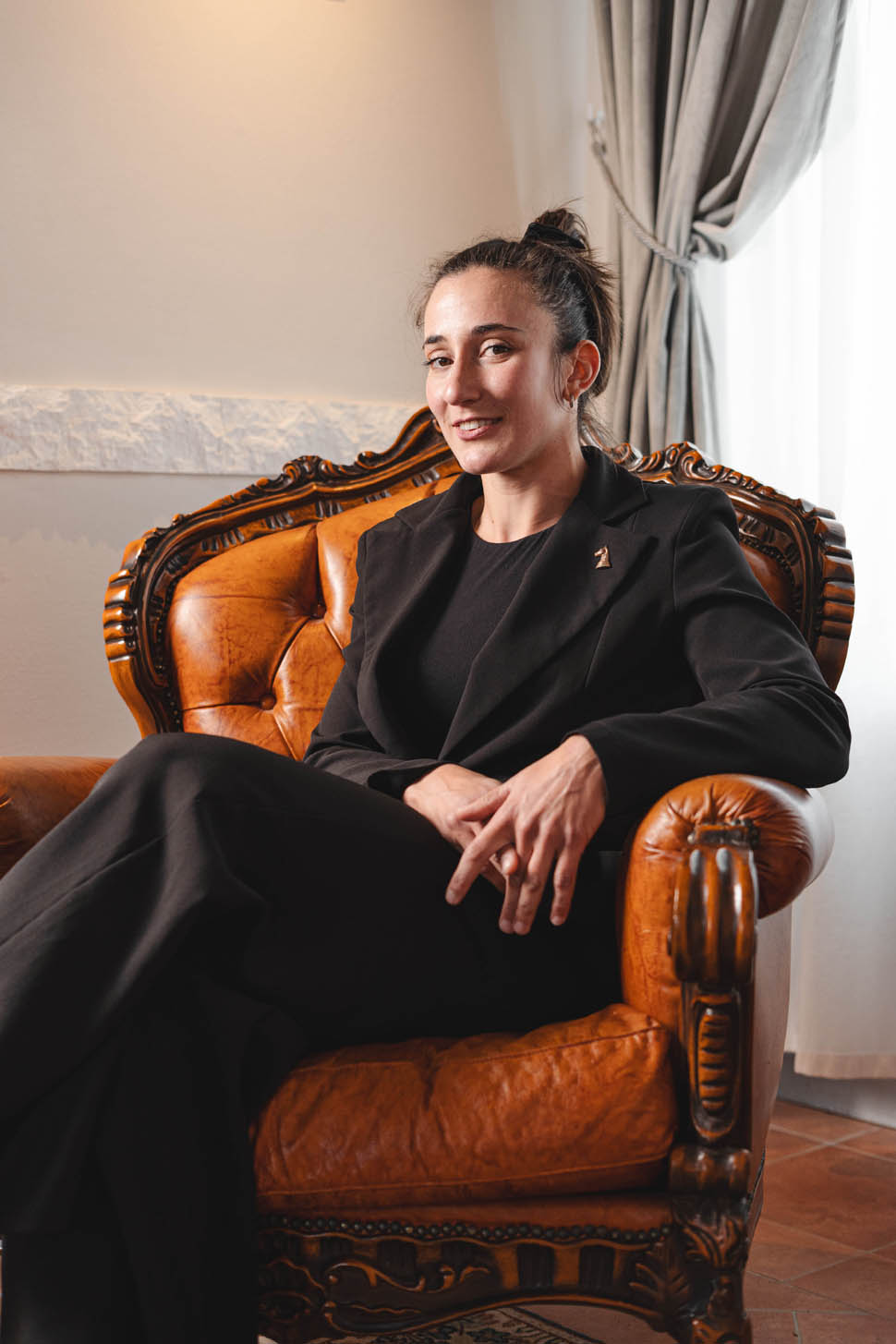
After a brief stint at a major banking firm, he finally realized that his path lay elsewhere. He went back to school, attended Cast Alimenti, and started over with humility and tenacity: his journey has been one of continuous learning, and even today he considers it essential to stay educated and informed. His recent research focuses on fermentation and distillation, utilizing the many herbs grown in his garden as well as ingredients gathered from the nearby woods. By his side is his wife, Michela Bigio, a sommelier from a family of pharmacists who also comes from a completely different professional background: together, they are building this project.
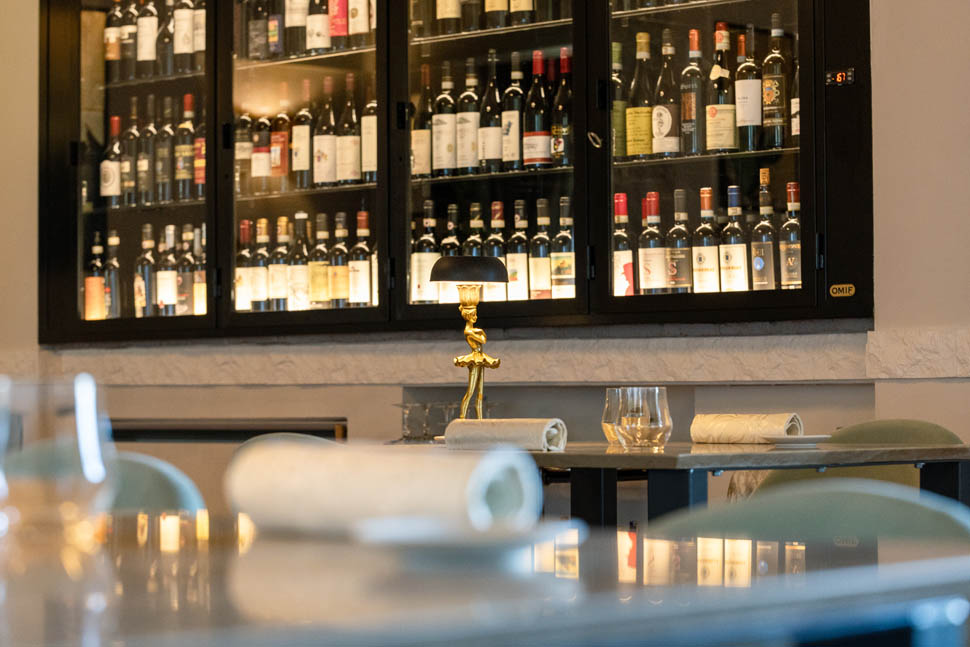
She curates an impressive wine list featuring more than three hundred labels from approximately two hundred thirty wineries. “We started with Tuscany and then expanded mainly into France, without neglecting other regions. There are big names, but I also wanted to give space to small family-run wineries that do extraordinary work. The idea is to allow anyone to find the right wine for themselves.” Fiorenzani’s dishes, too, are the result of careful consideration. “My cuisine reflects my identity—it’s something I’ve built over time. What’s fundamental to me is using local ingredients from the region where we are, interpreted through international techniques and concepts.” Tuscany always remains at the forefront, recognizable, yet it’s never presented in a slavish manner.
The Dishes
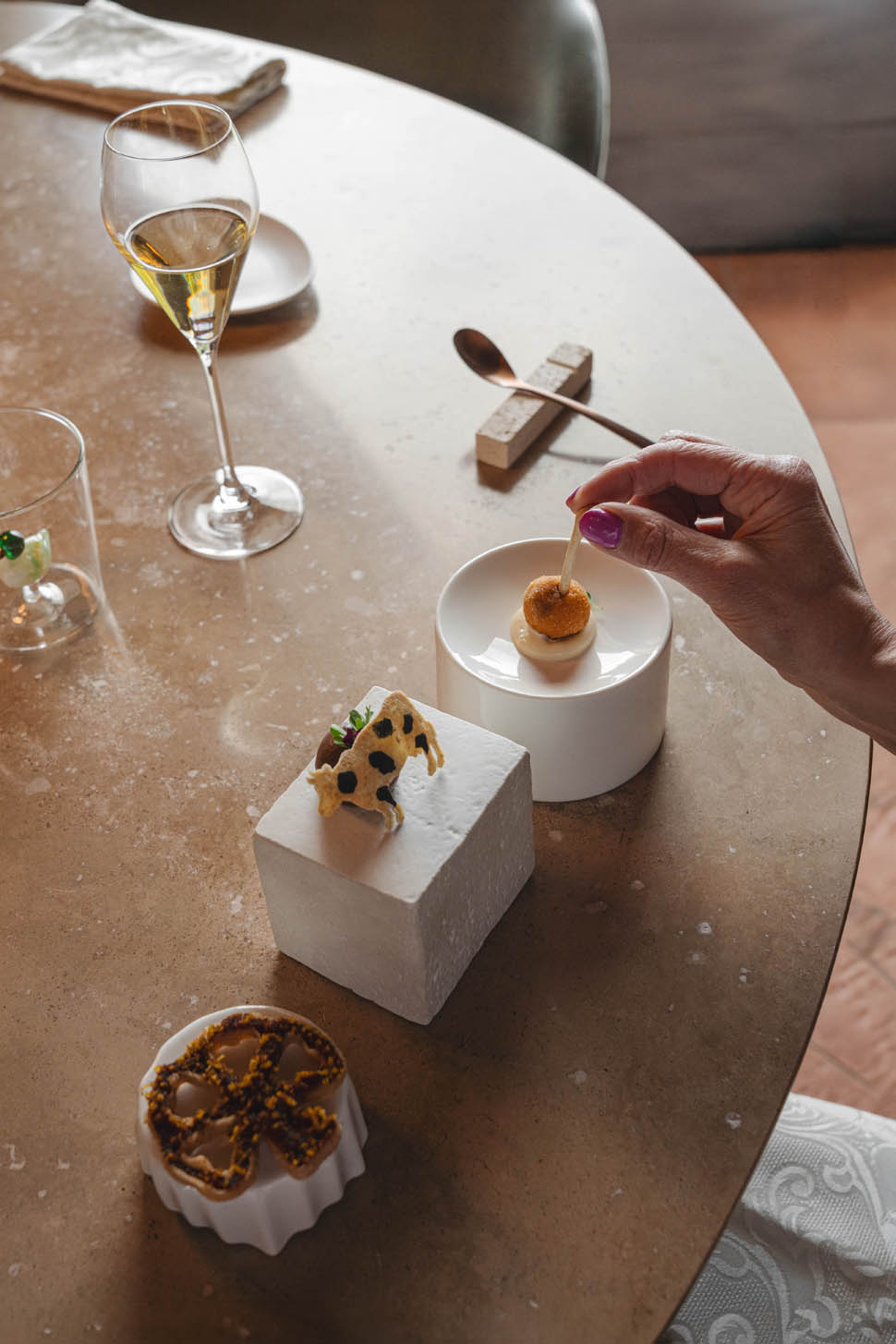
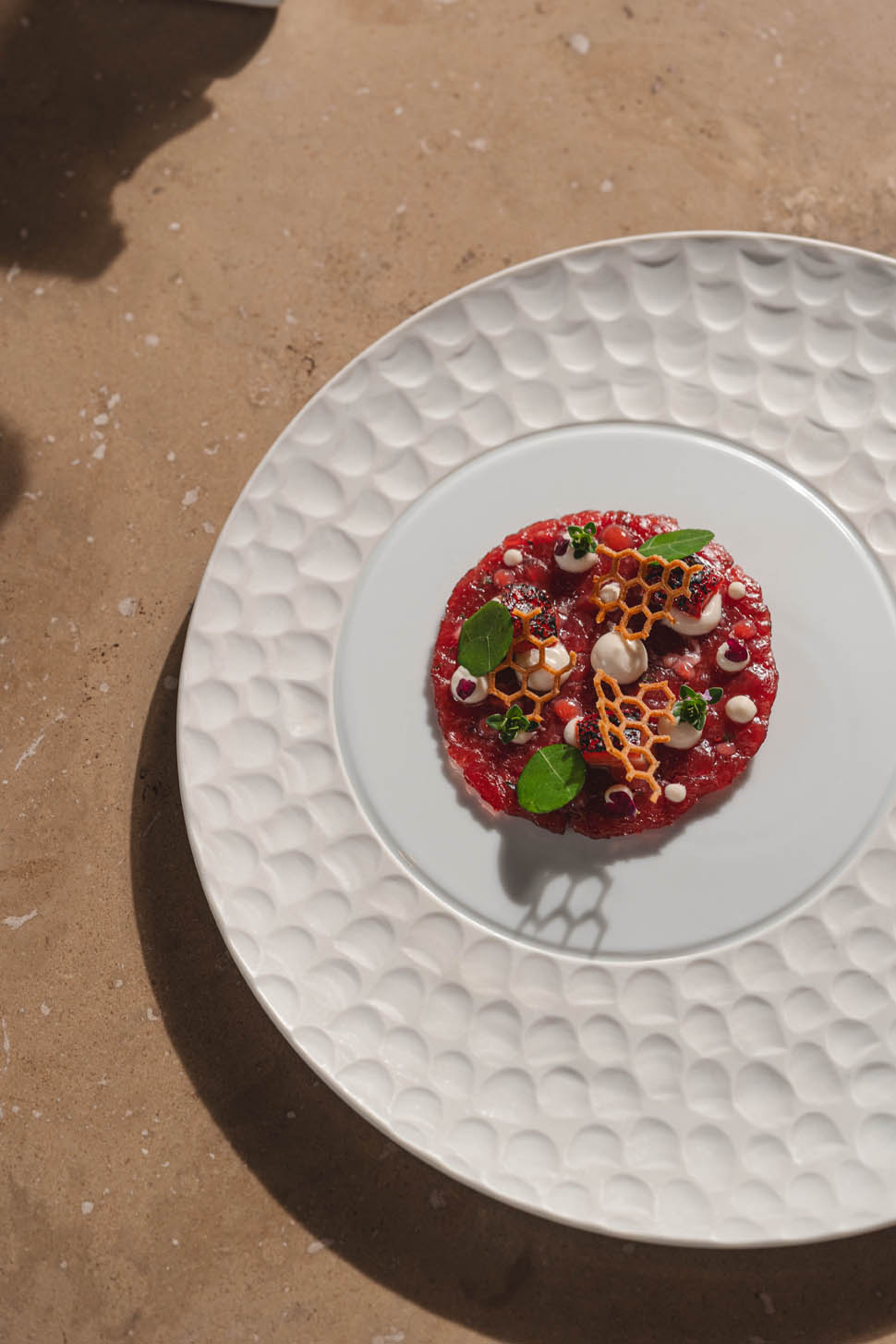
The dining experience surprises right from the start with its playful amuse-bouches. The cauliflower is a little balancing act paired with beet, black sesame, and kiwi; the Chianina bresaola, which is excellent, is enhanced by the savory notes of capers and balanced by the freshness of pomegranate.
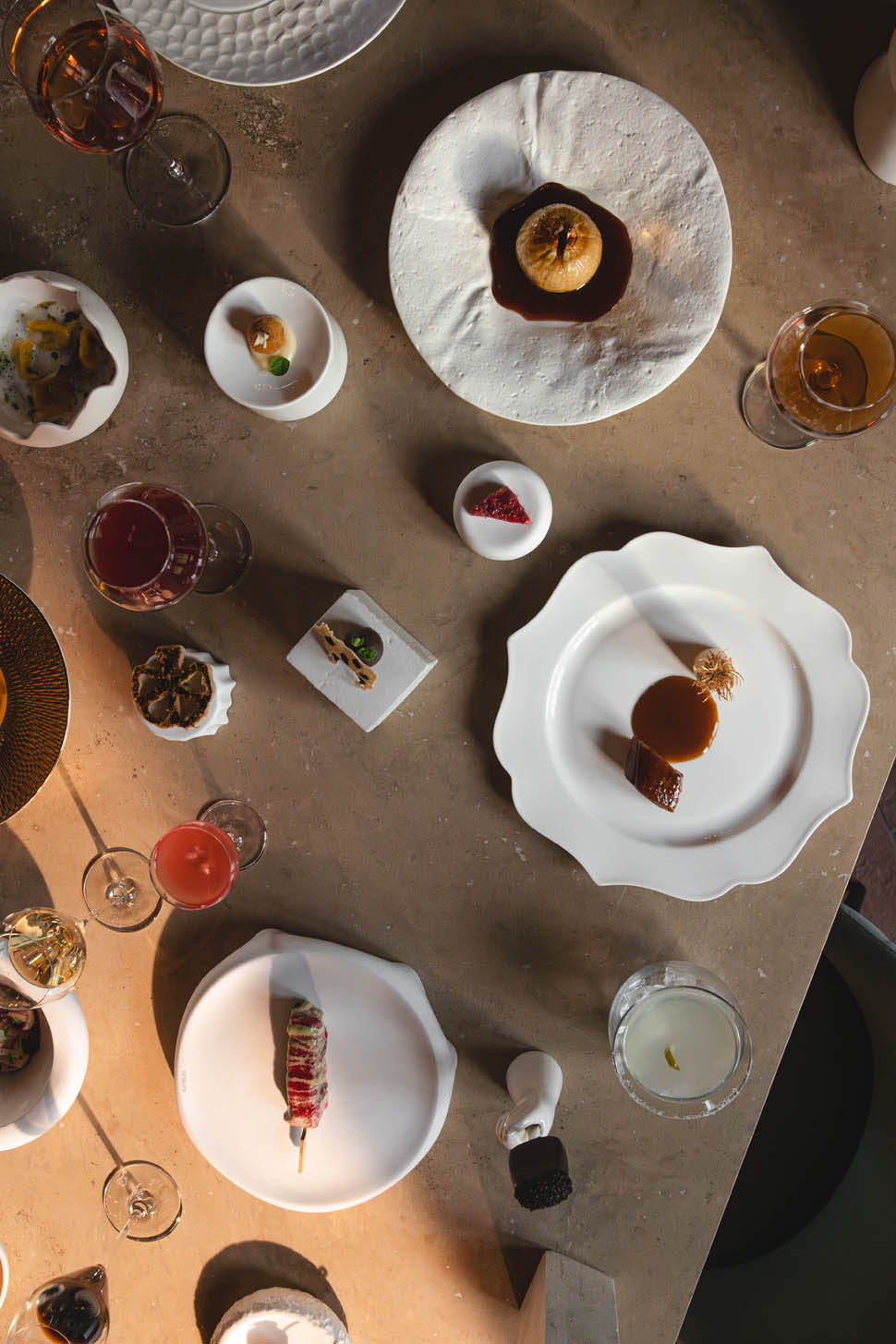
“Mare,” is also impressive—a risotto that combines Margherita rice with sea urchins, grapefruit, and black kale, a dish of remarkable intensity yet great clarity. The flavorful “Passato e Futuro” cappelletti, served in a broth infused with Pecorino, are also exceptionally elegant. The sweetbreads are excellent, enhanced by mandarin marmalade, aged Pecorino, and subtle notes of coffee and cardamom. “Piazze d’Italia” is a succulent pigeon, served with plums, XO sauce, and anchovies.
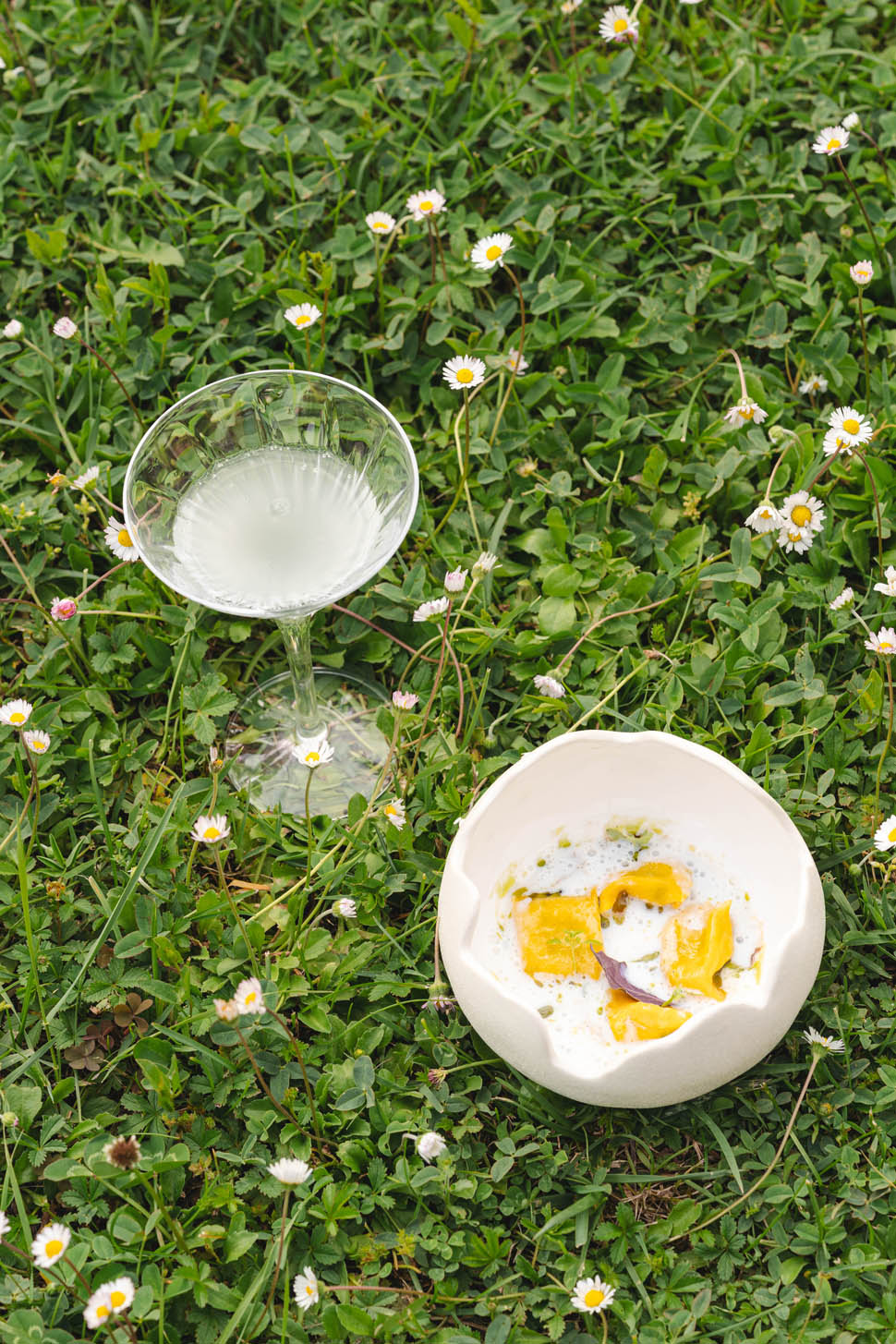
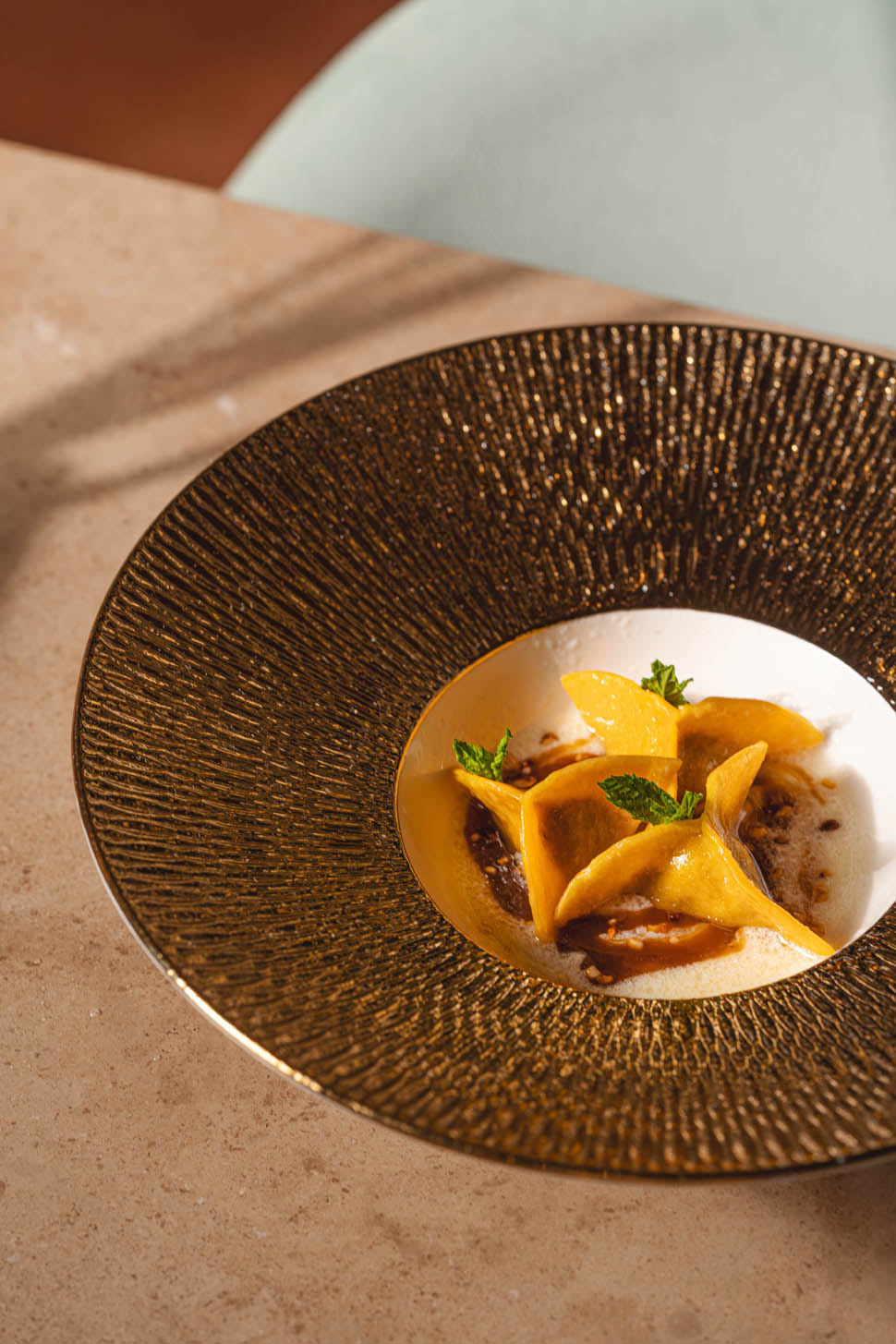
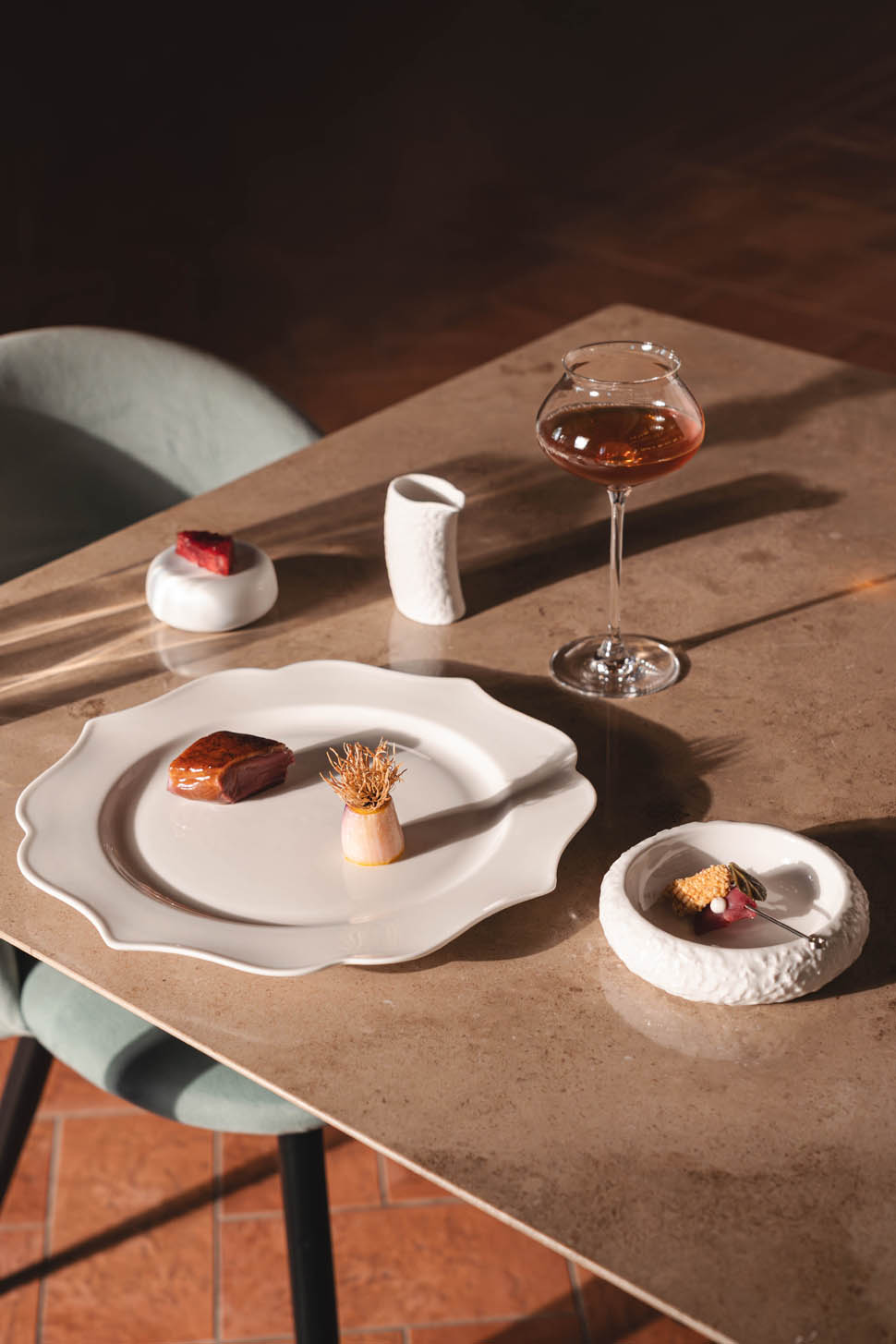
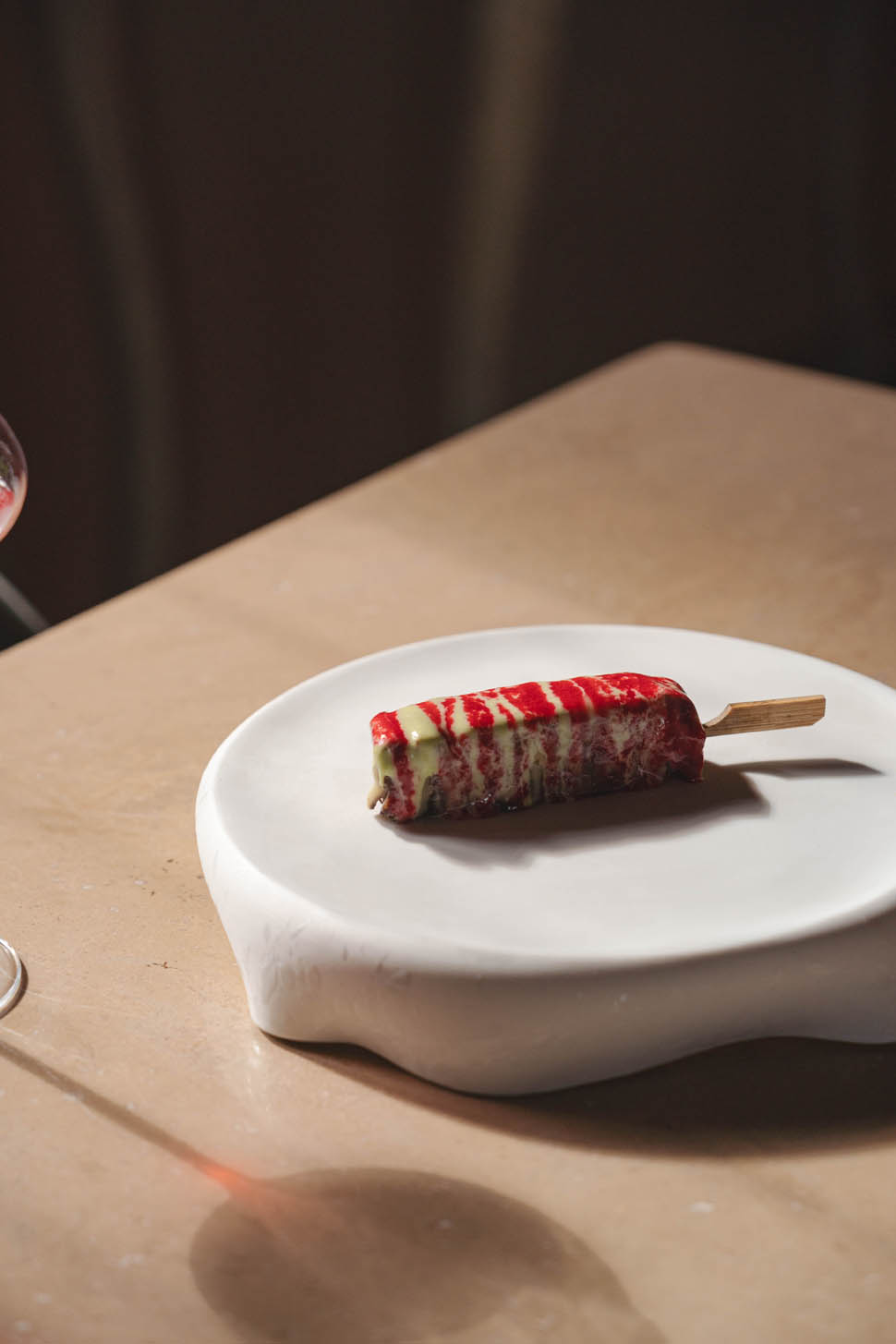
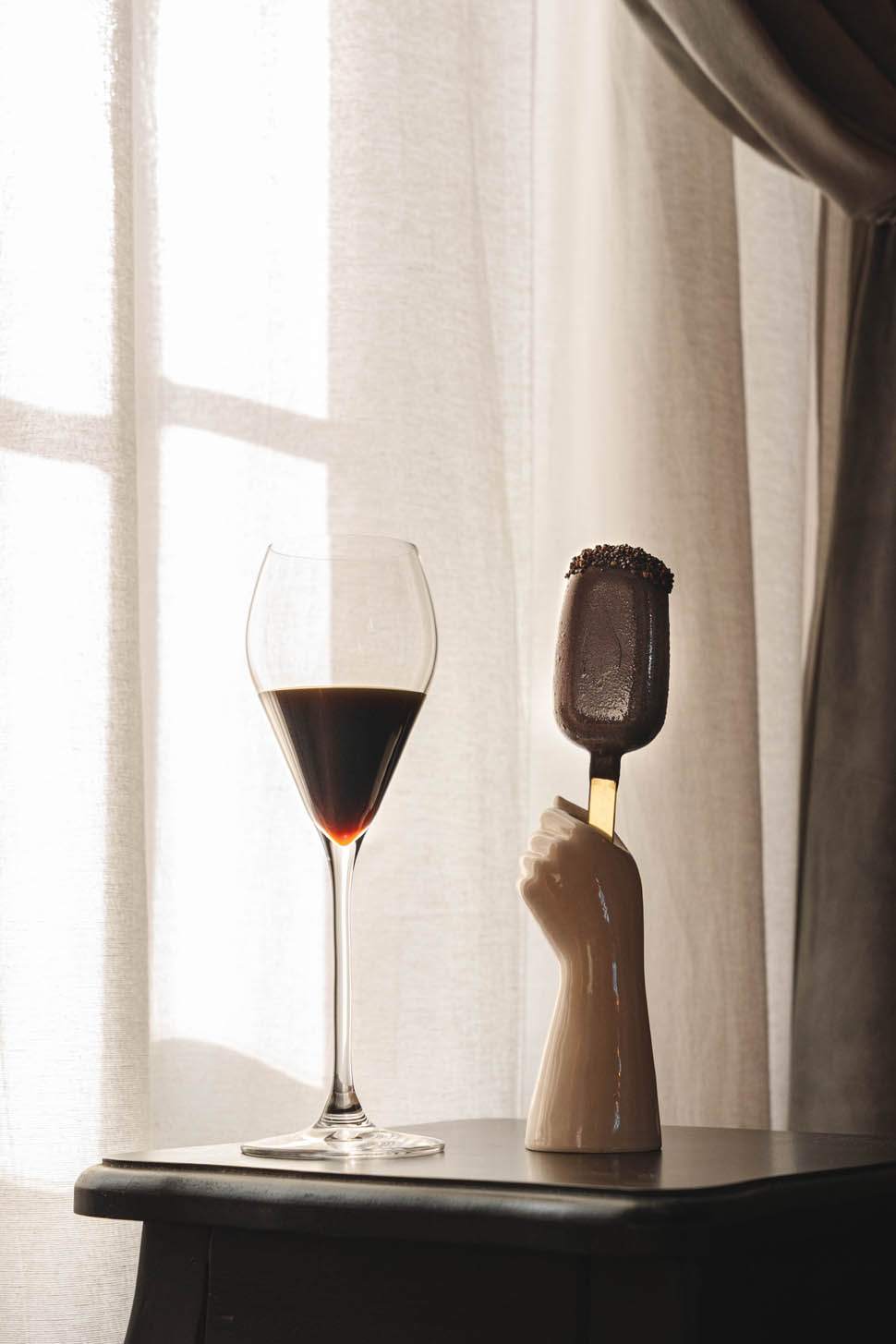
There are also two dishes that Fiorenzani considers emblematic of his style. The first is “Brado,” Cinta Senese tenderloin with fermented red onion, a toasted almond wafer, and a whiskey reduction. “It’s a classic dish at the restaurant, featured for years on both the regular menu and the ‘Territorio’ menu. It’s one of the dishes I’m most attached to.” The other is the famous “Zola,” a dessert created six or seven years ago that has since become a signature dish of the restaurant. “It was named that because it was originally made with Gorgonzola. Then, wanting to focus more on local ingredients, we replaced the cheese with a blue cheese produced by a dairy we work with. The name, however, has remained the same.” This incredibly indulgent dessert is shaped like a lollipop with a coffee-caramel center, a 74% Madagascar dark chocolate glaze, and a sanded coffee crust; it’s served paired with a coffee-infused “brett” beer from La Diana Birrificio Agricolo, located in Siena. “It’s an important dish because it set us on the path we wanted to take.”
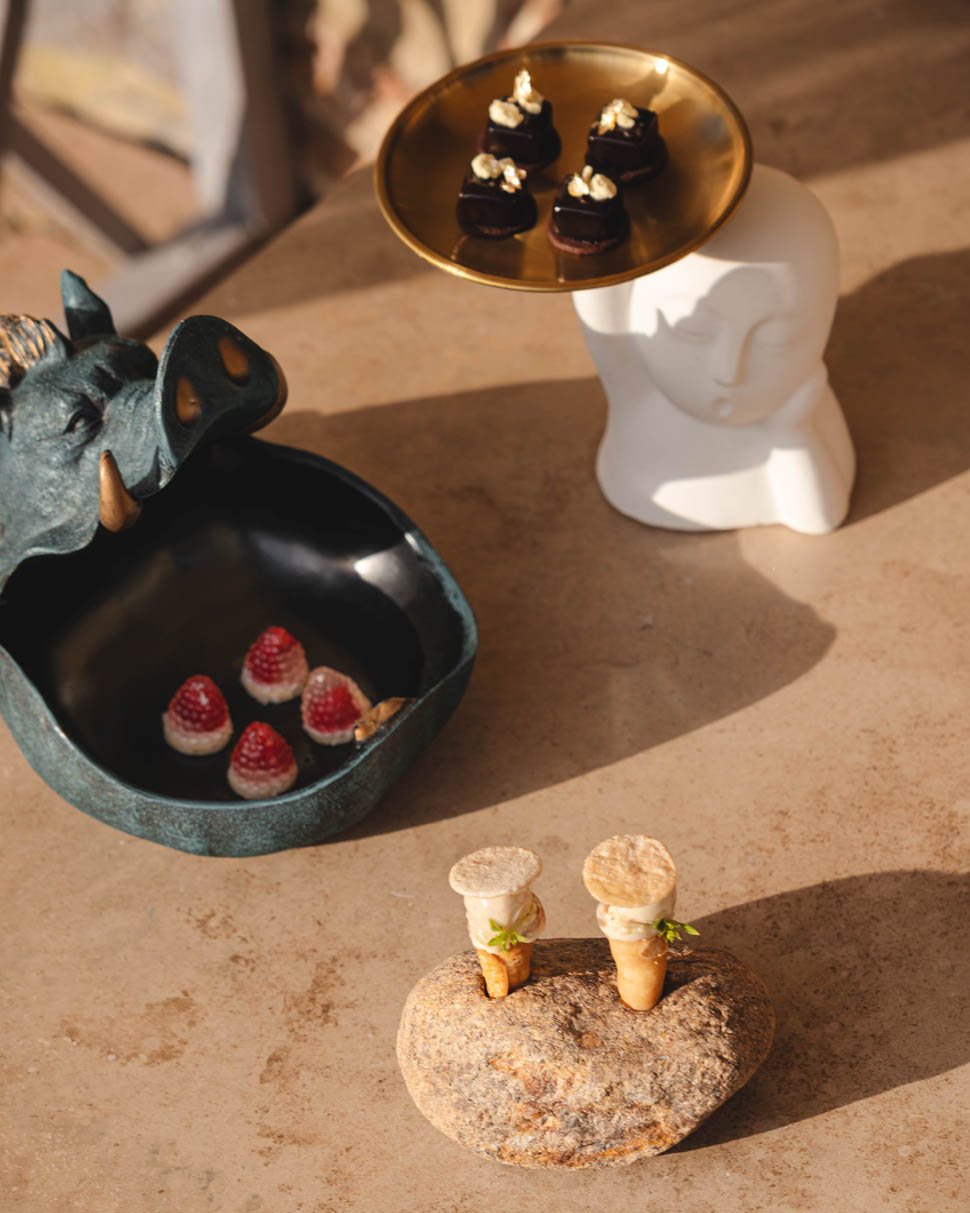
The experience is rounded out by the option to order à la carte or choose from three tasting menus: “Ricordi” and “Terra”—the latter of which is entirely vegetarian—each feature five courses for 70 euros, while “Anima,” the menu that encapsulates Fiorenzani’s culinary vision, consists of seven courses for 100 euros.
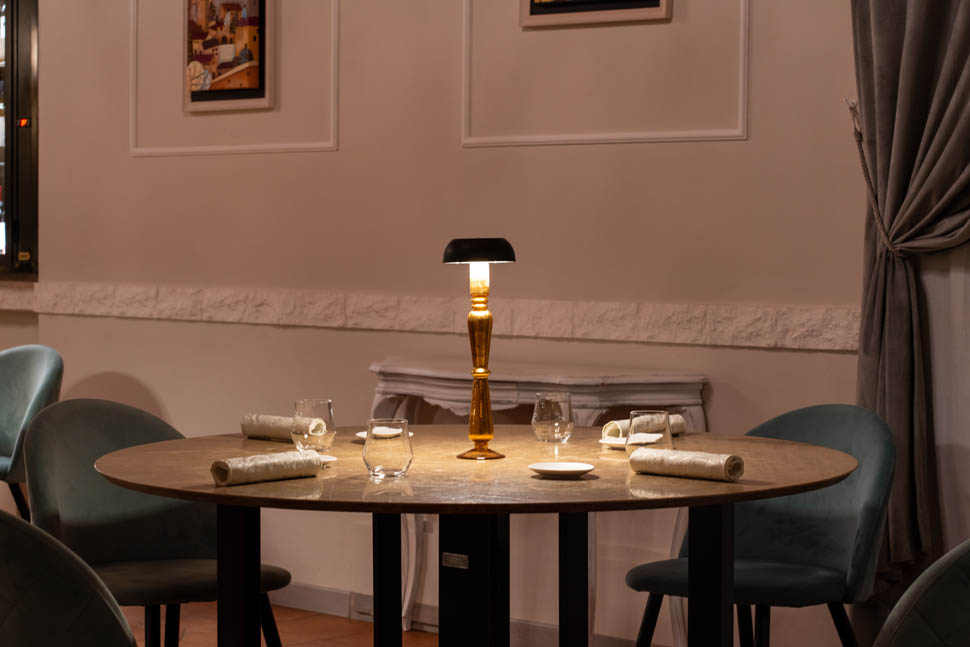
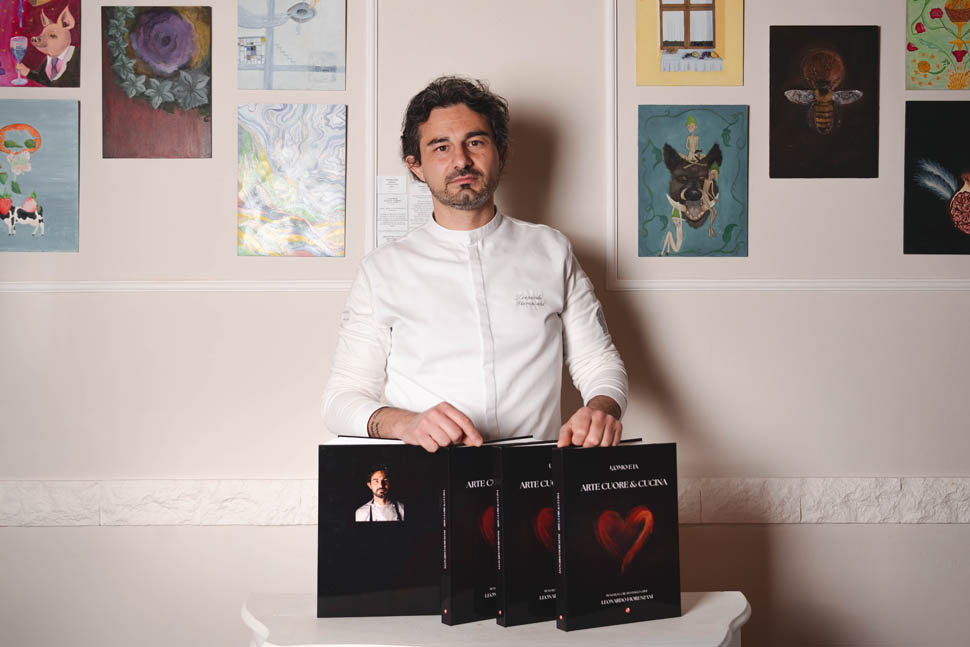
Finally, it’s worth noting this restaurant’s connection to art; its walls, in fact, serve as a veritable gallery that is refreshed every three or four months. For over a year, Leonardo and Michela have been collaborating with the Duccio di Buoninsegna Art High School in Siena, exhibiting works created by the students: “For me, it’s important to support young people, to help them understand that opportunities exist and that there’s something beyond.” It’s a wonderful cultural project that complements the culinary one, creating the image of a place in constant evolution, where cuisine is just one of the ways creativity is expressed.
Contact
La Sosta del Cavaliere
Piazza dell'Abate, 4, 53018 Torri SI
Phone: 0577 343026