Stockholm is undoubtedly one of Europe’s most fascinating capitals: built on fourteen islands between Lake Mälaren and the Baltic Sea, this exceptionally elegant city not only combines history, contemporary design, and an extraordinary quality of life, but also boasts an extremely dynamic culinary scene.
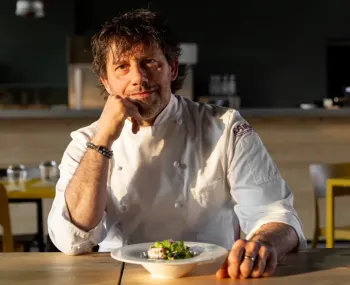
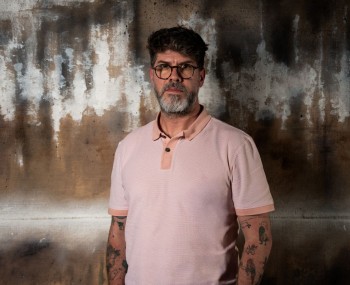
Here, within the context of what we might call New Nordic Cuisine, Ekstedt embodies the career path of a chef who has never chased trends.
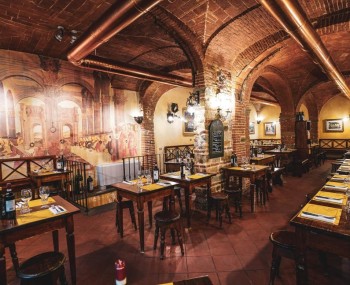
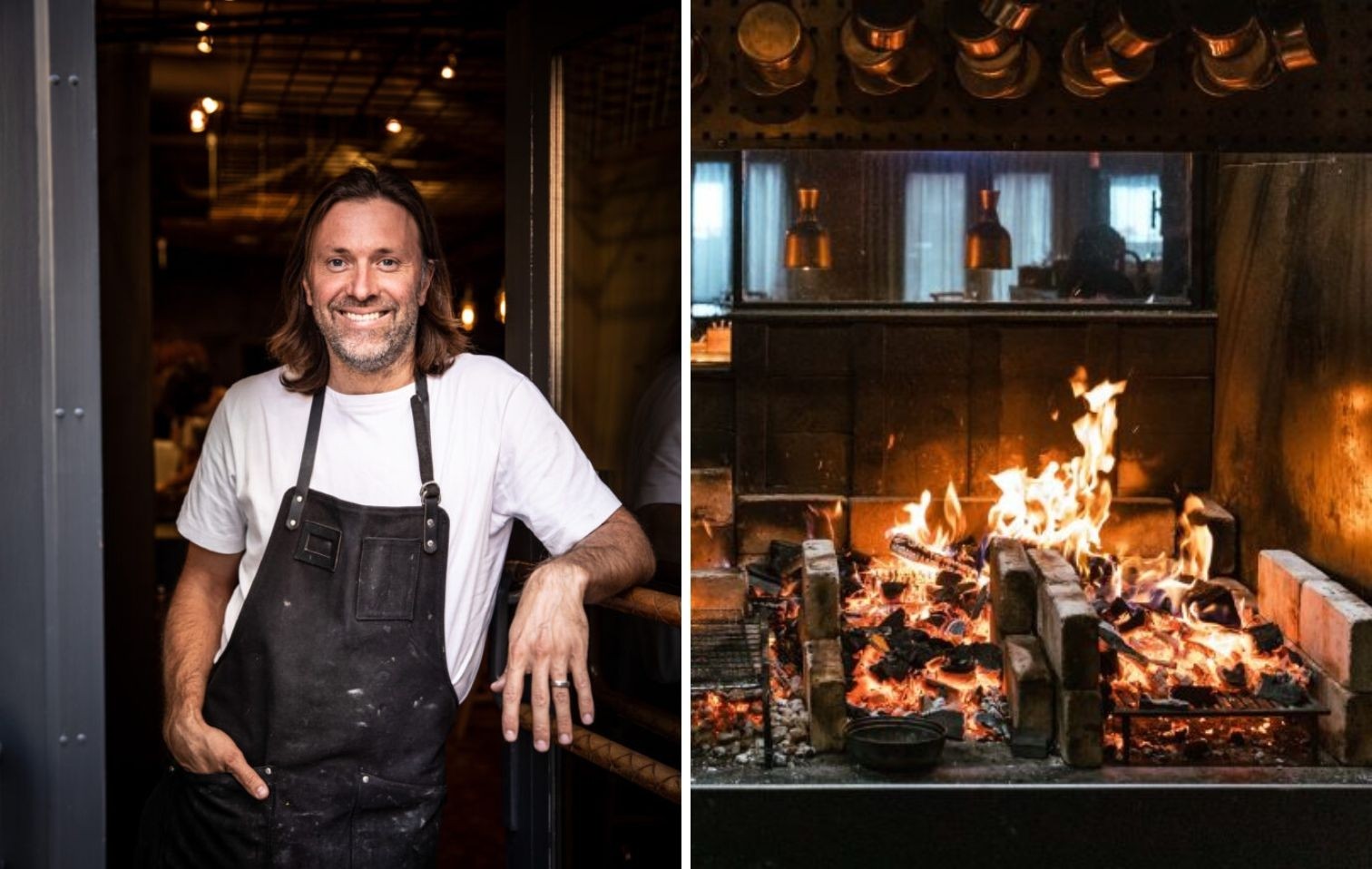
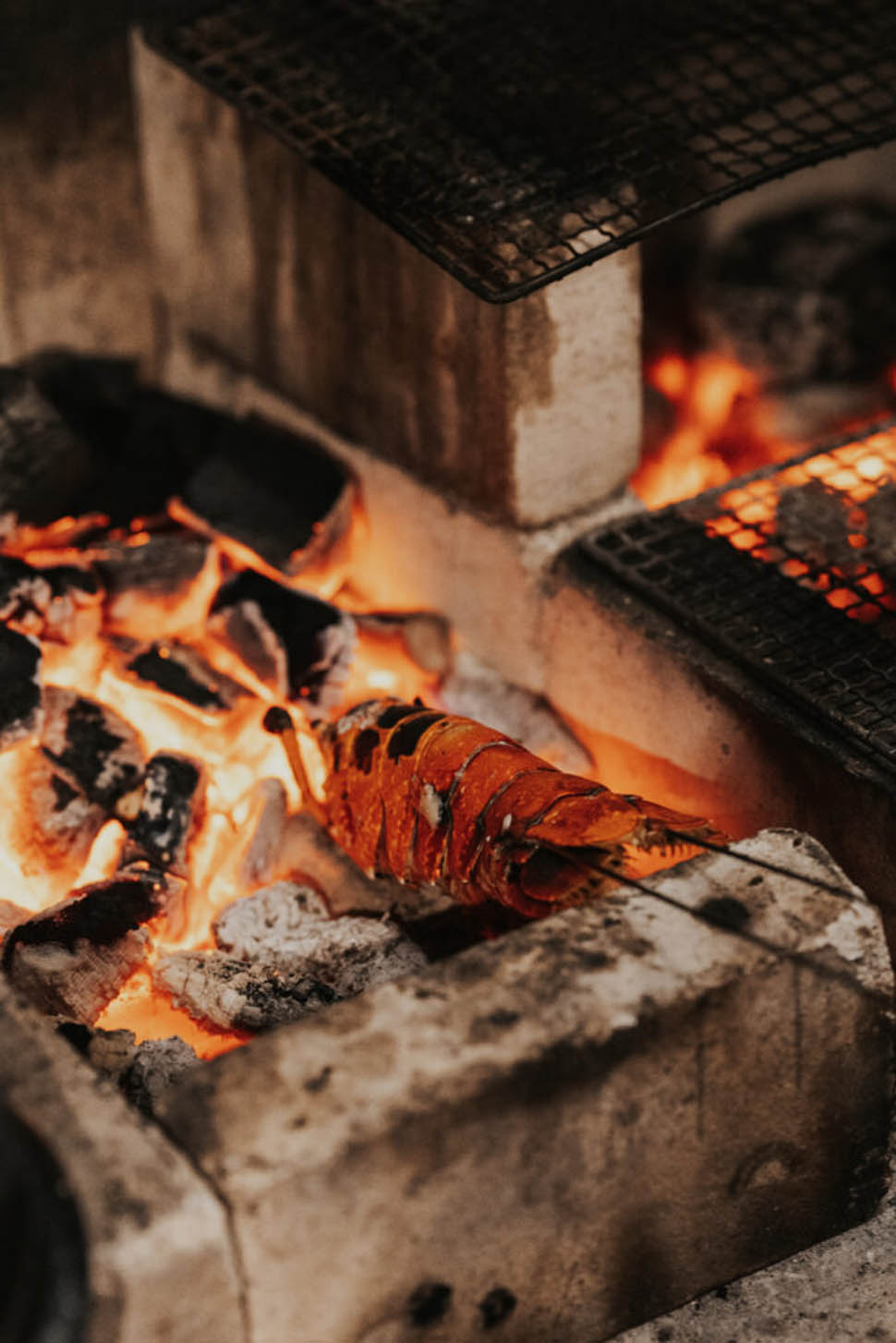
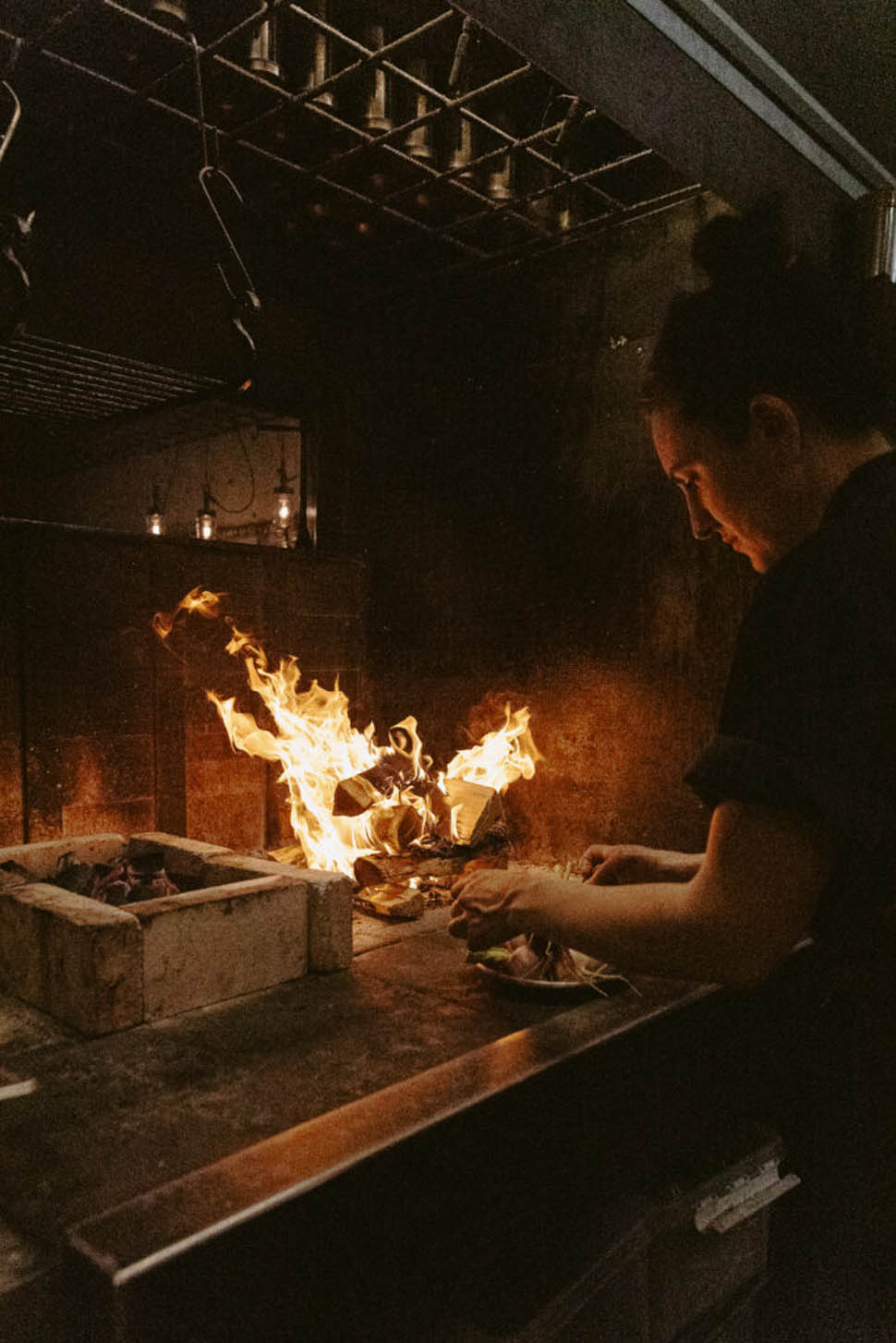
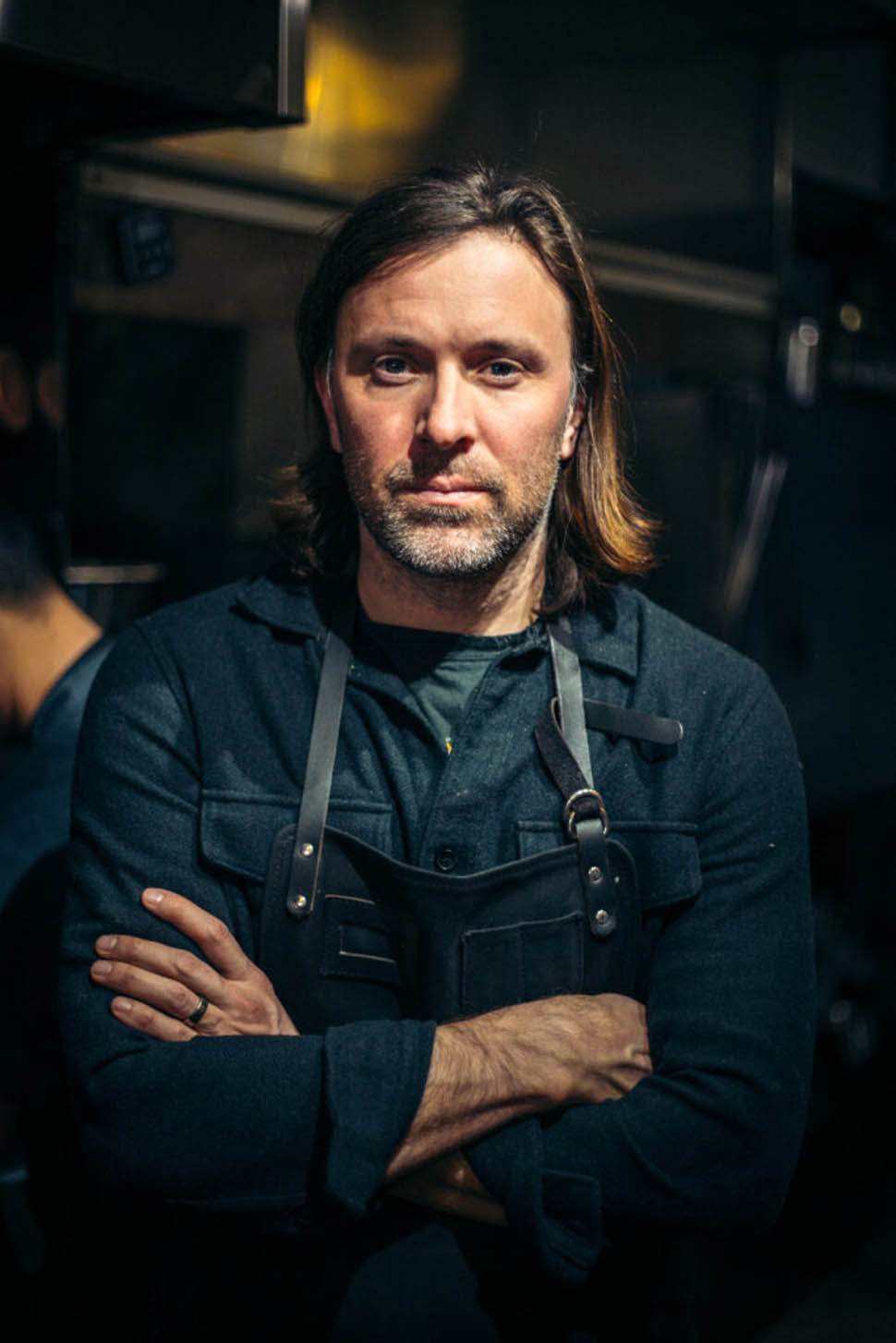
For nearly fifteen years, his name has been associated with an idea as simple as it is radical: cooking using only fire and techniques that predate electricity. It’s also worth noting that Niklas Ekstedt’s work has nothing to do with provocation, nor is it merely an exercise in style. Rather, it is the result of extensive research that has allowed him to revive a nearly forgotten culinary heritage, transforming it into a perfectly contemporary dining experience. In the restaurant, which opened in November 2011, there are no gas stoves, induction cooktops, or modern appliances: everything is prepared using a wood-fired oven, an open hearth, a cast-iron stove, and precise control of the fire. With one Michelin star, this restaurant is certainly one of Stockholm’s must-visit destinations.
The Story
Cooking is a means to an end: what truly interests Ekstedt is understanding how people cooked before technology had altered the relationship between humans, materials, and heat. His curiosity dates back to his childhood spent in Järpen, a small town in Jämtland, in the north of the country, where his family had chosen to live in order to be in closer contact with nature. His encounter with Sami culture helped shape his sensibility: animals were processed at home, and there was a deep understanding of raw ingredients. It would be much later that Niklas would fully realize just how much that upbringing had influenced his approach to cooking.
When he was fifteen, his parents moved to southern Sweden, but he decided to stay and attend hotel management school, even though skiing took up most of his days and his studies took a back seat.What changed the course of events was a teacher who brought books by Paul Bocuse and Marco Pierre White into the classroom, introducing a style of cooking that the young Niklas didn’t even know existed. A back injury forced him to give up skiing, so he redirected his energy, and his talent quickly began to shine. The next step seemed to be France, but his limited knowledge of the language posed an obstacle. However, through a network of contacts that began with his uncle, the artist Peter Tillberg, and extended all the way to Yoko Ono—who put him in touch with Charlie Trotter—he found his way.
So in 1996, after finishing school, Niklas flew to Chicago to begin an internship at one of the most influential restaurants in the United States: the experience was a “tough” one—at eighteen, in his first time away from home, he found himself in a competitive environment. However, the young man possessed a background that many of his colleagues could not match: “When I arrived at Charlie Trotter’s, I was still young, but I had an advantage. Thanks to my father and the Sami people, I already knew how to prepare game and fish. No 19-year-old in that kitchen had the same familiarity with the raw ingredients.” A few years passed, including a brief stint in Los Angeles, before another important turning point. Trotter himself suggested two alternatives: Michel Bras or Catalonia, where something new was taking shape. Ekstedt chose the latter and, in 1999, joined the kitchen at El Bulli, where Ferran and Albert Adrià were revolutionizing the language of global gastronomy. It was a brief but intense experience, followed by a move to Copenhagen.
In Denmark, he worked with a very young René Redzepi, back when Noma hadn’t yet opened and the Danish capital wasn’t yet the city it would become a few years later. “I remember René constantly saying that Copenhagen would become a great culinary capital. At the time, it seemed almost like a dream, but he was right.” Other stops followed, including a stint with Alain Ducasse, but Ekstedt felt the time had come to return to Sweden. There, he opened a small restaurant in a building that had belonged to his grandfather; in the early months, his friend Redzepi even lent a hand, traveling to Sweden to support him as he got the business off the ground. And success followed: books, television shows, and remarkable popularity—for a Swedish chef of that era. Everything seemed to be going well, but in reality, just as his fame was growing, Ekstedt began to wonder if that was truly the path for him. In 2009, he became a father and decided to slow down; he closed the restaurant and took the time to be with his son: “I was overjoyed, and I’ve never regretted dedicating time to my family. However, professionally speaking, I felt lost. I also felt a lot of pressure: I knew that any new restaurant I opened would be judged from day one.”
Ekstedt thus began studying old 18th-century cookbooks, took an interest in the techniques used before the advent of electricity, and during that time built a hearth in his family’s home on the island of Ingarö. Initially, it was meant to be used only in the summer, but it eventually became a full-fledged laboratory. Day after day, Niklas discovered just how infinitely more complex fire is than he had ever imagined. Not only does it change the way food is cooked, but it alters textures, flavors, cooking times, and even the relationship between the cook and the ingredients themselves. The challenge, at that point, became figuring out whether those methods could still give rise to a contemporary cuisine. How were great dishes prepared two hundred years ago, without modern equipment? After months of study, trial and error, in 2011 he found a restaurant in central Stockholm and, together with his partners and a team willing to share in the project, realized that the time had come.
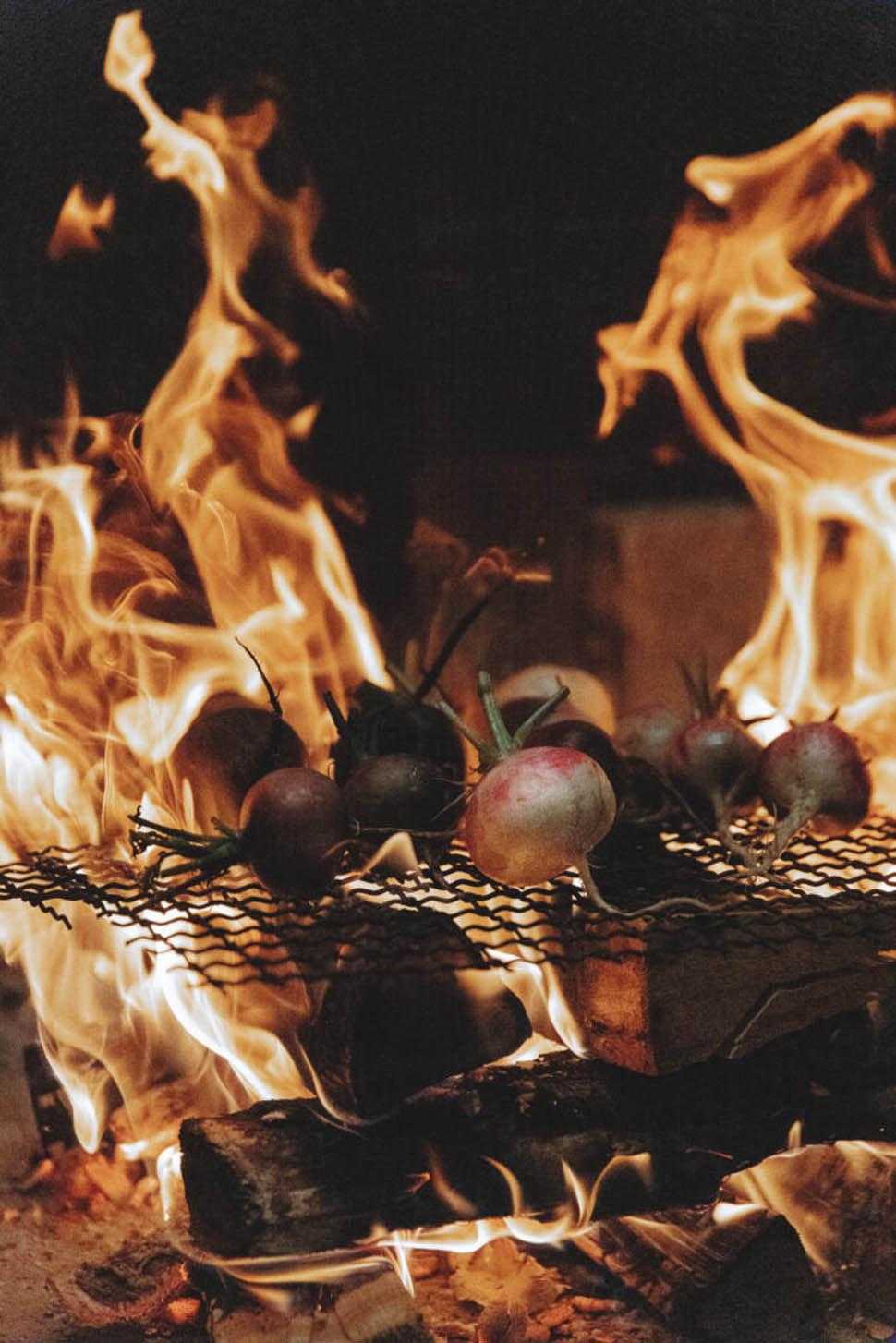
“The beginning was very difficult. We had to do a lot of research, but above all, we really had to learn how to control the fire. The wood, the smoke, the oven, the temperatures, the intensity of the flame—we were completely focused on these aspects. The great thing was that everyone believed in the same vision. We were so absorbed in the technical side that we almost forgot about reviews and stars. To this day, I still remember that period as one of the most rewarding of my life.” In 2013, they earned their Michelin star.
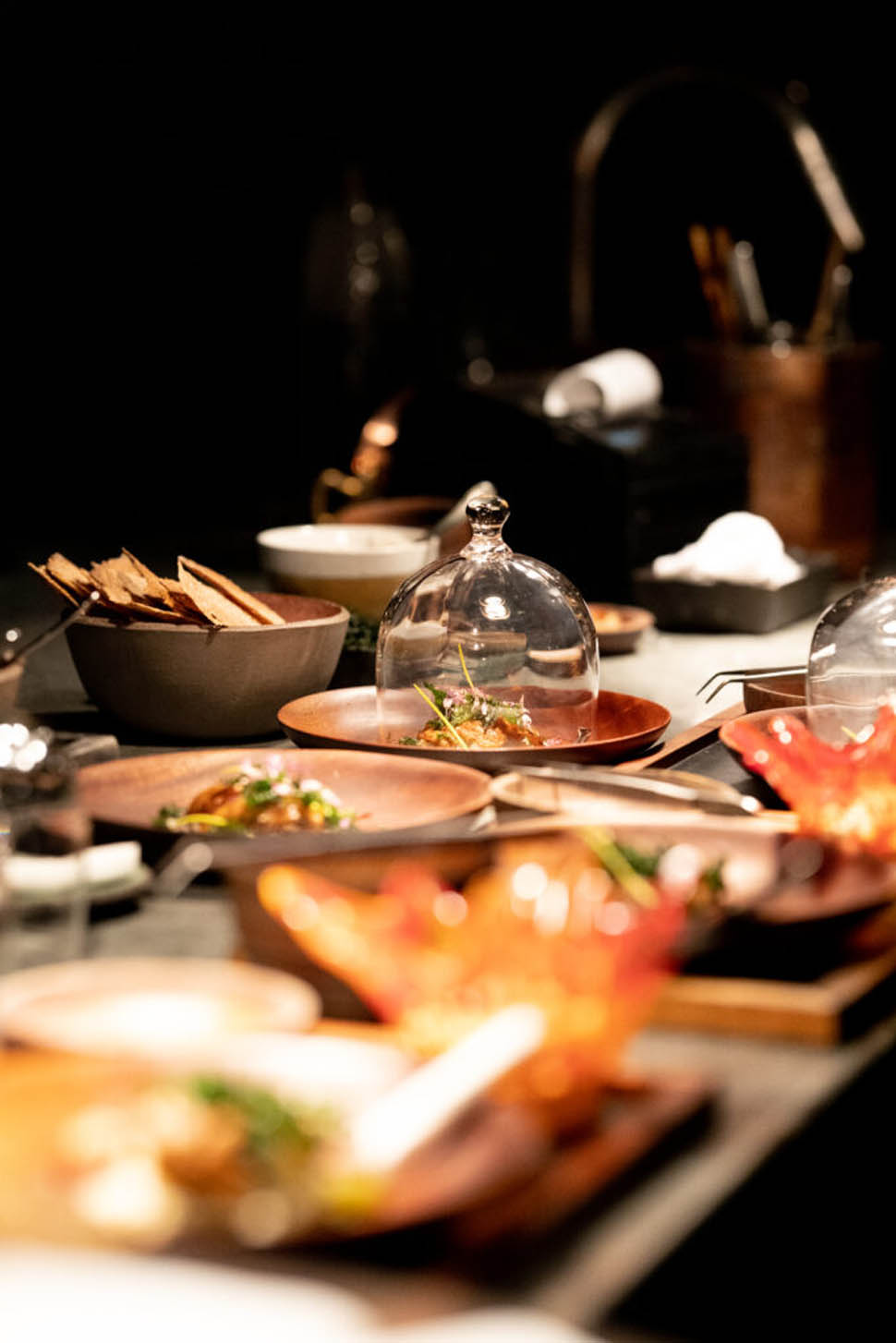
Over the years, the restaurant’s clientele has changed. In the early days, it was mainly Swedes who filled the place. As its reputation grew, Ekstedt became a must-visit destination for those arriving in Stockholm from all over the world. International recognition hasn’t changed his approach; on the contrary, it confirms the strength of his vision: “When I started, I was a pioneer. Definitely one of the first in Scandinavia and among the first in Europe to work this way. It was difficult at first, because many people simply thought I was doing grill cuisine. Those who truly understood gastronomy immediately grasped what I was doing, but for the general public, it was much more complicated. Then the accolades came, and the restaurant began to be understood for what it really was.” The pandemic, however, interrupted this journey. Travel came to a halt, forcing a return to basics: “During COVID, the restaurant changed completely. I was no longer competing with Noma or Massimo Bottura. I had to convince the people of Stockholm to choose us over the restaurant on the corner. It was an important lesson, because it forced me to reevaluate many things and change the way I work.”
Current Research
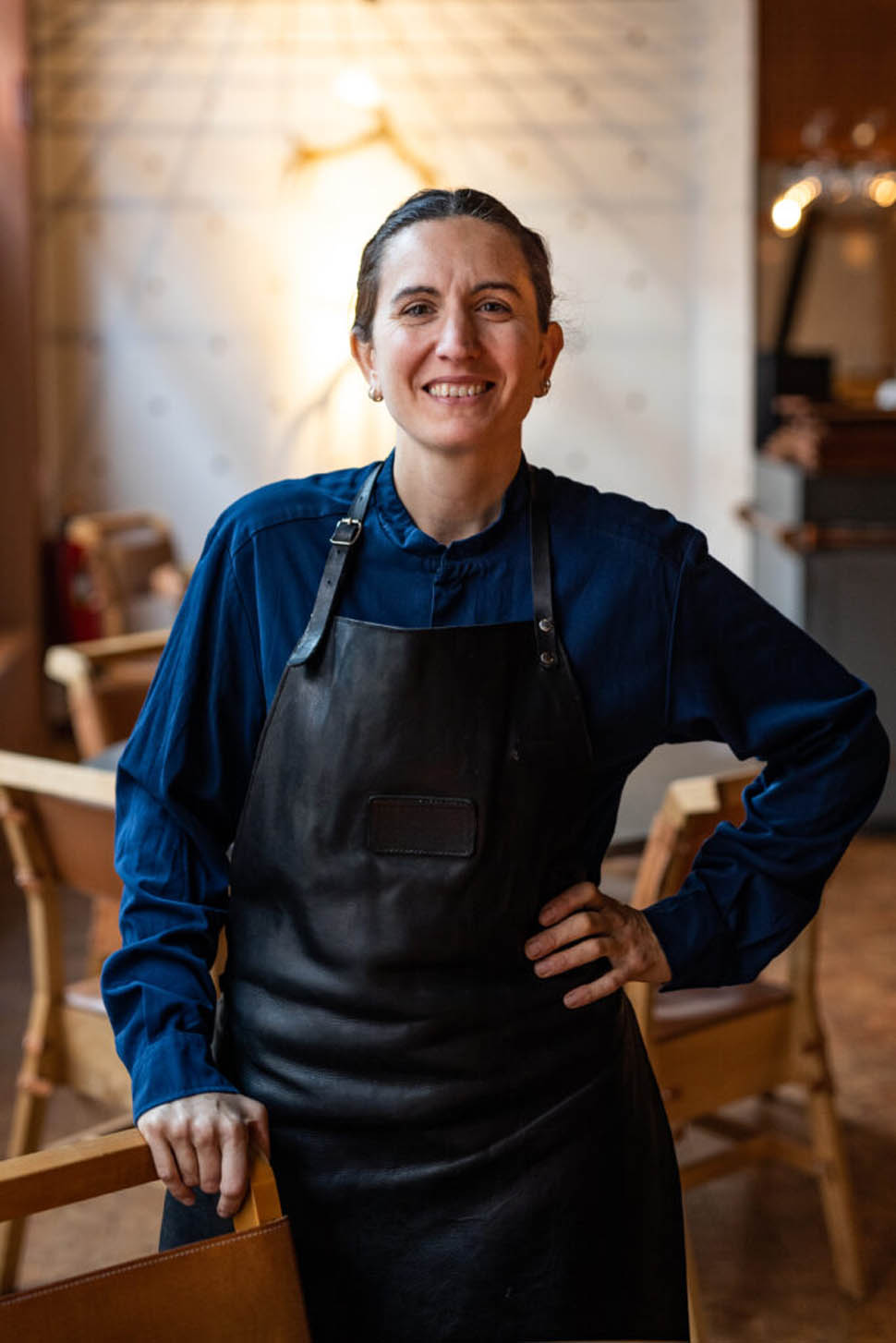
In recent years, Ekstedt’s research has gone even further. In fact, fire is now just one of several elements in his work on historical techniques. “Today, my work is entirely focused on traditional cuisine: I draw more inspiration from historians than from chefs. Fire is the foundation; everything else involves techniques that were used before the advent of electricity. We use only Swedish and Scandinavian ingredients: no olive oil, no lemons. I try to rediscover cooking techniques that have been lost and bring them back to the present.” According to Ekstedt, after years of focusing on spectacular or highly technological approaches, the time may have come for a new era, in which Scandinavian cuisine can once again embrace its own identity.
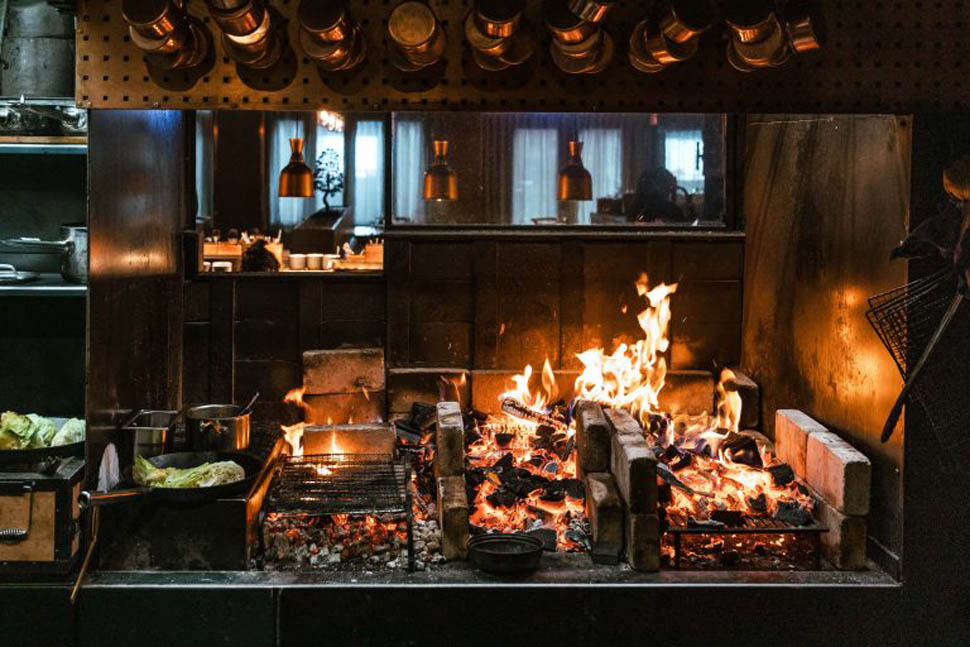
Another interesting observation of his concerns the future of top-tier destination restaurants.It’s not the price of the menu that worries him, but rather the overall cost of getting there and dining there: “I think the future will be complicated. When I was young, I could travel across Europe, find an affordable hotel, and visit many restaurants. Today, even before you sit down at the table, you’ve already spent hundreds of euros on travel, hotels, and transportation. This is what risks changing people’s habits.” Ultimately, though, it all comes down to a very simple principle. In an era when haute cuisine is viewed as a never-ending ranking, Ekstedt asserts the right to pleasure: “I often meet people who tell me, ‘I have to come and test your restaurant.’ I always reply that there’s nothing to test. You should come to eat, feel good, and have fun. Just like when you go to the theater or the movies. Sometimes we forget that this is the reason we go to a restaurant.”
The Cuisine
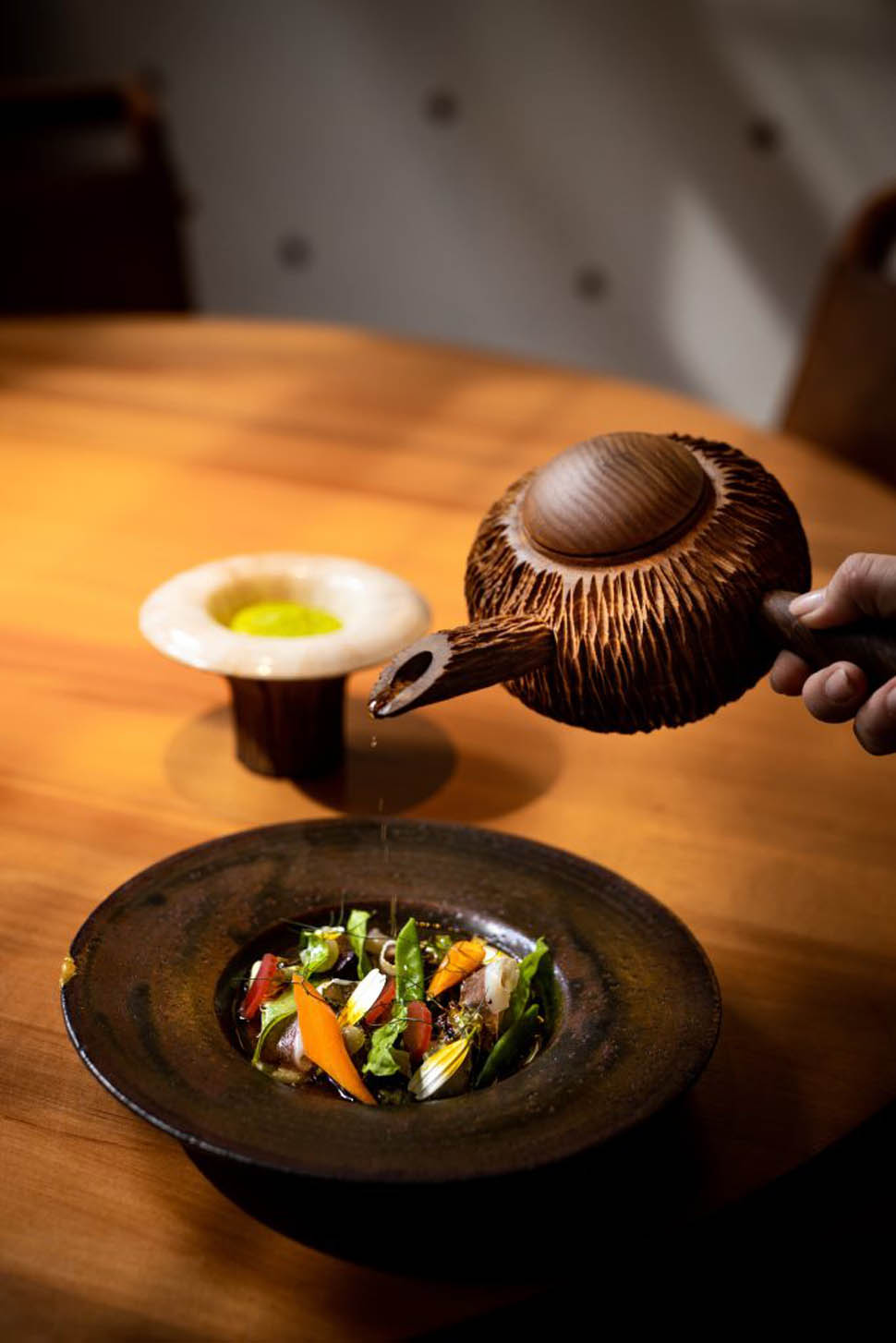
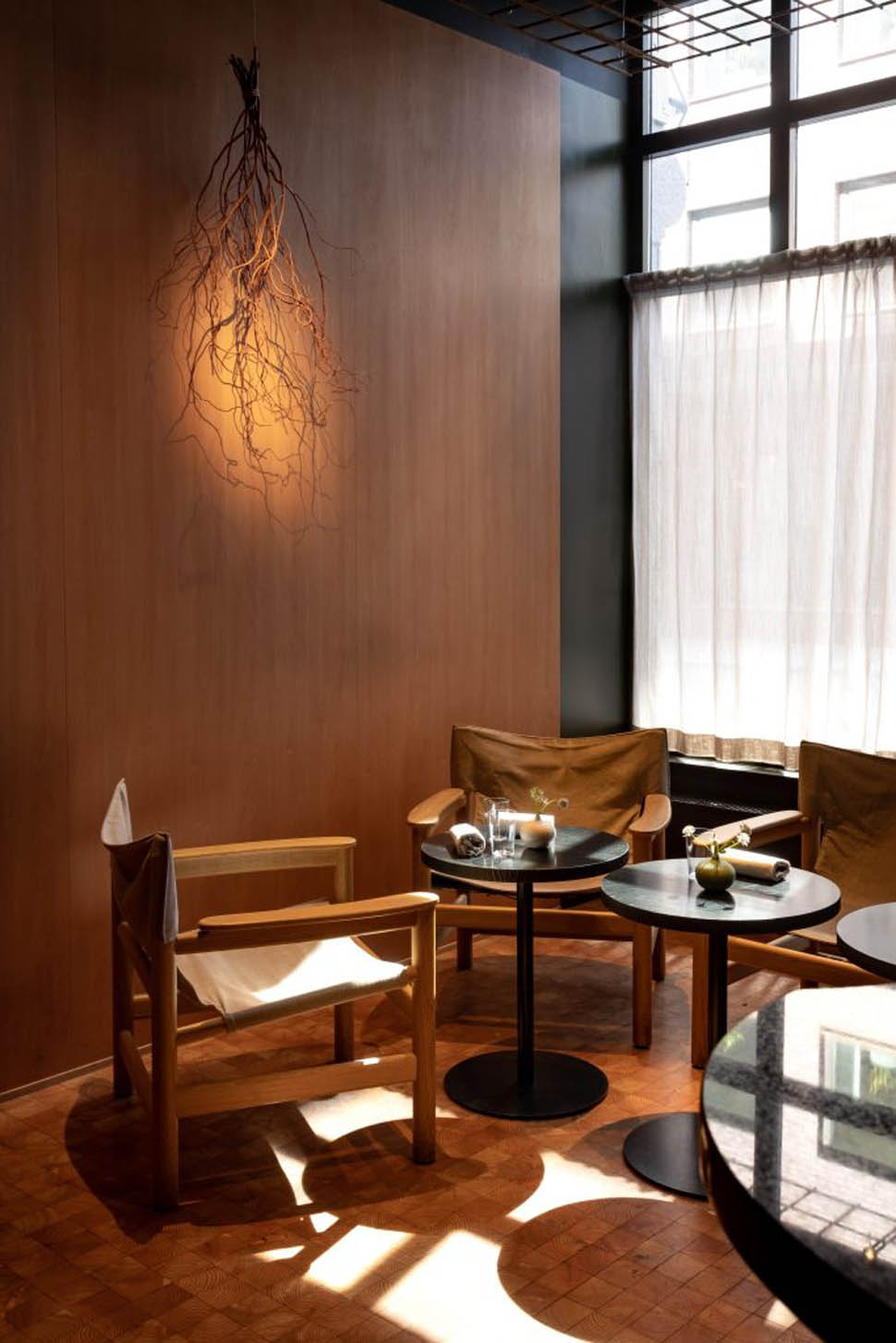
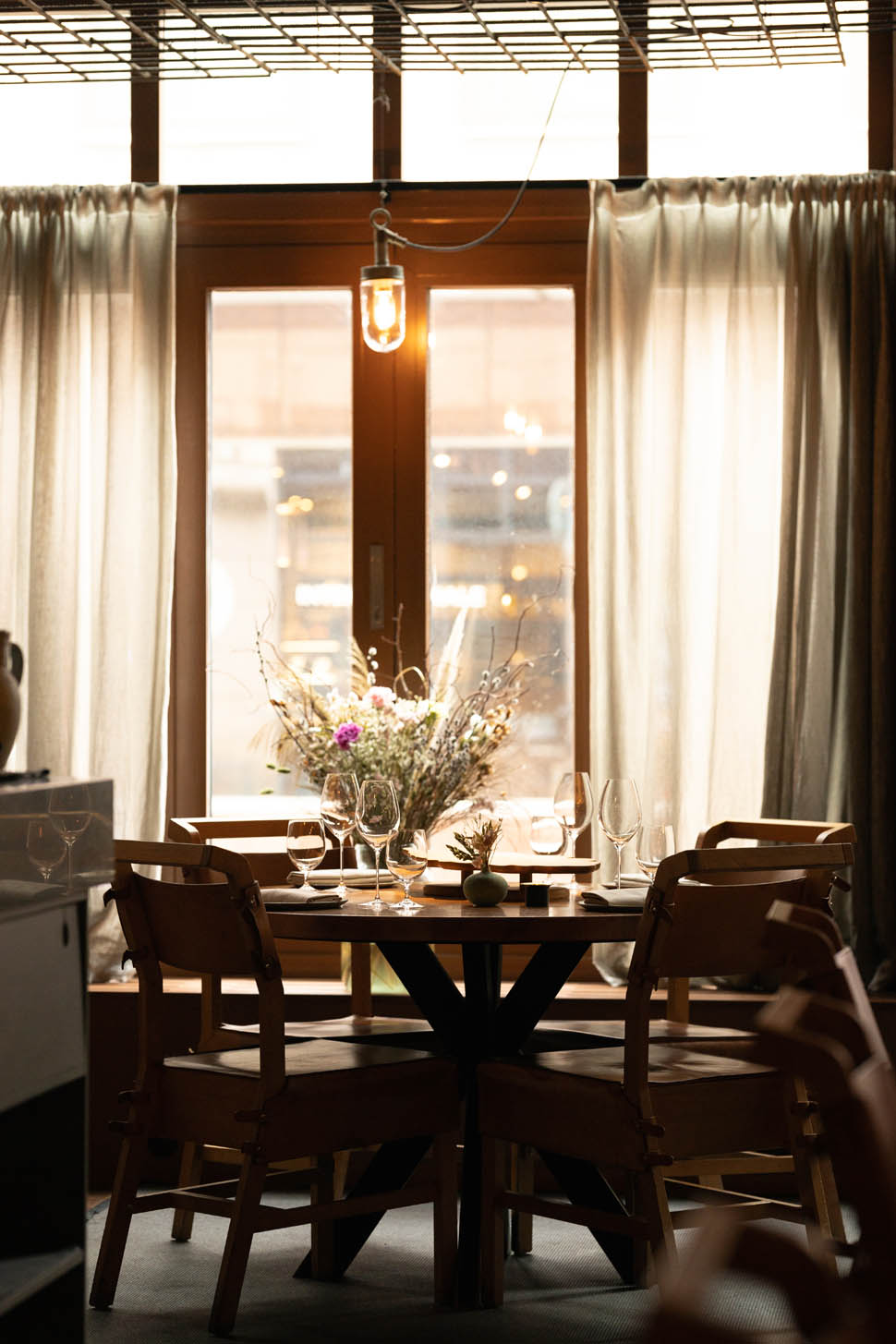
The menu we sampled demonstrates just how much Ekstedt uses fire as a true language, and every cooking method—from charcoal to wood, from hay to juniper, or the use of the flambadou or wood-fired oven—is chosen based on the ingredient. The meal begins in the elegant antechamber with aperitifs: the delicacy of “preserved rhubarb, Jerusalem artichoke, and cream cheese,” a flavorful bite of “juniper-smoked reindeer, fermented blueberries, and cucumber,” and fragrant, crispy bread baked on cast iron with whitefish roe and fennel pollen. Before taking your seat, you witness the spectacular cooking of thewild Gygas oyster with flambadou, a cast-iron cone heated to white-hot in the embers, into which animal fat is inserted; it melts and is poured, red-hot, directly onto the oyster, causing a huge burst of flame. This technique, of medieval French origin, allows for extremely rapid cooking that keeps the oyster juicy. Sturgeon caviar completes the dish with its savory note. The dining experience begins with a juicy cold-smoked shrimp, served with yogurt and green plums. This is followed by a particularly interesting bread service: naturally leavened,
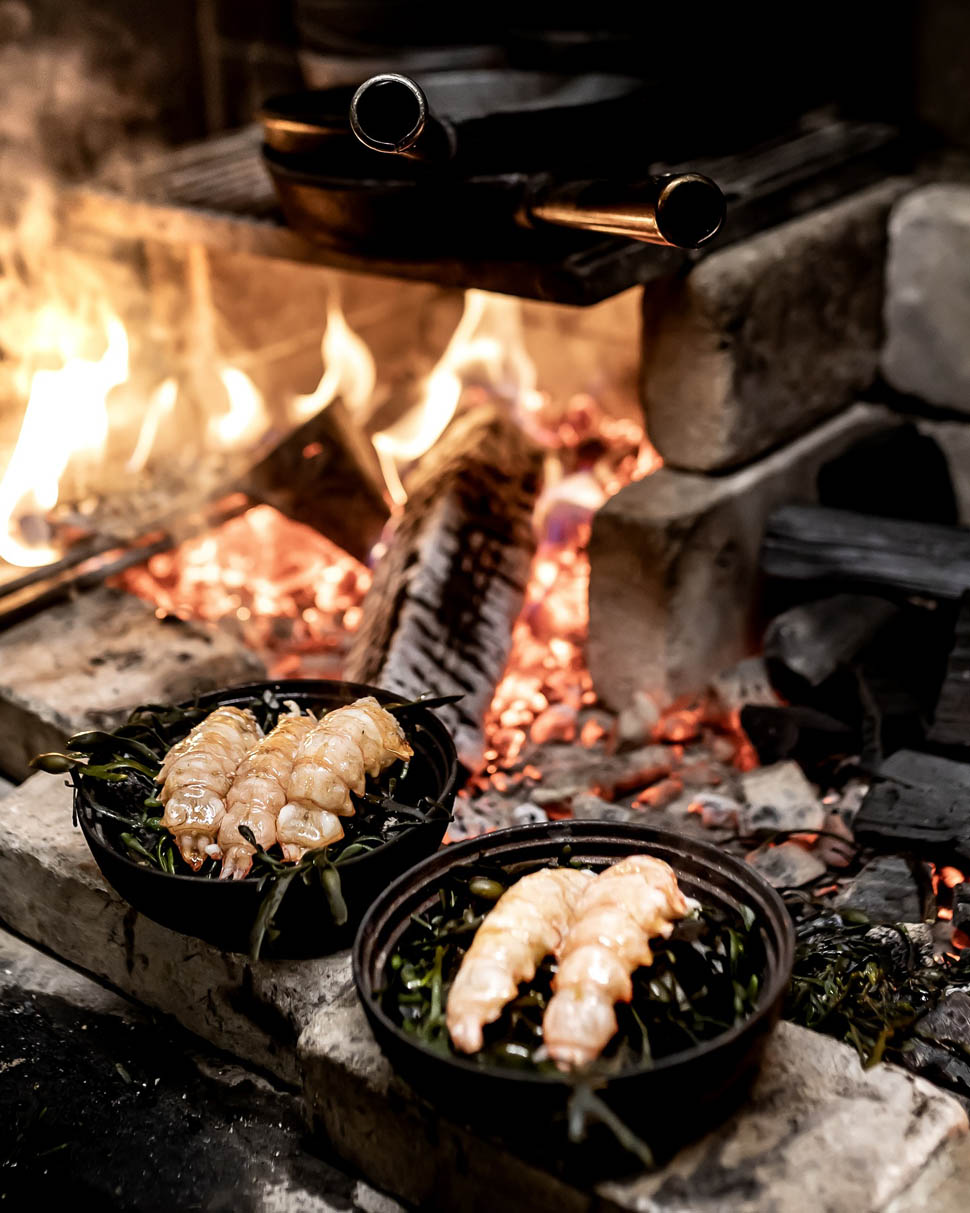
It is cooked in a wood-fired oven and served with butter and smoked whey—a moment of exquisite flavor—followed by a scallop cooked over hot coals, with a lightly caramelized exterior and a center that’s still tender. Adding to the tenderness is the potato, balanced by sea buckthorn with its unmistakable tart, citrusy note. Noteworthy is the scampi cooked confit until it reaches an extremely tender texture, with rose adding fragrance without overpowering the dish and sunflower seeds providing crunch and a toasty flavor. The hay-smoked quail breast is excellent: the parsnip enhances the sweetness, while the lovage balances it with an intense herbaceous note. Equally impressive is the lamb, delicately prepared with juniper; wild garlic adds fragrance, and green asparagus rounds out the dish with its subtle bitter note.
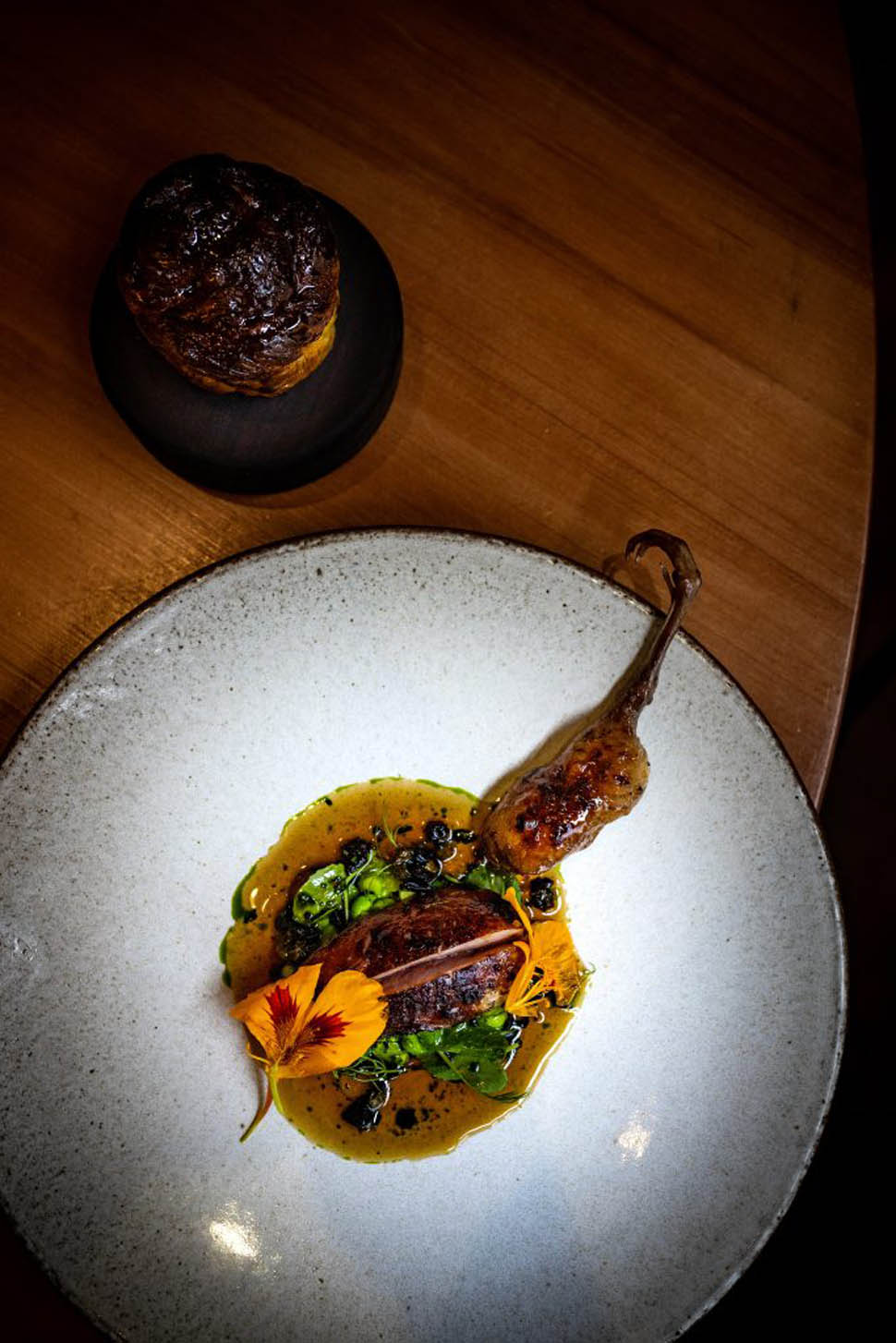
The transition from sweet to savory is embodied by gooseberries preserved with anise-flavored hyssop and milk, which softens their tartness. A true masterpiece of flavor is the barley soufflé with juniper and spruce, where sweetness is tempered by resinous and balsamic notes. Also worth noting is the meringue flambéed at the table and served with preserved red berries and fennel seeds. The memorable dinner concludes with the aroma of toasted hay, marzipan with pumpkin seeds, and honey.
Contact Information
Humlegårdsgatan 17, 114 46 Stockholm, Sweden
Phone: +46 8 611 12 10