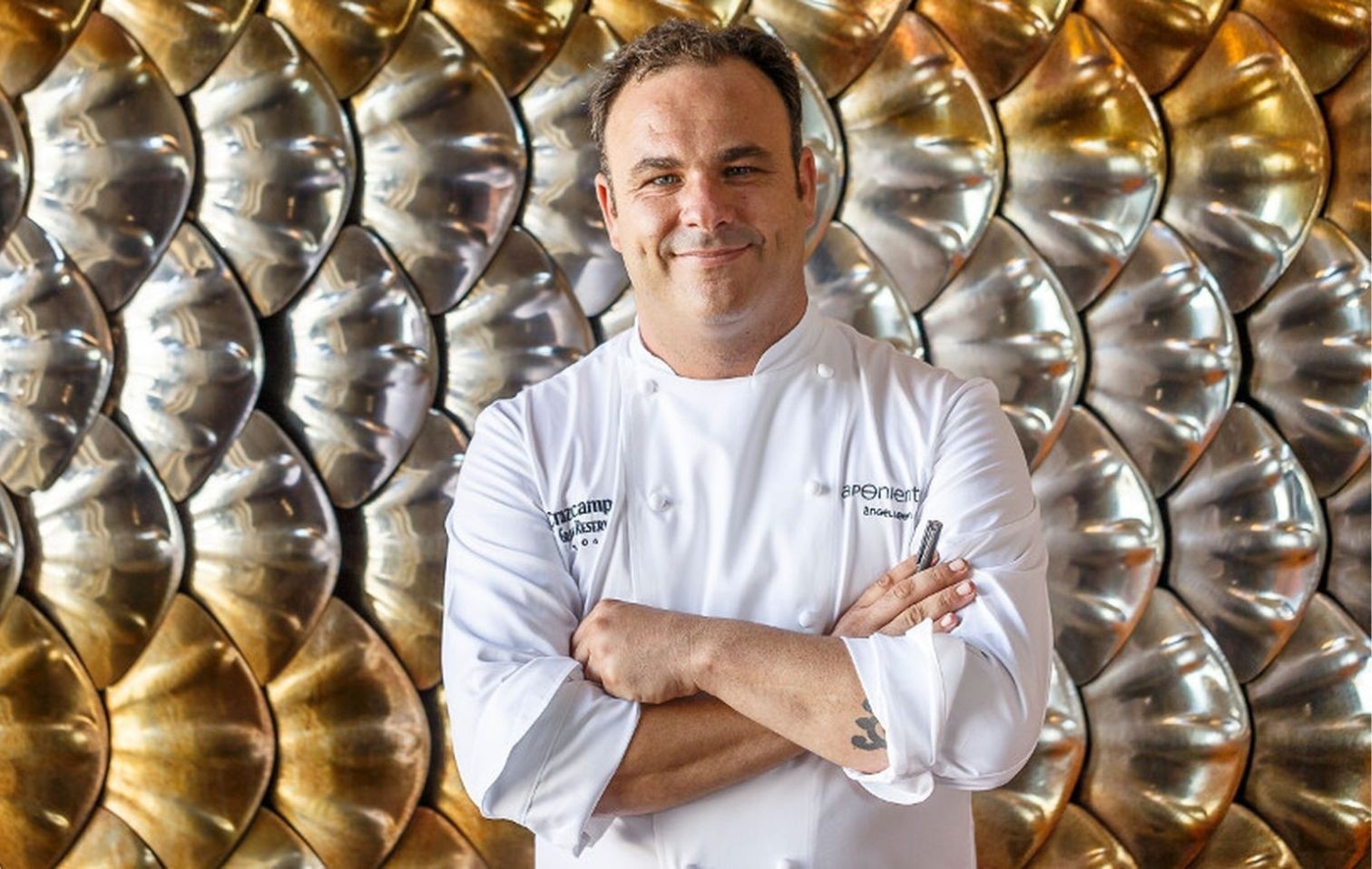
Currently priced at 400 euros, excluding drinks, Aponiente’s menu is set to redefine the pinnacle of the global market. “I’ve already said that this is meant to be the most expensive restaurant in Europe, but I have to take it one step at a time. I want people to see the project as a whole,” the chef told La Razón. It is a statement of pride and pragmatism: if there is research, it must be paid for, because sustainability, in order to survive, must be profitable.
The Project
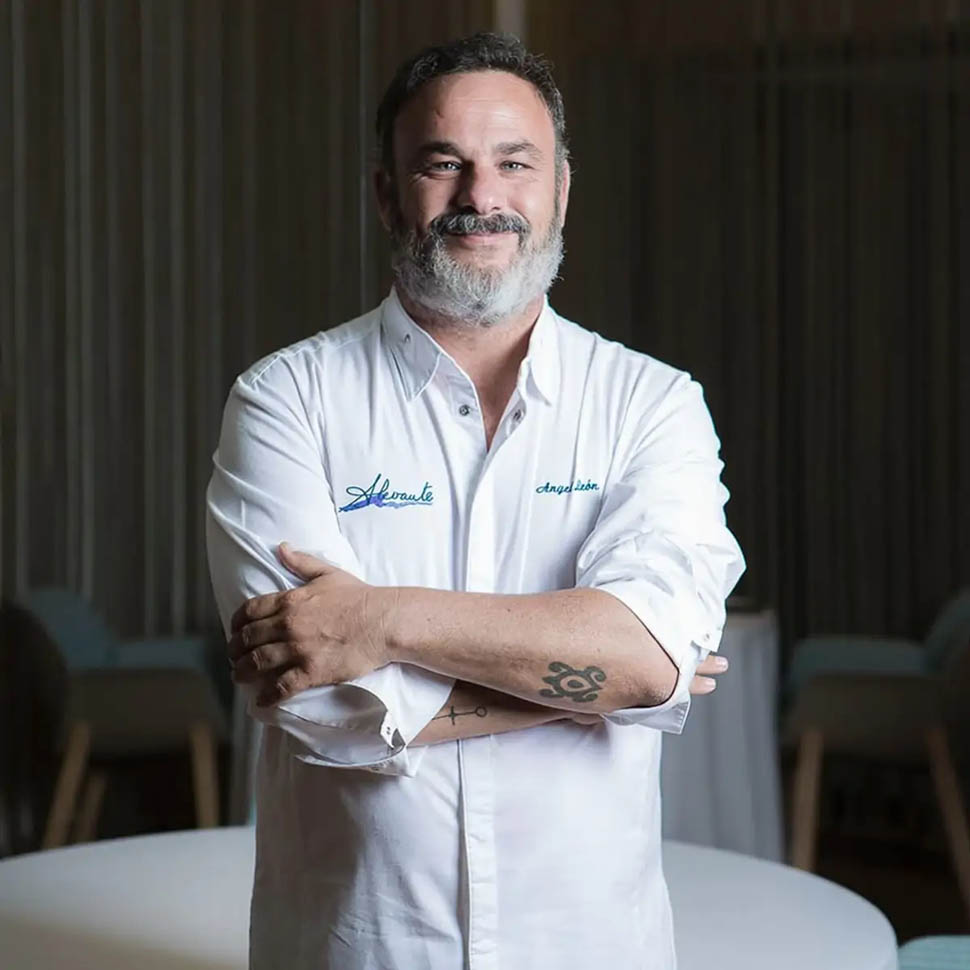
Imagine being able to taste the flavor of an ecosystem that no longer exists: this is what the new era of Aponiente in El Puerto de Santa María promises. Here, the “Chef of the Sea,” Ángel León, has achieved the unthinkable, shaping a concept that redefines the boundaries of gastronomic luxury and ecological thinking.“We have designed a restaurant that doesn’t exist, something truly incredible in today’s globalized world” . León’s words to La Razón resonate as a manifesto of intent . To bring this utopia to life, the chef invested two and a half million euros (of which 700,000 euros were funded by the Provincial Council of Cádiz) to rescue twenty hectares of marshes abandoned for seventy years from oblivion. This is not a simple makeover, but a monumental reclamation project transformed into a living, experimental pantry, where nature is viewed “with hunger,” elevated to an open-air laboratory for marine research and development.
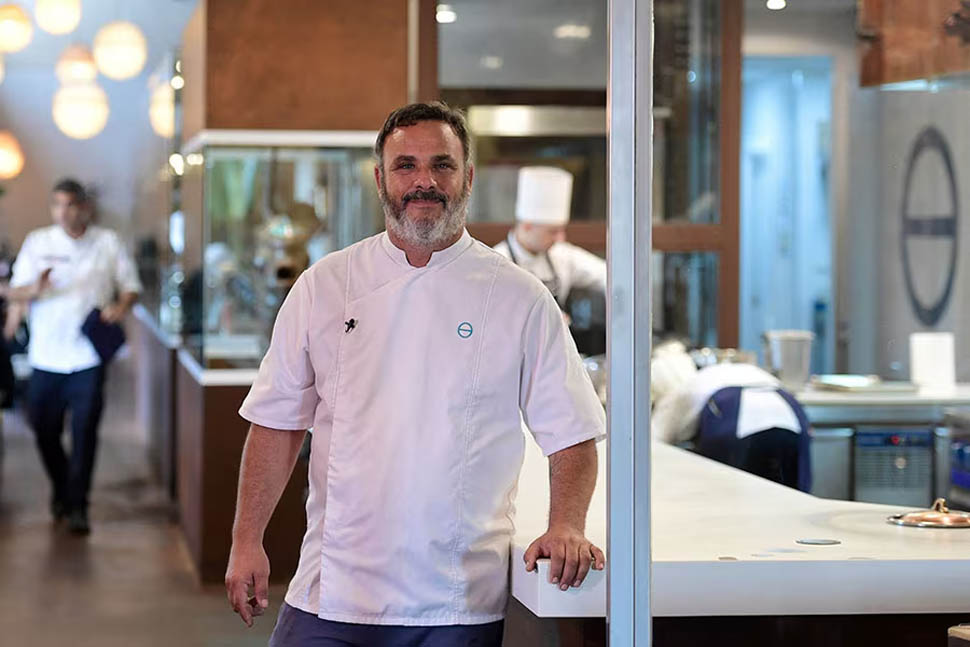
The experience orchestrated by León and his team of 85 professionals—who are entirely dedicated to just 30 diners per session—is an almost theatrical journey. The journey winds through the estate (which guests will explore by buggy starting next year) until it reaches the heart of the ecosystem: seven floating pontoons where chefs, waitstaff, and the bay’s veteran fishermen work in harmony. Here, time expands and the superfluous fades away. It is the raw ingredients that speak for themselves. In a profound and almost ancestral contrast, diners are shown the millennia-old transition of the Japanese technique of ikejime: a sea bream is slaughtered on the spot, accompanied by the solemn notes of Paco de Lucía, so that the guest may understand the sacred value of life that becomes sustenance. “I want people to understand that what is caught for you, dies for you.”
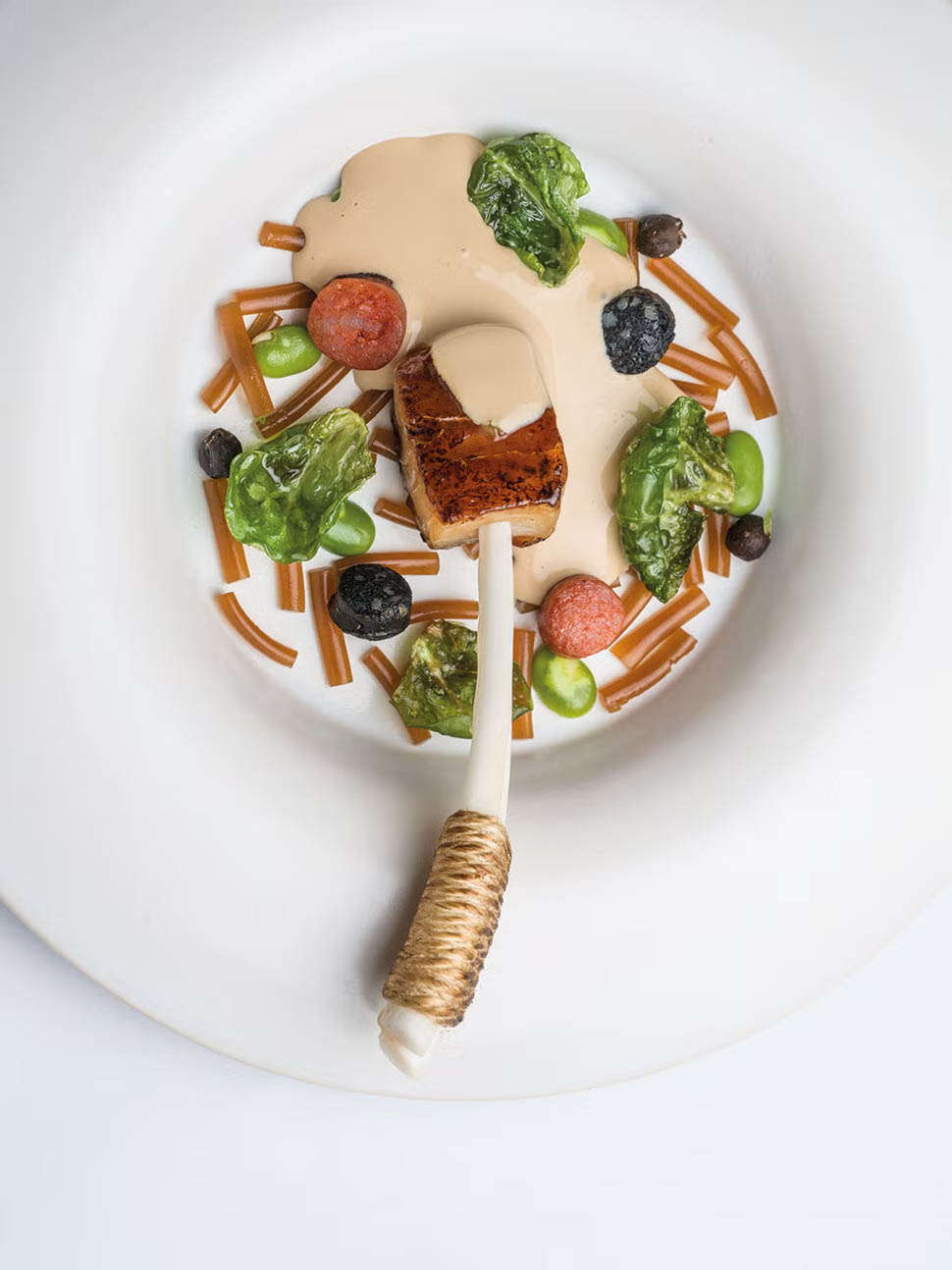
The palate is thus introduced to an unprecedented and surprising aromatic complexity. The experience begins outdoors, in the evocative drying room, where a “sea ham” and ephemeral marine cured meats challenge terrestrial conventions alongside a glass of Forlong. The menu is a succession of marine micro-explosions: mullet roe aged in Pedro Ximénez sherry casks, crisp live shrimp that leap into a cold broth before being enjoyed fried in sea lettuce flour, blue crabs transformed into spreadable veloutés, and puffed moray eel skins. Halophytes—the only vegetables capable of feeding on the ocean—are immersed in sea urchin essence. Inside the ancient tide mill—perhaps the most charming room in the entire restaurant—the symphony continues with sea beans, monkfish liver with carob, and the bold combination of squid, vanilla, and pumpkin, culminating in the desserts with a seaweed tatin that redefines contemporary pastry.
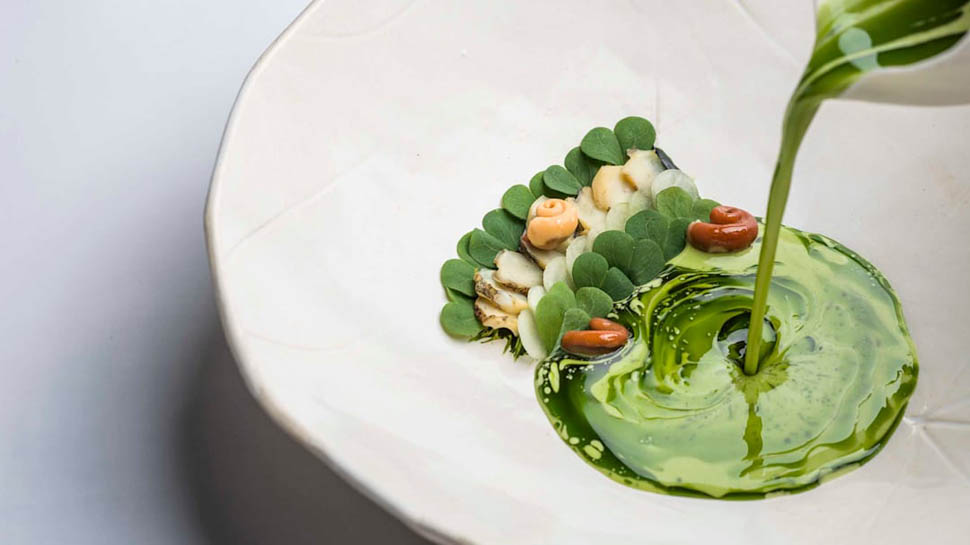
Such an endeavor, however, requires a paradigm shift—including an economic one. Currently priced at 400 euros—excluding Cristina Navarro’s sophisticated, bespoke pairings, which feature wines unavailable elsewhere—Aponiente’s menu is set to redefine the pinnacle of the global market. “I’ve already told the ‘guys’ that this has to be the most expensive restaurant in Europe, but I have to take it one step at a time. I want people to see the project as a whole.” It is a statement of pride and pragmatism: if there is research, it must be paid for, because sustainability, to survive, must be profitable. A cutting-edge vision that left even Ferran Adrià spellbound, staying up to discuss with León until three in the morning, repeating almost like a mantra: “The price to live this experience is a thousand euros. A thousand euros, my friend.” Aponiente is no longer the refuge of “four eccentrics who cooked seafood” without being understood. Today it is a temple of haute marine cuisine where guests come to forget the outside world and immerse themselves in the jazz of the marsh. Ángel León, the chef turned gardener of the oceans, has proven that even in the 21st century, it is still possible to invent something that did not exist before.