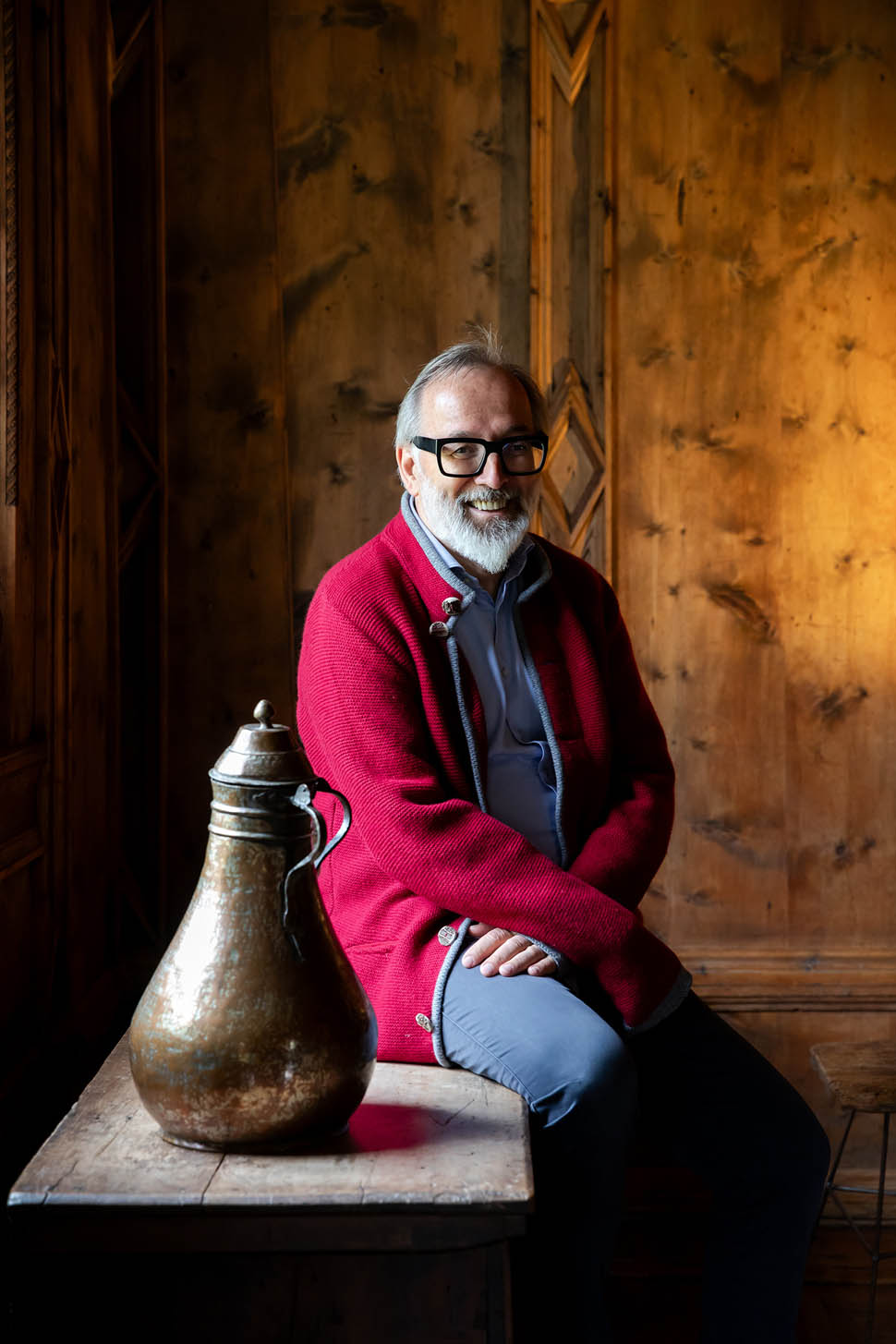
“Some people say it’s dead, but fine dining will never die—just as a Chanel dress or a nice car will never go out of style: there will always be a place for these things and for those who want them and can afford them. Of course, we have to change, and we also have to adapt to today’s way of thinking.”
The True Meaning of Cook The Mountain: A Gastronomic Revolution
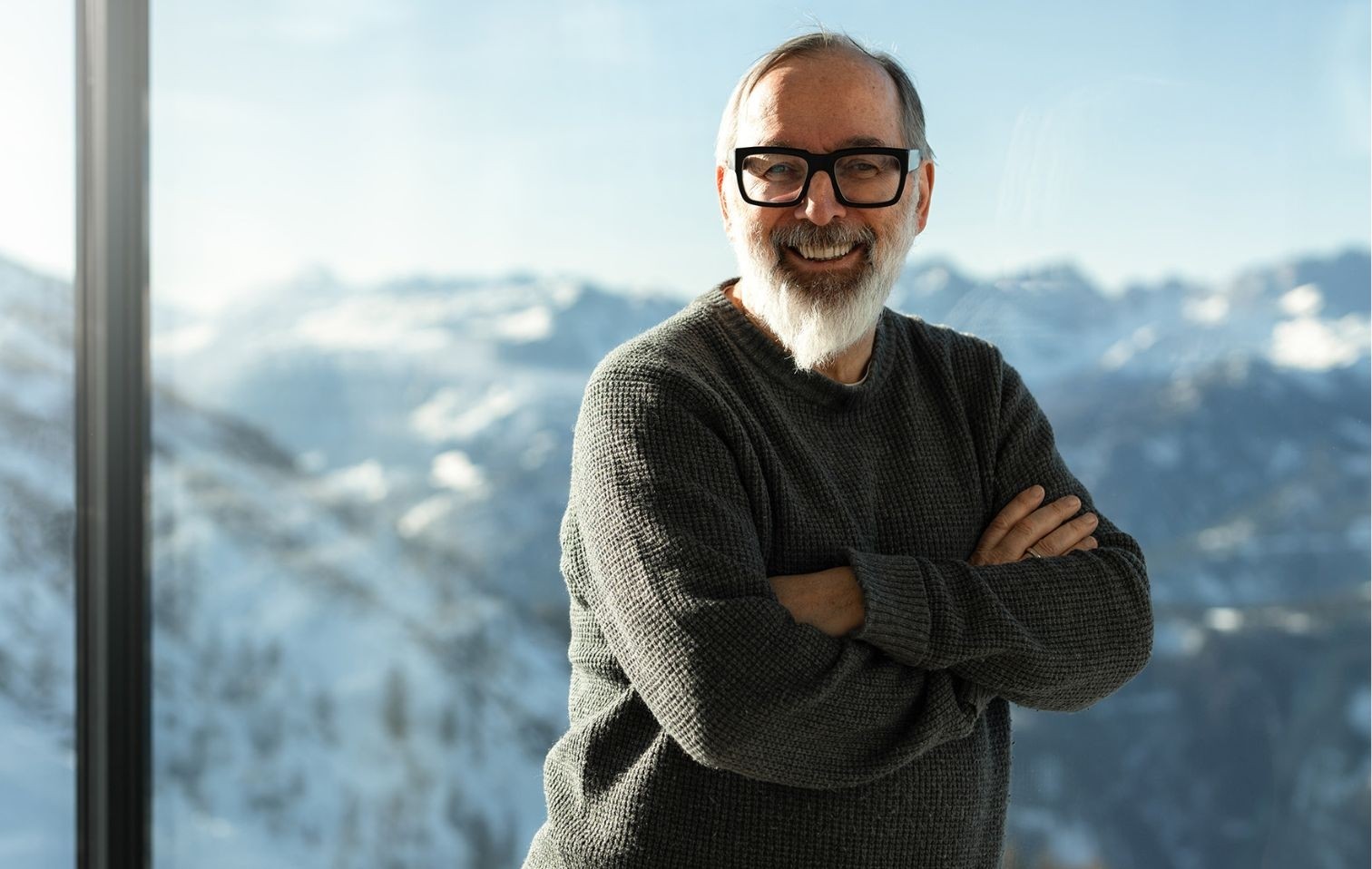
When Cook The Mountain was founded eighteen years ago, thanks to Norbert Niederkofler, the term “sustainability” was effectively a new word—difficult to define semantically, almost an alien concept. Just like that small revolution set in motion in Val Badia at St Hubertus, in a world of fine dining that was then rigidly conservative. Now ‘sustainability’ crops up in every conversation, it has expanded from the environment to various fields of knowledge; one cannot do without it without being accused of anachronism (and, in the same way, it is all too often abused without restraint).
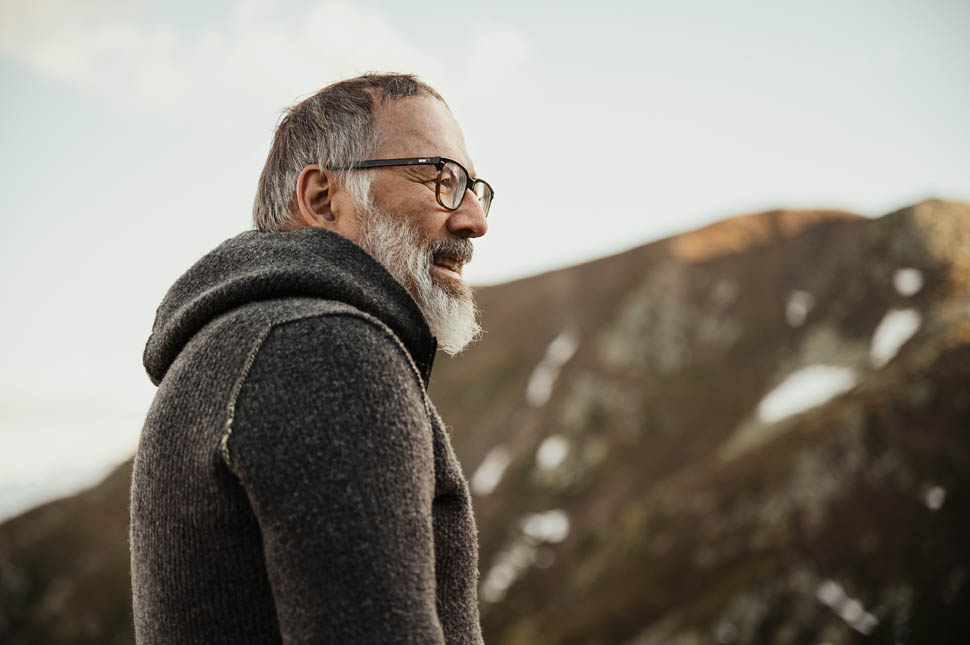
Norbert explains:
”I took a blank sheet of paper and set four ground rules: no spheres, no olive oil, no citrus fruits, and no waste—that was the playing field. Creativity springs from there: not that I did it alone because there was already a team, but the brilliant thing about Cook The Mountain is defining the rules of the game.” A sort of extreme sport: “Until I give you these rules, you can do whatever you want. You could pick up the phone, call a producer in Australia, and tell him, ‘I need this.’ In this case, you don’t do that.” If one of my team comes to me and says, ‘Look, I’ve got a brilliant dish, but I need a bit of lime,’ they can’t do that. You have to take what’s available, invent the game right there, on the spot. And so you’re forced to think; the idea lies within the limits.”
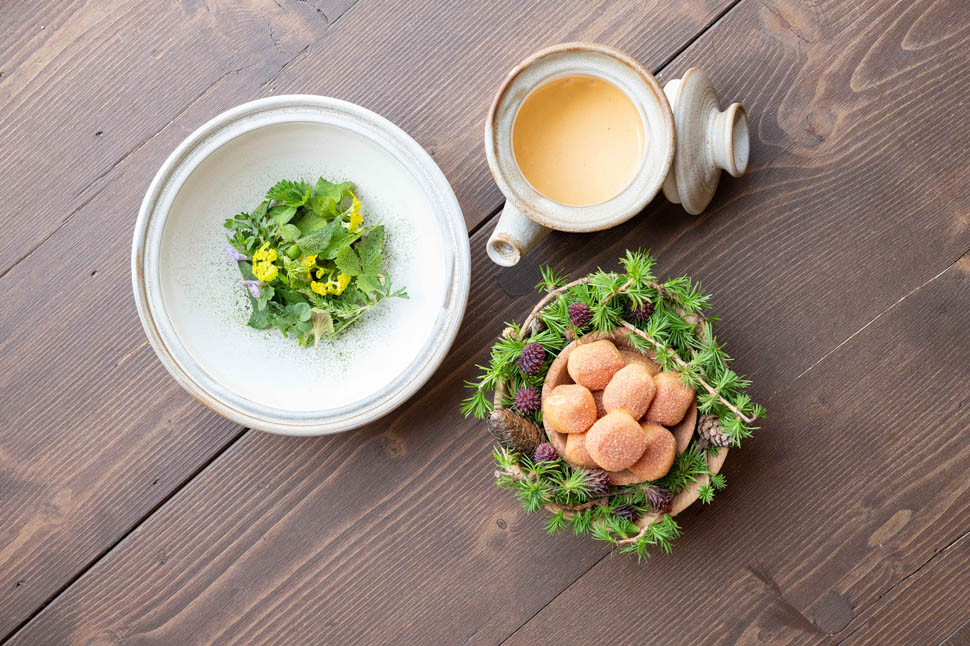
Paradoxically, that’s where creativity thrives, because the limits you set for yourself push you to find a solution: “The problem is that when you start working, you have to look a year ahead. Today, in the spring, we’re already thinking about next winter. The more limits you set, the more interesting creativity becomes, and the more fantastic ideas pop up.”
From fine dining to Ansitz Heufler
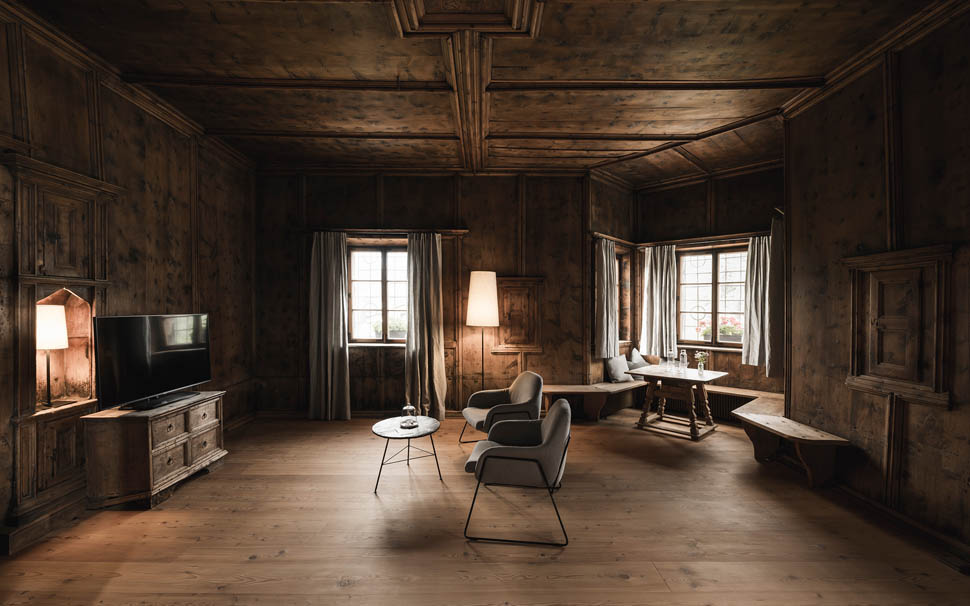
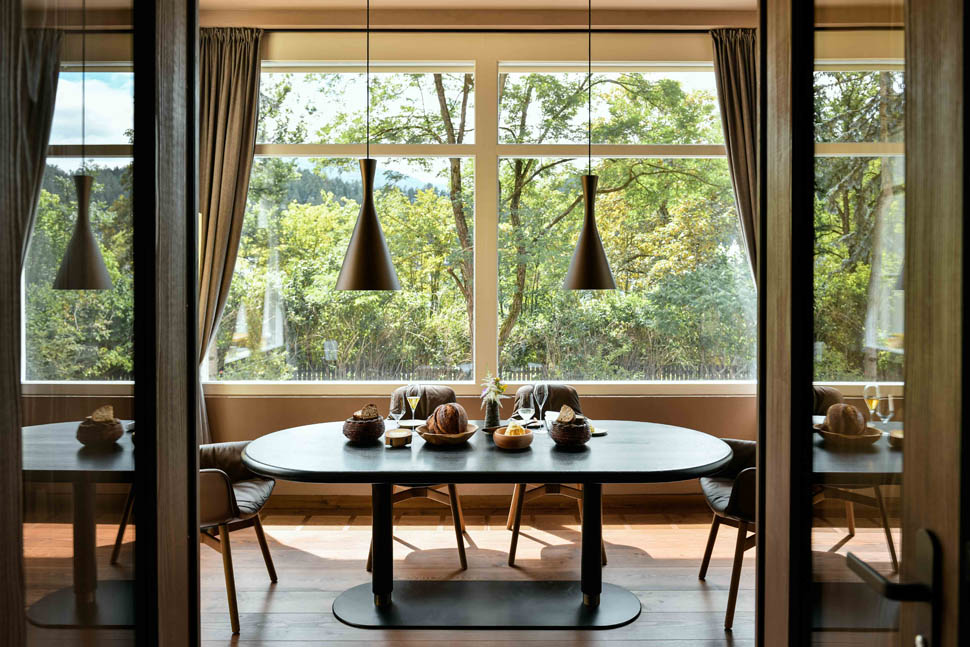
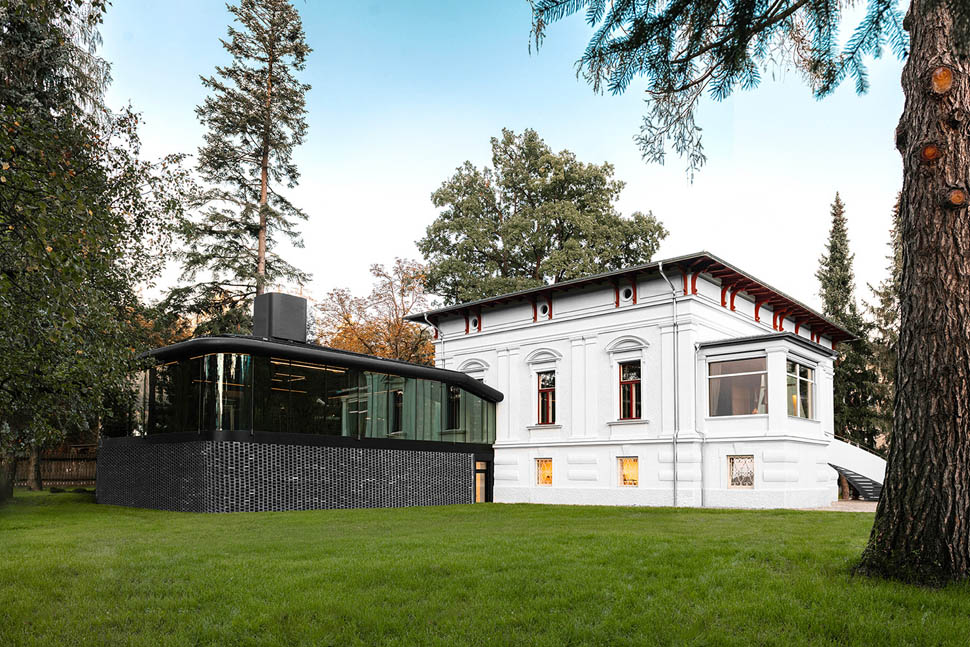
With the opening of that delightful haven of fine dining and hospitality that is Ansitz Heufler, the Niederkofler world has come full circle, though one can be sure it won’t stop here—there’s still more to create. Take the future of Cook The Mountain, for example:
“The whole team gave this a lot of thought when we chose Heufler: we decided on it in a month, making it happen because it was the missing piece for our project, and now we have these three things that are working well together: there’s a lot of harmony, and they all complement each other. It’s a new starting point, partly because we now have a solid foundation at every level, which is very important. Also, to preempt these negative discussions about fine dining that some claim is dead: fine dining will never die, just as a Chanel dress or a beautiful car will never die, because there will always be room for these things and for those who want them and can afford them. Of course, we must change and adapt to today’s way of thinking.”
True Sustainability
And here Norbert Niederkofler tackles a complex and delicate topic: reflecting on the future and identity:
“You have to take some time, step back a bit, do exactly what they say in English—‘take a step back and look at it’—because when you’re in the thick of it, you’re moving like a train or a racehorse, not looking left or right. Today, perhaps because of my 64 years of experience, perhaps because of the 18 years of Cook The Mountain, I’m taking the time to look, to take stock of the situation. And it’s difficult: if you look around the world today at the three-star restaurants—there are about 160 of them—how many truly have a concept? How many aren’t just part of the ‘herd’? I absolutely don’t want to speak ill of my colleagues. But how many have truly created such a strong identity of their own? You can count them on one hand—and have fingers to spare—if everything else is just copied here and there. And that’s the strange thing, because a project born in 2008 is more relevant and youthful today than ever. It’s still fresh and looking toward the future. Everything we said 18 years ago—what we came up with in the hope that it might work, because it really was a massive risk—is still here.”
By creating a model that can be replicated anywhere, as Norbert goes on to say:
“We’ve opened up the local cuisine. The region, the cultures, the food—it doesn’t matter where you are. Because today you can take Cook The Mountain to China, Japan, or America and do it there; you can adapt it anywhere. It’s a matter of respect for nature. I don’t talk about sustainability anymore, but I do talk about respect. I talk about respect for those who deserve it; we need this today, and we must make the younger generation understand it, ensuring that the roots remain. The root is respect, and I think what’s very, very important is having true values.” And among these is sincerity: “If you don’t tell the truth, sooner or later it comes back to haunt you. When we do storytelling—because it’s important, it’s part of the process, and we need to share who we are, where we come from, and what we do—we always explain to the kids what to say about a dish, about the restaurant, and about the Cook The Mountain philosophy, but they have to do it in their own words. Then, the simpler the concept, the harder it is to get it wrong; one thing must be clear: we say what we do, but also what we can’t do. If, for example, they ask me if we’re plastic-free, I say no, I never will be, because it’s not possible.”
The Team
Looking at *Cook The Mountain* from a strictly gastronomic perspective, Niederkofler emphasizes that one condition is essential:
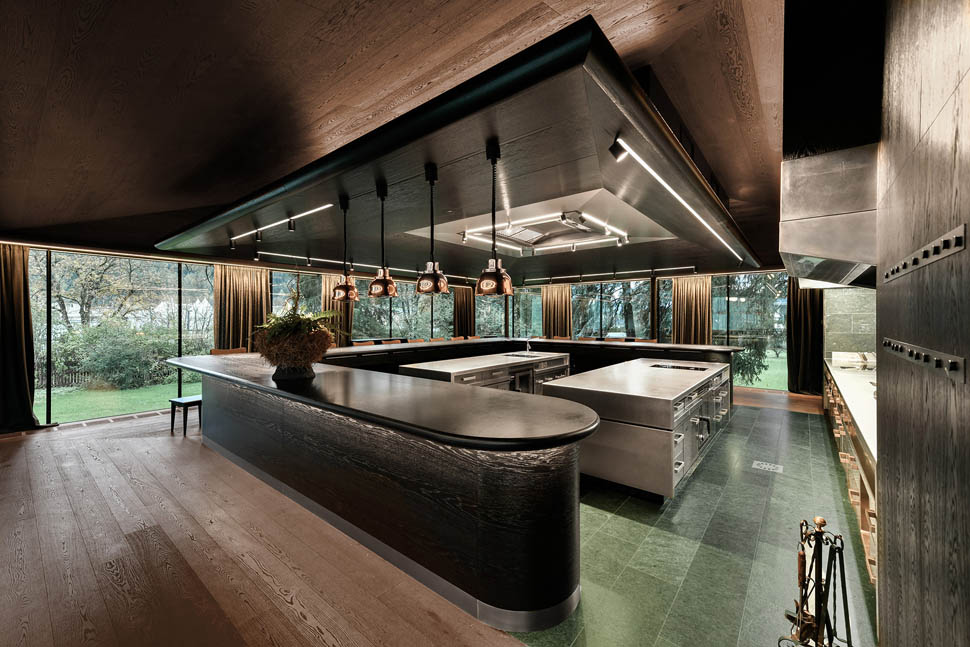
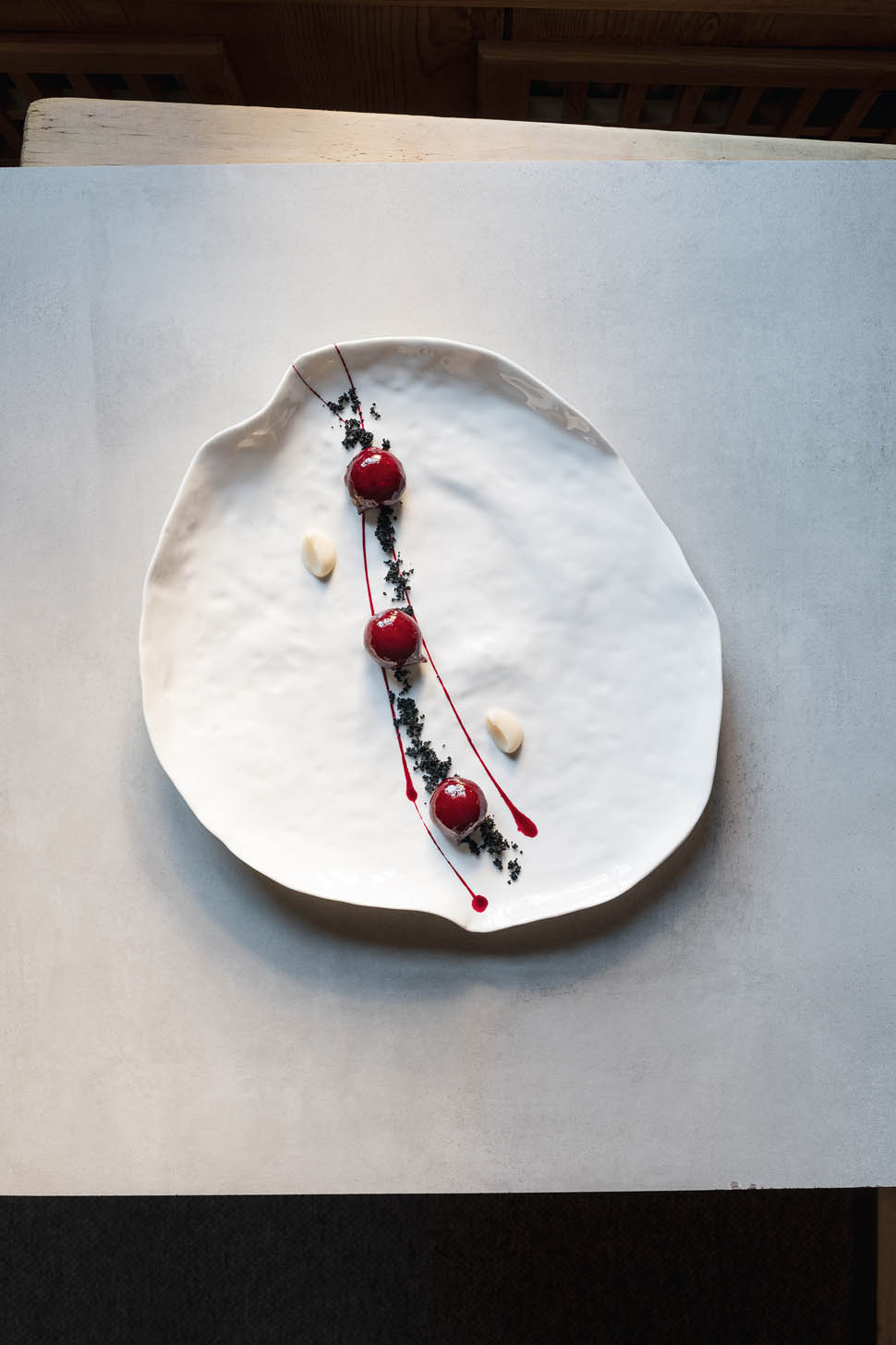
“Today the real problem is that you have to be a truly great chef; you have to know how to cook everything, whether you start with fermentation or classical cuisine. You must have a deep understanding of ingredients and biodiversity; you need solid training because otherwise this approach doesn’t work: if you only know how to work with the grill, what do you do with the rest? Today we tend to move in this direction. That’s why it’s become so fascinating: we see it with the young chefs—most of them don’t want to leave, because they realize it’s such a complex field where you can lose everything. So today I’m the coach of a huge team, I want to give them space; however, I have to stay the course to keep Cook the Mountain on track—that’s the important thing. I have fun, I tease, I provoke, I get on their nerves, but they’re the ones who have to make it happen. What we’ve done since 2008 at Rosa Alpina, leading up to today at Atelier Moessmer, is to train 40–50 young people who are now cooking Italian cuisine all over the world.”“We’ve opened up regional cuisine. The region, the cultures, the food—it doesn’t matter where you are. Because today you can take Cook The Mountain to China, Japan, America, and do it there; you can adapt it anywhere. It’s a matter of respect for nature.
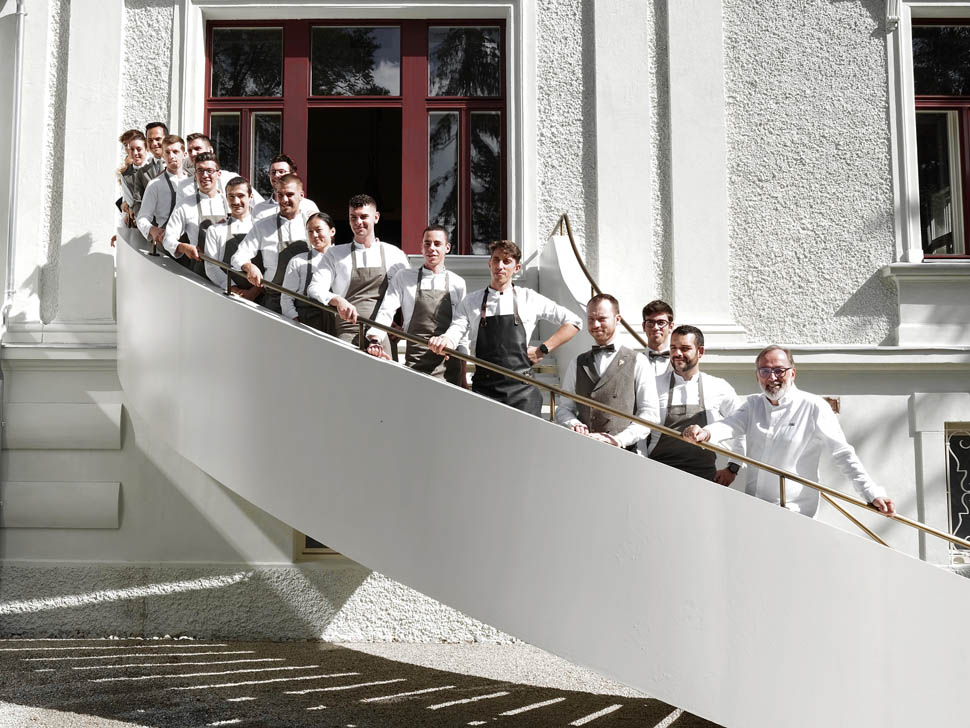
Norbert tells us an anecdote about this involving Michele Lazzarini, the best-known of his sous chefs:
“After working with me for four or five years, he told me, ‘I’ll stay one more year and then I’m leaving.’ I said, ‘All right, thanks for letting me know in advance, but now I’m going to do something for you, because you deserve it.’ I sent him to Fäviken, to Virgilio Martinez, to Borago with Rodolfo Guzman, and to Noma, to Enrico Crippa. Then we were in Salina for Care’s, and I told him: “There’s David Kinch (Manresa, 3 stars in California, ed.), I’ve arranged for you to go see him.” Michele arrives and tells me: ‘Look, Norbert, I don’t want to leave anymore.’ I asked him why, and he replied: ‘You sent me to my idols, and I saw that they’re all behind us. We’re way ahead.’ So I agreed, but I decided to take a step back, because two heads in one kitchen don’t work. I stepped back: when we talked about projects, new dishes, and new steps to take, I did it from the office. Or I’d go out with him to eat, to ski, taking a day to talk.”
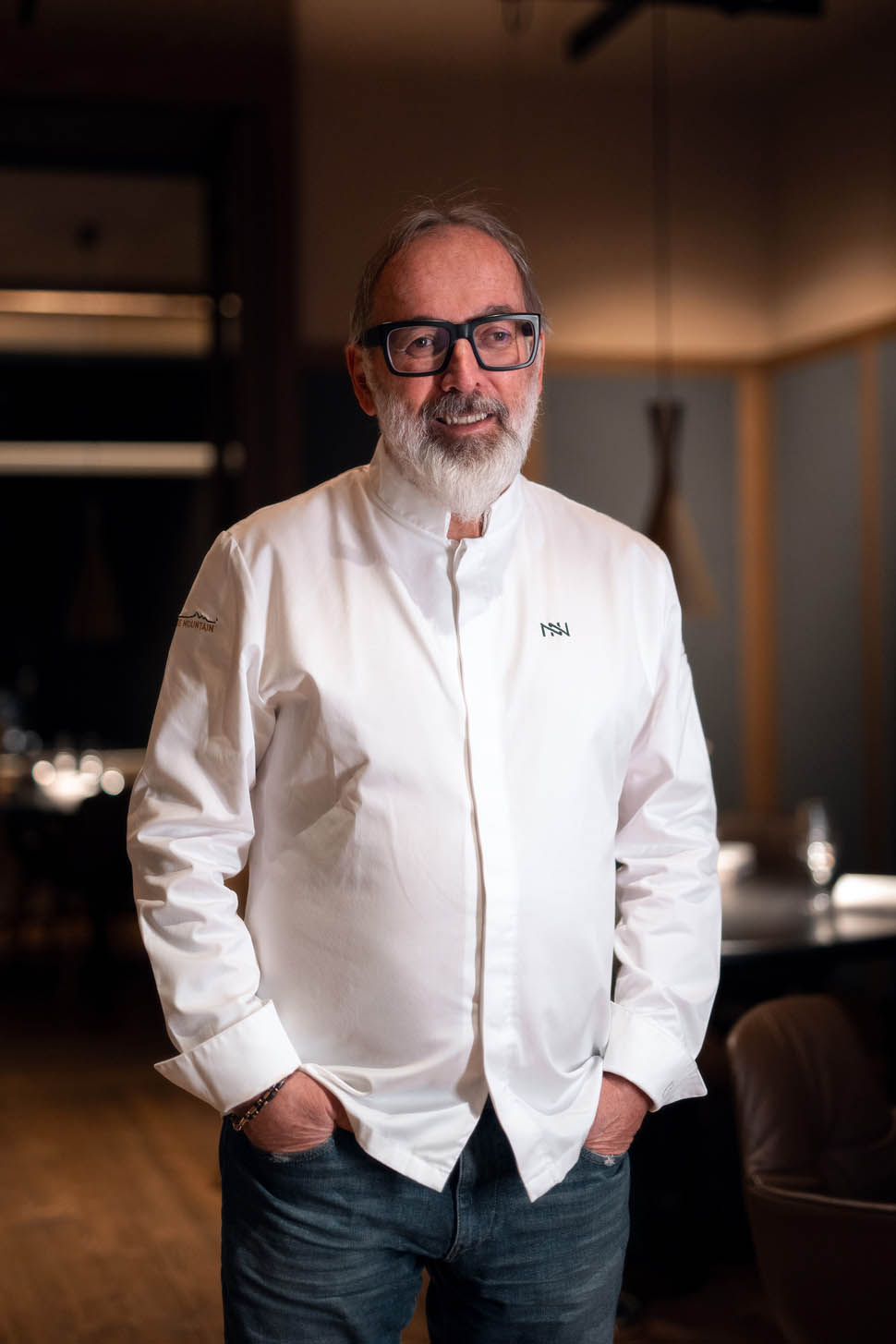
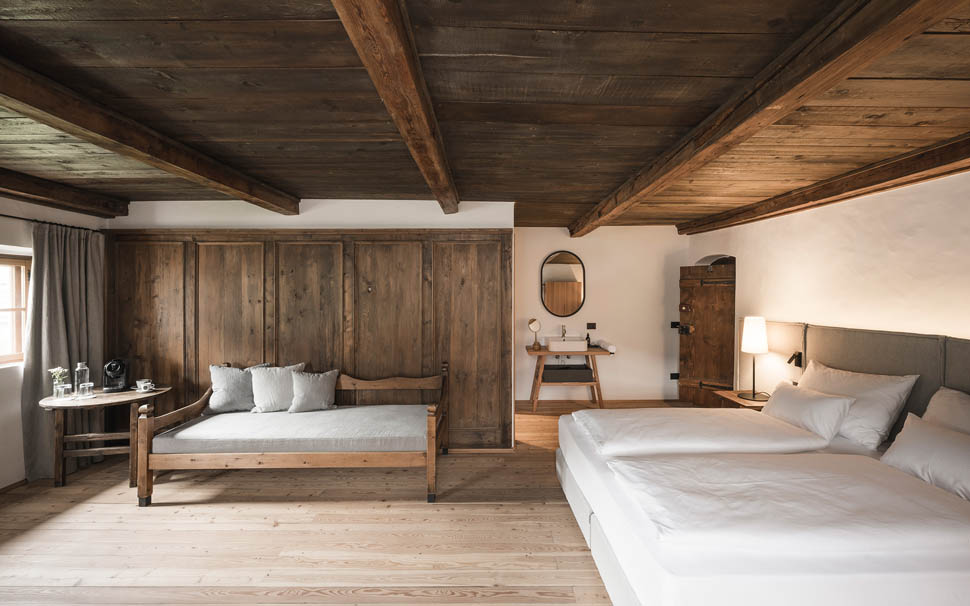
This is to define Norbert’s new role; today, his right-hand man at the Atelier is Mauro Siega from Friuli: “I’m no longer just a chef. We’ve built a business that currently employs 70 people during the season. And that’s no small feat just with the restaurant, because now there are also the ten rooms at Ansitz Heufler. You have to understand the numbers, keep track of them.”
Young people are a strategic resource for the restaurant industry, but they need guidance: “Many young people think only about cooking, but what about all the work that goes on behind the scenes? As I said, there are 70 people to manage, and with the bureaucracy we have today, it’s not easy. That’s why we’ve established a partnership with the University of Bolzano—a bachelor’s program, a school that covers everything from marketing to sales to accounting. Every month, with both the managers from Atelier and those from Alpinn, we hold a meeting focused solely on the numbers. If the young people want to leave and start their own thing, they need to know exactly what they’re getting into.”
"High revenue isn't enough; you have to subtract the costs of staff, raw materials, marketing, rent, and utilities; a napkin costs 50 cents a day. People don't realize it: everything is changing now, and I had to figure it out too—at first, I wasn't interested. Now, however, it’s becoming a creative endeavor like cooking, because here too, with creativity and ideas, you can get things back on track. You have to learn to tighten the screws, to fix them—this is what we’d like to teach and pass on, like a backpack for the mountains, to the young people traveling the world.”
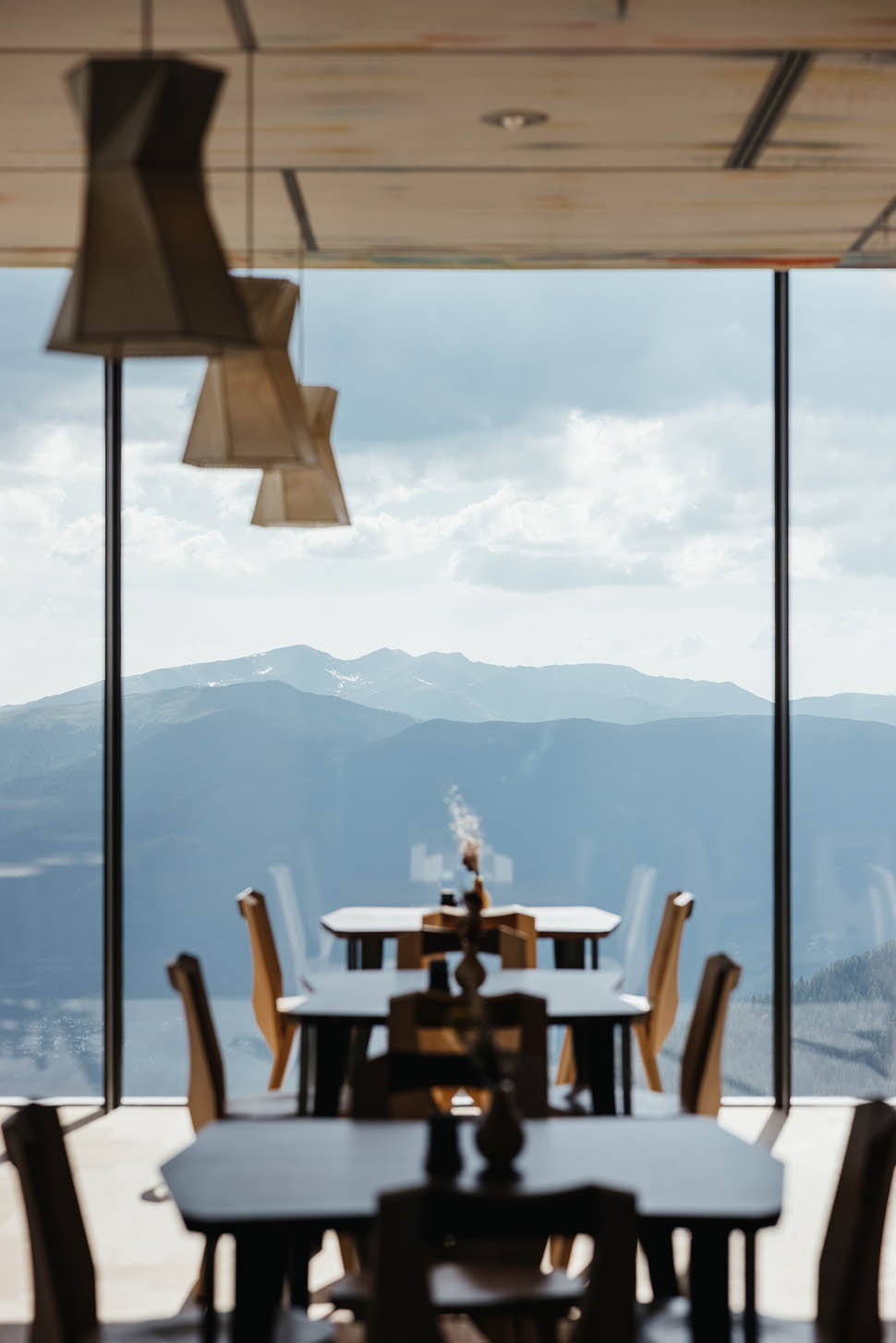
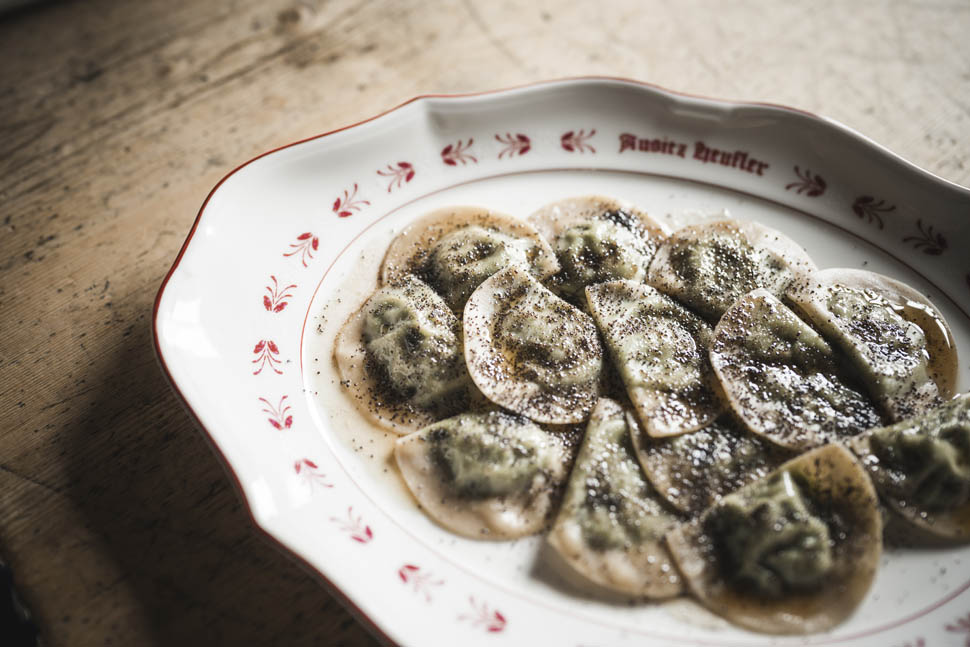
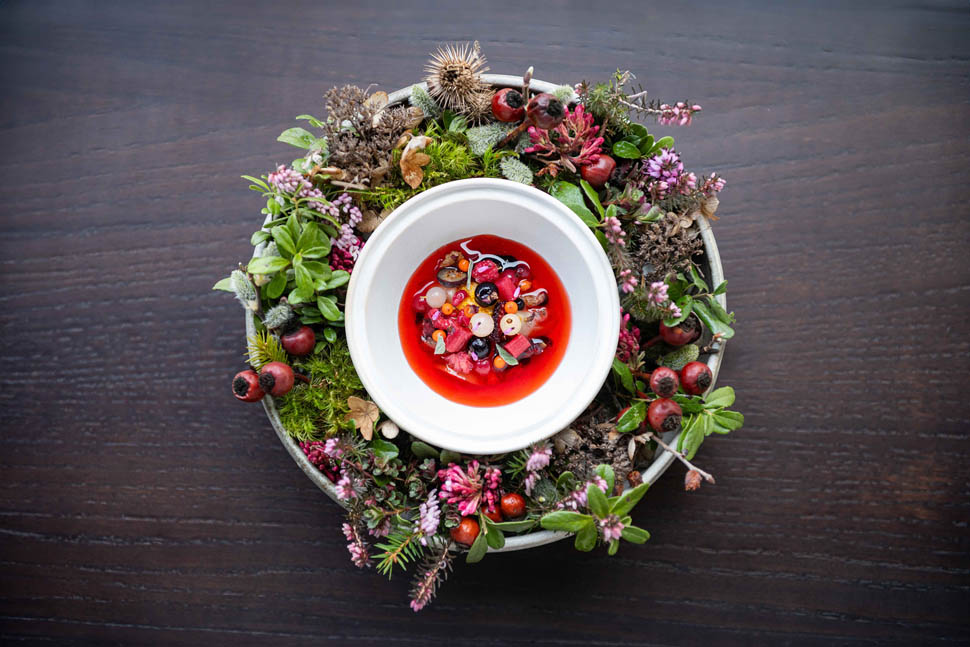
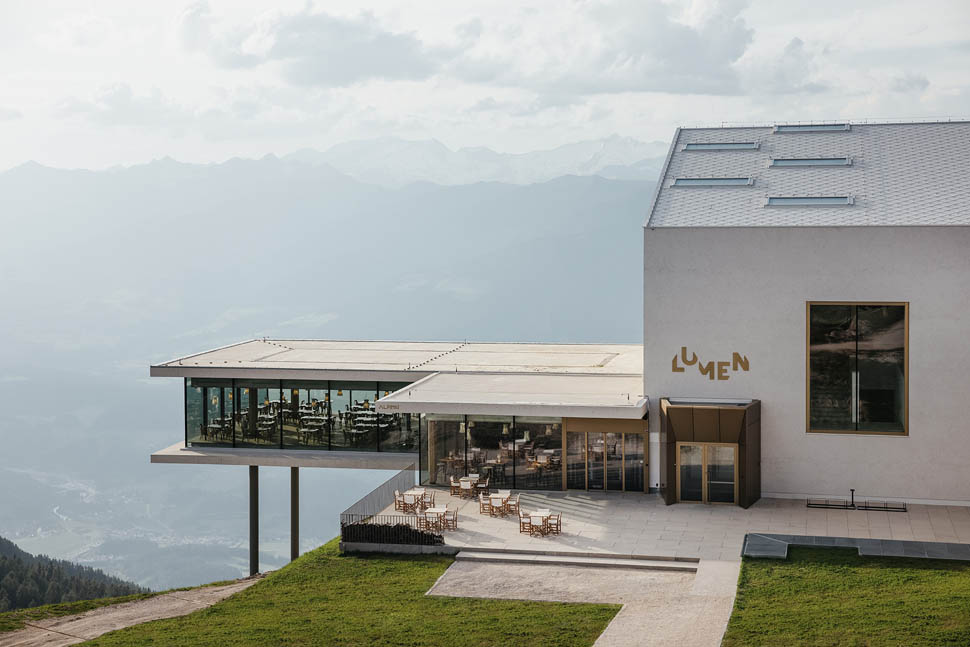
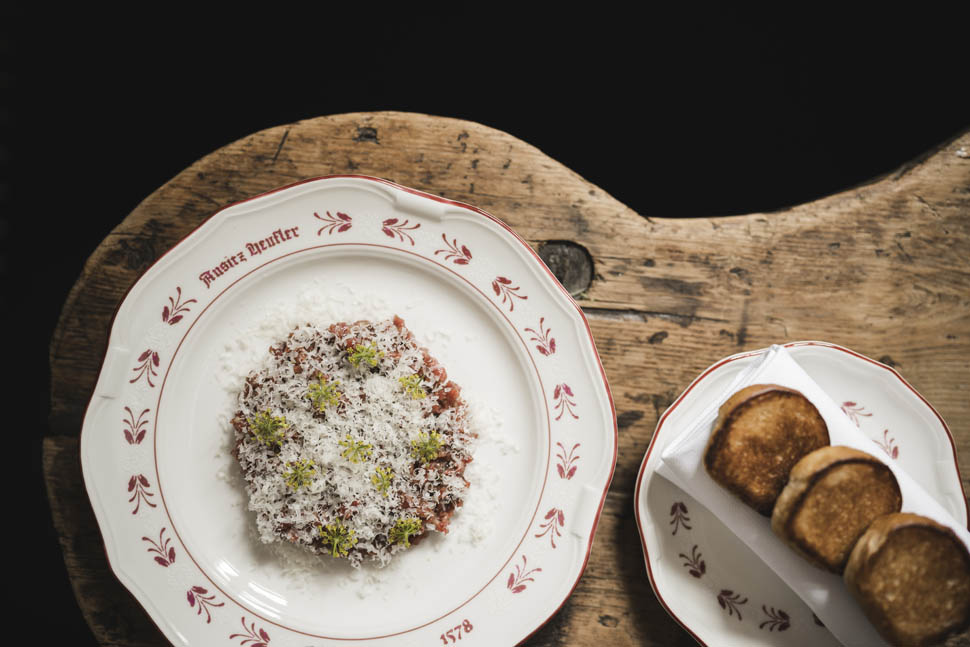
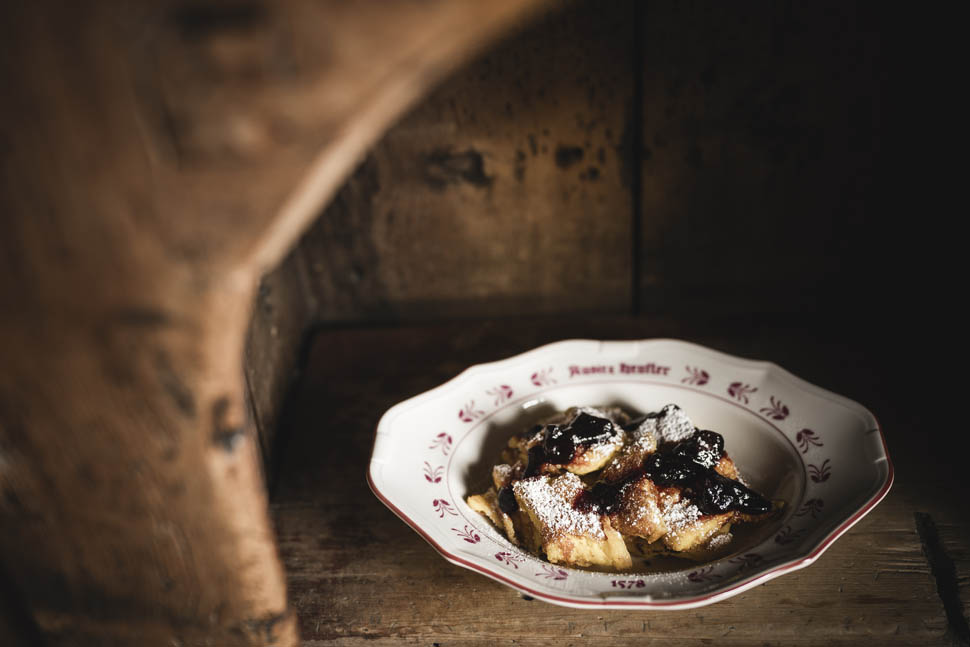
We haven’t mentioned dishes, food, or flavors yet: these are to be discovered starting with Ansitz Heufler and its authentic South Tyrolean charm, moving up to the mountains to experience the marvel that is Alpinn, and then stopping to enjoy Atelier Moessmer. All of these are experiences of surprising deliciousness.
Norbert Niederkofler’s website