From Valpolicella to Puglia, passing through Lake Garda and Tuscany, the Tinazzi family has built a portfolio of estates with distinct specializations. This strategy combines agricultural heritage, winemaking research, and hospitality, with the goal of transforming the richness of these regions into an increasingly recognizable collection of wines.
*Content with promotional purposes
Tinazzi: Five Estates and an Agricultural Vision—Giving Identity to the Territory, from Vineyard to Bottle
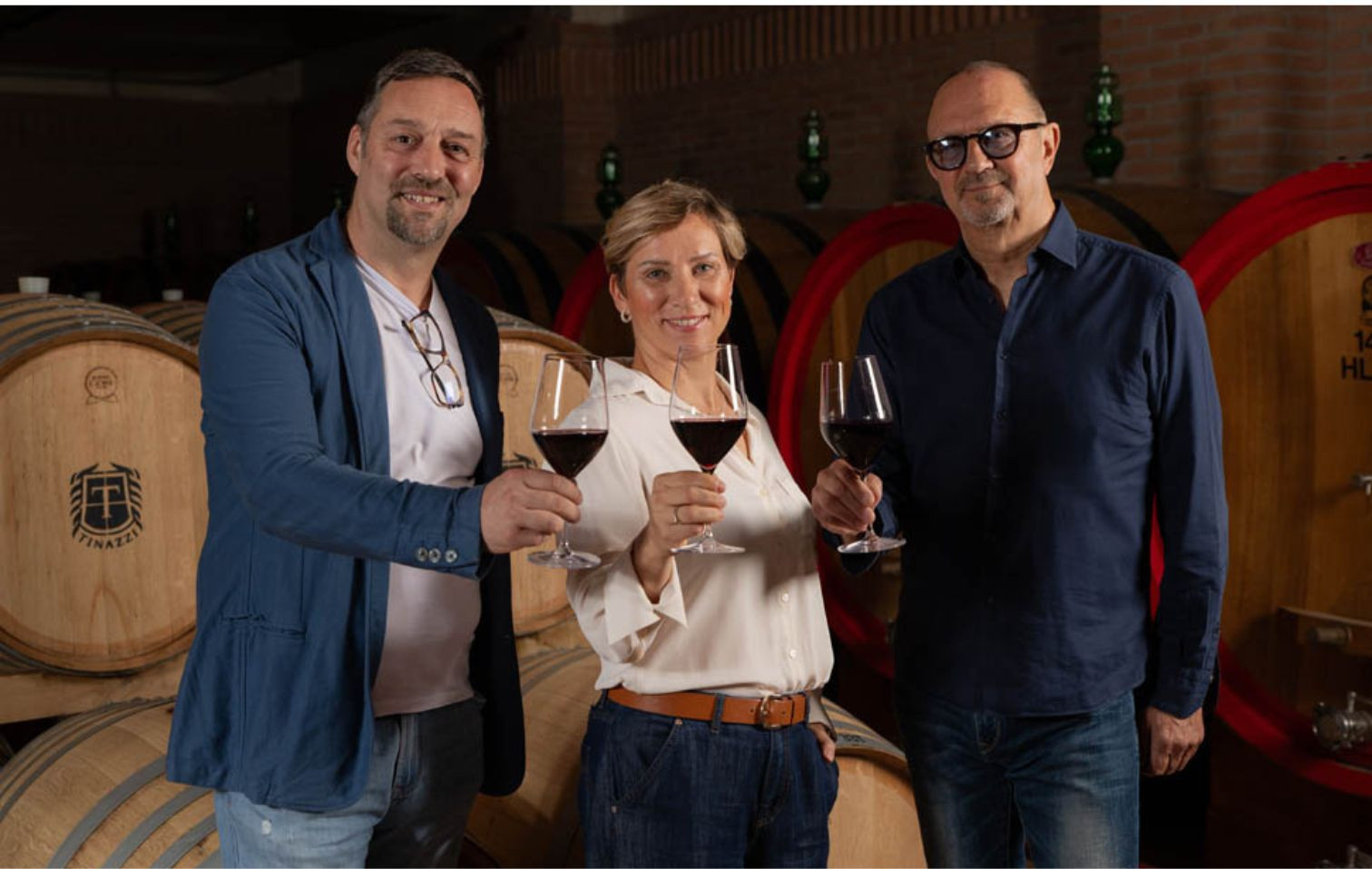
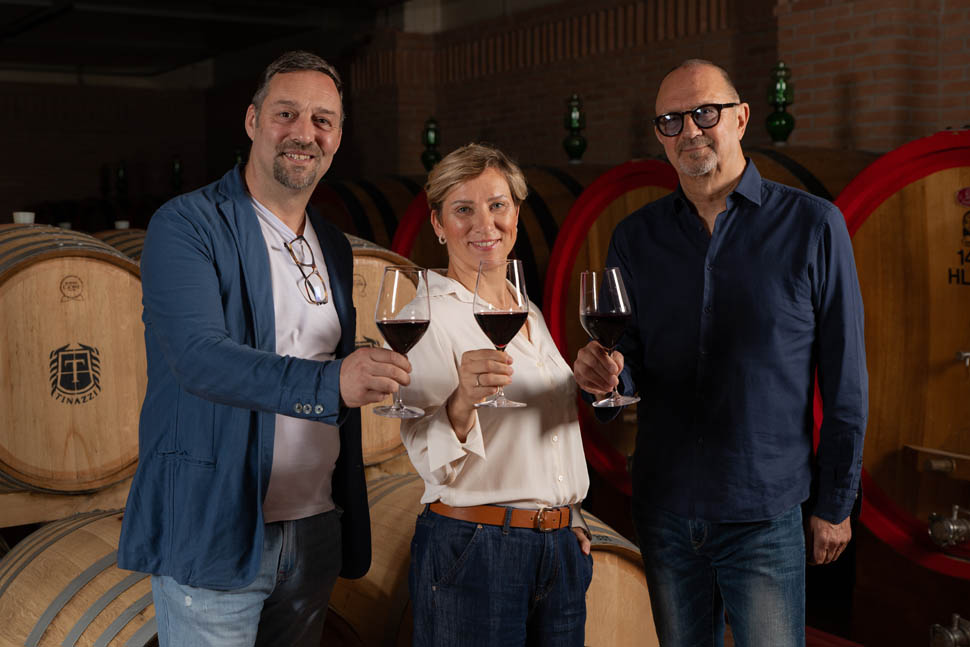
Founded in 1968 in Cavaion Veronese by Eugenio Tinazzi, the company is now led by Gian Andrea Tinazzi alongside his children, Francesca and Giorgio—a family-run operation with clearly defined roles, in which Gian Andrea oversees production and quality, Francesca handles administration and oversight, and Giorgio manages business development and promotion. Around this structure, a project has taken shape that extends beyond the borders of the Veneto region and connects different territories, grape varieties, and identities. The five estates are at the heart of this strategy—not merely production sites, but places with their own distinct characteristics, each called upon to find a recognizable voice within a shared collection.
Five estates, five interpretations of the terroir
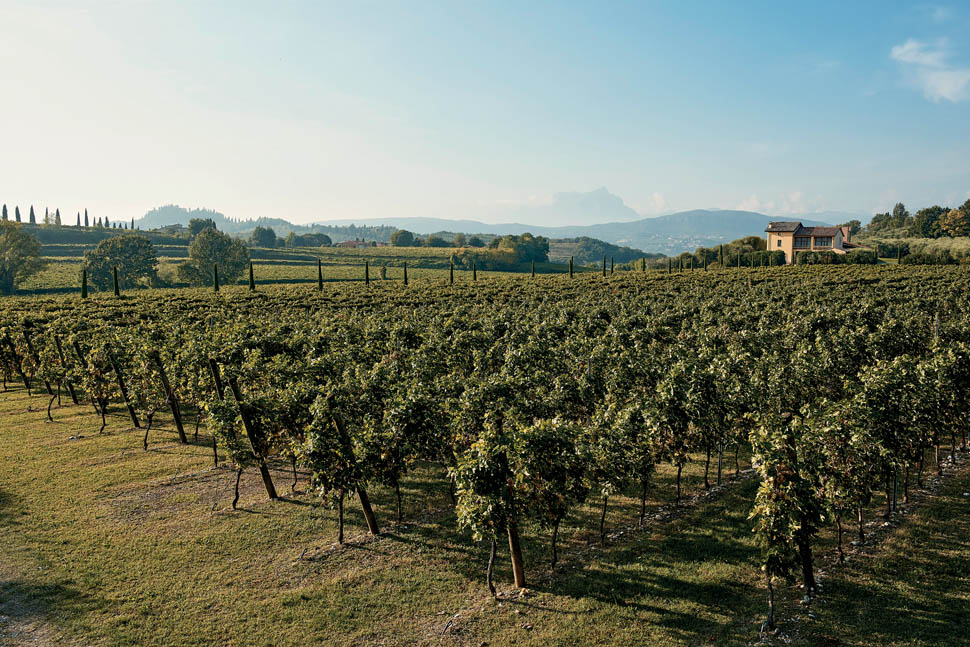
In Valpolicella Classica, Poderi Campopian is located at an elevation of 670 meters, among the highest sites in the appellation. Of its total 16 hectares, five are planted with vines, primarily Corvina and Rondinella. The hillside location helps define wines with a taut, vertical structure, offering an interpretation of the appellation that stands out for its freshness and vibrancy—with elevation serving as one of its defining characteristics. From the hills of Valpolicella, the journey continues toward Bardolino, with Tenuta Valleselle stretching among vineyards, olive groves, and woods overlooking Lake Garda, in a landscape where agriculture and nature intertwine.
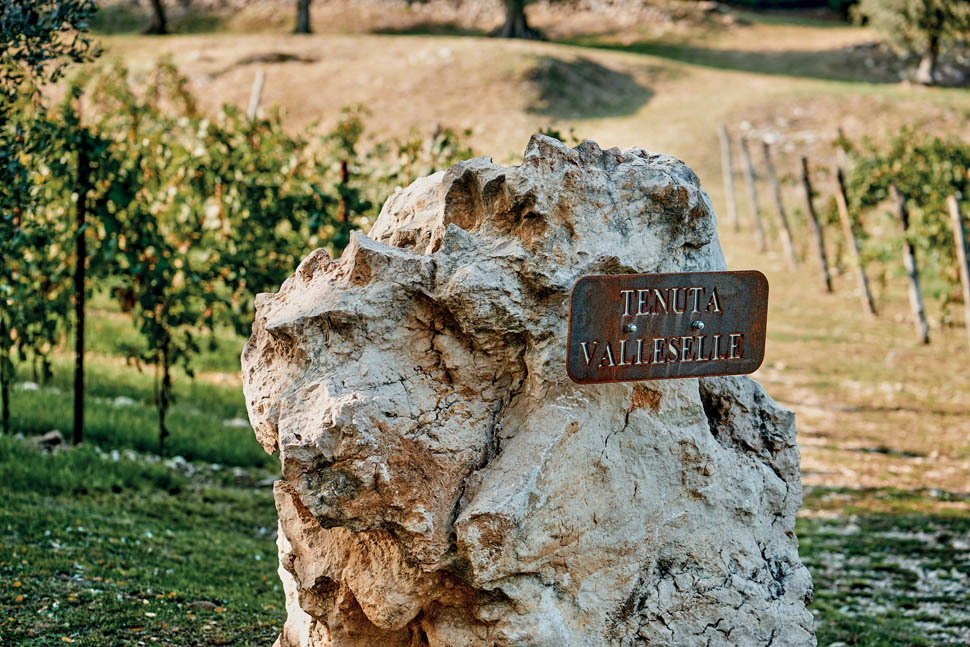
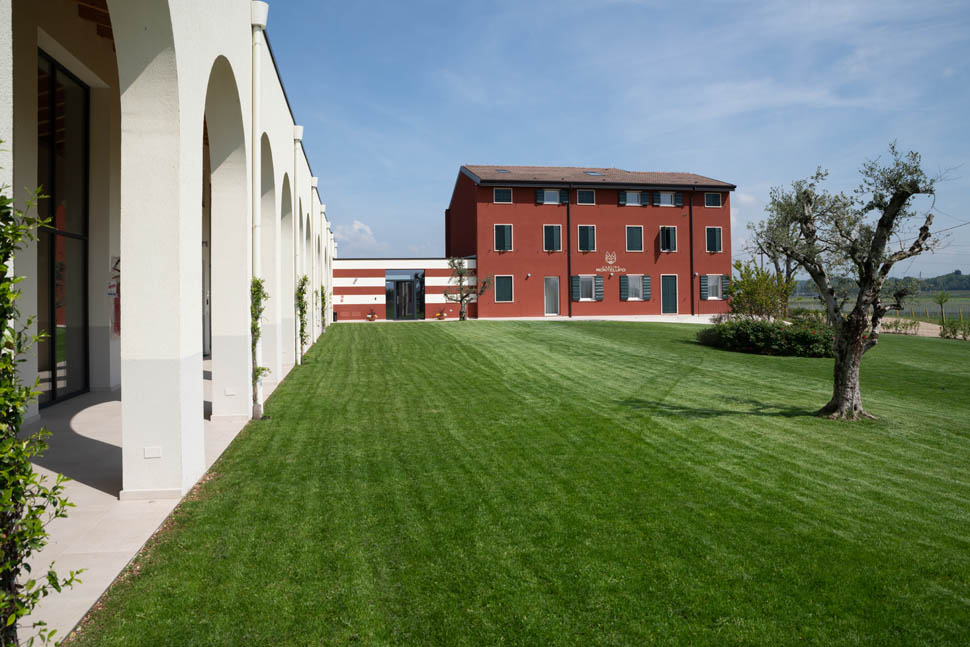
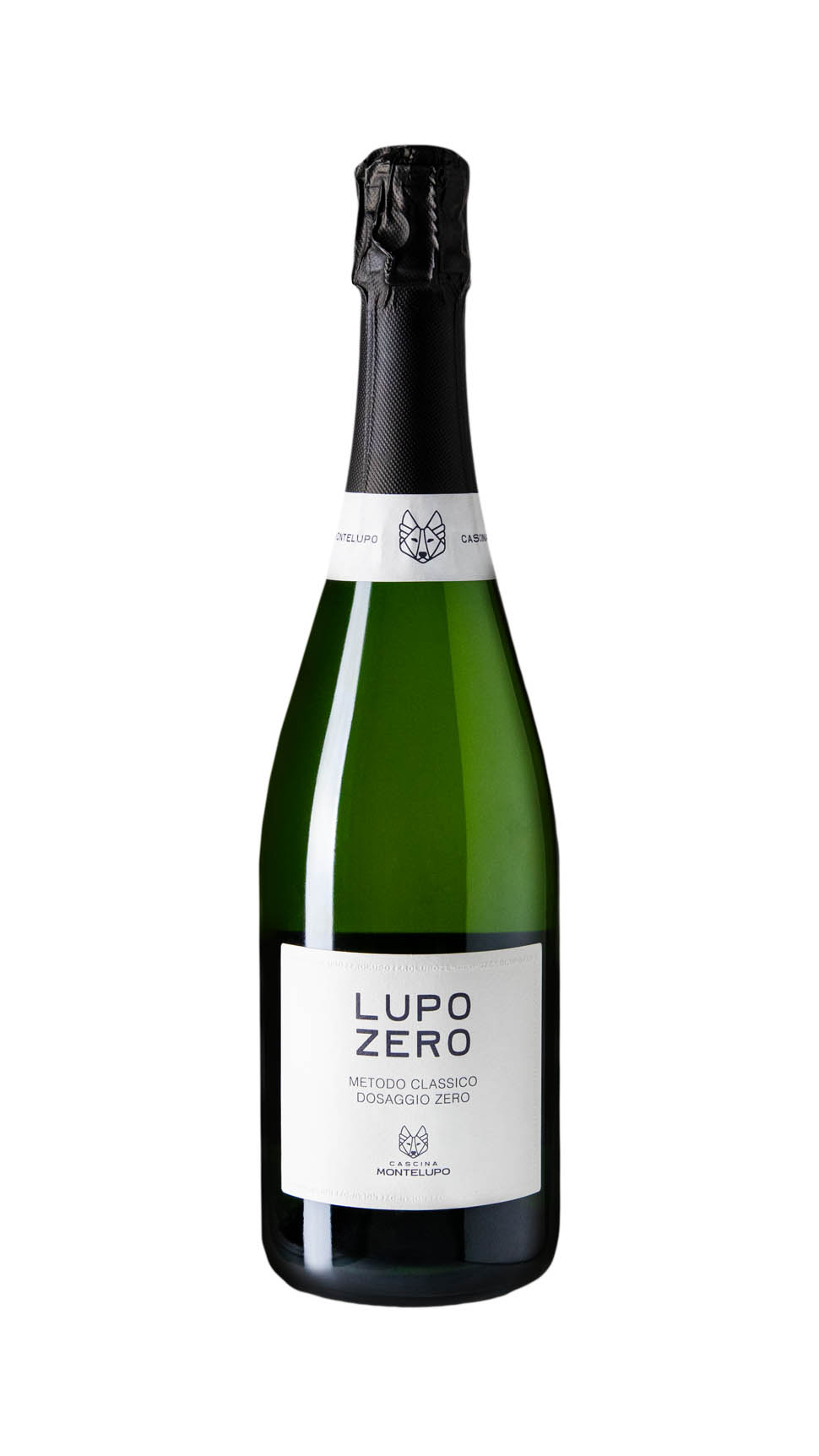
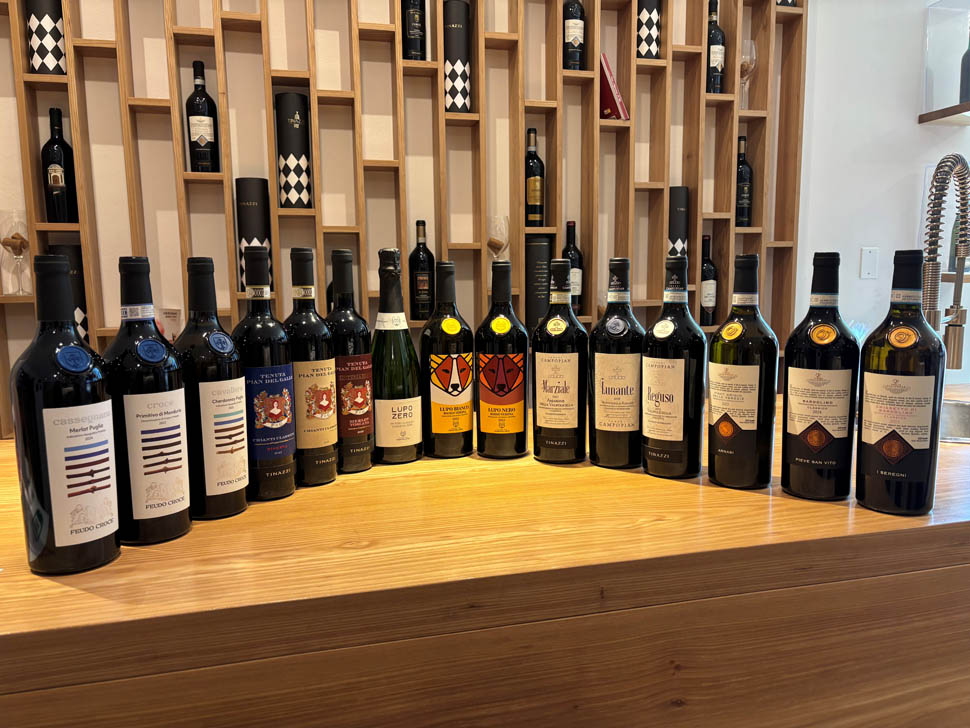
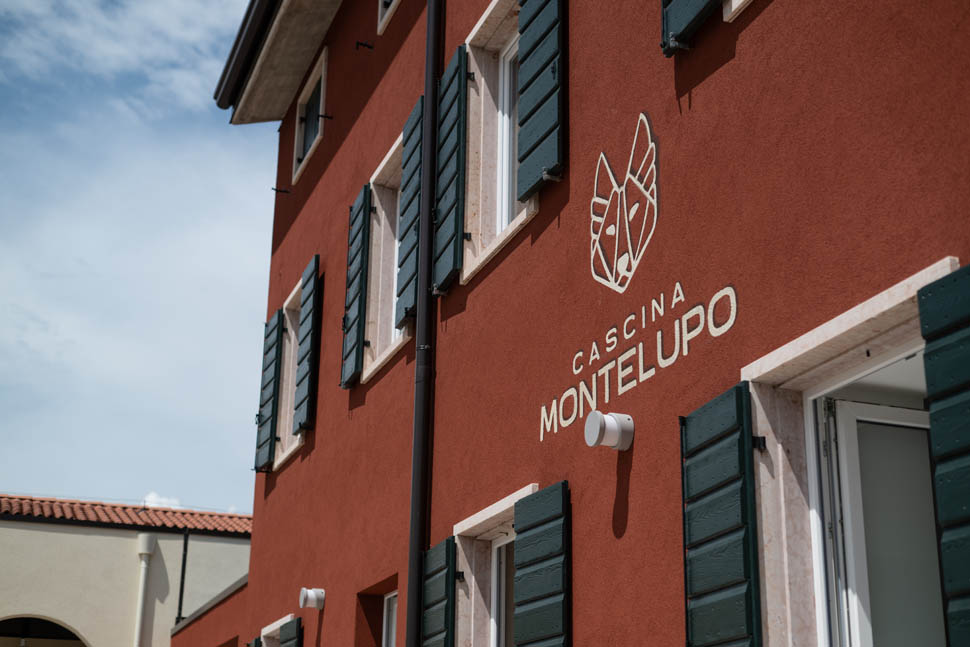
Of the estate’s 15 hectares, seven are planted with vines—Pinot Grigio, Corvina, and Rondinella—varieties that produce wines reflecting the terroir and its savory character. Valleselle is a fine example of the depth of the Tinazzi project, as it embodies a vision of a farm that goes beyond mere production to consider the landscape, estate management, and the relationship with visitors as integral parts of a single philosophy. We remain in Veneto and move on to Sona, in the morainic hills south of Lake Garda, not far from Verona, where Cascina Montelupo is one of the newest additions to the hospitality scene and, at the same time, one of the most interesting examples of the desire to give each individual estate a distinct identity. Of its 19 hectares, 16 are planted with vines, including Corvina, Garganega, Cortese, Chardonnay, and Trebbiano, as well as Spigamonti, a rare historic Veronese grape variety that the winery has chosen to revive. This research has given rise to Lupo Nero, made exclusively from Spigamonti, and Lupo Zero, Tinazzi’s first Metodo Classico, two wines that create a dialogue between the region’s winemaking heritage and oenological experimentation.
The journey continues in Tuscany, in Greve in Chianti, where Tenuta Pian del Gallo, acquired in 2022, has five hectares of vineyards dedicated to Chianti Classico DOCG, Chianti Classico Riserva DOCG, and Merlot Toscana IGT. Production, though modest in scale, aims to capture the complexity of the Chianti terroir through wines with deep complexity, characterized by layered aromas and a flavor profile that reflects the region’s unique character. From Tuscany, we move on to Puglia, where Tinazzi has developed its project between Feudo Croce, in Carosino, and Cantina San Giorgio, in Faggiano, both in the province of Taranto. Acquired in 2001, Feudo Croce spans approximately 35 hectares of vineyards dedicated to the traditional grape varieties of the Alto Salento region. At Cantina San Giorgio, which has been operational since 2020, the processing and bottling of the company’s Apulian wines take place in a facility equipped with modern systems and equipment designed to preserve the freshness of the grapes. During the construction of the winery, a medieval archaeological site was also uncovered; today, it can be visited via a dedicated trail that links the history of the facility to the region’s ancient past. The company’s commitment to the environment also extends to the Gulf of Taranto, thanks to its partnership with Jonian Dolphin Conservation, an organization dedicated to the research and protection of cetaceans—an initiative that broadens the company’s focus beyond its vineyards to the preservation of the marine ecosystem.
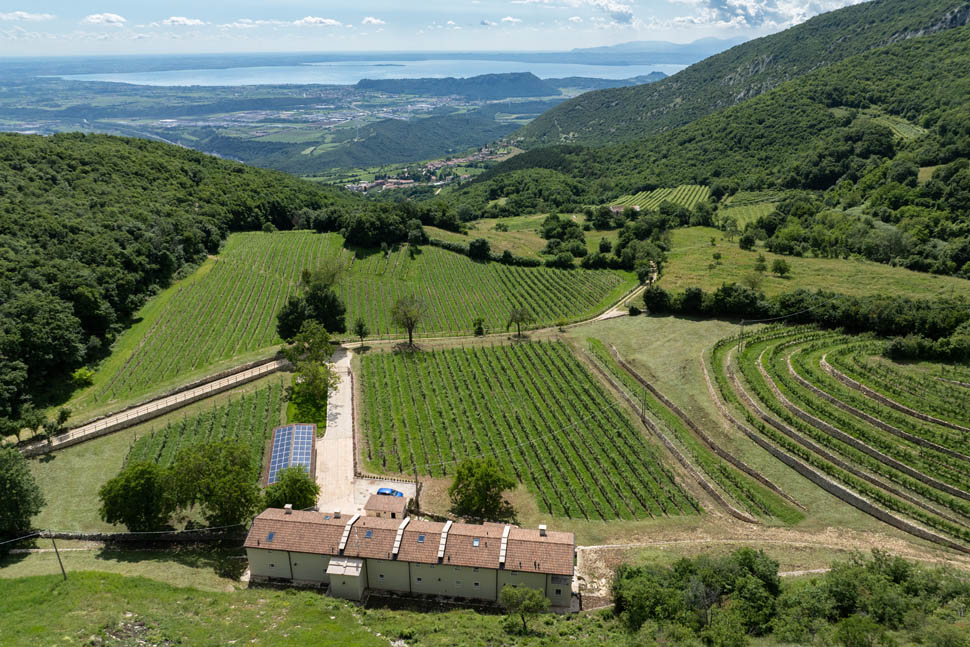
Cascina Montelupo: Between Winemaking Heritage and Innovation
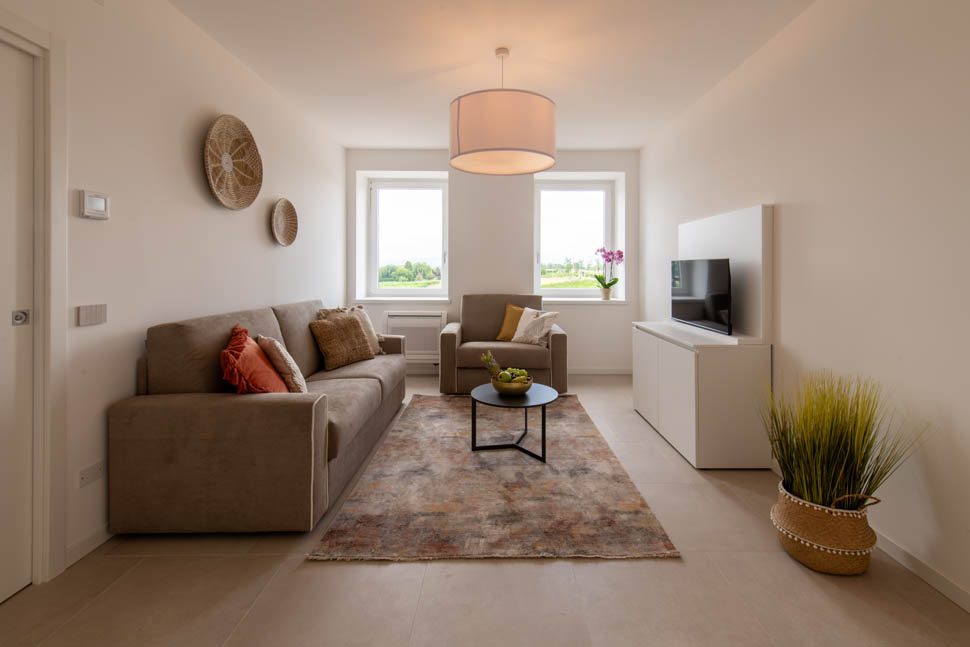
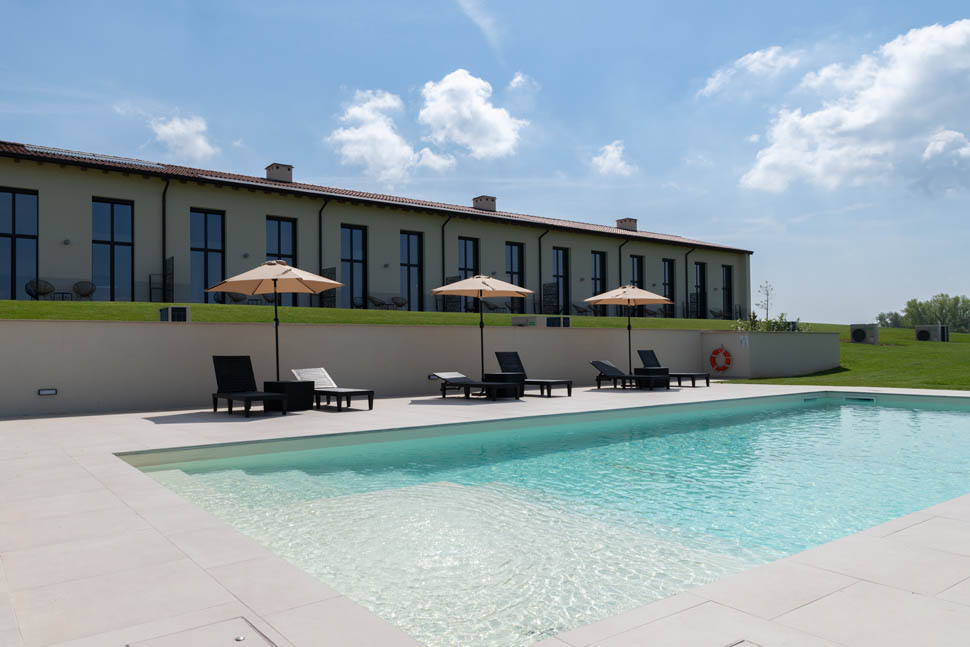
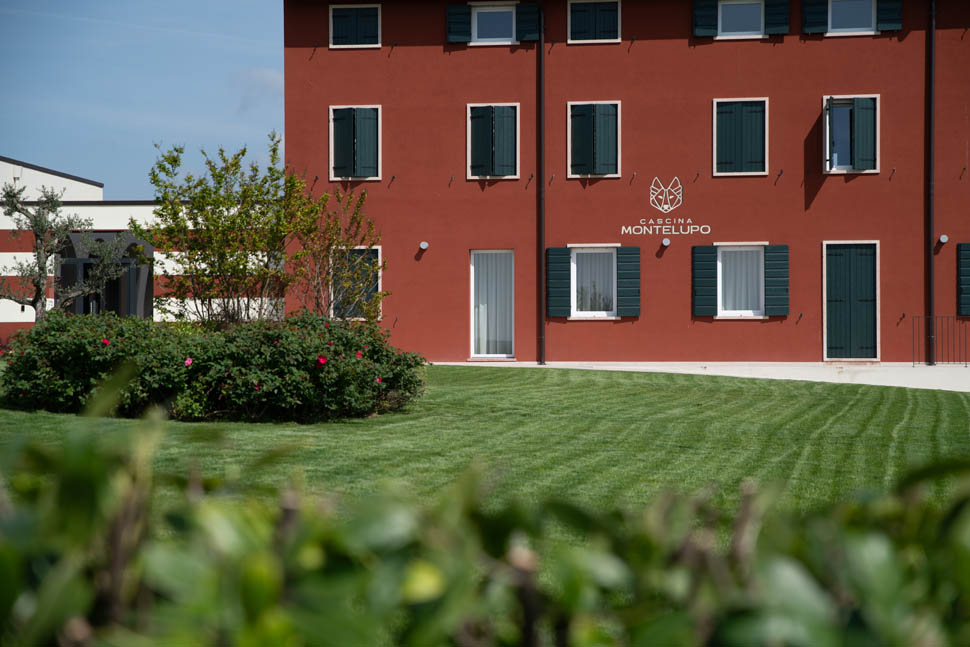
Cascina Montelupo deserves closer attention because it clearly demonstrates the possibility of forging an independent identity within a complex group. Lupo Nero showcases Spigamonti as a single-varietal wine, restoring prominence to a historic yet little-known grape variety, while Lupo Zero embraces experimentation with the Metodo Classico and expands the winery’s winemaking repertoire. These are two distinct directions, yet they share the common goal of drawing on the vineyard’s characteristics to craft a narrative that extends beyond the appellation. Even the lodging project, set to open in May 2026 with twelve contemporary apartments and a swimming pool, follows this approach, inviting guests to experience the agricultural landscape and learn firsthand about the varieties grown there. “We envisioned a farmhouse nestled among the vineyards, capable of telling the story of the wine through direct experience: staying among the vines, discovering the varieties grown, and experiencing the local area,” explains Francesca Tinazzi.
A collection to explore, not just to expand
The diversity of the terroirs is reflected in a well-structured range, where the challenge lies not only in representing different origins but also in making the character of each one immediately apparent. Some wines already offer precise insights: Lupo Nero and Lupo Zero reflect Cascina Montelupo’s quest to balance varietal revival with experimentation, while the Chianti Classico and the Riserva di Pian del Gallo engage with a territory of strong identity, relying on complexity and expressive depth. At Campopian, Corvina and Rondinella are interpreted through the lens of altitude and freshness, while Valleselle highlights the relationship between the cultivated grape varieties and the Garda landscape;in Puglia, Feudo Croce’s production is rooted in the winemaking tradition of the Alto Salento region, with its Mediterranean character.
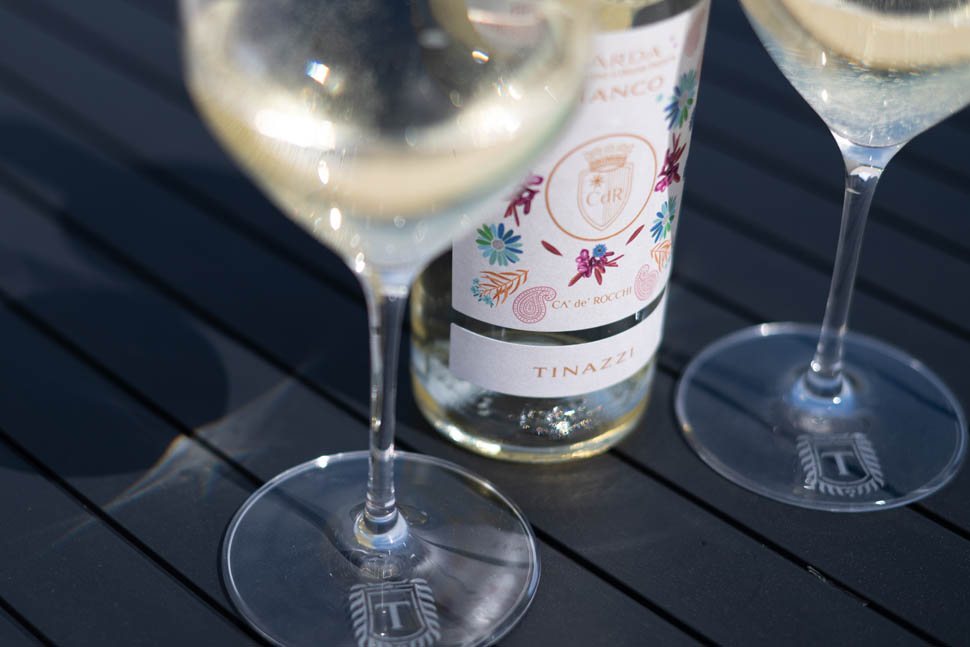
These differences can be the collection’s greatest strength, provided that each label helps clarify the relationship between the wine, its place of origin, and the company’s vision. The issue, therefore, is not to further expand the range, but to establish a hierarchy that guides consumers and highlights the most representative bottles, ensuring that the breadth of the selection does not end up obscuring the individual identities of each wine.
Sustainability, from Agronomic Choices to Production Processes
Tinazzi’s sustainability initiative encompasses both vineyard management and the organization of production processes, through initiatives ranging from agronomic experimentation to plant efficiency. In the vineyard, the winery works with Souvignier Gris, a variety resistant to fungal diseases, and uses the Trapview system to monitor insects and improve pest management. The Longevitis project, developed with winemaker Gianni Gasperi and Fulvio Mattivi of the Edmund Mach Foundation, studies the use of natural tannins derived from grape pomace and grape seeds, with the goal of adding value to byproducts of the wine production chain.
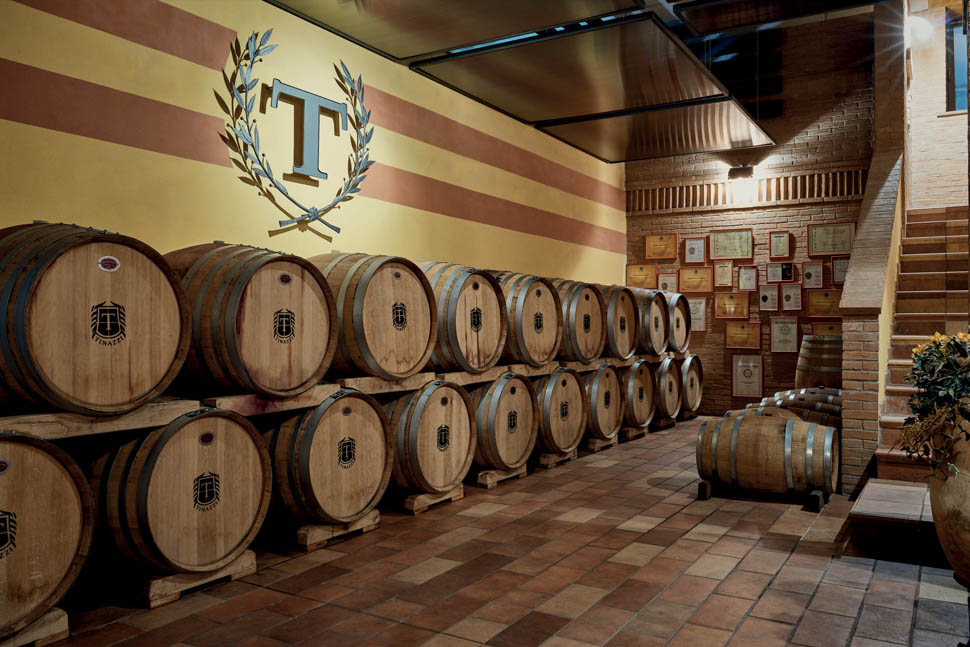
On the industrial front, the wastewater treatment plant using MBR technology has reduced water withdrawals by 40% and sludge sent for disposal by 68%, while the photovoltaic systems at Poderi Campopian and Lazise together generated over 108,000 kWh in 2024, avoiding approximately 46 metric tons of CO₂. In addition to these initiatives, the company uses lightweight 550-gram bottles, which account for 41.6% of production. The results achieved and future goals are detailed in the 2025 Sustainability Report, published in March 2026.
Hospitality as Part of Agricultural Identity
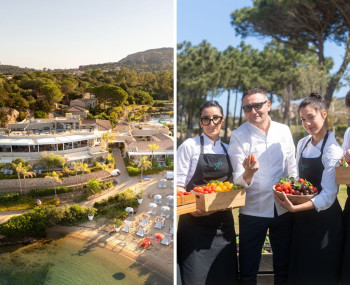
Hospitality complements the estates’ vision and takes on different forms depending on the location, while keeping the relationship between wine, landscape, and rural life at the heart of the experience. The accommodations reflect the unique characteristics of each property: at Poderi Campopian, guests stay in a renovated villa nestled in the hills of the Valpolicella Classica region, while at Valleselle, the view of Lake Garda serves as the backdrop for wine tastings, cooking classes, and events. At Pian del Gallo, in Chianti, a seven-room villa with a pool allows guests to immerse themselves in the Tuscan hillside landscape; at Feudo Croce, in Puglia, the farmhouse and its four apartments offer a starting point for exploring the wine-growing culture of the Alto Salento region.
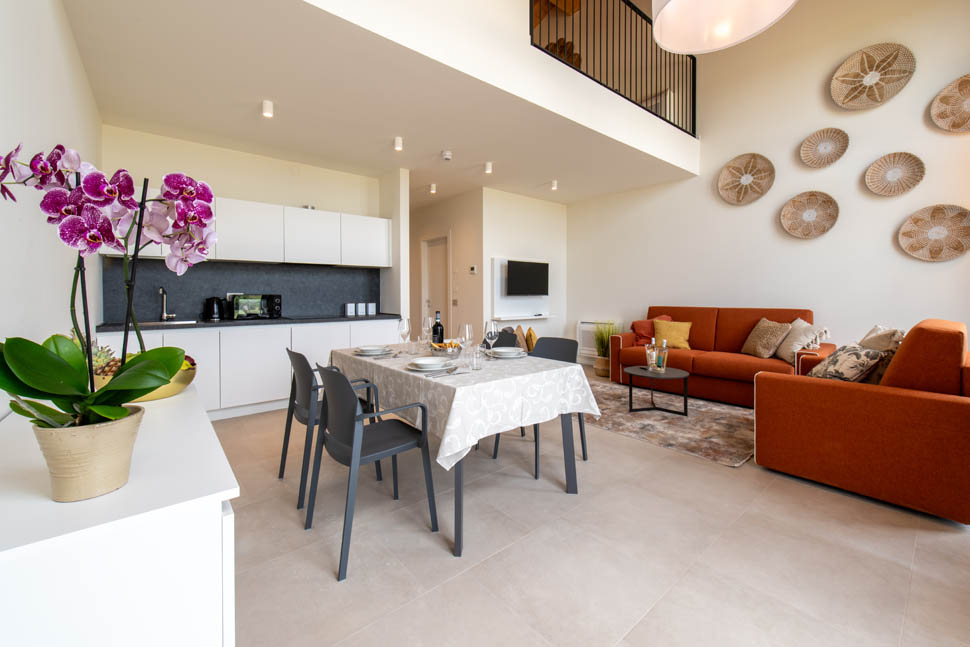
At Cascina Montelupo, where twelve apartments and a swimming pool were inaugurated in May 2026, the living experience is intertwined with work in the vineyard and research into the cultivated grape varieties, including the revival of the historic Spigamonti variety. Beyond the differences between the properties, the common thread is the connection to the local territory: a way to introduce visitors not only to the wines, but also to the landscapes, agricultural traditions, and the choices that define their identity.
A Shared Vision, an Identity to Be Celebrated
Coordinating properties spread across different regions means striking a balance between local distinctiveness and corporate consistency. The family-run structure, investments in sustainability, and a commitment to hospitality provide a common foundation, while the work on the wine collection can further highlight the connection between each bottle and its place of origin.
Tinazzi’s strength lies in building a complex agricultural system, but its challenge is to transform the estates’ abundance into a collection of wines that is increasingly accessible and recognizable.