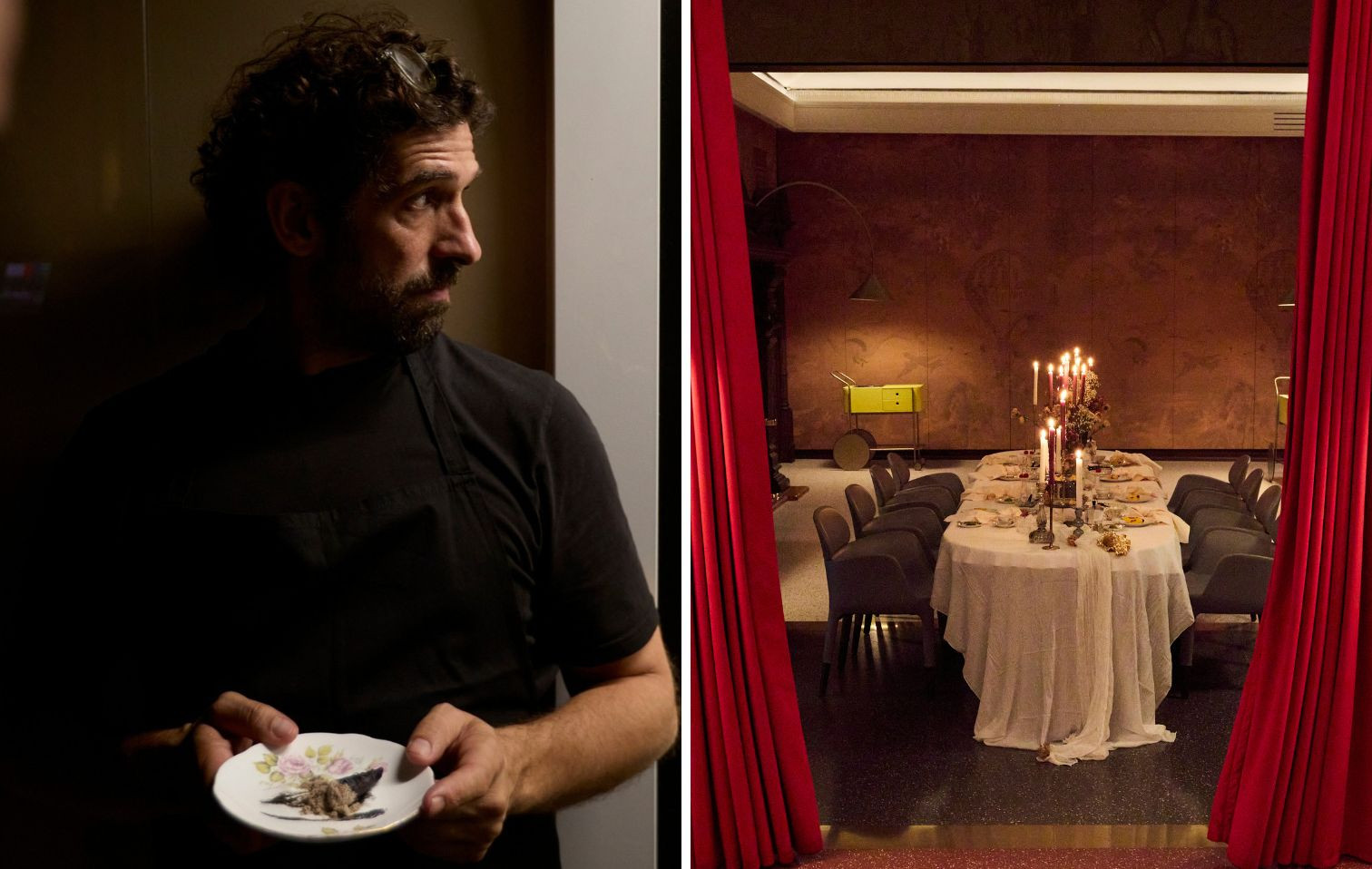
More than ten years after its opening and two years after the Milanese restaurant’s major transformation, Matias Perdomo discusses Contraste’s new ideas: from dinners inspired by the artist Daniel Spoerri to the chocolate rose cake, including the two constantly evolving menus. He also explains why trattorias and haute cuisine still need each other.
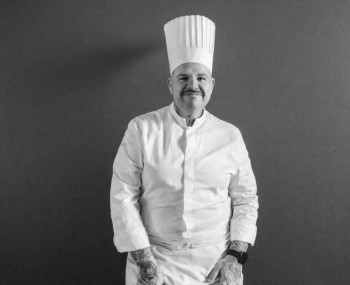
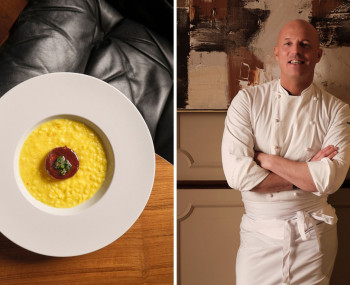
In 2024, when I returned to Contraste following the major renovation of the restaurant on Via Meda in Milan, I spoke of a “second youth” for what has always been, yes, a restaurant, but above all a hotbed of ideas and creativity. Matias Perdomo and his partners had decided to revamp an already established project—boasting a Michelin star and a very well-defined culinary identity—by changing not only the dining spaces but alsothe way the dining experience is conceived. Two years later—and just over ten years since it opened—I returned to discuss it with the chef, who was born in Uruguay but is now thoroughly Milanese, to understand what has happened in the meantime and, above all, where Contraste is headed.
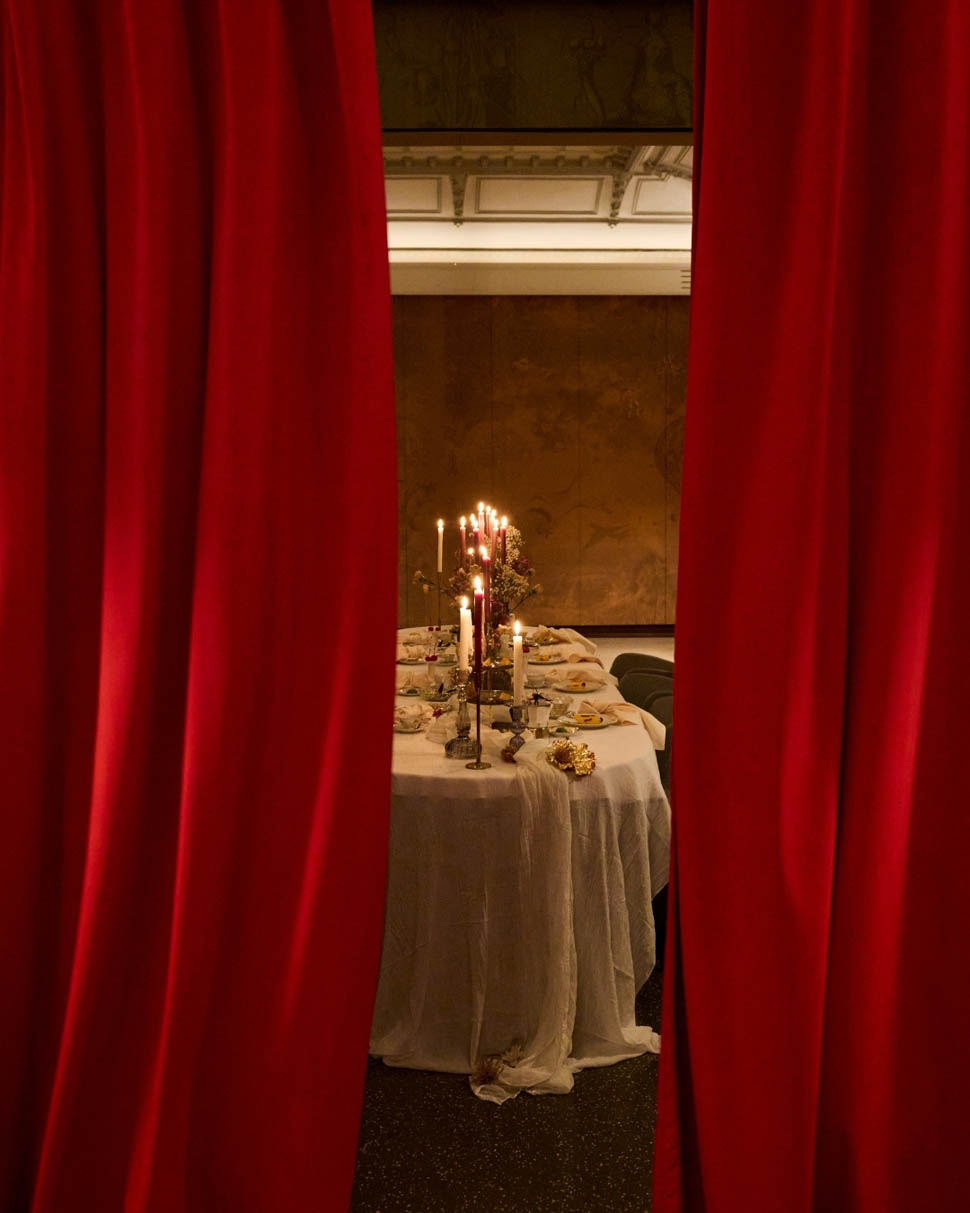
The transformation in 2024 was certainly not the end of the journey. Perdomo and his team’s creativity continues to generate new ideas, some of which are destined to become part of the tasting menus, while others are standalone projects. Examples include Contraste/Contrario, a dinner that begins at the end, drawing inspiration from the works of Daniel Spoerri, or the collaboration with the Tuscan chocolate maker Amedei, which led to the creation of a new version of the famous rose cake that continues to captivate all of Milan. “The renovation stemmed from Simon’s and my desire to reinvent ourselves creatively, to put ourselves back in the game, and to send a message to the entire team. We wanted to show that we were still here, even though Milan is a cutthroat city that often treats things as disposable,” says Perdomo. A very apt observation (unfortunately!) when you consider how quickly the Milanese restaurant scene changes, where new openings come and go in a frenetic rhythm and the public’s attention is constantly shifting toward something brand-new.
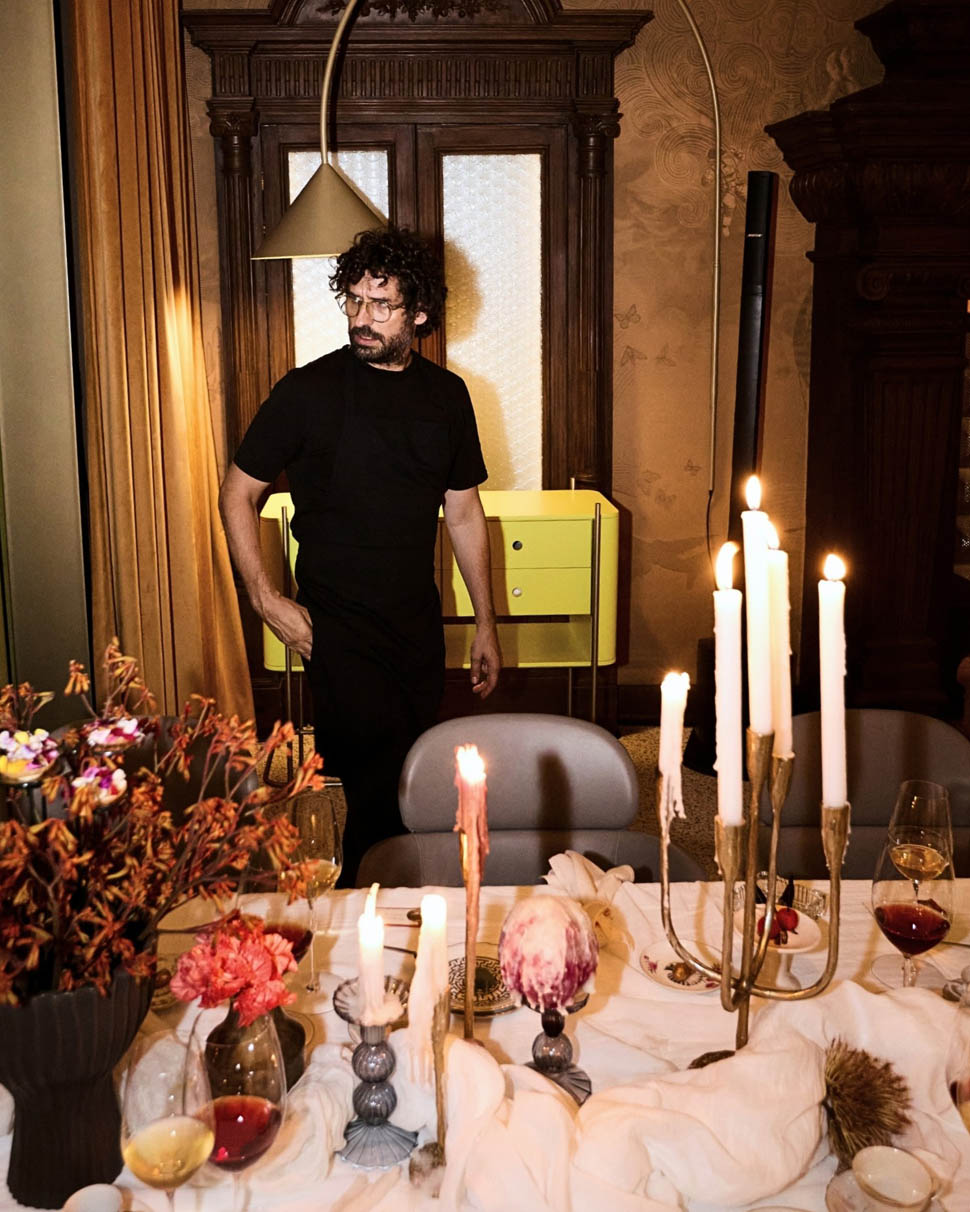
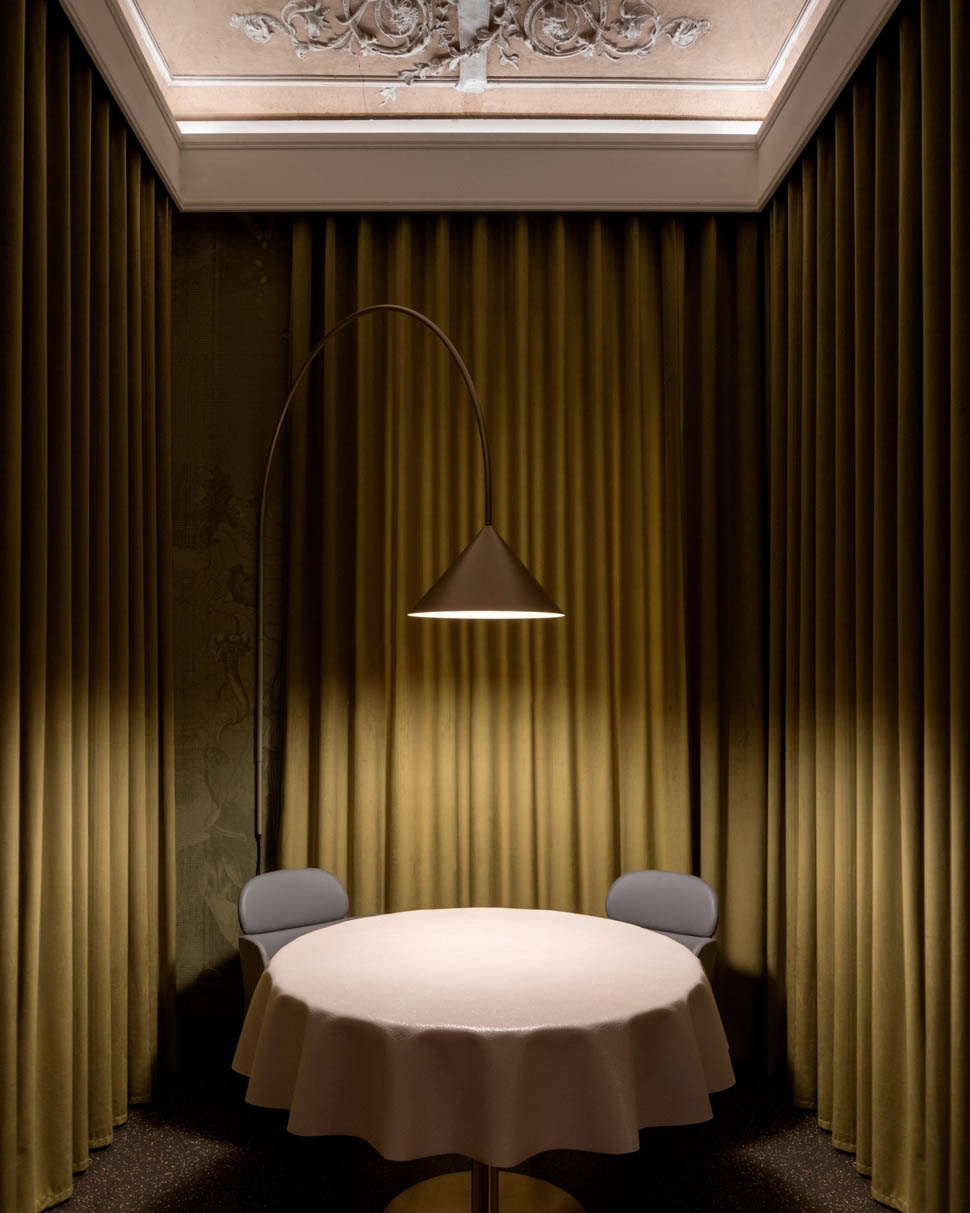
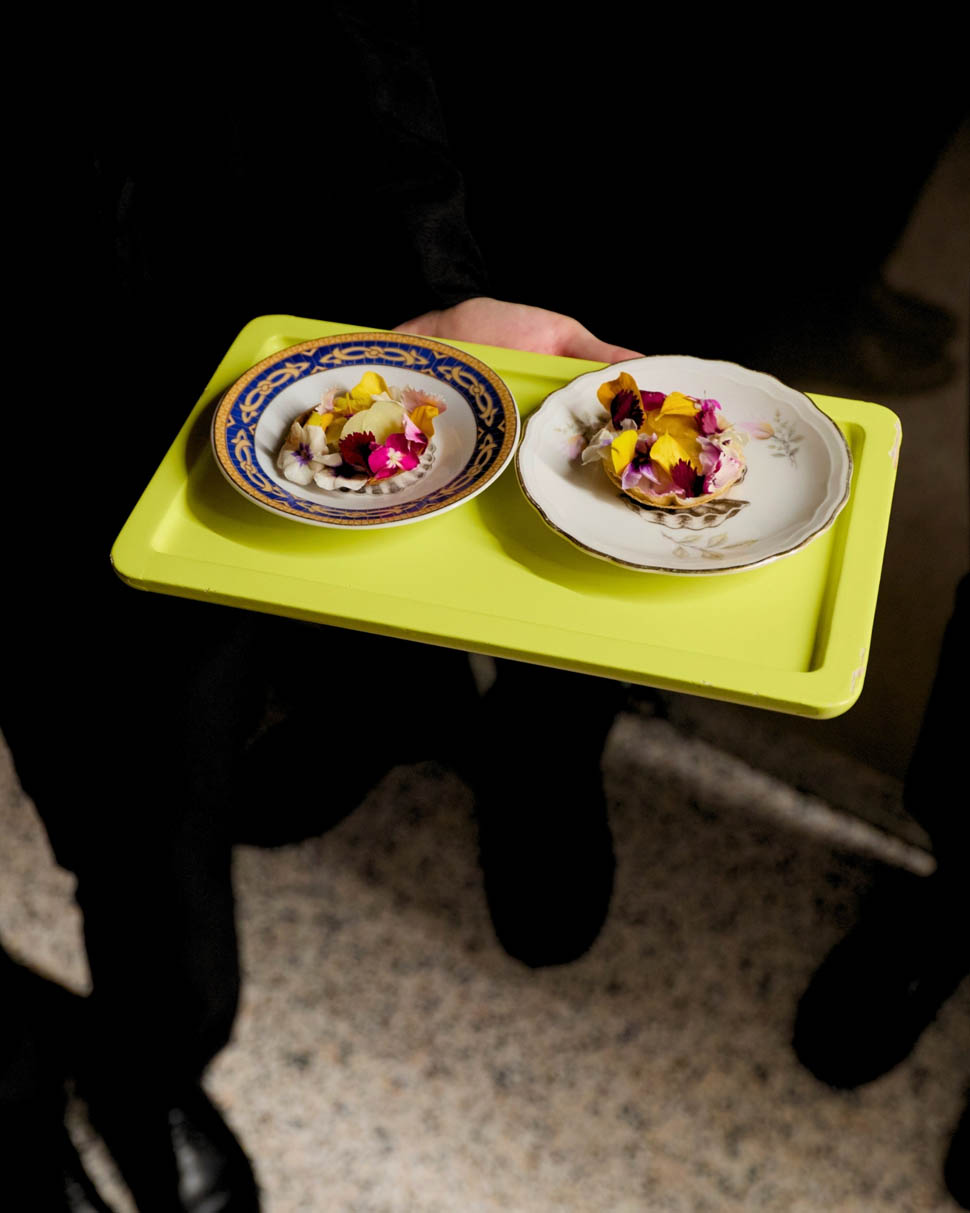
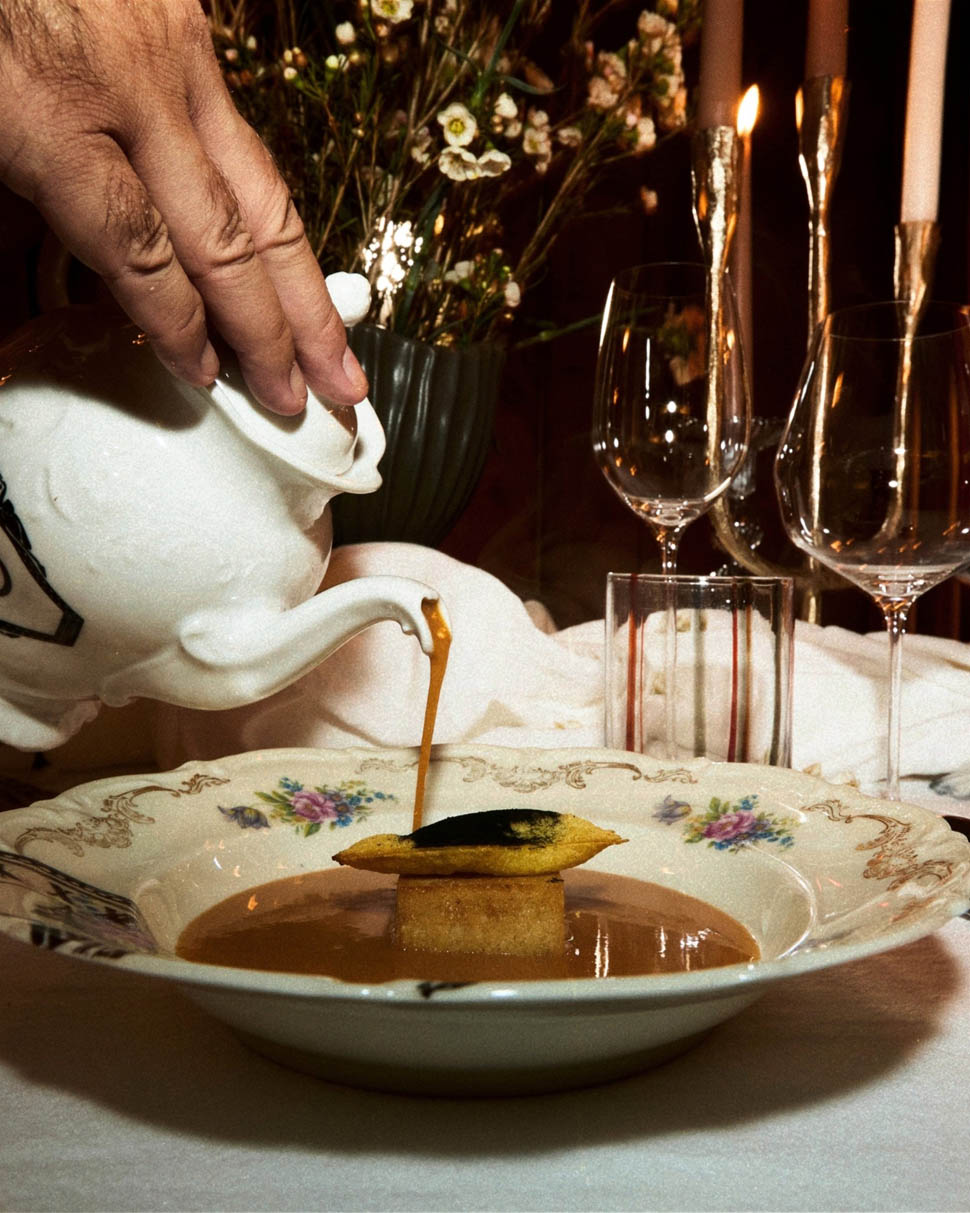
Contraste, on the other hand, chose to evolve without sacrificing its identity. In 2024, the villa’s pristine white interiors gave way to bold colors, wallpaper, fabrics, and layered materials. At the same time, Riflessioni was launched—a second tasting menu that complemented Riflesso, the restaurant’s signature menu featuring its most iconic dishes. Two different ways of interpreting cuisine, designed to coexist and inspire one another (kitchen and dining experience). Today, that choice continues to prove itself one of the most important in Contraste’s recent history.
Riflesso and Riflessioni: why you’ll want to return to Contraste time and again
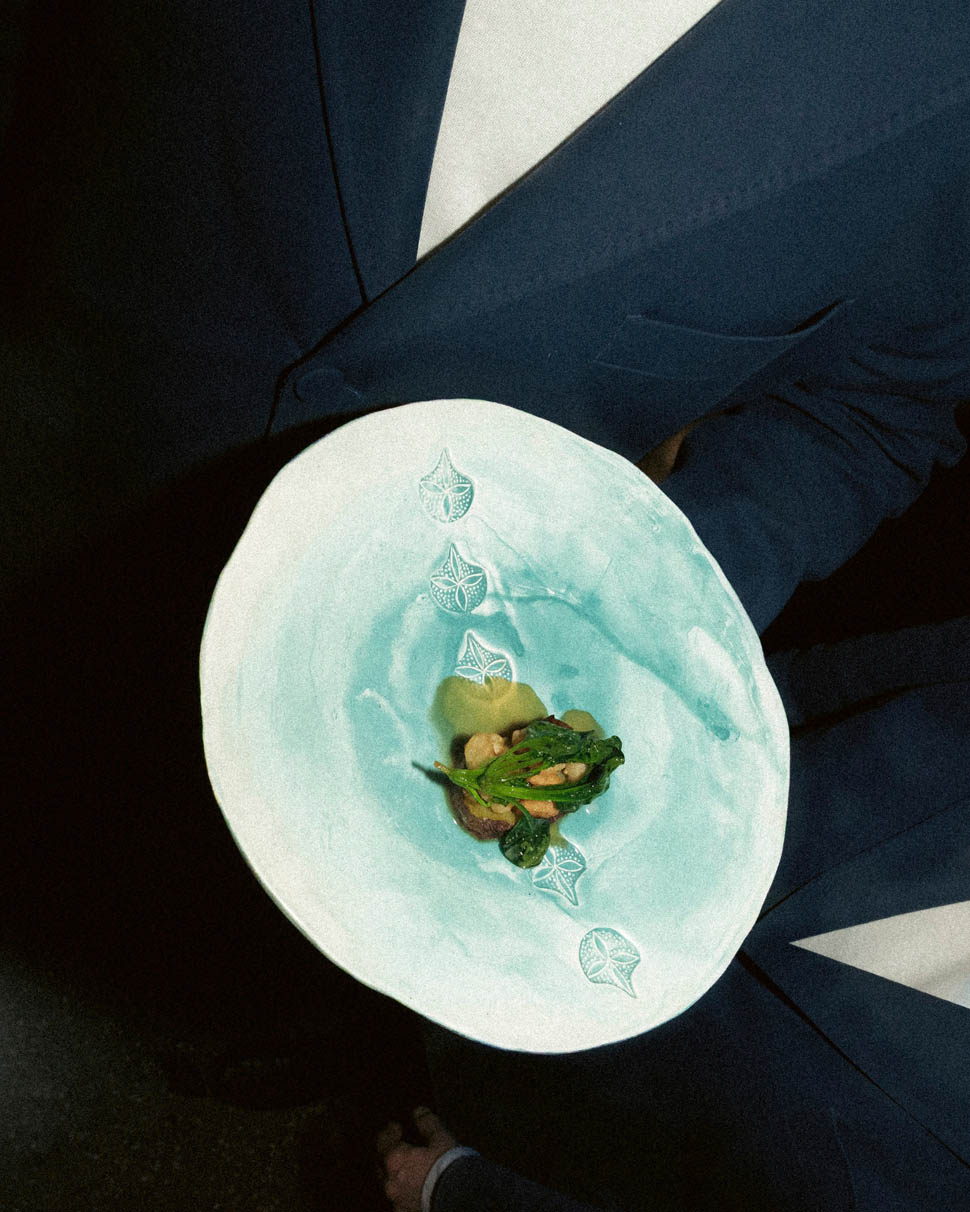
One of the most interesting aspects that emerged from our conversation concerns the two tasting menus. “Riflesso” and “Riflessioni” continue to coexist, but above all, they continue to evolve. There isn’t a specific time of year when the menu is completely replaced. The dishes evolve gradually, following the seasons (excuse me!), new insights, and the daily work of the kitchen team. “The new menu is going very well and has become a major source of inspiration and motivation. There are guests who come to try one tasting menu and then return because they’re curious to try the other one as well. This requires a great deal of training and adaptation for the entire team,” explains the chef.
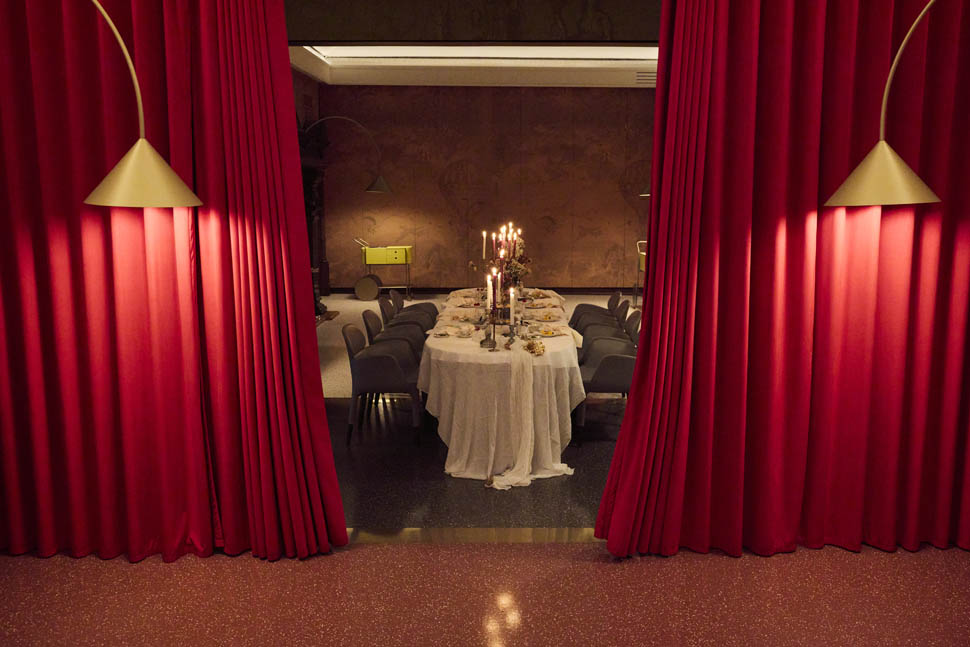
Overall, the two menus feature about forty dishes—a significant amount of work that nevertheless offers the kitchen a very broad scope for experimentation. Perdomo speaks of a vast palette of colors from which to draw inspiration to create ever-changing experiences. Some dishes are modified, others give way to new creations, while the most iconic dishes continue to tell the restaurant’s story. This means that returning to Contraste after a few months does not necessarily mean having the same dinner. And not just because some courses change. The restaurant keeps a record of guests’ previous experiences, noting the menus and dishes they’ve already tasted, so that it can always offer something different to those who decide to return.
It’s a job that requires a special kind of sensitivity, especially on the part of the dining room staff. Because the constant pursuit of novelty can become a double-edged sword. “Sometimes a guest returns with friends to whom they’ve described one of our dishes. Maybe they come specifically to let their friends try it, and precisely because we know what the guest has already tasted, we might not offer it again. At that point, we need to understand the situation and find a solution. Ideally, this should be addressed in advance during the reservation process,” says Perdomo. This situation aptly illustrates the complexity of a restaurant like Contraste. On the one hand, there is the need to evolve (a constant amidst the chaos that Perdomo so loves); on the other, there is the need to respect the memories and expectations of those who have already had an experience and wish to share it.
The guest thus becomes an active participant in shaping the dining experience, through a dialogue that involves both the kitchen and the dining room and that can lead to changes in certain choices even at the last minute. Personalization, therefore, is not merely about knowing tastes, preferences, or any special needs. It means understanding why a person has decided to return, what they remember from their previous visit, and what they hope to rediscover or experience for the first time. This work is less visible than the creativity that comes through on the plate, but it is just as important in defining the restaurant’s identity.
Contraste/Contrario: The Dinner That Begins at the End and the Inspiration of Daniel Spoerri
Among the projects born from the ongoing creative exploration of Perdomo and his team, Contraste/Contrario is probably the one that most challenges the conventions of fine dining. The concept was launched in 2025 to celebrate the restaurant’s tenth anniversary and returns for the 2026–2027 season with six events—one per month from October through March—each reserved for 24 guests seated at a single communal table. To understand the origins of this idea, however, we must step away from the kitchen for a moment and turn to the world of contemporary art, specifically that of Daniel Spoerri. Born in Romania in 1930 and who passed away in Vienna in 2024, Spoerri was one of the leading figures of Nouveau Réalisme and a key figure in the development of Eat Art, an artistic movement that transformed food, consumption, and dining rituals into tools for expression and exploration. Among his best-known works are the *tableaux-pièges*—literally, “trap paintings”—which he began creating in the late 1950s.
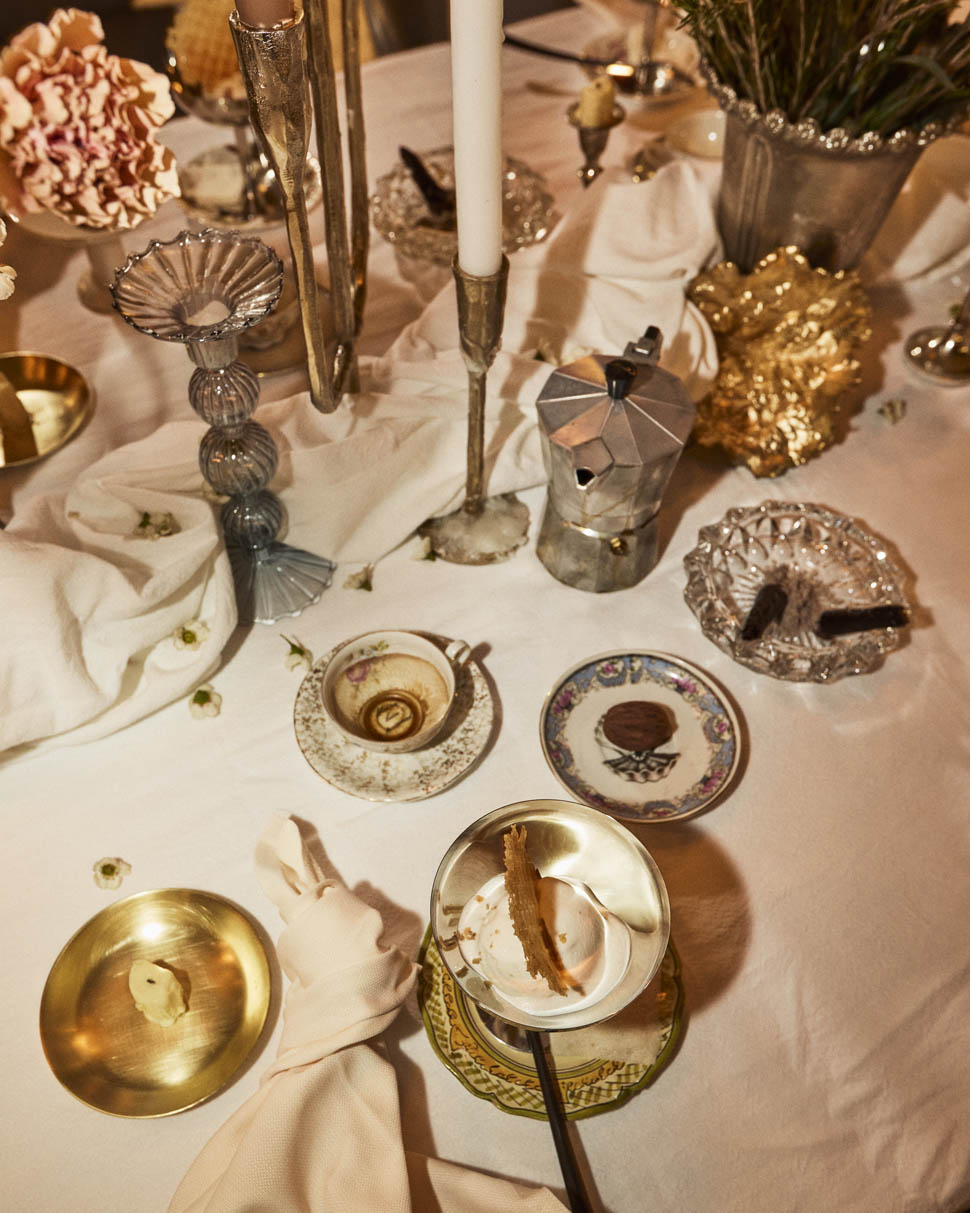
The principle is as simple as it is significant: fixing everyday objects to a surface while preserving their random arrangement. In the case of set tables, dirty plates, empty glasses, cutlery, napkins, and food scraps were secured exactly in the position in which they had been left at the end of a meal. The surface was then displayed vertically, transforming what remained of a dinner into a work of art. Spoerri did not reconstruct the table according to a predetermined aesthetic composition, but preserved its disorder, the traces of people’s presence, and the randomness of their gestures. The meal, ephemeral by its very nature, thus acquired a new permanence. In 1968, the artist also opened a restaurant in Düsseldorf and later a gallery dedicated to Eat Art, further exploring the relationship between gastronomy, conviviality, and artistic creation.
It was precisely this idea of the table as a testament to something that had already happened that fascinated Perdomo. “It was a dream that Simon and I had been harboring for years. Spoerri would create these tables after spending an evening with friends, and for him, that table told the story of an experience. I liked the idea of telling the story of the ending, too—what remains after an experience,” explains the chef. Contraste’s 10th anniversary thus became an opportunity to bring to life a project that explores time, memory, and surprise all at once. Ten years represent a journey already completed, but also a starting point from which to imagine what’s to come. So why not start right at the end?
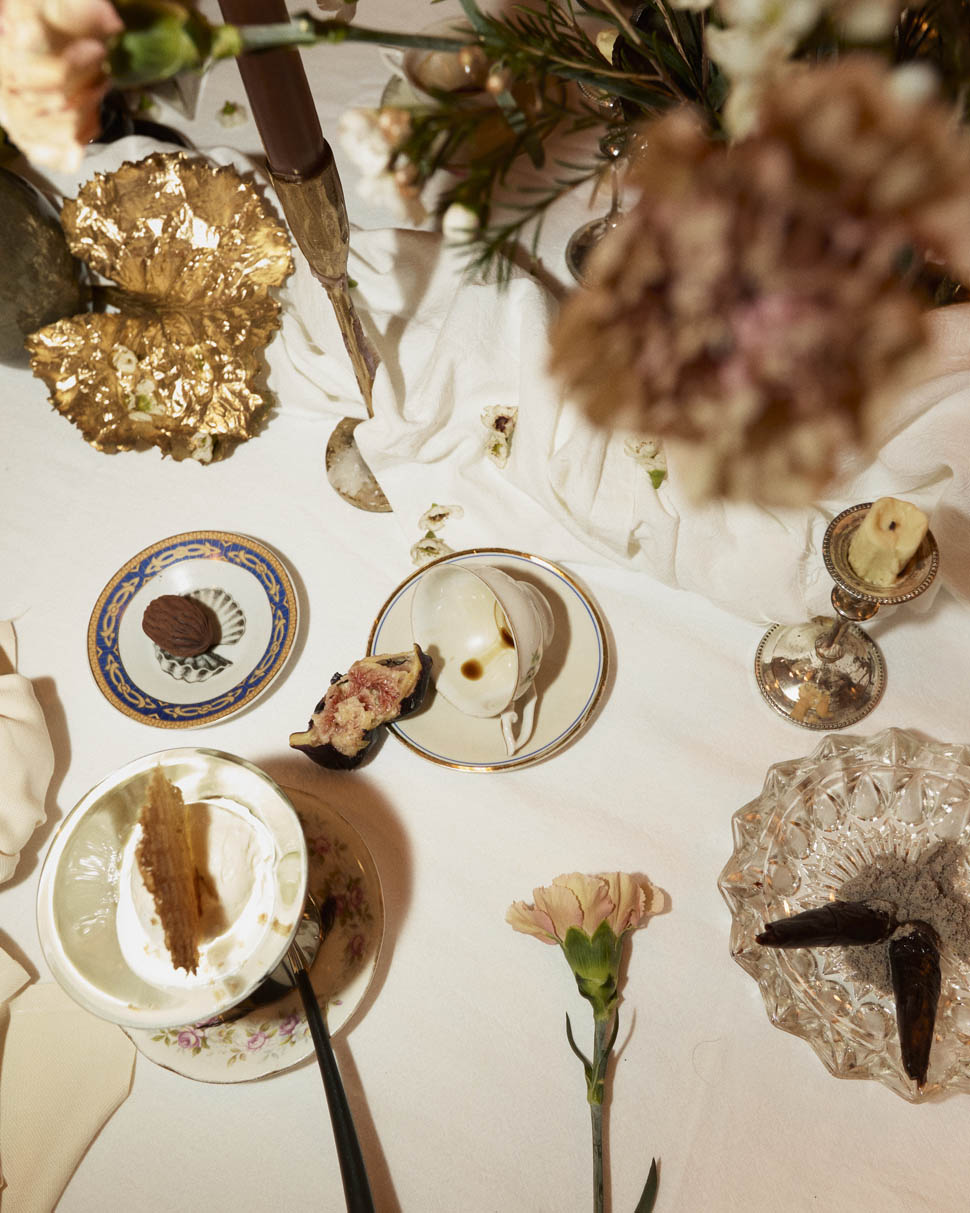
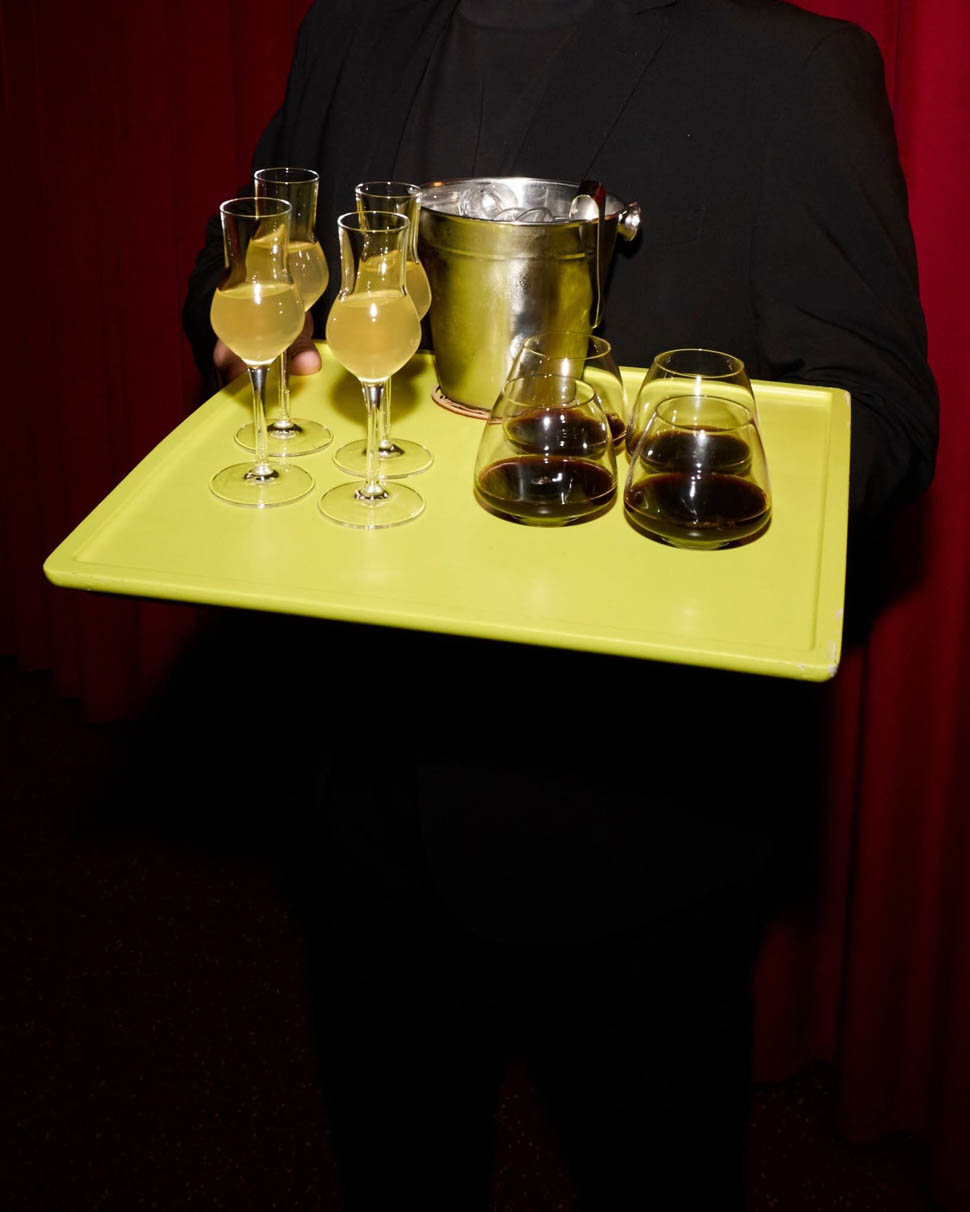
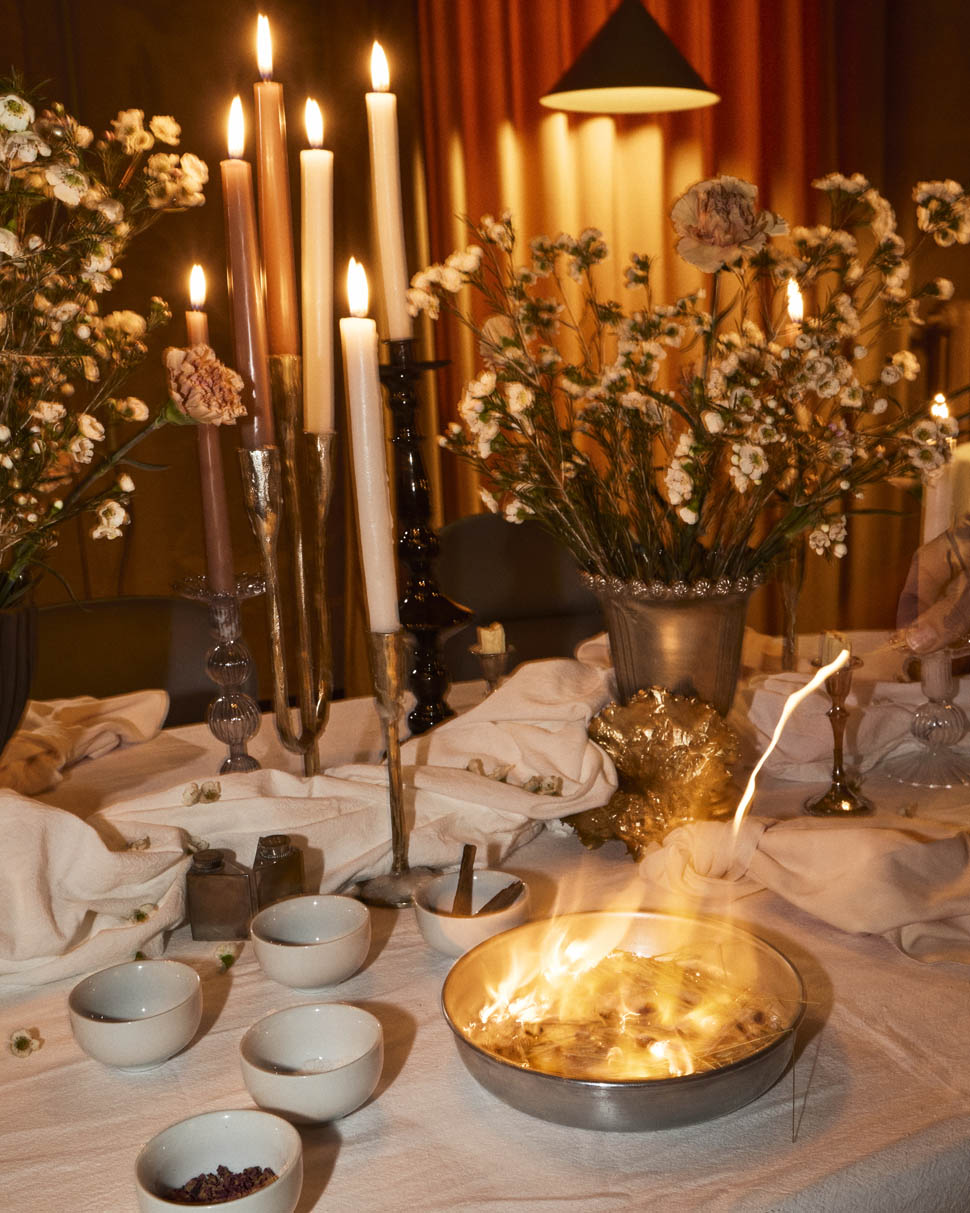
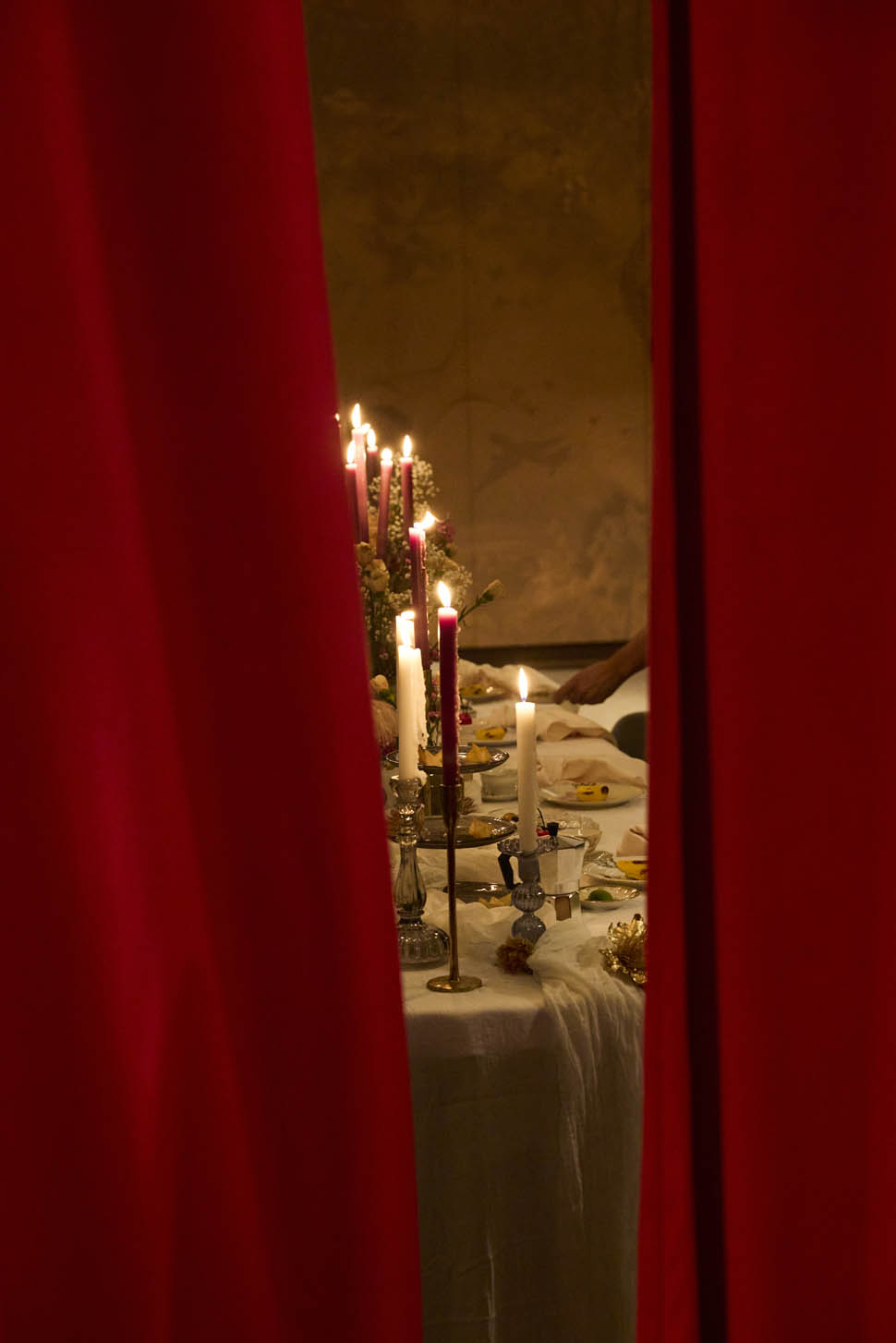
During Contraste/Contrario, it all begins when guests cross the restaurant’s threshold and are greeted with a “goodbye.” The table at which they are seated looks as if a dinner has just ended, with a deliberate sense of disorder reminiscent of Spoerri’s works. The menu takes the form of a receipt, and service begins with an amaro and coffee, subverting the usual sequence of a dining experience. But it would be reductive to describe Contraste/Contrario as simply a dinner served in reverse order. The project involves the entire restaurant: the layout of the dining room, the lighting, the music, the decorations, and, of course, the dishes all change. The experience takes the form of a theatrical performance, divided into acts, in which the diners are an integral part of the scene. The 24 guests sit at a single large table, interact with one another, and participate in a narrative that unfolds through their reactions as well. It is a third gastronomic journey, completely independent from Riflesso and Riflessioni, which requires an additional creative and organizational effort from the team.
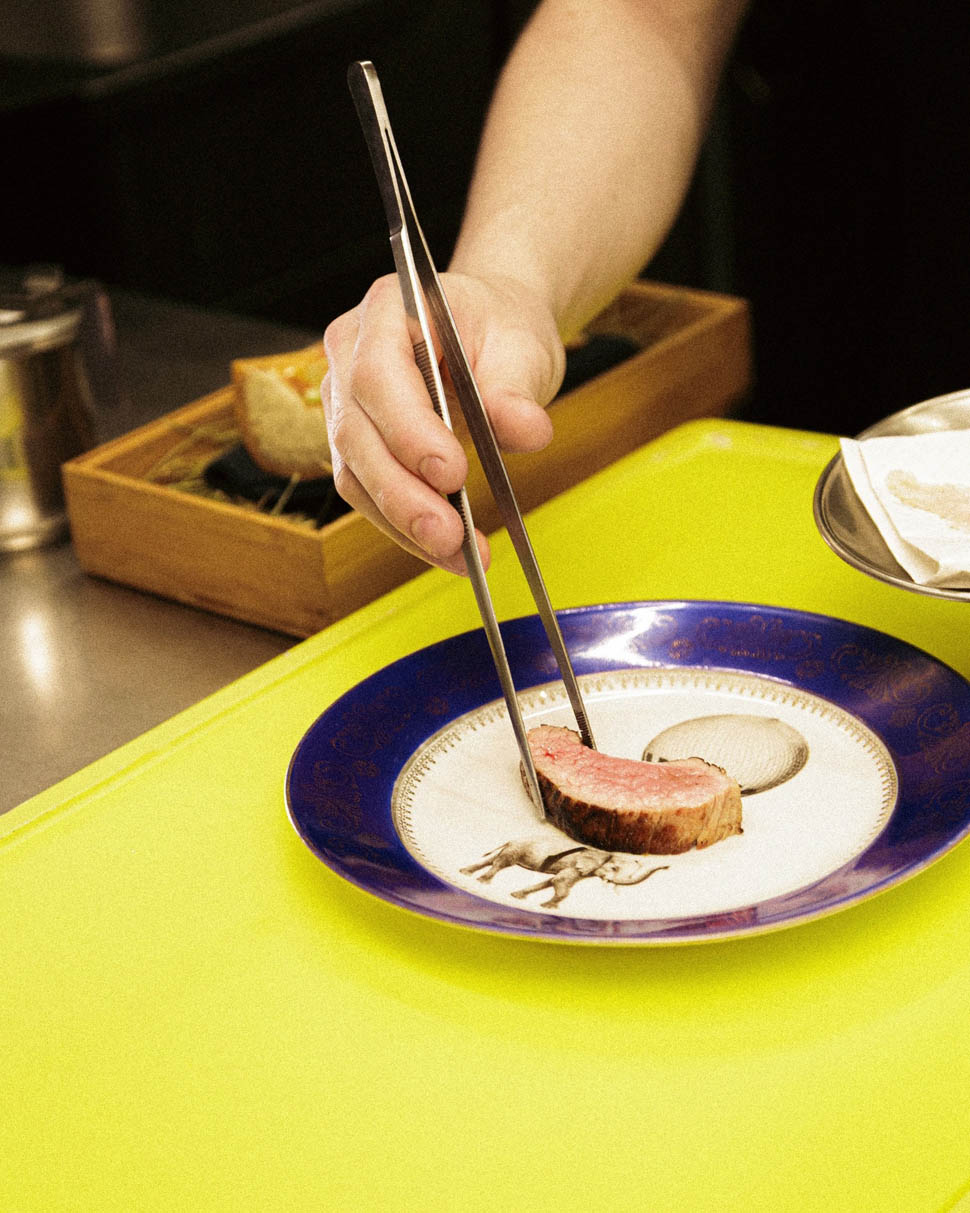
“The great thing is that in all three menus we’ve created, people are a key ingredient. In this case, they’re all seated at the same table, talking to one another, passing things around. And we even get people who’ve never been to Contraste before,” says Perdomo. There is, however, another aspect that Perdomo considers particularly important. In a restaurant of this kind, where the pursuit of precision involves every detail of the service, Contraste/Contrario introduces an element of unpredictability that gives the team renewed energy. “In our daily work, we’re constantly striving for perfection. Here, however, the fear of making a mistake, imperfection, and that adrenaline rush that comes from doing something different also come into play. And I believe people sense this energy.” Perdomo insists that the restaurant experience cannot be confined solely to the thirty-centimeter diameter of a plate or the quality of a wine. It is the result of a series of relationships, sensibilities, and gestures that involve everyone participating in the evening. Contraste/Contrario takes this idea to its extreme, making visible—and almost theatrical—what normally accompanies the service in a more discreet and customary way.
Perdomo’s rose cake meets Amedei chocolate
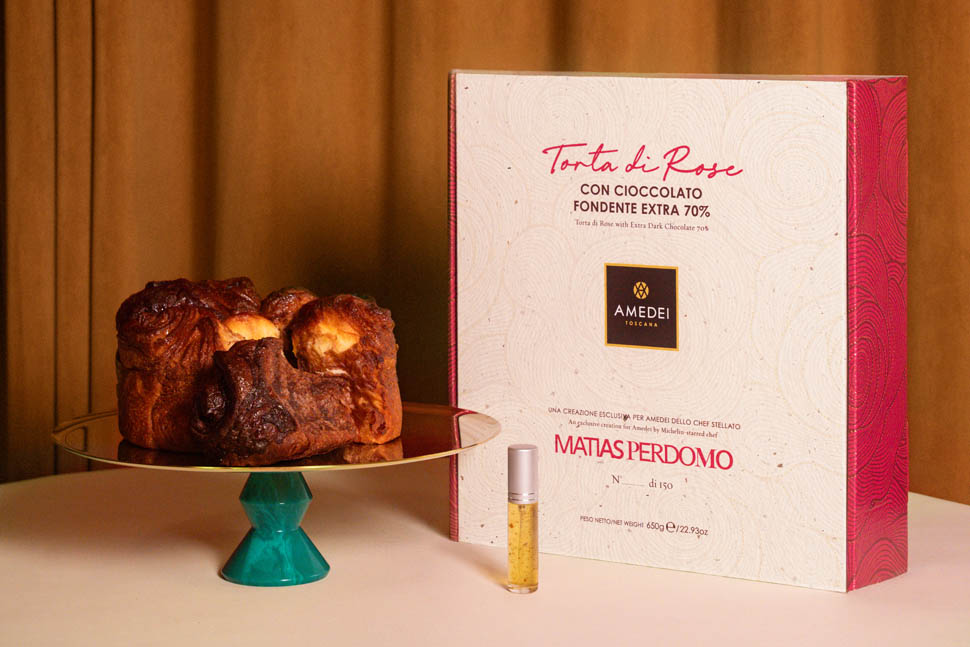
While “Contraste/Contrario” represents the more theatrical side of Perdomo’s creativity, the collaboration with Amedei Toscana highlights another direction in the restaurant’s culinary exploration. At the heart of the project is a dessert that has been part of the chef’s story for years: the rose cake, one of the most beloved creations in his kitchen. For Christmas 2026, a version made with Amedei 70% dark chocolate has been created; it is a limited edition available through the Tuscan company’s e-commerce site. The recipe retains the convivial character of the original cake but incorporates the chocolate both into the batter and in the form of crunchy flakes sprinkled over the roses. Rounding out the dessert is the usual aromatic spray—this time featuring whiskey and Bourbon vanilla—to be misted as desired before tasting. The cake weighs 650 grams, comes in a numbered box priced at 65 euros, and is meant to be served warm after a brief time in the oven. It is a product born from the meeting of two distinct culinary identities, without one overshadowing the other.
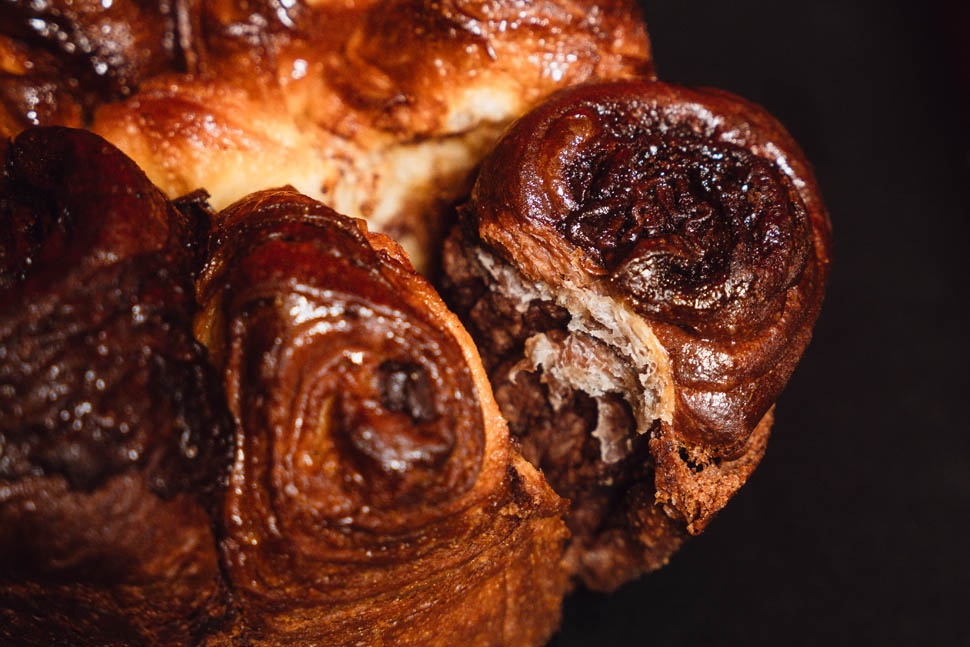
“It’s a fusion of our two identities. When you eat this cake, you’ll discover a bit of our own identity and a bit of the magnificence of Amedei chocolate,” says Perdomo. But the collaboration doesn’t end with this Christmas product. On the contrary, for the chef, it marks the beginning of an ongoing relationship, built on mutual understanding and discussions about the possibilities of using chocolate in the kitchen. The first step was a visit to the company’s facility in Pontedera, during which Perdomo and several members of his team were able to observe the various stages of production up close. What struck him most was the coexistence of a structured production process and a strong manual component, particularly evident in the initial stages of cocoa processing. “It was the first time I decided to partner with a company that produces gourmet products. It was an important choice, because it means identifying with the values and identity of another organization. When we visited, we found a sensibility very close to our own,” he explains.
Alongside the creation of the rose cake, the collaboration with Amedei also found its way into Contraste’s kitchen, through both sweet and savory dishes. Perdomo describes, for example, the work on his Mexican-inspired mole, reinterpreted with Italian citrus fruits and chocolate. Another example is the three final chocolates, inspired by Dante’s Divine Comedy. A tribute to Tuscany, Amedei’s homeland, this translates into three small bites associated with Inferno, Purgatorio, and Paradiso, with ingredients and pairings ranging from porcini mushrooms to citrus fruits. It’s a gastronomic narrative that isn’t necessarily explained in every detail to the guest. Perdomo loves the idea that certain references can be picked up by those who are more curious or have the tools to recognize them, without this compromising the pleasure of the tasting for all palates.
Trattoria and fine dining: why we need both
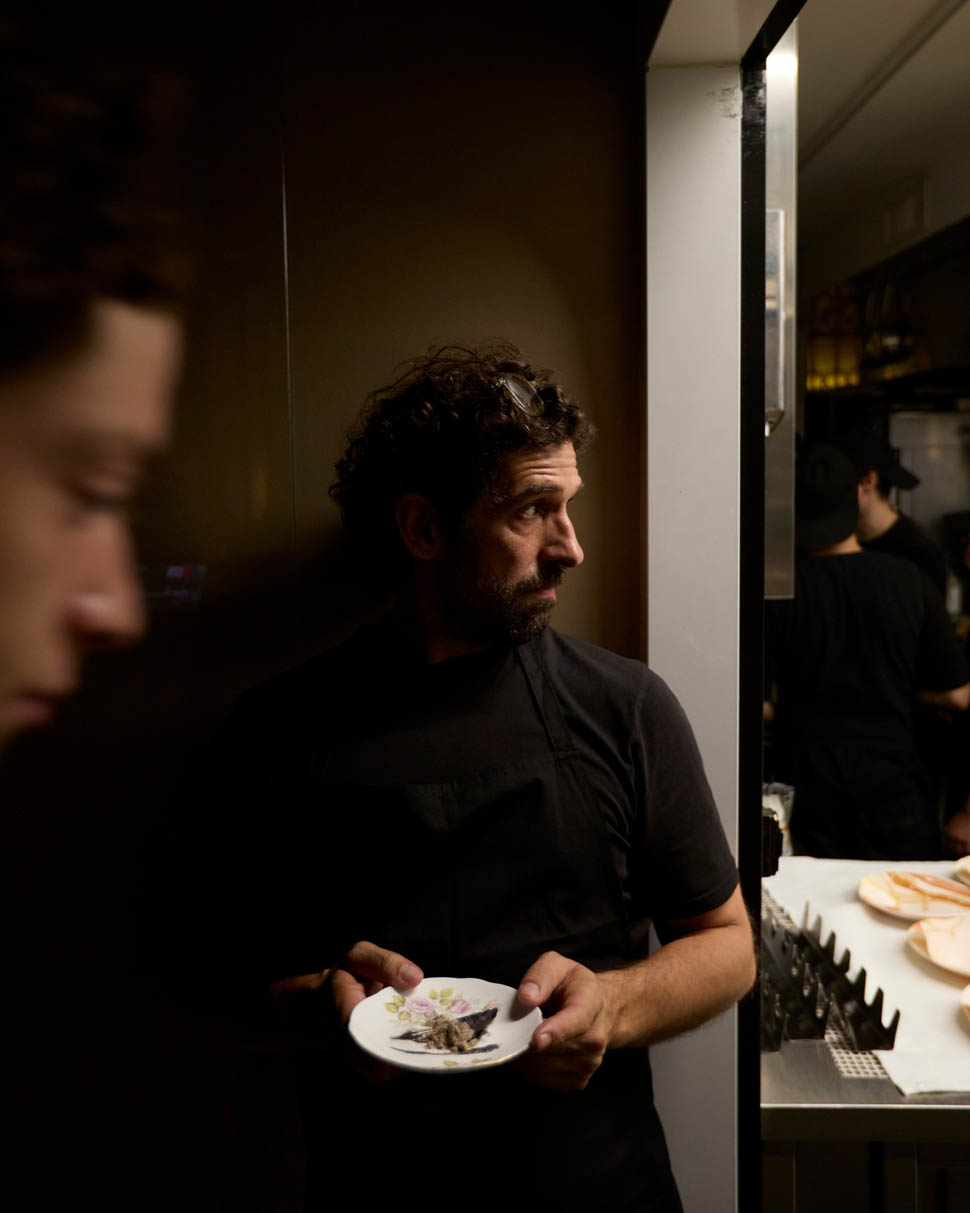
At a time when Italian dining seems to be rediscovering trattorias with particular enthusiasm (nostalgia is a powerful thing!), home-style cooking and a simpler, more straightforward way of eating out, it is natural to wonder what place remains for experimental fine dining. This is a question I put to Perdomo, also in light of his own experience. Before opening Contraste in 2015 together with Simon Press and Thomas Piras, the chef spent many years working in the kitchens of Al Pont de Ferr, a historic Milanese restaurant where he helped shape a culinary offering that earned a Michelin star in 2012. It was a very different environment from Contraste, with a pace, covers and style of service more closely associated with the world of informal dining. “Simon and I spent fifteen years at Pont de Ferr, a restaurant open seven days a week with 150 seats. Then came the desire to tell a different story: a short film, a poem, a more experiential journey. And it is a desire we still have today.”
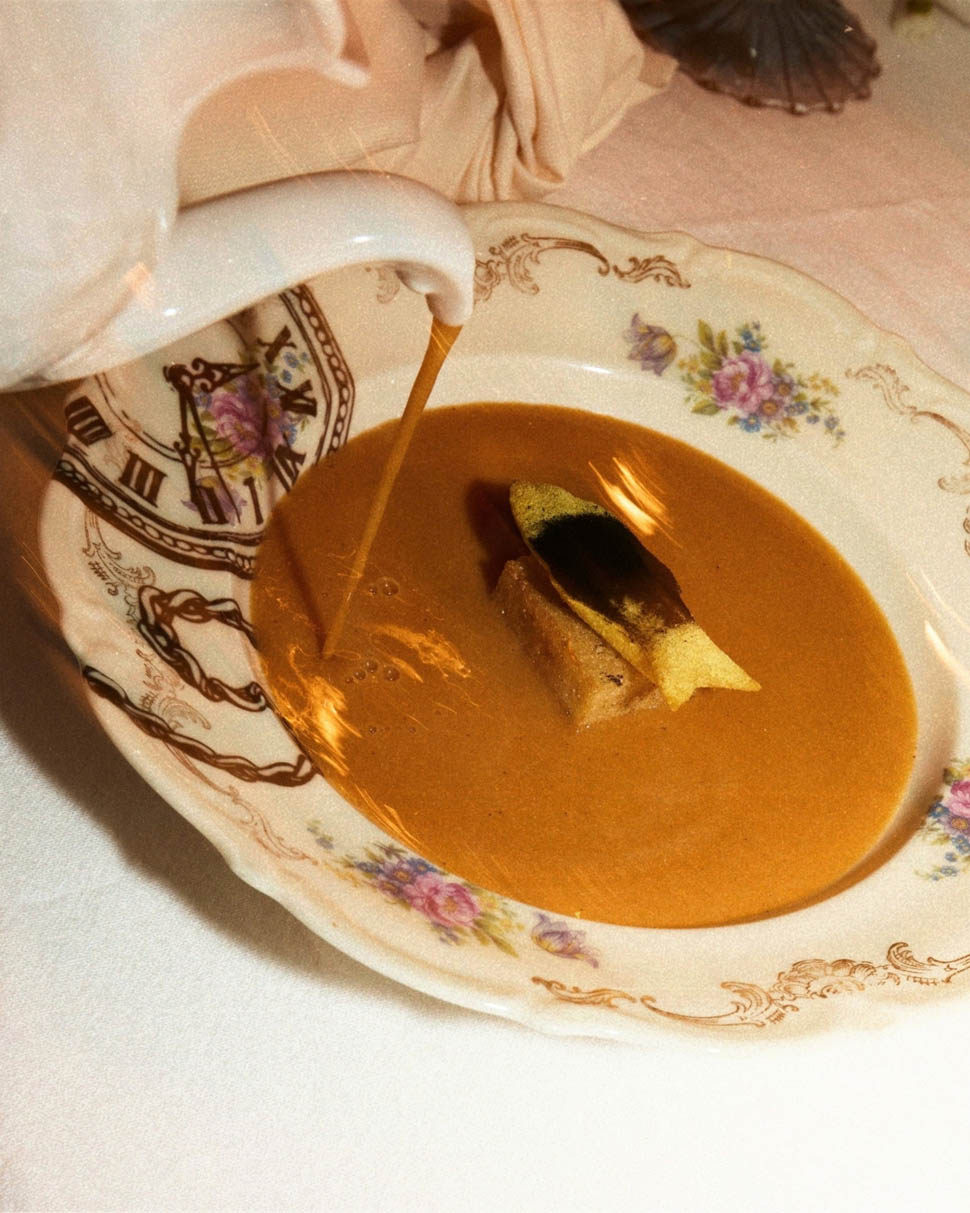
Perdomo does not see the return of trattorias as a threat to fine dining, nor does he believe that contemporary cuisine necessarily needs to distance itself from simpler forms of dining. On the contrary, he sees these worlds as part of the same ecosystem, capable of nourishing one another. “Fine dining would never have come into existence without good trattorias, and today, without everything that has happened in haute cuisine, we probably wouldn’t have rediscovered such a love for simplicity either. We need each other.” It is an argument that goes beyond gastronomy. It would be like imagining watching only thrillers and giving up comedies, or reading nothing but cookbooks without ever allowing yourself to enjoy a good novel. Different experiences meet different needs, and the value of one does not necessarily have to be measured against the other. Perdomo draws on a musical analogy to make his point: we can love tango, listen to rap or choose other genres depending on our emotional state at a given moment, without feeling that one must exclude the others. Music remains music, just as cuisine remains cuisine, regardless of the form through which it is expressed.
“I believe there will always be an increasing need for fine dining, understood as poetry, as a place where you can lose yourself for two or three hours. Of course, it’s not an experience you can have four times a week, but that doesn’t mean we don’t need it.” Ten years after opening and two years after its most significant transformation, Perdomo and his team seem to have held on to one thing above all: the need to keep creating, drawing inspiration from the chaos that plays such an important role in the chef’s creative process. Not treating creativity as a mere exercise, but as a way to keep the relationship with guests and their own identity alive. After all, as the chef reminds me, kitchens are not ultimately divided into trattorias and fine-dining restaurants, or into simplicity and experimentation.
“There are only two kinds of cuisine: good and bad.” Touché.
Contraste
Via Giuseppe Meda, 2 – Milan
Website: https://contrastemilano.it/it/