More than an hour in line to eat the best red pizza in Rome! But how do they make it at Roscioli? The secrets of a legendary bakery, where family history is the cornerstone of authenticity.
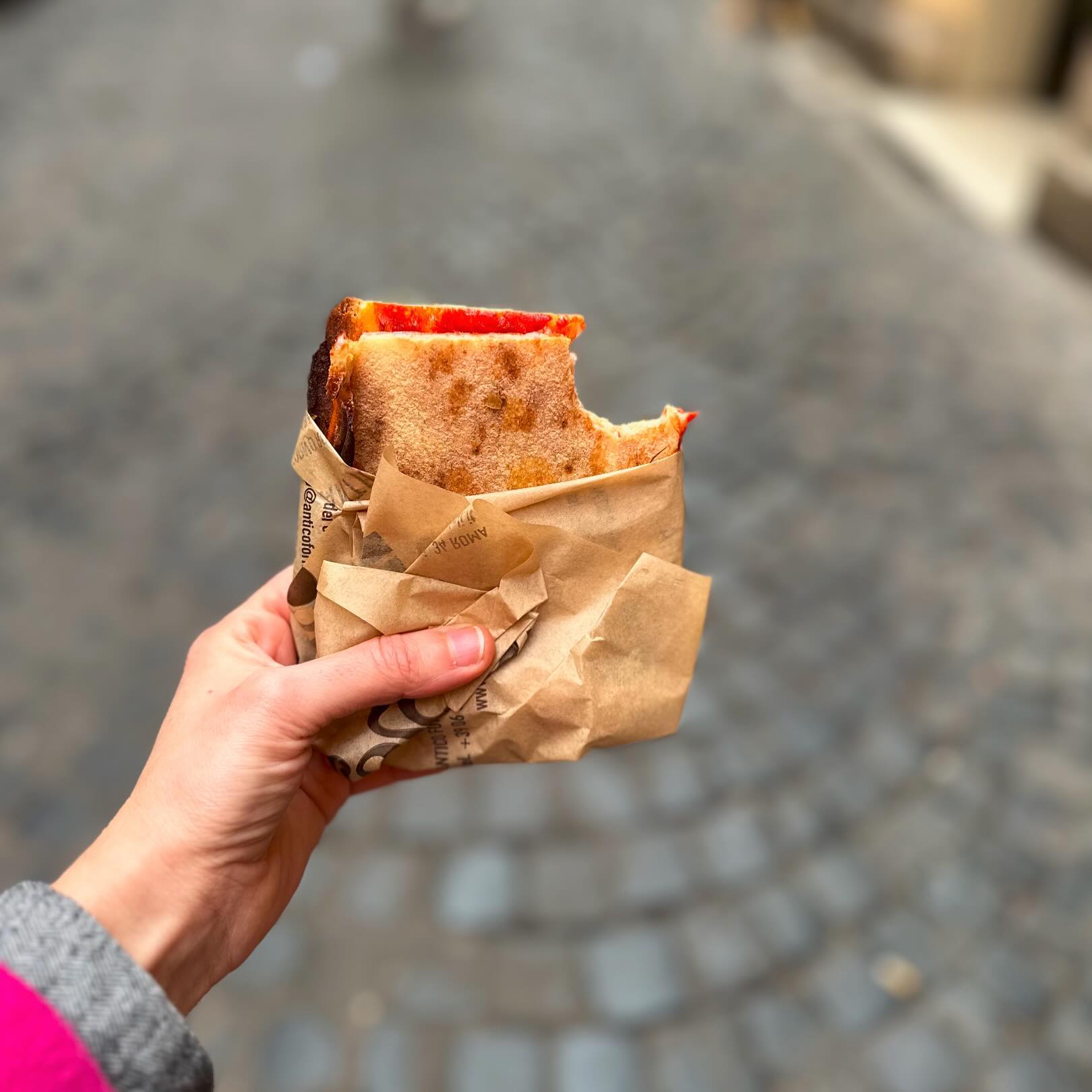
Just a stone’s throw from Campo de’ Fiori, the invisible line that cuts Via dei Chiavari in two isn’t made of cobblestones, but of the joy of waiting (and a little healthy patience!). It’s the line that winds along the sidewalk outside Antico Forno Roscioli every day: an orderly snake of Romans on their lunch break, foodies on a pilgrimage, and travelers with guidebooks in hand, willing to wait anywhere from thirty minutes to nearly two hours during peak hours. Yet, as soon as the pizza emerges from the oven and the aroma of roasted tomatoes and fine olive oil fills the street, the craving for that first bite vanishes instantly. What draws the crowd isn’t an opulent topping, but the essence of authentic baking: a thin, scarlet, glossy slice of red pizza—so in demand that, as soon as it’s placed on the counter, it literally vanishes within five minutes flat.
Not Just Pizza: The Story of the Roman Bakery Where the World Goes to Shop
To understand why a small rectangle of dough and tomato can inspire such devotion, we have to rewind to the 1950s and travel far from the Tiber, to the peaks of the Sibillini Mountains (to be exact, to Rocca di Montemonaco in the Marche region). It was from there that the eleven brothers of the Roscioli family began their journey down to Rome, carrying in their suitcases the only trade they knew: kneading loaves of bread. Among them wasthe young Marco, who left his life as a shepherd to become an apprentice in the bakeries of working-class neighborhoods like Torpignattara. There, he learned the rhythms of dough rising, delivering loaves at dawn and secretly observing the techniques of the city center’s most acclaimed family-run bakeries.
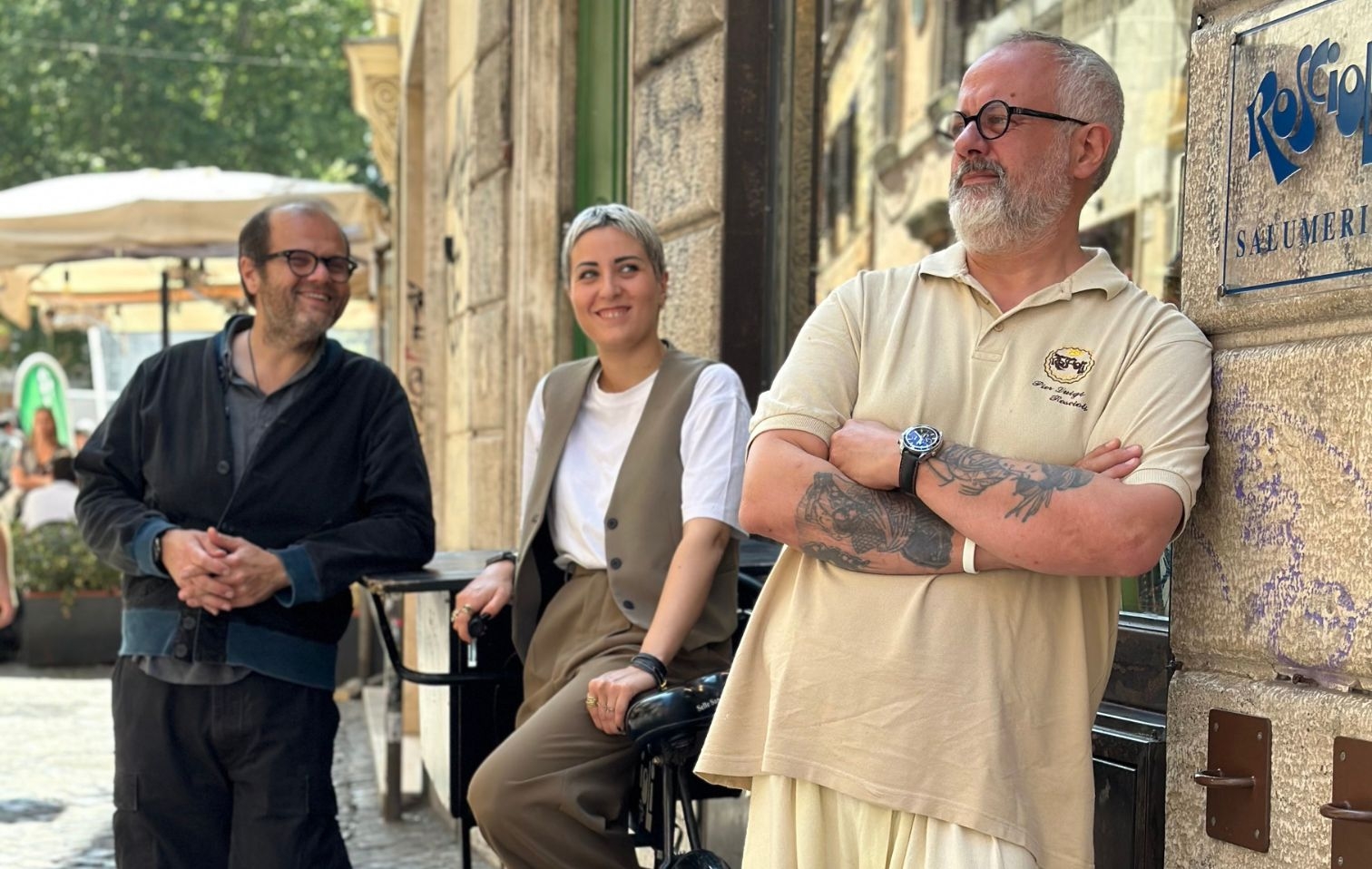
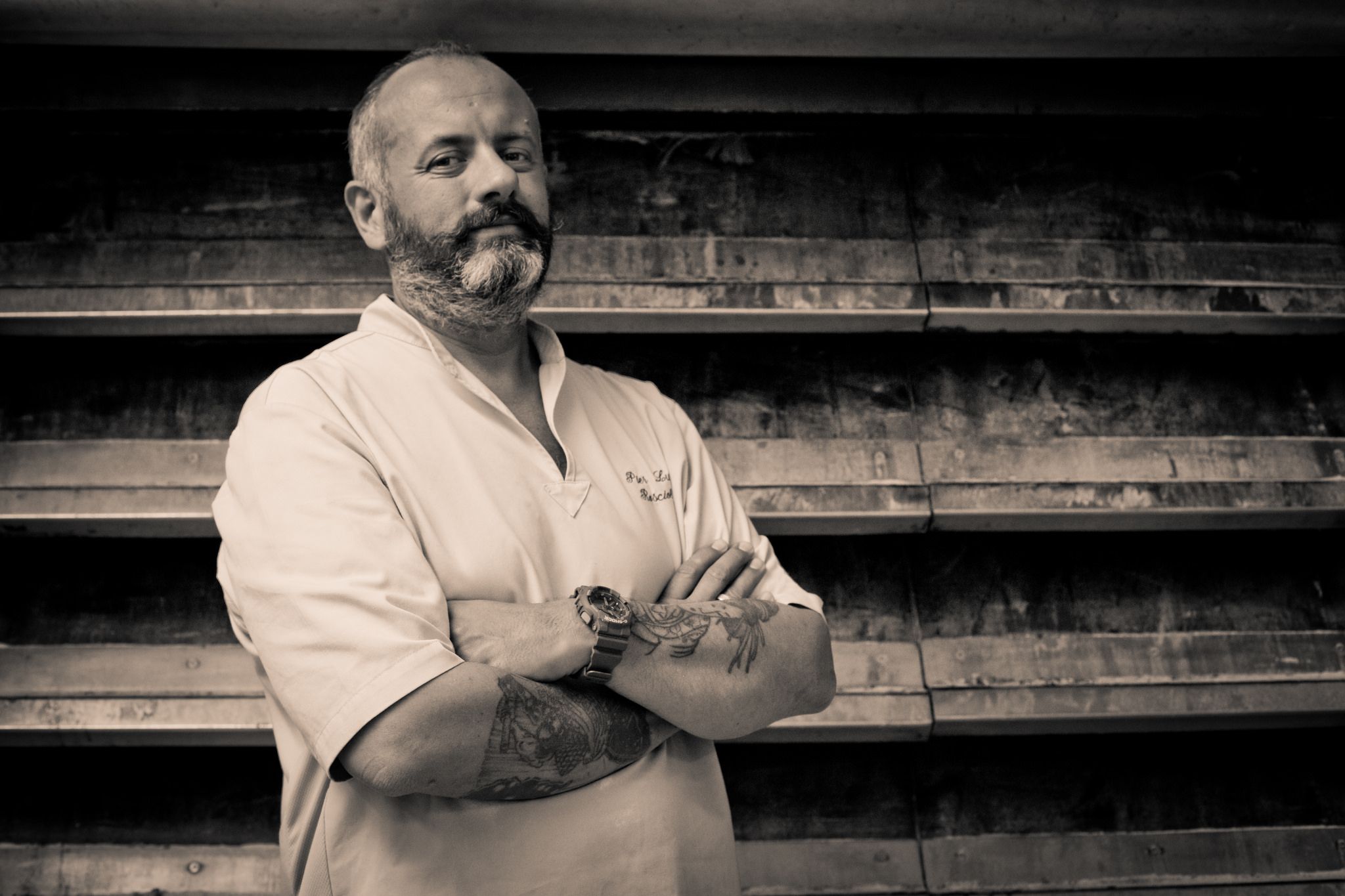
The turning point? February 26, 1972. On that date, Marco took over a historic bakery at 34 Via dei Chiavari (a shop whose baking license was based on a papal edict and a Vatican census dated August 17, 1824, ed.). Thus, what began as a modest neighborhood bakery—initially “overrun” by customers from a famous jeans store across the street—transformed, decade after decade, into a small hub of culinary craftsmanship, thanks to Marco’s tenacity and the passing of the torch to his sons: Pierluigi, now at the helm of the business, and Alessandro, who runs the nearby Salumeria. The house rule, ever since, has never changed: no compromises on quality; no shortcuts in timing or method.
23 quintals a day and a pizza that’s become a legend
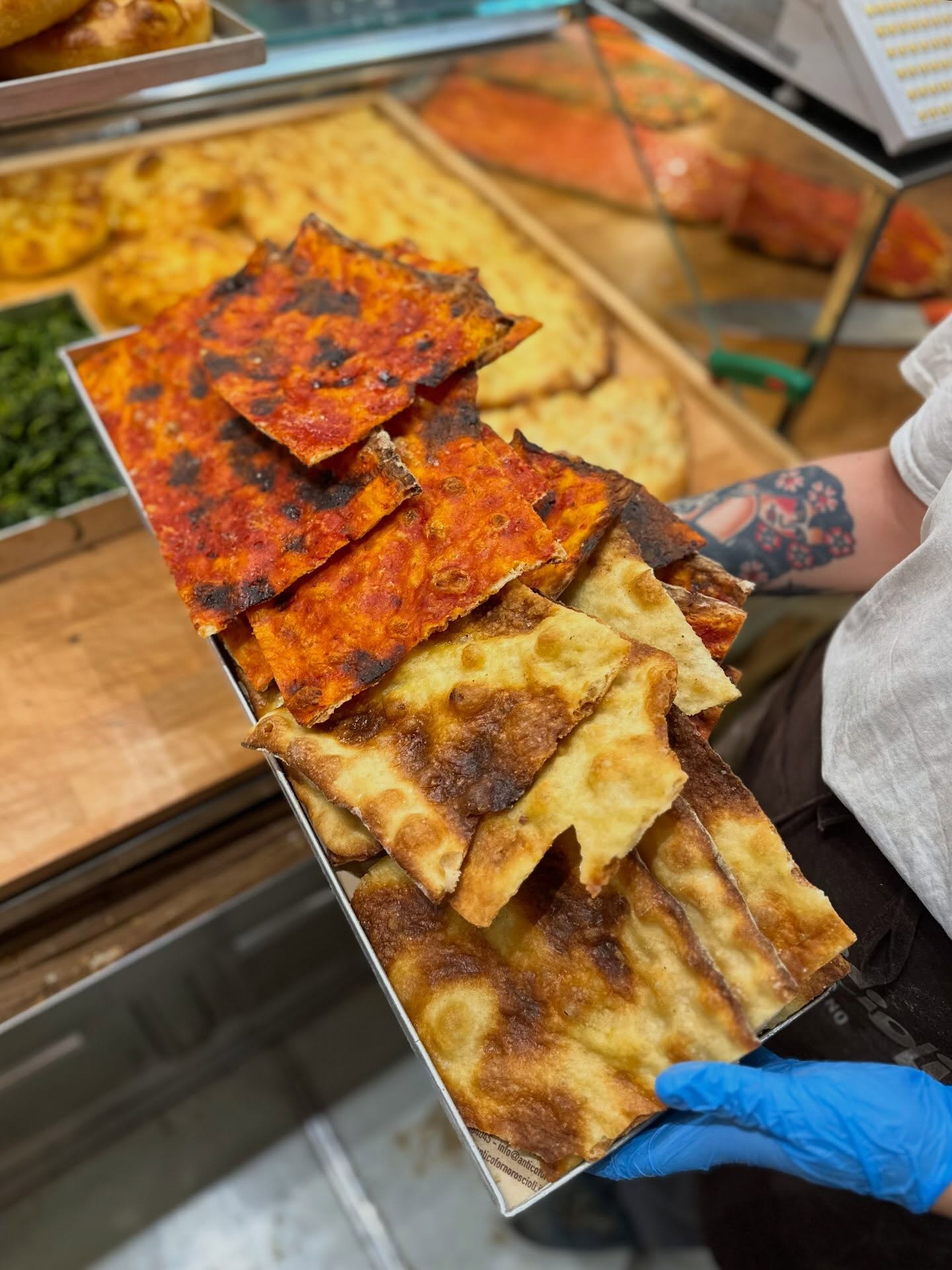
So, stepping inside means finding yourself in front of a veritable spectacle of bread rising, where over 23 quintals of products are baked each day. The counter is a mazurka of brown crusts and the aroma of grain, upon which parades bread made with active sourdough starter, unrefined whole-grain flours, very little salt, and slow fermentation (up to 24 or 36 hours), resulting in “long-lived creations” that can be stored for a full week in the pantry. Roman pizza, which originated in the postwar period as a leftover dough flattened with oil and salt, was transformed by Roscioli himself in the 1960s into a distinct and versatile recipe. On display in the window is the famous “white” version—tall and almost “cloud-like,” designed to be split open and stuffed on the spot with mortadella or porchetta—alongside pans filled with richer toppings such as potatoes, zucchini flowers, sautéed chicory, and seasonal toppings.
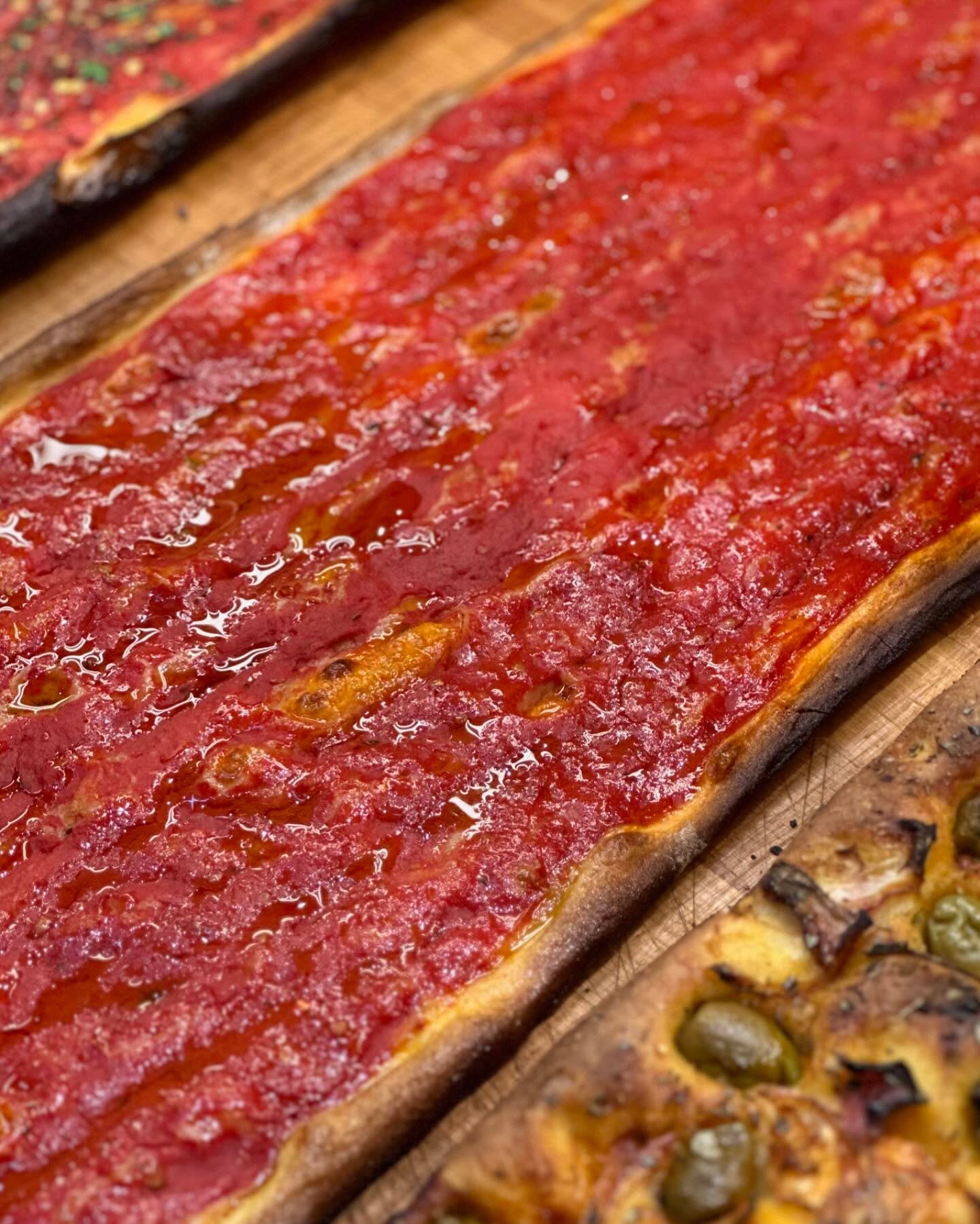
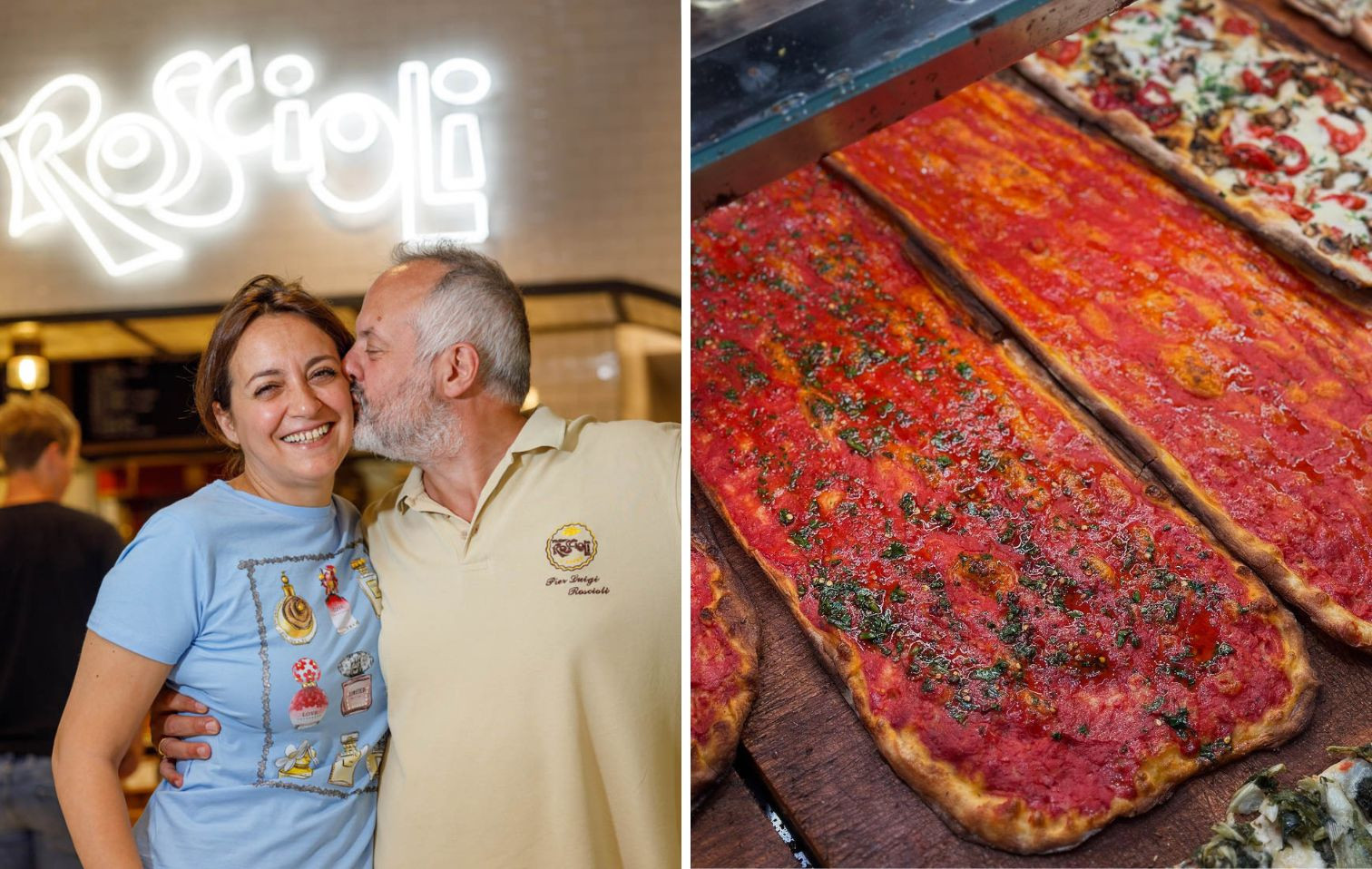
But the true “Dancing Queen” that gets your taste buds dancing is still the Pizza Rossa. In Pierluigi Roscioli’s vision, this beloved staple becomes a showcase of technical precision, designed to create striking contrasts right from the first glance. What makes it stand out? A glassy crunch at the base and a melt-in-your-mouth crumb in the center. The process begins with a reinforced Type 0 flour, generously hydrated and started with a minimal amount of sourdough starter (just one gram per kilo of flour) to ensure slow and complex fermentation. While until the 1990s, Marco’s father would strictly roll it out with a rolling pin, today Pierluigi opens it by hand with a gentle press, thinning it out without ever tearing the gluten network.
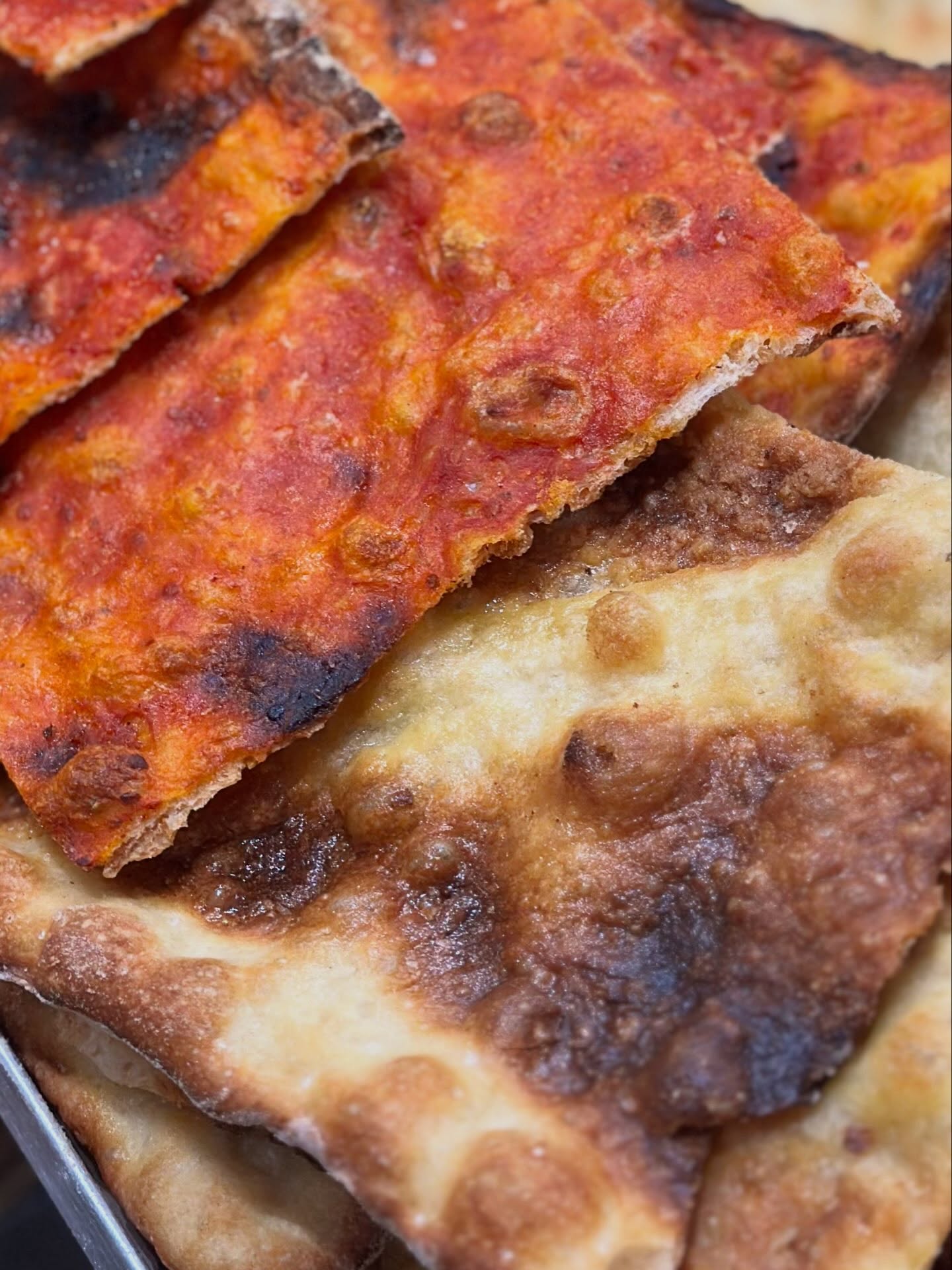
Last but not least, there’s the tomato, prepared a full 24 hours in advance: strained and left to marinate raw with French whole-grain salt (chosen for its superior performance with natural yeast), wild oregano from Sicily or Calabria, and extra-virgin olive oil. The final secret, however, lies in the two-step baking process: the pizza is first baked to 70% doneness, then removed and allowed to rest so that all the internal steam can escape. While waiting to be served, it undergoes a second baking, which “glazes” the crust, making it crispy, and receives a final, generous brush of raw extra-virgin olive oil.
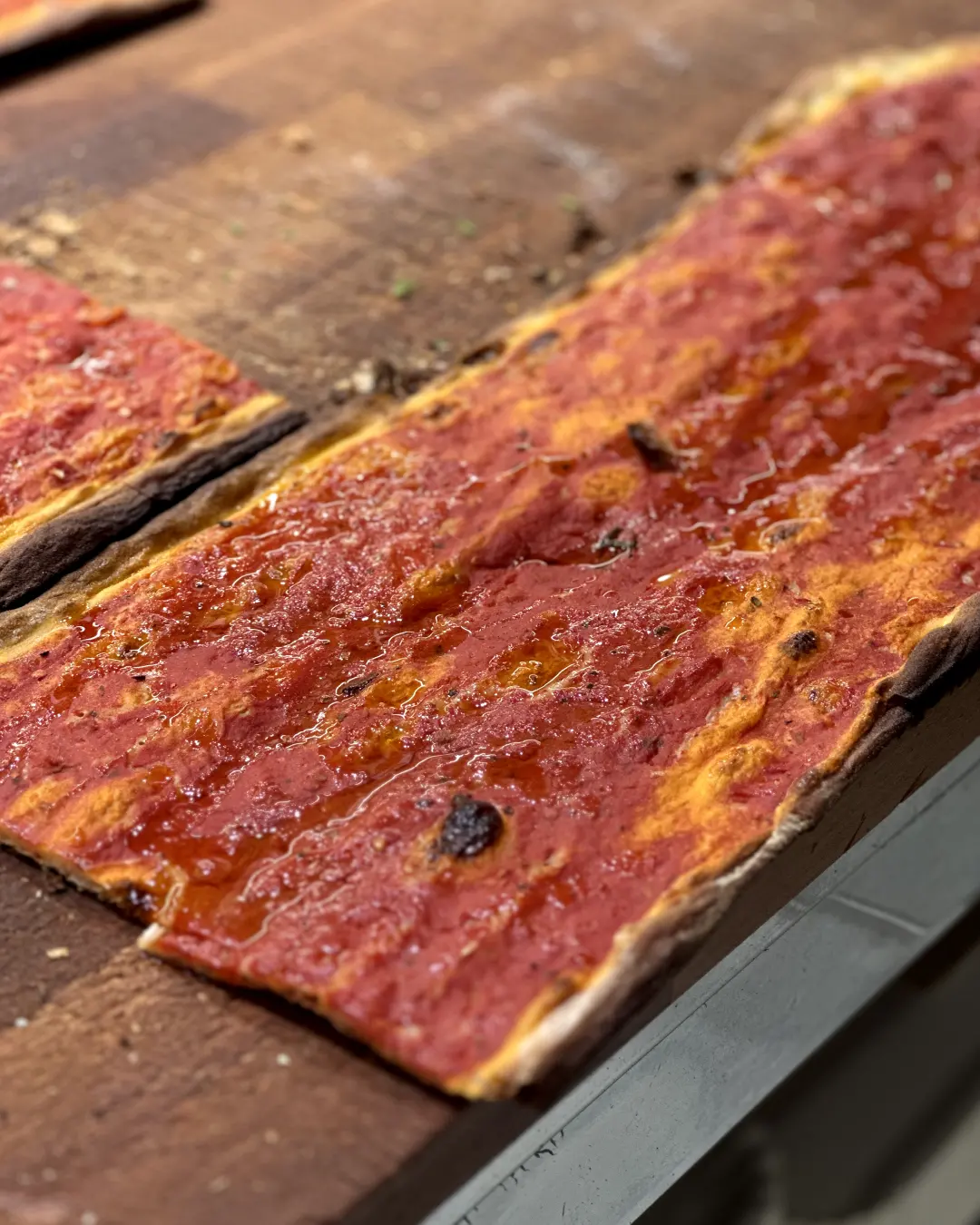
For those who can’t join the line on Via dei Chiavari, there’s a way to bring a bit of this magic into your own kitchen by following the original recipe provided by Antico Forno Roscioli step by step. The result, of course, won’t be quite the same as the “maison” experience—but you’ll definitely have a head start!
ANTICO FORNO ROSCIOLI RED PIZZA
Ingredients for 4 pizza pans
- 1 kg of high-gluten flour
- 680 ml of natural mineral water
- 100 ml of whole milk
- 1 g of fresh brewer’s yeast
- 25 g of salt
- 7 g of malt
- 200 g of durum wheat semolina for dusting
- Extra virgin olive oil for the pan
Instructions
Mix the flour and salt first with the milk, then with 450 ml of water. If possible, do this by hand to give the dough strength and elasticity. Work the dough vigorously and fold it several times to make this initial dough firm and elastic. Let it rest for one hour.
Place the mixture in the mixer, add the remaining 230 ml of water, the malt, and the yeast. Knead for at least 10 minutes on medium speed. Transfer the dough—which should be elastic but fairly runny—to a large container and let it rest for 7 to 12 hours at room temperature (in the summer, choose a cool spot).
Once the rising time is up, turn the dough out by inverting the container directly onto a work surface dusted with a little semolina, taking care not to stretch it with your hands. Fold the dough several times and divide it into portions of about 250 g each. Let rest for 30 minutes, then roll out directly onto a well-oiled baking sheet, pressing gently with your fingertips until the pizza is evenly spread.
Bake at 260 °C (or at a higher temperature if you have a powerful oven) for 12–13 minutes. Once baked, brush the pizza with oil using a soft-bristled brush.
Red Pizza
Ingredients
- 1 kg pizza dough
- For the tomato sauce
- 1 kg peeled tomatoes
- 10 ml extra virgin olive oil
- 10 g salt
- 1 g oregano
- Extra virgin olive oil for the baking sheet
Instructions
Blend all the ingredients with an immersion blender and let rest for 5–6 hours. Roll out the dough and, just before baking, spread the sauce over the rolled-out pizza with a wooden ladle.
Bake at 260 °C (or higher, if you have a powerful oven) for 15 minutes. Once baked, brush the pizza with oil.
Address
Via dei Chiavari, 34, 00186 Rome RM
Phone: 06 686 4045