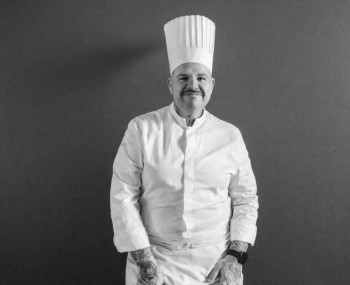
At the 67 Sky Lounge at the Principe in Forte dei Marmi, the Modena-born chef created a special lunch featuring yellowtail from The Kingfish Company, served in various ways to stunning effect.

When Versilia puts the hustle and bustle of summer behind it to return to a more intimate and cozy atmosphere, even the haute cuisine at Lux Lucis chooses to shift gears. During the fall months, the restaurant’s spaces blend seamlessly with the 67 Sky Lounge, offering a more relaxed and casual bistro experience. This is a natural reflection of the Hotel Principe Forte dei Marmi—renovated in 2011 and led by Cristina Vascellari—where Chef Valentino Cassanelli arrived at just 28 years old, armed with the discipline he honed working alongside the teams at Nobu in London and Carlo Cracco, to earn a Michelin star in 2017 and craft one of the coast’s most distinctive culinary styles.
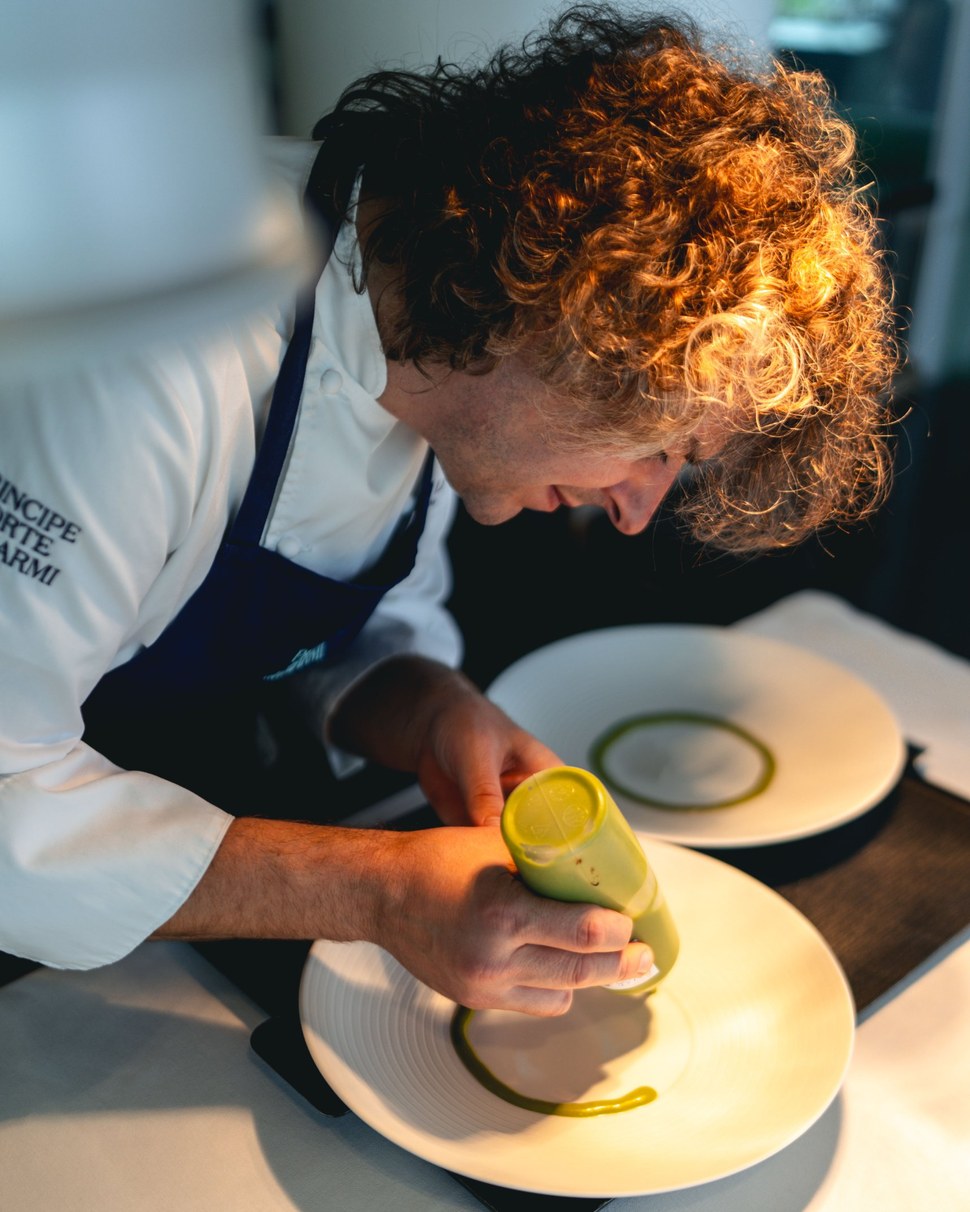
“What I want to emphasize about our approach,” the chef tells us, “is that no matter how much time a guest decides to spend with us—whether for a quick meal or a full-course dining experience—we want the experience to flow naturally, without the slightest stiffness or formality”
Cassanelli’s journey—who today shares leadership of the kitchen with Pietro Rossetti—reflects a dual geographical identity: on one hand, the Versilia Riviera where he is based; on the other, the Emilian roots of his native Modena, which lies very close as the crow flies, just beyond the Apuan ridge. In this borderland, his cuisine eschews seaside conventions and the shortcuts of predictability, navigating a fine line between intuition and in-depth study. The concepts behind the dishes take on an irregular quality, and the pairings proceed through lateral associations that are never formulaic. Often, the rehabilitation of marginal ingredients becomes the cornerstone of an unconventional exploration, in which innovation is never virtuosity for its own sake, but rather the result of practice and experimentation.
This selective attention is brought to life in the dining room through a collaborative approach to the craft, rooted in a decade-long partnership with maître d’ and sommelier Sokol Ndreko—a benchmark of measured, flawless hospitality—supported by the work of Piero Ghiri in the wine cellar. The wine list is inherently in dynamic dialogue with the dishes, as was the case during our lunch, where the pairings—delightfully harmonious—ranged from the bespoke bubbles of Champagne Essentiel by Principe from Piper-Heidsieck, the sharp, slightly mineral notes of Monteloro’s 2020 Riesling, the savory and floral character of Goretti’s Il Moggio 2024, all the way to the vibrant, lightly macerated body of Stefano Legnani’s Bamboo Road 2021 and the fruity, yet never cloying, burst of Vajra’s Moscato d’Asti 2024.
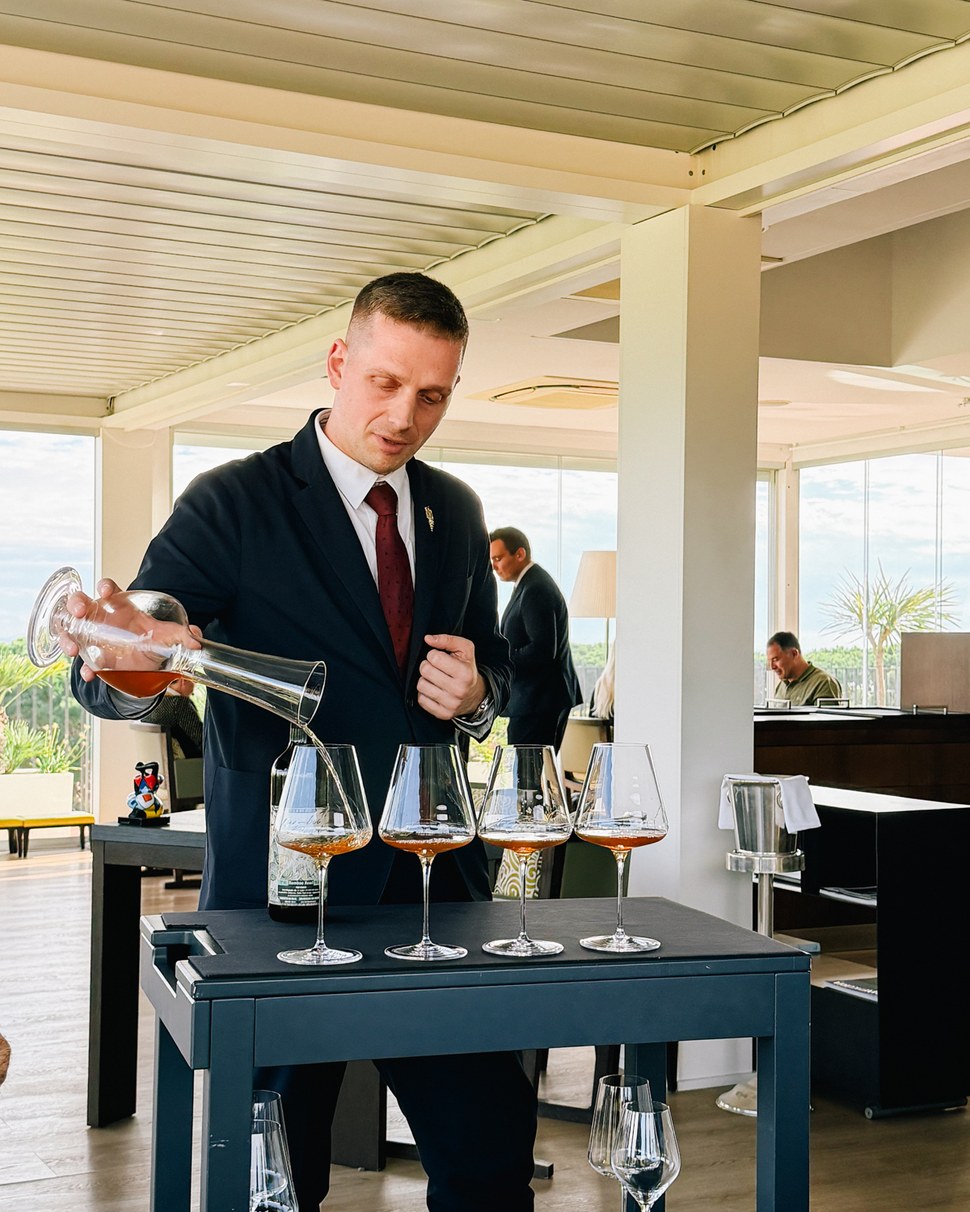
A close-knit team that allows Cassanelli to oversee the hotel’s entire culinary universe with the same selective care and consistency of vision.
The chef’s stated ambition—whether for those choosing a single dish or those seated at the chef’s table—remains a light touch in execution: stripping away excess weight and technical contrivances so that haute cuisine can fulfill its most natural purpose—to give the guest an authentic sense of pleasure.
As a prelude, before diving into the heart of the menu, comes a timeless Lux Lucis classic: the Pomodorino. It reimagines the Virgin Mary as a bite-sized treat—a non-alcoholic appetizer that plays on a carefully balanced acidity and a light, crisp, and refreshing spicy kick.
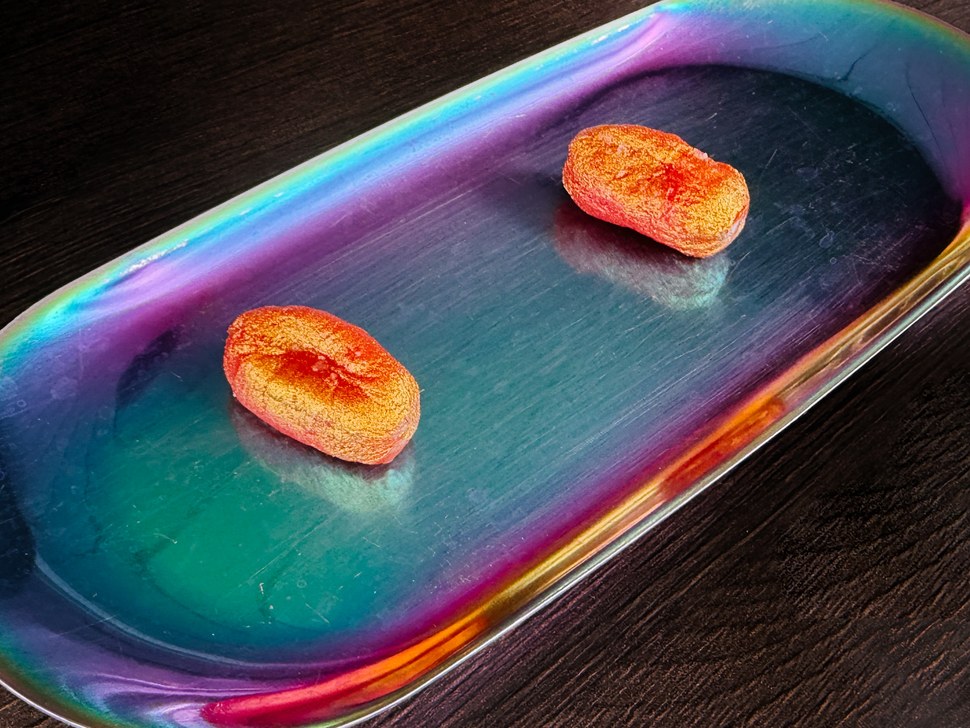
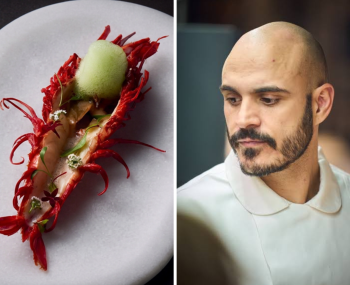
By reimagining panipuri—a famous Indian street food—in the oven to create a dry, crispy shell, Cassanelli crafts a bite in which a lightly marinated amberjack tartare pairs with the rounded flavor of a chickpea mousse and the rich, vegetable-forward notes of guacamole. Here, the choice of ingredients from the Dutch company The Kingfish Company proves particularly well-suited due to their superior health benefits. Since the fish is farm-raised on land in filtered seawater from the Eastern Scheldt—and, incidentally, without the use of antibiotics—it is naturally free of Anisakis. And as one might expect, the absence of aggressive thermal processing preserves the meat’s milky sweetness and intact texture.
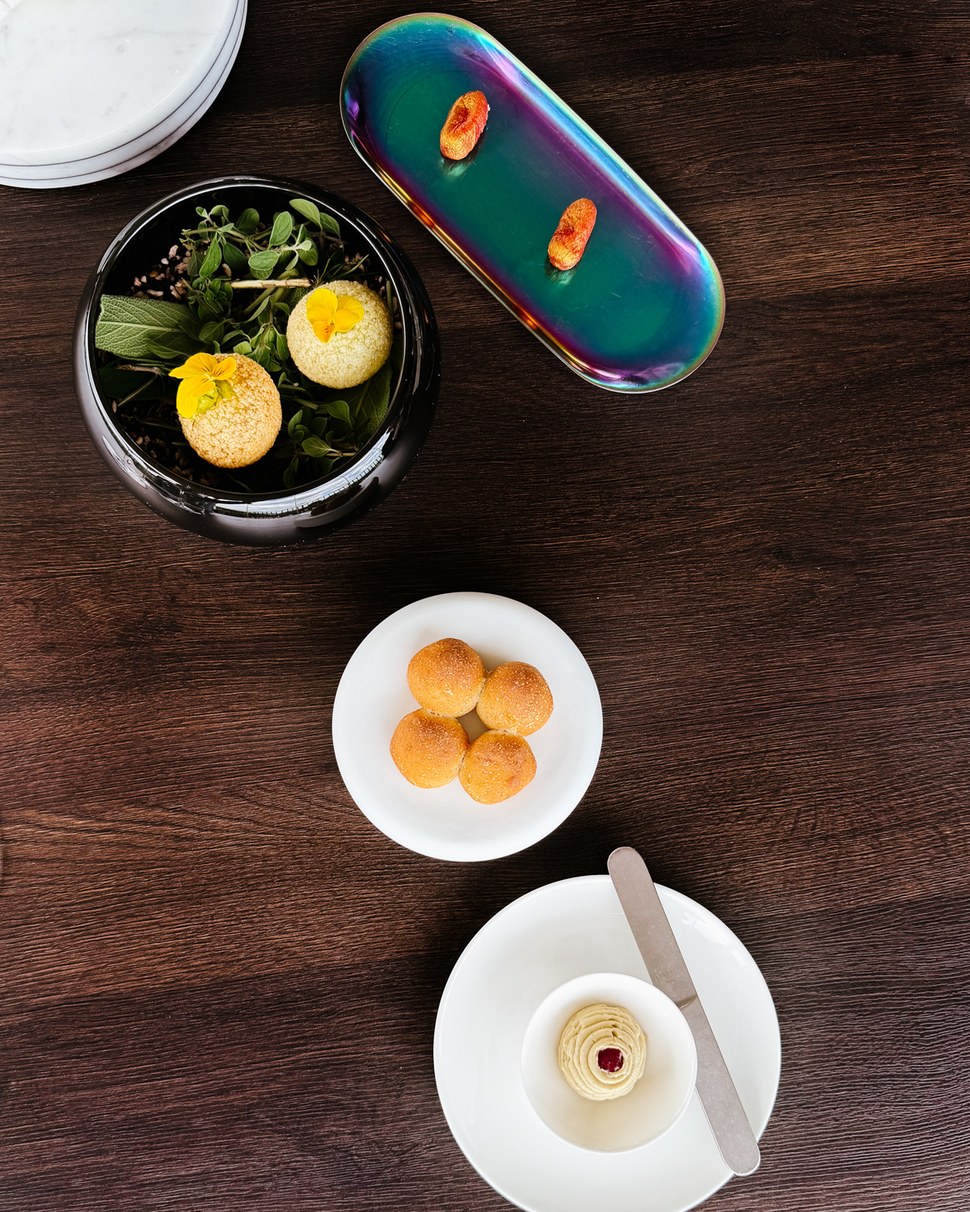
In the chapter dedicated to leavened breads, breadsticks and a focaccia are made from Verna ancient wheat flour from Molino Angeli, located just over three kilometers from the restaurant in the village of Crociale. Alongside these, the anchovy butter draws on the fruity acidity of a black cherry emulsion, while the Quercetano monocultivar extra virgin olive oil—pressed in the Versilia hinterland at the foot of the Apuan Alps—completes the tasting experience with its herbaceous and slightly spicy profile.
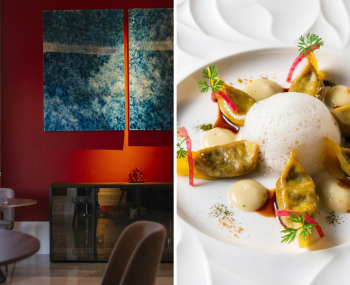
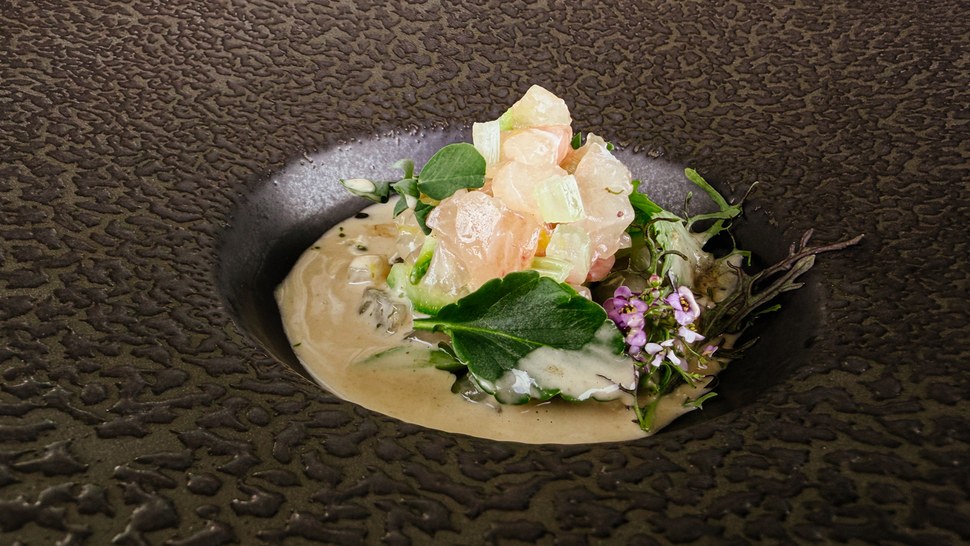
The raw amberjack contrasts the fatty tenderness of the belly with the firmer, leaner texture of the back, complemented by the zesty citrus note of the citrus marinade, the savory depth of bottarga, and fig leaves swimming in the richness of the beurre blanc. Underpinning this flavor profile is a raw ingredient of meticulous consistency, such as that of Kingfish. Farming in a RAS (Recirculating Aquaculture System), combined with the certified Ikejime Quality protocol and a logistics system that transports the fish from Zeeland to Italy in just a few hours, ensures that the flesh is firm and free from oxidative stress, capable of withstanding the marinade without losing its texture.
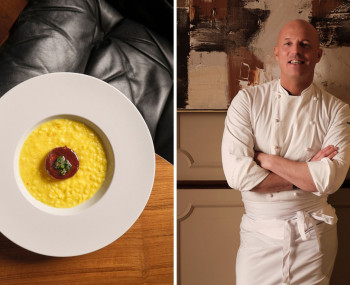
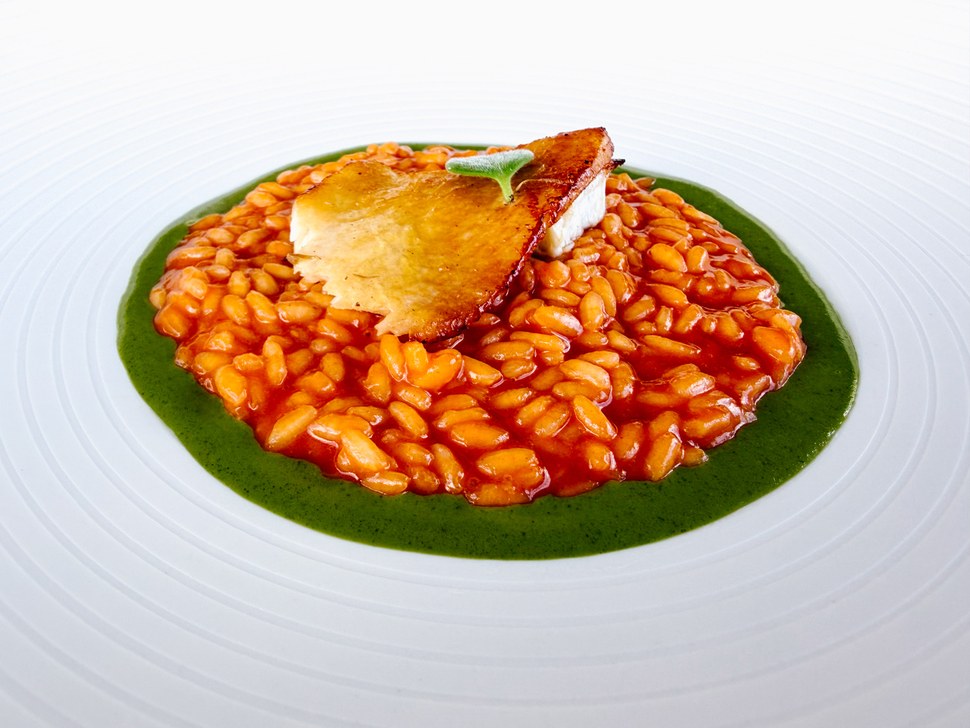
On a savory, layered base of Carnaroli rice creamed with cacciucco, the chef places a slice of ventresca marinated in citrus and sesame, glazed to the point of being almost overcooked. The texture remains impeccable thanks to the unique marbling developed by the fish through carefully calibrated diets and Kingfish’s genetic selection. Unlike wild-caught fish, which are subject to natural seasonal variations, this yellowtail offers a stable fat profile year-round. When heated, the fat melts without breaking down the muscle fibers.
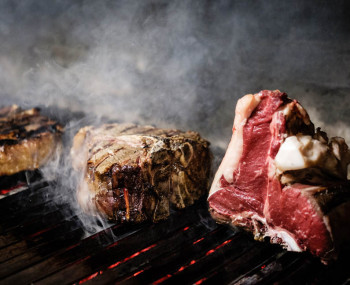
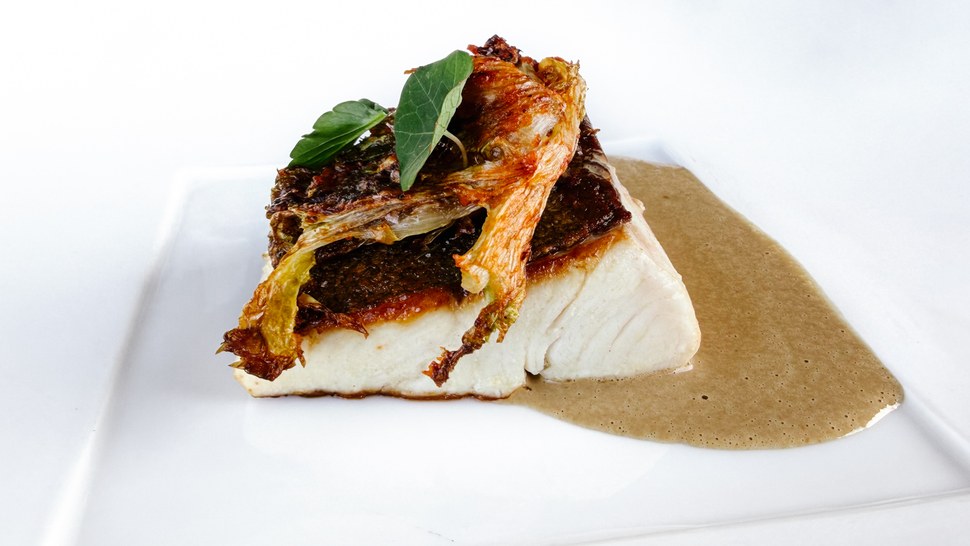
Cooking directly over the coals pits the fillet against the bitter notes of the cooked curly endive, the mild aromatic heat of the harissa, and the briny depth of the whelk sauce. This high-intensity cooking process tests the resilience of the fish’s muscle proteins. Thanks to a controlled growth cycle in tanks maintained at constant salinity and temperature, the Yellowtail Kingfish develops a dense texture and a clean flavor profile, free of any muddy undertones. Over high heat, the skin seals in the juices, and the flesh retains a sumptuous succulence.
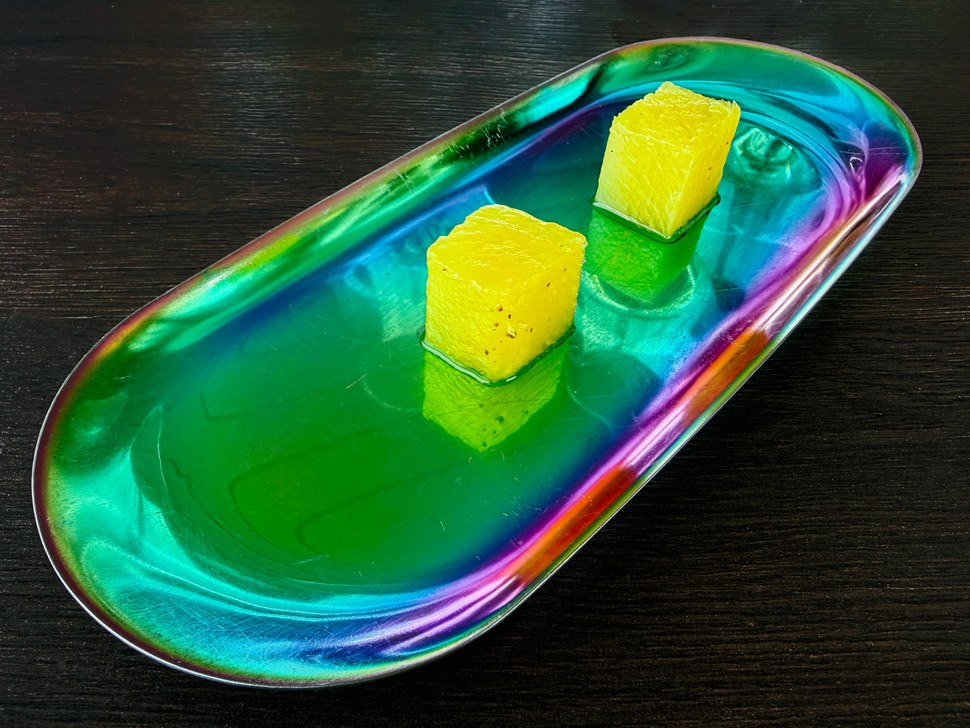
Marking the boundary between savory dishes and desserts is a pre-dessert that emphasizes simplicity and resets the palate: a crisp, fresh cube of pineapple marinated in vanilla.
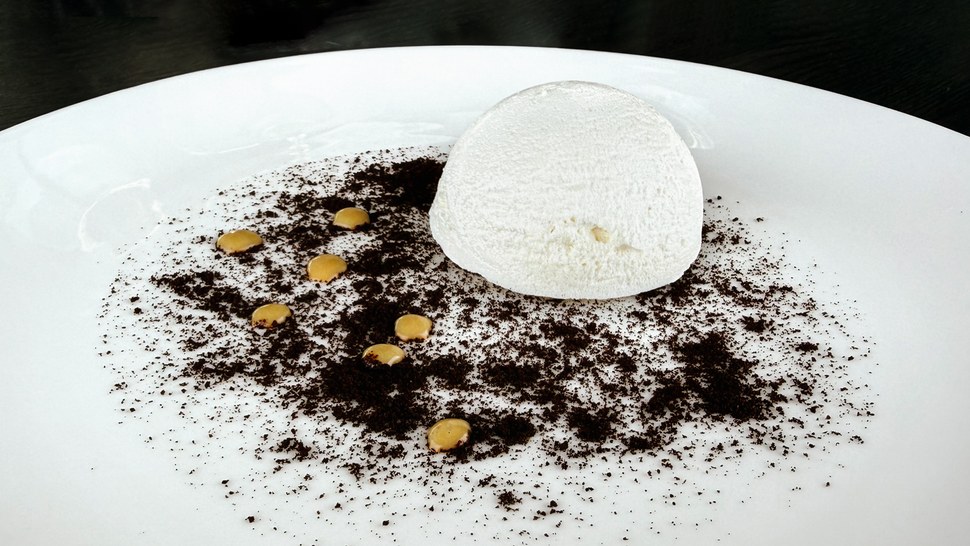
The dessert concludes the tasting by avoiding any cloying sweetness and instead striking a delightful balance between sweetness, acidity, and a subtle savory note. The perfectly crumbly texture of a tangy meringue complements the milky, slightly toasty roundness of a corn mousse, while a blackberry sorbet adds its woodsy freshness and slight astringency.
Contact Information
67 Sky Lounge | Principe Forte dei Marmi
Viale Ammiraglio Morin, 67 – 55042 Forte dei Marmi (LU)
Phone: +39 0584 783636
Website: principefortedeimarmi.com