Producing milk proteins and meat in a laboratory is technically possible, but research from the Catholic University of Piacenza points to limitations in yields, high energy consumption, and difficulties in producing them on an industrial scale.
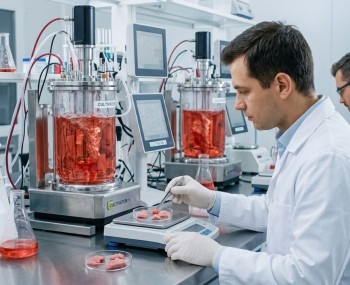
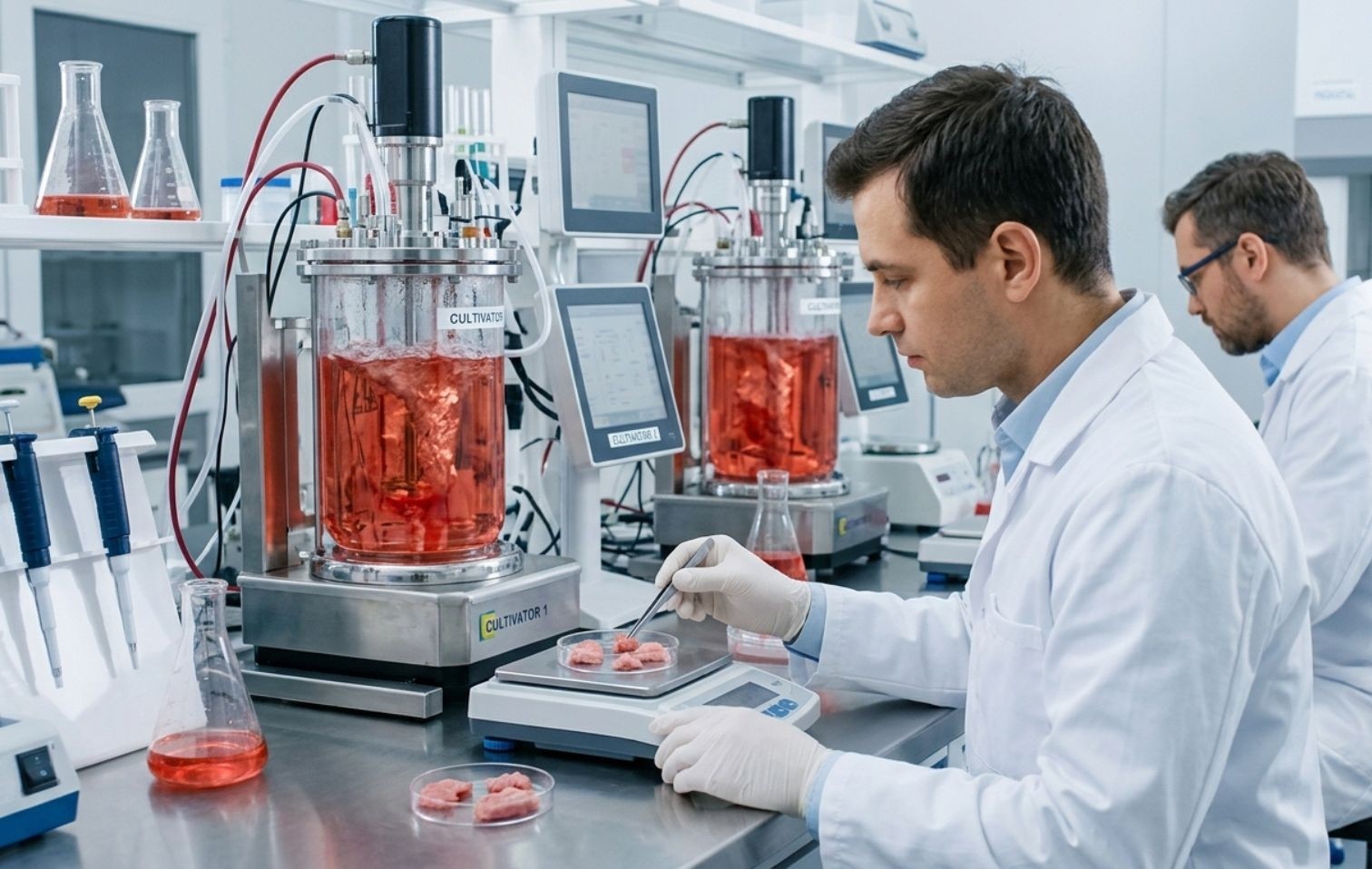
Producing milk proteins and meat in the laboratory is possible, but transforming these technologies into efficient and sustainable production systems remains an ongoing challenge. This is the conclusion of a study conducted by the Catholic University of the Sacred Heart, Piacenza campus, presented during the conference “Lab-Grown Food: Risks to Health and the Environment” at the Ministry of Agriculture. The research examined two distinct approaches—precision fermentation and in vitro cultured meat—highlighting their technical and economic challenges.
Milk Proteins: Production Is Still Limited
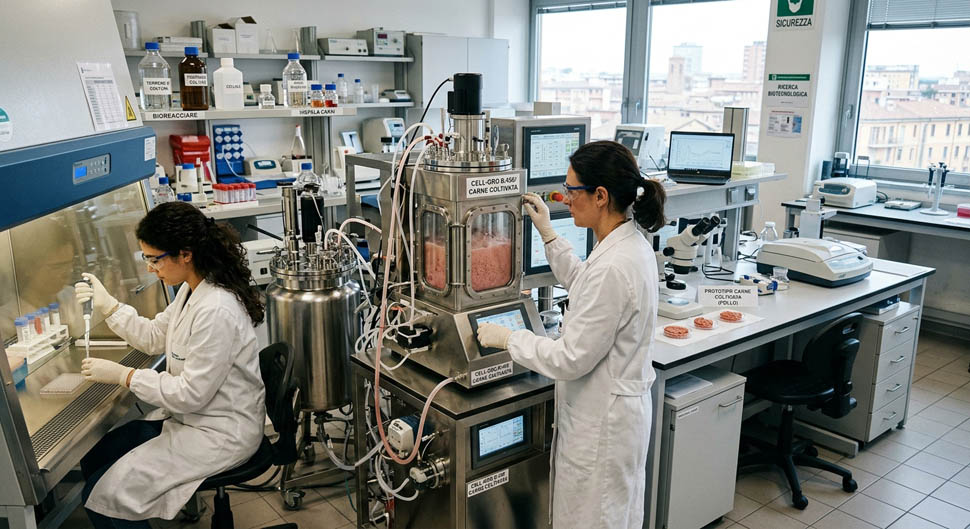
Precision fermentation uses microorganisms to produce specific molecules, including proteins naturally found in milk. Among these is beta-casein, one of the protein components of cow’s milk. In the tests analyzed by the study, conducted using the yeast Komagataella phaffii, beta-casein production reached only 6 milligrams per liter of culture. This figure highlights the difficulties in achieving yields sufficient to envision a competitive industrial application.
There is also a substantial difference between producing a single protein and reproducing the characteristics of milk. Milk is a complex food in which different components contribute to its nutritional profile and organoleptic properties. Obtaining an isolated molecule, therefore, is not the same as recreating the food in its entirety.
The research also points to high energy consumption, a factor that affects the assessment of the process’s costs and environmental impact. To understand the potential of precision fermentation, it is therefore necessary to consider not only the possibility of obtaining the desired proteins, but also the resources required to produce them in the quantities demanded by the market.
Cultured meat: the challenge lies in reproducing tissues
For cultured meat, the research identifies different challenges. The technology relies on growing animal cells under controlled conditions, with the goal of producing tissues for food without resorting to conventional methods of livestock farming and slaughter. According to the study, observed productivity differs from that predicted by certain theoretical models. The study also notes a high consumption of culture media and difficulties in reproducing components such as fat and connective tissue. These elements are important because meat is not composed exclusively of muscle cells: its structure depends on the organization of different tissues, which contribute to its texture and sensory characteristics. Reproducing a product with properties comparable to those of conventional meat therefore requires addressing challenges that go beyond cell growth. The gap between experimentation and industrial production, in this case, concerns both the ability to produce adequate quantities and the ability to recreate a complex structure. The results achieved in the laboratory are not, on their own, sufficient to determine whether the system can operate continuously on a commercial scale.
Food Safety: The Call for Further Testing
The conference also addressed issues related to the safety of novel foods. Antonio Gasbarrini, president of the Scientific Committee of the Aletheia Foundation, emphasized the need to thoroughly investigate the health effects through appropriate studies. “Without mandatory clinical and preclinical studies, it will be very difficult to determine whether lab-grown cell-based foods are safe for public health,” stated Gasbarrini. Safety assessment is a distinct issue from that of productivity: it concerns the evidence needed to establish whether a food can be consumed without unacceptable risks. The characteristics of these new products and the processes used to produce them therefore require specific scientific testing. Participants in the discussion included, among others, Minister of Agriculture Francesco Lollobrigida; Luigi Lucini, dean of the Faculty at the Catholic University; Pier Sandro Cocconcelli, full professor of Food Microbiology and Emerging Risks; and Guendalina Graffigna, full professor of Consumer and Health Psychology at the same university. Also present were nutritionist Elisabetta Bernardi and Gasbarrini himself. The results presented in Piacenza provide a snapshot of the current state of the analyzed technologies, highlighting their limitations without ruling out possible future progress. For cultured meat and milk proteins produced through precision fermentation, the challenge remains to demonstrate that experimental results can translate into safe foods that can be produced on a large scale and practically utilized in the food supply chain.