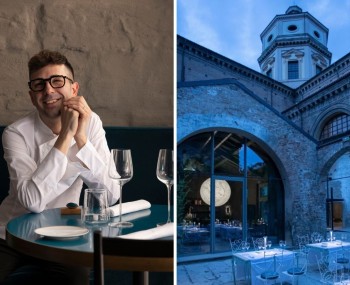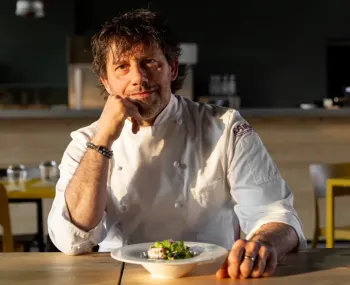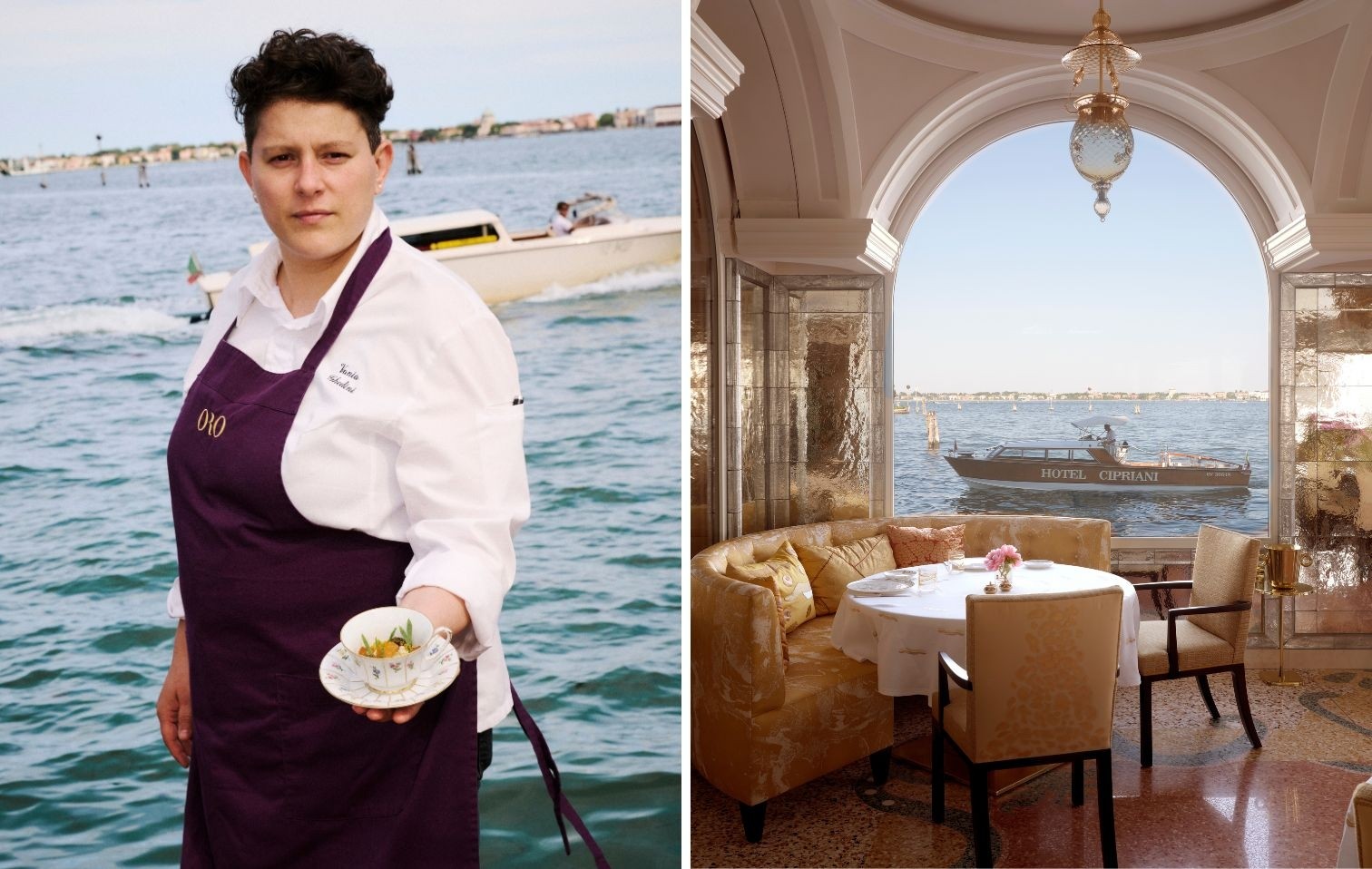
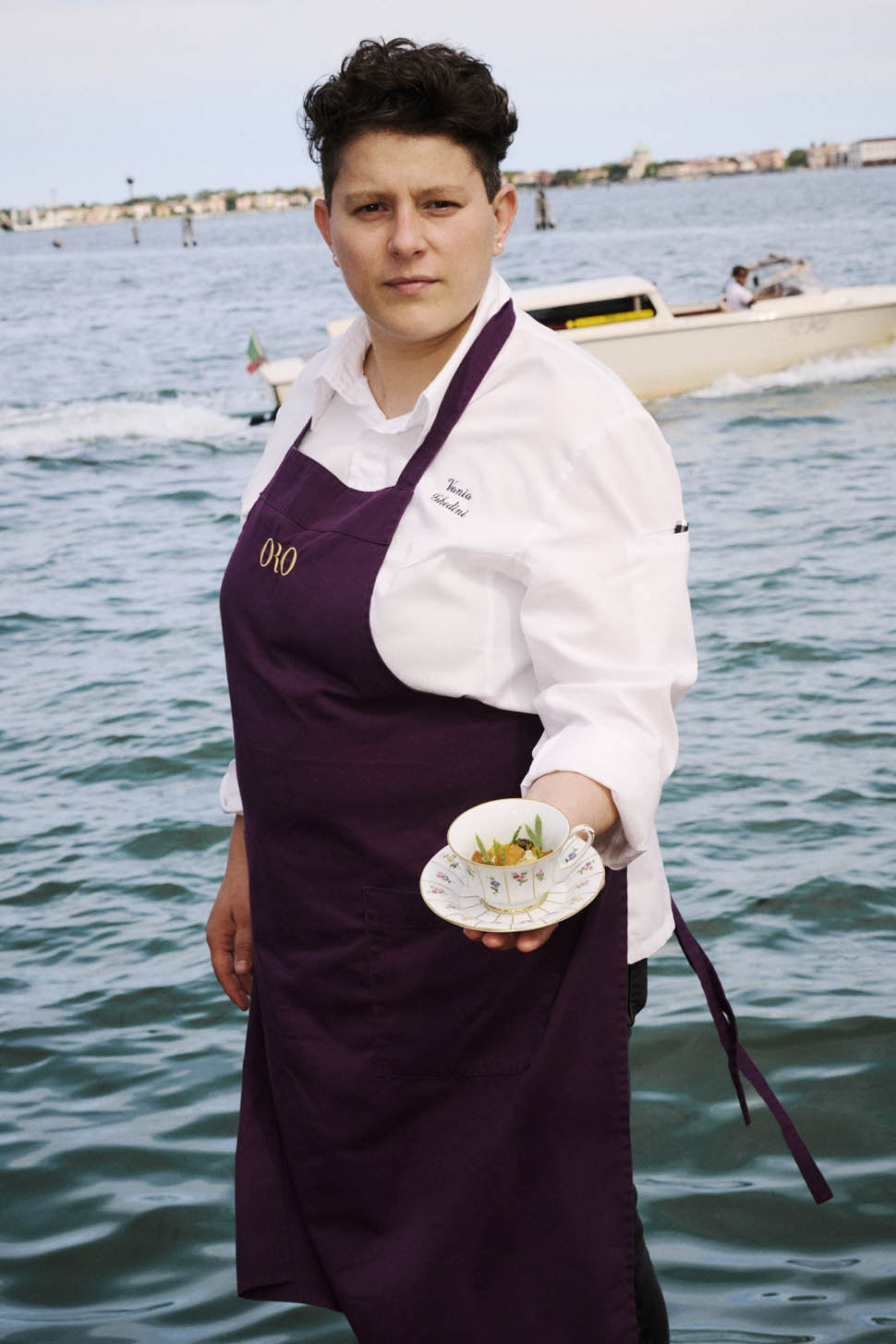
Vania Ghedini’s menu sequence draws a connection between the Venetian landscape and her personal history: the chef joined Oro in 2024, under the culinary creative direction of Massimo Bottura; it’s a pairing that works, because the latter’s fame is complemented by the former’s highly distinctive style.
The Hotel
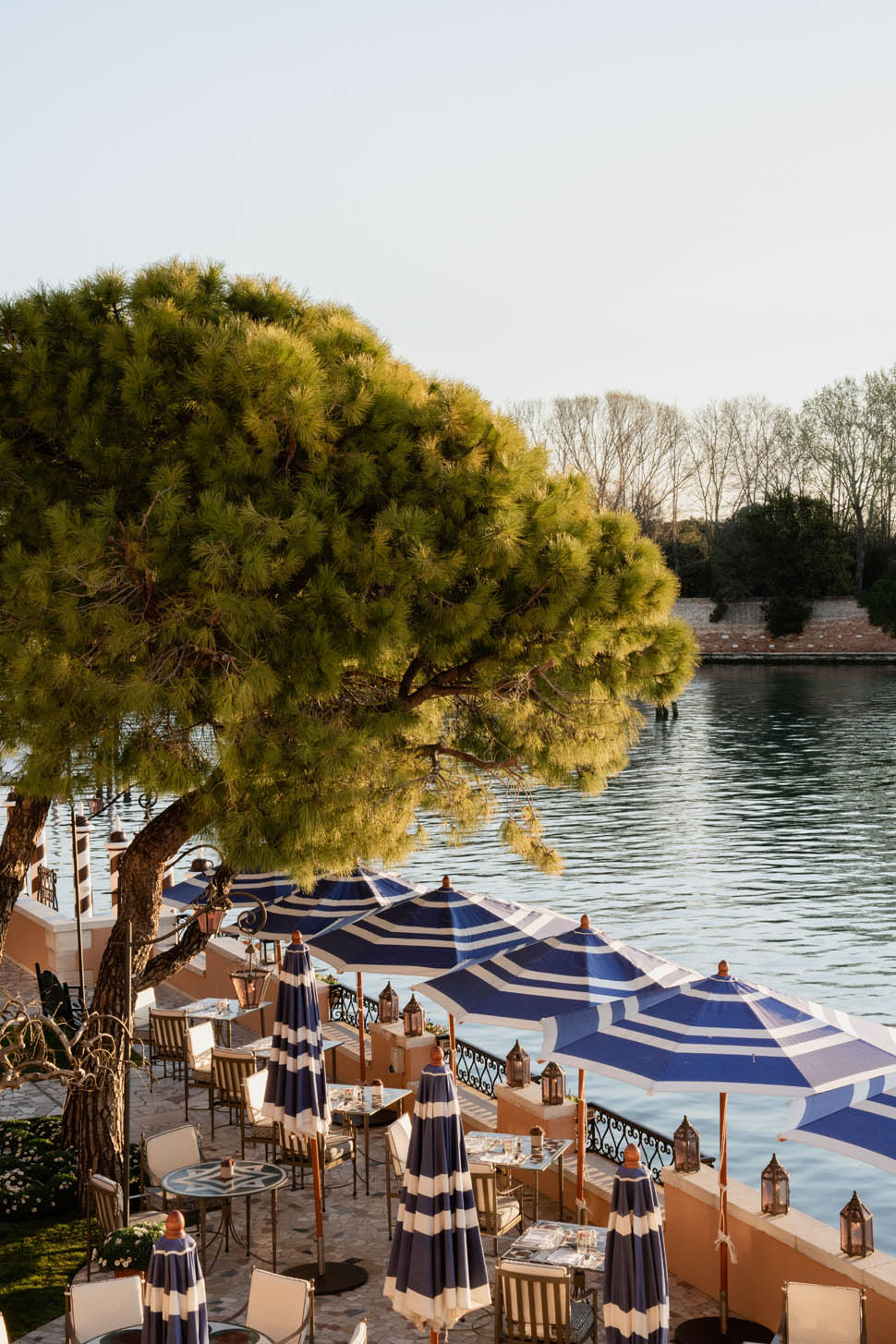
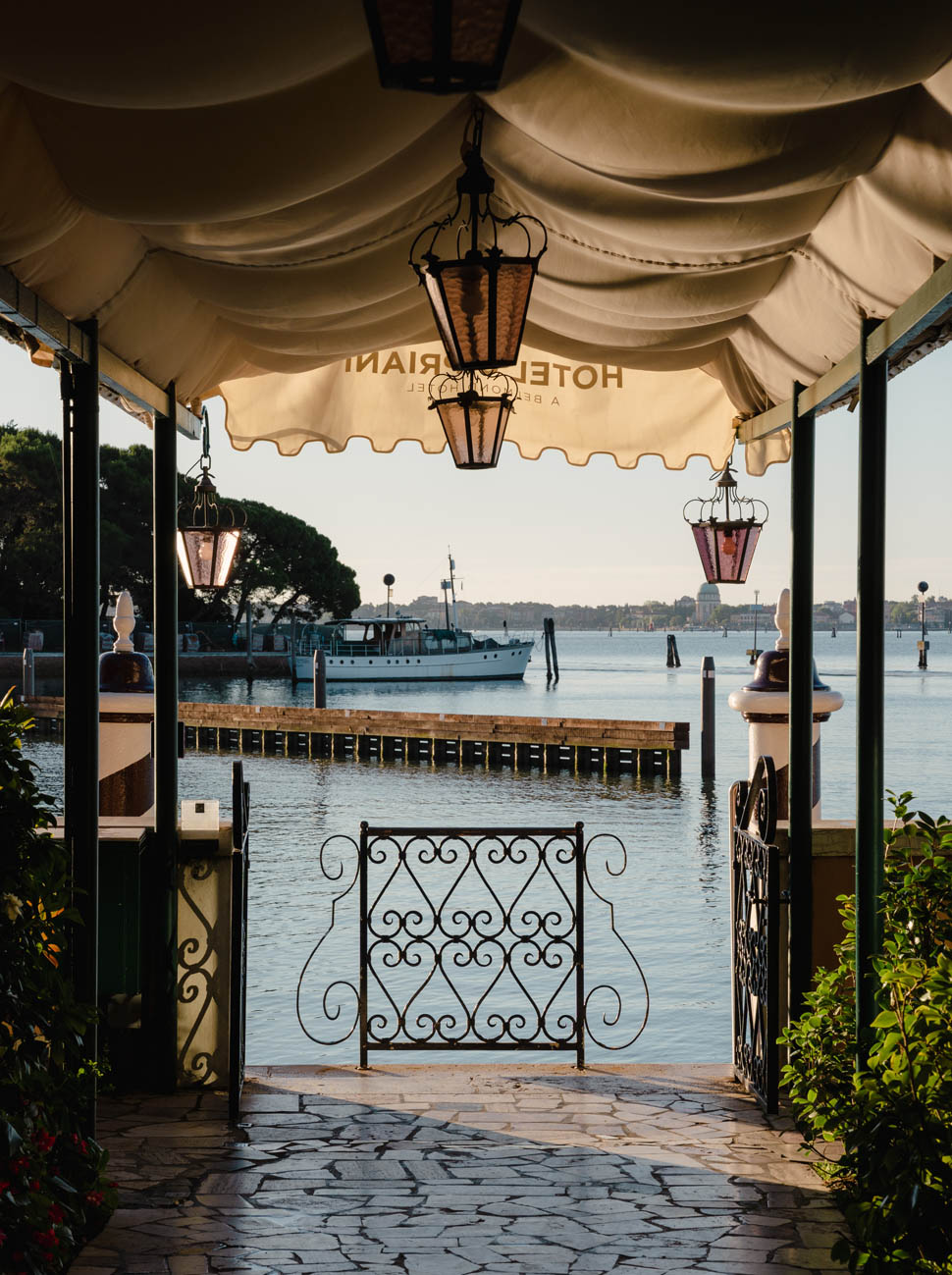
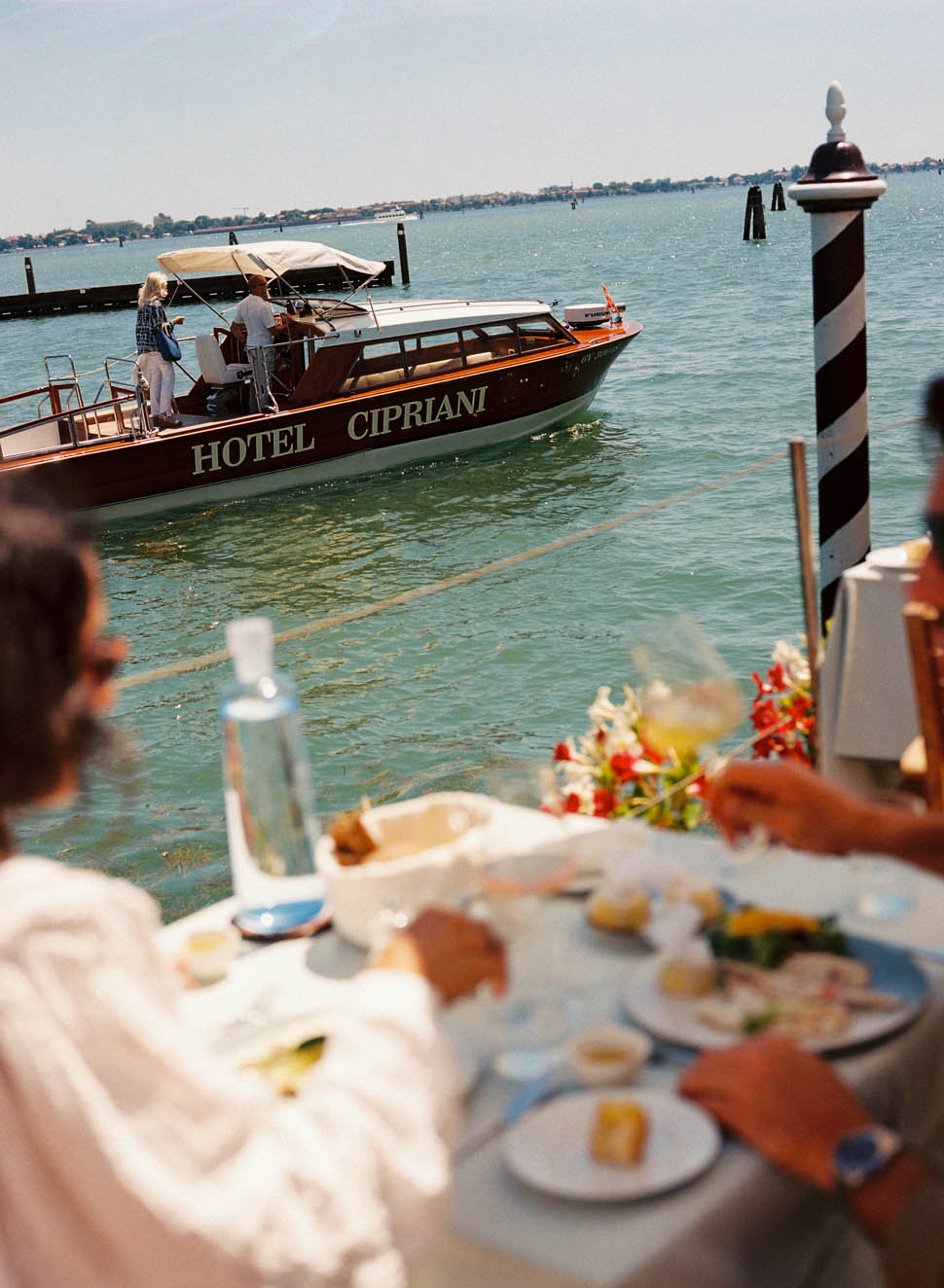
Just a few minutes by water separate San Marco from the tip of Giudecca, yet once you dock at the Cipriani’s small pier, the city seems to take on a whole new dimension. Venice remains right before your eyes, very close by, but at the same time, the spaces here feel more expansive; in just a few steps, you find yourself in its magnificent gardens or by the legendary, large swimming pool. One of the most brilliant insights in Venetian hospitality came from Giuseppe Cipriani, who, in 1958, opened a hotel capable of capturing the spirit of a city unlike any other in the world while offering a respite from its ceaseless swarm of tourists. And then came the movies, the big names, and the countless stories preserved in the guest book—all of which have come together to create an enduring legend that never fails to stir the soul.
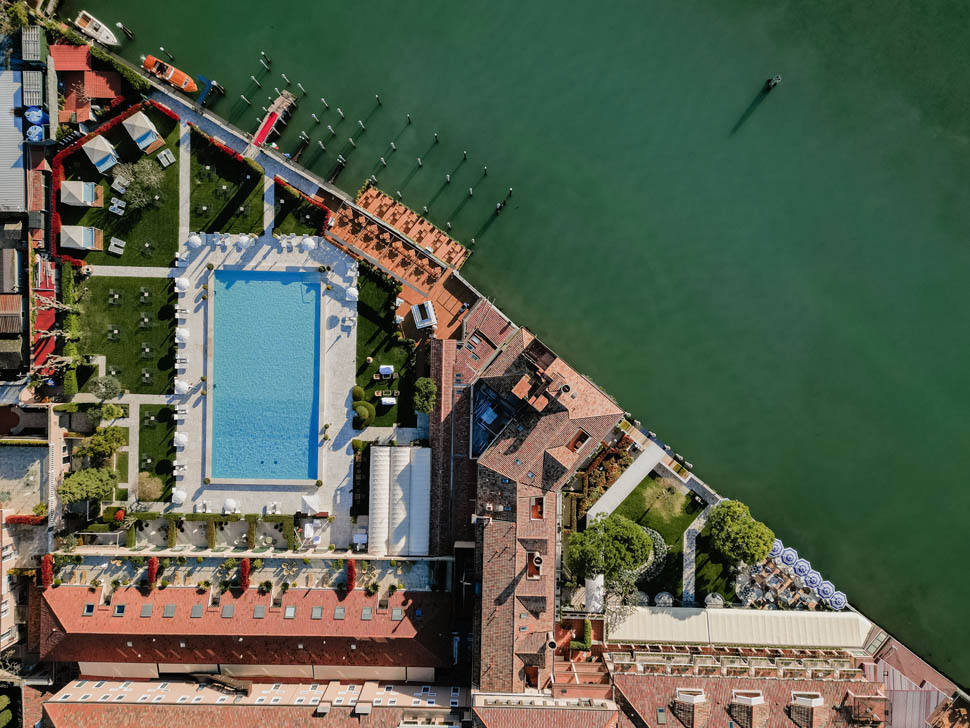
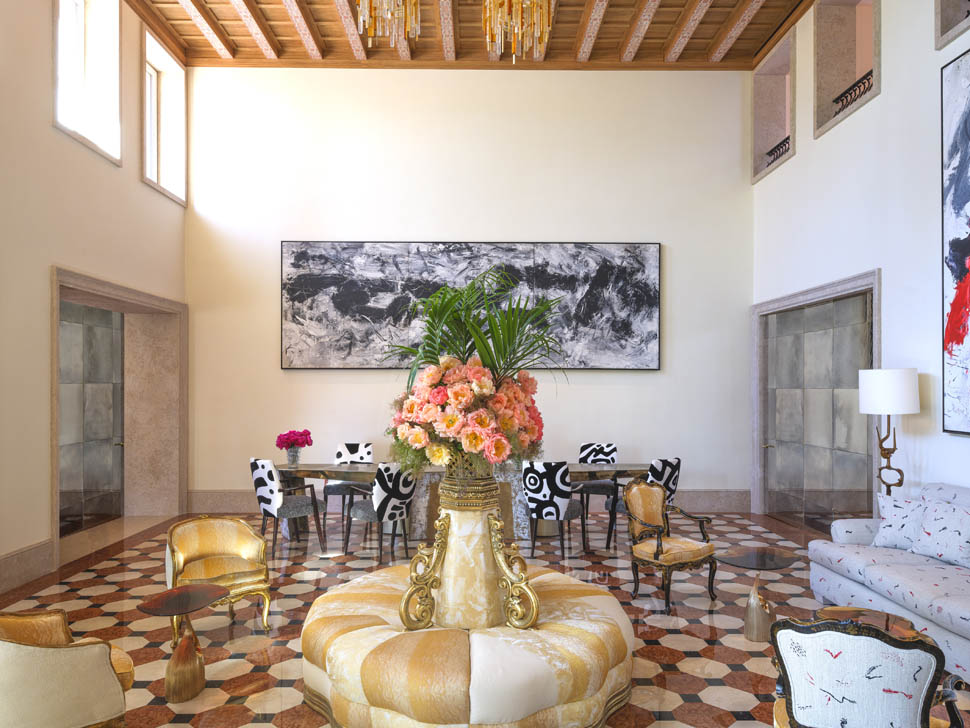
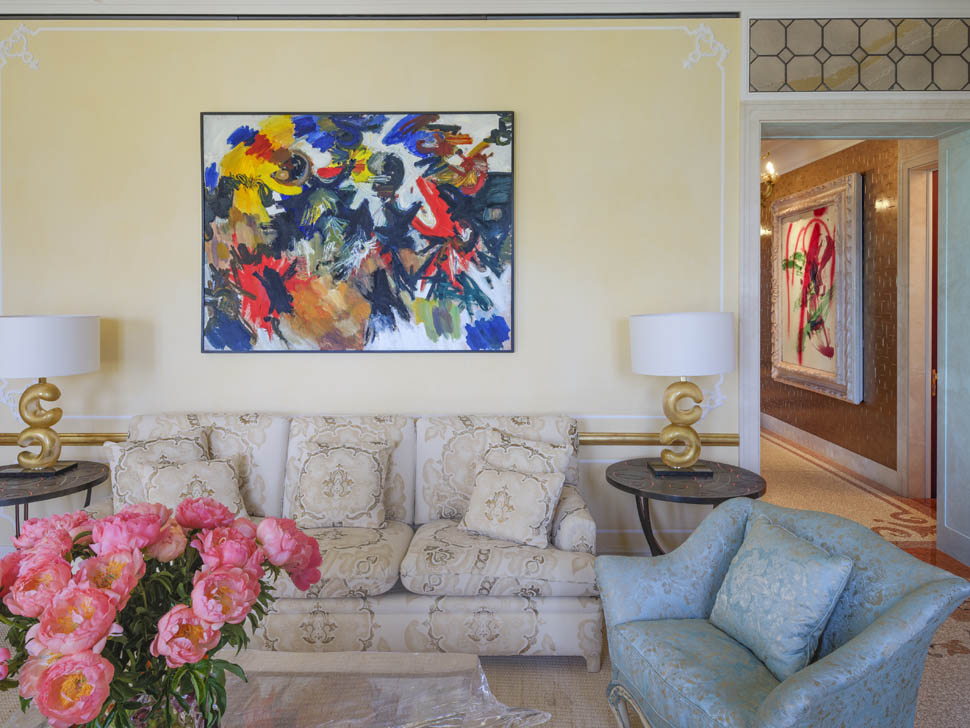
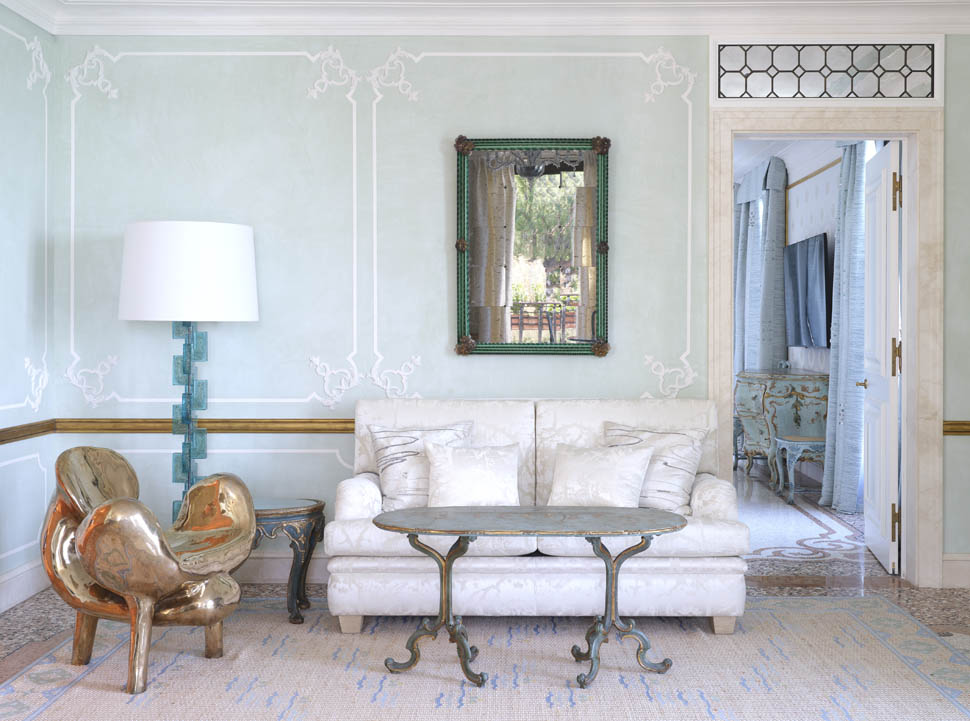
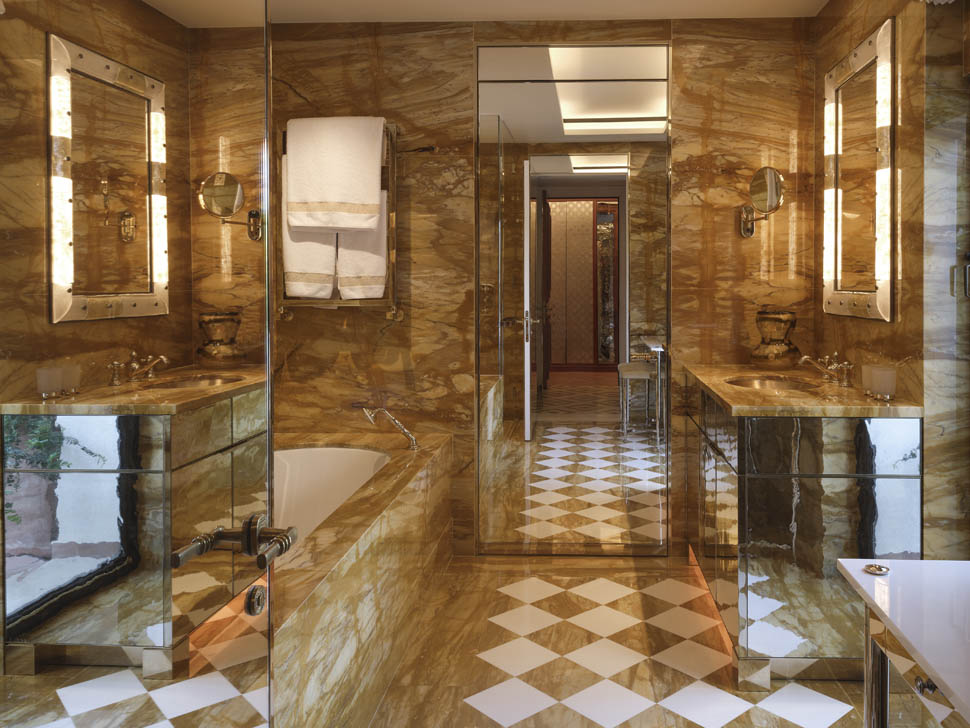
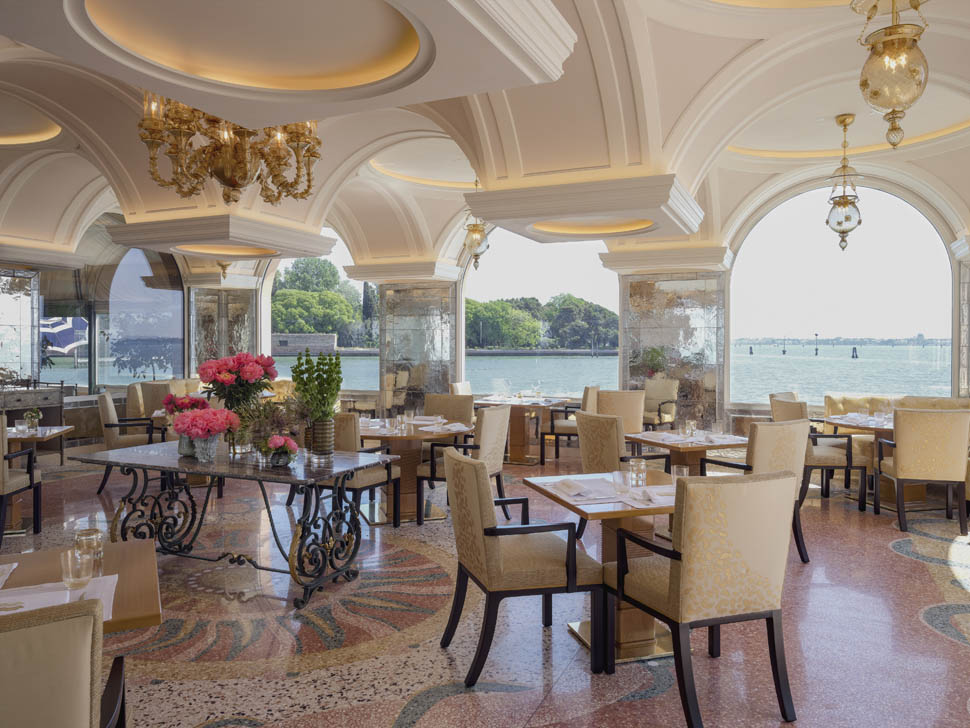
Now part of Belmond, the Cipriani is entering a new chapter, with its renovation project entrusted to Peter Marino, which is proceeding in phases, weaving together Venetian heritage, memories of the “Dolce Vita” era, and contemporary art. Following the new, sumptuous double-height lobby and the thirteen renovated rooms and suites in the first phase of 2025, 2026 brought the renovation of the Oro restaurant and Venice’s first Dior Spa, which opened on July 15: spread over two levels, with five treatment rooms, it overlooks the Casanova Gardens and the pool.
The restaurant philosophy, concepts, and projects
Throughout this journey, dining continues to play a central role. At the Cip’s Club, on the terrace suspended over the water with a view of St. Mark’s, Chef Roberto Gatto offers exquisite cuisine featuring Venetian classics reimagined with a contemporary twist in an informal atmosphere. Oro, a Michelin-starred restaurant, opens with the hotel’s season and serves dinner; in 2026, it expanded its offerings to include lunch with Oro Luce, featuring a two-, three-, or four-course menu. Its culinary identity is shaped by Vania Ghedini, who joined in 2024 after five years at Sesamo at the Royal Mansour in Marrakech with the Alajmo brothers, and by the collaboration with Massimo Bottura, who oversees the restaurant’s culinary direction.
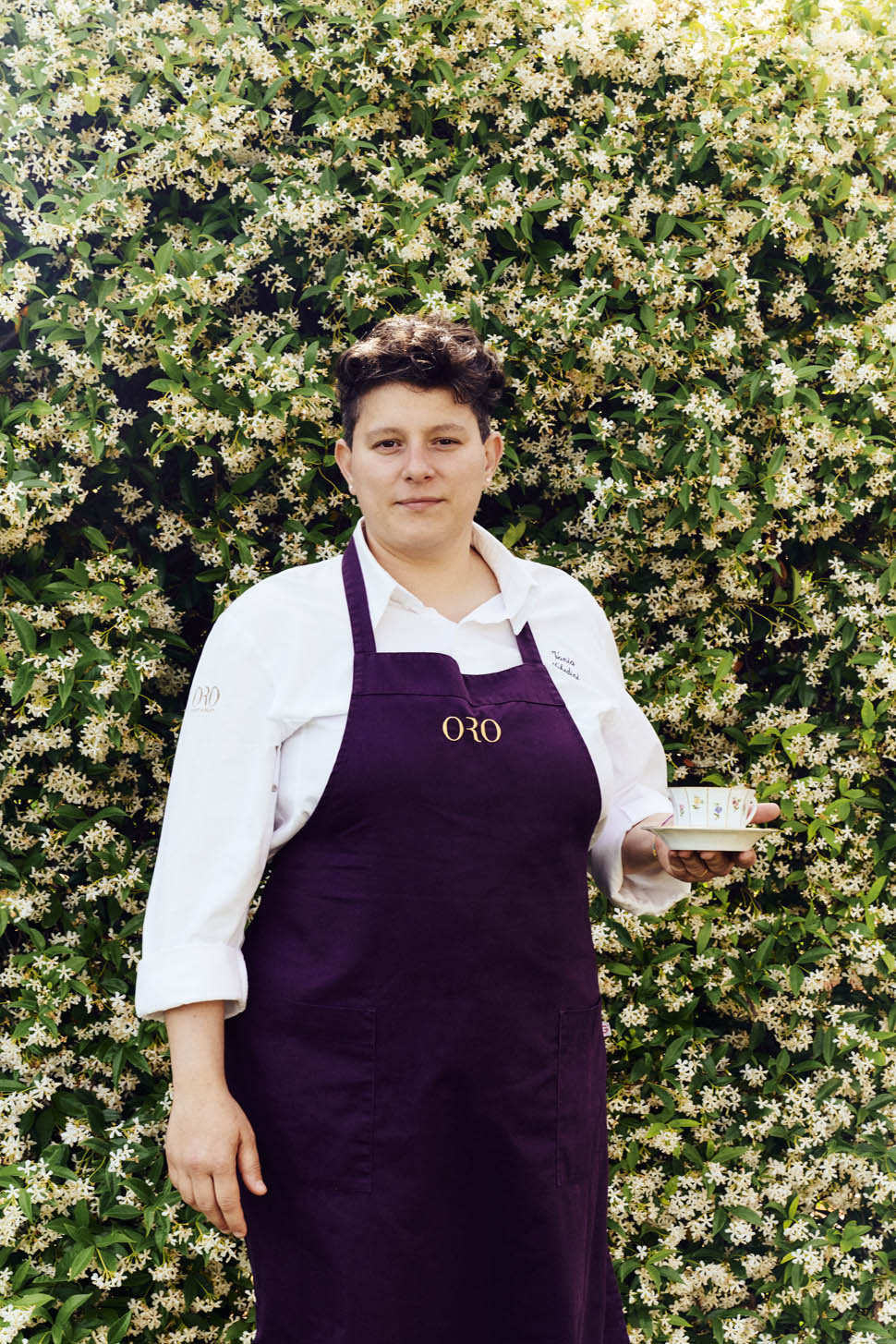
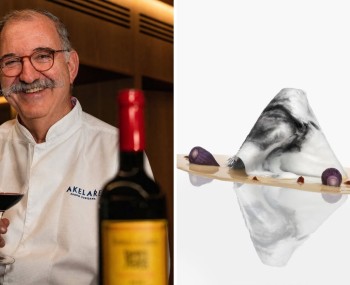
It’s a combination that works, because the latter’s fame is complemented by the former’s highly distinctive style. Vania explains: “Massimo trusts me and gives me free rein over everything. He’s never the type to say, ‘You have to make this dish or that one.’ He encourages you to keep getting better.” Their collaboration involves tastings, discussions, and suggestions—a presence that supports the work without taking over from those who run the restaurant day-to-day: “There’s always freedom in managing everything, from creating the menu to the type of service.” The Francescana Family visits at least once a month; they serve together, fine-tune the dining room details, taste new dishes, and the collaboration continues even during the months when the restaurant is closed. Bottura, for his part, returns every year and stays for a couple of days as a guest: the last time, while wandering around Venice, he sat down at two or three bàcari for an aperitif without anyone recognizing him. They realized it later and went to let her know.
Vania Ghedini and Oro’s Culinary Style
It’s interesting when Vania tells us about her experience as a woman and a mother: “I’ve never put myself in a position to say, ‘I’m a woman in the kitchen.’ I said, ‘I’m Vania, and I want to do this job.’ For me, it’s not just a job—it’s my life. I don’t have a choice. So I told myself, ‘When the time comes, it’ll happen, and I’ll make it work.’” Massimo Bottura’s call about the Venice position came just as she was in her ninth month of pregnancy, while she was still in Morocco: “At first, I told him no. I said, ‘Are you crazy? I’m about to give birth—how are we going to manage this?’” Her family encouraged her. After giving birth and moving, her new adventure began, made possible by a strong support network.
“With the help of my husband, my parents, and certainly my workplace as well, because the Cipriani Hotel welcomed us like family.” Although she doesn’t want to turn her experience into a universal rule: “Obviously, there are circumstances that work in my favor.” Her husband works at the hotel, handling room service in the morning, while she’s busy in the evening. There are preschool schedules, afternoons to organize, and the juggling act that makes it possible to keep everything together. “Is it complicated? Yes. But what isn’t? I just kept going day by day. And here we are.” Her years in Morocco also left her with something else—first and foremost, the opposite of a common stereotype: at the Royal Mansour, out of 650 employees, more than half were women, and there, Vania says she truly saw how much influence a woman can have in a kitchen and within a hotel. Then there was a different way of relating to others. “I had to navigate a different culture, so I had to tone down certain aspects of my personality to be able to communicate.” She says she used to be more reserved, to the point of being hard to read. “I was like a hedgehog.” Now things have changed: “Anyone who talks to me, anyone who comes here and has an experience, can finally see who I really am.”
His confidence comes from a long way back: from the province of Ferrara, through school, to his first kitchens—at a time when learning the chef’s craft required a long apprenticeship: “Back then there was no social media, there was nothing, so professional growth came solely from hands-on experience and what they showed you.” He learned from the seasons he spent in the same place and from the first cookbooks he’d begun to consult, starting with Santini del Pescatore’s. At Carlo Magno, in the Brescia area, she met Beppe Maffioli. Vania was sixteen and there for an internship: “Maffioli is like a second father to me. He inspired me, pushed me forward by placing his trust in me, and that allowed me to believe in this profession. From my own experience, I know there have been many people who’ve crossed paths with the wrong people and burned out.”
Her connection with the great masters has endured: first as a student and then as a professor for two years at ALMA, Vania Ghedini maintains a relationship with Luciano Tona that goes beyond mere memories of her formative years. “Before the season starts, I send him the menu.” A simple gesture, but one that clearly illustrates her understanding of her role, because growth never excludes those who helped you get started. And it’s a bond that has become part of family life: when her son was eight months old, he had dinner at Tona’s house, where Tona had prepared his signature stuffed and fried chicken wings. This is another reason why she expresses some skepticism toward the rush of those who want to collect prestigious experiences without having laid the groundwork to understand them: “If you gain experience in a top kitchen at the right time, it has value. If you do it at eighteen, when you don’t even know how to peel potatoes—as the saying goes—in my opinion, it’s useless, because you don’t have the mental maturity to understand certain processes. Then the young people realize these shortcomings, because they feel they’re missing something, and so they take a step back.”
She also enjoys talking about the province when the conversation turns to culinary clichés: she tells us about a family lunch—her uncle’s birthday—at a seafood restaurant that served enormous portions, whose owner had been one of her teachers at hospitality school: sitting next to the town’s retired mailman, she found herself defending haute cuisine against the notion that people leave restaurants like his still hungry. “Have you ever eaten at my place? Come on over, and if you really think you’ll have to go eat pizza afterward, I’ll take that into account. But I seriously doubt it.”
The Dishes
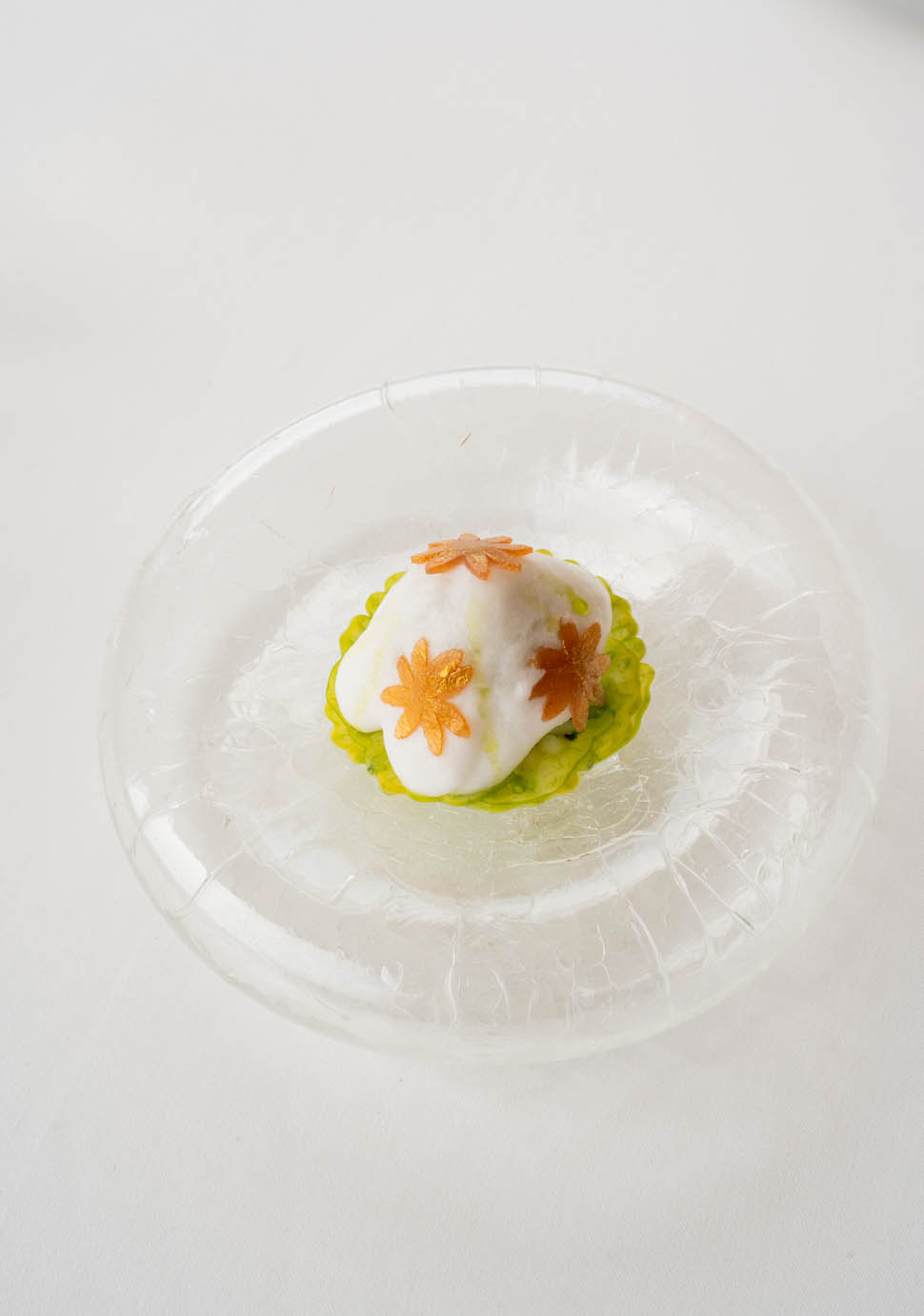
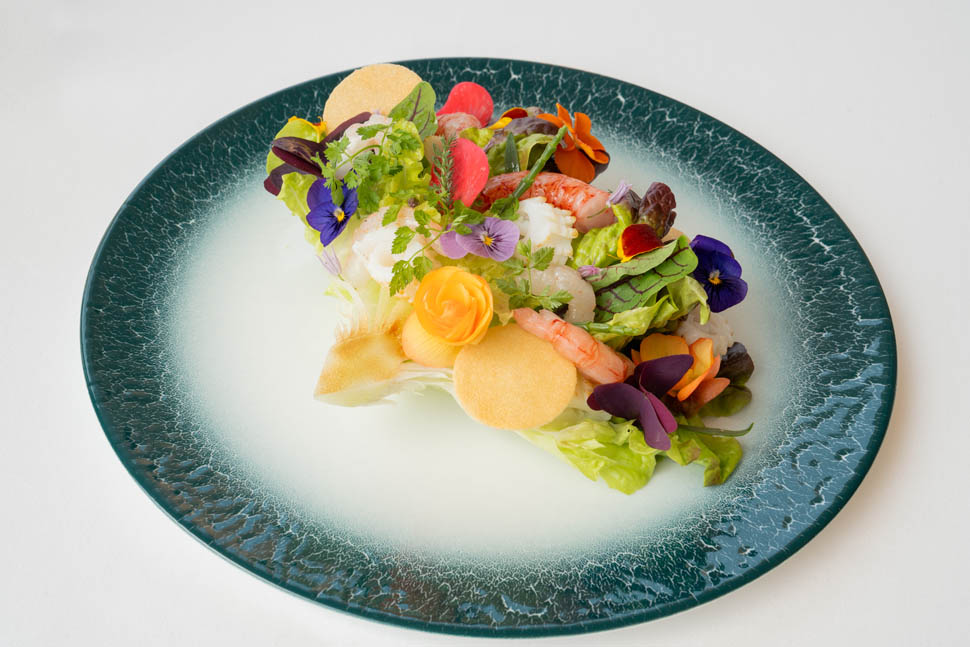
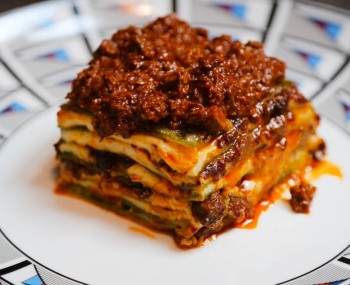
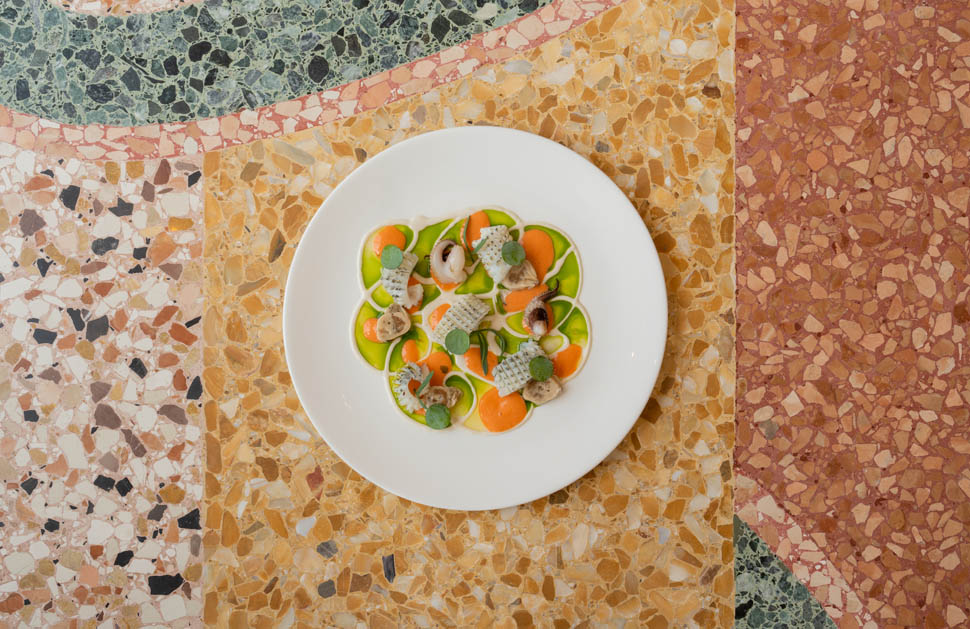
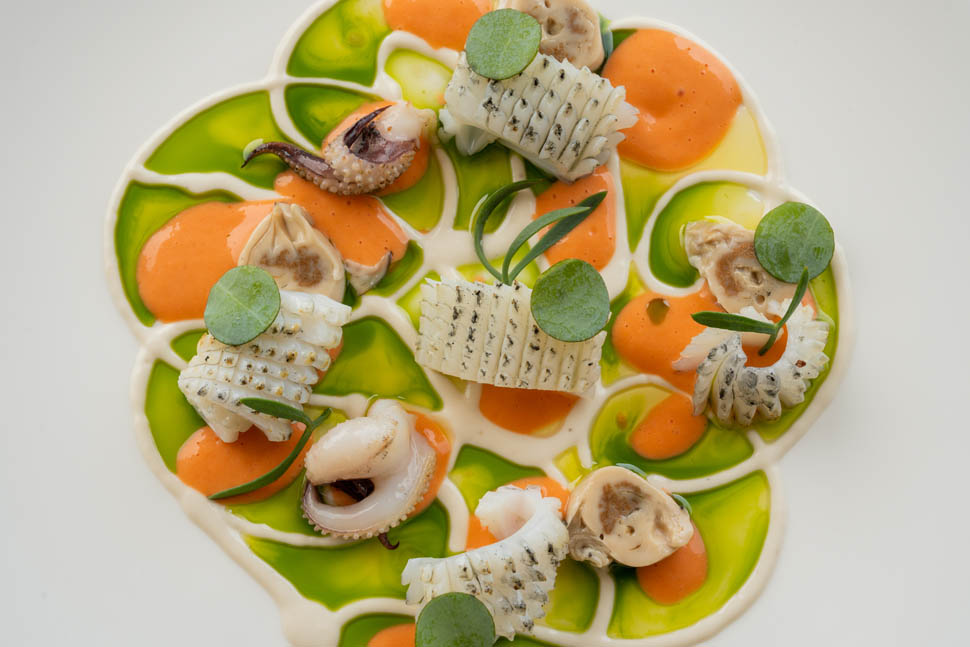
The sequence of the (remarkable) menu draws parallels between the Venetian landscape and the chef’s personal history. It begins with “Laguna,” an exceptionally elegant chawanmushi featuring blue crab, clam broth, glasswort, and caviar, a Japanese-inspired dish that serves as a vessel for ingredients evoking the various expressions of water. Next comes the roasted cuttlefish with mantis shrimp reduction and oysters, a beautiful dish of depth and intensity. The choreographed homage to Carpaccio—featuring the artist’s image rendered edible—is linked to the history of the Cipriani family and to one of the most recognizable dishes in Venetian cuisine.
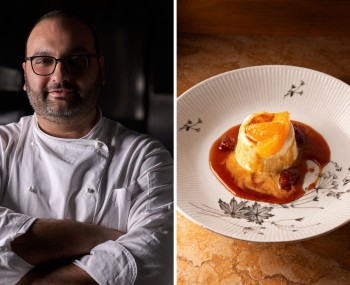
With the mouthwatering mezze maniche, served with porchetta-style guinea fowl, baby fennel, and lime, we’re transported to a delightful earthy realm. The risotto with seaweed and herb broth, cream, and horseradish is another testament to culinary excellence, combining seafood and vegetables with the harmony created by the cream’s richness and the horseradish’s sharp kick. The Ferrara-style sturgeon and caviar takes us back to the chef’s roots and to that provincial table. An excellent version of tiramisu rounds out the meal in a comforting, familiar way.
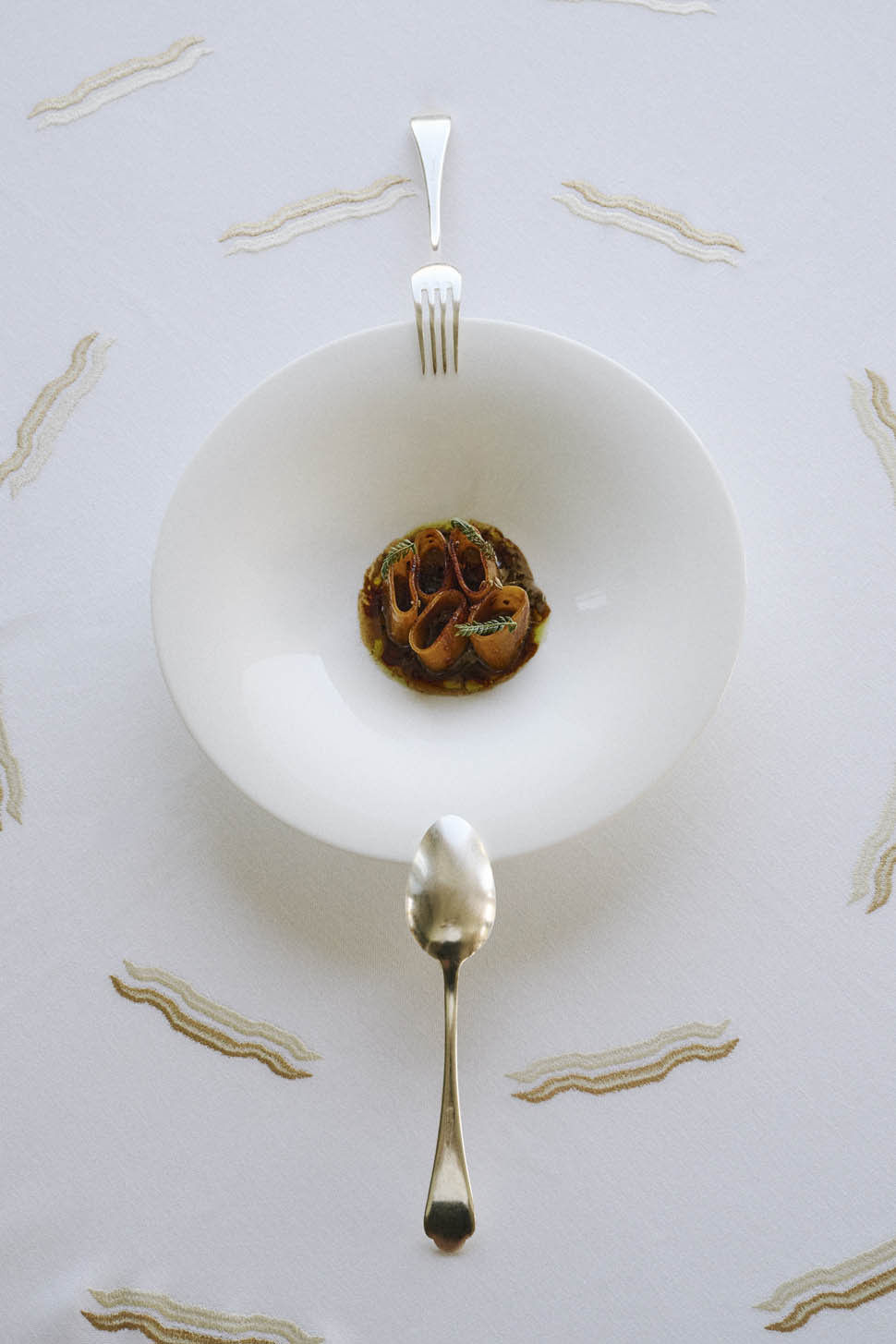
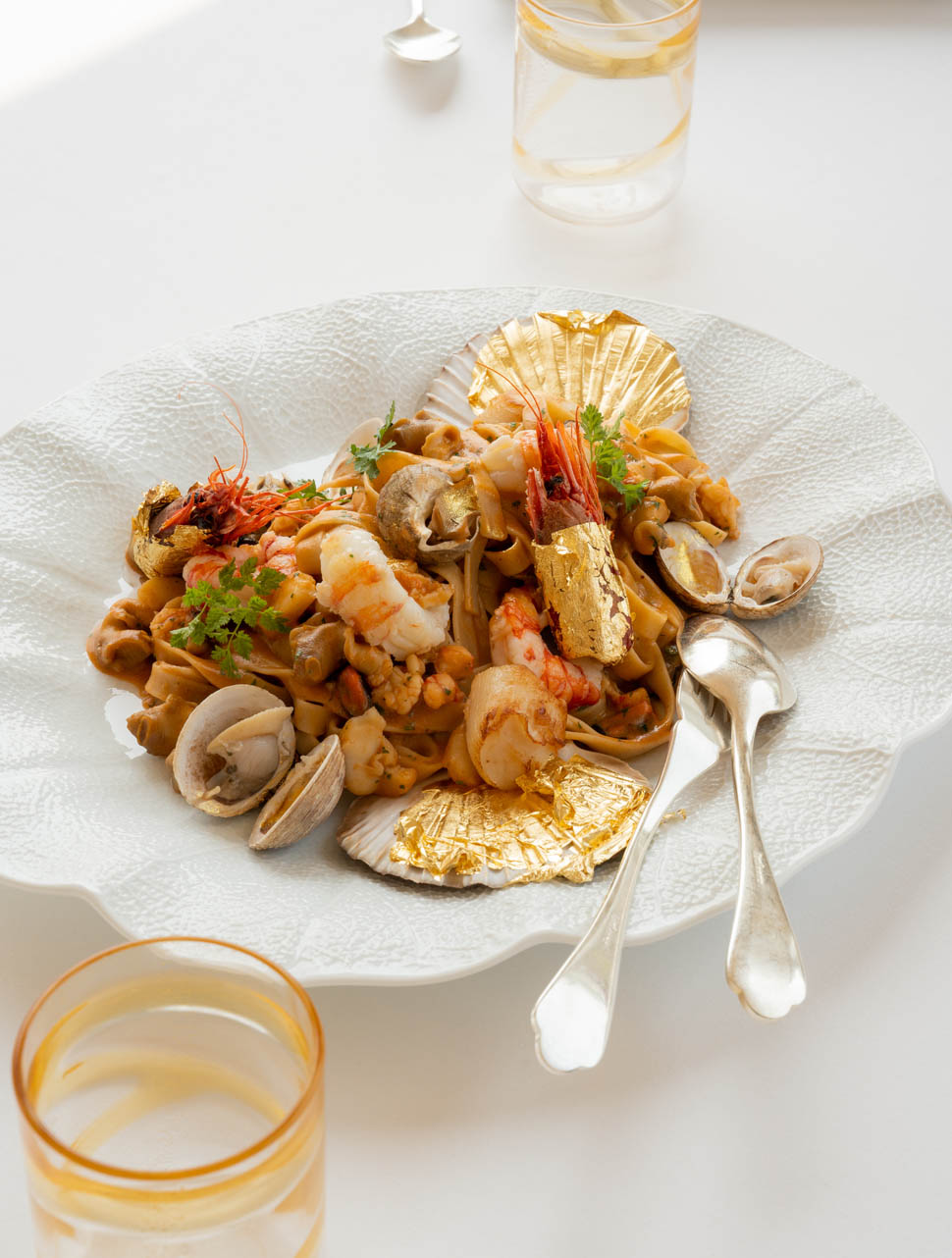
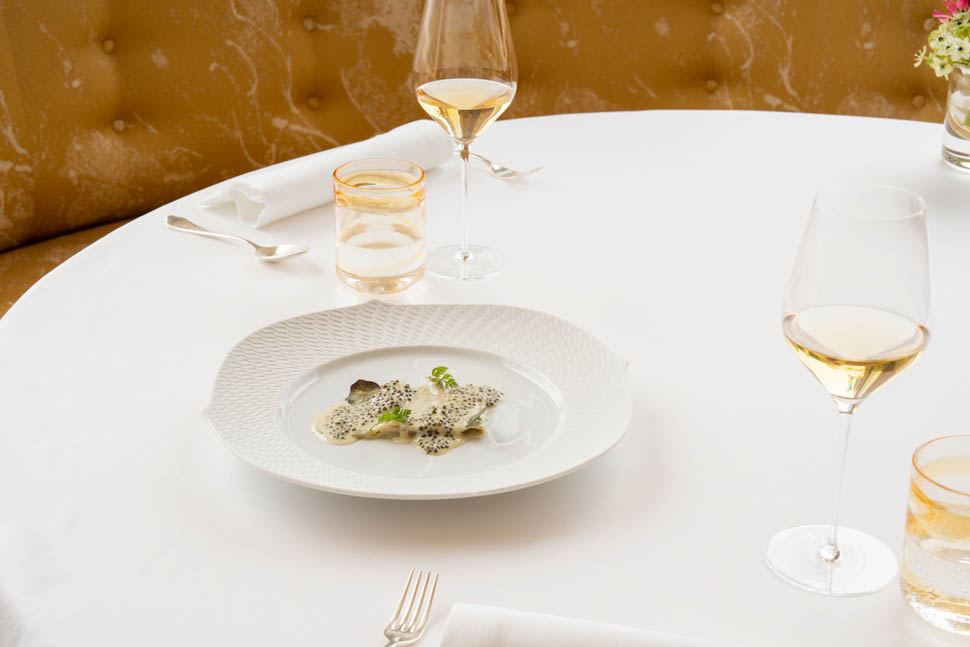
Vania Ghedini has very specific ideas about service times, which we fully share: “Personally, when I go out to eat, I can’t stand a long wait. I believe that the service and the kitchen should adapt to the pace of the diners.” A guest may want to eat more quickly or take their time: it’s the host’s job to understand that. “If you want to enjoy it, that’s great. There’s communication between the dining room and the kitchen.” Her attention to detail also stems from an awareness of how little is said about the work in the dining room. “It’s easier to highlight the dishes, because that’s what attracts the most attention. You see the dish; you can imagine it. To describe a service, on the other hand, you have to experience it. We have a wonderful team, both in the dining room and in the kitchen. They’re all very young people who are eager to work and learn and who have a lot of potential for growth.”
Vania isn’t the type to follow rigid rules. She explains this by recallinga Vicenza-style sea bass served in a previous season: there was the fish, the sauce, the onion—all the elements of the dish—but she wasn’t convinced by the traditional way of plating that slice. “Why do I have to serve this sea bass exactly this way?”. The answer came while observing the preparation from which the sauce takes its name: “The salt cod flakes apart, right? Great, then let’s flake the sea bass too and serve it as if it were salt cod.”When it came time to let Massimo Bottura taste it, she had some doubts: “I told myself: now he’s going to kill me.” Instead, he loved it. “So, if I can stray from the path, I do.” On her back is a tattoo she got years ago, right here in Venice. A labyrinth, with a kitchen at the center and a figure that has carved a path through the walls to reach it. Today, she herself sees something in it that she couldn’t have known back then: “In the end, it’s a true reflection of what actually happened in my life.”
Oro Restaurant—Belmond Hotel Cipriani
Belmond Hotel, Cipriani Giudecca, 10, 30133 Venice VE
Phone: 041 240801