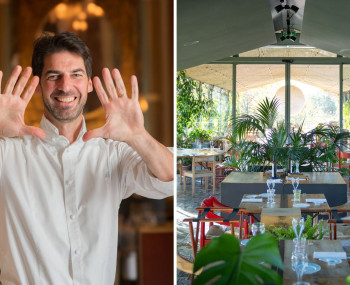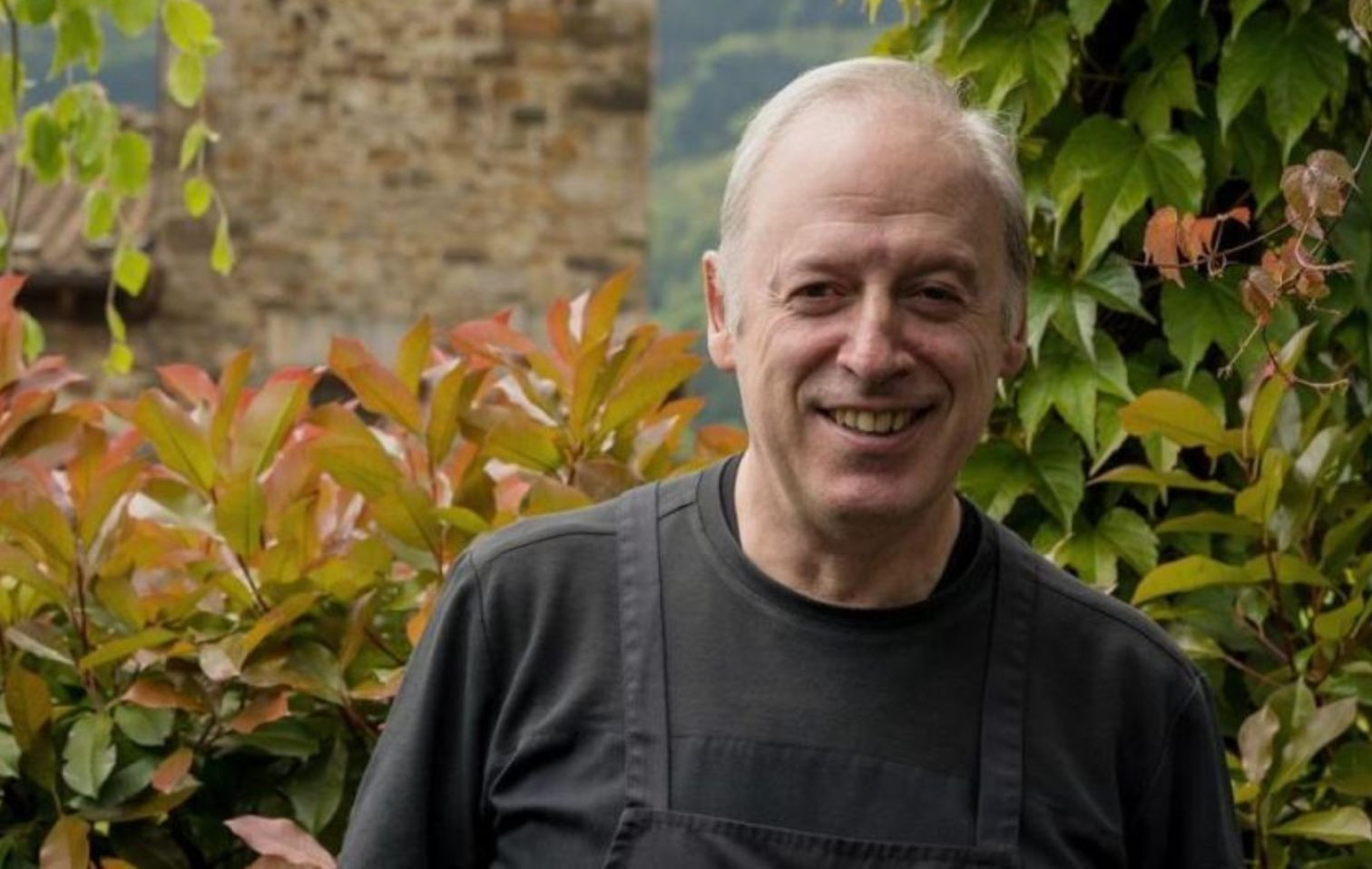
After claiming the top spot on The World's 50 Best Restaurants list, Bittor Arginzoniz returns to the grill at Axpe with no intention of changing course. His priority remains the customer: “What good is having three stars or being number one if my restaurant is empty?”
A thousand reservation requests a day—sometimes even a few more. And just forty people who can actually be seated. That’s the paradox of Asador Etxebarri, Bittor Arginzoniz’s restaurant in Axpe, in the Basque Country, which has been named the world’s number one restaurant by The World’s 50 Best Restaurants. Demand is now enormous, but the chef doesn’t seem inclined to keep up with it by increasing seating capacity or changing his business model. “I know my capacity, the infrastructure I have, and the way I want to work. You have to work as far as you can go,” he tells 7Caníbales.

After accepting the award in Lima, Arginzoniz returned directly to Spain. By noon, he was already in Axpe, standing over the embers, ready for the first service at the world’s best restaurant. The international ceremony can wait; the work in the kitchen cannot. “I don’t think I work to achieve a ranking, a guide listing, or a star. I work for the customer, so that whoever comes to Etxebarri leaves happy. All accolades are welcome and should be respected, but the important thing is that the diner has a pleasant experience and is happy with what we do.”
For Arginzoniz, the focus must remain on those who sit at the table, not on those who award the prizes. And the difficulty of getting a reservation—however frustrating it may be for those trying to book—cannot be solved by compromising the restaurant’s essence. “I’m very sorry, but it’s not up to me,” he notes. This is a very different situation from the early days, when the restaurant struggled to fill its seats: “In the first few years, I had a lot of zeroes in my sales figures, and no one remembered Etxebarri.”
A Kitchen Built Around Fire
When he left his factory job in 1989 to open his own asador, Arginzoniz never imagined he’d go on to achieve international recognition. He simply wanted to own a business and make it work. His passion for fire and the satisfaction of being able to share that joy with his guests came before any rankings. The turning point in his cooking came around 2000, when he decided to radically change his approach to the grill. He abandoned coal in favor of wood alone, built separate ovens to control the preparation of the embers, and developed grills and utensils suited to cooking ingredients over an open fire—ingredients that, until then, had seemed hard to imagine in that context.

A path he has never strayed from, not even when avant-garde cuisine was exploring other techniques and styles. “I did what I wanted to do,” he says. His guiding principle has always been Basque gastronomic culture, with its roots and traditions: “When you cook a dish, you have to think about where you come from, what your roots are, and what your traditions are. From there, you work with the ingredients and apply all of this to achieve what you’re looking for. The result must be a dish that you yourself would eat.”
International recognition also came without Arginzoniz seeking it out. In 2008, when he was awarded his first Michelin star, he says he didn’t find out about it until two days later, because at the time he wasn’t paying much attention to that world. Then came the rankings and an increasingly international audience.
The Award as a Legacy, Not a Goal
In his speech in Lima, the chef paid tribute to the generations that came before him: grandmothers, mothers, and cooks who helped build the reputation of Basque cuisine. “This is an award for the legacy they left us. I didn’t reach number one on my own: we’re reaping the fruits of what they sowed.”
For him, therefore, the award is neither a point of arrival nor a reason to slow down. Arginzoniz has no intention of hanging up his apron after this victory; rather, he sees it as “a boost, a morale-boosting injection” to continue working with the same passion. His entry into the “Best of the Best” category—which will exclude him from future competitions in the rankings—is, however, met with relief. Not because the responsibility goes away, he clarifies, but because being constantly under scrutiny brings a pressure that often ends up taking on a life of its own.

Etxebarri’s future doesn’t call for any radical changes. The chef acknowledges that there are aspects of the cuisine and service that could be improved, but he cautions that not everything can change overnight. The question of succession in the kitchen also remains open: his son works in the dining room, while finding someone to entrust with the work in the kitchen has proven more difficult. He’s tried to train a successor, he says, but his attempts haven’t been successful.
Meanwhile, every day, his measure of success remains the same as always: lighting the fire, cooking for those who managed to get a reservation, and making sure they leave the restaurant satisfied. Even when the whole world would love to sit at that table.