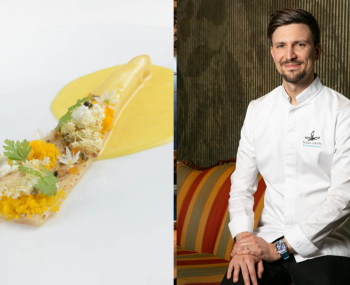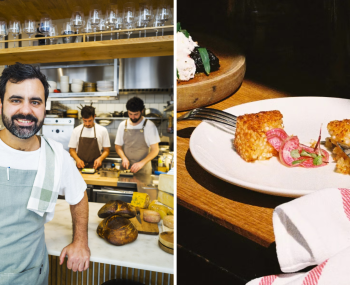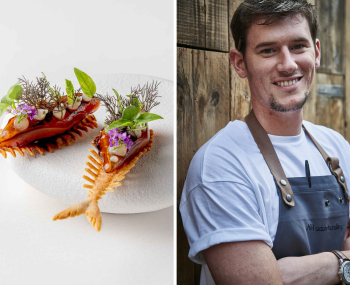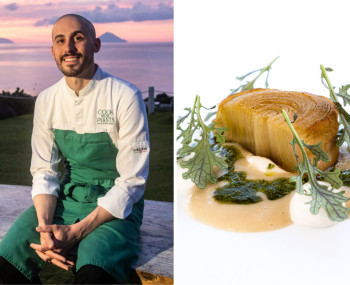
Four years after opening in the heart of Aosta, Paolo Griffa takes stock of Caffè Nazionale, highlighting new additions to the team, the expansion of the space, an upcoming cooking school, and a detailed account of a culinary journey that blends historical memory, research into ingredients, and a connection to the local area
Aosta and the Caffè Nazionale: a historic gem in the heart of the city
Aosta, the regional capital of the beautiful valley of the same name, has such an important Roman past that it is also known as the “Little Rome of the Alps”: in the city center stand the Arch of Augustus, the Porta Praetoria, the 22-meter-high facade of the Roman theater, and the forensic cryptoporticus—just like an open-air museum; the medieval city was later built on top of the ancient city’s layout. The heart of Aosta’s life is Piazza Émile Chanoux, overlooked by the 19th-century city hall: this is also where the Caffè Nazionale is located, a multifaceted project by Paolo Griffa where you can stop by in the morning to enjoy a specialty coffee, return in the afternoon for an impressive selection of pastries, and choose to dine in the (magnificent) dining rooms of one of Italy’s most interesting restaurants.
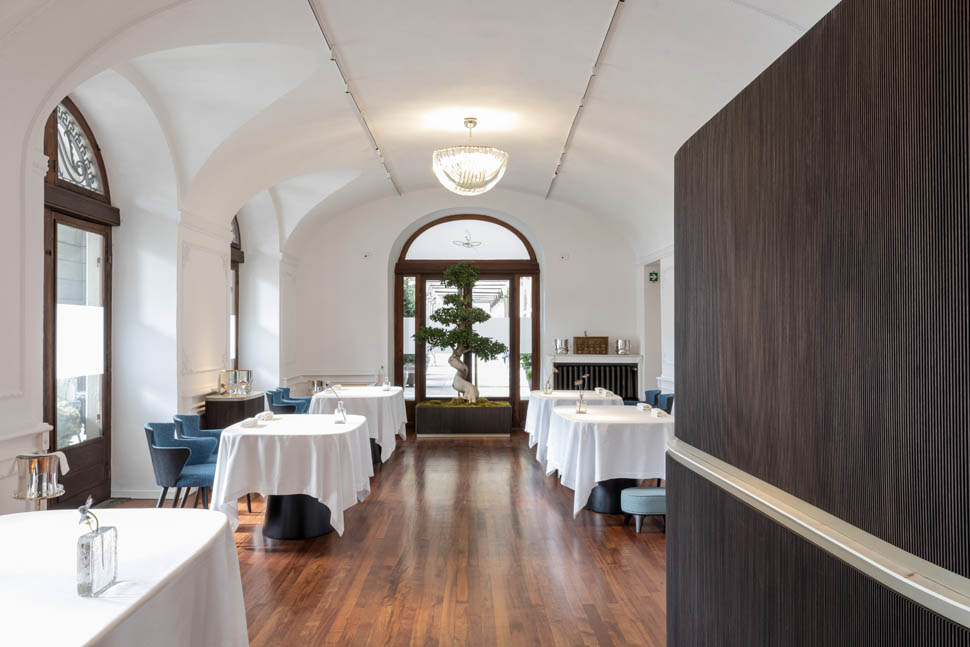
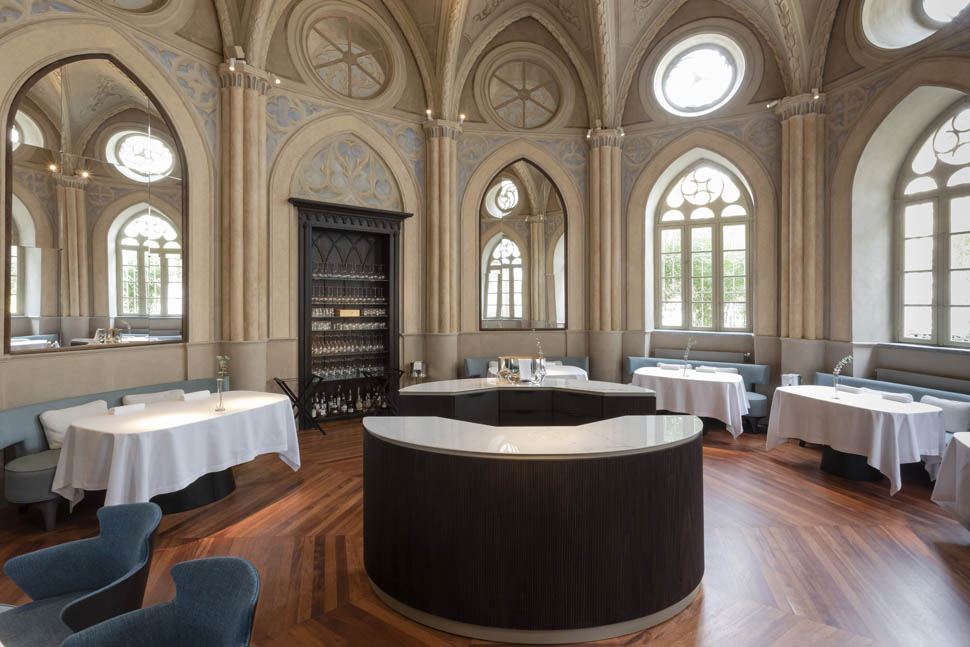
The Caffè Nazionale has a history dating back to the 19th century, but its spaces tell of events that are much older. It is located on the ground floor of City Hall, built in 1839 in the Neoclassical style on the site of the Convent of San Francesco, which, according to tradition, was built in 1352 by Amadeus VI of Savoy. The complex, damaged by French revolutionary troops, was demolished to make way for the new building and the square. The only remaining vestige is the extraordinary decagonal hall—the ancient 14th-century chapel with its Gothic windows—which today serves, so to speak, as a truly fitting backdrop for the restaurant. In the 19th century, it became the private dining room of the Hôtel de Ville café; from the 1880s onward, it hosted theatrical performances and later film screenings; for a brief period, it even served as a printing shop.
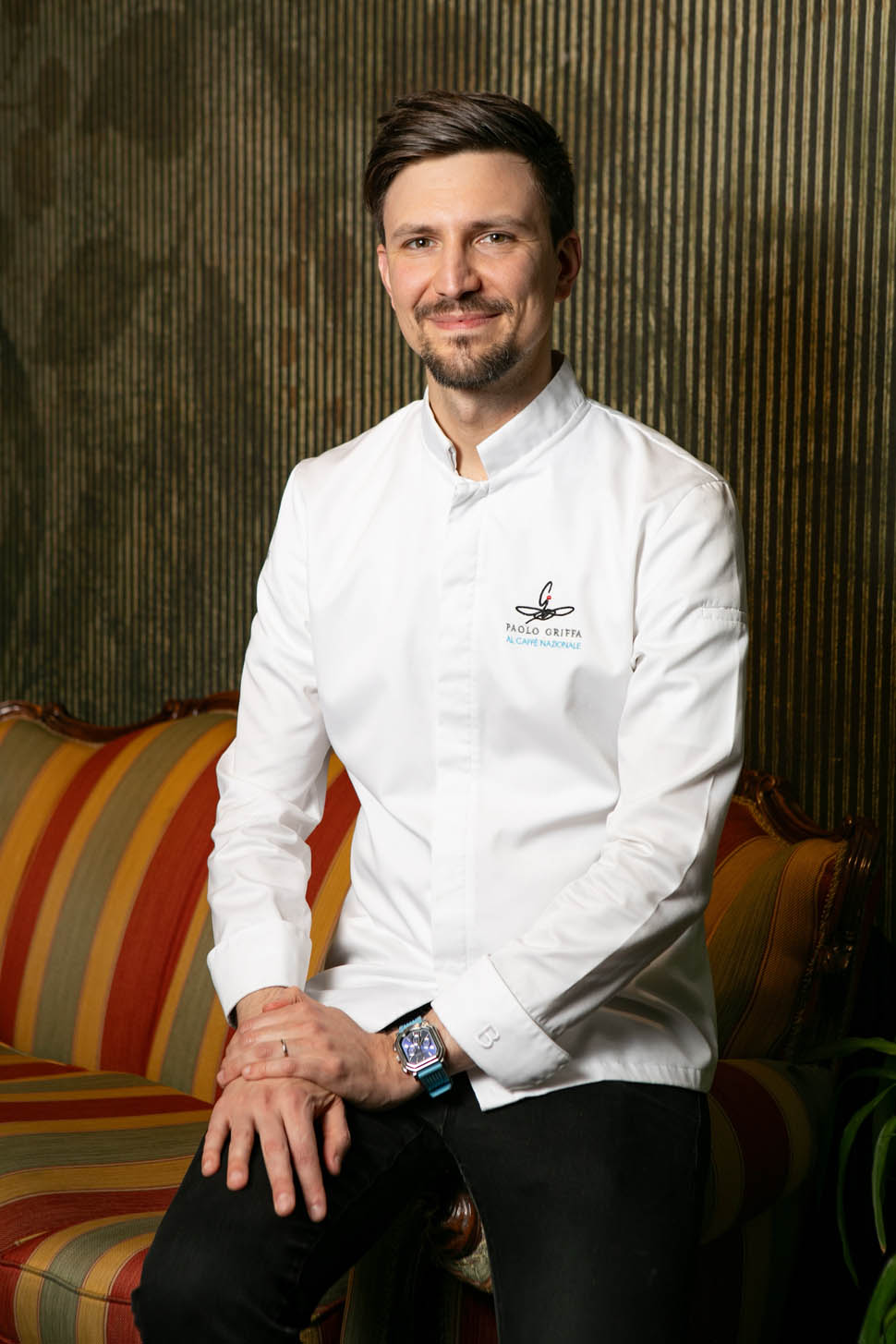
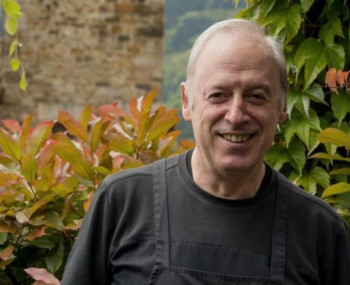
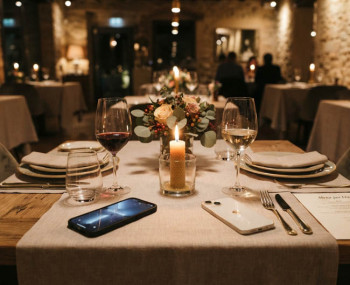
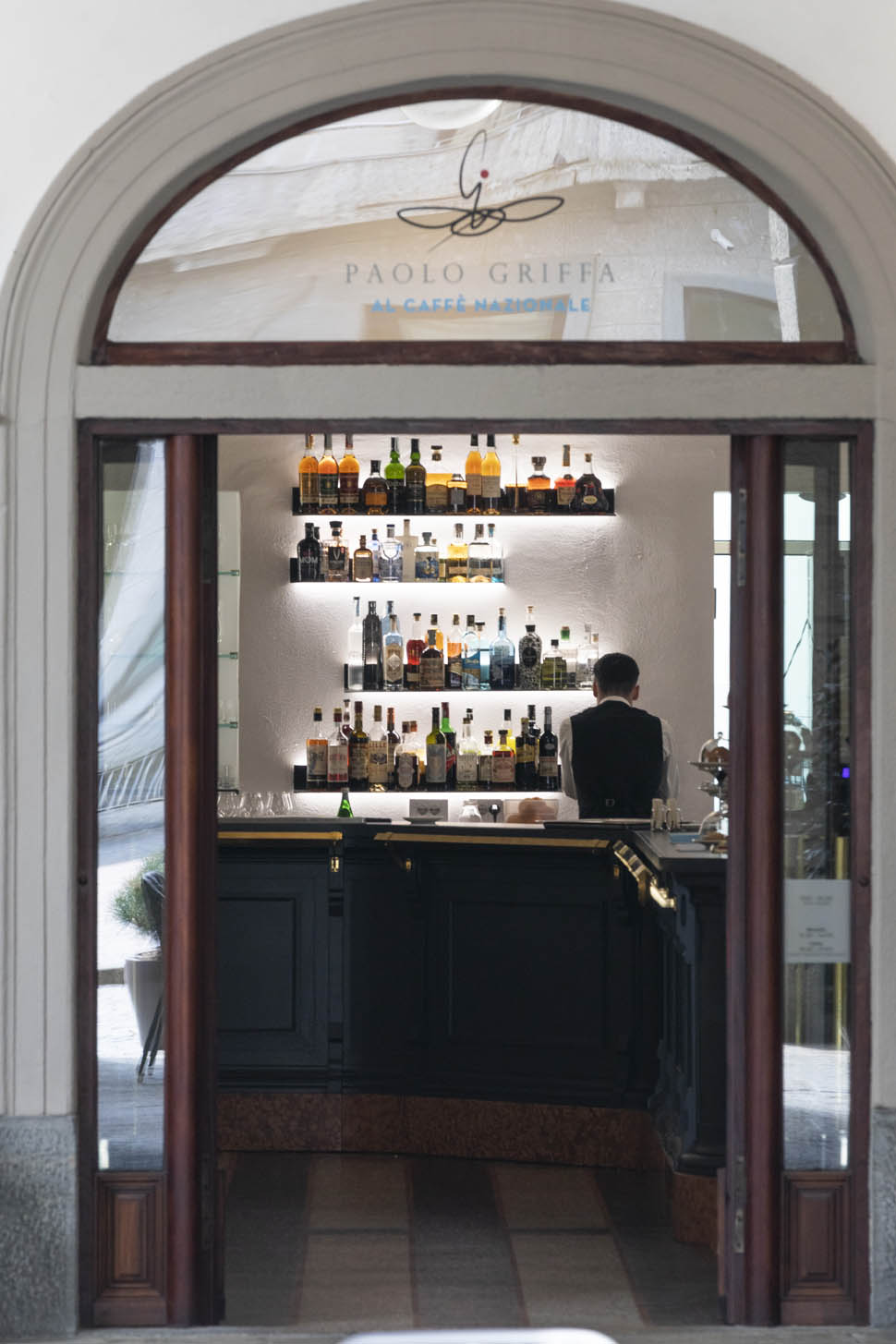
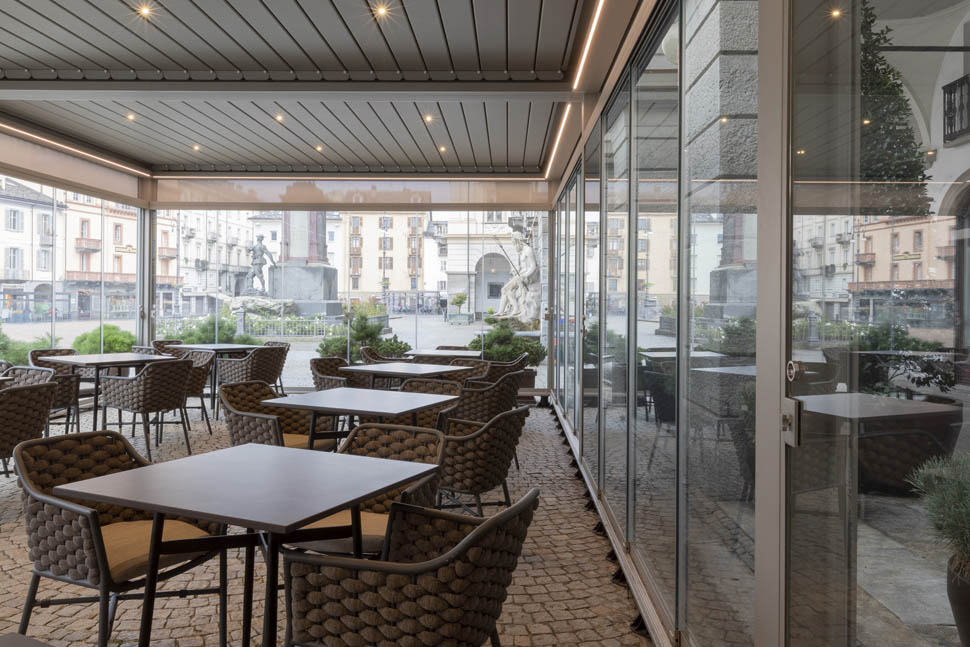
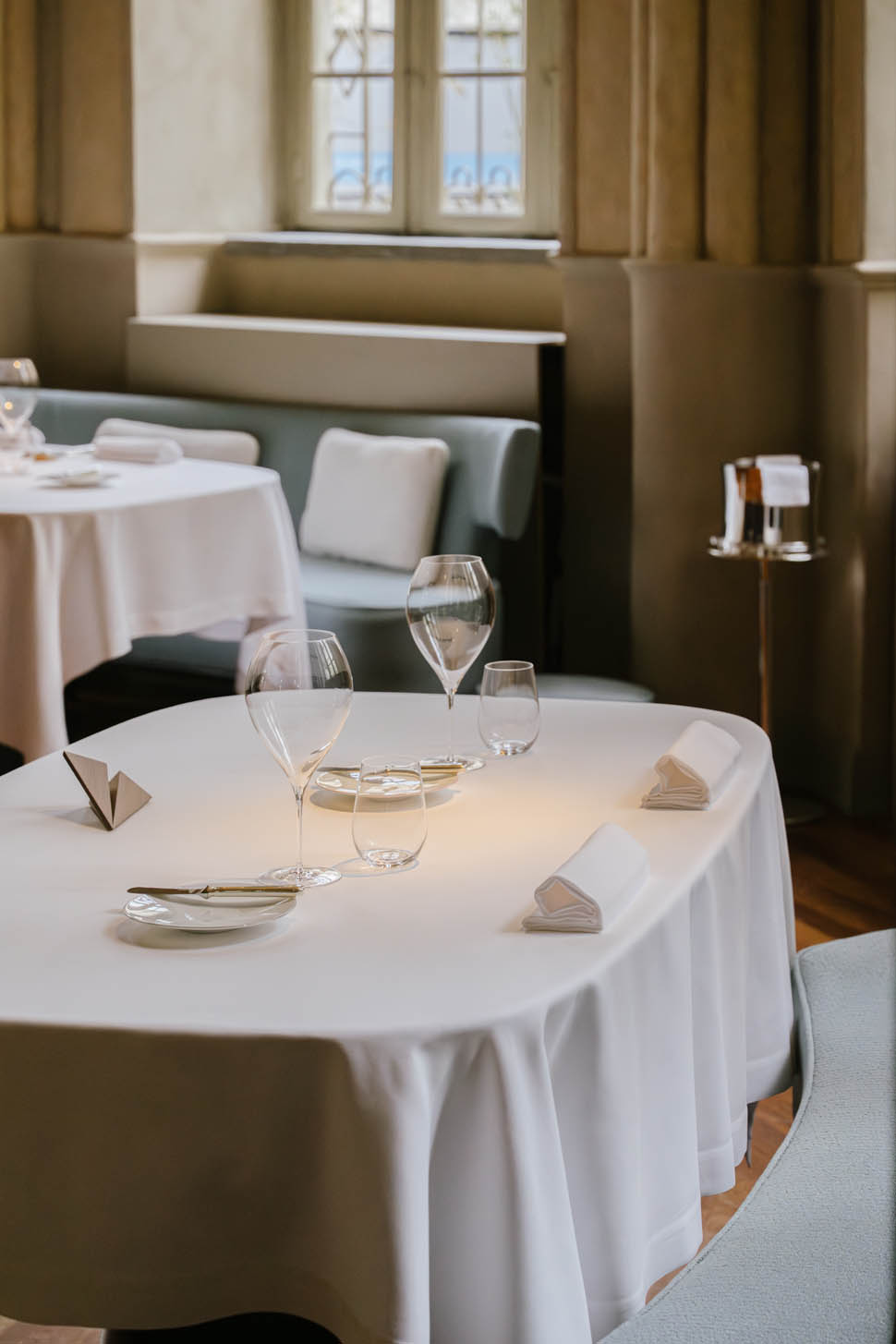
Paolo Griffa, after earning a Michelin star for the Petit Royal in Courmayeur, recognized the venue’s potential and entered the municipal bidding process to take it over. A rapid renovation, completed in less than six months, allowed the Caffè Nazionale to open in 2022: the star arrived in Aosta as early as November of that same year. Today, the project spans over 600 square meters and includes the restaurant, a high-end pastry shop, a café, a cocktail bar, and outdoor seating on the square. The kitchens are open to visitors, and the spectacular wine cellar—crafted from antique oak by local artisans—boasts a collection of over a thousand labels. The private archaeological room is particularly striking, featuring a glass wall overlooking a fish tank that once belonged to a domus in ancient Augusta Praetoria. The kitchen is state-of-the-art, fully electric, and custom-built, with systems to control and monitor equipment, energy consumption, and energy flows.
A Look Back After Four Years and Future Plans
Paolo Griffa takes stock four years after opening: “Now this has once again become a gathering place and a local landmark. We can tell this from the fact that, in addition to the tourists who flock to Aosta, we also have many local customers. For us, this is already a significant milestone, especially for a city that might not seem the most open-minded at first glance.” The distinction between the different areas is clear. “There’s the café and pastry shop section, which is the easiest, most immediate part—one you can enjoy multiple times throughout the day. And then there’s the restaurant, which has its own identity; locals see it as a place to celebrate or treat themselves to a special moment—just like a ritual indulgence.”
In addition to this audience, there’s a crowd of enthusiasts who come to Aosta specifically to dine at the restaurant: “There’s the whole gourmet crowd—people who come just for this, arriving from all over Italy but also from the rest of the world.” Paolo, however, considers the project to still be evolving: “We can still call ourselves a startup, at least until we’ve been around for five years. We’re still changing a lot; we’re growing—in fact, the team has grown from 20 to 35 people today.” And it’s set to expand even further for the winter: “Since this is a very large establishment, it also requires a wide range of skills—even just to cover the entire day with shifts that are reasonable and fair.”
However, this growth goes beyond just the staff; it also involves a further expansion of the offerings Griffa is working on, with new spaces: “It’s an expansion of the space dedicated to the public, including a retail area. We’ll have much larger display windows, as well as a space for training. Since we’re selling products that aren’t traditional—let’s put it that way—or aren’t as easy to understand, they need to be explained. We need to build a culture around the customer, for example, by explaining why our coffee is different, how many varieties there are, but also teas, chocolate, and even wines.” Griffa will also establish a full-fledged cooking school, with activities aimed at both professionals and enthusiasts: “People very often ask me for courses in pastry making, cooking, and techniques. Or even one-on-one courses, because people want to learn, try things out, and understand more.” Beyond that, there’s a logistical reason: “The problem is always travel. Aosta isn’t exactly the center of the world, so when I have to travel, I end up wasting a whole day on the road. In this case, I’d be able to do it more efficiently, right here at home with everything we have at our disposal.” The space will be “a hub for presentations, product promotions, and culture.”
The Team and the Connection to the Aosta Valley
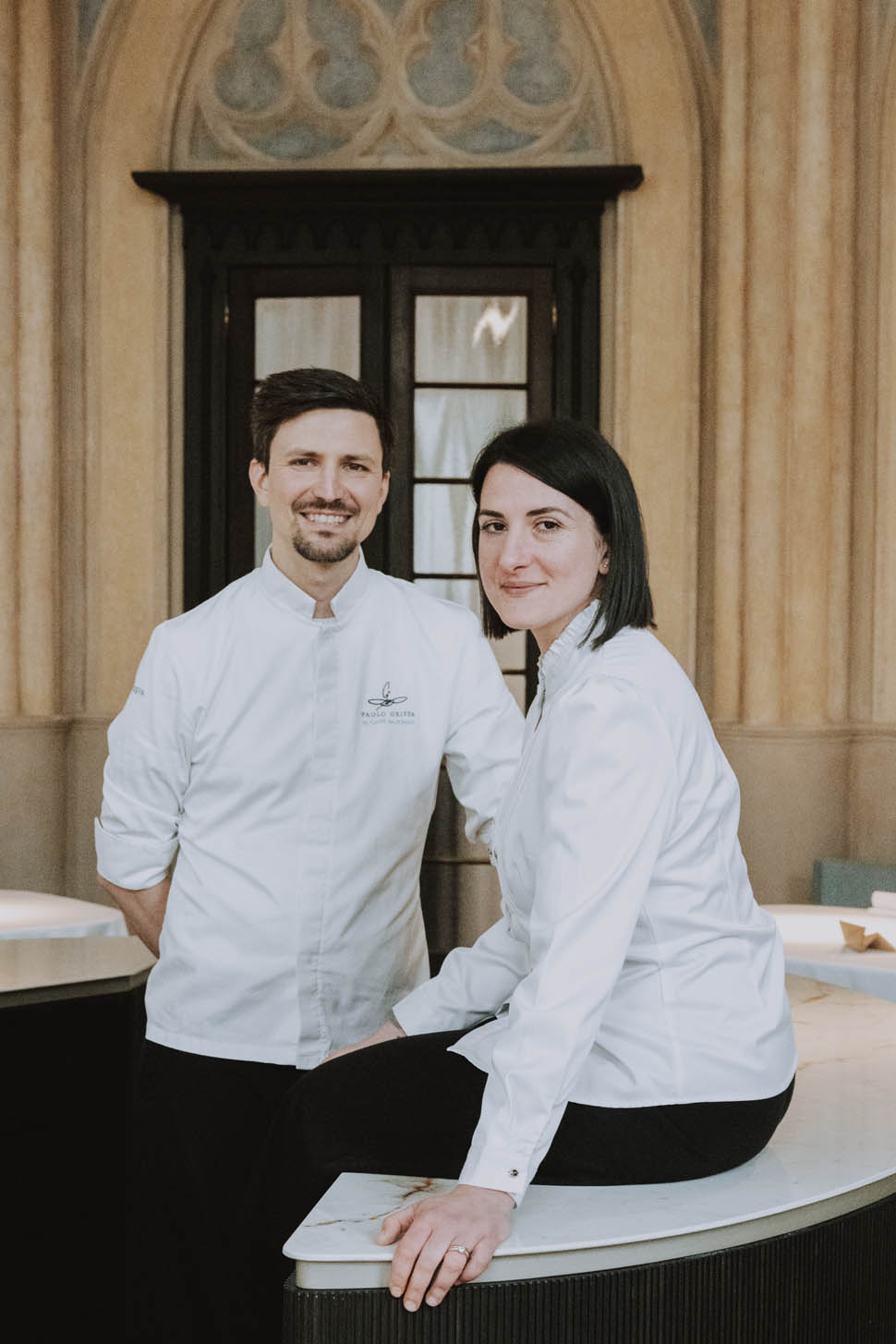
At the chef’s side is Titti Traina, his wife and a key figure, with whom he shares every decision. “It’s just the two of us; we cover just about every aspect and have been able to make decisions on everything—every single department. The structure here is very personal; it reflects our taste and our way of doing things.” Starting this year, several key figures have joined the team. Maria Ida is in charge of the bar and operations and has become Griffa’s assistant. Fabio Furcia is the new maître d’, with whom the chef is shaping the dining room service. The wine cellar, meanwhile, is entrusted to Alessandro Mantovani, who has been working with him for twelve years now; the café is managed by Domenico Loggio.
When it comes to cuisine, the highlight of Paolo Griffa’s offerings, we know just how multifaceted they are, combining meticulous attention to aesthetics, high technical precision, and a playful element—not to mention that his dishes don’t just please the eye but are equally striking in terms of flavor. His connection to the Aosta Valley has also grown ever closer: “when you want to establish an identity, you have to find guests who are looking for exactly that. If I’d served polenta and sausage, I might have attracted a different—perhaps much easier—kind of tourist. When you create a style of cuisine that’s deeply rooted in the local terroir but infused with a personal touch, you have to spread the word about what you do and then attract the right kind of people—and that’s a process that takes a little longer.”
In the working group, people from the Aosta Valley are in the minority. This may seem paradoxical, but Griffa considers it an important part of the project: “What we want to do is honor and pay tribute to a region that isn’t our own. Out of 35 people, we now have only two from the Aosta Valley.” The decision to work with local products, highlight the producers, and deepen our understanding of the raw ingredients is therefore part of a journey that goes beyond cooking: “Our mission is to raise awareness of a region that has welcomed us and continues to welcome us—a region we’re discovering, but which isn’t our own. So at first, it was viewed as a bit strange, especially by the locals, who have now come to understand that we also bring economic benefits, because people have to relocate and settle in Aosta. All of this has a very significant impact.”
The Summer 2026 Menu: Technique, Local Ingredients, and Creativity
His culinary style is beautifully reflected in the latest Summer 2026 menu, which offers three tasting menus featuring three, five, and seven courses: “First Steps,” “Exploring,” and “Let Yourself Be Guided.” The illustrations on the printed menu are stunning, created with watercolors by Alexia Winterhalter, a French artist living in the Aosta Valley.
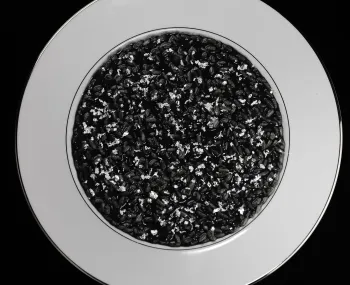
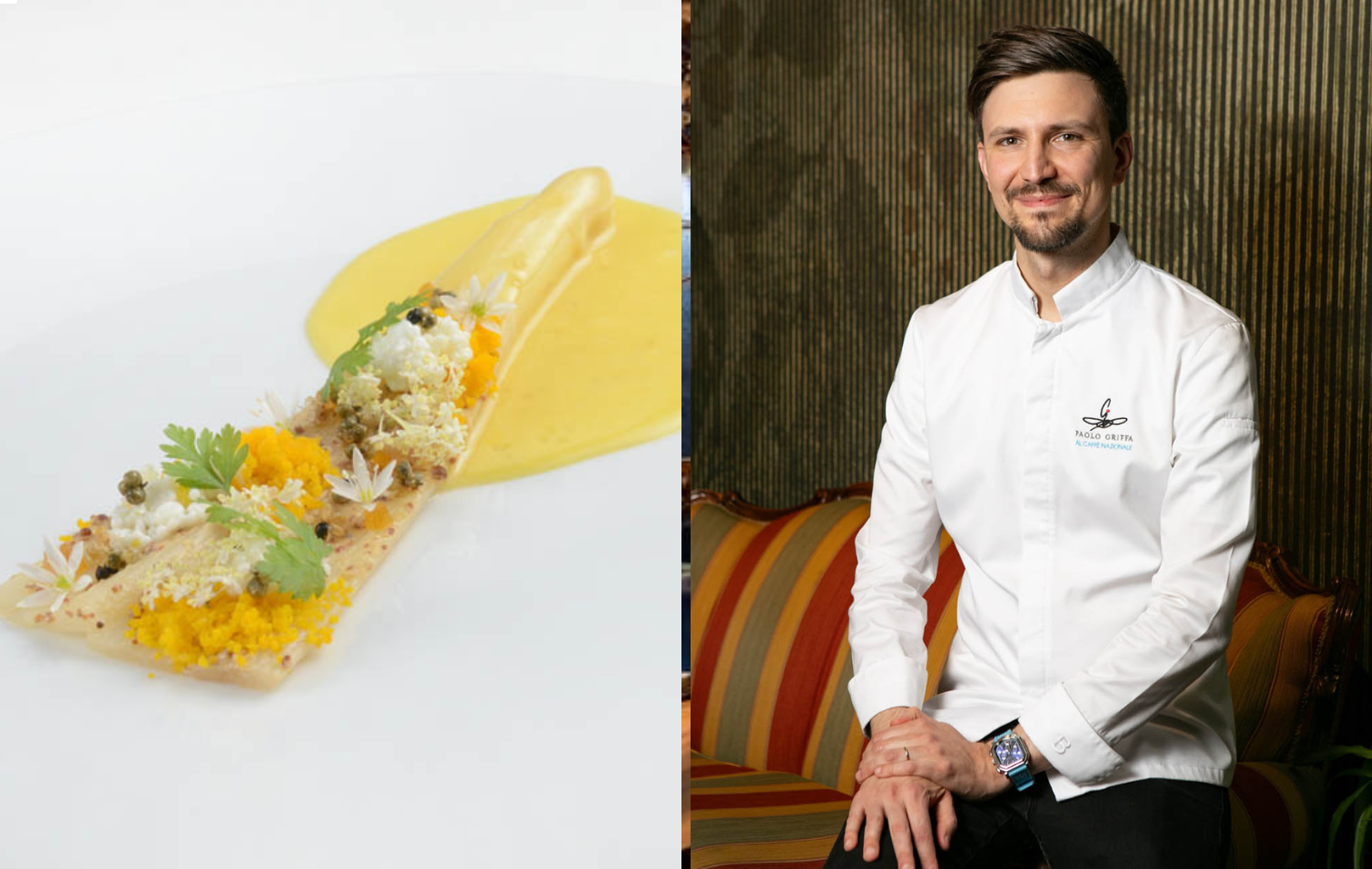
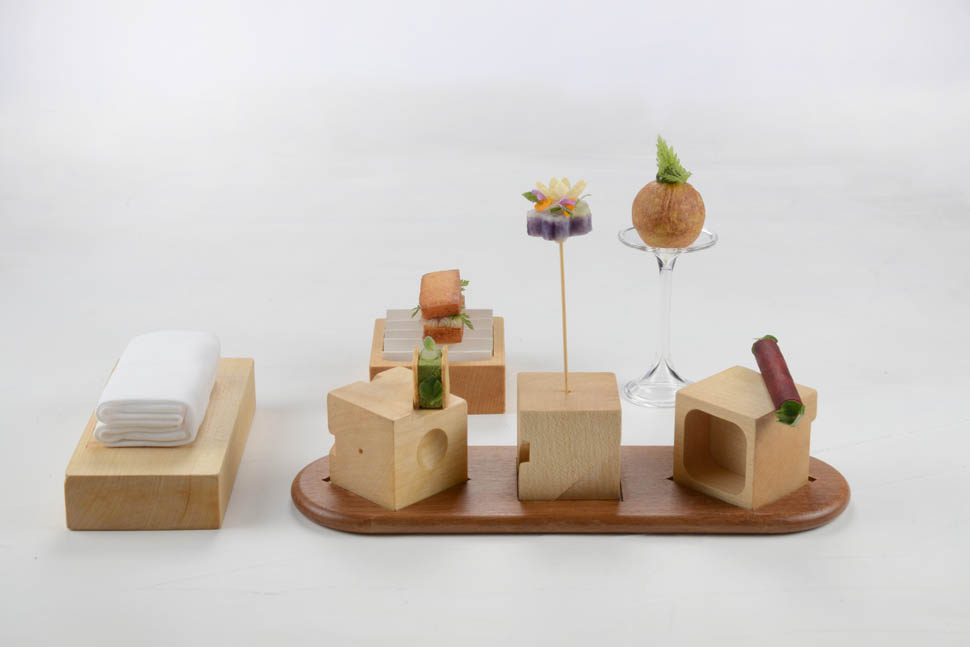
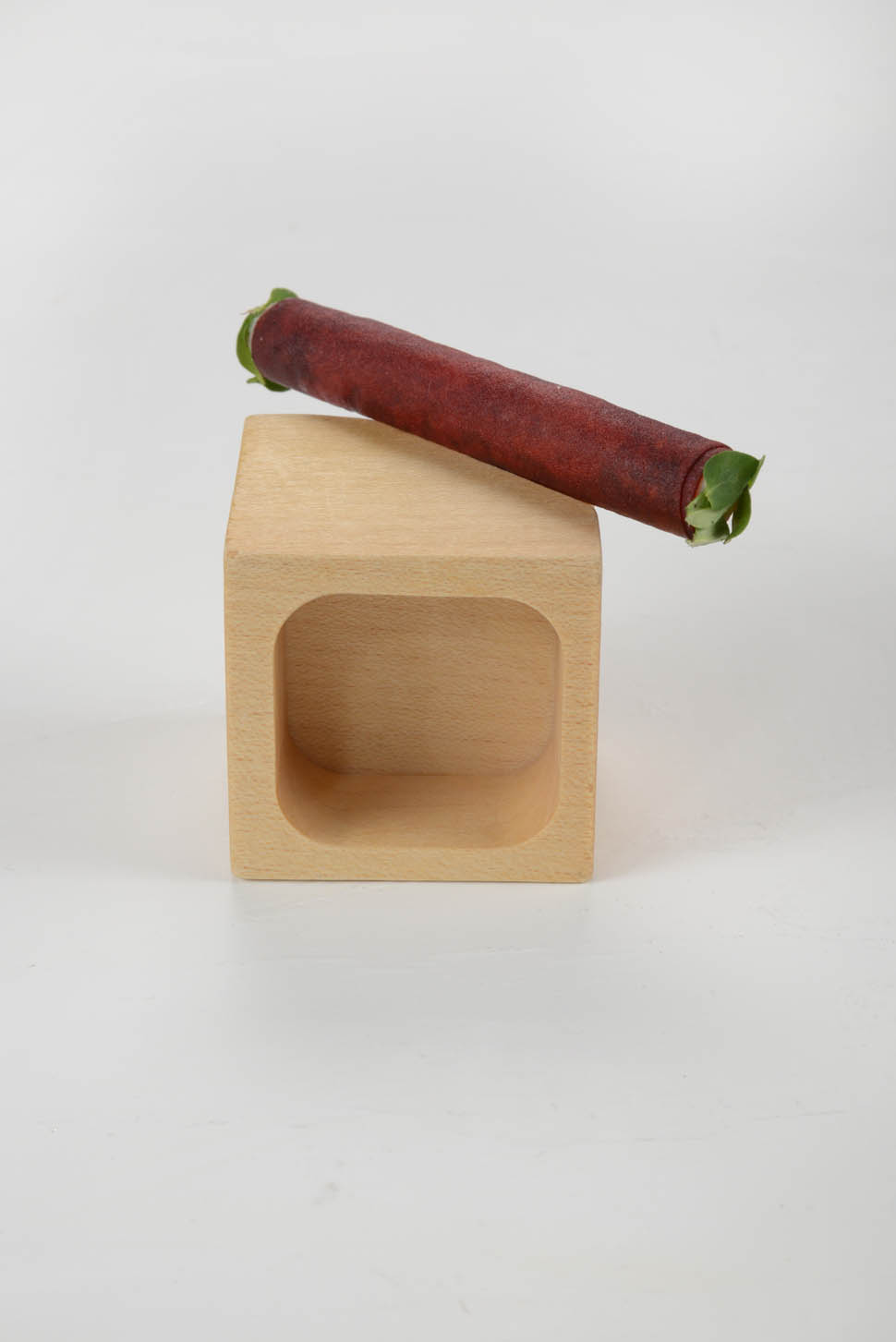
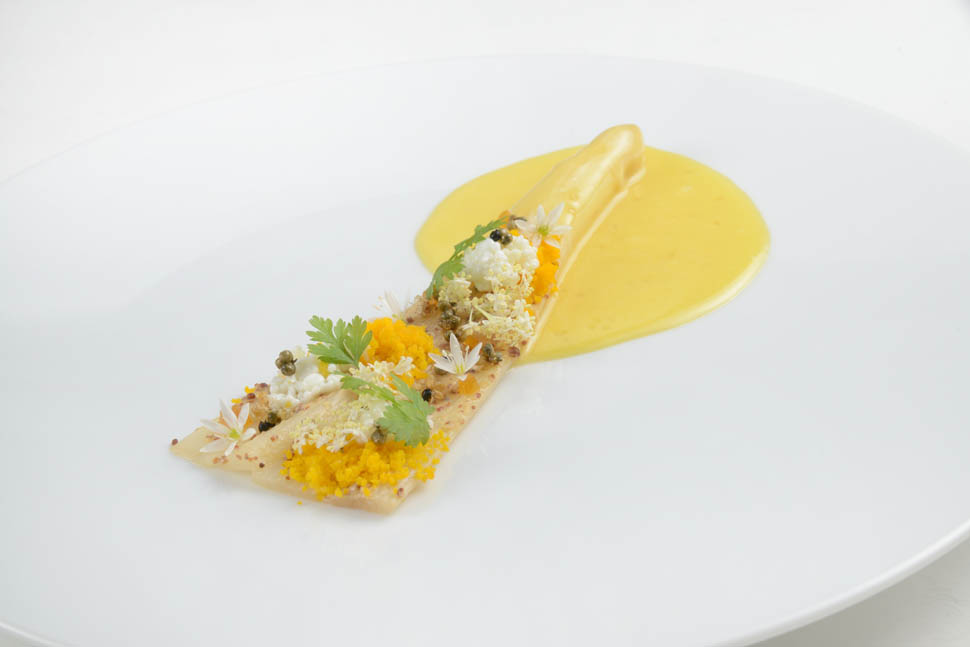
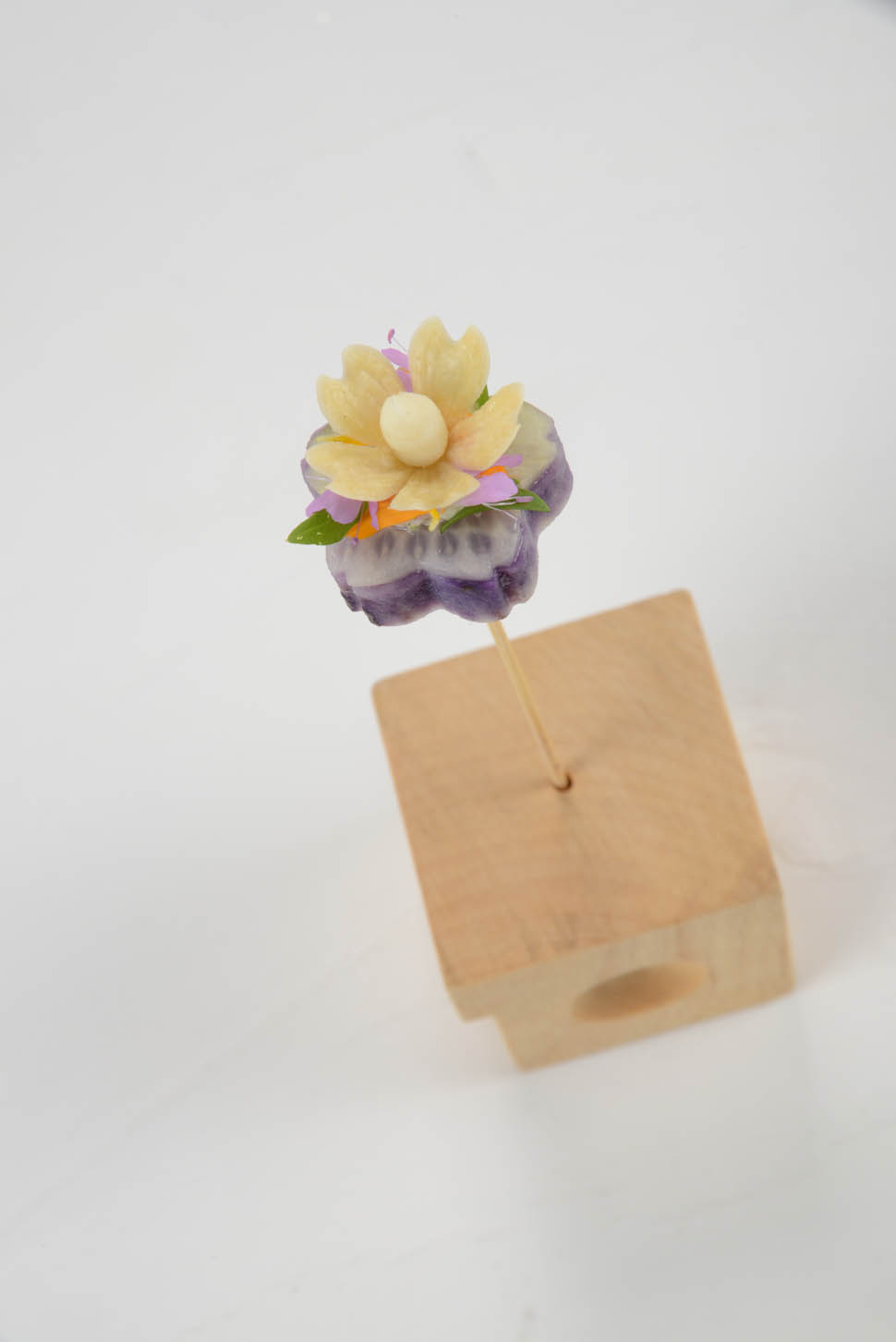
Your taste buds are tantalized right from the very first small bites coming out of the kitchen. The purple potato, grilled over charcoal and shaped like a flower, served with cucumber pickled in rice vinegar, mustard cream, and edible flowers. The Alpenballu, local polenta meatballs, made with a lighter batter and stuffed with Fontina cheese from the alpine pastures and a sauce of nettles and borage; a thin-sheet beet pastry tube filled with a béchamel made with lard and wild thyme; and small herb flans. And then there’s the bao bun with smoked eel, orange reduction, and chervil. An exceptionally elegant dish, the Morgex trout, lightly seared and marinated in citrus, is accompanied by a gazpacho of green bell peppers and spinach with green apple granita. The glazed white asparagus is cooked in an extract made from the vegetable’s trimmings, then lacquered with mustard and finished with deviled eggs, wild garlic capers, and elderflowers. Adding to its complexity is a freshly whipped lemon hollandaise sauce and a puff pastry gratin made with Gran Gessato d’Ayas, a sheep’s milk cheese from the Aosta Valley.
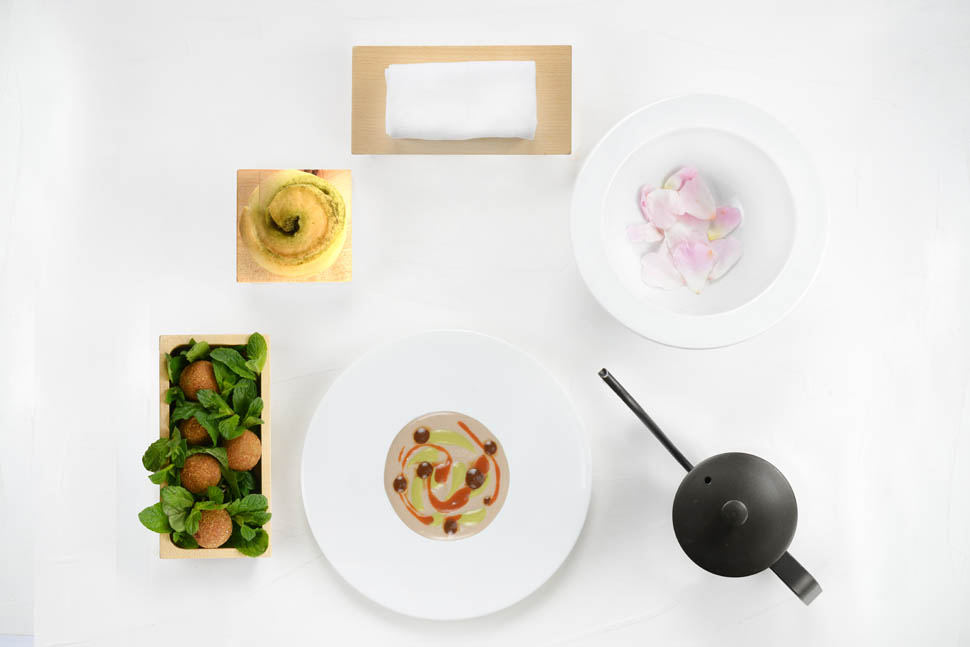
The creative take on vegetables comes in the form of the carrot dégradé, featuring crispy puff pastry, seed risotto, apricot with verbena, marigold and carrot greens, and a carrot and kimchi sauce. The goat’s milk ricotta baked in clay is delicious: wrapped in hay and linden leaves, it arrives at the table in a clay box shaped like a little sheep that is opened in front of the guest; it’s served with a grilled lettuce heart, a sauce made from the outer leaves, oven-roasted black olives, and aromatic herbs. All of this is accompanied by exquisite sunflower-seed focaccia. Another great treat, to be enjoyed with your hands, is the snails cooked in mint broth with a chickpea and walnut cream; they are chopped and mixed with herb-infused butter to form small croquettes, and the cream is finished with a drizzle of black garlic, pine, and rosehip; a flaky bun made with mint-infused butter helps scoop up the sauce. Next up are whole-wheat tajarin made with Uniqua Viola, a flour derived from naturally pigmented grains; the pasta is cooked in “Favò” broth—a Valle d’Aosta dish made with fava beans, vegetables, and sausage—and then tossed with Fontina cheese. The dish is rounded out with bread sautéed in butter, fresh peas and fava beans, as well as a sauce made from pea pods with savory oil and basil.
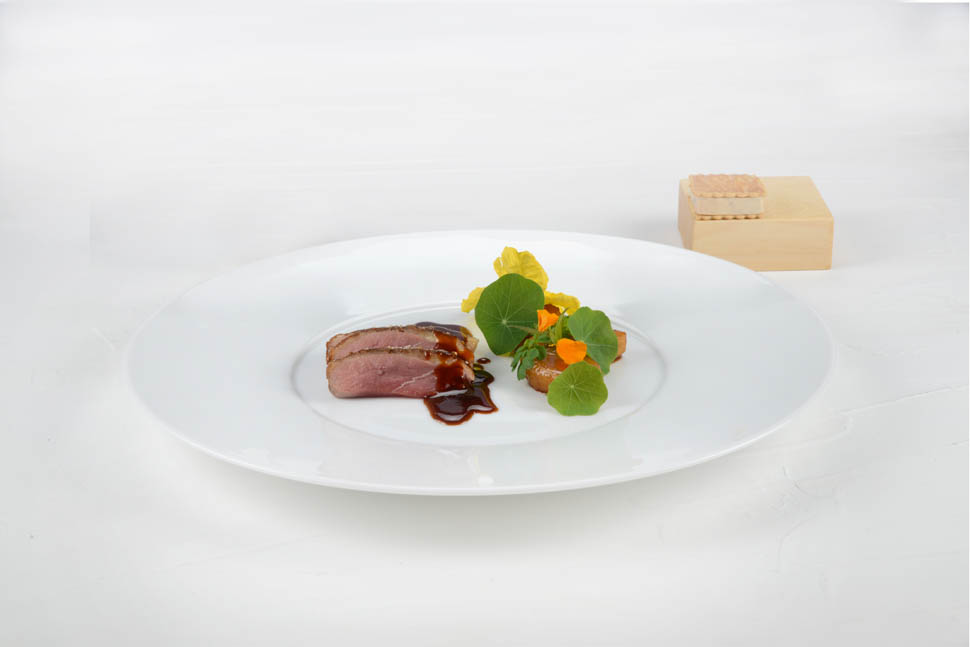
The char ravioli is also a standout: the fish is lightly smoked, and the stuffed pasta is cooked in fish stock and finished with watercress and fennel. There’s a lovely complexity to the sturgeon à la mugnaia with hyssop vinegar, presented on a rotating platter with trombetta zucchini carpaccio, fromage blanc, a sauce made from zucchini cooked in the fish’s own stock, and hyssop oil; glazed zucchini flowers add a crunchy element. The guinea fowl, prepared two different ways: the breast is gently poached in a broth of star anise, fennel seeds, and celery; the thigh is grilled to achieve a crispy skin. Rounding out the dish are green beans with pink geranium, pickled chanterelles, almonds, and a tarragon sauce made from the carcass stock. The intensity ramps up with the glazed duck breast with apricots and dates, lavender, and cilantro. The meat is first cooked in a spiced broth, then grilled, glazed, and finished in the oven. It is served with potatoes, apples, and turnips glazed with apple balsamic vinegar, an XO sauce made from the duck stock, and an orange reduction. On the side, a deliciously rich sablée with a terrine of foie gras and dried fruit.
Desserts and Petit Fours
The desserts have a gastronomic approach, featuring herbs, vegetables, spices, and acidic elements. The Green is absolutely delicious, pairing a yogurt biscuit with a Sencha tea cream, a mint-infused pea salad, and a granita made with pea pods, genepì, and Aosta Valley gin. The elegantvanilla and lemon Île flottante is served with a goat’s milk and chamomile custard, apple sorbet, mead, and pollen, along with thin lemon balm wafers. The tarragon savarin, soaked in genepì, features Mara des Bois strawberries and rhubarb, along with sorbet, yogurt, Timut pepper, and various varieties of wood sorrel. The petit fours are also impressive, presented on a striking cart carved from a single piece of centuries-old chestnut wood: arranged in boxes resembling those found in a jewelry store are sixteen varieties of cremini, twelve types of cookies, four flavors of gelée, and paper-thin wafers. A memorable experience.