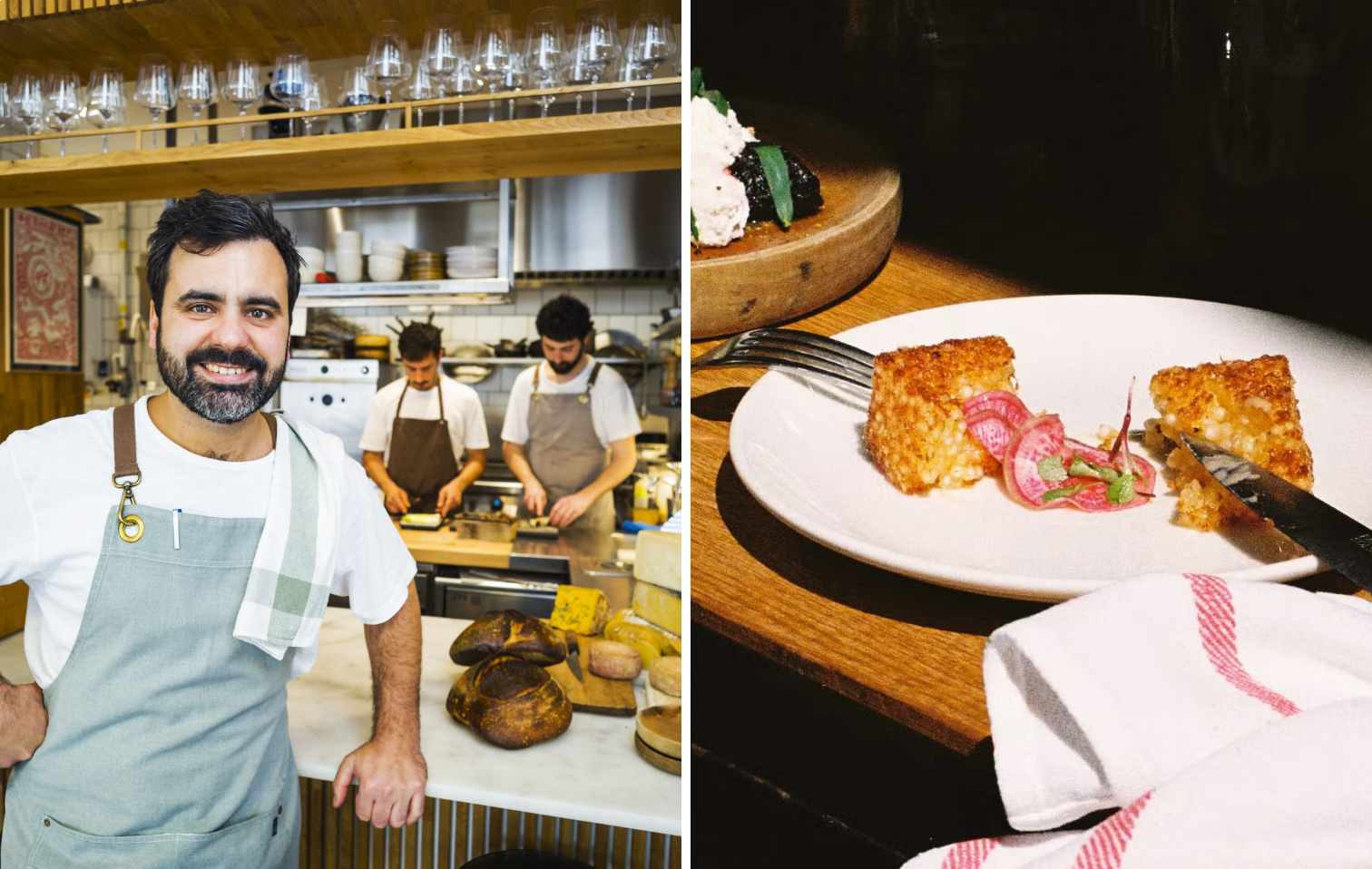
After years spent in the kitchens of high-end restaurants, the Catalan chef and entrepreneur now wants a different approach. He’s also asking customers to do their part: stop expecting a table at any hour. “I used to work sixteen hours a day—I don’t want that to happen again.”
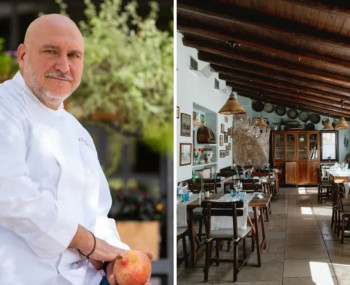
There comes a point when accommodating the customer ceases to be a virtue and becomes a problem. This happens when a restaurant has to accept any time slot, when every request becomes a priority, and—inevitably—it’s the people working in the kitchen and front of house who end up paying the price. Carles Pérez de Rozas knows this dynamic well. He experienced it firsthand before deciding that his restaurants would take a different path. Today, as the owner of Berbena and Poma in Barcelona, he raises an issue that the restaurant industry still tends to approach with caution: customers, too, have responsibilities. Not just rights. He discussed this with Cristina Jolonch on La Vanguardia’s podcast Quédate a comer, looking back on a career that took him from the kitchens of some of the greatest restaurants—including El Bulli and Mugaritz—to entrepreneurship. Pérez de Rozas comes from a family with a long history in Barcelona journalism, but his calling took a different direction. His experiences in haute cuisine were important, even if not all of them provided him with the professional model he would have liked to follow. In fact, he says he left some restaurants having learned, above all, what he didn’t want to repeat.
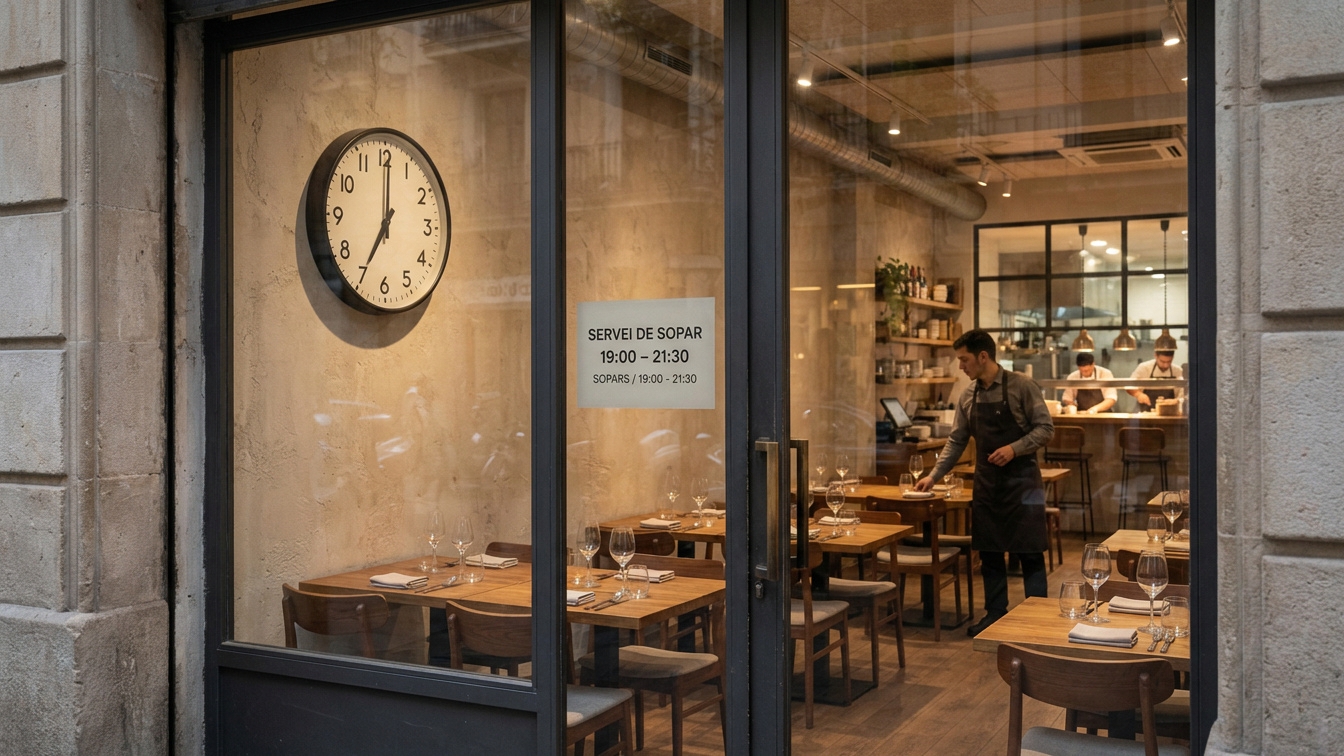
His vision for a business is based on three elements, which he compares to the sides of an equilateral triangle: the company, the employees, and the customers. None should take precedence over the others. If the business is to be financially viable, it also has a duty to ensure decent conditions for those who keep it running. This means being fair, recognizing people’s work, motivating the team, and helping them build a future—not only professionally, but also financially and personally. Pérez de Rozas speaks of gratitude toward the staff who choose to come to the restaurant every day, even though they know they might have other plans—perhaps the desire to open their own place or find a more stable job. But the relationship cannot be one-sided. “We need to ask the customer to make a little concession: they have privileges, but also obligations,” he argues. And he’s not talking about major sacrifices. Sometimes, he explains, it would be enough to accept a different time slot than the one desired—7:00 p.m. or 9:30 p.m.—instead of expecting the restaurant to always find a tailor-made solution.Small changes in habits that, when added together, can have significant consequences for the organization of work and the economic sustainability of a business.
According to the chef, something had changed after the pandemic. Customers had shown greater empathy toward those working in the restaurant industry—a sensitivity his restaurants have tried to preserve. Every now and then, he says, they remind guests of that very period and how they had behaved. Because that willingness to help shouldn’t have been just a temporary response to the COVID-19 emergency. While for twenty years the focus has been primarily on environmental sustainability, today it’s also necessary to address social and economic sustainability. And the issue can start right with a reservation. Pérez de Rozas knows how much, in human terms, an organization built around absolute availability can cost. He recounts having worked split shifts that lasted up to sixteen hours: starting at 9:30 a.m., leaving at 5:30 p.m., returning at 7:00 p.m., and finishing at 1:00 a.m. Consecutive days, especially on weekends, when the restaurant was packed. Time off? One day during the week and another on Sunday. “For many years, customers had it far too easy. In the end, we were the ones footing the bill: the chefs, the business owners, and the front-of-house staff,” he recalls.
This is perhaps the most personal part of the conversation. Pérez de Rozas identifies with a generation that experienced that way of working and that today is trying not to pass it on to those who came after them. When he observes the young men and women on his team, he notices that they have a life outside the restaurant: they do things, pursue interests, and talk about what they’ve experienced in their free time. At their age, he couldn’t afford to do that. “I couldn’t. I just couldn’t.” He repeats it twice, needing to say little else. His view of haute cuisine is also shaped by these experiences. He makes no secret of the fact that he has encountered forms of workplace violence—both psychological and physical—and that he has stopped admiring certain restaurants and chefs. Regarding recent accounts about Noma—where some former employees have described positive experiences despite the allegations of mistreatment surrounding the Danish restaurant—he urges people not to focus solely on individual stories. The fact that someone had a good experience, she notes, does not necessarily mean that everyone received the same treatment. And she poses an uncomfortable question: did those people have a positive experience because they were particularly skilled and respected professionals, or because they were part of a system from which they benefited, while others suffered the consequences?
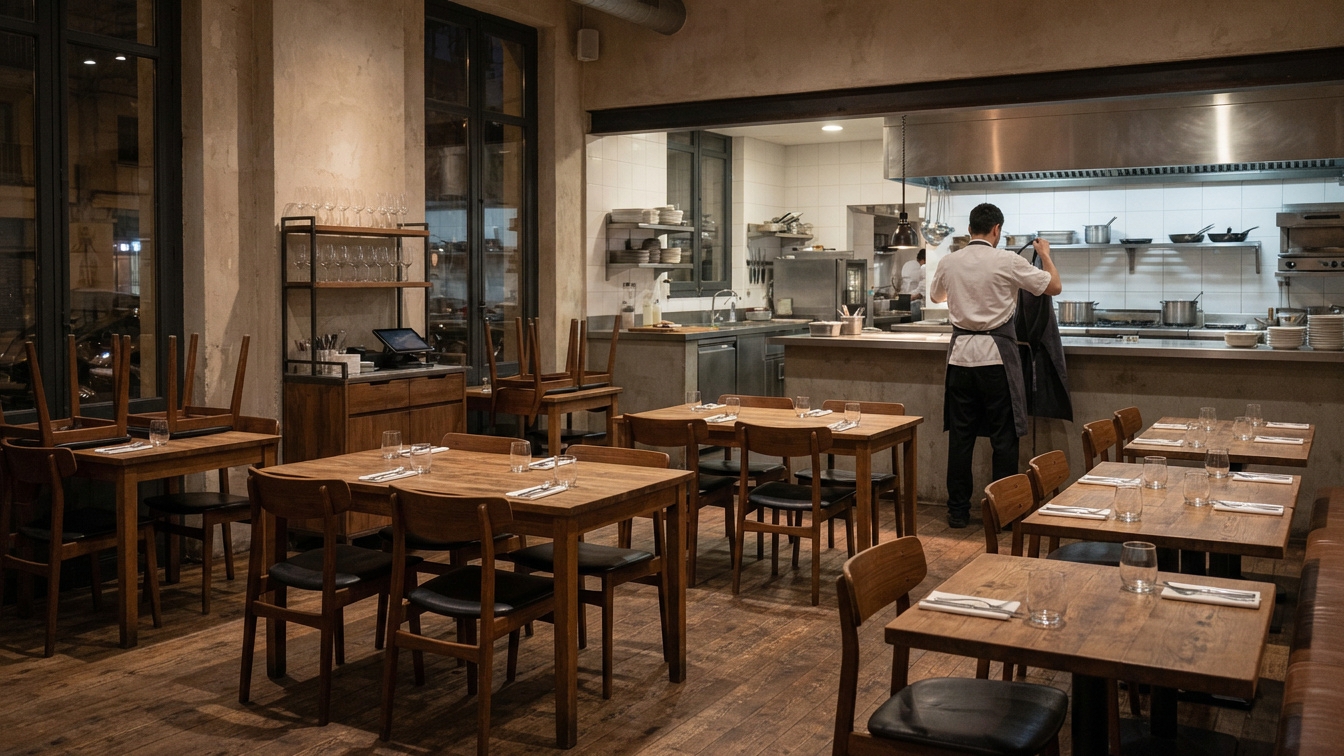
Pérez de Rozas identifies with a new generation of Barcelona chefs—those who have traveled, worked abroad, and then returned to the city to open their own businesses.A generation that is more attentive to the quality of life of their teams, but also to building a personal gastronomic identity, often accompanied by a strong interest in wine and wine lists. His journey—from his experiences in haute cuisine to his two restaurants in Barcelona—reflects precisely this effort to run a business without repeating the mistakes of the past. The request to customers, then, is less complicated than it might seem: don’t expect a restaurant to be open at all hours. Accept 7:00 p.m. or 9:30 p.m., as these are the times that allow the restaurant to better organize its service. Because behind a set table, a kitchen in full swing, and a dining room welcoming guests, there are people who, once their shift is over, have the right to reclaim their own time. This, too, after all, should be part of hospitality.