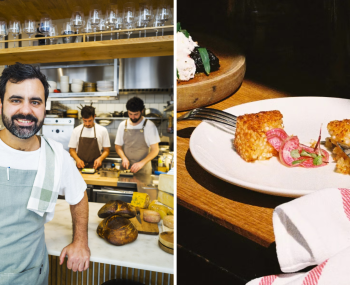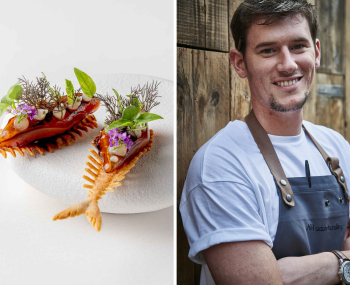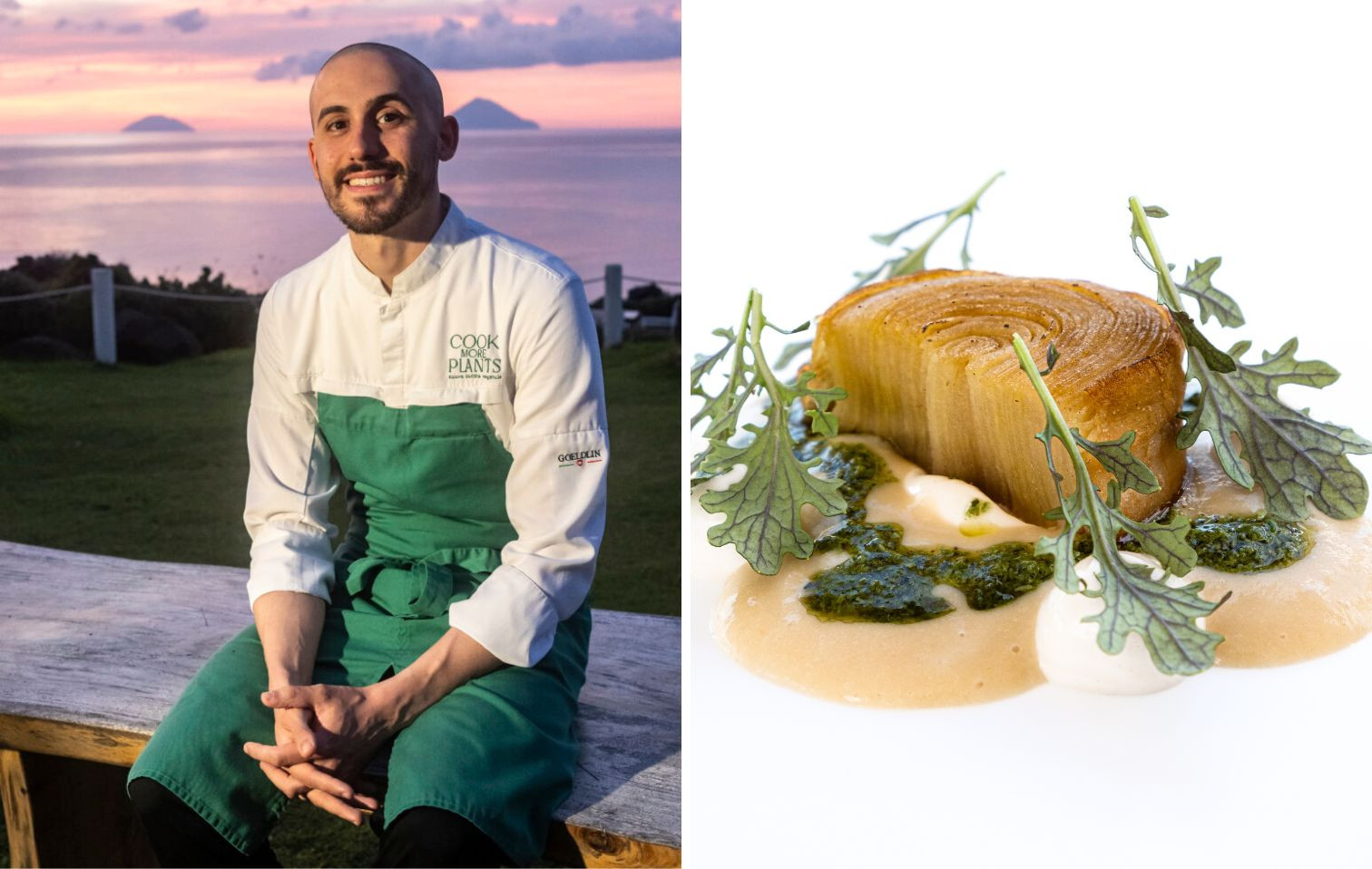
For several years now, the chef from Campania has been offering his menu—which is entirely free of animal proteins—at Tenerumi in Vulcano. He is an omnivore, but he believes that ingredients from the earth possess unparalleled expressiveness and require unmatched culinary technique.
The Restaurant and Plant-Based Haute Cuisine
Let’s be clear: Davide Guidara wouldn’t be this good at plant-based cuisine if he weren’t, by his own admission, an omnivore. Only in this way can he view the use of ingredients that come from the earth not as an ideology or even a necessity, but rather as an evolution of cuisine itself. When he published his manifesto Cook More Plants, in 2022, this was the first of its seven points. The others? Research must free vegetables from prejudices about their limited expressive potential; vegetables require technical preparation, precision, and scientific knowledge; the collaboration between chefs and scientists fuels innovation; every vegetable must have its own identity, without becoming an imitation of meat; the value of this cuisine must be judged according to general gastronomic criteria; the chef’s task is to expand the expressive possibilities of the craft. And what strikes me most is the penultimate point: plant-based cuisine is not the eccentric cousin who’s committed to social causes but ultimately doesn’t amount to much in life; rather, it’s a businessman who wants to be judged by his profits. It isn’t good simply because it’s “good,” but it’s good if it’s good. Convoluted? No, you’ve understood perfectly.
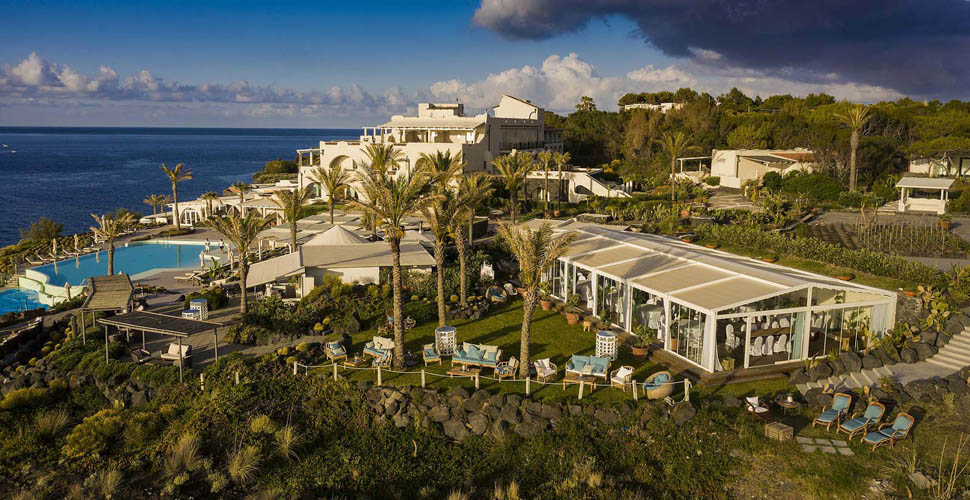
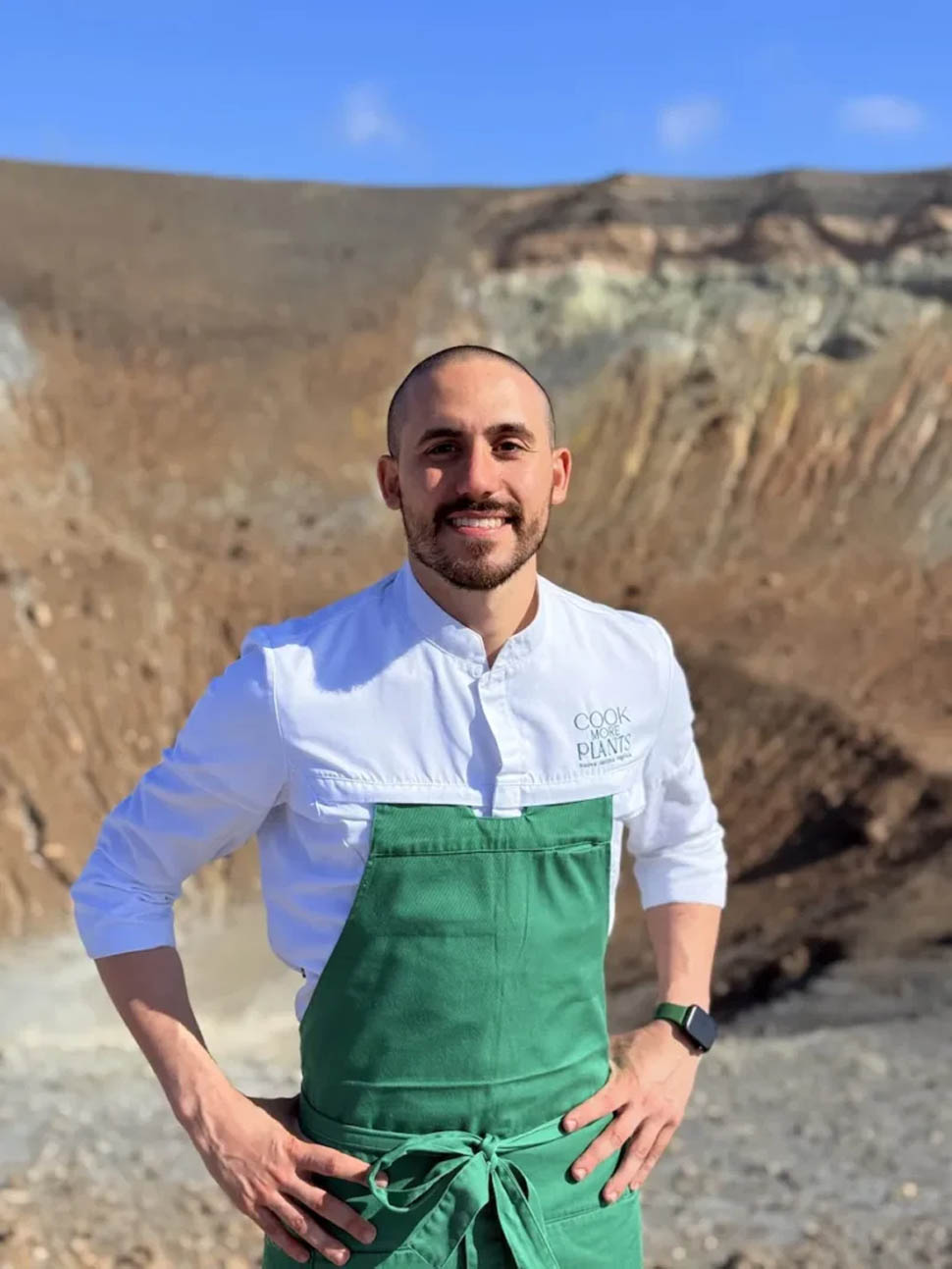
Davide Guidara, meanwhile, cooks plant-based cuisine on a remote island in the Aeolian archipelago, Vulcano. The most self-defeating idea anyone could ever have is to pursue a career by imposing significant limitations on oneself, catering to a very specific audience, and doing so in a place that’s not on anyone’s way—but one you have to go out of your way to reach. Imagine what it’s like to get to Vulcano from, say, Milan. You have to take a plane to Catania, then a bus or van to Milazzo (which takes almost two hours), and then a hydrofoil to the Aeolian Islands. And it’s a good thing that Vulcano is, of the archipelago’s seven sisters, the closest to the mainland.
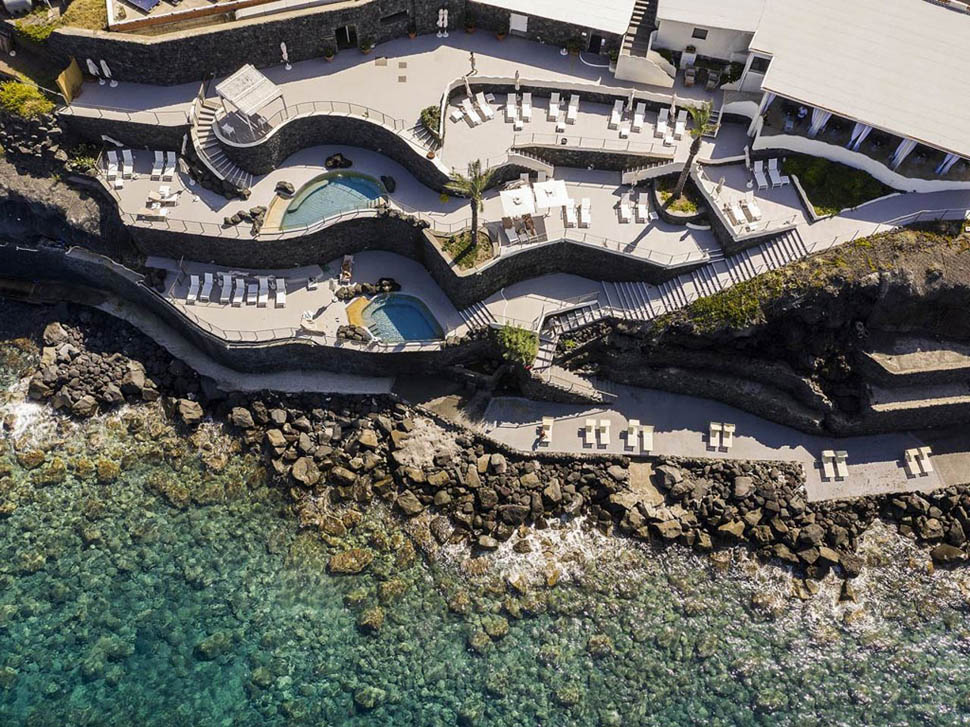
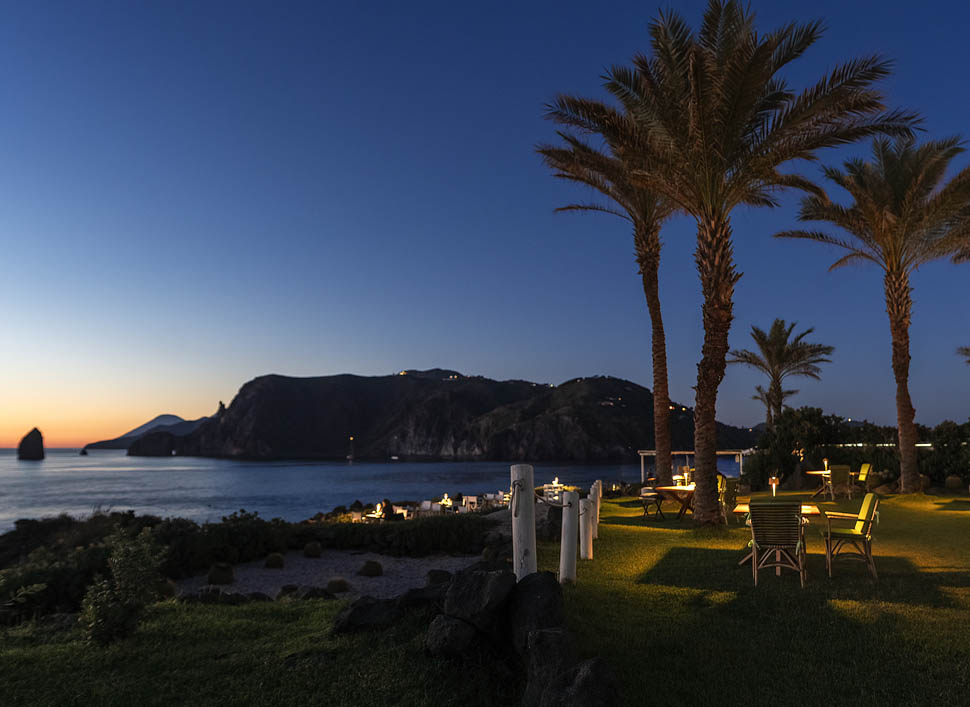
One might ask: Who would go all the way out there just to eat zucchini and turnips? And yet, I Tenerumi, one of the restaurants at the Therasia Resort, is always packed. And its clientele isn’t made up solely of die-hard foodies—those gastronomic nerds who get excited about culinary logarithms—but of people who go there expecting to have a good time, and usually do. Not only that: I Tenerumi boasts two Michelin stars, making it the most prestigious Italian restaurant that doesn’t serve animal proteins. This success with both the public and critics means two things. First: Guidara’s seven-point review may be four years old, but it’s still very much valid. Second: he’s truly talented.
The chef
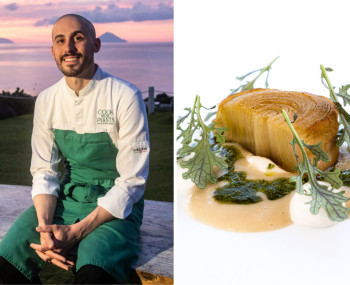
Guidara isn’t Sicilian; he’s from the inland region of Campania. He was born in the province of Benevento in 1994 and decided very early on to become a chef, coming from a family where cooking and sharing meals were the main ways of socializing—as is the case almost everywhere in Italy, and especially in the South. He attended culinary school, then began traveling around Campania and Italy (Don Alfonso 1890, Il Mosaico in Ischia—where he had his fateful encounter with Nino Di Costanzo—and La Terrazza in Rome), followed by stints with Michel Bras in France, at the Sea Grill in Brussels, and at René Redzepi’s Noma. In 2016, he arrived in Sicily, making a name for himself at the Eolian Milazzo Hotel, then at SUM in Catania, where he developed the philosophical foundations that would lead him to adopt a fully plant-based approach at Tenerumi, a restaurant that—not coincidentally—takes its name from the leaves and shoots of the long zucchini. Guidara joined the team there in 2021, having been sought out by Umberto Trani, general manager of the establishment owned by the Polito family, who wanted to give a new direction to the restaurant, which opened in 2019.
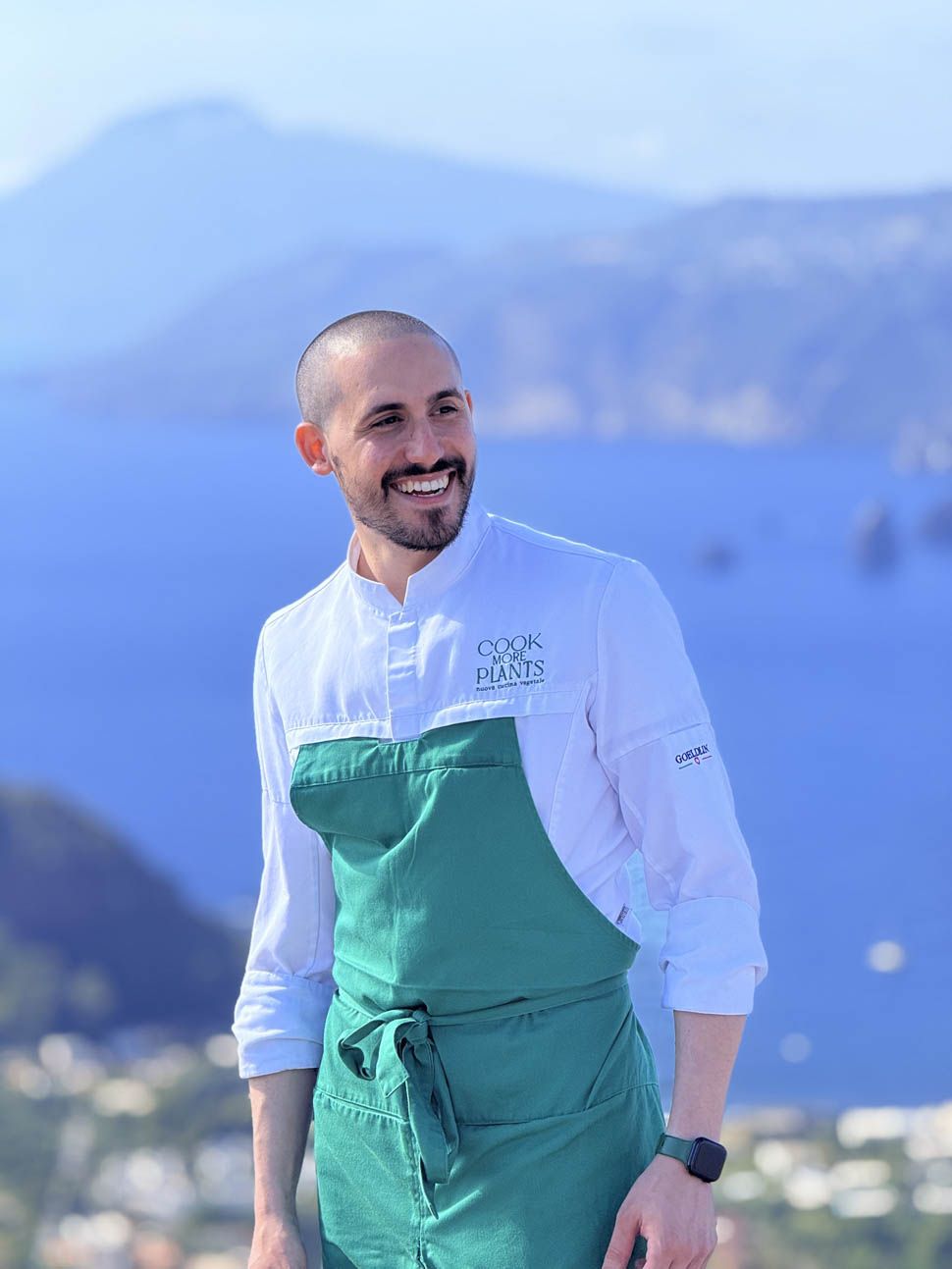
Guidara is also a rather unusual kind of Nobel-worthy chef. He strongly believes in cuisine as a meeting ground between memories and flavors and what science has to offer. He loves to analyze the structure of ingredients, the depth and longevity of flavor; he eagerly engages in experimentation, possesses exquisite technique, and shows no haste or eagerness to show it off. He tries and tries again. His dishes always appear simpler than they are, but that’s part of the game: the chef and his team handle the hard work and the thinking, while the guest enjoys the results. He respects the seasons but also plays a little trick on them by producing preserves in winter that freeze time. He sees chefs as key players in changing practices that could improve our planet, but that doesn’t make him a supporter of their egos—even though, deep down, he could easily be one, because he’s a great guy who really knows his stuff, and listening to him is always a delight.
The I Tenerumi Experience
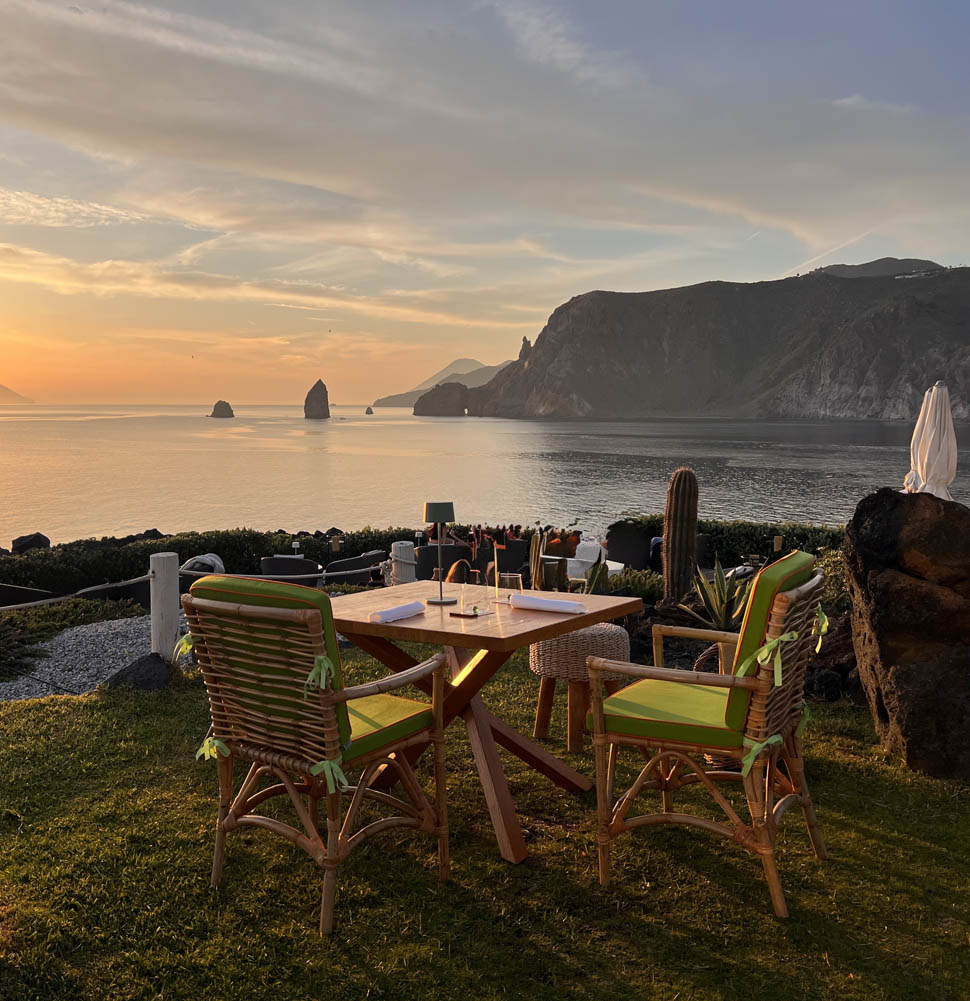
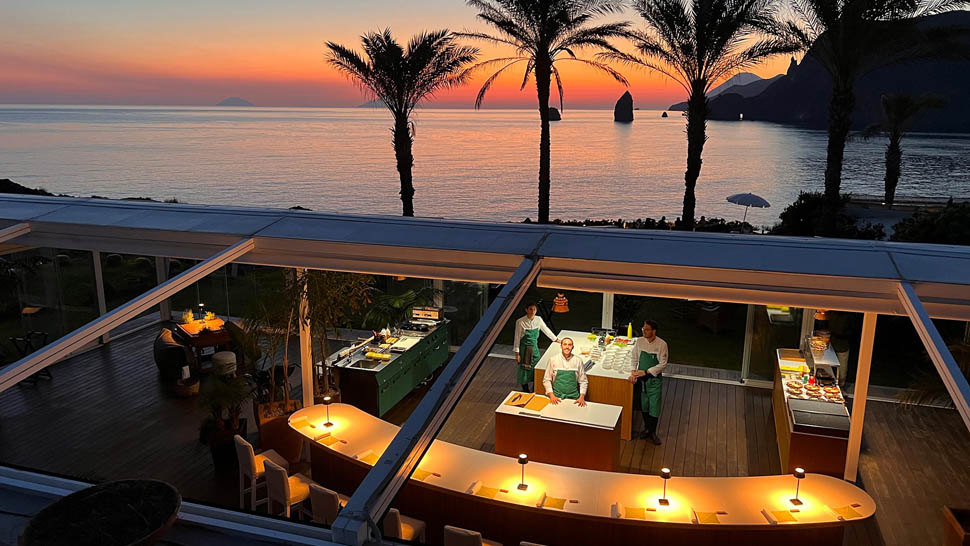
At I Tenerumi, you can dine in a garden overlooking the Aeolian Islands, or in the dining room, where a counter makes you feel almost like part of the kitchen team. The tactical approach used by Guidara seems to resemble Oronzo Canà’s legendary 5-5-5 formation: everyone is capable of doing everything, playing any role, and covering every area of the field. The set menu costs 220 euros and is divided into three courses: the first celebrates fall and winter with preserves; the second, spring and summer with the freshness of the ingredients; and the third features desserts, which are viewed not as a sweet final kiss but as a continuation of the story.
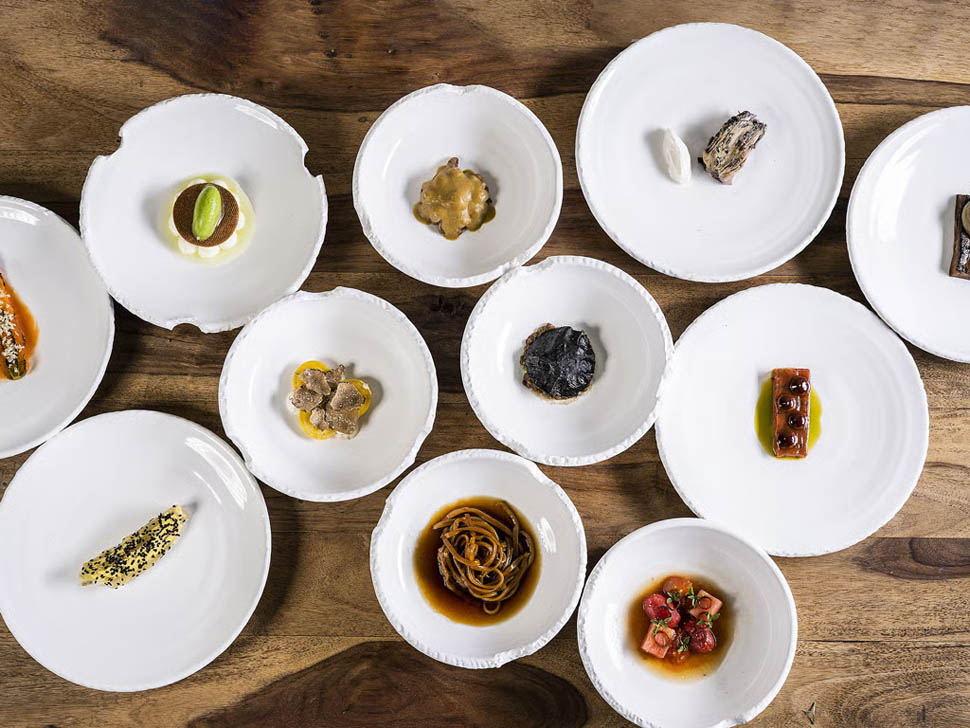
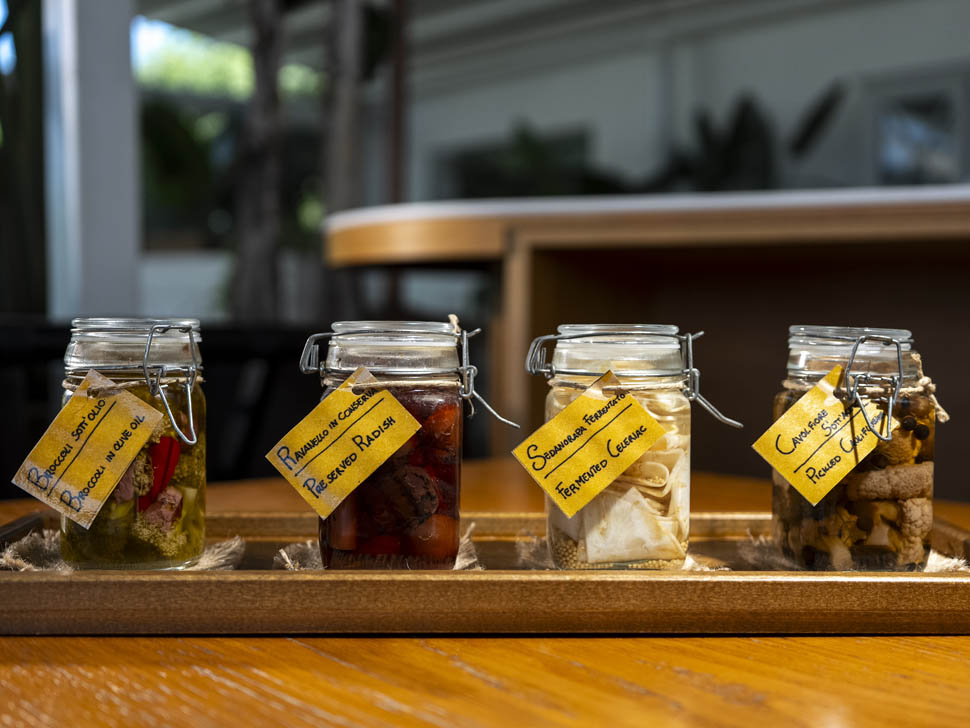
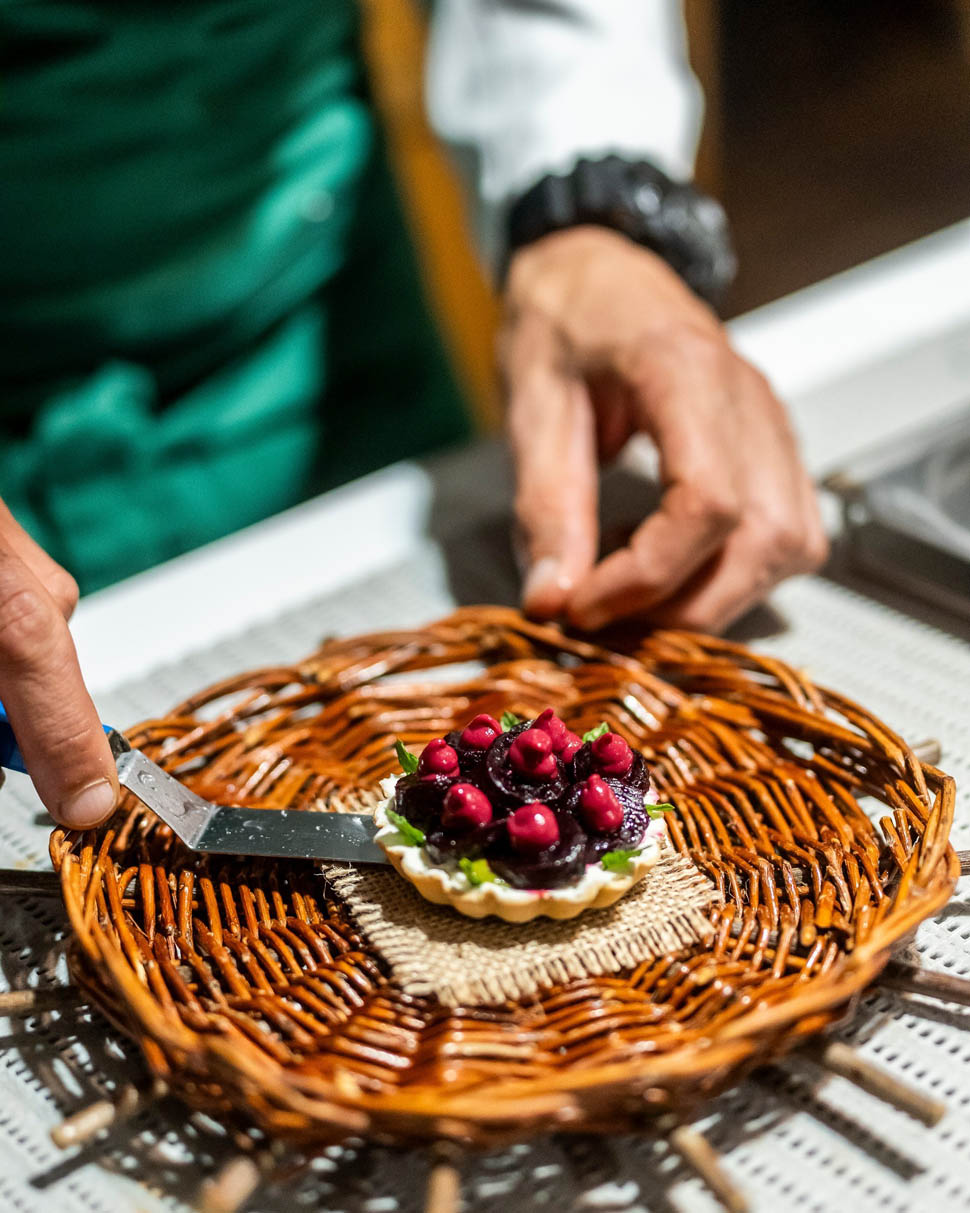
So I started with the preserves, which are first brought to the table, each in its own jar, and then served one after another: first, fermented celeriac stuffed with celeriac and horseradish mayonnaise; then a pickled cauliflower with roasted cauliflower extract, hollandaise sauce, and black olives; next, a radish, fermented with rice bran using the Japanese tsukemono technique, served with an apple compote and scallion mayonnaise, along with radish leaves sautéed with garlic, olive oil, and chili pepper; finally, a beet tartlet made with roasted and marinated beets, paired with a certain goat cheese from the same island and a cream made from weeds—almost invisible to the eye, but truly refreshing on the palate.
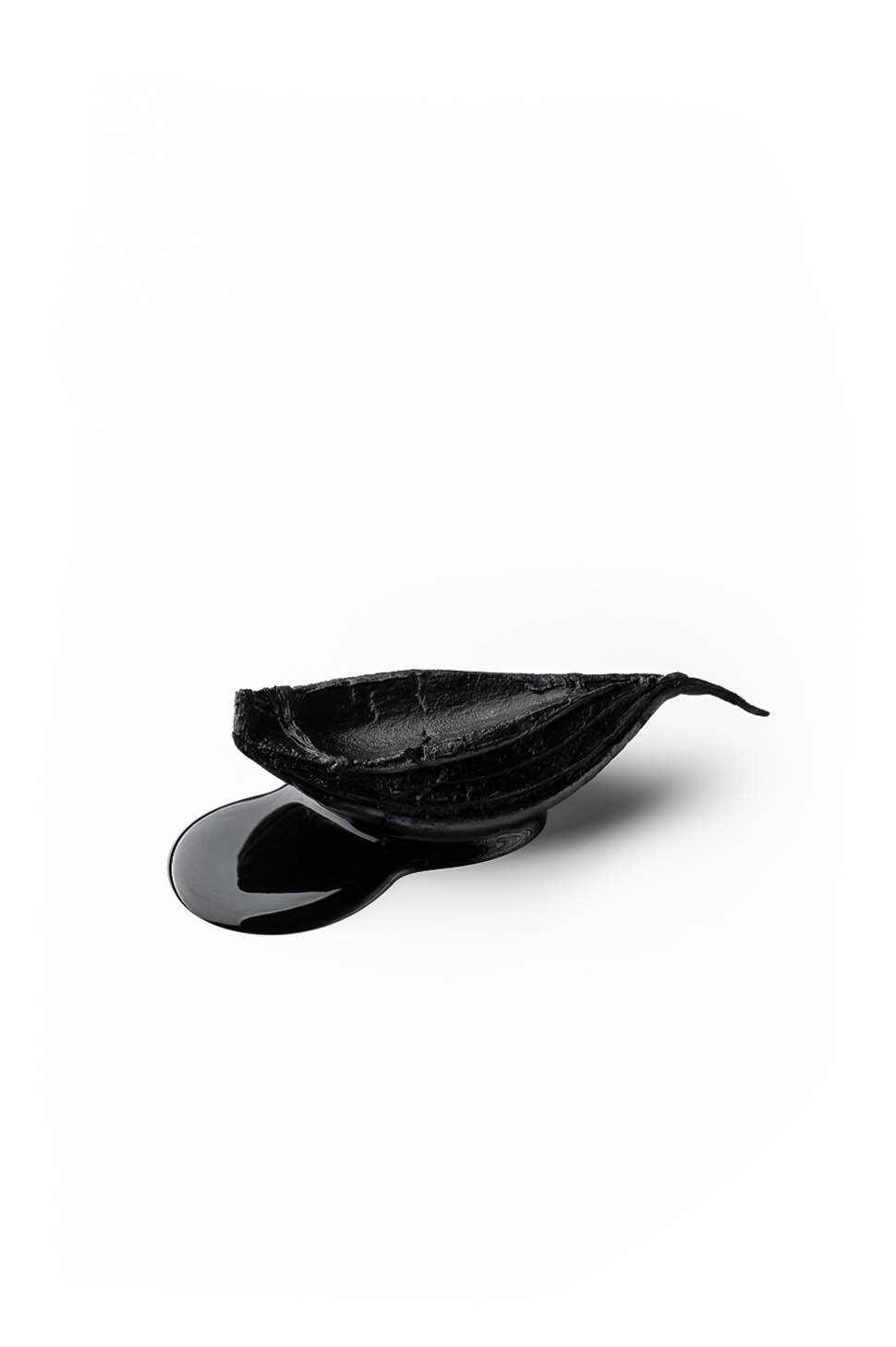
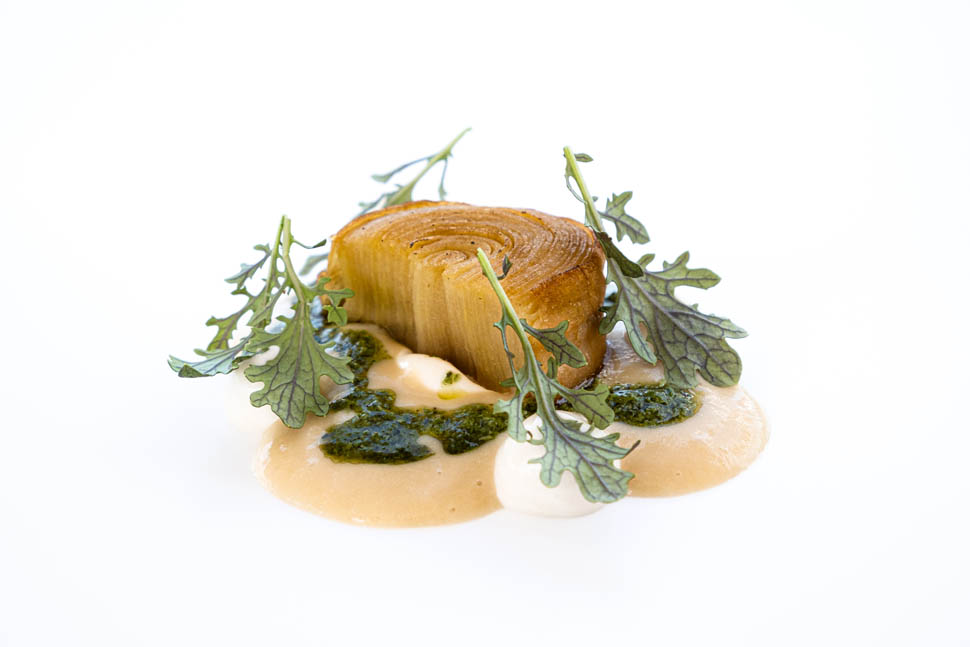
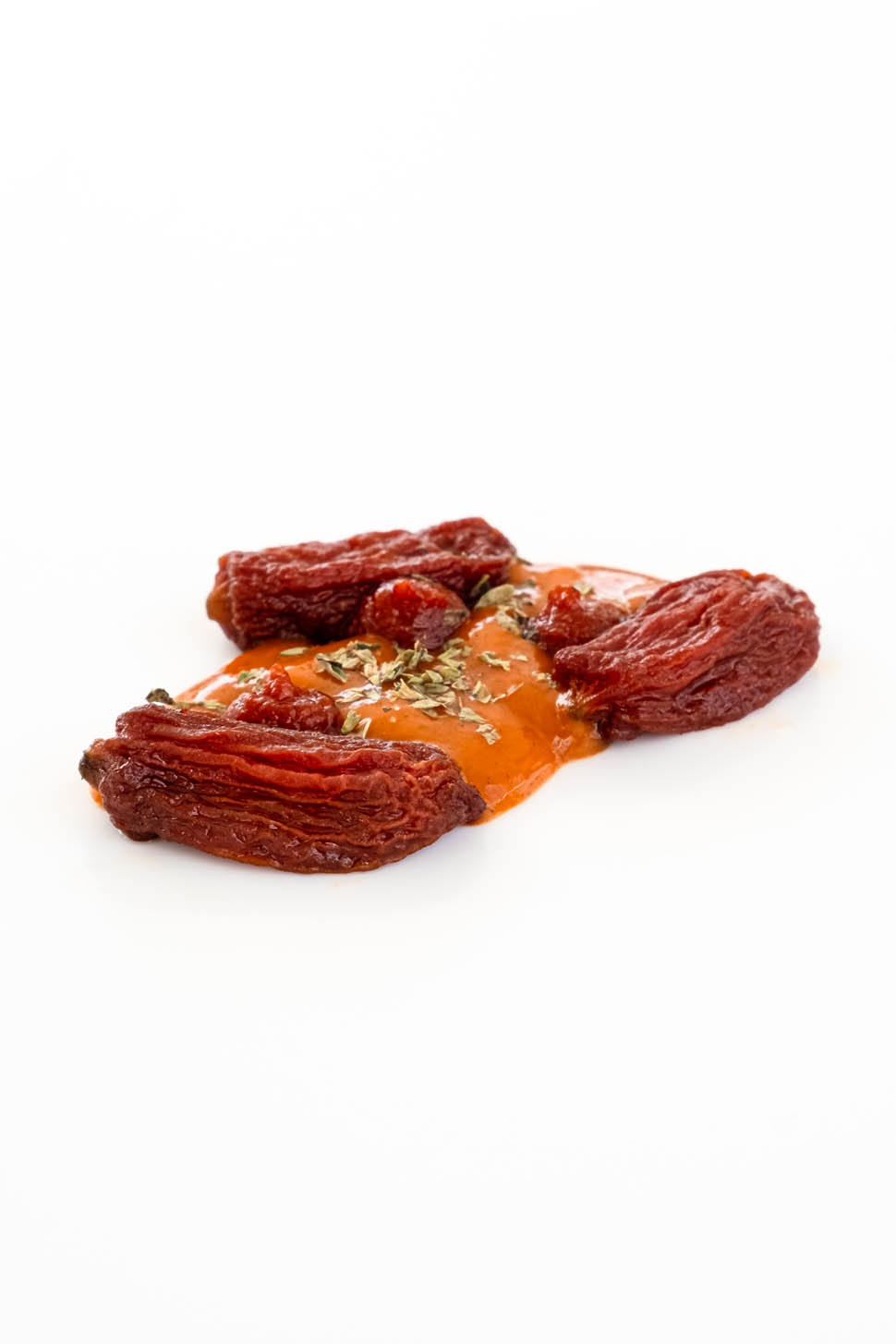
Then there’s a zucchini that’s dried, rehydrated in zucchini brine, and aged for ten days inside beeswax—a process that completely transforms its texture—plus a “zucchini alla scapece” filling topped with zucchini ceviche and nepitella oil. A dish that vividly illustrates just how long and arduous the path to perfection is—and its apparent simplicity. Next are two courses dedicated to the tomato: the first, richer in umami and more intense, features a datterino tomato cooked in lime, dried, and served with a sauce made from datterino tomatoes, lactic acid, and red wine. Here, guests are more than encouraged to mop up the sauce with Siccagno tomato paste. The second course is a tomato salad, built on a bed of basil panna cotta and topped with tomato seeds, shallots marinated in soy sauce, and crispy bread.
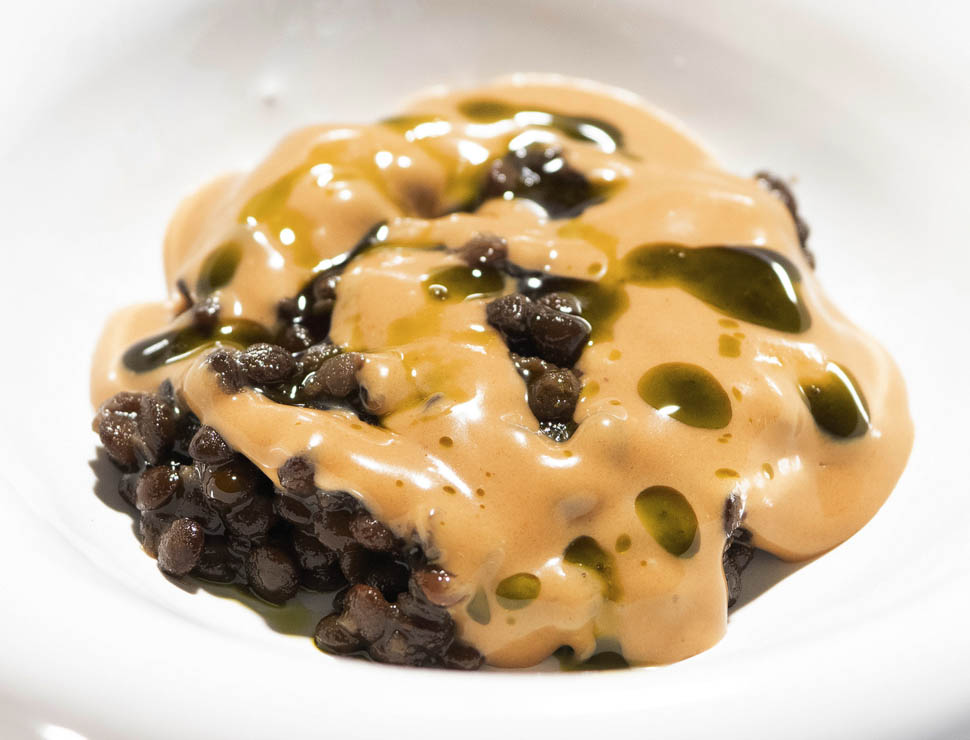
In the meantime, the bread has also arrived: a loaf made with heirloom Sicilian grains from the island of Lipari, a spiral-shaped breadstick (“iconic,” says the delightful waitress—and we’ll forgive her for that) with onion, and some crackers made with flaxseed, pumpkin seeds, and sunflower seeds. All of this was accompanied by a “butter substitute” made from an emulsion of sunflower seeds, water, and honey. Moving on: here’s a pepper cooked with a blowtorch, which allows you to peel it while retaining that smoky crust, served with a pepper muhammara made with dried fruit and spices, a pepper glaze, and chimichurri. Then there was my favorite dish: a black lentil from Leonforte, a town near Enna—rather small and unassuming, to be honest, but truly wonderful in this dish, where a lentil miso, a long pepper sauce, and fresh lemon bring out its depth.
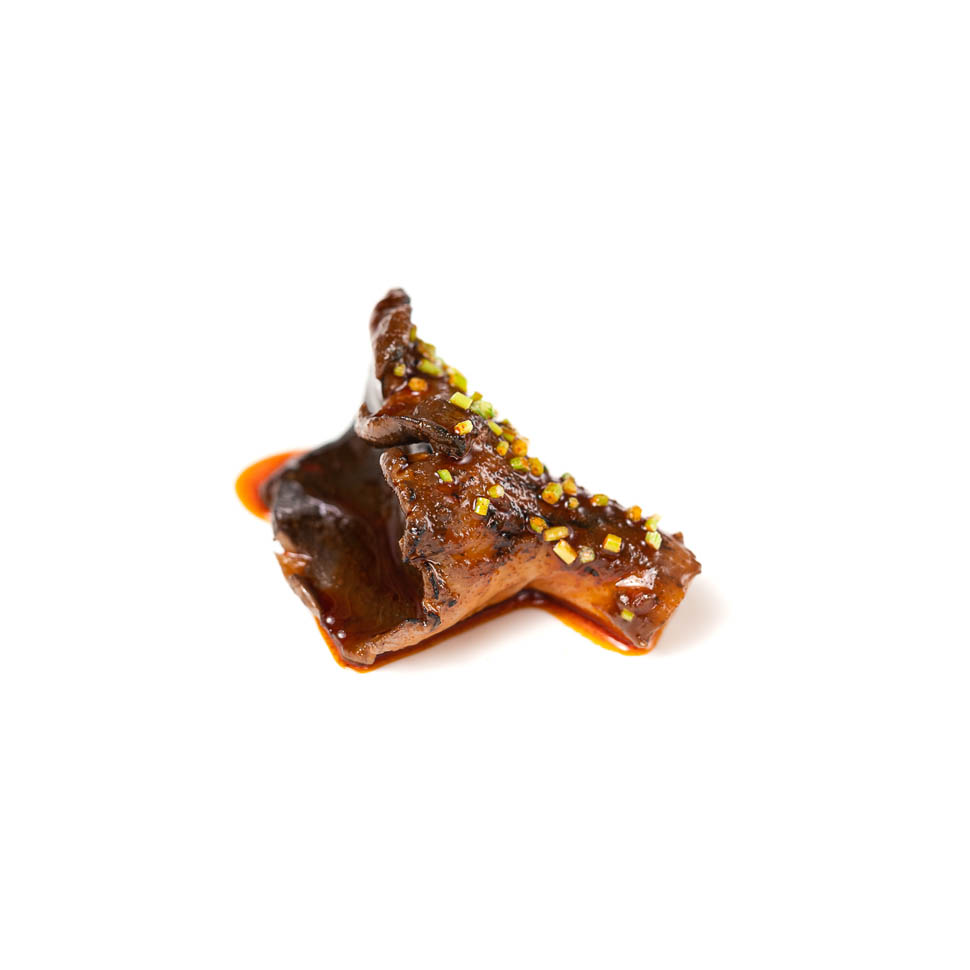
Next, a cardoncello mushroom, pressure-cooked, marinated, and grilled yakitori-style with a parsley and paprika paste. And a potato sliced into thin strips with a Japanese mandoline, served with beurre blanc, rosemary pesto, and aioli—a masterpiece of French technique. Dessert: an ode to Sicily featuring lemon meringue, lemon spumone, and lemon gel, all made with lemon, plus fresh lemon; a carob madeleine, coated in chocolate and carob glaze, served on a bed of carob; and a brioche made without refined sugar but sweetened with banana purée, accompanied by mango sorbet and a pineapple-passion fruit compote.
The dishes are accompanied by cocktails—often non-alcoholic—that consistently follow the same concept as the tasting menu: kombucha, tepache, cordials, and infusions, designed to complement the courses but also to stand on their own. Take, for example, the “Homage to Guttuso,” a virgin Bloody Mary with red datterino tomatoes, passion fruit, soy sauce, and fresh lemon juice from the island; an extract of red bell pepper seared over charcoal for a few seconds, with a raw yet slightly smoky flavor, paired with verjus—the juice pressed from unripe grapes—a mango and jalapeño mixture, and paprika salt on the rim; and the “Americano di Vulcano” with cocoa bitters, Etna cherry vermouth, a few drops of prickly pear distillate (a sort of tequila), and pomegranate soda. But those who wish can also enjoy a meal with a glass or a bottle of wine.
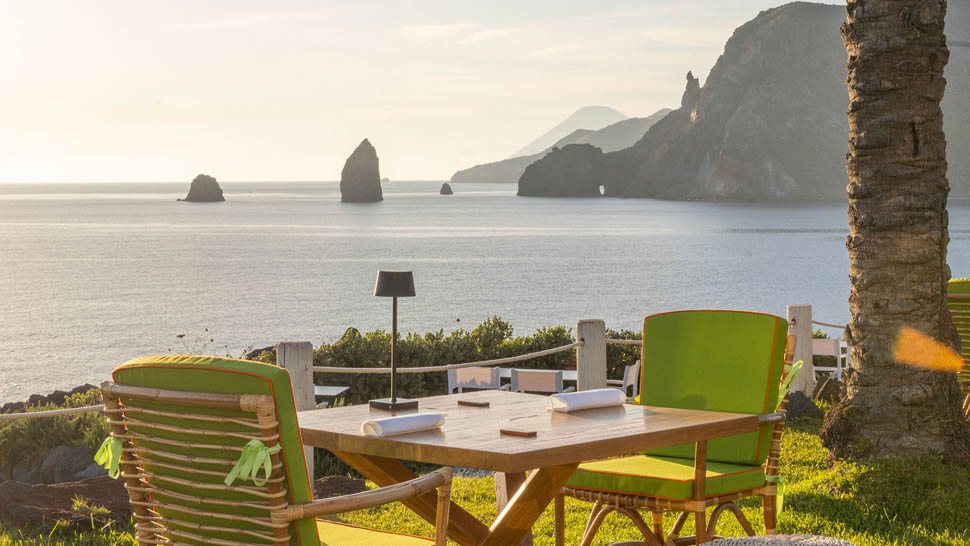
Not far from the restaurant is a 2,000-square-meter vegetable garden that supplies the kitchen. Guidara also collaborates with the Independent Seed Association, which is committed to preserving Sicilian varieties. Guidara also runs the bistro at the Therasia Resort, while his (talented) protégé, Onofrio Pagnotto, is at the helm of the second restaurant, Il Cappero, which holds one Michelin star.
Therasia Resort – I Tenerumi
Vulcano Island, 98050 Vulcanello ME
Phone: 090 985 2555