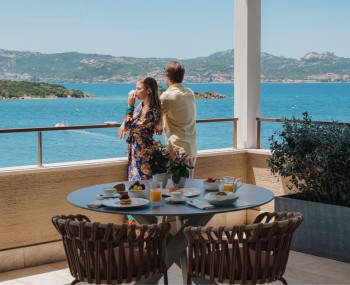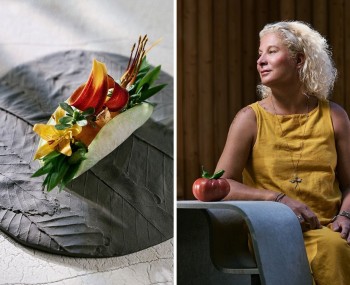
Four hectares of vineyards, hazelnut groves, and woods; twelve rooms; a spa housed in the historic cellars; and one Michelin star. In Monforte d’Alba, Réva is bringing to life a vision of hospitality where the local terroir flows from the vineyard to the table and into the Franco-Piedmontese cuisine of FRE.
Photos of the dishes: Roberto Fortunato
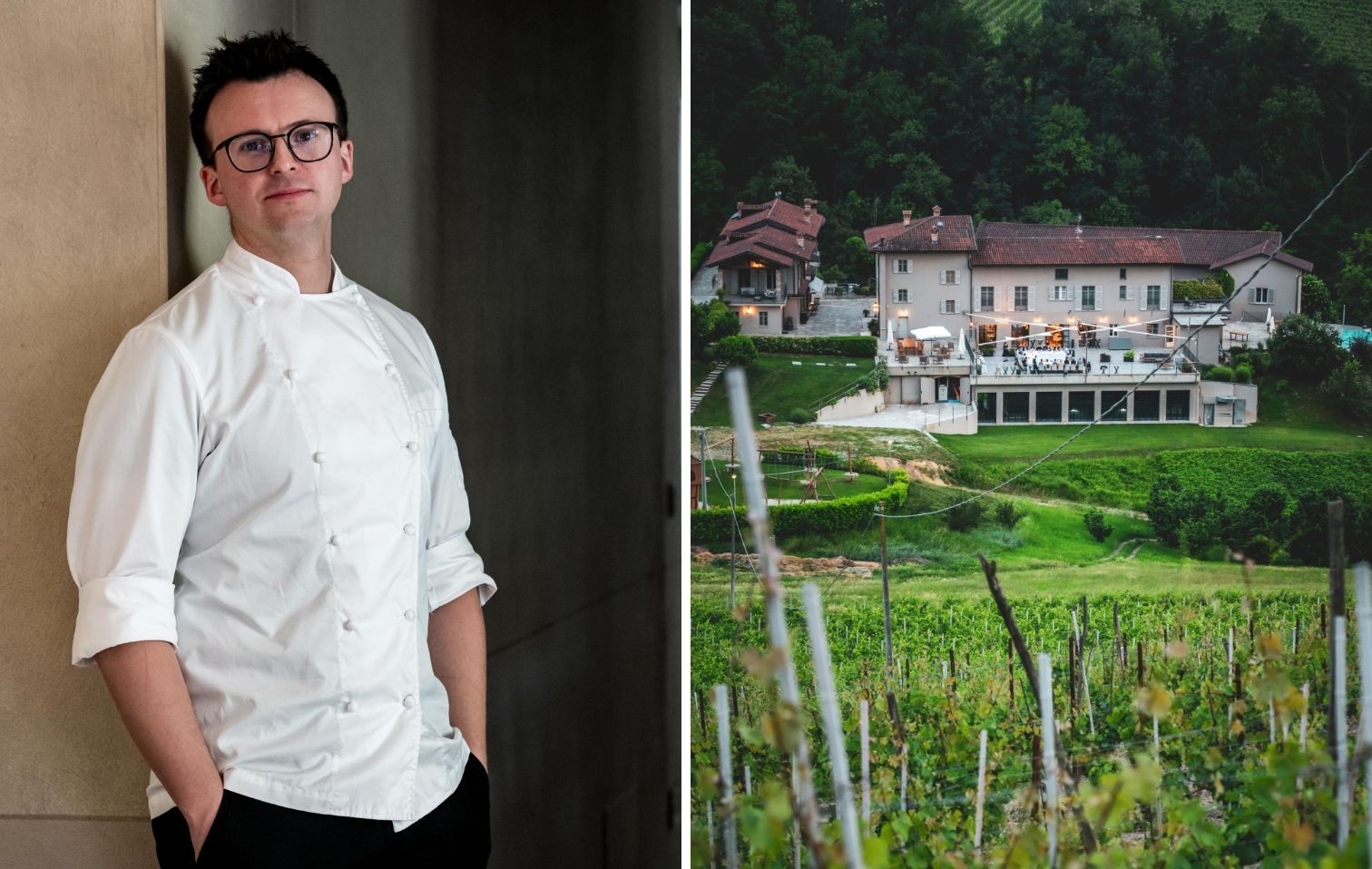
In Monforte d’Alba, the landscape needs no explanation. Just let it wash in through the window, stretching from one hill to the next, following the contours of the vineyards that rise and fall across the Langhe. It’s a region that already seems to have its own natural backdrop, but at the Réva Resort, they’ve chosen not to simply admire it: they’ve made it part of the experience, from your stay to the spa, from the wine cellar to the table at FRE, the one-Michelin-star restaurant led by Chef Francesco Marchese.
Four hectares surrounded by vineyards, hazelnut groves, and woods; twelve rooms; a swimming pool overlooking the hills; an art collection that brings works by Eastern European artists to Piedmont; and, above all, a winery that lends its name to the project: “Réva,” in Czech, means “grape cluster.” It is a simple word that captures a place where wine is not merely a product, but one of the keys to understanding the landscape.
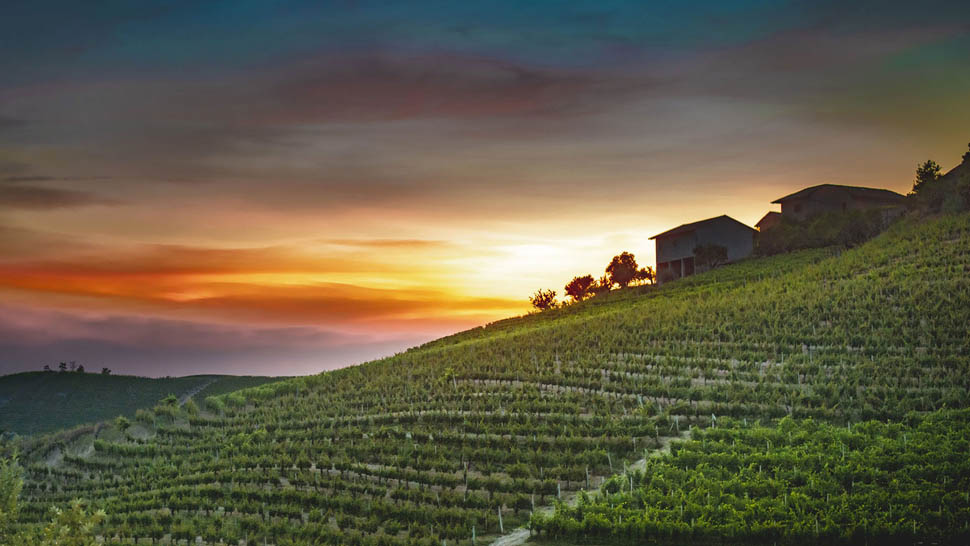
From the historic cellars to the spa, all the way to the pool nestled among the vineyards
The story begins in 2013, when Czech investor Miroslav Lekes purchased the San Sebastiano estate in Monforte d’Alba with the intention of renovating it while preserving its agricultural heritage, rooted in wine and hazelnuts. Since then, Réva has built a hospitality concept around that estate that seeks to bring together nature, art, gastronomy, and time. It is precisely the latter that is perhaps the resort’s true, declared luxury: the luxury of being able to spend time there without rushing. “We believe in the value of experience, and that the culture of a place—direct contact with its nature, its products, and its people—is an essential part of every stay,” says the team. “For us, luxury is the time one chooses to devote to enriching one’s senses, to caring for the body, and to exploring a region that presents itself as sincere and unfiltered.”
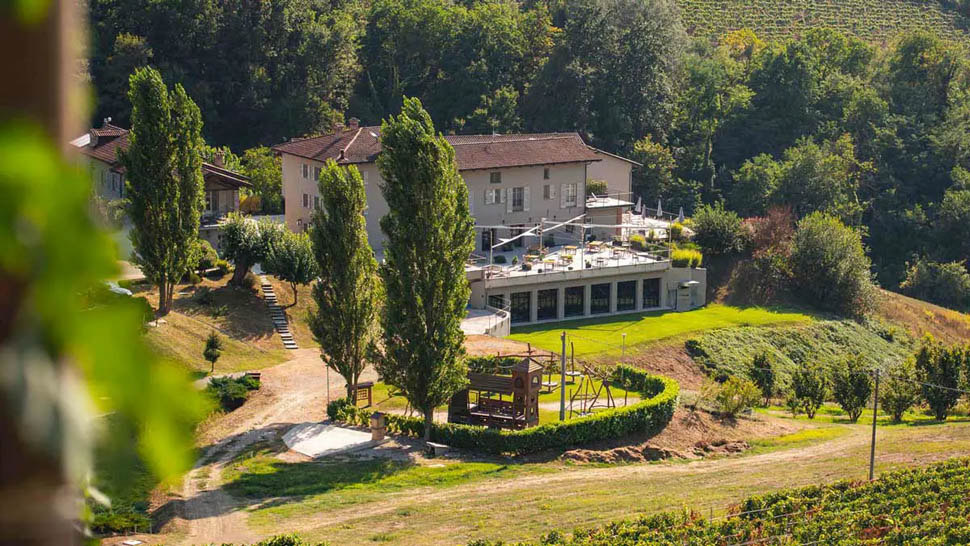
This philosophy is better understood by walking through the property than by reading a statement. The vineyards and woods do not merely serve as a backdrop to the rooms: they envelop the estate, almost as if to shield it from the noise of the world. In fact, the architecture seeks a continuous dialogue with the landscape, allowing nature to remain a constant presence, while the interiors embrace a restrained contemporary style. The twelve rooms feature delicate tones, natural fabrics and finishes, minimalist furnishings, and works of art placed alongside some original elements of the historic San Sebastiano estate. Art is indeed one of Réva’s most recognizable features. The collection was curated by Lekes’s wife, an expert in the field, and has brought what is described as Italy’s largest collection of works by Eastern European artists to the resort and restaurant.
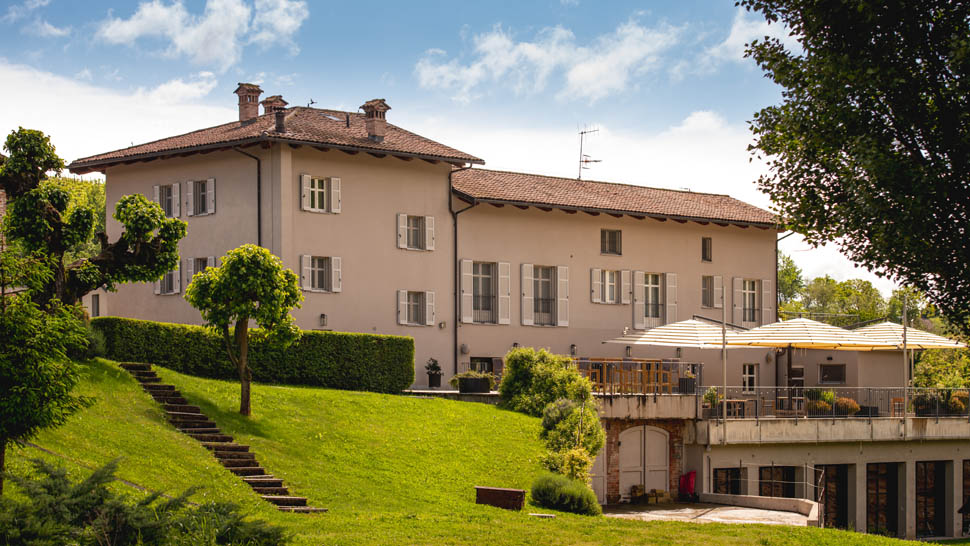
The result avoids the “museum effect”: the artworks coexist with the spaces, extending into the guest rooms and common areas, becoming part of a living experience that does not rigidly separate what you eat from what you see. Even the spa draws inspiration from the area’s agricultural history. It was created within the estate’s historic cellars and thus preserves, at least in spirit, a direct link to Réva’s agricultural past. Inside, guests will find a sauna, a Turkish bath, sensory showers with chromotherapy, and an indoor pool filled with thermal water.
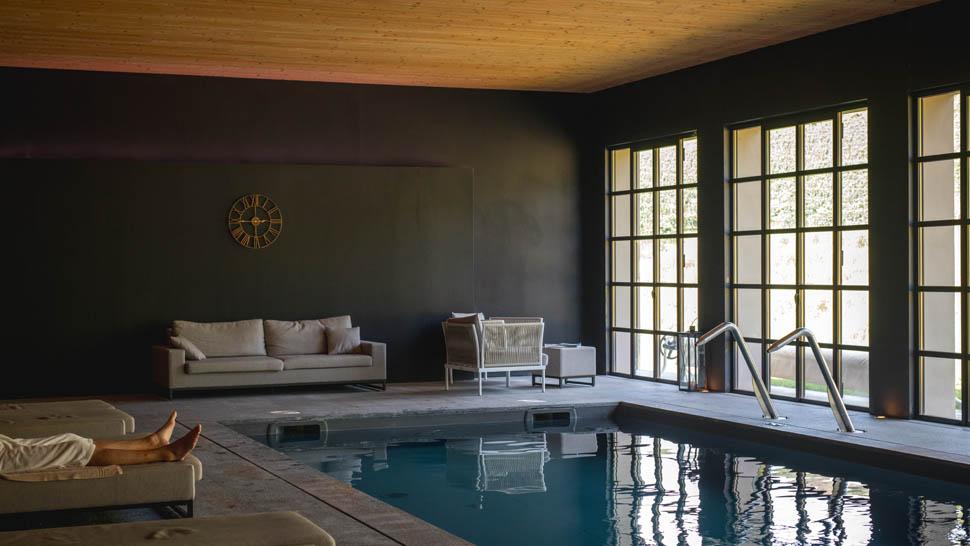
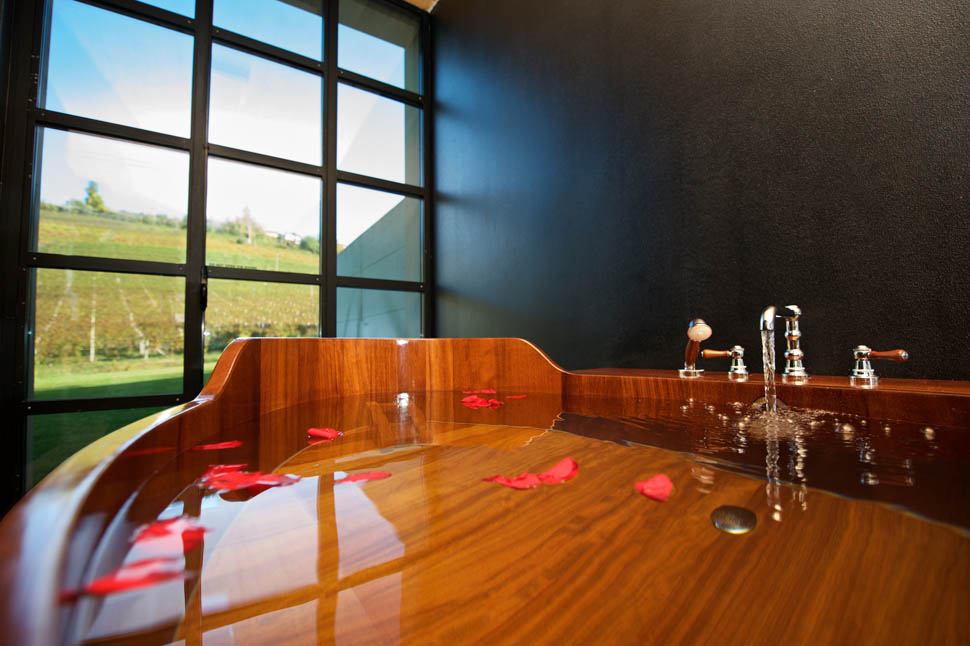
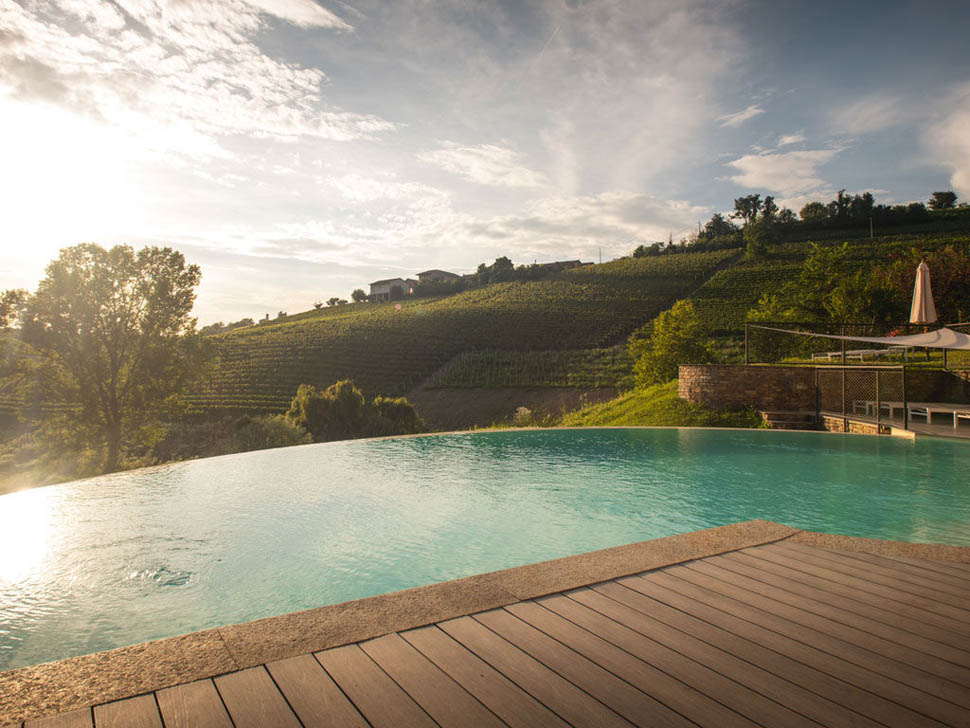
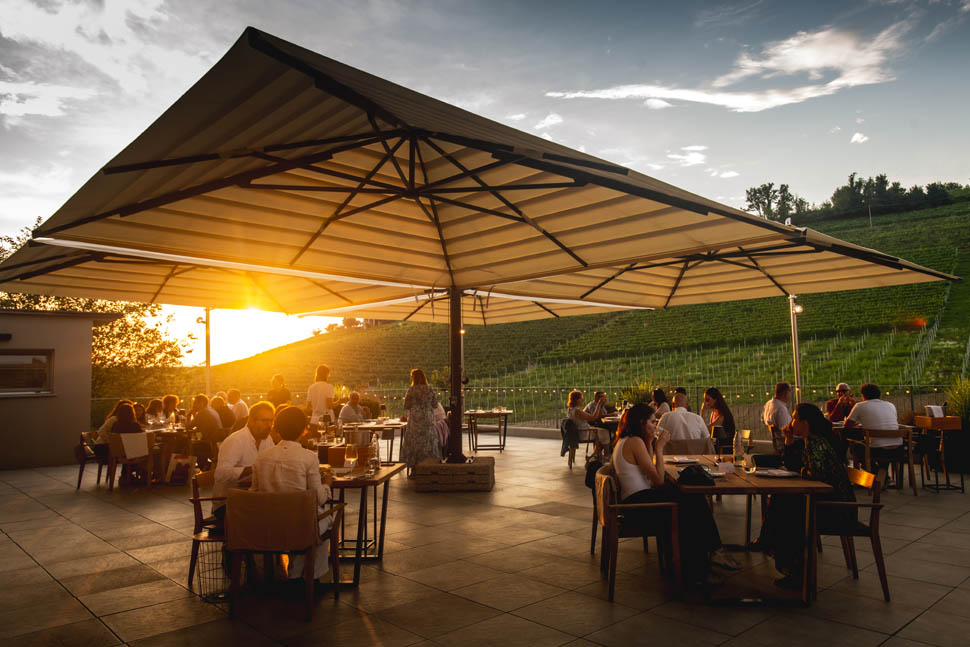
But it is the private room with its wooden bathtub and view of the vineyards that elevates the connection with the landscape to an almost cinematic dimension: the hills outside, silence within. In the summer, however, life moves outdoors to the infinity pool, which looks directly out onto the vineyards below. It is a luxury that does not require an abundance of objects, but rather expands one’s perception of the place. The Piedmont you explore during the day, among villages and wineries, thus remains present even when you return to the resort. And then there’s the cuisine. Because at Réva, the region isn’t confined to the bottle alone.
FRE: When France Meets the Langhe
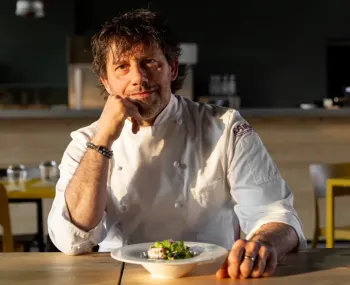
At FRE, the cuisine begins with a seemingly simple question: what happens when a French culinary team meets a Piedmontese pantry? The answer is a cuisine that takes the techniques, principles, and approach of great French gastronomy and infuses them with the ingredients of the Langhe. Not to create French cuisine in Piedmont, but to foster a dialogue between two gastronomic cultures that, in this part of Italy, share more common ground than one might think. Francesco Marchese, FRE’s young Resident Chef, arrived in 2020 after training in France, which included working with Yannick Alléno. His cuisine thus draws on a precise understanding of French sauces, garnishes, techniques, and preparation methods, but finds its identity in Piedmontese ingredients.
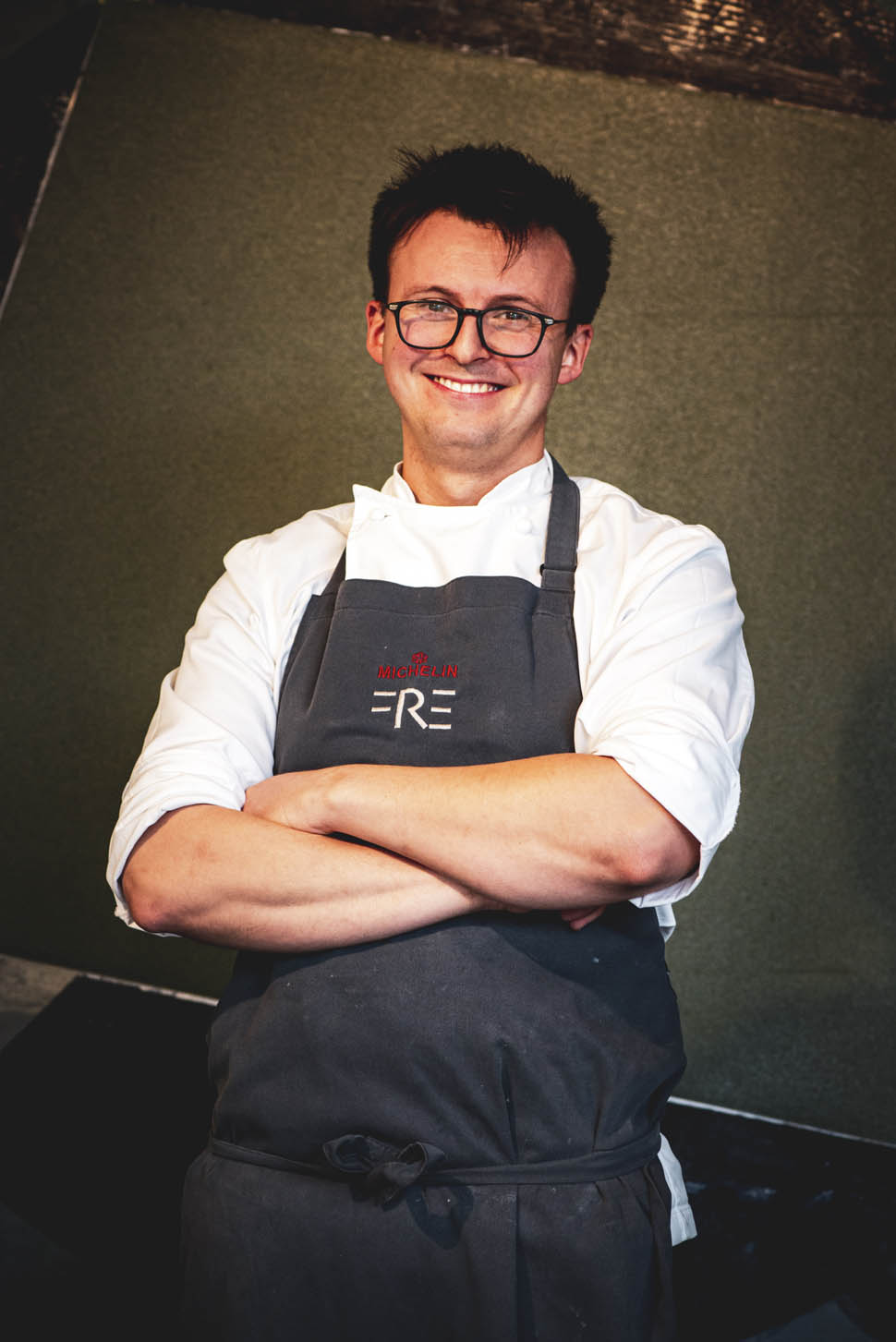
“Bringing together Piedmont and France comes quite naturally,” says Marchese. “Starting with Piedmont—it’s an incredibly rich region from a gastronomic standpoint, not only in terms of recipes but also ingredients, cultural exchanges over the centuries, and it has countless anecdotes related to food, a true testament to everything that has happened here.” The cultural closeness to France, after all, is written into Piedmont’s very history. “There are similarities with France; the fact that we once had a royal family had a huge influence, even in terms of cuisine—what is traditional food today was once the food of the nobility—not to mention the culture of ‘bagnetti’ and sauces.” It is precisely in the sauces, the preparations, and the ability to create relationships between ingredients that Marchese identifies one of the central tenets of his cuisine.
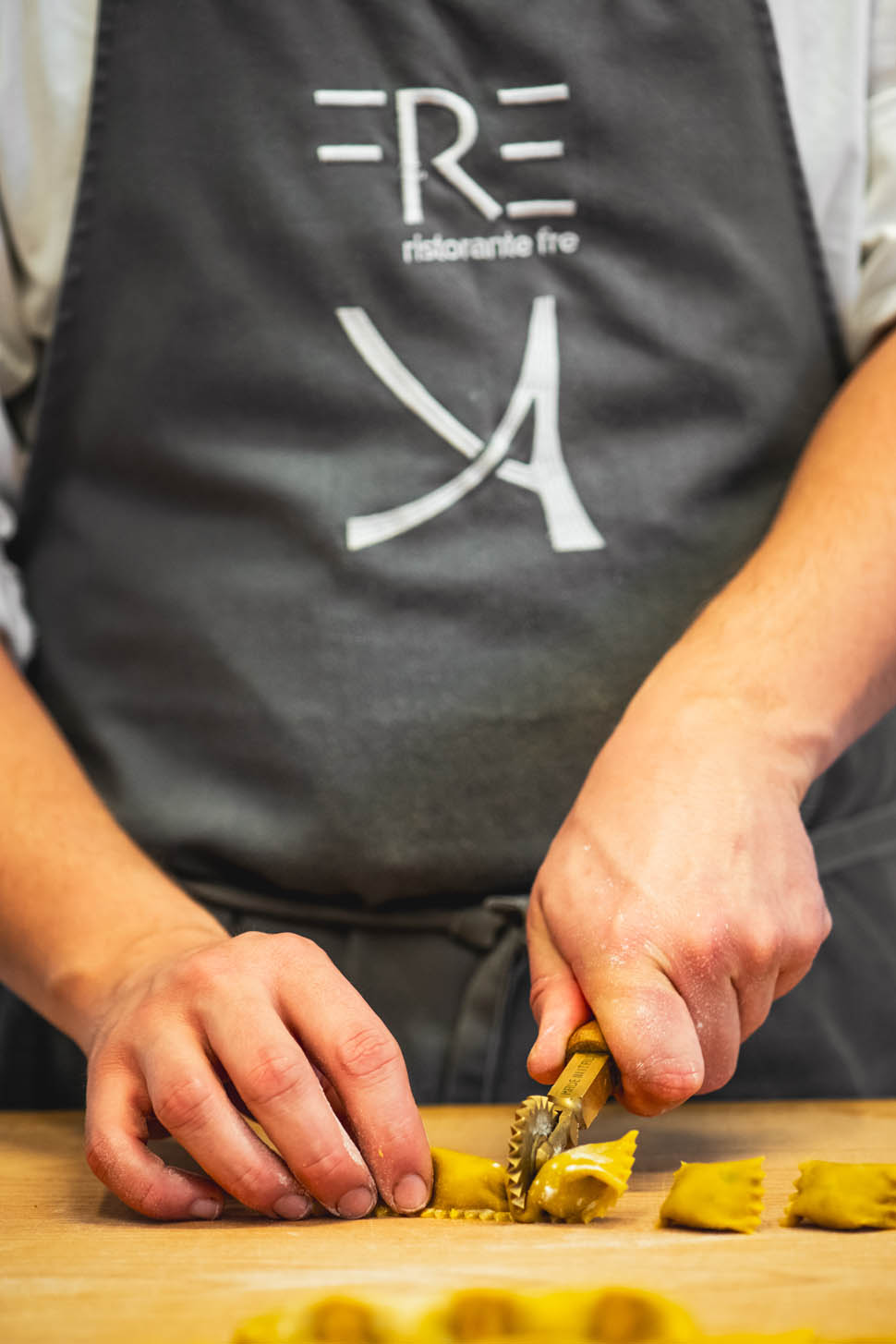
“Piedmont is truly the point where Italy and France meet. What we do at FRE is try to let the ingredients communicate with one another on the plate, enriching them with sauces and striving to highlight the characteristics of the food—nothing more.” This statement is particularly interesting because of that “nothing more.” Because behind a technically French cuisine, there is no intention to add complexity for its own sake. On the contrary, technique becomes a tool to let the product speak for itself. “We generally start with a Piedmontese product, but sometimes we use ‘Piedmontese-ness’ in the form of technique or by drawing inspiration from history.” It is a hybrid cuisine in the most fruitful sense of the term: not because it mixes elements without direction, but because it recognizes that a region can also be told through what has come to it from outside, settling over time until it becomes part of its identity.
Fassona beef, plin, and that risotto that has become a signature dish
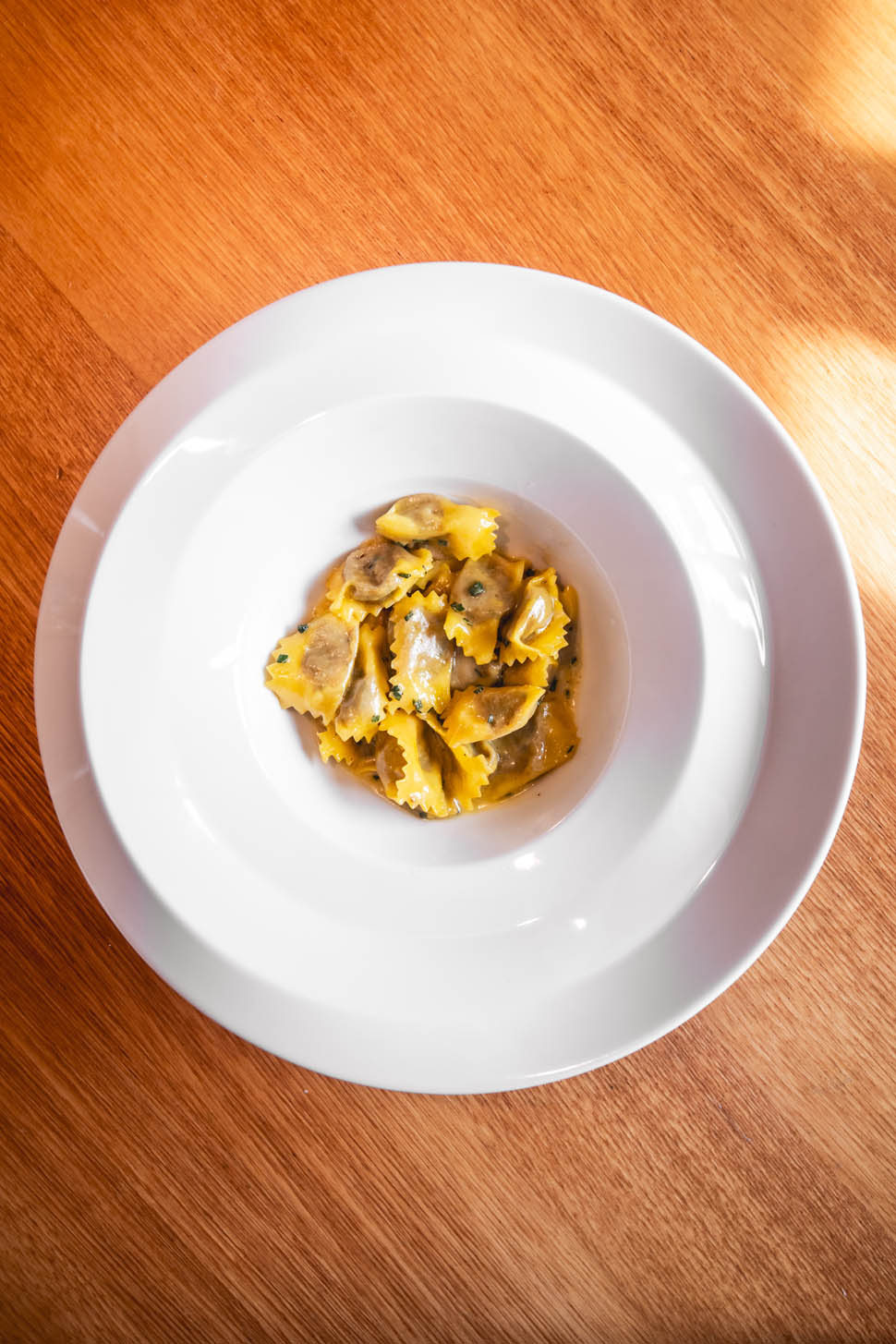
On the plate, this philosophy takes on very specific forms. The Fassona beef tartare with foie gras mayonnaise, mushroom essence, and crispy fusettes combines a quintessentially Piedmontese ingredient with a technique inspired by France, creating a dish in which the region is not treated as a statement of intent but as a culinary element. Even more explicit is the interplay in the crispy sweetbread plin with milk-simmered onions and dried brewer’s yeast, now one of FRE’s most beloved signature dishes. The instantly recognizable stuffed pasta serves as the starting point for a more complex composition, where the sweetbread and accompanying preparations shift the dish’s character.
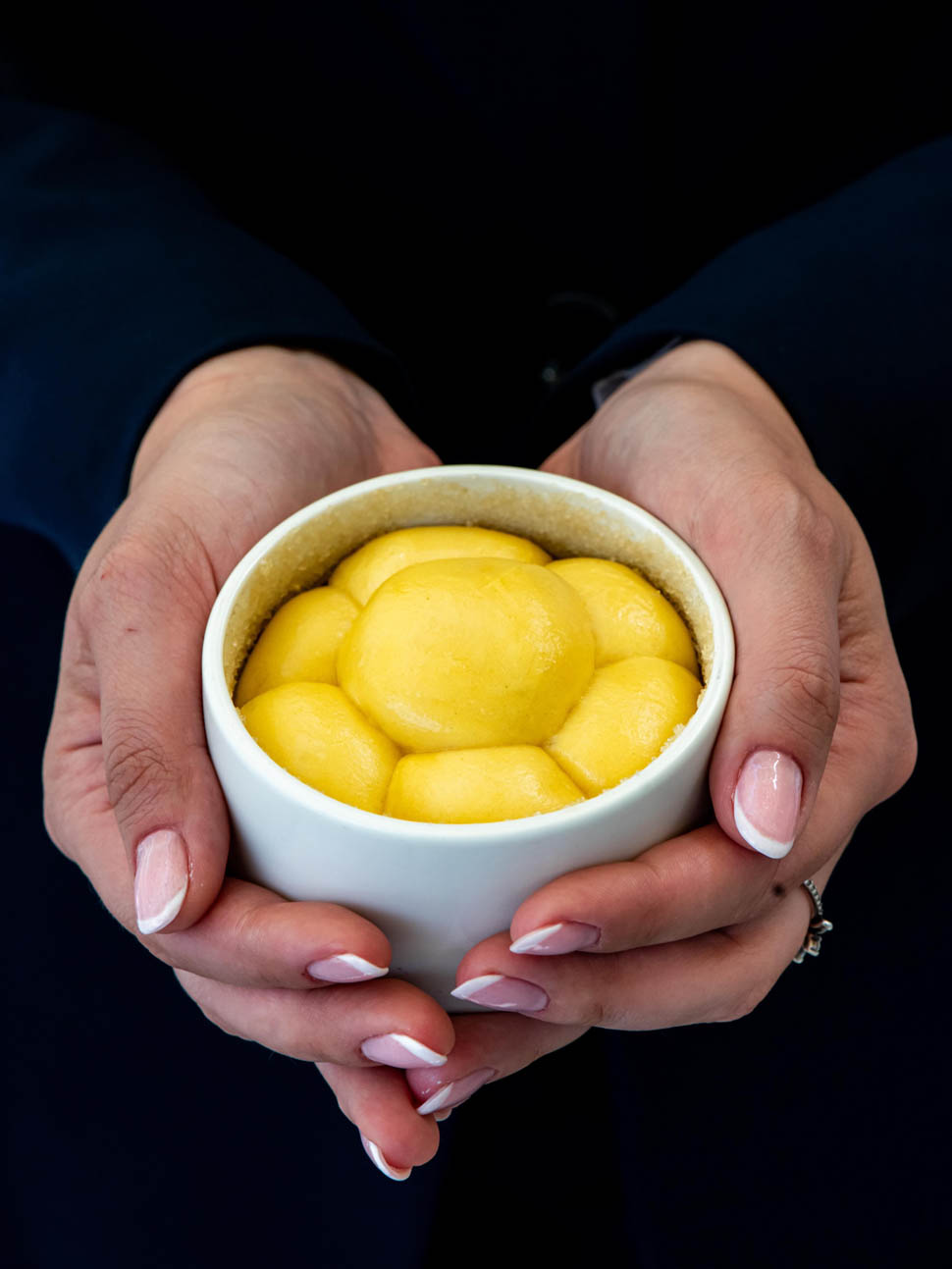
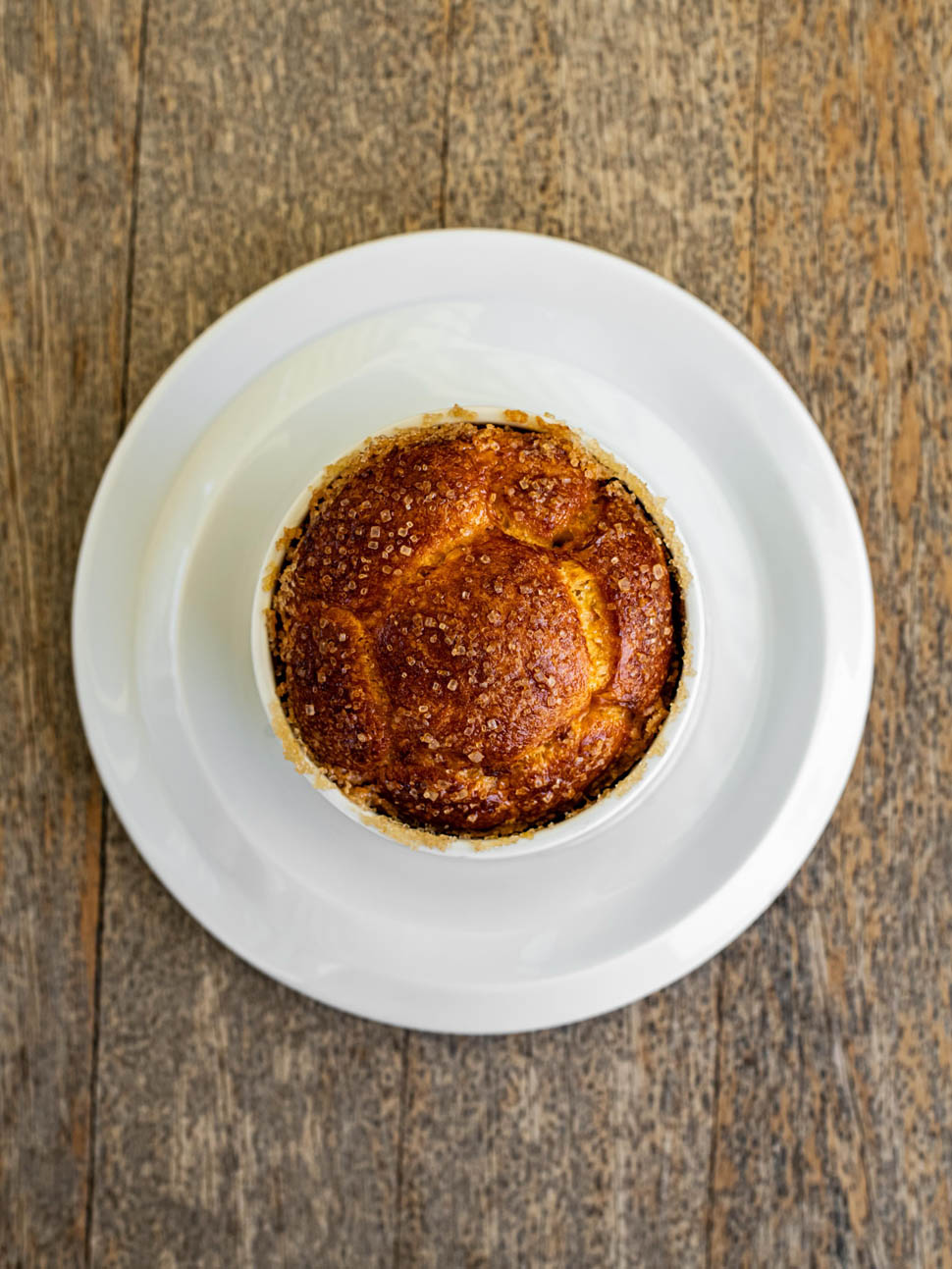
Then there is the Risotto with prosciutto extract, Oscietra caviar, and bone marrow au gratin with Parmigiano Reggiano. A dish that has, over time, become one of the cornerstones of Marchese’s cuisine, built on intensity: the prosciutto transformed into an extract, the caviar, the bone marrow, the Parmigiano. Recognizable ingredients that are brought together through a precise technique. FRE’s cuisine, however, does not abandon tradition when it is called for in its most recognizable form. Because, here, modernity does not necessarily mean forgetting the dishes that have shaped Piedmont’s gastronomic heritage. And truffle season becomes one of the times when this principle becomes even more evident.
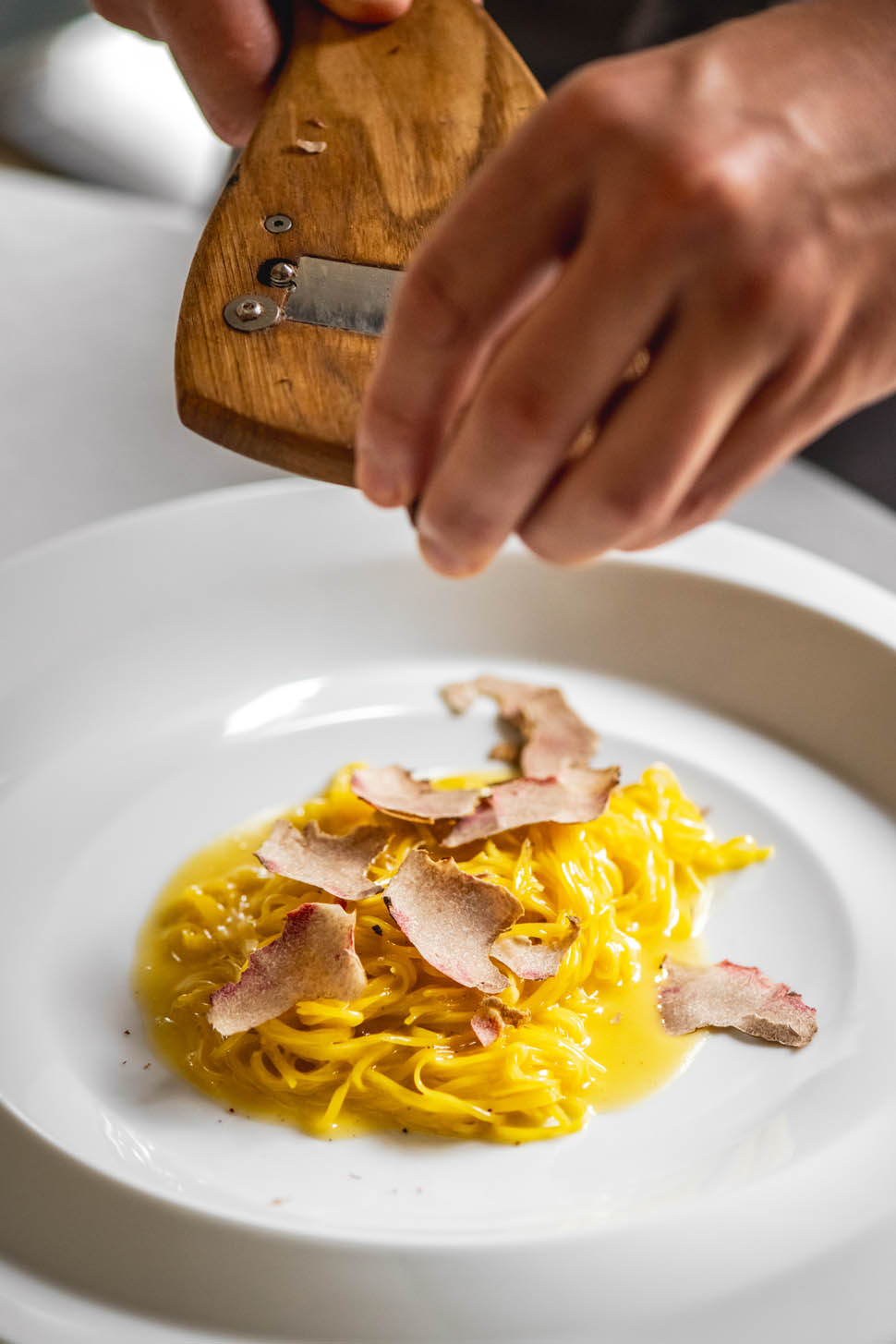
Truffles and Two Ways to Explore the Langhe
For truffle season, Marchese has created a four-course tasting menu centered on the Piedmontese flavors that pair best with this prized tuber. This selection also gives diners freedom to choose, alongside the great traditional classics that remain in high demand during this season—especially in their truffle-infused versions. This is a significant detail: even in a Michelin-starred restaurant, tradition is not treated as something to be left behind. It can still be the specific desire of those sitting at the table.
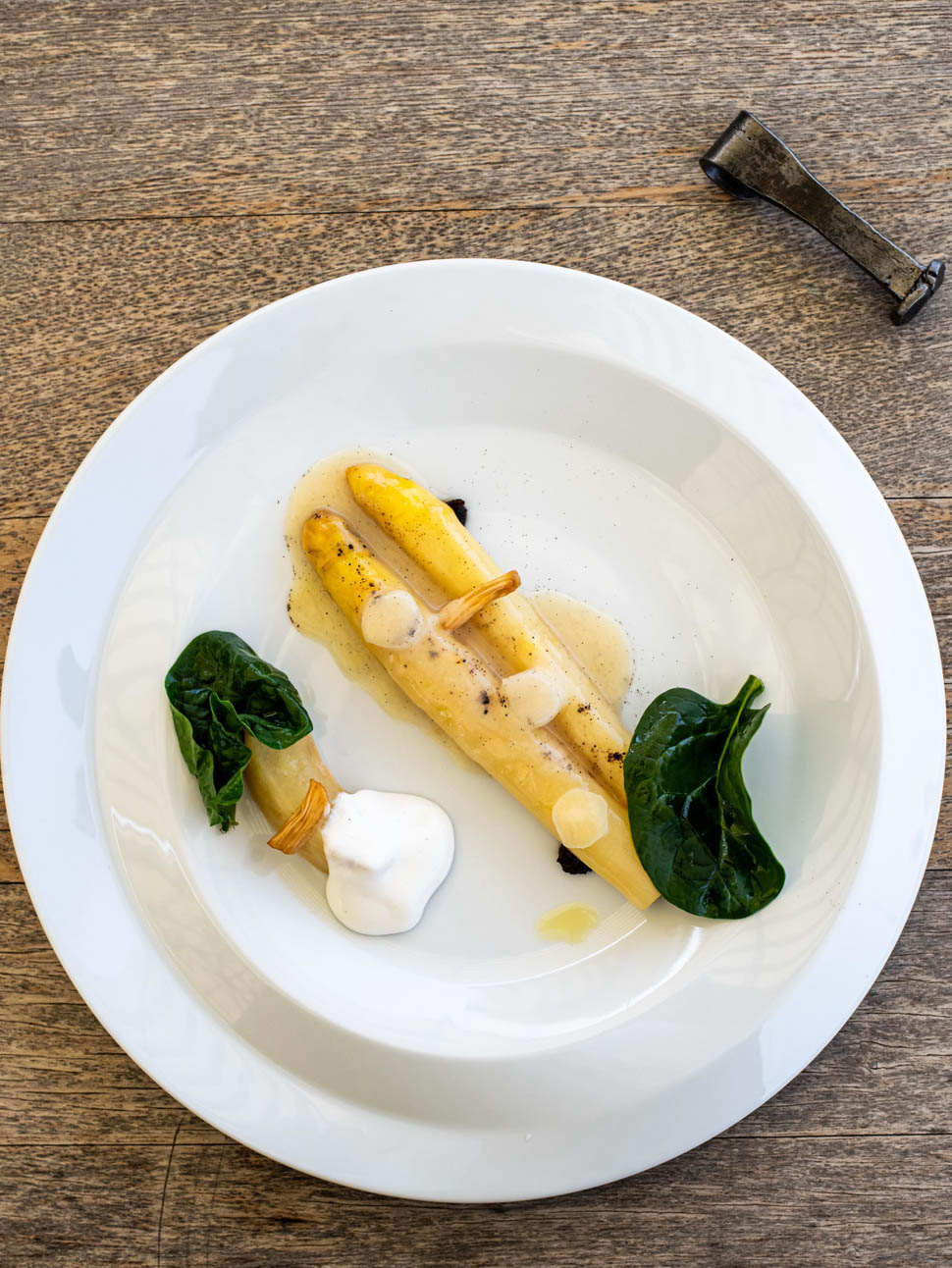
In fact, FRE offers two dining experiences. Il Tradizione, featuring four courses dedicated to exploring the region, for 110 euros; and Il FRE, featuring seven courses for 150 euros, where Marchese has greater freedom to express his creativity. For wine pairings, four glasses are available for 70 euros, or seven for 100 euros. The wine list reflects the restaurant’s broader geographic scope: hundreds of international labels, but with a special focus on the Langhe and the producers working around the estate.
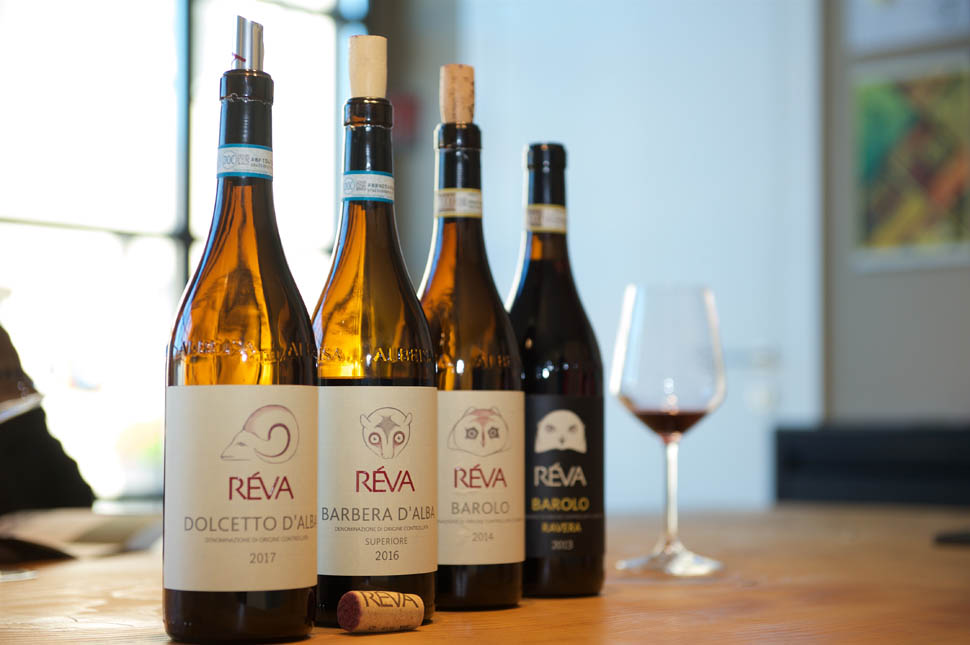
The Réva Winery: From Vineyard to Bottle
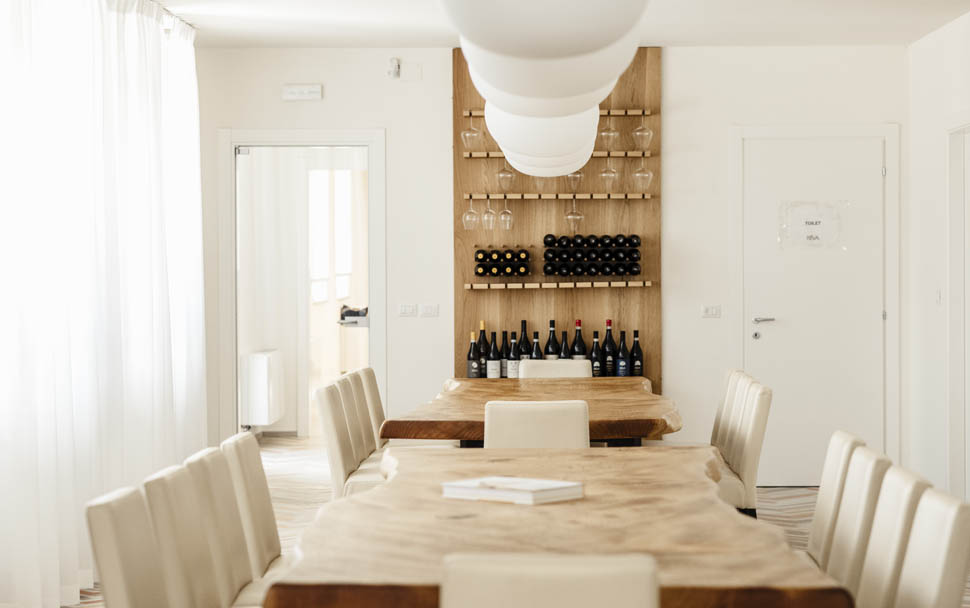
This is where the resort comes full circle. The wine cellar inside the FRE houses hundreds of bottles, ranging from small producers to historic big names, but above all, it features wines produced by the Réva Winery itself. The grapes come from the estate’s thirty hectares, spread across Monforte d’Alba, Novello, Serralunga d’Alba, Barolo, Grinzane, Roddino, and Verduno. This geographical spread alone suffices to explain just how central the territory is to the project. Not a single vineyard, then, but a mosaic of towns and soils that allows the winery to work with the diversity of the Langhe landscape.
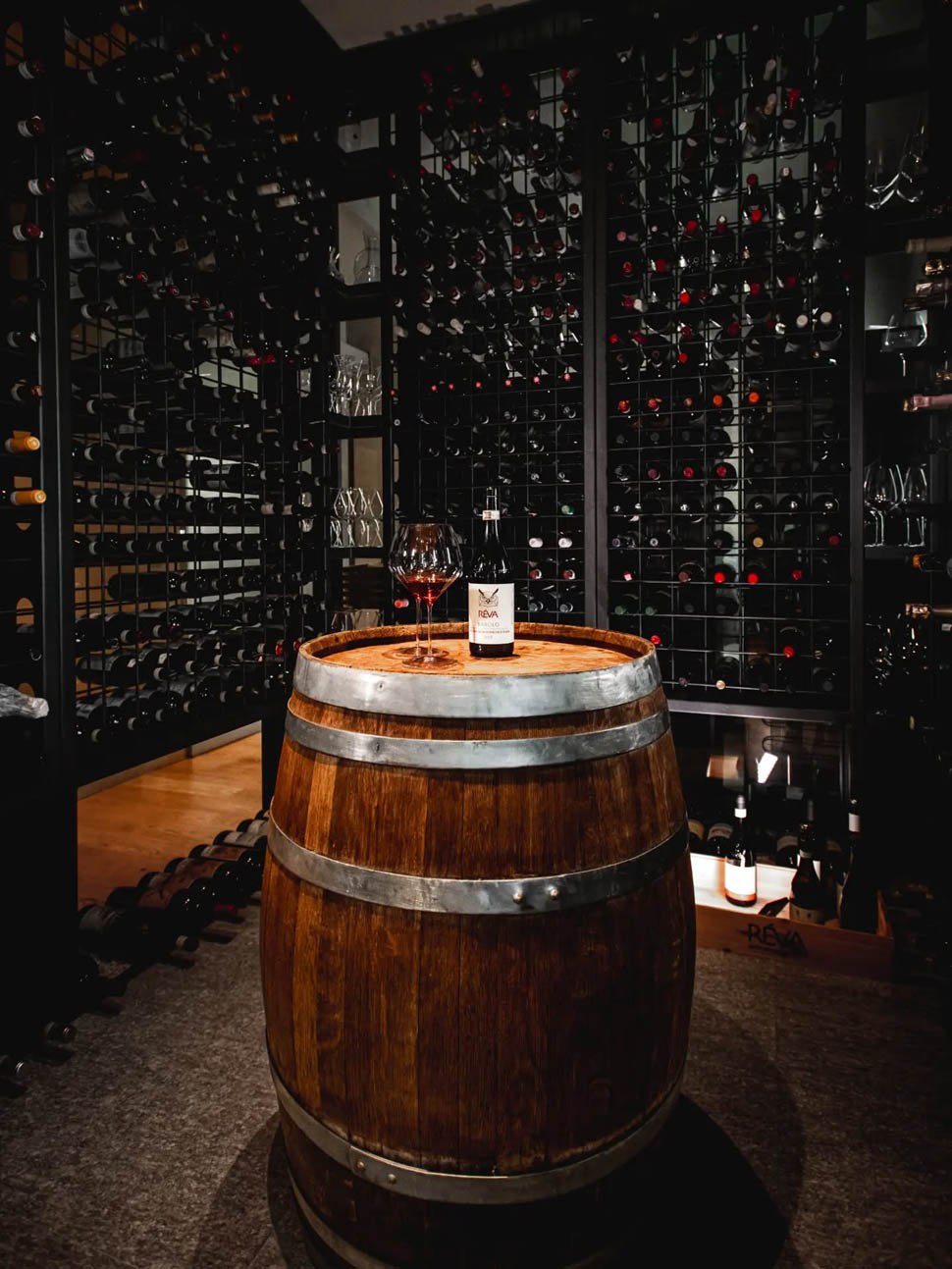
The vineyard is managed using integrated and sustainable practices and is SQNPI-certified. The wine thus becomes the natural extension of the same relationship with the territory that Réva seeks to cultivate through its hospitality and cuisine. While the resort tells the story of the landscape through the guest experience and the FRE through its dishes, the winery tells it through the bottle. Three different languages, but the same source: the hills surrounding San Sebastiano.
FRE and Marchese’s Vision of Fine Dining
In this interplay between France and Piedmont, technique and tradition, FRE also forms part of a broader reflection on the future of fine dining. Marchese does not believe that fine dining is destined to disappear. Rather, he envisions that it must reinvent itself. “I don’t think fine dining will ever die; luxury is still an ideal to strive for, and fine dining is part of that. Those who do it well will command even higher prices,” he explains. But immediately afterward comes the more practical part of his reasoning: “After all, the costs are prohibitive—staff, equipment, raw ingredients, and so on—so the rules of fine dining will change, but it will endure.” This perspective finds concrete expression at FRE. Marchese’s cuisine does not sacrifice technique, but it does not use it to strip the ingredients of their identity. France is present in the sauces and preparations; Piedmont in the ingredients, the recipes, and the history. The cuisine is born precisely in the space between these two coordinates.
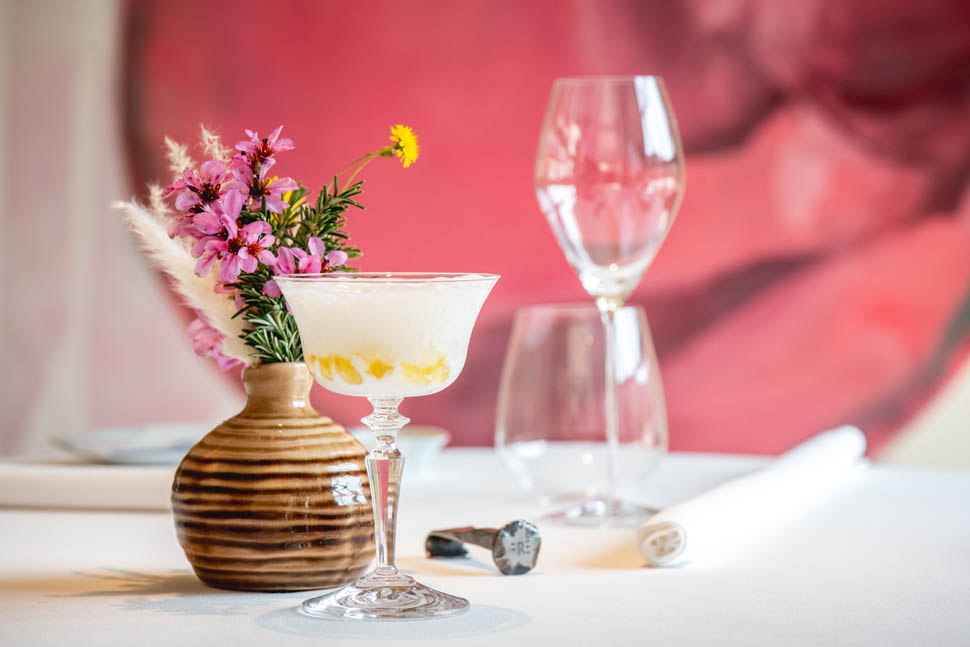
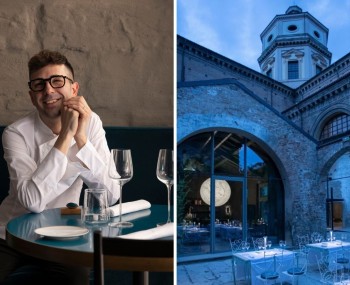
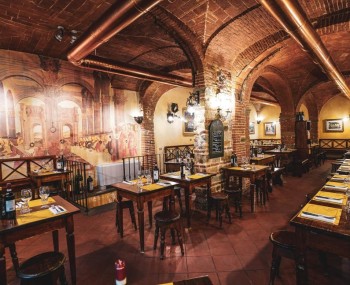
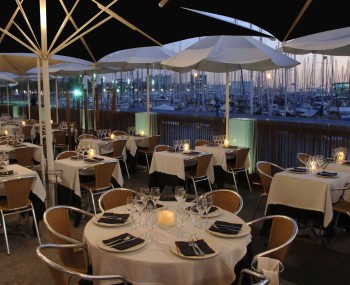
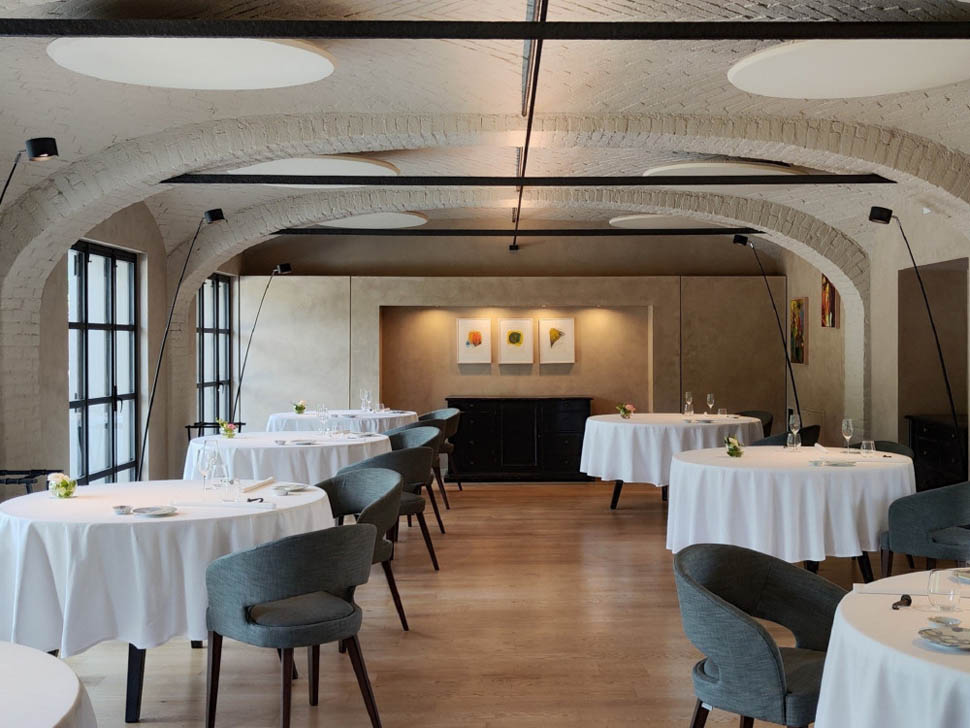
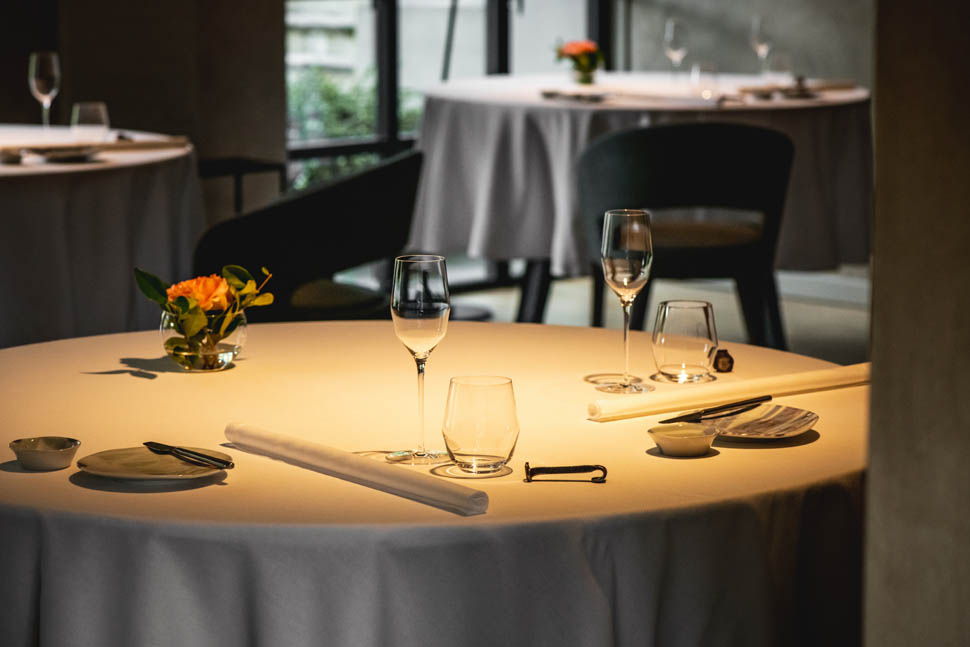
The dining room also reflects this concept.The interior renovation has replaced part of the previous, more textured aesthetic—dominated by wood and iron—with a purer white palette, organic, untreated cotton table linens custom-made by the historic Tessitura Pertile in Chieri, and a table setting that openly draws inspiration from the elegance of French haute cuisine. The ceramics were created exclusively by Studio Porcelein, founded by artists Vladimir Groh and Yasuyo Nishida—he is Czech and she is Japanese. Each piece is handcrafted and hand-decorated, transforming plates and accessories into small, one-of-a-kind objects, which are also available for purchase upon request. Rounding out the project are chairs and rugs by the Chieri-based studio Pavia&Pavia and lighting by Davide Groppi. Here, too, the design language is that of Réva: tradition remains, but is viewed through a contemporary lens.
Outside the dining room, meanwhile, lie the Langhe. The vineyards that yield the grapes, the hazelnut groves, the woods, the pool that reflects the hills in summer, and the ancient cellars transformed into a spa. And that very same raw material that, just a few hours later, can be found in a glass or on a plate. This is probably what makes Réva so fascinating: there’s no need to compartmentalize the experience. The resort isn’t just a place to stay; the spa isn’t just a space for wellness; the winery isn’t just where wine is made; and the restaurant isn’t just a place to eat.
It all starts with the geography itself. At FRE, that geography takes a unique path: it crosses the Alps without losing its distinct character. France makes its presence felt, with its sauces and culinary techniques; Piedmont remains true to itself, with Fassona beef, plin, truffles, rice, wine, and that gastronomic culture built up over the centuries—in part through cultural influences. It is precisely here that Réva’s vision finds its fullest expression: in allowing the Langhe to remain the Langhe even when, on a plate, they begin to speak French.
Réva Resort & Spa
Località San Sebastiano, 68, 12065 Monforte d’Alba CN
Phone: 0173 789269