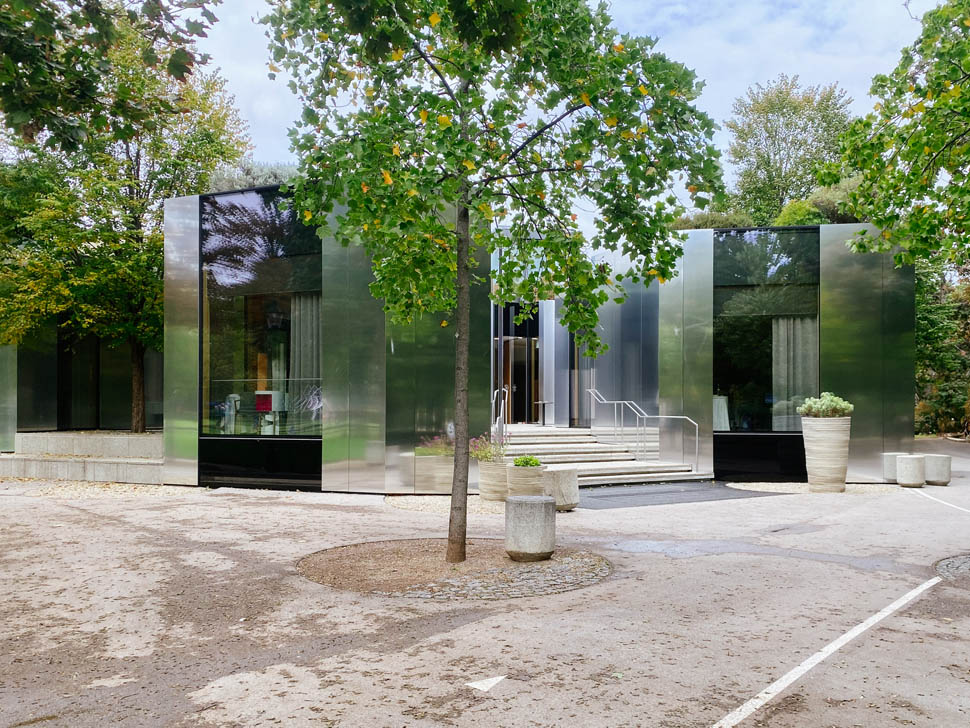
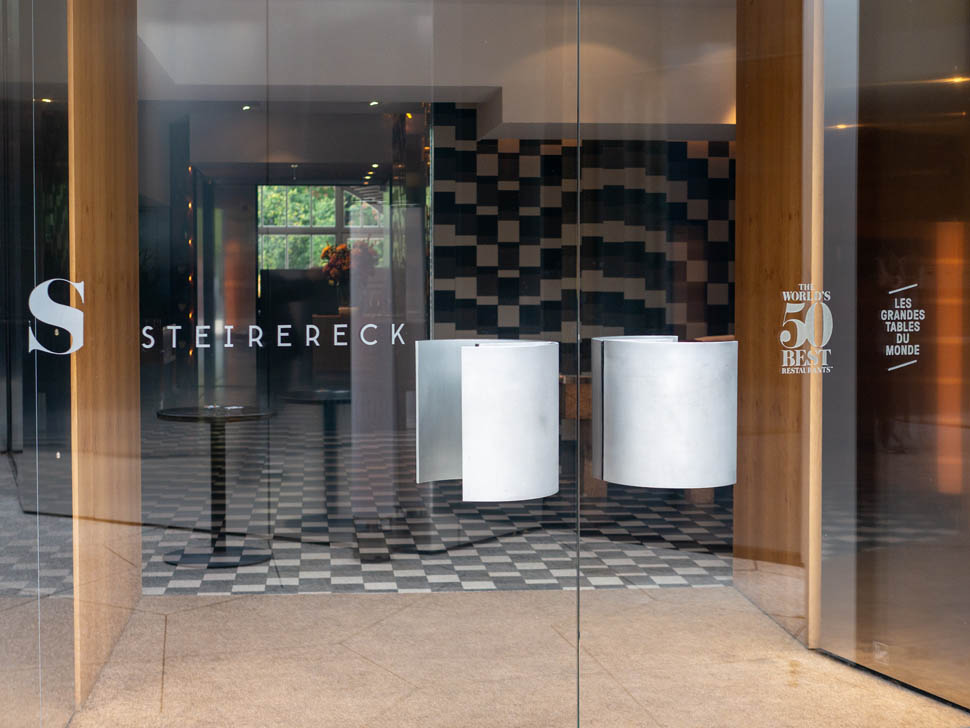
The light, iridescent glass walls blend with the greenery of the Stadtpark, reflecting its hues and blurring the boundary between outside and inside. Vienna’s oldest park, opened in 1862 on the site of the ancient medieval walls, is home to Steirereck—a three-Michelin-starred restaurant ranked No. 33 on the World’s 50 Best Restaurants list—located just beyond the famous golden statue of Johann Strauss holding his violin.
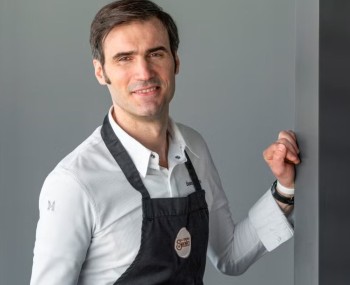
Photos of the dishes and dining areas by Lorenzo Noccioli; official portraits of the gourmet restaurant.
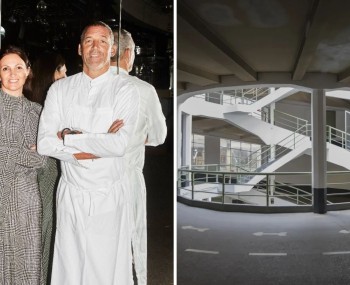
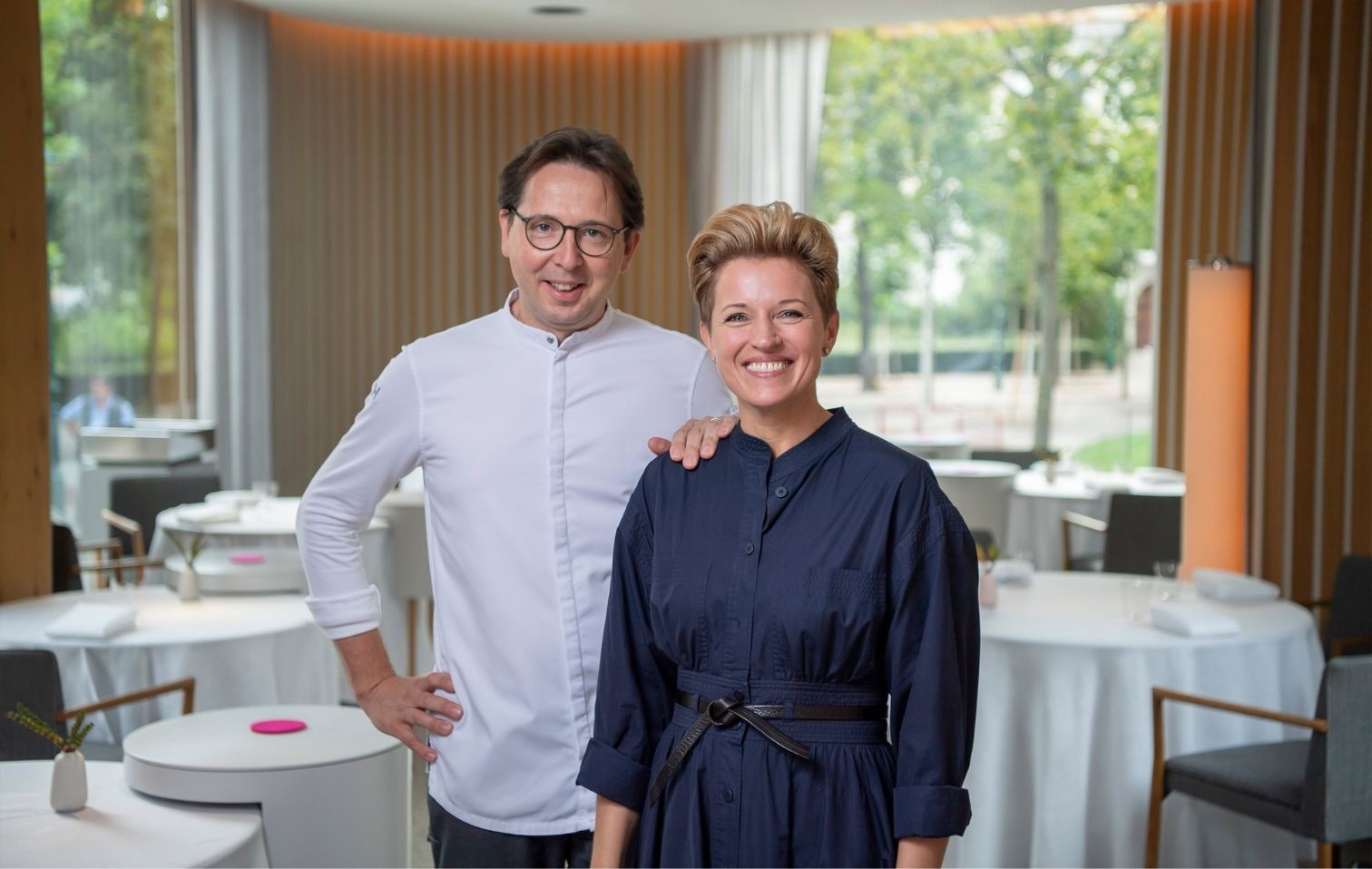
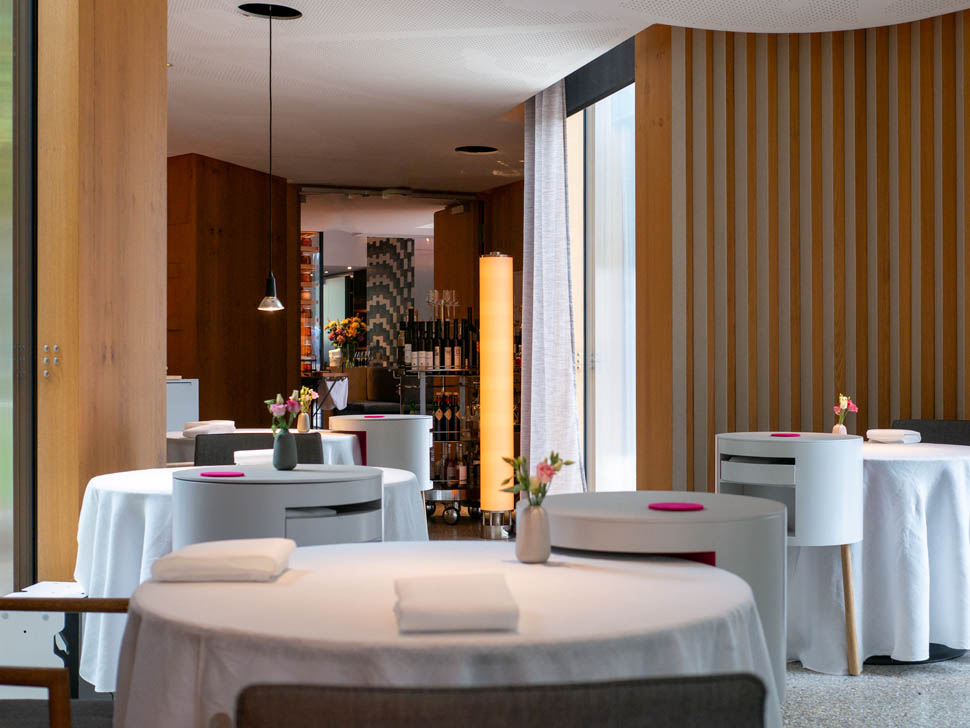
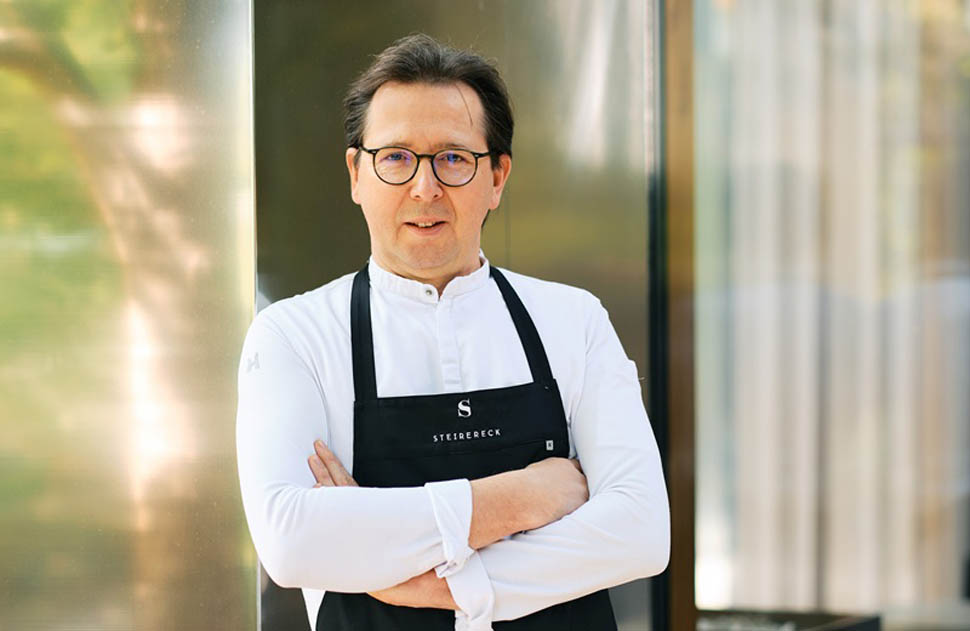
“Eighty seats for lunch, eighty seats for dinner” is the response from chef and owner Heinz Reitbauer to the first question we ask him upon seeing the full dining room—a sight that momentarily leaves us speechless when we think of his Italian counterparts, who boast of being sold out for twenty-two seatings. The structure is organized into four pavilions that extend toward the park, encased in mirror-polished stainless steel, whose reflective surface absorbs and reflects the changing seasons. Inside, amid oak and concrete—where the natural light that filters in becomes a design element in its own right—the design breaks with the rigidity of the traditional dining room through a system of movable walls, allowing the space to be reconfigured according to foot traffic and ensuring that every table enjoys a cozy, intimate setting. With its large open kitchen, where the forty-member kitchen staff works in a suspended silence, combining rigorous execution with extreme precision and functionality.
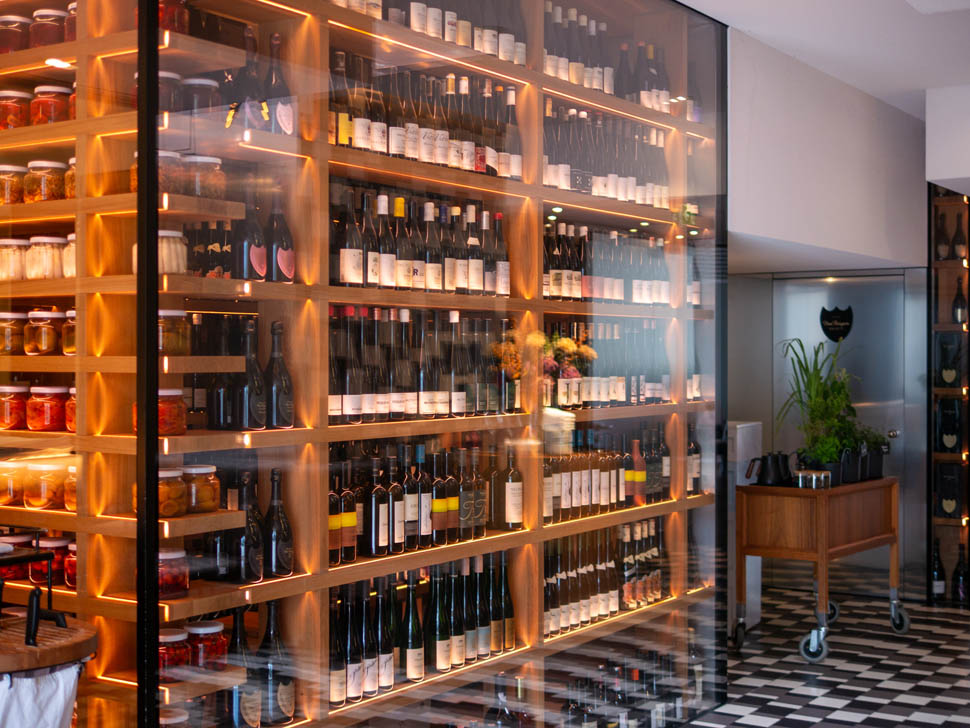
The kitchen is spread over two levels and connected by a meticulously planned layout, designed as a high-precision laboratory. Two hundred fifty square meters for production and one hundred for finishing, where nine cold storage rooms dedicated to fresh and fermented ingredients supply not only Steirereck but also its adjacent “casual sibling,” Meirei. About twenty years ago, Reitbauer and designer Werner Redolfi spent several nights devising a system capable of handling up to ninety covers during peak times, and that work resulted in custom-developed order-management software, which calculates the precise timing for each table and each course, with updates printed every minute in both the kitchen and the dining room. No approximations, no variables overlooked.
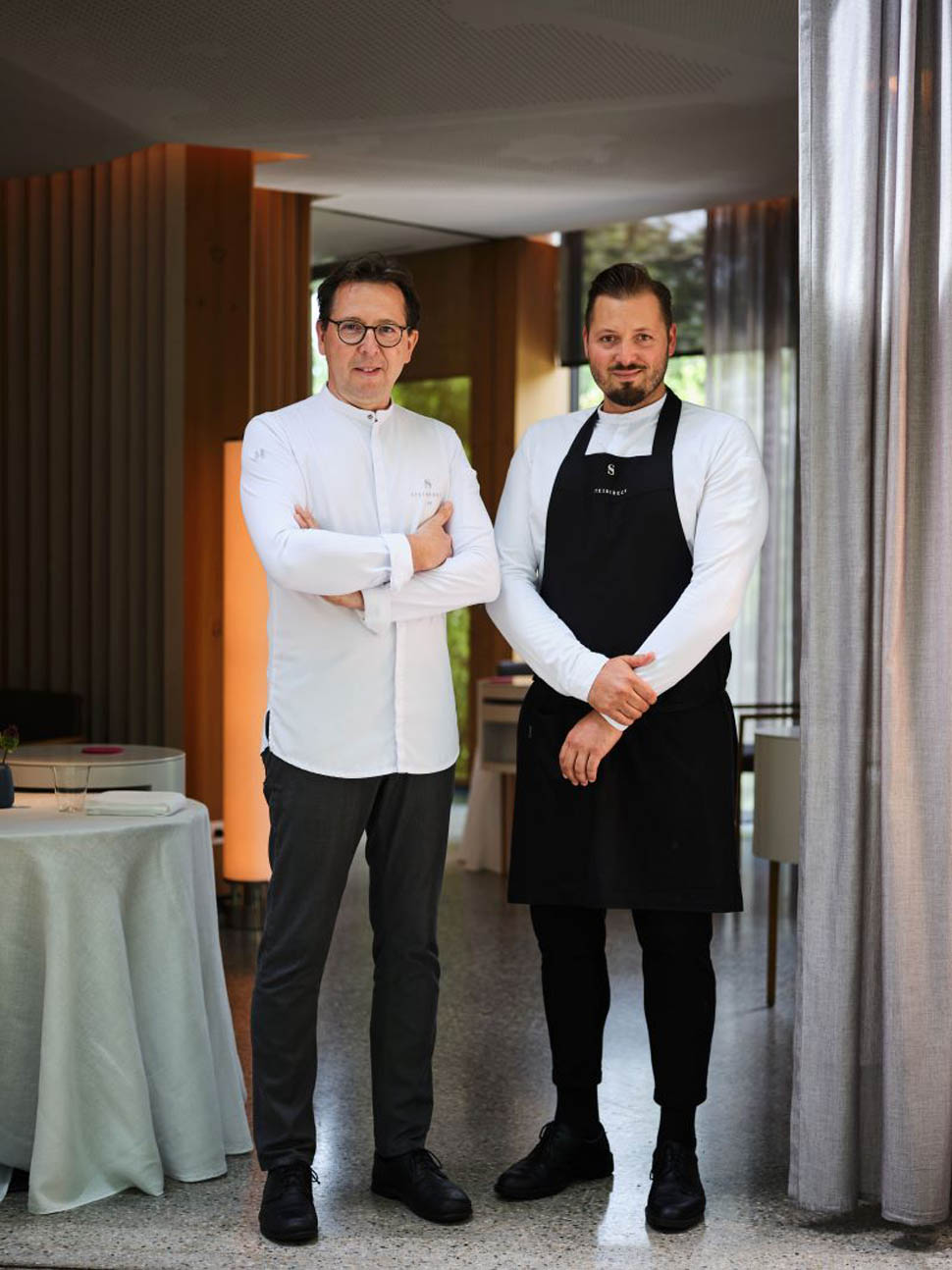
Behind an investment of several million lies a culinary powerhouse that brooks no distractions. Under the direction of head chef Michael Bauböck and sous chef Ji Jiajian, platoons of chefs operate in hyper-specialized sections; they are required to serve a minimum of eighteen months—the time needed for the human element to docilely adapt to the workings of a system of ultra-rigorous precision. During service, the ritual takes on a scientific approach, with ten people working to prepare twenty plates every five minutes under heat lamps.
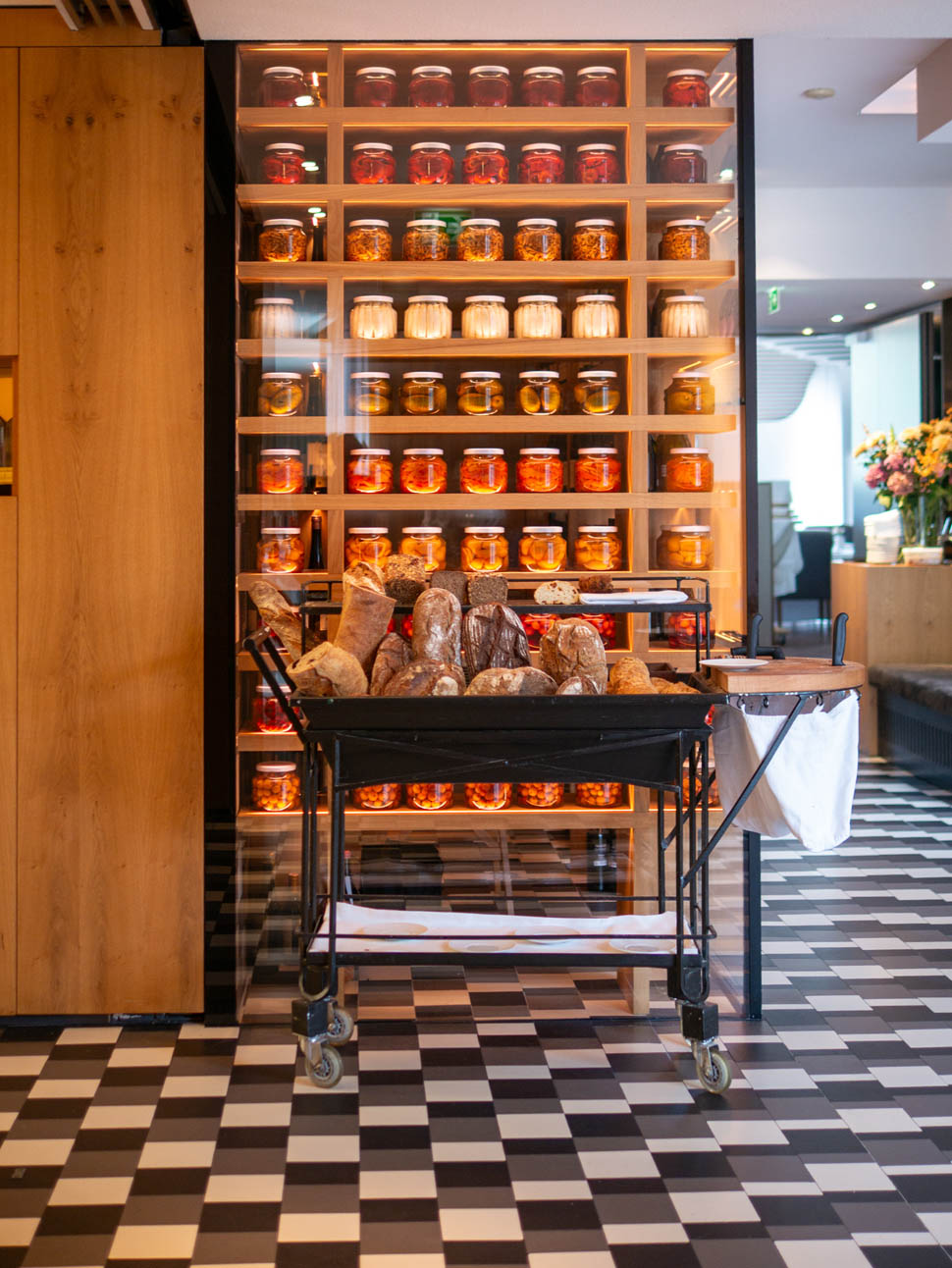
But the pinnacle of culinary fetishism is reached in the dining room, with the serving carts; the bread cart, featuring more than twenty varieties, has been the domain of Andreas Djordjevic for over a decade, as he dispenses details on sourdough starters, Alpine spices, and production facilities with the approach of a sommelier—but of a new generation. A world away from the pedantry of certain so-called “maxim” experts in stiff, starched livery who brandish the tastevin solely to intimidate the uninitiated.
Djordjevic’s encyclopedic obsession is shared by Birgit Reitbauer, the chef’s wife, who, for her part, has mastered cheeses as if they were a geological and anthropological survey of rural Austria. Raised in a family of hoteliers, Birgit met her future husband while attending hotel management school, and today she welcomes guests with grace that serves as a veneer over a steel-hard protocol, governing the dining room with geometric empathy. Here, hospitality is conceived as an extension of a sort of information engineering; even the famous descriptive cards for each course—placed on special stands at the table upon the dish’s arrival—fulfill the noble function of sparing the guest from verbal interruptions by the staff, thereby preserving the flow of conversation. But it goes without saying that whenever a guest asks for more details, the dining room is impeccably prepared to provide precise information on ingredients, techniques, and preparation methods.
The Dishes
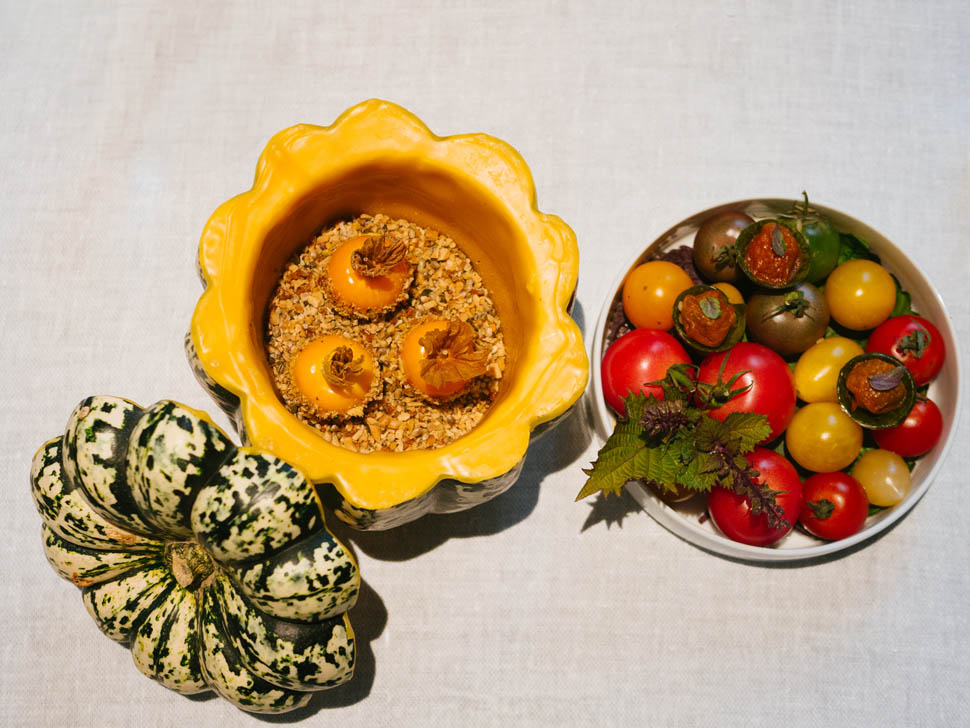
Reitbauer’s botanical philosophy stems from his close collaboration with small-scale producers and botanists, aimed at a detailed, daily mapping of Central Europe’s biological heritage. This research, from a gastronomic perspective, manifests in an almost complete rejection of any exotic allure. The meal opens with a carefully crafted, entirely plant-based welcome course, focused on the expressive purity of Styrian cherry tomatoes and squash. Visually striking, it cleverly replaces the usual proliferation of amuse-bouches, prioritizing a rigorous simplicity.
Char with Beeswax, Yellow Carrot, “Pollen,” and Sour Cream
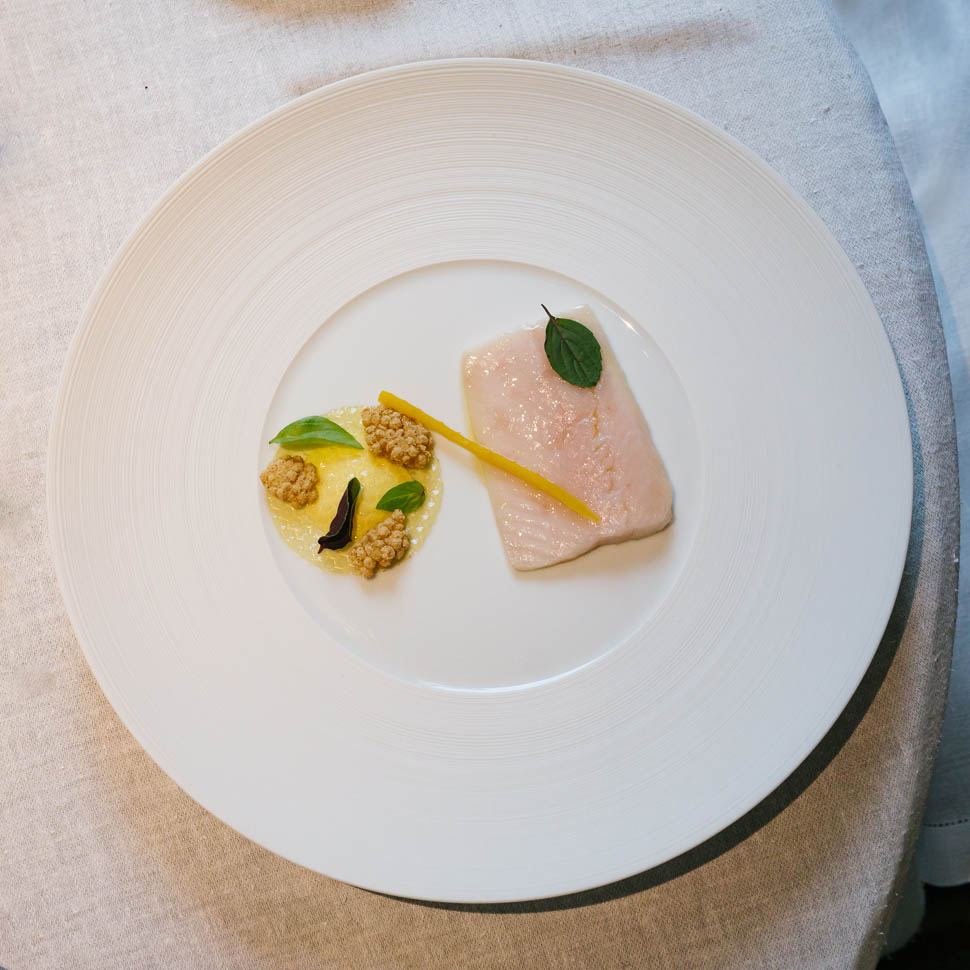
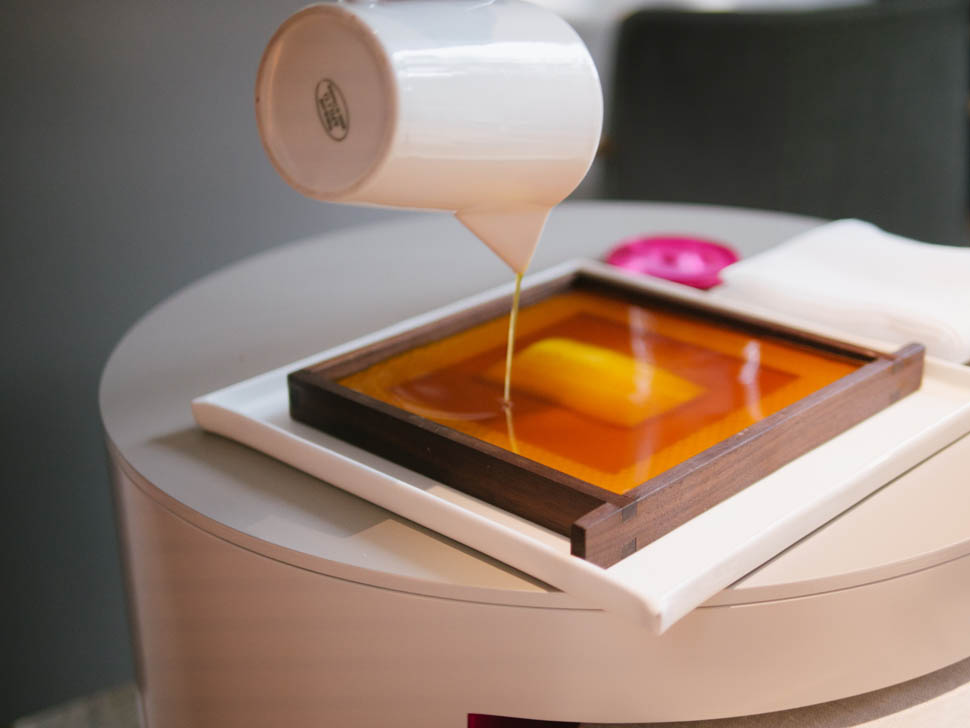
Meanwhile, a Mariazell char is cooked at the table by immersing it for about ten minutes in melted beeswax to seal in its juices and infuse it with notes of honey and resin. This flavor profile is echoed in the yellow carrot and apple juice jelly, served alongside marinated carrots. Sour cream spiced with cayenne pepper and lime cuts through the sweetness, while the char roe with “pollen” in quince vinegar bursts with savory flavor.
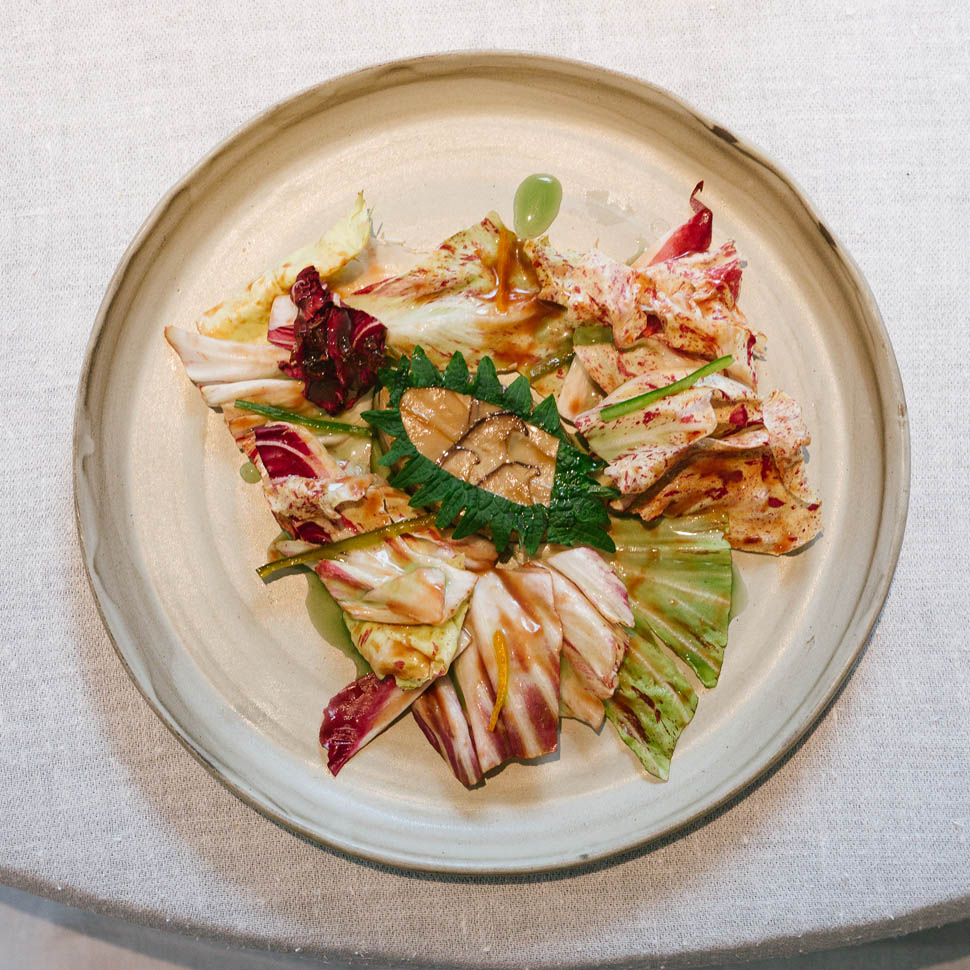
Radicchio with Plums, Perilla, and Pointed Cabbage
A dish centered on bitterness, tempered by fruity acidity and fermentation. The centerpiece is a layered composition of cardoncello mushrooms, pointed cabbage, and perilla leaves, oven-roasted to concentrate vegetable umami and sweetness. This is contrasted by crisp radicchio, marinated in an infusion of plums and rice vinegar, with barberry, green chili peppers, and preserved calamansi, which add tart and citrusy notes. The dish is finished with an emulsion of tomato, bitter greens, and perilla oil.
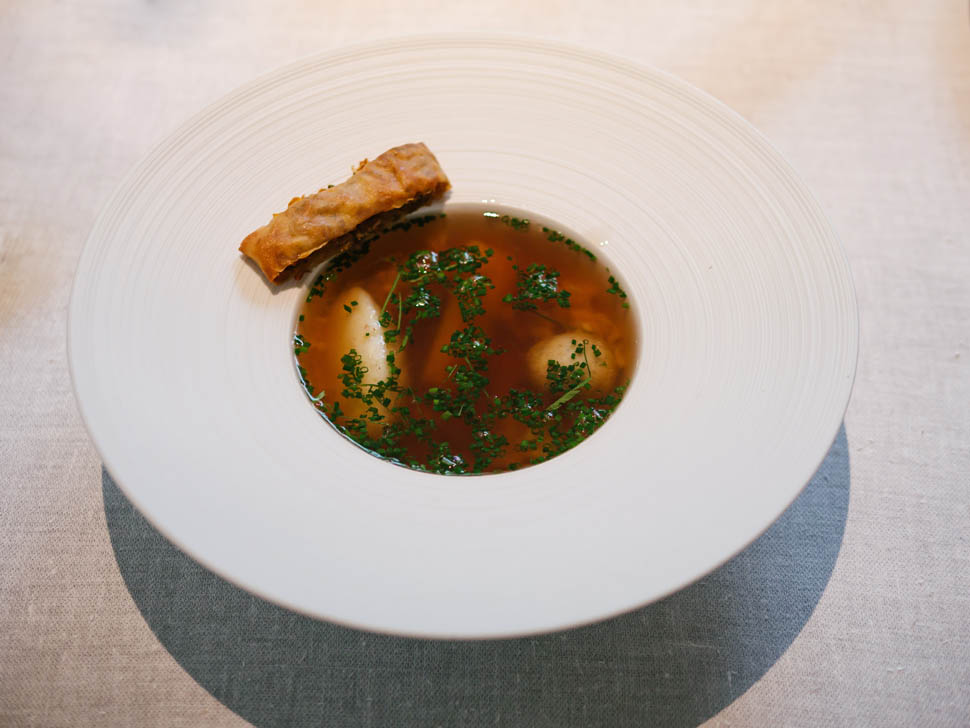
Viennese Wedding Soup
A true culinary relic of Central European cuisine and historically an indispensable part of wedding banquets, Viennese wedding soup celebrates beef soup as a veritable culinary ecosystem. Austrian tradition boasts over a hundred types of garnishes and additions for broths, ranging from pork rind dumplings to Schmarrn cubes, spleen sausages, and small ravioli filled with meat sauce. Reitbauer’s version features a carefully curated selection of these traditional elements, immersed in a clear beef broth simmered to perfection. Each ingredient contributes a specific texture—sometimes spongy, sometimes chewy, or tender—that absorbs the broth and releases layered flavors of meat, herbs, and toasted notes. A historic comfort food that evokes the depth and warmth of Viennese home cooking.
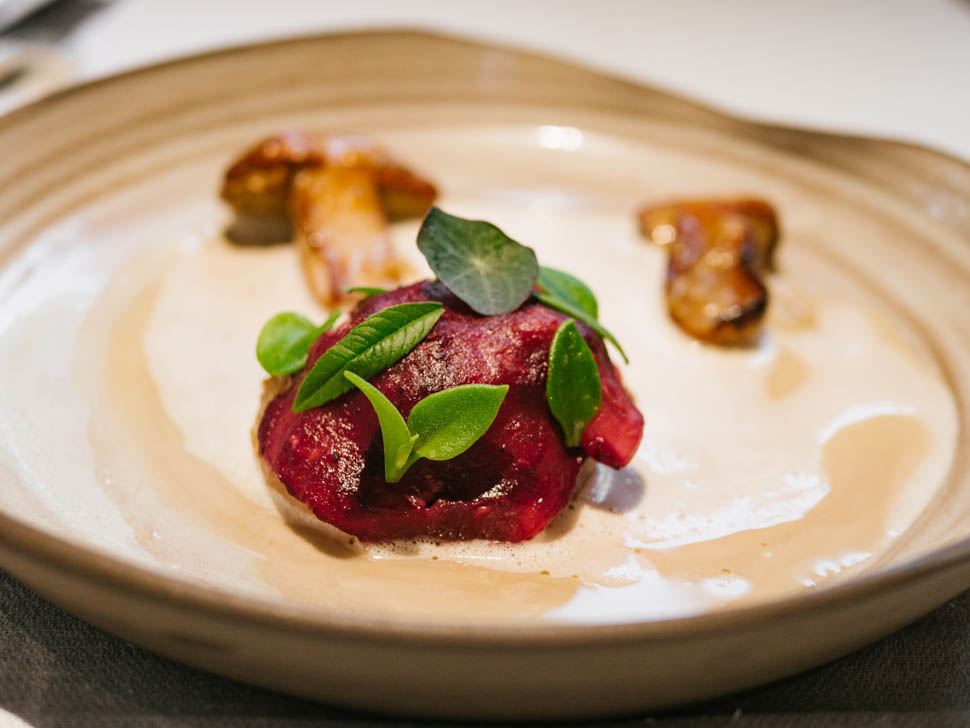
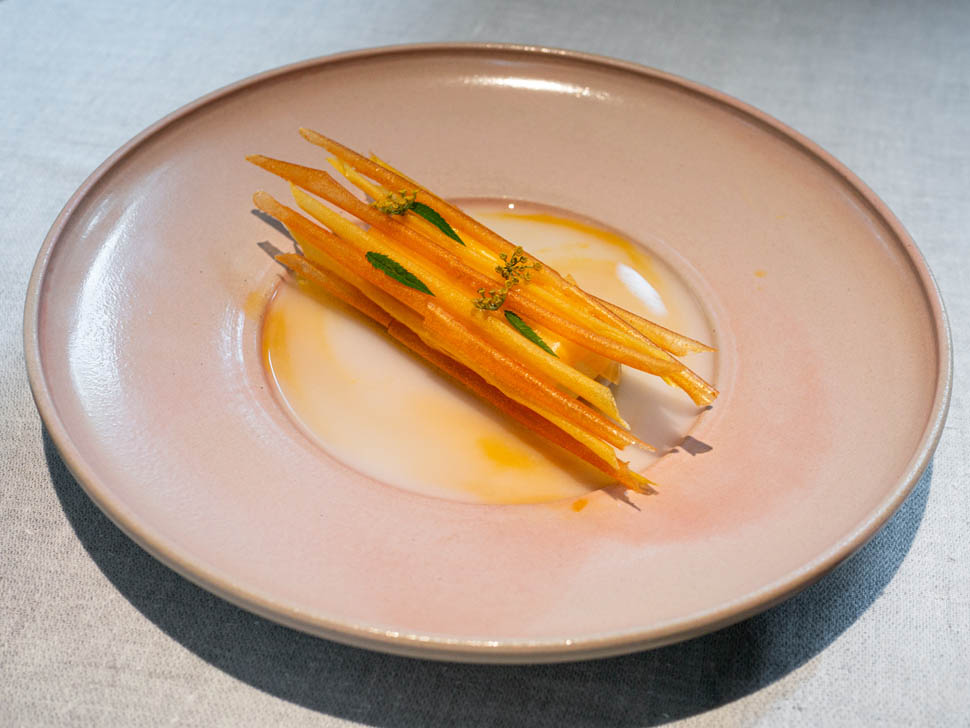
Perlina Eggplant, Porcini Mushrooms, Blueberries, and Hay
Earthy notes and a touch of acidity in the steamed Perlina eggplant with lemon and mint, and in the pale pink eggplant glazed with fermented blueberries. Served alongside a roasted summer porcini mushroom, paired with fresh blueberries and sweet-and-sour shallots. The dish concludes with a foam of butter and white wine infused with hay, lovage oil, and citrusy and spicy accents of verbena and nasturtium.
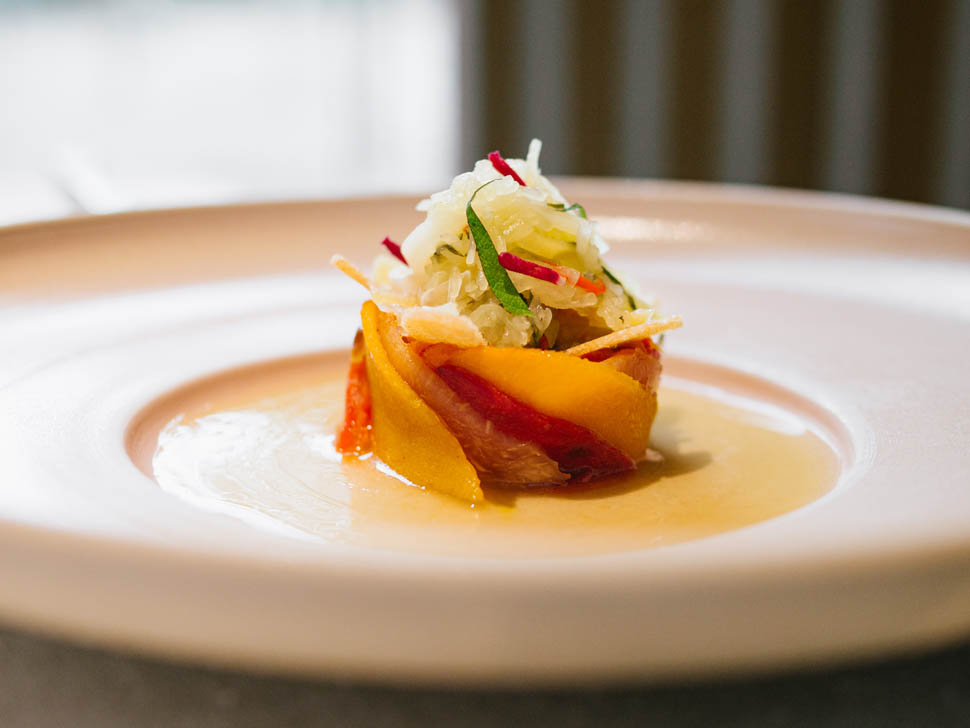
Squash and Bell Peppers with White Peach and Horseradish
This entirely plant-based dish is built on a complex interplay of cooking techniques. Tagliatelle made from squash marinated in kaffir lime and Chupetinho chili peppers, stewed and dried squash, oven-roasted pointed bell peppers, confit butternut squash, and diced fermented white peach, all complemented by the crunch of toasted bread. A sweetness that meets the tropical notes of peach and pineapple sage and blends with the emulsified Moscata di Provenza pumpkin juice, combined with fermented horseradish for an earthy kick.
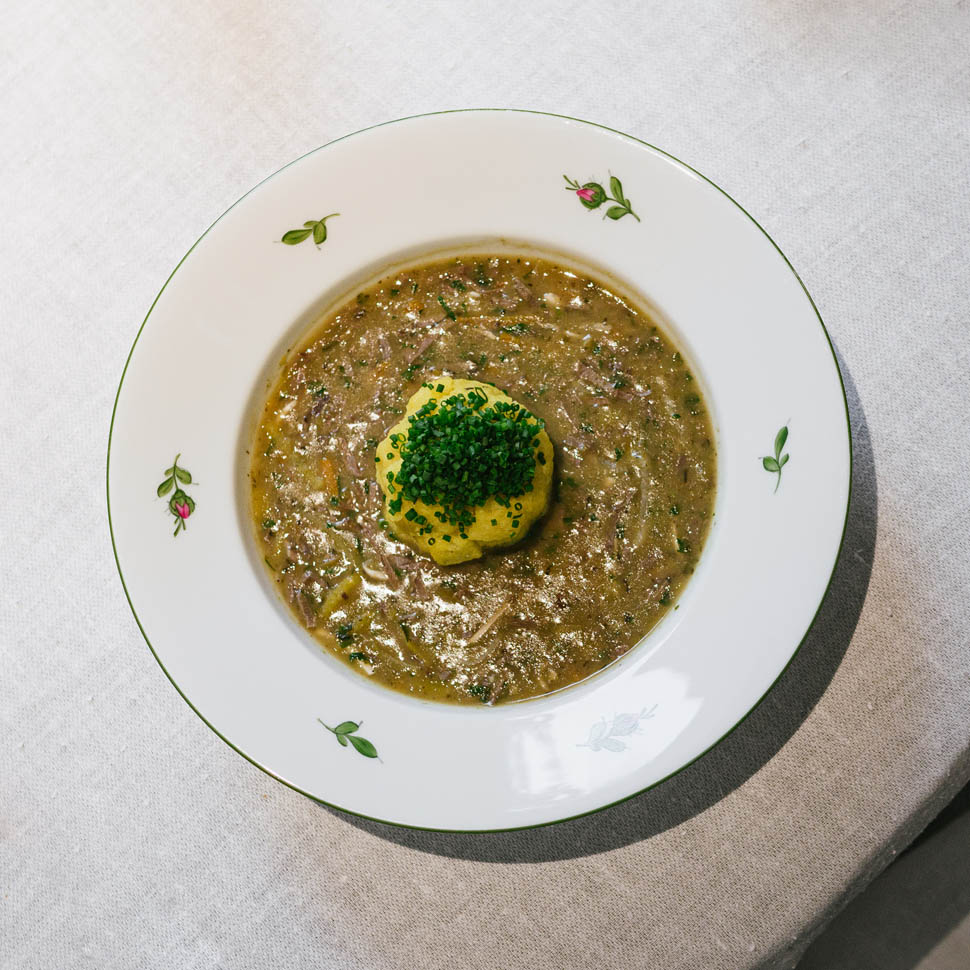
Veal Beuschel with Chive Dumplings
The quintessential Viennese offal dish, Beuschel, consists of a stew made from veal heart and lung, slowly simmered with vegetables and white wine. The chewy texture of the offal is balanced by a purée of gherkins, capers, anchovies, and mustard, which creates a thick, savory sauce. The meat is accompanied by a steamed bread dumpling enriched with fresh chives, whose spongy softness absorbs the sauce, harmonizing the flavor of each bite.
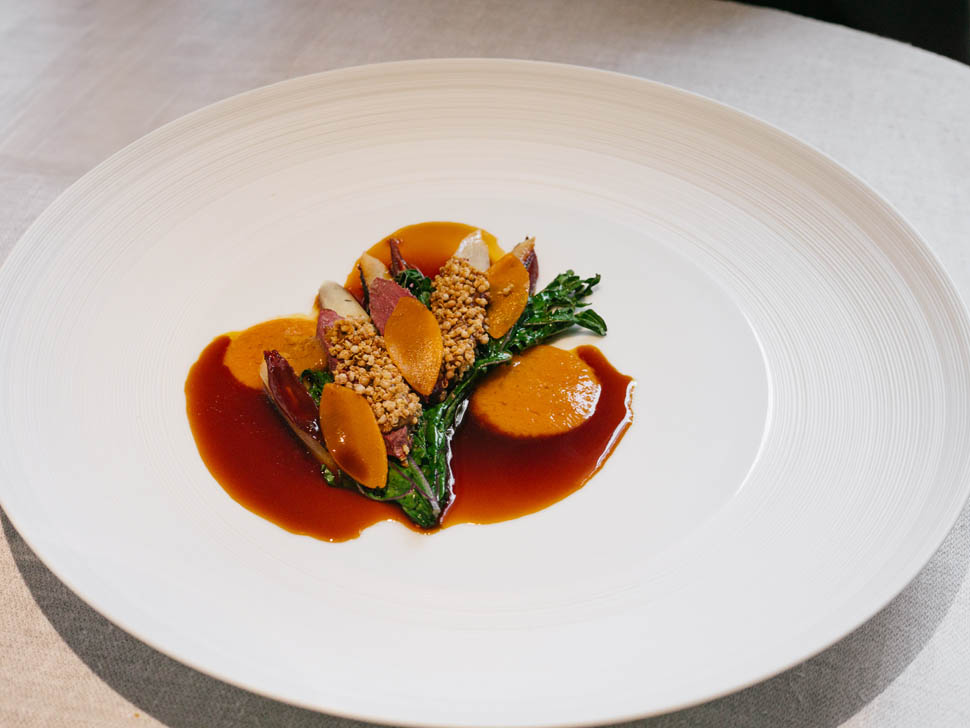
Wild duck with scorzobianca, ornamental cabbage, “Kletzen,” and tomato
The duck breast is cooked on the bone, finished with its own reduction and a cream made from Kletzen—dried pears—peanuts, chipotle, and toasted quinoa. The scorzobianca served alongside it is presented in three ways: grilled, steamed and glazed with yellow tomatoes, and marinated in black currant verjus. It is accompanied by steamed ornamental cabbage. The crisp, pungent notes of a spiced milk made with yellow tomatoes and lime leaf oil tie the dish together.
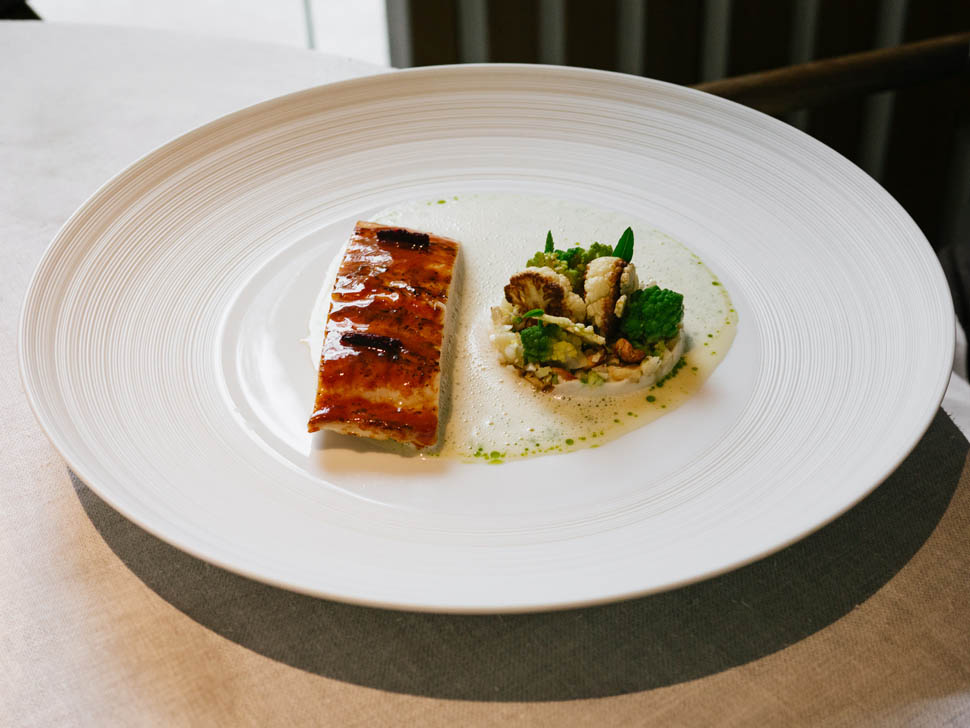
Sturgeon with gin-infused cornelian cherries, Romanesco broccoli, and Mexican tarragon
Charcoal-grilled, the sturgeon boasts smoky notes and is glazed with a reduction of gin-infused cornelian cherries, providing a burst of acidity and astringency. The vegetable accompaniment features Romanesco broccoli in a smooth purée, along with steamed florets and roasted pieces, sautéed with cashews, lemon, and a raw salad of Mexican tarragon. This tarragon is also used to flavor the oil that emulsifies a koji-infused beurre blanc with delicate hints of anise.
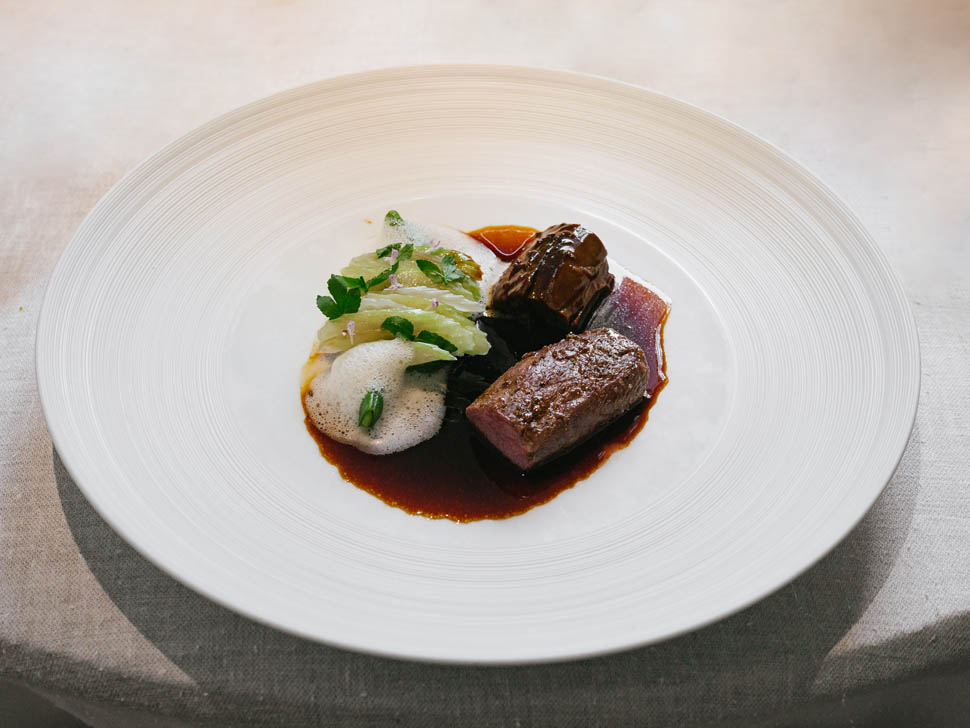
Venison with Celery, Beans, Gooseberries, and Lemon Savory
The venison menu features juniper-infused fillet and braised shank, served on a bed of lemon savory-scented sauce. Glazed snow peas and Risina beans form the base for a salad of marinated and fermented celery stalks, chili peppers, and gooseberries. Lemon-scented savory, along with a fermented celery sauce, adds a tangy, herbaceous note.
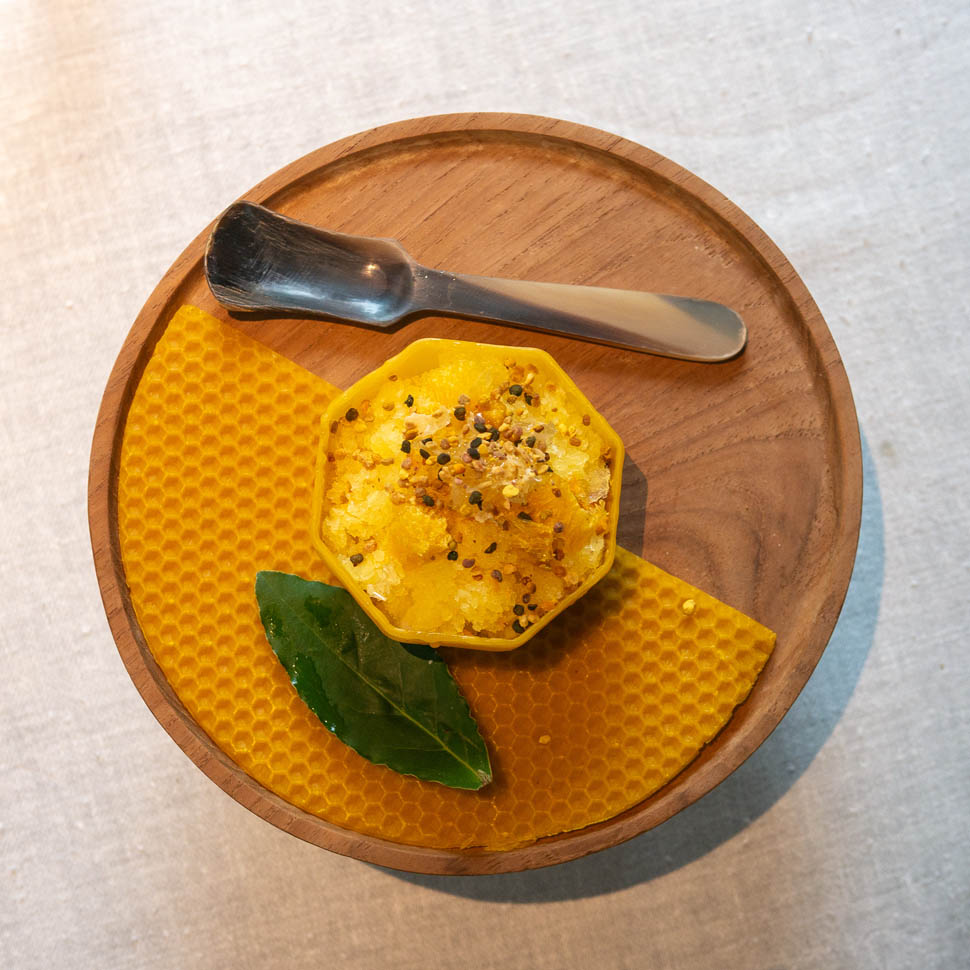
Schönbrunn Bitter Orange, Buttermilk, Honeycomb, and Bee Pollen
The pre-dessert focuses on the citrusy and bitter notes of the Schönbrunn Park bitter orange, presented as a granita with yuzu, a cream, and marinated and dried segments. The bitterness is tempered by buttermilk and pollen ice cream, with its pronounced acidity, combined with the waxy texture of honey harvested directly from the honeycomb. It arrives at the table on a stand reminiscent of a beehive, from which a buzzing sound can be heard, making the whole experience exceptionally poetic. Finally, a touch of pure bee pollen, with its notes of hay and wild resin.
Viennese Mango Melon with Fennel Pollen, Passion Fruit, and Rice
It arrives fresh, with passion fruit marinated in its own juice, and mango melon in both candied and dried forms. This is contrasted by the toasty aroma of a rice wafer and rice milk infused with marigold. The aromatic finish comes from a fennel pollen semifreddo with balsamic notes, balanced by the sharp acidity of pure passion fruit juice.
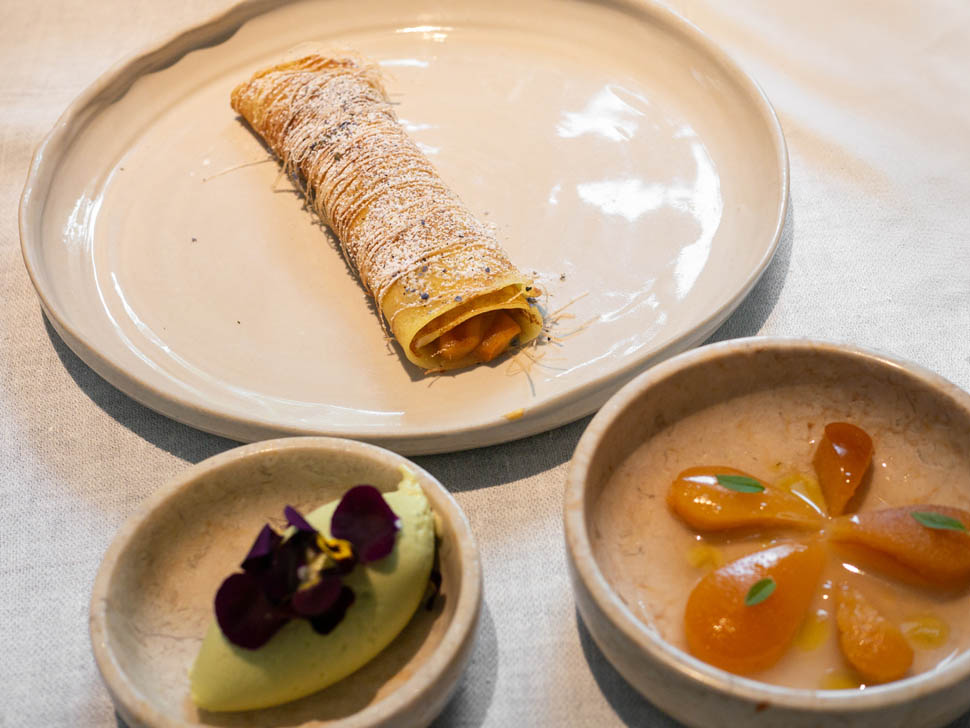
German Medlar, Violets, and Frittaten
The German medlar takes center stage in one of the desserts, presented in three variations: a spiced compote, juice jelly, and ice cream made from the pits. The violets appear as syrup, candied petals, and jam inside the Frittaten—traditional Viennese crepes—which are baked until crispy. The dish is rounded out by lemon verbena, whose citrusy notes cut through the intense aroma of the violets, preventing the dessert from becoming cloying.
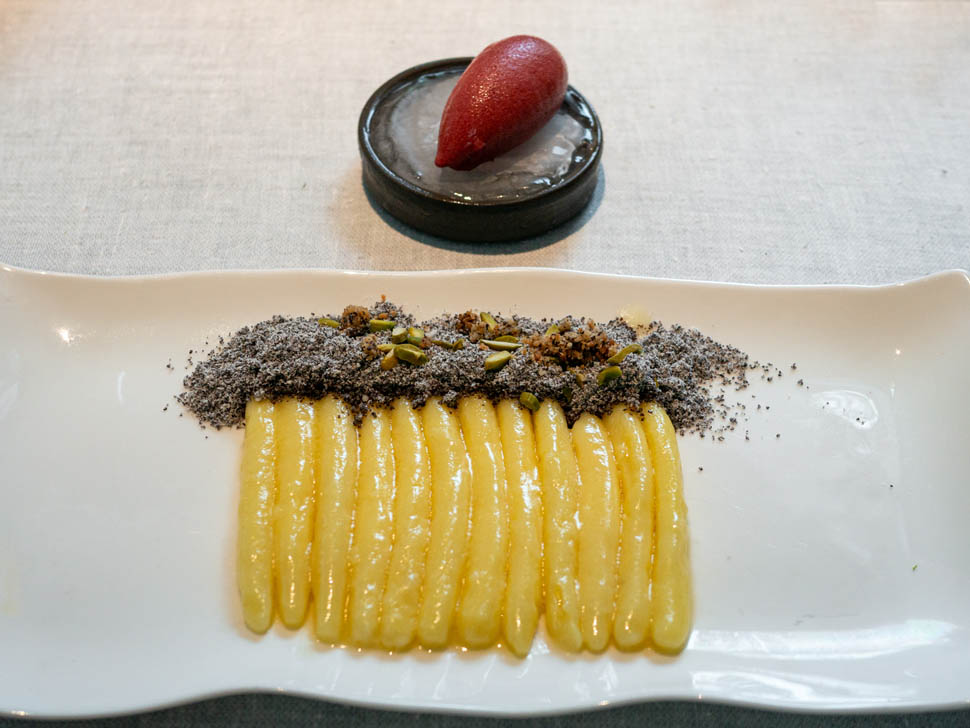
“Noodles” made from potatoes with gray poppy seeds and Damask plum ice cream
These “noodles” made from potato dough are blanched, glazed in melted butter, and topped with toasted gray poppy seeds that have a nutty flavor. The potato strands are paired with the crunch of a crumble made with poppy seeds and flaked pistachios. The ideal counterbalance is Damask plum ice cream, whose fruity, sweet-and-sour acidity cuts through the starchy richness.
Steirereck
Am Heumarkt 2A, 1030 Vienna, Austria
Tel. +43 1 7133168