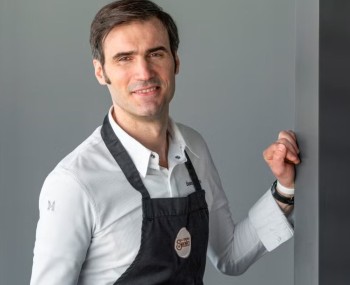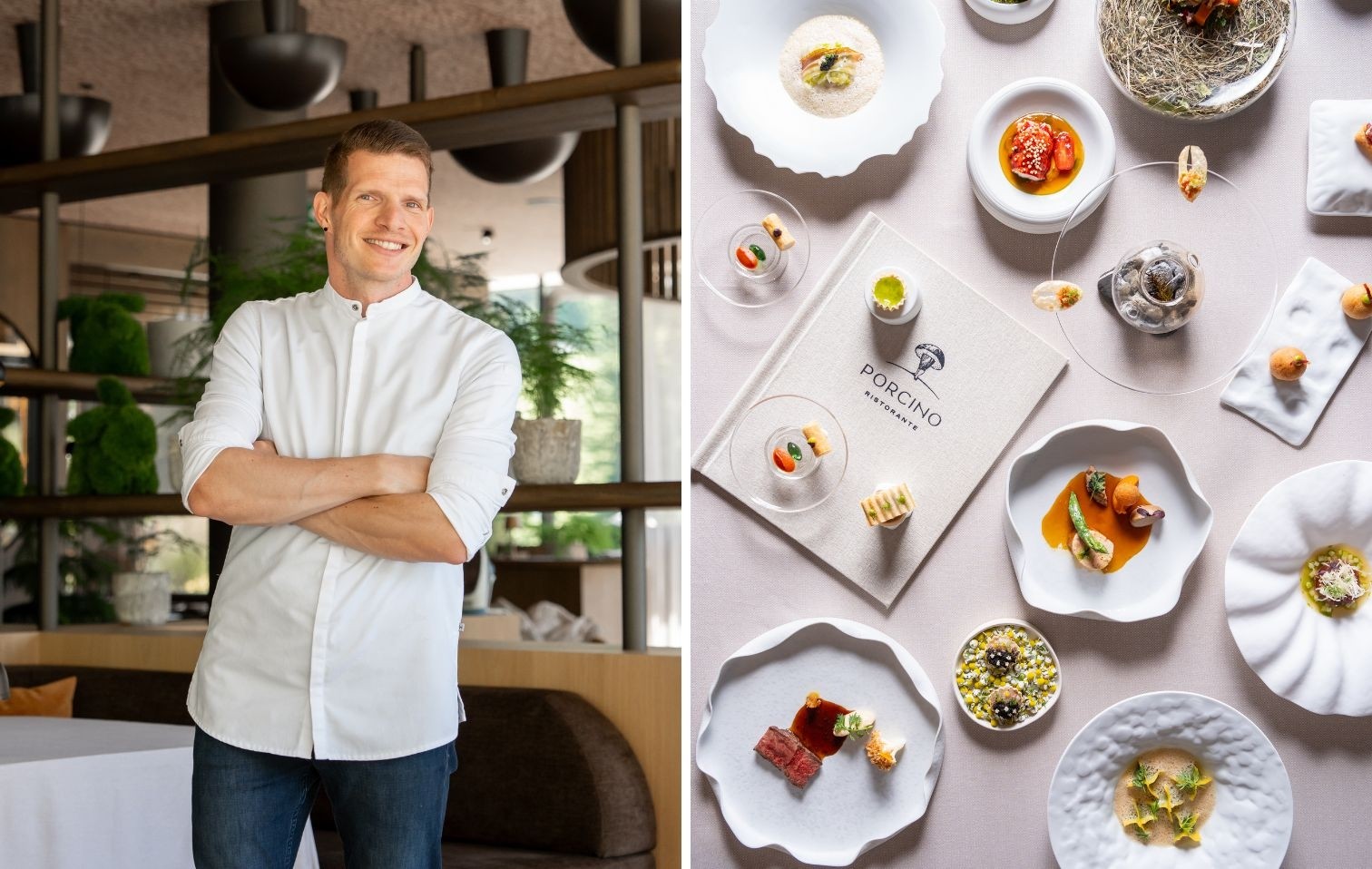
At the Porcino restaurant at the Badia Hill Hotel—a one-Michelin-starred establishment—the culinary concept brings together the flavors of the sea and the mountains in a natural, unforced way. Marco Verginer and Michela Mair have created a concept built on flavor, hospitality, and the belief that a dish should evoke emotion even before it is explained.
*Content with promotional purposes
When it comes to high-altitude cuisine, it’s almost inevitable to expect a narrative centered around local ingredients. In Alta Badia, that means speck, game, rye bread, mushrooms, and mountain herbs.Marco Verginer, who certainly doesn’t turn his nose up at these ingredients, starts with a different question, however: why shouldn’t a restaurant in the Dolomites also be able to tell the story of the Mediterranean? This reflection gave rise to the concept behind Porcino, the one-Michelin-star restaurant at the Badia Hill hotel, where the flavors of the sea and the mountains constantly intersect on the table.
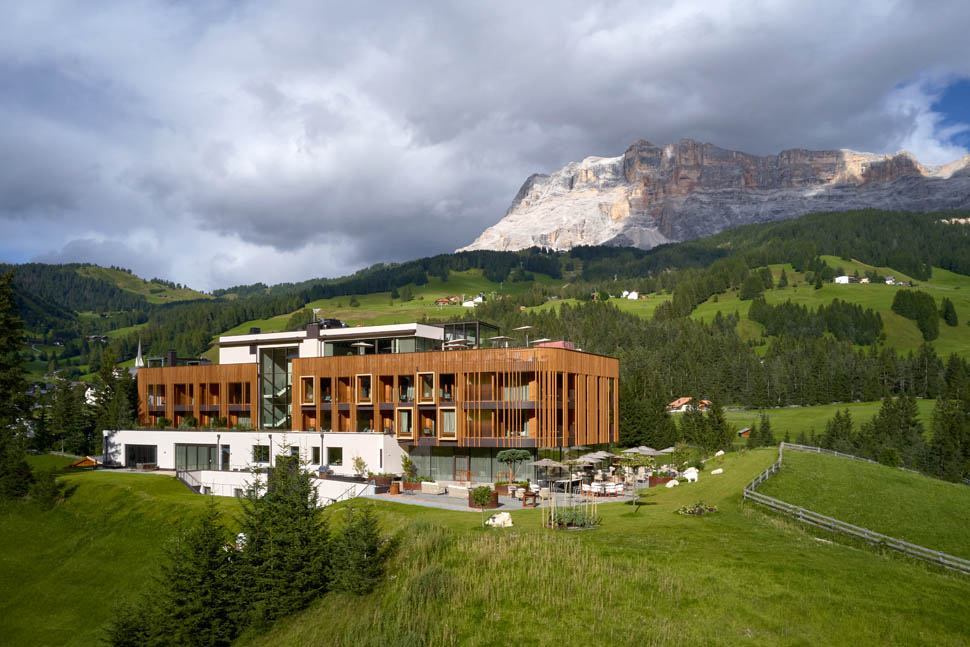
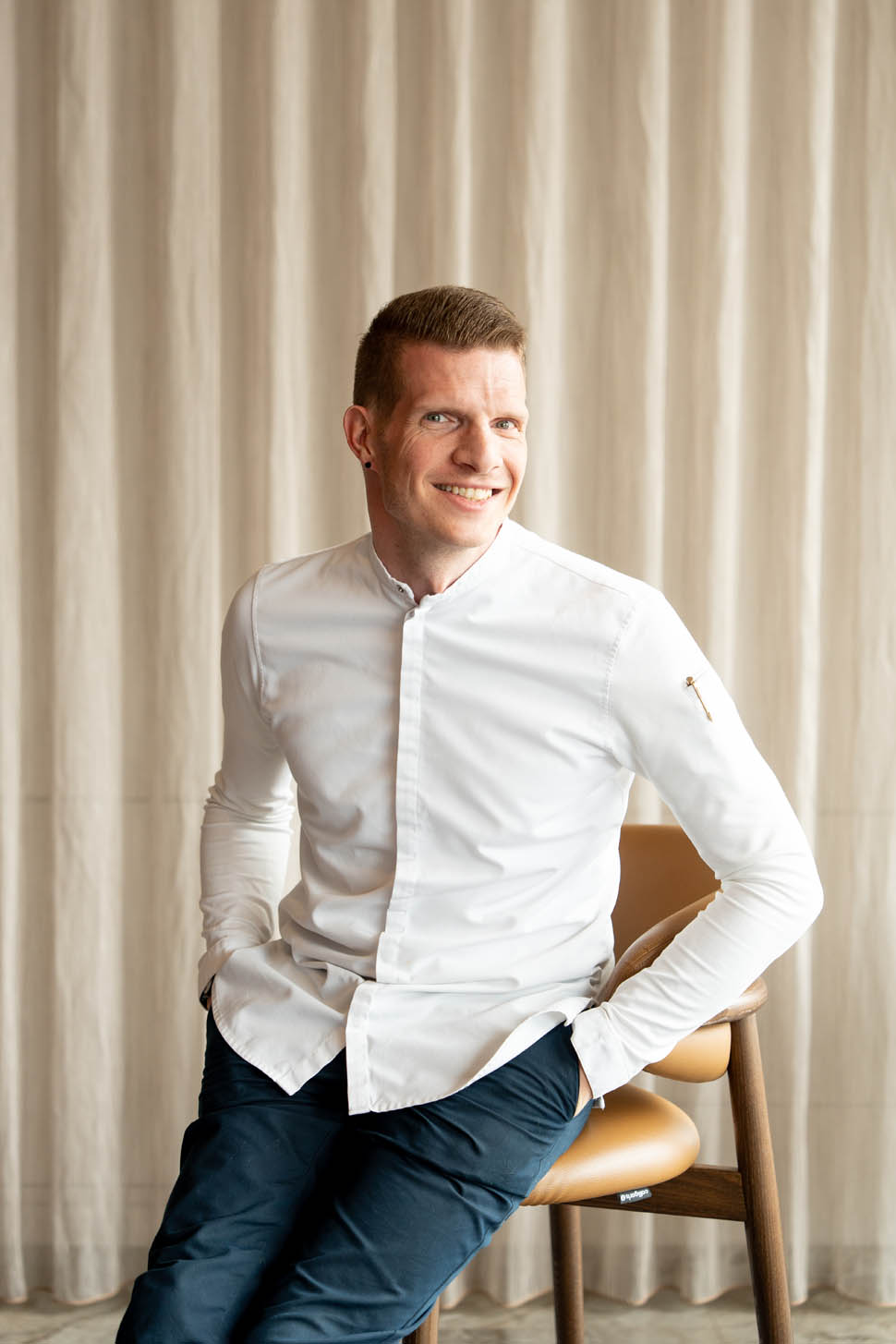
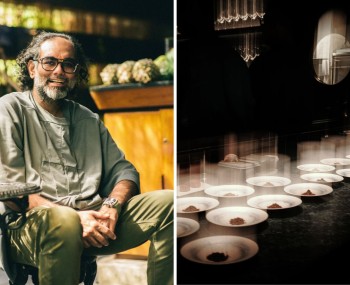
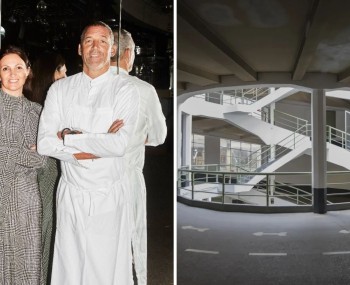
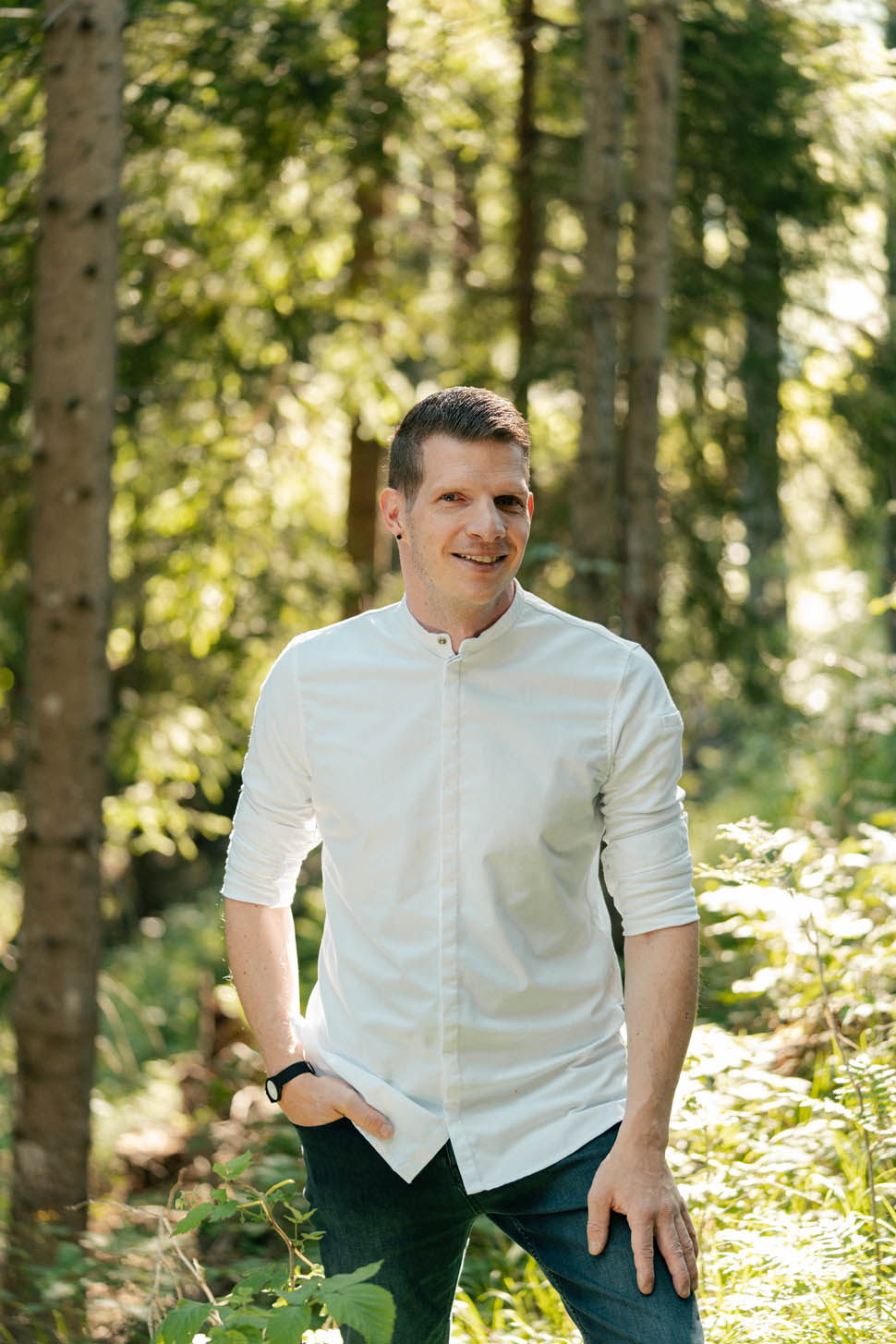
Leading this project are Marco Verginer and Michaela Mair, a couple both in life and at work. After meeting at the Hotel Castel and gaining experience at some of Europe’s most prestigious hospitality establishments, in 2022 they opened Badia Hill, a design hotel overlooking the Dolomites built on family-owned land and the result of nearly eight years of collaborative planning.
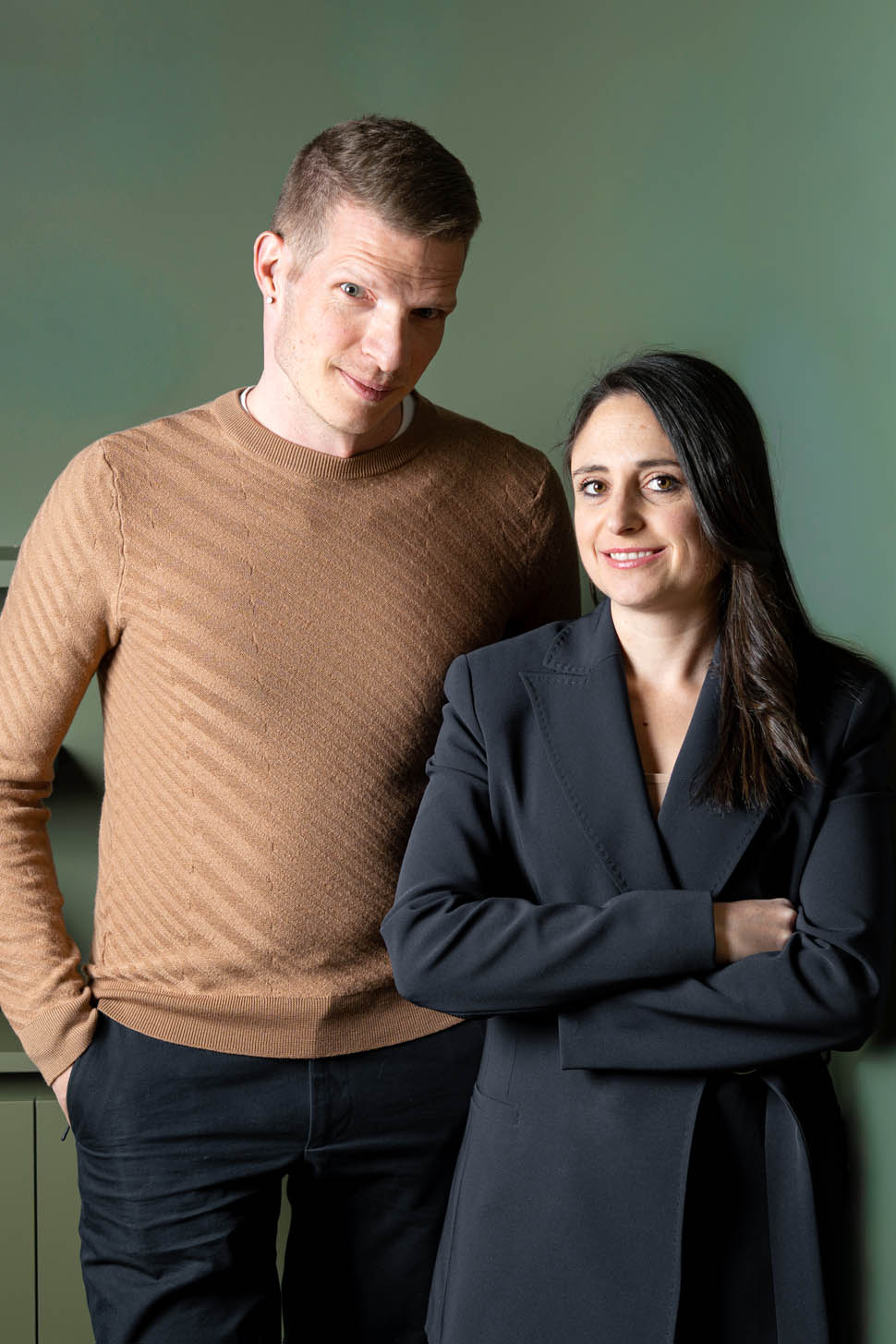
Every detail—from the architecture to the furnishings to the choice of materials—was personally discussed and selected, with the aim of creating a place that truly represented them. The Porcino restaurant, awarded its first Michelin star in the 2026 edition of the Guide, is the gastronomic heart of the hotel. Verginer leads the kitchen, while Michaela Mair oversees the dining room and the wine service, two areas that always go hand in hand and reflect a management style in which every decision is made together.
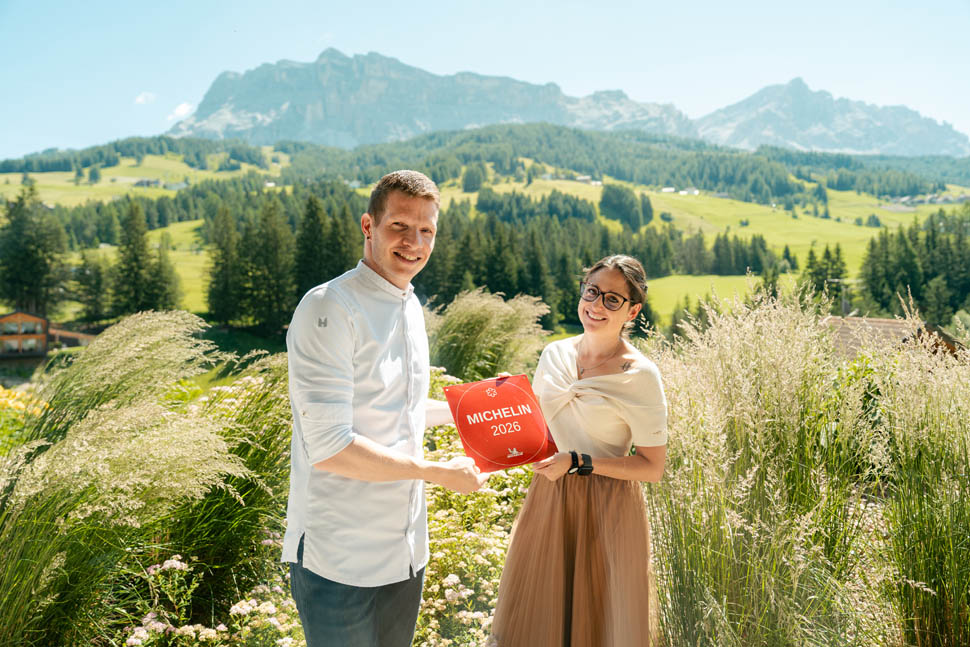
The name itself reflects the restaurant’s philosophy. “The porcini mushroom is a delicacy that everyone seeks out, but it’s not always easy to find. When you finally do find one, you experience that genuine satisfaction that makes you think, ‘That’s so good—I wish I could find another one.’ That’s the feeling we want to leave our guests with.” Creating an experience that leaves a lasting impression through pleasure. And perhaps this is precisely the key to understanding Verginer’s cuisine.
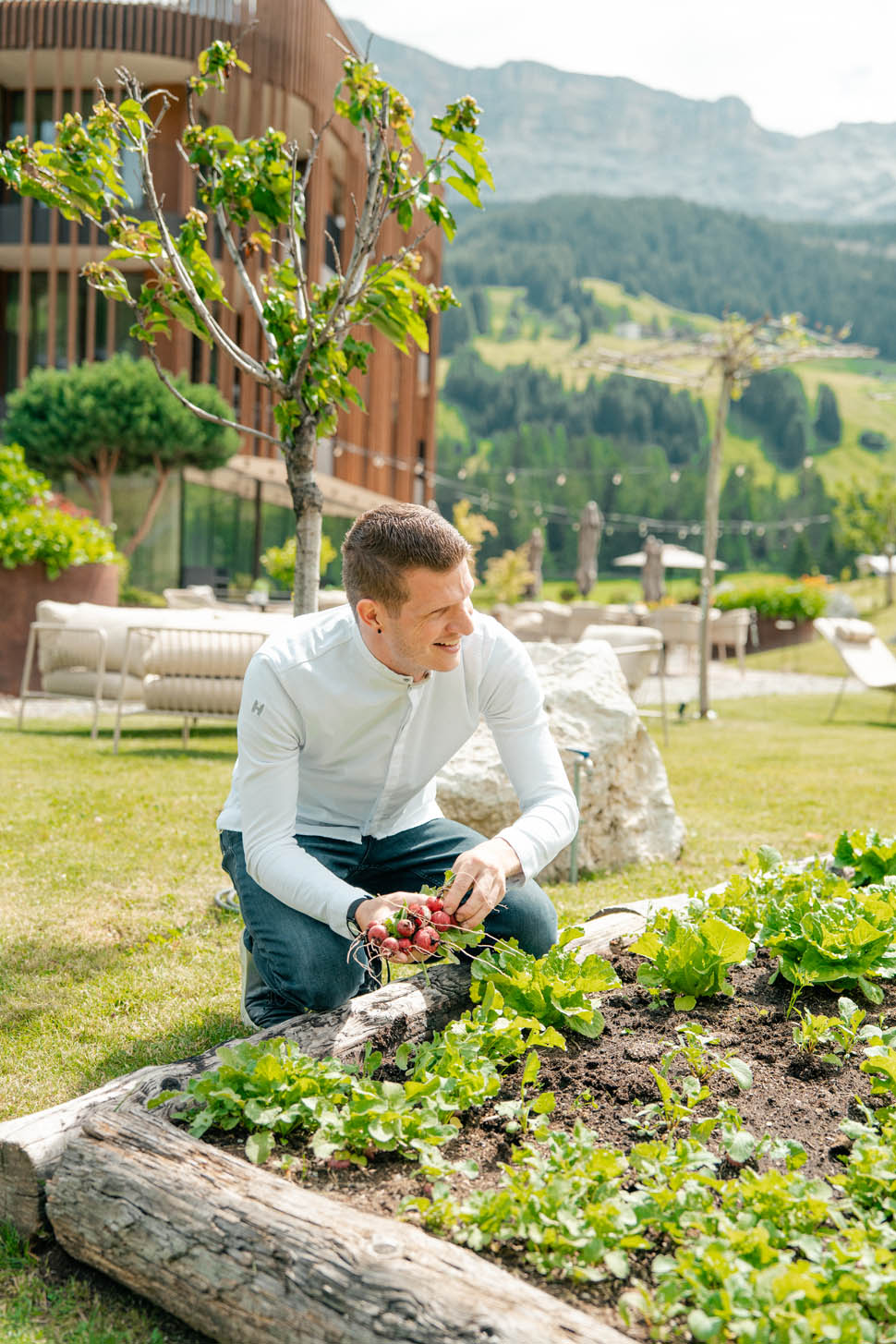
The Porcino’s Philosophy: “The guest should leave happy, not confused”
While the menu showcases Marco Verginer’s cuisine, it’s during conversation that you truly understand the vision he and Michela Mair are building at Badia Hill. The goal is to make guests feel at ease. To eat well, enjoy a great bottle of wine, and feel welcomed by relaxed, unpretentious service. “We want people to simply enjoy a lovely evening.” It’s the same philosophy that also guides the seemingly unusual choice to devote so much space to seafood right in the heart of Alta Badia.
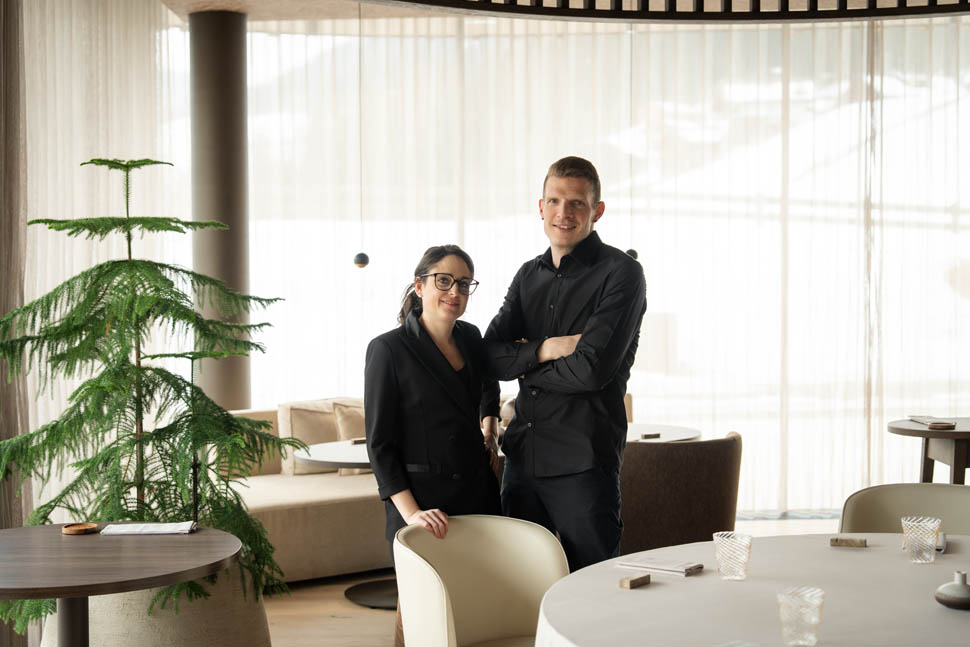
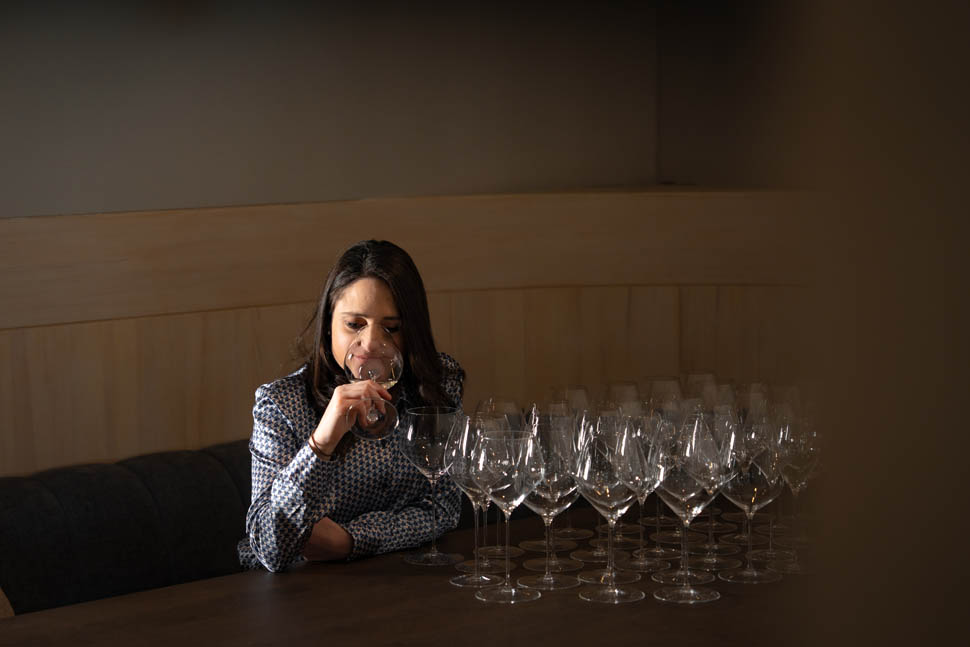
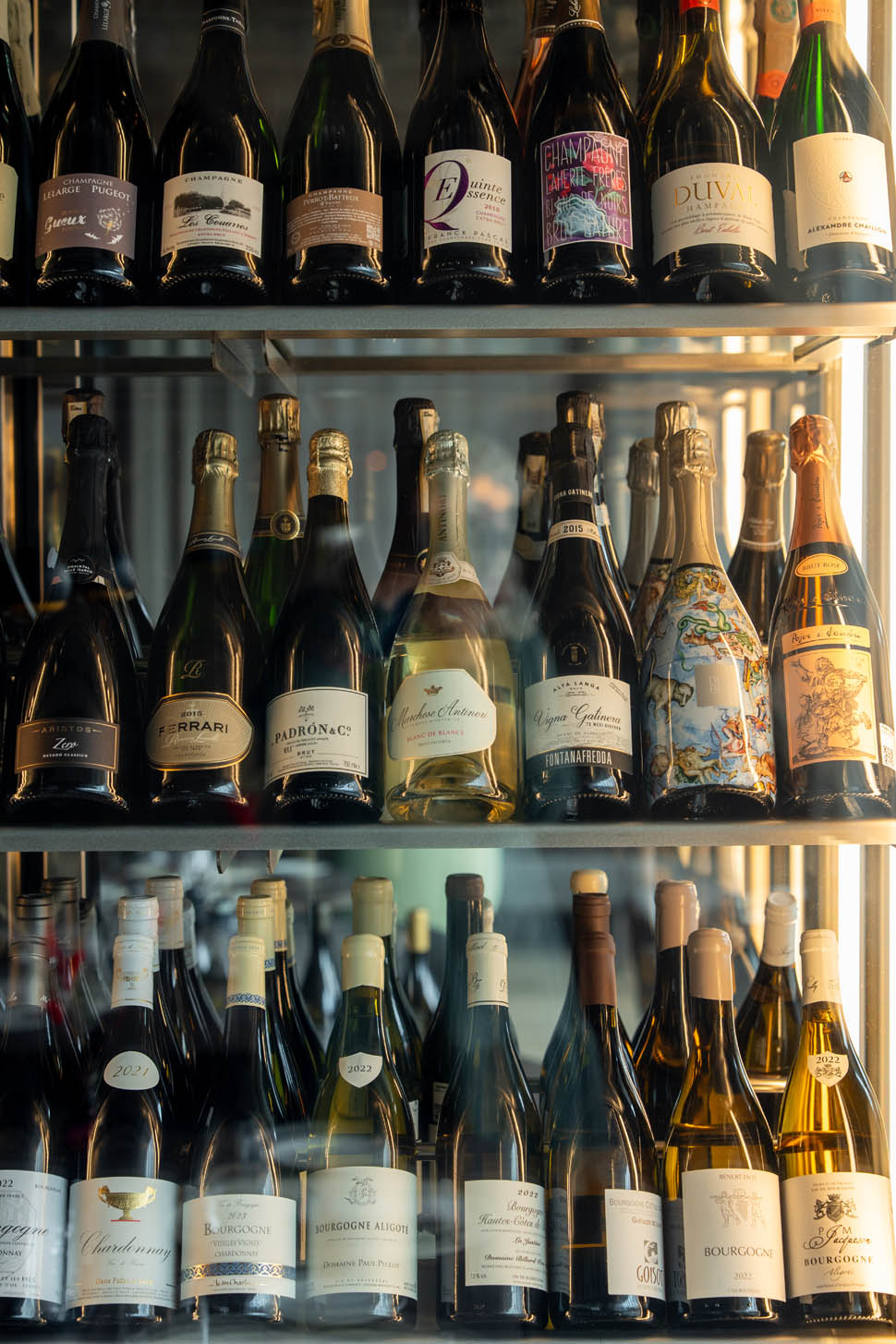
“Today, guests no longer just book a mountain getaway—they book Italy. We’re lucky to live in an extraordinary place, but the nearest coastline is three hours away. That’s why we decided to combine Alpine cuisine with seafood.” This observation challenges a quintessentially Italian habit: associating each region with a single culinary repertoire. Verginer doesn’t turn his back on the mountains, but he rejects the idea that they should represent a boundary. Alongside the kitchen is the work of Michela Mair, who oversees the dining room and wine cellar. The wine list focuses primarily on France, with a special emphasis on Burgundy, while the service strives for elegance without formality. “I’m not interested in stiff, formal service. I want to make sure the guest has everything they need, feels welcome, and isn’t disturbed.”
The same attention to detail runs throughout the entire Badia Hill project. Marco received the land from his father while he was still working in Switzerland; together with Michela, it took them nearly eight years to develop the project, personally selecting the furnishings, materials, and colors. Even today, they continue to refine details and design choices, convinced that a hotel is never truly finished. At the end of the conversation, they share the statement that, more than any other, sums up their philosophy of cuisine. “If a guest has to think too hard at the table to understand a dish, it means the chef hasn’t thought it through enough.” It’s hard to find a more effective definition of what happens at Il Porcino. Behind every dish lies research, technique, and experimentation. But nothing is flaunted in a way that’s hard to understand. The guest is free to focus on what matters most: the pleasure of eating.

Forest to Sea: The Sea in Alta Badia
The meal begins with a series of amuse-bouches that immediately define the character of Verginer’s cuisine. These are dishes crafted with great precision, in which a delicacy unusual for a mountain restaurant shines through. The quail egg with green asparagus, potato foam, and basil is probably the bite that best encapsulates this philosophy. The ingredients retain their own identity without ever overpowering one another, creating surprising depth even when starting with everyday ingredients. It’s one of those dishes that reminds us how difficulty often lies precisely in simplicity. Alongside this, the bun with lobster, smoked bell pepper, and spring onion introduces a more playful element. It’s indulgent and fun, a precise exercise in balance. Even before the main course begins, what Verginer calls Merenda Alpina arrives—a feature of both tasting menus. More than just a bread service, it’s a true gastronomic moment in its own right.
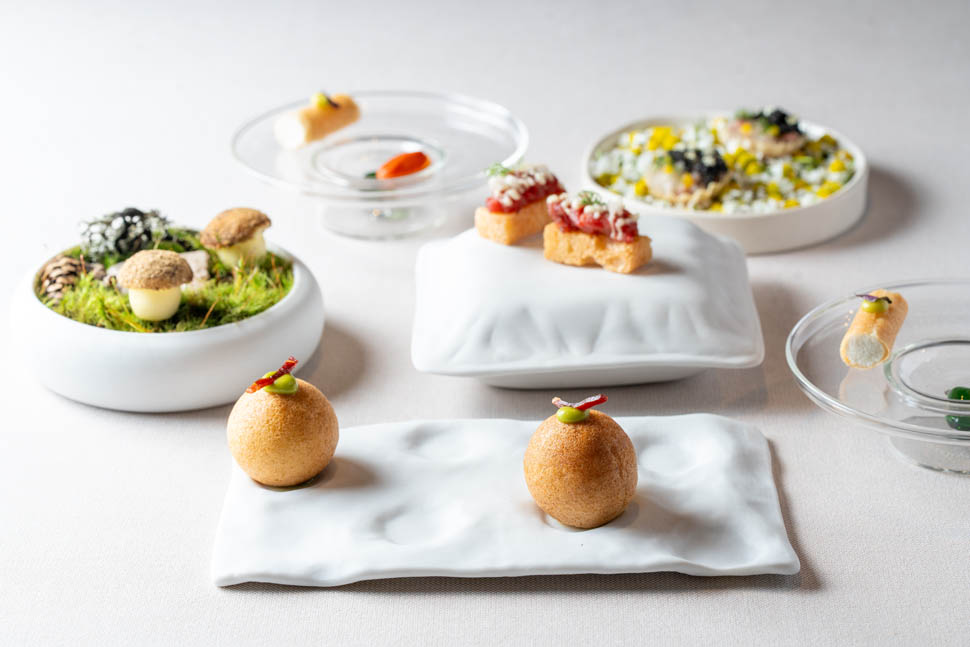
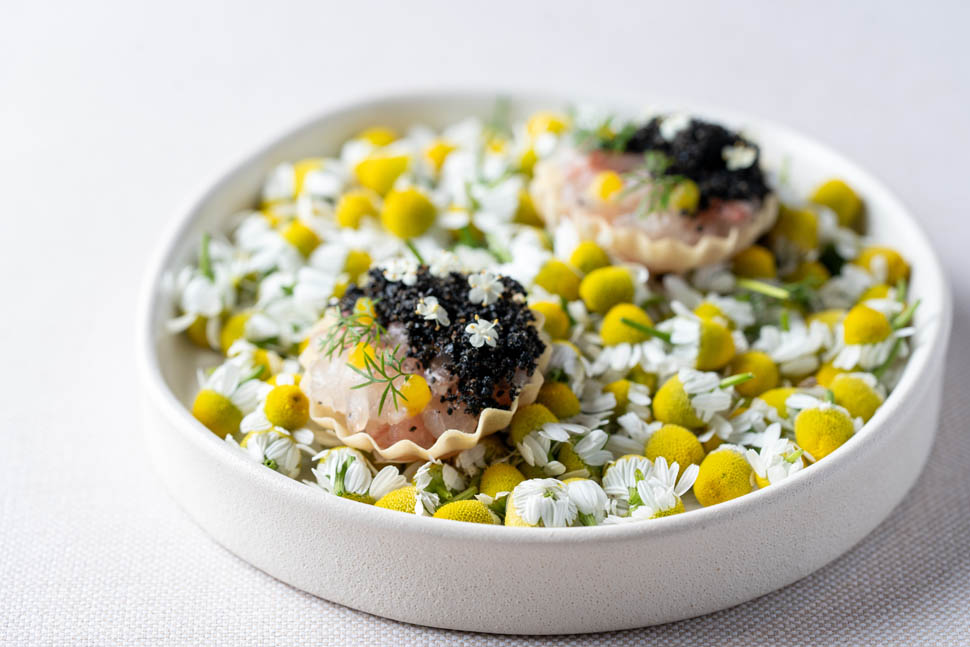
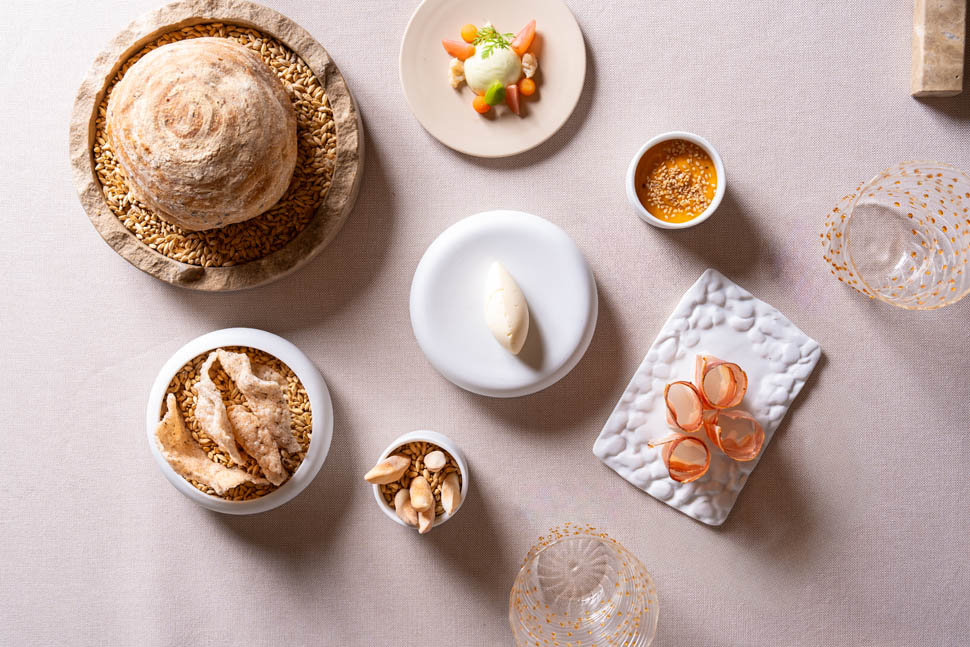
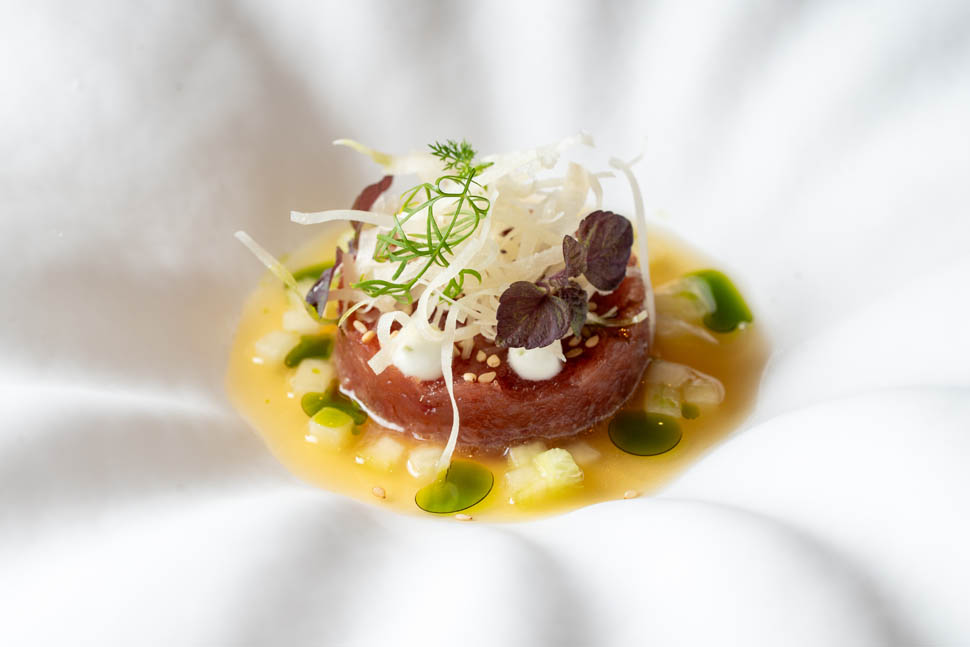
The farmer’s butter accompanies a selection of baked goods made with different flours, ranging from toasted breadsticks to spelt bread with seeds, all the way to buckwheat chips. The house-made speck, sliced paper-thin, resembles a veil of silk, while the carrot, ginger, and sesame purée stands as one of the finest examples of how exceptional a vegetable dish can be. Sweetness, freshness, and a subtle spicy note coexist in perfect balance, transforming a seemingly simple dish into one of the most pleasant memories of the entire dinner. The first appetizer features tuna, served with a gazpacho dressing, cucumber, lime, shiso, and sesame. This dish impresses above all for the quality of its ingredients and the overall freshness of the dish. A clean, precise, and thoroughly enjoyable taste.
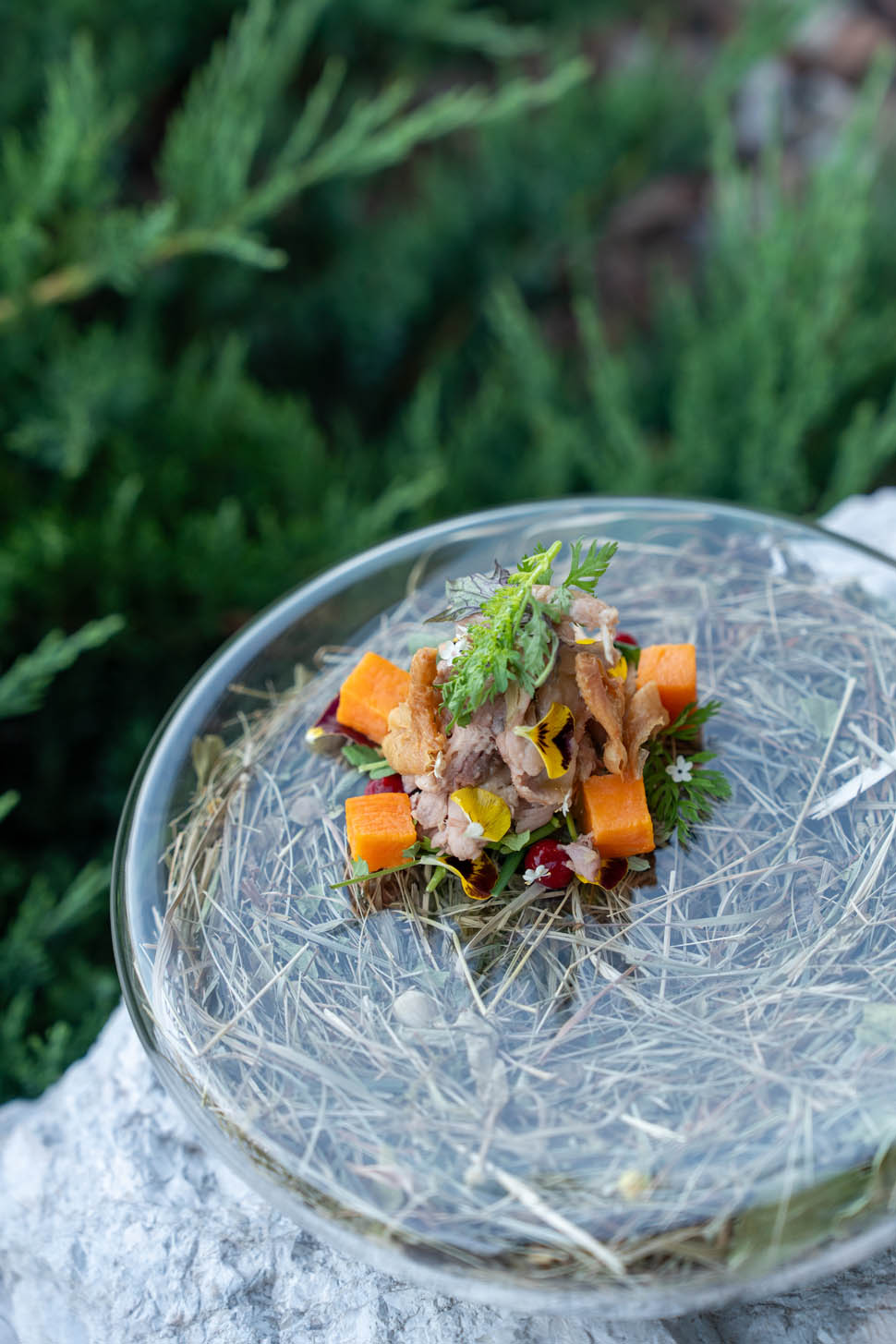
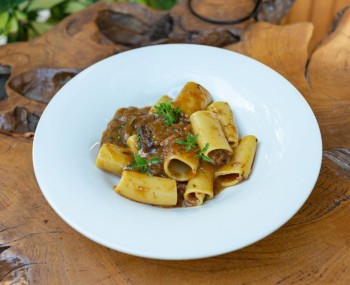
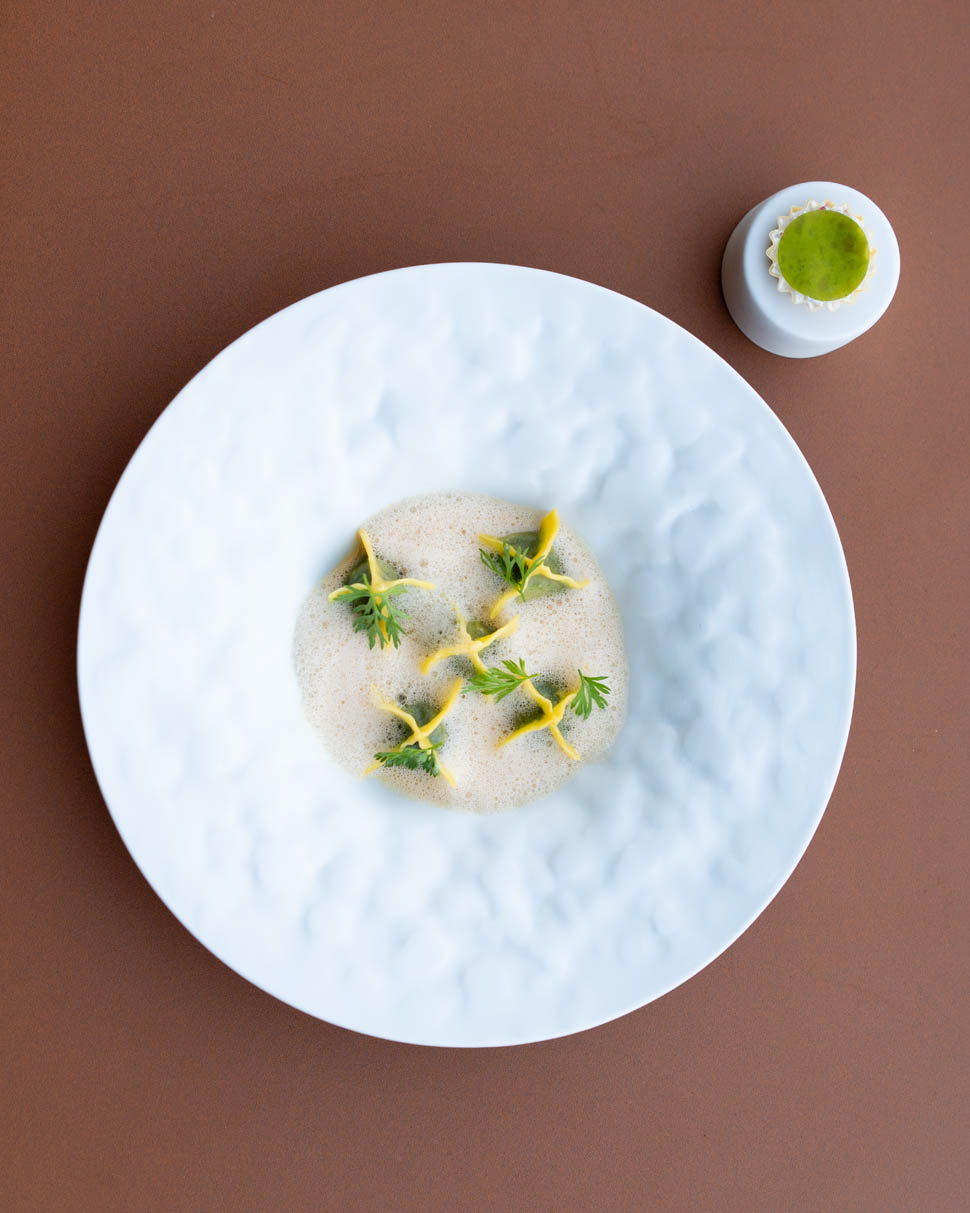
With the wild garlic tortelli, the journey ideally takes us back into the woods. The South Tyrolean bread cream, enriched with anchovies, Parmigiano Reggiano, and veal sweetbreads (from the throat, ed.), creates a dish of great character in which the richness triumphs gloriously. It is probably the dish that best captures the Alpine side of Verginer’s cuisine: generous, intense, yet never heavy. The next course introduces one of the most interesting ingredients on the entire menu: Glacier 51, Australian black cod caught in the icy waters around Heard Island in the southern Indian Ocean. Considered one of the world’s finest fish for its texture and fat content, it requires extremely precise cooking; just a few extra seconds can completely compromise the structure of the flesh.
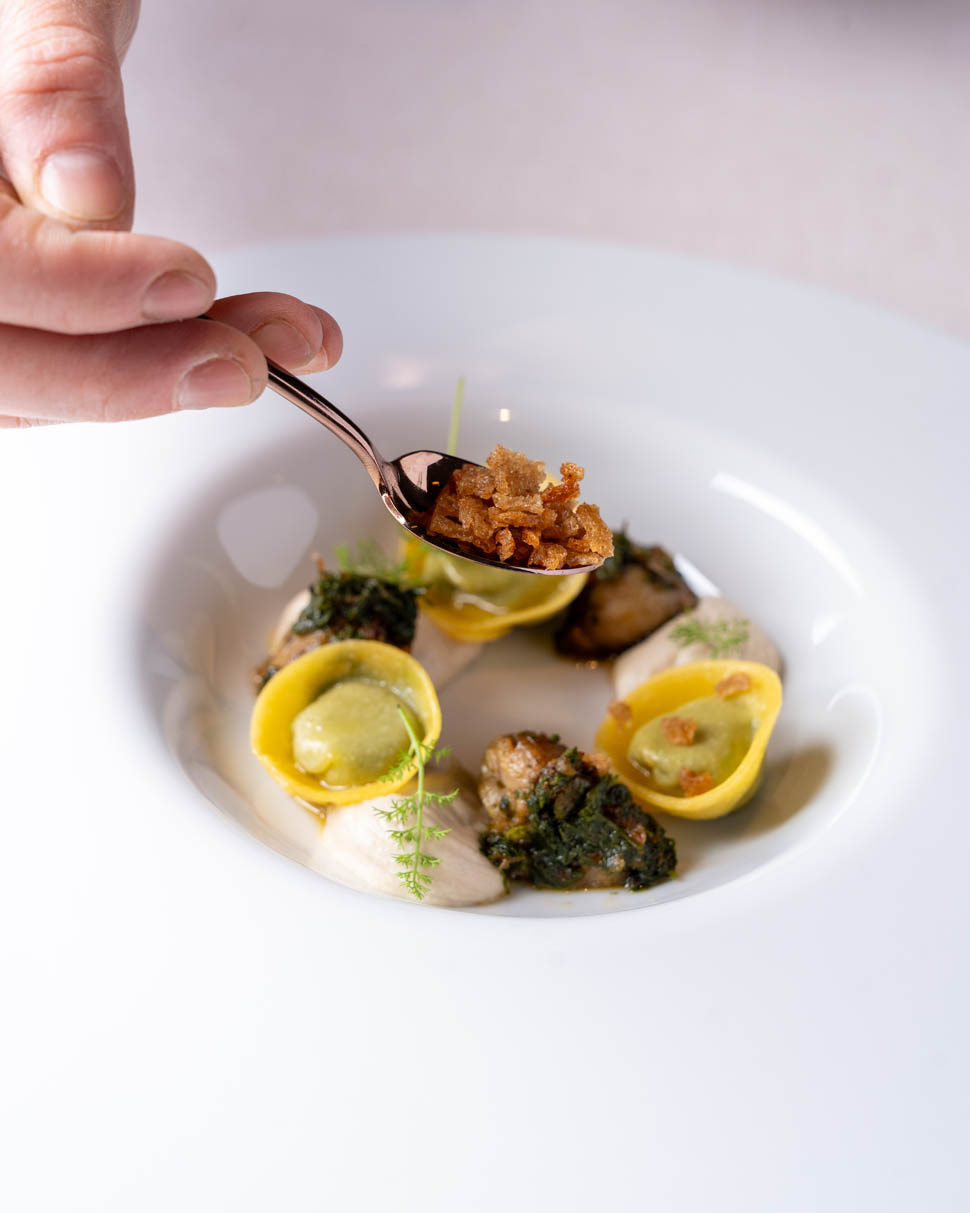
And this is precisely where one of the most interesting aspects of Marco Verginer’s cuisine comes to the fore. His dishes convey spontaneity, immediate pleasure, and a certain joy in eating. The Glacier arrives at the table with a perfect texture—soft yet firm—accompanied by leek, pancetta, whole-wheat bread, verjus, and a cream made from the fish itself. A dish built on delicate contrasts, where each element helps amplify the flavor of the star ingredient without ever overshadowing it. It is precisely throughout the meal that one comes to appreciate one of the most interesting aspects of Verginer’s cuisine. The technique is there and is of the highest caliber, but it remains hidden, allowing flavor to guide the experience.
The Four Acts of Wagyu Südtirol: Telling the Story of an Animal, Not Just a Cut
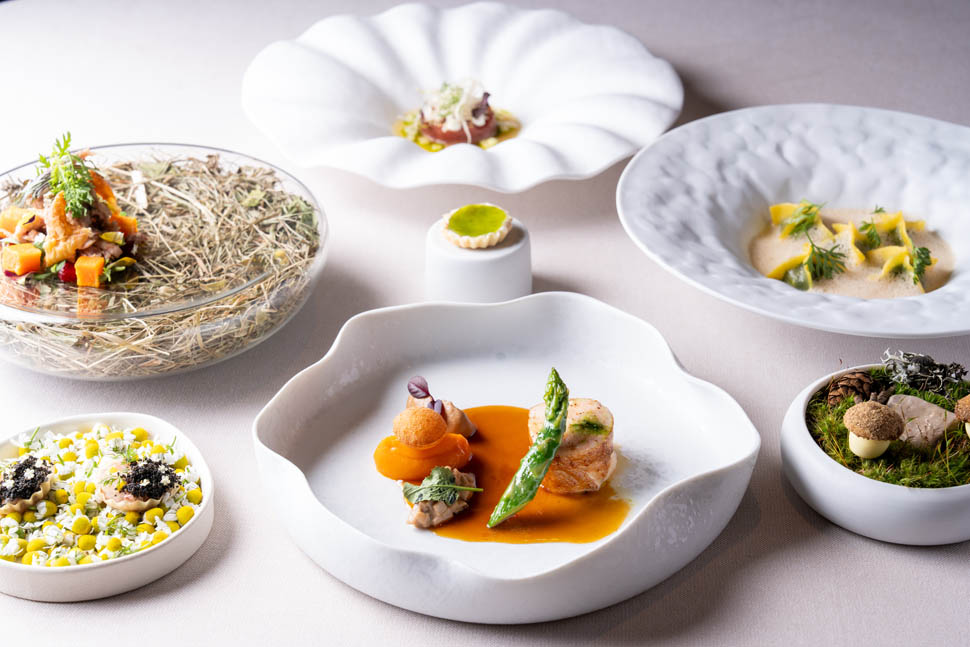
While Glacier 51 represents the technical showcase of Verginer’s cuisine, the Wagyu Südtirol likely reveals its deepest philosophy. Since 2023, Porcino has been participating in a project dedicated to Wagyu raised in South Tyrol—a supply chain focused on making the most of the entire animal, not just the most prized cuts. It’s an approach the chef champions with conviction: “For us, it’s important to show our guests that there’s more than just the filet. Every animal consists of many parts, each with different characteristics, different textures, and different ways of being cooked.” The concept takes shape through four consecutive small courses that guide the guest through the many expressions of the same raw ingredient. It begins with a tartare. The fat—sweet and lingering—immediately delivers that depth of flavor typical of Wagyu. The second course is perhaps the most interesting. The Wagyu skewer with beets has a more pronounced chew than what many customers today automatically associate with meat. We’re no longer used to chewing, but this is anything but a random choice. Verginer addresses the topic with extreme naturalness: “Not all meat has to be as tender as a filet. Perhaps we’ve simply lost the habit of chewing”.
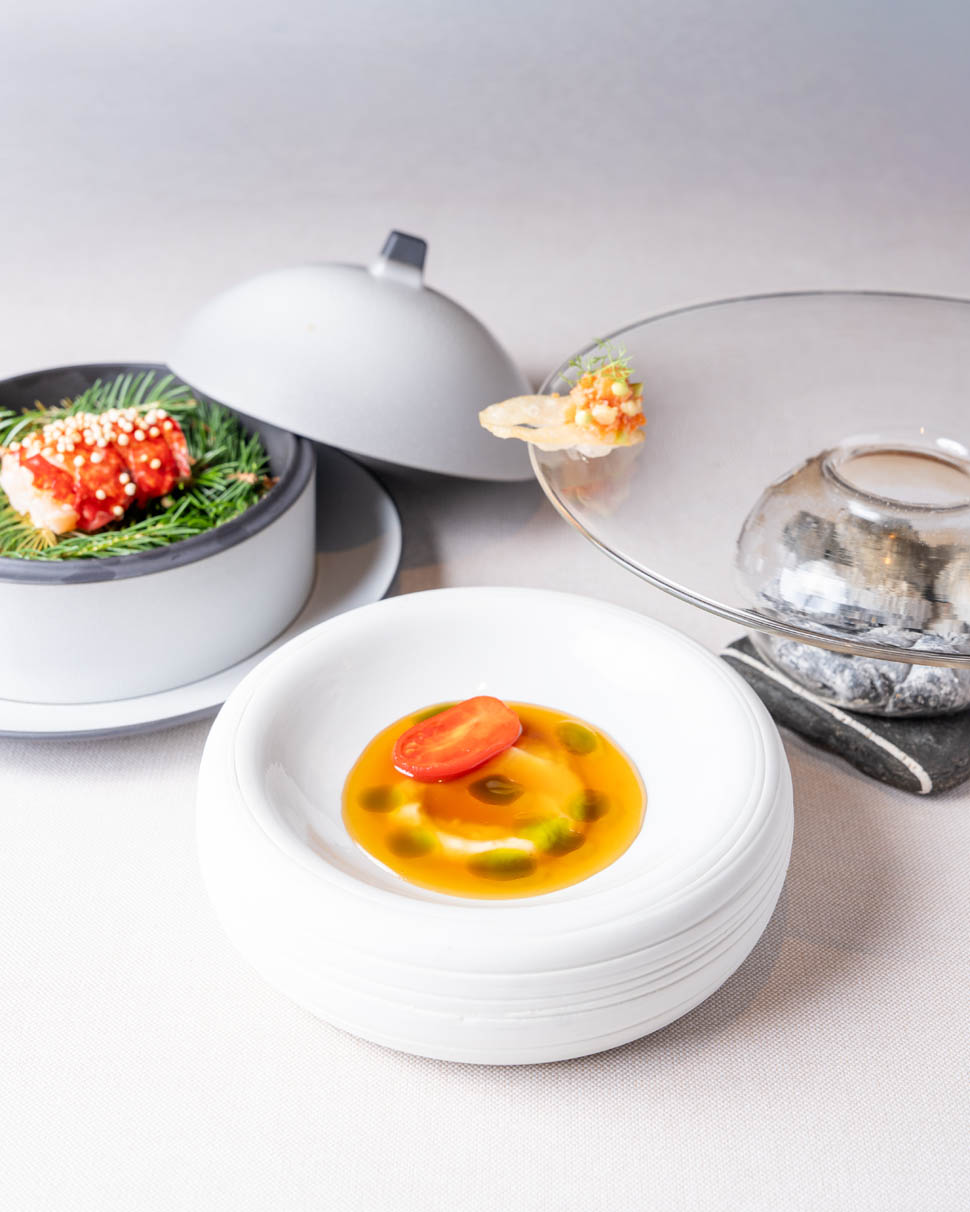
This reflection goes beyond the individual dish and invites us to consider each cut for what it is, without judging it solely on tenderness. In this context, that slightly firmer texture takes on a different meaning. It is not a flaw to be corrected, but rather the result of the nature of the chosen cut and the desire to present the animal in its entirety—and above all, with the awareness that no two animals are ever exactly alike. The third course restores balance with more classic flavors, featuring the sirloin served with cauliflower and salted lemon. Here, the Wagyu returns to its most recognizable form; the flavor is full, round, and enveloping. The final course is the one that leaves the strongest impression. Verginer simply calls it Essence.
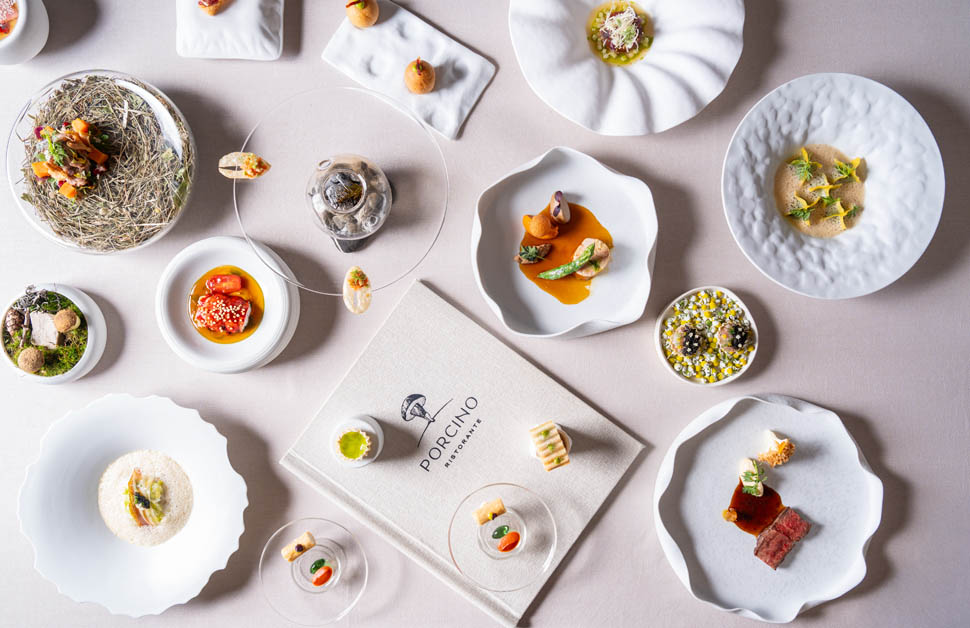
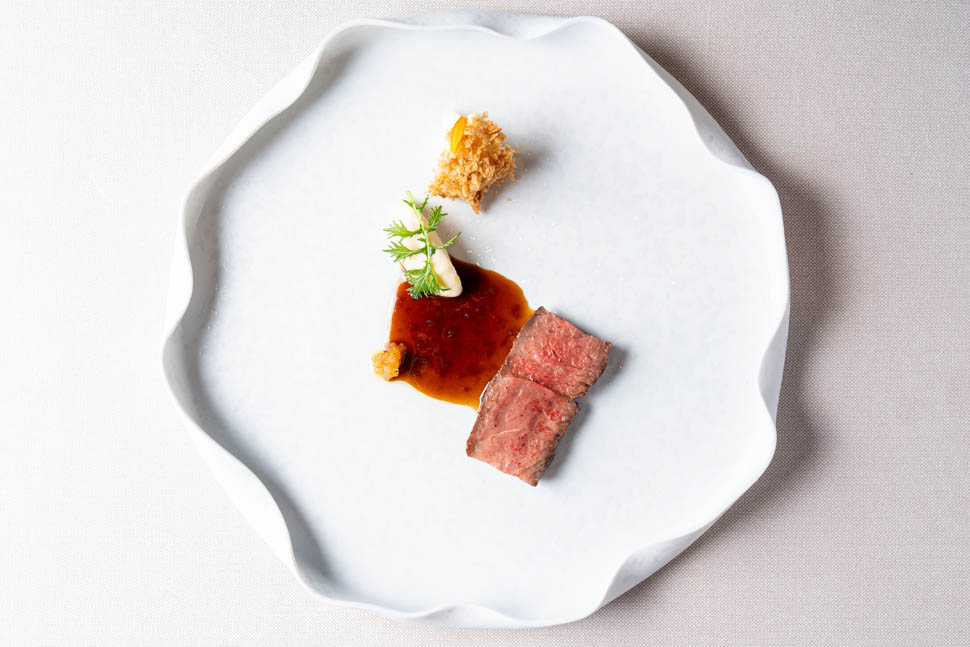
A broth is served at the table, but behind that apparent simplicity lies a long and meticulous—and above all, symbolic—process. All the less prized parts of the animal are used, cooked slowly until the maximum aromatic concentration is extracted; the addition of porcini mushrooms further amplifies the umami component, creating an intense, deep, and surprisingly elegant broth. More than just a broth, it is a true Wagyu extract. It is the natural culmination of the entire journey dedicated to the meat—the moment when everything that has been conveyed up to that point is concentrated into a single sip. In terms of intensity and precision, it recalls some of the great broths of Asian cuisine, while maintaining a completely different identity. It is also the dish that best encapsulates Marco Verginer’s culinary philosophy, which is to make the most of every part of the raw ingredients, without waste and without hierarchy. After a meal built on savory depth, richness, and intense aromatic concentrations, the dessert arrives with a change of pace.Whey ice cream with fennelembraces simplicity. The vegetal freshness of the fennel and the delicate acidity of the whey restore balance to the palate, bringing the tasting to a close with great finesse.
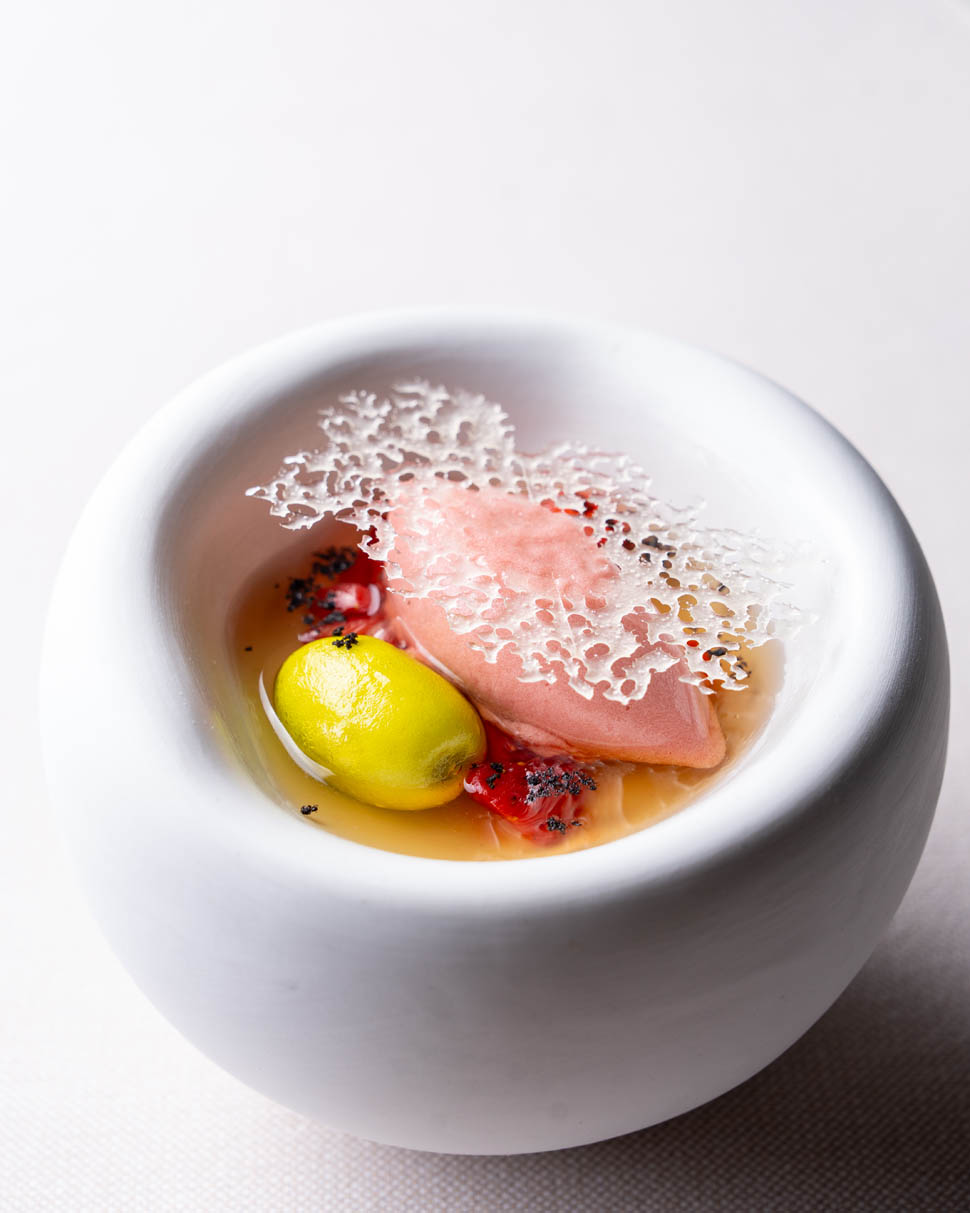
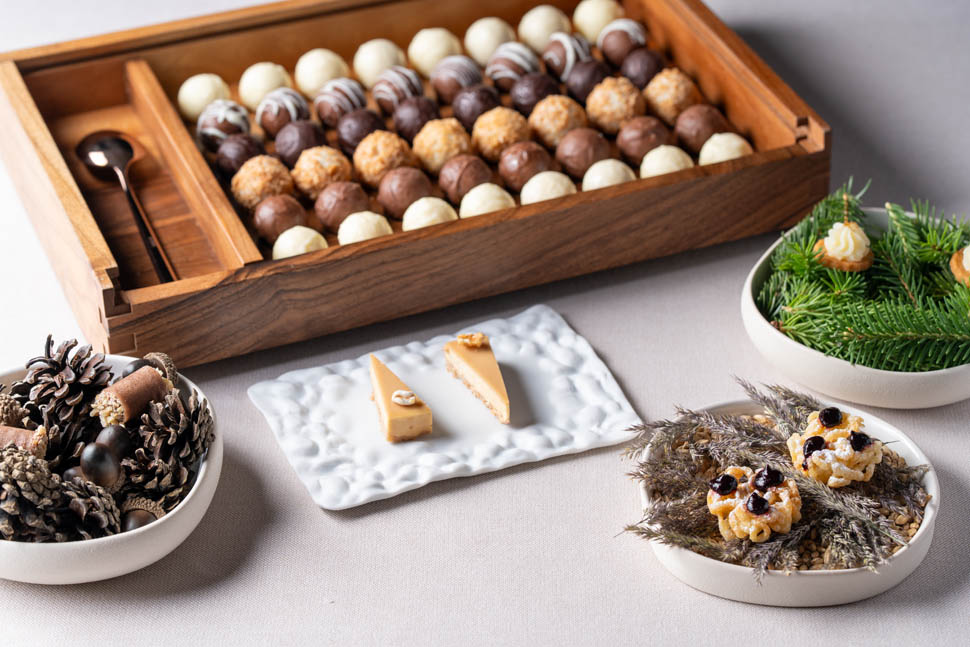
It’s one of those desserts that prove you don’t always have to increase the complexity to leave a lasting impression. Sometimes all it takes is finding the right moment to pause. The selection of petits fours brings the dinner to a close with remarkable artistry.The pralines are particularly striking: the shell is paper-thin, and the filling melts slowly, offering a velvety texture that accompanies the final moments of the dinner with an almost childlike delight.
The Gin Experience: The Off-Menu Finale
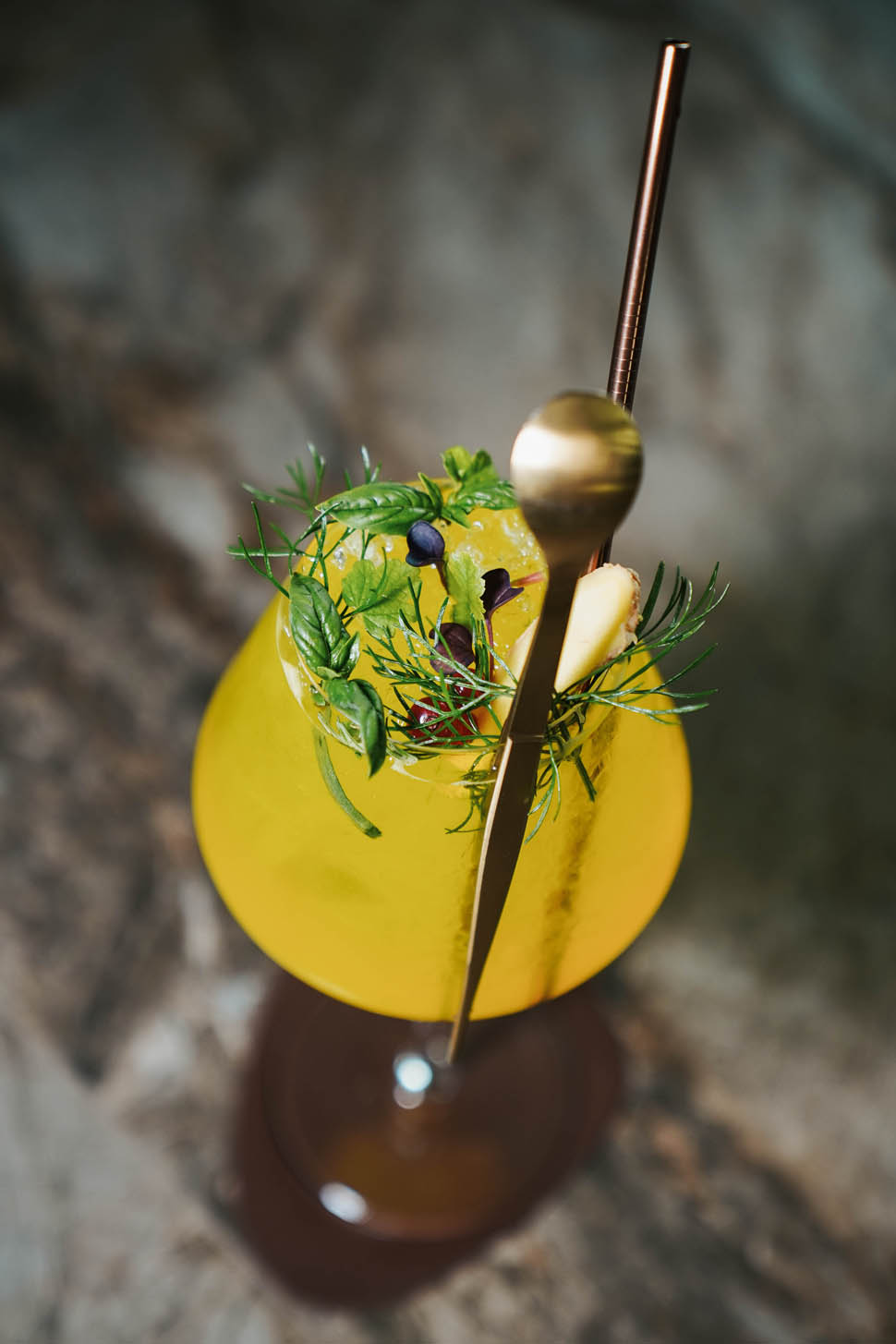
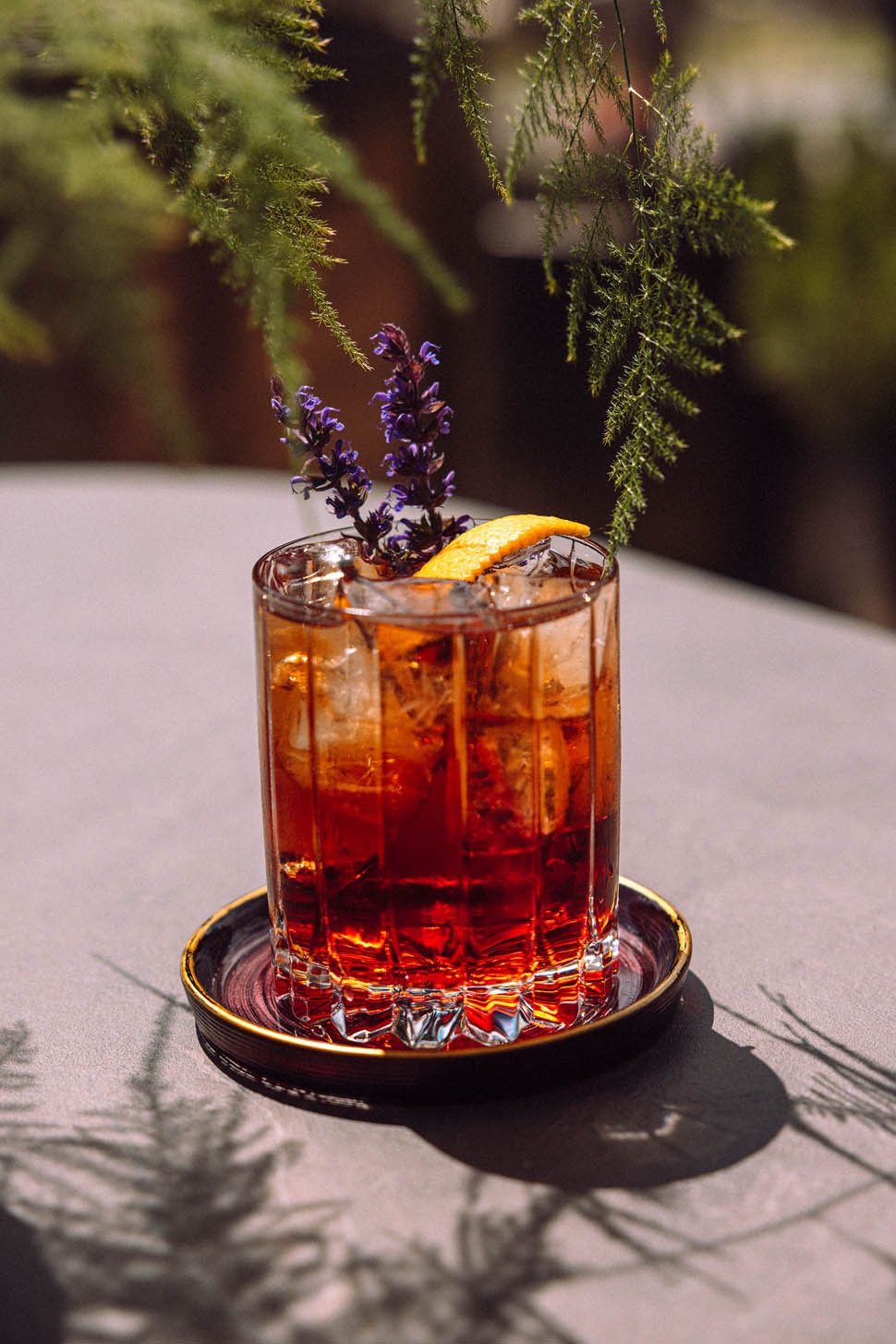
The final surprise comes just as the kitchen has finished telling its story. In the Badia Hill lounge bar, the Gin Experience comes to life—a service that Michaela Mair and her team have crafted into a true ritual. A cart is wheeled to the table bearing numerous gins distilled right on the premises, along with various botanicals, essences, and tonics. The drink is prepared right before the guest’s eyes, who is invited to participate in selecting the scents and achieving the perfect aromatic balance. It feels like watching a mini chemistry lab applied to mixology. Once again, technique takes a back seat, while the pleasure of the experience remains front and center.
Contact and Info
Porcino Restaurant
Str. Damez, 2A – Badia
Tel. 0471 1808060
Website: https://www.badiahill.com/it/food-drinks/ristorante-porcino/