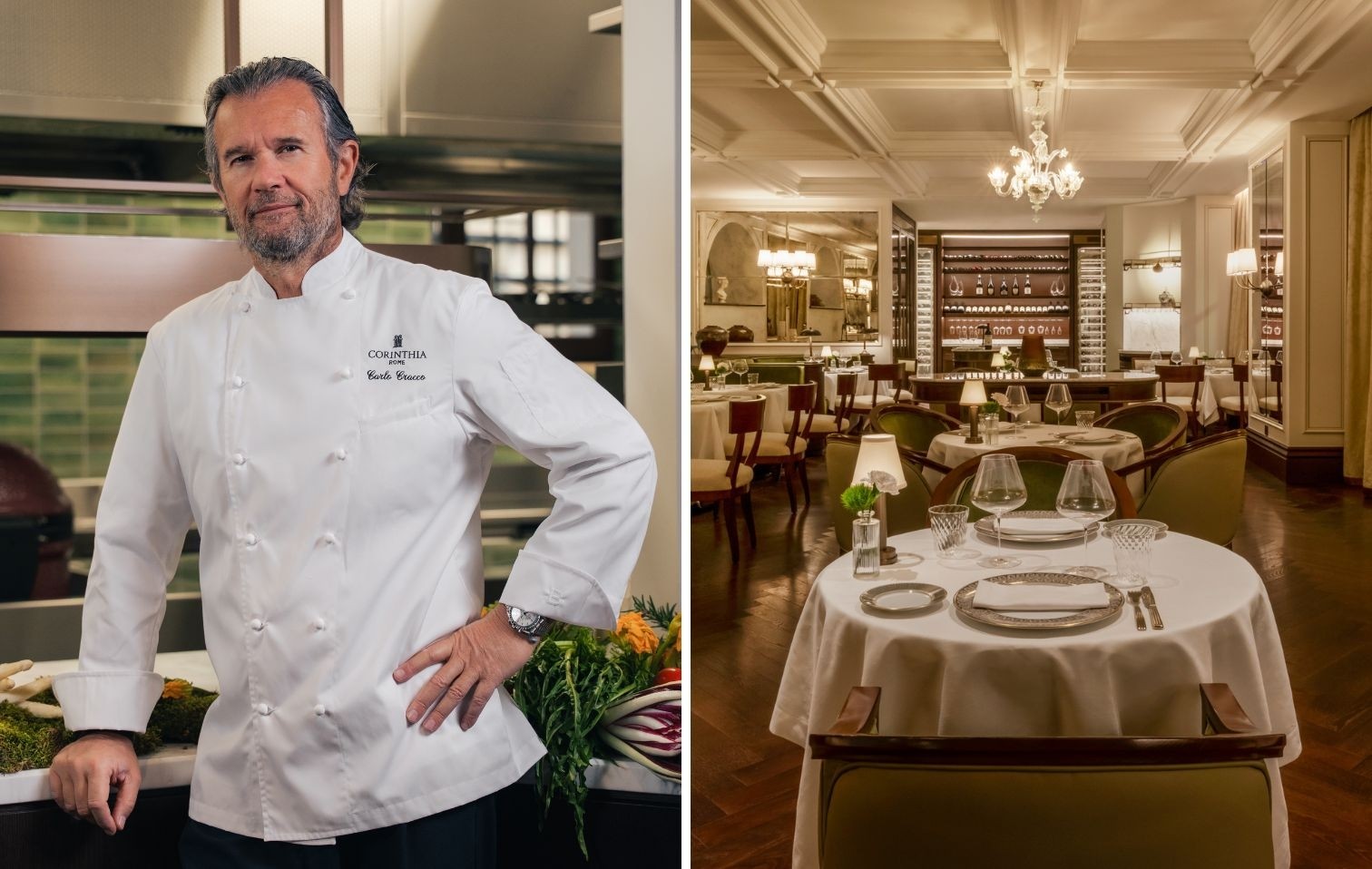
Sometimes the relationship with guests can become the unspoken value—a principle that transforms work into a calling and the law of compromise into a foretaste of happiness: at the Corinthia, luxury has been set aside in favor of a comprehensive renewal of the individual. Carlo Cracco’s venture to bring something different to Rome, redefining the concept of a high-end hotel.
My visit boiled down to just two activities: eating and asking questions. I’ll start with the second one. To ask good questions, you need to listen carefully and be prepared for the fact that the answers you receive may: not match what you imagined, hold surprises, be deadly boring, serve as leads, or fail to provide a satisfactory answer. An interview, while undoubtedly falling into the category of “asking questions,” often runs the risk of not falling into that of listening.
Let’s say I already had in mind what I wanted to write about. After four interviews—not counting the one with Carlo Cracco—I would have really had to twist the facts to ignore just how warmly Cracco was received—not to say eagerly awaited—especially by industry insiders already working in Rome. Not that there was a line of people waiting to work at the Corinthia’s three restaurants—Viride, La Piazzetta, and Ocra—but it wasn’t far off. Many people sent in their résumés, and many called.
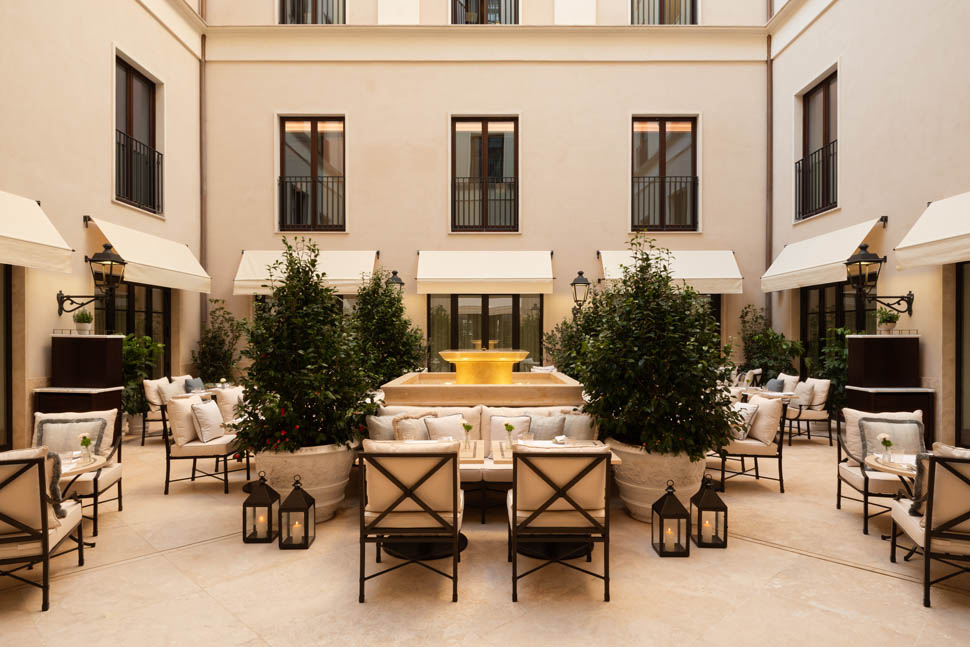
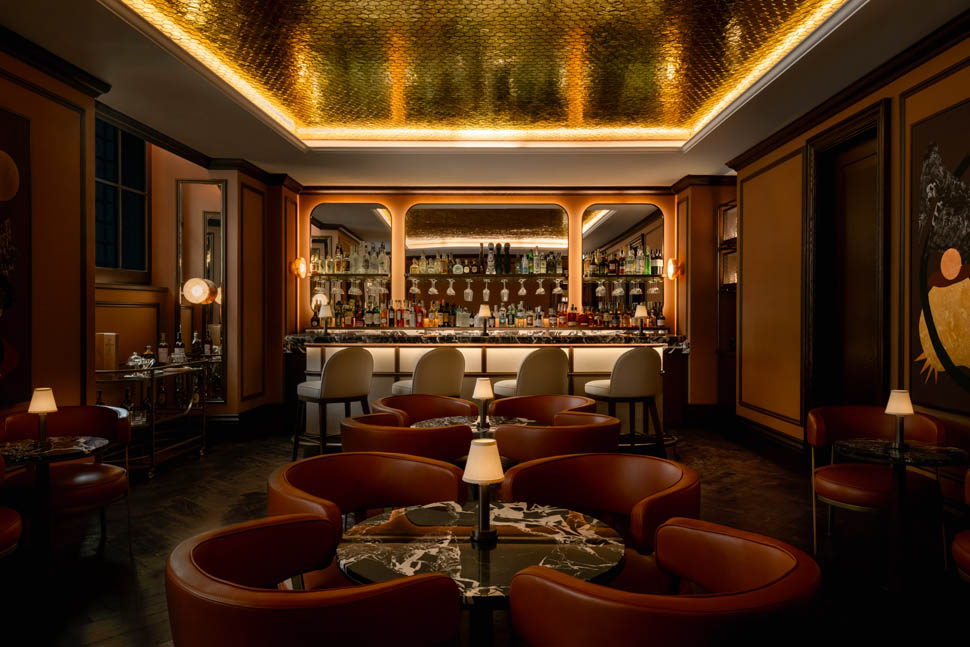
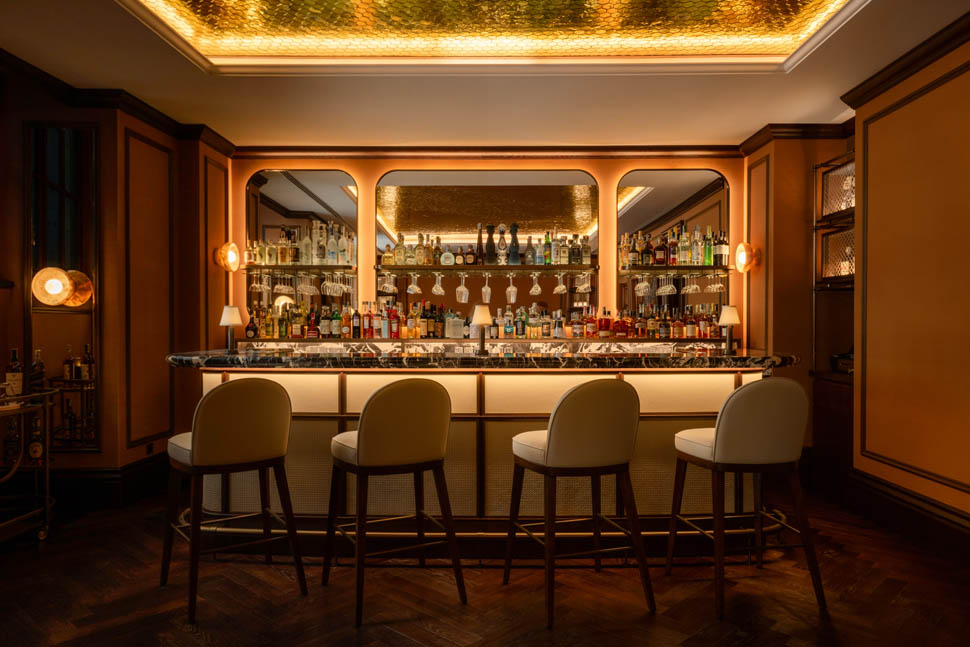
Frankly, I didn’t expect a “Milanese” to generate this much anticipation, this buzz among the generation that’s grown tired of Rome. Apparently, in the small yet big world of chefs and waiters, word has it that working with Cracco is a great experience. It’s a great place to work.
The hotel
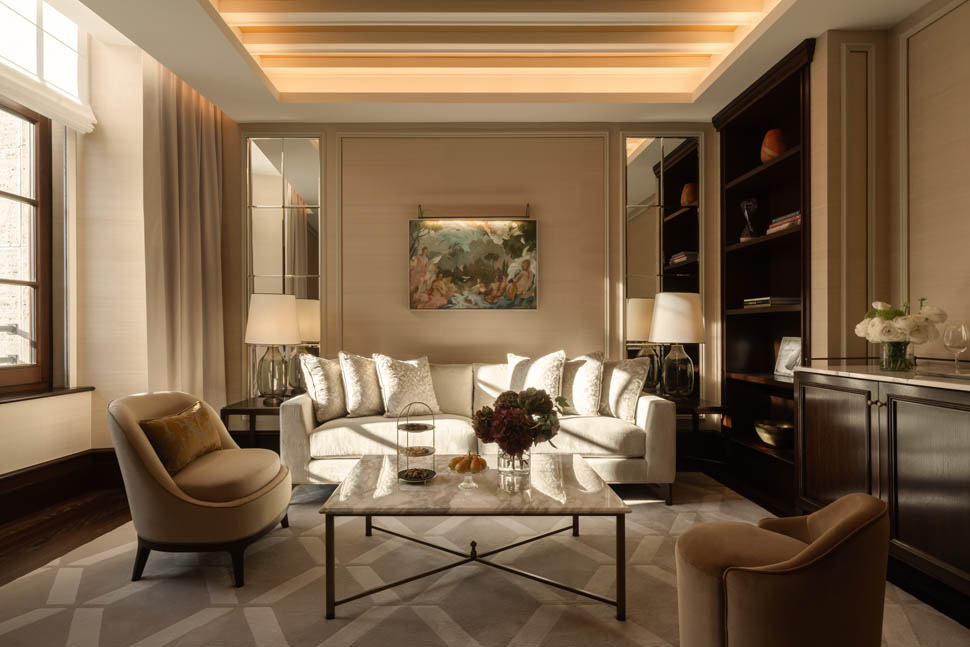
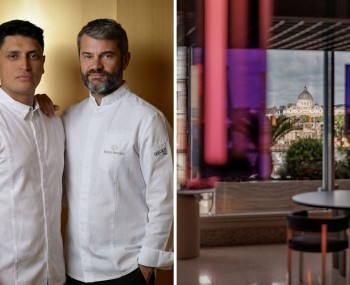
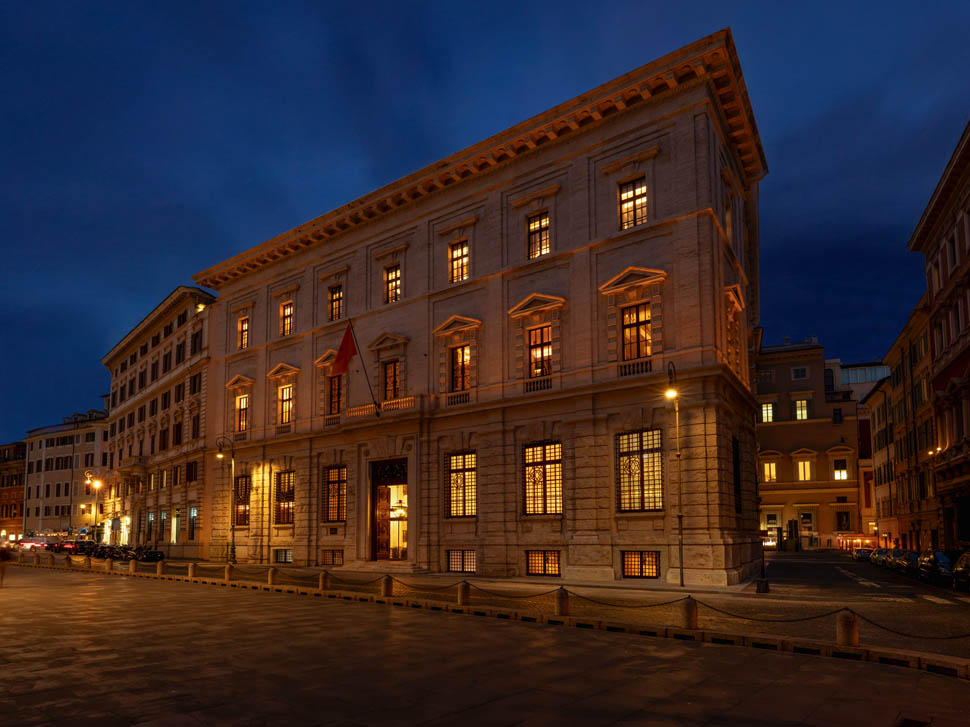
The Corinthia Rome stands right in front of the Parliament—the very place where, in two large chambers, the will of the people is supposed to be heard. I wouldn’t be at all surprised if it were the Corinthia’s spaces that welcomed this tormented generation of politicians, exhausted by their inability to serve. When reality is no longer a challenge, when your connection to reality begins to fray, you have no choice but to become self-referential. Stop by the Corinthia. In what used to be the Bank of Italy, you’ll experience a welcome that brings you back to life—in the sense that it strips away that feeling of “everything is owed to me,” replacing it with “there is so much that has been given to me.”
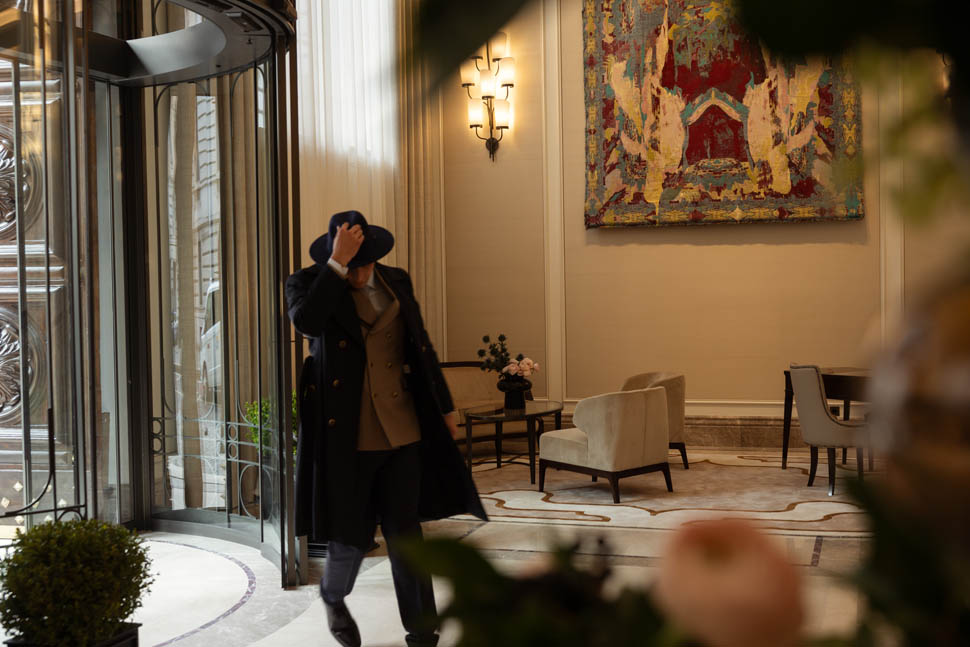
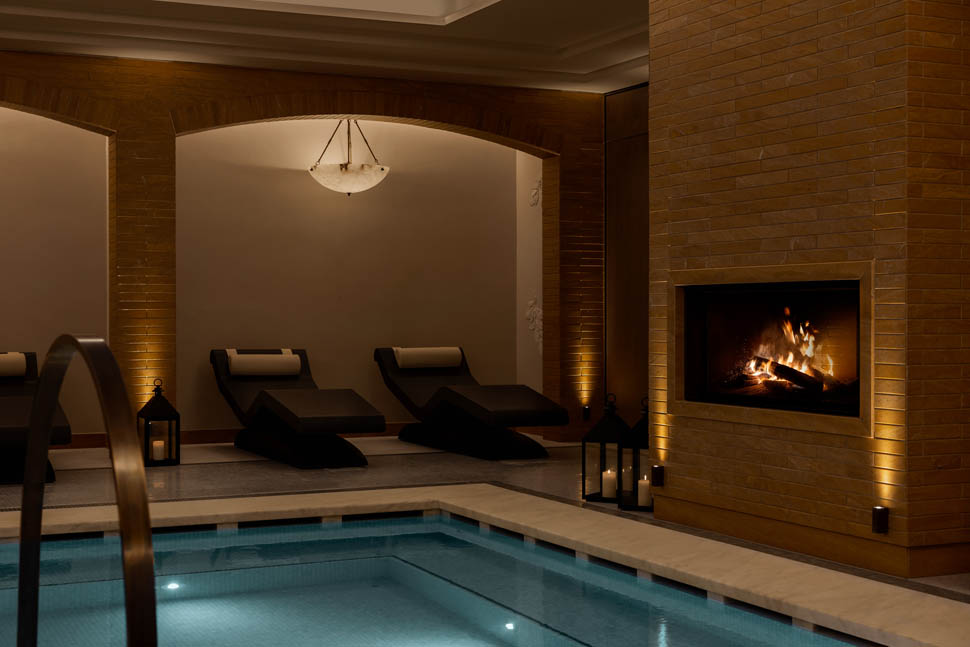
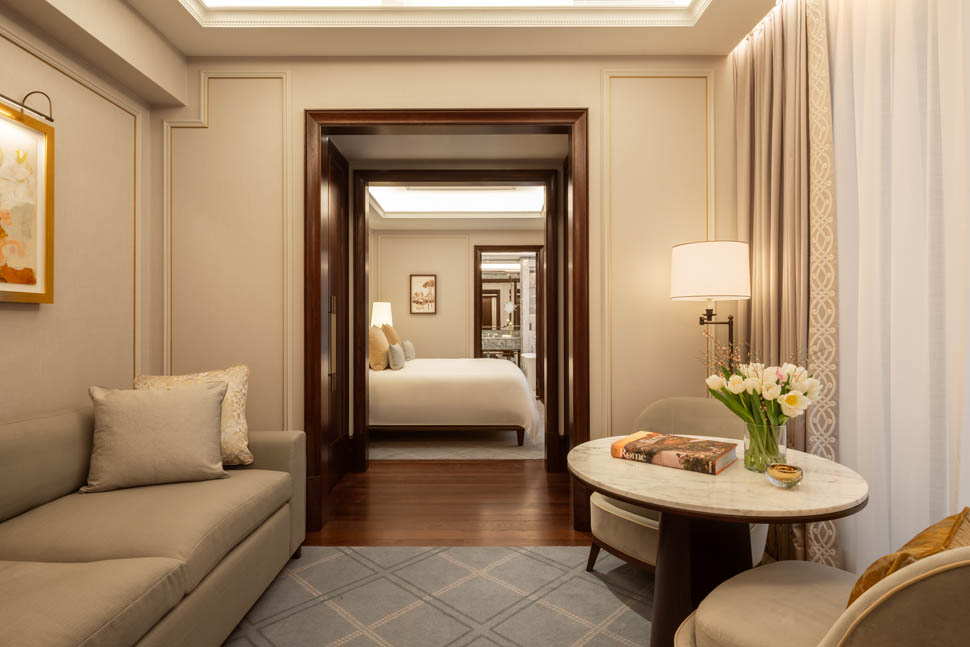
There’s a different kind of rapport with the customer compared to a restaurant, because you see them starting in the morning. And when you run into them at breakfast, it’s almost like a family setting—you ask them how their evening went, and they tell you what they’re planning to see and ask you questions. Then they tell you they’d like to try that dish tonight. You don’t have to put everything on the line in a couple of hours like at a restaurant; you don’t have to make an immediate impression, and if you don’t, it’s over. You can take your time. This way, the interaction with the customer becomes an opportunity. You just have to be there.
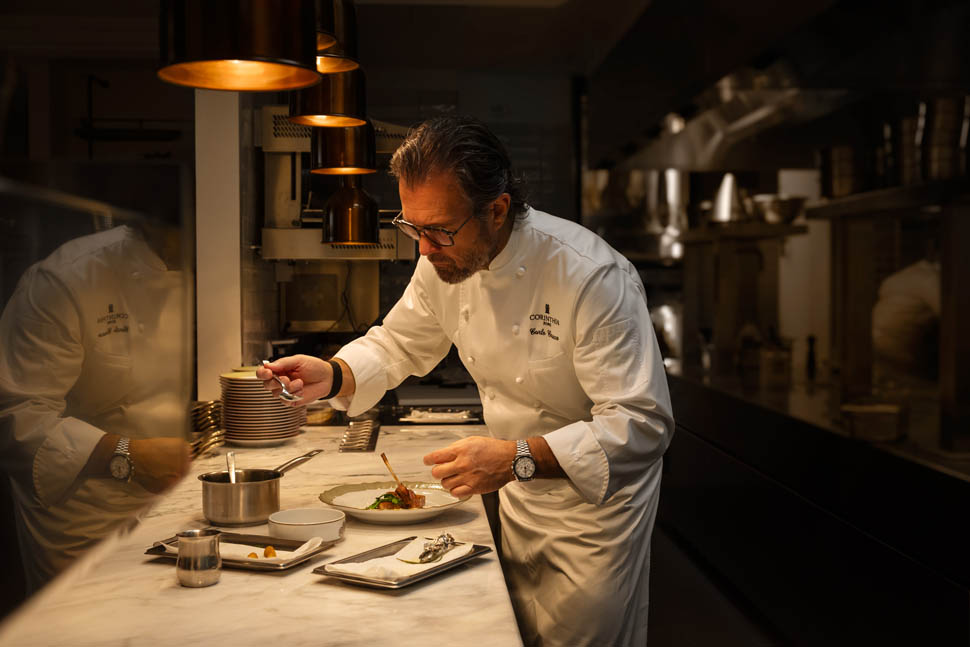
Carlo Cracco speaks as if he doesn’t feel the weight of his responsibility. The Corinthia Roma is a luxury hotel that isn’t so large as to make you quickly forget that the guests are the real stars. There are sixty rooms, and the three dining options are all on the ground floor. The famous rebuke “this house isn’t a hotel”—uttered by countless mothers to countless children who mistook the family home for a place devoid of relationships and offering total autonomy—becomes, for Cracco, “this hotel is a home,” becausethe relationship with guests can truly become the unspoken value, a principle that transforms work into a calling and the law of compromise into a foretaste of happiness.
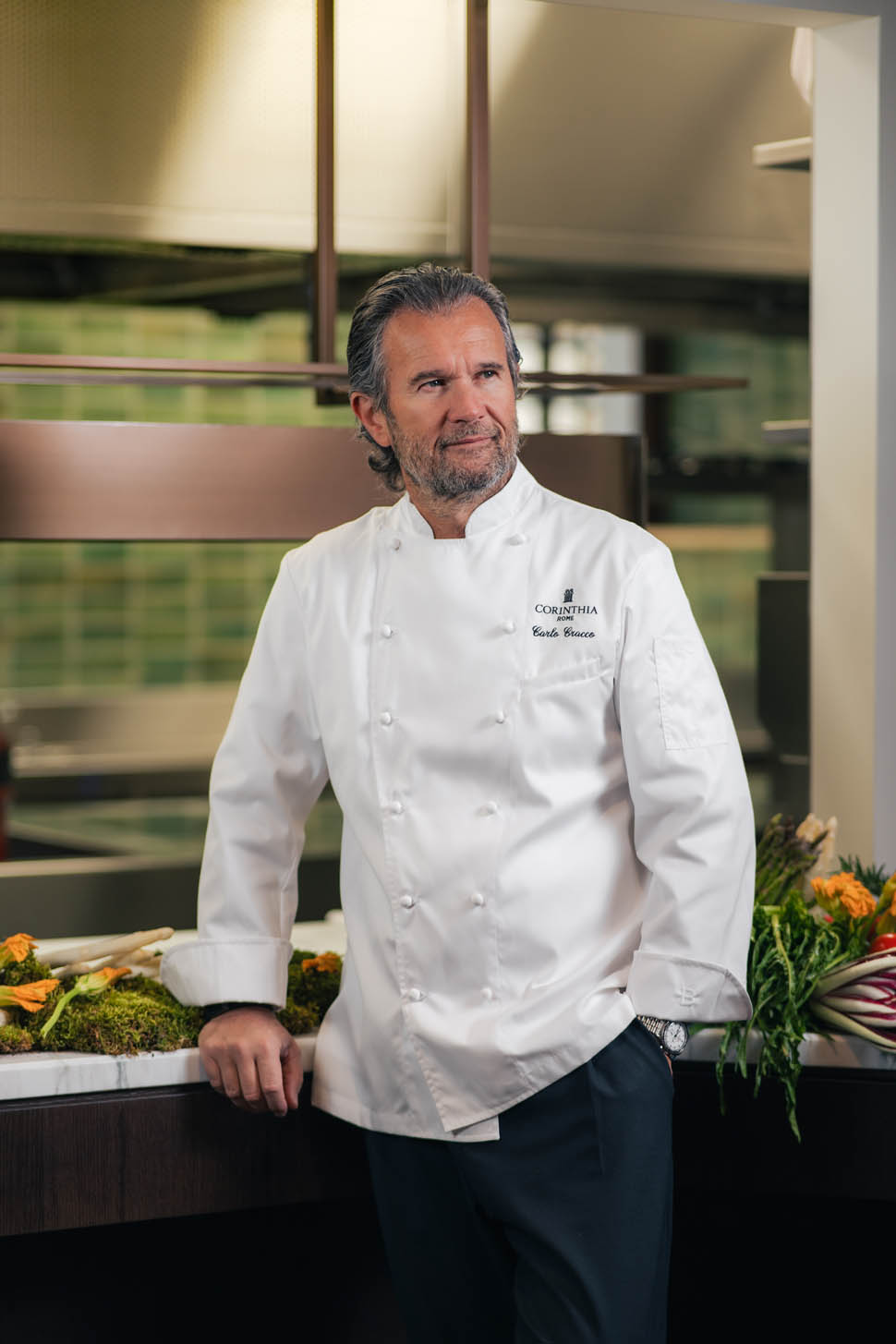
Jeff Bezos’s father also stayed at the Corinthia for five nights. With a security detail in tow, he could have gone pretty much wherever he wanted, but instead—thanks to Cracco and all the men and women who went above and beyond their duties—he never wanted to go out. You might say, “A little stroll around Rome wouldn’t hurt.” Fortunately, and thanks to Cracco, he didn’t have a delivery sent to his room; he always asked to try something new, including the coda alla vaccinara he’d heard so much about.
The Philosophy
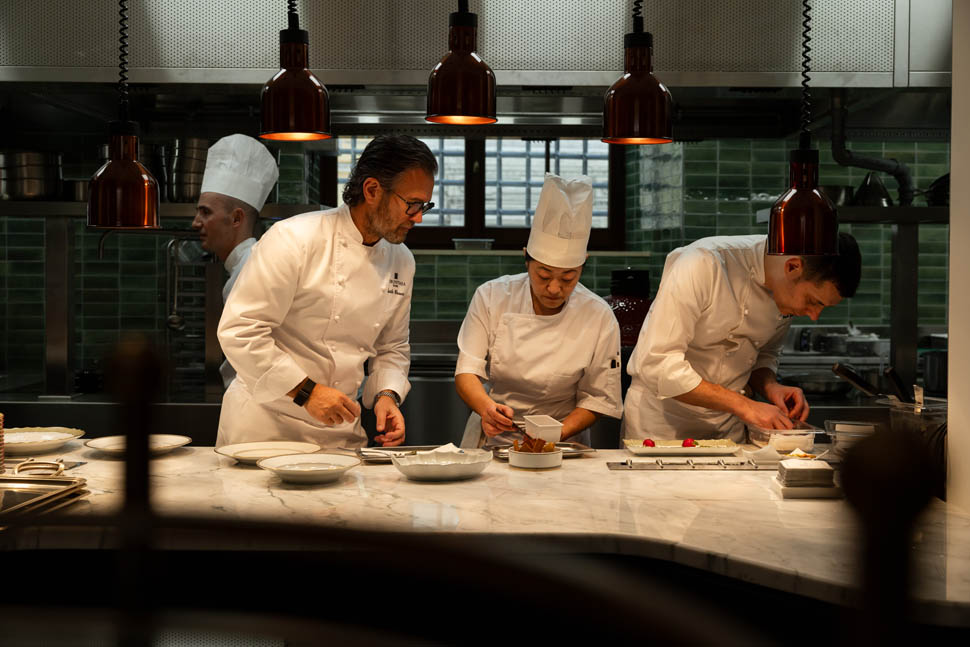
At the Corinthia, luxury has been set aside in favor of a comprehensive renewal of the individual. Forget the image of Cracco as some kind of strategist or demiurge drafting a “Marshall Plan” for hospitality. Let’s not exaggerate. Cracco is simply taking his own story and experience seriously, choosing what—outside of any power play—can bring him satisfaction and peace.
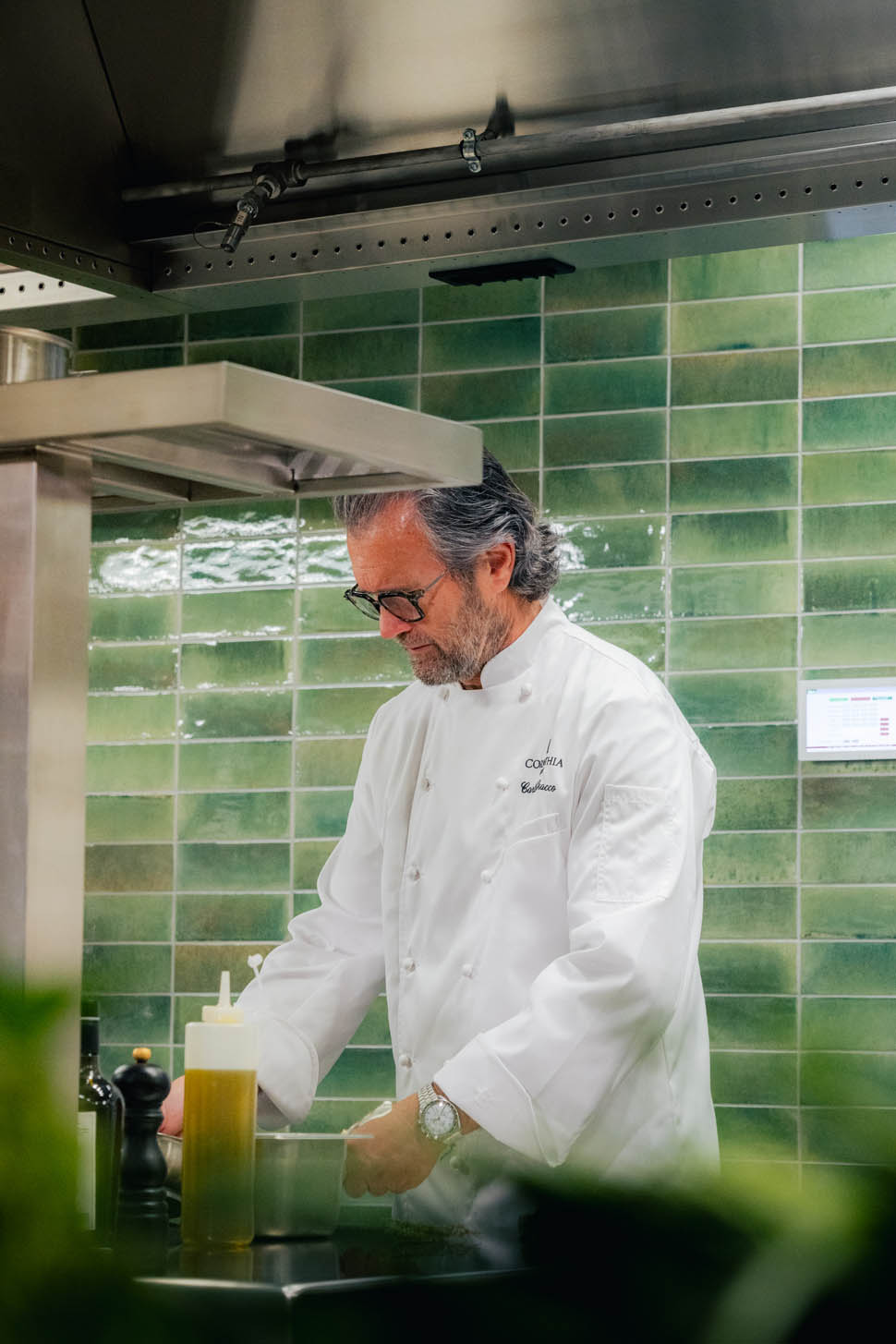
"People who are different from me are an asset. Often, people look for someone who fits their mold—in the sense that finding a clone is easier. But molds are ugly; they’re boring. In Portofino, I didn’t bring a clone of myself; we can’t just copy and paste Milan here. I’m not a chain where you buy the same stuff. I can ignore that and instead focus on understanding the local context. I go to the beach in Portofino—I’d be an idiot to serve kidney or liver, though maybe fish liver. It’s the same with Alessandro Buffolino; I found an approach and a management style suited to a luxury hotel that also needed some gastronomic flair."
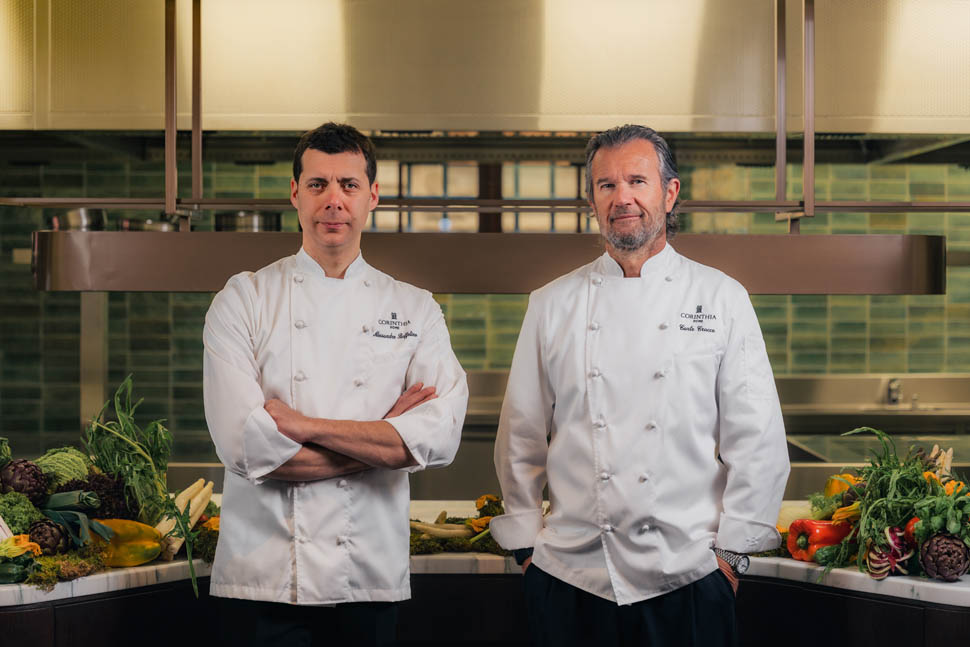
Alessandro also introduced himself to Carlo, highlighting his eight years of professional experience at the Acanto restaurant at the Principe di Savoia in Milan, along with his desire to be closer to home—Benevento—and to his partner in Rome. For him, the challenge—or rather, the pleasure—will be to personalize the experience for each individual guest, because at the Corinthia, it’s almost impossible to lose track of anyone.
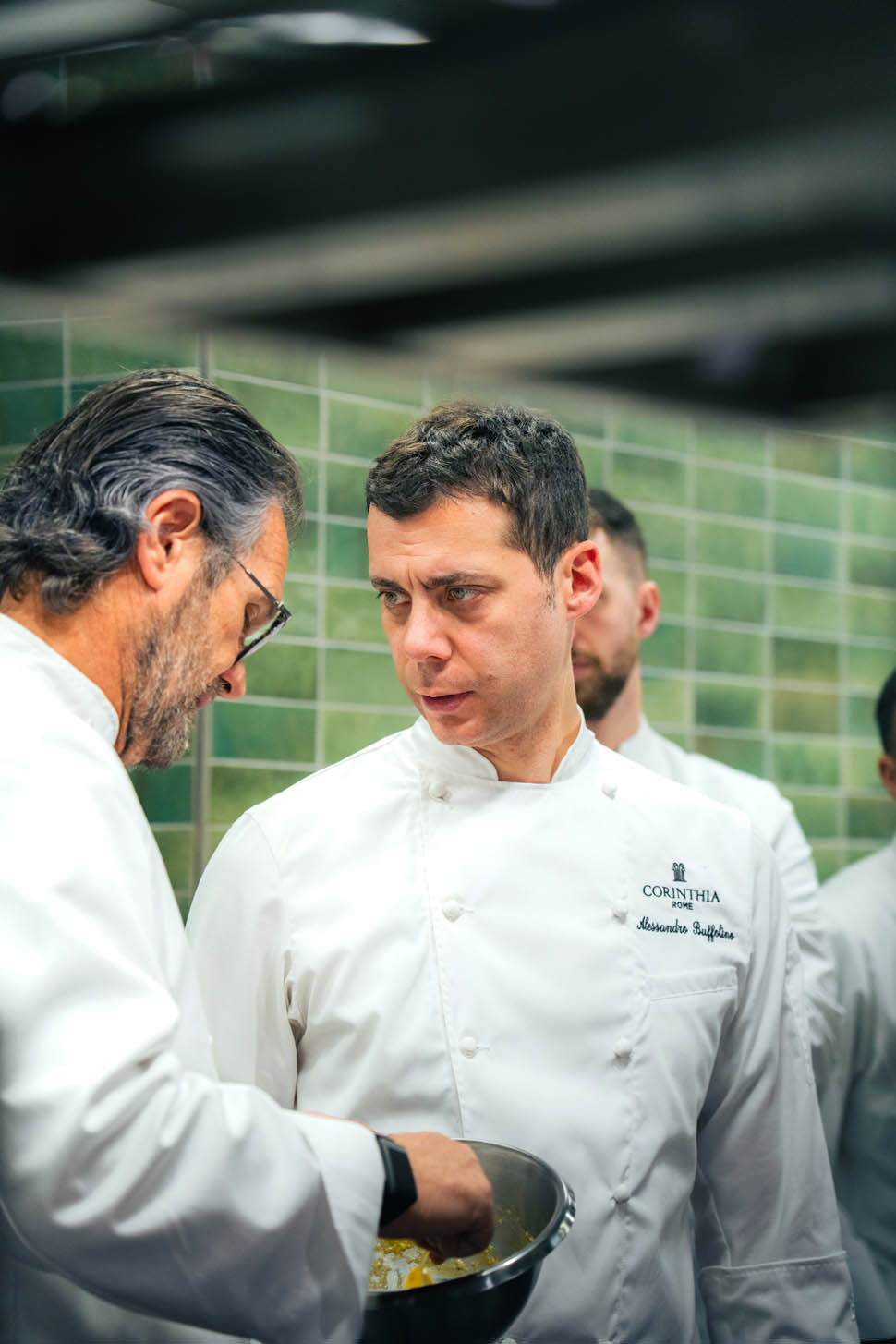
“Working with Cracco is a blast—we really have a great time. He’s reached such heights that now he can’t help but teach and pass on his knowledge. Unlike other mentors I’ve had in the past, he’s someone who asks for your opinion and listens to it. Here, we’re all giving it our all without being forced to do so; there’s an atmosphere that encourages peak performance without demanding it. I believe this atmosphere can really make a difference because Carlo makes you understand that you’re valued. Reaching that level without putting people under pressure is what it takes to keep improving, and that’s exactly what’s happening here.”
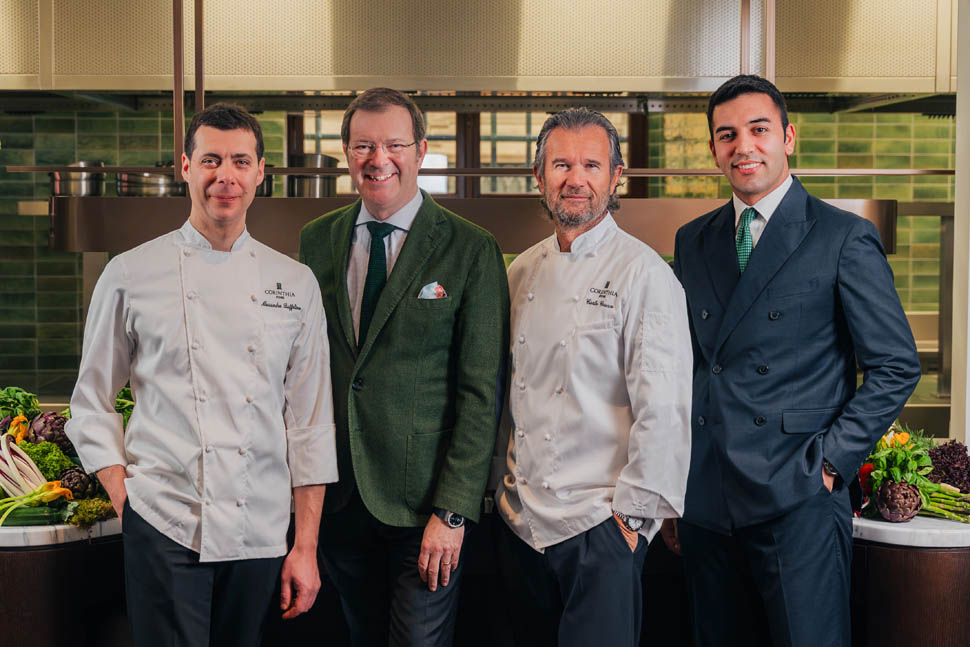
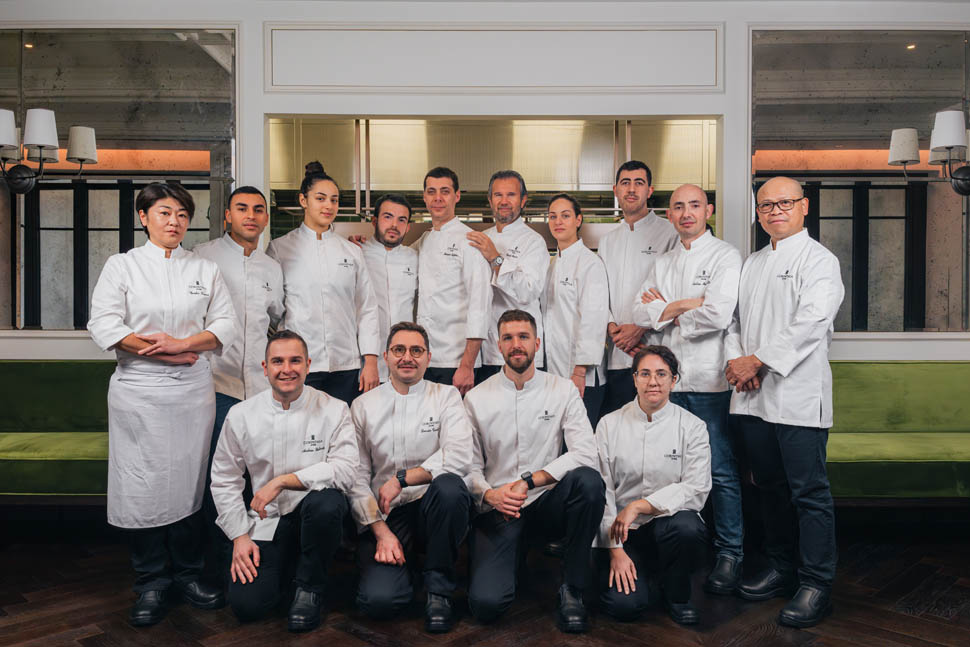
A few days after the opening, Cracco met with a very distinguished lawyer—the man who, fifteen years earlier, had suggested he open a restaurant in Rome. He hadn’t even considered it; he would have preferred to open in Singapore. He wasn’t ready, and Rome wasn’t ready either. If Milan is now a benchmark, Rome has everything it takes to become one. For the chef, it was important to find the right people—wonderful individuals who possess neither the fervor of competition nor the anxiety of performance. People who know how to face reality, whatever it may be. With a perspective that fosters connections rather than provocation. Gabriele Santolamazza, F&B Manager—formerly at the Hotel de Russie—is another professional who has gone from thinking, “Cracco’s voice has made its mark in Rome,” to realizing, “My voice is heard here.”
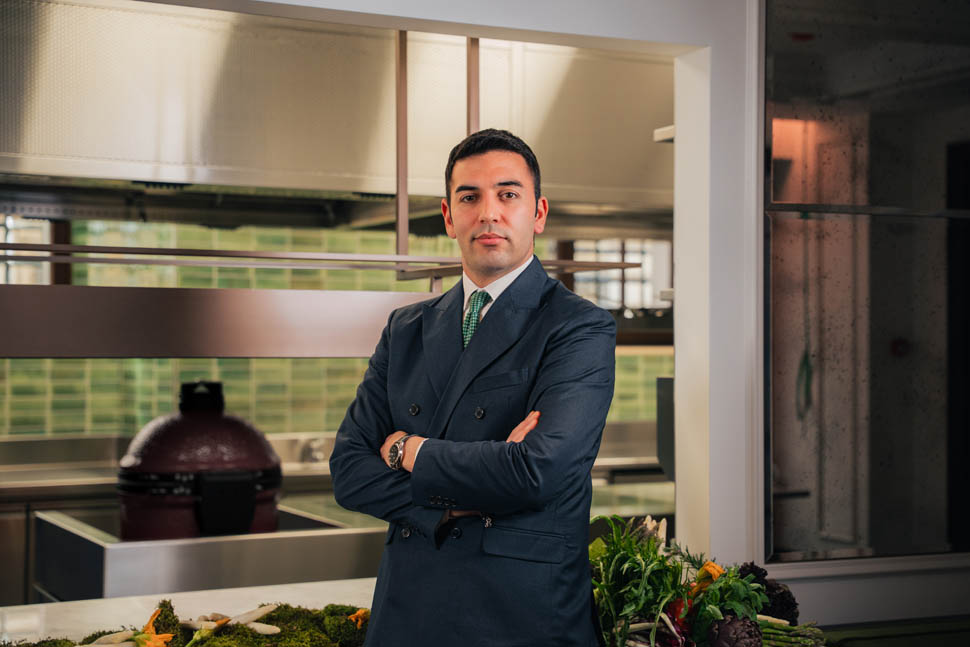
“I was looking for a place on a human scale, a place where I could understand everything in order to excel at everything. We all fell in love with the chef, especially because of his manners. Either we focus on our staff, or we can no longer aim for the best. Manners aren’t just about having good manners or moving away from the ‘I say, therefore I demand’ mindset; above all, they’re about having the humility to listen and to make a clear proposal.”
The Dishes
La Piazzetta is a bistro that embodies the spirit of Rome, offering cuisine that reimagines home-style dishes, elevating them to the highest level. It is a response to Rome’s rich identity, which is reflected—and sometimes lost—in its cuisine. Cracco simply had to take this into account. Viride is the creative bridge between Cracco’s ideas and the local territory, a laboratory for experimentation where Roman culture is lightened and transformed, and where Milanese concepts are transplanted—not as vacationers, nor as tourists, and certainly not as followers. Rather, they are like friends who reunite and exchange compliments and jokes. Cracco does everything but force standardization.
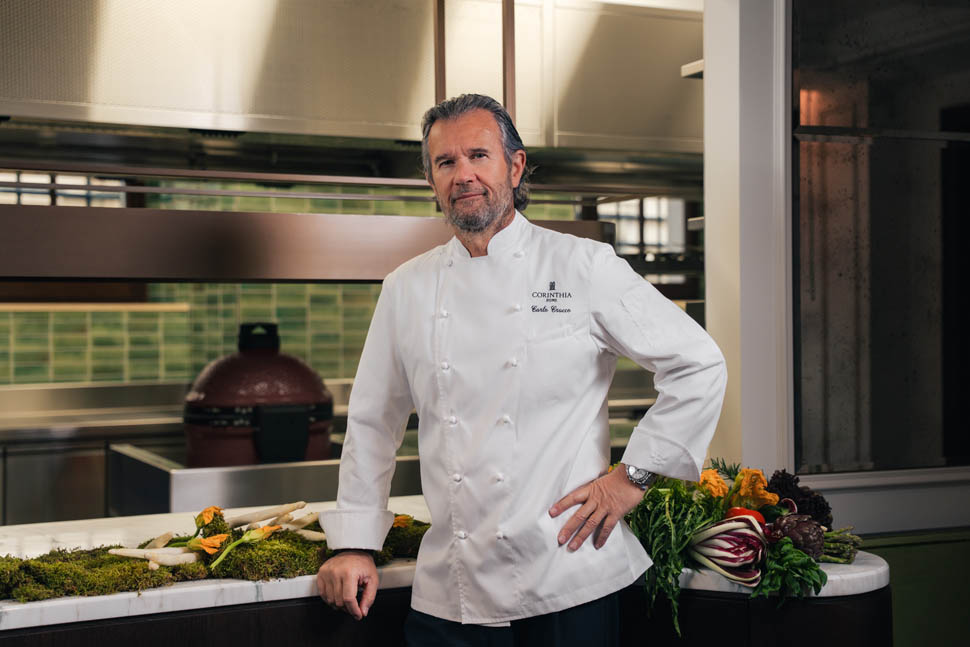
The very embodiment of excellence travels with him on the Frecciarossa. He told us how proud it made him that so many members of the Roman culinary brigade had “copied” his risottos—a dish many consider a northern specialty. For some, who are even more parochial, nothing foreign is acceptable. At the Corinthia, however, risotto always takes center stage.
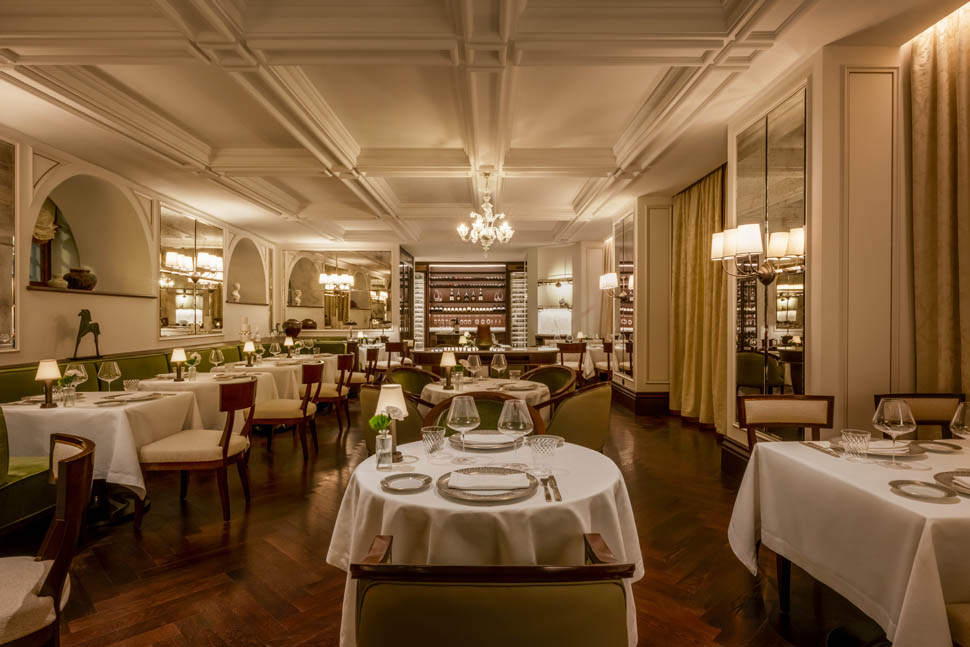
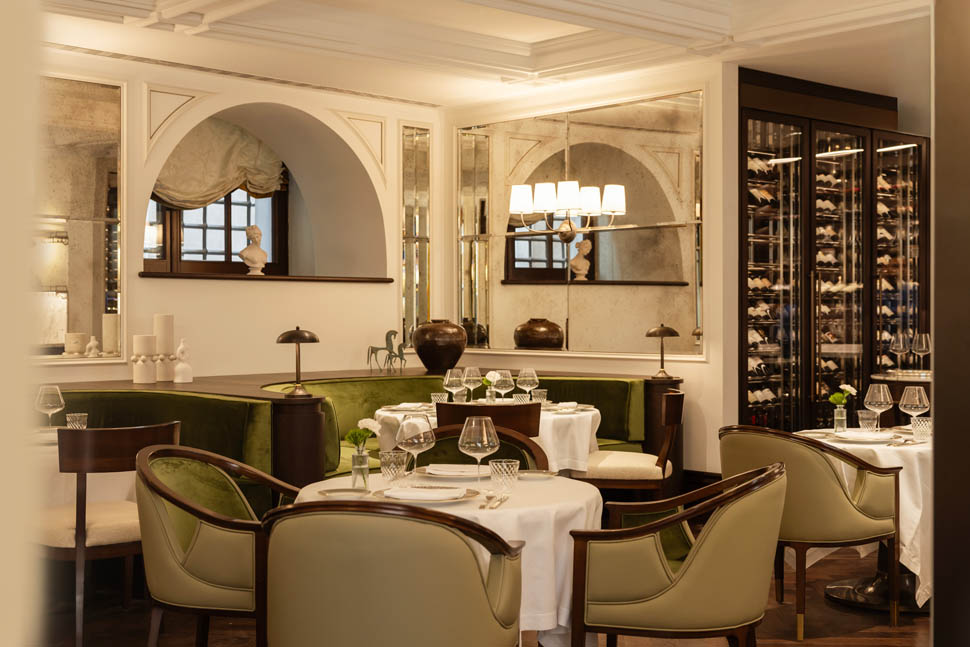
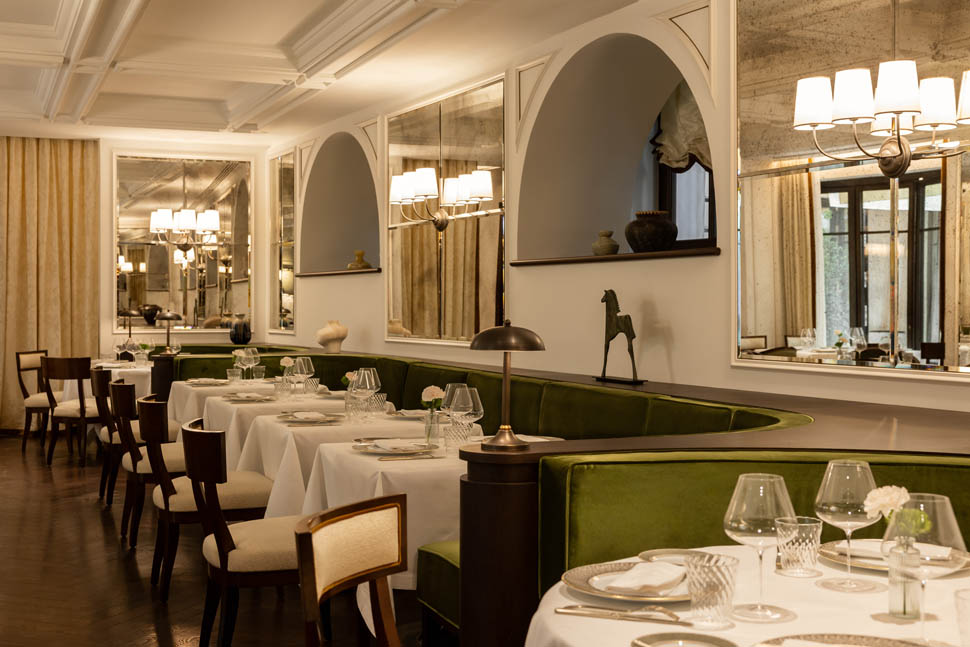
Dining at Viride is anything but a formal affair: the attention to detail in the setting and the style of the furnishings give way to the atmosphere’s total sense of relaxation. We’re in a beautiful home—but still a home—where warmth isn’t left at the door and personality is an essential ingredient. This is truly Cracco’s restaurant in Rome. You can sense his touch without his ideas becoming a straitjacket. From turbot in crust to his famous egg, Cracco serves up his signature dishes, yet he’s willing to hop on the Roman merry-go-round and race chariots that aren’t his own but that deeply appeal to him.
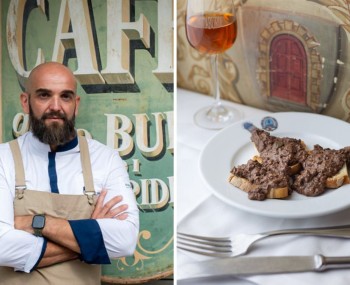
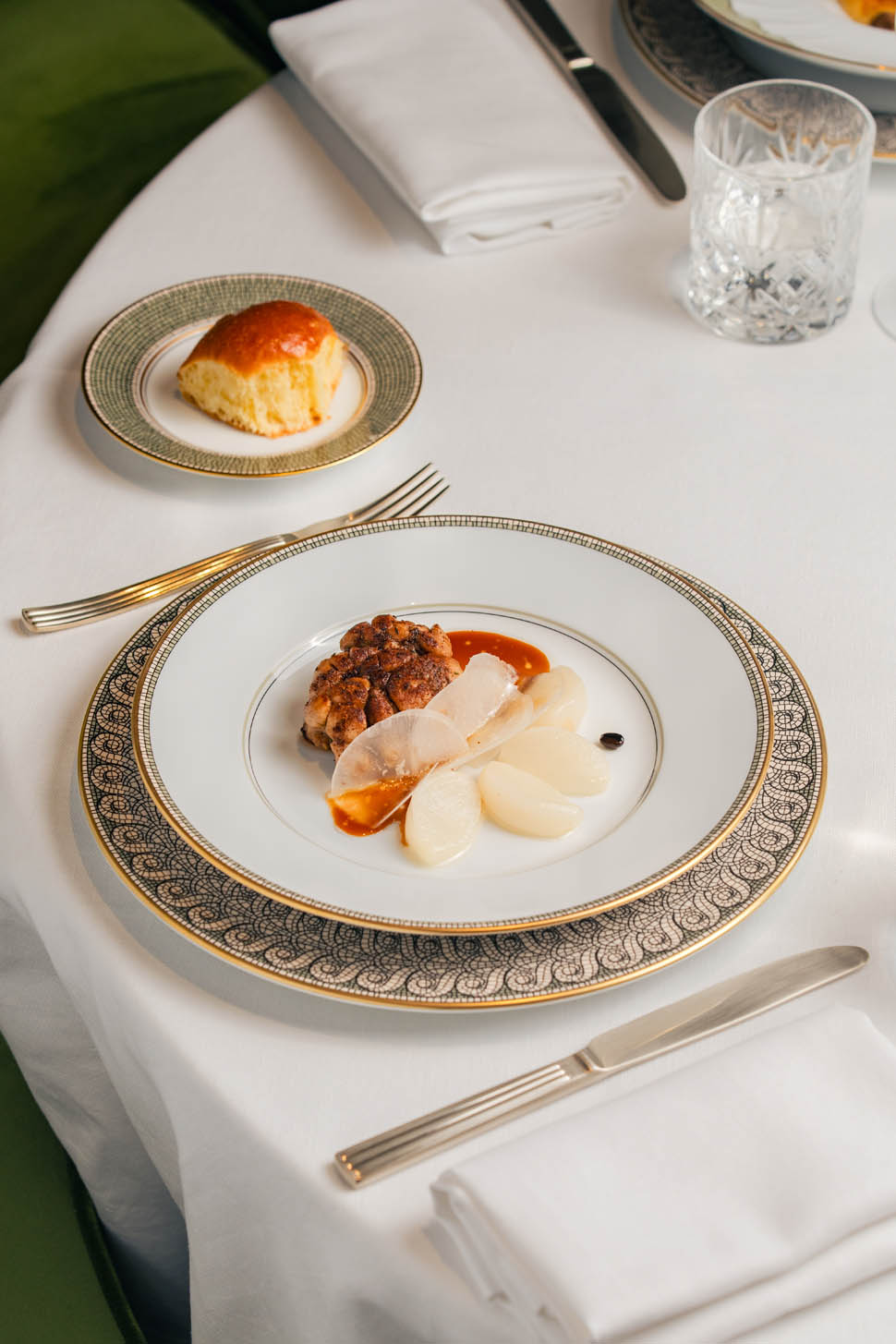
The Bruscitt with Lamb and Artichokes is the Roman version of the bruscitt served at the Galleria restaurant in Milan, a recipe that Cracco, together with Luca Sacchi, adapted from the Lombard tradition. The brioche dough is enriched with pieces of lamb shank cooked à l’ancienne, braised with meat stock and vegetables. It is accompanied by an artichoke jus prepared using the same method as that used to make meat stock. A dark, deeply bitter ambrosia to indulge in without reservation.
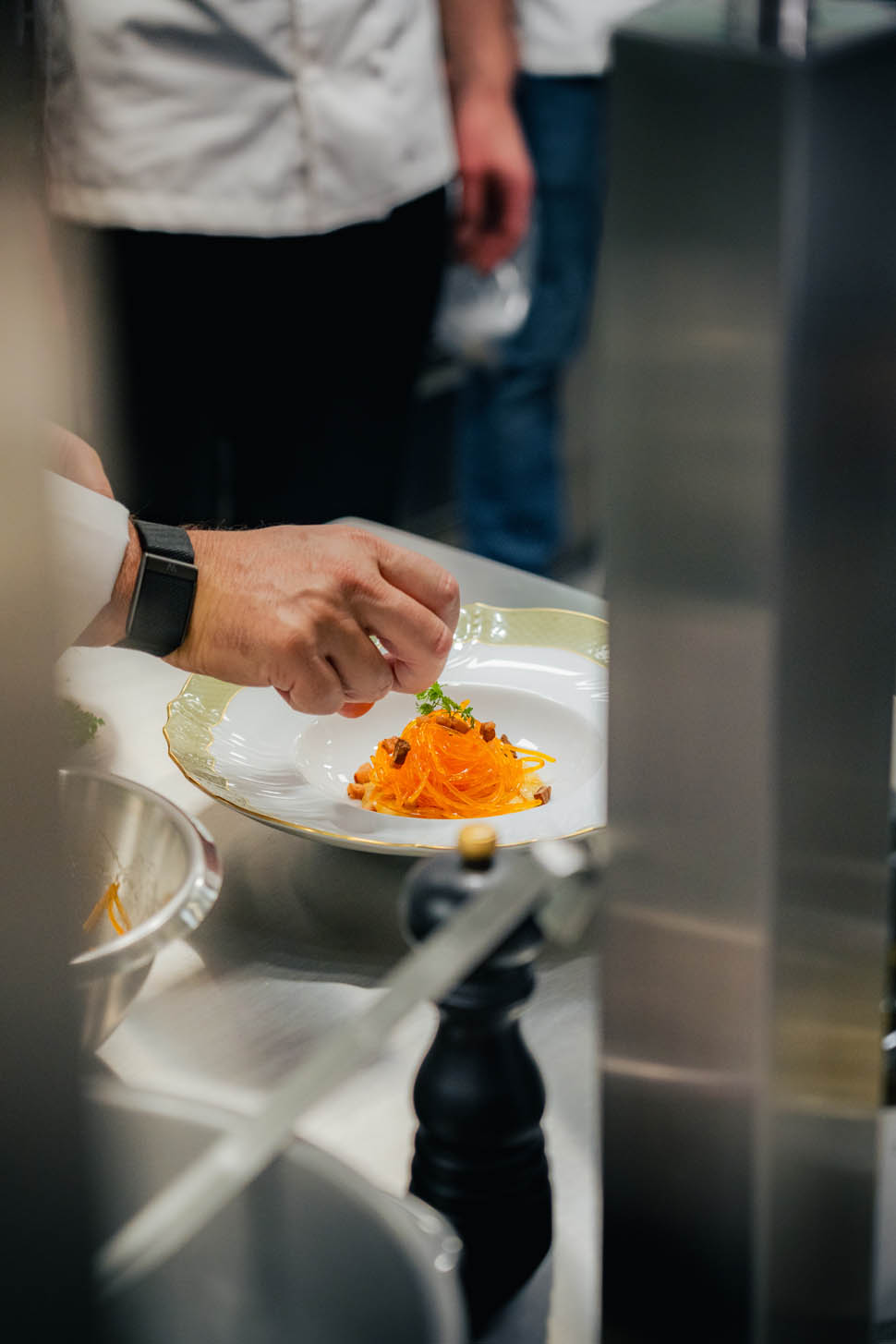
Viride’s Carbonara is a carefully crafted carbonara. Its aroma and intensity remain. The big difference is that this version doesn’t cling to your mouth; it slides down quickly, leaving a trace of its essence without overwhelming you with flavor. Cracco and Alessandro use thin spaghettini, cooked and tossed in pecorino cheese water, served with a foam made from Cracco’s marinated egg—which requires only 10% of the egg typically used in a carbonara. Madagascar pepper and crispy guanciale top it off. If I’d told you this before, you wouldn’t have believed it—it’s a light carbonara. So light that you could head straight over to La Piazzetta to eat the traditional version.
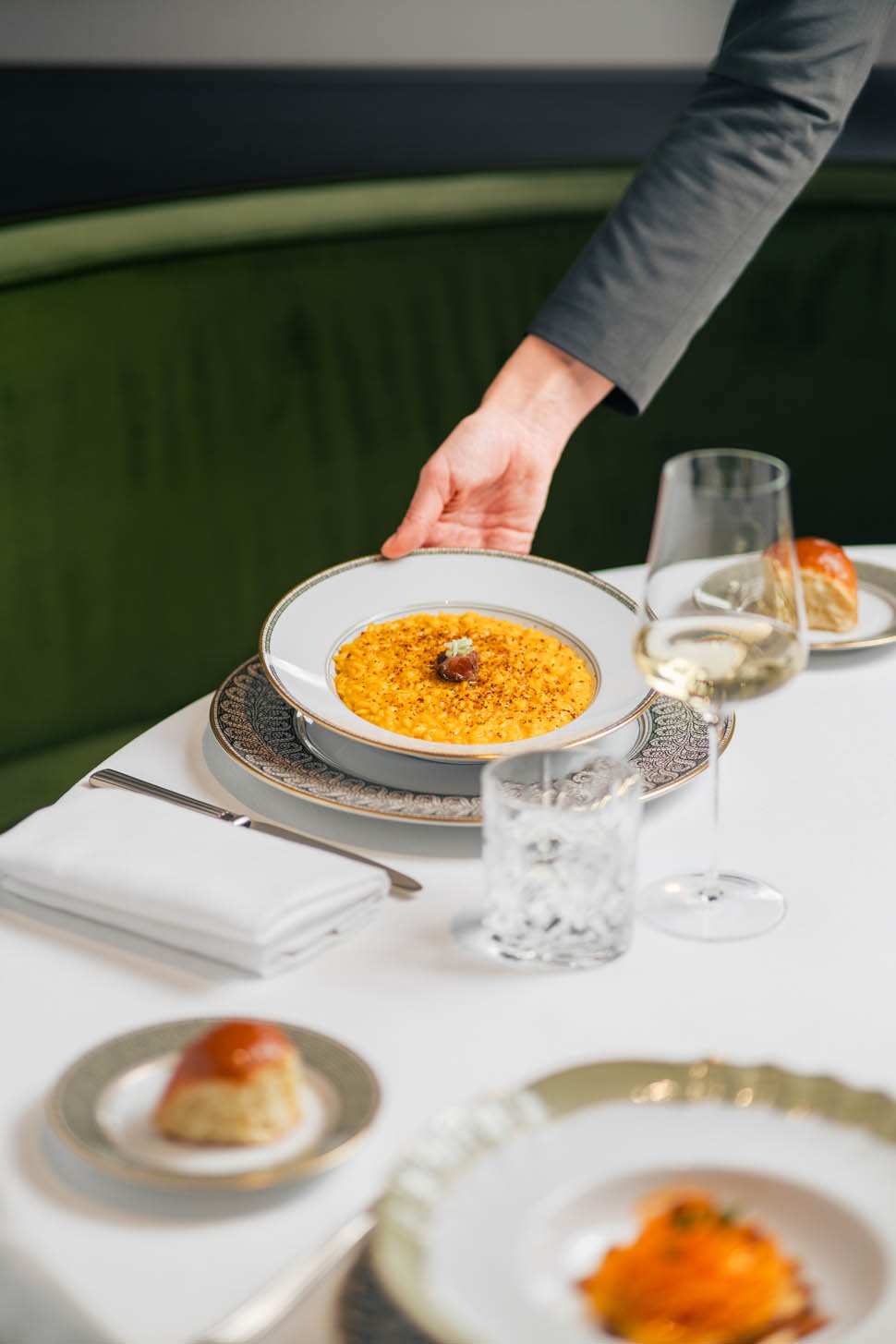
The hype surrounding risotto among the kitchen staff has borne fruit—seafood, in this case. Rice with squid ink and baby squid is a rocky, rippled atoll. The rice is cooked in water, stirred with butter and a blend of aromatic herbs, and served with a dusting of squid ink and lightly blanched baby squid. The flavor is briny yet balsamic, like a sea breeze that makes you lift your chin to look for the Mediterranean. Before dinner, a signature cocktail at the Ocra bar, and an aperitif featuring a Roman classic like the maritozzo.
Cracco prefers the savory version. In fact, he served it to us with thinly sliced porchetta, warm ricotta, and chicory. Yes, we licked our fingers, just like it was street food. Out with Parliament, in with a new institution.
Contact
Corinthia Rome
Piazza del Parlamento, 18, 00186 Rome, RM
Phone: 06 0020 5000