In the kitchen, apparent simplicity often serves as a veil concealing the most rigorous technique. If there is one dish that embodies this fascinating contrast, it is undoubtedly Roman cacio e pepe: a culinary masterpiece that historically emerged from the combination of just a few ingredients. Yet contemporary creativity sometimes demands that we break with tradition: shaking its very foundations is a renowned figure in Iberian gastronomy.
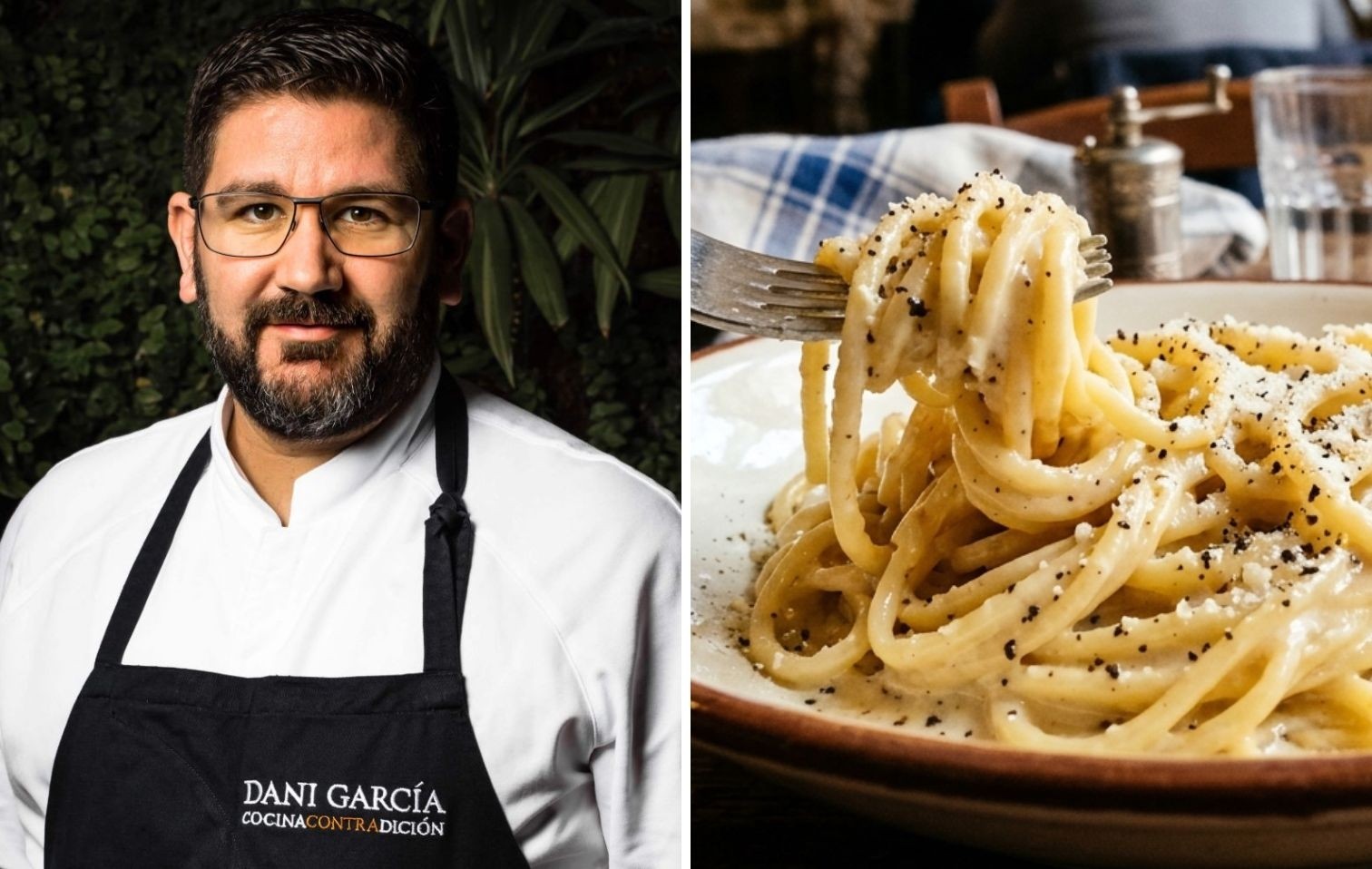
Dani García, the multi-starred chef from Marbella, has chosen to challenge purists by reinterpreting a cornerstone of Italian cuisine through his technical lens. First and foremost, he subverts the Lazio tradition by introducing an element foreign to the classic recipe, yet deemed essential for achieving an unprecedented, silky texture: butter.
The Alchemy of Starch and the Physics of Emulsion
The core of García’s variation goes beyond simply adding dairy fat; it is based on a very specific scientific principle related to pasta cooking. The chef overturns the Italian tradition that calls for large volumes of water for boiling, suggesting instead the use of a reduced and measured amount of liquid. “The secret lies in the cooking water: less water means more starch, and that’s what emulsifies the cheese and creates a perfect sauce,” explains the master chef from Málaga on his social media channels, as reported by the InfoBae network. The starch, acting as a powerful natural stabilizer, prevents the cheese proteins from coagulating abruptly with heat, averting the dreaded stringy effect or the formation of lumps. What’s more: García combines the ancestral richness of 50 grams of Pecorino Romano with the rounded complexity of 150 grams of Parmigiano Reggiano, binding them inseparably with 60 grams of melted butter, whose fat content imparts an unmatched sheen and smoothness.
The “off-the-heat” technique
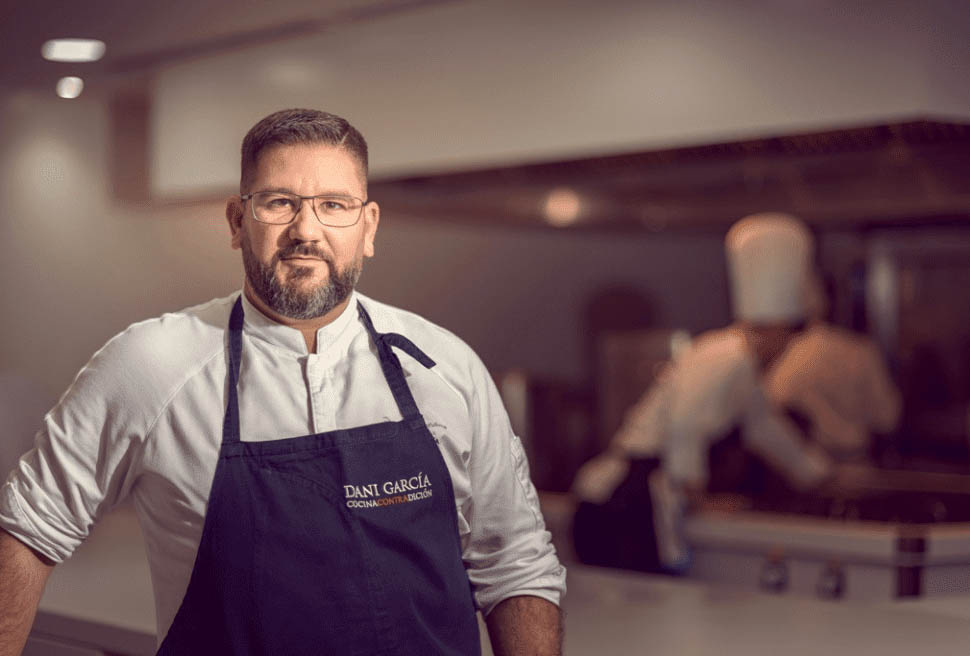
While the shopping list is short and simple, the preparation requires careful attention. “This sauce, which has very few ingredients, has one drawback. And if you're not careful... it curdles,” the chef points out to his more than 500,000 followers. The solution lies in a choreographed ritual away from the heat. After releasing the essential oils of black pepper into the melted butter and adding 120 ml of starchy pasta water, the spaghetti is tossed in the pan. Only at this point, after removing the pan from the heat completely, is the mixture of grated cheeses sprinkled in. It is precisely this controlled thermal shock, combined with a swift, energetic motion, that creates that creamy coating that completely envelops the pasta.
The signature recipe revisited
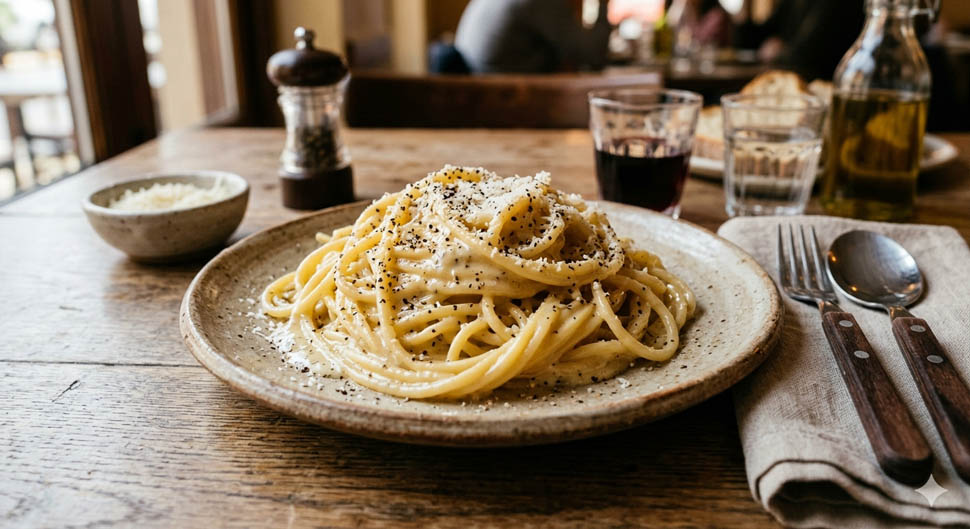
Technical details:
- Total time: 20 minutes (10 minutes prep, 10 minutes cooking)
- Servings: Makes 1 generous serving or 2 small servings
Ingredients:
- 100 g spaghetti
- 150 g grated Parmesan cheese
- 50 g grated Pecorino cheese
- 60 g butter
- 120 ml of pasta cooking water
- Black pepper and salt to taste
The process:
- Cooking: Boil the spaghetti in salted water, using just enough liquid to concentrate the starch. Drain it strictly al dente.
- Extraction: Before draining the pasta, remove and set aside exactly 120 ml of the precious starchy cooking water.
- The aromatic base: In a large skillet, melt the butter over medium heat. Add a generous grind of black pepper, letting it toast slightly to release its aromatic compounds.
- The liquid base: Gradually pour the reserved cooking water into the skillet with the butter and pepper, stirring to create a dynamic sauce.
- The binding: Toss the spaghetti in the pan, moving it so that it absorbs the sauce.
- The emulsion off the heat: Remove the pan from the heat. Gradually add the mixture of grated Parmesan and Pecorino, stirring and tossing the pasta very quickly to prevent lumps and create a velvety emulsion. If the mixture is too thick, adjust the consistency with a splash of cooking water.
- Serving: Plate immediately, finishing with a final sprinkle of freshly ground pepper and additional cheese to taste.
In less than twenty minutes, Dani García’s signature creation is complete. This is not a desecration of Roman tradition, but rather a contemporary homage that harnesses the molecular structure of the ingredients to elevate an eternal flavor. Those who can set aside their preconceptions will discover that, sometimes, a touch of butter is the secret to achieving near-perfection.