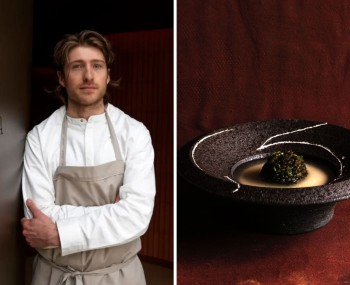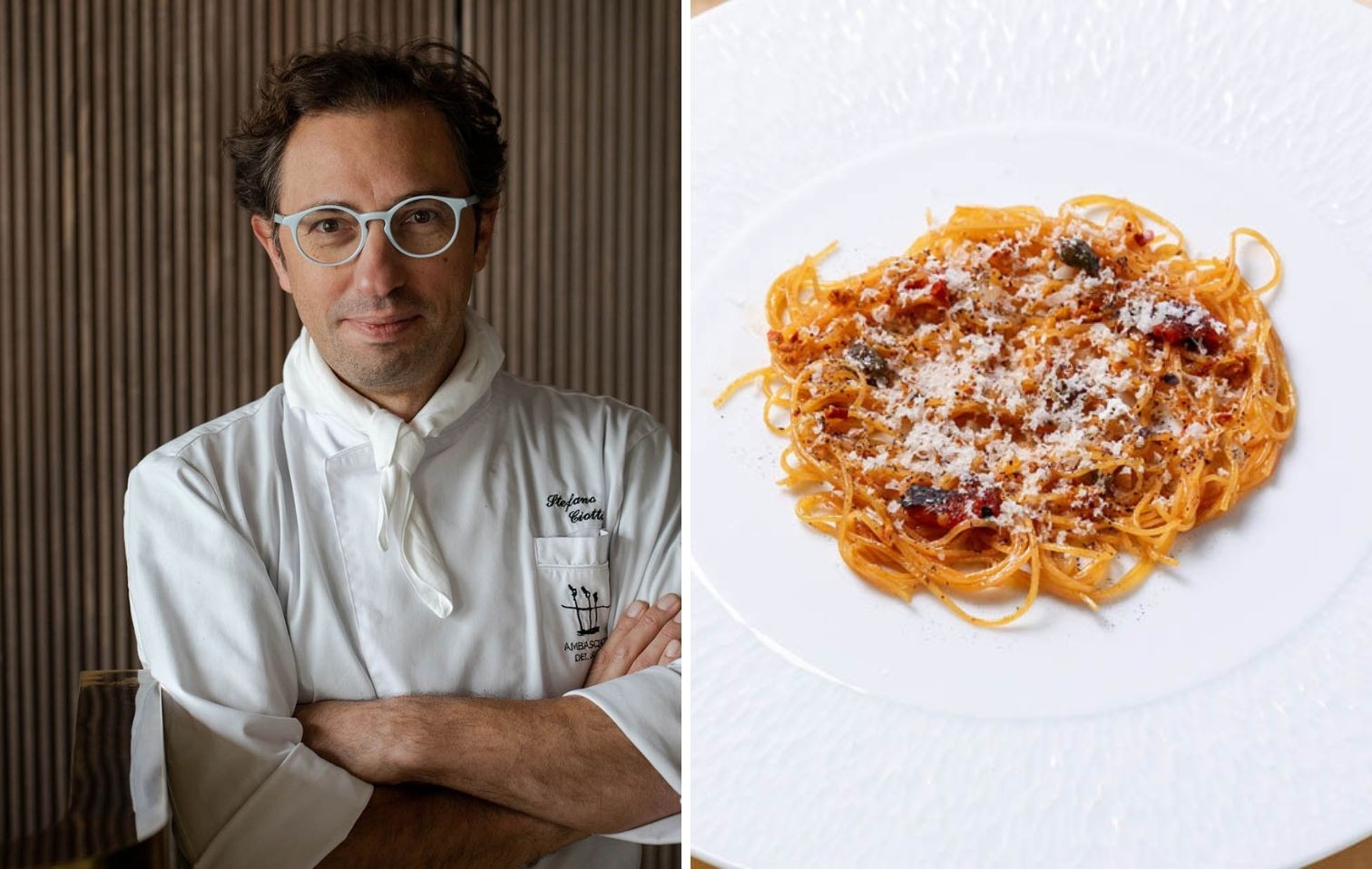
The Adriatic according to Chef Stefano Ciotti: a menu that showcases a contemporary, playful, and surprisingly delightful cuisine.
Between late 2025 and early 2026, a question arose in the world of haute cuisine: do tasting menus still have a place? Does it still make sense to offer meals lasting hours with dozens of courses that, in most cases, confuse the palate and the brain mechanisms that regulate taste perception, often resulting in a chaotic feast that does everything but showcase the restaurant and the chef’s culinary style?
When we eat, taste is not just a matter of the palate. It is a complex process involving retronasal olfaction, the orbitofrontal cortex—which integrates flavors and aromas—the hippocampus—which is responsible for memory—and the dopaminergic system—which regulates pleasure. If the brain receives too many stimuli in quick succession, perception becomes dulled and taste memory short-circuits. And so the question becomes inevitable: after this multitude of dishes, what does the diner actually remember? And above all, how eager are they to return? Because the true key to a restaurant’s success is precisely the return of its customers.
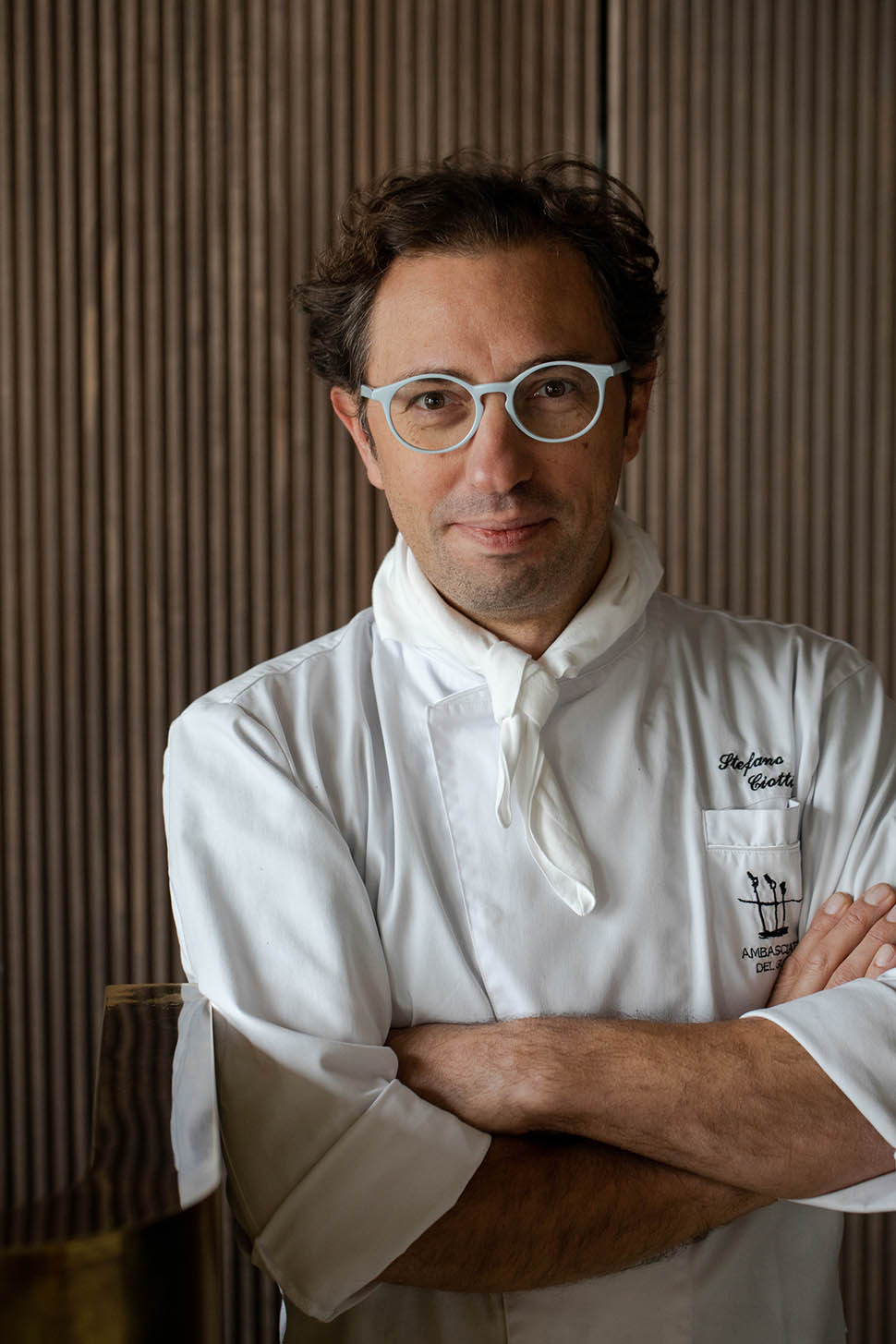
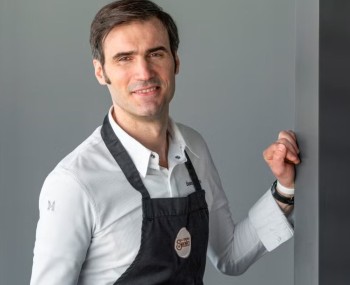
Al Nostrano in Pesaro, a one-Michelin-star restaurant led by chef Stefano Ciotti, the tasting menu not only makes perfect sense but serves as concrete proof that when things are done with intelligence, culinary expertise, and impeccable service, the tasting menu transforms into a massive dose of gustatory joy that you can’t wait to experience again.
But let’s take it one step at a time.
Nostrano, a story of the Adriatic and memory
Opened in 2015 on the Pesaro waterfront, next to Arnaldo Pomodoro’s famous Sfera Grande, Nostrano is the project through which Stefano Ciotti tells the story of his connection to the Adriatic coast and the Marche region. The restaurant’s very name evokes a sense of belonging; being “nostrani” means identifying with a place, a gastronomic culture, and a memory shaped by the sea, the countryside, and everyday cuisine.
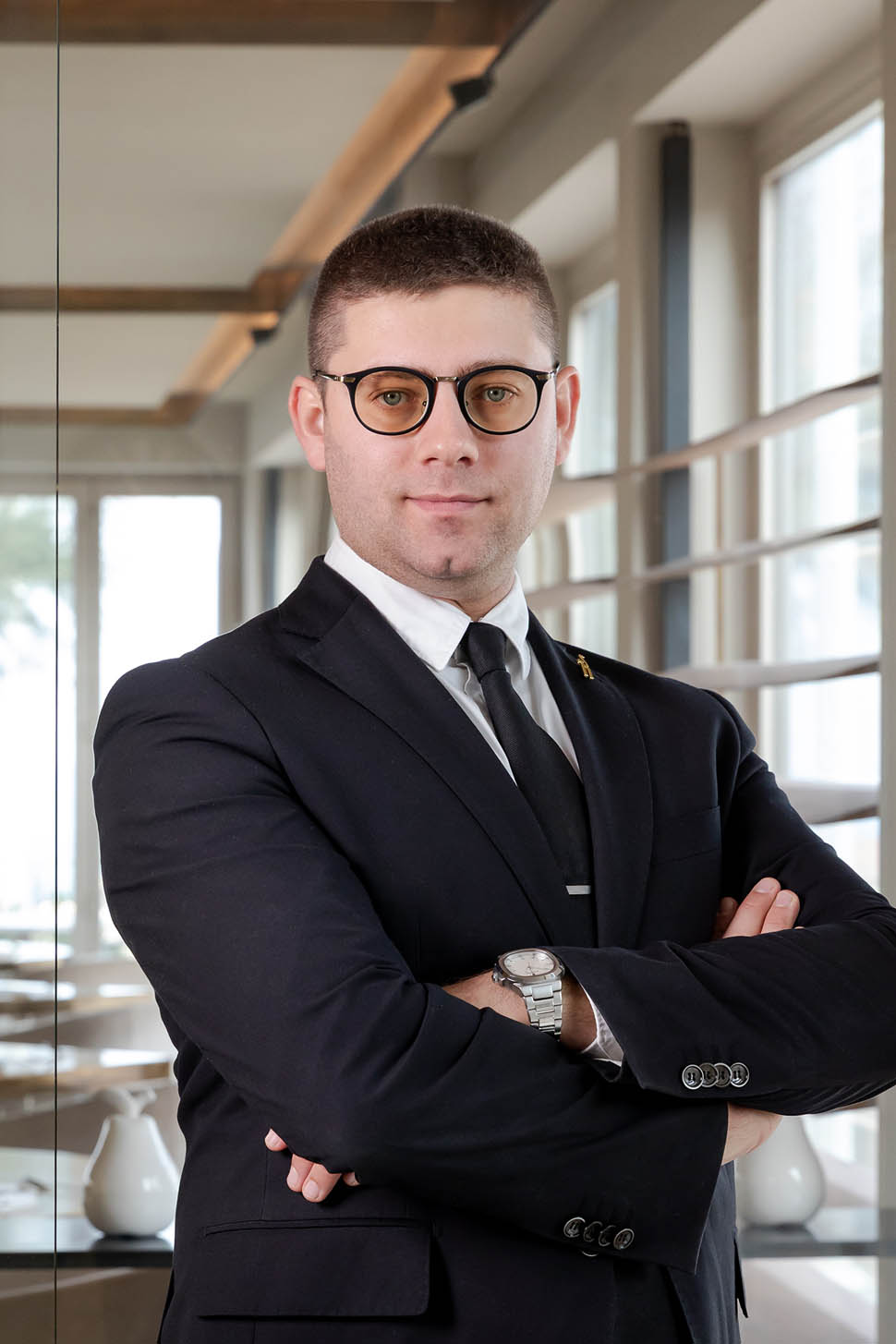
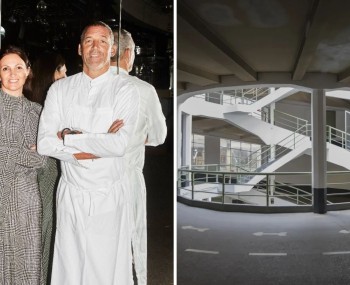
The restaurant overlooks the Adriatic Sea through large windows that bring the landscape into the dining room. The interiors, designed by architect Andrea Trebbi, feature natural materials and warm tones that evoke the sand and light of the coast. Brass, oak, and textured surfaces create an elegant yet relaxed atmosphere, where the dining experience finds a setting consistent with the story of the cuisine. Ciotti, born in Rimini in 1973, trained alongside chefs such as Gino Angelini, Vincenzo Cammerucci, Luigi Sartini, and Alois Vanlangenaeker before opening Nostrano. In 2017, he earned a Michelin star, the crowning achievement of a project that blends contemporary technique with classic culinary heritage. His cuisine stems from the convergence of two identities typical of the Adriatic coast: that of the fisherman and that of the farmer. Land and sea interact continuously in the dishes, resulting in a cuisine that is enjoyable, straightforward, and deeply respectful of the region and its traditions.
Why Ciotti’s tasting experience offers hope
The first strength of Nostrano’s tasting menu is its pace. It’s a fast-paced yet smooth, dynamic journey that allows the mind and palate to harmonize. There’s no sense of overload, and it never feels tiring. Each dish dialogues with the one before it and sets the stage for the next, building a coherent crescendo of flavors that do not overshadow what came before. It is a rare balance; the tasting becomes a continuous narrative, not a collection of stylistic exercises.
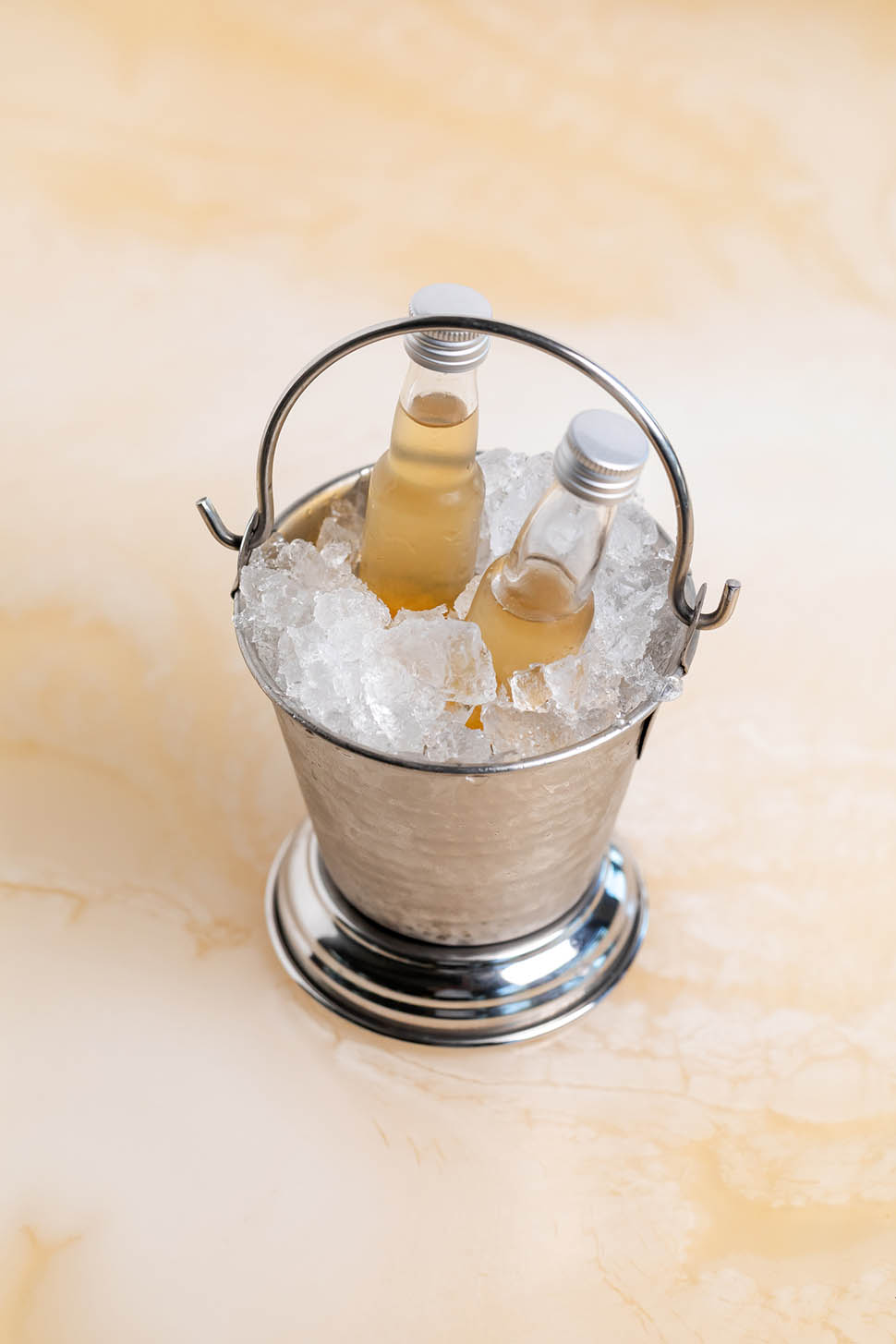
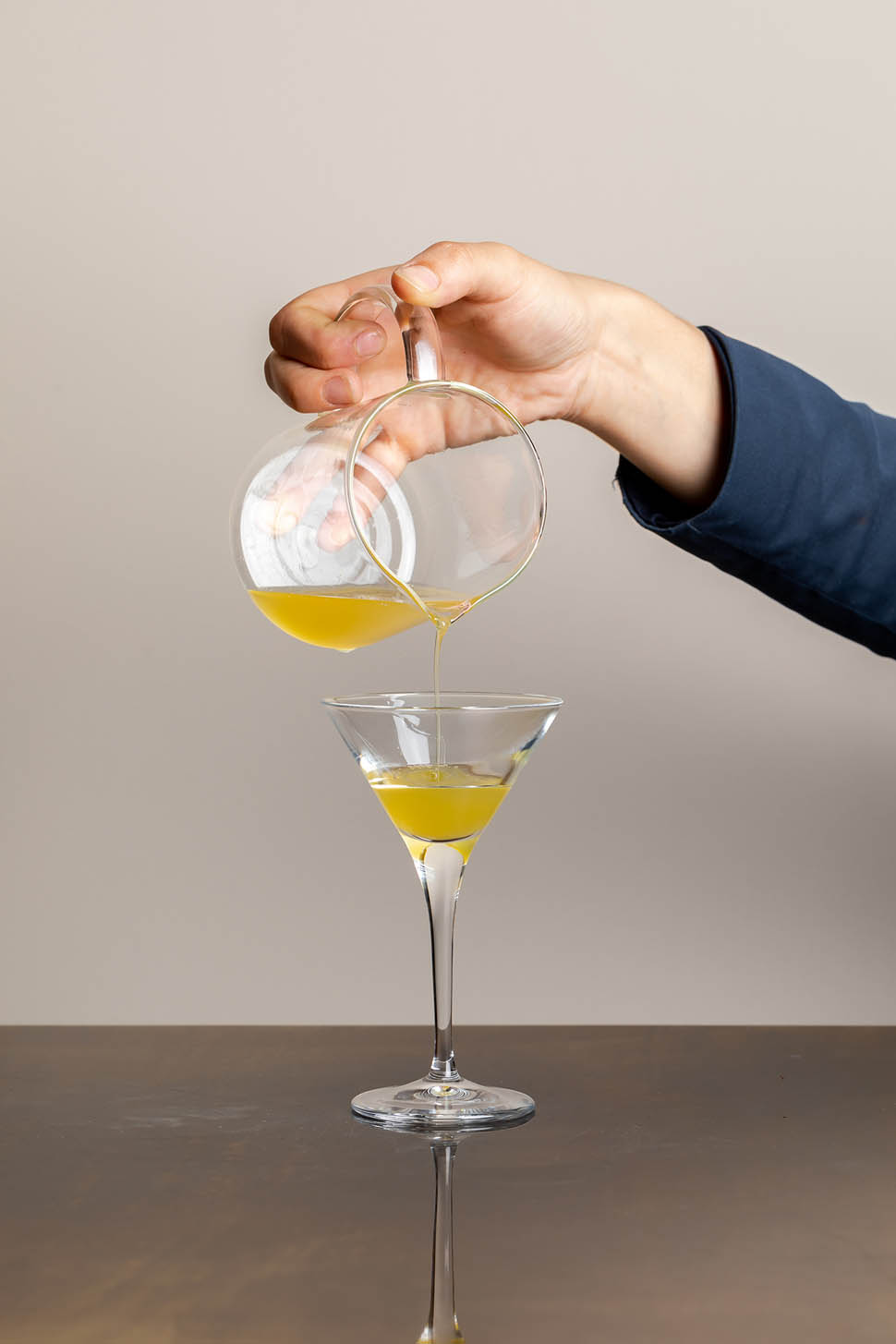
Pairings play a fundamental role. Alongside wines selected with sophistication but without pretension, there is a rotation of juices and smoothies that are not mere vegetable extracts but true blends of fruit, vegetables, and spices crafted to complement the dishes. These beverages are conceived as an integral part of the dining experience, capable of enhancing aromas and textures, and making the tasting even more delightful for the palate. Then there is the service. Precise, welcoming, attentive without being intrusive. A virtuous example of hospitality that many restaurants would do well to observe closely. In some Italian cities, with Milan at the top of the list, there is an increasingly noticeable shift toward cold, impersonal service that severely undermines the experience. Here, the opposite is true: the dining room complements the kitchen with impeccable timing and a genuine human touch.
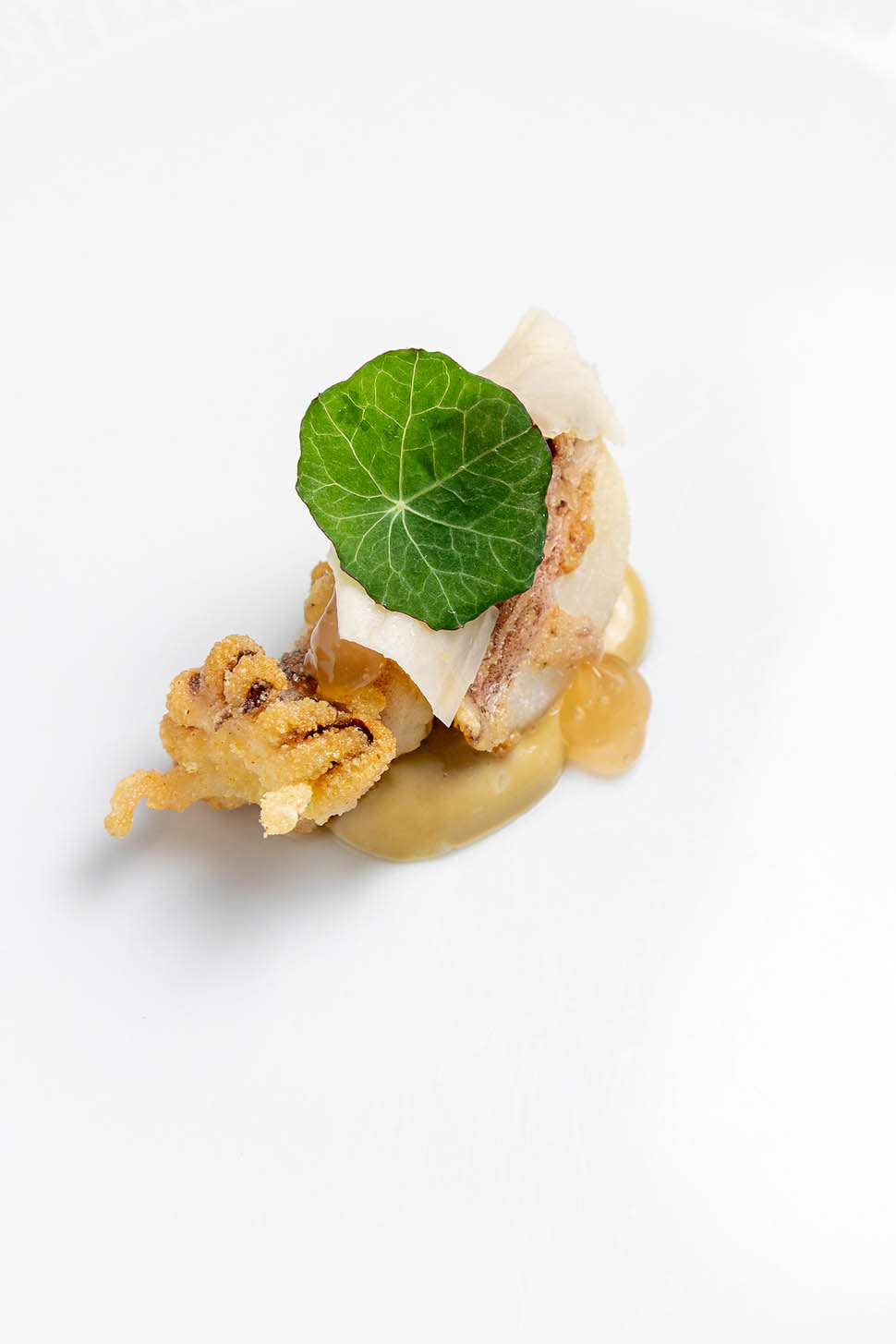
If you count the amuse-bouches, the meal consists of twelve courses, but you leave the table on your own two feet. No sense of excess, no sluggish drift toward that infamous “day after” that often follows tastings that are too long, monotonous, and heavy. Just a strong desire to return and sit at those tables overlooking the sea.
The sea lies ahead, but the use of meat is surprising
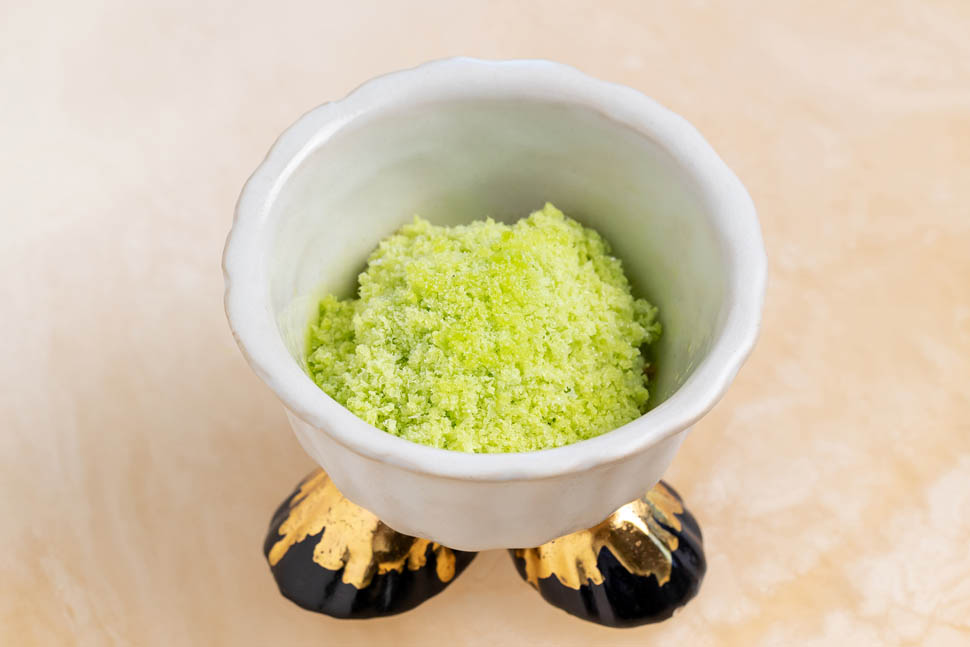
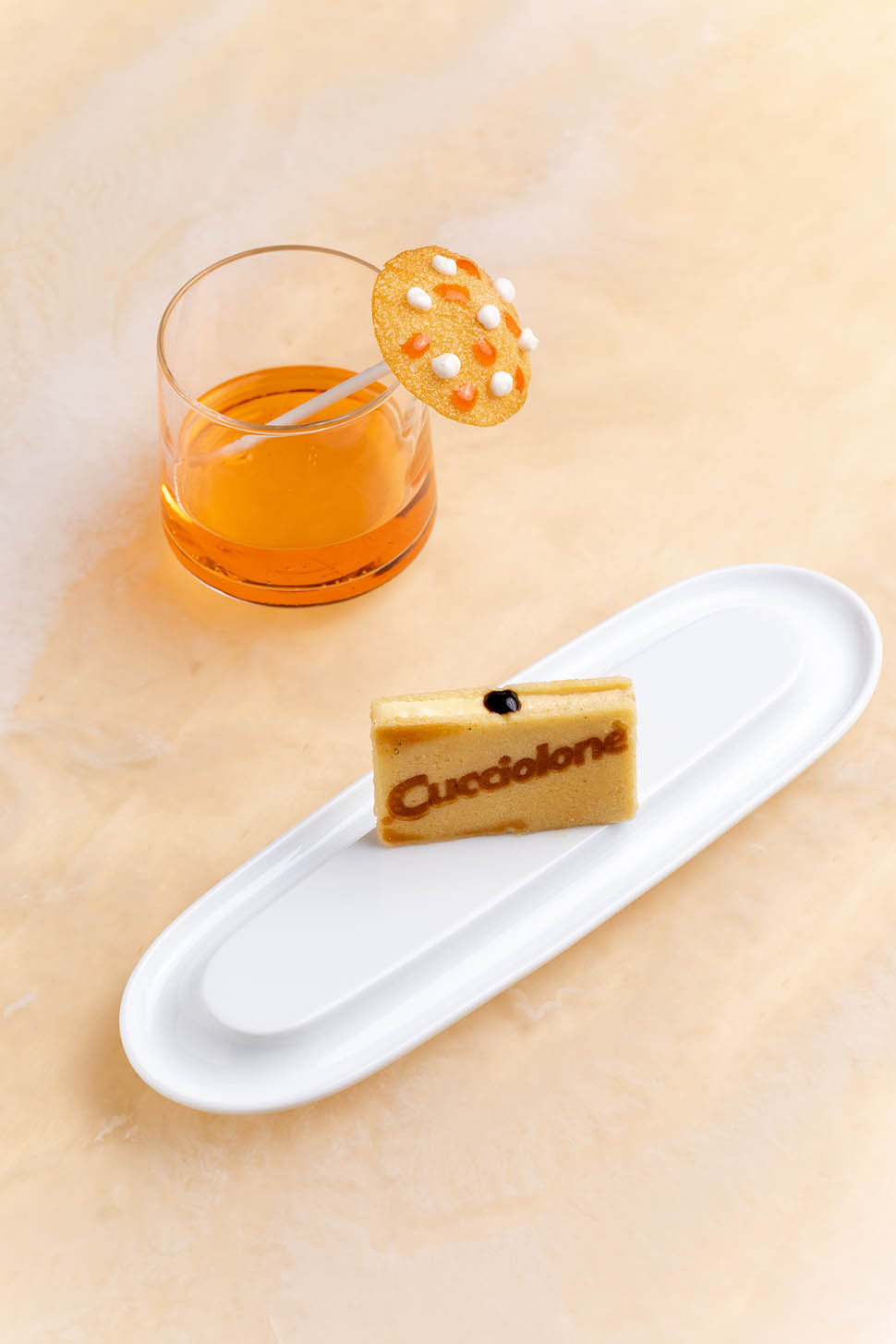
Nostrano is a seaside restaurant. The Adriatic is visible from every table in the dining room, and Ciotti’s cuisine inevitably starts there—with the freshest catch, prepared with great skill and a touch of playful creativity. I’m referring, for example, to the Cucciolone, a clear homage to the famous ice cream we’ve been eating on the beach for generations, which Ciotti reinterprets as a fun and irresistible savory bite.
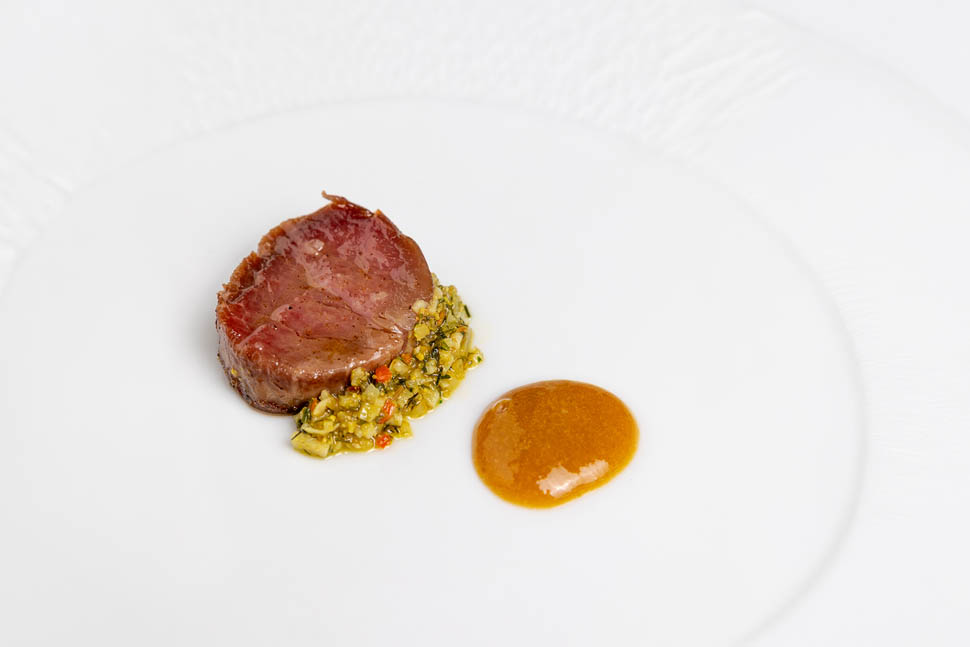
Fish is the natural star of the menu, prepared with excellent technique and enthusiasm, but the real surprise often comes from the meat and its pairings with seafood. The dishes demonstrate absolute respect for the ingredient’s natural flavor and a rare ability to highlight its texture without weighing down the dish. The sauces are executed with great precision. Used in just the right amounts, they complement the ingredients without ever overshadowing them. Nothing overpowers; everything finds its place in a balance of flavors that makes the dining experience extremely enjoyable. A couple of examples? The Mora Romagnola medallion with chimichurri and porchetta-style seasoning, served with a plum and beer sauce, and the wood pigeon with whiskey-infused Bernese sauce and baby chicory.
Campofilone Maccheroncini, a Treasure of the Marche Region
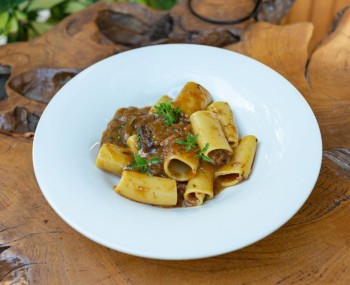
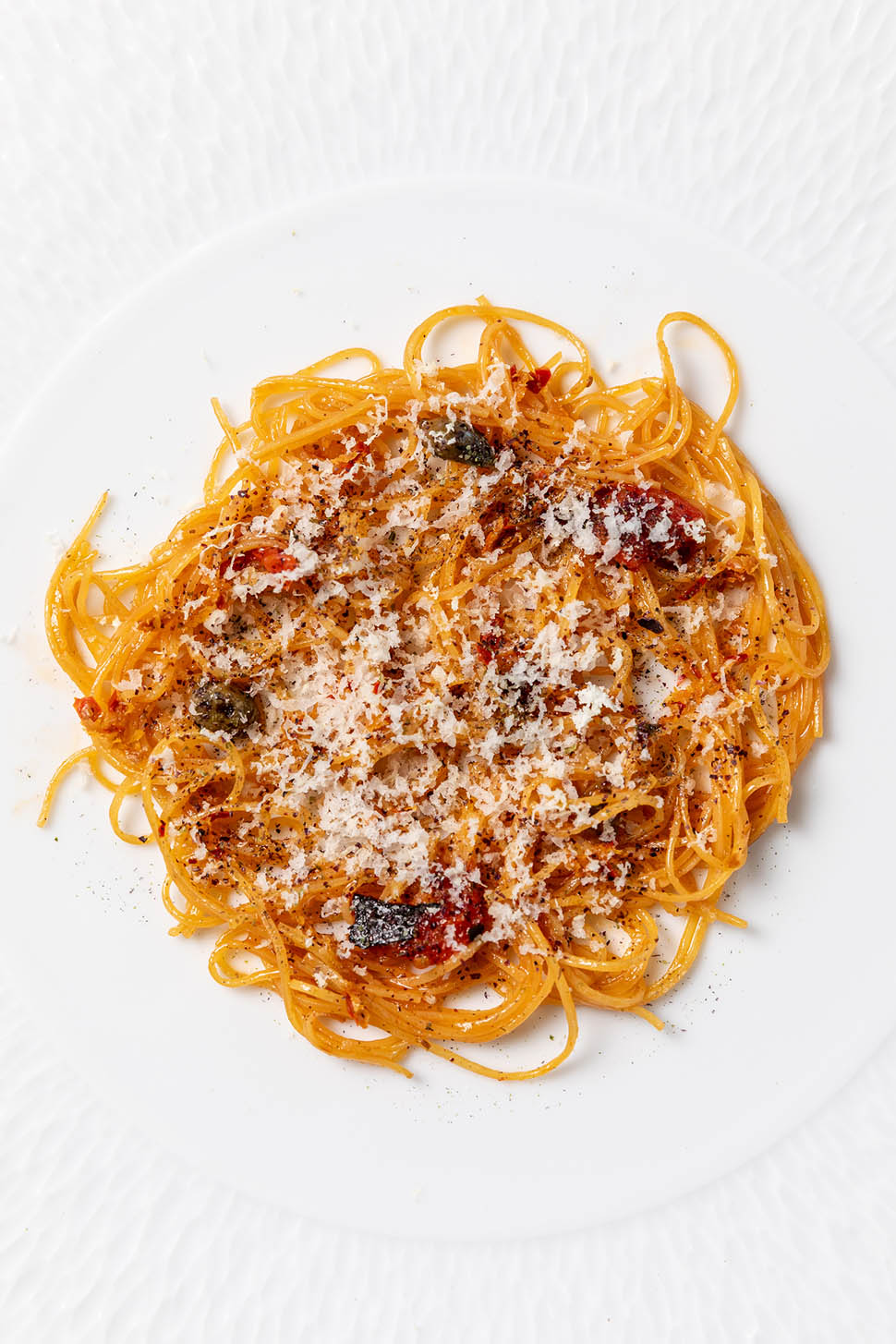
Among the dishes that best represent the Marche region, Campofilone Maccheroncini stand out as one of the region’s most iconic egg pastas. Originating in the small town of Campofilone in the province of Fermo, from which they take their name, these extremely thin strands of pasta have a tradition that dates back centuries. Their distinctive feature lies in the dough, which is extremely rich in eggs and contains no water, giving the pasta a firm texture and an extraordinary ability to absorb sauce. After being rolled out and cut very finely, the maccheroncini are traditionally dried for a few hours on linen cloths before cooking. This technique gives the pasta a unique texture, allowing it to retain its elasticity and hold its shape even with rich sauces. Ciotti offers them in an exciting version with potacchio sauce (another classic Marche dish traditionally served with chicken), citron, and seaweed.
The northern Adriatic coast continues to prove itself as one of the most gastronomically fortunate stretches of coastline. Here, top-tier fine-dining restaurants, must-visit trattorias, and small beachside eateries—which have always been part of the local culture—coexist with the same high quality. Nostrano is one of the places that best exemplifies this culinary richness. And, to quote a line from a famous movie from a few years ago, if you don’t go there, you’re an idiot.
Contact and info
Nostrano Restaurant
Piazzale della Libertà, 7 - Pesaro
Tel. 0721 639813
Website: https://www.nostranoristorante.it/it